The Soviet Red Army has managed to surround some 100,000 German soldiers in the Demyansk Pocket. The Allies are surrounded in Fortress Singapore and the Japanese spend the week breaking in. The Allies are also unable to supply Malta by ship because of continuous heavy Axis bombing of the island and its surroundings, which bodes ill for Allied operations in North Africa. The Germans also make a bold naval move this week — sending two capital ships right up the English Channel under British noses, making for German ports.
Written and Hosted by: Indy Neidell
Director: Astrid Deinhard
Producers: Astrid Deinhard and Spartacus Olsson
Executive Producers: Astrid Deinhard, Indy Neidell, Spartacus Olsson, Bodo Rittenauer
Creative Producer: Maria Kyhle
Post-Production Director: Wieke Kapteijns
Research by: Indy Neidell
Edited by: Iryna Dulka
Sound design: Marek Kamiński
Map animations: Eastory (https://www.youtube.com/c/eastory)
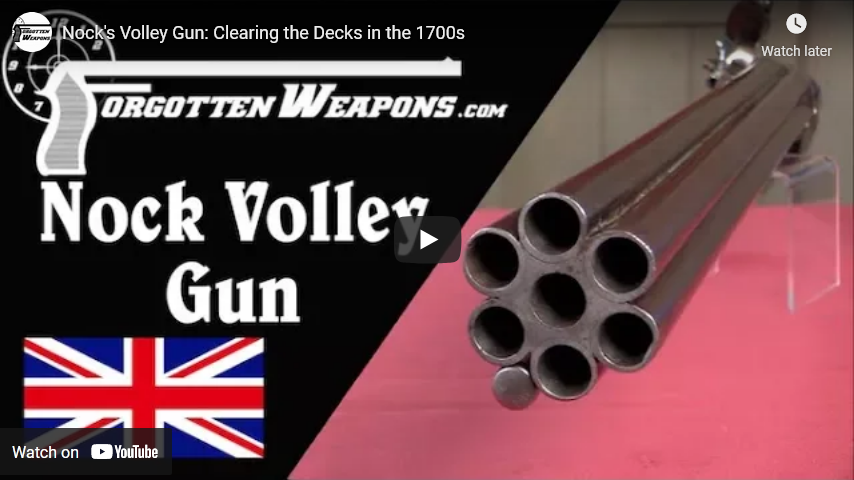
The Nock Volley Gun was actually invented by an Englishman named James Wilson in 1789, and presented to the British military as a potential infantry weapons. This was declined as impractical, but the Royal Navy found the concept interesting for shipboard use. In 1790 the Navy ordered two prototypes made by the British gunsmith Henry Nock, and finding them suitable, proceeded to oder a total of 500 of the guns (thus forever associating Nock’s name with the gun instead of Wilson’s). A further 100 or so were ordered in 1797, and the guns were in fact issued out to various ships — although accounts of their use in combat are difficult to find.
Unfortunately for Nock, the guns presented a couple of substantial problems in use. One was simply the recoil of firing. A single 32-bore (approximately .55 caliber) round ball over 40 grains of black powder is not a very impressive load, but seven of them firing simultaneously add up to a recoil comparable to 4- or 6-bore rifles, and in a volley gun weighing just 13 pounds (5.9kg). In addition, the guns did not always reliably fire all barrels, especially when dirty. This produced a conundrum: how to determine which barrels had fired and which had not? The practical result was double-loaded barrels, which could be liable to bulge or burst. For these reasons, the weapon was declared obsolete in 1805, and never appeared to play any significant military role.
The gun did receive a new wave of popular awareness in 1960, when the character of Jim Bowie was outfitted with one in the movie The Alamo (against all historical evidence). His easy handling of the weapon and the waves of men he was able to mow down with it brought the gun back into the popular consciousness.
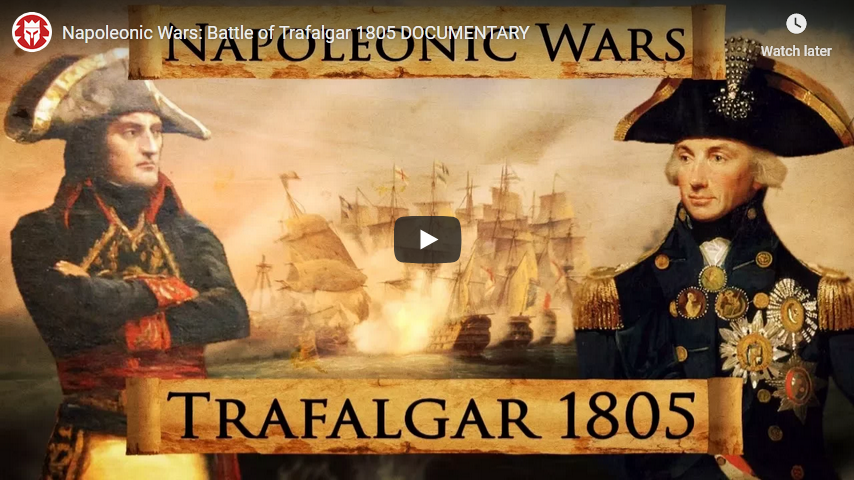
Napoleon Bonaparte fought all his battles on land, but no other battle influenced his military and political decisions as the battle of Trafalgar that was fought in 1805 off the coast of Spain between the allied Franco-Spanish fleet lead by the admirals Pierre-Charles Villeneuve and Federico Gravina and the Royal Navy of the United Kingdom commanded by the admirals Horatio Nelson and Cuthbert Collingwood. This is our first video on the War of the Third Coalition and second video in this series. We hope to have much more and cover all the Napoleonic Wars.
We are grateful to our patrons, who made this video possible: Koopinator, Daisho, Łukasz Maliszewski, Nicolas Quinones, William Fluit, Juan Camilo Rodriguez, Murray Dubs, Dimitris Valurdos, Félix Gagné-Dion, Fahri Dashwali, Kyle Hooton, Dan Mullen, Mohamed Thair, Pablo Aparicio Martínez, Iulian Margeloiu, Chet, Nick Nasad, Jeyares, Amir Eppel, Thomas Bloch, Uri Sternfeld, Juha Mäkelä, Georgi Kirilov, Moe Mia, Daniel Yifrach, Brian Crane, Muramasa, Gerald Tnay, Hassan Ali and Richie Thierry.
The Machinimas for this video are created by one more friend – ltflak. Check out his channel for some great Let’s Plays and Machinimas: https://www.youtube.com/user/ltflak
Epidemicsound:
“Slaves” – Gunnar Johnsén
“At The Front” – Johan Hynynen
“Battle Ostinato 3” – Valdemar Hansen
Total War Napoleon:
Richard Beddow – “Corsica, Humble Beginnings”
Ian Livingstone – “The Battle At Arcole”
Richard Beddow – “HMS Victory”
Richard Beddow – “The End”
Comments Off on Napoleonic Wars: Battle of Trafalgar 1805
The History Guy: History Deserves to Be Remembered
Published 6 Jan 2021
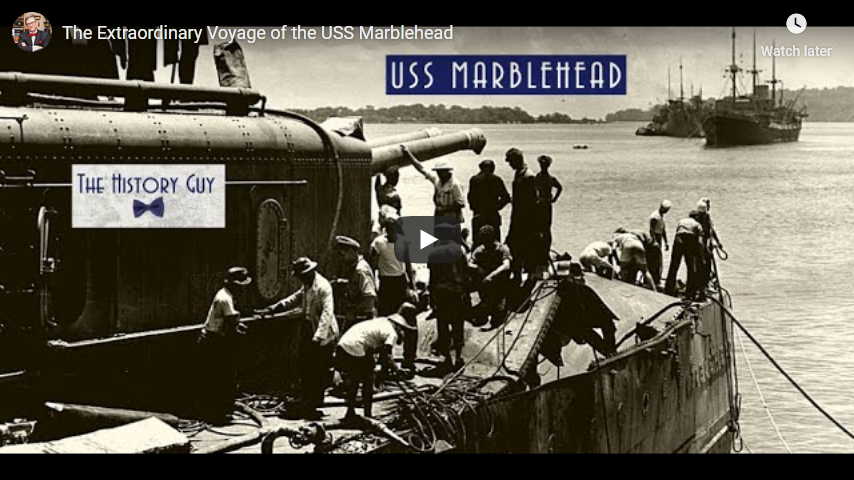
By May 1942, nearly half of the forty surface ships of the U.S. Asiatic fleet would be sunk, including the fleet’s largest vessel, the heavy cruiser USS Houston. But the improbable survival of one of the fleet’s vessels, the light cruiser USS Marblehead, is the stuff of legend. The extraordinary voyage of the Marblehead is history that deserves to be remembered.
This is original content based on research by The History Guy. Images in the Public Domain are carefully selected and provide illustration. As very few images of the actual event are available in the Public Domain, images of similar objects and events are used for illustration.
All events are portrayed in historical context and for educational purposes. No images or content are primarily intended to shock and disgust. Those who do not learn from history are doomed to repeat it. Non censuram.
The History Guy: History Deserves to Be Remembered is the place to find short snippets of forgotten history from five to fifteen minutes long. If you like history too, this is the channel for you.
Awesome The History Guy merchandise is available at:
teespring.com/stores/the-history-guy
Script by THG
#usnavy #thehistoryguy #WWII
Comments Off on The Extraordinary Voyage of USS Marblehead
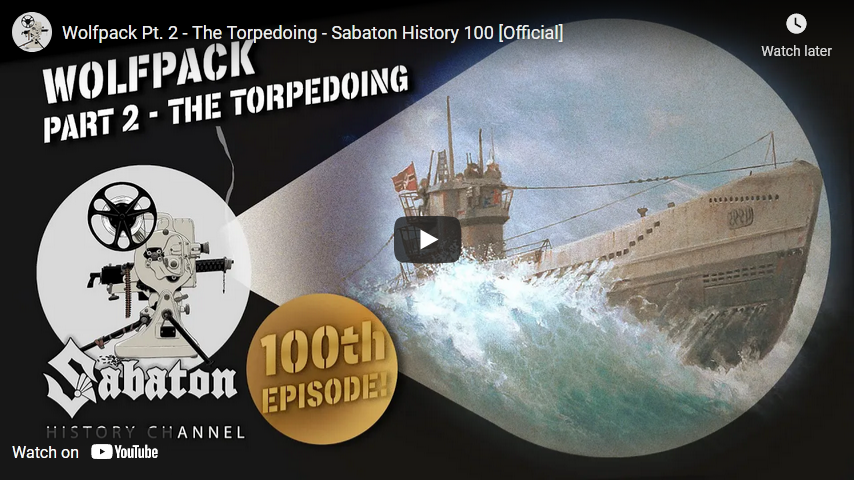
The Allies had cracked the secret codes, deprived the German Kriegsmarine of their best U-Boat aces, and sunk more submarines than the Germans could replace. Yet the Wolfpacks returned. From the depth of the sea they continued their hunt, even far away from the busy routes of the Atlantic. On their way south, along the coast of Africa, Wolfpack “Eisbär” would engage in a fateful encounter. An encounter that would demonstrate how the old rules of conduct, honor and mercy had become a thing of the past.
Hosted by: Indy Neidell
Written by: Markus Linke and Indy Neidell
Directed by: Astrid Deinhard and Wieke Kapteijns
Produced by: Pär Sundström, Astrid Deinhard and Spartacus Olsson
Creative Producer: Maria Kyhle
Executive Producers: Pär Sundström, Joakim Brodén, Tomas Sunmo, Indy Neidell, Astrid Deinhard, and Spartacus Olsson
Community Manager: Maria Kyhle
Post-Production Director: Wieke Kapteijns
Editor: Iryna Dulka
Sound Editor: Marek Kaminski
Maps by: Eastory — https://www.youtube.com/c/eastory
Archive: Reuters/Screenocean — https://www.screenocean.com
Sources:
– Design vector of baseball elements created by macrovector official – www.freepik.com
All music by: Sabaton
An OnLion Entertainment GmbH and Raging Beaver Publishing AB co-Production.
The History Guy: History Deserves to Be Remembered
Published 3 Nov 2018
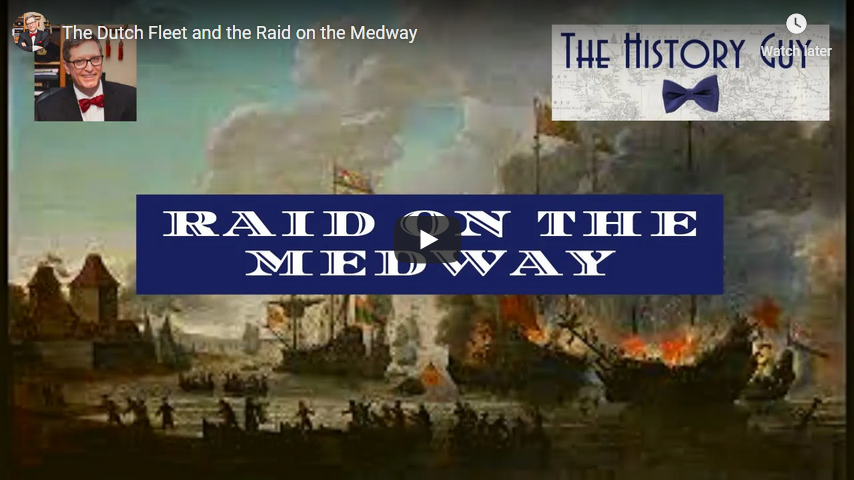
Two of the world’s greatest sea powers compete for control of the world’s shipping lanes. At the height of the Age of Sail, the Dutch fleet makes one of the most daring naval raids in history. The History Guy remembers the raid on the Medway.
This is original content based on research by The History Guy. Images in the Public Domain are carefully selected and provide illustration. As photographs of actual events are sometimes not available, photographs of similar objects and events are used for illustration.
The episode relates events that occurred during a period of conflict. All information is provided within historical context and is intended for educational purposes. Those who do not learn from history are doomed to repeat it.
The History Guy: History Deserves to Be Remembered is the place to find short snippets of forgotten history from five to fifteen minutes long. If you like history too, this is the channel for you.
Awesome The History Guy merchandise is available at:
teespring.com/stores/the-history-guy
#worldhistory #militaryhistory #thehistoryguy
Comments Off on The Dutch Fleet and the Raid on the Medway
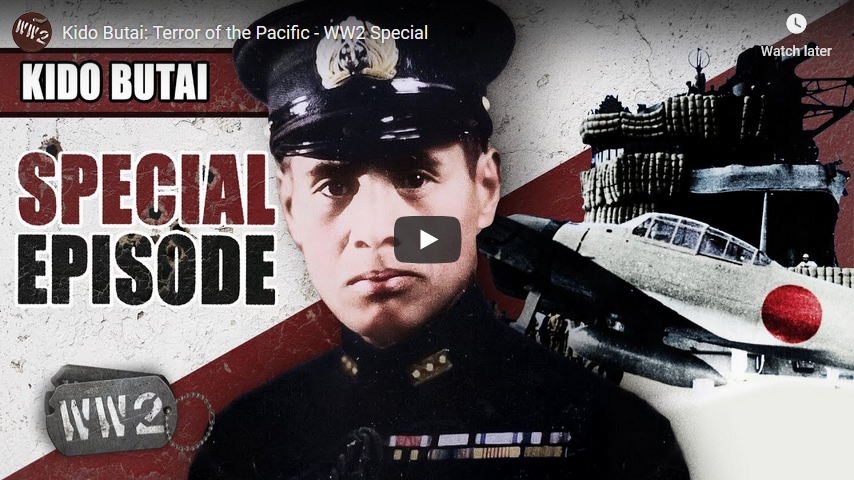
Kido Butai was the fleet that launched the surprise attack on the US Pacific Fleet at anchor at Pearl Harbor and followed that up with a string of victories in 1942. But how was it commanded, both as a whole and in the high and even mid level command? Today we’ll look at that.
Hosted by: Indy Neidell
Written by: Markus Linke and Indy Neidell
Director: Astrid Deinhard
Producers: Astrid Deinhard and Spartacus Olsson
Executive Producers: Astrid Deinhard, Indy Neidell, Spartacus Olsson, Bodo Rittenauer
Creative Producer: Maria Kyhle
Post-Production Director: Wieke Kapteijns
Research by: Markus Linke
Edited by: Miki Cackowski
Sound design: Marek Kamiński
Map animations: Eastory (https://www.youtube.com/c/eastory)
Soundtracks from the Epidemic Sound:
Jo Wandrini – “Dragon King”
Rannar Sillard – “March Of The Brave 4”
Yi Nantiro – “Watchman”
Philip Ayers – “The Unexplored”
Johannes Bornlof – “The Inspector 4”
Mandala Dreams – “Pacific Shores”
Phoenix Tails – “At the Front”
Philip Ayers – “Trapped in a Maze”
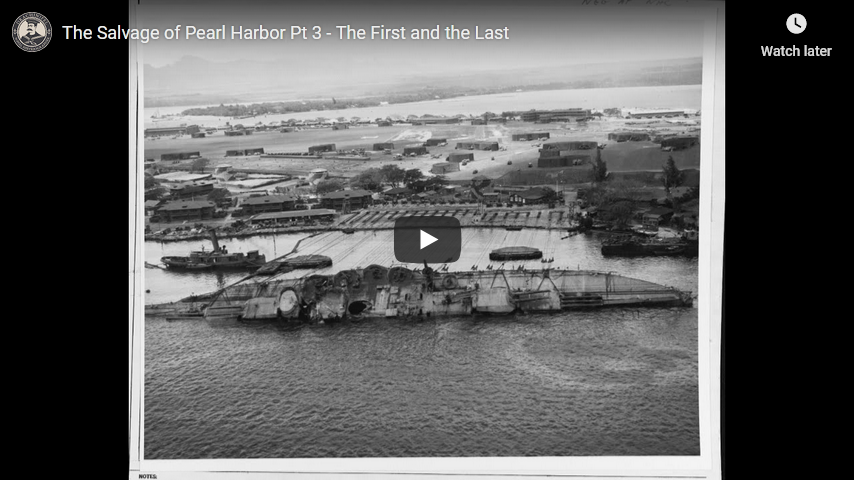
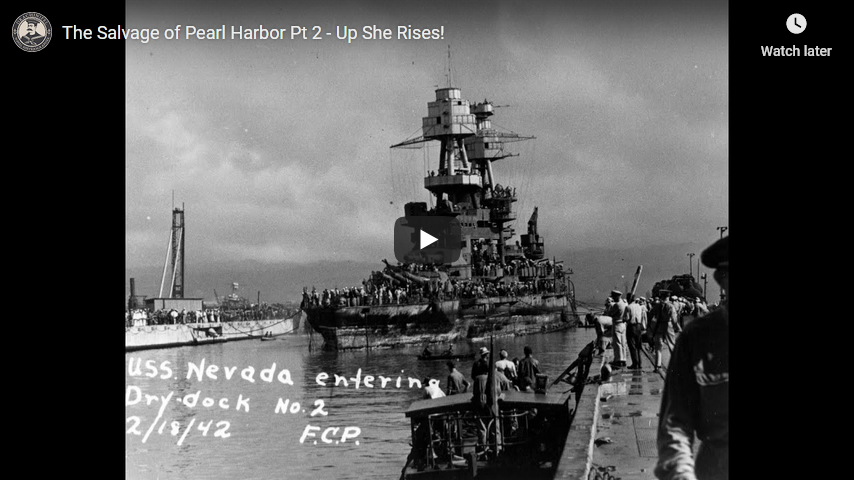
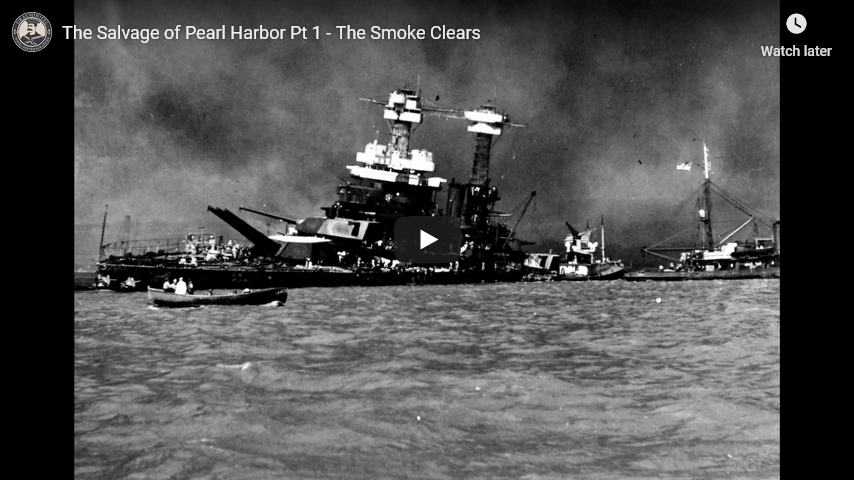
Today we look at the salvage efforts on the USS Shaw, first vessel salvaged from the remains of the attack on Pearl Harbor and the work on the last two vessels under the team’s care, the Utah and Oklahoma
Sources:
www.amazon.co.uk/gp/product/B00C0JIXJO https://www.history.navy.mil/our-coll…
www.amazon.co.uk/Pearl-Harbor-Fleet-Salvage-Appraisal/dp/0898755654
www.amazon.co.uk/Descent-into-Darkness-Harbour-Divers/dp/0891417451
Videos – US National Archives / US Department of Defense
Free naval photos and more – www.drachinifel.co.uk
Today we look at the salvage efforts on the three battleships outright sunk in the attack on Pearl Harbor that would be returned to service.
Sources:
www.amazon.co.uk/gp/product/B00C0JIXJO https://www.history.navy.mil/our-coll…
www.amazon.co.uk/Pearl-Harbor-Fleet-Salvage-Appraisal/dp/0898755654
www.amazon.co.uk/Descent-into-Darkness-Harbour-Divers/dp/0891417451
Videos – US National Archives / US Department of Defense
Free naval photos and more – www.drachinifel.co.uk
Powered by World of Warships – https://wo.ws/PearlHarbor – Register now to receive an exclusive bonus!
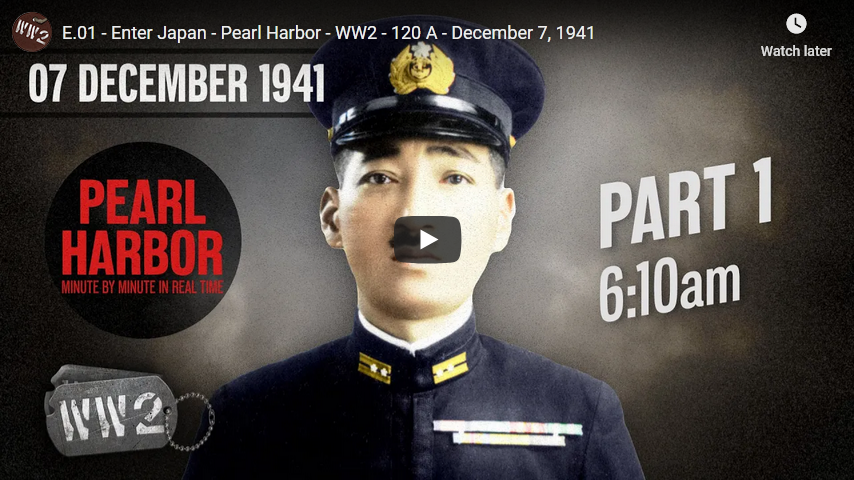
In this episode: Japan’s meticulous planning and preparation made it possible to surprise the Americans at Pearl Harbor. Alert on Oahu is largely nonexistent. It is the deep breath before the plunge.
Hosted by: Indy Neidell
Written by: Spartacus Olsson and Indy Neidell
Directed by: Wieke Kapteijns
Executive Producers: Astrid Deinhard, Indy Neidell, Spartacus Olsson, Bodo Rittenauer
Produced by: Astrid Deinhard and Spartacus Olsson
Co-Producers: Maria Kyhle and Francis van Berkel
Edited by: Iryna Dulka
Set Design by: Astrid Deinhard
Graphic Design by: Mikolaj Uchman
Map Animations by: Daniel Haczyk and Eastory
Assistant Editors: Miki Cackowski, Daniel Weiss, Karolina Dołega
Still Colorizers: Adrien Fillon, Norman Stewart, Jaris Almazani, Daniel Weiss, Mikolaj Uchman, Carlos Ortega Pereira
Research by: Indy Neidell, Spartacus Olsson, Markus Linke, Wieke Kapteijns, Bastian Gaete, Lewis Braithwaite, Tim Smith, Ian Irungu
Sound Design by: Marek Kamiński
Dogfights by: Daniel Weiss, Bastian Gaete, Ian Sowden, Dennis Stepanov
Voices:
Mitsuo Fuchida – Daniel Grieb
Ada Peggy Olsson – Shani Neidell Beard
Iyōzō Fujita – Emi Celis
James Anderson – Emi Celis
Dorinda Stagner – Zora Johnson
Jack Kelley – Ryan Socash
James McClelland – Spartacus Olsson
Phil Rasmussen – Spartacus Olsson
Dan Wentrcek – Dennis Stepanov
Thompson Izawa – Samir Mechel
Robert Isacksen – Ian Sowden
Joseph K. Taussig Jr. – Tim Smith
James Cory – Ryan Tebo
Film colorization by: Ricks Film Restoration
Naval Gameplay by: World of Warships
Archive material provided by: Reuters/Screenocean
A TimeGhost chronological documentary produced by OnLion Entertainment GmbH.
From the comments:
World War Two
1 hour ago (edited)
When we set out to do this crazy project we thought we wanted to try some really new things. As anyone knows that follows us regularly, our first and foremost goal is remembrance — to shine a light on our past and learn form our ancestors’ mistakes and achievements. We try our best to do that with a dedication to facts and details liberated from partisan, or ideological historiography. For this purpose, the attack on Pearl Harbor serves very well. It is a compact event over only a few hours that is spectacular in its nature, tragic in its effect, gripping in its drama, and has tremendous impact on WW2 on all fronts. It is also an event that is often simplified to the point of misunderstanding, has been woven into national mythology, and given rise to some pretty nutty conspiracy myths. Simply put: the Attack on Pearl Harbor is short enough, exciting enough, and misunderstood enough for us to do a limited series like this.
But more than that we also wanted to try some new technical and narrative things. Since we started doing historical documentaries with the Great War in 2014 we have tried to be on the forefront of pioneering new ways of creating historiography for the modern media world. Narratively, we have dedicated ourselves to chronologies, which in historiography is nothing new, but it is new in the world of film documentaries (at least to the level we do it) — so we thought; “heck what if we go down to minute by minute for this” — well we did and it taught us an enormous amount about Pearl Harbor, but also about how we can write. We will get back to that in further comment on the series. As for technology, it truly is technology that enables our work, well any media — for us it is social media, affordable ways to capture film, global virtual remote working spaces, digital research opportunities, digital film archives, and so on.
Two areas we had not been able to venture into was recreation of scenes using computer graphics and colorization of moving images. Using a gaming engine to create animation is also nothing new, but usually very, very expensive because you have to first create the world, the assets and the characters for your recreation. But for Pearl Harbor, World of Warships https://worldofwarships.com and World of Warplaneshttps://worldofwarplanes.com opened an opportunity to do this on a new scale at a cost that is only a fraction of what it usually costs. Along the way we also got to know Ricks Film Restorations (https://bit.ly/ricksfilmresorations and https://www.youtube.com/user/Rick88888888) who use AI technology to enhance and colorize film footage. While both of these technologies are only at the beginning of their potential, we think the results are spectacular. More than anything it has enabled us to enhance the emotional and visual experience for this series to a level we never reached before. Last but not least it enabled us to use the financial contributions of the TimeGhost Army, and World of Warships to create five hours of content for less than 1/50th — only 2% — of what it would cost to do with traditional means.
creatingstuff
In the Name of the entire TimeGhost Team,
Astrid, Indy, Spartacus, and Wieke
Episode Guide:
This is a 10 episode limited series within our weekly coverage of WW2 — to see the immediate events leading up to this day watch episode 119 from December 5, https://youtu.be/DYUzmBuX-6Y. Some of the events covered briefly as they start on this day, such as the invasions in the West Pacific will be covered in more detail in the coming weeks, especially in episode 120K (the 11th episode this week).coming out on December 12.
The History Guy: History Deserves to Be Remembered
Published 22 Apr 2019
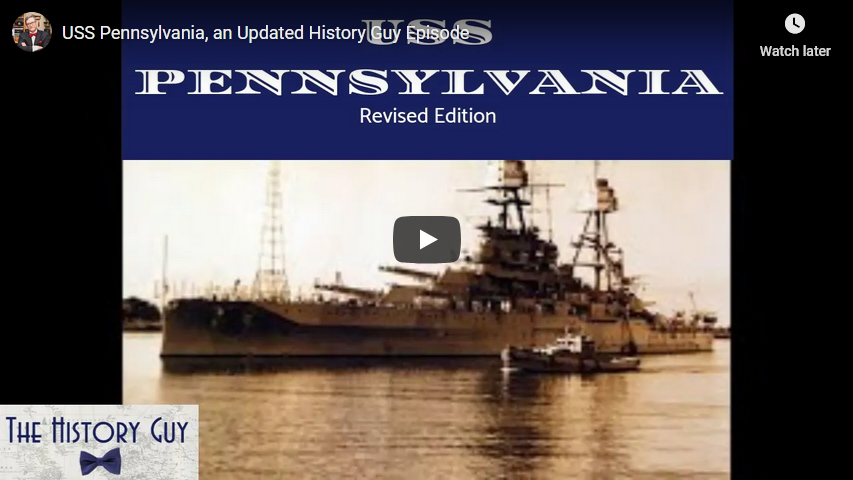
USS Pennsylvania was in dry dock when the attack came at Pearl Harbor. The History Guy remembers part of her history that may have been forgotten.
This episode was originally posted December 7, 2017. It has been updated to correct some errors in the original, and new footage of USS Pennsylvania has been added.
This is original content based on research by The History Guy. Images in the Public Domain are carefully selected and provide illustration. As images of actual events are sometimes not available, images of similar objects and events are used for illustration.
All events are portrayed in historical context and for educational purposes. No images or content are primarily intended to shock and disgust. Those who do not learn from history are doomed to repeat it. Non censuram.
The History Guy: History Deserves to Be Remembered is the place to find short snippets of forgotten history from five to fifteen minutes long. If you like history too, this is the channel for you.
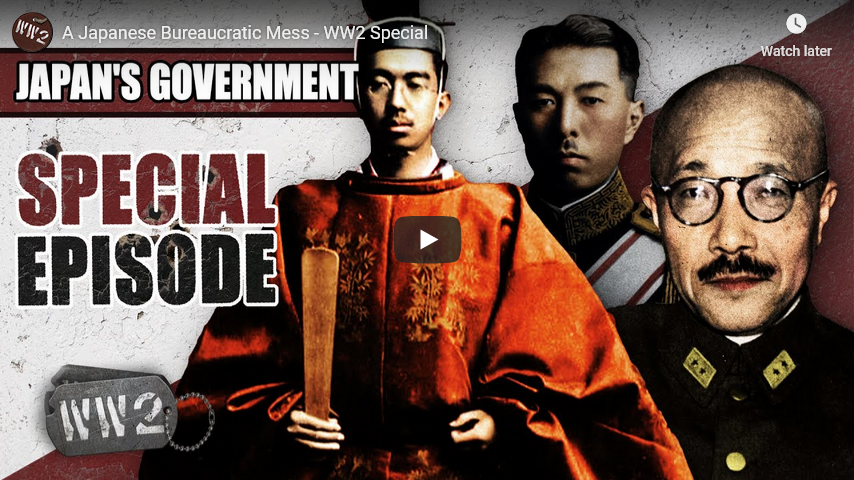
Contrary to popular belief, Imperial Japan was not an absolute monarchy marching (or sailing) to war with singular vision and purpose. Rather, it was a dysfunctional government of competing factions, players and interests.
Written and Hosted by: Indy Neidell
Director: Astrid Deinhard
Producers: Astrid Deinhard and Spartacus Olsson
Executive Producers: Astrid Deinhard, Indy Neidell, Spartacus Olsson, Bodo Rittenauer
Creative Producer: Maria Kyhle
Post-Production Director: Wieke Kapteijns
Research by: Indy Neidell
Edited by: Michał Zbojna
Sound design: Marek Kamiński
Map animations: Eastory (https://www.youtube.com/c/eastory)
Sources:
From the Noun Project: company soldiers by Andrei Yushchenko, Government by Nithinan Tatah, Shiro by Simon Child, War by Nhor, House by Eucalyp from the Noun Project
Soundtracks from the Epidemic Sound:
“ES_Paths of a Samurai” – Mandala Dreams
“ES_Sights of the Tokyo Tower” – Sight of Wonders
“ES_The Bloom of Cherry Blossoms” – Sight of Wonders
“ES_Immovable As The Mountain” – Yi Nantiro
“ES_Pacific Shores” – Mandala Dreams
The easiest tonnage to understand is displacement tonnage. This is the actual weight of the ship, called displacement because the weight of the ship is equal to the amount of water it displaces, per Archimedes’ principle. Of course, the displacement of a ship can change greatly depending on what’s aboard, so several different displacements are often used. A good reference will give three values, light, normal, and full. Light is basically an empty ship. There are some technical details, but in essence it’s what the ship weighs if we take all the people, fuel, cargo, ammunition, and supplies out of it. Full displacement is exactly what you’d expect from the name. The ship is as heavy as it’s ever going to be, with full fuel, ammo, and cargo. Normal is essentially a ship with full cargo and crew, but two-thirds fuel and ammunition. On warships, it’s common for light displacement to be 75% or so of full displacement, so it’s obvious that a poor choice of reference numbers can cause confusion about the actual sizes of the ships in question. Displacement tonnage in non-metric references is always given in long tons of 2,240 lb each. This is to allow easy conversion, as a long ton of salt water has a volume of almost exactly 35 cubic feet.
Displacement tonnage is the only tonnage value commonly used for warships, while merchant ships use a completely different set of tonnages, usually deadweight tons, gross tons, and net tons. Deadweight tonnage is at least an actual measure of weight, and specifies how much cargo the ship is able to carry, excluding the weight of the ship itself. Gross tonnage and net tonnage are both basically volumetric measures, specified using complicated formulas. Gross tonnage is based on the total volume of all enclosed spaces of the ship, while net tonnage is based only on the volume of the spaces that carry cargo or passengers. These values are used to calculate things like port duties and what regulations apply to the ship. They replaced gross and net register tons, which were also volumetric, of 100 cubic feet to the ton. These were based on a phenomenally complicated set of rules to determine what spaces were and weren’t counted, with shipowners trying to game the system and drive down their tonnage. Worse, different countries had different regulations on what counted under each value, so in 1969, register tonnages were abolished and replaced with the existing system.
While distance, speed, and “tonnage” measurements are the most prominent nautical idiosyncracies, there are a few other values that bear mentioning. The maximum width of a ship is the beam, apparently from the beams that used to run across ships during the days of sail. Draft (or draught) is how deep the hull is below the waterline. This is a very important number to make sure the ship doesn’t run aground, but it varies continually with the amount of stuff on the ship. Air draft is sometimes used for height above the water, important for clearing bridges and the like. Length, much like tonnage, comes in several values. The obvious one is length over all, LOA, which is exactly what it sounds like, measured from the furthest forward to the furthest aft point on the ship. This is obviously useful, but for hydrodynamic purposes another value, waterline length (LWL), is what the designer cares about. The last value is length between perpendiculars (LBP), measured between the vertical stem (bow) post and the vertical stern post. This is another value that was developed for civilian use. Some ships of a given LOA have a great deal of overhang at bow and stern, making them much smaller than other ships with the same nominal LOA. Using LWL is not a good solution, as it varies with draft. LBP solves both of these problems, but isn’t of great importance to warships.
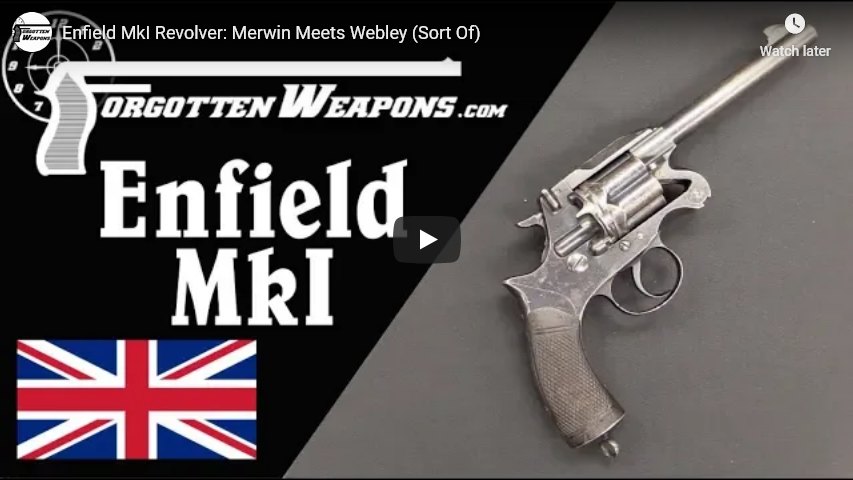
Adopted in 1880 to replace the Adams revolver, the Enfield MkI was based on an extraction system patented in the 1870s by Owen Jones of Philadelphia. This was similar in practice to the Merwin & Hulbert, with the barrel and cylinder hinging forward while the cartridge cases were held to the back of the frame. This system allowed empty cases to drop free (except the 6 o’clock position one, which often stuck) while retaining any unfired cartridges in the cylinder. Because the extractor star was fixed to the frame, the piece had to be loaded one round at a time through a loading gate (again, like the Merwin & Hulbert).
In 1882 a number of improvements were made to the design and lockwork, including features to prevent the cylinder from rotating freely and to disconnect the hammer when the loading gate was open. This was adopted as the MkII in 1882. A further change was made in 1887, following the death of a Royal Navy sailor whose gun fell out of its holster and discharged upon hitting the hammer. A new safety mechanism was added to prevent this from happening again, and most guns in service were retrofitted with it.
The Enfield was generally not well received, as it was heavy and a bit awkward to handle. It was issued to the Army, Navy, and RCMP, but replaced by the first adopted Webley top-break revolvers in the late 1880s (Enfield MkII production ceased in 1889). Unlike the Webleys and other private-production guns, there was never a civilian version of the Enfield MkI or MkII made, and they are scarcer to find today as a result.