Quotulatiousness

October 30, 2019

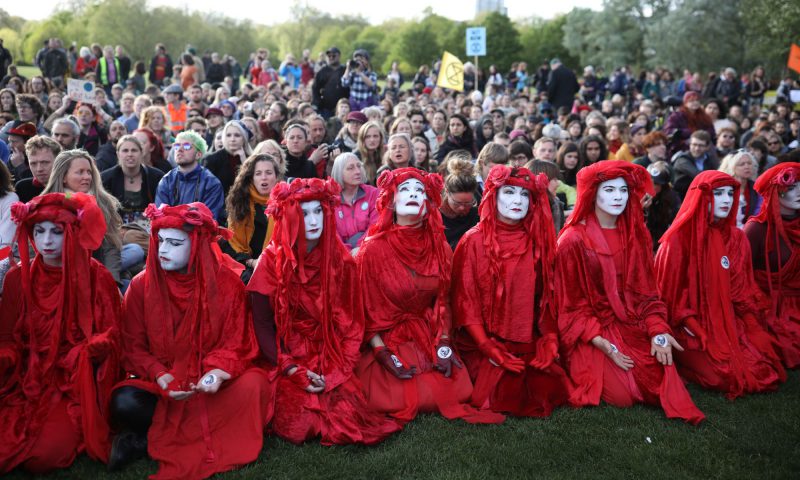
In case it wasn’t already obvious – “Extinction Rebellion isn’t about the climate”

One of the self-described founders of Extinction Rebellion takes to Medium to explain what the organization’s real goals are:

I’ve been with Extinction Rebellion (XR) from the start. I was one of the 15 people in April 2018 who came together and made the collective decision to try to create the conditions that would initiate a rebellion. I was a coordinator of one of the original five working groups, and I’ve been organising with XR day-and-night since then (frugally living off my savings so I don’t have to work, having quit an industry that paid me £1000/week). And I’ve been in RisingUp (the organisation from which XR has emerged) since the first RisingUp action in November 2016. I’m a RisingUp Holding Group member, and a member of the XR Guardianship Team.

And for the sake of transparency: that previous paragraph is all about me “pulling rank” — I’m trying to convince you to listen to what I have to say …

And I’m here to say that XR isn’t about the climate. You see, the climate’s breakdown is a symptom of a toxic system of that has infected the ways we relate to each other as humans and to all life. This was exacerbated when European “civilisation” was spread around the globe through cruelty and violence (especially) over the last 600 years of colonialism, although the roots of the infections go much further back.

[…]

So Extinction Rebellion isn’t about the climate. It’s not even about “climate justice”, although that is also important. If we only talk about the climate, we’re missing the deeper problems plaguing our culture. And if we don’t excise the cause of the infection, we can never hope to heal from it.

This article is calling to all of those who are involved in XR who sometimes slip into saying it’s a climate movement. It’s a call to the American rebels who made a banner saying “CLIMATE extinction rebellion”. It’s a call to the XR Media & Messaging teams to never get sloppy with the messaging and “reduce” it to climate issues. It’s a call to the XR community to never say we’re a climate movement. Because we’re not. We’re a Rebellion. And we’re rebelling to highlight and heal from the insanity that is leading to our extinction. Now tell the truth and act like it.

October 18, 2019

Hong Kong

Filed under: Britain, China, Government, History, Liberty — Tags: , , , — Nicholas @ 05:00

David Warren on how Hong Kong got to be Hong Kong:

The motto of the resistance in Hong Kong is on my lips much lately, though often I am not applying it to Hong Kong. Nor am I not. I look at this “Oriental entrepôt” (as we used to say before political correctness), where once I lived for a couple of months, from a great and widening distance. The people there are quite another generation from that which I remember; of course they seem much younger. The idea of the inhabitants of Hong Kong nearly closing the city with demonstrations, week after week, was not formerly possible to imagine. But their enthusiasm for the personal freedom they once enjoyed (under the aegis of British imperialism and colonialism, descending from opium wars), hardly surprises me.

The British approach was finally, live and let live; but it had an administrative basis. From the 1950s, Hong Kong was an experiment. What would happen if they deregulated almost everything, and cut taxes to match? If they consciously de-politicized the colonial administration? If they shrank police functions to what was needed only to direct traffic, and defeat crime? The result was, as ever, unprecedented prosperity, but more: a people who forgot the habit even of kow-towing to men “dress’d in a little brief authority.”

People were transformed, from indifferent parts in a rusting machine, to free agents. (Unfortunately, in a broader view, prosperity also kills, as people use their freedom only for material gain, and a new jackboot state grows around the need to protect against the consequences.)

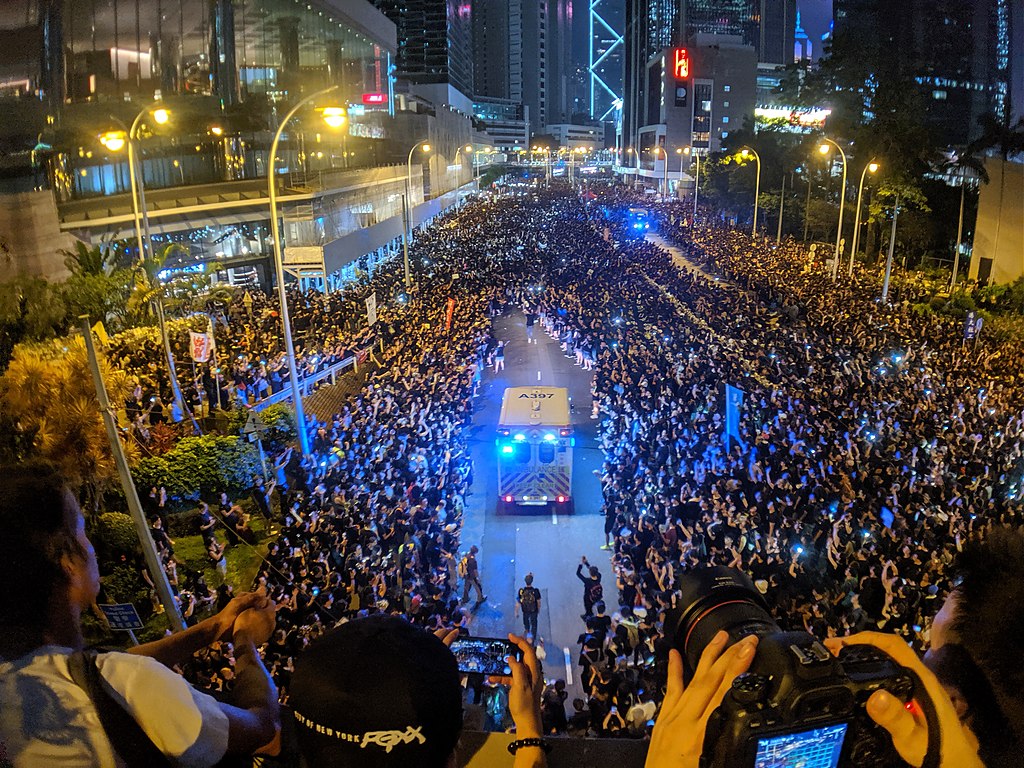
Hong Kong is a city now of seven million souls. It has, as it had, economic and social classes — plenty of them — yet the present “troubles” have nought to do with class. Opposition to the Communist government is as broad as it was in all ex-Soviet states, as we discovered when the Berlin Wall fell, and nearly discovered across China in the moment of Tiananmen. Rebellion, to start, is an urban phenomenon; it begins with a sudden collective sense that “we have the numbers.” The fear, upon which all tyrannical regimes depend, evaporates. What happens next is anyone’s guess, except, we can know the regime is doomed.

2019 Hong Kong anti-extradition law protest on 16 June, captured by Studio Incendo from Flickr.
Photo via Wikimedia Commons

October 17, 2019

England in 1550 was a remarkably unpromising location for the later industrial revolution

Filed under: Britain, Economics, Europe, History — Tags: , , , , , , — Nicholas @ 03:00

Anton Howes, in his investigations on the Industrial Revolution looks back in time to see where or even if England deviated from the rest of Europe in ways that made the revolution possible, thinks he’s located the crucial time:

If a peaceful extraterrestrial visited the world in 1550, I often wonder where it would see as being the most likely site of the Industrial Revolution – an acceleration in the pace of innovation, resulting in sustained and continuous economic growth. So many theories about why it happened in Britain seem to have a sense of inevitability about them, but our extraterrestrial visitor would have found very few signs that it would soon occur there. There were many better candidates, on a multitude of metrics.

[…]

But England in 1550 was by global standards quite poor. Historical GDP per capita measures are notoriously difficult to obtain, even for some countries in the twentieth century let alone the sixteenth. The historical GDP per capita of England – by far the most studied region – is still hotly debated among economic historians. Nonetheless, according to the most recent collection of estimates – the Maddison project’s database of 2018 – in 1550 our extraterrestrial visitor would have been much more interested in Belgium. England at that stage lagged behind almost all of the areas for which we have estimates: Holland, Spain, Italy, Sweden, and France. In 1600, it was behind Portugal and India. Here are the figures in 2011 dollars; the colours are by row:

Such estimates should of course be taken with a hefty boulder of salt. (Note, also, that these particular figures, called “CGDPpc”, are something of an innovation by the team compiling the Maddison Project Database – they use multiple benchmarks to improve how we compare countries’ relative incomes in any particular year, which comes at the cost of not being able to compare their growth rates, for which there are separate figures. In other words, you should read the figures by row, not by column.) But it is worth noting that the more recent research on historical GDP per capita, finally filling in some details for regions other than England and Holland, often results in those other countries seeming richer in the sixteenth and seventeenth centuries. The more we know, the more the traces of an early English divergence seem to disappear.

Even without access to such statistics, however, our visitor would have noticed that in the mid-1550s England suffered severe food shortages. Indeed, the threat of famine would be present right up until the beginning of the eighteenth century: there was a major famine in the north of England in 1649, and even a famine in the 1690s that killed between five and fifteen percent of Scotland’s population. Britain would one day become perhaps the first famine-free region, but that did not occur until much later, when innovation had already begun to accelerate. It may even have been its result.

And England in 1550 was not just poor; it was also weak. If our visitor thought, as some historians do, that conquest and exploitation were essential for future growth, then it was Spain that had the major overseas empire, followed by Portugal. England in 1550 had no colonies in the New World, and its attempts to found them all failed until the seventeenth century, by which stage the Dutch and French had also begun to extend their own empires too. It was not until the eighteenth century that Britain began to exceed them.

October 5, 2019

Legends Summarized: El Dorado

Overly Sarcastic Productions
Published 4 Oct 2019

El Dorado! A shining golden city packed with promises of wealth, power and everlasting glory. An unspoiled paradise deep in the jungle, the PERFECT destination for treasure-hunters and anthropologists alike. Something that perfect is something EVERYONE wants to be real.

Aaaaand that’s the trick, isn’t it? Wanting something that badly isn’t healthy. Just ask the conquistadors!
(Oh wait, we can’t – because so many of them died on fruitless quests for El Dorado. And also it’s been five hundred years and they’d all be dead anyway)

PATREON: https://www.Patreon.com/OSP

MERCH LINKS: https://www.redbubble.com/people/OSPY…

OUR WEBSITE: https://www.OverlySarcasticProductions.com
Find us on Twitter https://www.Twitter.com/OSPYouTube
Find us on Reddit https://www.Reddit.com/r/OSP/

September 30, 2019

Ten Minute History – The Early British Empire

Filed under: Americas, Britain, History, India, Military — Tags: , , , , , , — Nicholas @ 02:00

History Matters
Published on 26 Sep 2016

Twitter: https://twitter.com/Tenminhistory
Patreon: https://www.patreon.com/user?u=4973164

This episode of Ten Minute History (like a documentary, only shorter) covers the birth and rise of the British Empire from the reign of Henry VII all the way to the American Revolution. The first part deals with the Tudors and their response to empire in Spain (as well as the Spanish Armada). The second part deals with England’s (and later Britain’s) establishment of its own empire in North America and India. It then concludes with the Seven Years’ War and the American Revolution.

Ten Minute History is a series of short, ten minute animated narrative documentaries that are designed as revision refreshers or simple introductions to a topic. Please note that these are not meant to be comprehensive and there’s a lot of stuff I couldn’t fit into the episodes that I would have liked to. Thank you for watching, though, it’s always appreciated.

September 22, 2019

The Inca Empire – A God Taken Hostage – Extra History – #5

Filed under: Americas, Europe, History, Military, Religion — Tags: , , , , , — Nicholas @ 06:00

Extra Credits
Published on 21 Sep 2019

Join us on Patreon! http://bit.ly/EHPatreon

Atahualpa vs. Francisco Pizarro. The Incas had never seen horses before, and it wasn’t long before the Spanish had captured Atahualpa as a hostage for gold and silver. But Atahualpa had a plan. He found a way to use this situation to his own political advantage — and Pizarro eventually destroyed himself through his greed and violent carelessness that appalled the Spanish government, eventually allowing the Incas to thrive again.

Follow us on Instagram: http://bit.ly/ECisonInstagram

September 4, 2019

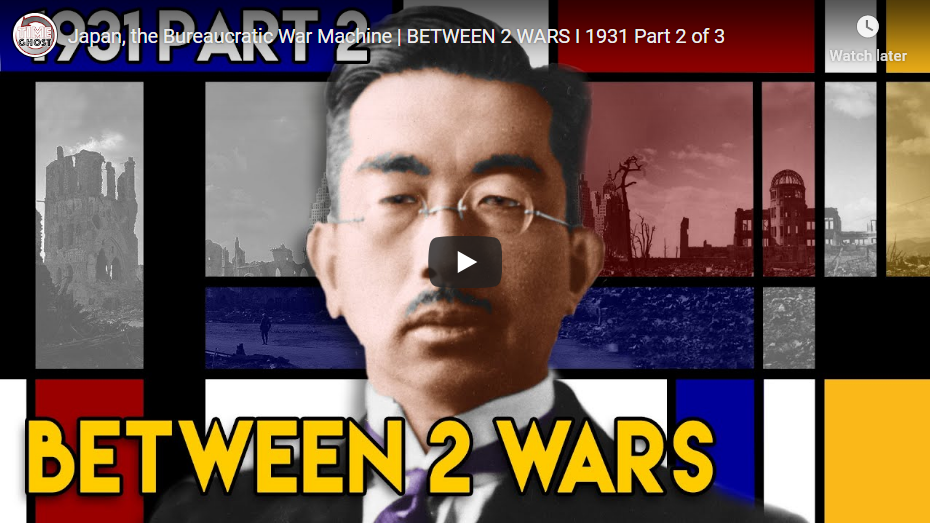
Japan, the Bureaucratic War Machine | BETWEEN 2 WARS I 1931 Part 2 of 3

Filed under: Bureaucracy, China, History, Japan, Military — Tags: , , , , , — Nicholas @ 04:00

TimeGhost History
Published on 3 Sep 2019

In Japan there has been a gradual increase of militarism since the Great War and in 1931 the country goes to war again when they invade Chinese Manchuria based on a false flag terrorist strike at the Mukden railway junction.

Join us on Patreon: https://www.patreon.com/TimeGhostHistory

Subscribe to our World War Two series: https://www.youtube.com/c/worldwartwo…

Hosted by: Indy Neidell
Written by: Spartacus Olsson
Directed by: Spartacus Olsson and Astrid Deinhard
Executive Producers: Bodo Rittenauer, Astrid Deinhard, Indy Neidell, Spartacus Olsson
Creative Producer: Joram Appel
Post-Production Director: Wieke Kapteijns
Research by: Joram Appel and Spartacus Olsson
Edited by: Danile Weiss
Sound design: Marek Kaminsky

Sources:

A TimeGhost chronological documentary produced by OnLion Entertainment GmbH.

Sources:

James Fulcher, The Bureaucratization of the State and the Rise of Japan (1988)

Katō Yōko, “The debate on fascism in Japanese historiography”, in: Sven Saaler and Christopher W.A. Szpilman (ed.), Routledge Handbook of Modern Japanese History (2018), 225-236.

Ethan Mark, “Japan’s 1930s crisis, fascism, and social imperialism”, in: Sven Saaler and Christopher W.A. Szpilman (ed)., Routledge Handbook of Modern Japanese History (2018), 237-250.

Penolepe Francks, “The path of economic development from the late nineteenth centre to the economic miracle”, in: Sven Saaler and Christopher W.A. Szpilman (ed)., Routledge Handbook of Modern Japanese History (2018), 267-278.

Sandra Wilson and Robert Cribb, “Japan’s colonial empire”, in: Sven Saaler and Christopher W.A. Szpilman (ed)., Routledge Handbook of Modern Japanese History (2018), 77-91.

Mark R. Peattie, “Nanshin: The ‘Southward Advance’, 1931-1941, as a Prelude to the Japanese Occupation of Southeast Asia”, in: Peter Duus e.a., The Japanese Wartime Empire, 1931-1945 (2010), 190-242.

From the comments:

TimeGhost History
13 minutes ago
This is the third of several episodes that cover the developments in East Asia leading to World War Two. In this episode we look at how Japan by 1931 has developed to be on the brink of a fascist state without anyone specifically taking power or staging a coup. The democratic reforms from the past four decades are dying a death by a thousand cuts as the Japanese administration and military simply take one small decision after the other that erodes freedom, dials back democracy, and inevitably leads to war. It’s an anonymous, mechanic, gradual movement towards global conflict proceeding with clockwork precision.

This episode also sees the first change to the Between 2 Wars set as Astrid and Wieke have started adapting the set to the changing themes, while we move closer and closer to the outbreak of WW2 — we’d love to hear what you think!

August 31, 2019

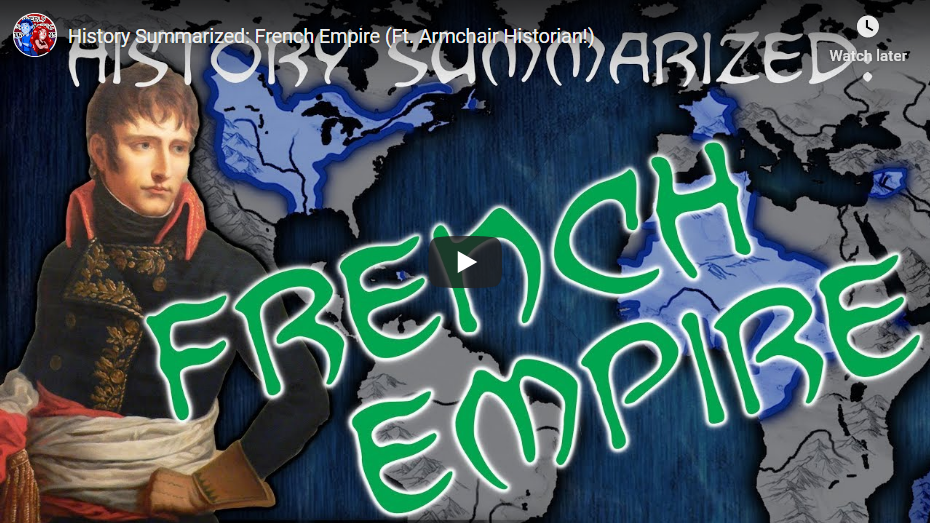
History Summarized: French Empire (Ft. Armchair Historian!)

Overly Sarcastic Productions
Published on 30 Aug 2019

Check out the Armchair Historian channel for more on French Vietnam and the battle of Dien Bien Phu: https://youtu.be/IJ051WyUsW8

Dubious morality, drawn out timescales, intricate royal politics, worldwide stages — Colonialism be like that sometimes. And by “Like That” I mean impenetrably complicated. I did my best, I’ll say that, but oh man is history a mess in the 15-1900s. This stuff is the reason I had so much trouble with history for so long. It’s just so DENSE.

ANYWAY, join Blue and Griffin the Armchair Historian for a look into the history of the multiple successive French Empires. Listen carefully as Blue makes imperceptibly subtle commentary about his extremely non-biased opinions on this chapter in history, and laugh together as we analyze the historical significance of Napoleon Bonaparte’s anime hair.

NOTE on 6:14 — I say Napoleon became Emperor in 1802. That’s a mistake. In 1802, the constitution of France was amended to make the position of Consul permanent, but Napoleon did not become the Emperor until 1804, when he declared the French Empire. That’s my bad.

NOTE on 11:25 — French Guiana, on the northeast coast of South America, remained part of France following the decolonization of Africa. That’s a mapping mix-up.

DISCORD: https://discord.gg/sS5K4R3

PATREON: https://www.Patreon.com/OSP

August 28, 2019

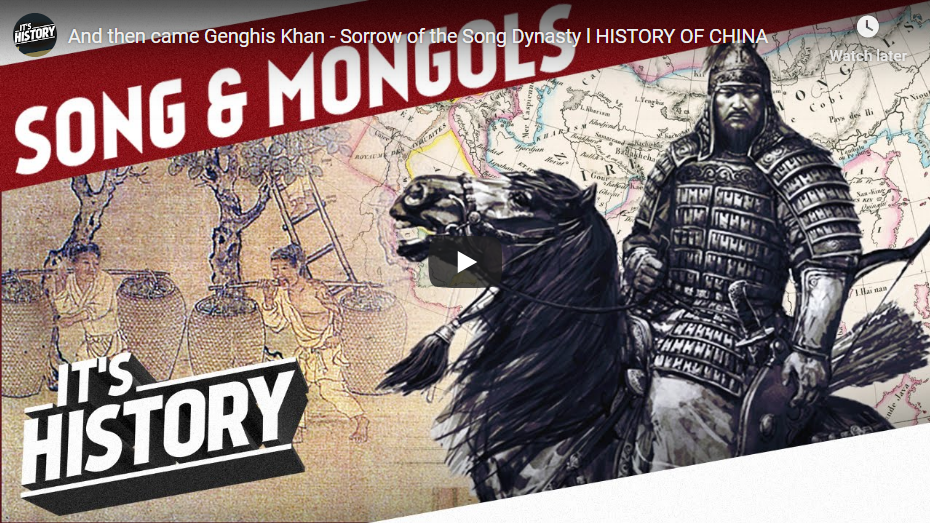
And then came Genghis Khan – Sorrow of the Song Dynasty l HISTORY OF CHINA

Filed under: Bureaucracy, China, Economics, History — Tags: , , , — Nicholas @ 04:00

IT’S HISTORY
Published on 10 Aug 2015

The Song dynasty is often described as an early modern economy. It marked a lot of economical changes from previous dynasties. Starting with the decentralisation of power and reduced economical involvement, it brought on industrial growth and agricultural expansion. Although being forced to advance in military technology due to wars with the Liao and the Jurchen, the Song would eventually fall to the Mongols. Crumbling under Genghis Khan’s attacks it would only take one generation until his successor Kublai Khan would declare a new Yuan Dynasty. Find out all about this Epoch on IT’S HISTORY!

» SOURCES
Videos: British Pathé (https://www.youtube.com/user/britishp…)
Pictures: mainly Picture Alliance
Content:
Benn, Charles (2002), China’s Golden Age: Everyday Life in the Tang dynasty, Oxford University Press
Ebrey, Patricia Buckley (1999), The Cambridge Illustrated History of China, Cambridge: Cambridge University Press
Gascoigne, Bamber; Gascoigne, Christina (2003), The Dynasties of China: A History, New York
Levathes, Louise (1994), When China Ruled the Seas, New York: Simon & Schuster
Whitfield, Susan (2004), The Silk Road: Trade, Travel, War and Faith, Chicago: Serindia

» ABOUT US
IT’S HISTORY is a ride through history – Join us discovering the world’s most important eras in IN TIME, BIOGRAPHIES of the GREATEST MINDS and the most important INVENTIONS.

» HOW CAN I SUPPORT YOUR CHANNEL?
You can support us by sharing our videos with your friends and spreading the word about our work.

» CAN I EMBED YOUR VIDEOS ON MY WEBSITE?
Of course, you can embed our videos on your website. We are happy if you show our channel to your friends, fellow students, classmates, professors, teachers or neighbors. Or just share our videos on Facebook, Twitter, Reddit etc. Subscribe to our channel and like our videos with a thumbs up.

» CAN I SHOW YOUR VIDEOS IN CLASS?
Of course! Tell your teachers or professors about our channel and our videos. We’re happy if we can contribute with our videos.

» CREDITS
Presented by: Guy Kiddey
Script by: Guy Kiddey
Directed by: Daniel Czepelczauer
Director of Photography: Markus Kretzschmar
Music: Markus Kretzschmar
Sound Design: Bojan Novic
Editing: Markus Kretzschmar

A Mediakraft Networks original channel
Based on a concept by Florian Wittig and Daniel Czepelczauer
Executive Producers: Astrid Deinhard-Olsson, Spartacus Olsson
Head of Production: Michael Wendt
Producer: Daniel Czepelczauer
Social Media Manager: Laura Pagan and Florian Wittig

Contains material licensed from British Pathé
All rights reserved – © Mediakraft Networks GmbH, 2015

August 24, 2019

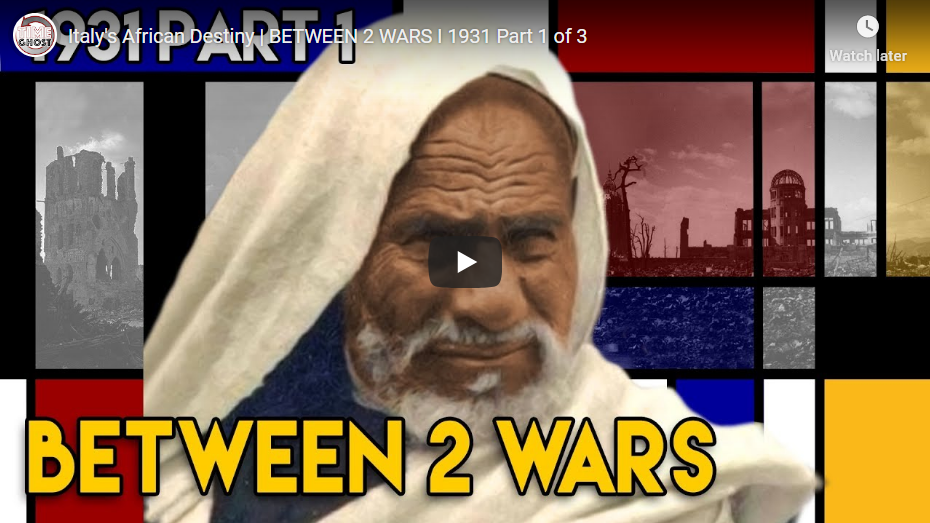
Italy’s African Destiny | BETWEEN 2 WARS I 1931 Part 1 of 3

Filed under: Africa, Europe, History, Italy, Military — Tags: , , , , , , — Nicholas @ 05:00

TimeGhost History
Published on 23 Aug 2019

When Mussolini wants to solidify Italy’s North African colonies, he faces massive opposition by one man: Omar Mukhtar, the Lion of the Desert.

Join us on Patreon: https://www.patreon.com/TimeGhostHistory

Subscribe to our World War Two series: https://www.youtube.com/c/worldwartwo…

Hosted by: Indy Neidell
Written by: Spartacus Olsson
Directed by: Spartacus Olsson and Astrid Deinhard
Executive Producers: Bodo Rittenauer, Astrid Deinhard, Indy Neidell, Spartacus Olsson
Creative Producer: Joram Appel
Post-Production Director: Wieke Kapteijns
Research by: Naman Habtom
Edited by: Daniel Weiss
Sound design: Iryna Dulka

Archive by Reuters/Screenocean http://screenocean.com

Sources:

Online:
https://www.politico.com/blogs/ben-sm…
Muslim Fascist Party and Youth Wing
http://countrystudies.us/libya/21.htm (Library of Congress)
https://www.nam.ac.uk/explore/senussi…
https://awayfromthewesternfront.org/c…
https://www.brookings.edu/blog/order-…
https://trove.nla.gov.au/newspaper/ar…

Journal Articles:
Arielli, Nir. “Italian Involvement in the Arab Revolt in Palestine, 1936-1939.” British Journal of Middle Eastern Studies, vol. 35, no. 2, 2008, pp. 187–204. JSTOR, www.jstor.org/stable/20455584.

Bussotti, L. (2016) “A History of Italian Citizenship Laws during the Era of the Monarchy (1861-1946)”. Advances in Historical Studies, 5, 143-167. doi: 10.4236/ahs.2016.54014.

Cooke, James J. “Destino Affricano De Popolo Italiano: Franco-Italian Controversy Over Tunisia, 1936-1940.” Proceedings of the Meeting of the French Colonial Historical Society, 13/14, 1990, pp. 203–216. JSTOR, www.jstor.org/stable/42952205.

Collins, Carole. “Imperialism and Revolution in Libya.” MERIP Reports, no. 27, 1974, pp. 3–22. JSTOR, www.jstor.org/stable/3011335.

KOPANSKI, ATAULLAH BOGDAN. “ISLAM IN ITALY AND IN ITS LIBYAN COLONY (720-1992).” Islamic Studies, vol. 32, no. 2, 1993, pp. 191–204. JSTOR, www.jstor.org/stable/20840121.

Pankhurst, Richard. “Education in Ethiopia during the Italian Fascist Occupation (1936-1941).” The International Journal of African Historical Studies, vol. 5, no. 3, 1972, pp. 361–396. JSTOR, www.jstor.org/stable/217091.

Pretelli, Matteo. “Education in the Italian colonies during the interwar period.” Modern Italy, Vol. 16, No. 3, August 2011, 275–293

Books:
Mark I. Choate: Emigrant nation: the making of Italy abroad, Harvard University Press, 2008, ISBN 0-674-02784-1, page 175.

Peter Bandella The Eternal City: Roman Images in the Modern World, Chapter 7 – The University of North Carolina Press, 1987, ISBN 0-8078-6511-7

Ahmad Hassanein Bey The Lost Oases (read a Swedish translation by Ulla Ericson), American University of Cairo, reprinted 2006 (original 1925), ISBN 978-91-87771-41-5

A TimeGhost chronological documentary produced by OnLion Entertainment GmbH.

From the comments:

TimeGhost History
1 hour ago
As we approach one year of WW2 In Real Time we cannot express our gratitude for your support enough. It is the financial and spiritual involvement of the TimeGhost Army at https://www.patreon.com/TimeGhostHistory and https://timeghost.tv that has made it possible for us to do all of this – so thank you, once again!

This episode comes out as our WW2 series is covering the first battles in the North African theatre. The Second World War there will have major impact on world events between 1940 and 1944. And this is the second episode covering the background to the conflict in North Africa and the Middle East. We will return to Africa again, but before that we will look at what is going on in Germany, Japan and the USSR in the early 1930s – as some of you might already guess or know, those are dramatic times in those places and it is in these years that the world takes its first concrete steps towards the conflict that erupts into world war in 1939.

August 17, 2019

The British Empire in retrospect

Filed under: Books, Britain, History, India — Tags: , , , — Nicholas @ 03:00

It’s been fashionable to dismiss the British Empire as a positive force in history for about 100 years (partly in reaction to the losses during the First World War), but Casey Chalk reviews a recent book that counter-cherry-picks the facts to show it wasn’t all an authoritarian dystopia and cultural wasteland:

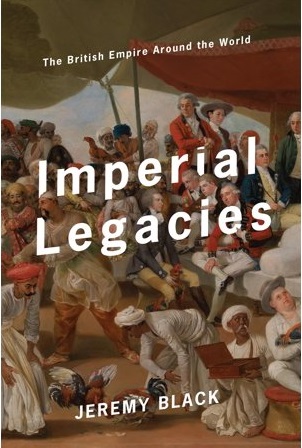
… the central argument of University of Exeter professor of history Jeremy Black’s new book Imperial Legacies: The British Empire Around the World, which, according to the book jacket, is a “wide-ranging and vigorous assault on political correctness, its language, misuse of the past, and grasping of both present and future.” The imperial legacy of Great Britain is also, in a way, an instructional lesson for the United States, which, much like the British Empire of the early to mid-20th century, is experiencing a slow decline in influence.

As a former history teacher who has visited many former British colonies in Africa and Asia, I’ve been well catechized in how British imperialism is interpreted. The British, so we are told, were violent aggressors and expert political manipulators. Using their technological superiority and command of the seas, they subjugated cultures across the globe, applied the “divide and rule” policy to set ethnic and linguistic groups against one another, extracted resources for profit, and stole cultural artifacts that now collect dust in their museums. Thus, so the story goes, blame for many of the world’s current problems lies squarely at the feet of the British Empire, for which she should still be paying reparations.

Yet, Black notes, “there is sometimes a failure to appreciate the extent to which Britain generally was not the conqueror of native peoples ruling themselves in a democratic fashion, but, instead, overcame other imperial systems, and that the latter themselves rested on conquest.” Take, for example, the Indian subcontinent, which was a disparate collection of kingdoms and competing empires — including Mughals, Sikhs, Afghan Durranis — during the early centuries of British intervention. All of these were plenty brutal and intolerant towards those they subjugated. Moreover, Hinduism promoted not only the oppressive caste system, but also sati, or the ritual of widow burning, in which widows were either volitionally or forcibly placed upon the funeral pyres of their deceased husbands. It was the British who stopped this practice, and others, with such legislation as the Hindu Widows’ Remarriage Act of 1856, the Female Infanticide Prevention Act of 1870, and the Age of Consent Act of 1891.

Nor has India been able to escape the same imperialist tendencies as the British. Just ask the Sikhs, whose demands to “free Khalistan” have gone unheeded by New Delhi, and who in 1984 suffered great atrocities at the hands of the Indian military and civilian mobs. Or ask Indian Muslims, of whom more than 1,000 died in the 2002 Gujarat riots and who suffer increasing persecution under the ruling Hindu nationalist party BJP. There’s also not a few folks in Kashmir who happen to call the Indians imperialists. One might note here that many of the problems in former European colonies are not solely, or even largely the result of European imperialism, but can be attributed to many other causes, population increase, modernization, and globalization among them. Corruption in some former colonies, including India, is almost certainly higher than it was during British rule.

India is only one such example where the modern narrative ignores both historical and contemporary realities, including, one might add, the fact that India as it now exists is largely a creation of British colonial efforts. It was Britain that united a disparate group of people into a single cohesive unit with a national identity. Indeed, as Black rightly notes, “modern concepts of nationality have generally been employed misleadingly to interpret the policies and politics of the past.”

This is further complicated by the fact that in many places, especially India, “alongside hostility, opposition and conflict,” between the imperialists and the colonized, “there was inter-marriage, intermixing, compromise, co-existence, and the process of negotiation that is sometimes referred to as the ‘middle-ground.'” One need look no further than the First and Second World Wars, in which more than 1.5 million and approximately 2.5 million Indians, respectively, fought willingly and bravely in the service of the British crown.

August 16, 2019

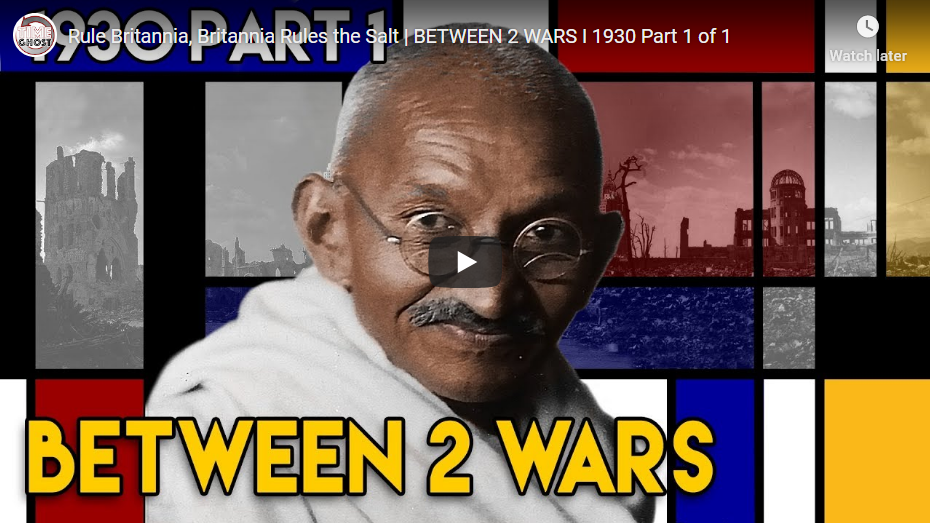
Rule Britannia, Britannia Rules the Salt | BETWEEN 2 WARS I 1930 Part 1 of 1

Filed under: Britain, History, India — Tags: , , , , , , , — Nicholas @ 06:00

TimeGhost History
Published on 15 Aug 2019

After the Great War, the British empire is at its peak in terms of population and size. However, resistance against colonialism is starting to brew in the British colonies and dominions.

Join us on Patreon: https://www.patreon.com/TimeGhostHistory

Hosted by: Indy Neidell
Written by: Spartacus Olsson and Francis van Berkel
Directed by: Spartacus Olsson and Astrid Deinhard
Executive Producers: Bodo Rittenauer, Astrid Deinhard, Indy Neidell, Spartacus Olsson
Creative Producer: Joram Appel
Post-Production Director: Wieke Kapteijns
Research by: Francis van Berkel
Edited by: Wieke Kapteijns
Sound design: Iryna Dulka

Portrait Colorizations by Daniel Weiss.

Sources: National Portrait Gallery, Library and Archives Canada, Jenny Scott

A TimeGhost chronological documentary produced by OnLion Entertainment GmbH.

August 15, 2019

Slavery in the American colonies

Filed under: Americas, Britain, History, USA — Tags: , , — Nicholas @ 05:00

Tim Worstall outlines the history of slavery in the area under British rule that eventually became the United States:

This is so well known, what did in fact happen, that even Wikipedia has it unencumbered by wokeness.

Auction at Richmond. (1834)
“Five hundred thousand strokes for freedom; a series of anti-slavery tracts, of which half a million are now first issued by the friends of the Negro.” by Armistead, Wilson, 1819?-1868 and “Picture of slavery in the United States of America” by Bourne, George, 1780-1845
New York Public Library via Wikimedia Commons.

    The first 19 or so Africans to reach the English colonies arrived in Jamestown, Virginia, in 1619, brought by English privateers who had seized them from a captured Portuguese slave ship. Slaves were usually baptized in Africa before embarking. As English custom then considered baptized Christians exempt from slavery, colonists treated these Africans as indentured servants, and they joined about 1,000 English indentured servants already in the colony. The Africans were freed after a prescribed period and given the use of land and supplies by their former masters. The historian Ira Berlin noted that what he called the “charter generation” in the colonies was sometimes made up of mixed-race men (Atlantic Creoles) who were indentured servants, and whose ancestry was African and Iberian. They were descendants of African women and Portuguese or Spanish men who worked in African ports as traders or facilitators in the slave trade. For example, Anthony Johnson arrived in Virginia in 1621 from Angola as an indentured servant; he became free and a property owner, eventually buying and owning slaves himself. The transformation of the social status of Africans, from indentured servitude to slaves in a racial caste which they could not leave or escape, happened gradually.

    There were no laws regarding slavery early in Virginia’s history. But, in 1640, a Virginia court sentenced John Punch, an African, to slavery after he attempted to flee his service. The two whites with whom he fled were sentenced only to an additional year of their indenture, and three years’ service to the colony. This marked the first legal sanctioning of slavery in the English colonies and was one of the first legal distinctions made between Europeans and Africans.

That’s the 1640 start, if you prefer that. When the distinction was made between black and white runaways from that indenture.

Worth noting that there was nothing unusual about indenture. Very similar indeed to the idea and practice of apprenticeship at the time. In effect, a time limited ownership of the labor – not the person – in return for certain benefits such as transport, sustenance, training and so on. This was actually the manner in which anyone at all entered the skilled working class. Sure, it all sounds a bit feudal but then that’s because it was rather the overhang of that feudal system. And it really did apply to people irrespective of skin colour or racial – even national – background.

England hadn’t had chattel slavery since the Anglo Saxons – Scotland and certain miners being evidence that all of Britain wasn’t so lucky – and it was rather more the Moors, Ottomans, Arabs, various places below the Olive Line, who still had full on slavery.

This then full changed in the colonies. And Anthony Johnson, that arrival from Angola in 1621, who makes the history here:

    When Anthony Johnson was released from servitude, he was legally recognized as a “free Negro.” He became a successful farmer. In 1651 he owned 250 acres (100 ha), and the services of five indentured servants (four white and one black). In 1653, John Casor, a black indentured servant whose contract Johnson appeared to have bought in the early 1640s, approached Captain Goldsmith, claiming his indenture had expired seven years earlier and that he was being held illegally by Johnson. A neighbor, Robert Parker, intervened and persuaded Johnson to free Casor.

    Parker offered Casor work, and he signed a term of indenture to the planter. Johnson sued Parker in the Northampton Court in 1654 for the return of Casor. The court initially found in favor of Parker, but Johnson appealed. In 1655, the court reversed its ruling. Finding that Anthony Johnson still “owned” John Casor, the court ordered that he be returned with the court dues paid by Robert Parker.

    This was the first instance of a judicial determination in the Thirteen Colonies holding that a person who had committed no crime could be held in servitude for life. Though Casor was the first person declared a slave in a civil case, there were both black and white indentured servants sentenced to lifetime servitude before him.

That first instance of that full on chattel slavery in the colonies that became the US was firstly in 1655 – we even know the date, March 8 – and it was of a black owning a black. Oh, and free blacks owning slaves themselves was something that never did entirely disappear from American life, not until slavery itself did in the 1860s.

This all is more than mere pendantry too. Because slavery was not simply the invention of white Europeans to oppress black Africans. A few places in NW Europe – see England above – didn’t have slavery for several hundred years before the Atlantic trade. The rest of the world carried on, quite gaily, having it. To the point that the very word “Slav” is cognate with slave. The Mamluks who ruled Egypt were a caste of mercenaries composed of slaves. The Ottoman Sultan took as his tribute from the Balkans and elsewhere male children who were then sent to Egypt to enlist. Their own children could not join that ruling caste and army. It was a non-hereditary ruling army of slaves, weird as it may seem. Africa itself was awash with slavery and the Arab slave trade up into North Africa and the Mediterranean was a trade in something already happening.

August 12, 2019

Hogs in History – Creator and Destroyer – Extra History

Filed under: Americas, Environment, Europe, Food, History — Tags: , , , — Nicholas @ 06:00

Extra Credits
Published on 10 Aug 2019

Download the World of Tanks game for free https://tanks.ly/2yj0usN and use the invite code EXTRATANKS1 to claim your $15 starter pack.

In 1494, among the colonization forces from Spain, eight pigs arrived in Cuba. With multiple uses in culinary and craft trades, as well as their general top-tier hardiness, pigs would naturally propagate themselves throughout the Caribbean, and then to Central, South, and North America — but they were also incredibly destructive.

Visit TierZoo to learn about how OP pigs are: https://www.youtube.com/watch?v=6xbQ2…

Join us on Patreon! http://bit.ly/EHPatreon

July 29, 2019

Erasing the past, statue by statue, plaque by plaque

Alexander Adams on the deliberate sabotage of historical monuments in pursuit of a more perfect (i.e., imaginary) past:

End of the Trail by James Earle Fraser, located in Waupun, Wisconsin.
Photo by Shawn Conrad via Wikimedia Commons.

In the wake of recent attempts – some successful – to have Confederate statues removed from the US south, what is the future of colonialist statues in the US west? In Pioneer Mother Monuments: Constructing Cultural Memory, Cynthia Culver Prescott, a professor of history at the University of North Dakota, senses a reluctance to apply to pioneer monuments the ideological zeal that was turned on Confederate memorials. “We resist applying the insights of settler colonial studies to American pioneer narratives because to do so would call into question foundational myths of Jeffersonian agrarianism and American exceptionalism, and lay bare white conquest of native lands and peoples.” She outlines the cases against statues of colonialists, and particularly against female settlers, who took part in the drive to colonise the American west in the 19th century.

Statues depicting women have been criticised by academics and campaigners for being idealising, inaccurate, generalising and stereotypical. There is a sense that campaigners direct such ire at statues of women settlers not just because they embody sexism and colonialism but because they show women as complicit in the act of dispossessing native peoples. There is a residual resentment that – in intersectional terms – a political minority took part in a project to oppress another minority.

The creation of monuments honouring white settlers of the west began in earnest in the 1890s. As the American western frontier was closed and territories became part of the United States, a chapter of national history had been definitively closed, too. Just under 190 monuments have been erected in the US since the 1880s marking pioneer achievements. It was a way of fixing in collective memory the achievements of forebears just at the moment their stories were becoming history. The western territories had been spared the scourge of the Civil War, and its new states had a history that involved war with Mexico, the persecution and flight of the Mormons and the Indian Wars.

In the statuary, common types emerged. Women were the prairie Madonna, the protective mother, the Indian guide leading the way, the nuclear family. Men were resolute fathers, the epitome of bravery and stoic defiance. Competitions, touring exhibitions, newspaper features and book publications circulated them, encouraging other communities to commission similar statues. Alexander Phimister Proctor’s statue of a male pioneer was an acceptable manifestation of the conquering of the west. Bearded and dressed in buckskin clothing, the pioneer wears European boots and carries a rifle. He straddles the wisdom of the natives and the technological superiority of settlers, explaining how the west was won through a combination of old knowledge and new materials.

Culver Prescott notes the example of James Earle Fraser’s sculpture The End of the Trail (1890s), which depicted an exhausted American Indian on a tired pony. Fraser had apparently developed a deep sympathy for native peoples after witnessing an army eviction. It seems the sculptor intended to elicit sympathy for evicted Indians, yet it was interpreted by contemporary observers as a scene of the sad but necessary extinction of a primitive indigenous people, conforming to the social Darwinist reading of history, in which advanced people defeat and displace inferior peoples. This is an object lesson in the variety of interpretations an artwork can elicit, regardless of artistic intent. It should alert today’s social-justice warriors to the dangers of misinterpreting public art and the risk of suppressing art on the basis of misapprehension.

« Newer PostsOlder Posts »

Powered by WordPress