The Cynical Historian
Published 1 Nov 2018Today let’s talk about Marxist historians. Edward Palmer Thompson makes perhaps the best introduction to the realm of Marxist history. His work on the English Labor Class, allows for a better understanding of the Marxist project, and how understanding class consciousness can lead to revolution.
————————————————————
references:
Beard, Charles. “Written History as an act of Faith”, The American Historical Review 39, no. 2 (January 1934), 219-231.Marx, Karl. The Essential Marx. ed. Leon Trotsky, abridgment of Das Kapital, Vol. I. 1939; Mineola, N.York: Dover Publications, 2006. https://amzn.to/2MWygco
Thompson, E.P. “The Moral Economy of the English Crowd in the Eighteenth Century”, Past and Present, No. 50 (Feb., 1971), 76-136.
Thompson, E.P. The Making of the English Working Class. New York: Pantheon Books, 1963. https://amzn.to/2KFSESC
Special thanks to Dr. Colleen Hall-Patton for proofreading the script for this episode.
————————————————————
Support the channel through Patreon:
https://www.patreon.com/CynicalHistorian
or pick up some merchandise at SpreadShirt:
https://shop.spreadshirt.com/cynicalh…LET’S CONNECT:
https://discord.gg/Ukthk4U
https://twitter.com/Cynical_History
————————————————————
Wiki:
Edward Palmer Thompson (3 February 1924 – 28 August 1993), usually cited as E. P. Thompson, was a British historian, writer, socialist and peace campaigner. He is probably best known today for his historical work on the British radical movements in the late 18th and early 19th centuries, in particular The Making of the English Working Class (1963). He also published influential biographies of William Morris (1955) and (posthumously) William Blake (1993) and was a prolific journalist and essayist. He also published the novel The Sykaos Papers and a collection of poetry. His work is considered to have been among the most important contributions to labour history and social history in the latter twentieth-century, with a global impact, including on scholarship in Asia and Africa.Thompson was one of the principal intellectuals of the Communist Party in Great Britain. Although he left the party in 1956 over the Soviet invasion of Hungary, he nevertheless remained a “historian in the Marxist tradition”, calling for a rebellion against Stalinism as a prerequisite for the restoration of communists’ “confidence in our own revolutionary perspectives”. Thompson played a key role in the first New Left in Britain in the late 1950s. He was a vociferous left-wing socialist critic of the Labour governments of 1964–70 and 1974–79, and an early and constant supporter of the Campaign for Nuclear Disarmament, becoming during the 1980s the leading intellectual light of the movement against nuclear weapons in Europe.
————————————————————
Hashtags: #History #Marx #EPThompson #ClassConsiousness #Materialism #TheMakingOfTheEnglishWorkingClass
August 1, 2020
July 27, 2020
H.L. Mencken
In the latest Libertarian Enterprise, Eric Oppen (with whom I’ve had a few brief email conversations) discusses the work of the “Sage of Baltimore”:
I would say that, on the whole, Mencken is still quite readable and enjoyable, and many of his observations on the American scene are still as valid as when he made them. He has his weaknesses. He’s not much of an historian, which limits him when he takes up historical subjects. He never got over what he saw as the unfair treatment the German cause got in the American press between 1914 and the entry of the US into World War One. He also often identifies people as Jewish or black when it’s not really relevant to what he’s saying, but this was more a custom of his time than out-and-out bigotry. While he often has uncomplimentary things to say about Jews, and blacks, his greatest scorn is reserved for “the lintheads” — his term for the poor whites of the South. He regarded them as barely worthy of human status.
[…] his views on most subjects were quite compatible with libertarian positions. He was an inveterate opponent of government overreaching (which was behind a lot of his ferocious opposition to Prohibition) and while I don’t think he’d approve of drug use, he’d see our War on (Some Unpopular) Drugs as the assault on the Constitution that it is. While he was by no means hostile to blacks, and went out of his way to promote black writers (many of the figures in the “Harlem Renaissance” owed a lot to his support), he’d also denounce affirmative action and our current frenzy of “anti-racism” in scathing terms. His views on the Civil Rights Act of 1964 and how it has been turned into an alternate, and superior, Constitution would probably scorch the paint off the walls.
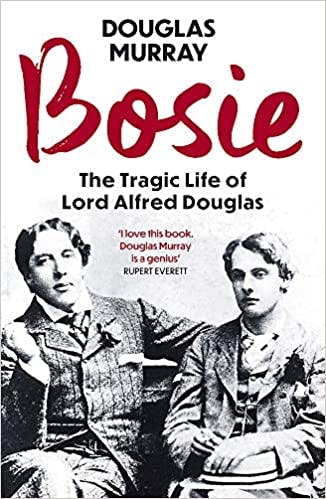
Mencken’s views on people’s private lives would have infuriated many of his contemporaries. While he disapproved of homosexuality, referring to it negatively in entries in his private diaries, he was by no means a howling “homophobe.” His writings on the travails of Oscar Wilde are very sympathetic to Wilde’s sufferings, which Mencken thought were wholly disproportionate to what he was known to have done. Mencken referred to Lord Alfred Douglas, in a review of Douglas’ book about Wilde, as a Tartuffe — that is to say, a posturing hypocrite.
Having been a reporter for years in Baltimore, back when reporters were very like the old film noir view of them, Mencken was very much a man of the world, and inclined to great tolerance on others’ sex lives. When he wrote of prostitutes, he refrained from the sort of pious moralizing that was expected in his time. He said that prostitutes often actively preferred their profession to other work available to them, and that most of them ended up respectably married. He kept his own love life very private, and was a faithful husband to his wife throughout their brief marriage, but he does mention, here and there, having had other lovers, whom he does not name even in writings designated to come to light only long after everybody involved was dead. By his own account in his Diary, he lost his virginity at age fourteen to a girl of his own age, who had already had other experiences before him. He felt that such experiences, unless pregnancy happened, did no one any harm.
While he was an atheist, Mencken had no particular hostility to religion per se, no matter what the Fundamentalists of his day thought. His book Treatise on the Gods makes interesting reading, although it is marred, in my view, by Mencken’s lack of knowledge of languages. He praises Christianity for having “the most gorgeous poetry,” but as far as I know, he could not read Hebrew, Aramaic or Greek, and was thinking in terms of the King James Bible and the Book of Common Prayer. However, the book is still worth reading, although a serious student of the subject would find it limited.
If you’ve been a regular visitor to the blog, you’ll know I have a huge regard for H.L. Mencken’s work and there are many Mencken quotes that have done duty as QotD entries over the years.
July 25, 2020
“The Ballad of Bull” Pt.2 – Combat Medics – Sabaton History 077 [Official]
Sabaton History
Published 24 Jul 2020Sometimes war is killing, sometimes war is saving lives.
In the first episode we have seen Leslie “Bull” Allen become a hero, not through the death of his enemies, but by saving his comrades’ lives. And there were others like him. Soldiers and medics, whose first duty it was to preserve lives during war, even when it meant endangering their own safety. Here are three short stories of men and women, who served as medics at the front line of the Second World War, and became heroes to their country.
Support Sabaton History on Patreon: https://www.patreon.com/sabatonhistory
Listen to “The Ballad of Bull” on the album Heroes:
CD: http://bit.ly/HeroesStore
Spotify: http://bit.ly/HeroesSpotify
Apple Music: http://bit.ly/HeroesAppleMusic
iTunes: http://bit.ly/HeroesiTunes
Amazon: http://bit.ly/HeroesAmz
Google Play: http://bit.ly/HeroesGooglePListen to Sabaton on Spotify: http://smarturl.it/SabatonSpotify
Official Sabaton Merchandise Shop: http://bit.ly/SabatonOfficialShopHosted by: Indy Neidell
Written by: Markus Linke and Indy Neidell
Directed by: Astrid Deinhard and Wieke Kapteijns
Produced by: Pär Sundström, Astrid Deinhard and Spartacus Olsson
Creative Producer: Joram Appel
Community Manager: Maria Kyhle
Executive Producers: Pär Sundström, Joakim Broden, Tomas Sunmo, Indy Neidell, Astrid Deinhard, and Spartacus Olsson
Post-Production Director: Wieke Kapteijns
Edited by: Iryna Dulka
Sound Editing by: Marek Kaminski
Maps by: Eastory – https://www.youtube.com/c/eastoryArchive by: Reuters/Screenocean https://www.screenocean.com
Music by SabatonColorizations:
– Olga Shirnina, a.k.a. Klimbim – https://klimbim2014.wordpress.com/Sources:
– Photos of Desmond Doss Courtesy of the Desmond Doss Council
– Frame vector created by milano83 – www.freepik.com
– Arkiv i Nordland
– P.Fisxo from WikimediaAn OnLion Entertainment GmbH and Raging Beaver Publishing AB co-Production.
© Raging Beaver Publishing AB, 2019 – all rights reserved.
From the comments:
Sabaton History
2 days ago
The medical staff in war — combat medics, field surgeons and nurses, ambulance drivers and medevac crews — are often the unsung heroes of war, literally and figuratively.That doesn’t mean that they don’t deserve to be remembered and their sacrifices honored. There are undoubtedly many instances of exceptional bravery among the medical staff of wars throughout history — for which they rightly should be praised. But they should also be remembered for their everyday work in trenches or field hospitals, in jungles and deserts, at sea or in mid-air. Treating a seemingly endless stream of incoming wounded, trying to give relief to those in pain, comfort to those in agony, and hope to to those who have lost theirs — day in and day out, for as long as the war will last.
If you missed part one of “The Ballad of Bull” you can see it right here.
Walter Duranty, Stalin’s tame “journalist”
Francis X. Maier makes the case that the Holodomor — the Soviet Union’s deliberate starvation of millions of its own people in Ukraine and surrounding regions — killed even more than the better-known Nazi Holocaust, then identifies one of the key apologists who lied serially and deliberately to hide the genocide:
[S.J.] Taylor’s 1990 article was timed to the release of Stalin’s Apologist, her withering biography of journalist Walter Duranty. A Pulitzer Prize winner, celebrated political analyst, and Moscow correspondent for the New York Times during the 1930s, Duranty interviewed Stalin twice. He also played a significant role in securing American diplomatic recognition for the Soviet regime. Less publicly, he was a prodigious womanizer, longtime opium buddy of Satanist Aleister Crowley, compulsive exploiter of friends, a spendthrift, occasional drunk, and an inventive, always-reliable flack for the Soviet regime.
One of Duranty’s lifelong memories involved his religious grandmother who, after catching the adolescent Duranty in a lie, had warned him that “liars go to hell.” He never forgot or forgave the correction. As an adult, he simply erased all family ties and falsely claimed in his autobiography that he’d been orphaned at age ten. Massaging the truth became one of his core skills. Brilliant, engaging, and widely respected at the time, he was, in the words of Malcolm Muggeridge, who also reported from Moscow and saw Duranty in action, “the greatest liar of any journalist I have met in 50 years of journalism.”
Committed to protecting his own influence and to a future “greater good” promised by the Soviet regime, Duranty at first dismissed rumors of the Ukrainian Famine. Then he downplayed them. Then he claimed that Ukraine’s “food shortages” were the result of local mismanagement and the work of “wreckers” and “spoilers” intent on undermining Soviet progress. He repeatedly denied the mass starvation in his reporting. But he did suggest that “you can’t make an omelet without breaking eggs” … especially when the omelet is the task of modernization, and the cooks are tough-minded Bolsheviks intent on a better tomorrow.
As Taylor notes in her book, Western powers struggling with the Great Depression and the rise of Hitler in Germany had little interest in rumors from Ukraine that might antagonize Stalin as a potential ally. Muggeridge had arrived in Russia in 1932 to string for the Manchester Guardian. A convinced socialist at the time, he intended to stay in Russia and renounce his British passport for Soviet citizenship. Reality interfered. By March 1933, he was reporting on Ukraine’s famine as “one of the most monstrous crimes in history,” and his disillusionment with the Soviet paradise was complete. But back in England, thanks in part to Duranty’s counter-reporting and Soviet propaganda, Muggeridge’s work was dismissed as “a hysterical tirade.” Muggeridge himself was slandered, vilified, and unable to find employment. And that might have buried the Holodomor story successfully, except for one man.
Welshman Gareth Jones was a young Russian Studies graduate of Cambridge and a former secretary to British Prime Minister Lloyd George. Stringing for the same Manchester Guardian as Muggeridge, he eluded Soviet press controls and spent three weeks on his own, walking through the hellish conditions of a starvation-ravaged Ukraine. Then he wrote about it in the spring of 1933, confirming and compounding the impact of Muggeridge’s recent work. Walter Duranty led the ferocious, Soviet-prodded attack on Jones’s credibility. He also bullied most other Moscow-based Western journalists — to their enduring disgrace — into doing the same, lest they lose their visas. Jones, however, had a spine. He did not back off. He continued writing and speaking about the famine in Ukraine with lasting effect, until his death under suspicious circumstances two years later.
July 24, 2020
QotD: A death in the Roman Empire
The women who came to tend the tomb in the garden had no doubt that their Lord was dead. They had personally arrayed his body in shining white vestments, and then, when all was ready, laid his physical remains to rest. Rejected as he had been by his own people, legally condemned as an enemy of Rome, brought to a squalid and ignominious end, his defeat had seemed total. What victory could there possibly be in the wake of such a death?
Yet then something miraculous happened. Spreading from east to west across the Mediterranean, travelling along the great network of roads and shipping lanes that constituted the arteries of the Roman Empire, news began to spread that this man whose mortal remains supposedly lay entombed in the grave had been seen alive. Most people, of course, scoffed at such reports — but there were some, small communities of believers, who did not. These, even as the decades passed, kept the faith: the conviction that their saviour would come again, that he would reign, in the words of a widely circulated prophecy, as “the king of Jerusalem”, that he would bring to groaning humanity a universal peace.
In the event, Nero did not come again. Despite the various imposters who appeared in the wake of his death in AD 68, and the fact that, centuries later, there were cities in the eastern reaches of the Roman Empire that still honoured his memory, his fate was to be commemorated, not as a saviour, but as a monster. And so, in numerous ways, he was. His readiness to have members of his own family — mother, brother, wife — put to death ensured that when he himself died the dynasty of the Caesars perished with him.
His sex games were notorious. He was darkly rumoured to have set fire to Rome. By the time that Suetonius, half a century after his death, came to write his biography, the details of his life could be structured almost entirely as a catalogue of deviancies and crimes. “Insolence, an uninhibited sexual appetite, dissipation, greed, cruelty: these were the vices which, to begin with — because he gave expression to them only secretly and incrementally — might well have been chalked up as the excesses of youth, had it not been manifest to everyone even at the time that they were failings, not of age, but of character.”
Nero’s rule had become one protracted blasphemy against the customs of the Roman state. These, hallowed by the centuries, enabled the people of a city that had conquered most of the known world to feel a sense of communion still with the mos maiorum: the customs of their distant ancestors. To no class of society was this more important than the Senate, which still, despite the collapse of Rome’s venerable republican order and its replacement by the autocracy of the Caesars, cherished its time-honoured role as the guardians of tradition.
Tom Holland, “When Christ conquered Caesar”, UnHerd, 2020-04-10.
July 23, 2020
QotD: Herbert Hoover in Australia and China
Hoover graduates Stanford in 1895 with a Geology degree. He plans to work for the US Geological Survey, but the Panic of 1895 devastates government finances and his job is cancelled. Hoover hikes up and down the Sierra Nevadas looking for work as a mining engineer. When none materializes, he takes a job an ordinary miner, hoping to work his way up from the bottom […]
After a few months, he finds a position as a clerk at a top Bay Area mining firm. One year later, he is a senior mining engineer. He is moving up rapidly – but not rapidly enough for his purposes. An opportunity arises: London company Berwick Moreing is looking for someone to supervise their mines in the Australian Outback. Their only requirement is that he be at least 35 years old, experienced, and an engineer. Hoover (22 years old, <1 year experience, geology degree only) travels to Britain, strides into their office, and declares himself their man. The executives “professed astonishment at Americans’ ability to maintain their youthful appearance” (Hoover had told them he was 36), but hire him and send him on an ocean liner to Australia.
[…]
After a year, Hoover is the most hated person in Australia, and also doing amazing. His mines are producing more ore than ever before, at phenomenally low prices. He scouts out a run-down out-of-the-way gold mine, realized its potential before anyone else, bought it for a song, and raked in cash when it ended up the richest mine in Australia. He received promotion after promotion.
Success goes to his head and makes him paranoid. He starts plotting against his immediate boss, Berwick Moreing’s Australia chief Ernest Williams. Though Williams didn’t originally bear him any ill will, all the plotting eventually gets to him, and he arranges for Hoover to be transferred to China. Hoover is on board with this, since China is a lucrative market and the transfer feels like a promotion. He travels first back to Stanford – where he marries his college sweetheart Lou Henry – and then the two of them head to China.
China is Australia 2.0. Hoover hates everyone in the country and they hate him back […] The same conflicts are playing itself out on the world stage, as Chinese resentment at their would-be-colonizers boils over into the Boxer Rebellion. A cult with a great name – “Society Of Righteous And Harmonious Fists” – takes over the government and encourages angry mobs to go around killing Westerners. Thousands of Europeans, including Herbert and Lou, barricade themselves in the partly-Europeanized city of Tientsin to make a final last stand.
In between dodging artillery shells, Hoover furiously negotiates property deals with his fellow besiegees. He argues that if any of them survive, it will probably because Western powers invade China to save them. That means they will soon be operating under Western law, and people who had already sold their mines to Western companies would be ahead of the game and avoid involuntary confiscation. Somehow, everything comes up exactly how Hoover predicts. US Marines arrived in Tientsin to liberate the city (Hoover marches with them as their local guide) and he is ready to collect his winnings.
Problem: it turns out that “Whatever, sure, you can have my gold mine, we’re all going to die anyway” is not legally ironclad. Hoover, enraged as he watches apparently done deals slip through his fingers, reaches new levels of moral turpitude. He offers the Chinese great verbal deals, then gives them contracts with terrible deals, saying that this is some kind of quaint foreign custom and if they just sign the contract then the verbal deal will be the legally binding one (this is totally false). At one point, he literally holds up a property office with a gun to get the deed to a mine he wants. Somehow, after consecutively scamming half the population of China, he ends up with the rights to millions of dollars worth of mines. Berwick Moreing congratulates him and promotes him to managing director. He and Lou sail for London to live the lives of British corporate bigshots.
As you might also predict, Hoover manages to offend everyone in Britain. Soon he is signing off on a “mutually agreeable”, “amicable” dismissal from Berwick Moreing. They agree to let him go on the condition that he does not compete with them – a promise he breaks basically instantly. He goes into banking, and his “bank” funds mining operations in a way indistinguishable from being a mining conglomerate. Eventually he abandons even this fig leaf, and just does the mining directly.
In other ways, his tens of millions of dollars are mellowing him out. Over his years in London, he develops hobbies besides making money and crushing people. He starts a family; he and Lou have two sons, Herbert Jr and Allen. He even hosts dinner parties, very gradually working on the skill of getting through an entire meal without mortally offending any guest…
Scott Alexander, “Book Review: Hoover”, Slate Star Codex, 2020-03-17.
July 22, 2020
A brief look at the life of Thomas Cromwell, Henry VIII’s “main fixer”
Michael Coren discusses the career and reputation of Henry VIII’s powerful and capable Lord Chamberlain until he fell from favour and was executed in 1540:

Portrait of Thomas Cromwell, First Earl of Essex painted by Hans Holbein 1532-33.
From the Frick Collection via Wikimedia Commons.
The panoply of British history doesn’t include too many monsters. The nation was founded more on meetings than massacres, and other than the usual round of chronic blood-letting in the Middle Ages, and a civil war in the seventeenth-century, the English have left it to the French, the Russians, and the Germans to provide the mass murderers and the genuine villains. But if anyone was generally regarded as being unscrupulous, with a touch of the devil always around his character, it was Thomas Cromwell, the main fixer for Henry VIII in the 1530s, and according to the Oscar-winning movie A Man for all Seasons, the dark politician who had hagiographical Thomas More executed. For decades both on British television and in Hollywood epics it was this self-made man who was willing to smash the monasteries, torture innocent witnesses into giving false evidence, and assemble lies to have that nice Anne Boleyn beheaded.
This was the dictatorship of reputation. Historians provided the framework, and popular entertainment dressed it all up in countless Tudor biopics. But then it all began to change.
The first person to seriously challenge the caricature was himself a victim of lies and hatred. The revered Cambridge historian GR Elton was born Gottfried Rudolf Otto Ehrenberg, son of a German Jewish family of noted scholars, who fled to Britain shortly before the Holocaust. He’s also, by the way, the uncle of the comedian and writer Ben Elton. GR, Geoffrey Rudolph, was one of the dominant post-war historians, and insisted that modern Britain, with its secular democracy and parliamentary system, was very much the child of Thomas Cromwell the gifted administrator and political visionary.
So we had the Cromwell wars. On the one side were the traditionalist, often Roman Catholic, writers who insisted that Cromwell was a corrupt brute and a cruel tyrant; and the rival school that regarded him as the first modern leader of the country, setting it on a road that would distinguish it from the ancient regimes of the European continent. But there was more. While previous political leaders – the term “Prime Minister” didn’t develop until the early eighteenth-century – had sometimes been of relatively humble origins, and Cromwell’s mentor and predecessor Thomas Wolsey was the son of a butcher, they were invariably clerics. Cromwell wasn’t only from rough Putney on the edge of London, and the son of a blacksmith, but he was a layman, and someone who had lived abroad, even fought for foreign armies.
Here was have the embodiment of the great change: the autodidact who was multi-lingual, well travelled, reformed in his religion and politics, and prepared to rip the country out of its medieval roots. Yet no matter how many historians might believe and write this, the culture is notoriously difficult to change, and understandably indifferent to academics. Not, however, to novelists. And in 2009 the award-winning author Hilary Mantel published Wolf Hall, a fictional account of Cromwell’s life from 1500 to 1535. Three years later came the sequel, Bring Up the Bodies. Both books won the Man Booker Prize, an extraordinary achievement for two separate works. The trilogy was completed recently with The Mirror and the Light. The first two volumes were turned into an enormously successful stage play and a six-part television show. Forget noble academics working away in relative obscurity, this was sophisticated work watched and read by tens of millions of people. Cromwell was back.
“It is as a murderer that Cromwell has come down to posterity: who turned monks out on to the roads, infiltrated spies into every corner of the land, and unleashed terror in the service of the state”, wrote Mantel in the Daily Telegraph back in 2012. “If these attributions contain a grain of truth, they also embody a set of lazy assumptions, bundles of prejudice passed from one generation to the next. Novelists and dramatists, who on the whole would rather sensationalise than investigate, have seized on these assumptions to create a reach-me-down villain.”
July 17, 2020
QotD: Gandhi’s views on chastity
… even more important, because it is dealt with in the movie directly — if of course dishonestly — is Gandhi’s parallel obsession with brahmacharya, or sexual chastity. There is a scene late in the film in which Margaret Bourke-White (again!) asks Gandhi’s wife if he has ever broken his vow of chastity, taken, at that time, about forty years before. Gandhi’s wife, by now a sweet old lady, answers wistfully, with a pathetic little note of hope, “Not yet.” What lies behind this adorable scene is the following: Gandhi held as one of his most profound beliefs (a fundamental doctrine of Hindu medicine) that a man, as a matter of the utmost importance, must conserve his bindu, or seminal fluid. Koestler (in The Lotus and the Robot) gives a succinct account of this belief, widespread among orthodox Hindus: “A man’s vital energy is concentrated in his seminal fluid, and this is stored in a cavity in the skull. It is the most precious substance in the body … an elixir of life both in the physical and mystical sense, distilled from the blood … A large store of bindu of pure quality guarantees health, longevity, and supernatural powers … Conversely, every loss of it is a physical and spiritual impoverishment.” Gandhi himself said in so many words, “A man who is unchaste loses stamina, becomes emasculated and cowardly, while in the chaste man secretions [semen] are sublimated into a vital force pervading his whole being.” And again, still Gandhi: “Ability to retain and assimilate the vital liquid is a matter of long training. When properly conserved it is transmuted into matchless energy and strength.” Most male Hindus go ahead and have sexual relations anyway, of course, but the belief in the value of bindu leaves the whole culture in what many observers have called a permanent state of “semen anxiety.” When Gandhi once had a nocturnal emission he almost had a nervous breakdown.
Gandhi was a truly fanatical opponent of sex for pleasure, and worked it out carefully that a married couple should be allowed to have sex three or four times in a lifetime, merely to have children, and favored embodying this restriction in the law of the land. The sexual-gratification wing of the present-day feminist movement would find little to attract them in Gandhi’s doctrine, since in all his seventy-nine years it never crossed his mind once that there could be anything enjoyable in sex for women, and he was constantly enjoining Indian women to deny themselves to men, to refuse to let their husbands “abuse” them. Gandhi had been married at thirteen, and when he took his vow of chastity, after twenty-four years of sexual activity, he ordered his two oldest sons, both young men, to be totally chaste as well.
Richard Grenier, “The Gandhi Nobody Knows”, Commentary, 1983-03-01.
July 16, 2020
QotD: The young Herbert Hoover
Herbert Hoover was born in 1874 to poor parents in the tiny Quaker farming community of West Branch, Iowa. His father was a blacksmith, his mother a schoolteacher. His childhood was strict. Magazines and novels were banned; acceptable reading material included the Bible and Prohibitionist pamphlets. His hobby was collecting oddly shaped sticks.
His father died when he is 6, his mother when he is 10. The orphaned Hoover and his two siblings are shuttled from relative to relative. He spends one summer on the Osage Indian Reservation in Oklahoma, living with an uncle who worked for the Department of Indian Affairs. Another year passes on a pig farm with his Uncle Allen. In 1885, he is more permanently adopted by his Uncle John, a doctor and businessman helping found a Quaker colony in Oregon. Hoover’s various guardians are dutiful but distant; they never abuse or neglect him, but treat him more as an extra pair of hands around the house than as someone to be loved and cherished. Hoover reciprocates in kind, doing what is expected of him but excelling neither in school nor anywhere else.
In his early teens, Hoover gets his first job, as an office boy at a local real estate company. He loves it! He has spent his whole life doing chores for no pay, and working for pay is so much better! He has spent his whole life sullenly following orders, and now he’s expected to be proactive and figure things out for himself! Hoover the mediocre student and all-around unexceptional kid does a complete 180 and accepts Capitalism as the father he never had.
His first task is to write some newspaper ads for Oregon real estate. He writes brilliant ads, ads that draw people to Oregon from every corner of the country. But he learns some out-of-towners read his ads, come to town, stay at hotels, and are intercepted by competitors before they negotiate with his company. Of his own initiative, he rents several houses around town and turns them into boarding houses for out-of-towners coming to buy real estate, then doesn’t tell his competitors where they are. Then he marks up rent on the boarding houses and makes a tidy profit on the side. Everything he does is like this. When an especially acrimonious board meeting threatens to split the company, a quick-thinking Hoover sneaks out and turns off the gas to the building, plunging the meeting into darknes. Everyone else has to adjourn, the extra time gives cooler heads a change to prevail, and the company is saved. Everything he does is like this.
(on the other hand, he has zero friends and only one acquaintance his own age, who later describes him to biographers as “about as much excitement as a china egg”.)
Hoover meets all sorts of people passing through the Oregon frontier. One is a mining engineer. He regales young Herbert with his stories of traveling through the mountains, opening up new sources of minerals to feed the voracious appetite of Progress. This is the age of steamships, skyscrapers, and railroads, and to the young idealistic Hoover, engineering has an irresistible romance. He wants to leave home and go to college. But he worries a poor frontier boy like him would never fit in at Harvard or Yale. He gets a tip – a new, tuition-free university might be opening in Palo Alto, California. If he heads down right away, he might make it in time for the entrance exam. Hoover fails the entrance exam, but the new university is short on students and decides to take him anyway.
Herbert Hoover is the first student at Stanford. Not just a member of the first graduating class. Literally the first student. He arrives at the dorms two months early to get a head start on various money-making schemes, including distributing newspapers, delivering laundry, tending livestock, and helping other students register. He would later sell some of these businesses to other students and start more, operating a constant churn of enterprises throughout his college career. His academics remain mediocre, and he continues to have few friends – until he tries out for the football team in sophomore year. He has zero athletic talent and fails miserably, but the coach (whose eye for talent apparently transcends athletics) spots potential in Hoover and asks him to come on as team manager. In this role, Hoover is an unqualified success. He turns the team’s debt into a surplus, and starts the Big Game – a UC Berkeley vs. Stanford football match played on Thanksgiving which remains a beloved Stanford football tradition.
Scott Alexander, “Book Review: Hoover”, Slate Star Codex, 2020-03-17.
July 11, 2020
The Real James Bond was Balkan – Duško Popov – WW2 Biography Special
World War Two
Published 9 Jul 2020The career of Duško Popov is probably more exciting than any work of fiction. A glamorous and brave spy who plays a central role in the underground intelligence war of the time.
Join us on Patreon: https://www.patreon.com/TimeGhostHistory
Or join The TimeGhost Army directly at: https://timeghost.tvFollow WW2 day by day on Instagram @World_war_two_realtime https://www.instagram.com/world_war_two_realtime
Between 2 Wars: https://www.youtube.com/playlist?list…
Source list: http://bit.ly/WW2sourcesHosted by: Indy Neidell
Written by: Francis van Berkel
Director: Astrid Deinhard
Producers: Astrid Deinhard and Spartacus Olsson
Executive Producers: Astrid Deinhard, Indy Neidell, Spartacus Olsson, Bodo Rittenauer
Creative Producer: Joram Appel
Post-Production Director: Wieke Kapteijns
Research by: Scott Grimwood
Edited by: Karolina Dołęga
Sound design: Marek Kamiński
Map animations: Eastory (https://www.youtube.com/c/eastory)Colorizations by:
Jaris Almazani (Artistic Man), https://instagram.com/artistic.man?ig…
Carlos Ortega Pereira, BlauColorizations, https://www.instagram.com/blaucoloriz…
Dememorabilia, https://www.instagram.com/dememorabilia/Music:
“Try and Catch Us Now” – David Celeste
“Too Close for Comfort” – Jon Bjork
“Epic Adventure Theme 4” – Håkan Eriksson
“Moving to Disturbia” – Experia
“Other Sides of Glory” – Fabien Tell
“Underlying Truth” – Howard Harper-Barnes
“Spy Game” – Jon SumnerVisual Sources:
National Archives NARA
Library of Congress
Imperial War Museum: CH1461
US Holocaust Memorial Museum
Alexander Altenhof https://commons.wikimedia.org/wiki/Fi…
Icons from The Noun Project: Marco Livolsi, faisal, Smalllike, Adrien Coquet, Fiona OM, Businessman with Suitcase by Fiona, Nick Novell, Luis Prado, Samy Menai, Nithinan, designer468, Marco Livolsi, ProSymbols, Milinda Courey,Icons Producer, Halfazebra, Leona Grande, Vectors Point, Arthur Dias,MRK, Becris, iconcheese, Likous, Markus, ProSymbols, Michael Fischer, priyanka, Adnen Kadri, Baboon designs and LaymikArchive by Screenocean/Reuters https://www.screenocean.com.
A TimeGhost chronological documentary produced by OnLion Entertainment GmbH.
July 1, 2020
June 20, 2020
History-Makers: Confucius
Overly Sarcastic Productions
Published 19 Jun 2020Welcome to the challenge run of History-Makers, where I attempt to give insightful historical context to someone whose backstory is almost entirely blank.
SOURCES & Further Reading: Confucius: A Very Short Introduction by Gardner, China: A History by Keay, The Analects of Confucius, The Mencius.
This video was edited by Sophia Ricciardi AKA “Indigo”. https://www.sophiakricci.com/
Our content is intended for teenage audiences and up.PATREON: https://www.Patreon.com/OSP
MERCH LINKS: https://www.redbubble.com/people/OSPY…
OUR WEBSITE: https://www.OverlySarcasticProductions.com
Find us on Twitter https://www.Twitter.com/OSPYouTube
Find us on Reddit https://www.Reddit.com/r/OSP/
May 20, 2020
Roald Dahl – Pilot, Seducer and Author – WW2 Biography Special
World War Two
Published 19 May 2020Roald Dahl is not just a beloved author, he is also a wartime adventurer. He saw plenty of action in North Africa and Greece, where he got the inspiration for many of his work to come.
Join us on Patreon: https://www.patreon.com/TimeGhostHistory
Or join The TimeGhost Army directly at: https://timeghost.tvFollow WW2 day by day on Instagram @World_war_two_realtime https://www.instagram.com/world_war_t…
Between 2 Wars: https://www.youtube.com/playlist?list…
Source list: http://bit.ly/WW2sourcesHosted by: Indy Neidell
Written by: Isabel Wilson
Director: Astrid Deinhard
Producers: Astrid Deinhard and Spartacus Olsson
Executive Producers: Astrid Deinhard, Indy Neidell, Spartacus Olsson, Bodo Rittenauer
Creative Producer: Joram Appel
Post-Production Director: Wieke Kapteijns
Research by: Isabel Wilson
Edited by: Mikołaj Cackowski
Sound design: Marek KamińskiColorizations by:
Carlos Ortega Pereira, BlauColorizations, https://www.instagram.com/blaucoloriz…Sources:
IWM K 8588, CH 2377, ZZZ 11729, CM 1725, CM 354, CM 358, CM 43, CH 13555, CM 131, CH 1500, CH 1431, CM 2527, CM 1353
Portrait of Roald Dahl, courtesy Royal Air Force Benevolent Fund
“Shot Down over Libya”, courtesy The Saturday Evening Post
Portrait of Walt Disney, courtesy of Disney Archive
Bundesarchiv
USHMMJohannes Bornlof – “The Inspector 4”
Phoenix Tail – “At the Front”
Fabien Tell – “Last Point of Safe Return”
Johannes Bornlof – “Death And Glory 2”
Reynard Seidel – “Deflection”
Johannes Bornlof – “Deviation In Time”Archive by Screenocean/Reuters https://www.screenocean.com.
A TimeGhost chronological documentary produced by OnLion Entertainment GmbH.
May 6, 2020
Georgy Zhukov – Hero of the Soviet Union! – WW2 Biography Special
World War Two
Published 5 May 2020Georgy Zhukov’s rise to one day become the Hero of the Soviet Union did not happen overnight. Instead, the son of a poor tradesman has slowly worked himself up the ranks of the Red Army using his grit, determination, and iron will.
Join us on Patreon: https://www.patreon.com/TimeGhostHistory
Or join The TimeGhost Army directly at: https://timeghost.tvFollow WW2 day by day on Instagram @World_war_two_realtime https://www.instagram.com/world_war_t…
Between 2 Wars: https://www.youtube.com/playlist?list…
Source list: http://bit.ly/WW2sourcesHosted by: Indy Neidell
Written by: Francis van Berkel
Director: Astrid Deinhard
Producers: Astrid Deinhard and Spartacus Olsson
Executive Producers: Astrid Deinhard, Indy Neidell, Spartacus Olsson, Bodo Rittenauer
Creative Producer: Joram Appel
Post-Production Director: Wieke Kapteijns
Research by: Francis van Berkel
Edited by: Mikołaj Cackowski
Sound design: Marek Kamiński
Map animations: Eastory (https://www.youtube.com/c/eastory)Colorizations by:
Carlos Ortega Pereira, BlauColorizations, https://www.instagram.com/blaucoloriz…
Jaris Almazani (Artistic Man), https://instagram.com/artistic.man?ig…
Olga Shirnina, https://klimbim2014.wordpress.com
Sources:
Mil.ru
Cross of Saint-George Issue for subaltern officers 1917, courtesy Robert Prummel
from the Noun Project: company soldiers by Andrei Yushchenko, ak 47 by TMDSoundtrack from the Epidemic Sound:
Reynard Seidel – “Deflection”
Johannes Bornlof – “The Inspector 4”
Johannes Bornlof – “Deviation In Time”
Rannar Sillard – “March Of The Brave 4”
Johannes Bornlof – “Death And Glory 2”
Phoenix Tail – “At the Front”Archive by Screenocean/Reuters https://www.screenocean.com.
A TimeGhost chronological documentary produced by OnLion Entertainment GmbH.
April 29, 2020
Haile Selassie – The New Messiah – WW2 Biography Special
World War Two
Published 28 Apr 2020Haile Selassie was the Emperor of the Ethiopian Empire. He led the country against the Italians in the Second Italo-Ethiopian War after which he is exiled to Britain.
Join us on Patreon: https://www.patreon.com/TimeGhostHistory
Or join The TimeGhost Army directly at: https://timeghost.tvFollow WW2 day by day on Instagram @World_war_two_realtime https://www.instagram.com/world_war_t…
Between 2 Wars: https://www.youtube.com/playlist?list…
Source list: http://bit.ly/WW2sourcesHosted by: Indy Neidell
Written by: Isabel Wilson
Director: Astrid Deinhard
Producers: Astrid Deinhard and Spartacus Olsson
Executive Producers: Astrid Deinhard, Indy Neidell, Spartacus Olsson, Bodo Rittenauer
Creative Producer: Joram Appel
Post-Production Director: Wieke Kapteijns
Research by: Isabel Wilson
Edited by: Karolina Dołęga
Sound design: Marek KamińskiColorizations by:
Dememorabilia – https://www.instagram.com/dememorabilia/
Adrien Fillon – https://www.instagram.com/adrien.colo…
Klimbim – https://klimbim2014.wordpress.com/Sources:
National Museum of the U.S. NavyMusic:
“Other Sides of Glory” – Fabien Tell
“The Unexplored” – Philip Ayers
“March Of The Brave 10” – Rannar Sillard
“Deviation In Time” – Johannes Bornlof
“Epic Adventure Theme 3” – Håkan Eriksson
“Heroes On Horses” – Gunnar Johnsén
“Deviation In Time” – Johannes BornlofArchive by Screenocean/Reuters https://www.screenocean.com.
A TimeGhost chronological documentary produced by OnLion Entertainment GmbH.