
The Armourer’s Bench
Published 22 Mar 2026The Canadian Armed Forces are set to adopt variants of Colt Canada’s MRR as the Canadian Modular Assault Rifle (CMAR). The announcement stated that more than 65,000 rifles will be procured over the next 5 years to replace the Colt Canada C7 rifles and C8 carbines currently in Canadian service.
Be sure to check out our accompanying article for this video here – https://armourersbench.com/2026/03/22/canada-adopts-new-rifle/
March 23, 2026
Canada’s NEW Rifle – the CMAR
Comments Off on Canada’s NEW Rifle – the CMAR
March 18, 2026
QotD: Feeding a Roman Consular army
So now we have our entire “campaign community” of men, women and animals. And so it might be worth doing some quick calculations to get a sense now of exactly what a community of this size is going to require. For a general sense of scale, we’ll consider the demands of a standard Roman army of the Middle Republic: two legions plus matching allied detachments, totaling around 19,200 soldiers (16,800 infantry, 2,400 cavalry).
Let’s deal with animals next. Each contubernium (“tent group”) of six soldiers likely had its own mule, so that’s 3,200 mules for the army, plus some additional number for the siege train and any army supplies; perhaps around 5,000 total (see Roth, op. cit. on this). On top of this we have horses for the cavalry; this will be rather more than 2,400 since spare horses will have been a necessity on campaign. Judging by Roman barley rations for cavalrymen (presumably intended to feed the horse) it seems a good guess that each cavalryman had one spare; for later medieval armies the number of spares would be substantially higher (at least three per rider). But for our lean army of Romans, that’s just 4,800 horses. An early modern army might require quite a few less mules (replacing them with wagons), but at the same time it is also probably hauling both field artillery and siege guns which demand a tremendous number of draft animals (mostly horses). My sense is that in the end this tends to leave the early modern army needing more animals overall.
Next the non-combatants. The mules will need drivers and the cavalrymen likely also have grooms to handle their horses, which suggests something like 3,400 calones [slaves or servants] as an absolute minimum simply to handle the animals. Roth (op. cit., 114) figures one non-combatant per four combatants in a Roman army, while Erdkamp (op. cit. 42) figures 1:5. Those figures would include not merely enslaved calones but also sutlers, slave-dealers, and women in the “campaign community”. Taking the lower estimate we might then figure something like 4,000 non-combatants for a “lean” Roman army, with many armies being more loaded up on non-combatants than even this. And while estimating the number of non-combatants for Roman armies is tricky, we actually have some figures for pre-modern armies to give a reference. Parker (op. cit. 252) notes units of the Army of Flanders (between 1577 and 1620) as high as 53% non-combatants, including women in the campaign community; one Walloon tercio in 1629 was 28% camp women on the march. It is tempting to compare these but caution is necessary here – both Roth’s and Erdkamp’s estimates are heavily informed by more modern armies so the argument would be circular: the estimates for the Romans look like later armies because later armies were used to calibrate estimates for the Romans.
That gives us an army now of 19,200 soldiers, 4,000 non-combatants, 5,000 mules and 4,800 horses. Roman rations were pretty ample and it seems likely that many of the calones did not eat so well but the ranges are fairly narrow; we can work with an average 1.25kg daily ration per person normally, with the absolute minimum being the 0.83kg daily grain ration following Polybius (Plb. 6.39.12-14, on this note Erdkamp op. cit. 33-42) if the army was short on supplies or needed to move fast eating only those buccelatum [hardtack] biscuits. That’s a normal consumption of 29,000kg per day for the humans, with the minimum restricted diet of 19,256kg for short periods. Then we need about 2.25kg of feed for each mule and about 4.5kg of feed for each horse (we’re assuming grazing and water are easily available), which adds up to 11,250kg for the mules and 21,600kg for the horses.
And at last we now have the scale of our problem: our lean army of 19,200 fighting men consumes an astounding 61,850kg (68.18 US tons) of food daily. It also consumes staggering amounts of water and firewood. In order to move this army or sustain it in place it is thus necessary to ensure a massive and relatively continuous supply of food to the army. Failure to do that will result in the army falling apart long before it comes anywhere close to the enemy.
Bret Devereaux, “Collections: Logistics, How Did They Do It, Part I: The Problem”, A Collection of Unmitigated Pedantry, 2022-07-15.
Comments Off on QotD: Feeding a Roman Consular army
March 15, 2026
QotD: The Roman Empire “worked” for centuries because it was run like the Roman army
A Roman legion is technically a “manipular phalanx”. A phalanx — that is, a tactical formation — that can detach parts of itself to pursue smaller tactical objectives. As far as I know, the Legion was an administrative unit, not a tactical one — the largest tactical formation was the cohort — but it doesn’t really matter. The point is, the Romans were accustomed to independently-operating tactical units. So long as they maintained formation, the sub-commanders had very broad latitude to do whatever they needed to do. They were expected to be able to command what we’d call “combined arms” (a vexillation). Ancient Auftragstaktik.
They ran their Empire the same way. So long as the sub-commanders (the Governors) “held formation”, they could pursue the agreed-upon tactical objectives (peace, revenue maximization) as they saw fit. They could put together what amounted to an administrative vexillation, using whoever was available at the time. The Emperor basically dealt with personnel problems, like a general — he had his broad policy objectives, but most of the stuff he ruled on boiled down to personnel matters; he’d direct his sub-commanders to fix a problem in whatever way seemed best to them.
We run our polities like bureaucracies — businesses, not armies. The Army’s basic problem is how to keep itself occupied in peacetime — it assumes that it exists, and always will exist, because it’s necessary; should the Army cease to exist, so will the State. Business’s basic problem is to generate enough output to keep itself in existence — a very different proposition, requiring a very different mindset.
A State bureaucracy is the worst of both worlds — it assumes it always will exist, like the Army, so it needs to find a way to keep itself occupied during “peacetime”; but that means it needs to produce enough output to justify itself in “peacetime”, because it’s never not peacetime — the business mentality.
Severian, commenting on “Means and Ends”, Founding Questions, 2025-09-04.
Comments Off on QotD: The Roman Empire “worked” for centuries because it was run like the Roman army
March 12, 2026
QotD: Roman armies of the middle and late Republic
It is hard to tell if the Roman triple-line (triplex acies) fighting system created the demand for synchronized discipline or if the Romans, having already developed a tradition of drill and synchronized discipline, adopted a fighting style that leveraged that advantage. Probably a bit of both, but in any event our evidence for the Roman army before the very late third century is very poor. By the time we truly see the Roman army clearly (c. 225 BC) the system seems to already [have been] in place for some time.
A Roman consular army was a complex machine. It was composed of an infantry line of two legions (in the center) and two socii “wings” (alae) to each side, along with cavalry detachments covering the flanks. Each of those infantry blocks (two legions, two alae) in turn was broken down into thirty separate maneuvering units (called maniples, generally consisting of 120 men; half as many for the triarii), which were in turn subdivided into centuries, but centuries didn’t really maneuver independently. In front of this was a light infantry screening force (the velites). So notionally there were in the heavy infantry of a standard two-legion consular army something like 120 different “chess pieces” that notionally the general could move around on their own and thus notionally the legion was capable of fairly complex tactical maneuvers.
You may have noted that word “notionally” because now we get into the limits of drill and synchronized discipline, because this isn’t a system for limitless tactical flexibility of the sort one gets in video games. Instead, recall that the idea here is to create coordinated movement and fighting (the synchronized discipline) through rigorous, repeated practice (drill). Of course one needs to practice specific things. Some of those things are going to be obvious: a drill for marching forward, or for turning the unit or for advancing on the charge.
In the Roman case, a “standard” battle involved the successive engagement and potentially retreat of each heavy infantry line: first the hastati (the first line) formed a solid line (filling the gaps) and attacked and then, if unsuccessful, retreated and the next line (the principes) would try and so on. Those maneuvers would need to be practiced: forming up, then having each maniple close the gap (we don’t quite know how they did this, but see below), the attack itself (which also involved usually throwing pila – heavy javelins), then retreat behind the next line if things went poorly. It’s also pretty clear from a battle like Cynoscephelae (197) or Bibracte (58) that individual maniples or cohorts (the Romans start using the larger 480-man-cohort as the basic maneuver unit during the second century BC) could be “driven” over the battlefield to a degree so there were probably drills for wheeling and turning.
Now even in this “standard” battle there is a lot of movement: maniples need to open and close gaps, advance and retreat and so on. This is what I mean by saying this army is a complex machine: it has a lot of moving parts that need to move together. The men in a maniple need to move together to make that mutually-supporting line and the maniples need to move together with each other to cover flanks and allow retreats. In terms of how the individual men moved, I’ve tended to think in terms of a “flow” model akin to this video of South Korean riot police training, rather than the clunkier Spartacus (1960) model.
But once an army has practiced all of these drills, it creates the opportunity for great improvisation and more complex tactics as well. Commanders, both the general but also his subordinates, can tell a unit to perform a particular maneuver that they have drilled, assuming the communication infrastructure exists in terms of instruments, standard shouted commands and battle standards (and note [that] Roman methods of battlefield communication were relatively well developed). That, for instance, allowed Aemilius Paullus to give orders to his first legion at Pydna for each of those maneuver units to either push forward or give ground independently, presenting the Macedonian phalanx with a tactical problem (an unevenly resisting line) it did not have a good solution for (Plut. Aem. 20.8-10). Having good junior officers […] was required but it wasn’t enough – those officers needed units which were already sufficiently drilled so that their orders (to press hard or retreat and reform in this case) could actually be carried out by soldiers for whom the response to those calls had become natural through that very drill.
At the same time I don’t want to give the wrong impression: even for the Romans battles where there was this sort of on-the-field improvising led by the general were uncommon (though not extremely rare). For the majority of battles, the legionary “machine” simply pushed forward in its standard way, even when – as at Cannae (216) – pushing forward normally proved to be disastrous. Just because an army can fight flexibly doesn’t mean it will or even that it should.
Bret Devereaux, “Collections: Total Generalship: Commanding Pre-Modern Armies, Part IIIa”, A Collection of Unmitigated Pedantry, 2022-06-17.
Comments Off on QotD: Roman armies of the middle and late Republic
February 26, 2026
QotD: “Naming of Parts” by Henry Reed
We had daily cleaning. And tomorrow morning,
We shall have what to do after firing. But today,
Today we have naming of parts. Japonica
Glistens like coral in all the neighboring gardens,
And today we have naming of parts.This is the lower sling swivel. And this
Is the upper sling swivel, whose use you will see,
When you are given your slings. And this is the piling swivel,
Which in your case you have not got. The branches
Hold in the gardens their silent, eloquent gestures,
Which in our case we have not got.This is the safety-catch, which is always released
With an easy flick of the thumb. And please do not let me
See anyone using his finger. You can do it quite easy
If you have any strength in your thumb. The blossoms
Are fragile and motionless, never letting anyone see
Any of them using their finger.And this you can see is the bolt. The purpose of this
Is to open the breech, as you see. We can slide it
Rapidly backwards and forwards: we call this
Easing the spring. And rapidly backwards and forwards
The early bees are assaulting and fumbling the flowers:
They call it easing the Spring.They call it easing the Spring: it is perfectly easy
If you have any strength in your thumb: like the bolt,
And the breech, the cocking-piece, and the point of balance,
Which in our case we have not got; and the almond blossom
Silent in all of the gardens and the bees going backwards and forwards,
For today we have the naming of parts.Henry Reed, 1942.
Comments Off on QotD: “Naming of Parts” by Henry Reed
February 25, 2026
“Allyness” in the British military
I suspect anyone who has spent time in uniform out in the field (peacetime or wartime) would recognize these traits, but so far as I know only the British army and Royal Marines have a specific term for it:
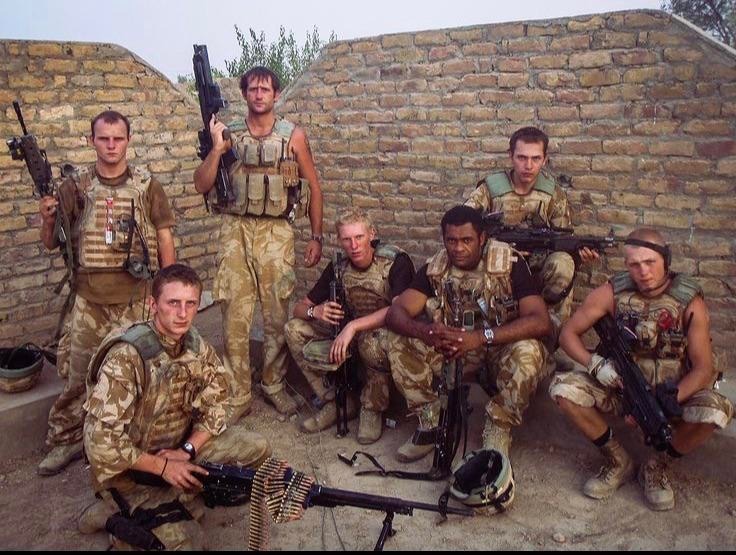
(British troops in Afghanistan, 2008, looking very ‘ally’)
Photo and caption from Combat Threads
Professor Andrew Groves is one of the few true academic experts on menswear. In fact, it was his work as the Director of the Westminster Menswear Archive that inspired me to pursue my Costume Studies MA. Recently, he has started a weekly Substack that is well worth checking out. Last week, he wrote an essay on “Ally“, a British military slang term. What exactly “Ally” is can be hard to nail down, as it has no comparable terms in the US military or civilian cultures. Broadly, it can be described as a language of visual signifiers that denote a soldier as “having been there”, or at the very least, wanting to come across that way, usually by modifying pieces of kit, or wearing it in a particular fashion.
As Groves puts it, “The quiet discipline of looking ready. It is a system that emerges precisely when regulation lags and consequences move faster than command … Allyness was awarded horizontally, not issued from above. It was recognition from peers who knew what to look for.” Groves continues:
That recognition lived in detail, but it was never a checklist. Allyness was built through small, cumulative acts, field-smart adjustments passed down through units, not rulebooks: cutting down webbing to reduce snagging, taping over buckles to kill shine, shaping berets tight to the temple, sewing in map pockets, blacking out brass, marking kit discreetly. None of this was required. All of it mattered, because it signalled experience rather than purchase.
While the origins of “ally” definitely had roots in field-wise functionality and competence (the widespread adoption of Bundeswehr boots by British Paras or the “norgi” baselayer adopted by RM Commandos come to mind), by the time the GWOT generation were forming their own sense of “allyness”, much had devolved to style. I am going to quote from Simon Akam’s wonderful book The Changing of the Guard: The British Army Since 9/11, on the evolution of “ally” in the 21st Century:
“Ally” is rifle magazines taped together — it draws inspiration from films as well as finding exhibition through the same medium. Ally is beards. Ally is non-regulation scarves and shemagh cloths. Ally is belts of 7.62mm link machine-gun ammunition draped over shirtless muscled torsos. Ally is liberal use of sniper tape on bits of kit, scrim netting pulled taut over the issued helmet, or “hero sleeves” — sleeves rolled only halfway up the forearm. A strong influence, ironically given the outcome of that conflict, is Vietnam … Of course, the two quantities of violence and ally are entwined. Fighting is ally. It seeps into Iraq, too: Major Stuart Nicholson, a Fusiliers officer serving on an exchange post with the Anglians in Basra in 2006, sees one sub-unit who keep one set of totemic combats [field uniform] to wear every time they go out on patrol, regardless of how dirty and disgusting they become. Nicholson catches one of this crew deliberately driving a Warrior armoured vehicle over a helmet cover to make it look already battered.
Later in the book, Akam recounts the “ally” origins of the British Army’s adoption of a Crye designed variant MultiCam (named Operation Peacock). The need for a new camouflage pattern was practical: British troops in Afghanistan found their DPM uniforms coming up short, and it was also based on seeing American SOF using MultiCam. I think that best illustrates the push and pull of what makes something “ally”. Some “allyness” traits can be seen as battlewise modifications to equipment, like taping down loose straps or added helmet scrim to help break up the silhouette, while others can be affectations that soldiers think look cool. And often, a bit of both.
Like anything to do with the infantry, of course, it can be taken too far and rather than improving effectiveness in the field, it can lead in very unwelcome directions:
These kinds of regulation-flouting practices can be interpreted as signs of a breakdown in unit discipline, which, in turn, can lead to more serious issues. It isn’t exactly “broken windows” theory for military units, but it also kind of is. It’s why, when Akam tells a story of an American officer who visited a British base in Afghanistan in 2006 and remarked that the British soldiers “look like our army at the end of Vietnam”, It was not meant as a compliment. Elsewhere, the desire to be “ally” led to armored vehicles flying English flags (despite its local connotations to the Crusades being an issue) and SS decals on other vehicles. “Allyness” can be a sign of the unit culture going rogue.
The result was a crackdown on the excesses of “allyness”. As Akam writes, “the ally clampdown is also a knee-jerk response to a realisation that something had got out of control. Some elements of ally survive, in particular the Paras’ interest in taping up bits of their gear. That is harder to stamp down on.”
Comments Off on “Allyness” in the British military
February 23, 2026
Grand Strategy of the Roman Empire PART TWO
Adrian Goldsworthy. Historian and Novelist
Published 27 Aug 2025This should have posted earlier this morning, but for some reason did not.
This is the follow up to last week’s discussion of grand strategy, looking at the reactions and criticisms of Luttwak’s ideas, followed by some of my own thoughts.
Comments Off on Grand Strategy of the Roman Empire PART TWO
February 22, 2026
Britain’s recovery after a punishing existential war against a colossal European tyrant
The American Tribune considers how war-exhausted Britain staged a brilliant recovery after the decades of war against Republican and then Imperial France culminating in the exile of Napoleon to a remote island in the south Atlantic:
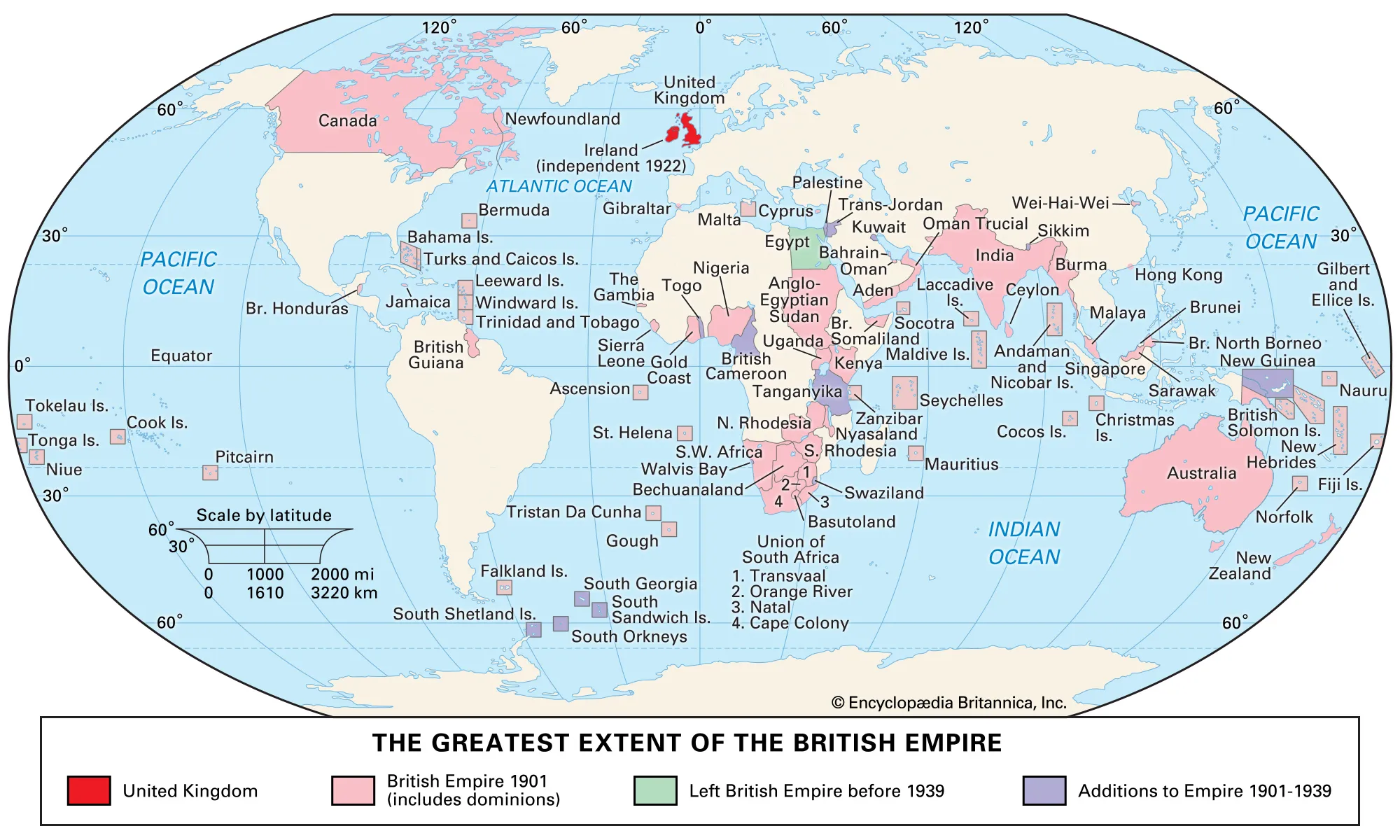
The grinding war is finally over after what feels like decades of bitter conflict on an inconceivably large scale. The entire world had become a battlefield in which the British had fought desperately to keep their imperial possessions secure in the face of vast hordes of enemies of all sorts, with the Navy and Army strained to the breaking point as battalions launched expeditionary raids and grinding, years-long campaigns everywhere from the steamy Orient to the Mediterranean, the bitter cold of the North to the coast and shores of Northern Africa.
Truth be told, victory, though it came in the end, had strained everything nearly to the breaking point. High taxes had driven the landed element to the breaking point. The necessity of convoys, of relying on domestic agriculture, of keeping the empire intact from an island the size of Michigan … had strained the British people and British society to the breaking point. Class tensions were high, taxes were already ruinously high, and to many elements, rich and poor alike, victory hardly seemed worth the immense cost in gold and blood.
And that was before considering the debt. The ruinous, mountainous, inconceivable debt. Well over 200% of GDP, it would later be calculated … and not at the negative interest rates of modernity either. Over 200% of GDP priced in real, somewhat gold-backed currency, with those who bought it demanding a real return. Ruinous, it was, ruinous! For this final conflict had been preceded not by many long years of peace, but by a similarly large, long conflict that had also involved campaigns across every corner of the earth, mutinous colonials, immense expense, and heavy taxation.
So victory had come. The war against an immense continental hegemon had been won, the international order was stabilized to the liking of and in accord with the ideology of the political elite, and the empire kept together in a hugely expanded state. But the cost had been high. Perhaps the cost had been ruinous …
I am, of course, describing Britain circa 1815, after its final victory over Napoleon at Waterloo. What followed was its century atop Olympus, the century where it ruled a quarter of the Earth’s surface, dominated all the sea lanes, was the world’s reserve currency, and became the world’s financial capital. Despite the expense, the defeat of Napoleon did not bring ruin, but success on an unimaginably immense scale.
What happened? Why did the Britain that defeated Napoleon become the hugely successful nation of the Victorian Age, but the Britain that followed the defeat of Hitler became a wrecked backwater, a miserable shell of its former self? The post-war debt load was similar. The human cost had been higher, but not remarkably so, particularly if the immigration outflows of the 19th century are considered.1 The logistical strains were similar, the social strains similar, and the fractious politics of the wars similar.
But the Britain of the 19th century became the hegemon of note, whereas that of the 20th century became essentially irrelevant. Mindset makes all the difference in the world, as I’ll show in this article, along with why this matters for Americans.
Britain after Napoleon
It is important to note that Britain’s immense imperial and economic success after the defeat of Napoleon was no sure thing. Yes, unlike much of Europe, it hadn’t been ravaged by invading armies. But it had lost its best colonies in the disastrous rebellion that followed the immensely expensive Seven Years’ War, a world war in all but name. It was staggering under a ruinous mountain of debt that could scarcely have been imagined earlier in the century: the national debt stood at somewhere around 210% of GDP, after post-war deflation had been accounted for, with somewhere around 10% of national GDP going just toward paying the interest on that debt.
Perhaps, worse, the population was restive. During the war, farmers and landlords had been pushed into embarking on extremely expensive schemes to drain and enclose land, schemes costing millions of dollars per thousand acres in today’s money; while that worked tolerably well during the war itself, as grain prices remained high, the expense and the cost of the debt used to achieve it was a crushing burden after the end of the war meant renewed trade and a fall in grain prices. That expense and the pain caused by it meant that not only were the farmers and the landlords struggling to make ends meet, but they had little left to pay agricultural laborers, who had their wages cut as a result, putting that bottom rung of the social ladder in an immensely precarious and dire economic position.
Much the same situation played out in the nascent industrial sector, where the end of war meant falling prices for finished goods and thus both lower profits and lower wages, angering industrialists and workers alike. As food remained expensive compared to wages, this meant major unrest, too. Thus, other than perhaps some financiers who were doing well off the debt, particularly given post-war deflation, most segments of society were unhappy at how the government was being run.
A high debt load that could only be maintained with high taxes, a highly restive and discontented population, and an economy-punishing bout of deflation are not the stuff of which great empires are typically made.
But the British figured it out, and did so without massive inflation, government default, or authoritarian societal repression.
- This is noted by AJP Taylor in his The First World War and Its Aftermath
Comments Off on Britain’s recovery after a punishing existential war against a colossal European tyrant
February 21, 2026
Oh Look, They Want a Mercenary Army
Akkad Daily
Published 20 Feb 2026Get a country worth fighting for. Join Restore: https://www.restorebritain.org.uk/joi…
Comments Off on Oh Look, They Want a Mercenary Army
February 18, 2026
QotD: Defending the borders of the Roman Empire
The thing is, approximately none of this logic applied in the Roman situation. First of all, as we’ve already noted, a huge fraction of the threats the Romans faced were “low-intensity”: border skirmishes, slave raids, pirates and brigands, that sort of thing. Static fortifications, walls and towers, are often more than sufficient for dealing with these problems. Paradoxically, that actually increases the mobility and responsiveness of the main forces. If they aren’t constantly running back and forth along the border dealing with bandits, that means they can respond with short notice to “high-intensity” threats (like major invasions and rebellions) that pop up, and are probably better rested and better provisioned when the emergency arrives. So, far from diluting their strength, a lightly-manned series of linear fortifications actually enabled the Romans to concentrate it.
Secondly, those linear fortifications can also be very useful when that major invasion shows up, even if they are overrun. A defense system doesn’t have to be impenetrable in order to still be very, very useful. One thing it can do is buy time, either for the main army to arrive or for some other strategic purpose. The defenses can also act to channel opposing forces into particular well-scouted avenues of attack, or change the calculus of which invasion routes are more and less appealing. Finally, in the process of setting up those defenses, you probably got to know the terrain extremely well, such that when the battle comes you have a tactical advantage.
[…]
The third, and perhaps most important, reason why the Roman frontier fortifications were actually very smart is that they were carefully designed to double as a springboard for invasions into enemy territory. Luttwak coins the term “preclusive defense” to describe this approach. The basic idea is that an army can take bigger risks — pursue a retreating foe, seize a strategic opportunity that might be an ambush, etc. — if it knows that there are strong, prepared defensive lines that it can retreat to nearby. Roman armies were constantly taking advantage of this, and moreover taking advantage of the fact that the system of border fortifications was also a system of roads, supply lines, food and equipment storage depots, and so on. The limes were not a wall that the Romans huddled behind, they were a weapon pointed outwards, magnifying the power that the legions could project, helping them to do more with less.
John Psmith, “REVIEW: The Grand Strategy of the Roman Empire by Edward Luttwak”, Mr. and Mrs. Psmith’s Bookshelf, 2023-11-13.
- I, an ignoramus, assumed this was all downstream of the Maginot line’s bad reputation, but Luttwak says it’s actually the fault of Clausewitz.
Comments Off on QotD: Defending the borders of the Roman Empire
January 29, 2026
QotD: Nitpicking the Roman army in Gladiator (2000)
In the process of Maximus riding up, the failure of negotiations and Maximus riding to join his cavalry, we get something of an overview of the Roman army and its position and both are wrong. Let’s start with the soldiers: we see a very clear distinction between two kinds of soldiers, the mail-clad auxilia, all archers, and the legionaries wearing the lorica segmentata and there appear to be about the same number of both groups. And here is where we first see the clear influence of the Column of Trajan (and to an unfortunately lesser degree, the far more appropriate Column of Marcus Aurelius) on the depiction, because this use of armor to distinctly signal the Roman citizen legionaries and non-citizen auxilia is straight from the Column of Trajan, completed probably around 113 and commemorating Trajan’s two Dacian Wars (101-102, 105-106).
What this sequence gets correct is that the Roman army was divided into those two groups, they were roughly equal in number (by this period, the auxilia probably modestly outnumber the legions in total manpower)1 and Trajan’s Column does use that visual signifier to distinguish them. This component is the crux of the verisimilitude that leads people to trust the rest of this sequence.
The problems start almost immediately from there. Roman auxilia were far more varied than what we see here in terms of equipment and tactics and only very few of them were archers. So let’s break down Roman auxiliary contingents. With all due caveats about the limits of our evidence, infantry auxilia outnumber cavalry by about 2:1 in attested auxilia units (auxilia were grouped into cavalry alae and infantry cohortes, generally of 480 men (sometimes around 800), but unlike for legionary citizen-infantry, these cohorts were not grouped into larger legions).2 So we ought to expect about a third of our auxilia to be cavalry, which is important because the cavalry detachments of Roman legions were very small (and mostly for scouting and messenger duties). Auxilia cavalry ranged in equipment and could include horse archers and even ultra-heavy cataphract cavalry, but most were mailed shock cavalry, equipped quite a lot like how Gallic or Germanic warrior-aristocrats or Roman legionary cavalry would be.
Of the remainder, the most common kind of infantry auxilia by far seem to have been heavy infantry, fighting in fairly heavy armor. These fellows get depicted in Roman artwork generally in mail armor, with flat oval shields (as opposed to the curved, rectangular imperial-period Roman scutum), spears and swords. These fellows, totally absent in this sequence are all over the Column of Trajan, with their flat oval shields being frequently seen (although one must distinguish them from Dacians who carry the same shield; the auxilia stick out for their mail and helmets). A bit less than 10% of auxilia units are attested as cohortes sagittariorum (“cohort of archers”). We also know the Romans used slingers within the auxilia, but as far as we can tell, not in specialized units; they may have been brigaded in with other auxilia cohorts. In either case, they appear in fairly small numbers. Finally, we also see on things like the Column of Trajan Roman allied or auxiliary units that are substantially lighter infantry: on the Column of Trajan, these are local troops shown wielding large clubs and stripped to the waist, presumably representing troops local to the Danube region, fighting in local (unarmored, with heavy two-handed weapons) style.
So whereas the army we see is a nearly even split between legionary heavy infantry and auxilia archers (with a small amount of legionary cavalry waiting for Maximus to show up to lead them), in practice a typical Roman field army would have far fewer archers, indeed around ten times fewer: not almost 50% of the force, but in fact probably a bit less than 5% of the force (since they’re less than 10% of the auxilia who would make up around half of a Roman field army). Meanwhile we’re simply missing the – by far – two most common sorts of auxilia cohorts, those of heavy infantry or heavy cavalry. This mangling of the structure of a Roman army is going to have implications when we get to Maximus’ overall plan for the battle as well.
Meanwhile, the legionary infantry are also much too uniform, literally. This is easily the most pardonable error, because what has happened here is that director Ridley Scott has copied the Column of Trajan but far too uncritically. After all, the Column of Trajan is not a photograph and thus has space for the artists producing it to take liberties, particularly in the name of imperial ideology and propaganda. In this case, showing large numbers of identically equipped soldiers, often moving in unified formation, serves the same rhetorical purpose in antiquity as it does today, suggesting an impressive, inhumanly uniformed and disciplined source. Moreover, the segmented Roman body armor, which we call the lorica segmentata (we don’t know what the Romans called it), was very distinctive to the legions, as it was the one armor that it seems like the auxilia probably (the evidence here can be tricky) didn’t share. And keeping the legions distinct from the auxilia also matters, as the legionary soldiers are higher status citizens who thus get “higher billing” in the imagery, as it were, than the auxilia. So showing all of the legions equipped neatly with this armor makes them seem distinct, impressive and uniform.
In short, it served Trajan’s image (and thus the artists aim) to suggest that all of his legions wore this armor.
Archaeology tells us quite clearly it was not so. Indeed, the lorica segmentata, so iconic because of its use in this way on the Column of Trajan, was probably the least common of the three major types of Roman legionary body armor in this period. The most common armor of the Roman legions was almost certainly still – as it had been in the Late Republic – mail, exactly the same as we see the auxilia wearing. We find fragments of Roman mail in legionary sites in all corners of the Empire and it remained common everywhere. To head off a standard question: no, it does not seem that the Romans ever got the idea to layer other defenses over mail, so when it was worn, it was the “primary” armor (worn over a padded textile defense called a subarmalis, but not under any other armor).3 We also see mail represented in Roman artwork, including on very high status soldiers, like senior centurions.
The next most common armor was probably scale armor, which we find very frequently in the East (that is, on the frontier with the Parthians/Sassanids) and often enough (if less frequently) in the West (that is, the Rhine/Danube frontier). We also know that some auxilia units wore this armor too and we see quite a bit of scale armor – wholly absent in this sequence – on the Column of – wait for it – Marcus Aurelius (completed c. 193). That’s the column that commemorates this war. Contemporary with this fictional battle. But it is less famous and somewhat less well-preserved than 70-years-earlier Column of Trajan, which they pretty evidently used quite a bit more of.
The lorica segmentata shows up the least often and – to my knowledge – effectively exclusively in the west on the Rhine/Danube frontier, where it is still probably not the most common (although it may have been more common than scale on that frontier). So what we ought to see in this army are legionaries who are marked out by their large scuta (the big Roman shield, by this period distinctly rectangular and also (as in the republic) curved), but in a range of mail, scale and lorica segmentata (with mail and segmentata being the most common, because we are on the Danube frontier, but scale hardly rare), along with auxilia divided into specialist cohorts (480 man units) each with different sets of armor and weapons: a few missile cohorts (archers, slingers), a lot more heavy infantry cohorts with spears and long shields, some lighter troops, and so on. The auxilia ought to be wearing basically every armor under the sun except for the lorica segmentata (which to my knowledge we’ve only ever found in sites associated with the legions).
Finally, these units are backed up by a whole load of catapults. We see two kinds, dual-arm arrow-throwing machines (which most folks would casually call ballistae) and single-armed pot-throwing machines (which most folks would casually call catapults), all of them in stationary mounts. Now on the one hand, “the Romans use lots of torsion-based catapults as artillery” is a true statement about the Roman army of this period, but on the other hand once again beyond that basic idea, most of this is wrong. Once again there’s an issue of verisimilitude here: the appearance of strange catapults and the true fact that the Romans used a lot of unusual catapults is likely to lead the viewer to assume some research has been done here and thus that these are the right catapults. For the most part, they are not.
We can start with the easy one, the larger single-armed pot-throwers. These are onagers, a late-Roman simplified single-arm torsion catapult, named for their fearsome “kick” (like an ass, an onager). These are popular favorites for Roman artillery, for instance showing up in both Rome: Total War and Total War: Rome II (both of which have main campaigns set during the Late Republic). There’s only one problem, which is that Gladiator (much less the even earlier Total War games) is set substantially too early for an onager to appear. Our first attestation of the onager is in Ammianus Marcellinus, writing in the last two decades of the 300s AD about the events of 353-378 (his work was broader than this, but only the back end survives). Vegetius, writing roughly contemporary with Ammianus also mentions them. But before the late fourth century, we don’t have any evidence for this design and it doesn’t show up on the Columns of Trajan or Marcus. So this isn’t just a little bit too early for these catapults but, given the evidence we have, around 150 years too early, the equivalent of having a line of M1 Abrams show up in a film about the Battle of Gettysburg.
What we do have are a number of twin-armed bolt or arrow-throwing machines and the Romans certainly had those, though what we see doesn’t match up well with what the Romans used. What we see is a single size of fairly large arrow-throwing engines, aimed upward to fire in fairly high arcs and built with large metal cases containing the torsion springs (generally made of hair or sinew, tightly coiled up; it is the coiling of these springs which stores the energy of the machine).
These two-armed torsion catapults came in a wide range of sizes and could be designed to throw either arrows/bolts or stones (the latter carved into spheres of rather precise caliber for specific machines). And we ought to see a pretty wide range of sizes here, from massive one-talent engines, which threw a 1 talent (26kg) stone and stood about three times the height of a man, to much smaller anti-personnel weapons (scorpiones) that were more like a “crew served” weapon than a large artillery piece. By Trajan’s time, the Romans had even taken to mounting these smaller crew-served engines on mule-drawn carts (called carroballistae) to allow them to be rapidly repositioned, something like early modern “horse artillery” (they were not meant to fire on the move; when we see them on Trajan’s Column, at least one of the operators is usually standing on the ground outside of the cart to winch the machine). These smaller machines, which would have made up the bulk of those deployed in a field battle, seem mostly absent in the sequence.
The result of all of this is that the Roman army presented in the opening moments of Gladiator manages to strike a remarkably unhappy balance: having just enough of the appearance of accuracy to decisively influence two decades of subsequent depictions of the Roman army without actually being particularly correct about anything beyond a very surface level. But subsequent pop-culture (again, I think Rome: Total War played a significant role here) would codify this vision of the Roman army – fire-throwing onagers, lots of auxilia archers, legionary rather than auxiliary cavalry, uniform use of the lorica segmentata – as the dominant model for quite some time.
But the army isn’t the only thing that’s wrong.
Bret Devereaux, “Collections: Nitpicking Gladiator’s Iconic Opening Battle, Part I”, A Collection of Unmitigated Pedantry, 2025-06-06.
- See figures in P. Holder, Auxiliary Deployment in the Reign of Hadrian (2003).
- There’s some complexity here because some infantry auxilia cohorts had small attached cavalry contingents too.
- I suppose I should note that is an odd exception for a type of very fine armor sometimes called lorica plumata (“feathered armor”) by modern writers where metal scales were mounted on mail armor (typically with extremely fine, small rings), rather than on a textile backing. This armor type seems to have been rare and must have been very expensive.
Comments Off on QotD: Nitpicking the Roman army in Gladiator (2000)
January 25, 2026
Grand Strategy of the Roman Empire – Part ONE, the start of the debate
Adrian Goldsworthy. Historian and Novelist
Published 20 Aug 2025Following on from videos about military planning under the Republic, and about forts and garrisons, today we will begin to look at one of the big debates in the study of the Roman army and the Roman empire — did the Romans plan in a rational and informed way how to secure and defend their empire for the long term future. In short, did the Roman emperors and their advisors have a Grand Strategy which informed their decisions. This time, we will think about how this all started, and in particular Edward N. Luttwak, The Grand Strategy of the Roman Empire (1976), which really kicked off and did much to shape the debate.
Comments Off on Grand Strategy of the Roman Empire – Part ONE, the start of the debate
January 19, 2026
QotD: Epaminondas and the defeat of Sparta at Leuctra
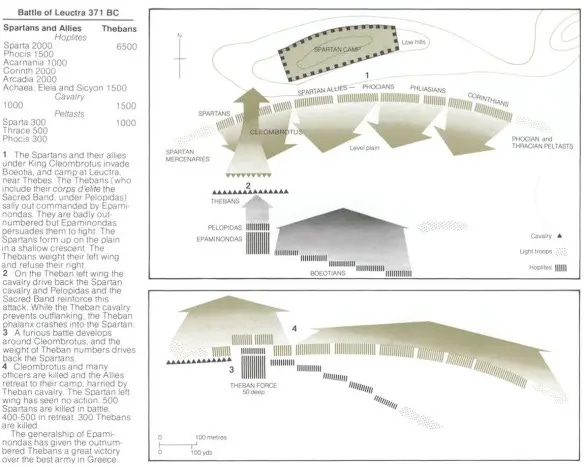
Epaminondas led a smaller force (some 6,000 to Sparta’s 11,000, though historians debate the exact numbers) to a field in front of a Boeotian village called Leuctra. The Battle of Leuctra would not only mark the beginning of centuries of Spartan decline, but also change the way Greek armies battled all the way through the conquests of Alexander the Great.
How did Epaminondas do it? How could he upend the mighty Spartan empire with a force barely half the size? The answer lay in resource allocation, patience, and 300 extremely important gay men.
If you had the misfortune of fighting against a Spartan army in the last few centuries BCE, you had to contend with a phalanx of hoplites. Thousands of men would align shoulder to shoulder, stick out their shields and spears, and push. You probably had a phalanx of your own, but against the Spartan line, you stood no chance.
Epaminondas didn’t have the numbers to directly contend with the Spartan phalanx, but he did have a specific elite force: the Sacred Band of Thebes. The Sacred Band was made of 300 hand-picked warriors paired off into homosexual couples. The idea was that lovers would fight more fiercely for each other.
Instead of a futile effort to out-push a force half their size, the Boeotians overloaded one side. They put a majority of their force on the left side, thinning out the right. They advanced this overloaded left wing before the weaker right wing, hoping to win before the Spartans could fully engage.
The Boeotian left wing, led in part by the Sacred Band, broke through the Spartan line. With enemy forces charging the side and rear, the Spartans quickly routed. When the dust settled, Epaminondas inflicted upon the Spartans one of the most decisive blowouts in Greek history.
Diagram courtesy of WarHistory.org
Over 1,000 Spartans perished in the Battle of Leuctra, including their king and military leader Cleombrotus. The Boetians lost around a hundred, but exact estimates are hard to come by. By anyone’s estimate, their casualties paled in comparison. Sparta’s military reputation would never recover, and the next 200 years marked an era of Spartan decline.
Epaminondas didn’t invent the phalanx. In fact, it’s unclear who really did. There is evidence of a similar strategy in Sumer over 2,000 years earlier. It’s a fairly basic idea — everyone hold your shields together and push. But Epaminondas did advance the strategy. Others would continue to innovate on Epaminondas’ “oblique” advance, up to and including Alexander the Great.
Luke Brown, “Pushing Tush Is Ancient Technology”, Wide Left, 2025-10-13.
Comments Off on QotD: Epaminondas and the defeat of Sparta at Leuctra
January 16, 2026
QotD: Another unintended consequence of conscription
The big social revolution started in the mid-1960s and had really taken root by 1980. I don’t mean drugs and shagging around I mean a proper social revolution. The British working classes no longer took what they were being told by the poshoes as being true. Questions, as we might put it, were being asked.
My theory, backed up by reality and all the obvious facts of the case, is that as all young men had spent two years being run by the poshoes up front and directly therefore no one believed the poshoes any more. Actual experience, see?
National Service led to the downfall of the posh classes. Simply because direct exposure to said posh was always going to do that.
This is not just a jeu d’esprit. I really do insist that Britain’s social revolution was driven by conscription. Being told to jump by some chinless 6 months out of Eton is going to do that.
Tim Worstall, “National Service Led To The Uppity Proles Of the 1960s”, It’s all obvious or trivial except …, 2025-10-14.
Update, 17 January: Welcome, Instapundit readers! Have a look around at some of my other posts you may find of interest. I send out a daily summary of posts here through my Substack – https://substack.com/@nicholasrusson that you can subscribe to if you’d like to be informed of new posts in the future.
January 6, 2026
Woodworking was WORK. What happened?
Rex Krueger
Published 5 Jan 2026Patrons saw this video early: / rexkrueger
Join the Mailing List: http://eepurl.com/g3rkmv
Take a course: https://www.rexkrueger.com/courses
Compass Rose Toolworks: https://www.compassrosetools.com/
Get my woodturning book: http://www.rexkrueger.com/book
Get My Book, Everyday Woodworking: https://amzn.to/3oyjC0E
Follow me on Instagram: @rexkrueger
Comments Off on Woodworking was WORK. What happened?


