
This week, we’re going to take a close look at arguably the most famous and recognizable Roman battle sequence in film: the iconic opening battle from Gladiator (2000).1 Despite being a relatively short sequence (about ten minutes), there’s actually enough to talk about here that we’re going to split it over two weeks, talking about the setup – the battlefield, army composition, equipment and battle plan – this week and then the actual conduct of the battle next week.
The iconic opening battle, set in the Marcomannic Wars (166-180) during the reign of Marcus Aurelius (r. 161-180) dominates the pop-cultural reference points for the Roman army in battle and you can see its heavy influence in things like how the Total War series presents Roman armies (particularly in trailers and other promotional material). Students and enthusiasts alike will often cite this sequence as the thing which sparked their interest in the Roman army. It is hard to overstate how pervasive its influence is in the public imagination of what the Roman army, particularly of the imperial period, was like, especially as its style is imitated by later pop culture works.
Which is why it is so unfortunate that it is such a deceptive historical mess. This sequence in particular is a banner example of what I’ve termed elsewhere the “perils of historical verisimilitude“, the habit of historically based popular-culture works including what we might think of as fake signifiers of research, things that seem historically grounded rather than being historically grounded, as a way to cheaply cash in on the cachet that an actually grounded representation gets.
Gladiator actually provides a perfect metaphor for this: its main character’s name. Russell Crowe proudly informs us he is, “Maximus Decimus Meridius”, a name that certainly sounds suitably Roman, picking up the three-part name with that standard second declension -us ending. It sounds like it could be a real name – if you didn’t know Latin you would probably assume that it could be a real Roman name. But, as we’ve noted, it isn’t a Roman name and in fact gets nearly all of the Roman naming conventions wrong: Roman names are ordered as praenomen, nomen and cognomen, with the nomen indicating one’s gens (“clan” more or less) and the praenomen selected from just a couple dozen common personal names. Decimus is one of those two-dozen common praenomina (which also means it is never going to show up as the name of a gens), so it ought to go first as it is actually his personal name. Meanwhile Maximus (“the greatest”) is very much not one of those roughly two-dozen praenomina, instead being always cognomen (essentially a nickname). Finally Meridius isn’t a Latin word at all (so it can’t be a praenomen personal name nor a cognomen nickname),2 meaning it has to be the nomen (referencing a fictive gens Meridia). Every part of his name is wrong and it should read Decimus Meridius Maximus.
It sounds just right enough to fool your average viewer, while being entirely wrong. It is “truthy” rather than true – verisimilitudinous (like truth), rather than veristic (realistic, true).
In the case of Gladiator‘s opening battle scene, the attention is on creating verisimilitude (without fidelity, as we’ll see) in the visual elements of the sequence and only the visual elements. The visual representation of a Roman army – the equipment in particular – is heavily based on the Column of Trajan (including replicating the Column’s own deceptions) and since that is the one thing a viewer can easily check, that verisimilitude leads a lot of viewers to conclude that the entire sequence is much more historically grounded than it is. They take their cues from the one thing they can judge – “do these fellows wear that strange armor I saw on that picture of a Roman column?” – and assume everything is about as well researched, when in fact none of it is.
Instead, apart from the equipment – which has its own deep flaws – this is a sequence that bears almost no resemblance to the way Roman armies fought and expected to win their battles. The Roman army in this sequence has the wrong composition, is deployed incorrectly, uses the wrong tactics, has the wrong theory of victory and employs the wrong weapons and then employs them incorrectly. Perhaps most importantly the sequence suggests an oddly cavalry-and-archer focused Roman army which is simply not how the Romans in this period expected to win their battles.
Now I want to be clear here that this isn’t a review of the film Gladiator (2000) or my opinion in general on the film. To be honest, unlike the recent sequel, I enjoy Gladiator even though it is historical gibberish. So I am not telling you that you aren’t “allowed” to like Gladiator, but rather simply that, despite appearances, it is historical gibberish, particularly this opening scene, which I often find folks who are aware the rest of the film is historical gibberish nevertheless assume this opening scene is at least somewhat grounded. It is not.
Bret Devereaux, “Collections: Nitpicking Gladiator’s Iconic Opening Battle, Part I”, A Collection of Unmitigated Pedantry, 2025-06-06.
- I’d think its only real rival for prominence would be Spartacus (1960).
- If you are wondering, “but then were does our word “meridian” come from, the answer is from Latin meridies, meaning “midday”.
January 5, 2026
QotD: Nitpicking the opening battle in Gladiator (2000)
December 27, 2025
QotD: The US Department of War does “The Twelve Days of Christmas”
Status of acquisitions follows:
Day 1 – Partridge in a Pear Tree:
The Army and Air Force are in the process of deciding whose area of responsibility Day 1 falls under.
Since the partridge is a bird, Air Force believes it should have the lead. Army, however, feels trees are part of the land component command’s area of responsibility.After three months of discussion and repeated OpsDeps tank sessions, a $1M study has been commissioned to decide who should lead this joint program.
Day 2 – Two Turtle Doves:
Since doves are birds, the Air Force claims responsibility. However, turtles are amphibious, so the Navy-Marine Corps team feel they should take the lead. Initial studies show that turtles and doves may have interoperability problems.Terms of reference are being coordinated for a four-year, $10M DARPA study.
Day 3 – Three French Hens:
At State Department instigation, the Senate Committee on Foreign Affairs has blocked off-shore purchase of hens, from the French or anyone else.A $6M program is being developed to find an acceptable domestic alternative.
Day 4 – Four Calling Birds:
Source selection has been completed, with the contract awarded to AT&T.However, the award is being challenged by a small disadvantaged business.
Day 5 – Five Golden Rings:
No available rings meet MILSPEC for gold plating.A three-year, $5M accelerated development program has been initiated.
Day 6 – Six Geese a-Laying:
Six geese have been acquired.However, the shells of their eggs seem to be very fragile. It might have been a mistake to build the production facility on a nuclear waste dump at former Air Force base closed under BRAC.
Day 7 – Seven Swans a-Swimming:
Fourteen swans have been killed trying to get through the Navy SEAL training program.The program has been put on hold while the training procedures are reviewed to determine why the washout rate is so high.
Day 8 – Eight Maids a-Milking:
The entire class of maids a-milking training program at Aberdeen is involved in a sexual harassment suit against the Army.The program has been put on hold pending resolution of the lawsuit.
Day 9 – Nine Ladies Dancing:
Recruitment of Ladies has been halted by a lawsuit from the “Don’t Ask Don’t Tell Association”.Members claim they have a right to dance and wear women’s clothing as long as they’re off duty.
Day 10 – Ten Lords a-Leaping:
The ten lords have been abducted by terrorists. Congress has approved $2M in funding to conduct a rescue operation.Army Special Forces and a USMC MEU(SOC) are conducting a “NEO-off” competition for the right to rescue.
Day 11 – Eleven Pipers Piping:
The pipe contractor delivered the pipes on time. However, he thought DoD wanted smoking pipes. DoD lost the claim due to defective specifications.A $22M dollar retrofit program is in process to bring the pipes into spec.
Day 12 – Twelve Drummers Drumming:
Due to cutbacks, only six billets are available for drumming drummers. DoD is in the process of coordinating an RFP to obtain the six additional drummers by outsourcing. However, funds will not be available until FY 26.As a result of the above-mentioned programmatic delays, due to a high OPTEMPO that requires diversion of modernization funds to support current readiness, Christmas is hereby postponed until further notice.
“Old NFO Retired”, from social media courtesy of Moses Lambert.
Update, 29 December: Welcome, Instapundit readers! Have a look around at some of my other posts you may find of interest. I send out a daily summary of posts here through my Substack – https://substack.com/@nicholasrusson that you can subscribe to if you’d like to be informed of new posts in the future.
December 22, 2025
The Great Eggnog Riot at West Point Military Academy
Tasting History with Max Miller
Published 6 Dec 2024Boozy, creamy eggnog with foam and nutmeg on top
City/Region: United States of America
Time Period: 1887At West Point in 1826, with alcohol prohibited on campus, students smuggled in large quantities of booze to make eggnog for a secret party on Christmas Eve. Drunkenness led to a riot that involved firearms, swords, broken windows, and barricades.
If you’ve never made homemade eggnog, I highly recommend it. It’s creamy, boozy, and so much more delicious than what you buy at the store. Is it good enough to start a riot over? I’ll leave that judgement up to you.
I have an allergy to raw egg whites, so in the video I used 12 egg whites worth of reconstituted dry aquafaba instead, and it worked great.
Egg Nog
Beat the yolks of twelve eggs very light, stir in as much white sugar as they will dissolve, pour in gradually one glass of brandy to cook the egg, one glass of old whiskey, one grated nutmeg, and three pints of rich milk. Beat the whites to a froth and stir in last.
— The White House Cook Book, 1887
December 12, 2025
QotD: Crime and the army
But in the Army, “crime” is capable of infinite shades of intensity. It simply means “misdemeanor”, and may range from being unshaven on parade, or making a frivolous complaint about the potatoes at dinner, to irrevocably perforating your rival in love with a bayonet. So let party politicians, when they discourse vaguely to their constituents about “the prevalence of crime in the Army under the present effete and undemocratic system”, walk warily.
Ian Hay (Major John Hay Beith), The First Hundred Thousand: Being the Unofficial Chronicle of a Unit of “K(1)”, 1916.
December 9, 2025
QotD: The development of army discipline and drill in pre-modern armies
The reason we cannot just call this “drill” is because while drill is the most common way agrarian societies produce this result, it is not the only way to this end. For instance as we’ve discussed before, steppe nomads could achieve a very high degree of coordination and synchronization without the same formal systems of drill because the training that produced that coordination was embedded in their culture (particularly in hunting methods) and so young steppe nomad males were acculturated into the synchronicity that way. That said for the rest of this we’re going to place those systems aside and mostly focus on synchronized discipline as a result of drill because for most armies that developed a great deal of synchronized discipline, that’s how they did it.
Fundamentally the principle behind using drill to build synchronized discipline is that the way to get a whole lot of humans to act effectively in concert together is to force them to practice doing exactly the things they’ll be asked to do on the battlefield a lot until the motions are practically second nature. Indeed, the ideal in developing this kind of drill was often to ingrain the actions the soldiers were to perform so deeply that in the midst of the terror of battle when they couldn’t even really think straight those soldiers would fall back on simply mechanically performing the actions they were trained to perform. That in turn creates an important element of predictability: an individual soldier does not need to be checking their action or position against the others around them as much because they’ve done this very maneuver with these very fellows and so already know where everyone is going to be.
The context that drill tends to emerge in (this is an idea invented more than once) tends to give it a highly regimented, fairly brutal character. For instance in early modern Europe, the structure of drill for gunpowder armies was conditioned by elite snobbery: European officer-aristocrats (in many cases the direct continuation of the medieval aristocracy) had an extremely poor view of their common soldiers (drawn from the peasantry). Assuming they lacked any natural valor, harsh drill was settled upon as a solution to make the actions of battle merely mechanical, to reduce the man to a machine. Roman commanders seemed to have thought somewhat better of their soldiers’ bravery, but assumed that harsh discipline was necessary to control, restrain and direct the native fiery virtus (“strength/bravery/valor”) of the common soldier who, unlike the aristocrat, could not be expected to control himself (again, in the snobbish view of the aristocrats).
In short, drill tends to appear in highly stratified agrarian societies, the very nature of which tends to mean that drill is instituted by a class of aristocrats who have at best a dim view of their common soldiers. Consequently, while the core of drill is to simply practice the actions of battle over and over again until they become natural, drill tends to also be encrusted with lots of corporal punishments and intense regulation as a product of those elite attitudes. And though it falls outside of our topic today it seems worth noting that our systems of drill to produce synchronized discipline have the same roots (deriving from early modern musket drill).
Bret Devereaux, “Collections: Total Generalship: Commanding Pre-Modern Armies, Part IIIa”, A Collection of Unmitigated Pedantry, 2022-06-17.
December 8, 2025
Hungary 1956: The Day Hope Met Soviet Steel – W2W 056
TimeGhost History
Published 7 Dec 2025Here we trace how, only eleven years into Soviet rule, Hungary’s brief hope after Stalin’s death ignites into demands for reform, free speech, and withdrawal of Soviet troops. Students mass in Budapest, the secret police fire on demonstrators, and the uprising spreads as workers’ councils seize factories and crowds pull down Stalin’s statue. Imre Nagy promises neutrality and multi-party politics, but Moscow wavers, then sends in overwhelming force. As tanks return to Budapest, street fighting erupts, radios broadcast desperate pleas, and the revolution is crushed, leaving thousands dead and a generation convinced that the thaw was an illusion.
(more…)
December 7, 2025
QotD: The Great Applesauce Blight of 1977/78
As we take our own little march down memory lane, let me state up front that I can’t stomach applesauce, just can’t. I liked it as a kid but now it has less appeal than the prospect of being duct taped to a chair, face down, in prison. Yeah, I hate it.
This may seem unreasonable, but anyone who was in at the time, at least in the Army or Marines, and some portion thereof that actually went to the field a lot, will probably remember the Great Applesauce Blight of 1977 and 1978, which was the reason I can’t stand the crap.
The “Great Applesauce Blight?” you ask. Oh, yeah.
The story I got, after some years and some digging, goes like this: It seems that sometime in the late 1960s or early 1970s, a fruit company – the Monterey Fruit Company, so it was said – was going out of business. So the Monterey Fruit Company, if that’s who it really was, called the Department of Defense and said, “Boys, have we got a deal for you. Hundreds upon hundreds of tons of Grade A applesauce, and you can have it. All of it. Cheap.”
McNamara and his Whiz Kids – neither of them ever sufficiently to be damned, of course – were gone, but their spirits remained. Department of Defense, ever conscious of the value of a well-squeezed penny, bought that inventory of applesauce, and began to put it into the old style, canned, MCI; Meal, Combat, Individual, which is to say, “C-rations”.
C Rations of the day were entirely canned and composed of a main meal, for one meal, plus either a cake (or very rarely, canned bread) or fruit of some kind, usually a small tin of peanut butter or cheese of some kind of jam or jelly, and one or another type of B Unit, which would have some variant of crackers plus either candy or cocoa. Sometimes, as with the B-2 unit, the cheese was in those.
Now, perusing a case of 1978 C-rats, which would have been newer than those of the Great Applesauce Blight, but still broadly similar, one notes that there were twelve menus, twelve different main meals, and 12 different kinds of dessert, a sundry pack, plus variable candies, spreads, etc. Of that latter twelve, eight were fruit and four were cake of some kind. I seem to recall that, possibly for reasons of economy, the amount of fruit during the Great Applesauce Blight had gone up to usually ten cans out of twelve, some extra cheese or peanut butter seemed to be included with some, and the cakes went down to two, one of which was going to be Chocolate Nut Roll, essentially inedible, from the Nashville Bread Company and the other would be the even more thoroughly disgusting fruit cake. I don’t recall who made that, and that lack of memory may have been an automatic defense against a future charge of capital murder. None of the cakes except pound cake could be relied on to be edible, and pound cake was always rare.
Now picture this, you’re a soldier in the Panama Canal Zone, training – training hard – to fight for the Canal, living in the jungle maybe twenty-five or more days and nights a month, eating C-rats to the tune of sixty or seventy a month, and virtually every meal contains applesauce or something more innately disgusting. “No, none of that nice fruit cocktail or those ever so delectable pear slices for you, young man; Department of Defense, to save a few bucks, has determined that applesauce is good enough, three meals a day, for weeks on end.”
*****
Now we were already kind of thin, because no military feeding system can ever completely keep up with the caloric requirements for a soldier either continuously fighting or realistically training to fight. Normally, this isn’t a problem because he can pack it on in the mess hall. These were unusual circumstances, though, with an unusually high chance of fighting – or riot control, which is worse – over the Canal. So we’re pretty much living out there, in pretty much trackless jungle, with nothing like enough helicopters for regular hot rations from the mess. Besides that, the old 193rd Infantry Brigade, in the Panama Canal Zone, was unusual in that it made a very serious effort to train even the cooks to fight, which takes time, too. C’s are pretty much it.
Even so, thin and hungry or not, after a month or two we could not eat the applesauce. That was probably seven or eight hundred calories a days that just got tossed.
We began going from thin to frigging emaciated.
*****
When I think upon the Great Applesauce Blight, though, I do not think about hardship or hunger. No, I think – as we old farts are wont to – about happier aspects of it.
Now this is no shit:
There we were, the heavy mortar platoon of 4th Battalion, 10th Infantry, stuck on top of a non-descript hill somewhere southwest of Gamboa, Canal Zone.
PFC McBrayer had a birthday out there in the jungle. I think it was his nineteenth birthday. None of us had been able to do any shopping, so we were all just stuck for getting him a birthday present. “I’m not giving up my pet scorpion,” said Big Al, who in fact, had a pet scorpion for the mega-ant versus scorpion gladiatorial combats we used to stage. “I’d offer to give him some of my crotch rot,” said Art, “but I think he already has some of his own.” “Howler monkey?” “Who’s going to catch it? And those suckers are mean, too.” “How about a sloth? They’re easy to catch.” “If the Lord God didn’t see fit to give B’rer Sloth an asshole, I don’t see why we should add to his troubles by catching him and wrapping him as a present.” Finally someone, I don’t think it was me, might have been Sergeant Sais, said, “Gentlemen, there can be only one proper gift under the circumstances,” and then he held up a – you guessed it – can of applesauce.
So we stuck nineteen or twenty Canal Zone Matches in a Nashville Bread Company Chocolate Butt Roll, invited McBrayer over, torched off the matches, sang Happy Birthday, then presented him his can of applesauce.
He was touched; you could see that. As he dashed tears from his eyes while making his, “Gee, you guys are just all so special … you shouldn’t have,” speech, you could see the emotion radiating from his face. And then, all choked up, he turned to go and tossed that can off applesauce off the hill with a casual contempt I have never seen before or since. It was the sheer, distilled essence of everything we all felt about applesauce.
Tom Kratman, The social media site formerly known as Twitter, 2025-09-05.
December 6, 2025
Battle of Tarawa, 1943
Real Time History
Published 5 Dec 2025The Marine and US Army landing on the Tarawa Atoll’s Betio and Makin islands were the first operations in the new Central Pacific front of the Pacific War. Tarawa was one of the deadliest amphibious landings for the Marine Corps which hadn’t yet perfected such complex operations. But the lessons learned at Tarawa would already be applied a few months later at Kwajalein and Eniwetok.
(more…)
December 4, 2025
M103: The Tank With No Name
The Tank Museum
Published 1 Aug 2025In 1950, the USA was facing a tank crisis … and the M103 was supposed to be part of the solution. But it would hardly ever be used.
After the Second World War, the USA made massive cuts to their conventional forces – declaring the majority of their tanks obsolete, with those left coming to the end of their service life. And the appearance of the Soviet IS-3 meant that the pressure was on. The US Army and the US Marine Corps wanted new tanks – and they wanted them fast. And the appearance of the Soviet IS-3 meant that the pressure was on. The USA declared a “Tank Crisis”.
The T-43 heavy tank was intended to be the response to new Soviet armour. But vehicles were being built before the bugs had been ironed out – and the delays began to mount up. Whilst the Army began to question the need for a heavy tank, the Marines went all in on the concept – ordering over 200 for their forces. But the T-43 was nowhere near ready to enter service, and the vehicles went into storage with 114 improvements needed.
Changes were made and eventually the Marines got their heavy tank – now named the M103. But its effectiveness was limited, and the M103 was only operationally deployed once. The Marines rejected replacement M60s in favour of the Future Main Battle Tank – a project that would end up being cancelled. Their existing M103AA1s were modernised using M60 parts, creating the M103A2 – which The Tank Museum has an example of in its running fleet.
The M103 is a heck of a tank: powerful, capable and incredibly imposing to be around. But did the Americans really need it? Was it the ultimate panic buy?
This is the story of the M103 Heavy Tank – and the panic that produced it.
00:00 | Introduction
00:30 | Meet the M103
03:06 | T-43 and the Tank Crisis
06:21 | Unfit for Service?
11:33 | In Service
15:26 | M103 In Retrospect
December 3, 2025
Battle of Peleliu 1944
Real Time History
Published 18 Jul 2025In September 1944, the US 1st Marine Division is on its way to another amphibious invasion in the Pacific – the tiny island of Peleliu. For almost half the Marines it will be their baptism of fire against veteran Japanese troops with a new defensive doctrine. Some American commanders call for the operation to be cancelled, but it goes ahead. By its end, half the Marines and all the Japanese will be killed or wounded – but was Peleliu worth it?
(more…)
November 21, 2025
QotD: Why did the (western) Roman Empire collapse?
Let’s start with the foederati.
After the Constitutio Antoniniana, there was no longer much need for the auxilia, as all persons in the empire were citizens, and so the structure distinction between the legions and other formations fades away (part of this is also the tendency of the legions in this period to be progressively split up into smaller units called vexillationes, meaning that the unit-sizes wouldn’t have been so different). But during the fourth century, with frontier pressures building, the Romans again looked for ways to utilize the manpower and fighting skill of non-Romans. What is striking here is that whereas in some ways […] the auxilia had represented almost a revival of the attitudes which had informed the system for the socii, the new system that emerged for using foreign troops, called foederati (“treaty men”) did not draw on the previously successful auxilia-system (which, to be clear, by this point had been effectively gone for more than a century). Instead, the Romans signed treaties with Germanic-speaking kings, exchanging chunks of (often depopulated, war-torn frontier) land in exchange for military service. Since these troops were bound by treaty (foedus) they were called foederati. They served in their own units, under their own leaders, up to their kings. Consequently, all of the mechanisms that encouraged the auxilia to adopt Roman practices and identify with the Roman Empire were lost; these men might view Rome as a friendly ally (at times) but they were never encouraged to think of themselves as Roman.
The reason for this different system of recruitment seem to be rooted in financial realities. The Roman army had already been expanded during the Crisis of the Third Century and only grew more under Diocletian and Constantine, probably by this point being between 400,000 and 500,000 men (compared to 300,000-350,000 earlier in the empire). Moreover, Diocletian had opted to reform the empire’s administration with a much more intensive, top-down, bureaucratic approach, which imposed further costs. Taxes had become heavy (although elites were increasingly allowed to dodge them), the economy was weak and revenues were short. The value of the foederati was that the empire didn’t have to pay them; they were handed land (again, in war-torn frontier zones) and expected to use that to pay for their military support. At the time, it must have seemed a brilliant work-around to get more military power out of a dwindling tax-base.
(I feel the need to note that I increasingly regard Diocletian (r. 284-305) as a ruinous emperor, even though he lacked the normal moralizing character flaws of “bad emperors”. While he was active, dedicated and focused, almost all of his reforms turned out to be quite bad ideas in the long run even before one gets to the Great Persecution. His currency reforms were catastrophic, his administrative reforms were top-heavy, his tax plan depended on a regular census which was never regular and the tetrarchy was doomed from its inception. Diocletian was pretty much a living, “Well, You Tried” meme. That said, to be clear, Diocletian wasn’t responsible for the foederati; it’s not quite clear who the first foederati were – they may have been the Franks in 358, which would make Julian (as a “Caesar” or junior-emperor under Constantius) the culprit for this bad idea – he had a surplus of those too.)
The problem, of course, is right there: the status of the foederati made it impossible for them to ever fully integrate into the empire. They had, after all, their own kings, their own local laws and served in their own military formations. While, interestingly, they would eventually adopt Latin from the local population which had already done so (leading to French, Spanish and Italian) they could never become Roman. That wasn’t always their choice, either! As O’Donnell (op. cit.) notes, many of these foederati wanted to be “in” in the Roman Empire; it was more frequently the Romans who were busy saying “no”. It is striking that this occurs in a period where social class in the Roman world was generally calcifying. Whereas citizenship had been an expanding category, after the Constitutio Antoniniana, the legal categories of honestiores and humiliores (lit. “respectable” and “humble” people, but in practice, “wealthy” and “commoners”) largely replaced citizenship as the legal dividing lines of Roman society. These were far less flexible categories, as economic social mobility in the ancient world was never very high. Even there, the tax reforms of Diocletian (with some “patches” under Constantine) began, for tax purposes, to tie tenant farmers (“coloni“) to their land, essentially barring both physical and economic mobility in the name of more efficient tax collection in a system that strongly resembled later medieval serfdom.
Nevertheless, the consequence of this system of organization was that as often as the foederati provided crucial soldiers to Roman armies, they were just as frequently the problem Roman armies were being sent to address. Never fully incorporated into the Roman army and under the command of their own kings, they proved deeply unreliable allies. Pitting one set of foederati against the next could work in the short-term, but in the long term, without any plan to permanently incorporate the foederati into Roman society, fragmentation was inevitable. The Roman abandonment of the successful older systems for managing diverse armies (on account that they were too expensive) turned the foederati from a potential source of vital manpower into the central cause of imperial collapse in the West.
Bret Devereaux, “Collections: The Queen’s Latin or Who Were the Romans, Part V: Saving and Losing and Empire”, A Collection of Unmitigated Pedantry, 2021-07-30.
November 19, 2025
US Democrats issue clarion call to the military: “You must refuse illegal orders”
Well, thank goodness that someone remembers Nuremberg! Apparently President Trump has been issuing illegal orders to the US Army, Navy, and Air Force, and these brave legislators are putting their careers — and even their lives — on the line to defend democracy. I’m unaware of what these specific orders may be, but as Chris Bray points out, he’s the Bad Orange Man so pretty much anything he orders must be illegal:

Note what they don’t say. They say that the American military is being “pitted against” their own countrymen, and they say to servicemembers that “you can refuse illegal orders …”
… they don’t say, even once, even in a pretty clear hint, precisely what illegal orders Trump has issued. He’s being vaguely bad, so you don’t have to obey him. The serious version would look like this: On [date here], the President of the United States ordered [unit name] to enter [place name] for the purpose of [specific action], and that order violated [explicit citation of US Code]. They mushmouth around a set of feelings-signals about Mean Orange Something, but they never quite manage to spit it out. What’s the illegal order anyone is supposed to disobey, and what makes it illegal? News reports suggest that they mean to refer to the boat strikes, but click on that link if you want to see more vagueness and weak hinting.
This is exactly what the Catholic bishops just did in their own stupid virtue performance, the precise mark of an absence of seriousness in a coven of drama queens, as they declared that they’re very concerned about questions that have arisen regarding certain situations involving immigrants. More mush from the wimps. Donald Trump is very bad, because mumble mumble mumble. Be precise and clear, or be silent.
This is an age of unseriousness, and here’s another heaping plate of it. Soldiers, you don’t have to obey the orders of your military superiors if you feel that they, that they, uh, oh hey look at the time anyway I have to go. It’s passive-aggressive bad girlfriendspeak as politics. I guess if you feel like you have to obey, that’s fine. No, it’s fine! I’m not mad! Let’s just go to dinner!
We want to speak directly to members of the military, but we don’t actually have anything to say. Just, you know, disobey the president. Small thought, not a big deal.
High school drama club president Elissa Slotkin has been banging on this drum in an especially insistent way, as she holds town hall meetings with veterans who mumble their own vague slogans about Trump bein’ against the Constitution real hard and stuff.
But all of their descriptions are stupid. Sending a few hundred National Guard troops to a city of hundreds of thousands of people with narrow orders about protecting federal facilities and personnel or patrolling to deter violence isn’t military conquest of the population or the militarization of all law enforcement. The hyperbole renders the argument insane. Related, the veterans in Slotkin’s video talk about the “systematic removal” of military leaders, and the “purge of the generals”. The US military has over 800 flag officers; the Trump administration has removed about 15. There’s a desperate stupidity to all of this panic-mongering that just renders it deeply tiring.
Actual servicemembers will be familiar with the rhetorical style of the shithouse lawyer, the idiot in the barracks who tells you that akshully they can’t order you to do that, it’s totally illegal.
You should just tell your drill sergeant that you refuse! He can’t even do nothin’ about it! He’ll just back right down!


November 14, 2025
Why didn’t the Allies Attack Germany in 1939? (The Phoney War)
Real Time History
Published 20 Jun 2025On September 1, 1939, Germany invades Poland, setting off the Second World War. Two days later, Britain and France declare war on Germany. As the German army races towards Warsaw, many German generals are worried the French might simply walk into western Germany, and there’s not much the Wehrmacht can do about if they do. But instead of a powerful Allied counteroffensive, the French and British mostly sit back and wait during the so-called Phoney War – so why didn’t the Allies attack Germany in 1939?
(more…)
November 11, 2025
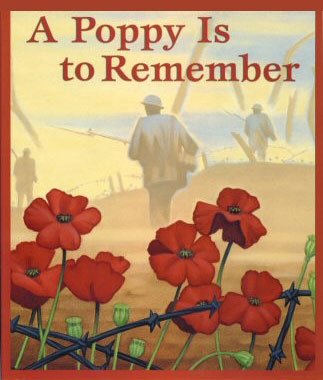
In memoriam
A simple recognition of some of our family members who served in the First and Second World Wars:
The Great War
 Private William Penman, Scots Guards, died 16 May, 1915 at Le Touret, age 25
(Elizabeth’s great uncle)- Private Archibald Turner Mulholland, Argyll & Sutherland Highlanders, mortally wounded 25 September, 1915 at Loos, age 27
(Elizabeth’s great uncle) - Private David Buller, Highland Light Infantry, died 21 October, 1915 at Loos, age 35
(Elizabeth’s great grandfather) - Private Harold Edgar Brand, East Yorkshire Regiment. died 4 June, 1917 at Tournai.
(My first cousin, three times removed) - Private Walter Porteous, Durham Light Infantry, died 4 October, 1917 at Passchendaele, age 18
(my great uncle, who had married the day before he left for the front and never returned) - Corporal John Mulholland, Argyll & Sutherland Highlanders, wounded 2 September, 1914 (shortly before the First Battle of the Aisne), wounded again 29 June, 1918, lived through the war.
(Elizabeth’s great uncle) - John Eleazar (“Ellar”) Thornton, (ranks and dates of service unknown, served in the Royal Garrison Artillery, the East Surrey Regiment, and the Essex Regiment (dates of service unknown, but he likely joined the RGA in 1899). Put on the “Z” list after the war — recall list. He died in an asylum in 1943.
(my grandfather’s eldest brother) - Henry (Harry) Thornton, (uncertain) Lancashire Fusiliers. (We are not sure it is him as there were no identifying family or birth date listed. Rejected for further service.)
(my grandfather’s second older brother)
The Second World War
- Flying Officer Richard Porteous, Royal Air Force, survived the defeat in Malaya, was evacuated to India and lived through the war.
(my great uncle) - Able Seaman John Penman, Royal Navy, served in the Defensively Equipped Merchant fleet on the Atlantic convoys, the Murmansk Run (we know he spent a winter in Russia at some point during the war) and other convoy routes, was involved in firefighting and rescue efforts during the Bombay Docks explosion in 1944, lived through the war.
(Elizabeth’s father. We received his Arctic Star medal in July, 2024.) - Private Archie Black (commissioned after the war and retired as a Major), Gordon Highlanders, captured during the fall of Singapore (aged 15) and survived a Japanese POW camp (he had begun to write an autobiography shortly before he died)
(Elizabeth’s uncle) - Elizabeth Buller, “Lumberjill” in the Women’s Timber Corps, an offshoot of the Women’s Land Army in Scotland through the war.
(Elizabeth’s mother) - Trooper Leslie Taplan Russon, 3rd Royal Tank Regiment, died at Tobruk, 19 December, 1942 (aged 23).
Leslie was my father’s first cousin, once removed (and therefore my first cousin, twice removed). - Flight Sergeant Kenneth Alexander Porteous, Royal Air Force, air gunner in a Lancaster bomber of 15 Squadron, Bomber Command. Died when his plane was shot down at Wormlitz 10 miles northeast of the target during a raid on Magdeburg, 21 January 1944 (aged 28).
Kenneth was my first cousin, twice removed. - Reginald Thornton, rank and branch of service unknown, hospitalized during the war with shellshock and was never discharged back into civilian life. He died in York in 1986.
(my grandfather’s youngest brother)
My maternal grandfather, Matthew Kendrew Thornton, was in a reserved occupation during the war as a plater working at Smith’s Docks in Middlesbrough. The original design for the famous Flower-class corvettes came from Smith’s Docks and 16 of the 196 built in the UK during the war (more were built in Canada). My great-grandmother was an enthusiastic ARP warden through the war (she reportedly enjoyed enforcing blackout compliance in the neighbourhood using the rattle and whistle that came with the job).
For the curious, the Commonwealth War Graves Commission the Royal British Legion, and the Library and Archives Canada WW1 and WW2 records site provide search engines you can use to look up your family name. The RBL’s Every One Remembered site shows you everyone who died in the Great War in British or Empire service (Canadians, Australians, New Zealanders, South Africans and other Imperial countries). The CWGC site also includes those who died in the Second World War. Library and Archives Canada allows searches of the Canadian Expeditionary Force and the Royal Newfoundland Regiment for all who served during WW1, and including those who volunteered for the CEF but were not accepted.
In Flanders fields the poppies blow
Between the crosses row on row,
That mark our place; and in the sky
The larks, still bravely singing, fly
Scarce heard amid the guns below.We are the Dead. Short days ago
We lived, felt dawn, saw sunset glow,
Loved and were loved, and now we lie
In Flanders fields.Take up our quarrel with the foe:
To you from failing hands we throw
The torch; be yours to hold it high.
If ye break faith with us who die
We shall not sleep, though poppies grow
In Flanders fields.Lieutenant Colonel John McCrae, MD Canadian Army Medical Corps (1872-1918)
Here is Mark Knopfler’s wonderful song “Remembrance Day” from his Get Lucky album, set to a slideshow of British and Canadian images from World War I through to more recent conflicts put together by Bob Oldfield:
QotD: Moltke the Younger and the Schlieffen Plan
Moltke therefore proved an ideal scapegoat for the “Schlieffen School”. For the Schlieffen School (mostly officers trained by Schlieffen), the Schlieffen Plan was a true recipe for victory bungled by incompetent execution. However, recent scholarship has shown a more nuanced picture. While Schlieffen did not fully approve of his successor, Moltke was a faithful student of Schlieffen’s concepts. The modifications he made to the plan were not because of a difference in opinion, but of circumstance. Following Schlieffen’s retirement, the French army became more aggressive, necessitating a stronger defense of the Rhine. Likewise, Russian strength and mobilization speed increased, necessitating a greater force allocated to the East. Moltke was also more realistic about the logistical limitations of the all-important right wing of the German offensive. While Schlieffen (allegedly with his dying breath) insisted “keep the right wing strong”, there were simply only so many divisions that could practically advance there. Moltke did his best to adapt the Schlieffen Plan to these changing circumstances, though with mounting fear that the strength of the Entente had placed victory beyond Germany’s strength.
Despite awareness of the long odds, officers continued to press for preventative war in succeeding European crises.3 The term “preventative war” did not mean “preempting the attack of hostile powers” but rather to initiate a war while the strategic balance was most favorable for Germany. While, as mentioned, they had their doubts about the surety of victory, they believed the odds would only get worse. The Schlieffen Plan had been designed for a one-front war against France (in 1905, the year of Schlieffen’s retirement, Russia was in the throes of revolution). Though adapted in later years, the plan remained tenable only so long as Germany had the chance to defeat France before Russian mobilization was completed. As the Russian army expanded and its rail system modernized, the General Staff saw the Schlieffen Plan nearing its expiration date.
The General Staff saw no alternative to Schlieffen’s concept because of its axiomatic focus on total victory. The kind of limited victory that the Elder Moltke had settled for in his later war plans had never entered the vocabulary of the General Staff. As such, the General Staff pressed strongly for war (which it believed was inevitable) to break out before the balance of power swung further against Germany.
The only alternative to this would have been to frankly state the perilous situation in which Germany stood militarily and admit that total military victory was out of reach and German diplomacy would need to be reoriented around this fact. Not only would this course of action been antithetical to the proud traditions of the officer corps, but it would also have been viewed as unacceptably political. What’s more, the Kaiser would have likely viewed such behavior as cowardly if not outright insubordinate. Once again, the Kaiser’s power over personnel decisions meant uncomfortable topics were not broached for fear of instant dismissal.
It is not entirely unjust to accuse German leaders of cowardice or careerism in avoiding these conversations. However, they — like so many who serve under capricious or incompetent heads of state — justified their silence and continued service under the logic of harm reduction. If they resigned (or clashed with the Kaiser leading to their dismissal) they knew they would be replaced by someone more compliant. The Kaiser’s power over personnel meant they understood clearly that they had no leverage.
The Chiefs of the General Staff, for all their influence, were incentivized to focus on the areas of their exclusive responsibility. Nevertheless, the younger Moltke was not passive in his efforts for war. He resumed contact with the Austro-Hungarian General Staff, assuring it of German support should Austria choose war in a crisis. As aforementioned, when crises came to Europe (some instigated by the German foreign ministry) he pressed the chancellor and Kaiser for a preventative war. Both, to their credit, while willing to risk war, would not choose it.
Perhaps most decisively, Moltke and his deputy, Erich von Ludendorff,4 made the decision to hinge the operational plan on an attack on the Belgian city of Liège (hosting a critical rail juncture) before the neutral country could mobilize.5 This modification was made because Moltke desired to avoid violating Dutch neutrality (as Schlieffen had called for). He wisely understood Germany could afford no more enemies and that invading the Netherlands would mean increasing the distance the German right wing would have to cover to gain the French flank, decreasing the odds of success. What’s more, Moltke hoped that Dutch neutrality would allow it to act as a “windpipe” in the event of a long war and a British blockade. However, avoiding Dutch territory complicated German logistics, necessitating the swift seizure of Liège to allow the offensive to meet its strict timetables.
This was a strictly operational decision, made on technical grounds. As such, neither the chancellor nor the Kaiser were informed of this detail of the plan (operational plans were kept strictly secret, with the prior year’s being systematically burned). However, as perceptive readers may have noticed, the need for a coup de main against a neutral country before it mobilized severely limited German strategic flexibility. There was only one deployment plan for war in the West (and only one at all after 1913). In a crisis, Germany was therefore bound to attack before the Belgians manned Liège’s fortifications. Yet this all-important point-of-no-return was unknown to the Kaiser, chancellor, and foreign minister. The General Staff had effectively stripped the Kaiser and civilian leaders of their “right to be wrong”.
Thus, the General Staff had drastically increased the likelihood of war in that the point-of-no-return was kept obscured from those who would be responsible for bring Germany to the brink. As would occur in 1914 during the July Crisis, the Kaiser and his minister could not understand why Moltke was pressing so strongly for war. As historian Annika Mombauer puts it, “Only Moltke knew that every hour counted”.6 The General Staff had — intentionally or not — engineered a situation in which political leadership would have to choose war or abandon its only operational plan. While political leadership was reticent to take this step (especially without the details of the plan) contributing to Moltke’s nervous breakdown, the General Staff ultimately got the war it so desired at the next crisis Germany found itself in. If the coup de main on Liège had been devised as a ploy to force political leadership to engage in a preventative war, it had succeeded.
Ultimately, the predominance of the military over German policy — both foreign and domestic — created an environment in which civilian leaders like Bethmann Hollweg were sidelined, and aggressive military strategies took precedence. This imbalance of prestige, coupled with the narrow, fatalistic worldview of military leaders, contributed to Germany’s march toward war, with little room to acknowledge alternative diplomatic or strategic approaches.
Kiran Pfitzner and Secretary of Defense Rock, “The Kaiser and His Men: Civil-Military Relations in Wilhelmine Germany”, Dead Carl and You, 2024-10-02.
- Helmuth von Moltke the Elder was his uncle.
- Mombauer, Moltke, 109.
- Better known for other work.
- Mombauer, 96.
- Mombauer, 219.
- Rosinski, “Scharnhorst to Schlieffen”, 99.


