Quotulatiousness

July 18, 2019

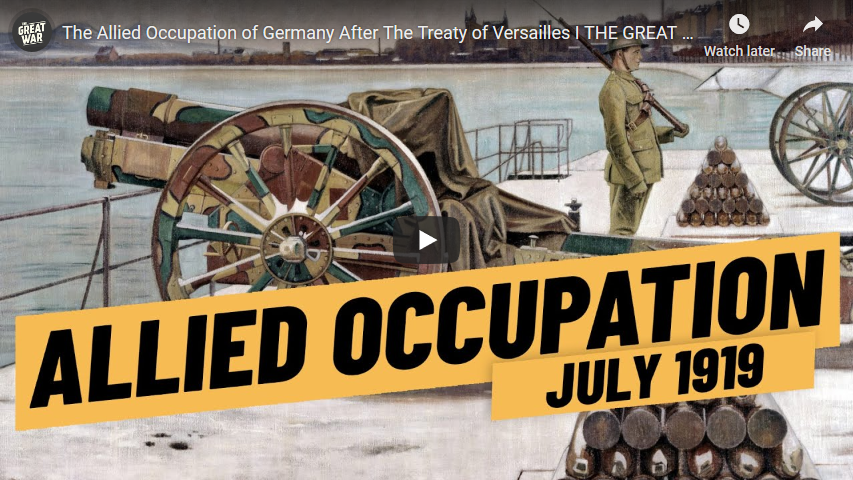
The Allied Occupation of Germany After The Treaty of Versailles I THE GREAT WAR July 1919

Filed under: Britain, France, Germany, History, Military, WW1 — Tags: , , , , , — Nicholas @ 04:00

The Great War
Published on 17 Jul 2019

When the Allied armies marched into German territory in late 1918 under the terms of the armistice, they were surprised to see a relatively untouched land. After the signing of the Treaty of Versailles, the Allied Occupation was made permanent and the troops settled in to stay in a country that did not want them there initially.

» SUPPORT THE CHANNEL
Patreon: https://www.patreon.com/thegreatwar
Merchandise: https://shop.spreadshirt.de/thegreatwar/

» SOURCES
Leonhard, Jörn. Der überforderte Frieden. Versailles und die Welt 1918-1923 (CH Beck, 2018)
Macmillan, Margaret. The Peacemakers: Six Months that Changed the World (London: John Murray, 2001).
Le Naour, Jean-Yves. La Honte noire (Hachette, 2004).
Schröder, Joachim, Watson, Alexander. “Occupation during and after the War (Germany)” in: 1914-1918-online. International Encyclopedia of the First World War https://encyclopedia.1914-1918-online…
Roos, Julia. “Schwarze Schmach” in: 1914-1918-online. International Encyclopedia of the First World War https://encyclopedia.1914-1918-online…
Godfroid, Anne. “Occupation after the War (Belgium and France)” in: 1914-1918-online. International Encyclopedia of the First World War https://encyclopedia.1914-1918-online…
Pawley, Margaret. The Watch on the Rhine: The Military Occupation of the Rhineland, 1918-1930 (I.B.Tauris, 2007).
Hart, Keith. “A Note on the Military Participation of Siam in WWI.” Journal of the Siam Society (ndp): 133–136.
Lauter, Anna-Monika. Sicherheit und Reparationen. Die französische Öffentlichkeit, der Rhein und die Ruhr (1919-1923) (Essen: Klartext, 2006).
Krugler, Gilles. “Allemagne decembre 1918. Les premières heures de l’occupation“. In Revue historique des armées 254 (2009): 76-81. https://journals.openedition.org/rha/…
Mignon, Nicolas. “Boche, ex-ennemie ou simplement femme? Le point de vue des responsables politiques et militaires sur la question des mariages entre militaires belges et femmes allemandes pendant les occupations de la Rhénanie et de la Ruhr (1918-1929).” In Revue belge de Philologie et d’Histoire (2013) 91-4 : 1259-1283.

»CREDITS

Presented by: Jesse Alexander
Written by: Jesse Alexander
Director: Toni Steller & Florian Wittig
Director of Photography: Toni Steller
Sound: Toni Steller
Editing: Toni Steller
Mixing, Mastering & Sound Design: http://above-zero.com
Motion Design: Christian Graef – GRAEFX
Maps: Daniel Kogosov (https://www.patreon.com/Zalezsky)
Research by: Jesse Alexander
Fact checking: Florian Wittig

Channel Design: Alexander Clark
Original Logo: David van Stephold

A Mediakraft Networks Original Channel

Contains licensed material by getty images
All rights reserved – Real Time History GmbH 2019

Canada’s disputed claims to the Arctic

Filed under: Cancon, Government — Tags: , , — Nicholas @ 03:00

In the Post Millennial, Jason Unrau writes about the Canadian government’s largely unsupported claims to the Northwest Passage as Canadian territorial waters:

If Canada is serious about defending sovereignty over its Arctic archipelago, Ottawa needs to develop better infrastructure there and start with a permanent military base, says the only MP who attended the International Arctic Forum held in St. Petersburg, Russia.

“The conversation was that it’s international waters. From a Canadian perspective we lay claim to it, but the international community is really looking at it as international waters,” said David Yurdiga, Conservative MP for Fort McMurray–Cold Lake Alberta.

“There are plans to open up the Northwest Passage and connect it as part of international shipping lanes, as they call it … even the U.S. says it’s international waters.”

Canada’s jurisdiction over the waterway was last publicly questioned at the meeting of Arctic Council nations in Finland, where U.S. Secretary of State Mike Pompeo called Canada’s claim “illegitimate”.

[…]

But back in the real world, nobody cares about Canada’s claims to our Arctic archipelago, except for us, said Yurdiga. And barely a month before Scheer and Freeland duked it out on Twitter, in St. Petersburg, according to Yurdiga, only department staff attended the International Arctic Forum – not MPs, nor ministers.

“I was really shocked there was no representative from the government,” Yurdiga said. “We have international communities talking about these as international waters, and we have nobody from the Canadian government pushing back on our sovereignty. We’ve got to be an active player.”

Hand Tool Tote with Hand-Cut Dovetails | How To Build – Woodworking

Filed under: Tools, Woodworking — Tags: , , — Nicholas @ 02:00

Crafted Workshop
Published on 28 Feb 2017

In this woodworking project, I’m building a hand tool tote using hand-cut dovetails. This project was built so that I could bring a few hand tools with me to my week-long course at the John C. Campbell Folk School (http://bit.ly/folkschool). Enjoy!

Great Hand Tool Resources:

Paul Sellers: https://www.youtube.com/user/PaulSellersWoodwork
James Wright, Wood by Wright: https://www.youtube.com/channel/UCbMtJOly6TpO5MQQnNwkCHg
Shannon Rodgers, Renaissance Woodworker: https://www.youtube.com/user/RenaissanceWW

QotD: “They might speak English, but they don’t speak Western”

Filed under: Books, Education, History, Media, Politics, Quotations, USA — Tags: , , , , , — Nicholas @ 01:00

[Responding to a photo of a protest sign labelled “Dumbledore wouldn’t let this happen“] I swear, it’s all you ever see from them.

But something happened to me last night, I had a kind of realization. It suddenly hit me WHY that is.

It’s because Harry Potter is literally all they collectively know.

Schools don’t teach history anymore.
They no longer teach the canon of Western literature.
They certainly don’t teach the Bible.

So Millennials literally have no points of common reference. It’s not that they all just want to look like complete morons by infantilizing their political metaphor to the level of a children’s book, it’s that they have no other choice.

They’re literally bereft of the allegorical language of the West. I’m sure there’s some Harry Potter monster analogy I could use to explain it to them, how it’s like monsters have come along and literally stolen their ability to speak, their common language, and their birthright.

They can no longer express or understand the set of references we have from our past, our most prized stories, and our culture’s religious quotations. They can’t do Shakespeare, Milton, or even Mark Twain because they’ve never learned any of these while they were being taught Indonesian multicultural dancing and given participation awards. They don’t know what happened at Hastings in 1066, at Runnymede in 1215, or even at Sarajevo in 28th June 1914, because they were being given feminist diversity training instead of learning the history of their civilization. They certainly don’t know what “the least of these” refers to or where it comes from, as a recent event with a White House staffer proved.

They’ve lost the entire allegorical language of the West. They might speak English, but they don’t speak Western. To them, it’s like a foreign, dead, alien language. A set of stories they do not know.

RPGPundit, “Harry Potter and the way Millennial Leftists Don’t Even Speak Western Anymore”, The RPGPundit, 2017-02-02.

July 17, 2019

Andrew Scheer falls into carefully prepared media trap on “conversion therapy”

Filed under: Cancon, Media, Politics — Tags: , , , — Nicholas @ 05:00

Chris Selley explains why federal Conservative leader Andrew Scheer is now being pilloried over his stance on banning so-called “conversion therapy”:

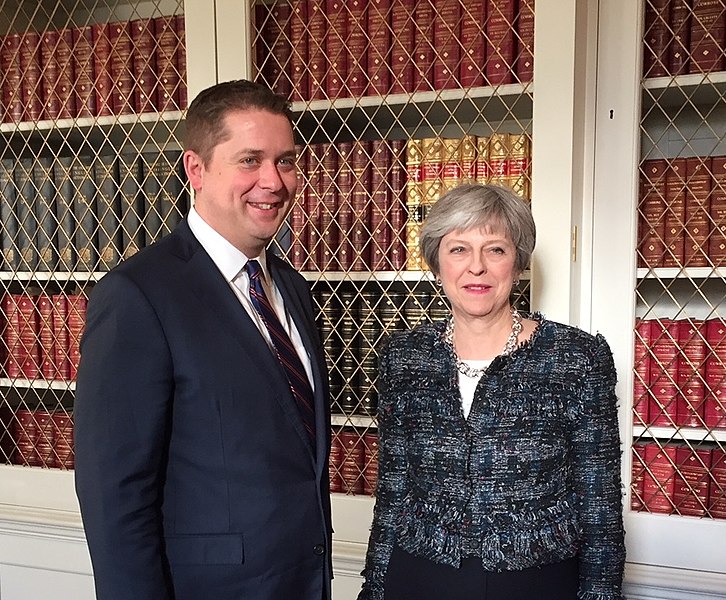
Andrew Scheer meets British Prime Minister Theresa May
Photo via Wikimedia Commons

The day before Global ran its story, CBC reported it had “obtained” a letter the feds sent to the provinces in June asking them to ramp up efforts to outlaw preposterous and potentially dangerous so-called treatments designed to turn homosexual people into heterosexual people. “The provincial, territorial, municipal and federal governments all have roles to play to protect Canadians from the harms associated with this practice,” read the letter, signed by federal Justice Minister David Lametti among others. “The federal government is committed to doing everything within its jurisdiction to combat conversion therapy” — including, supposedly, amendments to the Criminal Code.

Global took that to Scheer, who had nothing nice to say about conversion therapy: “We will always … stand up for the rights of LGBTQ individuals and protect their rights and … we’re opposed to any type of practice that would forcibly attempt to change someone’s sexual orientation.”

Asked whether he would support a “ban,” Scheer responded precisely as opposition leaders always do in the absence of legislation: “We will wait and see exactly what is being contemplated.” After all, Scheer trenchantly noted, “this is something that this Liberal government is only now recently proposing.”

This entirely reasonable position begat the above-noted headline, and the above-noted headline begat mass outrage — including among commentators who know very well how the game is played. “Why would you allow any ambiguity about where you stand?” Global radio host Charles Adler fumed on Twitter, addressing Scheer. “Why can’t you just say this so-called therapy is peddled by charlatans. It exploits vulnerable people including children. Voluntary or coercive, it’s bogus.”

Now, if you think it’s self-evident that conversion therapy ought to be illegal in Canada, and you hold anyone who doesn’t share and proselytize that opinion in contempt, then Scheer has given you your answer. But if that’s what you think, you should be just as furious with the Liberals — probably more.

Not only is the “plan for (a) conversion therapy ban” referred to in the Global headline nothing of the sort, but rather a hitherto private and suddenly, conveniently, public letter that explicitly leaves open the question of federal jurisdiction. But the letter was sent just a few weeks after the Liberals ruled out exactly what the headline would have us believe they are now proposing!

V Bombers – Vulcan, Victor & Valiant – The Last British Bombers

Filed under: Britain, History, Military, Technology — Tags: , , , , — Nicholas @ 04:00

Curious Droid
Published on 28 Nov 2017

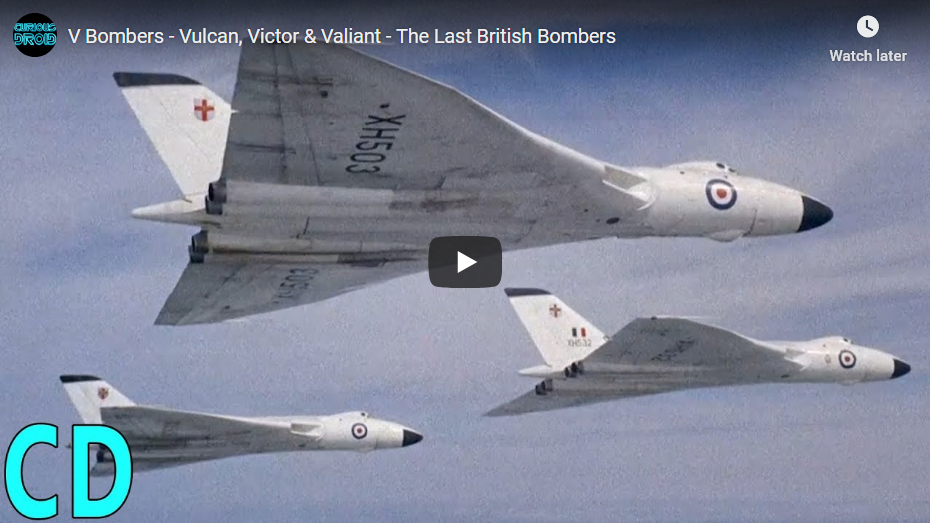
It took just 11 years to go from the first flight of the Lancaster Bomber in 1941 to the first flight of the VX770, the prototype Vulcan bomber in 1952. Yet the difference between them could hardly be greater, the Vulcan along with the Victor and Valiant were a new generation of the new planes known as the “V” bombers, planes for a new era and a newly, nuclear-armed Britain.

Patreon : https://www.patreon.com/curiousdroid
Paypal.me : https://www.paypal.me/curiousdroid

Sponsers: Drew Hendrix, Symon Hamer, Florian Hesse, Lucius Kwok, Hunter Schwisow, Pyloric, Seb Stoodley, Oscar Anderson, Peter Cote, Cody Belichesky, Mogoreanu Daniel, Douglas Gustafson, Marcus Chiado, Jorn Magnus Karlsen.

This episode’s shirt was the was the Tabla Paisley by Madcap England and is available from https://www.atomretro.com/madcap_england.
Get 10% discount with the code DROID10.

Presented by Paul Shillito

Written and Researched by Andy Munzer

Additional material by Paul Shillito

Images and footage: Avro, Handley-Page, Vickers-Armstrong
Jim Debinham, Pathe.

Music – Machiotil by Seclorance is licensed under an Attribution License.
Source : http://freemusicarchive.org/music/Sec…

VIA Rail’s “High Frequency Rail” proposal

Filed under: Cancon, Railways — Tags: , , , , — Nicholas @ 03:00

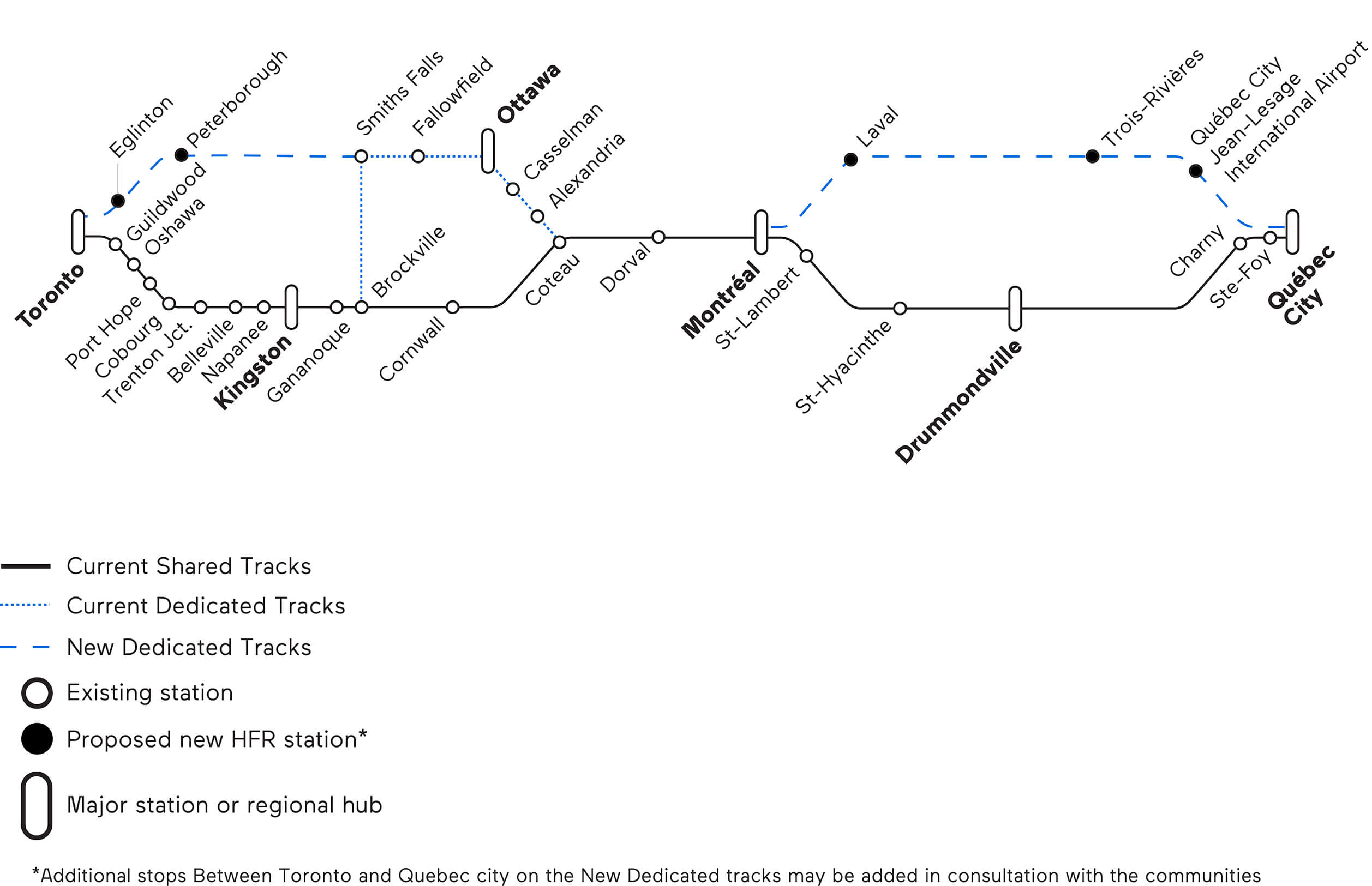
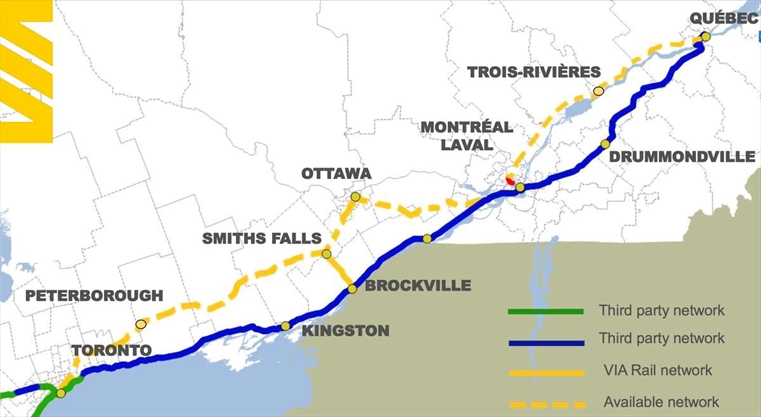
In Trains, Bill Stephens outlines some of the strikes against VIA Rail Canada’s hopes for a dedicated passenger-train-only route between Toronto and Quebec City:

Last month VIA’s $4 billion plan got a $71 million boost that will fund additional feasibility studies. It shouldn’t take $71 million to figure out the plan is fatally flawed. Why? Because it won’t accomplish its chief aim: Eliminating the mind-boggling delays related to sharing tracks with Canadian National freight trains.

To be successful, passenger service needs to be fast, frequent, and dependable. VIA’s current service is faster than driving between Canada’s two biggest cities, Toronto and Montreal. It’s fairly frequent, too, with seven weekday departures between Toronto and Montreal. But it’s not dependable. On-time performance is in the low 70% range for the entire Toronto-Ottawa-Montreal-Quebec City corridor. VIA blames the late trains on interference from CN freights, primarily on the double-track route linking Toronto and Montreal.

So you can understand why VIA would lobby the Canadian government for a dedicated passenger route. Last year VIA’s Eastern Corridor, the Canadian equivalent of Amtrak’s Northeast Corridor, carried three-quarters of VIA’s entire ridership. It stands to reason that you can fill more seats with service that’s faster, more frequent, and more reliable.

[…]

Keeping passenger and freight trains on time takes a combination of operational discipline, the right track capacity, and a willingness to make it work. CN takes pride in its operational discipline, and executives say the Eastern portion of the railroad, between Chicago and Halifax, is underutilized. What’s missing, it seems, is a willingness to expedite VIA trains.

VIA needs a cooperative host railroad more than it needs a new route that would bypass intermediate population centers, face opposition from the not-in-my-backyard crowd, take years to build, and in the end would still have to rely on shared trackage in key areas.

Also a monumental problem without an apparent solution: Squeezing extra trains into Toronto Union Station and Central Station in Montreal on new approaches that would only complicate operations and increase conflicts with freight and commuter traffic.

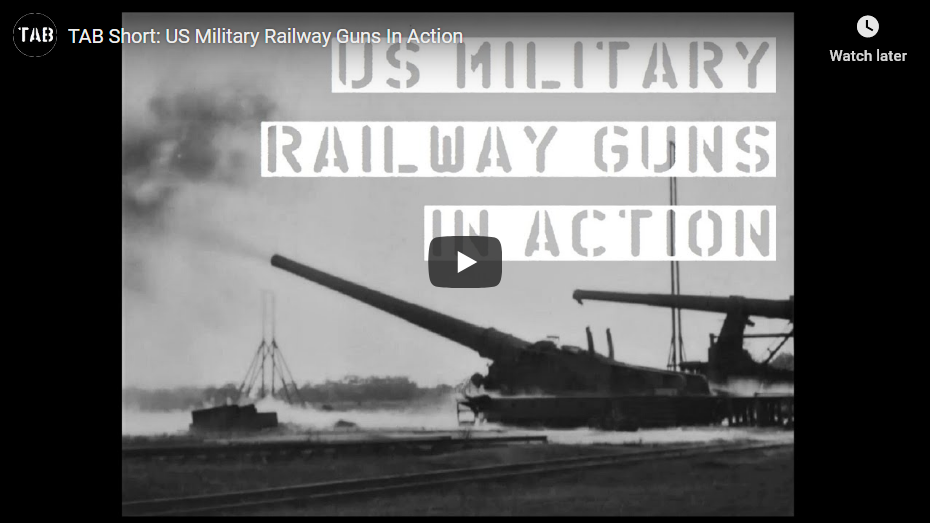
TAB Short: US Military Railway Guns In Action

Filed under: History, Military, Railways, Technology, USA, Weapons, WW1 — Tags: , — Nicholas @ 02:00

The Armourer’s Bench
Published on May 19, 2019

During World War One massive railway guns were used to reach deep behind enemy lines and attack enemy infrastructure with both sides using the massive artillery pieces. In this episode Matt takes a look at some archival footage of America’s massive railway guns ranging from 10 to 16 inches.

Check out our accompanying article for more information and sources at:
https://armourersbench.com/2019/05/19/us-military-railway-guns-in-action/

If you enjoy our work please consider supporting us via Patreon, TAB is a viewer supported, non-monetised channel and any help is very much appreciated!

We have some great new perks, check out our Patreon page here: https://www.patreon.com/thearmourersb…

The Answer:
According to the original footage notes the mystery item is a 60-feet tall captured German field periscope ‘claimed to have been used by the German Crown Prince during the war’.

Footage:
https://catalog.archives.gov/id/24749

QotD: “The United States government [became] the greatest and most potent maker of criminals in any recent century”

Filed under: Health, History, Law, Quotations, USA — Tags: , , , , — Nicholas @ 01:00

For most of the history of the United States, drugs were legal. People could buy opiates and cocaine-based products from their local pharmacy. An opiate-laced brew called Mrs. Winslow’s Soothing Syrup, for example, was particularly popular with housewives. One person who viewed this legal system with skepticism was a Los Angeles doctor named Henry Smith Williams. When a small number of his patients became addicted, he was disgusted, and he came to see them as despicable “weaklings.” So when opiates and cocaine were banned in 1914, he welcomed this first birth-pang of the drug war with glee.

But then he noticed what happened to his addicted patients. They didn’t stop using. Instead, “here were tens of thousands of people, in every walk of life, frantically craving drugs that they could in no legal way secure,” he wrote in one of his books. “They craved the drugs, as a man dying of thirst craves water. They must have the drugs at any hazard, at any cost.”

At the same time, Smith Williams realized that the drug war was “in effect ordering a company of drug smugglers into existence.” Because pharmacists could no longer sell these drugs, the Mafia and other criminal organizations stepped in, selling a vastly inferior product at extortionate prices. In the pharmacies, morphine had cost two or three cents a grain, but the criminal gangs charged a dollar.

The death rate among addicts rose, and those who survived began to behave very differently. An official government study had found that, before the drug war kicked in, three-quarters of self-described addicts had steady and respectable jobs: some 22% were wealthy, while only 6% were poor. They were more sedate as a result of their addiction, but they were rarely out of control or criminal. Yet faced with the need to meet these extortionate new prices, many of the men started to commit property crimes, and many of the women started to steal or prostitute themselves.

So Smith Williams watched as the drug war created two waves of crime: first a wave of violent criminal drug-dealers, and then a wave of criminality among addicts. “The United States government,” Henry wrote in shock, had become “the greatest and most potent maker of criminals in any recent century.”

Johann Hari, “A 1930s California story shows why the war on drugs is a failure”, Los Angeles Times, 2017-06-16.

July 16, 2019

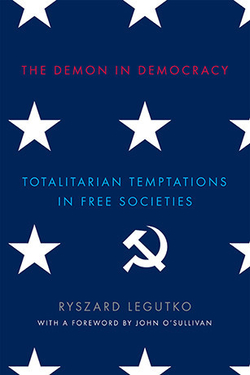
Totalitarian Temptations in Free Societies by Ryszard Legutko

Filed under: Books, Economics, Government, History, Politics — Tags: , , , , — Nicholas @ 05:00

Daniel Pipes reviews a recent translation (from Polish) by Teresa Adelson:

Legutko does not claim liberalism resembles communism in its monstrosity, much less that the two ideologies are identical; he fully acknowledges that the first is democratic and the second brutally tyrannical. After recognizing this contrast, however, he gets down to the more pungent topic of what the two have in common.

He first perceived those commonalities in the 1970s when visiting the West, where he saw how its liberals preferred communists to anti-communists; later, with the overthrow of the Soviet Bloc, he watched liberals warmly welcome communists, but not their anti-communist opponents. Why so?

Because, he argues, liberalism shares with communism a powerful faith in rational minds finding solutions which translates into a drive to improve the citizen, modernize him, and mold him into a superior being. Accordingly, both ideologies politicize, and thereby debase, every aspect of life, including sexuality, the family, religion, sports, entertainment, and the arts. (Here’s a mischievous but deadly serious question: which is the more awful art, the communist or the liberal, Stalin’s or the Venice Biennale’s?) [see below]

Both engage in social engineering to create a society whose members are “indistinguishable, in words, thoughts, and deeds ” from one another, aiming for a largely interchangeable population with no dissidents making trouble. Each sublimely assumes its specific vision constitutes the greatest hope for mankind and represents the end of history, the final stage of mankind’s evolution.

Trouble is, such grand schemes for improving mankind inevitably lead to severe disappointment; human beings, it turns out, are far more stubborn and less malleable then dreamers would like. When things go badly (say, food production for communists, unfettered immigration for liberals), two nasty consequences follow.

The Whowie – Monster of the Riverina – Yorta Yorta Myths (Australian Aboriginal) – Extra Mythology

Filed under: Australia, History — Tags: — Nicholas @ 04:00

Extra Credits
Published on 15 Jul 2019

Join the Patreon community! http://bit.ly/EMPatreon

Once, the Tongala River, which most maps now call the Murray, was a place of peace where the Water-Rat Tribe could live with ease. But then one day appeared the Whowie: a great frog-headed lizard, long and fat and slow, prowling the banks.

Bitcoin mining’s massive carbon buttprint

Filed under: China, Economics, Environment, Technology — Tags: , , , — Nicholas @ 03:00

Lincoln Swann explains why Bitcoin has become a huge environmental liability as its per-unit cost-to-mine has risen:

Bitcoin is more than a rather volatile imitation currency, it is also a huge energy monster.

The digital “mining” to create more Bitcoins and the recording of transactions uses up vast, crazy, amounts of electricity – something like 70TWh a year. That is about the same as Austria, say 20% of UK power consumption. As an added horror much if it is done in China where most of the power is coal generated.

All that adds up to a CO2 output from Bitcoin stuff of about 35mt a year. Planet friendly it definitely aint.

Knight’s Assault Machine Guns at the Range

Filed under: Military, Technology, Weapons — Tags: , , — Nicholas @ 02:00

Forgotten Weapons
Published on 11 May 2019

Preorders now open for my book, “Chassepot to FAMAS: French Military Rifles 1866-2016”! Get your copy here:

https://www.kickstarter.com/projects/…

Knights Armament introduced their “Assault Machine Gun” a couple years ago, and I had a chance to take both versions (5.56mm and 7.62mm) out to the range recently. The gun is the spiritual descendant of the Stoner 63, but is more directly made on Eugene Stoner’s Model 86 light machine gun. It utilizes the constant recoil principle, with the bolt never actually contacting the rear of the receiver during the cycling process. This results in recoil being felt by the shooter as a continuous steady force instead of a rapid series of impacts and that makes it tremendously controllable. Not surprisingly, these guns are already being sold to military and security organizations worldwide…

http://www.patreon.com/ForgottenWeapons

Cool Forgotten Weapons merch! http://shop.bbtv.com/collections/forg…

Contact:
Forgotten Weapons
PO Box 87647
Tucson, AZ 85754

QotD: Wartime atrocities

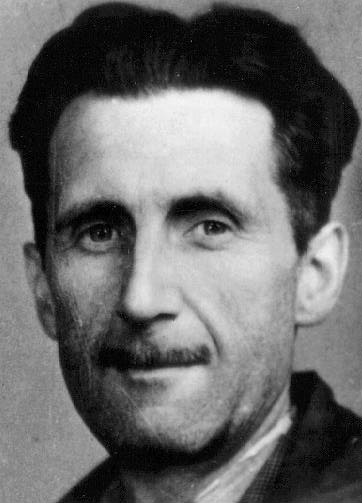
Orwell’s press card portrait, 1943

I have little direct evidence about the atrocities in the Spanish civil war. I know that some were committed by the Republicans, and far more (they are still continuing) by the Fascists. But what impressed me then, and has impressed me ever since, is that atrocities are believed in or disbelieved in solely on grounds of political predilection. Everyone believes in the atrocities of the enemy and disbelieves in those of his own side, without ever bothering to examine the evidence. Recently I drew up a table of atrocities during the period between 1918 and the present; there was never a year when atrocities were not occurring somewhere or other, and there was hardly a single case when the Left and the Right believed in the same stories simultaneously. And stranger yet, at any moment the situation can suddenly reverse itself and yesterday’s proved-to-the-hilt atrocity story can become a ridiculous lie, merely because the political landscape has changed.

In the present war we are in the curious situation that our “atrocity campaign” was done largely before the war started, and done mostly by the Left, the people who normally pride themselves on their incredulity. In the same period the Right, the atrocity-mongers of 1914-18, were gazing at Nazi Germany and flatly refusing to see any evil in it. Then as soon as war broke out it was the pro-Nazis of yesterday who were repeating horror stories, while the anti-Nazis suddenly found themselves doubting whether the Gestapo really existed. Nor was this solely the result of the Russo-German Pact. It was partly because before the war the Left had wrongly believed that Britain and Germany would never fight and were therefore able to be anti-German and anti-British simultaneously; partly also because official war-propaganda, with its disgusting hypocrisy and self-righteousness, always tends to make thinking people sympathize with the enemy. Part of the price we paid for the systematic lying of 1914-17 was the exaggerated pro-German reaction which followed. During the years 1918-33 you were hooted at in left-wing circles if you suggested that Germany bore even a fraction of responsibility for the war. In all the denunciations of Versailles I listened to during those years I don’t think I ever once heard the question, “What would have happened if Germany had won?” even mentioned, let alone discussed. So also with atrocities. The truth, it is felt, becomes untruth when your enemy utters it. Recently I noticed that the very people who swallowed any and every horror story about the Japanese in Nanking in 1937 refused to believe exactly the same stories about Hong Kong in 1942. There was even a tendency to feel that the Nanking atrocities had become, as it were, retrospectively untrue because the British Government now drew attention to them.

But unfortunately the truth about atrocities is far worse than that they are lied about and made into propaganda. The truth is that they happen. The fact often adduced as a reason for scepticism — that the same horror stories come up in war after war — merely makes it rather more likely that these stories are true. Evidently they are widespread fantasies, and war provides an opportunity of putting them into practice. Also, although it has ceased to be fashionable to say so, there is little question that what one may roughly call the “whites” commit far more and worse atrocities than the “reds”. There is not the slightest doubt, for instance, about the behaviour of the Japanese in China. Nor is there much doubt about the long tale of Fascist outrages during the last ten years in Europe. The volume of testimony is enormous, and a respectable proportion of it comes from the German press and radio. These things really happened, that is the thing to keep one’s eye on. They happened even though Lord Halifax said they happened. The raping and butchering in Chinese cities, the tortures in the cellars of the Gestapo, the elderly Jewish professors flung into cesspools, the machine-gunning of refugees along the Spanish roads — they all happened, and they did not happen any the less because the Daily Telegraph has suddenly found out about them when it is five years too late.

George Orwell, “Looking back on the Spanish War”, New Road, 1943 (republished in England, Your England and Other Essays, 1953).

July 15, 2019

War by other means – the “grey zone”

Filed under: Cancon, Government — Tags: , — Nicholas @ 05:00

Ted Campbell discusses that field of conflict that isn’t recognizably war, but is still an arena of struggle between state actors:

I said, about 18 months ago, that “Western leaders like Presidents Marcon and Trump, Chancellor Merkel and Prime Ministers Abe, May, Rutte, Trudeau, Turnbull all see ‘war’ as a binary choice ~ you’re either fighting or you’re not, while Putin and Xi see it as spectrum wherein actual armed conflict is only one of many, many choices. We, in the US-led West, are not ‘playing’ the same strategic ‘game’ as our competitors … that’s a mistake on our part.” War in the “grey zone” or a strategy of “constructive ambiguity,” as The Economist explains it, is the most likely form of great power competition for the foreseeable future.

[…]

There are, the report suggests, two overarching strategic concepts for responding to the grey zone threats:

  • The report’s proposed strategic concept rests on four (interrelated) notions ~
  • – Shaping an allied strategy supportive of U.S. and partner objectives over the long term,

    – Actively, now, deterring a handful some of the more dangerous forms of grey zone aggression,

    – Preventing the day-to-day use of some of the more-elaborate grey zone techniques, and

    – Maintaining resilience in the lower-level, persistent competition areas; and

  • To implement the strategic concept, the report proposes a preliminary list of about three dozen response options for American and allied officials to consider, such as stationing permanent new military capabilities in key locations, anticipating political meddling and blunting the effects with information operations planned in advance, and denying the aggressor participation in key economic institutions.

That’s all well and good, but: how to implement such a strategy? What to do? How to do it? And who is to do it? The report recommends that:

  • America and its allies, partners, and friends ~ and this must include Canada ~ need to decide what actions are intolerable in the grey zone environment. But, the report says, it is hard to stop, much less prevent, gradual, sometimes unattributable actions involving secondary interests, so identifying the actions that the US-led West will seek to deter is the one reliable way to draw a boundary or a “red-line” around the possible effects of grey zone encroachment; and
  • The US and its allies should adopt a “multicomponent strategy” like the one outlined in the report, but we must all recognize that it will be of limited utility “if the U.S. government continues to lack a clear coordinating function with the responsibility for overseeing a renewed effort to gain strategic advantage in the gray zone.” The report concludes that an important part of any grey zone response strategy, therefore, is undertaking institutional reform, such as assembling purpose-built office in the U.S. government, and in allied nations and alliances, like NATO, with significant dedicated staff, to conduct real-time counter–grey zone campaigns.

So, what does this mean for Canada?

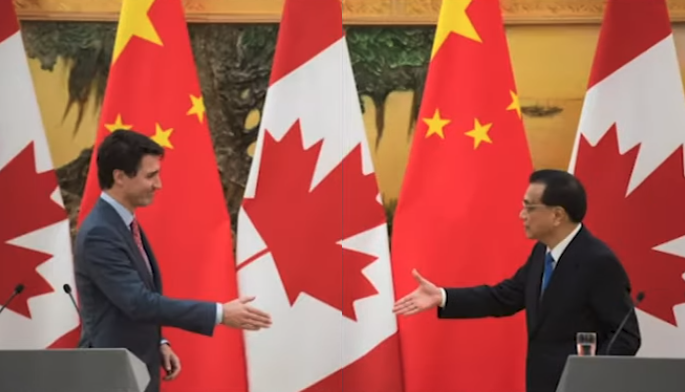
A couple of months ago I said that the world is changing and Canada must change, too. I made a few recommendations: I said that we have to have an interest-based strategy … one focused on our vital interests in the world. I suggested that we must be less reliant on one or two cornerstones, the USA and NATO, and, instead, build a better foundation with more friends and groups. This is, of course, the exact opposite of what Justin Trudeau has accomplished in the past 3¾ years ~ instead, he has alienated traditional allies, even Australia, and major trading partners like China and rising great powers like India. His ineptitude is stunning … our foreign policy is a national disgrace. We need to rebuild our once-sterling reputation for fair dealing and for doing a fair share. Finally, I said, we need to rebuild our hard (military) power so that we can use our soft power to good effect.

[…]

The point is that some grey zone operations are not “conventional,” and while some grey zone warriors are soldiers, many others are quite decidedly unmilitary … but, we’ve been there before, unconventional warfare is not new, nor are unconventional warriors, whichever side they might be serving. But, the grey zone is never the only area of operation. Just as soft power is only useful if one has enough hard, military power to make one’s voice heard, so grey zone operations are always part of a larger grand strategic plan that aims to secure quite conventional objectives. That’s why war in the grey zone must be fought by both conventional forces, as we fought the first Cold War, for example, and by unconventional forces which might be strange and even a little frightening to those used to seeing “‘war’ as a binary choice ~ you’re either fighting or you’re not.”

We, America, Australia, Britain, Canada, Denmark and, and, and, are being attacked in the grey zone now, whether we like it or not and whether we understand it or not. We need to defend ourselves in both conventional and unconventional ways … and then counter-attack. In fact, the war in the grey zone is being fought, sometimes, even now, on Canadian soil, by Canadians and some political parties and leaders are sometimes complicit in activities that do real, serious harm to Canada’s relations with other great nations. But the war in the grey zone, is, as I said, just above, part of a bigger, grand strategic plan that needs to be countered by both conventional and unconventional means. As much as we need to do (and avoid doing) things that impact the grey zone we must, simultaneously, be prepared to do things that strengthen our position in the “binary,” black and white world of conventional power.

« Newer PostsOlder Posts »

Powered by WordPress