
Forgotten Weapons
Published 15 Sept 2025The Sniper Rifle Experimental Model (S.R.E.M.) was designed by the “Czech Section” of small arms designers who had taken refuge in the UK to escape German occupation of Czechoslovakia. The intention was to develop a scoped sniper rifle that could be fired and cycled without disturbing the shooter’s sight picture. The idea that the designers came up with was to use the pistol grip as a moving charging handle, similar to the Czech BESA machine gun already in British service.
In 1944, the Essex Engineering Works in the UK got a contract to make 22 sample S.R.E.M.s, although only 2 were actually made. Really, the whole concept was a bit of a red herring, as the recoil from 8mm Mauser (this was made in 8mm, expected the post-war the UK would be adopting it or another modern rimless round to replace the .303) would disturb the sight picture regardless of the mechanism used to cycle the action. The project was cancelled in 1945, and this example is the only known survivor today.
(more…)
February 7, 2026
S.R.E.M.: Britain’s Experimental WW2 Bullpup Sniper
QotD: Stress in the post-lockdown world
I think emotion is something like the brain’s immune system. Just as you need to take your share of cuts and scrapes and bruises in order to get tough physically, you need to suffer the slings and arrows in your mind to get mentally tough. I might go so far as to relate it to the hysteria we see on social media — indeed, to hysteria in general. Consider the prevalence of bizarre allergies etc. that only hit once the helicopter parents started going all out to protect their kids from even the most minor cuts and scrapes. That can’t be a coincidence, any more than the huge uptick in behavioral problems like OCD can be.
Note that by “mentally tough” I don’t mean “carrying on like the Marlboro Man”, necessarily. Anonymous Conservative has a similar theory, that he relates to amygdala development, and maybe it’s that. I certainly saw a lot of incidents that look like what he calls “amygdala hijacks” back in my teaching days — kids would melt down and go catatonic, over the most inconsequential things. They’d never been faced with “failure” before, so not acing a silly little unit quiz hit them like the end of the world.
Just as I’d bet the cumulative retail price of all the shit we’ve sent to Ukraine that the triple-masked, lockdowns-forever covidiots are now getting floored by the kind of minor sniffles they’d have shrugged off three years ago — because they’ve maybe perma-fucked their immune systems, and that’s before all the side effects of the not-vaxx — so kids who have never been exposed to grief, frustration, and failure get floored by tiny bumps in the road. It’s total systemic shock, and I’m not joking — I’d bet long money that they actually break out in hives, get weird rashes, and so on, because the kind of stress chemicals that can turn a tough, healthy young soldier into a shell shock case will do all kinds of damage to someone totally unprepared.
I guess this is the tl;dr — I’m not a doctor, I don’t play one on tv, but I’m betting that those stress chemicals play an important role in ordinary cognition; they’re necessary for proper brain function. But they’re tough; your brain needs exercise in order to be able to handle those chemicals efficiently. If you don’t get it, your brain gets “fat”, in the same way your body gets fat if you load it up with too much of a good thing. And it’s recursive — those stress chemicals get stored in fat, too. So just as obesity is comorbid for just about everything — seriously, being fat is the absolute worst thing for your general health, bar none — so having a “fat brain” by not getting enough “exercise” totally destroys your ability to keep your head, to think clearly and logically.
Severian, “Quick Thoughts”, Founding Questions, 2022-04-28.
February 6, 2026
The unspoken rule: “Men must regulate themselves; women must be accommodated”
It was getting a bit quiet around here, so to liven things up here’s Tom Golden exploring the idea of holding women accountable in the way that men almost always are:
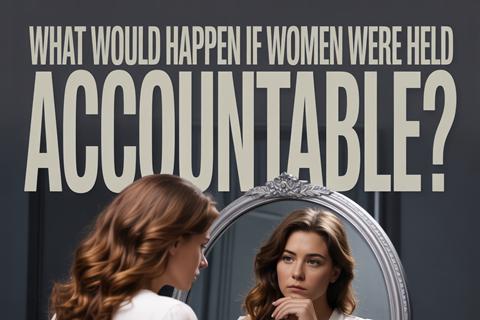
What Would Happen If Women Were Held Accountable?
It’s a provocative question, and one we’re usually not allowed to ask without being accused of hostility or resentment.
But it’s worth asking — not to attack women, and not to excuse men — but because accountability is not evenly distributed, and that imbalance quietly shapes modern culture, relationships, and institutions.
If women were suddenly held accountable in the same way men are, the world wouldn’t become harsher. In many ways, it would become more honest.
The Moral Language Would Change
Much of our moral language today is asymmetrical. Men are expected to explain themselves. Women are often allowed to feel their way out of responsibility.
Emotions matter — but in our current culture, women’s feelings frequently function as moral trump cards. “I felt unsafe.” “I was hurt.” “I was overwhelmed.” These statements don’t just describe an experience; they often end the discussion.
Equal accountability wouldn’t invalidate emotions. It would simply mean that feelings no longer substitute for responsibility. That shift alone would raise the level of adult discourse.
Relationships Would Become More Stable — and Initially More Difficult
Many modern relationships operate on an unspoken rule:
Men must regulate themselves; women must be accommodated.
Men are expected to stay calm, absorb escalation, de-escalate conflict, and tolerate shaming — all in the name of maturity. Women, meanwhile, are often excused from examining how they escalate, provoke, withdraw, or punish.
If women were held accountable for:
- Escalation
- Shaming
- Relational Aggression
- Double standards
- Weaponized vulnerability
- Using social or institutional power to avoid conflict
Relationships would feel more confrontational at first.
But over time, they would become more grounded and more real.
Intimacy requires mutual responsibility. Right now, many men experience intimacy as liability without authority.
Dresden Part 2 – Firestorm Dresden: Three Days In Hell!
HardThrasher
Published 5 Feb 2026In “Firestorm Dresden: 3 Days in Hell”*, we’ll unpack the bombing and subsequent firestorm in February 1945. We’ll look at how first the RAF night raids and then the US 8th Air Force daylight attacks unfolded, the damage they did and the horrific impact on the ground. We’ll look at how the aftermath shaped the myths and understanding surrounding the raid, and the fate of Arthur Harris and those who’d planned the raid.
* Proof once more, as if it were needed, how shit AI is — I have, apparently, to put the title of the video into the first words in the description to attract Google’s attention … I am so sorry to brutalise the English language like this.
[NR: Part one was posted here on January 22nd, should you want to watch it first.]
00:00 – 02:22 – Opening
02:26 – 06:20 – The weather
06:20 – 16:12 – The attack
16:18 – 25:17 – Horror on the ground
25:22 – 29:26 – USAAF Attacks
29:30 – 34:30 – Dealing with the bodies
34:34 – 44:59 – Reaction in the west
45:03 – 48:06 – The Soviet view
48:10 – 54:27 – Summing up and close
(more…)
This is the right way to sell Western separatism to Eastern Liberal voters
On the social media site formerly known as Twitter, Paul Mitchell explains to Ontario and Quebec Liberals why they should be fully supportive of kicking Alberta (and maybe Saskatchewan) out of Confederation to ensure a 100% Liberal-dominated Canada in perpetuity:

Please share this for progressive Canadians back East …
Greetings progressive Easterners. I have noticed that some of you are quite upset and even enraged by the current quest of many Albertans to have Alberta leave Canada.
Now hear me out.
If you consider it, you’re taking this all wrong. Consider the progressive utopian paradise that Canada could be if “polluting”, “knuckle-dragging”, “bigoted”, “backward” conservative Alberta was gone! I mean, that is what you think about us, right? I see those descriptions of us every day on social media, so imagine how great it’ll be for y’all once we’re no longer holding back your progressive goals and dreams!
With Alberta gone (maybe with Saskatchewan too if you’re lucky) there will be no stopping your heart’s most desired policies from coming true. Without us there could be:
✅ unlimited diversity and immigration
✅ true Net Zero with heavy taxes for CO2 emissions
✅ collective rights over individual rights
✅ severe hate speech laws
✅ gun confiscation
✅ almost no more conservative politiciansAll this and much more can be yours for the low price of zero dollars. Just let us Albertans ride off into the sunset and your dreams will become reality.
So, turn that frown upside down!
Contemplate your amazing future without Albertans bumming you out constantly. There’s no need to be upset about Alberta’s independence petition. You’re going to get what you said you always wanted: a country where progressives will be in charge, forever.
That is what you want, right?
Thanks for your kind attention, and future support for Alberta’s independence from Canada.
Fortunately for me, I have relatives in Alberta so I’d have a chance of being accepted as a refugee from remnant Canada …
Star Trek: The Maquis
Feral Historian
Published 3 Oct 2025Whether you see the Maquis as a great story thread, a break from Roddenberry’s vision for Star Trek, or a missed opportunity; the story of Federation colonists cut loose for political expediency is one of the most interesting elements of 1990s Trek both for what it shows and what it merely implies.
00:00 Intro
02:19 Learning Curve
09:11 Self-Image
16:00 Turning Point
(more…)
QotD: FEMA
FEMA, in fact, is an illegal organization. It’s mentioned nowhere in the Constitution (which lists the lawful powers of the government in Article I, Section 8), nor did anybody ever vote about it, neither you nor I, nor even the Congress. It was created out of thin air by Presidential fiat, and given unprecedented power to override, at gunpoint, the Constitution, the Bill of Rights, and the rule of law in general.
Since the San Francisco earthquake, I have been paying attention. In all that time, I have never heard anybody, civilian or local official, who had anything to say about FEMA that didn’t make it seem like a combination of the Nazi Gestapo and the Black Death. Apparently there is no situation so tragic and overwhelming that they can’t make it even worse. FEMA has an unanswerable power of life and death over entire communities and there is nothing to protect those communities — or anything else that is uniquely American — from its foul dictatorial grasp.
L. Neil Smith, “Good Mornin’ America, How Are Ya?”, The Libertarian Enterprise, 2005-09-04.
February 5, 2026
On The Line with Vice-Admiral Angus Topshee, commander of the Royal Canadian Navy
The Line
Published 3 February, 2025Today on On The Line, Matt Gurney is joined by Vice-Admiral Angus Topshee, commander of the Royal Canadian Navy, for an extended, wide-ranging conversation recorded in the library of the Royal Canadian Military Institute in downtown Toronto. The discussion ranges across geopolitics, the state of the world, the state of Canada’s navy, what’s going right for the fleet, and what still needs to improve.
First, a correction from your host. During the conversation, Matt incorrectly stated at several points that Canada intends to procure 15 new submarines. Admiral Topshee was too kind to interrupt him during the recording, but the correct number is 12. That mistake was entirely Matt’s, and he regrets the error.
With that out of the way, the conversation spans the globe. Admiral Topshee discusses what’s happening in Europe with Russia and Ukraine, and in the Pacific, where growing Chinese power and influence is challenging long-held assumptions about global security. There’s also extensive discussion of the Arctic, why it matters, and what is changing there. Procurement comes up as well — shipyards, new ships for the fleet, and what it will actually cost to deliver on plans that now enjoy broad political support.
They also spend time on what Canada itself needs to sustain a much larger navy and armed forces. Do we have enough bases? Enough reservists? Are people being enrolled into the navy quickly enough? And how, realistically, could Canada expand its forces rapidly in a time of war?
It’s a long, free-ranging conversation about geopolitics, the evolution of warfare, and the future of the Royal Canadian Navy. Check it out today on On The Line. And special thanks to the Royal Canadian Military Institute for hosting this recording of the podcast. For more like this, visit ReadTheLine.ca, and as always, like and subscribe.
0:00 Intro
0:26 Vice-Admiral Angus Topshee
54:16 Outro#OnTheLine #RoyalCanadianNavy #AngusTopshee #CanadianForces #Geopolitics #ArcticSecurity #NavalPower #CanadaDefence #MattGurney
“It was not fear of the crime that silenced authorities, but fear of a word: racist“
On Substack, Celina101 outlines the long and sordid history of official deliberate blindness to a widespread and horrific crime wave in Britain, all for fear that if they paid proper attention they’d be labelled as “racists”:
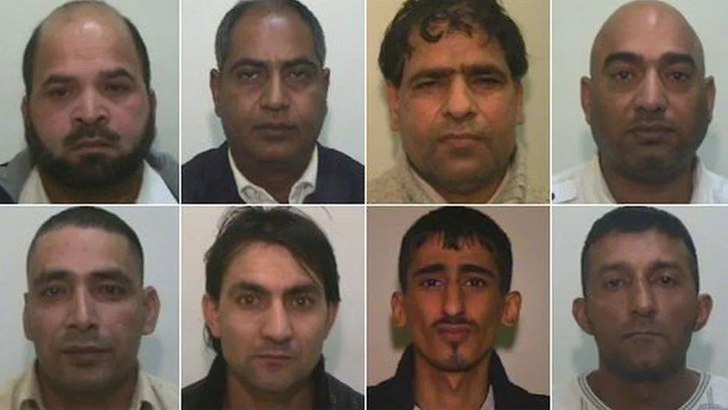
There are crimes so extreme that the mind instinctively rejects them, not because they are implausible, but because accepting them would require acknowledging a collapse of morality too large to comprehend. Child sexual abuse is one such crime.
Child sexual abuse does not arrive in a single form. It ranges from isolated abductions, to organised pornography networks, to violence carried out by parents or those entrusted with care. Every one of these crimes is horrific, and none should ever be minimised or ignored.
But there is one form of abuse that stands apart, not because it is worse in kind, but because it was allowed to flourish unchecked. The organised targeting of schoolgirls by groups of men who lingered outside schools, fast-food outlets, and transport hubs, grooming children into addiction, sexual exploitation, and prostitution, constituted a distinct and recognisable pattern of abuse.
This pattern was not hidden. It was not unknowable. And yet for longer than a quarter of a century, British authorities chose not to act. Despite the issue being raised at a national level as early as 2003, and despite its presence being well understood in certain towns since at least the late 1980s, it was deliberately sidelined, minimised, and left to metastasise.1
For decades, these gangs were allowed to congregate openly around school gates without consequence. What shielded them was not ignorance or lack of evidence, but an institutional terror of confronting anything that carried racial implications; the shade of their skin protected them.
By 2011, the long-standing silence surrounding the issue began to break. Once the initial barrier was breached, the extent of the abuse became increasingly difficult to suppress.2 Over the following years, British media outlets published a succession of detailed investigations that brought the scale of the crimes into public view.
In September 2012, The Times published an extensive overview of the phenomenon.3 The paper reported that for more than a decade, organised groups of men had been able to groom, exploit, and traffic girls across multiple towns and cities in Britain, often operating with minimal interference from authorities.
Yet, event The Times underestimated the scale of this. By early 2015, senior police figures were publicly acknowledging the scale of the crisis. One officer spoke of “tens of thousands” of current victims of grooming gangs. A Member of Parliament, representing a constituency widely associated with the problem, went further, suggesting that the total number of victims nationwide, past and present, could reach as high as one million.4
These figures are almost impossible to comprehend. They refer to school-aged girls systematically identified, isolated, and exploited over many years. And yet, despite the magnitude of the harm, perpetrators were able to operate with remarkable impunity.
By the end of 2014, the Association of Chief Police Officers confirmed that the number of victims each year ran into the tens of thousands.5 Even on the most conservative interpretation, this would place the number of victims over a twenty-year period well into six figures. Against this backdrop, the number of successful convictions, under 200, stands as a staggering indictment of the system meant to protect the vulnerable and enforce the law.
There is no comparable serious crime in modern Britain where the disparity between victims and convictions is so extreme.
- https://web.archive.org/web/20100620042427/http://www.channel4.com/news/articles/society/law_order/Asian%2Brape%2Ballegations/256893
- https://assets.publishing.service.gov.uk/government/uploads/system/uploads/attachment_data/file/944206/Group-based_CSE_Paper.pdf
- Andrew Norfolk, “Police Files Reveal Vast Child Protection Scandal”, The Times, 24 Sep 2012.
- https://www.thetimes.com/uk/society/article/grooming-gangs-ethnicities-how-many-statistics-data-dpx2bfrts#:~:text=The%20%E2%80%9Cone%20million%E2%80%9D%20figure%20comes,over%20a%2070%2Dyear%20period.
- https://www.thetimes.com/uk/crime/article/police-files-reveal-vast-child-protection-scandal-ffrpdr09vrv
The Mote in God’s Eye: A No-Win Scenario
Feral Historian
Published 26 Sept 2025For whatever reason books by [Larry] Niven and [Jerry] Pournelle always end up being a lot harder to cover than I expect. It’s not that the core ideas are buried in dense convoluted storytelling or unusually compelling characters (often quite the opposite) but rather I think that the core ideas are always a little uncomfortable to face head-on. And Mote is great example.
Niven and Pournelle create a scenario not only of the cyclical rise and fall of a civilization, but one that through a combination of biological and cultural factors points to the impossibility of long-term coexistence between Humanity and the Moties.
00:00 Intro
01:26 Aristocracy and Contact
04:11 The Moties
08:48 Crazy Eddie
10:18 The Middle Path?
12:53 The Gripping Hand
(more…)
QotD: The medicalization of unhappiness
Theodore Dalrymple, interviewed by James Glazov in “Our Culture, What’s Left Of It”, FrontPage, 2005-08-31.
February 4, 2026
“Until relatively recently being victimised did not constitute a claim to a distinct identity”
On Substack, Frank Furedi examines the rapid-onset victimization plague that now afflicts most western societies:
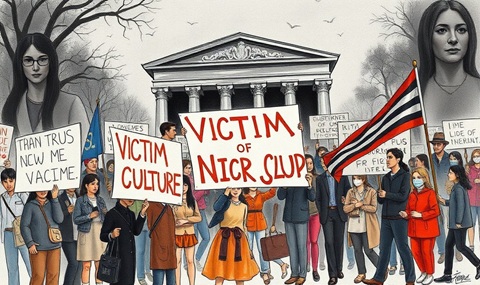
It seems that these days there is a relentless demand for gaining the status of a victim. No group wants to be left out, which is why a group of cultural entrepreneurs from Manchester, England have decided that since working people get a raw deal in the arts world class should become a “protected characteristic”.1 In other words, they believe that the working class should be regarded as a victim of social discrimination and join the ranks of other formally protected victim groups like women and racial and sexual minorities.
The aim of this essay is to explain the changing meaning of the term victim and its evolution into what has become one of the most valued and celebrated identity in the western world. In this Part One of our discussion of the rise of the cult of the victim our aim is to provide context for the development of the unique status of the victim. In our era of historical amnesia, it is easy to overlook the fact that the moral authority enjoyed by the victim, its subsequent politicization and its transformation into a stand-alone identity is a relatively recent development.
Remember!!! Until relatively recently being victimised did not constitute a claim to a distinct identity.
The evolution of the cult of victimhood
It is important to note that originally the word victim had very restrictive meaning. In the 15th century it referred to a “living creature offered as a sacrifice to God or other power”.2 Its meaning gradually altered to refer to the experience of being harmed either intentionally or unintentionally. Its shifting focus did not simply refer to an act of harm or crime affected by an agent of force but also to the existential difficulties caused by being a “victim of circumstances”. Since the 1970s and 1980s, the victim category was no longer restricted to those who suffered from crime or some other act of injustice. Virtually any misfortune could be assimilated into the perspective of victimization. According to this convention, people who suffer from a physical or psychological problem are represented as victims of their condition. People do not so much have heart attacks, they are often portrayed as victims of heart attack. Alcoholics have been reinvented as victims of alcohol addiction. A multitude of new interest groups now claim that they are victims of addictive behaviour. Compulsive eaters, sex addicts, internet addicts, shopping addicts, lottery addicts, junk food addicts are some of the new group of victim addicts that were invented during the last two decades of the twentieth century.
The status of victimhood is not confined to those individuals who have directly suffered from a particular grievance. Moral entrepreneurs argued for the recognition of what they characterise as secondary or indirect victims. As one criminologist noted, “crime victim activists have worked to expand the concept of victim to include the family and friends of the actual victim”.3 Members of a family of the direct victim are often referred to as indirect victims. Victim advocates argue that family members and sometimes friends must be given access to therapeutic services and other resources. People who witness a crime or who are simply aware that something untoward has happened to someone they know are all potential indirect victims. The concept of the indirect victim allowed for a tremendous inflation of the numbers who are entitled to claim victim support. Anyone who has witnessed something unpleasant or who has heard of such an experience could become a suitable candidate for the status of indirect victim. This was the outlook that influenced the British Government’s law reform body, the Law Commission, when it recommended in March 1998 that people who suffer mental illness after witnessing or hearing of a relative’s death, even on television or radio should have the right to compensation.4
- https://www.hackneygazette.co.uk/things-to-do/national/25795044.class-protected-characteristic-arts-world-posh-report-says/
- https://www.oed.com/search/advanced/HistoricalThesaurus?textTermText0=victim&dateOfUseFirstUse=true&page=1&sortOption=AZ
- Weed, F.J.(1995) Certainty of Justice; Reform in the Crime Victim Movement,(Aldine De Gruyter: New York). p.34.
- The Times, 10 March 1998.
The Korean War Week 85: Futilely Pounding North Korea? – February 3, 1952
The Korean War by Indy Neidell
Published 3 Feb 2026The UN forces are by now having trouble just keeping their planes in the skies, thanks to shortages of spare parts, so for long can they maintain aerial supremacy over Korea? And though the aerial campaign to destroy North Korean infrastructure has been stepped up, so too has the enemy’s ability to quickly rebuild. And at the armistice talks, the big issue this week is which countries will form inspection teams after an armistice, and who might be out of the question. The Soviets?
00:00 Intro
01:06 Recap
01:30 The POW Lists
07:12 The Soviets
10:25 Communist Manpower
12:01 Air Force Supply Issues
13:21 Summary
13:34 Conclusion
14:17 Call to Action
(more…)
Amelia, created by woke propagandists, is now the figurehead for the anti-woke
On the social media site formerly known as Twitter, John Michael Greer provides a quick thumbnail sketch of the Amelia story for folks who need to get caught up:

I’ve been watching the saga of Amelia from the far side of the Atlantic in a state of utter bemusement.
For those who don’t know the first act of the saga, the British government had some collection of flacks create a video game for British kids, which was designed to elicit “racist” (that is, patriotic and un-woke) statements from them — at which point the kids who fell for it would be reported to the police for, erm, reeducation. (I wish I was making this up.)
Amelia was a cartoon figure who was supposed to mouth allegedly racist slogans, and they gave her violet hair because they thought that would annoy right-wingers, who make jokes about women with dyed hair.
Ponder the immeasurable stupidity of the flacks who put nationalist and patriotic slogans in the mouth of the kind of cute female figure who would have most teenage boys reaching into their trousers on the spot. Of course these same teenage boys instantly hijacked her and turned her into a mascot, just as they did with Kek back in the day. Of course these same teenage boys, being far more computer-skilled than government flacks, started doing LLM-generated videos of Amelia speaking out in favor of nationalist and patriotic ideas.
Of course everybody in Britain who’s sick and tired of the Starmer government and its woke doctrines embraced Amelia as their latest heroine, not least because the Guardian‘s foam-flecked fury when she’s mentioned is so entertaining to watch …
And then, as with Kek, things got weird. We’re still in the early stages of the weirdening but it would not surprise me a bit to find that just as a cartoon frog ten years ago became the vessel through which an archaic Native American deity manifested and sent the US spinning down an uncharted path, a purple-haired waifu may just become another such vehicle.
Britain used to have quite a collection of war goddesses, back in Celtic times. I’m curious, not to mention apprehensive, to see just who’s taking this opportunity to stream back into manifestation.
French Trials FN CAL: Adding Rifle Grenade Capability
Forgotten Weapons
Published 10 Sept 2025In the 1970s when the French Army was looking for a new rifle 5.56mm, they tested a number of foreign rifles alongside development the FAMAS at St Etienne. These included the HK33, the M16, and the FN CAL — and today we are looking at the FN CAL. It already had a four-position selector switch (safe/semi/full/burst), fulfilling one of the French Army requirements. But it did not have sufficient grenade launching capability, and so several examples were modified for trials with unique rifle grenade launching hardware.
Ultimately the HK33 was the best performing rifle, but it was not seen as a politically acceptable option and the FAMAS was chosen instead. I have not seen the trials reports to understand specifically why the FN CAL was unsuccessful, but we know that it was unsuccessful in many other trials, and FN dropped it for the distinct FNC design instead before long.
Full FN CAL teardown: • FN CAL: Short-Lived Predecessor to the FNC
HK33F Video: • Roller Delay in France: The H&K 33F (Trial…Many thanks to the IRCGN (Institut de Recherche Criminelle de la Gendarmerie Nationale) for allowing me access to film these trials prototypes for you!
(more…)


