BBC Earth Lab
Published 24 Jan 2013Why can we see through glass, but not other solid objects? James May explains.
Subscribe to Earth Lab for more fascinating science videos – http://bit.ly/SubscribeToEarthLab
All the best Earth Lab videos http://bit.ly/EarthLabOriginals
Best of BBC Earth videos http://bit.ly/TheBestOfBBCEarthVideosHere at BBC Earth Lab we answer all your curious questions about science in the world around you. If there’s a question you have that we haven’t yet answered or an experiment you’d like us to try let us know in the comments on any of our videos and it could be answered by one of our Earth Lab experts.
November 25, 2019
Why Can We See Through Glass? | Earth Lab
QotD: The origins of the state
Taxation most likely began ten thousand years ago, when nomadic hunter-gatherers gave up their wandering ways — and the tools associated with them — settled down, and started growing crops and herding livestock, which requires an entirely different suite of tools than hunting. The hunter-gatherers’ tools could be used as weapons because that’s essentially what they were — ask any mastodon — the farmers’ could not. As a result, anti-productive marauders who had been held off by the hunters’ tools (or the ability of the hunters and their families to escape and evade) took advantage of those who were stuck to the plots of land they had learned to farm with clumsy agricultural implements (which could not be wielded as easily by females, relegating them to a subordinate role for fifty centuries), and forced to to pay tribute to the bandits. Go take another look at the 1960 movie masterpiece The Magnificent Seven for illustration. The thieves eventually learned to call themselves “government” and the goods they stole, “your fair share”.
L. Neil Smith, “What Would Real Tax Reform Look Like?”, Libertarian Enterprise, 2017-10-29.
November 24, 2019
Next stage in religious observance for those participating in the “Great Environmental Awakening”
Mark Steyn discusses the obvious next step for those newly converted to the Environmentalist religion:
To quote a line from America Alone: “The future belongs to those who show up.” And, while eugenics is universally condemned as morally repugnant, self-eugenics is an idea we can all get behind. Step forward the “Indefinitely Wild” columnist of Outside magazine, Wes Siler:
I Got a Vasectomy Because of Climate Change
Getting one was, by far, the most powerful personal action I could take for our planetMr Siler claims to be 38 years old, notwithstanding the prose style of an overwrought pre-pubescent. And he cannot stand idly by procreating while the planet burns. Greater love hath no man than to lay down his sperm for the remnants of Malibu […]
In fact, “the absolute biggest difference” you could make would be to kill yourself right now — rather than merely tossing your unborn children into the infernos of California. Alas, the self-extinction movement has not yet reached that stage of despair, although we should certainly encourage them to follow the necessary logic of their epocalyptic torments. For the moment (and, again, as I wrote in America Alone) contemporary progressivism has “adopted a twenty-first-century variation on the strategy of the Shakers, who were forbidden from reproducing and thus could increase their numbers only by conversion”.
As you might have noticed, there aren’t a lot of Shakers around today. Will there be a lot of anguished environmentalists around once every Wes Siler reader has had his scrotum anesthetized?
No. But at least they’ll have saved the planet, right?
Doubtful. Mr Siler notes that every little baby Siler comes with a price tag of 58 tons of carbon emissions per year. But that’s because he’s American. Mr and Mrs Siler could move to Somalia and have thirty kids for the carbon footprint of one Yank moppet. So why are the same people who lecture us that we only have twelve years to save the planet in favor of every Somali moving to Maine or Minnesota and acquiring a western-sized carbon payload?
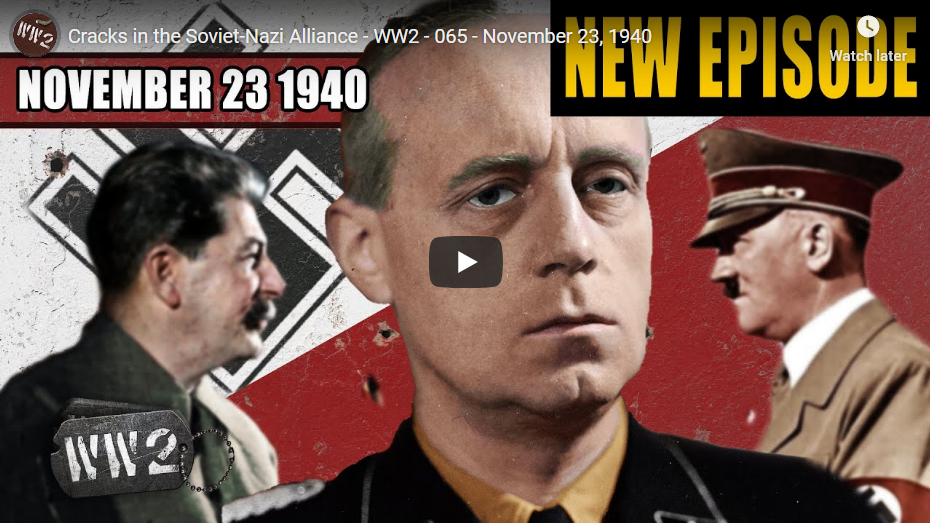
Cracks in the Soviet-Nazi Alliance – WW2 – 065 – November 23, 1940
World War Two
Published 23 Nov 2019As the Greek campaign continues, Hitler points his attention eastwards. While he can’t invade the Soviet Union just yet, his dependence on it is making him nervous.
Join us on Patreon: https://www.patreon.com/TimeGhostHistory
Or join The TimeGhost Army directly at: https://timeghost.tvFollow WW2 day by day on Instagram @World_war_two_realtime https://www.instagram.com/world_war_t…
Join our Discord Server: https://discord.gg/D6D2aYN.
Between 2 Wars: https://www.youtube.com/playlist?list…
Source list: http://bit.ly/WW2sourcesWritten and Hosted by: Indy Neidell
Produced and Directed by: Spartacus Olsson and Astrid Deinhard
Executive Producers: Bodo Rittenauer, Astrid Deinhard, Indy Neidell, Spartacus Olsson
Creative Producer: Joram Appel
Post-Production Director: Wieke Kapteijns
Research by: Indy Neidell
Edited by: Iryna Dulka
Map animations: Eastory (https://www.youtube.com/c/eastory)Colorisations by:
– Julius Jääskeläinen (https://www.facebook.com/JJcolorization/)
– Adrien Fillon (https://www.instagram.com/adrien.colo…)
– Dememorabilia (https://www.instagram.com/dememorabilia/)Eastory’s channel: https://www.youtube.com/channel/UCEly…
Archive by Screenocean/Reuters https://www.screenocean.com.Sources:
– Coal energy by supalerk laipawat, wheat Grain Bag by Symbolon, oil barrel by BomSymbols from the Noun Project
– Portrait of Sir John Salmond courtessy of National Portrait Gallery, London
– Lord Beaverbrook photographed by Yousuf Karash
– IWM: HU 94169, D 1640, D 1556, D 1507, D 1589, D 1513, D 1567, H 12224
– Narodowe Archiwum CyfroweA TimeGhost chronological documentary produced by OnLion Entertainment GmbH.
From the comments:
World War Two
2 days ago (edited)
We have been shooting a bunch of new episodes this week. Besides the World War Two and Between Two Wars episodes, which by the way includes some pretty amazing history, we have also been working on some much requested episodes of our War Against Humanity series. We have shot three of those, so you will see the first of those coming in the next few weeks. Additionally, we have shot a very special mini-series that we will be airing during the holidays on the TimeGhost History Channel (https://www.youtube.com/channel/UCLfMmOriSyPbd5JhHpnj4Ng). We will disclose more about that soon, but it’s going to be pretty cool. So all in all, enough to look forward to!
Cheers, Joram
What every shared office kitchen is like
Alistair Dabbs describes most office kitchens I’ve encountered over my career:
Talking of timeslip, there is a wormhole in every shared office kitchen. I’ve experienced it at each of my clients’ premises so I guess it may be true everywhere.
When I arrive early in the morning, non-specific-gender-fascist swot that I am, I stride past the kitchen or kitchenette, admiring how spotless and twinkly it is from the deft attentions of the overnight cleaning contractors. Not for long.
It only takes a few seconds to pick my hot-desk location for the day since it’s always the same one, i.e. the only hot-desk not already baggsied by someone else the night before by leaving a spare jacket/cardigan/set of false teeth hanging on the back of the chair, i.e. the shitty desk next to the fire exit door that doesn’t quite shut properly and lets the weather in.
Pausing only a moment to brush away the mini snowdrift that has accumulated next to the power block, I put down my backpack and head straight back to the kitchen to brew up some chai.
When I get there, barely a minute after I passed it earlier, the kitchen has transformed into a disaster zone. Spilt milk, coffee and various puddles of water cover every level surface. Brown liquid of different shades are splattered artistically across the walls. The floor is carpeted with a layer of granulated sugar and broken mug handles which crunch unpleasantly underfoot.
Torn cardboard boxes and heaps of scrunched sheets of kitchen towel are arranged around the edge of the vast but glaringly empty dustbin. A cupboard door is swinging open on its only remaining hinge. The cutlery drawer has been pulled out and is now face-down in the sink. The kettle is on its side. The microwave is on fire. Where the dishwasher used to be is now a smouldering hole in the floor.
No worries, the cleaners will be back overnight to put it all shipshape again, wipe down the surfaces and shovel away any charred body parts.
As I have mused in this column on previous occasions, it makes one wonder what people’s houses must be like if their workplace kitchen etiquette extends to the personal domicile as well. This isn’t meant as a “bah dropping standards etc” whinge but a genuine interest in what the otherwise sane and talented individuals I meet in offices get up to in the privacy of their own homes.
Why are coping saws so hard to use?
Stumpy Nubs
Published 13 Oct 2019When you use this link to visit our sponsor, you support us►
Trend diamond stones: https://amzn.to/2XomWMiTools used in this video►
Eclipse Coping Saw: https://amzn.to/2ManCkI
Eclipse Fret (deep throat) Saw: https://amzn.to/32aGeqo
Subscribe (free) to Stumpy Nubs Woodworking Journal e-Magazine► http://www.stumpynubs.com/subscribe.htmlFollow us on social media►
Instagram: https://www.instagram.com/stumpynubs/
Twitter: https://twitter.com/StumpyNubs
QotD: The persistence of culture
The trick to this is not only to give [the people] a fake history. Every tinpot dictator does that. The trick is to give them a fake history starting in kindergarten, that is painted in primary hues and comic-book complexity. There are good guys (the oligarchs who would design society to be more fair) and bad guys (usually capitalists and greedy, they want to “exploit” everyone, which only works if you believe in fixed pie economics and that everyone gets a share at birth, an economic idea so stupid you have to be indoctrinated from birth to believe it.) And everything is explained by “laws” and top down action. Though this history talks about mass movements, and “the people” they don’t actually take THE PEOPLE into account, not with any depth and complexity. The people in this narrative, the entire culture, in fact, is moldable, like butter to the sculpting knife of the powerful.
Societies don’t work that way. Culture doesn’t work that way. In fact culture is so persistent, so stubborn, it leads people to think it’s genetic. (It’s not. A baby taken at birth to another culture will not behave as his culture of origin.) It changes, sure, through invasions and take overs, but so slowly that bits of older cultures and ideas stay embedded in the new culture. It has been noted that the communist rulers of Russia partook a good bit of the Tsarist regime, because the culture of the people was the same and that came through. (They just dialed up the atrocities and lowered the functionality because their ideology was dysfunctional. They blame their failure on Russia itself, but considering how communism does around the world, I’ll say to the extent countries survive it’s because of the underlying culture.)
Sarah Hoyt, “A Generation With No Past”, According to Hoyt, 2017-10-19.
November 23, 2019
Woodworking Christmas Gifts and Projects | Paul Sellers
Paul Sellers
Published 20 Dec 2013In this holiday-themed video Paul Sellers give some advice on buying a new woodworker some basic tools. He shows how to make a small tree decoration. He also shows how to make a wooden propeller toy, a mixing spatula and a cutting board.
To find out more about Paul Sellers visit http://paulsellers.com
The video is also posted, along with many other videos, on http://woodworkingmasterclasses.com
Sir Charles Trevelyan, head of the Irish relief efforts during the potato famine, and creator of the modern civil service
By happenstance, after posting the OSP video on the history of Ireland, a post at Samizdata covered one of the questions I had from OSP’s summary, specifically that the famine was worsened by British “laissez-faire mercantilism”. Mercantilism is rather different from any kind of laissez-faire system, so it was puzzling to hear Blue link them together as though they were the same thing. Of course, I live in a province currently governed by the Progressive Conservative party, so it’s not like I’m unable to process oxymorons as they go by…
Anyway, this post by Paul Marks looks at the man in charge of the relief efforts:
Part of the story of Sir Charles Trevelyan is fairly well known and accurately told. Charles Trevelyan was head of the relief efforts in Ireland under Russell’s government in the late 1840s – on his watch about a million Irish people died and millions more fled the country. But rather than being punished, or even dismissed in disgrace, Trevelyan was granted honours, made a Knight Commander of the Order of the Bath (KCB) and later made a Baronet, not bad for the son of the Cornishman clergyman. He went on to the create the modern British Civil Service – which dominates modern life in in the United Kingdom.
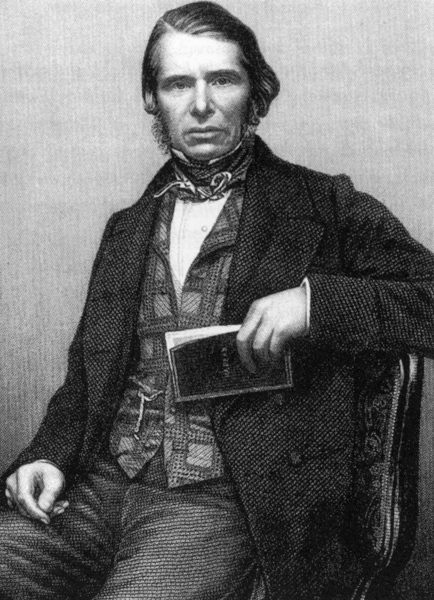
Charles Edward Trevelyan (contemporary lithograph). This appeared in one of the volumes of “The drawing-room portrait gallery of eminent personages principally from photographs by Mayall, many in Her Majesty’s private collection, and from the studios of the most celebrated photographers in the Kingdom / engraved on steel, under the direction of D.J. Pound; with memoirs by the most able authors”. Many libraries own copies.
Public domain, via Wikimedia.With Sir Edwin Chadwick (the early 19th century follower of Jeremy Bentham who wrote many reports on local and national problems in Britain – with the recommended solution always being more local or central government officials, spending and regulations), Sir Charles Trevelyan could well be described as one of the key creators of modern government. If, for example, one wonders why General Douglas Haig was not dismissed in disgrace after July 1st 1916, the first day of the Battle of the Somme when twenty thousand British soldiers were killed and thirty thousand wounded for no real gain (the only officers being sent home in disgrace being those officers who had saved some of them men by ordering them stop attacking – against the orders of General Haig), then the case of Sir Charles Trevelyan is key – the results of his decisions were awful, but his paperwork was always perfect (as was the paperwork of Haig and his staff). The United Kingdom had ceased to be a society that always judged someone on their success or failure in their task – it had become, at least partly, a bureaucratic society where people were judged on their words and their paperwork. A General, in order to be great, did not need to win battles or capture important cities – what they needed to do was write official reports in the correct administrative manner, and a famine relief administrator did not have to actually save the population he was in charge of saving – what he had to do was follow (and, in the case of Sir Charles, actually invent) the correct administrative procedures.
But here is where the story gets strange – every source I have ever seen in my life, has described Sir Charles Trevelyan as a supporter of “Laissez Faire” (French for, basically, “leave alone”) “non-interventionist” “minimal government” and his policies are described in like manner. […]
Which probably explains why Blue used the term in the previous video. Then these “laissez-faire” policies are summarized, which leads to this:
None of the above is anything to do with “laissez faire” it is, basically, the opposite. Reality is being inverted by the claim that a laissez faire policy was followed in Ireland. A possible counter argument to all this would go as follows – “Sir Charles Trevelyan was a supporter of laissez faire – he did not follow laissez faire in the case of Ireland, but because he was so famous for rolling back the state elsewhere (whilst spawning the modern Civil Service) – it was assumed that he must have done so in the case of Ireland“, but does even that argument stand up? I do not believe it does. Certainly Sir Charles Trevelyan could talk in a pro free market way (just as General Haig could talk about military tactics – and sound every inch the “educated soldier”), but what did he actually do when he was NOT in Ireland?
I cannot think of any aspect of government in the bigger island of the then UK (Britain) that Sir Charles Trevelyan rolled back. And in India (no surprise – the man was part of “the Raj”) he is most associated with government road building (although at least the roads went to actual places in India – they were not “from nowhere to nowhere”) and other government “infrastructure”, and also with the spread of government schools in India. Trevelyan was passionately devoted to the spread of government schools in India – this may be a noble aim, but it is not exactly a roll-back-the-state aim. Still less a “radical”, “fanatical” devotion to “laissez faire“.

History Summarized: Ireland
Overly Sarcastic Productions
Published 22 Nov 2019Get 3 months of Audible for just $6.95 a month — that’s more than half off the regular price. Choose 1 audiobook and 2 Audible Originals absolutely free. Visit http://www.audible.com/overlysarcastic or text “
overlysarcastic” to 500 500.While the rest of Europe was flailing aimlessly through the Dark Ages, Ireland was both preserving the ancient world and setting the stage for the Medieval Period. Then England showed up.
Sources & Further Reading:
How the Irish Saved Civilization: https://www.audible.com/pd/How-the-Ir…
Modern Ireland: 1600 — 1972 by R.F. FosterMusic from https://filmmusic.io
“Marked”, “Traveler”, “God Rest Ye Merry Celtishmen” by Kevin MacLeod (https://incompetech.com)
License: CC BY (http://creativecommons.org/licenses/b…)Our content is intended for teenage audiences and up.
DISCORD: https://discord.gg/sS5K4R3
PATREON: https://www.Patreon.com/OSP
MERCH LINKS: https://www.redbubble.com/people/OSPY…
OUR WEBSITE: https://www.OverlySarcasticProductions.com
Find us on Twitter https://www.Twitter.com/OSPYouTube
Find us on Reddit https://www.Reddit.com/r/OSP/
What? No minister for socks? How will Justin decide what to wear?
Chris Selley on the quirky decision to appoint a “Minister of Middle Class Prosperity” to Justin Trudeau’s new cabinet:
Wednesday’s Cabinet shuffle featured the usual head-scratching reorganization of portfolios and outright invention of others, “bigger” being for some reason a stated goal. Joyce Murray, for example, becomes Minister of Digital Government. It has a very pre-Y2K ring to it, but then again the government in question accepts payment for access-to-information requests by cheque, and sometimes fulfills them (if at all) via CD-ROM, and it can’t manage a simple payroll system. So maybe it’s not such a bad thing to have someone on that job specifically.
Then there’s Ottawa-Vanier MP Mona Fortier’s new job. I literally assumed people were joking about the Liberals’ obsessive branding, but it’s true: No word of a lie, she is an Associate Minister of Finance and, specifically, the Minister of Middle Class Prosperity.
Should a government need a minister whose job is to ensure Canadians are prospering? One might reasonably hope that’s the goal of pretty much any minister when she rolls out of bed in the morning. But they sure don’t always act that way, so maybe a Minister for Making People Richer isn’t such a bad thing.
But the “middle class” flourish is so ridiculously on-brand that it turns the very idea into a joke. Recalling Trudeau’s 2015 catchphrase, many wags asked: “Shouldn’t it be the Minister of the Middle Class and Those Working Hard to Join It?” And they have a point. After four years in government, the Liberals have a good story to tell on social mobility: Poverty rates are at an all-time low. And yet they remain officially obsessed with a middle class that was never as imperilled as they claimed.
Quick Look at a 37mm Maxim “Pompom” Automatic Cannon
Forgotten Weapons
Published 21 Sep 2019http://www.patreon.com/ForgottenWeapons
Cool Forgotten Weapons merch! http://shop.bbtv.com/collections/forg…
This Vickers, Sons & Maxim 37mm MkIII “Pompom” is on display at the Canadian War Museum in Ottawa. The MkIII pattern is quite scarce, with less than one hundred ever made. It is built around the 37 x 124mm cartridge, firing a 1.25 pound explosive or armor piercing projectile. This one (or one of the same model) was mounted on the CGS Canada, a coastal patrol vessel built by VSM in 1904 for the Canadian Fisheries service. Firing fully automatically at 300 rounds/minute, the “pompom” (so named for the sound of its firing) was capable of tremendous firepower, although few ever saw much use in combat. Only the Boers made much use of them as land artillery, and by WW1 most were relegated to antiaircraft use.
Contact:
Forgotten Weapons
6281 N. Oracle #36270
Tucson, AZ 85704
QotD: Populism and democracy
As I have previously confessed, I became a Tory at the age of six. This was riding home from St Anthony’s, on the crossbar of our family servant’s bicycle, through an angry crowd in Lahore. He’d been sent to fetch me from danger. This beloved man, Bill, whose turban revealed him to be a Christian, chose a long route home, to skirt the crowd. But there was no avoiding them, and in the course of our wild ride, I distinctly remember blood and corpses. The crowd was demanding, as I recall, death for the hostages from a hijacked Indian aeroplane, but in the absence of its intended victims, began taking its violence out on itself. Yairs, a lurid spectacle.
I was not so precocious: it took me twenty more years to sort out what I might mean by the word “Tory.” But the view itself began in Hobbesian fear, that day, with my discovery that “the people” stink. They are mindless animals, and put some wrath in them, they will lose their bashfulness. And of course, not only in West Pakistan; for gradually one makes the further discovery that “the people are the people are the people” everywhere. They need to be tamed, cautioned, repressed, sometimes caged. My response to misty-eyed rhetoric for “democracy” is unfavourable. “Populism” is, in my sight, unambiguously evil — even when its cause be, for the moment, just. Given more time, and the inevitable failure to achieve immediate goals, the cause itself will turn rancid.
David Warren, “Crowds & powers”, Essays in Idleness, 2016-11-08.
November 22, 2019
The Far Right French Revolution | BETWEEN 2 WARS I 1934 Part 4 of 4
TimeGhost History
Published 21 Nov 2019In February 1934, France threatens to go down the same political rabbit hole as Germany: anti-Semitic Fascism, but the French extremists are not quite as well organized as the Nazis.
Join us on Patreon: https://www.patreon.com/TimeGhostHistory
Hosted by: Indy Neidell
Written by: Francis van Berkel & Spartacus Olsson
Directed by: Spartacus Olsson and Astrid Deinhard
Executive Producers: Bodo Rittenauer, Astrid Deinhard, Indy Neidell, Spartacus Olsson
Creative Producer: Joram Appel
Post-Production Director: Wieke Kapteijns
Research by: Francis van Berkel
Edited by: Daniel Weiss
Sound design: Marek KamińskiColorizations: Klimbim/Olga Shirnina: https://klimbim2014.wordpress.com
Daniel Weiss, Oleg M, Dememorabilia, Julius Jääskeläinen, Adrien Fillon.A TimeGhost chronological documentary produced by OnLion Entertainment GmbH.
From the comments:
TimeGhost History
52 minutes ago
We now get to some fascinating stuff that is less known outside of France. The events in 1934 will not create a new Fascist state, but they will have deep impact on how France deals with WW2. The February crisis influences military policy, the civilian response, and the way both right wing and left wing political parties deal with the German invasion and occupation. In the next couple of weeks we will come out with a War Against Humanity episode on the WW2 channel about the beginning of French collaboration and resistance — this episode provides essential background to how that plays out in 1940.
“Inmate 4859” – Witold Pilecki – Sabaton History 042 [Official]
Sabaton History
Published 21 Nov 2019Join Indy and Joakim as they dive into the out-of-life story of Witold Pilecki during the Second World War, that has made for this awesome song.
Support Sabaton History on Patreon: https://www.patreon.com/sabatonhistory
Listen to Heroes (where Inmate 4859 is featured):
CD: http://bit.ly/HeroesStore
Spotify: http://bit.ly/HeroesSpotify
Apple Music: http://bit.ly/HeroesAppleMusic
iTunes: http://bit.ly/HeroesiTunes
Amazon: http://bit.ly/HeroesAmz
Google Play: http://bit.ly/HeroesGooglePListen to Sabaton on Spotify: http://smarturl.it/SabatonSpotify
Official Sabaton Merchandise Shop: http://bit.ly/SabatonOfficialShopHosted by: Indy Neidell
Written by: Markus Linke and Indy Neidell
Directed by: Astrid Deinhard and Wieke Kapteijns
Produced by: Pär Sundström, Astrid Deinhard and Spartacus Olsson
Creative Producer: Joram Appel
Executive Producers: Pär Sundström, Joakim Broden, Tomas Sunmo, Indy Neidell, Astrid Deinhard, and Spartacus Olsson
Post-Production Director: Wieke Kapteijns
Edited by: Iryna Dulka
Sound Editing by: Marek KaminskiEastory YouTube Channel: https://www.youtube.com/channel/UCEly…
Archive by: Reuters/Screenocean https://www.screenocean.com
Music by Sabaton.An OnLion Entertainment GmbH and Raging Beaver Publishing AB co-Production.
© Raging Beaver Publishing AB, 2019 – all rights reserved.
From the comments:
Sabaton History
23 hours ago (edited)
Witold Pilecki is one of those larger-than-life characters, and listen to Joakim and Indy talk about this amazing song as well as the historical background behind it. Now thanks to all of you we have ben able to film the history part of this in a new studio which is both bigger and better. This is 100% thanks to the Patrons whose generous contributions made this possible. Do you want to be a part of this as well? Make sure to support us on Patreon: https://www.patreon.com/sabatonhistory
Cheers, The Sabaton History Team