Quotulatiousness

August 16, 2020

Surviving the surrender of Japan as allied Prisoners of War

Filed under: Cancon, History, Japan, Military, USA, WW2 — Tags: , , — Nicholas @ 05:00

Seventy-five years ago, the war in the Pacific had ended with the surrender of Japanese imperial forces after the atomic bombing attacks at Hiroshima and Nagasaki. The war may have technically ended, but there was still plenty of danger for the surviving POWs in various camps around the Japanese home islands. George MacDonnell was a Canadian soldier who had been captured in the fall of Hong Kong early in the Japanese swathe of conquest that engulfed so many areas. He had been held as a slave labourer at a prison camp in the mountains of northern Honshu in Iwate Prefecture. In Quillette, he tells how his captivity came to an end:
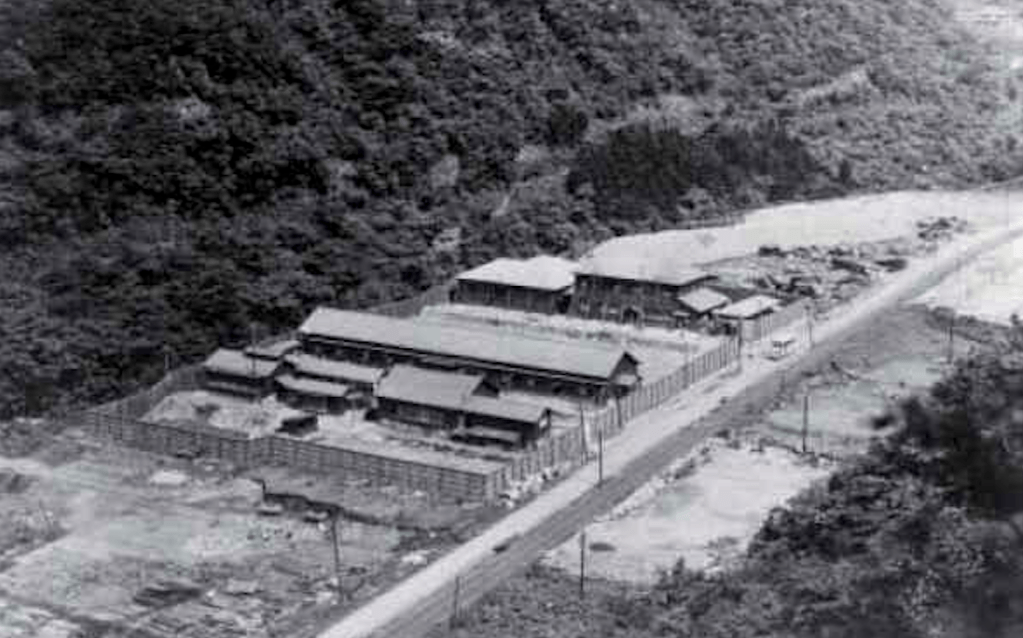
US Navy aerial photo of Ohashi prison camp in 1945.

It was noon on August 15th, 1945. The Japanese Emperor had just announced to his people that his country had surrendered unconditionally to the Allied Powers.

To those of us being held at Ohashi Prison Camp in the mountains of northern Japan, where we’d been prisoners of war performing forced labour at a local iron mine, this meant freedom. But freedom didn’t necessarily equate to safety. The camp’s 395 POWs, about half of them Canadians, were still under the effective control of Japanese troops. And so we began negotiating with them about what would happen next.

Complicating the negotiations was the Japanese military code of Bushido, which required an officer to die fighting or commit suicide (seppuku) rather than accept defeat. We also knew that the camp commander — First Lieutenant Yoshida Zenkichi — had written orders to kill his prisoners “by any means at his disposal” if their rescue seemed imminent. We also knew that we could all easily be deposited in a local mine shaft and then buried under thousands of tons of rock for all eternity without a trace.

We had no way of notifying Allied military commanders (who still hadn’t landed in Japan) as to the location of the camp (about a hundred miles north of Sendai, in a mountainous area near Honshu’s eastern coast), whose existence was then unknown. Because of the devastating American bombing, Japan’s cities had been reduced to rubble, its institutions were in chaos, and millions of Japanese were themselves close to starvation, much like us. The camp itself had food supplies, such as they were, for just three days.

Lieut. Zenkichi seemed angry, and felt humiliated by the surrender. Yet he appeared willing to negotiate our status. And after some stressful hours, we reached an agreement: The Japanese guards would be dismissed from the camp, while a detachment of Kenpeitai (the much feared Military Police) would provide security for Zenkichi, who would confine himself to his office.

To our delight, the local Japanese farmers were friendly, and agreed to give us food in exchange for some of the items we’d managed to loot from the camp’s remaining inventory — though, unfortunately, not enough to feed the camp. Meanwhile, through a secret radio we’d been operating, we learned that the Americans were going to conduct an aerial grid search of Japan’s islands for prison camps. We followed the broadcasted instructions and immediately painted “P.O.W.” in eight-foot-high white letters on the roof of the biggest hut.

Two days later, with all of our food gone, we heard a murmur from the direction of the ocean. The sound turned into the throb of a single-engine airplane flying at about 3,000 feet altitude. Then, suddenly he was above us — a little blue fighter with the white stars of the US Navy painted on its wings and fuselage. But the engine noise began to fade as he went right past us. Please, God, I thought — let him see our camp.
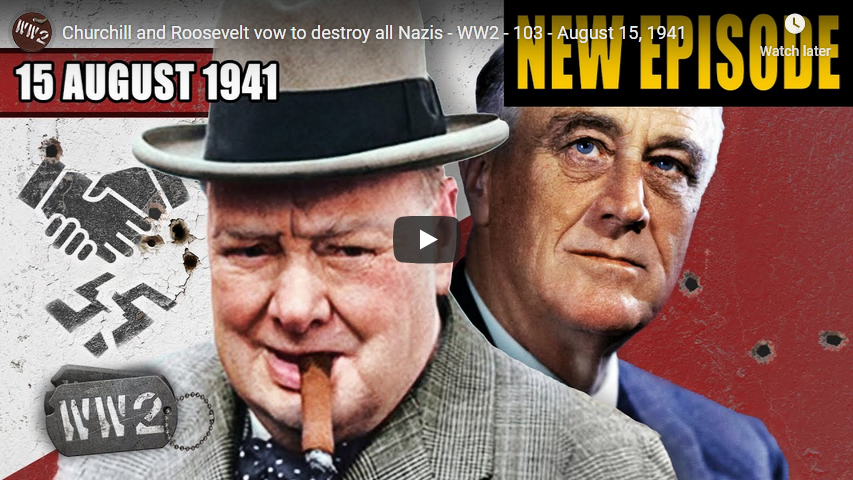
Churchill and Roosevelt vow to destroy all Nazis – WW2 – 103 – August 15, 1941

World War Two
Published 15 Aug 2020

Winston Churchill and Franklin Roosevelt issue a charter that lays out their thoughts for the future, the Soviets are in trouble on two fronts, and Adolf Hitler repeats his orders to those who failed to heed them the first time.

Join us on Patreon: https://www.patreon.com/TimeGhostHistory
Or join The TimeGhost Army directly at: https://timeghost.tv

Follow WW2 day by day on Instagram @World_war_two_realtime https://www.instagram.com/world_war_two_realtime
Between 2 Wars: https://www.youtube.com/playlist?list…
Source list: http://bit.ly/WW2sources

Written and Hosted by: Indy Neidell
Director: Astrid Deinhard
Producers: Astrid Deinhard and Spartacus Olsson
Executive Producers: Astrid Deinhard, Indy Neidell, Spartacus Olsson, Bodo Rittenauer
Creative Producer: Joram Appel
Post-Production Director: Wieke Kapteijns
Research by: Indy Neidell
Edited by: Iryna Dulka
Sound design: Marek Kamiński
Map animations: Eastory (https://www.youtube.com/c/eastory)

Colorizations by:
– Daniel Weiss
– Julius Jääskeläinen – https://www.facebook.com/JJcolorization/
– Cassowary Colorizations – https://www.cassowarycolor.com/
– Norman Stewart – https://oldtimesincolor.blogspot.com/
– Denis Marinov from Wikimedia

Sources:
– Bundesarchiv, CC-BY-SA 3.0: Bild_146-2005-0030, Bild_146-1971-070-61
– Imperial War Museum: E 1416, E 7014, E 3450E, E 7008, E 3438E, E 15023
– Narodowe Archiwum Cyfrowe
– Mil.ru
– egor7 from Wikimedia

Archive by Screenocean/Reuters https://www.screenocean.com.

A TimeGhost chronological documentary produced by OnLion Entertainment GmbH.

From the comments:

World War Two
3 days ago
Although the US has been steadily edging towards more and more support for the Western Allies since outbreak of war almost two years ago, it is this week that an active involvement in WW2 by the United States starts taking form. Let’s be clear though: both the US public, and the US administration are still staunchly opposed to sending in troops and becoming an active belligerent. But the tone of public and political discourse has begun to change, as it becomes increasingly obvious exactly how horrendous the threat is that humanity faces from Naziism.

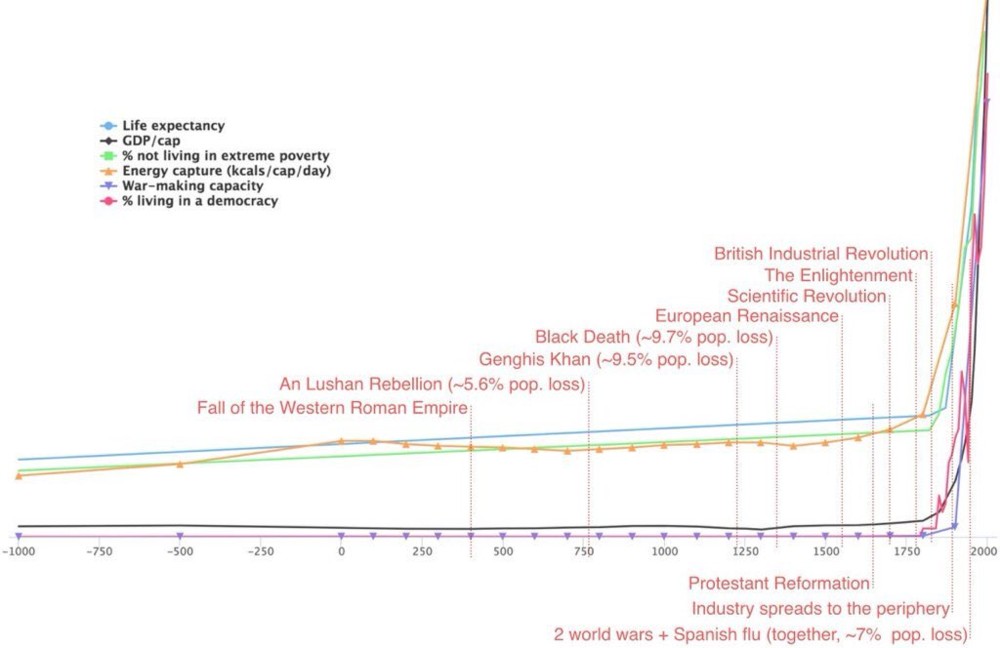
This is a “hockey stick” graph you can believe

Filed under: Economics, Health, History — Tags: , , , , , — Nicholas @ 03:00

Brian Micklethwait says this graph, unlike the more famous (debunked) “hockey stick”, shows one of the most important moments in human history:

If that graph, or another like it, is not entirely familiar to you, then it damn well should be. It pinpoints the moment when our own species started seriously looking after its own creature comforts. This was, you might say, the moment when most of us stopped being treated no better than farm animals, and we began turning ourselves into each others’ pets.

Patrick Crozier and I will be speaking about this amazing moment in the history of the human animal in our next recorded conversation. That will, if the conversation happens as we hope and the recording works as we hope, find its way to here.

I’m not usually one for podcasts, in the same way that I’m not an audiobook user: I find I’m unable to do other things while listening to the spoken word, and it’s always far faster to read a text than to have it read to you. In this particular case, I might try to make an exception, and give up hope of doing anything else productive while I listen.

Collier Flintlock Revolvers

Filed under: Britain, History, Weapons — Tags: , , , , — Nicholas @ 02:00

Forgotten Weapons
Published 9 Nov 2016

Sold for:
First Pattern Musket: $51,750
Second Pattern Rifle: $46,000
Second Pattern Pistol: $63,250

Elisha Collier is probably the best-known name in flintlock revolvers — to the extent that any flintlock revolvers are well known. Because of the great cost and required skill to manufacture a functional repeating flintlock handgun without modern machine tools, these weapons were never common, but they were made by a number of gunsmiths across Europe. Collier and a fellow American gunsmith named Artemis Wheeler developed this particular type (the specific contributions of each party are not known), and Collier patented it in England in 1818. He proceeded to market the guns, which appear to have been made for him under contract by several high-end British gunsmiths (including Rigby and Nock).

Collier made three different basic types of guns. They share the main feature of a revolving cylinder which must be indexed manually between shots (seeing them while traveling in India was reportedly the inspiration for Samuel Colt’s idea to connect the mechanical functions of hammer and cylinder to invent the single action revolver). The first two patterns of Collier are flintlocks, differing in lock and cylinder design, as well as having slightly different mechanisms to self-prime. The third pattern was actually made as percussion guns, as Collier’s guns were being made right at the end of the flintlock period and the dawn of the percussion cap. In total, 350-400 guns were made, including 50-100 bought by the British military for use in India.

Cool Forgotten Weapons Merch! http://shop.bbtv.com/collections/forg…

http://www.patreon.com/ForgottenWeapons

QotD: Labour is now the “party of government” even when they’re not in power

Filed under: Britain, Bureaucracy, Government, Politics, Quotations — Tags: , — Nicholas @ 01:00

Labour, it seems to me and to many others I’m sure, has mutated from once upon a time being the party speaking for the poor, often against the government, to being the party of government, even when they aren’t the politicians in titular charge of that government. These people are now “supportive of the state”, to quote Hartley, even when they’re not personally in charge of it. It’s the process of government, whoever is doing it, whatever it is doing, that they now seem to worship. It is, as similar people in earlier times used to say, the principle of the thing, the principle being that they’re in charge. Many decades ago, Labour spoke for, well, Labour. The workers, the toiling masses. Now they represent most determinedly only those who labour away only in Civil Service offices or their allies in the media, in academia, and in the bureaucratised top end of big business.

Anyone official and highly educated sounding who challenges whatever happens to be the prevailing supposed wisdom of this governing class, on Coronavirus or on anything else, must be scolded into irrelevance and preferably silenced. The governors must be obeyed, even if they’re wrong. In fact especially if they’re wrong, just as the soldiers of the past were expected to obey their orders, no matter what they thought of the orders or of the aristocratic asses who often gave them. Whether they were good orders was an argument that those giving orders could have amongst themselves, but that orders must be obeyed was a given. “Capitalism” isn’t worth dying for, but this new dispensation is, right or wrong.

Our new class of entitled asses, together with all those who have placed their bets for life on carrying out their orders or trying to profit from them, seems now to be the limit of the Labour Party’s electoral ambition. And who knows? The awful thing is that this class and its hangers-on could be enough, in the not too distant future, to get them back into direct command of the governmental process that they so adore.

Brian Micklethwait, “Mick Hartley on the politics of the Lockdown”, Samizdata, 2020-05-15.

August 15, 2020

Miscellaneous Myths: The Book Of Invasions

Filed under: Books, Europe, History, Humour, Religion — Tags: , , , , — Nicholas @ 04:00

Overly Sarcastic Productions
Published 14 Aug 2020

The quintessential Irish mythological text, and … it’s about getting steamrolled by invaders. Now that’s what I call brand consistency!

Our content is intended for teenage audiences and up.

PATREON: https://www.Patreon.com/OSP

DISCORD: https://discord.gg/kguuvvq

MERCH LINKS: https://www.redbubble.com/people/OSPY…

OUR WEBSITE: https://www.OverlySarcasticProductions.com
Find us on Twitter https://www.Twitter.com/OSPYouTube
Find us on Reddit https://www.Reddit.com/r/OSP/

French President Emmanuel Macron – “We are a country that for decades is divided and in doubt”

Filed under: France, Media, Politics — Tags: , , , , , , — Nicholas @ 03:00

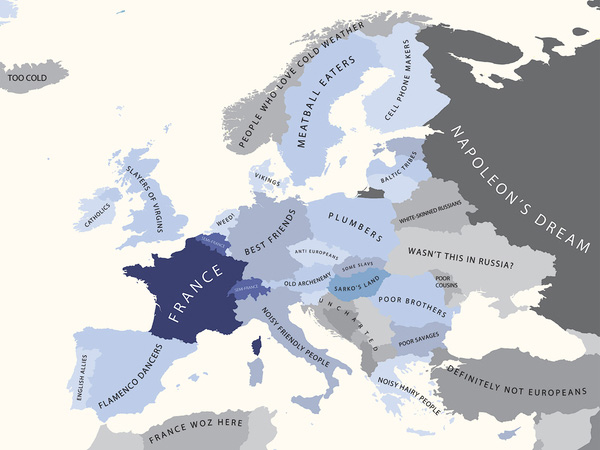
Individuals in France may be chauvinistic, says Joseph de Weck, but the French as a whole are less chauvinistic and more self-critical than the British or the Germans:

There is no doubt that the French are a self-sufficient bunch. After all, it was a Frenchman who once wrote, “Hell is other people.”

COVID-19 or not, the French rarely travel abroad for holidays. In terms of food, most French people think they have it best. And at housewarming parties in Paris, the music playlist is usually primarily made up of chansons and French rap classics.

And despite President Emmanuel Macron’s attempts to turn Europe into a global “balancing power,” what happens abroad doesn’t seem to spark much interest at home. The evening news on the public channel on average dedicates 16 percent of its coverage to European and foreign news. By comparison, that proportion rises to 50 percent in Germany. No surprise then that polls show the average French person knows little about the functioning of the EU.

But if this cliché about French aloofness is easily backed up with data points, another common trope about the Gauls doesn’t: that of French arrogance. At least when it comes to the present, the French are brutally self-critical.

In fact, France seem to be among the least chauvinistic countries in Europe. Asked whether they think their culture is superior to others, 36 percent of the French answered “yes” in a recent poll. This compares to 46 percent in the United Kingdom and 45 percent in Germany.

Or take the COVID-19 crisis: unlike other nations, the Republic’s citoyens won’t rally around the flag. Among Europeans, the French give their government the lowest grades for its handling of the pandemic. Never mind that four of France’s neighbors have significantly higher death-per-capita rates. Never mind either that France’s short-time work benefits are among the most generous, also explaining why consumption is almost back to pre-crisis levels.

Of course, one could explain the French’s dim view of the state’s COVID-19 response as being due to Macron’s unpopularity. But by French standards, the president is actually polling relatively well. At 39 percent, Macron’s approval ratings surpass his predecessors François Hollande (23 percent) and Nicolas Sarkozy (35 percent) at the same point in their terms.

The negative view the French have of their country goes far beyond the complaint du jour. As Macron put it, “We are a country that for decades is divided and in doubt.”

Scammell recovery

Filed under: Britain, History, Military, WW2 — Tags: , , — Nicholas @ 02:00

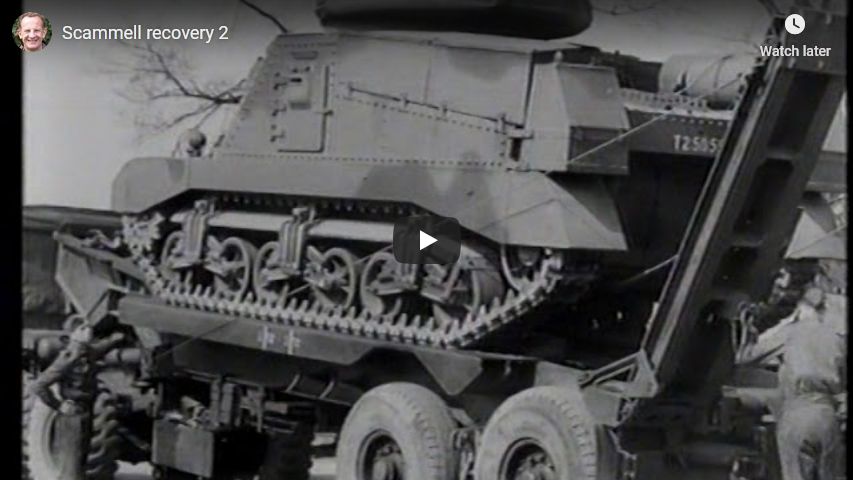
A series of British army WW2 Royal Mechanical and Electrical Engineers (REME) training films on the recovery vehicles for in-the-field recovery of all manner of trucks and tanks. The original training films do not match the cuts in the YouTube versions, and one film cuts off at the end of each “reel” and restarts with the next video. The series is called “Scammell recovery”, but the use of other vehicles is also covered.

Christopher Lloyd-Staples
Published 21 Dec 2017

Scammell Pioneer recovery operations, and loading onto the tank transporter

QotD: The worth of a human being

Filed under: Economics, Media, Quotations, Science — Tags: , , — Nicholas @ 01:00

A lot of things happened, more than half a century ago; suddenly I’m among the shrinking number who recall this. For today’s Idlepost, I will remember an article I read in a popular science magazine, back then. I’ve forgotten both the title of the publication, and the date of the number. I can, however, say that I was in high school then.

According to this article, the worth of a human being was 98 cents. The authors showed how their figure was arrived at. They had combined current market prices for the materials in an average human frame of 130 pounds. (Details like this I remember.) A sceptic, even then, I recall noting that they excluded hat, mid-season clothing, and shoes, from their total; and that they didn’t mention whether they were citing wholesale or retail values on the flesh and chemicals. Most pointedly, while accompanying my mother to a supermarket, I checked the prices for beef, pork, and broiler chicken, choosing the lowest grades. All were over 10 cents a pound; and so I concluded that the overall price of the meat alone, per human, would exceed their estimate.

Given background inflation rates, I think the total value in 2020 may approach twenty dollars, or even twenty-five. I’d have to recheck chemical prices, to be sure. Though perhaps the total might be reduced, closer to one dollar again, for babies.

David Warren, “Virtual March for Life”, Essays in Idleness, 2020-05-14.

August 14, 2020

How Feminism Came to the Middle East – Women’s Emancipation – WW2 – On the Homefront 006

Filed under: Britain, History, Italy, Middle East, Military, WW2 — Tags: , , , , , — Nicholas @ 06:00

World War Two
Published 13 Aug 2020

While battles rage across the world, women at home are fighting for their basic emancipation. In Egypt, Huda Shaarawi stands at the centre of this struggle.

Join us on Patreon: https://www.patreon.com/TimeGhostHistory
Or join The TimeGhost Army directly at: https://timeghost.tv

Follow WW2 day by day on Instagram @World_war_two_realtime https://www.instagram.com/world_war_two_realtime
Between 2 Wars: https://www.youtube.com/playlist?list…
Source list: http://bit.ly/WW2sources

Hosted by: Anna Deinhard
Written by: Spartacus Olsson and Fiona Rachel Fischer
Director: Astrid Deinhard
Producers: Astrid Deinhard and Spartacus Olsson
Executive Producers: Astrid Deinhard, Indy Neidell, Spartacus Olsson, Bodo Rittenauer
Creative Producer: Joram Appel
Post-Production Director: Wieke Kapteijns
Research by: Fiona Rachel Fischer
Edited by: Miki Cackowski
Sound design: Marek Kamiński
Map animations: Eastory (https://www.youtube.com/c/eastory)

Colorizations by:
Daniel Weiss
Carlos Ortega Pereira, BlauColorizations – https://www.instagram.com/blaucoloriz…
Norman Stewart – https://oldtimesincolor.blogspot.com/

Sources:
TIMEA
Bundesarchiv
IWM E 817
USHMM
From the Noun Project: Letter by Mochammad Kafi

Soundtracks from the Epidemic Sound:
Rune Dale – “Scented Nectar”
Deskant – “Genie’s Bane”
Deskant – “Divine Serpent”
Deskant – “Dunes of Despair”
Sight of Wonders – “Call of Muezzin”
Philip Ayers – “Trapped in a Maze”
Skrya – “First Responders”

Archive by Screenocean/Reuters https://www.screenocean.com.

A TimeGhost chronological documentary produced by OnLion Entertainment GmbH.

Warsaw, 1920 – “Smash a Bolshevik!”

Filed under: Europe, History, Military, Russia — Tags: , , , , , , — Nicholas @ 05:00

Arthur Chrenkoff on the important but little-known Russo-Polish conflict a century ago:

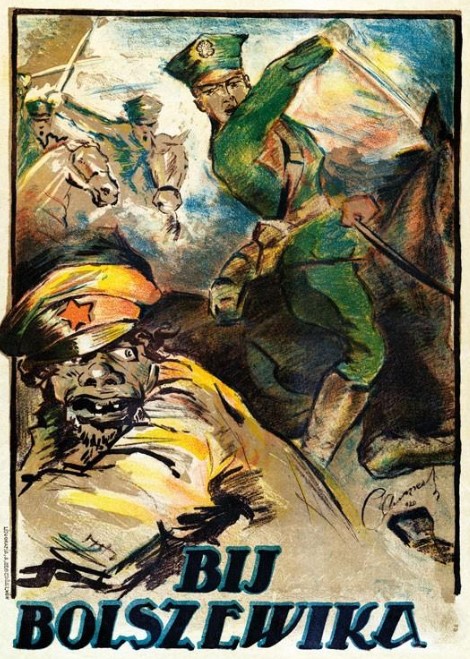
Polish propaganda poster “Smash a Bolshevik”
Image via Daily Chrenk.

The Polish-Russian war of 1919-20 was the last major conflict where massed cavalry played an important role. Unlike the static Western Front a few years earlier (but similarly to the much more mobile Eastern Front) it was a war of maneuver and speed, conducted over vast swathes of territory. While still fought in a pre-armour era, its conduct directly and indirectly inspired the major proponents of the future tank warfare and the doctrine of blitzkrieg, from the young De Gaulle (who was one of the official French Army observers in Poland at the time) through Tukhachevsky in the Soviet Union to Guderian in Germany. Two million troops from both sides took part in the conflict, making it the most significant foreign intervention against the newly installed Bolshevik regime over the course of the Russian Civil War. It might have even succeeded in strangling communism in its cradle; what prevented the cooperation with the counter-revolutionary White forces was their old imperial hostility to independent Poland (coincidentally, the anti-Hitler German opposition of 1944 was likewise unfriendly to the idea).

The basic story of the war is easily enough told. After 123 years of partition between Russia, Prussia and Austria-Hungary, Poland was recreated (or, really, recreated herself) among the chaos of the late 1918, with the collapse of all three of her occupying empires. The new “Versailles” Poland was smaller than in the past, which led the new government to try to restore by force what has been denied to her at the negotiating table (where Poles had no seat in any case). The Russian Revolution (or rather the Bolshevik coup d’etat) and the following civil war provided a perfect opportunity. Throughout 1919, the reconstituted Polish Army under the command of Marshall Jozef Pilsudski fought against and took over the briefly independent Western Ukraine republic and then marched on Kiev, this time in alliance with the forces of also briefly independent Eastern Ukraine republic (it was Pilsudski’s intention to recreate some form of an independent Ukrainian state – minus the predominantly Polish areas – as part of his larger project to create the Miedzymorze (Intermarum) Confederation of both anti-Russian and anti-German states stretching from the Baltic to the Black Sea).

But the Polish Army became overstretched and the Soviet government, now having defeated its major White opponents, found itself willing and able to stand up to and roll back what they saw as the Polish aggression against historically Russian territories. The Red Army, which sporadically skirmished with the Poles over the previous year, now counter-attacked across the whole wide front across what is now Belarus and Ukraine, driving the Polish Army back at an unprecedented pace of 30 kilometres a day. Soviet Marshall Tukhachevsky ordered his troops “To the West! Over the corpse of White Poland lies the road to worldwide conflagration. March on Vilno, Minsk, Warsaw!” and “onward to Berlin over the corpse of Poland!” Pravda newspaper echoed “Through the corpse of the White Poland lies the way to World Inferno. On bayonets we will carry happiness and peace to working humanity”. British Labour Party and French Socialists vowed not to support “reactionary” Poland; German and Czech unions sabotaged the delivery of crucial military supplies to the beleaguered Poland.

On 10 August, Cossack units of Tukhachevsky’s northern Army crossed the Vistula River north of Warsaw in at attempt to envelop the capital. This was a mistake, as the southern Army, under Budyonny, was still stuck around Lwow, three hundred kilometres to the south-east. For weeks preparing in secret, the last Polish reserves punched through the centre, first cutting off the two Soviet fronts from each other and then in a series of counter-enveloping maneuvers routing three Soviet armies. Now it was the Poles’ turn to advance 30 kilometres per day, as the Red Army collapsed and retreated in chaotic circumstances. The Polish counter-strike subsequently became known as “Cud nad Wisla” (Miracle of the Vistula), but it was less of a supernatural intervention and more a combination of several favourable factors: Soviet missteps, good Polish organisation, the growing hostility between Stalin and Trotsky as well as various military commanders, which hampered the cooperation between the Soviet fronts. Last but not least, and this was only revealed in 2004, Polish cryptographers had managed to break the Red Army codes – just as they would later be instrumental in breaking the German Enigma.

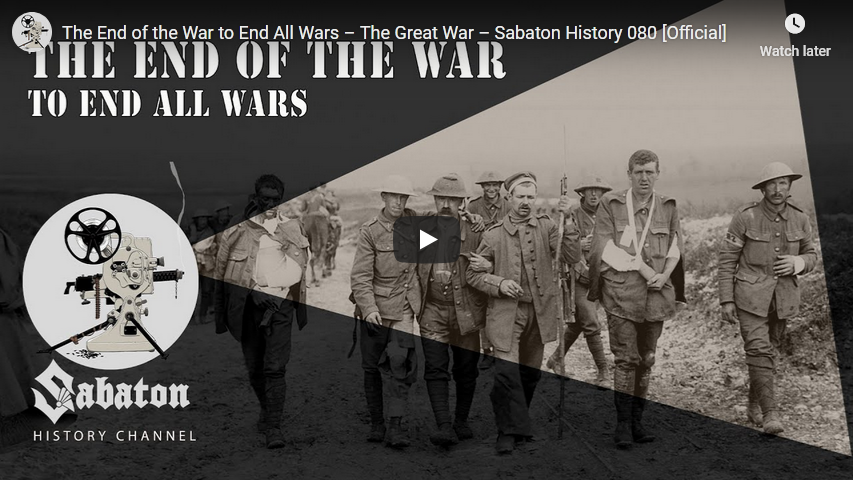
“The End of the War to End All Wars” – The Great War – Sabaton History 080 [Official]

Filed under: Europe, History, Media, Military, USA, WW1 — Tags: , , , , , — Nicholas @ 04:00

Sabaton History
Published 13 Aug 2020

November 11, 1918. The end of the Great War. A war that was also dubbed “the war to end all wars”. And many truly wished that the war’s countless horrors, which had caused the terrible deaths of millions of soldiers and civilians, and had left so many of its survivors crippled and scarred for the rest of their lives, would never repeat themselves. But could this truly be the war that ended the need for war? Was there a solution that promised everlasting peace? Could war even be outlawed? Or was mankind doomed to repeat itself?

Support Sabaton History on Patreon: https://www.patreon.com/sabatonhistory

Listen to The Great War (where “The End of the War to End All Wars” is featured): https://music.sabaton.net/TheGreatWar

Watch the Official Lyric Video of The End of the War to End All Wars here: https://www.youtube.com/watch?v=oXnnb…

Listen to Sabaton on Spotify: http://smarturl.it/SabatonSpotify
Official Sabaton Merchandise Shop: http://bit.ly/SabatonOfficialShop

Hosted by: Indy Neidell
Written by: Markus Linke and Indy Neidell
Directed by: Astrid Deinhard and Wieke Kapteijns
Produced by: Pär Sundström, Astrid Deinhard and Spartacus Olsson
Creative Producer: Joram Appel
Community Manager: Maria Kyhle
Executive Producers: Pär Sundström, Joakim Broden, Tomas Sunmo, Indy Neidell, Astrid Deinhard, and Spartacus Olsson
Post-Production Director: Wieke Kapteijns
Edited by: Karolina Dołęga
Sound Editing by: Marek Kaminski
Maps by: Eastory – https://www.youtube.com/c/eastory
Archive by: Reuters/Screenocean https://www.screenocean.com
Music by Sabaton

Sources:
Icons from The Noun Project by: Vectors Point, Locad, Gan Khoon Lay, RF_Design & banjirolove
National Archives NARA
Library of Congress
Bundesarchiv
Bibliothèque nationale de France
Library of Scotland
Imperial War Museums:Q 43463, Q5733, HU 105641, Q 12363, HU 105641, Q 3117,Q 5733, Q 56637, IWM Q 10378, Q 3117,Q 86635, Q 23760, HU 110852, Q 7815, PST5277,
Archives of New Zealand
TRAJAN 117 from Wikimedia
Srg36 from Wikimedia
F l a n k e r from Wikimedia
Guilherme Paula from Wikimedia
Narodowe Archiwum Cyfrowe

An OnLion Entertainment GmbH and Raging Beaver Publishing AB co-Production.

From protests to riots to …

Filed under: History, Media, Politics, Religion, USA — Tags: , , , , , , — Nicholas @ 03:00

In the Claremount Review of Books, Angelo M. Codevilla looks at historical patterns that may prefigure what is going on in major urban areas today:

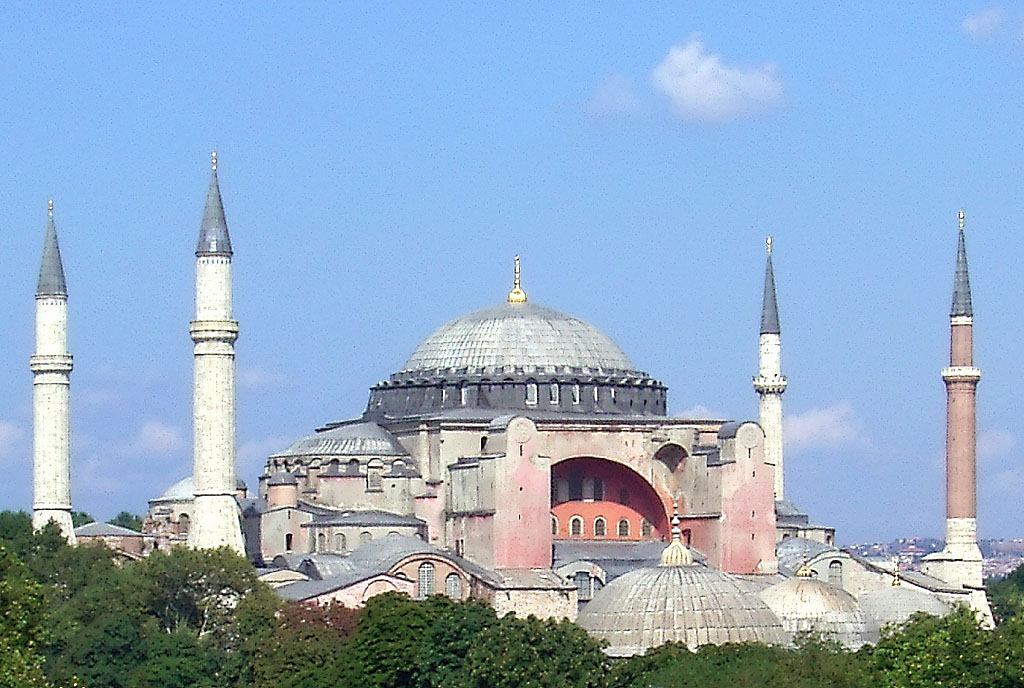
Hagia Sophia in the Faith district of Istanbul, 18 November 2004.
Photo by Robert Raderschatt via Wikimedia Commons.

The Americans who confess other people’s racism absolve themselves inexpensively by a moral mechanism common to humanity: the more I profess to hate evil, the more I showcase my own goodness. Such confessions, however, have a particular history of tragedy in Christian civilization. Again and again over the centuries, persons who have imagined themselves cleansed by ritual confessions have believed themselves elevated above the rest of humanity and, hence, entitled to oppress or even annihilate those around them. Today’s self-purifiers, arms outstretched in supine submission, who then countenance violence against persons, property, and cultural symbols, are mostly unwitting protagonists in yet another chapter of a hoary history.

Although Judeo-Christianity teaches that perfection is not of this world, nevertheless the Old Testament (see the Book of Daniel) and the New (Revelation, chapter 20) refer tangentially to a final state in human affairs in which all evil will have been defeated and the virtuous will have triumphed over their enemies. In the Book of Revelation, this final stage is to last for a thousand years. Jesus Christ’s warnings notwithstanding, people have hearkened periodically to “false prophets” who brandish the prospect of ultimate vengeance over evil. Between the 11th and 16th centuries, any number of movements of this sort used ritual confessions to cleanse themselves, and energized the mobs that waged Europe’s bloodiest wars of that age. Thereafter, though such movements secularized their terms, they fit into the same moral and intellectual categories. Now as ever, they are about destroying civilization in the name of altering the human condition.

But whereas revolutionary movements from the Middle Ages to roughly the middle of the 20th century opposed the ruling classes wholeheartedly and found no friends among them, this generation’s movements have intense, problematic relations with those classes, about which more below.

Today we see scenes of monuments which had stood for decades, now destroyed and defaced, as well as the forceful cancellation of names from circulation. Smashing others’ idols was, and remains, a staple of tribal warfare. The Old Testament recalls the divine command to destroy idols, and the clashes between Christian and Muslim armies always aimed as much at symbols as at people. The Song of Roland contains a lyrical account of Charlemagne’s iconoclasm in his campaign against the Saracens. In the 6th century, Emperor Justinian made Constantinople’s Hagia Sophia cathedral the Christian world’s biggest and most important church. The Muslims who added that city to the Ottoman Empire in 1453 killed its priests, toppled its statues, and made it into the principal mosque of the Muslim caliphate at war with Christendom. In 1923, Kemal Atatürk, Turkey’s modernizer, turned the building into a museum in order to end that war. But in July 2020 Turkey’s Islamist president Recep Erdogan, consistent with his hostility to Judeo-Christian civilization, turned it into a mosque again and began covering up what remain of the Christian frescoes on its walls. Destroying symbols, however, has had no place within Christian civilization. As the equivalent of torturing dead men, it has always been the work of cowards likelier to run from living enemies. On the other hand, war against statues, paintings, books, biographies, etc., has been a defining feature of civilization’s revolutionary enemies, consistent with their chosen identities as alien tribes.

What follows is a glance at the bloody history of this little-known flaw. It is a tale whose cautionary moral Aleksandr Solzhenitsyn best expressed: the line between good and evil runs not between persons — never mind between parties, classes, or races — but down the middle of every human heart. That is central to our civilization.

H/T to David Warren for the link.

Hand Tools Vs Power Tools How To Choose

Filed under: Tools, Woodworking — Tags: , — Nicholas @ 02:00

Wood By Wright How 2
Published 30 Apr 2020

Which Should You Use? Hand Tools or Power Tools? this is a debate that has been around for over 100 years. Today let’s see which is better and which you should use on your next woodworking project.

—Tools I Use—
https://www.woodbywright.com/tool-sug…

—Find Antique tools near you—
http://www.HandToolFinder.com

Top Patreon Supporters:
DFM tool Works: https://dfmtoolworks.com/
Erich Keane – https://github.com/erichkeane
Travis Reese
Alan Smith – http://www.flourishinggrace.org/listen/
Gerald Philip Doyon
Andrew Wilson

////Help this channel grow\\\\
https://www.woodbywright.com/support/

////You Can find me:\\\\
https://www.woodbywright.com/contact-me/

Intro music: Tim Sway http://timsway.net/

Background music: Udo Stehle https://www.upwork.com/freelancers/~0…
Instagram: @udostehle

QotD: Eisenhower and Churchill

Filed under: Britain, History, Humour, Military, Quotations, WW2 — Tags: , — Nicholas @ 01:00

From the outset the neophyte American commander understood perfectly well that he was being thoroughly scrutinized, and that to permit himself to be overpowered by the prime minister’s aggressive personality and charm would be disastrous. During 1942 Eisenhower won over Churchill and a warm and enduring friendship developed between the two men that survived some bruising encounters.

Their common love of history became a bond. Churchill was happiest when discussing history and its lessons, and in Eisenhower he found not only a worthy companion but also one of the few who could match him. Once while dining at Chequers, Churchill “remarked to Eisenhower that he had studied every campaisgn since the Punic Wars,” leading Commander Thompson to whisper to his neighbour, “And he’s taken part in most of them!”

Carlo d’Este, Warlord: A life of Winston Churchill at war, 1874-1945, 2008.

« Newer PostsOlder Posts »

Powered by WordPress