Quotulatiousness

June 7, 2021

Why is the belated discovery of (potentially hundreds of) unmarked graves at a former residential school surprising?

Filed under: Cancon, Education, Government, History, India — Tags: , , , , — Nicholas @ 03:00

The weekly wrap-up post at The Line considers the recent revelation of possibly hundreds of unmarked graves of First Nations children at the site of a former Catholic-run residential school in BC. Despite being Canadian, my interest in Canadian history centres mostly on economic, naval, and military aspects, but I was certainly aware that the residential school system was a black mark on Canada’s historical dealings with First Nations and that the general outline of events — if not the gruesome details — had been known for many years. The first time I found out about it was in middle school, through what we’d now call a “Young Adult” novel about a young First Nations boy escaping from the residential school he’d been sent to and his attempts to travel hundreds of miles to get home. I read it in the early 70s and it may have been published up to a decade before then (I no longer remember the author’s name or the title of the book, unfortunately).

If I, as a schoolchild, knew something of this fifty years ago, why have people younger than me been shocked and appalled to be hearing about this widespread tragedy for the first time now?

Kamloops Indian Residential School, 1930.
Photo from Archives Deschâtelets-NDC, Richelieu via Wikimedia Commons.

We like to start our dispatches with something pithy or casual, but it’s been a heavy week. The discovery of what appears to be a burial site containing the bodies of more than 200 children at the site of a former residential school in B.C. has shaken Canadians. Of course it has. There are two outrages here — the outrageous reality of the generations of combined abuses inflicted on Indigenous Canadians, of which the residential school system was but a part. Also, the outrage that most Canadians are only learning about this now.

Your Line editors are not experts on Indigenous affairs or history, but we dare say we’re better read than most on Canadian history in a general sense. We do not say this in any way with snark or derision, but to our fellow Canadians — this should not be surprising to you. The Catholics who ran most of these schools under the sanction of the state had a long history of trying to save souls at the expense of the bodies in which they inhabited. Religious institutions were slow to recognize and stop the spread of disease in their own institutions. Most disturbingly, their ideology glorified, even sanctified, physical suffering. It still does.

Mass graves have been uncovered in Ireland, at the site of Catholic-run homes once devoted to the care of unwed mothers and children. “Saint” Mother Teresa’s hospitals in India were altars to the needless suffering of impoverished people who could not afford to die in peace and dignity. Her hospitals were dirty, poorly run facilities where children were reportedly tied to beds, and terminal patients were given little more than aspirin.

One of the great lessons of history that we consistently fail to accept is that many of our most evil actions are rooted not in self-evidently evil impulses, but rather in our desire to “save” others. Hubris and paternalism, these are the sins we cannot seem to shake. Residential schools, Catholic or otherwise, were the disastrous result of marrying a poisonous and righteous ideology with the authority and resources of a centralized state.

The Truth and Reconciliation report laid out much of this in detail in its final report in 2015, which also spelled out that graves like the ones we’re now mourning in Kamloops are likely to be far more prevalent and common than we now understand. Everyone here deserves the truth.

Update: I’m delighted to see that David Warren continues to improve from his recent health issues and he has rather a different view on Canada’s residential school system and its place in the lives of the First Nations children who attended the schools:

Ryerson was also a figure in the development of Canada’s “residential schools”, which took Indians from (mostly) dysfunctional homes and gave them an education with priests, nuns, and respectable Protestants. Not all denizens of an orphanage are happy, and by attaching the word “colonialism”, and giving simplified accounts, full of libels, “progressive” Canadian politicians have made this period of Canadian history into a scandal. Those who know better have been silenced.

Some years ago I tried to defend the “residential schools”, more or less alone in the Canadian “meejah”. I received many, many letters from former students of them, who said their memories were happy. They had been inspired by teachers of real Christian faith and conviction, and had been equipped with the rudiments of sound learning. “They saved my life,” was a frequent comment.

I could understand the residential schools because I am familiar with Canadian education before it was taken over by barbaric hordes; and also because I am myself partly a product of “British colonial” private schools in Asia, decades ago. They were brutal towards their boys, sometimes. I was myself beaten, and their teachers were sometimes tyrannical.

As a young man I thought this was the way of the world. Now that I am old, I look back on the teaching I received with great pride. It was vastly better than what I would receive in a Canadian high school; and that was much better than what we get today.


The History of the Scottish Flag

Filed under: Britain, History — Tags: , , — Nicholas @ 02:00

History With Hilbert
Published 4 May 2018

One of the most prominent parts of the Union Flag is the Scottish Flag or Saltire, which is a bonny flag in its own right as well. In this video, as part 2 of my series on the Union Flag and the flags that make it up, I’m going to look at why this flag became the Scottish flag, what’s the symbolism behind it and which ones came before it. Lots of vexiology, historiography and etymology to come, strap in because this, is History with Hilbert!

Music Used:
“Sneaky Snitch” – Kevin MacLeod
“Up and Away” – Holfix
https://www.youtube.com/watch?v=9YmM_​…
“Heroes – CO.AG”:
https://www.youtube.com/watch?v=V9yVZ…​
“Eastern Thought” – Kevin MacLeod (incompetech.com)
Licensed under Creative Commons: By Attribution 3.0 License

All images are from the Public Domain of Wikimedia Commons and Pixabay.

QotD: Toronto in summertime

Filed under: Cancon, Environment, Humour, Media, Quotations — Tags: , , , — Nicholas @ 01:00

I notice from an article in the Toronto Scar, that a problem with walking in the city parks and ravines is now publicly acknowledged. This is caused by redwing blackbirds, who resumed breeding recently, in honour of the spring. There is a population explosion of them, and they are extremely aggressive towards anyone who passes within fifty yards or so of any one of their innumerable nests. Brave, too, considering their size. I call them “hairdresser birds,” for the delight they take in rearranging hair styles. I noticed in scanning 63 comments on this and related local media articles that all were on the side of the birds, and inclined to condemn people like me for failing to avoid their quickly expanding ranges. This would be a good example of Canadian environmental liberalism. My countrymen are trained from birth always to take the side of another species. (I missed this brainwashing, somehow.)

On the other hand, the raccoon population appears to be dwindling. It would seem that the skunks are driving them away. Perhaps they will turn on the coyotes, next.

The geese and swans along the Lakefront are also acting unionized, having long nursed a powerful dislike for the city’s other inhabitants. They are large, and forceful in expressing their opinions. Ditto, the trolley drivers. And the schoolchildren are about to be released from their cages, in time for what is now called “Canada Day.” Monstrous little creatures in the main, especially after they have shot up their drugs. (The older-looking ones are their teachers.)

David Warren, “Sumer is icumen in”, Essays in Idleness, 2018-06-16.

June 6, 2021

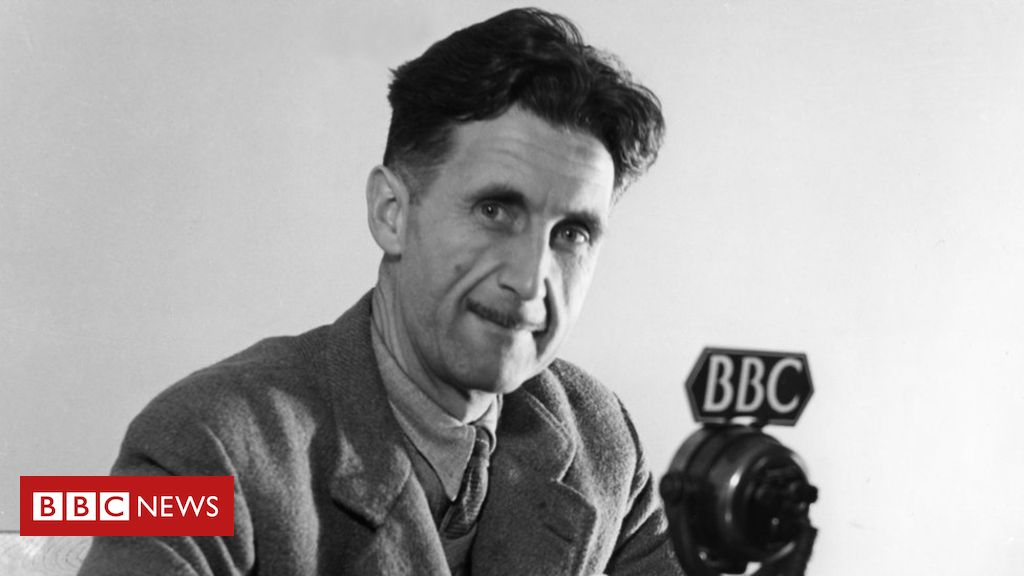
George Orwell’s “Politics And The English Language” remains the best guide to writing non-fiction

Filed under: Politics, USA — Tags: , , , , , — Nicholas @ 05:00

Despite pulling most of his writing behind a paywall, I still get the occasional “Weekly Dish” post excerpt from Andrew Sullivan, including his homage to the still-relevant Orwell essay “Politics and the English Language”:

From time to time, I make sure to re-read George Orwell’s classic essay, “Politics And The English Language“. It remains the best guide to writing non-fiction, and it usually prompts a wave of self-loathing even more piercing than my habitual kind. What it shows so brilliantly is how language itself is central to politics, that clarity is as hard as it is vital, and that blather is as lazy as it is dangerous. It’s dangerous because the relationship between our words and our politics goes both ways: “[The English language] becomes ugly and inaccurate because our thoughts are foolish, but the slovenliness of our language makes it easier for us to have foolish thoughts”. We create language and language creates us. If the language is corrupted, so are we.

Near the end of the essay, Orwell lists a few rules to keep writing clear, accessible and meaningful:

    i. Never use a metaphor, simile or other figure of speech which you are used to seeing in print.

    ii. Never use a long word where a short one will do.

    iii. If it is possible to cut a word out, always cut it out.

    iv. Never use the passive where you can use the active.

    v. Never use a foreign phrase, a scientific word or a jargon word if you can think of an everyday English equivalent.

    vi. Break any of these rules sooner than say anything outright barbarous.

Originality, simplicity, brevity, active verbs, everyday language, decency: as simple as it is very, very hard. It’s a relief in a way to recall that Orwell thought things were pretty damn shitty in his day as well, but the more you read broadly across most elite media platforms these days, the more similar it all sounds. To reverse Orwell’s virtues: so much of it is repetition, complexity, length, passive verbs, endless jargon, barbarism.

I was just reading about the panic that occurred in the American Medical Association, when their journal’s deputy editor argued on a podcast that socio-economic factors were more significant in poor outcomes for non-whites than “structural racism”. As you might imagine, any kind of questioning of this orthodoxy required the defenestration of the deputy editor and the resignation of the editor-in-chief. The episode was withdrawn from public viewing, and the top editor replaced it with a Maoist apology/confession before he accepted his own fate.

But I was most struck by the statement put out in response by a group called “The Institute for Antiracism in Medicine”. Here it is:

    The podcast and associated promotional message are extremely problematic for minoritized members of our medical community. Racism was created with intention and must therefore be undone with intention. Structural racism has deeply permeated the field of medicine and must be actively dissolved through proper antiracist education and purposeful equitable policy creation. The delivery of messages suggesting that racism is non-existent and therefore non-problematic within the medical field is harmful to both our underrepresented minoritized physicians and the marginalized communities served in this country.

Consider the language for a moment. I don’t want to single out this group — they are merely representative of countless others, all engaged in the recitation of certain doctrines, and I just want an example. But I do want to say that this paragraph is effectively dead, drained of almost any meaning, nailed to the perch of pious pabulum. It is prose, in Orwell’s words, that “consists less and less of words chosen for the sake of their meaning, and more and more of phrases tacked together like the sections of a prefabricated hen-house.”

It is chock-full of long, compounded nouns and adjectives, riddled with the passive voice, lurching and leaning, like a passenger walking the aisle on a moving train, on pre-packaged phrases to keep itself going.

Notice the unnecessary longevity: a tweet becomes an “associated promotional message”. Notice the deadness of the neologisms: “minoritized”, “marginalized”, “non-problematic”. As Orwell noted: “the normal way of coining a new word is to use a Latin or Greek root with the appropriate affix and, where necessary, the -ize formation. It is often easier to make up words of this kind (deregionalize, impermissible, extramarital, non-fragmentatory and so forth) than to think up the English words that will cover one’s meaning.” Go back and see if you can put the words “minoritized” or “non-problematic” into everyday English.

Part of the goal of this is political, of course. The more you repeat words like “proper antiracist education” or “systemic racism” or “racial inequity” or “lived experience” or “heteronormativity”, the more they become part of the landscape of words, designed to dull one’s curiosity about what on earth any of them can possible mean. A mass of ideological abstractions, in Orwell’s words, “falls upon the facts like soft snow, blurring the outlines and covering up all the details.”

Then this: “Racism was created with intention.” Abstract noun, passive voice, vague meaning. Who “created” it? What was the intention exactly? Hasn’t racist tribalism been a feature of human society for tens of thousands of years? They never say. Or this phrase: “purposeful equitable policy creation”. Again: what are they talking about? It is as vague as “doing the work” — and as deliberate as the use of a highly contested term like “structural racism” to define objective reality. These are phrases not designed to say anything real. They are phrases designed to send a message of orthodoxy, and, as Orwell also noted, “orthodoxy, of whatever colour, seems to demand a lifeless, imitative style”. Try reading Slate or Vox or the Huffington Post: the tedium you feel is the tedium of a language rendered lifeless by ideology.

Midway, pt.1 – Clash of the Titans – 145a – June 5, 1942

Filed under: History, Japan, Military, Pacific, USA, WW2 — Tags: , , , , , — Nicholas @ 04:00

World War Two
Published 5 Jun 2021

The supposedly surprise Japanese operations against Midway Atoll and the Aleutian Islands kick-off, but they don’t know that Allied intelligence has cracked their codes. As the Japanese fleet advances in the Central Pacific and Japanese planes bomb Midway, the US Navy has a big surprise waiting for them.
(more…)

Decoding NPR’s revised approach to reporting in a social justice age

Filed under: Media, Politics, USA — Tags: , , , , — Nicholas @ 03:00

At Ace of Spades H.Q., K.T. listens to some NPR broadcasts (so you don’t have to) including an insight into how NPR and probably other media organizations are changing how they report the news:

We Hold These Truths: How Newsroom Leaders Wrestled With Covering A Tumultuous Year

This was sort of a panel discussion (light on the “discussion”), with commentary on things like how social media pressured newsrooms, for example, to say that “police murdered George Floyd” rather than “George Floyd died”.

But I kind of homed in on an academic phrase that bothers me. Sara Just from PBS:

    Yeah, I think that you’re absolutely right. There’s been a deeper understanding and deeper conversation about how much our lived experiences play into the reporting that we do. And there’s no question that it does for each and every one of us in different ways. And I think that lived experience we especially highlight now is valuable, whether it’s race or gender or the challenges. I don’t think people with those lived experiences have to carry the burden, though, of being the only ones to report on it by any means. And so that’s something that we are always balancing. (emphases mine)

So, are they balancing whether or not people without “lived experiences” can report on issues involving “lived experiences”? Like Lori Lightfoot deciding she would only do one-on-one interviews with journalists of color? Will white people be allowed to report on stories involving black people? Will men be allowed to report on stories involving women?

This is partly about local sources, but it is largely about people thought of as being in “oppressed groups”. This panel is informing us that news reporting will now be filtered through the language and perspective of Critical Social Justice, whether we realize it or not.

The indispensable Translations from the Woke at New Discourses provides the following information on Lived Experience:

    In the Theory of Critical Social Justice, for what turn out to be surprisingly deep and philosophically (almost) sophisticated reasons, lived experience is the overwhelmingly primary way in which knowledge can be obtained. This should not be mistaken to mean one’s firsthand experience, which most of us already recognize to provide a rather weak claim upon knowledge, though it is both implied and claimed that this is what “lived experience” refers to in Critical Social Justice. Lived experience, as Critical Social Justice uses the term, refers more specifically to one’s life experiences in allegedly systemic power dynamics of dominance and oppression that shape society structurally as understood with a critical consciousness and interpreted through Theory. That is, one’s “lived experience” refers to the interpretation that Critical Social Justice Theory gives for the anecdotal accounts of experiences one has had.

    Because “lived experience” refers to an interpretation through Theory, it is only the “lived experience of oppression,” as Theory will have it, that counts …

It appears that you can’t really understand the reporting on PBS, and probably NPR, now unless you have studied Critical Social Justice.

    Certainly, the claimed “lived experience” of members of dominant groups cannot be in any way used to challenge or dispute the assertions of Theory or those claiming to speak from it …

    This restriction extends to members of “minoritized” groups who disagree with Theory as well — Theory cannot be authentically disagreed with. One might think that the lived experience of a member of oppressed groups would be admissible as a valid challenge to the claims of Theory, but this not so. They may be talking about their own experiences in life, but they aren’t appealing to lived experience, which must comport with Theory …

    This is all very confusing and appears to be exactly what it is — a form of manipulating knowledge and epistemology as a means of asserting power and rigging the system such that those assertions of power cannot be challenged. Nevertheless, it isn’t merely an application of power and has a rather interesting and deep philosophical explanation that must be understood to understand why “lived experience” holds the status that it does and why it must comport with Theory to be granted veridical status and epistemic weight. This has everything to do with the fact that the roots of Critical Social Justice are in critical theories and, especially, postmodern philosophy.

There is much more, but it is way too deep to include here.

The NPR panel goes on to discuss new understandings of “balance” and “objectivity”. They do not intend to be objective. “Balance” will mean something different than what it has meant in the past in the news business.

Many people have found the way that TV news shows report on events since 2016 to be rather different than what they’d been used to before that. Some changes are subtle and others are quite blatant and hard to ignore unless you already agree with the viewpoint of the presenter. TV news used to at least pretend to present the news objectively but from the start of the Trump presidency most media outlets abruptly changed from a pseudo-objective (but leaning progressive) to an outright full-on progressive stance from start to finish with little or no attempt to provide other points of view for balance.

Turning Point of History: D-Day Juno Beach

Filed under: Britain, Cancon, France, Germany, History, Military, USA, WW2 — Tags: , , , , — Nicholas @ 02:00

ch1201
Published 8 Nov 2014

Examines Canada’s role on June 6th, 1944 and the advance through Normandy, France.

QotD: The Soviet Union in the Cold War, China today

Filed under: China, History, Media, Quotations, Russia, USA — Tags: , , , , , — Nicholas @ 01:00

Back in the days of the Cold War, much was said about the titanic power of the Soviet Union. The USSR, we were told, was a superpower the equal of the United States, possibly even superior. This meme was spread by lefties who wanted the USSR to win, by sincere pacifists hoping to stop war before it could begin, and by an enormous cohort of liberals who repeated it because they heard it from the first two. (Much liberalism can be explained this way. It’s the ultimate “I heard it from somebody” ideology.)

Needless to say, it was gibbering nonsense. The late ’80s Soviet collapse revealed that the USSR was never any kind of power at all – an economy that didn’t produce, weapons that didn’t work, a populace addicted to drink and overwhelmed with despair. “Bulgaria with nukes” is how someone characterized it, and truer words were never spoken. That remains the case today, despite Vlad Putin’s chest-beating, and it’s likely to remain the case as far ahead as anyone can see.

The same trope is being repeated regarding China. China, we are told, is the coming nation. The second largest economy on Earth, soon to be the first. A billion and a half people, each more educated than any American; a military power second to none, with advanced weapons of a nature that we can only gape at. A country exercising its power over vast reaches of the Pacific and moving into the Indian Ocean, Africa, and the Mideast with no one to oppose it.

We hear this from the likes of Thomas Friedman, who has spent much of his career looking for his personal Mussolini. It’s repeated by deeper figures across the political spectrum. In fact, it can be said without exaggeration to have become received wisdom.

There’s no point in asking how true this is. The proper question to ask is whether it embodies any truth at all.

J.R. Dunn, “The Myth of China as Superpower”, American Thinker, 2019-01-09.

June 5, 2021

Pssst! Wanna try some Stephen Leacock? Three bucks, and cheap at twice the price!

Filed under: Books, Cancon, Humour — Tags: — Nicholas @ 05:00

Colby Cosh from the Friday edition of the NP Platformed newsletter:

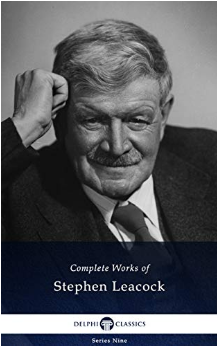
In his Substack newsletter this morning, the editor/historian Ken Whyte shares a neat discovery: a publisher called Delphi Classics has made the complete works of Stephen Leacock available in a Kindle edition for the exquisitely reasonable price of $3 (Canadian!).

Leacock’s oeuvre is in the public domain, so technically you could save the money for a down payment on a coffee. But Delphi is said to take professional care in collating and editing public-domain works of past masters, and it would have to do a pretty poor job not to make it worth the $3 to have 10,000-plus pages in readable condition and in one file.

The collection includes Leacock’s non-fiction, which appears to make up about half its volume. I am just old enough to have run across the humorous fiction that made Leacock a global celebrity, one who influenced artists ranging from F. Scott Fitzgerald to Groucho Marx. I know next to nothing of him as an economist, which was his everyday trade (his thesis supervisor was Thorstein Veblen). He also wrote history books about early Canada, and one’s instinct is that these must be lively presentations of material that Canadians ordinarily meet in the worst possible circumstances, and yes, I do mean “a classroom.”

I have to doff the editorial “we” here to confess that I have not plumbed very deeply into the many aspects of Stephen Leacock, even as someone who regards him, on the basis of Sunshine Sketches of a Little Town and other much-anthologized stories, as easily the greatest prose artist in Canada’s history. Leacock is our Mark Twain, and it’s a small miracle that we have someone who could be described this way, without any hint of exaggeration or partiality. (Commercially, at his peak, Leacock enjoyed nearly the same level of renown: the joke was that he was better known than Canada itself.)

His humorous short stories, like Mark Twain’s, overflow with cynicism and masked darkness, matched with an equal quantity of sympathy. His ability to find just the right off-kilter adjective to make a sentence’s logic explode or capsize was just as strong. And, in his day, the small-town Canadian life he satirized was nearly the entirety of Canadian life, period. You can learn things about early 20th-century Canada from Leacock, and maybe some things about your own forebears, that nobody could insert into a serious book.

Despite having spent most of my school years in Canada, I can only think of one or two Leacock stories that I had to read in that time … and I’m afraid like most things we’re forced to read, I resented the hell out of the teacher, the school board, and the author so if I actually did read them, I instantly forgot them as soon as the quiz or test was over and had no intention of ever picking up the author’s work again. This general pattern has been handy for me in that the Canadian authors I’ve read in the decades since then I’ve been able to evaluate on their own merits rather than through the “I already hate you” filter that got applied to assigned texts in school. My friend and former co-worker Jon — who used to comment on the blog occasionally — was a big fan of Leacock and regularly encouraged me to get past the ancient resentments … it worked to the point that I bought a copy of Sunshine Sketches, but I still haven’t gotten around to reading it.

Battle of Khalkhin Gol 1939 – Soviet-Japanese War

Filed under: China, History, Japan, Military, Russia — Tags: , , , , — Nicholas @ 04:00

Kings and Generals
Published 17 May 2020

Our animated historical documentary series on modern warfare continues with a coverage of the Battles of Khalkin Gol of 1939, as the USSR and Japan clashed in Mongolia and Manchuria. Although this short war didn’t change much in the Far East, it played a huge role during World War II.

Cold War channel: http://bit.ly/2UHebLI
Modern Warfare series: http://bit.ly/2W2SeXF

Support us on Patreon: http://www.patreon.com/KingsandGenerals or Paypal: http://paypal.me/kingsandgenerals

We are grateful to our patrons and sponsors, who made this video possible: https://docs.google.com/document/d/17…

The video was made by Leif Sick, while the script was developed by Ivan Moran

This video was narrated by Officially Devin (https://www.youtube.com/user/OfficiallyDevin)

✔ Merch store ► teespring.com/stores/kingsandgenerals
✔ Podcast ► Google Play: http://bit.ly/2QDF7y0 iTunes: https://apple.co/2QTuMNG
✔ Twitter ► https://twitter.com/KingsGenerals
✔ Instagram ► http://www.instagram.com/Kings_Generals

Production Music courtesy of Epidemic Sound: http://www.epidemicsound.com

#Documentary #KhalkinGol #WorldWar2

The morality of collective intergenerational responsibility

Filed under: Europe, Germany, History, USA — Tags: , , , , , , — Nicholas @ 03:00

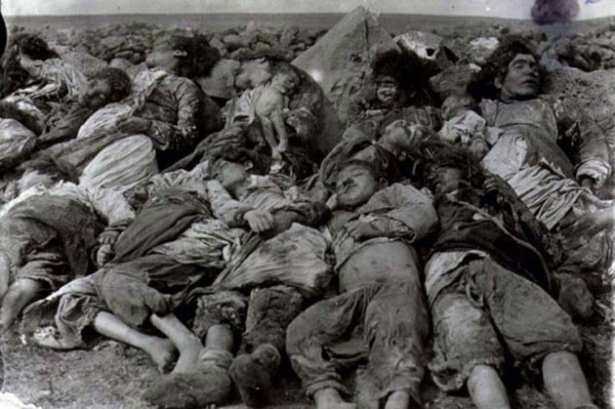
Arthur Chrenkoff believes that the responsibility to compensate people for historical wrongs ends when the individuals who were harmed have died:

Victims of genocide
Photo by Cantetik2 via Wikimedia Commons.

What I was querying was the practicality and the morality of reparations being paid today: “If great-great-grandchildren of perpetrators have to pay great-great-grandchildren of survivors, is there any limit on historical liability? 200 years? 500 years?”

Before we get any further into the discussion, let me restate here my position, which has not changed at all in light of the subsequent online exchanges and name-calling: I do not believe in collective intergenerational responsibility. Far from modern and enlightened, it strikes me as a primitive, ancient principle, in line with the Old Testament’s “an eye for an eye” mentality. Thought to call it Old Testament might be unkind to Old Testament, since already by the time the Book of Ezekiel was being compiled during the Babylonian Exile, mid-first millennium BC, the Judaic theology had morally evolved beyond the belief that the sins of the fathers are visited on their children. We are each a moral agent, enjoying free will and exercising own judgments and actions, and for all that we are rightly held responsible and accountable. But it is unjust to blame (and, at the other end of the spectrum, absurd to praise) us for what our literal and metaphorical ancestors had done or failed to do at one point or another in the past, or what they have collectively achieved.

And so, to the comment that genocide has no statute of limitation, I say: it should, and it should be right about the time that all those who were alive at the time and affected by it have passed away.

The concept of reparations for historical wrongs is increasingly in the news. In the United States, the question revolves around the evil of slavery, but it’s hardly an American-centric debate. In many Western European countries there is talk of reparations for colonialism. Then there is the agitation in Poland, long supported by the ruling Law and Justice party, that Germany should pay Poland reparations for death and destruction caused during the Second World War. While the quantum has sometimes been calculated upward of US$15 trillion, the official suggestions have hovered around the more “modest” €850 billion (1947 estimates in today’s currency).

[…]

Not just genocide – everything that has ever happened, both bad and good, ripples across time and shapes the present. This is what history is about. Each event has an infinite number of causes and an infinite number of consequences. Hence, conceptual problems start popping up once you try to unscramble the egg and make simple adjudications about complex past situations. It’s one thing to make moral judgments about what had happened, it’s another to apply judicial standards used in disputes between contemporaries to met out sanctions and punishment in relations to historical wrongs, which might have occurred centuries ago. For starters, the collective approach to situations where each individual was affected it their own unique way might simplify things but it surely does not paint an accurate picture or deliver real justice. This goes for both the victims and the perpetrators. (At the extreme, for example, potentially forcing the descendants of German pacifists to compensate the descendants of Polish collaborators. In fairness, there were few of either at the time, but most other historical events are significantly more complicated than the black and white story of Nazi aggression and crimes against humanity.)

Which brings me to the second problem: the supposed intergenerational nature of responsibility and punishment. Not only are we talking about entire nations or ethnic (or social or religious or other) groups as monoliths for legal purposes, somewhat akin to a corporation, but also monoliths in time, across an unlimited number of generations. I find it morally odious, but you may well say “well, it’s not about moral blame per se, but whether you have, intentionally or not, benefitted at the expense of past others as a consequence of the evil actions of your ancestors” – in other words, it’s not a punitive but a restorative justice. Putting aside, again, the fact that no two individuals are ever affected in exactly the same way, the past is much more complex than your simplistic unicausal, zero-sum calculations allow and so, consequently, simple justice in theory is simply unjust in practice. Take Germany for example; if you think that Germany and Germans as a collective had benefitted from their rapacious actions during the war, you clearly have little idea what happened to them between, say, 1943 and 1946. You might think, as many did particularly in the immediate aftermath of the war, that this was still not a (collective) punishment enough considering the extent and the gravity of crimes committed (including the Holocaust) but if there was a time to tip the scales even more it was contemporaneously. The point I’m making is that any short-term German gains have been wiped out by the deliberate actions (military or otherwise) of the Allies, who in so doing destroyed much of the native German wealth as well as the wealth stolen by Germany from the occupied territories. That Germany is rich today is despite, not because of the Second World War. And while it’s true that Poland, for example, and at least some of its people are poorer today than they would have been had there been no war, I return back to my original position: how is it just and fair for a 25-year old from Bremen to compensate Poland as a whole (or the Polish government to be exact) for the “ripples” set off six decades before they were even born?

Bren MkI: The Best Light Machine Gun of World War Two

Filed under: Britain, Cancon, Europe, History, Military, Weapons, WW2 — Tags: , , , , — Nicholas @ 02:00

Forgotten Weapons
Published 24 Feb 2021

http://www.patreon.com/ForgottenWeapons

https://www.floatplane.com/channel/Fo…​

Cool Forgotten Weapons merch! http://shop.bbtv.com/collections/forg…​

In the years after World War One, the British military wanted a new machine gun, and they wanted it to replace both the Lewis and the Vickers. Through the 1920s the British would tinker with most of the light machine guns that became available, but it was not until the early 1930s that a serious formal trial was conducted. The initial trials found three particularly encouraging guns; the ZB-26, Madsen, and Vickers-Berthier. Over a series of followup testing, the Madsen and Vickers-Berthier were both eliminated, leaving the Czechoslovakian ZB as the final choice.

The British were extremely enthusiastic about the qualities of the ZB, and it is understandable why. The final .303 British version, the Bren, is widely regarded as the best magazine-fed light machine gun ever made. In its final preproduction trial, one of the prototype guns endured a 150,000-round trial without any real problems.

The design was licensed for British production as well as in the Dominions, and would be put into production at both Enfield in England and the John Inglis company in Canada. About 30,000 were produced before the Dunkirk disaster, which would lead to simplification of the design. But those changes are a subject for another video later…

Contact:
Forgotten Weapons
6281 N. Oracle #36270​
Tucson, AZ 85740

From the comments:

Jeffrey Holdeman
5 hours ago
Ian- “this video is getting a little long already”

Everyone else- “so what!”

Notable Discomfort
2 hours ago
Ian: “This video is a little long already.”
Everyone: “Baby doll, you take all the time you need, I’m in love with every second you take. Every minute you take to explain this rifle is a minute I get to spend with you and your comforting voice. Don’t never apologize. There’s nothing to be sorry about.

FLIBFLAGGAFLUP
2 hours ago
The sheer amount of Victoria Cross citations that start with “he picked up a Bren gun” is stupendous, like a WW2 cheat code.

QotD: British wartime censorship

Unpopular ideas can be silenced, and inconvenient facts kept dark, without the need for any official ban. Anyone who has lived long in a foreign country will know of instances of sensational items of news — things which on their own merits would get the big headlines — being kept right out of the British press, not because the Government intervened but because of a general tacit agreement that “it wouldn’t do” to mention that particular fact. So far as the daily newspapers go, this is easy to understand. The British press is extremely centralised, and most of it is owned by wealthy men who have every motive to be dishonest on certain important topics. But the same kind of veiled censorship also operates in books and periodicals, as well as in plays, films and radio. At any given moment there is an orthodoxy, a body of ideas which it is assumed that all right-thinking people will accept without question. It is not exactly forbidden to say this, that or the other, but it is “not done” to say it, just as in mid-Victorian times it was “not done” to mention trousers in the presence of a lady. Anyone who challenges the prevailing orthodoxy finds himself silenced with surprising effectiveness. A genuinely unfashionable opinion is almost never given a fair hearing, either in the popular press or in the highbrow periodicals.

At this moment what is demanded by the prevailing orthodoxy is an uncritical admiration of Soviet Russia. Everyone knows this, nearly everyone acts on it. Any serious criticism of the Soviet régime, any disclosure of facts which the Soviet government would prefer to keep hidden, is next door to unprintable. And this nation-wide conspiracy to flatter our ally takes place, curiously enough, against a background of genuine intellectual tolerance. For though you are not allowed to criticise the Soviet government, at least you are reasonably free to criticise our own. Hardly anyone will print an attack on Stalin, but it is quite safe to attack Churchill, at any rate in books and periodicals. And throughout five years of war, during two or three of which we were fighting for national survival, countless books, pamphlets and articles advocating a compromise peace have been published without interference. More, they have been published without exciting much disapproval. So long as the prestige of the USSR is not involved, the principle of free speech has been reasonably well upheld. There are other forbidden topics, and I shall mention some of them presently, but the prevailing attitude towards the USSR is much the most serious symptom. It is, as it were, spontaneous, and is not due to the action of any pressure group.

George Orwell, Unpublished Preface to Animal Farm, 1945.

June 4, 2021

“I’m talking about the Pride flag. That omnipresent rainbow eyesore. A virtue-signal made cloth.”

Filed under: Britain, Politics — Tags: , , , — Nicholas @ 05:00

Brendan O’Neill seems to have had it up to here with the rainbow flag being used everywhere at all times, the unbearable annoyingness of Pride:

“Pride Flags, Commercial Street, Provincetown, Credit: Tim Grafft/MOTT” by Massachusetts Office of Travel & Tourism is licensed under CC BY-ND 2.0

I see the flag-shaggers are out in force. No, not working-class people who hang the Union flag from their living-room window as an expression of pride in their nation. I’m talking about the Pride flag. That omnipresent rainbow eyesore. A virtue-signal made cloth. The flag no one can escape. Yep, it’s Pride Month, which means that everywhere you go for the next four weeks – the bank, the supermarket, Maccy D’s – you’ll have this flag waved in your face to remind you not to be such a horrible, homophobic piece of shit. Happy Pride Month!

God, Pride has become annoying. It’s so gratingly ubiquitous. I haven’t seen this much smug flag-waving since 100,000 Guardian readers wrapped in the EU colours, tears streaking their blue-painted faces, descended on Whitehall to demand the cancellation of stupid northern people’s votes. And yet the people who cry “flag-shagger!” every time Keir Starmer stands stiffly next to the Union flag, or when Robert Jenrick goes on TV with a backdrop of showy British memorabilia, are curiously silent about the adorning of every building in the land with the bloody Pride flag.

You can’t move for rainbows right now. The Pride flag will flutter from town halls across the country. Some schools in Scotland will fly the flag for the whole month. I can’t be the only person who found the photo of school pupils wearing Pride face masks beneath a vast Pride flag somewhat chilling. It’s borderline cultish. Go to a cashpoint machine and you’ll be told about Pride. Coutts Bank on The Strand in London once painted its entire facade in the Pride colours. That was a very expensive way of saying: “We’re nice, I swear.”

Cops will wear Pride-coloured badges. They’ll do dad-dancing at Pride marches and everyone will go wild for it (except the Daily Mail probably). The army is getting in on the act. It is using Pride Month to showcase its British Army LGBT+ Network. If this doesn’t become a meme featuring someone in the Middle East saying “They say the next bombs will be dropped by people who believe in gay rights! Don’t you love progress!”, I will lose all faith in the internet. Even the Beano is flag-shagging. It posted a comic strip featuring Dennis the Menace in a Pride-coloured jumper. I preferred him when he was bullying Walter the Softy.

Snacks are propaganda now, too. Who can forget M&S’s Pride sandwich, which was basically a club sandwich with added guacamole (“Gays like guacamole, right?”). McDonald’s has created Rainbow-coloured boxes for its French fries, which was definitely one of the key demands of the radicals who took part in the Stonewall riot of 1969 that Pride is meant to commemorate. Skittles surely caused even Pride aficionados’ eyes to roll when they released limited-edition white versions of their sweets, because “we are giving up our rainbow to show support for the LGBTQ+ community”. (It is testament to the insanity of intersectionalism that the only complaint about this conceited act of corporate virtue-signalling was that the sweets were white.)

The Peloponnesian War

Filed under: Europe, History, Military — Tags: , , , , , — Nicholas @ 04:00

Epimetheus
Published 21 Oct 2018

The Peloponnesian War (extended Video)

Support new videos from Epimetheus on Patreon! 😀
https://www.patreon.com/Epimetheus1776

From the comments:

Epimetheus
2 years ago (edited)
On Spartan society I left out the council of five ephors who were elected annually and shared power with the two kings. This video is a little less edited and recorded partially earlier this year and this evening — sorry if the audio sounds a little all over the place — but I thought some of you may enjoy a finished video rather than one that does not get released — let me know what you think of this longer less polished style of video in contrast to the shorter version of this video

I have increasingly committed to using most of my time on this channel writing researching editing drawing and narrating these videos by myself, I love doing it and would not like to go back to working full time in a cubicle (doing boring stuff) if you want to help me out with upgrading my software and equipment (I use a slow old computer and a tablet) you can do so on Patreon https://www.patreon.com/Epimetheus1776
Even if it is just a single dollar I greatly appreciate you taking the time and your generosity

« Newer PostsOlder Posts »

Powered by WordPress