
Real Time History
Published 18 Jul 2025In September 1944, the US 1st Marine Division is on its way to another amphibious invasion in the Pacific – the tiny island of Peleliu. For almost half the Marines it will be their baptism of fire against veteran Japanese troops with a new defensive doctrine. Some American commanders call for the operation to be cancelled, but it goes ahead. By its end, half the Marines and all the Japanese will be killed or wounded – but was Peleliu worth it?
(more…)
December 3, 2025
Battle of Peleliu 1944
Comments Off on Battle of Peleliu 1944
November 30, 2025
North Africa Ep. 10: Rommel’s Desert Cannae – The Trap at Mechili
World War Two
Published 29 Nov 2025This episode, Rommel sets up a “Cannae, modern style” at Mechili, a three-pronged encirclement with Wechmar pressing from the west, Schwerin/Ariete and MG 8 driving up from the south, and Olbrich’s panzers meant to close the center. A Ghibli, fuel chaos and delays upset the timing, but Ponath cuts the Derna road and captures Generals Neame and O’Connor. And after failed breakout attempts against Fabris, the Bersaglieri and Streich, Gambier-Parry surrenders about 1,700 men and Mechili falls, opening the road to Tobruk.
(more…)
Comments Off on North Africa Ep. 10: Rommel’s Desert Cannae – The Trap at Mechili
November 27, 2025
Operation Catapult: The Royal Navy’s day of infamy?
Lindybeige
Published 28 May 2025Operation Catapult took place on July 3rd 1940 at Mers El Kebir on the Algerian coast. It remains a point of controversy in the relations between the British and the French. Who was to blame for the sinking of the French ships and deaths of French sailors? You be the judge.
Erratum: Acting Rear Admiral Onslow, captain of the aircraft carrier Hermes, was not “Rodney” Onslow as I named him, but Richard Francis John Onslow, M.V.O., D.S.C. (29 March, 1896 – 9 April, 1942).
(more…)
Comments Off on Operation Catapult: The Royal Navy’s day of infamy?
November 23, 2025
North Africa Ep. 9: Rommel tightens the Noose around Cyrenaica
World War Two
Published 22 Nov 2025April 1941, North Africa. The British forward line at Mersa Brega has collapsed, 2nd Armoured Division is in retreat, and Erwin Rommel’s Afrika Korps is on the move. What was supposed to be a cautious blocking force has turned into a fast-moving desert offensive threatening Benghazi, Mechili, and all of Cyrenaica.
In this episode of our WW2 in Real Time – North Africa miniseries, we follow:
- Rommel as he ignores Hitler’s orders and pushes east after Mersa Brega
- The chaotic British retreat and fuel-starved tanks abandoning the desert
- The fall of Benghazi without a fight
- Wavell’s misjudgements and late reactions from Middle East Command
- The race for Mechili, a vital crossroads and supply dump
- The brutal reality of desert logistics – where sand and distance destroy more vehicles than enemy shells
While Rommel drives his reconnaissance units toward Benghazi and Mechili, British commanders try to trade ground for time and avoid encirclement. At the same time, Italian commanders warn Rommel about overstretch, and German divisional leaders complain about fuel and breakdowns – warnings he largely ignores.
By the end of this week in 1941, the Desert Fox is deep inside Cyrenaica, the British are burning their own supply dumps, and both sides are racing for the next key position. A clash at Mechili is imminent – and so is a showdown at the Er Regima pass with the “Devil’s Own” Australians waiting in ambush.
This is Episode 9 of our North Africa 1941 miniseries – part of our larger effort to cover WW2 week by week, in real time.
If you want to support this work and get deeper into the war in the desert and beyond, join the TimeGhost Army at timeghost.tv or patreon.com.
Excelsior!
Comments Off on North Africa Ep. 9: Rommel tightens the Noose around Cyrenaica
Battle for the Mediterranean, 1940
Real Time History
Published 4 Jul 2025In the summer of 1940, the British Empire faces German attacks against the home islands a new Italian adversary in the Mediterranean Sea, the lifeline to its colonies around the globe. In a series of campaigns the British beat back the Italians and eliminate parts of the French fleet. But the service of its overseas subjects won’t come for free.
(more…)
Comments Off on Battle for the Mediterranean, 1940
November 18, 2025
Vickers Heavy Machine Gun
Forgotten Weapons
Published 14 Dec 2016I may be a bit biased here, but I believe that the Vickers gun is one of the best all-around firearms ever made. It was designed during an era of experimentation and craftsmanship, with a quality and care that would make it today prohibitively expensive. It was exemplary in action, and served in every environment on earth through six decades and in the hands of 50 different nations. It was an infantry gun, an aircraft gun, an armored vehicle gun, and a shipboard gun.
Captain Graham Hutchison recorded this account of the Vickers in action during an attack on High Wood in August 1916 (exerpted from “The Grand old Lady of No Man’s Land by Dolf Goldsmith):
“For this attack, [ten] guns were grouped in the Savoy Trench, from which a magnificent view was obtained of the German line at a range of about 2000 yards. These guns were disposed for barrage. On August 23rd and the night of the 23rd/24th the whole Company was, in addition to the two Companies of Infantry lent for the purpose, employed in carrying water and ammunition to this point. Many factors in barrage work which are now common knowledge had not then been learned or considered. It is amusing today to note that in the orders for the 100th Machine Gun Company’s barrage of 10 guns, Captain Hutchison ordered that rapid fire should be maintained continuously for twelve hours, to cover the attack and consolidation. It is to the credit of the gunners and the Vickers gun itself that this was done! During the attack on the 24th, 250 rounds short of one million were fired by ten guns; at least four petrol tins of water besides all the water bottles of the Company and urine tins form the neighborhood were emptied into the guns for cooling purposes; and a continuous party was employed carrying ammunition. Private Robertshaw and Artificer H. Bartlett between them maintained a belt-filling machine in action without stopping for a single moment, for twelve hours. At the end of this time many of the NCOs and gunners were found asleep from exhaustion at their posts. A prize of five francs to the members of each gun team was offered and was secured by the gun team of Sgt. P. Dean, DCM, with a record of just over 120,000 rounds.”
The attack on the 24th of August was a brilliant success, the operation being difficult and all objectives being taken within a short time. Prisoner examined at Divisional and Corps Headquarters reported that the effect of the Machine Gun barrage was annihilating, and the counterattacks which had attempted to retake the ground lost were broken up whilst being concentrated east of the Flers Ridge and of High Wood.
In 1963 in Yorkshire, a class of British Army armorers put one Vickers gun through probably the most strenuous test ever given to an individual gun. The base had a stockpile of approximately 5 million rounds of Mk VII ammunition which was no longer approved for military use. They took a newly rebuilt Vickers gun, and proceeded to fire the entire stock of ammo through it over the course of seven days. They worked in pairs, switching off at 30 minute intervals, with a third man shoveling away spent brass. The gun was fired in 250-round solid bursts, and the worn out barrels were changed every hour and a half. At the end of the five million rounds, the gun was taken back into the shop for inspection. It was found to be within service spec in every dimension.
During its service life, the Vickers was made in .303 British, .30-06, 0.50 Vickers, .50 High Velocity, 7×57 Mauser, 7.65×53, 8mm Mauser, 8mm Lebel, 7.7 Japanese, 6.5×54 Dutch, 7.9x57R Dutch, 7.62 NATO, 7.62x54R, 8x52R Siamese, 11mm Vickers, and three different 40mm cartridges.
The Vickers was retired from British military service in 1968, having finally become obsolete. Its GPMG role was taken over by the FN MAG, and its long range indirect fire role performed by 3″ mortars. The Vickers was a weapon which required training and dedication to master, but rewarded its users with phenomenal endurance and a wide range of capabilities. Among all contenders, only the Browning machine gun can attempt to compare to the outstanding qualities of the Vickers, and even the Browning fails to match the elegance of the stalwart Brit.
November 16, 2025
North Africa Ep. 8: The Forgotten Battle of Mersa El Brega
World War Two
Published 15 Nov 2025At Mersa Brega a thin British screen, one reinforced battalion with guns, holds a superb defensive choke point until Stukas, artillery, and Panzer Regiment 5 grind it down. Cemetery Hill falls under bombardment, counterattacks stall, and a northern flank probe finally forces a retreat: Rommel’s first major victory in the desert, bought against strong ground and stubborn infantry.
(more…)
Comments Off on North Africa Ep. 8: The Forgotten Battle of Mersa El Brega
November 14, 2025
Why didn’t the Allies Attack Germany in 1939? (The Phoney War)
Real Time History
Published 20 Jun 2025On September 1, 1939, Germany invades Poland, setting off the Second World War. Two days later, Britain and France declare war on Germany. As the German army races towards Warsaw, many German generals are worried the French might simply walk into western Germany, and there’s not much the Wehrmacht can do about if they do. But instead of a powerful Allied counteroffensive, the French and British mostly sit back and wait during the so-called Phoney War – so why didn’t the Allies attack Germany in 1939?
(more…)
Comments Off on Why didn’t the Allies Attack Germany in 1939? (The Phoney War)
November 12, 2025
The Jet Age: How War Put Us in the Sky – W2W 052
TimeGhost History
Published 10 Nov 2025From the Wright Brothers’ fragile first flight to supersonic jets that shattered the sound barrier — this is the story of how war turned humanity’s dream of flight into the most powerful force on Earth. In just fifty years, aviation evolved from wooden propellers and canvas wings to turbojet engines and supersonic bombers.
What began as a symbol of wonder became the defining weapon of the 20th century — an arms race in the skies that shaped our modern world.
In this episode of War 2 War, we trace how the Second World War and the Cold War pushed aviation to its limits: how Nazi Germany’s Me 262 and Britain’s Gloster Meteor launched the jet age, how the MiG-15 and F-86 Sabre clashed in the skies over Korea, and how the United States and Soviet Union raced for speed, power, and dominance.
Discover:
• How WW2 research built the first jet fighters
• Why the Me 262 and Meteor changed everything
• The jet dogfights of the Korean War (MiG-15 vs F-86 Sabre)
• The rise of supersonic flight and guided missiles
• How the Jet Age reshaped both war and peace
(more…)
Comments Off on The Jet Age: How War Put Us in the Sky – W2W 052
Volksturm VG-5, aka VK-98
Forgotten Weapons
Published 15 Sept 2015By the beginning of 1945, the Nazi government in Germany was looking to find cheaper ways to equip the Volksturm, and solicited bids and designs from several major arms manufacturers. The Steyr company created a crude but effective version of the Mauser 98 which was dubbed the VK-98 or VG-5. Mechanically it is identical to a K98k, but has much less attention paid to aesthetic finish and many simplified parts.
In total, 10,000 of these Steyr rifles were made. Despite commonly held notions of them having totally random parts, there are actually a relatively small number of discreet variations in the production sequence and the rifles have definitely class characteristics — which I will examine in the video.
Comments Off on Volksturm VG-5, aka VK-98
November 11, 2025
In memoriam
A simple recognition of some of our family members who served in the First and Second World Wars:
The Great War
 Private William Penman, Scots Guards, died 16 May, 1915 at Le Touret, age 25
(Elizabeth’s great uncle)- Private Archibald Turner Mulholland, Argyll & Sutherland Highlanders, mortally wounded 25 September, 1915 at Loos, age 27
(Elizabeth’s great uncle) - Private David Buller, Highland Light Infantry, died 21 October, 1915 at Loos, age 35
(Elizabeth’s great grandfather) - Private Harold Edgar Brand, East Yorkshire Regiment. died 4 June, 1917 at Tournai.
(My first cousin, three times removed) - Private Walter Porteous, Durham Light Infantry, died 4 October, 1917 at Passchendaele, age 18
(my great uncle, who had married the day before he left for the front and never returned) - Corporal John Mulholland, Argyll & Sutherland Highlanders, wounded 2 September, 1914 (shortly before the First Battle of the Aisne), wounded again 29 June, 1918, lived through the war.
(Elizabeth’s great uncle) - John Eleazar (“Ellar”) Thornton, (ranks and dates of service unknown, served in the Royal Garrison Artillery, the East Surrey Regiment, and the Essex Regiment (dates of service unknown, but he likely joined the RGA in 1899). Put on the “Z” list after the war — recall list. He died in an asylum in 1943.
(my grandfather’s eldest brother) - Henry (Harry) Thornton, (uncertain) Lancashire Fusiliers. (We are not sure it is him as there were no identifying family or birth date listed. Rejected for further service.)
(my grandfather’s second older brother)
The Second World War
- Flying Officer Richard Porteous, Royal Air Force, survived the defeat in Malaya, was evacuated to India and lived through the war.
(my great uncle) - Able Seaman John Penman, Royal Navy, served in the Defensively Equipped Merchant fleet on the Atlantic convoys, the Murmansk Run (we know he spent a winter in Russia at some point during the war) and other convoy routes, was involved in firefighting and rescue efforts during the Bombay Docks explosion in 1944, lived through the war.
(Elizabeth’s father. We received his Arctic Star medal in July, 2024.) - Private Archie Black (commissioned after the war and retired as a Major), Gordon Highlanders, captured during the fall of Singapore (aged 15) and survived a Japanese POW camp (he had begun to write an autobiography shortly before he died)
(Elizabeth’s uncle) - Elizabeth Buller, “Lumberjill” in the Women’s Timber Corps, an offshoot of the Women’s Land Army in Scotland through the war.
(Elizabeth’s mother) - Trooper Leslie Taplan Russon, 3rd Royal Tank Regiment, died at Tobruk, 19 December, 1942 (aged 23).
Leslie was my father’s first cousin, once removed (and therefore my first cousin, twice removed). - Flight Sergeant Kenneth Alexander Porteous, Royal Air Force, air gunner in a Lancaster bomber of 15 Squadron, Bomber Command. Died when his plane was shot down at Wormlitz 10 miles northeast of the target during a raid on Magdeburg, 21 January 1944 (aged 28).
Kenneth was my first cousin, twice removed. - Reginald Thornton, rank and branch of service unknown, hospitalized during the war with shellshock and was never discharged back into civilian life. He died in York in 1986.
(my grandfather’s youngest brother)
My maternal grandfather, Matthew Kendrew Thornton, was in a reserved occupation during the war as a plater working at Smith’s Docks in Middlesbrough. The original design for the famous Flower-class corvettes came from Smith’s Docks and 16 of the 196 built in the UK during the war (more were built in Canada). My great-grandmother was an enthusiastic ARP warden through the war (she reportedly enjoyed enforcing blackout compliance in the neighbourhood using the rattle and whistle that came with the job).
For the curious, the Commonwealth War Graves Commission the Royal British Legion, and the Library and Archives Canada WW1 and WW2 records site provide search engines you can use to look up your family name. The RBL’s Every One Remembered site shows you everyone who died in the Great War in British or Empire service (Canadians, Australians, New Zealanders, South Africans and other Imperial countries). The CWGC site also includes those who died in the Second World War. Library and Archives Canada allows searches of the Canadian Expeditionary Force and the Royal Newfoundland Regiment for all who served during WW1, and including those who volunteered for the CEF but were not accepted.
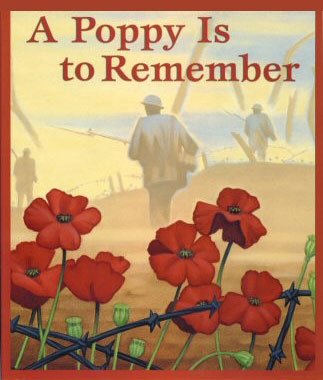
In Flanders fields the poppies blow
Between the crosses row on row,
That mark our place; and in the sky
The larks, still bravely singing, fly
Scarce heard amid the guns below.We are the Dead. Short days ago
We lived, felt dawn, saw sunset glow,
Loved and were loved, and now we lie
In Flanders fields.Take up our quarrel with the foe:
To you from failing hands we throw
The torch; be yours to hold it high.
If ye break faith with us who die
We shall not sleep, though poppies grow
In Flanders fields.Lieutenant Colonel John McCrae, MD Canadian Army Medical Corps (1872-1918)
Here is Mark Knopfler’s wonderful song “Remembrance Day” from his Get Lucky album, set to a slideshow of British and Canadian images from World War I through to more recent conflicts put together by Bob Oldfield:
Comments Off on In memoriam
November 9, 2025
North Africa Ep. 7: Hitler says No! Rommel doesn’t care!
World War Two
Published 8 Nov 2025Rommel is called to Berlin, where he’s told to wait until May and settle for Benghazi, but he rejects that plan and decides to strike sooner. In Cairo, Wavell reads ULTRA decrypts and realizes the Luftwaffe is preparing something, while admitting he has almost nothing left to hold Cyrenaica. On the ground, the Australians storm Giarabub in a sandstorm, El Agheila is snatched after a botched British ambush, and Rommel orders preparations to hit Mersa Brega before the British can dig in.
(more…)
Comments Off on North Africa Ep. 7: Hitler says No! Rommel doesn’t care!
November 6, 2025
Lines of Fire: Operation Market Garden Part 1 of 2 – WW2 in Animated Maps
TimeGhost Cartographic
Published 5 Nov, 2025September, 1944. Soviet forces push ever westwards, slicing their way through Poland en route to Berlin. In the west, the Allies have made great strides after the invasion of Normandy, but now face a winter of relative stagnation as supply issues threaten to undercut their momentum. At this time, British Field Marshal Bernard Montgomery believes has a plan to carve a corridor through occupied Netherlands and get his forces into Germany within days, striking at the heart of the German war economy, and maybe, just maybe, ending this war before 1945 dawns. In Part 1 of 2, we look over the plan, the forces involved, and the colossal effort required to make Monty’s vision a reality.
00:00 Intro
01:12 Background
04:40 Planning
07:07 Disposition of Forces
09:05 Geographic Overview
11:30 Conclusion
(more…)
Comments Off on Lines of Fire: Operation Market Garden Part 1 of 2 – WW2 in Animated Maps
November 4, 2025
The Bear Who Beat the Nazis | Wojtek
The Rest Is History
Published 29 Jun 2025The story of Wojtek — the bear who took on the Nazis — amidst the death and devastation of the Second World War, and more specifically Poland’s heroic resistance, is a flicker of redemption amidst an otherwise deeply depressing period of history. His is a life that exemplifies not only Poland’s struggle in microcosm, but also the global nature of the war overall. Discovered by a young boy as a tiny cub, his mother dead, he was sold to Polish officers travelling to Palestine in the hills outside Tehran. The soldiers nursed and fed the young bear with milk from a vodka bottle, treating him like one of their own. Later, he was even purported to keep them warm at night, drink beer, delight in wrestling and showers, and both march and salute. When the Polish forces were finally deployed to Europe, “Wojtek” as he had been named, went with them; a mascot and morale booster to the men. There he was given military rank, and actively participated in the Italian campaign, carrying ammunition and artillery crates. But with death and destruction on all sides, what would be his fate?
Join Tom and Dominic as they discuss Wojtek, one of history’s most extraordinary animals, and his life in the army — an emblem of hope and resilience in the face of the horrors of the Second World War.
(more…)
Comments Off on The Bear Who Beat the Nazis | Wojtek
November 3, 2025
Swedish Kulspruta m/36 Double Browning MGs
Forgotten Weapons
Published 18 Jun 2025Despite being a neutral power during World War Two, Sweden had a variety of very interesting small arms — like their dual-mount Browning m/36 machine guns. These were originally adopted because the Swedes wanted a heavier medium MG cartridge and didn’t think their delayed-blowback Schwarzlose guns could handle it. The cartridge was 8x63mm, pushing a 219 grain projectile at 2500 fps. The m/36 Browning was a water cooled gun, an improvement on the older M1917 design. It not only handled the powerful new round, but it could also be easily swapped to the older 6.5x55mm round to use stocks of existing ammunition (and it would be later adapted to 7.62mm NATO as well). Most of the guns were built as matching pairs for antiaircraft use, with mirrors left and right side feeds and in effective recoil-absorbing cradle mounts.
Special thanks to Bear Arms in Scottsdale, AZ for providing access to this rare pair of guns for today’s video!
(more…)
Comments Off on Swedish Kulspruta m/36 Double Browning MGs


