
Forgotten Weapons
Published 25 Aug 2025The Soviet Union decided to adopt a 50mm light mortar in 1937 as a company-level armament. The first such weapon they used was the RM-38, introduced in 1938. It was a complex design, with a gas venting system to adjust range (200m – 800m), a bipod specifically set to either 45 or 75 degrees, and a recoil buffering system. This was clearly too complex, and it was replaced by the RM-39 the next year. This remained a well-made mortar, but now had a freely adjustable bipod. However it quickly proved too complex and expensive and it was in turn replaced by the RM-40.
The RM-40 is a much more efficient (aka, cheap) design. It used simple stamped bipod legs and a heavy stamped baseplate. It still uses adjustable gas venting to set range and retains a simplified recoil buffer, but it is a much more quickly produced weapon. A 1941 model of completely different design did replace it though, and by 1943 the Soviet Union moved to 82mm mortars for better effectiveness.
The Soviet mortars were generally well liked by German troops who captured them, as they were significantly longer ranged than the German 50mm mortar. They were also captured in large numbers by the Finns, who used them as well but found them underpowered. In 1960 some 1,268 Soviet 50mm mortars of all models were sold by the Finnish Defense Forces to Interarms to be imported into the US. Some were registered and sold as Destructive Devices and some were deactivated and sold as dummies.
(more…)
January 21, 2026
Soviet World War Two 50mm Light Mortars (RM-39 & RM-40)
January 19, 2026
King Tiger V2 – Inside The World’s Oldest Tiger II
The Tank Museum
Published 26 Sept 2025King Tiger V2. It’s the oldest surviving King Tiger in the world. And it’s also the only King Tiger that survives with the unusual pre-production turret. This has, in the past, been referred to as the “Porsche Turret”. But why? And why did they change the turret on later models?
There are many misconceptions and rumours about this tank – the most common of which that the turret was built by Porsche. It wasn’t. How did it end up on this tank? Well, that’s a bit of a confusing story, but it was basically down to Krupp and Henschel working on a winning design.
The production of King Tiger would begin with three prototypes: V1, V2 and V3 – and the V stands for Versuchs, the German word for trial. V1 was a mild steel prototype that was used for demonstrations, and V3 was used as an engine test rig. V2, however, was retained for testing by Henschel and was captured by the US Army before being handed over to the British.
V2 left Germany in one piece, but by the time it reached Bovington in 1952 a number of parts had gone astray – most notably, the gearbox! King Tiger V2 is now a star of The Tank Museum’s collection, and the team have now begun to assess whether a restoration might be possible…
00:00 | Introduction
02:37 | Is it a Porsche?
06:15 | Krupp Gets Lucky
12:52 | V2: Today and Tomorrow
17:34 | V2: The Future
(more…)
January 18, 2026
OSS Lockpick Pocketknife for Secret Intelligence Operatives
Forgotten Weapons
Published 23 Aug 2025In early 1944, the Office of Strategic Services purchase 1,000 specialized pocketknives made by Schrade. Instead of regular blades and tools, these were lock picking knives, with one small blade, three different picks, and two rakes. Able to easily pass as a normal pocketknife on casual inspection, nearly all of them were issued out to OSS Secret Intelligence agents across the European, Mediterranean, and Far Eastern theaters of operation. Today only a few are known to survive …
OSS Equipment Catalog from Headstamp Publishing:
https://www.headstamppublishing.com/p…CIA Equipment Catalog from Headstamp Publishing:
https://www.headstamppublishing.com/p…
(more…)
January 13, 2026
The History of SPAM
Tasting History with Max Miller
Published 22 Jul 2025Sliced SPAM layered with cream cheese filling, sliced and served with potato salad and tomatoes
City/Region: United States of America
Time Period: 1951SPAM. The iconic canned meat product. Beloved by some, reviled by others, SPAM was buoyed by a very successful marketing blitz by the Hormel company starting in the 1930s. There were radio and magazine ads, The Hormel Girls (a singing group), and recipes.
I’m not the biggest fan of SPAM, and this recipe turned out way too salty for me. If you want to make the historical recipe, go ahead and follow it, but I would personally opt for the reduced sodium SPAM and cut out the salt in the cream cheese mixture. If you like SPAM, definitely try this out! It’s super flavorful, but it’s just not to my taste.
Tender, pure-pork SPAM joins with a zesty cream cheese mixture for memorable eating. Serve for supper or lunch — or as a noteworthy appetizer.
SPAM ‘n’ Cheese Ribbon Loaf
Cut in 8 slices……1 whole SPAM
Mix together……1 (3-oz.) package cream cheese (softened with a little milk)
1 tsp. lemon juice
1 tsp. grated onion
1 tbsp. minced parsley
1/4 tsp. salt
Spread between……slices of SPAM
Chill……4 hours (or longer; overnight if desired). Slice and serve. Good with deviled eggs or potato salad.Economical all-meat buy! No bone, no waste. SPAM is all meat … juicy pork shoulder and mild, tender ham, with Hormel’s unequalled seasonings.
— Hormel advertisement, 1951
January 6, 2026
Woodworking was WORK. What happened?
Rex Krueger
Published 5 Jan 2026Patrons saw this video early: / rexkrueger
Join the Mailing List: http://eepurl.com/g3rkmv
Take a course: https://www.rexkrueger.com/courses
Compass Rose Toolworks: https://www.compassrosetools.com/
Get my woodturning book: http://www.rexkrueger.com/book
Get My Book, Everyday Woodworking: https://amzn.to/3oyjC0E
Follow me on Instagram: @rexkrueger
January 4, 2026
December 26, 2025
Allied Bombing 1944 – Distraction and Destruction before Dresden
HardThrasher
Published 25 Dec 2025Hello my little Christmas puddings; today’s film covers the strategic bombing forces in WW2, what they did to support Operation Overlord, the aerial war across France and into Germany during 1944, taking out enemy formations, V1 and V2 sites, and breaking up the Nazi oil fields in the process. But all did not go according to plan … this is the inbetweeny bit from June – December 1944 and the part everyone forgets before the Bulge, Dresden and all that …
00:00:00 – Introduction
00:01:12 – A Word From Our Sponsor
00:03:25 – A Few Notes For New Viewers
00:04:02 – How End A War
00:06:25 – A 90 second (well 6 minutes) Recap of the story so far
00:12:15 – On With The Show
00:18:40 – The Key Players
00:20:10 – Enter Trafford Leigh-Mallory
00:24:05 – Trafford in Charge At the AEAF
00:26:15 – The Strategic Bombers Role In D-Day
00:27:29 – The Bombers As Part Of The Deception Plans
00:28:18 – Cutting Off Normandy
00:29:41 – The V1s, Poison Gas and Biological Warfare
00:37:31 – The One True Raid To End The War
00:41:50 – Self Harm in Normandy (It’s Trafford Time Again)
00:52:04 – Focus On Oil – Why, How and What Happened in 1944
01:05:00 – And on to Dresden
01:05:25 – Survivor’s Club
(more…)
December 25, 2025
Bing Crosby’s “White Christmas” is still the best-selling single of all time
I knew Bing Crosby was big with my parents’ generation (including my father, unusually, who generally had little time for American singers), but I didn’t know that Bing’s recording of “White Christmas” is still, after all these years, the top single. Ted Gioia has more:
Pop culture devours its own. The destiny of all bestsellers is to fall off the charts. Even the stars in Hollywood, like those in outer space, eventually stop shining — and it happens a lot sooner.
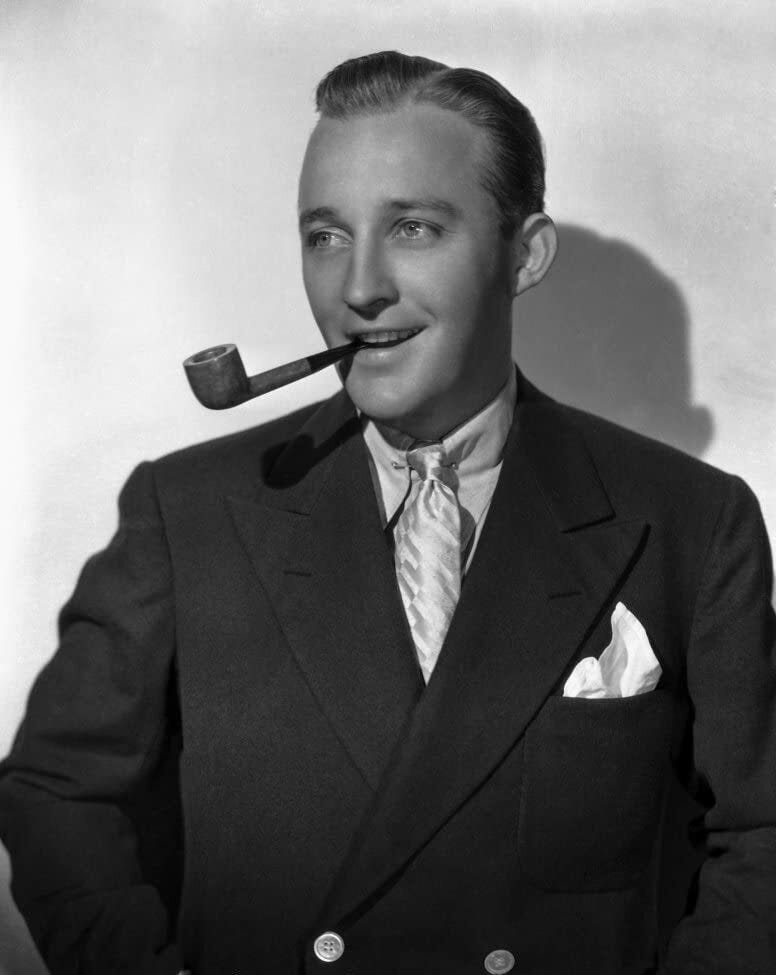
Consider the case of Bing Crosby. Some of my readers might not even recognize the name. But a few people still alive today can recall when Crosby was both the biggest pop singer in the world and the hottest movie star in Hollywood.
Bing Crosby publicity photo from the 1930s via The Honest Broker
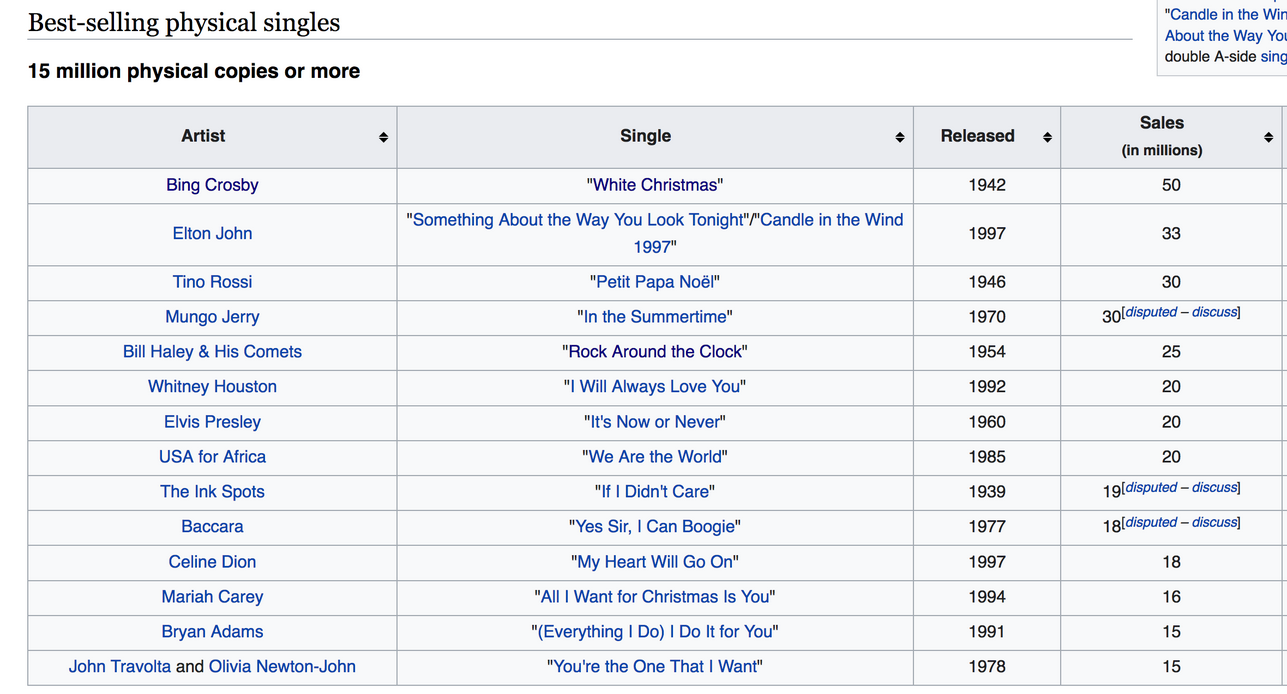
If he’s remembered nowadays, it’s only during December, when his version of “White Christmas” briefly returns to heavy rotation. Even today, it ranks as the bestselling single of all time. There aren’t many records that last eighty years, and least of all in the record business, but Crosby still sits atop this chart.
Here it is (courtesy of Wikipedia):
I’ve written about Crosby before, and will again. But today I want share four of my favorite (and very different) perspectives on Bing.
December 18, 2025
A 2025 Update from the Canadian Tank Museum
The Chieftain
Published 13 Dec 2025When up at the Canadian Tank Museum a whiles back, I caught up with Sam to find out what’s been going on up there and what’s coming soon.
December 12, 2025
Re-orient your map to understand China’s view of the world
CDR Salamander provides a helpful guide to seeing the world, specifically their Pacific front, by turning your map sideways. I hope you won’t look back on this from a slightly later date when the maps get all flaggy and arrow-y:
I first saw this map three years ago, and it recently resurfaced in my thoughts.
I remain convinced that a lot of the problem with trying to get everyone to fully understand the challenge in the Western Pacific is that to a large part, we think in a “north-up” orientation.
I don’t think that is all that helpful.
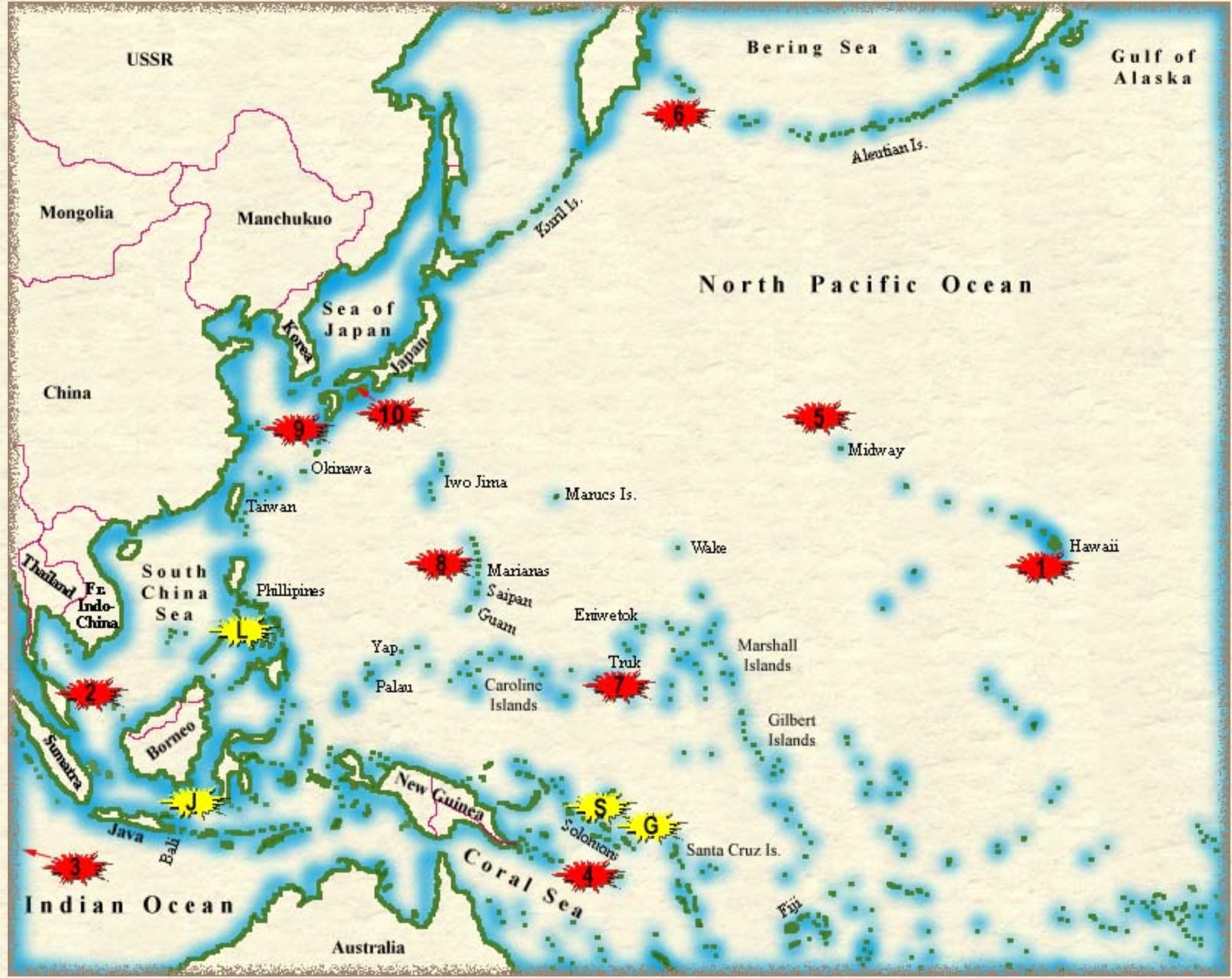
Just a few days ago, we had another Pearl Harbor Day anniversary and we’ve all seen the maps, usually centered on Hawaii, where the Imperial Japanese Navy’s Kidō Butai comes at the Pacific Fleet from stage left off the map. Then we fought battles in the Coral Sea, Midway, and so on.
To the lay eye — or to those who don’t have time to dig into the reasons — a traditional north-up map looks disjointed; things seem all over the place.
No, not really. Let’s bring back that first map.
[Click to embiggenate]
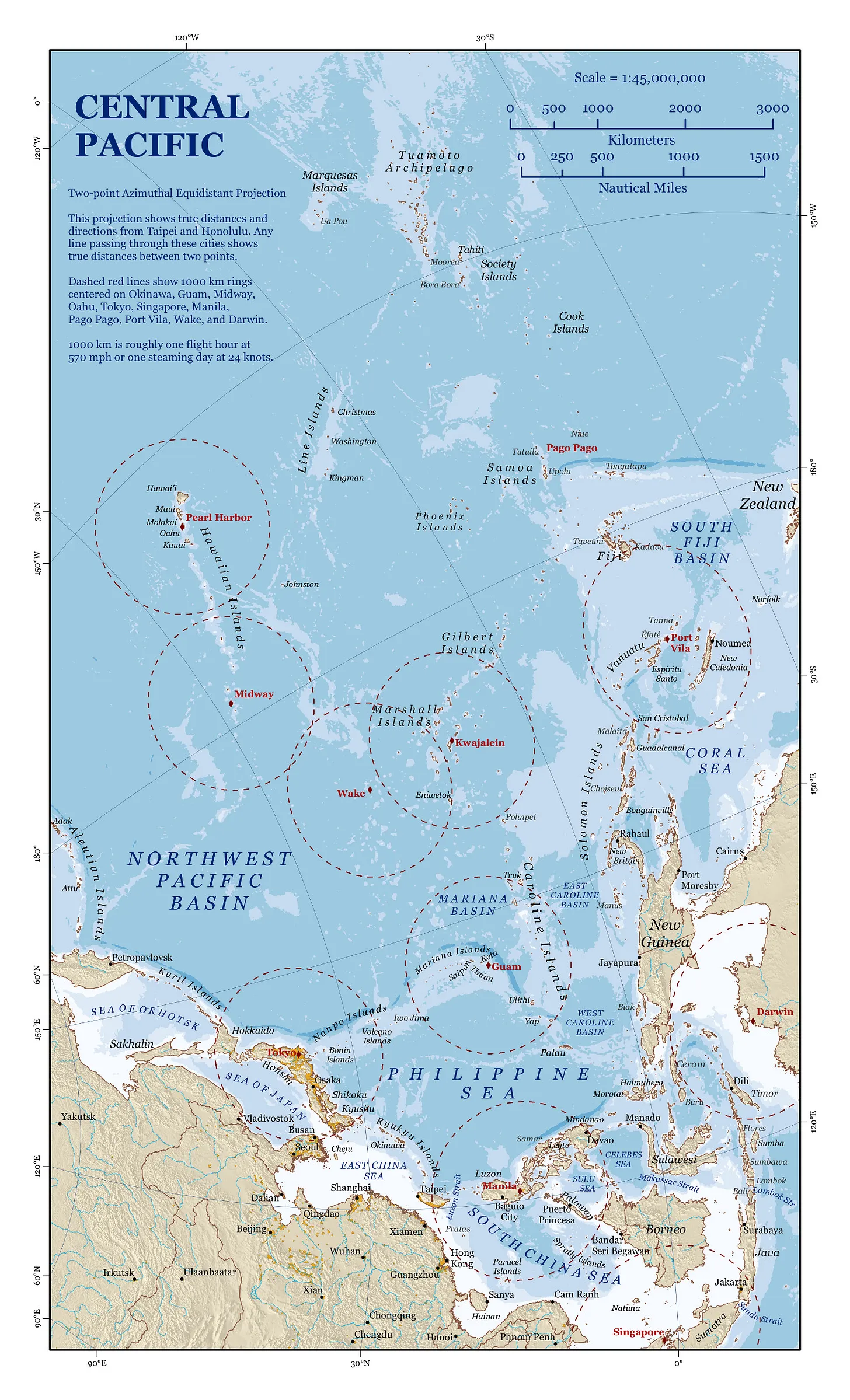
For both Imperial Japan in the early-mid 20th century and Communist China today, the most important part of this map is the access to the resources in or going through the bottom-right hand corner.
Today’s greatest bone of contention — not unrelated to the most important part of the map mentioned above — is Taiwan, right at the mouth of the funnel.
If we need to bring a fight there, that is one hell of a fight to get there if the People’s Republic of China (PRC) wants to prepare a proper welcome for us.
For the PRC, the primary military threat to plan for comes across the Pacific into a funnel that terminates at its most important SLOC. It’s the United States of America, and the US has a series of islands leading right into the heart of the PRC’s. It starts in Hawaii — Midway, Wake, Guam — and then to U.S. allies: the Philippines, Japan, and Australia.
They’re planning a layered defensive fight. Their actions make that clear.
Make no mistake, we may say we are going to “defend Taiwan”, but to do that we will have to fight an aggressive war across the Pacific, into the enemy’s prepared funnel.
Update, 13 December: Welcome, Instapundit readers! Please do have a look around at some of my other posts you may find of interest. I send out a daily summary of posts here through my Substack – https://substack.com/@nicholasrusson that you can subscribe to if you’d like to be informed of new posts in the future.
December 11, 2025
Lines of Fire: Operation Market Garden Part 2 of 2 – WW2 in Animated Maps
TimeGhost Cartographic
Published 10 Dec 2025September 17, 1944. A slight morning fog over Britain gives way to clear skies, as the first of hundreds of Allied aircraft leave the ground to execute the largest airborne operation ever attempted. Will Montgomery’s gamble pay off? Or are the Germans in the Netherlands far less beaten than he believes? Last time out we covered the planning, rationale, and logistics of the idea. Now, watch it unfold from beginning to end, map by map.
(more…)
Britain’s Top 10 UGLIEST Aircraft
Rex’s Hangar
Published 13 Aug 2022Today we take a look at the top 10 ugliest aircraft every to grace the skies of the United Kingdom. Some were failures, some were hugely successful, but all were lacking in the good looks department, lets check out these ugly planes!
(more…)
December 9, 2025
Krieghoff’s Bizarre Prototype FG42 Proposal
Forgotten Weapons
Published 23 Jul 2025When the Luftwaffe was looking for its new universal paratrooper rifle, six different German arms companies were asked to submit proposals. Only two actually did; Krieghoff and Rheinmetall. Krieghoff designed this very interesting system, clearly optimized to reduce weight and length as required by the design brief. It uses a tiny vertically traveling locking block and an unusual gas trap system combined with an under-barrel piston. The total number made is unknown, but both fixed- and folding-stock models were produced (the German museum at Koblenz has a fixed-stock example on display). This particular example appears to have been tested after the war by engineers at Springfield Armory by drilling a hole in the gas tube to measure pressure while it cycled.
Thanks to the Springfield Armory National Historic Site for giving me access to this rare prototype from their reference collection to film for you! Don’t miss the chance to visit the museum there if you have a day free in Springfield, Massachusetts:
December 8, 2025
Eating aboard a US Submarine during World War 2
Tasting History with Max Miller
Published 1 Jul 2025Slow-cooked steaks with tomatoes and onions with mashed potatoes and gravy
City/Region: United States of America
Time Period: 1945Being a crew member aboard a submarine during World War II was one of the most dangerous jobs in the US military with a fatality rate of over 20%. This, and the extremely cramped and uncomfortable quarters, were why the food aboard a US sub was really good. If nothing else, at least you had delicious food to keep you going.
These steaks cook up to be fall-apart tender and delicious, and the mashed potatoes have wonderful flavor, even if the texture is a little different from regular mashed potatoes. They kind of remind me of the mashed potatoes I’d get as a kid in school, which were also probably made from dehydrated potatoes.
SWISS BEEF STEAKS
Portion: 1 (6-ounce) steak.
100 PORTIONS
Beef, bone-in……60 pounds
OR
Beef, boneless……42 pounds
Flour……2 pounds……1/2 gallon
Salt……6 ounces……3/4 cup
Pepper……1/2 ounce……1 3/4 tablespoons
Fat……2 pounds……1 quart
Tomatoes……12 pounds, 12 ounces……2 No. 10 cans (6 1/2 quarts).
Onions, sliced……6 pounds……4 1/2 quarts
Salt……1 ounce……2 tablespoons
Flour (for gravy)……1 pound……1 quart
Water, cold……
Cut meat into 6-ounce steaks 1 to 1 1/2 inches thick.
Sift together flour, salt and pepper. Pound into steaks.
Cook steaks in fat until browned on both sides. Place in roasting pans.
Add tomatoes. Cover with onion slices. Sprinkle with 1 ounce salt.
Cover pans. Cook in slow oven (300°F.) 3 hours or until steaks are tender.
Drain liquid from Swiss steaks. Make a paste of flour and water. Stir into steak liquid. Cook until thickened. Pour over steaks. Reheat.MASHED POTATOES (Using dehydrated, shredded potatoes)
Portion: Approx. 4 1/2 ounces (approx. 2/3 cup).
100 PORTIONS
Water……5 pounds, 8 ounces……2 gallons
Potato shreds, dehydrated, precooked……5 pounds……2 gallons
Salt……3 ounces……6 tablespoons
Milk, liquid, hot……3/4 gallon
Butter, melted……1 pound……1 pint
Heat water to vigorous boil. Pour over potatoes. Cover.
Let stand in warm place 15 minutes or over low heat 10 minutes.
Add salt. Stir vigorously 15 to 20 minutes or until smooth.
Add milk and butter. Whip until light. Serve immediately.
— The Cook Book of the United States Navy by the United States Department of the Navy Bureau of Supplies and Accounts, Washington, D.C., 1945
December 6, 2025
Battle of Tarawa, 1943
Real Time History
Published 5 Dec 2025The Marine and US Army landing on the Tarawa Atoll’s Betio and Makin islands were the first operations in the new Central Pacific front of the Pacific War. Tarawa was one of the deadliest amphibious landings for the Marine Corps which hadn’t yet perfected such complex operations. But the lessons learned at Tarawa would already be applied a few months later at Kwajalein and Eniwetok.
(more…)


