
Right wing Americans need their own version of consciousness raising and appreciating the “different ways of knowing” marginalized white Americans and right wingers have.
We’ve been trained by generations of left wing television, schooling, and academia to defer and treat the most noxious and stupid bleatings of uninformed women, non-whites, gays, and religious minorities as sacrosanct pieces of insight we’re supposed to wrestle with … whilst at the same time we’ve been treated to presume any white male over a certain age with unusual mannerisms or a disregard for left wing shibboleths is dangerously low status and deranged, when in reality it is the opposite.
Looking at the past 50-60 years, the Grumpy Granddads, hilly-billy mystics, and aging conspiracy theorists have consistently been more right than the mainstream.
If in 2002 you had to pre-commit to believing everything Alex Jones said, or everything CNN said for the next 20 years … You’d have been a fool to pick CNN. Indeed if you took their diet and medical advice you’d probably be dead.
The Archie Bunkers and Deryl Gribbles have consistently been years ahead of the mainline right for seeing the truths of the regime.
Now obviously like Greek heroes consulting the oracle at Delphi, or spirit questers visiting shamans … you have to assume you won’t understand half of what they say, most of it will fly over your head, and a good chunk probably isn’t even meant for you but the other spirits in the room …
But the signal to noise ratio of our hermits and kooks are thousands of miles beyond whatever left wing diversity chicks are getting from the native grifters they entertain at their campus events or the black “we wuz” consciousness raisers they shovel money at.
The old white shamans have been resisting the government since decades before you were born and they remember the all the little episodes official history likes to forget.
Like a young a adept consulting an old sage or a seeker consulting an old monk do not say “I don’t believe that” instead say “Hmm …” or “I am not yet that far down the path”.
Kulak, “The Myth of the Stupid Right”, Anarchonomicon, 2024-03-28.
June 29, 2024
QotD: The kooks and conspiracy theorists have a better track record than CNN
June 28, 2024
Japan Decides on Peace – Are They Too Late? – War Against Humanity 137
World War Two
Published 27 Jun 2024The US bombers continue destroying Japanese cities with a rain of firebombs. As the country burns, the Japanese leadership and Emperor Hirohito finally realise they must seek peace.
(more…)
The weird and the W.E.I.R.D. gather at Vibecamp
Kulak, just back from a road trip to visit two pretty far offbeat gatherings, writes about what she heard and saw at Vibecamp:

VibeCamp is maybe the extreme intersection of Rationalist, Post-Rat, Effective Altruism, Silicon Valley, Quant Finance, and 5-10 other Cyber-Left, Grey-Tribe, autistic-centrist, techno-optimist blogging/twitter world. […]
Given that setup you could probably imagine the two overwhelming facts about Vibecamp:
- With rare exception everyone in attendance was shockingly intelligent. At random points throughout the festival I was having deep dive conversation on the geostrategic situation in Israel, the effects of Interest rate increases on venture capital, early 20th century Canadian poetry, and the fate of the petrodollar and the nature of Foreign Exchange markets.
- With rare exception everyone in attendance was incredibly weird. Some in very obvious ways visible at 100 paces, some in little uncanny ways it might take you an hour to isolate and identify.
[…]
The shape of the people jumps out at you. There were an incredible number of normal and average looking people, and a much lower portion of obese and Amerifat body-types than almost anywhere else in the US… Perhaps owing to the extreme intelligence and incomes of those involved … But in about 30-45% of people in attendance there’s just some unusual distortion of body proportions that would be remarkable and memorable encountered in an individual, but when assembled together gave the White and Jewish attendees (a combined 90+% of the total) the look that they were all descended from some unusual gothic ethnicity you couldn’t quite put your finger on. Some strange isolated country bordering The Netherlands, Ireland, Estonia, Romania, and the Basque region of Spain … That they’d all come from whatever part of the old country the Adams Family comes from.
[…]
These unusual heights (or lack there-of) were exaggerated by recurring extremes of bodyfat percentage, with several of the attendees (male, female, and between) having a spider-like absence of body fat entirely denoting some unusual hormonal profile expressed in a true kaleidoscope of personalities and interests.
This was expressed most keenly in the faces in which latent autism, and the aforementioned hormonal oddities, were expressed in large eyes and other unusual features, resting positions, and expression creases. Which weren’t all necessarily unattractive, but gave most of the women (and a good percentage of the men) a rather spaced out looks which remained somehow unique in each instance … As if they were all on another planet, but each a very different one from the one each other was on.
Thankfully with psychedelics and other pharmaceuticals they seemed able to meet up on a few mutually agreeable worlds.
[…]
Vibecamp attracts a great deal of biohackers and supplements freaks. Men, women, and others of extreme nutritional theories … and while some of them look like their theories haven’t panned out (the vegans) some look like they’ve discovered the Holy Grail.
This extreme bifurcation and assemblage of extremes was expressed right down to their vehicles… Walking through the parking lot there were $100,000 CyberTrucks and sportscars, whereas 1-2 cars down the line from them there were vehicles practically ripped apart with the engine showing under bodywork that’d long ago been scattered across some guardrail, reassembled just enough to (somehow) get back on the road but with not a dime spent on restoring it’s appearance. This wasn’t 1 car, this was a TYPE of car at the festival. Denoting in the owners some combination of MacGyver resourcefulness, Chadlike indifference, autistic obliviousness, and Victorian Frugality that I can’t but admire … (Or I suppose, possibly, extreme motor impairment. I don’t know that these accidents didn’t happen ON THE WAY to the festival)
[…]
The broken heterosexual male-nerd anxiety and tentativeness around sex and other forms of human interaction and intimacy could be cut with a knife … And it wasn’t like everyone had all been corralled and lectured night one or anything of the sort, somehow this broken progressive Dysgenic (actively failing to generate) culture had infected the urban male technological elite, from Bay Area techfounders, to New York Medical Experts, to DC Military Industrial Complex people, to British Forex Traders, to Dutch and Australians visiting the US for the first time … All of them had had that instinctive flinch trained into them … Some of the Wealthiest, Oddest, Most intelligent, and a small handful of the most attractive men in the world … had all been broken like horses, to flinch and start moving the minute the riding crop is grabbed.
Heartbreaking.
There’s an irony that the places which most engage in therapy language and most proudly proclaim their “acceptance” are almost always the most unforgiving … My friend continued to crash VibeCamp events after they tried to kick him out, and he might have been one of the only people in VibeCamp history to start dating a girl at the festival … (not a man to receive a priestly censor), but the sensitive nerdy men I encountered, with well meaning hearts and souls for poetry, hopeless.
So while I had a blast and enjoyed myself I certainly don’t expect it to be a culture that’s still there in 20-30 years, The people there will maybe produce 100-200 offspring in that time for every 500 that actually attended. If that.
QotD: “The personal is political”
Today, this has moved from simply not buying stuff from a business owned by a bad thinker to committing one’s life to destroying the bad thinker and anyone foolish enough to not share the same hatred. The whole woke movement is a blood lust, an effort to cause real harm to people by denying them the ability to live. Climate activism, as expressed in that essay, is about destruction. Everything the writer sees as keeping him from reaching personal fulfillment must be destroyed.
It is not a politics of self-interest, as the so-called conservative would imagine. The modern leftist is like a bear protecting her cubs. Any perceived threat is met with overwhelming aggression. You see it in the language. They conflate ideas and statements with actions. Holding a contrary opinion makes them feel unsafe, as that opinion is viewed as violence. They need safe spaces, by which they mean the removal of anything and anyone that contradicts their sense of self.
This is the real cause of what is behind the social media purges. From the perspective of a radical, everything in their space is theirs and an extension of their self. When a contrary opinion, or even an oblique reference to one, shows up in their twitter timeline, it feels like a home invasion to them. Those women posting about how they are literally shaking or sobbing because their favorite cable show had a bad person as a guest are not exaggerating. They were physically effected by the experience.
It’s an important thing the alt-right got wrong about their on-line activities. They still assume the reason they get thrown off these platforms is because their ideas are so powerful. In reality, their ideas are meaningless. The reason they are removed from the platforms is the same reason one would kill a snake. It’s not that the snake poses a threat to the ecosystem. It is that the snake is a personal threat. The person kills the snake because they can’t feel safe until they know it is dead.
The Z Man, “It’s Personal”, The Z Blog, 2019-11-12.
June 27, 2024
California’s Trudeau
In the New English Review, Bruce Bawer reviews Newsom Unleashed: The Progressive Lust for Unbridled Power by Ellie Gardey Holmes, a biography of California’s own Justin Trudeau:
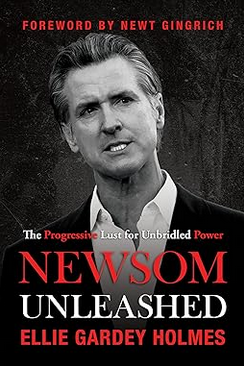
I’ve been appalled by Gavin Newsom for years, but to read Ellie Gardey Holmes’s powerful and unflinching new book Newsom Unleashed: The Progressive Lust for Unbridled Power is to find one’s contempt for this hideous creature skyrocketing. If he has any redeeming qualities, any special gifts, any attributes that might illuminate an admirable and recognizably human side, there’s no sign of them here. This is a man who, despite having no discernible talent for governance or anything else, was lucky enough to be born into one well-off family – his great-grandfather co-founded the Bank of Italy, which later became the Bank of America – and to be, from earliest childhood, a sort of honorary member of an even richer family, the Gettys, his father being best friends with oil magnate Gordon Getty, who was like a second father to young Gavin.
Both men, his biological father and his second father, used their considerable influence from the beginning to help Gavin rise to power. Indeed, as surely as any Kennedy or Bush, Gavin Newsom was born into a political machine and bred to be a politician. After he and Getty played a big role in helping Willie Brown to get elected mayor of San Francisco, Brown named Newsom to the city’s Parking and Traffic Commission. Soon he was promoted to the Board of Supervisors, a post he held from 1997 to 2004. “Because of his lack of qualifications,” writes Gardey Holmes, “Newsom entered office entirely indebted to Willie Brown”. Observers referred to him, in fact, as “an appendage of Willie Brown”. Quick sidebar in the midst of this tale of political advancement: when his mother was dying, Gavin was pretty much AWOL, although he was present when she underwent assisted suicide – which, at the time, was illegal in California. Others had been prosecuted for their participation in such actions; Gavin was not, a foreshadowing of many other occasions on which he would be treated as exempt from the rules governing the behavior of ordinary mortals.
In 2003 he was elected mayor. One of his first acts was to authorize the issuing of marriage licenses for same-sex couples, even though he had no power to do any such thing. He even performed some of the marriages himself. This cynical move (which even California’s two Democratic Senators, Dianne Feinstein and Barbara Boxer, opposed) was a cheap stunt, carried out at the expense of gullible gays, whose marriages were soon enough ruled invalid by the state Supreme Court – but it had the desired effect. It made him a national figure and it won him the esteem of the mainstream media. Bob Simon told him on 60 Minutes that he might well have “set a record for instant fame in this country”.
From the beginning of his life in “public service” – that laughable term – Newsom’s vanity and ambition were flagrantly palpable. Although the New York Times described him during his mayoralty as the subject of “local adoration”, some San Francisco insiders resented his brazen focus “on self-aggrandizement and personal publicity” and his relative indifference to the city’s growing problems on a variety of fronts. Routinely, he stole credit for other people’s initiatives and acted as if he were exempt from the rules. A police officer drove him to his wedding in Montana in his official SUV – a definite no-no.
After two terms as mayor he had his eye, naturally, on the Governor’s Mansion – but polls convinced him to run for Lieutenant Governor instead. He spent two terms in that job, too, but hated it: he had no real power, no real staff, no real budget, and he felt disrespected by his boss, Jerry Brown. The initiatives he did support were destructive “progressive” bilge of the first water: for example, he was the only statewide elected official to support Proposition 47, which converted many felonies to misdemeanors, helping to set off the still ongoing rash of shoplifting that has made San Francisco, particularly, an international joke. For the most part, however, instead of addressing the state’s problems he put his energies into enhancing his national profile. He became a fixture on shows like Real Time with Bill Maher. He also wrote – or at least signed his name to – a book calling for the transformation of government by means of “digital technology”; the book’s argument didn’t make much sense, and even Stephen Colbert, usually a reliable left-wing shill, dismissed it as “bullshit”.
And then, inevitably, in 2019, Newsom became governor, thanks in no small part to massive donations from the Gettys and Pritzkers and his role as “the darling of the upper class”. California was already on the skids, but Newsom accelerated the process. He pulled National Guard troops from the southern border, saying that “[t]he border ’emergency’ is a manufactured crisis and California will not be part of this political theater”. He even had the state sue President Trump over his border emergency declaration, which according to Newsom was nothing but an expression of “division, xenophobia, [and] racism”. Instead of canceling one of the state’s notorious boondoggles – the program to build a staggeringly expensive high-speed rail line from San Francisco to San Diego – he shortened the planned route, so that the trains would run only between Merced and Bakersfield. This made the rail line an even more ridiculous proposition, but Newsom’s priority was not to provide a useful means of public transportation but to keep the state from having to return the federal money appropriated for the project to a government run by Donald Trump, who from the beginning of his governorship Newsom singled out as his personal enemy – an action that profoundly enhanced his popularity among California Democrats. Indeed, instead of seriously dealing with California’s jobs and education crises, Newsom focused relentlessly on attacking Trump. A hundred days into his governorship, he bragged childishly that California was “the most un-Trump state”.
QotD: Televised debates
Nick Gillespie, “Bob Novak: ‘That’s Bullshit … Goodnight, Everybody!'”, Hit and Run, 2005-08-05.
June 26, 2024
The Korean War Begins – Week 1 – June 25, 1950
The Korean War by Indy Neidell
Published 25 Jun 2024Despite the fact that there have been clear signs that they might soon invade South Korea, when the North actually does in force on June 25th, 1950, it comes as a complete shock to the world. But is this a full invasion, or just cross border raids such as there were in 1949? And is there something more behind this? Stalin’s Soviets? Mao’s Chinese? And how will the world react? Find out this week as our week by week coverage of the war begins!
(more…)
June 25, 2024
“Nigel Farage’s sin […] was to tell the truth which our rulers and their bought, sycophantic media are desperate to hide from us”
As the British general election rumbles into its final days, most media outlets reacted very strongly to Nigel Farage’s willingness to break with the narrative over the outbreak of the Russo-Ukrainian war:
Nigel Farage has really got the elites and their prostitute mainstream media panicking, this time by being the only politician who dares tell the truth about the origins of the Russia-Ukraine war.
First let me stress that I am not condoning Putin’s invasion of Ukraine. But Putin has made it very clear for at least the last 15 years that he saw Ukraine and Georgia, which both have long borders with Russia, joining Nato as an existential threat to his country and warned “not an inch eastwards”.
The West arrogantly ignored Putin’s warnings. That was dumb.
At a conference in April 2008, where Putin was invited to address Nato leaders, he warned that inviting Ukraine and Georgia to join Nato, and thus parking Nato troops and missiles directly on Russia’s borders, would be seen as an existential threat to Russia’s security. This was even reported in the BBC’s in-house rag, the Guardian, on April 4 2008: “The Russian president, Vladimir Putin, today repeated his warning that Moscow would view any attempt to expand Nato to its borders as a ‘direct threat'”.
In December 2021, Putin yet again warned the West that allowing Ukraine and Georgia to join Nato would be unacceptable, in the first minute of this three-minute video. In this video Putin (sensibly in my opinion) asks whether the US would allow Russian troops and missiles to be positioned along its borders with Canada or Mexico and reiterates his “not an inch eastwards” threat.
Yet in January 2022, the US presented its written response to Russian demands on Ukraine not joining Nato and on Nato troops being withdrawn from Romania and Bulgaria, but made clear that it did not change Washington’s support for Ukraine’s right to pursue Nato membership, the most contentious issue in relations with Moscow.
The reply, which was delivered to the Russian Foreign Ministry by the US ambassador in Moscow, John Sullivan, repeated the US offer to negotiate with Russia over some aspects of European security, but the Secretary of State, Antony Blinken, said the issue of eventual Ukrainian membership of the alliance was one of principle.
Blinken was speaking hours after his Russian counterpart, Sergei Lavrov, threatened “retaliatory measures” if the US response did not satisfy the Kremlin.
“Without going to the specifics of the document, I can tell you that it reiterates what we said publicly for many weeks, and in a sense for many, many years. That we will uphold the principle of Nato’s open door”, Blinken said, adding: “There is no change. There will be no change.”
June 24, 2024
Raise a glass of your favourite microbrew to … Jimmy Carter?
Glenn “The Instapundit” Reynolds visits a local brewing festival in Knoxville and remembers what it was like before — of all people — Jimmy Carter began the process of deregulating the beer industry by legalizing homebrewed beer in 1978:
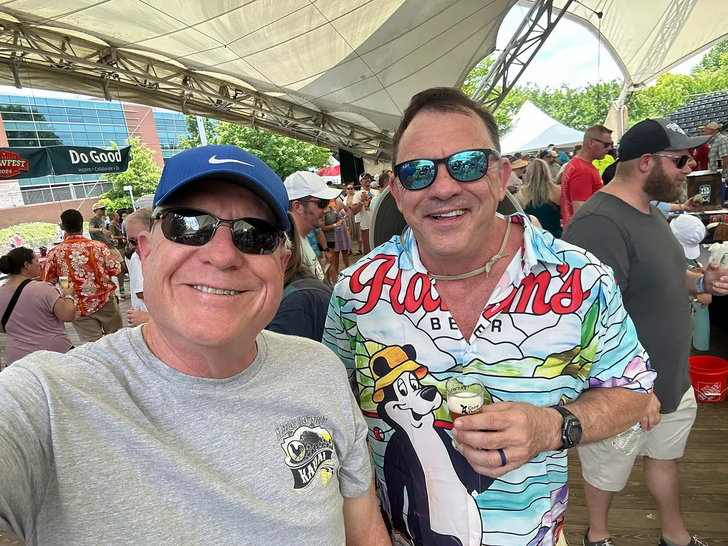
The Instapundit models his Hamm’s Beer Hawaiian shirt at a recent Knoxville beer festival.
This weekend I want to the Knox Brewfest at the Knoxville World’s Fair Grounds. As the name suggests, it was a collection of most of the local micro-breweries, each with a booth offering samples. (There were also a few bigger operations, like Sierra Nevada, Abita, and Paulaner). I wore my Hamm’s Beer Hawaiian shirt, which was a surprisingly big hit.
And there were some lessons, about which more later.
Hamm’s doesn’t really exist anymore except as a sometimes-produced minor product of Coors, which bought the trademark after it passed through the hands of numerous other companies. But it’s not forgotten!
The beer was good and the crowd was cheerful.
Mostly me, and my friend Jim (who I’ve known since junior high) were reflecting on the vast improvement in the world of beer in America, and particularly in Knoxville. As late as, oh, 1990 or so, you could go into almost any bar in Knoxville and if you asked what kind of beer they had you’d get an answer like this: “We’ve got everything! Bud, Bud Light, Miller, Miller Light, Coors, Coors Light – anything you want!”
It’s easy to take the craft-brewing revolution for granted, but it brought about huge changes and for the better. Nowadays, the beer scene in America tends to be better than that in Europe. No, really. In fact, one of my former research assistants, who practices law in Belgium now, brought over a couple of Belgian friends who wanted to see Tennessee. I met them for lunch at Barley’s in the Old City, to hear a bluegrass show and eat pizza and drink beer. They were very impressed with the fifty or so taps that Barley’s offers.
Back home they said, the bars are usually owned by the breweries and only sell their own brews, so you might have only three or four varieties, all from the same label. Nothing like this.
[…]
This deregulatory story started (like airlines and trucking deregulation) with Jimmy Carter of all people. Despite his (often true) reputation as a bossy micro-manager, he was an engineer and a rationalist. That worked out poorly in foreign policy, but led him to undo a number of irrational regulatory structures, one of which was the limit on home beer production. Carter signed a bill legalizing homebrewing in 1978, and those homebrewers were the nucleus of the craft beer movement a decade or so later.
June 23, 2024
California has “a governing class that wants you to give them power, then shut up and go away”
Chris Bray illustrates some of the many ways that California’s elected politicians are working to ensure that mere voters won’t interrupt their urgent and necessary work:

The Taxpayer Protection Act, a proposed referendum that got enough signatures to qualify for the November ballot, would have required voter approval for all new state and local taxes. State election officials agreed that it met the qualification threshold, and planned to put it before the voters. Democratic officeholders sued, with considerable support from public employee unions and interest groups, and the California Supreme Court ruled this week that the measure may not be placed on the ballot — because it improperly proposes to revise the state constitution, rather than merely amending it. You can watch them try to parse that distinction here, for seventy murky pages. You can change the state constitution through the referendum process, but you can’t change the state constitution through the referendum process. See, totally clear.
At the same time, California Governor Patrick Bateman is telling the organizers of a ballot measure that would increase penalties for drug and theft crimes — after a decade of sharply reduced penalties — that he’ll punish them by blocking criminal justice reform measures in the legislature unless they pull their measure from the ballot. The intended message is a very clear threat: If you insist on your ballot measure and lose at the polls, you’ll be punished with a complete blockade on your agenda through legislative means, for as long as we can manage it.
And a parental rights proposition that aimed for a place on the November ballot — falling short in its efforts to gather enough signatures — ran into a wall when the attorney general’s office assigned it a misleading label that would have described it to voters as a repressive measure that was intended to hurt children.
So a Progressive reform, the great 20th-century transition to direct democracy, is running into a progressive wall of resistance in the 21st century. California Democrats are fighting to limit the likelihood that voters will interfere with their agenda.
People outside California often shrug at the decline of the state, because Californians are just getting what they voted for. But that view misses a bunch of strangeness and ambiguity in a place that has tended to put Democrats in office, then limit their efforts with an ideologically inconsistent hodgepodge of conservative and libertarian ballot measures. The governor and the state legislature just sued to prevent their own voters, the people who sent them to public office, from voting on the new taxes they create. Democrats against direct democracy — a governing class that wants you to give them power, then shut up and go away.
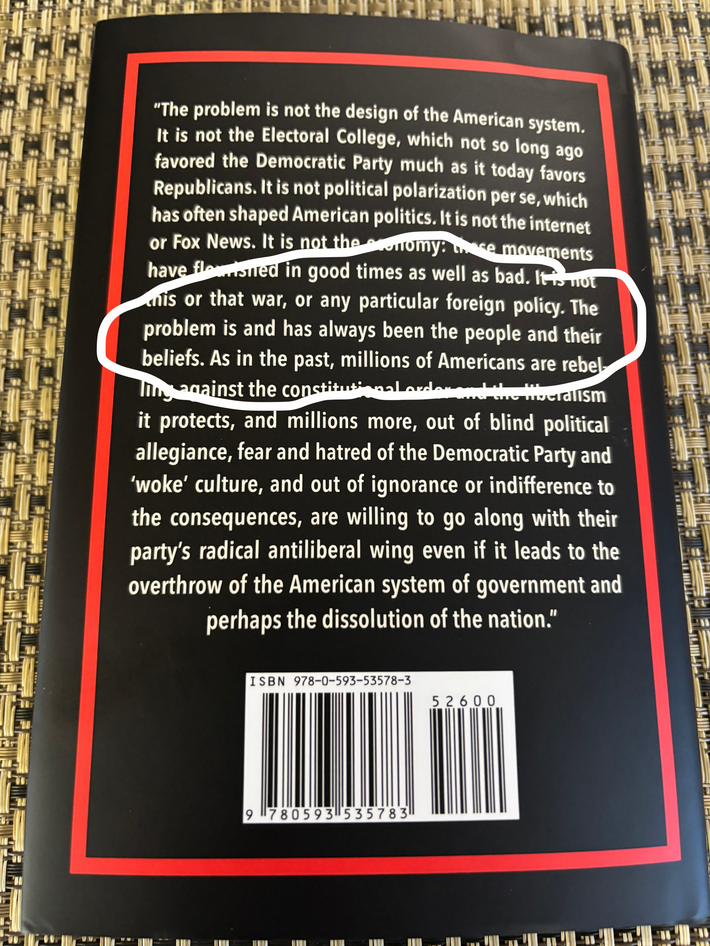
This is not merely a California problem. I wrote a few days ago about the scumbag Robert Kagan and his idiotic book warning that America is facing a rebellion. Here’s the back cover of the book, and I’ve used sophisticated media software to circle the important part:
“The problem is and has always been the people and their beliefs.” This is what the American governing class believes, now. See also the pro-democracy warrior Tom Nichols and his recurring theme about the repulsive people of an ignorant country. We need to protect democracy by getting all the trash that makes up the population to somehow go away and stop bothering their wise and benevolent betters.
The great point of cognitive slippage in American governance has been the degree to which Americans have been willing to vote for officeholders whose agendas they then try to block through lawsuits, referendums, and popular resistance. We’ve voted for shit sandwich over and over again, then declined to eat the whole sandwich. The governing class is now announcing that we’re no longer allowed to refuse the complete meal. You may not have a ballot measure on that.
In the near term, and in the medium term, that pivot leads to greater friction and accelerated decline. In the longer term, preventing people from limiting the aggressive failure of the governing class can only make that failure more apparent. Geological faults that have a lot of small movements release tension in a series of minor earthquakes; faults that can’t release tension through small movements eventually have one big one. We’ll eventually recognize the California Supreme Court’s decision this week as a Pyrrhic victory. There will be more of these, in a political system of increasing brittleness.
Okinawa Ends – WW2 – Week 304 – June 22, 1945
World War Two
Published 22 Jun 2024Mitsuru Ushijima’s forces are defeated and the Battle of Okinawa is officially over. However, since most of the Japanese fought to the death, victory comes at a bloody cost – over 50,000 US casualties and over 100,000 Japanese and also possibly that many Okinawan deaths. The fight on North Borneo continues, there’s a raid on Wake Island, and the Japanese powers that be meet to actually discuss making some sort of peace with the Allies.
00:00 Intro
01:25 Truman And The Interim Committee
05:00 Battle Of Okinawa
08:06 The End Of Okinawa
13:22 Raid On Wake Island
14:23 Battle Of North Borneo
15:33 Hirohito Wants Peace
16:54 Conclusion
(more…)
The Original Chef Boyardee Spaghetti Dinner
Tasting History with Max Miller
Published 13 Mar 2024Absolutely fantastic tomato and meat sauce served over spaghetti tossed with butter and parmesan
City/Region: Cleveland, Ohio
Time Period: 1930sChef Boyardee was not born in Cleveland (sorry, 30 Rock), but in Borganovo, just outside of Piacenza in Italy. And his name was not Hector Boyardee, but Ettore Boiardi (boy-AR-dee). He opened an Italian restaurant in Cleveland in 1924, where the food was so popular that he frequently sent patrons home with bottles of his spaghetti sauce.
We can’t know exactly what that original sauce was, but this is from a family recipe and is probably pretty close. And it’s phenomenal. It’s fairly simple, but so good. You get a lot of the fresh basil, and the creaminess from mixing the butter and parmesan directly with the pasta is delicious. I don’t often make dishes from the show again, but I can see myself making this any day of the week.
(more…)
June 21, 2024
QotD: Identity fetishism
Fussell is almost embarrassingly frank about why he got into bodybuilding: He was terrified. A scrawny, desperately insecure guy, he just couldn’t handle the social pressures of life in New York. He saw muscles as armor. If he made his exterior so intimidating that no one would want to get close to him he’d never have to get close to anyone. The whole thing is a sustained exercise in fremdschämen — Fussell is a hard guy to like before his transformation, and frankly repulsive afterwards. It’s a short read, and fascinating, but it’s not an easy one.
Do slog through it, though, and I think you’ll see what I mean. The thing that prevents so many of us from really getting into the Left’s headspace, I think, is sheer exhaustion. Forget hardcore SJWs for a sec; just think of what it must take to be, say, a hipster. I mean, seriously, just look at this fucking hipster. The time, the money, the sheer goddamn effort it must take! I’m bushed just writing about it, and that’s nothing compared to what Fussell did.
If you’re a weightlifter, you know. If you’re not, trust me, you don’t want to know. Same deal with endurance athletes, of course, and so on — I’m sure “runner’s high” is real, and it’s great, but son, I really don’t want to experience it. I have experienced “the pump”, famously described by Arnold himself as “like cumming”, but trust me, drugs are a lot better if you just want to get high, because getting to “the pump” fucking hurts. A lot. See Fussell for details.1
Much easier, then, to invest all that time and energy and money into an outward show that, though it no doubt costs as much — perhaps more! — isn’t nearly as painful (I’m sure getting elaborate tats hurts, but if the choice was between that or legs day, I’d be The Illustrated Man). Best of all, of course, is one that doesn’t take anything but time — you know, like, say, Twitter …
All that no doubt seems like a long ride for a short payoff, but unlike my infamously lax attitude towards “the Classics”, I’m going to insist that if you want to get the point of this one — and I consider it important enough to have invested all these words in it — you’re really going to have to go read the book. Fussell is self-aware enough to see himself for what he is, and the Twitterati are of course oblivious, but the psychology is the same. It’s a fetishized identity, and it’s terrifying, because those are our rulers.
Severian, “Identity Fetishism”, Rotten Chestnuts, 2021-05-24.
1. Worst of all, you don’t get it during “legs day”, the most excruciating part of weightlifting, which is why so many guys skip it. It’s nothing but pain. I was never more than a moderately serious weightlifter back in my youth, but that’s the sole criterion of seriousness — do you skip legs day? If yes, then get back to Planet Fitness, you poseur.
June 20, 2024
The “Idiot Nephew Theory” of show business management
Ted Gioia recalls his hopes of getting into the entertainment industry after graduation:
The story of how I became a strategy consultant is shameful.
I was a student at Stanford’s Graduate School of Business, and needed a job after graduation. I wanted to work in the music or entertainment industries — but I soon learned this was an impossible dream.
They didn’t want me. And they didn’t want my classmates either.
Hundreds of companies came to our business school to recruit talent, and they included most of the leading US corporations. So I talked with everybody — Coca Cola, Morgan Stanley, Atari, Procter & Gamble, you name it.
But no record label or movie studio ever showed up. They didn’t even send job listings.
Can you guess why?
I asked around on campus and was told the following (off the record):
Come on, Ted. You will never see the entertainment business recruit here. Those folks are not looking for business talent.
They give the choice jobs to their family members — the idiot nephew gets hired, not an MBA. Even better if it’s an idiot son.
And if there are other openings? Well … You’ve heard about the casting couch, haven’t you? Let me give you a hint — that couch isn’t just for auditioning the cast.
But you wouldn’t want a job there even if they gave you one. When time comes for a promotion, the drooling idiot nephew moves up — not you.
I’ve never shared that story before — because I know how people inside the music business hate hearing it.
And maybe it’s not a fair story.
All I can say is that I found this advice very helpful. I stopped planning on a career in the music business. And I also developed a very useful theory to explain why record labels are so bad at making strategic decisions.
I call it the “Idiot Nephew Theory”:
THE IDIOT NEPHEW THEORY: Whenever a record label makes a strategic decision, it picks the option that the boss’s idiot nephew thinks is best.
And what does the idiot nephew decide? That’s easy — they always do whatever the company lawyer recommends.
Maybe this theory is wrong. All I can say is that it helps me predict events in the entertainment industry with a surprising degree of accuracy.
I always operate on the assumption that there’s no business strategy in the music or movie business — only legal maneuvering.
Years later, when the music business got totally reamed by tech companies — a phase we’re still living through, by the way — I wasn’t surprised in the least. The record labels respond to every new music technology by litigating, but whenever they encounter a company with more legal clout than them (Apple or Google/YouTube, for example), they simply gave up.
In the future, you can test this theory yourself. You will see that it possesses great explanatory power.
The birth of para-rescue
At The War Room, Dr. Robert Lyman discusses an air crash in 1943 and the innovative and daring rescue of the survivors using parachutes:

A United States Army Air Force (USAAF) C46 similar to that of Flight 12420.
The birth of para-rescue can be placed in operations across the Hump airlift in 1942 and 1943. The story of the crash of Flight 12420 was a central part of the story.
The story itself is extraordinary. In 1943 a Soviet spy inside the predecessor organization to the CIA and a proud descendant of the famous Southern leader General Robert E Lee, on his way to China to meet General Dai Li, the mysterious and secretive Kuomintang intelligence chief; a celebrated American journalist sent by President Roosevelt to ascertain the “truth about China”; and General “Vinegar Joe” Stilwell’s political adviser; together with eighteen others — American and Chinese — survived a C46 air crash on the mountainous and remote border between India and Burma. It was, and remains, the largest evacuation of an aircraft by parachute, and, given the fact that even the crew had never been trained in the technique, it was a miracle that so many survived. But they fell with their crippled plane from the frying pan into the fire. On disentangling themselves from their parachutes, the twenty shocked survivors soon found that they had arrived in wild country dominated by a tribe that had an especial reason to hate white men. The Nagas of the Patkoi Hills on their remote and unsurveyed land were notorious headhunters, who continued — despite the feeble wrath of distant British imperial authority — to practice both slavery and human sacrifice. Their specialty was the removal of the heads of their enemies — often women and children — achieved with a swipe of ugly, razor-sharp daos. On two occasions in recent years their village, or parts of it, had been burned to the ground and their warriors killed in running battles with sepoys sent to teach the villagers a lesson and to exert the authority of the Raj.
Nevertheless, and against all the odds, all but one of the twenty-one passengers and crew on the doomed aircraft survived. The story of the extraordinary adventure of those men among the Nagas of Pangsha and of their rescue by the young representative of the distant imperial power, the British deputy commissioner who arrived wearing “Bombay bloomers” and stout leather walking shoes, carrying a bamboo cane, and leading an armed party of “friendly” Nagas, is told in my book Among the Headhunters. In their meeting in some of the world’s most inaccessible and previously unmapped terrain, three very different worlds collided. The young, exuberant apostles of the vast industrial democracy of the United States came face-to-face with members of an ancient mongoloid race, uncomprehending of the extent of modernity that existed beyond the remote hills in which they lived and determined to preserve their local power, based on ancient head-hunting and slaving prerogatives. Both groups met — not for the first time for the Nagas, whose village had been burned twice, in 1936 and 1939, because of persistent head-hunting — the vestiges of British authority in India, disintegrating as the Japanese tsunami washed up at its gate.
One of the reasons for the survival of the men whose aircraft fell to earth that tumultuous day was the quick thinking, rapid action and spontaneous sacrifice of a group of US servicemen at the airbase from whence the aircraft departed that morning, Chabua. One in particular needs calling out, thirty-six-year-old ATC wing surgeon Lieutenant Colonel Don Flickinger. He had been duty medical officer at Pearl Harbor during the Japanese attack on December 7, 1941 and in 1943 found himself stationed in the upper reaches of Assam as part of the mammoth Hump airlift to China.
On the day the C46 went down over the rugged Paktoi ranges, the dividing line between astern India and Burma in the first leg of the journey to China, a C47 sent up to see if it could find the wreckage, and found the survivors waving from a remote village high in the hills. Using ground signalling panels the C47 dropped to the survivors they indicated that at least one of the party was badly injured. When the C47 returned to Chabua with the news that survivors were seen in the sprawling village and its location pinpointed on the map, the British deputy commissioner gave the Americans the grave news that the men were likely to be in grave danger. The villagers were, unknown to the survivors, the most practised headhunters of the region, a powerful and unruly tribe who were notorious for their violence. It was unlikely that the men would survive the encounter.


