Quotulatiousness

July 8, 2025

Korea: War Without End by Richard Dannatt and Robert Lyman

Filed under: Asia, Books, China, History, Military, USA — Tags: , , , — Nicholas @ 05:00

Taylor Downing reviews the latest co-operative work between former British Chief of the General Staff Lord Dannatt and Dr. Robert Lyman:

Their book has three premises. First, that the conflict in Korea is a forgotten one that very much deserves retelling. Second, that the war is very topical today partly because it shows how to fight (or not to fight) a conventional war in a nuclear age, and partly because it shows how politics must always take precedence over military ambition. And, third, the authors argue that the war was not a single conflict but was in fact two wars, quite separate but consecutive.

The “first” war is the story of the surprise invasion of South Korea by the North Korean People’s Army (NKPA), or the In Mun Gun, in June 1950 as their leader Kim Il Sung sought to reunite the Korean peninsula under Communist control without having any sense of the political response he would unleash. What followed was a rapid advance towards the southern city of Pusan in a form of Blitzkrieg that had not been seen since World War II.

This early phase covers the establishment of a US-led United Nations force for the first time in its history – only formed because the Soviet Union was boycotting the Security Council at the time. US troops finally slowed the NKPA advance and then, in a brilliant counterstroke masterminded by General Douglas MacArthur, an amphibious troop landing took place behind enemy lines at Inchon. This resulted in a complete reversal in the fortunes of the North Koreans and their retreat to pretty well their starting lines on the 38th Parallel that had divided the peninsula since 1945.

This, the authors argue, is where the war should have ended. The UN had achieved its aim of liberating the south from a Communist takeover. But instead a “second” war unfolded in which General MacArthur, convinced that he was fighting a crusade against world Communism, advanced rapidly through North Korea towards the Yalu River and the border with Communist or (as he called it) “Red” China. For him, victory had to include total defeat of the enemy. In scenes of remarkable hubris, MacArthur was convinced he had the war wrapped up and his troops would be home by Christmas. Instead, he provoked an attack by the Chinese People’s Volunteers on a massive scale, leading to the humiliating rout of US troops and a midwinter retreat back into southern Korea.

This “second” war had as its next phase the final standstill along lines roughly similar to the 38th Parallel and two years of stalemate, before an armistice was signed. The breakdown of the war into two separate conflicts is a fine way of interpreting the remarkable see-saw events of the first year of fighting. Seoul was captured and recaptured four times in nine months. Pyongyang was captured and lost, becoming the only Communist capital to have been taken in battle during the entire Cold War.

In the first stages of the conflict, UN troops, largely Americans who had been sent in from keeping the peace in Japan and who were entirely untrained and unprepared for combat, were thrown back so rapidly that many simply threw down their weapons and retreated. The NKPA, using the tactics the Japanese had used in their invasions of Malaya and Burma, completely outclassed the unprepared US forces.

Then, a few months later, the US-led advance made the Americans feel completely unstoppable as they headed north, only to be turned once more by the Chinese. Again, tactically outclassed and totally unprepared for mountain warfare in midwinter, where conditions were brutal, the UN forces collapsed. It is a remarkable story that very much merits the retelling.

The dangers of whiplash when “the narrative” suddenly changes

Filed under: Government, Law, Media, Politics, USA — Tags: , , , , , — Nicholas @ 04:00

I’ve never been to Los Angeles, although I did spend a couple of weeks working in the San Francisco area a few decades back, so I’m inclined to think Chris Bray is reporting closer to the objective reality than most of the mainstream media are doing:

Federal agents raided MacArthur Park in Los Angeles today, and that’s shocking! It’s HORRIBLE! Why on earth would they do that?!?!?!? (MY GOD, THEY WERE EVEN ARMED!)

Also, here’s local NPR station KCRW, a very few months ago:

Opening paragraphs:

    For more than a century, MacArthur Park, just west of Downtown Los Angeles, has been an urban oasis for residents of the surrounding Westlake District and the wider city. But in recent years, MacArthur Park has also become synonymous with fentanyl, the synthetic opioid that can be 50 times more powerful than heroin. Open fentanyl abuse is now so common, the drug might as well be an unofficial symbol of the park.

    Scenes of fentanyl abuse, and what it does to the body and mind, are everywhere, with people passed out or staring dead-eyed as they clutch drug pipes and small containers of fentanyl residue.

More recently, the Los Angeles County DA’s office announced a bunch of felony indictments for an aggressive retail theft ring that used MacArthur Park to recruit and organize its army of professional thieves:

    LOS ANGELES — Los Angeles County District Attorney Nathan J. Hochman announced today that Blanca Escobar has been charged with receiving over $350,000 in stolen merchandise from retailers including Target, Macy’s, TJ Maxx, CVS, and Walgreens at her business near MacArthur Park.

    “This case is an important step toward cleaning up MacArthur Park, a community that has long struggled with crime and safety concerns,” District Attorney Hochman said. “Combating organized retail theft in close partnership with LAPD and other law enforcement is a priority for my administration. My office will vigorously prosecute this case and send an unmistakable message to criminals: Retail theft will not be tolerated under my watch.”

Note that the DA called the indictments “an important step toward cleaning up MacArthur Park”. Why? Why did prosecutors think MacArthur Park needs cleaning up?

“One of the problems with being a writer is that all of your idiocies are still in print somewhere”

Filed under: Books, Economics, Humour, Liberty, Media, Politics, USA — Tags: , , , , , — Nicholas @ 03:00

At the Foundation for Economic Education, Itxu Díaz considers the work of P.J. O’Rourke:

Though P.J. O’Rourke passed away three years ago, his sharp wit and defense of freedom continue to resonate in a world still tempted by interventionist solutions. Reclaiming his work is more vital now than ever. What he told us through laughs and jabs in recent decades has proven to be one of the sharpest diagnoses of the dangers of postmodern left-wing ideology — and one of the most inspired reflections on why we must root our societies in individual liberty, private property, the free market, and the Judeo-Christian values that shaped the West for centuries.

Progressives want bigger government, and often conservatives don’t want it as small as we ought to like. O’Rourke knew all too well that the larger the state grows, the smaller individuals become. He devoted much of his work to explaining this in a way anyone could understand — even those not particularly interested in politics. His words resonate today in a new light, and fortunately, they remain easy to access: the Internet is full of O’Rourke’s articles, and all his books are still in print. The ideas, the jokes — the profound, the outdated, and even the ones that haven’t aged all that well — are still out there, waiting to be discovered by any digital wanderer with a sense of humor and a thirst for sharp thinking. It’s almost frightening to realize that some of O’Rourke’s tech-related jokes would go completely over a Millennial or Zoomer’s head today. And it’s even more pitiful to think that some of his old comments would be cancelled in today’s dull, hypersensitive postmodern world. Perhaps it’s because, as he once said, “One of the problems with being a writer is that all of your idiocies are still in print somewhere”. Incidentally, that’s where O’Rourke found his only point of agreement with environmentalists: “I strongly support paper recycling”.

The hippie student he was in the ’60s lost his enthusiasm for leftist ideas the following decade, as soon as he got his first paycheck from National Lampoon: a $300 check that filled him with joy — until he was told $140 would be deducted for taxes, health insurance, and Social Security. That day, he got mad at the government, and the grudge never faded. Before that, while still sporting what he called “a bad haircut” — think John Lennon’s worst style — he’d decided to tell his Republican grandmother he’d become a communist. Her response threw him off: “Well, at least you’re not a Democrat”.

O’Rourke was never one to romanticize his drug-fueled college days. “Oh God, the ’60s are back,” he wrote. “Good thing I’ve got a double-barreled 12-gauge with a chamber for three-inch magnum shells. And speaking strictly as a retired hippie and former beatnik, if the ’60s come my way, they won’t make it past the porch steps. They’ll be history. Which, for God’s sake, is what they’re supposed to be.”

From his time as editor-in-chief of National Lampoon in the ’70s, we got his account in The Hollywood Reporter, “How I Killed National Lampoon“. The job was a blast, but the environment was hell: “Having a bunch of humorists in one place is like having a bunch of cats in a sack”. As a satirical war correspondent covering every late-century conflict, O’Rourke filled countless pages describing the struggle to find a damn glass of whiskey in the burning countries at the “end of history”. His last dangerous assignment was in Iraq. “I’d been writing about overseas troubles of one kind or another for twenty-one years, in forty-some countries, none of them the nice ones. I had a happy marriage and cute kids. There wasn’t much happy or cute about Iraq,” he wrote in Holidays in Heck.

QotD: Sixty years of intelligence service operations going sideways

Filed under: History, Military, Quotations, USA — Tags: , , , , , , — Nicholas @ 01:00

Taking a wild-ass guess (because that’s the best I can do), I imagine any Intelligence Service is going to bat below the Mendoza Line, because the Enemy gets a vote, too — when his best and brightest are doing their best to fool your guys, it’s certain your guys are going to get fooled a lot.

There’s also another version of the Historian’s Fallacy in play with Intelligence work:

    The historian’s fallacy is an informal fallacy that occurs when one assumes that decision makers of the past viewed events from the same perspective and having the same information as those subsequently analyzing the decision. It is not to be confused with presentism, a similar but distinct mode of historical analysis in which present-day ideas (such as moral standards) are projected into the past. The idea was first articulated by British literary critic Matthew Arnold in 1880 and later named and defined by American historian David Hackett Fischer in 1970.

Things that seem obvious in retrospect weren’t at the time. That’s the “formal” Historian’s Fallacy, if you like. But there’s another one, that we could call the “Narrative Fallacy” or the “Assumed Rationality Fallacy” or something (I stink at titles). Historians are, or at least should be, acutely sensitive to the danger of seeing patterns that aren’t really there (in a very real sense, “conspiracy theorists” e.g. McGowan are just Historians manqué. Coincidences are coincidental, and without training and practice and — crucially — an experienced hand to smack you upside the head for going farther than the available sources allow, it’s easy to run wild with them. So-and-So knew Joe Blow … yes, but that does not automatically mean that So-and-So conspired with Joe Blow).

Compounding it further: It’s indeed rational to assume rationality on your enemies’ part, so some catastrophic intelligence “failures” have come because analysts were unwilling to acknowledge that the enemy was, in fact, making a mistake. It’s a bit pricey, but I highly recommend James Wirtz’s The Tet Offensive: Intelligence Failure in War (here’s a preview page of a review at JSTOR, which points to a trade journal, American Intelligence Journal. Wirtz is a professor at the Naval Postgraduate School; I bet his book rattled a lot of cages that needed rattling). Breaking it out a bit further, and these categories are mine, not Wirtz’s:

In the case of Tet, there was top-level structural “failure” that hardly deserves the term “failure” — the NVA’s intelligence boys were no fools; they were bright guys doing their damnedest to put one over on the American intelligence crew, and they had some success at it. That’s only “failure” in the sense that in binary system, a win for them is a loss for you — you “failed” to win the game against a highly skilled, highly motivated opponent. The Americans didn’t fail to recognize that The Enemy Gets a Vote; they just didn’t realize how he’d voted.

But there was what I’ll call “Narrative” failure, and that’s all on the Americans. They seem to have decided that the North Vietnamese were not only losing the war, but knew themselves to be losing the war. So what the North Vietnamese saw as merely “the next phase of the plan”, the Americans saw as “increasing desperation”. Which led to other Narrative Failures. I might be misremembering the details, so check me on this, but I believe that the Americans were correct despite themselves about the attack on the big Marine base at Khe Sanh — it was indeed a diversion. But the Americans somehow concluded that it was a diversionary attack, specifically a “spoiling attack”, on something the NVA shouldn’t have known about in the first place — a top secret operation called “Muscle Shoals” (in Wiki under Operation Igloo White).

In reality, the Khe Sanh attack was a diversion against the main Tet operation, and it worked so well that it took a week or more, IIRC, for Westmoreland to come around. He insisted on interpreting the Tet “uprising” as yet a further diversion — a diversion in support of what he assumed was the main NVA operation, the attack on Khe Sanh!

Those are Narrative Failures. Twitter didn’t exist then, but we could nowadays profitably call them “Twitter Failures”. Whatcha gonna believe, your own lying eyes or the blue checkmarks in the Pocket Moloch?

All of which was aided and abetted by the third kind of failure, that “Assumed Rationality” failure. One CIA analyst, Joseph Hovey, not only predicted the Tet Offensive, but got large parts of it exactly right. But Hovey had a hard time believing his own analysis, because its central assumption was that the North Vietnamese were, in fact, making a mistake. The North Vietnamese did not, in fact, have the forces in place to do what they wanted to do. They were suffering a catastrophic Narrative Failure of their own, one endemic (it seems reasonable to say) to Communist regimes — since political officers are highly encouraged to submit exaggerated reports of unit strength and morale (and often lethally discouraged from reporting the opposite), the NVA thought they had far more, and far better prepared, forces than they actually did.

In an Alanis-level irony, US military intelligence had a better idea of the NVA’s strength than the boys in Hanoi did. (They confirmed this, in fact, when they nabbed a high-level NVA defector, who only “rallied” because the formation he was sent south to lead didn’t actually exist!). When faced with the possible conclusion that the Enemy is about to make a big mistake, it’s only rational to assume that something else is going on. Hovey knew that, of course, and that’s one of the main reasons his analysis went nowhere — being a conscientious professional, he noted at the outset that his analysis was premised on the NVA setting up to make a big mistake, which seemed extremely unlikely.

Given all that, if I had to guess, I’d bet that the KGB had a similar record, if the truth is ever known, because they had similar problems. They had a different, more systematic kind of Narrative Failure, I’d imagine — “Marxism-Leninism” vs. “bow-tied Ivy Leaguers running around cosplaying Lawrence of Indochina” — but it probably all washed out in the end. It’d be extremely interesting to hear about the Vietnam War from the KGB’s side …

Severian, “Friday Mailbag”, Founding Questions, 2023-04-15.

July 7, 2025

Why the Cold War Gave Us LEGO, Credit Cards, and Video Games – W2W 35

Filed under: Economics, Gaming, History, Technology, USA — Tags: , , , , , — Nicholas @ 04:00

TimeGhost History
Published 6 Jul 2025

Think the 1950s were all poodle skirts and jukeboxes? Think again! From the first credit cards and modems to LEGO bricks, video games, and even skateboards, discover the surprisingly futuristic side of the Cold War era.

In this episode of War to War by TimeGhost, Sparty dives into the forgotten innovations of the 1950s that still shape our daily lives in 2025.

Topics covered:
• The first commercial credit card (Diners Club)
• The birth of the computer modem
• The first microchip and the rise of computing
• “Tennis for Two” – the 1950s’ video game
• LEGO and the System of Play
• Skateboards before Marty McFly

The 50s were WAY more high-tech than you think!

#1950s #coldwar #inventions #historyyoudidntknow #SkateboardHistory #lego #timeghost #techhistory #Modem #microchips #creditcard #videogames
(more…)

July 6, 2025

The purpose of primary and secondary schools in the west

Filed under: Education, USA — Tags: , , , — Nicholas @ 03:00

About a week ago, I linked to a parent’s review of “Alpha School” at Astral Codex Ten. Perhaps as an unintended counter-point, here’s another anonymous essay discussing existing public school systems in the West:

    Democracy is the worst form of Government except for all those other forms that have been tried from time to time.Winston Churchill

    There exists in such a case a certain institution or law; let us say, for the sake of simplicity, a fence or gate erected across a road. The more modern type of reformer goes gaily up to it and says, “I don’t see the use of this; let us clear it away.” To which the more intelligent type of reformer will do well to answer: “If you don’t see the use of it, I certainly won’t let you clear it away. Go away and think. Then, when you can come back and tell me that you do see the use of it, I may allow you to destroy it.G.K. Chesterton

What Do Schools Do?

Imagine for a moment that you visit 100 random classrooms in 100 random schools across the country. You’ll be impressed by some teachers; you won’t think much of others. You will see a handful of substitute teachers struggling to manage their classrooms. You’ll see some schools where the energy is positive and students seem excited to learn, and others where it feels like pulling teeth. Two commonalities you might notice are that first, in the vast majority of classrooms, the students are grouped by age and taught the same content. And second, you might notice that the learning isn’t particularly efficient. Many students already know what is being taught. Others are struggling and would benefit from a much slower pace. You will see plenty of sitting around waiting for the next thing to happen, or activities that seem designed to take up time and not to maximize learning.

What do schools do? Your first thought might be that schools exist to maximize learning. Observing 100 random classrooms may disabuse you of that notion. It sure doesn’t seem like school is doing a good job of maximizing learning. So what are schools doing?

Context

This essay is a review of school as an institution. It is an attempt to write something that is true and insightful about how school is designed and why the structure of school has proven so durable. In particular, I’m trying to describe why those two commonalities – age-graded classrooms and inefficient learning – are so widespread. I’m not trying to provide solutions. Everyone seems to have a pet idea for how schools could be better. I do think that most people who think they have the prescription for schools’ problems don’t understand those problems as well as they should. For context, I am a teacher. I have taught in public, private, and charter schools for 13 years. I have also had the chance to visit and observe at a few dozen schools of all types. I’m writing based on my experience teaching and observing, and also drawing on some education history and research. My experience and knowledge are mostly limited to the United States, so that’s what I’ll focus on and where I think my argument generalizes. I’ll leave it as an exercise to the reader to think about how these ideas apply to other countries.

Thesis

Here’s the thesis, the point of this essay. School isn’t designed to maximize learning. School is designed to maximize motivation.

This might seem like a silly thing to say. During those 100 classroom visits you might have seen a lot of classrooms with a lot of students who don’t look very motivated. The core design of our schools – age-graded classrooms where all students are expected to learn more or less the same curriculum – are the worst form of motivation we could invent … except for all the others. While school is not particularly effective at motivating students, every other approach we’ve tried manages to be worse. School is a giant bundle of compromises, and many things that you might intuitively think would work better simply don’t.

The important thing to remember is that, when I talk about school, I’m talking about tens of millions of students and a few million teachers in the US. You might say to yourself, “I wasn’t very motivated in school”. Sure, I believe you. The goal isn’t to motivate you, it’s to motivate as many students as possible, and to do it at scale. If you have a boutique solution that works for your kid in your living room, that’s nice, but that isn’t likely to scale to the size at which we ask our education system to operate.

Motivation for What?

So school is designed to motivate kids. But motivate them to do what? Do kids learn anything in school?

There are plenty of depressing statistics out there about what people don’t learn in school, but they do learn things. You can look at longitudinal studies where on average students make academic progress. For a broader sample size, the NWEA assessment is given at thousands of schools across the country each year. You can see from the average scores they publish that the average student does improve at math and reading – especially through the end of middle school. We also had a natural experiment a few years ago. The pandemic closed schools across the country, shifting to online or part-time learning for anywhere from three months to a year and a half. The result is now well-known as “learning loss”. The nationally-sampled NAEP assessment is the most objective measure, though learning loss shows up across various assessments. There’s some variability between states, subjects, and ages. For one example, 8th grade math scores declined by about 0.2 standard deviations. This is a relatively small but significant decline. It’s a good example of the broader principle: students learn less in school than we would like, but students do learn things.

It’s useful to pick a few specific examples. Do you know the meaning of the word “relevant?” Do you know what photosynthesis is? Where do you think you learned those facts? I’m sure some readers learned them by being avid readers and curious humans, outside of the school curriculum. But many kids learn stuff like that in school. If you’re skeptical, stop by a middle school classroom when they’re learning photosynthesis, or when they’re working on identifying relevant evidence in their writing. You’ll see plenty of kids who already know both, but plenty more who know neither. A lot of learning is this kind of gradual, incidental knowledge that we often take for granted.

So students can read and do arithmetic and maybe they learn about photosynthesis, but isn’t that all learned in elementary school? A number of studies suggest that additional years of education lead to IQ gains of 1-5 IQ points per year of schooling. These studies often use a change in compulsory education laws or age discontinuities as quasi-experiments. In particular, changes in compulsory education laws are typically at upper middle school or high school levels. Those are the places where we might be most skeptical of the value of education. Sure, schools teach kids how to read, but once students know how to read do schools really add any value? Kids don’t remember how to factor quadratics, yet they gain IQ points from the time they spent in school not learning how to factor quadratics, at least on average.

That gain in IQ points is worth lingering on. This might seem hard to believe for people who are skeptical of the value of school. And to be clear, the fact that school raises IQ doesn’t mean that school is designed optimally. Maybe there’s a better way to design school that would raise IQ even more? But I think that, if we all imagine a world where we give up on education and the average person had a significantly lower IQ, is that a world you want to live in? We don’t have good experiments on IQ, but higher IQs are correlated with all sorts of things that we might want – lower probability of committing crime, higher career earnings, and better physical and mental health. It’s tough to pin down exactly what students learn in school that sticks, particularly for the higher grades. During those visits to 100 classrooms you would’ve seen a lot of classrooms where not much learning was happening. Yet despite all those bad optics, school still raises IQ. Before we tear down the fence, we should think carefully about the purpose this particular fence serves.

I don’t want to overstate the case here. We should be skeptical of school learning. Kids don’t learn as much as we might hope. They forget all sorts of stuff you would think they’d remember if school was operating well. But at a basic level, most students learn to read and do arithmetic, some learn much more than that, and on average school seems to add to IQ. Revisiting Chesterton’s fence, those are the benefits of school we need to understand before we tear anything apart.

July 5, 2025

“This is what happens when a major label morphs into a copyright and IP management business”

Filed under: Business, History, Media, USA — Tags: , , , — Nicholas @ 04:00

Ted Gioia reads the tea leaves of the big music labels and says that the future does not look good. At all:

I follow music industry news the way other people read obituaries.

Those two kinds of articles have a lot in common — both death notices and music biz news deal mostly with the past. The only new thing in the story is that something was living, and now it ain’t.

Here’s an example from yesterday:

This sounds like a happy story, no? These smart people are investing in music.

But it isn’t a happy story. They are investing in the rights to old music. They won’t spend any of that money on new music.

If you have any doubts about Warner’s priorities, here’s another headline — also from yesterday.

If you’re looking for a clear signal from a major record label, it won’t get any clearer than this.

This is exactly what a record label does when it no longer views music as a vital creative force in the current day. This is what happens when a major label morphs into a copyright and IP management business — which can be run by a small team of lawyers and accountants.

Yes, you can make money living off the past — but not for long.

I keep waiting to read a news story about a major label investing a billion dollars in developing new artists. But I never see that story.

I’ve written in the past about fans who prefer old music. But big record labels are even more obsessed with vintage and retro songs.

And it’s not just Warner Music. Universal Music is doing the same thing. So is Sony and Concord and other big labels.

That’s disturbing.

These are the same companies who should be creating the future of music. They should be convincing the public to listen to new songs and new artists. After all, if record labels don’t invest in the future of music, who will?

Maybe nobody.

A few years ago, investment firms started viewing old songs as investments. That didn’t work out very well. The most prominent song investment fund crashed and burned — as I predicted long in advance.

At that point, the smart money headed for the exits.

In the aftermath, the only enthusiastic buyers of old songs were the big record labels. They are the buyers of last resort.

NYC selects its own Justin Trudeau clone

Filed under: Media, Politics, USA — Tags: , , , , , — Nicholas @ 03:00

The winner of the Democratic primary is almost always subsequently elected as the mayor of New York City, so it’s fair to assume that Zohran Mamdani is going to be NYC’s next mayor. And he’s an American version of ultra-progressive former Prime Minister Justin Trudeau:

New York State Assemblymember Zohran Mamdani photographed in Assembly District 36, 10 February 2024.
Photo by Kara McCurdy via Wikimedia Commons.

American politics often seem to balance themselves out in the worst possible way. Even as the GOP sheds its last vestiges of affection for limited government and free markets, the opposition Democrats openly embrace bigotry and crazy economic nostrums. Case in point: the rise in New York City of Zohran Mamdani, an avowed socialist who flirts with antisemitism, to represent the Democratic Party in this year’s mayoral election.

The primary race in New York was a snapshot of the Democratic Party’s woes. Despite the presence of other candidates seeking the mayoral nomination, the race ultimately came down to two candidates: Mamdani and Andrew Cuomo, the disgraced former governor of New York.

Before resigning over allegations of sexual harassment, Cuomo, the 67-year-old son of another former governor, was best known for a “controversial directive that told nursing homes they couldn’t deny patients coming from hospitals admission based on a COVID-19 diagnosis”, according to StatNews. He then covered up the large number of ensuing deaths. He was the favoured candidate of the Democratic establishment and the early front-runner for the nomination.

Standing out from the pack of political hopefuls facing Cuomo was Zohran Mamdani, the 34-year-old son of an Oscar-nominated filmmaker and a Columbia University political science professor. Before being elected to the state legislature as a Democrat and a socialist, Mamdani tried his hand as a government employee and a rapper. His musical output included the song “Salaam”, which, as The Independent put it, “praised the ‘Holy Land Five’ — five men convicted in 2008 of donating over $12 million to Hamas”.

To say that New Yorkers are tired of Cuomo is a wild understatement. Like most Americans, New Yorkers are deeply sick of the old party establishment that rallied around Cuomo as well as the man himself. Yet, he was expected to walk away with the nomination and then cruise to victory in a largely one-party city.

But Mamdani sweetened the pot in the expensive metropolis with promises to freeze rent, make buses free, offer no-cost childcare, lower grocery prices with city-owned grocery stores, and use “public dollars” to build 200,000 apartments. He swears that he “knows exactly how to pay for it, too” with higher taxes on those making more than $1 million per year. Not explicitly part of his campaign, but on the record as his intention, is “the end goal of seizing the means of production”.

In the 2021 recording in which he advocated seizing the means of production, Mamdani endorsed BDS as an issue “that we firmly believe in”. The BDS movement — shorthand for “Boycott, Divestment, and Sanctions” — aims to economically pressure Israel into withdrawing from so-called “occupied territories” and allowing Palestinians to settle throughout Israel. At its extremes, BDS seeks to eliminate the world’s only Jewish-majority state. It’s inspired by the movement against South Africa’s old apartheid regime.

July 4, 2025

July 4, 1826

Filed under: Government, History, USA — Tags: , , — Nicholas @ 02:00

The History Guy: History Deserves to Be Remembered
Published 4 Jul 2022

On the fiftieth anniversary of the ratification of the Declaration of Independence, the US lost two of the men most responsible for its creation. Independence Day 1826 might be the most important since July 4, 1776.
(more…)

QotD: US-Canadian conflict before Confederation

Filed under: Cancon, History, Military, Quotations, USA — Tags: , , , , , — Nicholas @ 01:00

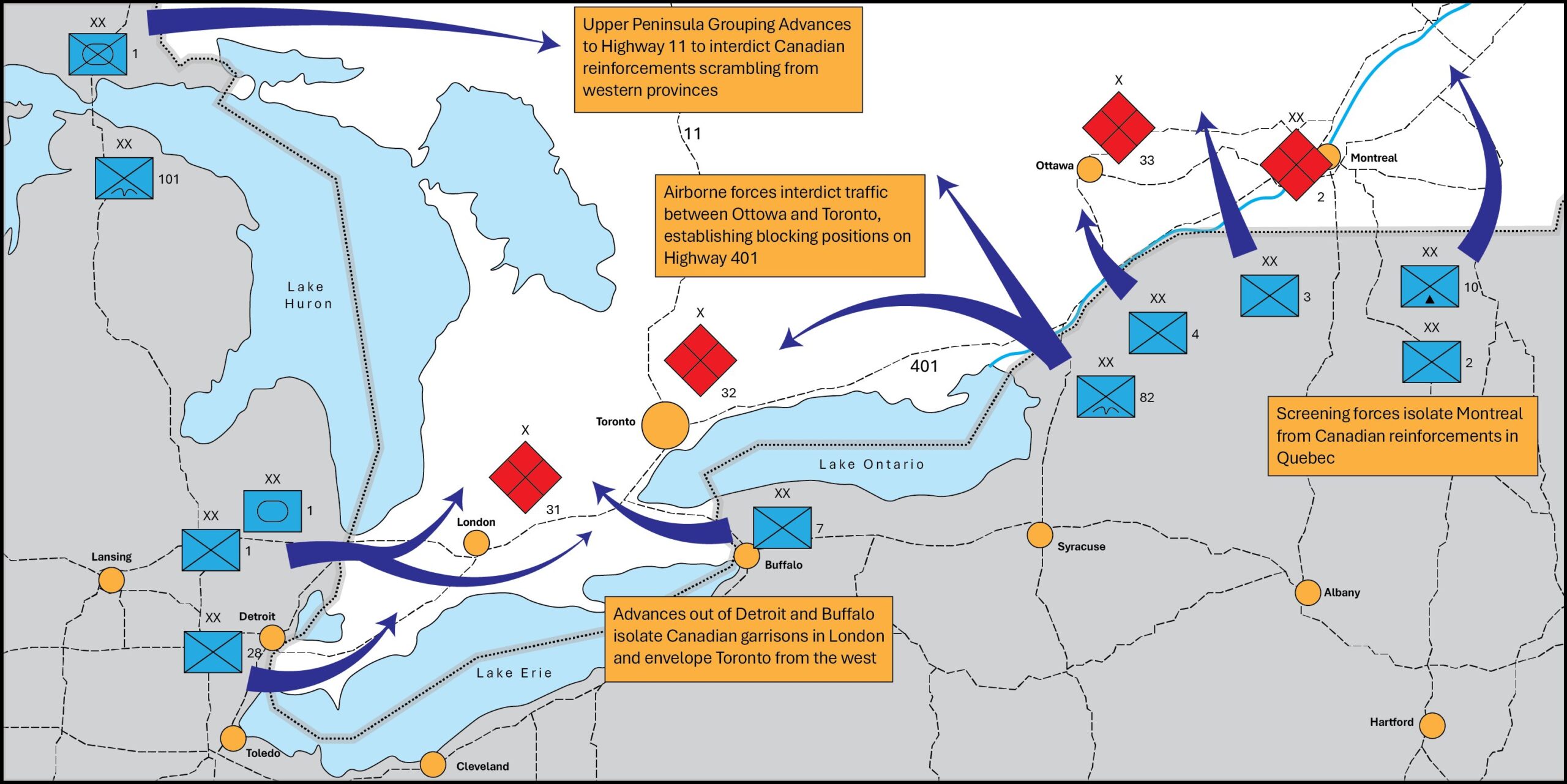
Canada has never fought a direct war against the United States. However, before confederation (1867) when Canada became a self-governing dominion, the territories that would later form that dominion, which had been under the control of the British, engaged in a small number of military conflicts with the United States (or as they were known previously, the Thirteen American Colonies). The total is four, if we only count significant engagements which involved organized forces. Economic wars, or trade disputes, are another story. We’ll get there.

The Aroostook War (1838–1839) drew no blood. The conflict concerned the Maine-New Brunswick border and was resolved amicably by the Webster-Ashburton Treaty of 1842. A quarter of a century later the Fenian Raids (1866–1871) saw the Irish-American Fenian Brotherhood make multiple non-state sanctioned attacks in British North America in an effort to sway Britain to withdraw forces from Ireland.

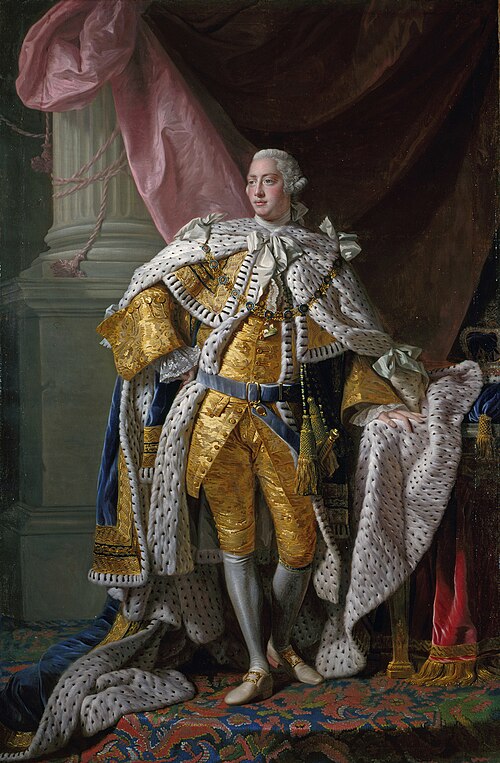
The other far more consequential military struggles between the two North American friends and neighbours occurred first in the late eighteenth century, and second in the early nineteenth century. During the American Revolutionary War (1775-1783), which saw limited involvement of areas north of the 49th parallel, British North America thwarted a particularly serious invasion by the Americans in 1775 known as The Battle of Quebec.

It was fought during a snowstorm on December 31, 1775 (one of few battles fought in such miserable conditions during the revolutionary war). The American intention was to conscript the British colony, which today forms the province of Quebec (and also included parts of Ontario) into their struggle against the British. The Patriots of the Thirteen Colonies had earlier that year begun rebelling against British taxation and governance. They surmised that the French-speaking Quebec settlers, disaffected with the imposition of British rule as it was laid out in the 1763 Treaty of Paris (which ended the Seven Years War), would join the American cause. A significant miscalculation, to say the least.

The battle was fought on two fronts against a British garrison of 1800 soldiers led by British commander, Governor Guy Carleton. The combined total of American troops was only 1200. The first front was commanded by Brigadier General Richard Montgomery, who led his troops in an attack of the Lower Town from the south. The second assault occurred from the north and was led by Colonel Benedict Arnold (who would later become an infamous American traitor).

Montgomery and several officers were killed instantly on their initial advance. This sparked a retreat amongst his remaining soldiers. Arnold had slightly more luck. His army penetrated northern defences but were stymied in the narrow streets of Quebec. During fighting Arnold was wounded, after which he handed the command to Daniel Morgan. After hours of fighting, Morgan and his men were forced to surrender. The Americans lost the battle decisively ensuring Quebec would remain a loyalist stronghold.

The second of the two significant conflicts involving British North America and the Thirteen American Colonies was the infamous War of 1812 – a more well-known period of antagonism between proto-Canada and her American neighbours.

Here is a topline summary with some extra history concerning the U.S.-Canada border (the world’s longest undefended border), from Terry Glavin:

    The War of 1812 — which the Americans still pretend they won — was officially concluded with the Treaty of Ghent in 1814. Then came the Rush-Bagot Pact of 1817 and the Convention of 1818, which set the border at the 49th parallel.1

The War of 1812 took place during Britain’s struggle against Napoleonic France. The two most famous Canadian battles from this tragic conflict were the Battle of Queenston Heights and the burning of York (now Toronto) – British troops would even the score of the latter by burning Washington D.C.

The war was unpopular. Like today, there were too many bonds between the Americans and proto-Canadians. But also like today, with Canada and the United States once again bickering over trade and various political interests, the disagreements were accompanied by a reluctance to engage in hostilities.

From Pierre Burton’s War of 1812:

    At the outset, it was a gentleman’s war. Officers on opposing sides met for parlays under flags of truce, offered hospitality, exchanged cordialities, murmured the hopes that hostilities would quickly end.2

No matter what time period we are examining, we can never forget that Britons, Canadians and Americans are all first cousins. Yes we disagree from time to time, sometimes we even fight. But always over some unfortunate political dispute, and never for each other’s annihilation.

In 1812, for a variety of reasons, the Americans, especially a minority of hawkish elites in Washington, felt they had no other choice but to invade the north. Some of them felt it would be easy. An aggravating factor concerned Britain’s support of Indian tribes in the north west, at a time when the Americans were aggressively expanding into that region. But also, during their imperial contest with France, the British were impressing sailors in the American navy (forcing them to join British forces), because they considered them traitors of the British crown. Further, they blocked key trade ports under Napoleon’s control, disrupting trade between America and France.

Isn’t it curious how trade so often appears as the rift in Canadian-American relations? Further examples include: the Reciprocity Treaty of 1854 which allowed for free trade of natural resources between the American and British colonies. However, the Americans abrogated that treaty in 1866 partly out of frustration at perceived British support of the confederacy after the Civil War. A post-confederation trade war with the Americans ensued after Canada’s first Prime Minister John A. MacDonald adopted the National Policy in 1879, which imposed high tariffs to protect Canadian industry. Triggering the Americans to respond with tariffs of their own.

James Pew, “Canadians and our ties to Americans”, Woke Watch Canada, 2025-03-30.


July 3, 2025

QotD: Why Marxists turned away from space exploration and colonization

Devon Eriksen recently pointed out that today’s Marxists are hostile to space flight and off-world colonization. But in Cold War times, Marxists who ran countries were aggressively futuristic about space, treating it as the empire of their dreams.

What caused this turnaround?

To understand this, it’s helpful that to notice that spaceflight is not the only technology about which Marxist attitudes have done a 180. Nuclear power is another. More generally, where Marxists used to be pro-growth and celebrate industrialization and material progress, they’re now loudly for degrowth and renunciation.

But the history of western Marxism is more interesting than that. Western Marxists flipped to strident anti-futurism in the late 1960s and early 1970s while futurist propaganda in the Communist bloc did not end until its post-1989 collapse.

That 20-year-long disjunct was particularly strong about nuclear power, with the Soviets providing ideological support and funding to the foundation of European Green parties and the US’s anti-nuclear-power movement at the same time as they were pouring resources into nuclearizing their own power grid.

And that’s your clue. Domestic Marxism favored making power cheap and abundant, while their Western proxies pushed to keep it expensive and scarce and preached degrowth rather than expansion. Futurism vs. anti-futurism: why?

We don’t need to theorize about this. Yuri Bezmenov, a former gear in the Soviet propaganda machine, told us the answer starting in the early 1980s. Fewer people listened than should have.

Bezmenov explained that unlike Marxism in the Sino-Soviet bloc, Western Marxism was a mind virus, a memetic weapon designed to weaken and degrade its host societies from within, softening them up for totalitarianism and an eventual Soviet takeover. The West was to be denied power, both in a literal and figurative sense.

Ever wonder why today’s Marxists are so quick to make alliances with radical religious Islamists? This shouldn’t happen. According to Marxist theory, Islamism is a regression to an earlier stage of the dialectic than capitalism, and today’s Marxists ought to fear and hate it as a counter-ideology more than capitalism. But they don’t, because to them Islam is a tool to be used for nihilistic ends.

That nihilism is the actual purpose of Western Marxism and all its offshoots, including “woke”. One sign of this is how fervently it embraces the sexual mutilation of children.

The Soviets are gone but their program is still running autonomously in the brains of people who were infected by their Cold-War-era proxies and the successors of those proxies. And that program is nihilism all the way down.

Yuri Bezmenov should have been heeded. There is no simpler theory that fits the observed facts.

Eric S. Raymond, Twitter, 2024-05-14.

July 2, 2025

The Korean War Week 54 – The War is One Year Old – July 1, 1951

Filed under: China, History, Military, Russia, USA — Tags: , , , , , , , — Nicholas @ 04:00

The Korean War by Indy Neidell
Published 1 Jul 2025

Over a year has passed since North Korean forces crossed the 38th Parallel and invaded South Korea, and while the war has seen the advantage switch hands time and again, one thing it has not seen is any sort of cease fire or peace negotiations. However, that might change soon, as this week both the Chinese and the Americans indicate their willingness to sit down and talk. South Korean President Syngman Rhee, however, is against any cease fire talks that do not set out to meet a big variety of his demands, demands which which the other warring parties do not see as being in their own best interests.
(more…)

July 1, 2025

Like a cheap suit, Canada folds under Trumpian pressure on the Digital Services Tax grab

Filed under: Cancon, Government, Media, Politics, USA — Tags: , , , , , — Nicholas @ 05:00

A couple of days back, I characterized Prime Minister Mark Carney’s determination to push ahead with the Digital Services Tax “insane”, as it was overwhelmingly likely to trigger a strong reaction from the Trump administration. As it did. So, finally recognizing they were in a no-win situation, the federal government announced at the last minute that they wouldn’t be demanding the literally billions of dollars from the US “tech giants” after all. Michael Geist can legitimately say “I told you so” on this issue:

President Trump Attends G7 Summit in Canada by White House https://www.whitehouse.gov/gallery/president-trump-attends-g7-summit-in-canada/ CC BY 3.0 US

After years of dismissing the warnings of likely retaliation, the Canadian government caved last night on the digital services tax. Faced with the prospect of the U.S. suspending trade negotiations, Finance Minister François-Philippe Champagne announced that the government would drop the DST altogether, payments scheduled for Monday would be cancelled, and legislation will be forthcoming to rescind the legislation that created it in the first place. Over the weekend, I wrote about the repeated warnings that the DST was a serious trade irritant with the U.S. that cut across party and presidential lines. While ignoring the risks was bad enough, I argued that Canada played its DST card too early. Rather than delaying implementation in the hopes of incorporating it into a broader trade deal with U.S., it marched ahead, leading to an entirely predictable response from U.S. President Donald Trump. That left Canada in a no-win situation: stick with the DST but face the prospect of higher tariffs or embarrassingly drop the DST (and $7.2 billion in revenue over five years) with only restarting negotiations that were on until government overplayed its hand to show for it.

It is hard to overstate how badly the government managed the DST issue over the past five years. It alienated allies by pushing ahead with the DST despite efforts at an international deal at the OECD, stood alone in rejecting an extension of a moratorium on new DSTs, made the DST retroactive which solidified opposition, and continually downplayed the concerns of successive U.S. Presidents and Members of Congress from both sides of the aisle. Meanwhile, when companies began passing along the costs of the DST to Canadian businesses, it did nothing. And when they urged the government to delay implementation to at least allow for the issue to be incorporated into a broader trade pact, it ignored the advice.

At every step, there were better options. This year, the likelihood that the DST would come to a boil was obvious to anyone who was paying attention. But rather than following the UK strategy, which managed to salvage a smaller DST (2% rather than 3%) as part of a bigger agreement that includes a commitment to support UK digital access to the U.S. market and to negotiate a larger digital trade deal, Canadian officials seemingly assumed that the U.S. was bluffing and would not retaliate.

If this sounds familiar, it is because the Canadian government misreading the tech sector has become a hallmark of its policy. Talk tough, practically dare companies and foreign governments to respond, and then frantically seek an exit strategy when they do. This was the case with the Online News Act and Meta’s blocking of news links, with the government’s AI regulation which new Minister of AI Evan Solomon says will not be re-introduced, with the Online Harms bill, and now with the DST.

The Food Professor explains what Trump got right in his Trade War

On the social media site formerly known as Twitter, Dr. Sylvain Charlebois, aka @FoodProfessor explains how Trump’s Trade War strategy is working out for US interests, in contrast to the Trudeau/Carney governments’ approach:

The Globalism Hangover: What Trump’s Trade War Got Right

“Trump’s bombastic style aside, his nationalist approach to trade and food policy is forcing global institutions to justify their existence — and that’s a conversation Canada can no longer afford to ignore.”

For the past six months, President Donald Trump’s trade policies have been widely mocked, criticized, and condemned. Some of it is certainly warranted. The Wall Street Journal, for instance, recently likened his tariff-heavy approach to global trade as a direct path toward another Great Depression. But data out of the United States tells a more nuanced story — one that challenges conventional wisdom.

Despite persistent headwinds, the U.S. economy continues to outperform expectations. The Federal Reserve Bank of Atlanta projects second-quarter GDP growth at 3.8%. In May, the U.S. economy added 139,000 jobs, outpacing forecasts, while inflation remained subdued at 0.1% month-over-month and 2.4% annually. The U.S. trade deficit has been cut nearly in half, pointing to stronger export performance and a rebalancing of trade relationships.

Canada, by contrast, is showing signs of economic strain. The national economy is shrinking, manufacturing is struggling under U.S. trade pressure, and food inflation is outpacing general inflation. In short, our economy is not keeping pace—despite our public criticism of the Trump administration.

To make matters worse, the Trump administration has now halted all trade negotiations with Canada, signaling that our bilateral economic relationship holds little strategic value for Washington. For the U.S., Canada is no longer a priority — especially under a Carney-led government that has visibly pivoted toward Europe, a market still heavily invested in maintaining close ties with the United States. From an agri-food standpoint, this shift is consequential: access to our largest trading partner is narrowing, while Ottawa appears more focused on diplomatic optics than on securing stable, competitive trade channels for the Canadian agrifood economy.

This is the one thing the ‘Elbows Up’ crowd never understood — and still doesn’t. We’re not in a trade war with the U.S. There’s no war to be won. For Trump, this is about a realignment of the global order, plain and simple — one centered entirely on American supremacy.

Love him or loathe him, Trump is not destroying the U.S. economy — not yet, anyway. His unapologetically nationalist agenda extends far beyond tariffs. He has withdrawn U.S. support from key global institutions such as the WHO and is threatening to sever ties with others, including NATO and several UN-affiliated agencies. Among them is the Food and Agriculture Organization (FAO), the UN’s most authoritative body on food security.

At a recent event in Brazil, a senior FAO official acknowledged that fundraising dynamics have shifted. In the Trump era, governments are asking harder questions: Why should we fund the FAO? What domestic benefit does it provide? What used to be assumed support is now conditional — and arguably, more accountable.

This shift isn’t unique to Washington. Many countries are quietly aligning with the U.S. position, scrutinizing globalist institutions with renewed skepticism. Transparency and accountability are byproducts of this anti-globalist sentiment — something not inherently negative.

For decades, globalism pushed the world to believe that trade liberalization was the only viable path to growth and prosperity. It became conventional wisdom. But globalism has made some nations — and some people — richer, while leaving others behind. In the process, domestic sectors, including agriculture, were often sidelined or sacrificed in the name of global efficiency.

The problem with globalism, particularly in agri-food policy, is its tendency to pursue uniformity over relevance. Canada, for example, adopted the carbon tax under a globalist climate agenda that often overlooks the vital role food producers play in feeding people. Instead of being supported, the sector is too often vilified as a problem. But agriculture is not a liability — it is a necessity.

Trump’s message — wrapped, of course, in provocative and often abrasive language — is that one-size-fits-all global policies rarely work. Nations have different socio-economic realities, and those should come first. While cooperation is essential, so is recognizing local and regional priorities. In this sense, his “America First” approach is not without logic — especially when it seems to be yielding short-term economic gains.

For Canada’s agri-food sector, the lesson is clear: striking a better balance between global commitments and national imperatives is overdue. We should not abandon multilateral cooperation, but we must stop anchoring policy to global agendas we have little influence over. Instead, let’s define what works for Canadians — what supports our farmers, protects our food security, and reflects our unique landscape — while keeping the broader global context in view.

We are not there yet. But if this moment of disruption sparks a more realistic and regionally attuned approach to food policy, we’ll be better for it.

June 30, 2025

“This is not toxic empathy, it’s psychotic empathy”

Filed under: Media, Politics, USA — Tags: , , — Nicholas @ 05:00

Elizabeth Nickson suggests that we’re well past peak political feminism:

Last week, no month, there have been cries from the heights of official culture begging men to come back. I joked on Facebook that they are all at my house, hiding out with someone who doesn’t hate them, which is sort of true; my immediate family is all male, and Christmases are a bro-fest with me in the kitchen. I exaggerate. No. Yes. I don’t know. Of course they help but I do wish for one daughter/sister in law to keep the chaos down. My father once said, “women civilize men, that’s their job”. I don’t think he meant harangue, demand, prosecute and imprison.

In any case, I started the first feminist theatre in Canada. I know this because a grad student did her master’s thesis on Feminist Theatre in Canada (poor thing) and called to interview me. I was 22, and dumb as a rock. But eager to tell the world its faults (plus ca change). My artistic director Svetlana — who was in the MFA program — and I decided that we would only hire women, do women’s plays, etc.

Problem was there were no plays. Aphra Behn was the only one we could find that wasn’t trivial, and she lived 250 years ago. That was when I discovered I loved writing because we had to write our own. Now, of course, there is a massive, over the top, gold-platinum-diamond-and rubies Renaissance in women’s art, and my silly self was as usual so far ahead of the game I didn’t profit from it. Well, I did, it helped my college expenses no end.

So I got a couple of grants, and we collected box office, and ran “plays” and workshops on how to have difficult feminist conversations, one memorably at the Vancouver Art Gallery, where the wife of a famous poet told us that all this guff was going to be forgotten once the estrus cycle kicked in. Svetlana telegraphed ignorance at me, and I back; no one had any idea what she meant. We 22 year olds argued her down, she clung to her thesis and, guess what, turned out she was right. Everyone “met” someone, got pregnant, built marriages and families, but Svetlana who decided she was gay (at the time we worked together she was married), and died young from alcoholism. Is that my fault? It was my idea.

Feminism marched on. To this:

I repent here and now. What feminism has become is anathema. I am actually scared of women. I am afraid of their anger, and I am afraid of their cruelty, their harshness, and I see it everywhere. Luckily through my work I have met women who think like me and we are friends and I am not afraid of them. But I shrink from all other friendships. Female friendships today are built on one thing: are you on side? Are you for abortion, against the patriarchy, for Hamas and most recently, the Mullahs, celebrate female politician wins as long as they are on side, ally with the LBGTZQ+ community, etc.? I am none of these things, so were I to venture into ‘women’s spaces’ eventually the furies would plot revenge. I would be cast afloat, thrown into the wild to fend for myself, as an uppity woman would have been in clan or tribal times, to which we are reverting.

In business, conform or be ruined. Think like us or we cancel your dates, your performance, your promotion. Even the mega-famous:

Therefore I now avoid the friendship of women, in which I used to luxuriate. So if I can’t even spend time in their presence, how the hell are men supposed to marry them?

This is how stupid political women have become. This was last weekend in Germany, and, well, everywhere these women breathe, and that means everywhere in the west.

This is not toxic empathy, it’s psychotic empathy.

« Newer PostsOlder Posts »

Powered by WordPress