Lots of revolutionaries have been obsessed with the state of their own souls, but only the Puritans have been worried about it. Skim Walzer1, then compare with Norman Cohn’s The Pursuit of the Millennium, a book I recommend without reservation. The Brethren of the Free Spirit were obsessed with the condition of their souls, too, but, crucially, they were certain that they were the Elect. All pre-Puritan millennial movements were essentially Gnostic — they, the Elect, knew the Truth, and they were the Elect because they knew the Truth. Their job was simply to tell everyone the Truth (and, inevitably, kill everyone who disagreed), and that great truth-telling / cleansing of the sinners would basically force Jesus to come back, thus ending the world.
The Puritans were something new. Translate their elaborate, Latinate prose into the parlance of our times, and they sound exactly like SJWs — at once unbearably self-righteous and cripplingly insecure. They were almost certain that they, personally, were among the Elect … but since the only infallible sign of being Saved was “an irresistible attraction to Puritanism”, they were caught in exactly the same vicious purity spiral as our modern SJWs. Who, truly, can say xzhey are #woke, when there’s always the possibility of someone, somewhere, being #woker? If you want a slightly easier passport to their heads, try Perry Miller’s The New England Mind. It was written in the 1930s, so be prepared — surprisingly little untranslated Latin, since the Puritans wrote mostly for themselves, but still fairly ornate prose.
Put it this way: The Wiki summary of Miller’s life quotes a colleague: “Perry Miller was a great historian of Puritanism but the dark conflicts of the Puritan mind eroded his own mental stability”. He died of alcoholism.
The Puritans’ saving grace, if they had one, is that they were men of the world. They had to be. Guys like Max Weber would say that those two things had a dialectical relationship — Puritanism IS “the Protestant work ethic” IS “capitalism” — but that’s not necessary for present purposes. My point is simply that the Early Modern world could only support a tiny number of professional intellectuals, and the “managerial class” was all but nonexistent. Through Cromwell and his mini-me’s in Salem gave it the old college try, it’s simply impossible to run an Early Modern government Puritan-style.
That’s obviously not the case now. We have a huge (and ever-growing) managerial class, all of whom are the most fervent Puritans. Unlike Cromwell and the boys, though, they can — and, of course, DO — live in perfect isolation from the affairs of the world they’re supposedly managing. Put simply, but not really unfairly, they live on Twitter — their carefully curated list of social media “friends” is, in a very real way, their entire world. Imagine Oliver Cromwell, Zeal-of-the-Land Busy, and Cotton Mather tweeting at each other, all day every day.
Severian, “Friday Mailbag: Civilization, the Video Game”, Rotten Chestnuts, 2021-05-21.
1. Severian may be referring to Michael Walzer’s first book The Revolution of the Saints: A Study in the Origins of Radical Politics (1965) or perhaps Regicide and Revolution (1974). Unfortunately when I saved this, I didn’t note which of Walzer’s works had been referenced earlier in the post and the original is no longer available online. Quotulatiousness regrets the omission.
May 24, 2024
May 23, 2024
“[O]fficial justifications for mass migration often have a creepy, post-hoc flavour about them”
While it sometimes seems that there can’t possibly be mass migration issues other than here in Canada and along the US southern border, eugyppius reminds us that all of the Kakistocrats in western countries are fully in favour of more, and more, and even more inflow without restriction:

An asylum seeker, crossing the US-Canadian border illegally from the end of Roxham Road in Champlain, NY, is directed to the nearby processing centre by a Mountie on 14 August, 2017.
Photo by Daniel Case via Wikimedia Commons.
You might have noticed that mass migration to the West is a huge problem.
It is very bad for native Westerners, because it promises to transform our societies utterly, in permanent ways and not for the better. Curiously, it is also far from great for the centre-left political establishment responsible for promoting mass migration, because it has inspired a vast wave of popular opposition and filled the sails of right-leaning, migration restrictionist parties with new wind. Mass migration is also bad for taxpayers, for domestic security, for the welfare state, for many other aspects of the postwar liberal agenda and for our own future prospects. In short, mass migration is bad for almost everybody and everything.
There is a reason that nations have borders, and this is much the same reason that we have skin and that cells have membranes. You won’t survive for very long if you can’t control what enters you.
Despite the obvious fact that mass migration is bad, our rulers cling to migrationism like grim death. Given a choice between disincentivising asylees and intimidating, browbeating and harassing the millions of anti-migrationists among their own citizens, our governments generally choose the latter path, even though it is obviously the worse of the two.
Additionally unsettling, is the fact that official justifications for mass migration often have a creepy, post-hoc flavour about them. They sound much more like excuses dreamed up after the borders had already been opened, rather than any kind of reason mass migration must occur. When the migrationists really started to go crazy in 2015, for example, we were told that border security was simply impossible in the modern world and that infinity migrants were a force of nature we would have to deal with. That didn’t sound right even at the time, and since the pandemic border closures we no longer hear the inevitability narrative very much, although – and this is very bizarre to type – there is some evidence that high political figures like Angela Merkel believed it at the time. It is well worth thinking about why that might have been the case.
Another excuse that doesn’t make very much sense, is what I’ll call the refugee thesis. We’re told that millions of poor people are forced to endure terrible conditions in the developing world and that it is our moral burden to improve their lot by granting them residence in our countries. That might convince a few teenage girls, but it cannot withstand scrutiny among the rest of us. To begin with, the population of global unfortunates is enormous; the millions of refugees we have already accepted, and the millions that our politicians hope to welcome in the coming years, represent but a vanishing minority – a rounding error – compared to the vast sea of human suffering. It is like trying to solve homelessness by demanding that those in the wealthiest neighbourhoods make their spare bedrooms available to the indigent. Even more telling, however, is that the push to welcome migrants comes precisely as conditions in the developing world have dramatically improved. When things were much worse, we sealed our borders against the global south; now that they are much better, we hear all about how unacceptably inhumane it is to leave the migrants in their native lands.
Other post-hoc arguments, especially those falling in the yay-multiculturalism category, are even less serious. That we need more diversity to “spark innovation” (whatever that means) or that our local cuisines stand to benefit from the spices of the disadvantaged, are excuses of such towering stupidity, that you will lose brain cells thinking about them. As with the refugee narrative, nobody said crazy stuff like this until the migrants had already begun arriving on our shores. And there is another thing to notice about the multiculticult too. This is its blatant flippancy. The premise seems to be that migration is no big deal bro, but also too there are these cool exciting and totally random upsides, like improved local Ethiopian food offerings. It is the very definition of damning with faint praise.
The rest, sadly, is behind the paywall.
Where does a former general go to get his reputation back?
The National Post reports on a former Canadian senior officer launching a lawsuit in an attempt to clear his reputation after an abortive court martial brought his career to an end:
Lt.-Gen. Steven Whelan, a three-star general who was accused of sexual misconduct in what he claims was a politically motivated prosecution that was then abandoned before he was able to defend himself, is looking for his day in court.
“I didn’t get a chance to tell my side of the story,” he told me.
Whelan’s lawyer, Phillip Millar of Millars Lawyers, has just filed a bruising statement of claim with the Federal Court in Ottawa, naming a who’s who of Canada’s military establishment as defendants; a litany that makes allegations of abuse of office, negligent investigation, malicious prosecution and involvement in media leaks that destroyed Whelan’s reputation and career.
Defendants named in the lawsuit include His Majesty the King in Right of Canada (the Crown) and top brass in the Department of National Defence (DND) and Canadian Armed Forces (CAF): Jody Thomas, former deputy minister of National Defence and former national security advisor to the Prime Minister; General Wayne Eyre, chief of the defence staff; Lt.-Gen. Frances Allen, vice chief of the defence staff; and Lt.-Gen. Jennie Carignan, CAF’s chief of professional conduct and culture.
The allegations stretch all the way to the Prime Minister’s Office.
Last September, Whelan faced a court martial, accused of sexual misconduct purported to have taken place more than a decade ago.
At the trial’s outset, military prosecutors dropped the more serious allegation of improperly communicating with a female subordinate (flirting, in colloquial terms). A week later — following the testimony of the complainant and minutes before Whelan’s lawyers could cross-examine her or hear from other witnesses — prosecutors dropped the remaining charge accusing Whelan of doctoring the same subordinate’s performance evaluation in 2011, allegedly fearing she would disclose their friendly but not physical relationship to others. The court martial came to an abrupt end. Notwithstanding the technical win for Whelan, the allegations effectively sidelined the three-star general.
Casual observers, seeing just how many Canadian generals’ and admirals’ careers have run aground in scandal of one sort or another, might draw conclusions about the quality of the leadership and the deep culture of the Canadian Armed Forces at both military and political levels.
The “post-national” entity formerly known as “Canada”
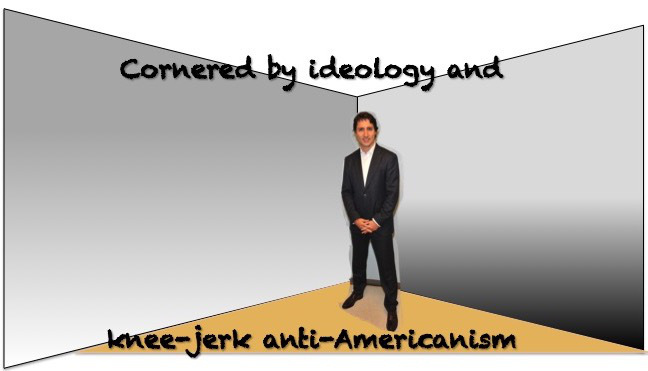
You have to hand it to the Trudeau family (and all their sycophantic enablers in the legacy media, of course). What other Canadian family has had such an impact on the country? By the time Justin Trudeau’s successor is invited to form a government, Canada will have changed so much — to the point that he could describe us as the first “post-national” country thanks to his unceasing effort to destroy the nation. At The Hub, Eric Kaufmann points the finger at Trudeau’s “Liberal-left extremism” as the motivating factor in Trudeau’s career:

Justin Trudeau has always had a strong affinity for the symbolic gesture, especially when the media are around to record it.
Canada is currently suffering from left-liberal extremism the likes of which the world has never seen. This excess is not socialist or classically liberal, but specifically “left-liberal”. It is evident in everything from this country’s world record immigration and soaring rents to state-sanctioned racial discrimination in hiring and sentencing, to the government-led shredding of the country’s history and memory. Rowing back from this overreach will not be the work of voters in one election, but of generations of Canadians.
The task is especially difficult in Canada, because, after the 1960s, the country (outside of Quebec) transferred its soul from British loyalism to cultural left-liberalism. Its new national identity (multiculturalist, post-national, with no “core” identity) was based on a quest for moral superiority measured using a left-liberal yardstick. Canada was to be the most diverse, most equitable, most inclusive nation in world history. No rate of immigration, no degree of majority self-abasement, no level of minority sensitivity, would ever be too much.
In my new book The Third Awokening, I define woke as the making sacred of historically marginalized race, gender, and sexual identity groups. Woke cultural socialism, the idea of equal outcomes and emotional harm protection for totemic minorities, represents the ideological endpoint of these sacred values. Like economic socialism, the result of cultural socialism is immiserization and a decline in human flourishing. We must stand against this extremism in favour of moderation.
The woke sanctification of identity did not stem primarily from Marxism, which rejected identity talk as bourgeois, but from a fusion of liberal humanism with the New Left’s identitarian version of socialism. What it produced was a hybrid which is neither Marxism nor classical liberalism.
Left-liberalism is moderate on economics, favouring a mixed capitalism in which regulation and the welfare state ameliorate the excesses of the market, without strangling economic growth. Its suspicion of communist authoritarianism helped insulate it from the lure of Soviet Moscow.
On culture, however, left-liberalism has no guardrails. When it comes to group inequality and harm protection, its claims are open-ended, with institutions and the nation castigated as too male, pale, and stale. For believers, the only way forward is through an unrestricted increase in minority representation. They will not entertain the idea that the distribution of women and minorities across different occupations could reflect cultural or psychological diversity as opposed to “systemic” discrimination. This is the origin of the letters “D” and “E” in Diversity, Equity, and Inclusion (DEI). Rather than seeking to optimize equity and diversity for maximal human flourishing, these are ends in themselves that brook no limits.
Left-liberals fail to ring-fence the degree of sensitivity that majority groups are supposed to display toward minority groups. Their emphasis on inclusivity through speech suppression rounds out the “I” in DEI. From racial sensitivity training (starting in the 1970s) to the “inclusive” avoidance of words like “Latino” or “mother” that offend and create a so-called hostile environment that silences subaltern groups, majorities are expected to police their speech.
QotD: The “creepy male feminist”
Christopher Hitchens used to have a cast-iron rule when it came to hardline Christians and the condemnation of some very particular sins of the flesh. […] I am beginning to wonder whether a similar trend is not emerging with another group, specifically that variety of men whom the internet — with its unerring ability to get to the cruel point — has come to describe as the “creepy male feminist”.
It is a distinctly 2010s phenomenon: the sort of chap who likes to present himself as a great spokesperson for, and defender of women and overdoes it so much that you just know that something else is going on.
He will invariably go beyond the usual courtesies and head some way past the point of merely regarding women as his equal. Instead, the creepy male feminist pulls a number of simultaneous moves. These include (though are not limited to):
- Presenting the plight of women in our society as distinctly worse than it is.
- Suggesting that everybody knows this but that some people (especially men) are deliberately covering for that fact.
- Making the suggestion — sometimes insinuated, often explicit — that nothing and nobody is more willing to stand between women as a whole and such rampaging patriarchs than the male in question. Anyone still unfamiliar with the type might recognise it under another entry in the lexicon of modern ignominy: “White knight” (n).
And a trend can now be observed, which is that with unnerving regularity the type of man who presents himself as the foremost protector of the entire female sex is precisely the person who shortly thereafter is exposed as having tried to help himself in distinctly un-gentlemanly ways.
Douglas Murray in “Beware the creepy male feminist: ‘White knights’ like Robert De Niro often turn out to be less than chivalrous”, Unherd, 2019-11-15.
May 22, 2024
If you re-define it carefully, you can make any statistical measure look hopeful
In his Substack, Tim Worstall jokingly called this piece “Larry Summers Explains Why Americans Hate Joe Biden”:
As a good Democrat of course Larry Summers would never put things in quite that headline way. But the implication of this latest paper with others is to explain why Americans really aren’t as happy as they should be given the economic numbers. The answer being that the economic numbers we all look at to explain how happy folk are aren’t the right economic numbers to explain how happy people are.
We can also make — possibly rightly, possibly wrongly, this might be me projecting more than is merited — a further claim. That Americans simply aren’t as rich as those standard economic numbers suggest either. Which would also neatly explain the general down in the dumps attitude toward the economy.
So, the new paper:
Unemployment is low and inflation is falling, but consumer sentiment remains depressed. This has confounded economists, who historically rely on these two variables to gauge how consumers feel about the economy. We propose that borrowing costs, which have grown at rates they had not reached in decades, do much to explain this gap. The cost of money is not currently included in traditional price indexes, indicating a disconnect between the measures favored by economists and the effective costs borne by consumers. We show that the lows in US consumer sentiment that cannot be explained by unemployment and official inflation are strongly correlated with borrowing costs and consumer credit supply. Concerns over borrowing costs, which have historically tracked the cost of money, are at their highest levels since the Volcker-era. We then develop alternative measures of inflation that include borrowing costs and can account for almost three quarters of the gap in US consumer sentiment in 2023. Global evidence shows that consumer sentiment gaps across countries are also strongly correlated with changes in interest rates. Proposed U.S.-specific factors do not find much supportive evidence abroad.
OK, or as explained by the Telegraph:
In it, the authors made a shocking claim: if inflation was measured in the same way that it was measured during the last bout of price rises in the 1970s, data showed that it peaked at 18pc in November 2022. This is far higher than the 9.1pc peak inflation shown by the official data.
The reason for this discrepancy is that, since the 1970s, economists have removed the cost of borrowing from the Consumer Price Index (CPI). The motivations here were not nefarious. The reasoning of the statisticians had something to it.
And, OK, if inflation peaked at 18%, not 9%, then that would explain why folk are pissed. Sure it would.
[…]
OK. But that means that if inflation was higher than we’ve been using then the deflation of nominal to real GDP is also wrong. Just that one year of 9% recorded but 18% by this new measure is damn near a 10% difference. That’s how much we’re over-estimating real GDP by right now. Add in a couple of years of lower levels of that and being 20% out wouldn’t surprise.
Which would mean that — if this were true and I might be overegging it — Americans are in fact 20% poorer than the Biden Admin keeps saying they are. And yes, that would piss the voters off, wouldn’t it?
Gaslighting has been a staple of the legacy media for quite some time now, going into high gear during the 2016 US Presidential elections and then into overdrive during the pandemic. They probably don’t even realize they’re doing it any more, because it feels “normal” to them. Yet they wonder why their popularity and public trust in their pronouncements continues to drop.
The new queen of the AWFLs
Elizabeth Nickson on the rise of new NPR CEO, Katherine Maher:

Banner for Christopher Rufo’s article on Katherine Maher at City Journal.
https://christopherrufo.com/p/katherine-mahers-color-revolution
The polite world was fascinated last month when long-time NPR editor Uri Berliner confessed to the Stalinist suicide pact the public broadcaster, like all public broadcasters, seems to be on. Formerly it was a place of differing views, he claimed, but now it has sold as truth some genuine falsehoods like, for instance, the Russia hoax, after which it covered up the Hunter Biden laptop. And let’s not forget our censor-like behaviour regarding Covid and the vaccine. NPR bleated that they were still diverse in political opinion, but researchers found that all 87 reporters at NPR were Democrats. Berliner was immediately put on leave and a few days later resigned, no doubt under pressure.
Even more interesting was the reveal of the genesis of NPR’s new CEO, Katherine Maher, a 41-year-old with a distinctly odd CV. Maher had put in stints at a CIA cutout, the National Democratic Institute, and trotted onto the World Bank, UNICEF, the Council on Foreign Relations, the Center for Technology and Democracy, the Digital Public Library of America, and finally the famous disinfo site Wikipedia. That same week, Tunisia accused her of working for the CIA during the so-called Arab Spring. And, of course, she is a WEF young global leader.
She was marched out for a talk at the Carnegie Endowment where she was prayerfully interviewed and spouted mediatized language so anodyne, so meaningless, yet so filled with nods to her base the AWFULS (affluent white female urban liberals) one was amazed that she was able to get away with it. There was no acknowledgement that the criticism by this award-winning reporter/editor/producer, who had spent his life at NPR had any merit whatsoever, and in fact that he was wrong on every count. That this was a flagrant lie didn’t even ruffle her artfully disarranged short blonde hair.
Christopher Rufo did an intensive investigation of her career in City Journal. It is an instructive read and illustrative of a lot of peculiar yet stellar careers of American women. Working for Big Daddy is apparently something these ghastly creatures value. I strongly suggest reading Rufo’s piece linked here. It’s a riot of spooky confluences.
Intelligence has been embedded in media forever and a day. During my time at Time Magazine in London, the bureau chief, deputy bureau chief and no doubt the “war and diplomacy” correspondent all filed to Langley and each of them cruised social London ceaselessly for information. Tucker Carlson asserted on his interview with Aaron Rogers this week that intelligence operatives were laced through DC media and in fact, Mr. Watergate, Bob Woodward himself, had been naval intelligence a scant year before he cropped up at the Washington Post as “an intrepid fighter for the truth and freedom no matter where it led”. Watergate, of course, was yet another operation to bring down another inconvenient President; at this juncture, unless you are being puppeted by the CIA, you don’t get to stay in power. Refuse and bang bang or end up in court on insultingly stupid charges. As Carlson pointed out, all congressmen and senators are terrified by the security state, even and especially the ones on the intelligence committee who are supposed to be controlling them. They can install child porn on your laptop and you don’t even know it’s there until you are raided, said Carlson. The security state is that unethical, that power mad.
Now, it’s global. And feminine. Where is Norman Mailer when you need him?
QotD: Are western democracies moving uniformly in the direction of “surface democracy”?
I joked before about refusing to tolerate speculation about the US being a surface democracy like Japan, but joking aside I think even the staunchest defender of the reality of popular rule would concede that things have moved in that direction on the margin. Compare the power of agency rulemaking, federal law enforcement, spy agencies, or ostensibly independent NGOs now to where they were even 10 years ago. It would be a stretch to say that the electorate didn’t have influence over the American state, but can they really be said to rule it? Regardless of exactly where you come down on that question, it’s probably safe to say that you’d give a different answer today than you would have twenty, fifty, or a hundred years ago. Moreover, the movement has been fairly monotonic in the direction of less direct popular control over the government. And in fact this phenomenon is not unique to the United States, but reappears in country after country.
Is there something deeper at work here? There’s a theory, popular among the sorts of people who staff the technocracy, that this is all a perfectly innocent outgrowth of modern states being more complex and demanding to run. The thinking goes that it was fine to leave the government in the hands of yeoman farmers and urban proles a century ago, when the government didn’t do very much, but today the technical details of governance are beyond any but the most specialized professionals, so we need to leave it all to them.
I think this explanation has something going for it, I admire the structure of its argument, but it also can’t be the whole story. For starters, it treats the scope and nature of the state’s responsibilities as a fixed law of nature. Another way to frame this objection is that you can easily take the story I just told and reverse the causality — the common people used to rule, and so they created a government simple enough for them to understand and command; whereas today unelected legions of technocrats rule, and so they’ve created a government that plays to their strengths. There’s no a priori reason to prefer one of these explanations over the other. There needs to be a higher principle, a superseding reason that results in selecting one compatible ruler-state dyad over another. I think there is such a principle, we just have to get darker and more cynical.
John Psmith, “REVIEW: MITI and the Japanese Miracle by Chalmers Johnson”, Mr. and Mrs. Psmith’s Bookshelf, 2023-04-03.
May 20, 2024
At what point did “quiet genocide” become the preferred option for the climate cultists to “save the planet”?
The Daily Sceptic‘s Chris Morrison on the not-so-subtle change in the opinions of the extreme climatistas that getting rid of the majority of the human race is now the preferred way to address their concerns:
The grisly streak of neo-Malthusianism that runs through the green movement reared its ugly head earlier this week when former United Nations contributing author and retired UCL Professor Bill McGuire tweeted that the only “realistic way” to avoid catastrophic climate breakdown was to cull the human population with a high fatality pandemic. The tweet was subsequently withdrawn by McGuire, “not because I regret it”, but people took it the wrong way. McGuire is the alarmists’ alarmist, suggesting for instance that human-caused climate change could lead to more earthquakes and volcanic eruptions. The Daily Sceptic will not take his views the wrong way. They are an illuminating insight into environmental Malthusianism that does not get anything like the amount of publicity it deserves.
Every now and then Sir David Attenborough allows the genial TV presenter mask to slip to reveal a harder-edged Malthusian side. Speaking to BBC Breakfast in 2021, he suggested that the Earth would be better off without the human race, describing us as “intruders”. In 2009, Attenborough became the patron of the Optimum Population Trust and told the Guardian: “I’ve never seen a problem that wouldn’t be easier to solve with fewer people.” In 2013, he made the appalling remark that it was “barmy” for the United Nations to send bags of flour to famine-stricken Ethiopia. Too little land, too many people, was his considered judgement.
Any consideration of the refusal of food aid these days brings to mind the 19th century Malthusian Sir Charles Trevelyan, the British civil servant during the Irish famines who saw the starvation as retribution on the local population for their moral failings and tendency to have numerous children. He is said to have seen the great loss of life as a regrettable but unavoidable consequence of reform and regeneration.
Anti-human sentiment is riven through much green thinking. In 2019, Anglia Ruskin University Professor Patricia MacCormack wrote a book suggesting humans were already enslaved to the point of “zombiedom” because of capitalism, and “phasing out reproduction is the only way to repair the damage done to the world”. Green fanatics can be a joyless crowd – it is not enough to declare a climate crisis, now they want a “nookie” emergency. As the economist and philosopher Robert Boulding once remarked: “Is there any more single-minded, simple pleasure than viewing with alarm? At times it is even better than sex.”
QotD: “Selfless” public servants
WARNING: If you’re an elected government official or if you’re attached to idealistic notions about such officials, do not read this commentary. It will offend you.
Ideally, government in a democratic republic reflects the will of the people, or at least that of the majority. Citizens vote for candidates whom they believe will best promote the general welfare. Victorious candidates, after pledging to uphold the Constitution, go to state capitals or to Washington, D.C., to do The People’s business — to undertake all the good and worthy activities that citizens in their private capacities cannot perform.
Sure, every now and then crooks and demagogues win office, but these are not the norm. Our system of regular, aboveboard democratic elections ensures that officials who do not effectively carry out The People’s business are thrown from office and replaced by more reliable public servants.
Trouble is, it’s not true. It’s a sham. Despite being called “the Honorable”, the typical politician is certainly no more honorable than the typical dentist, auto mechanic, Wal-Mart regional manager or any other private citizen.
Despite being referred to as “public servants”, politicians serve, first and foremost, their own personal political ambitions and they do so by pandering to narrow special interest groups.
Don Boudreaux, “Base Closings”, Pittsburgh Tribune-Review, 2005-03-18.
May 18, 2024
May 17, 2024
“Once a mind is infected with Climate Change, bioweapons are just another kind of carbon credit”
Jo Nova presents evidence of a university professor — a vulcanologist — who perhaps has more sympathy for the volcanoes he studies than the human race:
Let’s just say, hypothetically, that someone wanted an excuse to reduce global population, or limit competing tribes and religions, there’s a scientific hat for that. Climate Change is the ultimate excuse for mass death — done in the nicest possible way and for the most honorable of reasons. But isn’t that what they all say: Jim Jones, the Branch Davidians, Heavens Gate — death makes the world a better place?
The cult that pretends it isn’t a cult sells itself as “science”. I mean, what the worst thing you can think of? Would that be one degree of warming, or the Black Death?
In Bill McQuire’s mind the catastrophe is not when billions of innocent people die.
One hundred years from now, what would our great grandchildren prefer: that the world was slightly cooler or they were never born at all? If you hate humans it’s a terrible dilemma …
Bill McGuire, vulcanologist, accidentally put his primal instincts in a tweet last weekend:
Thirty years of telling us that humans are bad has consequences. As Elon Musk said” They want a holocaust for humanity.” It turns out a televised diet of one-sided climate projection by mendicant B-Grade witchdoctors might be a dangerous thing for mental health. If only Bill McQuire had seen a skeptic on TV?
Predictably the McGuire tweet spread far, and got crushing replies so the Emeritus Professor deleted it, as all cowards do, yelling at us:
May 16, 2024
The replication crisis and the steady decline in social trust
Theodore Dalrymple on the depressing unreliability — and sometimes outright fraudulence — of far too high a proportion of what gets published in scientific journals:
Until quite recently — I cannot put an exact date on it — I assumed that everything published in scientific journals was, if not true, at least not deliberately untrue. Scientists might make mistakes, but they did not cheat, plagiarise, falsify, or make up their results. For many years as I opened a medical journal, the possibility simply that it contained fraud did not occur to me. Cases such as those of the Piltdown Man, a hoax in which bone fragments found in the Piltdown gravel pit were claimed to be those of the missing link between ape and man, were famous because they were dramatic but above all because they were rare, or assumed to be such.
Such naivety is no longer possible: instances of dishonesty have become much more frequent, or at least much more publicised. Whether the real incidence of scientific fraud has increased is difficult to say. There is probably no way to estimate the incidence of such fraud in the past by which a proper comparison can be made.
There are, of course, good reasons why scientific fraud should have increased. The number of practising scientists has exploded; they are in fierce competition with one another; their careers depend to a large extent on their productivity as measured by publication. The difference between what is ethical and unethical has blurred. They cite themselves, they recycle their work, they pay for publication, they attach their names to pieces of work they have played no part in performing and whose reports they have not even read, and so forth. As new algorithms are developed to measure their performance, they find new ways to play the game or to deceive. And all this is not even counting commercial pressures.
Furthermore, the general level of trust in society has declined. Are our politicians worse than they used to be, as it seems to everyone above a certain age, or is it that we simply know more about them because the channels of communication are so much wider? At any rate, trust in authority of most kinds has declined. Where once we were inclined to say, “It must be true because I read it in a newspaper”, we are now inclined to say, “It must be untrue because I read it in a newspaper”.
Quite often now I look at a blog called Retraction Watch which, since 2010, has been devoted to tracing and encouraging retraction of flawed scientific papers, often flawed for discreditable reasons. Such reasons are various and include research performed on subjects who have not given proper consent. This is not the same as saying that the results of such research are false, however, and raises the question of whether it is ethical to cite results that have been obtained unethically. Whether it is or not, we have all benefited enormously from past research that would now be considered unethical.
One common problem with research is its reproducibility, or lack of it. This is particularly severe in the case of psychology, but it is common in medicine too.