
The Korean War by Indy Neidell
Published 14 Oct 2025The Battle of Heartbreak Ridge ends with victory for the UN forces, though the casualty count is alarmingly high for both sides. One must wonder, is that sustainable? It’s a week of action, as Operation Commando continues further west. The Commonwealth Division takes Maryang-San, but taking it and holding it are two different things. A 9th Corps offensive kicks off as well, slowly grinding forward. There’s a breakthrough away from the battlefield, as both sides finally agree on a site for any future peace talks- Panmunjom.
Chapters
00:00 Intro
00:29 Recap
00:47 Operation Commando
03:01 Heartbreak Ridge Ends
07:44 Comparing the Two Ridges
10:25 9th Corps Attacks
11:24 The Belgians
12:17 Panmunjom
13:19 Summary
13:39 Conclusion
October 15, 2025
The Korean War Week 69: Conquered … But At What Cost? – October 14, 1951
October 13, 2025
North Africa Ep. 3: Stukas, Submarines … and a Trap
World War Two
Published 11 Oct 2025Feb 19, 1941 — North Africa flares up as German air and naval pressure around Tripoli and Benghazi intensifies and the first ground clashes break out near El Agheila. This episode follows X Fliegerkorps strikes, Royal Navy submarine successes (including the sinking of the cruiser Armando Diaz), and the shipment of men and matériel that leads to the new Deutsches Afrikakorps. British command, distracted by events in Greece, underestimates Axis moves, setting the scene for an ambush of Commonwealth patrols and the opening shots of the Desert War.
(more…)
October 12, 2025
A second American Civil War would not resemble the first one
The American Civil War, if you try to look at the big picture, started off with the states dividing as this Wikipedia map indicates (although no state was all secessionist or all unionist, of course):
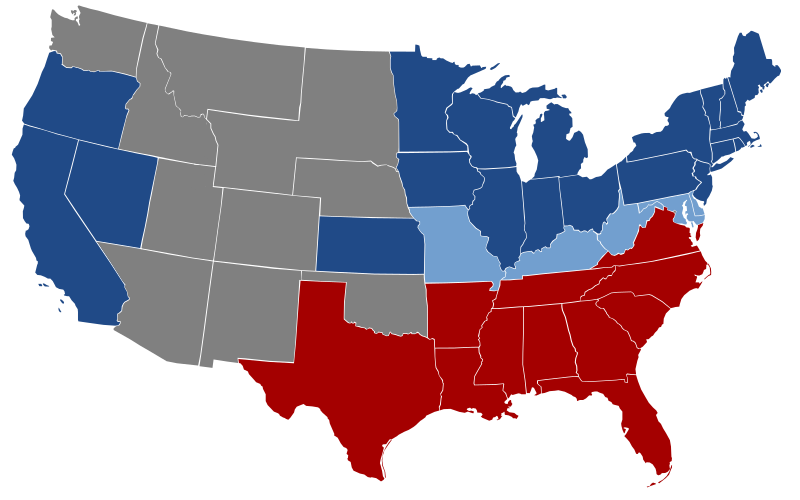
Union states in blue (light blue for states that permitted slavery), Confederate states in red.
Map by Júlio Reis via Wikimedia Commons.
Potential lines of demarcation today, well, here’s a guess from a few years ago based on county voting patterns, and again it’s still an approximation:
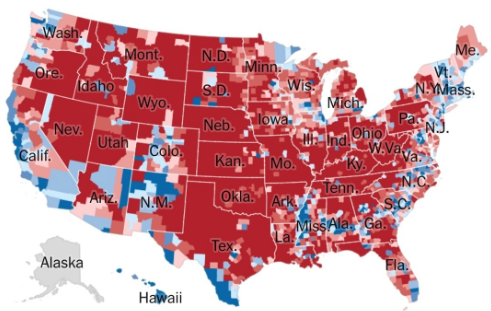
Any civil strife on this modern battlefield will be very unlike the organized Union and Confederate armies of 1861-65 having stand-up battles against one another in the countryside. Tom Kratman wrote about a potential civil war breaking out several years ago and has reposted the first part on his Substack:
I can’t quite shake the feeling that the side that wins any new civil war, to the extent that anyone can be said to “win” such a frightfulness, will be the side that a) engages in as humanitarian a form of ethnic and political cleansing as possible, first, and b) shoots second. I say “as humanitarian … as possible” because, as previously discussed,1 we are not a nation of red and blue states. Rather, instead of red and blue states, we are, as discussed a couple of years ago, “counties and neighborhoods and streets and the couch versus the bedroom after an argument with a spouse or significant other over political matters”. In short, anyone who engages in really harsh internal security measures will tend to drive people who should be its friends over to the other side. Since I’m writing this on behalf of the more or less anti-bolshevik, anti-progressive, anti-SJW2 half of the country, let me emphasize that, when the northeast, the left coast, “Yes, we old retired farts can be bribed by robbing the future” Florida, “Under the Fairfax County Bootheel” Virginia, “Cannot control Baltimore” Maryland, and CorruptionRus Illinois, unchained from the restraints we’ve imposed on them, go full lunatic lefty, let them turn into Beirut of the 80s while we try to maintain something approaching civilization as long as we can. Yes, that means I think it would be easier for us to conquer or reconquer a California devolved into its own civil war if we can avoid the same in our areas.
Note that it’s a fine line we’ll have to try to walk, rounding up those who would turn us into Beirut, without rounding up those whose rounding up will cause their friends and family to turn us into Beirut. My suggestion would be using extreme measures for those who are certain enemies, but safe and comfortable lagering or exile for those about whom there might be some doubts.
Though I may find it distasteful, honesty compels that I not shy away from that other aspect of securing the base areas, ethnic cleansing. If this nightmare comes to pass then ethnic cleansing is going to happen, I am certain, to at least three groups, Moslems, Blacks, and Hispanics. Some of it will probably come in the form of self-exile, but I would be very surprised if more of it isn’t forced. So let me throw a little damper on the KKK/alt-white-wing of my readership, if any; Trump is leading by comfortable margins in Louisiana (over a third Black and Hispanic), Mississippi (close to 40% Black and Hispanic), and Alabama (over a quarter). He’s not leading in those places by the kinds of margins he is without a more than fair sprinkling of Blacks and Hispanics, who will not be much like the rioting for fun and profit thugs of Black Lives Matter (and White Lives Don’t). Those people are us as much as anyone can be. It would be a grievous and perhaps unhealable wound to your alleged souls if you don’t treat them that way.
- http://www.everyjoe.com/2015/01/12/politics/breakup-of-united-states-terrible-idea/#1
- SJW stands for social justice warrior. Unlike many such epithets, this one was coined by the people to whom it applies. Think of idiot PhDs who call canoeing “racist”, the universe of the trigglypuffs, and those who consider eating a taco to be a crime against Mexicans, if not even a crime against humanity, which latter classification expressly excludes whites.
Update, 14 October: Welcome, Instapundit readers! Please do have a look around at some of my other posts you may find of interest. I send out a daily summary of posts here through my Substack – https://substack.com/@nicholasrusson that you can subscribe to if you’d like to be informed of new posts in the future.
Why the Roman Army Conquered the World – Adrian Goldsworthy
Nathan Watson
Published 10 Nov 2024@AdrianGoldsworthytheAuthor talks about the Roman Army and Diplomacy
October 11, 2025
Haenel’s Prototype Simplified Sturmgewehr StG45(H)
Forgotten Weapons
Published 26 May 2025In December 1944, the Haenel company received permission to produce a simplified version of the StG-44 Sturmgewehr. The idea was to keep the mechanical system and controls as similar as possible to the design in use, but simplify the design to reduce the cost and time of production. The design was never completed, and this is the only known surviving prototype. It was most likely captured by American forces when they occupied the Haenel factory in April 1945, although that is not documented. It is a pretty impressive adaptation of the StG design; far simpler to manufacture than the original design. Would it have worked? We don’t know for sure as there are no known German or American test reports, but it certainly seems viable to me.
Thanks to the Springfield Armory National Historic Site for giving me access to this truly unique specimen from their reference collection to film for you! Don’t miss the chance to visit the museum there if you have a day free in Springfield, Massachusetts: https://www.nps.gov/spar/index.htm
(more…)
QotD: Riot control tips
1. The press is not only the enemy; they must be presumed to be an utterly unprincipled and dishonest enemy. Anything and everything the riot control force does will be filmed and, if necessary, edited, to present it in the worst possible light. Therefore, they must have their own camera teams recording everything to both clear themselves of wrongdoing or spurious charges of indiscipline, as well as to discredit the press which will have edited the truth heavily. NB: There is no real limit to how dishonest the modern press can be and will be in support of the leftist agenda. There is no placating them. There is no degree of righteous conduct they will not twist into wrongdoing. There is thus no sense in trying to placate them, in trying to be nice, in tightly limiting violence, etc.; because they will lie about you and all those who want to believe their lies will.
2. Riot Control Women. They’re rather preposterous, in the main, if employed on the riot control line. It’s one of the reasons why MPs have for long been useless at riot control; they’re simply too heavily laden with women, who almost universally lack the size, strength, and aggressiveness for hand to hand combat with stone age weapons. Indeed, while the infantry and other combat and combat support unit in the old 193rd were excellent at riot control, the MPs – yes, I have seen it – were useless. Worse, riot control is a perfect environment to cause what the Israeli’s found out when they mixed men and women in the same units in their War of Independence; men will abandon the mission to succor one of their own women. This is the fault of the men, by the way, and not of the women, but it is even more the fault of the dogmatic shitheads of the left who refuse to see men and women for what they are.
3. Rioting women. I don’t care if you have a warrant for their arrest for murder, arson, mayhem, and massacre, plus cellulite and bad makeup, do not arrest or detain them at the scene. Shoot them if their conduct (to include dress) warrants it, but otherwise just push them away or wound them slightly and push them away. Why? Because, though ill-disciplined rabble, for the most part, the rioters are also mostly male and will also rush to the defense of “their” women. There is no better substitute for the cohesion and moral fiber a mob usually lacks than going after the women in the mob. They can turn ferocious very quickly, indeed, if you do.
And that’s all good and maybe it will get us through the summer, should it turn out as badly as it might, but, America, I suspect that you and the president are ultimately still going to need a dedicated, well trained, highly mobile, professional force for riot suppression.
Tom Kratman, The social media site formerly known as Twitter, 2025-06-11.
Update, 12 October: Welcome, Instapundit readers! Please do have a look around at some of my other posts you may find of interest. I send out a daily summary of posts here through my Substack – https://substack.com/@nicholasrusson that you can subscribe to if you’d like to be informed of new posts in the future.
October 9, 2025
Russia’s Great Retreat 1915
The Great War
Published 9 May 2025In May 1915, the Central Powers launched one of the greatest offensive operations of the First World War. The armies of Germany and Austria-Hungary planned to smash their way through Russia lines and tip the strategic balance in their favor. The result was one of the biggest and bloodiest campaigns of the war, known today as the Great Russian Retreat.
(more…)
October 8, 2025
The Korean War Week 68: Aussies Take the Lead In Operation Commando – October 7, 1951
The Korean War by Indy Neidell
Published 7 Oct 2025Omar Bradley, Chairman of the Joint Chiefs, arrives in Korea to see the war for himself. At the same time, UN forces launch new offensives — Operation Touchdown at Heartbreak Ridge and Operation Commando to the west. Both promise heavy fighting, but can they finally break the stalemate?
#KoreanWar #HeartbreakRidge #OperationCommando #OmarBradley
Chapters
00:00 Intro
00:54 Recap
01:16 Bradley and Bohlen
02:17 Operation Touchdown
05:07 Heartbreak Ridge
08:44 Operation Commando
11:20 The Cavalry Attacks
14:49 The Commonwealth Division
16:03 Summary
16:18 Conclusion
(more…)
October 7, 2025
How a Myth Started the Nuclear Arms Race – W2W 47
TimeGhost History
Published 5 Oct 2025The Bomber Gap: a mid-1950s panic that convinced Washington the USSR was outproducing the U.S. in long-range strategic bombers — and triggered a massive nuclear buildup. This episode traces Eisenhower’s New Look, Curtis LeMay and SAC’s push for jets, the Dulles brothers’ influence, the M-4 “Bison” bluff, and the Symington hearings that turned bad intel into national policy. Learn how politics, optics, and deliberate Soviet deception combined to accelerate the arms race and reshape deterrence for decades.
[NR: At Dominion Review, Palmiro Campagna discusses the missile gap and how it impacted the decision to cancel the Avro Arrow.]
(more…)
C93 Borchardt: the First Successful Self-Loading Pistol
Forgotten Weapons
Published 29 Nov 2015Hugo Borchardt was a brilliant and well-traveled firearms designer. He was born in Germany but emigrated to the United States at a fairly young age, where he became engaged in the gun trade. He spent time working with Winchester, Remington (where he patented improvements on James Paris Lee’s box magazine idea), and Sharps (where he designed the M1878 rifle and worked as Superintendent). With this experience under his belt, he returned to Germany and worked with the Loewe/DWM corporation.
Borchardt’s seminal invention in Germany was his C93 automatic pistol, which was the first of its kinds using a reasonably powerful cartridge and a locked-breech action. Unlike the other designs extant at the time, the C93 went into commercial production, and 3000 were ultimately made. The gun was safe and reliable, and it set the standard for locating a detachable box magazine in the grip, which remains the standard today. However, its very bulky mainspring assembly led to it being a rather awkward handgun to use (although it was a quite nice carbine when used with its detachable shoulder stock).
Borchardt’s talents came hand-in-hand with a fair amount of hubris, and he refused to consider the possibility that his pistol could be improved. Several military trials requested a smaller and handier version of the gun, and when Borchardt refused to make those changes, DWM gave the job to a man named Georg Luger. Luger was very good at taking existing designs and improving them, and he transformed the basic action of the C93 into the Luger automatic pistol, which of course became one of the most iconic handguns ever made.
October 6, 2025
Fire and Fury – Bomber Command 1943 – The Ruhr, Hamburg, Berlin and Disaster
HardThrasher
Published 4 Oct 2025The Bomber War continues — In this second part of our deep dive into RAF Bomber Command, we explore the WW2 strategic bombing campaign that raged from the Spring of 1943 to the Spring of 1944.
This episode covers the Battle of the Ruhr, the Hamburg Firestorm, the raid on the V1 and V2 rocket research site at Peenemünde, and the disastrous attacks on Berlin and Nuremberg. We’ll look at how these missions affected the course of World War II, the Nazi war economy, and the future of the Royal Air Force itself.
00:00:00 – Introduction
00:00:23 – Quotation
00:00:57 – The Battle of the Ruhr and Context of the War
00:04:59 – Planning for Operation Gomorrah
00:06:29 – Window
00:07:42 – Gomorrah
00:10:00 – Firestorm
00:14:53 – An Old “Friend” Returns
00:16:00 – Germany Goes On The Defensive
00:18:59 – Assessing the Damage
00:19:54 – Killing the V1 & V2s at Peenemünde
00:22:51 – The Battle of Berlin
00:27:53 – Reality Check for Bomber Command
00:29:50 – Disaster over Nuremberg
00:31:23 – Summing Up
00:32:05 – Survivor’s ClubReferences –
xvi The Wages of Destruction, Tooze, Penguin, 2006 (from the 2007 reprint) p. 590 and on
xvii The Wages of Destruction, Tooze, Penguin, 2006 (from the 2007 reprint) p. 597
xviii Stalin’s War, McMeekin, Penguin, 2022 p.470 and on
ixx Ibid p.327
xx The Bombing War, Overy, Penguin, 2012, p.332
xxi The Bombing War, Overy, Penguin, 2012, p323
xxii Ibid p.334
xxiii The Bomber Command War Diaries, Middlebrook and Everitt, Penguin, 1990 (orig 1985) p.413
xxiv Ibid p.440
xxv Speer: Hitler’s Architect, Kitchen, Penguin, 2020 p.185
xxvi The Rise and Fall of the German Air Force, Arm & Armour Press, 1983, p.236
xxvii The Bomber War, Overy, Penguin, 2020, p.336
xxviii The Rise and Fall of the German Airforce, Arms and Armour Press, 1983, p.235
ixxx Flak, Westerman, University of Kansas Press, 2001 p.202 and on
xxx The Pathfinders, Iredale, Penguin, 2021, p.213
xxxi Bomber War, Hastings, Pan Military, 1977, p. 371 (2020 reprint)
xxxii Bomber Command’s War Against Germany, Frankland, Pen & Sword, 2020 (see also original AIR 41/57, 1951) p.89
xxxiii AIR 16/487 – Despatches on War Operations Feb 1942 – May 1945
xxxiv Bomber Command’s War Against Germany, Frankland, Pen & Sword, 2020 (see also original AIR 41/57, 1951) p.197
xxxv Bomber Command, Hastings, Pan, 2021 (orig. 1979) Pan, p.373
xxxvi Bomber Command, Hastings, Pan, 2021 (orig. 1979) Pan, p.376Get Your Merch Here – https://hardthrasher-shop.fourthwall….
Email me – lordhardthrasher@gmail.com
October 5, 2025
North Africa Episode 2: Rommel Arrives in Africa
World War Two
Published 4 Oct 2025
North Africa, February 1941. Operation Compass has shattered the Italian 10th Army, capturing over 100,000 men and pushing deep into Libya. But just as Britain celebrates its first major land victory of World War II, a new threat arrives: Erwin Rommel. Sent by Hitler to salvage the collapsing Italian front, the “Desert Fox” lands in Tripoli with orders to hold Libya — and immediately begins pushing east.
At the same time, British commanders face tough choices: should they secure North Africa, or divert their best troops to Greece as Churchill demands? With overstretched Commonwealth divisions left behind in the desert and fresh German forces arriving, a new campaign begins — one that will decide the future of the Mediterranean war.
(more…)
October 4, 2025
The “nation of shopkeepers” is now the nation of problematic “Centrist Dads”
Dr. Robert Lyman on the common misunderstanding of the nature of war and even their own imperial history among British voters:
I’ve been involved with the practice and study of war for the past 44-years. I have five degrees in history and the study and practice of war, and I have written 19 books on the subject and have contributed to the writing of 10 more, with 3 more of my own in train. The net result of this, observing international events and Britain’s response to them over recent times, is to conclude that Britain – and Britons – have a problem about war. The problem is that at a very fundamental or essential level we simply don’t understand it. I see eyebrows rising everywhere at this assertion, protests arising in the usual places to suggest that if we don’t understand war, how on earth did we create an empire? Worrying swathes of academia and our impressionable young – I know, I’ve taught them – believe that Britain is and has been a nation of rapacious warlords that conquered a major part of the world by the use of violence and disrespect for others. We don’t have time to refute that silly nonsense here, apart from observing that the primary nature of the British Empire wasn’t one that was secured or maintained by violence.
But, to the subject at hand. A product of long decades readying, studying, teaching and writing about war has led me to the conclusion that as a nation, both politically and culturally, we are too squeamish about the practice of war to be any good at either preventing it, or preparing for it. Put simply, our problem is that we are just too nice. Centrist Dads spend their entire lives seeking compromise, and worrying when a middle way cannot be found. It is only when, deep into a war we hoped wouldn’t wash up against our shores, that we come to the shocking realisation that people are trying to destroy us and as a result we find ourselves forced into the process of trying to master the business of organizing violence on a massive scale, and unleashing it as effectively as we can against our enemies. We always seem to be playing catch up, because we haven’t prepared adequately in the first place for the inevitability of war in a fractious world.
[…] Kit Kowol’s superb (and recent) Blue Jerusalem describes in embarrassing detail the ignorance evinced by politicians and military thinkers in the 1930s who hoped to avoid the sharp end of war by buying only bombers, or ships, or of relying on persuading the enemy population to coerce their leaders into ending a war they had themselves started. Perhaps if we dropped leaflets on Herr Hitler he would see the error of his ways, and end all this silliness? Very few people in Britain on the eve of the Second World War could bring themselves to comprehend the extent of the fascist animus either for democracy in general, or the Jews in particular, both seen by the Nazis as preventing the creation of a Grosse Deutschland and allowing Germany to regain her status as primus inter pares in continental Europe. It was only as Belsen was liberated nearly six-years later that the penny seemed to drop in the befuddled British mind that these people were bad, really bad, after all. It is one of the accepted reasons for the Allied failure to destroy the railways feeding Auschwitz: decision-makers in London or New York never truly comprehended the scale of the slaughter then underway across Occupied Europe.
This is where are again. Evidence for the worryingly widespread intellectual softness that dominated political thinking through the 1930s, which I would describe as a Centrist Dad problem, is everywhere. At an event last year with General Lord Dannatt where he gave what I considered to be a pretty straight forward talk on the security threats facing the UK, and what we should do about them, I overheard a comfortable middle class couple at the end complaining that he was being “too pessimistic”. They couldn’t see any cause for alarm. I was almost too shocked to reply. These are the sort of people who cannot quite understand why Hamas and Israel don’t just kiss and make up. It must therefore be Israel’s fault that there is no two-state solution in the Middle East. I read this sort of commentary every day in the broad sheets. It is particularly well expressed by the weekly output of two well-known podcast blatherers, archetypical Centrist Dads, one a retired politician – you know the two I mean – who consistently demonstrate that they have a fragile grasp on the animus that is generated in the hearts of those who despise us, no real understanding of the security steps we need to take to prevent it, nor of the kind of war required to eliminate such threats.
The starting point of these blatherers is what the journalist Jake Wallis Simon and the security commentator Andrew Fox describe as the “Wykehamist proposition”, which is that we should treat all people, hostile or otherwise, on the basis of our own benign ideological predilections. Accordingly, if we want to prevent someone attempting to kill us, regardless of the enemy’s motives, all we need to do is to sit round a table together, assume we all want the same positive outcomes from our conversation, and proceed amicably to resolve our differences. The sad reality is that this is not how the world works, nor is it how humans behave. If they have been to taught from childhood to despise you and everything about you, to the extent that they want to kill you – as Hamas and its ilk see Jews – no amount of so-called Wykehamism is going to persuade them to do otherwise. I suggest that the opposite approach is required. We need to treat threats to ourselves and our friends seriously, both in political and in military terms, and prepare accordingly. As General Lord Dannatt and I suggest in our book, stern, decisive military active to prevent Herr Hitler from remilitarising the Rhineland may well have prevented the entire Second World War from breaking out at all. To understand how to deal with war and threats of war, we need a political class that understands the scale of the threat we face and is prepared to undertake decisive action to nip hostility in the bud when it might occur. If we can resolve our differences amicably then of course we must always do so. But where an enemy does not want to play this game we must be determined to use force – and if necessary extreme violence – to protect our interests, and our people. This might involve dropping leaflets over the Ruhr but it might also entail dropping incendiaries on Berlin. In other words, to defend ourselves as a country, we must have the capability and the willingness to exercise the full-throated management of violence. We must also accept that it is the legitimate function of other democracies – like Israel – to do the same.
Warner Carbine
Forgotten Weapons
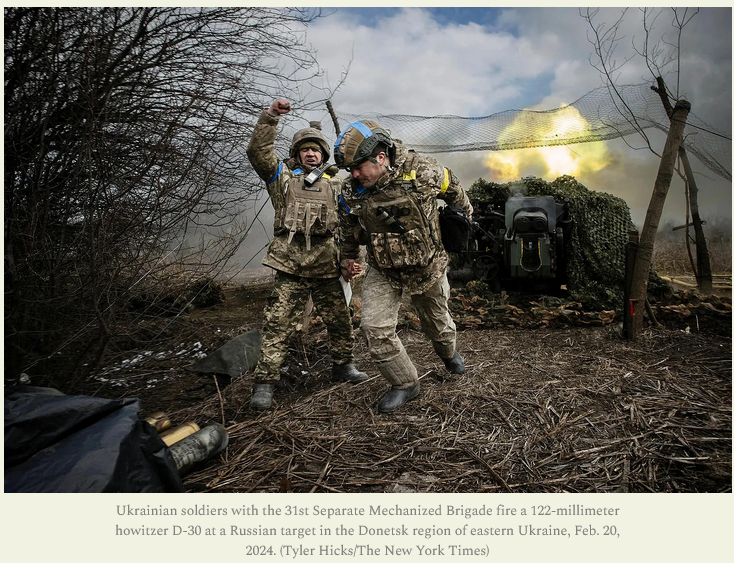
Published 8 Sept 2015The Warner carbine was another of the weapons used in small numbers by the Union cavalry during the Civil War. It is a pivoting breechblock action built on a brass frame. These carbines were made in two batches, known as the Greene and Springfield. The first guns were chambered for a proprietary .50 Warner cartridge, which was replaced with .56 Spencer in the later versions (for compatibility with other cavalry arms).
This particular Warner shows some interesting modification to its breechblock, which has been converted to use either rimfire or centerfire ammunition. This was not an uncommon modification for .56 Spencer weapons, as the centerfire type of Spencer ammunition could be reloaded (unlike the rimfire cartridges). With this modification, the firing pin can be switched from rimfire to centerfire position fairly easily.
October 1, 2025
The Korean War Week 67: Ridgway Questions Truman’s Resolve – September 30, 1951
The Korean War by Indy Neidell
Published 30 Sep 2025There’s worry and chaos in Washington when UN Commander Matt Ridgway indicates that there is one order that if given from above, he will not obey. That order concerns the possible resumption of peace talks with the Communists at Kaesong. Meanwhile in the field, the bloody Battle of Heartbreak Ridge continues, though US 2nd Division has a new commander who has new plans for how to bring about victory.
Chapters
00:00 Hook
00:53 Recap
01:07 Heartbreak Ridge
04:04 Replacement Troops
06:30 Operation Commando
09:25 Ridgway Refuses
12:52 Summary
13:11 Conclusion
(more…)


