Robert Heinlein said that the smaller any unit of government happens to be, the harder it is to move. It’s relatively easy to make enough fuss to alter the course of a federal government, for example, but everybody “knows” you can’t fight City Hall and that the most viciously dictatorial level of government is the school board.
My daughter’s home schooled. And generally, I ignore my city government because I have far bigger fish to fry (or I’m taking the coward’s way out, you may decide for yourself which). But because I’m willing to bet that one city government across this country is pretty much like another (they should all be given 24 hours to get out of town) and the trends they set have a regrettable tendency to spread upward and outward, I think it’s appropriate to discuss them from time to time, so that we’ll all have an idea of what we’re up against.
If it were only a matter of good old-fashioned Chicago-style graft, we could probably accept it philosophically. For example, say some city council somewhere passed a law that lawn sprinkling systems (which our hypothetical city government urged us to install because they save water) must now be inspected and a whopping fee collected for this “service”. Never mind that the Earth got along perfectly well for the last four and a half billion years without the fee-collecting lawn sprinkling system inspectors who lobbied for this law. What we have here (and as usual, employing government as a truncheon) is sheer, primitive, plug-ugly greed, which I happen to define as an inordinate and potentially violent desire for the unearned.
L. Neil Smith, “Feeding the Ducks”, Libertarian Enterprise, 1995-10-01.
January 8, 2022
QotD: You can’t fight City Hall
January 4, 2022
J.K. Rowling’s subversive tale of a government “controlled by and for the benefit of the self-interested bureaucrat”
No, it’s not a new work by Rowling … it’s a deeply embedded thread of her best-known books in the Harry Potter series (as related in a 2005 article by Benjamin H. Barton for the Michigan Law Review):
This Essay examines what the Harry Potter series (and particularly the most recent book, The Half-Blood Prince) tells us about government and bureaucracy. There are two short answers. The first is that Rowling presents a government (The Ministry of Magic) that is 100% bureaucracy. There is no discernable executive or legislative branch, and no elections. There is a modified judicial function, but it appears to be completely dominated by the bureaucracy, and certainly does not serve as an independent check on governmental excess.
Second, government is controlled by and for the benefit of the self-interested bureaucrat. The most cold-blooded public choice theorist could not present a bleaker portrait of a government captured by special interests and motivated solely by a desire to increase bureaucratic power and influence. Consider this partial list of government activities: a) torturing children for lying; b) utilizing a prison designed and staffed specifically to suck all life and hope out of the inmates; c) placing citizens in that prison without a hearing; d) allows the death penalty without a trial; e) allowing the powerful, rich or famous to control policy and practice; f) selective prosecution (the powerful go unpunished and the unpopular face trumped-up charges); g) conducting criminal trials without independent defense counsel; h) using truth serum to force confessions; i) maintaining constant surveillance over all citizens; j) allowing no elections whatsoever and no democratic lawmaking process; k) controlling the press.
This partial list of activities brings home just how bleak Rowling’s portrait of government is. The critique is even more devastating because the governmental actors and actions in the book look and feel so authentic and familiar. Cornelius Fudge, the original Minister of Magic, perfectly fits our notion of a bumbling politician just trying to hang onto his job. Delores Umbridge is the classic small-minded bureaucrat who only cares about rules, discipline, and her own power. Rufus Scrimgeour is a George Bush-like war leader, inspiring confidence through his steely resolve. The Ministry itself is made up of various sub-ministries with goofy names (e.g., The Goblin Liaison Office or the Ludicrous Patents Office) enforcing silly sounding regulations (e.g., The Decree for the Treatment of Non-Wizard Part-Humans or The Decree for the Reasonable Restriction of Underage Sorcery). These descriptions of government jibe with our own sarcastic views of bureaucracy and bureaucrats: bureaucrats tend to be amusing characters that propagate and enforce laws of limited utility with unwieldy names. When you combine the light-hearted satire with the above list of government activities, however, Rowling’s critique of government becomes substantially darker and more powerful. Furthermore, Rowling eliminates many of the progressive defenses of bureaucracy. The most obvious omission is the elimination of the democratic defense. The first line of attack against public choice theory is always that bureaucrats must answer to elected officials, who must in turn answer to the voters. Rowling eliminates this defense by presenting a wholly unelected government.
H/T to Glenn “Instapundit” Reynolds for the link.
January 3, 2022
January 2, 2022
Eat the bugs, peasants! Leave the meat for your betters!
Andrew Orlowski on the self-imagined elite attitudes to the environment and — as a direct result — the growing chorus of journalists pushing the idea of substituting plant-based synthetics and/or insects in place of meat for us proles:
In recent years, media messaging has been emphatically bossy about what we should eat. State micromanagement of taste has increased, too. After government intervention, British staples ranging from sticky-toffee pudding to Sugar Puffs have been reformulated beyond recognition. But the anti-meat crusade demands that something far more radical should happen – it seeks to stigmatise something central to many of our lives, and demands a shift in how we regard nature. As part of this, our media now seek to normalise lab-grown Frankenmeats, and strangest of all, adopt entomophagy – the practice of eating insects.
So what’s behind the war on meat? The apparent justification is the political elite’s great preoccupation of our time – climate change. We’re told that rearing livestock for meat is bad for the environment, and that cows are the worst offenders of all. That’s the assumption behind hit YouTube videos like Mark Rober’s “Feeding Bill Gates a fake burger (to save the world)”, a promotional video for Gates’ synthetic-meat investments, which has racked up nearly 46million views.
But the environmental argument doesn’t look so robust on closer examination. Agricultural CO2 emissions are small – so small that if the United States turned entirely vegan this decade, it would lower US emissions by just 2.6 per cent. In reality, a cow is a highly efficient protein-conversion system, turning protein that we can’t eat into protein that we love to eat. Three quarters of livestock, on balance, improve the environment, enhancing the yield of the land through fertiliser, which would otherwise need to be made synthetically. For example, one of the crimes regularly levelled against beef is water consumption. But the cow loses most of this water the same day – it’s returned to nature. So with environmental claims so weak, there must be some other rationale for the war on meat.
Much of today’s war on meat appears to be driven by venture capitalists, and their client journalists in the media. Ever eager for the next dot-com boom, Silicon Valley has made a bet on lab-grown, synthetic meat. This requires an industrial bioreactor – an expensive chemical process. But lab-grown meat doesn’t seem to be going anywhere. Business Insider recently reported that scepticism about the sector is growing, as costs remain higher than those for real meat – and this is before one single laboratory-meat formula has received regulatory approval, let alone passed the consumer test.
Another factor driving the war on meat is the academic blob. For example, Professor Peter Smith, an environmental scientist at Aberdeen University and a leading contributor to the UN’s Intergovernmental Panel on Climate Change (IPCC), likes to insist that “we’re not telling people to stop eating meat”, before adding that “it’s obvious that in the West we’re eating far too much”. Have a guess who defines what is “too much”. It’s Smith and his colleagues, not you or me making informed consumer choices.
But the oddest spectacle of all is the relentless promotion of entomophagy at the posh end of the media. The posher the paper, the keener they are on normalising bug-eating.
This is a campaign that has a high hurdle to overcome in most markets, where insects are associated with disease. “Deeply embedded in the Western psyche is a view of insects as dirty, disgusting and dangerous”, a group of academics found in 2014. Many bugs, such as cockroaches, carry disease. Flies like shit, as the saying goes. “Individuals vary in their sensitivity to disgust”, another academic paper acknowledges. “This sensitivity extends to three dimensions of disgust: core, animal reminder and contamination.” Only seven per cent of the US population would countenance the idea of eating insects, even in powdered form, according to one academic study in 2018. Processing insects also raises practical problems, with e-coli and salmonella. “Spore-forming bacteria and enterobacteriaceae have been reported in mealworms and crickets, with higher levels found in insects that had been crushed – likely due to the release of bacteria from the gut”, another study found. It’s easier to clean a cow’s stomach than a cockroach’s.
It should be no surprise, then, that the edible-insect movement has hit a few snags. Blythman recalls the startup, Eat Grub (geddit?), providing the snacks for an insect pop-up in London’s hipster East End. On the menu were “Thai-inspired” creations such as spicy cricket rice cakes and buffalo worms wrapped in betel leaf. “It tasted disgusting, and so I swallowed it whole. Then the legs stuck in my throat”, she recalls. The pop-up hasn’t returned. The following year, Sainsbury’s tapped Eat Grub for its first range of insect products – barbeque-flavoured crickets. Today, the only crickets you can buy at Sainsbury’s are cigarette lighters.
December 30, 2021
HogmaNO! Scottish government warns Scots not to cross the border to celebrate Hogmanay
In Scotland, one of the traditions of the winter is Hogmanay (spelled umpteen different ways), the last day of the old year, but Scottish public health and government officials are trying to keep the Scots away from the English border this year:
Scots have been urged not to travel to England for new year celebrations to get around the more stringent Covid-19 restrictions north of the border.
There is no travel ban currently in place to stop people going to England, where nightclubs are still open.
But Deputy First Minister John Swinney said doing so would go against the “spirit” of Scottish Covid-19 measures.
He said travelling would be “the wrong course of action” due to the “serious situation” with the Omicron variant.
Case numbers in Scotland hit “alarming” record highs over Christmas and Boxing Day, with the faster-spreading strain now accounting for the majority of all infections.
First Minister Nicola Sturgeon — who is to update MSPs in a virtual sitting of the Scottish Parliament on Wednesday afternoon — said she expected the figures to rise even more in the days ahead.
Scots have been encouraged to stay at home as much as possible, and to limit any social gatherings to no more than three households.
Large events such as Edinburgh’s traditional Hogmanay street party have been cancelled, with extra curbs in hospitality settings and nightclubs shut down entirely.
Clubs remain open south of the border, where no new restrictions are being imposed, but Mr Swinney told BBC Breakfast that he would “discourage” anyone from travelling to England to see in the new year.
He said: “People are free to make their own judgments. But what we have got recognise is that Omicron is a serious threat to absolutely everybody within our society and we have all got to take measures to protect ourselves by limiting our social contacts and connections and by complying with the restrictions we have in place.
Despite the Scottish government’s warnings, English pubs along the (currently) undefended border are expecting over a hundred thousand thirsty Scots to invade on the 31st:
English border pubs are expecting upwards of 100,000 Scottish and Welsh revellers to cross into England on New Year’s Eve amid mounting anger at Nicola Sturgeon and Mark Drakeford for cracking down on festivities.
December 29, 2021
December 23, 2021
Cheshire and Durham in the English Parliament
In his end-of-the-year Age of Invention newsletter, Anton Howes looks at two of the historic counties of England that lacked Parliamentary representation until surprisingly late dates:

Cheshire and Durham (post-medieval boundaries: English county boundaries have varied wildly over the centuries).
Base map by Hogweard at Wikimedia Commons.
England, compared to other parts of Europe, is often said to have been remarkably centralised early on. France, for example, in the late eighteenth century had some thirteen or so regional parliaments, while Britain just had the one. Scotland’s separate parliament was famously dissolved in 1707, with the official union of Scotland with England. Wales gained representation at the English parliament at Westminster from 1536. So far so expected.
But less well-known is that the county of Cheshire — some of it now disappeared under Greater Manchester — used to have an entirely separate parliament of its own, and was not represented at Westminster until 1543. Arguably, it has about as much historical claim to a national assembly today as Wales. Rule of Cheshire was even, very briefly, included among the various titles of the monarch. Richard II, as well as being king of England, was in 1397-99 also styled “Prince of Chester”. He drew his personal bodyguard from among the men of Cheshire too. So whatever happened to Cheshire nationalism?
On a related note: the mantra “no taxation without representation” looms large in the history of American independence. But parts of England itself had gone unrepresented for decades too. County Durham, traditionally ruled by its prince-bishop, was not represented by any MPs in the House of Commons at all until 1654. And as it only gained representation under the revolutionary Protectorate, this was undone upon the restoration of the monarchy in 1660. The county would not be represented again until 1675.
Why? One might argue that the bishop of Durham, who sat in the House of Lords, could be considered its parliamentary representative. But he was not elected, and most importantly had little say over the matter of parliamentary taxation, which was controlled by the Commons. Before 1603 this was not much of an issue, as county Durham was exempt from various taxes because it was near the hostile Scottish border. But the accession of James VI of Scotland to become king of England meant that the hostile border suddenly disappeared. County Durham thus became subject to parliamentary taxation without having any say over those taxes at all — a situation that they then had to bear for over sixty years! Where were the Durham revolutionaries?
December 22, 2021
Repost – “Merry Christmas” versus “Happy Holidays” versus “Happy Midwinter Break”
L. Neil Smith on the joy-sucking use of terms like “Happy Midwinter Break” to avoid antagonizing the non-religious among us at this time of year:

Original infographic from Treetopia – https://www.treetopia.com/Merry-Christmas-vs-Happy-Holidays-a/304.htm
Conservatives have long whimpered about corporate and government policies forbidding employees who make contact with the public to wish said members “Merry Christmas!” at the appropriate time of the year, out of a moronic and purely irrational fear of offending members of the public who don’t happen to be Christian, but are Jewish, Muslim, Hindu, Buddhist, Sikh, Jain, Rastafarian, Ba’hai, Cthuluites, Wiccans, worshippers of the Flying Spaghetti Monster, or None of the Above. The politically correct benediction, these employees are instructed, is “Happy Holidays”.
Feh.
As a lifelong atheist, I never take “Merry Christmas” as anything but a cheerful and sincere desire to share the spirit of the happiest time of the year. I enjoy Christmas as the ultimate capitalist celebration. It’s a multiple-usage occasion and has been so since the dawn of history. I wish them “Merry Christmas” right back, and I mean it.
Unless I wish them a “Happy Zagmuk”, sharing the oldest midwinter festival in our culture I can find any trace of. It’s Babylonian, and celebrates the victory of the god-king Marduk over the forces of Chaos.
But as anybody with the merest understanding of history and human nature could have predicted, if you give the Political Correctness Zombies (Good King Marduk needs to get back to work again) an Angstrom unit, they’ll demand a parsec. It now appears that for the past couple of years, as soon as the Merry Christmases and Happy Holidayses start getting slung around, a certain professor (not of Liberal Arts, so he should know better) at a nearby university (to remain unnamed) sends out what he hopes are intimidating e-mails, scolding careless well-wishers, and asserting that these are not holidays (“holy days”) to everyone, and that the only politically acceptable greeting is “Happy Midwinter Break”. He signs this exercise in stupidity “A Jewish Faculty Member”.
Double feh.
Two responses come immediately to mind, both of them derived from good, basic Anglo-Saxon, which is not originally a Christian language. As soon as the almost overwhelming temptation to use them has been successfully resisted, there are some other matters for profound consideration…
December 18, 2021
King James and the search for ready cash
In the latest Age of Invention newsletter, Anton Howes outlines how and why England’s new Stuart king found himself in desperate financial straits very early in his reign:

King James I (of England) and VI (of Scotland)
Portrait by Daniel Myrtens, 1621 from the National Portrait Gallery via Wikimedia Commons.
… after a generous honeymoon period of about a year, he and his government soon discovered that they were leaking cash. Despite eliminating the costly wars in Spain and in Ireland, James still had to pay off the debts that his predecessor Elizabeth I had incurred in fighting them. And he had a more extensive, and expensive, royal family to support. He traded the one-off expenses of war for the ongoing expenses of a profligate court.
This may sound like a good deal. James effectively stopped the English Crown splashing out money on really big but infrequent expenses, while increasing its ongoing expenditure — like refraining from buying a new car every few years, while spending a lot more each month eating out at restaurants.
But the Crown’s sources of revenue were ill-suited to this change. The funding for wars had been voted to Elizabeth by Parliament, usually as and when the need arose. Such expenditures were matters of national interest, and she otherwise just relied on other sources of income — ongoing taxes like customs duties, or simply the rent from her lands. When the one-off “subsidies” granted to her by Parliament had not quite been sufficient to cover the costs of the wars, Elizabeth had made up the difference by keeping her own ongoing expenses as low as possible, and took out loans to fill any gaps. It also helped that in the years before crises, Elizabeth had tried to run a surplus, building up a war-chest of cash to dip into.
So switching to the new pattern of expenditure was not straightforward. To increase the Crown’s ongoing expenses, it would have to find more sources of ongoing income, especially as it was already in deficit and had loans to pay off. It was politically impossible for James to ask Parliament for extra one-off subsidies to help him bridge the gap, as some of Elizabeth’s subsidies from 1601 had yet to even be collected. He did actually test the waters about what would happen if he did ask, just in case, but when the matter was raised by some would-be sycophants, it was met with outrage. As one member of Parliament angrily put it, “we have no sheep that yields two fleeces in the year.”
The country was already feeling over-taxed, there were no looming crises to justify such extra taxation, and even if there were, such one-off measures would be unsustainable. James needed to find revenue streams to match his spending leak — and ideally, to even exceed it. His ministers fretted about getting the Crown back into surplus again, to build up another war-chest. Who knew when the next war or rebellion might arise.
So when James called his first Parliament in 1604, it was not really to ask for one-off subsidies as Elizabeth had so often done. Instead, he and his ministers focused on outlining a series of financial deals.
December 14, 2021
The Omicron variant of the Wuhan Coronavirus
Jim Treacher gets to the essential question about the dreaded and fast-spreading Omicron variant that the media somehow always forgets to ask:
We’ve seen a lot of headlines about the Omicron variant, which is the latest thing we’re all supposed to panic about. That’s how it works: You must be driven into a perpetual state of hysteria. You must never be allowed a moment to stop and catch your breath and think about what’s happening, because you might fall into badthink. The latest name for that is Omicron.
Omicron! OMG!! Run around like a headless chicken!!!
But here’s a question that none of our moral, ethical, and intellectual betters in the press are asking, because they have no incentive to ask: How many people have died of Omicron?
Like, in the entire world. It doesn’t need to be a precise number. A rough estimate is fine. You can round up to the nearest 10.
Anybody? Hello?
I’m not sure how trustworthy Snopes is, but they say the number so far is … zero.
Zip.
Zilch.
Goose egg.
1 – 1.
None.
So please excuse me if I don’t freak the hell out every time somebody gets Omicron. Every story about it lists the number of cases but glosses over minor little details. Like what happens to the people who get it.
Do they get sick?
If so, how sick do they get?
If not, what’s the problem?
The media is just selling fear, as usual. Yes, COVID-19 is real, and a lot of people have died. No, nobody is dying from this Omicron variant. That’s good news, which is why the “news” isn’t interested.
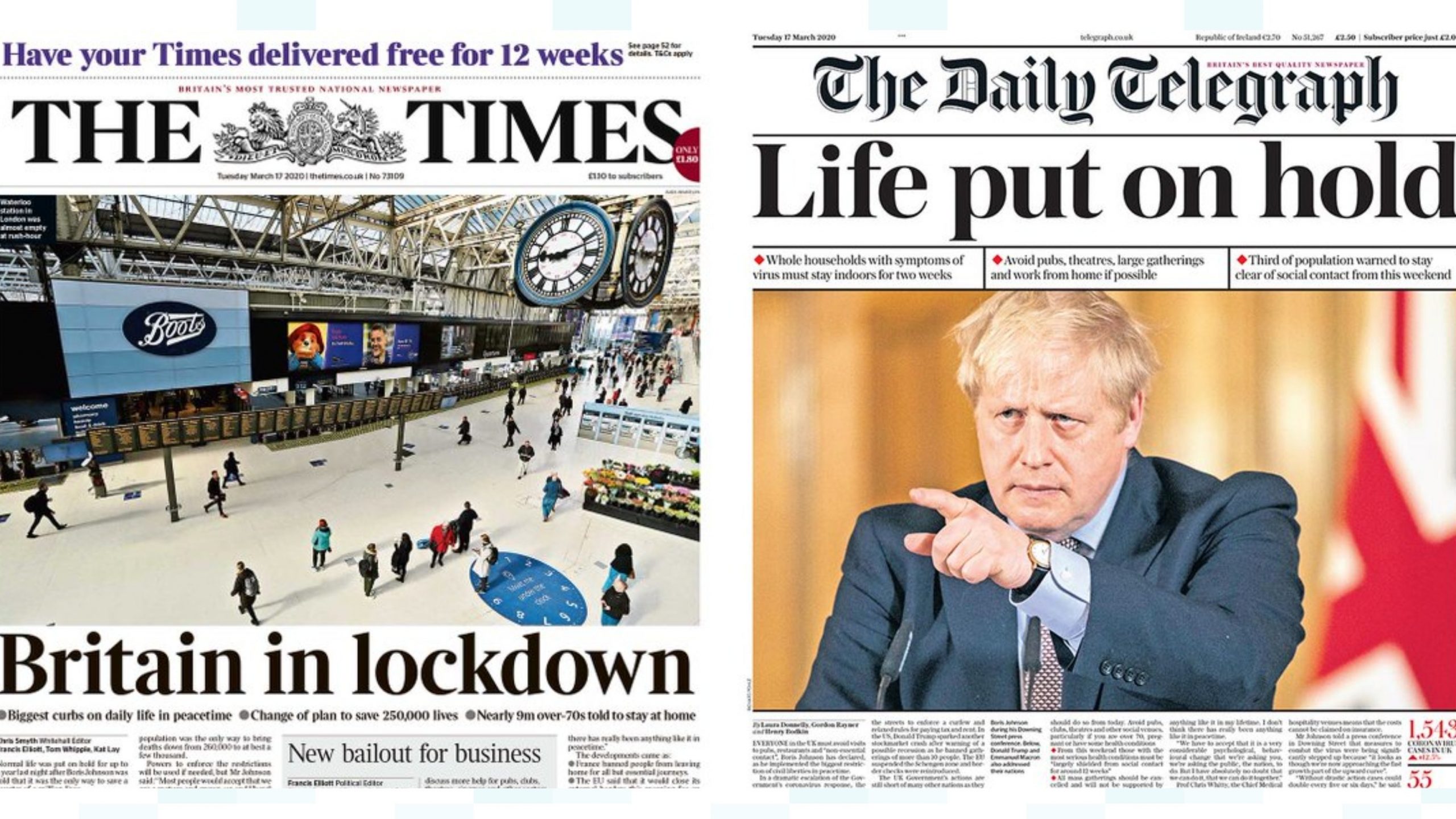
Of course, on the weekend British PM Boris Johnson announced the death of someone in Britain who had contracted the Omicron variant … but it’s not clear if the person’s death was a direct result of that infection. So, we know at least one person has died with the Omicron variant, but we don’t know if it was from it.
December 10, 2021
December 9, 2021
QotD: “The Knowledge” of London’s licensed cab drivers
It is not a simple question of regulation and laissez-faire. Regulation can result in an excellent service, better than what an unregulated service might have provided. London’s licensed taxi drivers are, in my experience, the best in the world, for example, and this is due to proper regulation. To obtain a license to operate, they have to master the Knowledge: learn the street plan of London — as higgledy-piggledy as that of any city in the world — not only in theory, as an abstract mental image, but in actual practice. This usually takes them three years, spent driving around the city, day in, day out. When finally they think that they have mastered it, they are examined — often by a retired policeman — and have to be able to say how they would get from A to B, or from C to D, not only by the shortest but also by the quickest route. Only then (and provided they have no police record) are they granted a license.
Obtaining the Knowledge is a formidable intellectual feat: indeed, neuroscientists have used it to demonstrate by brain scans differences between London taxi drivers and others in the possession of spatial knowledge and powers of orientation. And the result of the regulation requiring the Knowledge is that London taxi drivers, besides being small businessmen working largely on their own account and therefore committed to their profession, are generally intelligent, capable men. No doubt the advent of GPS will reduce the need for much of this effort, at least among unlicensed drivers, who were never required to have it anyway. The license was, and is, a guarantee of quality; and the point remains that regulation is not sometimes without benefit to the public.
What do the regulation of London taxi drivers and the success of the vaccination program have in common? I think that it is in the clarity, but also in the modesty, of their goals. The object of the regulation of taxi drivers, for example, is to produce a large cadre of drivers who provide an excellent public service — and the means to achieve this object are unmistakably and obviously connected to that goal. Any group comprising tens of thousands of human beings will contain some who fall below, even much below, the standard desired, but I know of no profession whose members more approximate its ideal. The drivers are justly proud of what they are. There have been no efforts to make saints, or even good people, of them; all that is required is that no ill be known of them and that they have the requisite knowledge. In 50 years of taking London taxis, I’ve never had a bad experience and have had innumerable good ones.
Theodore Dalrymple, “A Cure for Government Incompetence”, City Journal, 2021-08-30.