toldinstone
Published 2 Oct 2018For well over a century, the “Odes” of John Keats have been boring high school students, enchanting lovers of poetry, and giving scholars of English literature interesting things to overinterpret. When he died in 1821, however, Keats was virtually unknown – an anonymous member of Rome’s large community of travelers and expatriates in the last years of the Grand Tour.
To see the story and photo essay associated with this video, go to:
https://toldinstone.com/keats-shelley…
June 28, 2022
History of Rome in 15 Buildings 15. Keats-Shelley House
June 27, 2022
Look at Life — The Jumping Jets (1965)
PauliosVids
Published 20 Nov 2018The revolutionary vertical take-off capacity of the RAF Kestrel.
[Wikipedia: “The Hawker P.1127 and the Hawker Siddeley Kestrel FGA.1 are the British experimental and development aircraft that led to the Hawker Siddeley Harrier, the first vertical and/or short take-off and landing (V/STOL) jet fighter-bomber.
“Development began in 1957, taking advantage of the Bristol Engine Company’s choice to invest in the creation of the Pegasus vectored-thrust engine. Testing began in July 1960 and by the end of the year the aircraft had achieved both vertical take-off and horizontal flight. The test program also explored the possibility of use upon aircraft carriers, landing on HMS Ark Royal in 1963. The first three aircraft crashed during testing, one at the 1963 Paris Air Show.
“Improvements to future development aircraft, such as swept wings and more powerful Pegasus engines, led to the development of the Kestrel. The Kestrel was evaluated by the Tri-partite Evaluation Squadron, made up of military pilots from the United Kingdom, the United States, and West Germany. Later flights were conducted by the U.S. military and NASA.
“Related work on a supersonic aircraft, the Hawker Siddeley P.1154, was cancelled in 1965. As a result, the P.1127 (RAF), a variant more closely based on the Kestrel, was ordered into production that year, and named Harrier – the name originally intended for the P.1154 – in 1967. The Harrier served with the UK and several nations, often as a carrier-based aircraft.”]
June 26, 2022
Two Hundred Weeks of War – WW2 – 200 – June 25, 1943
World War Two
Published 25 Jun 2022The Allies make some preliminary moves ahead of their next big operation in the Solomon Island as well as a few before their impending invasion of Sicily. Meanwhile, in the Soviet Union, Soviet citizens are laying over a million mines in anticipation of the impending German attack at Kursk.
(more…)
HMCS Ontario – Guide 148
Drachinifel
Published 12 Oct 2019HMCS Ontario, last of Canada’s cruisers and a Minotaur class vessel, is the second subject of the day.
Want to support the channel? – https://www.patreon.com/Drachinifel
Want a shirt/mug/hoodie – https://shop.spreadshirt.com/drachini…
Want a medal? – https://www.etsy.com/uk/shop/Drachinifel
Want to talk about ships? https://discord.gg/TYu88mt
Want to get some books? www.amazon.co.uk/shop/drachinifel
Drydock Episodes in podcast format – https://soundcloud.com/user-21912004
QotD: Breaking the trench stalemate with strategic air power
The first efforts at strategic bombing were made in WWI, though once again the technology wasn’t ready. The range for fixed-wing aircraft was still very limited; the aforementioned Farman F.50 had a range of only 420km, nowhere near enough to really bring entire countries under the threat of bombing. Dirigibles – zeppelins – could manage much longer ranges and the Germans did attempt to bomb British cities with them starting in 1915. The problem was that once aircraft powerful enough to climb to the zeppelin’s altitude were developed, the slow and fragile zeppelins were sitting ducks: lighter than air airships could hardly be armored, after all. Moreover, the bomb loads of zeppelins had always been far too low to make effective strategic bombing possible beyond the initial shock of it.
What no one could have known in WWI was not merely that the technology for effective conventional strategic bombing wasn’t ready, but that it would probably never be ready. Interwar air-power theorists, seeing the potential of strategic airpower to bypass the trench stalemate by flying over it began to try to work out how this would be done. Giulio Douhet (1869-1930) argued that future wars would be fought and won in the air, with fleets of bombers using high explosives and chemical weapons to massacre enemy civilian centers, until civilians forced their governments to surrender. Douhet was not alone; his vision of airpower as shared, for instance, by the “father of the RAF”, Hugh Trenchard (1873-1956).
This concept, “morale bombing” as it is sometimes called, probably deserves its own post discussing its failures. But in brief, the concept was tested, with far larger amounts of bombs than Douhet or any other interwar theorist could have ever dreamed of, during WWII. The argument by air theorists that high altitude bombers could not be stopped was proved false when the British did exactly this, stopping German bombers over Britain in 1940. Moreover, terror bombing against civilian targets in Britain didn’t lead to surrender, but hardened resolve. Likewise, “morale” bombing against German targets by the allies didn’t lead to surrender, but hardened resolve. Later efforts to demoralize the North Vietnamese through a American bombing campaign in the Vietnam War didn’t lead to surrender, but hardened resolve. More recent efforts to demoralize or destroy terrorists and the Taliban through the use of airpower hasn’t lead to surrender, but rather hardened resolve. Likewise, efforts by the Syrian regime to defeat various opposition groups in Syria through the use of chemical weapon-based terror bombing didn’t lead to surrender (siege-and-starve tactics did), but hardened resolve.
It turns out the fundamental premise of the entire idea of morale bombing – that being bombed will make people want to stop fighting – was flawed. Morale bombing has been, depending on how hard you squint at the US air campaign over Japan in WWII (including the use of nuclear weapons) successful either once (out of many attempts) or never. In most cases, the sustained bombing of civilian centers has been shown to increase a population’s willingness to resist, making the strategy worse than useless.
The case for strategic bombing against industrial targets is marginally better, but only marginally. While airpower advocates, particularly in the United States promised throughout WWII that bombing campaigns against German industry could lead to the collapse of the German war machine, in the end many historians posit that the real achievement of the campaign was to lure the Luftwaffe into the air where it could be destroyed, thus denying the German army of air cover and close air support, particularly on the Eastern Front. Some dimunition of German industrial capabilities was accomplished (though it is not clear that this ever approached the vast resources poured into producing the large numbers of extremely expensive bombers used to do it, though the allies had such an industrial advantage over Germany, forcing the Germans to fight in expensive ways in the sky was a winning trade anyway), but the collapse of German industry never happened. As Richard Overy notes, German industrial output continued to rise during strategic bombing and only began to fall as a result of the loss of territory on the ground. Needless to say, “strategic bombing can sucker the enemy into wasting their close air support” was not the result that airpower advocates had promised, nor could it have broken the stalemate.
I don’t want to oversimplify the continued debate over the efficacy of strategic airpower here too much so let’s just say that the jury is still very much out as to if strategic airpower works even with modern technology; it certainly wouldn’t have worked with WWI era technology.
Bret Devereaux, “Collections: No Man’s Land, Part II: Breaking the Stalemate”, A Collection of Unmitigated Pedantry, 2021-09-24.
June 24, 2022
“… most of the ‘mental health crisis’ is just loneliness”
Ed West believes we’re suffering so many social ailments because we’re social creatures, evolutionarily speaking, and modern society has reduced or eliminated so many traditional community social gatherings — made far, far worse by arbitrary lockdown rules and harsh enforcement during the Wuhan Coronavirus panicdemic. He’s talking specifically about Britain and Europe, but the same definitely applies here in North America:

“Procession for Corpus Christi” attributed to Master of James IV of Scotland (Flemish, before 1465 – about 1541), illuminator.
Original illumination in the Getty Center Collection via Wikimedia Commons.
Last week, for example, most of continental Europe got a holiday to mark Corpus Christi, once a huge event in England but killed off by the Reformation. Why can’t we have a holiday too? It was 27 degrees in London last Thursday — it would have been great.
We’re all aware, on some subconscious level, that there is a need for communal feasts and holidays, and in some ways the idea of a June procession to celebrate the official religion has made a comeback with Pride. The feast-shaped hole in our lives is why, from time to time, the great and the good come up with very boring ideas for substitutes feasts, the latest being “Celebration Day”. The idea is for “one day in the year when we can all take a pause in our busy lives to reflect, remember and celebrate the lives of people no longer here”. You mean, like the feast of All Saints’ and All Souls’, which again was a huge part of our calendar once and is still marked in Catholic countries? Like that one?
[…]
Contrary to the fashionable Noughties takes about the evils of supernatural belief, religion has huge psychological benefits. There is a vast array of evidence showing that attending religious ceremonies increases dopamine responses in the brain. Overcoming our fear of death is not even the key part; it is meeting other people and taking part in a common ritual, which has huge benefits, including reduced risk of suicide or addiction. Religious attendance is “associated with lower psychological distress” and “related to higher well-being”.
Modernity, diet and substance abuse may have slightly increased rates of extreme mental illness such as schizophrenia, while social media has allowed people with personality disorders to become prevalent, especially in politics. But most of the “mental health crisis” is just loneliness. People attend fewer communal events because of the decline of religion, they see other people less regularly and they have fewer friends — of course they’re unhappy! Humans are not just social mammals, we are ultra-social by the standards of other species; that’s why we need common rituals and why we’re chasing that religious feeling everywhere and can’t find it. It is why, as Madeline Grant wrote in the Telegraph this week, that as well as progressive institutions adopting religious-type feasts, even exercise classes increasingly resemble Mass.
Lockdown, traumatic though it was, was merely an extreme version of the trend towards solitude already underway (with working from home, online shopping and various other lockdown activities on the rise before 2020). Most traditional societies would consider our everyday lives in non-Covid times to be a form of lockdown, with historically very unusual levels of isolation. That is why the extreme loneliness of lockdown gave rise to ersatz rituals such as Clap for Carers.
Yet you just can’t beat the real thing. As Parker wrote at the time, ritual decline was a real sadness in our lives: “From the Middle Ages until the first half of the 20th century, Whitsun and the week that followed was the chief summer holiday of the year in Britain. It was a time for all kinds of communal merry-making, varying over the centuries but consistent in spirit: the season for feasts and fairs, dancing and drinking, school and church processions, and generally having a good time.”
June 22, 2022
The Day the Viking Age Began
Tasting History with Max Miller
Published 21 Jun 2022For 15% off your first order with Porter Road, click the link https://porterroad.com/MAXMILLER
VIKING BLOD MEAD: https://bit.ly/meadandmore
Support the Channel with PATREON ► https://www.patreon.com/tastinghistory
Merch ► https://crowdmade.com/collections/tas…
Instagram ► https://www.instagram.com/tastinghist…
Twitter ► https://twitter.com/TastingHistory1
Tiktok ► TastingHistory
Reddit ► https://www.reddit.com/r/TastingHistory/
Discord ► https://discord.gg/d7nbEpy
Amazon Wish List ► https://amzn.to/3i0mwGtSend mail to:
Tasting History
22647 Ventura Blvd, Suite 323
Los Angeles, CA 91364LINKS TO SOURCES**
An Early Meal by Daniel Serra & Hanna Tunberg: https://amzn.to/3MOJSNb
Anglo Saxon Chronicle: https://amzn.to/3tBBoCx
The Oxford History of the Vikings by Peter Sawyer: https://amzn.to/3zElwmlRECIPE
1 pound (½ kg) pork meat
Salt for seasoning
2 tablespoons (25g) Lard or another oil for cooking
1 ½ cups (125g) chopped spring onion, or leek
2 teaspoons brown mustard seeds, roughly crushed
1 teaspoon chopped mint
1 pound (½ kg) fresh berries
½ cup (120ml) water
½ cup (120ml) mead1. Season the meat, then heat the lard/oil in a pot on the stove. Sear the meat for 5-7 minutes until well browned. Then remove it and set aside.
2. Add the onion to the pot and cook for 2-3 minutes, then add the water and mead and bring to a simmer. Add the mustard seed and mint and return the pork to the pot. Return to a simmer then cover the pot and place it in an oven at 325°F/160°C for 15-25 minutes or until the pork reaches 145°F. Then remove the pot from the oven and remove the pork to let it rest.
3. Add the berries into the pot with the braising liquid and cook on the stove for 7-10 minutes or until very soft. Mash the berries, then pour everything through a strainer. Return the liquid to the pot and simmer for several minutes or until the sauce reduces down. The sauce will not become too thick without the addition of starch (optional).
4. Slice the pork and serve with the sauce, extra berries, and mint.
**Some of the links and other products that appear on this video are from companies which Tasting History will earn an affiliate commission or referral bonus. Each purchase made from these links will help to support this channel with no additional cost to you. The content in this video is accurate as of the posting date. Some of the offers mentioned may no longer be available.
Subtitles: Jose Mendoza | IG @worldagainstjose
PHOTO
Lindisfarne Priory: Mstanyauk, CC BY-SA 3.0 https://creativecommons.org/licenses/…, via Wikimedia Commons
Disneyland: Sean MacEntee via Flickr, CC BY-SA 3.0 https://creativecommons.org/licenses/…, via Wikimedia Commons
France Relics: Dennis Jarvis via Flickr, CC BY-SA 3.0 https://creativecommons.org/licenses/…, via Wikimedia Commons
Holy Island Sunrise (again): By Chris Combe from York, UK – CC BY 2.0, https://commons.wikimedia.org/w/index…
Viking Age Map: By en:User:Bogdangiusca – Earth map by NASA; Data based on w:File:Viking Age.png (now: File:Vikingen tijd.png), which is in turn based on http://home.online.no/~anlun/tipi/vro… and other maps., CC BY-SA 3.0, https://creativecommons.org/licenses/…” rel=”noopener” target=”_blank”>https://commons.wikimedia.org/w/index…
Lindisfarne Priory Ruins: Nilfanion, CC BY-SA 3.0 https://creativecommons.org/licenses/…, via Wikimedia Commons
Statue of Rollo: By Delusion23 – Own work, CC BY-SA 4.0, https://commons.wikimedia.org/w/index…MUSIC
Battle of the Creek by Alexander Nakarada (www.serpentsoundstudios.com)
Licensed under Creative Commons BY Attribution 4.0 License
http://creativecommons.org/licenses/b…#tastinghistory #viking
June 21, 2022
“Maybe black people generally prefer black music because it’s far superior to the standard ‘landfill indie’ that ‘Glasto’ is mired in?”
At Spiked, Julie Burchill wonders what happened to Lenny Henry:

“Sign of the times @ Glastonbury Festival” by timparkinson is licensed under CC BY 2.0 .
Spare a thought for Sir Lenworth George Henry, Commander of the Order of the British Empire and knight of the realm. He works without interruption or unemployment at a job he loves (and in his spare time makes television commercials for Premier Inn hotels – megabucks payday ahoy!) and has done so from the age of 16. He is now 63 and, unusually, is becoming more attractive as he ages. He has sailed a trimaran from Plymouth to Antigua, performed on a record alongside Kate Bush and Prince, and escaped from marriage to Dawn French. Whereas some comedians become sad shadows of themselves – capering clowns who are laughed at, not with – in middle age he became a serious actor. His radio documentary, Lenny and Will, sent him “in search of the magic of Shakespeare”, whose plays he has since performed in to great acclaim. Not only is he very rich, he has also helped raise millions of pounds for charity as co-founder of Comic Relief.
But despite all of this wonderful success, Henry has in recent years taken to griping about things which really aren’t worth bothering about. Sir Len, where did it all go wrong? Well, I’d wager that it went wrong when Henry realised that if he identified as happy people might start thinking that he chose showbiz as a way to show off and get handsomely rewarded for it. And where would that leave him in the Victimhood Olympics? Nowhere near the podium.
His latest gripe is about Glastonbury. “It’s interesting to watch Glastonbury and look at the audience and not see any black people there. I’m always surprised by the lack of black and brown faces at festivals. I think, ‘Wow, that’s still very much a dominant culture thing'”, he told the Radio Times this week.
Here’s a thought. Maybe black people generally prefer black music because it’s far superior to the standard “landfill indie” that “Glasto” is mired in? And maybe they’re keener on personal hygiene than a bunch of scruffy, middle-class students roughing it on their gap year before going home to a cushy billet arranged by a friend of their father? You won’t find many white working-class people at festivals, either, for the same reasons.
I speak from personal experience. As a teenage reporter at the New Musical Express I got sent to a festival – Reading – as punishment for one of my many juvenile misdemeanours. The moment my stilettos sunk into the mud, I turned back to the station, thus facing a further trouncing from the editor. Every night, after an evening watching some rubbish punk band, I would go home and dance around the room to the sweet soul licks of the Isley Brothers until the awful white racket was forgotten.
I prefer more foreign things than I do indigenous things – from curry to gospel music – but I’m not some self-loathing idiot who believes that this country was worthless when it was white; if diversity is so great, does that mean that India and China and Africa were uninteresting before the West barged in? And don’t bother trying to make the countryside “more accessible” – I’ve never wanted to go on a ramble in my life. Why should I and my fellow mud-dodging citizens of various ethnic heritage be bussed into the racist countryside from the cities we built and love?
June 20, 2022
Japan – Liberators of India? – WAH 065 – June 19, 1943
World War Two
Published 19 Jun 2022As the people of Bengal and Iran continue to be tormented by hunger, so are the people of Germany and Yugoslavia by bombs. In Eastern Europe, the Germans continue to kill anyone they deem an enemy.
(more…)
June 19, 2022
Kursk: Soviets Dig-In for Blitzkrieg – WW2 – 199 – June 18, 1943
World War Two
Published 18 Jun 2022The Soviets have put civilians to work by the hundreds of thousands, building line after line of defenses in the Kursk salient, where they are sure the Germans are soon to attack. Meanwhile the Allies are making moves in preparations for two big upcoming offensives of their own — in Sicily and the Central Solomon Islands.
(more…)
June 17, 2022
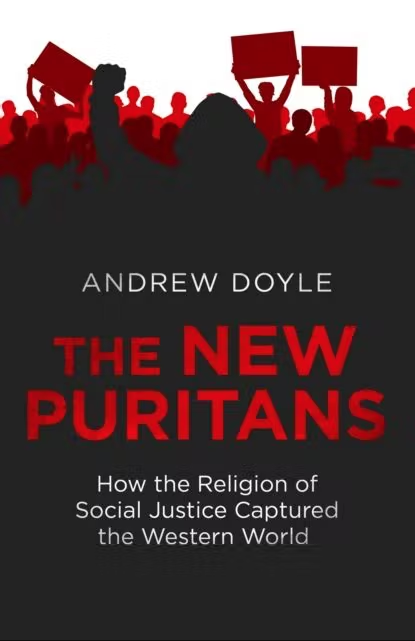
Oikophobia run rampant
In the New English Review, Theodore Dalrymple considers the prevalence of oikophobia in western culture:
In an article for the American Mind, Daniel Mahoney draws our attention to a recent book on the phenomenon of oikophobia, the dislike or even hatred of one’s own country or culture, which now seems so prevalent in western academic and intellectual circles as to be almost an orthodoxy or requirement for acceptance into the intellectual class. Of course, no social trend or phenomenon is entirely new or has an indisputable starting point: for example, George Orwell drew attention to English self-hatred many years ago. But the spread of oikophobia has been of epidemic proportion in late years.
It seems to me that Mr. Mahoney’s analysis can be extended. The first question to ask is why oikophobia should now be so prevalent. To this, I should tentatively reply that it is because of the mass intellectualization of society consequent upon the spread of tertiary education. Intellectuals have an inherent tendency to be oppositional to all received opinion or feeling, for there is no point in going to the trouble of being an intellectual if one ends up thinking and feeling what the great mass of the people around one think and feel. Love of country and inherited custom is so commonplace as to appear almost normal or natural, and much of it, of course, is unreflecting.
But intellectuals are supposed to reflect. That is their function, and they are inclined to reject received opinion, not because it is wrong but because it is received. It goes without saying that received opinion can be wrong and even wicked or evil, in which case the strictures of intellectuals are necessary and salutary; but intellectuals themselves may promote wrong or even wicked opinions, partly from the a priori need to distinguish themselves from the run of mankind.
The phobia in oikophobia is the fear of being taken for one of the common run of mankind.
The second question about oikophobia is the old one of cui bono? Again, one must not confuse the psychological or social origin or function of an opinion with its justification or correctness in the abstract, but once one has decided that an opinion is mistaken or deleterious in its effect, it is natural to ask where it comes from and what interests it serves.
In my opinion, oikophobia is generally bogus, that is to say insincere, as is its cognate, multiculturalism. The oikophobe and the multiculturalist are not really interested in other cultures, except as instruments with which to beat their fellow citizens. The reason for their lack of real interest in other countries is not difficult to find and is of very common application. The fact is that it is very difficult genuinely to enter into a culture, or subculture, other than one’s own, even when that culture or subculture is close to or adjacent to one’s own.
Tank Chat #149 Cut in Half Centurion | The Tank Museum
The Tank Museum
Published 25 Feb 2022► JOIN OUR PATREON: Our Patreons have already enjoyed Early Access and AD free viewing of our weekly YouTube video! Consider becoming a Patreon Supporter today: https://www.patreon.com/tankmuseum
► TIMESTAMP:
00:00 – INTRO
00:31 – FEATURES
(more…)
June 16, 2022
QotD: The Guardian and “capitalism”
The displacement of responsibility is a Guardian staple, with society or capitalism (or “late capitalism”, or “neoliberalism” or whatever) being blamed for the columnist’s own hang-ups and incontinence. Tanya Gold did it two or three times during her time at the paper, as did Madeleine Bunting, Oliver James, VJD Smith and God knows how many others. Diane Abbott once claimed that capitalism is the reason she got fat, and still is.
It’s practically a rule. If a Guardian contributor drinks too much, eats too much, buys too many shoes … well, obviously, they’re the victim because consumerist peer pressure somehow made them do it against their will, such as it is. The premise is generally “capitalism made me fat”, followed by “capitalism made me anxious about being fat”, followed by “tax such-and-such to buggery, or ban it altogether, and then I’ll be thin”.
David Thompson, from the comments to “Reheated (55)”, DavidThompson.com, 2019-04-01.
June 15, 2022
When adult responsibilities become overwhelming, the retreat into childish things beckons … hence the cultural dominance of “British Twee”
Ed West isn’t a fan of Britain’s universal adoption of “British Twee” as an escape from the burdens of “adulting” (as the Millenials call it):
James Marriott wrote about the phenomenon in the Times last week; noting the strangeness of seeing a drone corgi in the sky at the Jubilee, he felt “awe at this almost imperial triumph of twee”.
“Once culturally marginal — a series of aesthetic mannerisms associated with greetings cards and downmarket children’s books — twee is now the establishment style”, he wrote: “When the Queen was presented to her subjects at the coronation 70 years ago, the emphasis was on dignity and mystery: uniformed soldiers, a naval review, the BBC’s cameras forbidden from capturing the sovereign’s face in close-up. In the 1950s, this was still the language of power: formal, pompous, sternly detached. Parading for the Queen in 2022 were Teletubbies, a man in a Shaun the Sheep costume, women dressed as afternoon tea, a towering motorised cake.
“Twee is now a cultural default; the distinctive style of our age. Our emojis, gifs and memes will mark us as surely to the generations of the future as the wing collars, tailcoats and elaborate ceremonies of social deference marked our ancestors. Grown-up men and women love Disney and Harry Potter.”
Twee is egalitarian, anti-highbrow and obsessed with childhood, he says. “A love of childish things is a mark of democratic taste and an aversion to pomposity. Britain, with its long (often admirable) tradition of anti-intellectualism is especially vulnerable.”
Marriott concludes that “I can’t bring myself to hate Paddington and corgis but twee can be as oppressive as the formal, serious culture that preceded it. If our ancestors denied themselves the silly, child-like side of human nature, we now ourselves deny its solemn and difficult aspects. Twee is an aesthetic for an age uninterested in ethical complexity, which prefers good and bad as neatly separated as they are at Hogwarts. It fits the childish behaviour of social media’s most active users who swing between condemnatory temper tantrums and cooing over anthropomorphised animal.”
He also notes how twee has been “appropriated by powerful corporations” because “it’s easier to rip someone off with a smiling wide-eyed chatbot.” In my experience, the more informal and “I’m yer mate” a service provider is, the worse it treats its customers.
And that applies to social classes, too; the more informal a ruling elite behaves, the less they care about boring old customs, the less they can be trusted to do the right thing for the people they’re supposed to lead.
Tweeness is terrible, but there’s a particular indefinable, British kind of twee, which is infuriating but hard to articulate. British Twee, or British Cringe, is not so much a definable illness as more like a cluster of symptoms.
Cockwomble, as explained by Ben Sixsmith, is British Twee. Needless posh swearing is very British Twee; used sparsely, swearing is very effective, especially by people with RP accents; used liberally, it’s cringeworthy, especially when discussing politics. The post-referendum anti-Brexit campaign was filled with British Twee, mixing both a loathing of the country with an assumption of cultural superiority, all done in a self-consciously frivolous way.
This kind of Twee British Cringe, because it’s at once both self-hating and also uniquely self-obsessed, seems to suppose that certain British things are uniquely terrible — the awfulness of our government, or the prejudice of our great unwashed — but certain British things are uniquely brilliant and envied, such as the BBC and NHS, not to mention our famous sense of humour.
British Twee is the patriotism of the soft-left. While consciously anti-nationalist, this kind of tweeness is obsessed with defining British national character and values. This reaches its peak with pride about Britain’s universal healthcare, something enjoyed by literally every developed country except the United States.
Istanbul: City of Spies – WW2 – Spies & Ties 18
World War Two
Published 14 Jun 2022Neutral Turkey appears to be an island of peace in a sea of war. But if you look a little closer though and there’s another story. Assassins ply their deadly trade. Spies slip in and out of occupied Europe. The Allies and Axis battle for influence. The secret war is in full swing.
(more…)