
The History Guy: History Deserves to Be Remembered
Published 3 May 2021Canadians would distinguish themselves in the Great War, and the words of Canadian John McCrae would come to, perhaps more than any other, encapsulate the sacrifices of the soldiers of that war. The story of one of the most important poems about war ever written deserves to be remembered.
(more…)
November 11, 2022
Canada, the Great War, and Flanders Fields
Comments Off on Canada, the Great War, and Flanders Fields
November 8, 2022
“Just Stop Oil” and other nihilistic doomsday cults
In Spiked, Tom Slater says we have to accurately label groups like the Extinction Rebellion spin-off “Just Stop Oil” rather than giving them the rather anodyne label of “protest groups”:

We need to stop calling Just Stop Oil a protest group. Protesters is far too positive a word to describe this strange assemblage of middle-class agitators, with their cut-glass accents and self-parodying bohemian names (shouts out to Indigo Rumbelow), who have been gluing themselves to roads and throwing soup at great works of art in an attempt to end oil and gas production. This thing is a doomsday cult, masquerading as a political campaign. There’s really no denying it any longer.
Take the case of that 24-year-old woman who climbed up one of the gantries over the M25 this morning, in order to bring all the ignorant, carbon-spewing plebs to a standstill. She posted an unnerving video online. In it, she is fighting back tears. She gives vent to a seemingly sincere apocalyptic terror. “I’m here because I don’t have a future!”, she says, in between sobs. She accuses the government of murder, of fuelling a “climate crisis” she seems to be convinced is killing millions, for having the temerity to exploit oil and gas to keep the UK’s lights on.
That what she’s saying is alarmist nonsense should be obvious to anyone. The truth is almost the inverse of what she is saying. Thanks to economic development, fuelled by cheap and reliable energy, annual deaths worldwide from climate-related disasters have plunged by more than 95 per cent over the past century. She also implies that the floods in Pakistan are the fault of fossil fuels, even though those feted IPCC reports say there is insufficient evidence to show that climate change is making floods more frequent, lengthy or intense. What would be considerably more murderous would be for our government to shun reliable oil and gas supplies as the nation’s pensioners head into a harsh winter, amid sky-high energy prices and talk of blackouts.
Such blithe disregard for the details reminds us that these people don’t really care about climate change. They’re hysterical about climate change. They’re apocalyptic about climate change. They aren’t taking to the streets, motorways and art galleries because they are convinced of a particular scientific view with regards to the environment and think something really ought to be done about it. They are in the grip of a fact-lite and doom-laden narrative that insists literally billions will die in short order, that the twentysomethings of today might not live to see their dotage, because of our damnable desire to live comfortable and free lives.
All of this is why environmental protest – with Just Stop Oil and the various other Extinction Rebellion offshoots to the fore – has become so much weirder in recent years. And that’s saying something. Beyond all the crying and talk of having no future, there’s also the setting of arms on fire, the pouring of human shit over memorials to Captain Sir Tom Moore, the throwing of soup over great works of art … it’s all become rather visceral, iconoclastic, scatological. In a word, it’s all become rather creepy. These are the acts not of future-oriented protesters keen to shape and change the world, but of cultists convinced that doomsday is almost upon us.
As someone else pointed out recently, there’s more than a bit of a resemblance between the kind of actions taken by protest groups like “Just Stop Oil” and the tantrums of very small children.
Comments Off on “Just Stop Oil” and other nihilistic doomsday cults
Look at Life — Underwater Menace (1969)
PauliosVids
Published 20 Nov 2018Dealing with the hazardous legacy of World War II.
Comments Off on Look at Life — Underwater Menace (1969)
November 6, 2022
Allies Launch New Phase in Pacific War – WW2 – 219 – November 5, 1943
World War Two
Published 5 Nov 2022The Allies hit the beaches of Bougainville, largest and last of the Solomon Islands. They create and expand a beachhead there and also win battles there at sea and in the skies. In the USSSR, the Soviets are closing in on Kiev and in the south have isolated the Crimea, but in spite of that, Adolf Hitler issues a new directive that Germany’s focus for the future should be in the west and the threat of an Allied invasion there.
(more…)
Comments Off on Allies Launch New Phase in Pacific War – WW2 – 219 – November 5, 1943
QotD: Thatcher and the Falklands
Mrs Thatcher saved her country — and then went on to save an enervated “free world”, and what was left of its credibility. The Falklands were an itsy bitsy colonial afterthought on the fringe of the map, costly to win and hold, easy to shrug off — as so much had already been shrugged off. After Vietnam, the Shah, Cuban troops in Africa, Communist annexation of real estate from Cambodia to Afghanistan to Grenada, nobody in Moscow or anywhere else expected a western nation to go to war and wage it to win. Jimmy Carter, a ditherer who belatedly dispatched the helicopters to Iran only to have them crash in the desert and sit by as cocky mullahs poked the corpses of US servicemen on TV, embodied the “leader of the free world” as a smiling eunuch. Why in 1983 should the toothless arthritic British lion prove any more formidable?
And, even when Mrs Thatcher won her victory, the civilizational cringe of the west was so strong that all the experts immediately urged her to throw it away and reward the Argentine junta for its aggression. “We were prepared to negotiate before” she responded, “but not now. We have lost a lot of blood, and it’s the best blood.” Or as a British sergeant said of the Falklands: “If they’re worth fighting for, then they must be worth keeping.”
Mrs Thatcher thought Britain was worth fighting for, at a time when everyone else assumed decline was inevitable. Some years ago, I found myself standing next to her at dusk in the window of a country house in England’s East Midlands, not far from where she grew up. We stared through the lead diamond mullions at a perfect scene of ancient rural tranquility — lawns, the “ha-ha” (an English horticultural innovation), and the fields and hedgerows beyond, looking much as it would have done half a millennium earlier. Mrs T asked me about my corner of New Hampshire (90 per cent wooded and semi-wilderness) and then said that what she loved about the English countryside was that man had improved on nature: “England’s green and pleasant land” looked better because the English had been there. For anyone with a sense of history’s sweep, the strike-ridden socialist basket case of the British Seventies was not an economic downturn but a stain on national honor.
A generation on, the Thatcher era seems more and more like a magnificent but temporary interlude in a great nation’s bizarre, remorseless self-dissolution. She was right and they were wrong, and because of that they will never forgive her. “I have been waiting for that witch to die for 30 years,” said Julian Styles, 58, who was laid off from his factory job in 1984, when he was 29. “Tonight is party time. I am drinking one drink for every year I’ve been out of work.” And when they call last orders and the final chorus of “Ding Dong! The Witch Is Dead” dies away, who then will he blame?
During the Falklands War, the Prime Minister quoted Shakespeare, from the closing words of King John:
And we shall shock them: naught shall make us rue,
If England to itself do rest but true.For eleven tumultuous years, Margaret Thatcher did shock them. But the deep corrosion of a nation is hard to reverse: England to itself rests anything but true.
Mark Steyn, “The Uncowardly Lioness”, SteynOnline.com, 2019-05-05.
Comments Off on QotD: Thatcher and the Falklands
November 5, 2022
Repost: Remember, Remember the Fifth of November
Today is the anniversary of the Gunpowder Plot:
Everyone knows what the Gunpowder Plotters looked like. Thanks to one of the best-known etchings of the seventeenth century we see them “plotting”, broad brims of their hats over their noses, cloaks on their shoulders, mustachios and beards bristling — the archetypical band of desperados. Almost as well known are the broad outlines of the discovery of the “plot”: the mysterious warning sent to Lord Monteagle on October 26th, 1605, the investigation of the cellars under the Palace of Westminster on November 4th, the discovery of the gunpowder and Guy Fawkes, the flight of the other conspirators, the shoot-out at Holbeach in Staffordshire on November 8th in which four (Robert Catesby, Thomas Percy and the brothers Christopher and John Wright) were killed, and then the trial and execution of Fawkes and seven others in January 1606.
However, there was a more obscure sequel. Also implicated were the 9th Earl of Northumberland, three other peers (Viscount Montague and Lords Stourton and Mordaunt) and three members of the Society of Jesus. Two of the Jesuits, Fr Oswald Tesimond and Fr John Gerard, were able to escape abroad, but the third, the superior of the order in England, Fr Henry Garnet, was arrested just before the main trial. Garnet was tried separately on March 28th, 1606 and executed in May. The peers were tried in the court of Star Chamber: three were merely fined, but Northumberland was imprisoned in the Tower at pleasure and not released until 1621.
[. . .]
Thanks to the fact that nothing actually happened, it is not surprising that the plot has been the subject of running dispute since November 5th, 1605. James I’s privy council appears to have been genuinely unable to make any sense of it. The Attorney-General, Sir Edward Coke, observed at the trial that succeeding generations would wonder whether it was fact or fiction. There were claims from the start that the plot was a put-up job — if not a complete fabrication, then at least exaggerated for his own devious ends by Robert Cecil, Earl of Salisbury, James’s secretary of state. The government’s presentation of the case against the plotters had its awkward aspects, caused in part by the desire to shield Monteagle, now a national hero, from the exposure of his earlier association with them. The two official accounts published in 1606 were patently spins. One, The Discourse of the Manner, was intended to give James a more commanding role in the uncovering of the plot than he deserved. The other, A True and Perfect Relation, was intended to lay the blame on Garnet.
But Catesby had form. He and several of the plotters as well as Lord Monteagle had been implicated in the Earl of Essex’s rebellion in 1601. Subsequently he and the others (including Monteagle) had approached Philip III of Spain to support a rebellion to prevent James I’s accession. This raises the central question of what the plot was about. Was it the product of Catholic discontent with James I or was it the last episode in what the late Hugh Trevor-Roper and Professor John Bossy have termed “Elizabethan extremism”?
Comments Off on Repost: Remember, Remember the Fifth of November
November 4, 2022
“Dreadnought” – The King of the High Seas! – Sabaton History 114 [Official]
Sabaton History
Published 2 Nov 2022When the Dreadnought made its appearance in the early 20th century, it was the mightiest ship the world had ever seen, making all other gunships obsolete, including the rest of its own navy. It also sparked a naval arms race around the world, as many nations built such behemoths. But what were they actually like?
(more…)
Comments Off on “Dreadnought” – The King of the High Seas! – Sabaton History 114 [Official]
Tank Chats #157 | Ferret MKII & V | The Tank Museum
The Tank Museum
Published 1 Jul 2022Join David Fletcher for a new Tank Chat on the Ferret.
(more…)
Comments Off on Tank Chats #157 | Ferret MKII & V | The Tank Museum
November 2, 2022
QotD: Being “the world’s policeman”
The United States took on the mantle of world’s policeman in the post-Second World War world. They have spent much of the last 60 years trying to keep the peace, and, interestingly, to maintain the balance of power. (Do not be fooled by the concept of the overwhelming superpower. Britain was a lot closer to being able to take on the rest of the world in the 19th century, when it really could defeat every other navy in the world combined; than the US is now, where it could perhaps face Iran, Russia and India simultaneously, as long as the European Union is friendly. Whoops, forgot China, the Balkans, Palestine, Syria, North Korea, Iraq, Afghanistan, Somalia and other little blips on the US horizon. Well let’s be honest, no one has ever been able to take on more than a few of the other powers simultaneously. NO one.)
For their troubles, they are usually pilloried by those all about them, particularly by up and coming powers who want their “place in the sun” – the Soviet Union and China being the stand-out examples. (Though there is a lot of whinging from old allies like France). For the last forty years (since Vietnam, and certainly since Gulf War One), there have been signs that the US voter is having serious second thoughts about the whole concept.
Britain was quite reluctant to take over later imperial dependencies, particularly leftover states of defeated Empires like Turkey, such as Iraq and Palestine: but also parts of Africa and Asia “of interest to no bugger”. They were never part of the British ideal of commercial empire, and were almost impossible to govern. They were abandoned as soon as possible.
The United States is currently experiencing the joys of taking over, or being responsible for unwanted bits of empire. Strangely the names Iraq and Palestine are occurring on that list, as well as Afghanistan and possibly other commitments to come. (The US has interfered in these areas far longer than Britain had before she was stuck with them). They cannot be considered part of a logical geopolitical empire (not even for oil conspiracy nuts), and will be abandoned as soon as possible.
The British voter responded to the world wars by wanting out of empire. Now. Some of the states thus “released” were well-developed societies with decent infrastructure and good literacy and rule of law concepts. India, Malta, Ceylon, Bermuda and Singapore spring to mind. Others were abandoned prematurely: without literacy, rule of law, good infrastructure, a developed civil service, practice of voting, or any of the other minor necessities for establishing a democratic state. See any list of African dictatorships.
The US voter is responding to current events by wanting out of the Middle East ASAP. They are intent on abandoning states to “democracy”, regardless of a lack of literacy, rule of law, good infrastructure, a developed civil service, practice of voting, or any of the other minor necessities for establishing a democratic state. Whoops.
Britain suffered from an immense artificial economic high after the Napoleonic war. This left the British economy extremely artificially inflated for eighty years, and still well above its realistic weight in the world for another fifty (and only really brought back to the field by the immense economic losses of two world wars). In the last twenty years Britain has held a more realistic place in the world economy for its population and industrial level (though still relatively inflated by an immense backlog of prestige and sometimes reluctant respect.).
The US suffered from an immense artificial economic high after WWII. This left the US economy artificially inflated for the rest of the century, and still well above its realistic weight in the world to the present. … Sometime in the next few decades, the US will probably return to a more realistic place in the world economy for its population and industrial level. (Minor variables like World War III may make this projection uncertain as to actual timing, but it will happen: simply because the US will not be able to largely sit out most of the next world wars and profiteer from everyone else’s ruin the way she could in the last two).
Nigel Davies, “The Empires of Britain and the United States – Toying with Historical Analogy”, rethinking history, 2009-01-10.
Comments Off on QotD: Being “the world’s policeman”
November 1, 2022
Britain’s Final Assault – Falklands War
Historigraph
Published 29 Oct 2022In the closing days of May 1982, the British land campaign to recapture the Falkland Islands began, after an eight thousand mile voyage and weeks of battles at sea and in the air. With a beachhead established, British troops were now charged with rapidly defeating an Argentinian force that was more numerous and had spent weeks preparing defences. The Battle for the Falklands was about to begin.
(more…)
Comments Off on Britain’s Final Assault – Falklands War
October 30, 2022
Andrew Sullivan on the rise of Rishi Sunak (or was it “Rashid Sanook”?)
In the free-to-cheapskates excerpt from his Weekly Dish newsletter, Andrew Sullivan contemplates the differences between how Barack Obama was seen as a historical figure to the US media and yet that same media can’t manage to see how Prime Minister Sunak is “the British Obama”:
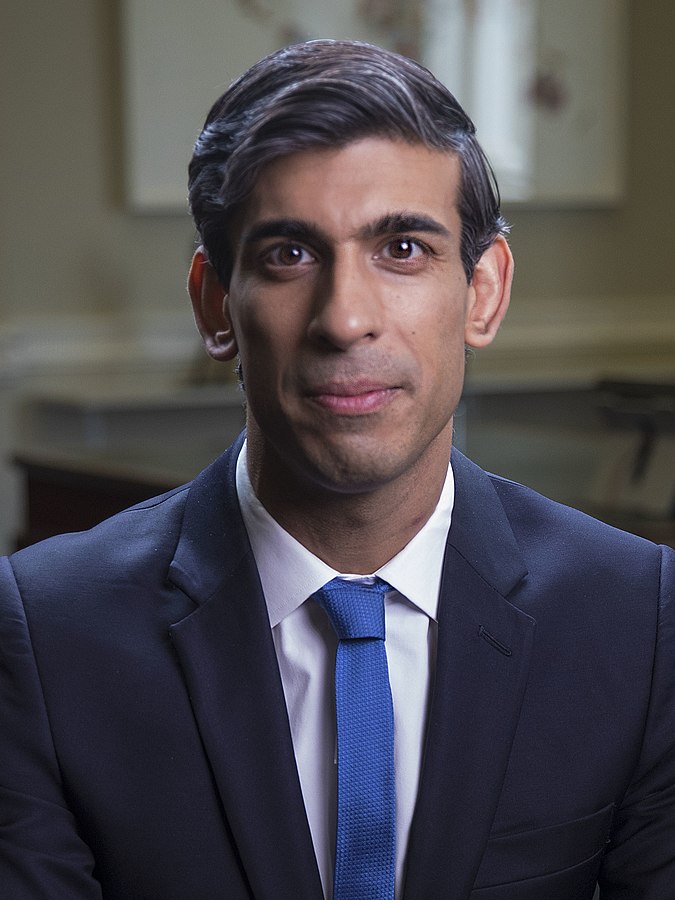
Rishi Sunak shortly after becoming Chancellor of the Exchequer in 2020.
In his inimitable way, Joe Biden this week celebrated the rather remarkable fact the the new Conservative prime minister in Britain is the grandson of Indian immigrants:
As recently as today, we’ve gotten news that Rashid Sanook is now the prime minister. As my brother would say, “Go figure.” And the Conservative party! … Pretty astounding. A groundbreaking milestone. And it matters! It matters!
He got the name wrong, but he’s Joe Biden. He gets names wrong. But unlike many on the left, especially the woke left, and perhaps because he is old enough to remember the after-effects of colonialism, Biden could bring himself to see what a staggering moment it is. It really is. It has gotten a bit obscured in the incredible mess of recent Tory politics. But staring us in the face is a historic shift.
It’s an Obama moment, after a fashion.
[…]
No, Sunak didn’t run an inspirational campaign like Obama. He’s not an orator even close in skill, he hasn’t won an election in his own right, and he didn’t come out of the blue. But he’s even younger than Obama when he took office — just 42, five years younger than Obama when he became president, and, unlike Obama, a slip of a thing and only 5’7″. And, for understandable reasons, Sunak seems much less worried about the cultural and political aspects of breaking the race barrier than Obama was.
Sunak is, for example, an openly practicing and proud Hindu. He lit Diwali lights around 11 Downing Street and took his oath on the Bhagavad Gita. That’s not someone running from his heritage. And he is also a Brexiteer from conviction, and, unlike Truss, a fiscal conservative who’s a realist about what can and can’t be done in a period of extraordinary economic stress for Brits and massive post-Covid debt.
All of this suggests something too many liberals have forgotten. These countries of alleged “white supremacy” have less racism than almost anywhere else in the world. It is hard to imagine a non-white president of France or Germany or Italy — let alone China or Russia or anywhere in Central Europe. It is hard to think of another empire that was deliberately unwound by its architects, and who then, within two generations, installed the grandson of former colonial subjects to its most powerful office. And Obama, of course, was twice elected with more heartland white support than Hillary Clinton.
Sunak has, moreover, been selected by the Tory party — that bastion of alleged bigotry that has already had three female prime ministers in its history, and now also a non-white man, James Cleverly, as foreign secretary, and a woman of Indian ancestry, Suella Braverman, as home secretary. Three of the top four ministers of state in Sunak’s cabinet are non-white. The new chairman of the Conservative party is Nadhim Zahawi. I’m telling you this because the US MSM — who are usually obsessed with racial representation in every single mundane situation — suddenly aren’t that interested, when some of their woke priors are rattled.
This is true of the broader American left. A faction obsessed with racial “equity” cannot take a moment to observe a historical moment of extraordinary proportions. Some, like Trevor Noah, have even completely invented a racist “backlash” against Sunak that simply hasn’t happened, apart from one call on one radio call-in show. (I was on BBC Radio this morning talking to an interviewer who was simply baffled by the projection.)
Noah has the excuse of being a comedian. But the New York Times‘ coverage has been almost as ludicrously slanted as its usual coverage of post-Brexit Britain, and it quickly ran two op-eds by British leftists trashing Sunak. Every story that refers to his ethnicity always slams his class “privilege” — i.e. that his parents were middle-class children of immigrants. This morning, the paper ran another hit-piece on Sunak’s wealth. The only benefit of his Indian ancestry appears to be that he will help the Indian diaspora in Britain itself. The incredible arc of imperial history finally coming full circle? Barely a mention.
Comments Off on Andrew Sullivan on the rise of Rishi Sunak (or was it “Rashid Sanook”?)
Fresh German Armor in the USSR! – WW2 – 218 – October 29, 1943
World War Two
Published 29 Oct 2022Erich von Manstein finally gets the reserve armor he’s been begging Hitler for, so he can carry out his counteroffensive in Ukraine. The Soviets are still on the move themselves though. In Italy, though, the Allies are moving at a crawl since the Germans have mined and booby trapped everything. There’s also new action in the Solomons and a celebration in Japan.
(more…)
Comments Off on Fresh German Armor in the USSR! – WW2 – 218 – October 29, 1943
“The Economist is the most over-rated publication in the English language”
I started reading The Economist when I was in college, and became a subscriber for nearly 20 years. Over the last few years, the tone of the articles shifted away from classical liberal toward communitarian or even full-blown socialist cheerleading, so I sadly ended my subscription and haven’t picked up a copy in at least 15 years. According to Ken Whyte in the SHuSH newsletter, things haven’t improved since I stopped paying attention:
The Economist recently said that book publishing in today’s economy resembles book publishing during the Second World War when “paper imports collapsed” and “publishers printed only sure-fire hits”.
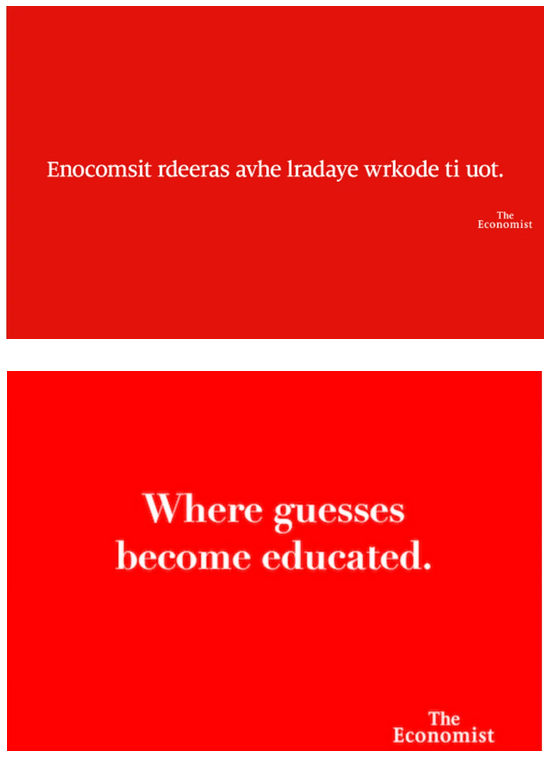
The Economist is the most over-rated publication in the English language, especially by itself. I give it marks for its broad range of interests, ability to cover a lot of ground in relatively tight articles, and occasionally solid reporting, but if you’re going to boast incessantly about how smart you are …
… you’d better back it up. The Economist seldom does. It tends to glib, obvious, and sloppy. Most of its articles are written by anonymous b-level freelancers whose best stuff goes to outlets that afford bylines. Their work is edited to a stultifying homogeneity by a haughty grad student with a Financial Times subscription. Or so it reads.
This piece — “Books are Physically Changing Because of Inflation” — is a case in point. Paper imports to the UK were reduced during WW2 but they did not collapse. The problem for the book trade was rationing. The government restricted publishers to 60 percent of their pre-war paper volumes (later falling to 35 percent) and itself used far more tonnage for propaganda than the book industry normally required. Manpower shortages were another factor limiting the production of new titles.
Nor is it true that publishers released “only sure-fire hits”. While much of their paper allotment went to keeping hot-selling books in stock, many bets were placed on new titles and most of them paid. It was wartime and leisure activities were limited. “British publishers found that they could sell virtually any title,” writes Zoe Thomson in The Journal of Publishing Culture.
The article isn’t all bad. It reports that British book publishers are paying 70% more for paper than they were a year ago: “Supplies are erratic as well as expensive: paper mills have taken to switching off on days when electricity is too pricey. The card used in hardback covers has at times been all but unobtainable.”
To cope with the price increases, publishers are printing smaller books on cheaper paper and jamming more words onto the page. Writers are being asked to write shorter and are being held to their word limits.
That reflects the current state of the industry. It’s hardly news, though. SHuSH readers are probably sick of hearing me on rising paper and printing costs, and I’ve just been following what others have written. The cost of printing has more or less doubled since before COVID. Many smaller publishers are already releasing fewer and slimmer titles. If we are headed into a recession, the trend will continue.
Comments Off on “The Economist is the most over-rated publication in the English language”
QotD: Thatcher’s legacy
Nevertheless, she won. In Britain in the Seventies, everything that could be nationalized had been nationalized, into a phalanx of lumpen government monopolies all flying the moth-eaten flag: British Steel, British Coal, British Airways, British Rail … The government owned every industry — or, if you prefer, “the British people” owned every industry. And, as a consequence, the unions owned the British people. The top income-tax rate was 83 per cent, and on investment income 98 per cent. No electorally viable politician now thinks the government should run airlines and car plants, and that workers should live their entire lives in government housing. But what seems obviously ridiculous to all in 2013 was the bipartisan consensus four decades ago, and it required extraordinary political will for one woman to drag her own party, then the nation, and subsequently much of the rest of the world back from the cliff edge.
Thatcherite denationalization was the first thing Eastern Europe did after throwing off its Communist shackles — although the fact that recovering Soviet client states found such a natural twelve-step program at Westminster testifies to how far gone Britain was. She was the most consequential woman on the world stage since Catherine the Great, and the United Kingdom’s most important peacetime prime minister. In 1979, Britain was not at war, but as much as in 1940 faced an existential threat.
Mark Steyn, “The Uncowardly Lioness”, SteynOnline.com, 2019-05-05.
Comments Off on QotD: Thatcher’s legacy
October 29, 2022
Your Thoughts on Our D-Day Coverage So Far – WW2 – Reading Comments
Updated with re-uploaded video, 3 Nov 2022. The original video was taken down within a few hours. This is the same video less one short rant that Indy reconsidered and has chosen to omit.
World War Two
Published 28 Oct 2022Indy and Sparty pick out some of the best, most interesting, and even controversial comments by you under our videos. Stay for the PJs.
(more…)
Comments Off on Your Thoughts on Our D-Day Coverage So Far – WW2 – Reading Comments


