Quotulatiousness

August 12, 2020

Defending Sir John A.

In his latest post for The Dominion, Ben Woodfinden attempt to defend that horrible racist, sexist, homophobe, transphobe, non-intersectional, dead, white, cis-gendered male monster, Sir John A. Macdonald:

Statue of Sir John A. Macdonald that formerly stood in front of City Hall in Victoria, British Columbia.
Wikimedia Commons.

The way you’re supposed to begin a piece like this is with a sort of penitential act. I should begin a discussion of Sir John A. Macdonald with a confession of his various sins and crimes, before offering an apology, and a reluctant defence of our first prime minister that essentially boils down to “history matters,” without actually explaining what that history is or why it matters.

If you do this you’ve already lost the historical fight, because you’ve willingly ceded the narrative to Macdonald’s detractors, and fallen back to a defence of history in some abstract sense, instead of a defence of Macdonald himself. This kind of Girondin impulse is far too common amongst many liberals and conservatives now, especially in elites institutions and fields like journalism and academia.

[…]

No one, including me, claims that Macdonald was a saint, and Canada’s treatment of Indigenous people and migrants in the early days of Confederation was racist, and wrong. I doubt any serious person would deny this. But even on these questions, Macdonald’s record is complex. Tristin Hopper, wrote an excellent and accessible piece in the National Post simultaneously laying out both the bad things Macdonald was responsible for, and also Macdonald’s paradoxically ahead of his times views on Indigenous voting rights, and recognition of the terrible plight of Indigenous peoples.

But this is only part of the story of Macdonald, and the crucial role he played in our history. Too often this is all that gets discussed, ceding the narrative to Macdonald’s detractors and dooming him to inevitable damnatio memoriae. This is why, in the name of defending our history, we cannot simply defend capital H History, we have to defend the substance of our actual history.

Macdonald’s central role as the key architect of Confederation, and our country, is not well known because Canadian history, especially the history that led to confederation, is not well known by Canadians. It’s a national embarrassment, and in this vacuum it is easy to build incomplete and partial narratives about what Canada is and what Canada means.

Macdonald is best described as “the indispensable politician.” Confederation was not inevitable, it took adept figures like Macdonald to make it happen. Macdonald was not an ideologue, and his political career was defined by his masterful ability to forge coalitions and working compromises between seemingly intractable groups. He was an important political figure in the United Province of Canada (the union of Upper and Lower Canada), and proved adept at balancing and forging coalitions with the warring and disparate factions from Upper and Lower Canada forced into an uncomfortable union. He resisted, but worked and ultimately partnered with uncompromising reformers in the province like George Brown, while ultimately laying the groundworks for constitutional reform that Brown, though principled, could almost certainly never have achieved.

August 9, 2020

Canadian Art magazine’s “woke suicide pact”

As a cultural barbarian and all-around Neanderthal, it will come as little surprise to both my readers that I’d never even heard of Canadian Art magazine. As a result, the recent decision to cease publication due to the unresolved (and almost certainly unresolvable) issues of needing to be funded by rich white people:

These evils were explained in a long article published by Canadian Art‘s former editor-in-chief, David Balzer (self-describedgay, fag, queer. Ambivalent Libra“), in which he complains that the progressive agenda of the magazine he edited was forever being undercut by the need to solicit funds from wealthy white donors. Or, as he describes it, the pursuit of: “white, liberal money — the champagne socialists.”

Shockingly, these donors are not especially fond an incessant slew of articles with titles such as Drop the Charges and Defund the Police, Says New Artists’ Letter for Black Lives, Give Us Permanence — Ending Anti-Black Racism in Canada’s Art Institutions, and A Crisis of Whiteness in Canada’s Art Museums.

Balzer’s analysis of the growing tension between establishment donor and do-good editor is spot on:

    Most boards, which are also majority white, are [interested] in going to where they believe the money is. So the argument goes: It takes a certain talent, panache, to be president, director, or CEO, to open those pocketbooks, and without these skills, culture cannot run. This argument implies that culture cannot run if its backrooms are not white … Many corporate partners make possible the lavish, yearly fundraising galas that cultural organizations host: ostentatious displays of whiteness and wealth that are the public-facing versions of the aforementioned work done by white presidents, directors and CEOs.

It’s a problem that every charity, art outlet, and activist organization in Canada will face. Supporting the arts is rarely an act of pure altruism. It has always been a status flex by the well-connected barons and baronesses of privilege. At its most cynical, arts funding is a high-class game of reputation laundering.

August 7, 2020

Myth and Reality of the Ross MkIII Rifle

Filed under: Cancon, History, Military, Weapons, WW1 — Tags: , , , , — Nicholas @ 02:00

Forgotten Weapons
Published 16 Jun 2013

There is a long-standing urban legend about the Canadian Ross rifle, a straight-pull bolt action that was used in lieu of the SMLE by Canadian troops early in World War One. The story is that the Ross would sometimes malfunction and blow the bolt back into its shooter’s face, with pretty horrible results. Well, I wanted to learn “the rest of the story” — could this actually happen? What caused it? How could it be prevented? In short, what would a Ross shooter need to know to remain safe? And if I could get some cool footage of a bolt blowing out of a Ross in the process, all the better.

Well, reader Andy very generously provided a sporterized Ross for the experiments, and I started reading into what the issue really was. Turns out that the legend was quite true — you can put a Ross MkIII bolt together the wrong way, and it will allow you to fire without the locking lugs engaged, thus throwing the bolt back out of the gun at high velocity. However, the issue was recognized fairly quickly, and the vast majority of Ross rifles were modified with a safety rivet to prevent this from happening. It is also quite easy to determine if a Ross is assembled correctly, once you know what to look for.

http://www.forgottenweapons.com

August 5, 2020

Red Toryism, limited government and other Canadian political sinkholes

Filed under: Cancon, Economics, Government, Politics — Tags: , — Nicholas @ 03:00

In his latest article in The Dominion, Ben Woodfinden talks about the political void where most Canadian conservatives keep their notions about what “conservatism” actually means in the Canadian context:

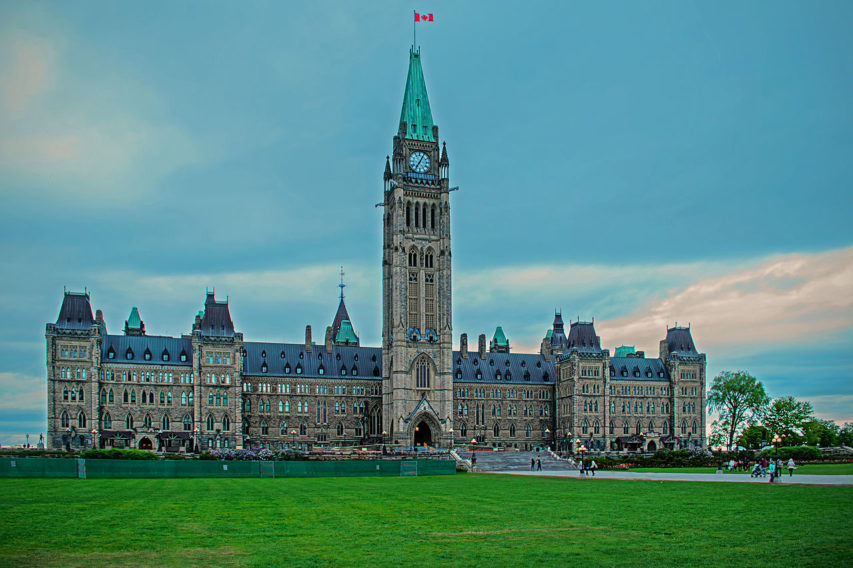
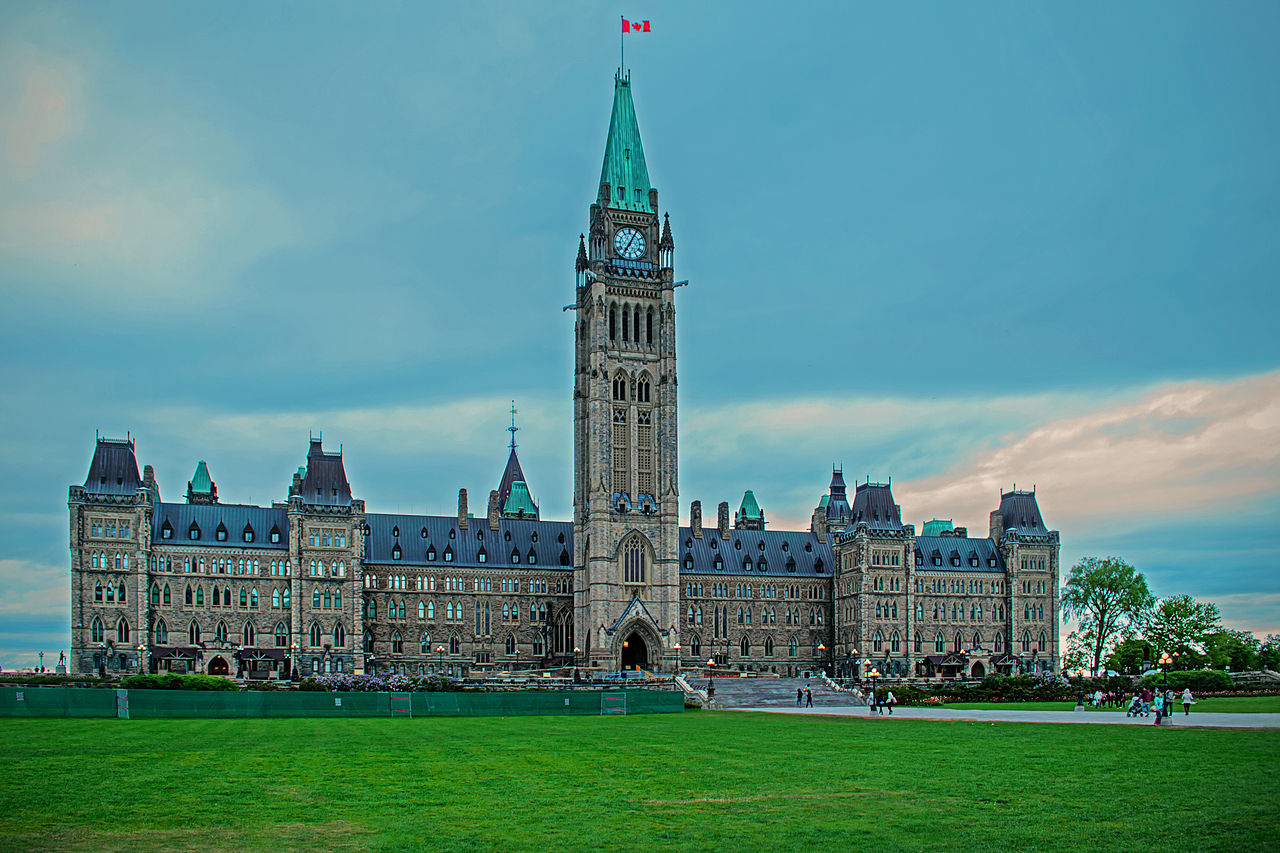
Parliament Hill in Ottawa.
Photo by S Nameirakpam via Wikimedia Commons.

This passage is from the Red Toryism essay:

    Modern Canadian conservatism champions “small government”, seemingly without having any theory of what the state is actually for. Absent such a framework, it is difficult to identify governing priorities let alone to develop a philosophically coherent blueprint for action. When Conservatives get elected, they often have no idea of how to achieve the “fiscal responsibility” they preach. A series of ad hoc actions and policies follow, and the predictable result is failure to roll back the state in any significant or lasting way.

This, predictably, did not please everyone, and in a political landscape where we often still think that the divides between left and right are really about “big” versus “small” government, this was to be expected. But a conservative theory of government needs to escape this paradigm.

While conservatism is a broad tent, one unifying feature should be a commitment to limited government. But limited government is a term that often gets conflated with ideological “small government” that sees most of the modern state as illegitimate, and would eliminate most of it and leave the state to provide just the most minimal night-watchman functions. But small government, while a valid view to hold, is not limited government, and conservative government cannot just be about small government.

Limited government means constitutional government that is accountable and constrained by the rule of law, and while there are aspects of the modern state that need to be reformed, tamed, and limited, conservative government cannot just be about trying (and failing) to shrink the state. Conservatives have too often, I think, adopted the rhetoric of small government, without actually being true believers, and in the process they find it very difficult to actually reform and shape the state because they have put little thought into what government actually ought to be about.

Let me give you an example. Recently my friend Asher Honickman and I wrote a column for the National Post calling for a “parliamentary revival.” One specific and important reform we want to see is an expanded House of Commons to 500 MPs. More MPs would make for better party, and parliamentary government. But multiple people, including well connected conservatives, privately told us that while they think this is a good idea, one reason it won’t happen is because conservatives will just look at it through the lens of more spending of tax dollars on politicians. Instead the conservative impulse is to just try and shrink the size of legislatures to save a little bit of money.

In this case small government ideology actually gets in the way of reforms that would help make government more accountable, and limited. MPs should be held accountable and have their spending and salaries heavily scrutinized, but the cost of 150 more MPs would be nothing in the grand scheme of things.

This misses the point. More MPs would make for more accountable and better parliamentary government, and allow parliament, instead of both the bureaucracy and judiciary to increasingly take over more and more of lawmaking and governing that should be done by elected officials. The choice isn’t between more government or less government, in this case it’s a choice between who you’d rather be governed by; MPs who can scrutinize the government more, legislate with more freedom, and who you can hold to account, versus unelected bureaucrats with minimal oversight and limited accountability to elected officials.

In short, a conservative theory of governance should prioritize limited government, but in some cases this might require an attempt to strengthen (and more spending) on certain parts of government to constrain other parts.

It’s a rare Canadian conservative who’s willing to be quoted as saying that any part of human life is not automatically part of the remit of the federal government … how do you carve a “limited” government philosphy out of that?

August 4, 2020

Ontario’s COVID Alert app

Filed under: Cancon, Government, Health, Technology — Tags: , , , , — Nicholas @ 03:00

Michael Geist explains why he has installed the Canadian government’s COVID App on his phone, despite the privacy concerns such government tracking apps present:

The Canadian COVID Alert app is ultimately as notable for what it doesn’t do as for what it does. The voluntary app does not collect personal information nor provide the government (or anyone else) with location information. The app merely runs in the background on an Apple or Android phone using bluetooth technology to identify other devices that come within 2 metres for a period of 15 minutes or more. Obviously, the distance and timing are viewed as the minimum for a potential transmission risk. If this occurs, a unique, random identifier is stored on each person’s device for a period of 14 days. After the 14 day period, the identifier is deleted from the device.

The identifier does not identify a specific person or location information, and is not sent to any centralized database. If a person tests positive for the virus, they are given a key code to input into the app. Once the key code is inputted, anyone that was identified as being potentially exposed over the prior 14 days receives a notification that this has occurred and they should consider testing and/or self-isolating.

From a privacy perspective, this is very low risk. Indeed, the government’s position – confirmed in the Privacy Commissioner of Canada’s analysis – is that there is no collection of any personal information and therefore the Privacy Act does not apply. The Privacy Commissioner rightly points out this raises some concerns about the state of the law (arguing it should be sufficiently robust to allow for reviews of this kind), however, the use of random identifiers ensures that identification of individual is very unlikely. Moreover, the Privacy Commissioner’s review concludes that “there are very strong safeguards in place” with security of the data, commitments limiting use, independent oversight, and a pledge to de-commission the app (including deletion of all data) within 30 days of the Chief Public Health Officer of Canada declaring the pandemic over.

The Ontario Information and Privacy Commissioner was also engaged in the review process. Her recommendation letter points to commitments for potential ongoing issues, including ensuring that the app is effective, that there is monitoring of third party components such as the Google-Apple Exposure Notification System, and public transparency associated with the app and its use.

While the app passes legal muster, its introduction reinforces the problems with social inequities that COVID-19 has laid clear. Much like the connection between socio-economic status and infection risk, the app itself is only accessible to those who can afford newer Apple and Android devices. That obviously means that those with older phones or no wireless access at all are unable to use it. While I don’t think that is reason to abandon the initiative, the government should be exploring alternatives to allow all citizens to implement these safeguards.

August 3, 2020

Recycling is a SCAM!

Filed under: Asia, Business, Cancon, China, Economics, Environment, USA — Tags: , — Nicholas @ 06:00

J.J. McCullough
Published 29 Jun 2019

Recycling is a disaster. This video was sponsored by Loonie Politics! Sign up using the code word “McCullough” for 25% off! https://looniepolitics.com/register/

Visit the channel of guest star Demetrios: https://www.youtube.com/channel/UCNKV…

An in-depth look at Canadian recycling:
https://globalnews.ca/news/5199883/ca…

The Vice video I mentioned:
https://www.youtube.com/watch?v=Pv1UP…

FOLLOW ME:

🇨🇦Support me on Patreon! https://www.patreon.com/jjmccullough
🤖Join my Discord! https://discord.gg/3X64ww7
🇺🇸Follow me on Instagram! https://www.instagram.com/jjmccullough/
🇨🇦Read my latest Washington Post columns: https://www.washingtonpost.com/people…
🇨🇦Visit my Canada Website http://thecanadaguide.com

August 1, 2020

“All style and no substance made it the perfect match for Trudeau”

Filed under: Cancon, Government, Politics — Tags: , , , , , — Nicholas @ 03:00

Andrew Lawton on the Prime Minstrel’s performance in “explaining” his role in the WE scandal:

“Don’t look at me – I’m just the prime minister.”

That about sums up Justin Trudeau’s defense in a Canadian scandal starring grifters, shell corporations, virtue signallers and a federal ethics probe.

The WE-Scam, as it’s come to be known in Canadian circles, is, on its surface, a simple one.

Trudeau’s government created a $912 million government program to pay students to volunteer – formerly known as “working” if memory serves – and outsourced the administration of it to WE Charity, one of those purported international development charities more known for holding glitzy, celebrity-filled parties than digging any wells in Africa.

All style and no substance made it the perfect match for Trudeau.

WE would have netted about $44 million from the program had the government not pulled the plug amid the backlash. The charity would also have had a budget to pay teachers up to $12,000 each to funnel their students into the paid volunteer channels.

The program itself was a boondoggle, but bad policy became a scandal because Trudeau and virtually everyone in his immediate family have personal and financial connections to WE, as do at least two of his cabinet ministers, not to mention his chief of staff – all of whom say their relationships had nothing to do with WE getting the sole-sourced contract.

After weeks of ducking scrutiny from his political opponents, Trudeau made a rare appearance before the parliamentary finance committee Thursday, though his testimony was heavy on the sanctimony and light on the details.

July 30, 2020

“Muzzling” scientists only ever happens under Conservative governments…

… so even though the circumstances might look remarkably similar to the layman’s eyes, Justin Trudeau can’t possibly be accused of doing the same thing as that evil, anti-science Stephen Harper:

Prime Minister Stephen Harper speaking at the Annual Meeting 2012 of the World Economic Forum at the congress centre in Davos, Switzerland, January 26, 2012.
World Economic Forum photo via Wikimedia Commons.

In fact, Grant Robertson reports, the Trudeau regime effectively shuttered a small, cheap (less than $3 Million dollars ~ petty cash in Canada’s government) research and early warning team called the Global Public Health Intelligence Network (GPHIN) which

    was among Canada’s contributions to the World Health Organization, and it operated as a kind of medical Amber Alert system. Its job was to gather intelligence and spot pandemics early, before they began, giving the government and other countries a head start to respond and – hopefully – prevent a catastrophe. And the results often spoke for themselves.

Unfortunately, by the time the COVID-19 pandemic was getting started, just when the GPHIN should have provided “early warning,” it had been told, by the Trudeau regime, to focus on domestic issues. But global pandemics don’t often start in Canada, do they? The GPHIN sifted through data from around the world, often from places like China, Iran and Russia which hide or manipulate medical information, conducting something akin to military reconnaissance so that Canadian (and global (WHO)) officials could “see” what might be headed our way.

Did Justin Trudeau give the order to “muzzle” the GPHIN scientists? No, of course not … no more than Stephen Harper gave the order to “muzzle” scientists in Environment Canada. The decision to “refocus” the GPHIN on useless, domestic busywork was likely made by an Assistant Deputy Minister who was acting on yet another demand from the Treasury Board Secretariat to justify every programme dollar … again.

You should be glad that the Treasury Board Secretariat casts a sceptical eye on every single government programme and is a constant thorn in the side of operational people (like I was when I was serving and like the GPHIN folks were, too). They, skilled, hard-working civil servants, are just trying to ensure that your tax dollars are not being wasted. They are good people doing good work. But sometimes the wheat gets tossed away with the chaff. That appears to have been the case with the GPHIN. In retrospect, it seems almost criminally stupid to have deprived Canada of a valuable medical reconnaissance agency just because there had not been an “attack” recently. But that appears to have been the bureaucratic justification ~ it’s like me saying that since my house hasn’t burned down recently we should disband the fire department.

Did Justin Trudeau muzzle scientists? No.

Did Justin Trudeau’s government disable a valuable (and cheap) “early warning” system just to make its own wild spending look a little less careless? Yes, that’s what the Globe and Mail‘s investigation says ~ and we have paid a horrendous price in lives for that decision.

This story, it seems to me, is very much like the “Harper muzzles scientists” stories from a few years ago … but minus the massive media attention. It appears very evident, from Mr Robertson’s investigations that bureaucrats, acting on their own, internal priorities, emasculated the GPHIN just when we needed it most. That, bureaucratic action, was I believe what was, mainly, behind the “Harper muzzles scientists” stories, too. But in the 2010s much of the mainstream media was in a sort of undeclared war against Stephen Harper and so the claims of climate activists became “news” and opinions were treated as facts.

Membership in the Laurentian Elite isn’t about intelligence, it’s about power and status

Filed under: Cancon, Government, Politics — Tags: , , , , — Nicholas @ 03:00

In The Line, Andrew Potter wonders why Canadian political elites tend to be so … dumb:

Typical image search results for “Justin Trudeau socks”

Recent events in Canadian federal politics have raised anew the familiar conundrum: why are high status people so stupid?

Anyone who has had much interaction with high status individuals is familiar with the phenomenon. It isn’t the shallow ignorance of the merely uneducated, or the malevolent brainlessness of the criminal class. It’s not even your bog-standard lack of intelligence. No, high class stupidity is of a very special type: A sort of studied lack of interest in facts, an offhand relationship with norms, an outright animosity to new ideas.

But it is important to specify just what we mean by “high status,” because status means different things to different people. (Indeed, how you define “status” is one of the key markers of class differences in Canada.) For some people status is defined by money or wealth, for others it is a function of education, while for still others it is a matter of taste. And even if you are sure it comes down to money, there are clear status differences based on how you got rich. Everyone instinctively understands the difference between the guy who got rich off a chain of used car dealerships and the one who made his bundle selling his dotcom startup, and there’s a reason why “nouveau riche” is a derogatory term.

And so the high-status individuals we are talking about here are the highest of high, the upperest of upper, the ones whose wealth is inherited, whose lives are defined by their privilege, and for whom the question of which rung of the status ladder they stand upon never arises, because there is no one above them.

Which brings us to the Liberal government, and in particular to Prime Minister Justin Trudeau, Minister of Finance Bill Morneau and the scandal over the sole-sourced contract (sorry, “contribution agreement”) with a branch of the Kielburger-led WE conglomerate. First, Canadaland broke the story two weeks ago that Trudeau’s mother and brother had received almost a quarter of a million dollars in speakers’ fees from the WE organization.

[…]

Trudeau and Morneau are both very wealthy men, and if they were going to get into the business of selling their offices it wouldn’t be to a children’s charity for penny ante sums. No, as a number of columnists have pointed out, what is at work here is not corruption, it is privilege: It probably never occurred to either Trudeau or Morneau that this sort of thing was wrong. And it didn’t occur to them, because they are the sort of people who have spent their lives not worrying about the comings and goings of money and how it may affect their lives.

That is why the defining feature of the WE scandal is not the corruption, but the almost deliberate stupidity that is on display — in particular the lack of interest in basic material facts or in following the rules that govern the lives of most people. Which brings us back to the question we started with.

Update: Corrected the attribution for this … Andrew Potter’s article appeared in The Line, not The Dominion. Apologies for the brain fart…

July 29, 2020

Some fascinating and disturbing information on the Nova Scotia murders

Filed under: Cancon, Law — Tags: , , , , — Nicholas @ 05:00

Once again, the Halifax Examiner provides information on the mass murder case in Nova Scotia that seems to be mystifyingly of little to no interest to the mainstream media outlets:

An annotated RCMP map shows the killer’s route from 123 Ventura Drive in Debert to 2328 Hunter Road in Wentworth. Insets of still images taken from different videos show the killer’s replica police car at 5:43am in Debert and passing a driveway on Hunter Road in Wentworth at 6:29am.

The most stunning revelation comes from one person who spoke with Halifax police. That person told police that the murderer, who the Examiner refers to as GW, “builds fires and burns bodies, is a sexual predator, and supplies drugs in Portapique and Economy, Nova Scotia.”

Moreover, the person said that GW “had smuggled guns and drugs from Maine for years and had a stockpile of guns” and GW “had a bag of 10,000 oxy-contin and 15,000 dilaudid from a reservation in New Brunswick.”

Another person who spoke with the RCMP gave information about GW’s properties, relating that it was known that there were secret hiding places at the properties. The person said GW had shown another person (whose name remains redacted) a “hidden compartment in the garage” [presumably in Portapique], which was under a workbench, and GW kept a “high powered rifle” in the space.

The person who spoke with the RCMP said that there was a “false wall” at GW’s Dartmouth residence. That information was echoed by another person who spoke with Halifax police on April 19, who said that “there is a secret room in the clinic in Dartmouth.”

Other information that is newly un-redacted confirms information that was widely known before.

July 23, 2020

Justin Trudeau and the Overton Window

Filed under: Cancon, Media, Politics — Tags: , , , , , , — Nicholas @ 05:00

Ted Campbell explains how Canada’s mainstream media work so hard to move the Overton Window to benefit Justin Trudeau and the Liberal Party:

… this explanation from Politico might help:

    The concept of the “Overton window,” the range of ideas outside which lie political exile or pariahdom, was first batted around in a series of conversations by the late free-market advocate Joseph Overton in the 1990s. After Overton’s untimely death in a plane crash in 2003, his friend and colleague at the libertarian Mackinac Center, Joseph Lehman, formalized and named the idea in a presentation meant to educate fellow think-tank warriors on the power of consistent advocacy. Ring the bell loudly for your idea, no matter how unpopular, and back it up with plenty of research and evidence, so the thinking went. Today’s fringe theory can become tomorrow’s conventional wisdom by the shifting of the finely tuned gears that move popular opinion; to Overton and Lehman the role of the think tank was to at least familiarize voters with these ideas, giving them an institutional home when public opinion finally moved their way.

Or, and even more brief visual explanation is:

Anyway, I believe that the Liberal Party of Canada and its allies in e.g. the CBC, The Star, and amongst the others who speak for the Laurentian Elites are working very hard, right now, to move the Overton Window frame of one idea from “Unthinkable” to at least barely “Acceptable.” That idea is that Justin Trudeau’s personal corruption (I believe that’s the right word) is acceptable because the alternative is a Conservative government that is, by Liberal/Laurentian Elite definition, authoritarian (fascist), homophobic, militaristic, racist, and sexist.

That’s right, the Liberal/Laurentian Elites admit that Justin Trudeau is dishonest, that he, unthinkingly, breaks the rules, over and over again ~ because, you see, he’s a really nice person but, sadly, he’s just not very smart. I have even made that case for them. I suggested, almost a year ago, that Justin Trudeau is an intellectual lightweight who is in no way qualified to hold high office … but he has the “second hand” celebrity of a famous name and he’s photogenic, too, and so, in 21st-century Canada he’s electable.

Edmonton’s CFL team will abandon the “Eskimos” nickname that’s been in use for over 100 years

Filed under: Cancon, Football, History, Politics — Tags: , , , — Nicholas @ 03:00

Anything that happens in the United States tends to also happen later in Canada. The Washington NFL franchise has abandoned their “Redskins” nickname (although to many the “Washington” part is at least as offensive) but have not yet announced their new moniker. Edmonton is in the same situation, with no new name yet decided upon:

“Edmonton eskimos wordmark” by Pabstheiniker is licensed under CC BY-SA 4.0

I said an anticipatory farewell to the name of the Edmonton Eskimos football club in this space in 2017; on Tuesday the team’s front office executed the sentence, announcing that the team’s nickname, in use for Edmonton sports clubs for over 110 years, will be retired. (Note that the Canadian Football League is only 62 years old.)

But there is always some kind of minor surprise on the scaffold, and in this case it was that the team has not yet decided on a new name. This, I see, is where I made a mistake back in 2017.

I saw that getting rid of “Eskimos” was a relatively simple problem with an affordable cost that would have to be paid eventually. In the event, the final push was supplied, unsurprisingly, by corporate sponsors — themselves all in a state of vulnerability and panic in conditions of pandemic disease. The CFL team had played public-relations defence whenever the issue was raised aggressively before; they were, self-evidently, playing for time.

I noted in 2017 that the same P.R. apparatus was obviously trying to propagate “Empire” as an alternative by-word for the team, and it filed a trademark application for “Edmonton Empire” in 2018. The team can start selling new green-and-gold gear to fans as soon as it settles on something, and a new nickname beginning with “E” would preserve the team’s stylish double-E logo. “Empire” might even work well with the team colours if “gold” were interpreted more literally in the uniform, rather than serving as sales talk for “yellow.”

[…]

Speaking as an Edmonton-born fan of Edmonton Ellipsoidal Ball Sport Sodality, I see now that I may have prepared adequately for the end of the Eskimos, but my heart didn’t anticipate the dual nature of this decision any more than my brain did. I know — hell, my friends and my readers know — that I will dislike whatever they pick. Contests and polls of the public produce embarrassments like “The Toronto Raptors,” so the mere thought of any such exercise plunges me into despond.

July 20, 2020

The “epic failure” of the RCMP during the Nova Scotia killing spree

Filed under: Cancon, Law — Tags: , , , , , — Nicholas @ 03:00

In the Halifax Examiner, Paul Palango reconstructs the (known) series of events during the April pursuit of the killer at large in Nova Scotia:

The RCMP has claimed it did its best in trying to deal with the Nova Scotia mass killer on the weekend of April 18 and 19, but a reconstruction of events by the Halifax Examiner strongly suggests that the police force made no attempt to save lives by confronting the gunman or stopping his spree at any point.

“Public safety and preservation of life are the primary duties of any peace officer,” said a former high ranking RCMP executive officer who asked for anonymity out of fear of retaliation by current and former law enforcement officials who are vigilant about any criticism of policing by those in the field. “As far as I can tell, the RCMP did nothing in Nova Scotia to save a life. They weren’t ready. It is embarrassing to me. The entire thing was an epic failure.”

Based upon interviews with other current and former police officers, witnesses, and law enforcement, and on emergency services transcripts, it seems clear that there was a collapse of the policing function on that weekend.

At no point in the two-day rampage did the RCMP get in front of the killer, who the Examiner identifies as GW. It also seems apparent that some Mounties, many of whom were called in from distant locales, were stunningly unaware of the geography and landmarks in the general area as the RCMP tried to keep up with GW.

Sources within the RCMP say a major problem was that communications between various RCMP units was never co-ordinated. “Everyone was on their own channels,” the source said. “Nothing was synchronized. They could have gone to a single channel and brought in the municipal cops as well, but for some reason they didn’t. It was like no one was in charge.”

This incident is revealing:

Several RCMP and law enforcement sources say that a corporal from a nearby detachment who was the initial supervisor on the scene froze in place to the distress of other Mounties. The corporal later ran into nearby woods and turned off their flashlight and hid. That officer continues to be off work on stress leave.

Some veteran Mounties say that there were likely a number of factors which caused the first Mounties on the scene to hesitate.

“It could have been inexperience. Maybe there was no backup. And then there’s always that Canada Labour Code thing,” said one long time Mountie.

The “Canada Labour Code thing” is an interesting insight, although it doesn’t excuse the RCMP’s disorganization and lack of effective leadership over the two days.

An annotated RCMP map shows the killer’s route from 123 Ventura Drive in Debert to 2328 Hunter Road in Wentworth. Insets of still images taken from different videos show the killer’s replica police car at 5:43am in Debert and passing a driveway on Hunter Road in Wentworth at 6:29am.

As they say, “read the whole thing“, as the events unfold with what seems like an endless series of missed opportunities on the part of the RCMP to stop the killings.

H/T to Colby Cosh for the link.

July 19, 2020

In some mature countries, politicians resign when caught in ethics violations … but this is Canada (by definition, an immature country)

Filed under: Australia, Britain, Cancon, Media, Politics — Tags: , , , , — Nicholas @ 03:00

Chris Selley lists some of the ethical mire the Trudeau Liberals are wading through, and points out that other countries wouldn’t put up with corrupt sh!t like Canadians do:

Other countries’ prime ministers occasionally have to work at keeping their jobs. Not so much Canada’s. We look down our noses at Australia’s “leadership spills” as unconscionably chaotic, though they have ushered in a new prime minister a grand total of three times in 30 years. If only we had such chaos, PMs might at least be reminded occasionally they aren’t elected emperor in non-negotiable four-year chunks. Instead many of us blanch even at the idea of minority governance. So unstable!

Other countries’ ministers sometimes stand on points of principle, too, and not just over epochal events like the Iraq War or Brexit. Sajid Javid resigned as Britain’s chancellor of the exchequer last year after Prime Minister Boris Johnson insisted on appointing Javid’s senior staff. “No self-respecting minister would accept those terms,” he said. Every Trudeau minister accepts those terms.

There is simply no culture of accountability in Ottawa — not for big stuff and not for small. When Trudeau headed off to Harrington Lake while advising everyone else to hide under the bed, it was considered gauche to complain. The National Post reported this week that Health Minister Patty Hajdu took four round trips in a government jet between Ottawa and Thunder Bay during the lockdown, and Treasury Board President Jean-Yves Duclos was chauffeured six times to and from Quebec City. Ho hum. Another nothingburger.

OK, many conclude, so let’s at least give the Conflict of Interest Act some teeth! Some legislative dentures might be worth a try — though they’re by no means universally appreciated. When the Access to Information, Privacy and Ethics Committee reviewed the Conflict of Interest Act in 2014, some witnesses argued for doing away with financial penalties altogether, on the theory “the strongest sanctions the Commissioner has at her disposal are her moral authority and the power of condemnation.” The current maximum fine of $500 may well be the worst of both worlds: Not only does it offer no deterrent, it brings the law itself into disrepute.

[…]

On Thursday, Deputy Prime Minister Chrystia Freeland said she was “really sorry” about the WE debacle. But she expressed her “full confidence” in the prime minister. In other countries, it might be seen as ominous that she felt it necessary. Here, however, it’s safe to take it at face value. None of us expect much of our politicians, and that’s exactly what we get.

July 17, 2020

Justin Trudeau IS the Liberal Party and he’s not planning to go away

Filed under: Cancon, Government, Politics — Tags: , , , — Nicholas @ 03:00

The government is doing what it can to ride out the storm of yet another ethics investigation into the Trudeau family entanglements with WE, and no rational person expects Justin Trudeau to be even a bit chastened by the experience — he genuinely has no idea what the fuss is all about, and he has no inclination to step aside from his patrimony. Even if he did … the Liberals have nobody who could credibly step up:

Some, however, are wondering whether it’s time for the Liberals to start thinking about life after Justin Trudeau. It would be understandable if his leadership were in jeopardy. The ethics commissioner is commencing his office’s third official investigation into events that could have been avoided had the prime minister simply not done unnecessary things: vacationed on the Aga Khan’s island; inserted himself in the prosecutorial chain of command to “save” 9,000 jobs at SNC-Lavalin that were not in jeopardy; sole-sourced a giant jobs program to his buddies Craig and Marc. This theory holds that Chrystia Freeland is ready and willing and able to take over. And then everything would be, somehow, better.

There doesn’t seem to be much to hang it on. Exactly one MP, Toronto backbencher Nathaniel Erskine-Smith, appears willing to put his name to complaints about the Trudeau Gang’s latest easily-avoided snafu, and he’s not being impolite about it. Polling shows little sign that the scandal is leaving a mark on Liberal voting intentions: Canadians seem very grateful for the federal government’s terrible-to-middling performance during the pandemic. “Snap election, Trudeau super-majority” remains a competing Ottawa narrative.

But it’s an intriguing thought: The Justin Trudeau Liberals, without Justin Trudeau — intriguing because it’s basically a black hole. Way back in the Michael Ignatieff era there was this idea that the Liberals would assemble the best minds of various generations and turn themselves into a party that believed in things and behaved as such in government. There was to be a conference in Montreal, modelled on Lester Pearson’s 1960 think-fest in Kingston, Ont., which spawned various useful ideas including the Canada Pension Plan.

No one remembers much about the 2010 think-fest, which was, coincidentally enough, titled “Canada 150,” because all this “ideas” mumbo jumbo soon became a moot point. Justin finally agreed to run for leader, and he might as well have been unopposed, and it turned out he was really good at doing what Liberals have always believed in: winning.

Get rid of the Trudeau brand, warts and all, and what do you have? Freeland is an impressive person, though she’s also deputy prime minister and was presumably in the cabinet room as this WE disaster was conceived and implemented. You have a couple of very useful and competent veteran ministers in Carolyn Bennett and Marc Garneau. You have some greener ministers who might shine in a less top-down power structure. But mostly you have a flaky centre-left operation that doesn’t know how to do anything better than spend money and broadcast its own self-styled virtue.

Trudeau is damn good at that. Everything suggests he would walk away with an election held next week. Surely it’s unlikely he’s going anywhere he doesn’t want to.

« Newer PostsOlder Posts »

Powered by WordPress