
The words “hype”, “fad” and “trend” were bandied about. As was my absolute favourite, “hipster fuckery”. What’s hipster fuckery, you ask? According to its utterer, it is the completely unnecessary addition of whimsical ingredients and brewing techniques, especially piled on top of each other. You’re left with a beer that is fighting itself.
Hipster fuckery is a great way to alienate potential craft beer fans.
So how about we all just agree to be innovative as hell, but stop well short of hipster fuckery? Excellent! But, umm, where is that line exactly?
Rebecca Whyman, “Beer gimmicks, pretentious nonsense and other hipster fuckery”, The Growler: Ontario Craft Beer Guide, Volume 1, Issue 3, 2018.
July 31, 2021
QotD: The dangers of “hipster fuckery” in the craft beer business
Comments Off on QotD: The dangers of “hipster fuckery” in the craft beer business
July 28, 2021
Possible relic from the 1917 Halifax explosion discovered by scuba diver
If you’re not familiar with the Halifax explosion, I collected some information about it here. One of the lesser-known ships involved in the disaster was the schooner St. Bernard, which was completely destroyed in the explosion of the cargo ship SS Mont Blanc after it collided with the Belgian relief ship Imo in the Narrows:
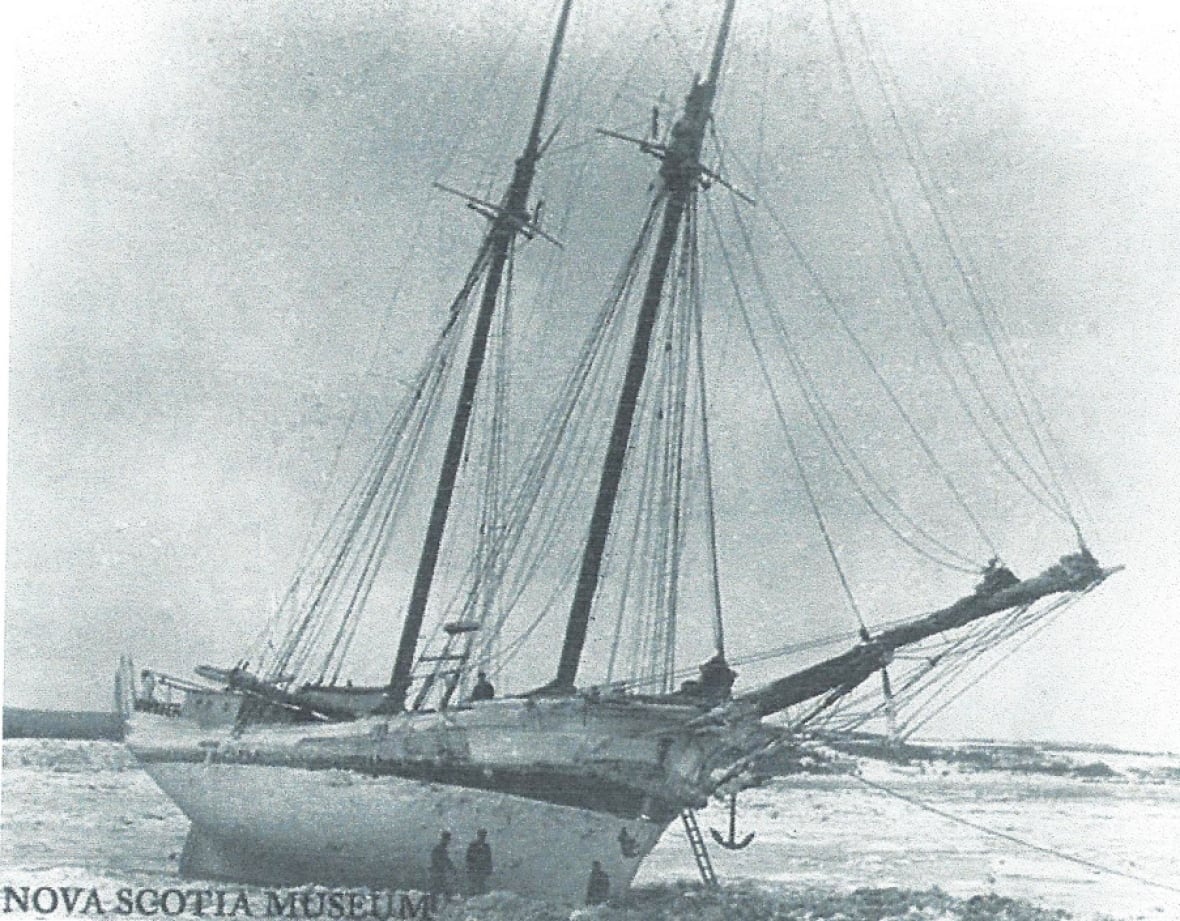
The schooner St. Bernard, which was destroyed when the Mont Blanc exploded nearby.
Photo from the Nova Scotia Museum.
A Halifax scuba diver has found something that could shed a little new light on one aspect of a dark chapter in Nova Scotian history.
Bob Chaulk has explored Halifax harbour from the Bedford Basin to Chebucto Head with hundreds of scuba dives over the last 30 years. But this spring, a routine dive in a small cove in the Narrows between Halifax’s two bridges led him to a big find.
Amid the usual assortment of scuttling crabs, polished bottles and bits of plastic trash, he came upon a huge, heavy object in Tufts Cove.
“When I first saw the anchor, I thought, OK, there’s a wreck here, some old derelict came in here. But there’s no way a ship that size could have gotten in here,” he said.
He explored until his air just about ran out. He estimated the anchor was about two metres long and weighed 135 kilograms. A ship that needed an anchor that size could not have sailed into shallow, rocky Tufts Cove, he thought.
So how did the old anchor get there?
He looked across the Narrows and found himself staring right at ground zero for the Halifax Explosion, which killed nearly 2,000 people. On Dec. 6, 1917, the vessel Imo and the Mont Blanc, a ship carrying explosive cargo, collided. The Mont Blanc caught fire and drifted into Pier 6, a space occupied today by the giant Halifax Shipyard building. The St. Bernard, a lumber schooner, was also at the dock.
“So now you have two ships side by side with a dock in between them. Here’s the Mont Blanc, here’s the Imo,” Chaulk said, showing the ships’ positions with his hands. “This one blows up, destroys this one, and I contend the anchor [of the St. Bernard] went through the air and landed right here.”
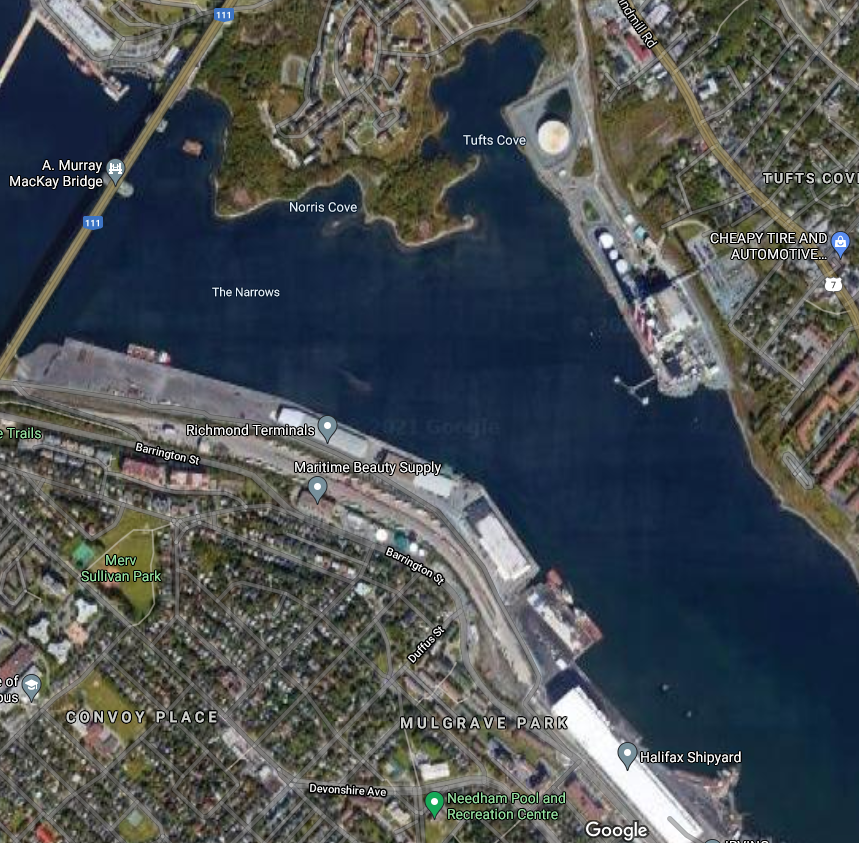
A modern day view of the Narrows, showing Tufts Cove to the north and the huge Halifax Shipyard complex on the south side of the channel.
Google Maps.
I suspect that the paved area to the right of the cove proper is largely landfill and the shoreline of 1917 probably followed much closer to the railway line.
H/T to Colby Cosh for the link.
Comments Off on Possible relic from the 1917 Halifax explosion discovered by scuba diver
July 24, 2021
QotD: Demolishing the Tim Hortons myth
Tim Hortons is not a defining national institution. Rather, it is a chain of thousands of doughnut shops, several of which have working toilets.
Tim Hortons is not an indispensable part of the Canadian experience. Rather, it is a place that sells a breakfast sandwich that tastes like a dishcloth soaked in egg yolk and left out overnight on top of a radiator.
Tim Hortons is not an anti-Starbucks choice that makes you a more relatable politician or a more authentic Canadian. Rather, it is a great place to buy a muffin if you’ve always wondered what it would be like to eat blueberry air.
There is no shame in having been caught up in the Hortons hype. It happens. Just last week, a columnist in the Toronto Star likened Tim Hortons to a precious vase that’s about to be juggled by its new owner, a monkey. (I was so irate at this irresponsible journalism that I wrote a letter demanding the Star issue a retraction. Everyone knows monkeys juggle only coconuts.)
Meanwhile, the NDP’s Peggy Nash — who, by all accounts, is an actual person and not a fictional construct of The Onion — gravely warned of the potential consequences of the Tim Hortons brand “falling into foreign hands.”
Yes, imagine the consequences. Maybe these madcap foreign owners will go so far as to alter the sandwiches so they taste like … something. Preferably like sandwich, but, at this point, most of us have stopped being picky.
Am I getting through to you, Canada? While we’re on the topic of hard truths, there is something else that needs to be said.
Canada, you sure do like your double-double — or, as it is by law referred to in news reports, the “beloved double-double.” But here’s a newsflash for you: If you drink your coffee with two creams and two sugars, the quality of the coffee itself is of little consequence. You might as well pour a mug of instant coffee or sip the urine of a house cat mixed with a clump of dirt from your golf spikes. It’s all basically the same thing once you bombard it with sweet and dairy. You’re really just wasting your …
I see from your reaction that I’ve crossed a line. I hereby withdraw my defamatory comments about the double-double and kindly ask that you return that handful of my chest hair.
Scott Feschuk, “Okay, Canada: It’s time for the hard truth about Tim Hortons”, Macleans, 2014-09-14.
Comments Off on QotD: Demolishing the Tim Hortons myth
July 14, 2021
Jewish Luftwaffe Officers, Allied POW’s, and Vichy Islands near Canada – WW2 – OOTF 023
World War Two
Published 13 Jul 2021How did Germans with Jewish heritage still serve in the Luftwaffe? And what happened to the Allied POW’s from the German invasions of France and Belgium? And what the hell happened with those tiny Vichy islands near Canada? We answer all of this in today’s Out of the Foxholes.
(more…)
Comments Off on Jewish Luftwaffe Officers, Allied POW’s, and Vichy Islands near Canada – WW2 – OOTF 023
July 13, 2021
HMCS Bonaventure – Guide 143
Drachinifel
Published 21 Sep 2019Canada’s last carrier is today’s subject for discussion.
Want to support the channel? – https://www.patreon.com/Drachinifel
Want a shirt/mug/hoodie – https://shop.spreadshirt.com/drachini…
Want a medal? – https://www.etsy.com/uk/shop/Drachinifel
Want to talk about ships? https://discord.gg/TYu88mt
Want to get some books? www.amazon.co.uk/shop/drachinifel
Drydock Episodes in podcast format – https://soundcloud.com/user-21912004

Comments Off on HMCS Bonaventure – Guide 143
July 10, 2021
Public libraries or public menaces?
In the latest edition of SHuSH, Kenneth Whyte finds a kindred-ish soul in his concerns about the influence public libraries have had in the last fifty years:
“Toronto Public Library” by Jim of JimOnLight is licensed under CC BY-NC-ND 2.0


It’s not easy being a crank, isolated from one’s fellow man by unpopular convictions, burdened by the certain knowledge of truths society can’t bring itself to admit.
The loneliness of crankdom can be insupportable. So I was overjoyed this month to run across an excellent book by Ed D’Angelo: Barbarians at the Gates of the Public Library: How Postmodern Consumer Capitalism Threatens Democracy, Civil Education, and the Public Good.
D’Angelo, a Ph.D. in philosophy with a master’s of library and information sciences, was supervising librarian at the Brooklyn Public Library for more than twenty years. His politics are not altogether mine (he leans Marxist), and his prose is not what you’d call smooth, but we are in total agreement that public libraries went off the rails sometime in the 1960s and now menace much that is good in life.
If you’re new to this space, you might have missed me mentioning here and there that increasingly aggressive lending practices by public libraries are undermining the entire bookselling ecosystem; that three times as many books are borrowed as bought in the US on an annual basis (four times as many in Canada); that libraries are putting booksellers out of business by advertising how much people can save by borrowing rather than buying books; that most library borrowing is done by people who can afford to pay for books, and who are reading for entertainment, not edification; and that all of this free-and-for-pleasure borrowing is a major reason author incomes are at record lows.
[…]
An honest scholar, Ed notes that there were cracks in this foundation before the 1960s. Back at the turn of the twentieth century, none other than Melvil Dewey, inventor of the Dewey Decimal System and founding member of the American Library Association, dissented from the notion that librarians should instill their values in patrons by directing their reading. He wanted a more mechanical, frictionless distribution of books, and encouraged the hiring of women as librarians on the assumption that they would be less inclined to impose their standards on others.
(Melvil […] was a devil, according to his biographer Wayne Wiegand. He subjected female subordinates to unwanted touching and kissing, and was rumored to have asked them to put their bust sizes on application forms. Forced out of the ALA for sexual harassment, Dewey further distinguished himself as racist and anti-semite. Yet his name was attached to the ALA’s highest honor until 2019.)
Ed also notes that there were stocks of popular (i.e., unedifying) literature in most public libraries even in the early years, but these were intended as the first rung on a ladder of development that “ascended toward the classics of western civilization.”
Starting in the 1960s, writes Ed, that the distribution of popular literature became an end in itself for the public library. Librarians lost confidence or interest in their mission of encouraging enlightened citizenship. They abandoned their role as gatekeepers. It was suddenly square to impose standards or tastes on patrons.
Comments Off on Public libraries or public menaces?
July 7, 2021
The “Squirrel!” distractions will end when it’s convenient for certain people and groups
Jay Currie considers the constant barrage of distractions that appear to be preventing most people from noticing what is actually going on in Canada:
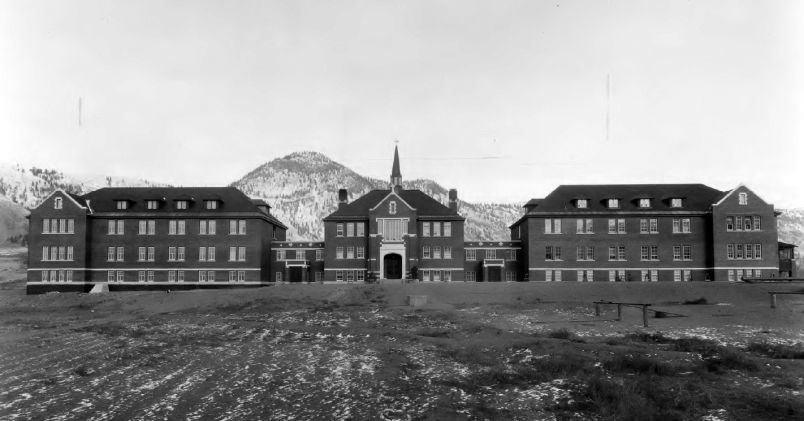
Kamloops Indian Residential School, 1930.
Photo from Archives Deschâtelets-NDC, Richelieu via Wikimedia Commons.
The remarkable thing about all of these little snippets of news is that they seem to be regarded as business as usual. Being taxed by an inflation rate which is well into the double digits does not cut through the COVID hype. Vandalism and arson purportedly in rage over residential school deaths which we have known about for decades attracts very little comment – though many First Nations people are not very happy that reservation churches which have served their communities for years are being burnt. People seem to shrug off the heat wave deaths and ambulance delays.
I expect very little from government at any level. A reasonably sound currency, a degree of public order and emergency services which can deal with the inevitable surges in demand.
The emergency services issue is probably the most easily fixed. Yes, having more para-medics is part of the solution but planning a reponse to these sorts of surge emergencies which tries to avoid the need for an ambulance in the first place is important too. Most of the dead were old, in many cases, very old. It should not be impossible to identify those older people and have a plan for these sorts of emergencies. Something as simple as a “Helpful Neighbour” program on a voluntary basis would be a good first step.
Restoring public order is more complicated. First, you have to have the political will to actually take on the problem. As we saw a couple of years ago, when it comes to people purporting to act on behalf of First Nations/environmental causes that will is absent. But even if the politicians decided that enough was enough there needs to be an investigation and an understanding of how the “spontaneous” vandalism and arson and blockades are driven. That is going to require rooting around in the activist community which will be, to say the least, difficult. The people who are actually creating the public disorder pay close attention to operational and communications security. Suffice to say this stuff is not being organized on a Facebook page.
Restoring order is also going to require a look at who benefits from disorder. To take an example: was it co-incidence that the sad fact of the Kamloops residential school graveyard came up just as the inquiry into Canada’s Winnipeg Lab’s connection to the Wuhan virology lab was heating up? The fact of there being a graveyard had been know for decades. The ground radar was being used to determine the boundaries so a new fence could be built. Yet, somehow, the number of bodies became headline news. I suspect, but cannot prove, that this was no accident. Public order will be restored when disorder is no longer in anyone’s interest.
Comments Off on The “Squirrel!” distractions will end when it’s convenient for certain people and groups
July 3, 2021
QotD: Canada’s Liberal Party
As countries modernize, they tend to leave brokerage parties behind. Very belatedly, that moment of maturity may now be arriving in Canada. Americans may lose their illusions about my native country; Canadians will gain true multiparty democracy and accountability in government. It’s an exchange that is long past due.
David Frum, “Woe Canada”, New York Times, 2005-04-19.
Comments Off on QotD: Canada’s Liberal Party
July 2, 2021
QotD: Quebec’s legendary sensitivity to criticism
And for some reason, the rest of Canada continues to treat these tantrums as if they are very weighty and serious matters meriting news coverage and discussion by very weighty and serious people. Canada’s indulgence of Quebec’s inability to tolerate pointed criticism is probably why the province gets away with passing racist legislation like Bill 21. And no one — least of all politicians — dare say boo because they’re all too eager to win seats in a populous province perpetually in play.
Attaran’s tweets wouldn’t even be worth our lowly mention, except that they prompted response from Justin Trudeau himself, who responded by saying: “Enough of the Quebec bashing.” That’s right, what we have here is Prime Minister Brownface condemning the tweets of an Iranian-Canadian professor who called Quebec racist by declaring such comments “Quebec bashing.” People, we are down the rabbit hole.
Earlier in this dispatch, we called Attaran a bit of a dumbass, and maybe some of you found that assessment a bit harsh. Others, perhaps not. We leave ourselves open to be capably judged by you, our dear readers. But we must ask this: What kind of dumbass do you have to be to make a figure like Amir Attaran into a national hero on free speech grounds? Good lord.
“Dispatch from The Front Line: Doing the Code Dance”, The Line, 2021-03-26.
Comments Off on QotD: Quebec’s legendary sensitivity to criticism
July 1, 2021
Unique Ross Experimental A2 Pistol Prototype
Forgotten Weapons
Published 13 Mar 2017This is a very rare Ross automatic pistol, patented in 1903 by Charles Ross, of the Ross Rifle Company in Quebec. It is a short recoil, toggle locked design, made for the .45 Ross proprietary cartridge (although efforts were made, unsuccessfully, to make a .45 ACP version for the US 1907 pistol trials).
http://www.patreon.com/ForgottenWeapons
Cool Forgotten Weapons merch! http://shop.bbtv.com/collections/forg…
If you enjoy Forgotten Weapons, check out its sister channel, InRangeTV! http://www.youtube.com/InRangeTVShow

Comments Off on Unique Ross Experimental A2 Pistol Prototype
June 30, 2021
“We’re having a heat wave/A tropical heat wave …”
Jay Currie is apparently melting in the heat somewhere out on the left coast of Canada:
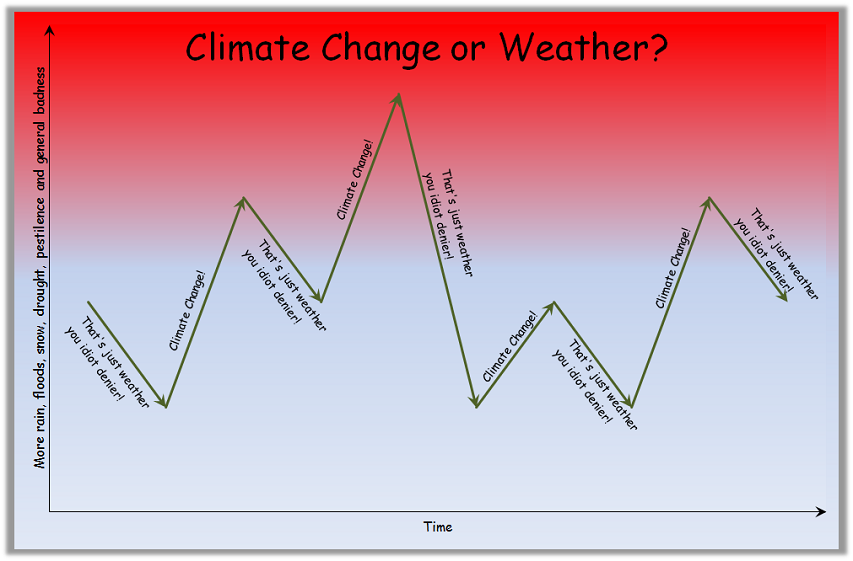
As my readers know I live on Vancouver Island right by the ocean. Normally, it is too cool to be comfortable having the evening g&t on the deck. Well, yesterday and today and very possibly tomorrow it will be way too hot.
The thing about heat waves is that they bring out the climatistas ready to ascribe weather to climate change. On #bcpoli Twitter it is a dead heat between the unscientific “I will wear a mask until there is no COVID anywhere on Earth” people and the people who insist that the present heat wave “proves” global warming. Well it doesn’t.
What we are in the grips of is a jet stream excursion. A big loop of hot air is sitting on top of us. It is practically the definition of “weather”. Three weeks ago Victoria set an all time record for coldest June day in the middle of a series of anomalously cold days. This too was “weather”.
The warmists are not deterred. “Well, over all the ‘weather’ is getting hotter because of climate change.” “The jet stream is behaving eccentrically because the Arctic is getting warmer and that’s climate change.” And then they add their policy prescription d’jour – Save Old Growth, Raise the carbon tax, Stop LNG exports and so on.
The brutal narcissism of the climate crusaders is touching. The problem and its solution are all about them. Other than the Pacific North West, the rest of the world is normal to cold. The Eastern US has been wet and cool, South America is freezing, Australia and New Zealand are experiencing an early ferociously cold winter, summer snow is falling in Scandinavia. The fact the major factor in the northern and jet stream’s preignitions is the level of solar activity is borne out by the general coolness of 2021. Guess what, the Sun is very quiet at the moment which is historically linked to cooling rather than warming.
But, for fun, let’s propose that the climate change fanatics are right and there is a direct link between CO2 and the present heat wave – not one of their favoured solutions will make the slightest difference. We could all walk to hug the trees and it would not matter.
Here’s why […]
Comments Off on “We’re having a heat wave/A tropical heat wave …”
June 27, 2021
“Apologies are just a subset of performance art for Trudeau, not actual admissions of failure and expressions of regret”
From The Line‘s weekend wrap-up post, a reminder that the top leadership of the Canadian Armed Forces and the government are still embroiled in scandal:
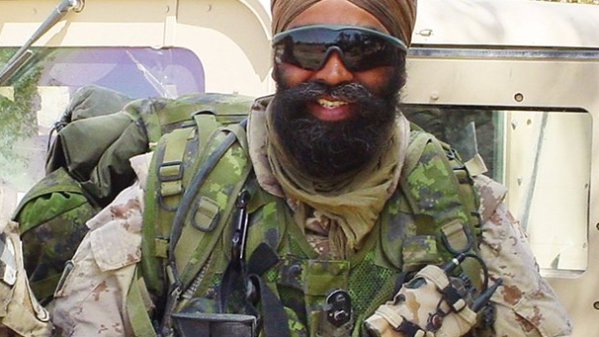
Canadian Defence Minister (at least for the moment) Harjit Sajjan during his pre-ministerial career.
In other news, your Line editors continue to think that not enough of you are tuned in to the sexual misconduct scandal still roiling the Canadian Armed Forces. Yes, yes, we know the military is this weird, complicated thing that no one really pays much attention to in this country. But you really ought to be.
You all know the basic outline already: sexual harassment and assault is a major problem in the armed forces. In 2015, former Supreme Court justice Marie Deschamps completed a major report into the issue, and recommended sweeping changes. A few of the changes were made, but the report was mostly immediately assigned dust-collector status and forgotten. That would be bad enough, but what really gave this life was that the Trudeau government — specifically, National Defence Minister Harjit Sajjan — was given a heads-up that Gen. Jonathan Vance, the country’s top military officer, was himself accused of misconduct. And the PMO found a way to bend the nature of the space-time continuum as they contorted and twisted their way out of having to do anything about it.
It’s a horrific look for a government that considers itself feminist, especially when the guy at the top has some baggage of his own. The Liberals did what Liberals do — said they should have done better and circled the wagons. Accountability is for chumps, after all. This week, Gregory Lick, the ombudsman for the Canadian Armed Forces — a position that exists to give serving members of the armed forces a place to go with complaints within their chains of command — took aim at his own chain of command — Minister Sajjan, saying that his reporting structure has to be changed because Sajjan, frankly, ain’t interested in hearing about problems that the Liberals find awkward.
Here’s Lick:
The collective actions or, in some cases, the inaction of senior political, military and civilian leadership within the government have eroded trust within the defence community … When leaders turn a blind eye to our recommendations and concerns in order to advance political interests and their own self-preservation or career advancement, it is the members of the defence community that suffer the consequences … It is clear that inaction is rewarded far more than action. In the four months since the most recent outbreak of multiple accusations of sexual misconduct, the actions of the minister of National Defence, senior government and military officials have bitterly proved this point. The erratic behaviour of leadership defies common sense or reason. The concept of ministerial accountability has been absent.
Folks, trust us when we tell you that by the standard of Ottawa bureaucratese, that statement is blistering. Lick is directly targeting Sajjan with that last sentence. Translated into normal Canadian English, Lick is accusing Sajjan of inaction in the face of obvious problems.
[…]
What was it that Lick said about ministerial accountability again? About inaction? Oh dear, it’s totally slipped our little ole minds. Probably nothing important!
More seriously: We don’t expect much to come from this. From any of it, or from all of it. Firing Sajjan would require Trudeau to admit he’d fell short, and, well, we all know this guy is way more comfortable apologizing for stuff that happened a century before he was born than he ever is admitting he himself screwed up. Apologies are just a subset of performance art for Trudeau, not actual admissions of failure and expressions of regret. But let’s not mistake what has happened here. A slew of senior military officers have quit or been removed. The PMO has been singed. Sajjan has been directly called out, and his own assistant implicated.
There is no mystery here. Canadians have been told there is rot in the government, and that our men and women in uniform are suffering for it while Trudeau looks the other way. And you’ll have to get used to that, too.
Comments Off on “Apologies are just a subset of performance art for Trudeau, not actual admissions of failure and expressions of regret”
June 24, 2021
QotD: The fantasy world of Canadian geopolitical posturing
Yet for all the reflexive anti-Americanism that has been the meat and mead of Canadian nationalism, Canada’s leadership class has usually been pretty good about understanding who is in charge. Over the course of the 20th century, from the Ogdensburg agreement of 1940 and the post-war establishment of NORAD to the Free Trade Agreement of 1988, we cemented that reality with a defence and economic alliance.
Paradoxically, what this continental defence and economic security arrangement has given us is the opportunity to let our internationalist pretensions run wild. One of the weirdest things about Canada is the extent to which we like to frame our place in the world in a-geographic terms. We imagine that we are as threatened as anyone by the mix of post-Cold War failed states, opportunistic terrorism, regional authoritarianism, and humanitarian disasters. By the same token, we like to presume that we are as well-positioned as any other country to do something about all of this.
As the dean of Canadian defence policy Kim Nossal points out in a recent paper, this a-geographic security fantasy is reflected in the official defence reviews that Canadian governments have released since the 1990s. Or take, for example, the 2017 Liberal policy statement, entitled Strong, Secure, Engaged, which rejects the idea that Canada’s privileged geographic location mitigates these global threats for us. As Nossal concludes, when you look at how Canadian governments actually talk about our security situation, you get little sense that, thanks to the Americans, Canada occupies “one of the safest spaces in contemporary global politics.”
You can see the logical leaps, then.
Once you’ve convinced yourself that Canada’s security is disconnected from the geographical imperative of the American security guarantee, it’s only a few steps to the conclusion that who we choose as our global strategic partner is actually a meaningful choice. And if it is true, as China’s president Xi Jinping has claimed, that the East is on the rise and the West is in decline, then why not throw your lot in with the new big dog on the block?
Andrew Potter, “Hedging our bets with China was a mistake”, The Line, 2021-03-23.
Comments Off on QotD: The fantasy world of Canadian geopolitical posturing
June 23, 2021
Bad legislation rammed through in the small hours of the morning
Michael Geist on how one of the worst pieces of legislation to get extruded from the bowels of the Liberal minority government got pinched off by main force and now sits, steaming, on the docket for the Senate to … well, “rubber stamp” isn’t quite the right phrase but it’s pretty rare for our unelected senators to do anything to benefit ordinary Canadians, so we’re depending on them somehow managing to display an almost supernatural effort to slow down this shitty bill until the end of the session:
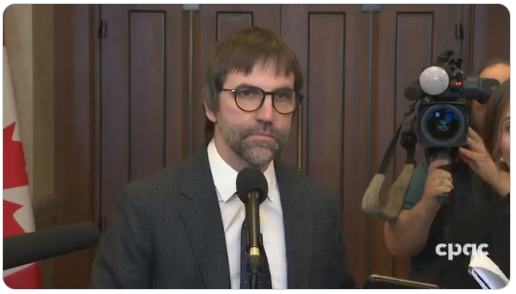
Canadian Heritage Minister Steven Guilbeault, 3 February 2020.
Screencapture from CPAC video.
The Liberal government strategy of multiple gag orders and a “super motion” to limit debate bore fruit last night as Bill C-10 received House of Commons approval at 1:30 am. The Parliamentary process took hours as the government passed multiple motions to cut short debate, re-inserted amendments that had been previously ruled null and void, and rejected a last-ditch attempt to restore the Section 4.1 safeguards for user generated content. The debate included obvious errors from Liberal MPs who were presumably chosen to defend the bill. For example, Julie Dabrusin, the Parliamentary Secretary to the Minister of Canadian Heritage, said that Section 2.1 in Bill C-10 “specifically excludes content uploaded by users.” Only it doesn’t as Dabrusin should know given that 2.1 covers users not content and she was the MP who introduced the amendment at committee to remove Section 4.1, which was the provision that excluded content uploaded by users.
Given the public support from the Bloc for cutting short debate, the outcome last night was never really in doubt. Perhaps the most interesting vote of the night came with a motion from Conservative MP Alain Rayes, which once again called for the re-insertion of Section 4.1. While the motion was defeated with the support of Liberal, NDP, and Bloc MPs, there were several notable exceptions. Liberal MPs Nate-Erskine Smith and Wayne Long both abstained and former Justice Minister (and now independent MP) Jody Wilson-Raybould voted in favour of the motion. The report stage was limited to one hour of debate, which meant that the 23 amendments were again subject to no real debate or discussion. Once the bill passed the report stage, it was on to third and final reading, which was limited to 15 minutes of debate per party. The vote followed just before 1:30 am with the Liberals, NDP, and Bloc once again supporting Bill C-10. Wilson-Raybould joined with the Conservatives in voting against it.
A rational government would comprehend that their pitch that the real purpose of the bill is to “make the web giants pay” is completely undermined by the obvious and deliberate attempt to introduce government censorship of what ordinary Canadians watch on the internet and share through social media. It’s all about the control, not about any imaginary financial windfall from shaking down tech companies for spare change. Why the rush to get it rammed through parliament right now, with so many other rather more pressing concerns at hand?
Comments Off on Bad legislation rammed through in the small hours of the morning
June 21, 2021
Turner Semiauto SMLE Conversion
Forgotten Weapons
Published 12 Nov 2016Cool Forgotten Weapons Merch! http://shop.bbtv.com/collections/forg…
Russell Turner was a Pennsylvania gunsmith and inventor who developed this semiautomatic conversion of an SMLE bolt action rifle circa 1940. It was intended for trial and potential sale to the Canadian military, as it would allow them to retrofit existing rifles into semiautomatic configuration and still use existing supplies of .303 British ammunition. Rather than try to devise a reliable system to rotate the original Enfield bolt, Turner replaced the bolt entirely, using instead a side-tilting design much like what he used in his M1 Carbine trials rifle for the US military. This was coupled with a long stroke gas piston and a hammer firing trigger mechanism.
Reportedly the rifle was tested by Canadian authorities, and performed quite well, with the adjustable gas system allowing it to function reliably even in temperatures of 25 below zero (where the Garand, tested alongside, experienced problems). However, Turner’s rifle was deemed too complex for military adoption.
That decision against the rifle was probably the right one for Canada, although Turner’s conversion is one of the better semi auto bolt acton conversions I have handled. It was remarkably non-awkward — that may not sound like much to crow about, but it sets a pretty high standard for this type of rifle.

Comments Off on Turner Semiauto SMLE Conversion


