Quotulatiousness

October 11, 2025

Crossing the line between “justice” and “persecution”

At The Intrepid Viking, Roxanne Halverson notes just how determined the Canadian justice system was to inflict the most pre-trial punishment as possible on Tamara Lich and Chris Barber for their leadership role in the Freedom Convoy:

Tamara Lich and Chris Barber
Photos from The Intrepid Viking

The convoy leaders, Lich and Barber, […] finally learned their fate in an Ottawa courtroom on October 7th, 2025, almost four years since the trucks first rolled into the capital, and over two years since their trial began on September 5, 2023. Rather than the unwarranted and what can only be described as vindictive prison terms sought by the Crown, Justice Heather Perkins-McVey instead sentenced them both to conditional non-custodial sentences of 18 months. A decision, one can be sure, the Crown is not pleased with and one that is nothing short of humiliating given it falls farther short from the seven and eight year terms they argued for than they could have possibly imagined.

[…]

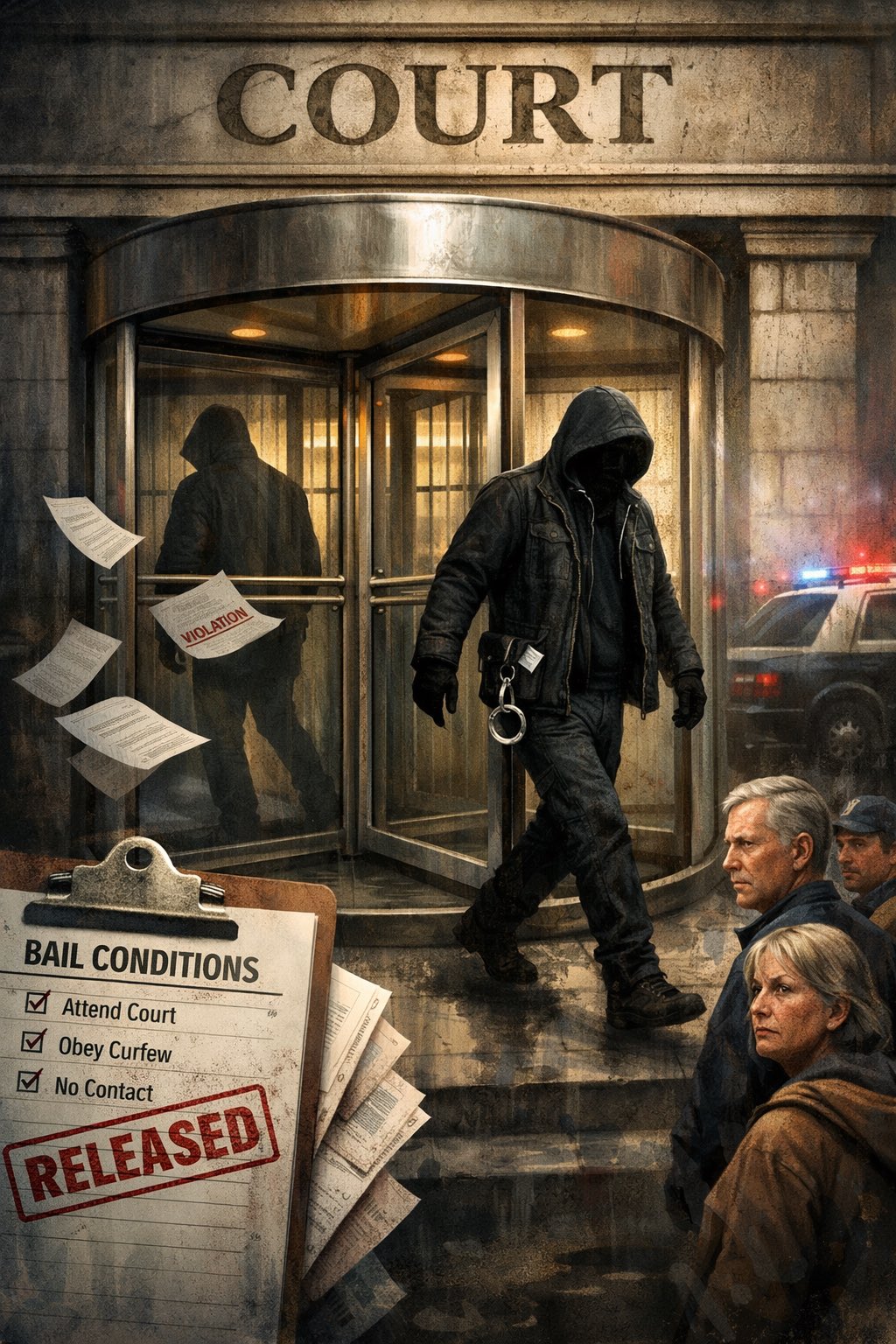
But Lich and Barber have indeed suffered. Both have been put through the legal grist mill of what now serves as Canada’s justice system since they day they were put into handcuffs and arrested on February 17/18, 2022. Barber was released on a bail bond of $100,000 after a night in jail with his wife acting as surety, meaning she would forfeit that amount if he breached his bail conditions. Under those conditions he was required to leave Ottawa within 24 hours of his release and depart Ontario in 72 hours, no longer support the Freedom Convoy and cease contact with fellow organizers. Breach of these conditions could also have landed him back in jail. His business and personal finances were also frozen for three months as part of the government’s illegal actions under the Emergencies Act. And now, to further try and impair and punish him financially the Crown prosecutors on this case are still attempting to seize and destroy his truck and livelihood, Big Red, which became a symbol of the Freedom Convoy. That matter is expected to be settled by Justice Perkins-McVey in court in November of 2025.

Lich, after her arrest spent a total of 49 days in jail before she was even convicted of any offence. Denied bail after her initial arrest in February, she spent 19 days in remand custody in an Ottawa jail because a judge deemed it was “necessary for the protection and safety of the public“. She was finally released on March 7, 2022 after an Ontario Superior Court Justice overturned the lower court’s outlandish ruling.

The vindictive nature of the first Crown prosecutor on their case, Moiz Karimjee, soon came to light when Lich was announced the winner of the George Jonas Freedom Award in May of 2022. He petitioned to have her bail revoked, arguing that being a recipient of the award was a breach of her bail conditions. Justice Kevin Phillips disagreed and amended provisions of her bail to allow her to attend the award dinner in Toronto, but still prohibited her from communicating with “certain” individuals at the dinner unless in the presence of legal counsel.

Karimjee, seemingly obsessed with seeing her back in jail, accused Lich of another alleged bail breach after she attended the award dinner when video evidence later surfaced of her having a brief congratulatory interaction with Tom Marazzo a Freedom Convoy organizer she was prohibited from interacting with. As a result, on June 27 Karimjee dispatched two Ottawa homicide detectives, yes homicide detectives, to her home in Medicine Hat to put the diminutive grandmother in shackles and fly her back to Ottawa and throw her back in jail. She was finally released following another bail hearing, in which Karimjee made every effort to keep her behind bars, but justice prevailed and she was released from custody on July 27, 2022.

Lich’s lawyer Lawrence Greenspon was highly critical of Karimjee’s actions stating, “This is the third time the crown has tried to incarcerate Ms. Lich, this time for a three-second interaction, and a photo. The prosecutorial response to this far exceeds the severity of the alleged breach“. Further remarking on the situation, Greenspon added, “Had there been a proper investigation before Tamara Lich was arrested, shackled, hauled halfway across the country and then kept in jail for 30 days, they would have realized that her then-counsel were present at the time and therefore these charges should never have been laid“.

And like Barber, and many other convoy protesters, Lich’s bank accounts were also frozen by the government under the Emergencies Act for a period of three weeks.

On the social media site formerly known as Twitter, Eve Chipiuk posted:

Read it and weep, snowflakes. The lies are exposed, the facts don’t lie, and people across the world can see the truth.

The question remains: when will you stop lying to yourself and others, and start thanking your fellow citizens for fighting for your freedom?

“Tamara Lich and Chris Barber, organizers of the most successful protest in Canadian history, kept their cool, kept the peace and brought national unity, patriotism and common sense back to Canada after the pandemic – this, despite the sustained efforts of the most aggressively controlling, divisive government the nation has ever had. They achieved this under intense pressure and at great personal cost.

They’re national heroes, and the persecution waged against them is destroying trust in the Canadian judicial system, though the judge involved does not seem to realize it. Justice Perkins-McVey said in court that if she discharged the defendants, it would “undermine confidence in the administration of justice”.

But it’s quite the opposite …

There was another ironic moment at the sentencing. The judge announced, “Politics has no place inside this courtroom” – yet the trial has been widely viewed as nothing more than the political vengeance of Doug Ford and the Ontario government.

If it weren’t for politics, Lich and Barber would never have been arrested, let alone put through jail time, solitary confinement, loss of employment, years of drawn-out, costly legal proceedings, onerous bail conditions and emotional strain …

This means the public is paying twice – once as taxpayers, with money intended to pursue real criminals wasted on a political vendetta – and once again, voluntarily, to support the brave people who stood up to ask for an end to lockdowns and vaccine mandates.

This is the same public that already gave $24 million to the truckers to help them go to Ottawa and protest vaccine mandates and lockdowns: $24 million that never reached them, because politicians colluded with fundraising sites and banks to freeze the money, debank the protestors and doxx the donors, all without a court order. No criminal charges have been laid in Canada, to this writer’s knowledge, against the perpetrators of these deeds, though they damaged national institutions far more than any protest ever could.

Justice Perkins-McVey is right to be concerned about confidence in the administration of justice. Many Canadians share her concern. Sadly, her handling of this case has done little to dispel their fears.”

October 10, 2025

A POSWID analysis of the contention that “Canada is broken”

It’s my strong opinion that Canada is indeed “broken”, and much but not all the blame for that goes to former Prime Minister Justin Trudeau and increasingly to current PM Mark Carney. It hasn’t all been the direct action or deliberate inaction of the Liberal party and their bureaucratic minions in the civil service, but their fingerprints are on a lot of the damage. Eberhard Englebrecht analyzes Canada using POSWID framing and concludes that “the Purpose Of Canada is What It Does”:

Now, one of the core criticisms made of POSWID by its opponents is that it leans heavily on a consequentialist interpretation of events, completely discarding the roles human intention, error, and agency play in how things transpire.

However, these critiques only hold validity if you take POSWID and make it your singular mode of analysis — something that I don’t encourage, nor intend on doing myself. Rather, POSWID should be understood and used as a specific tool with a specific purpose — that is, to peel back the noxious platitudes, gaslighting, and wishful thinking that envelop our politics, and hinder our ability to view our present situation with clarity and honesty.

And, unfortunately for the citizenry of Canada, Canadian politics is — and has been for some time — a domain chock full of the misguided idealism and obfuscation that POSWID seeks to erase.

It is why many Canadians — despite their country having experienced a precipitous decline in both general prosperity and the integrity of the common social fabric — remain willfully blind to such an absurd degree.

POSWID, as I will be applying it, can tackle many of the polite pleasantries and mindless incantations that have become embedded in Canada’s “consensus” of acceptable political discourse, exposing them as misaligned with reality. This will take one of two forms: the first is to demonstrate that a common belief in the trope in question has led to results contrary to the intentions of those who originally pushed the trope; the second is that the trope was always purely abstract and aspirational, never described reality, and any attempts to align reality with said trope have failed miserably.

Many of these tropes are sacred cows of Canada’s political establishment — ideas that they would insist define “what it means to be Canadian” or are things that “we all believe”. Going against them, or merely questioning their validity or suitability, would be considered “UnCanadian”. These tropes have, in many cases, dictated the direction of Canadian society since the 1960s and created the foundations for the paradigms that currently define Canadian politics. Therefore, the deconstruction of these tropes constitutes the deconstruction of these paradigms — something that would have cascading ramifications for our country.

It is worth noting, however, that my intention in writing this piece is not to make granular policy prescriptions. My job is merely to provide a clear-eyed account of how three of the values and policy programmes of Canada’s chattering class (you could substitute “chattering class” with “professional-managerial class” or “Laurentian Elite”) are out of step with how this country actually exists — a reality felt and experienced at an intuitive level by many, but rarely articulated in public.

The federal government’s gun “buyback” program pilot in Nova Scotia

Filed under: Bureaucracy, Cancon, Government, Politics, Weapons — Tags: , , , , — Nicholas @ 03:00

On the social media site formerly known as Twitter, Tim Thurley responds to a report about the gun “buyback” pilot program:

This reads like a government flailing for a message. We know this is incorrect, the Minister knows it is incorrect, and we know the Minister knows it is incorrect, and yet.

(The “Ensure…” section is also painful to read, but that’s another matter.)

https://www.saltwire.com/cape-breton/federal-minister-denies-political-motivation-in-choosing-cape-breton-to-pilot-gun-buyback-program


He’s suggesting the risk is posed by stolen firearms. Not only do we know this is a small portion of risk — and easily substituted by other sources — but to say we must confiscate your property because someone else might misuse it sounds an awful lot like victim blaming.


Nobody bought an AR-15 under the assumption it was legal when they bought it (unless FRT banned, then it gets complex).

If a licensed user bought and registered it pre-OIC (or just bought if non-restricted) then it was legal when they bought it, period. No assumptions needed.


A rebate is also incorrect. A rebate is something a customer gets back after purchase.

They get to keep both the rebate and the product.


The part about only getting some money back is at least accurate.

The government is not offering full compensation for many users based on the list prices, and has reiterated that it does not plan to offer further compensation once the initial pot runs out.

October 9, 2025

Freedom Convoy 2022 – “… proving once again the Liberal mastery of combining high drama with low farce”

Filed under: Cancon, Government, Media, Politics — Tags: , , , , , — Nicholas @ 05:00

In the National Post, Michael Higgins states the obvious fact that Tamara Lich, Chris Barber, and the rest of the Freedom Convoy protesters were never insurrectionists. Trudeau had decided in advance that the convoy was a maple-flavoured January 6th attempt to overthrow the government — if not an attempt to re-stage the storming of the Winter Palace — and merely waited for the violence to break out and/or the Parliament buildings to be stormed. But nobody other than a few particularly glowy federal provocateurs was interested … because they were there to protest government policy not to start a revolution:

Marco Mendicino, the public safety minister of the day, portrayed them as extremists intent on overthrowing the government.

“This so-called ‘freedom convoy’ called for the overthrow of the government. They called for the Governor General to unilaterally remove the Prime Minister from office,” Mendicino told a Commons parliamentary committee.

Indeed, the Office of the Secretary to the Governor General was inundated with calls and emails by protesters demanding then prime minister Justin Trudeau be fired.

But since the Governor General can’t just decide to sack a prime minister, these email-writing anarchists were particularly inept as well as being constitutionally illiterate.

It was Shakespearean farce, but Liberals like Mendicino were happy to play politics and paint the convoy protesters as lawless subversives bent on destroying democracy.

Although, to be fair, Trudeau only said they were a “small fringe minority” with “unacceptable views” — more retrogrades than revolutionaries.

Meanwhile, Ottawa’s Keystone Kops had all the laws, rules and regulations needed to disband the convoy, they just lacked the leadership.

Days into the occupation, Ottawa Police Services chief, Peter Sloly, appeared to have thrown up his hands in resignation, stating, “There may not be a policing solution” to the crisis. Two weeks later, he quit.

In his report, the public inquiry commissioner Paul Rouleau would later criticize the “serious dysfunction within the OPS’s leadership”.

The government theatrics escalated with the imposition of the Emergencies Act, proving once again the Liberal mastery of combining high drama with low farce. Within days, police had cleared the convoy and several other blockades without incident.

This was less the power of the Emergencies Act and more to do with getting the police to just act.

Britain is only a few steps further than Canada in the war on free speech

In The Line, Peter Menzies looks at the worsening situation for freedom of speech and freedom of expression in Britain, noting that what’s happening over in Blighty is our immediate future with current Liberal bills before Parliament to give government bureaucrats more power to silence us:

Everyone may know, for instance, that Kimmel got suspended by ABC for a week following statements made in the wake of the assassination of Charlie Kirk. But not a lot of people consuming Canadian media know that in the U.K., comedians weren’t just getting one-week suspensions. Nope. Last month they were getting arrested.

Right-wing icon Katie Hopkins, best known for her Batshit Bonkers Britain clips and Silly Cow tour, hadn’t been charged at the time of writing, but was arrested and, as they say in Blighty, “interviewed under caution”. Previously, Graham Linehan was arrested upon his return from the United States by five armed police officers at Heathrow Airport. At issue were posts he had made on X in April.

“If a trans-identified male is in a female-only space,” one Linehan post declared, “he is committing a violent, abusive act. Make a scene, call the cops and if all else fails, punch him in the balls.”

Currently on bail, Linehan returns to court on Oct. 29. The charges are harassment, criminal damage and suspicion of inciting hatred.

The merits of the cases can be debated, but my point today is that when it comes to digital policy and policing you, and the internet, Canadians and their media should be paying a lot more attention to the U.K.

Because it is there that the true illiberalism of modern Western so-called liberalism is most menacingly embraced. Even prior to the U.K.’s Online Safety Act coming into effect, pre-existing British legislation had been used to, for instance, convict six retired police officers for making comments “deemed to be offensive” within their private WhatsApp chat group. Following the Southport mass stabbing murders of little girls, at least two women with no prior history with police were given prison sentences — one for 15 months for a Facebook post calling for a mosque to be blown up, another 31 months for a tweet calling for hotels full of migrants to be burned. While their comments were certainly worthy of vigorous condemnation, the intervention of the state into private, closed conversations and the involvement of police, courts and the penal system has taken matters in the U.K. to a level inconsistent with liberal traditions.

Now that the Online Safety Act has supplemented those laws, hundreds of people have been arrested and dozens so far convicted for social media posts. The government calls the act a “new set of laws that protect children and adults online” in much the same way Justin Trudeau explained Canada’s own Online Harms Act. It’s all about “safety”.

Online Harms may have died when Parliament was prorogued last winter, but a successor is anticipated and, given Prime Minister Mark Carney’s obvious Anglophilia, it’s easy to speculate — fear is a better word — that he is taking inspiration from the Brits. After all, up until a few months ago, he was one of them.

Fighting back in the U.K. is, among others, Lord Toby Young, the Conservative peer, associate editor of The Spectator and founder of the Free Speech Union, which now has a Canadian branch featuring, among others, journalist Jonathan Kay. Young has protested that criminalizing disinformation hands governments the power to determine truth. Nevertheless, while Prime Minister Sir Keir Starmer has muttered that maybe the police have more important things to do, he shows — despite the meteoric rise in the polls of Nigel Farage’s Reform Party — no inclination to order a digital retreat.

In fact, Starmer just doubled down with the introduction of legislation imposing mandatory digital IDs. A petition opposing it and the potential to enable mass surveillance and state control has already gathered close to three million signatures.

There’s a good chance the Canadian Free Speech Union will be similarly engaged in the years ahead. The Trudeau government’s instincts when it came to digital legislation were not as extreme as Britain’s. And there are very real differences in the legal structure of free-speech rights in Canada and the U.K. — we have the Charter, and the British don’t. So our laws would be enacted and enforced differently here than they can be the the U.K.

QotD: Ontario and the Loyalists

Filed under: Cancon, History, Quotations, USA — Tags: , , , , , , — Nicholas @ 01:00

The Province of Ontario is the most populous province in Canada, home to 38.5% of Canada’s national population as of the 2021 census. Located in Central Canada, it is the political, economic, and cultural heart of the country. Its capital, Toronto, is the nation’s largest city and financial centre, while Ottawa, the national capital, lies along Ontario’s eastern edge. Ontario is bordered by Quebec to the east and northeast, Manitoba to the west, Hudson Bay and James Bay to the north, and five U.S. states to the south — Minnesota, Michigan, Ohio, Pennsylvania, and New York — mostly along a 2,700 km (1,700 mi) boundary formed by rivers and lakes in the Great Lakes–St. Lawrence drainage system. Though Ontario is the second-largest province by total area after Quebec, the vast majority of its people and arable land are concentrated in the warmer, more developed south, where agriculture and manufacturing dominate. Northern Ontario, in contrast, is colder, heavily forested, and sparsely populated, with mining and forestry serving as the region’s primary industries. But Ontario is more than just a province; it is the crucible of English-speaking Canada.

In 1784, after the American Revolution, Loyalist settlers arrived with intention, bringing with them the legal traditions, religious institutions, and steadfast allegiance to the Crown that had shaped their former world. They sought to uphold a civilisational order rooted in monarchy, Church, and Law, and to establish a society founded on duty, hierarchy, and restraint. From these early Loyalist settlements, beginning at Kingston, a distinct political and cultural tradition emerged. It was neither British nor American. It became the foundation of a new people.

Today, the descendants of these settlers form the core of an ethnocultural identity known as Anglo-Canadian. Numbering over ten million across the country, and more than six million in Ontario, Anglo-Canadians are known for their enduring institutions: constitutional monarchy, common law, Protestant-rooted civic morality, and a national ethos shaped by loyalty and order. This cultural framework shaped Ontario’s development across every sphere of life.

Loyalists built the province’s schools, banks, and legal systems. They established its early industries, including agriculture, forestry, mining, and railroads, and later came to dominate the professional sectors of law, education, public administration, and finance. Their shining city, Toronto the Good, became the centre of Canadian banking and corporate life, while small towns across the province were anchored by courthouses, parish churches, and grain elevators.

Language and schooling played a central role in shaping the Anglo-Canadian character. Ontario’s education system, from common schools to universities, was built to transmit British values, civic order, and the English language. Protestant denominational schools and later public grammar schools taught the children of settlers to read scripture, study British history, and speak in the elite formal register of English Canada. Institutions such as Upper Canada College, Queen’s University, and the University of Toronto became pillars of elite formation, producing the clergy, lawyers, teachers, and administrators who carried the culture forward.

Culturally, Anglo-Canadians preserved a rhythm of domestic and seasonal life rooted in British tradition but adapted to the northern landscape. Autumn fairs, apple bobbing, and harvest suppers marked the calendar in rural communities. Roast beef, butter tarts, mincemeat pies, and tea with milk became the everyday fare of farmhouses and urban kitchens alike. Sunday observance, cenotaph ceremonies, school uniforms, and service clubs reflected a moral seriousness and civic sense inherited from the Loyalist project. It is this tradition that formed the structural spine of its political and cultural development.

Fortissax, “Loyal she Began, Loyal she Remains”, Fortissax is Typing, 2025-07-07.

October 8, 2025

Sentenced for their role in the largest peaceful demonstration in Canadian history

Filed under: Cancon, Government, Law, Liberty, Media, Politics — Tags: , , , — Nicholas @ 05:00

The longest “mischief” trial in Canadian history finally concluded on Tuesday with Chris Barber and Tamara Lich receiving much lighter sentences than the crown had asked for, but in my opinion, far harsher than justice demanded:

One of the readers at Small Dead Animals got a clanker to summarize this: “Regarding the convictions of Tamara Lich and Chris Barber, compare their trials and sentences to leftwing protesters who have openly and violently broken laws in Canada.”

In comparison, left-wing protesters in Canada involved in violent or disruptive actions — such as anti-pipeline blockades (often tied to environmental and Indigenous rights causes) or Black Lives Matter (BLM) demonstrations against racism and police violence — have typically faced shorter trials and lighter sentences for similar or more destructive offenses. These cases often involve civil disobedience escalating to property damage, blockades, or clashes with police, but convictions emphasize non-violent intent or police misconduct, leading to minimal incarceration.

Overall, Lich and Barber’s cases drew unusually aggressive prosecution (e.g., multi-year sentences sought) despite no violence, contrasting with lighter outcomes for left-wing actions involving property destruction or direct confrontations. This disparity has fueled debates on selective enforcement, though courts in both contexts prioritize deterrence while considering protest motivations.

Unlike a lot of clanker slop, that is pretty fair. More reactions on the social media site formerly known as Twitter:

In the Toronto Sun, Joe Warmington accurately calls it a “show trial of sorts”:

Even though this is far better than making these two go to prison or jail, these are still stiff sentencing considering neither were violent during the Convoy and both worked with police to tone things down during the three week protest that came to an end when the Trudeau government invoked the Emergencies Act.

But this was a show trial of sorts, and Lich and Barber were political prisoners. Remember, both of these people have had the hardship of waiting 1,328 days through the longest mischief trial in Canadian history to get to this point. They had their bank accounts frozen during the convoy, Lich lost her job and Barber’s business is at risk of going under. A hearing is scheduled for next month in an effort to seize his famous “Big Red” truck.

It’s also lost on few that so many criminals with far more serious crimes have received far less in terms of length of trial, effort of the Crown and sentencing.

These are certainly stiffer sentences than some parliamentarians have received. For example, in 2021, Former Liberal Kitchener South-Hespeler MP Marwan Tabbara was handed a conditional discharge and put on probation for three years after his guilty plea was entered for two charges of assault on a man and a woman in Guelph. He also pleaded guilty to the amended charge of “unlawfully” being “in a dwelling” or home.

Conservative Sen. Patrick Brazeau was given an absolute discharge in 2015 on his guilty plea to assault and narcotics counts, which allowed him not to serve time or gain a criminal record. But while they did avoid jail time, Lich and Barber did get the book thrown at them harder than most.

Update, 9 October: Welcome, Instapundit readers! Please do have a look around at some of my other posts you may find of interest. I send out a daily summary of posts here through my Substackhttps://substack.com/@nicholasrusson that you can subscribe to if you’d like to be informed of new posts in the future.

Rush returns – Geddy Lee and Alex Lifeson announce new tour for 2026

Filed under: Cancon, Media — Tags: , , — Nicholas @ 03:00

The announcement video popped up yesterday on YouTube, as Lee and Lifeson announce the decision to bring Rush back after a decade of retirement (triggered by the death of Neil Peart in 2015). In the National Post, Colby Cosh discusses the much-anticipated return:

Rush in concert, Milan 2004.
Photo by Enrico Frangi, via Wikimedia Commons

The inevitable has happened: Geddy Lee and Alex Lifeson, the living members of the legendary Canadian band Rush, have announced that they will go on a brief concert tour in 2026. They will, perhaps controversially, go out on the road as Rush rather than adopting some sort of “Lifeson and Lee and Friends” branding. The circumstances of the announcement are familiar ones: Rush had a spectacular farewell tour in 2015, with their renowned drummer Neil Peart increasingly overwhelmed by his own phenomenally intricate parts and his remorseless perfectionism. Peart died of glioblastoma in 2020, which seemed to put a permanent seal on the group.

Over the years, eleventy thousand rock bands have mourned (or just fired) a drummer and moved on, but Neil Peart was NEIL PEART. If you ever watched the crowd at a classic Rush concert, fans doing air-drumming always outnumbered the ones doing air guitar about a hundred to one. Rush in its heyday was an austere three-piece that eschewed sidemen, guest performers, and cover versions on stage almost to the point of dogmatism. They will inevitably feel incomplete or weird with a stand-in for Peart. But Lifeson and Lee say they have been playing Rush songs together privately, and that they are in good health.

They are at the apex of their own individual professions as players, especially Geddy, and … well, a looser, more open, less thoroughly programmed live Rush is something some of us have always wished for, or at least thought about. Variety‘s coverage of the announcement, delivered on Sunday at the Rock & Roll Hall of Fame in Cleveland, Ohio, reveals something almost as surprising as a Peartless Rush: they’re going to tour with a keyboard player! (Other papers are breaking the news as you read this, but Variety had the advance scoop, and has the most extensive coverage of the prospective tour.)

The question on the mind of every Rush fan, of course, is who could possibly step into the shoes (and drum kit) of Neil Peart? That would be a daunting task for any drummer, but Lee and Lifeson think that Anika Nilles will be up to the challenge. I hope she will.

If skeptics visit her YouTube channel and click randomly, they won’t need more than a few seconds to spot her technical credentials for playing Rush songs: she’s inhumanly precise and seems positively allergic to playing in 4/4. Don’t look down, Anika.

October 6, 2025

“Hate speech” bans work perfectly to eliminate mean words and mean thoughts … and the rivers will run uphill

Filed under: Cancon, Government, History, Law, Liberty, Media, Politics — Tags: , , , — Nicholas @ 03:00

I have to assume that the headline captures the mentality of the people who call for more “hate speech” legislation, because the real world evidence clearly fails to support the notion. Many well-meaning people want the government to have the power to suppress speech they don’t like, never thinking that a different government could use the same laws to quash opinions they support. In the National Post, Chris Selley argues that the last way to achieve reconciliation with First Nations would be to ban “residential school denial”:

Two years ago, I ruefully predicted that Canada’s new law purporting to outlaw Holocaust denial would likely lead to a law purporting to outlaw “denying” the impact of the residential school system. That hasn’t happened yet, but we are well on our way.

The Liberals recently announced plans to table legislation that would purportedly outlaw displaying the Nazi or Hamas flags or symbols of other hate movements, and that has only intensified calls for that law outlawing “residential school denialism”, or indeed denying Canada’s “genocide” against Indigenous peoples.

“What is the difference between Holocaust Denialism and Residential School Denialism? I suggest there is no difference at all,” author Michelle Good wrote in the Toronto Star Tuesday on the occasion of the National Day for Truth and Reconciliation. “The inclusion of Holocaust Denialism in the criminal code is obviously to prevent the denial of the Jewish genocide of World War II. Therefore, after clearly illustrating that the residential school system was genocidal in nature and intent, it is difficult to find any reason whatever that Residential School Denialism should not be criminalized as well.”

I say these two new and proposed new laws would “purportedly outlaw” atrocity-denialism and hate symbols because they aren’t outright bans on the speech in question. Rather, to fall foul of them, you have to use your argument, flag or symbol to “wilfully promote hatred” against the group in question. It was and is already illegal to wilfully promote hatred against a religious or ethnic group — albeit with some huge caveats, more on which in a moment.

At some point in the future, should the Liberals remain in power — and perhaps even if they don’t — the government is likely to knuckle under to the calls for censorship of certain residential-school opinions. It’s just not worth the political blowback to object, or so one can imagine a backroom strategist reasoning. They would probably introduce the new law just in time for the National Day for Truth and Reconciliation. If police are willing to enforce these laws, there’s little reason to believe Crown prosecutors would be interested in pursuing the cases. That, in turn, would only frustrate the people who see value in this censorship, and would likely lead to ever-stronger laws … that themselves likely wouldn’t be enforced.

This is not good lawmaking, and it’s a chilling argument when the simple act of pointing out how many bodies have actually been discovered on former residential school sites is widely considered a form of “denialism”.

October 4, 2025

Rapid onset gender dysphoria (ROGD)

Filed under: Cancon, Health, Media, Politics — Tags: , , , , , , — Nicholas @ 05:00

At Woke Watch Canada, Igor Stravinsky tells the story of “Jane and John”, a distressing tale of rapid onset gender dysphoria:

Image via the Boston Medical Center

In Ontario elementary schools, students are taught that whether you’re a boy or a girl is not determined by your physical body. Kids are encouraged to “explore their identity”. You may have a girl’s body. But how do you feel about it?

These kinds of discussions are going on because schools have accepted what rational people call “gender ideology”, but I prefer the term “gender mythology” because an ideology usually has to do with political systems. In my view the idea that a person’s sex is unrelated to their physical body, that they have a kind of soul sex, if you will, is clearly a myth.

[…]

Jane and John

This is a true story. The names have been changed to protect the privacy of this person.

Jane was a happy, clever, talented, and expressive girl who always wanted to help others. She displayed precocious empathy and enjoyed teaching younger kids various skills. Jane became socially conscious at an early age and was bothered by the fact that she enjoyed a middle-class, Western quality of life while so many others were clearly struggling. As an elementary student, she canvassed her neighbourhood collecting donations for disadvantaged kids. She came to identify with groups she saw as persecuted or oppressed.

Her school was very racially diverse, but she did not observe much racial discrimination. What she did notice was a fair bit of homophobia. She quickly took every opportunity to be an ally to the LGBT cause. In her middle school, there was an LGBT club, which she joined. Jane would often arrive home from school in an angry state because another student had said something that upset her, like, “being gay is a sin”, for example.

Jane’s parents were progressives who made it clear that she would be loved and accepted if she were a lesbian. Jane laughed at that and replied that she “dreamed about boys”.

Jane was a high achiever who was active in athletics and music. At 16, she became a vegan. She was in most ways a typical high school student, but her allyship with LGBT people gradually moved towards activism.

At university she quickly gravitated towards Indigenous and Gender Studies. Her close friends were all LGBT people. Her best friend was a transwoman (a man who identified as a woman). Jane came out as “bisexual” but her main romantic relationship was with a man.

Then, abruptly at the age of 20, she announced to her parents that she was to be called “John” and that she was going to transition to male.

By her own admission, Jane had been perfectly happy as a girl/woman for 20 years- “until I wasn’t”. This does not fit the Gender Mythology narrative. There is simply no way you can reasonably argue that she had, at this late age, suddenly realized what she truly was. She herself did not even claim that. So, what happened?

[…]

It was pretty obvious to me that Jane’s “transition”, like [trans-race activist Rachel] Dolezal, was the result of a combination of personal qualities and social influences. All the stars aligned to point her in that direction. She desperately wanted to be part of the community she had connected with and was tired of just being an ally. Claiming to be bisexual did not really cement her position as an insider. But becoming trans was her ticket.

Due to the extreme nature of taking on that identity — lifelong drug regimens and a number of surgeries, all of which presented serious health risks, going down that road reflected a true commitment and not only made her a part of the LGBT tribe but catapulted her to the top of the hierarchy.

What Jane experienced is known as Rapid Onset Gender Dysphoria (ROGD) and was first identified by the physician/researcher Lisa Littman. Learn more about it here. If you want to get a 2SLGBTQ++ (plus whatever other letters and numbers they’re using now — I can’t keep up) activist spitting mad mention ROGD. The phenomenon proves beyond a reasonable doubt that gender dysphoria can be induced in vulnerable people by social circumstances and aligns well with the research and clinical practice of Dr. Kenneth Zucker from the Centre for Addiction and Mental Health (CAMH) in Toronto.

Zucker ran the clinic for some 20 years and was pushed out due to his refusal to accept “affirmative care” as the only acceptable treatment for gender dysphoria. Zucker found that about 80% of kids would eventually grow out of their dysphoria and thus did not believe in affirming kids’ identities but rather focused on helping them cope with their condition.

Since affirmative care (an oxymoron!) has been adopted, we thus know that 80% of the kids who have been put on the road to gender transitions (and most carry through to the end) would have seen their gender dysphoria dissipate naturally over time. But once the first step — puberty blocking drugs, is taken, kids almost always go on to cross sex hormones and many continue with various surgeries.

Gender clinics do not do follow up nor do they support de-transitioning, but it is clear that the number of young people out there who have seriously harmed themselves through “affirmation” treatments is significant, and more harm is being done day by day as long as affirmative care remains the standard treatment for gender dysphoria.

October 2, 2025

The ritual humiliation of ordinary Canadians through “land acknowledgements”

Filed under: Cancon, Government, History, Politics — Tags: , , — Nicholas @ 03:00

On the social media site formerly known as Twitter, Tom Marazzo explains his objections to the ever-expanding use of “land acknowledgements”:

Let me break this down clearly so you can better understand why these mandated Land Acknowledgements are offensive to me.

They imply inherited guilt
A Land Acknowledgement usually frames the land I live and work on as “stolen”. Even if it does not say the words directly, the message is that I am benefiting from a theft. I served my country for 25 years, I have paid my taxes, raised my family responsibly, and built a life honestly. It cuts against my sense of fairness and justice to be told I must carry guilt for actions taken by people hundreds of years ago. I will not accept accountability for the past when I had no part in it.

They ignore my contribution
I have invested decades of service in the military, in my education, in my community, and in my family. These acknowledgements do not recognize those sacrifices, nor those of my ancestors who also built and defended this country. Instead, they imply my very presence is illegitimate. That denies the legitimacy of my life’s work and my family’s role in helping build this nation.

They make reconciliation into a ritual of shame
A healthy society should face the past with honesty. But what I see is not dialogue or shared responsibility. It is a scripted performance that demands I accept a label like “colonizer”, whether or not it reflects who I am. Rather than bringing people together, it divides by assigning one group permanent guilt and another permanent victimhood. That is not reconciliation. It is coerced shame.

They erase complexity
History in Canada is complicated. Many settlers and Indigenous peoples lived, worked, and fought together. There were injustices, but also cooperation, intermarriage, and shared struggles. Long before Europeans arrived, Indigenous groups also fought among themselves, sometimes brutally, with violence and cruelty toward rival tribes. No group in history is free from wrongdoing. Yet the Land Acknowledgement format reduces this reality to a one-sided story of “oppressors vs. oppressed”, which is neither fair nor accurate.

They are being mandated
Perhaps the strongest reason I find them offensive is that these acknowledgements are not voluntary. They are imposed in workplaces, schools, and public events as if they were civic duties or loyalty oaths. Refusing to participate often brings social or professional penalties. That strips away personal agency and turns what could have been a gesture of respect into a forced confession.

So my reaction is not irrational. These acknowledgements conflict with my principles of fairness, personal responsibility, and earned legitimacy. They demand I accept guilt I do not bear, while ignoring the contributions my family and I have made. They also erase the truth that no people, Indigenous or otherwise, lived without conflict or wrongdoing in the past.

The first time I encountered a “land acknowledgement” in person was at my son’s university graduation ceremony. I assumed, as the university had a major First Nations study program, that this was something only done there … but now it’s hard to find any public gathering in Canada that doesn’t have the opening cultural cringe and ritual humiliation ceremony to start the event.

October 1, 2025

“Sean Fraser, the current minister of justice and attorney general, has made two major mistakes of late”

If you’re at all interested in Canadian affairs, you should subscribe to The Line … even a free subscription will definitely provide you with some excellent non-propagandistic coverage of what is happening in the dysfunctional dominion. For instance, last weekend’s weekly post from the editors included this segment about Sean Fraser, who is perhaps the worst of Mark Carney’s cabinet (and that takes some doing):

Sean Fraser, as Minister of Immigration, Refugees & Citizenship, during day one of Collision 2023 at Enercare Centre in Toronto, Canada.
Photo by Vaughn Ridley via Wikimedia Commons

We at The Line contend that Sean Fraser, the current minister of justice and attorney general, has made two major mistakes of late.

The first was in deciding not to rescind his decision to spend more time with his friends and family when it became clear that Justin Trudeau was no longer an anchor on his electoral chances. After failing to fix Canada’s housing problem and proving himself integral to blowing apart a pan-partisan consensus on immigration that was once the envy of the world, the man had a real opportunity to leave office on a high note. But, no.

Instead, after hitching his bloated baggage to Mark Carney’s trunk, Fraser decided that Canada needed more of him.

And so, as justice minister, instead of addressing petty stuff like, oh, bail reform, or fixing prisons, or getting crime under control, he turned his attention to … Section 33 of the Charter of Rights and Freedoms. The notwithstanding clause.

You may recall that Quebec’s contentious Bill 21 — which prohibits public-service employees in positions of authority, and teachers, from wearing religious symbols while on the job — is currently before the Supreme Court of Canada. Despite numerous mixed rulings on the law, Quebec moved forward with its stance on secularism by invoking Section 33, which allows parliaments to temporarily override judicial rulings.

Section 33 was placed in the Charter for precisely this kind of situation; one in which the courts and parliament disagree about governance. As we still live in a democracy, and are still nominally governed by representatives we elect, the clause was always a bit of a compromise gesture intended to preserve parliamentary supremacy after granting the courts broad powers to basically reinterpret law according to an expansive and ever-expanding understanding of both their jurisdiction, and of the concept of “rights” writ large.

Section 33, nonetheless, has maintained a heavy odour about it, which has generally limited its application, especially outside Quebec. Among the Sean Fraser set, and the largely Liberal collection of lawyers who will insist that the Supreme Court isn’t remotely political, and how dare we entertain the thought, Section 33 was only ever intended as a symbolic right.

But as the definitely-not-political Supreme Court has edged ever deeper into the territory of override and governance, so too have provincial parliaments responded with a very not-symbolic application of the clause.

We do think there’s some blame to be placed at everyone’s door, here. But we also never really took much issue with Section 33. That’s because, at heart, we at The Line believe in, well, democracy. We believe that the people we elect should be able to decide our laws; and we believe that while the Supreme Court of Canada serves as an important check on Parliamentary power, that power doesn’t and should never override the will of the people.

And that’s basically where we part ways with Fraser and many of his — dare we say it? — Laurentian Consensus ilk. Because the unstated critique of the use of Section 33 is basically always the same: these people dislike the application of the clause because they think politics is icky, and that politicians fundamentally cannot be trusted.

In other words, these people don’t actually want a democracy.

They want a technocracy. One in which the smartest and ablest individuals (as defined by them, of course) are the ones who actually get to set the rules and guardrails for society writ large. One in which parliament really is as theatrical, symbolic and pointless as it often regards itself.

There’s an obvious illogical inconsistency here — Fraser and his colleagues are politicians. We aren’t sure if this desire to go out and limit the ability of he and his fellow parliamentarians to do the best jobs they can for the citizens reflects mere self-loathing, or a particular brand of Liberal blindspot, one that leads them to believe that they alone among politicians are exempt from anything as crass political considerations and/or motivations. Those moral failures are apparently for the other guys. But in any case, we have an elected official making the case that unelected courts should have the ability to override legislators, and that the legislators should have no recourse. However Fraser rationalizes this to himself, it’s where we are.

We think the people who have issues with Section 33 are generally not being honest with themselves in that regard; we also think that their instinctual aversion to politics (or their exemption of themselves from it) tends to make them naive. If you vest all the real power of governance in a “non-partisan” Supreme Court, what you’ll get is not a dispassionate government, but rather a heavily politicized Supreme Court. We need only look at what has happened in the U.S. over the past 30 years to see how that pans out in the long run.

Look, we at The Line don’t like Bill 21. It’s a bad law. It needlessly tramples on minority rights. But there’s a very obvious way to get that law repealed that doesn’t involve flirting with a full-blown constitutional crisis in the midst of, you know, all of the other crises going on right now.

Elect a government that will repeal that law.

That’s what democracies do.

To me, one of the most puzzling things about the Carney government’s recent actions is the overall incoherence of them. They are going ahead with one of the worst policies inherited from the Trudeau years with the “gun buyback” program that the minister responsible has openly admitted is almost completely a sop to voters in Quebec. Okay, that makes cynical sense as the Liberal vote is about as “efficient” as it possibly can be so losing just a few seats in Quebec would make it impossible for the Liberals to get re-elected. Fine. Scummy as hell, but fine. Yet the challenge to Section 33 is guaranteed to piss off far more Quebec voters — and stir up controversy across the country to boot — and you’re going to stage a pitched battle against pretty much all the provinces before the Supreme Court? Are you sure about that?

September 30, 2025

When your prime minister is addicted to photo ops

Filed under: Cancon, Government, Media, Politics — Tags: , , , , , — Nicholas @ 05:00

You might think, from my headline, that I’m referring to former prime minister Justin Trudeau — who really, really did love him some gushing media coverage accompanied by advertising-agency-quality visual effects. But it’s actually our current prime minister who has somehow managed to show even more love for the photogenic backdrop and the appealing props in media coverage:

Twice in four days, Prime Minister Mark Carney scheduled official photo ops in front of environments that weren’t entirely real.

During a Sept. 19 visit to Mexico, Carney led cameras through a railyard stocked with pallets of artfully arranged sacks decorated with a maple leaf and the words “product of Canada”.

The site was the Canadian Pacific Kansas City Ferrovalle train yard, located outside Mexico City.

The yard is indeed equipped to process incoming railcars of Canadian wheat, but that’s all done in bulk. Hopper cars are positioned over large tanks to disgorge their loads, multiple tonnes at a time.

If any sacks ever enter into the equation, it’s long after Canadian producers have exited the process.

“Canadian grain farmers haven’t shipped wheat in sacks for over a century!” read a reaction by Chris Warkentin, Conservative MP for the heavily wheat-growing riding of Grande Prairie, Alta.

Sylvain Charlebois, a food scientist at Dalhousie University, wrote in a column this week that “bagged wheat is a relic of less mechanized economies”.

“We are among the most efficient bulk grain exporters in the world, shipping millions of tonnes through rail networks and ocean vessels designed for efficiency, safety, and traceability,” he wrote.

But it was a housing announcement just outside Ottawa where Carney would run into more direct accusations of being deliberately deceptive with his photo backdrop.

On Sept. 14, just before the opening of the fall session of Parliament, Carney stood in front of two under-construction homes in the Ottawa area and announced the official launch of Build Canada Homes, a new federal agency tasked with developing subdivisions of manufactured homes on federal land.

“The two sets of homes behind me were manufactured in two days, assembled on site in one,” Carney said to applause.

“We wanted to keep the townhouses open; we held back the workers from finishing it so you could see how things fit together,” he said, adding that one of the homes was being shipped “to Nunavut”.

Once the press conference was over, both homes were dismantled, and the site returned to what it had been before: A patch of fallow government land located near the Ottawa airport.

The land is a right-of-way for high-voltage power lines, which is why it currently doesn’t contain any development.

At The Rewrite, Peter Menzies congratulates Brian Passifume for being one of the only legacy media reporters to look past the literal Potemkin Village structure Carney had assembled for his photo op:

Our Orwellian theme continues but, this time, it’s to credit Brian Passifume of the Toronto Sun for his work digging into how our prime minister and his staff work to create fantasy settings for their announcements. Canadian Press and others were happy to play government propagandist by captioning a photo taken at Prime Minister Mark Carney’s Canada Builds launch by stating “Workers from Caivan Homes look on from a modular home under construction in Ottawa during Prime Minister Carney’s announcement for the new agency.”

Near as I can tell, most other media were happy to play along. Except Passifume who broke from the pack and pointed out the whole scene was, essentially, a movie set.

After one X user pointed out that the entire scene was fake, Passifume jumped in with “Dude I was there, that’s exactly what happened. It was a freshly-graded gravel lot with no utilities or services run. I was discussing this very topic with other reporters covering it — they didn’t even move the crane or remove the lifting apparatus, they just repurposed it to hold a gigantic Canadian flag.”

I expect some in the trade will say “hey, everyone does it” and no doubt that is true. But when people with power and those who crave it misrepresent reality, journalists are obliged to point that out. It doesn’t even have to be aggressive, just “Carney said in front of a set created for the announcement”.

Journalism isn’t actually that complicated. You just have to subscribe to its principles.

September 27, 2025

Canada’s supply management cartels benefit “an affluent few, burdening the poorest, and creating needless friction with allies and trading partners”

In Reason, J.D. Tuccille explains to an American audience why Donald Trump has been playing hardball with Canada on trade issues:

President Donald Trump justifies his enthusiasm for prohibitively high tariffs by insisting the U.S. is being “ripped off” by other countries. It’s a strange argument, since people only trade with one another if they see benefit in the deal. But the president is right to complain that other governments impose trade barriers of their own that are often every bit as burdensome as the high taxes Americans pay on imports. If foreign officials honestly wish to restore something like free trade, they should emphasize dropping their own barriers in return for lower U.S. levies. Case in point: Canada, which sends three-quarters of its exports across its southern border but imposes damaging restrictions on imports.

In a February proclamation of trade war on the world, Trump announced, “the United States will no longer tolerate being ripped off” and complained that “our trading partners keep their markets closed to U.S. exports”. The first part of that claim is silly. But the second part has a kernel of truth.

A glimpse at that truth came in June when Trump angrily posted that Canada “has just announced that they are putting a Digital Services Tax on our American Technology Companies” and, as a result, “we are hereby terminating ALL discussions on Trade with Canada”.

The threat had the desired impact. Canada rescinded the tax immediately before it was supposed to take effect. While nominally targeted at all large tech companies, in practice that meant American companies and everybody knew it, since U.S. firms dominate the industry.

But that was only the tip of the iceberg when it comes to Canada’s trade barriers. Also in June, international trade attorney Lawrence Herman, a senior fellow at Canada’s C.D. Howe Institute, bemoaned proposed legislation in the Canadian parliament that he characterized as “yet another regrettable effort to enshrine Canada’s Soviet-style supply management system in the statute books.”

He added, “the bill would prohibit any increase in imports of supply-managed goods – dairy products, eggs and poultry – under current or future trade agreements”.

The legislation about which Herman complained has since become law.

[…]

More skeptically, Fraser Institute senior fellow Fred McMahon notes, “supply management is uniquely Canadian. No other country has such a system. And for good reason. It’s odious policy, favouring an affluent few, burdening the poorest, and creating needless friction with allies and trading partners.”

McMahon elaborates that the supply management process is controlled by agricultural management boards which “employ a variety of tools, including quotas and tariffs, and a large bureaucracy to block international and interprovincial trade and deprive Canadians of choice in dairy, eggs and poultry”.

But as we’ve seen so many times over the years, it disproportionally benefits Quebec, and the Liberals desperately need those Quebec votes to stay in power, so the government would rather destroy the national economy rather than give up on our Stalinist supply management cartels.

Dislike of Trump prompts the CBC to spread faulty medical advice

Filed under: Cancon, Health, Media, Politics, USA — Tags: , , , , — Nicholas @ 03:00

It’s a long-running joke that US progressives — and the legacy media, BIRM — are programmed to respond to anything Donald Trump says by doing the exact opposite of what he says:

The CBC apparently felt the need to do the meme:

It was not controversial for news outlets like CBC to report in 2016, and later 2021, on new medical research raising concerns about the impact of Tylenol use on pregnancy and fetal development. But in 2025, those studies (among others) have become the basis for a new cautionary approach by the U.S. government that critics and media are trying to debunk.

On Monday, the U.S. Department of Health and Human Services announced that, as part of a bigger strategy in quelling autism, it would be issuing a “physician notice and begin the process to initiate a safety label change for acetaminophen”.

President Donald Trump relayed this to the press, stating the medication “can be associated with a very increased risk of autism”.

“So taking Tylenol is not good, all right? I’ll say it; it’s not good. For this reason, they are strongly recommending that women limit Tylenol use during pregnancy unless medically necessary. That’s, for instance, in cases of extremely high fever that you feel you can’t tough it out.”

[…]

The statement was reported in the mainstream news — including CBC, which found Canadian doctors who seemed to support the cautionary approach. The impression from these experts was that this wasn’t cause for panic and that more evidence was needed, but it was an occasion for discussion. The advice back then? Take the smallest amount for the shortest period of time, and don’t use it as a first resort to managing pain, which is consistent with the U.S. guidance.

Indeed, no major figure in this story is advocating for total avoidance because unmitigated pain and fever are bad for pregnancy, and in small amounts, Tylenol seems to be fine. That said, the manufacturer doesn’t recommend it for pregnant women (which they can’t really do without extensive testing, even if doctors generally consider it safe for mothers in minimized amounts when medically indicated).

More recently, a review of other studies by a team including Harvard University’s public health dean found similar “evidence of an association” between the drug and neurodevelopmental conditions. The dean released a statement saying that the “association is strongest when acetaminophen is taken for four weeks or longer”. That should be uncontroversial, because nobody is supposed to take Tylenol for that long, pregnant or not.

But perhaps, as the Babylon Bee suggests, it’s all Trumpian 4D Chess:

« Newer PostsOlder Posts »

Powered by WordPress