Quotulatiousness

November 24, 2025

Fairy tales for Canadian boomers – “we have the best healthcare system in the world”

Filed under: Books, Cancon, Government, Health, Media, Politics — Tags: , , , , , , — Nicholas @ 05:00

Older Canadians, especially the Baby Boom generation, have a huge blind spot when it comes to any discussion about healthcare … because they believe what they were told as children about Canada’s healthcare system being the “envy of the world” and other such comforting notions. (It’s not just Canada, as British belief in the quality of their National Health Service is very much at odds with the evidence.) This rose-coloured nostalgic faith makes it very difficult to address some of the very real problems that beset Canada’s hospitals and doctors. The media are understandably reluctant to publish anything that goes against this, as Peter Menzies explains:

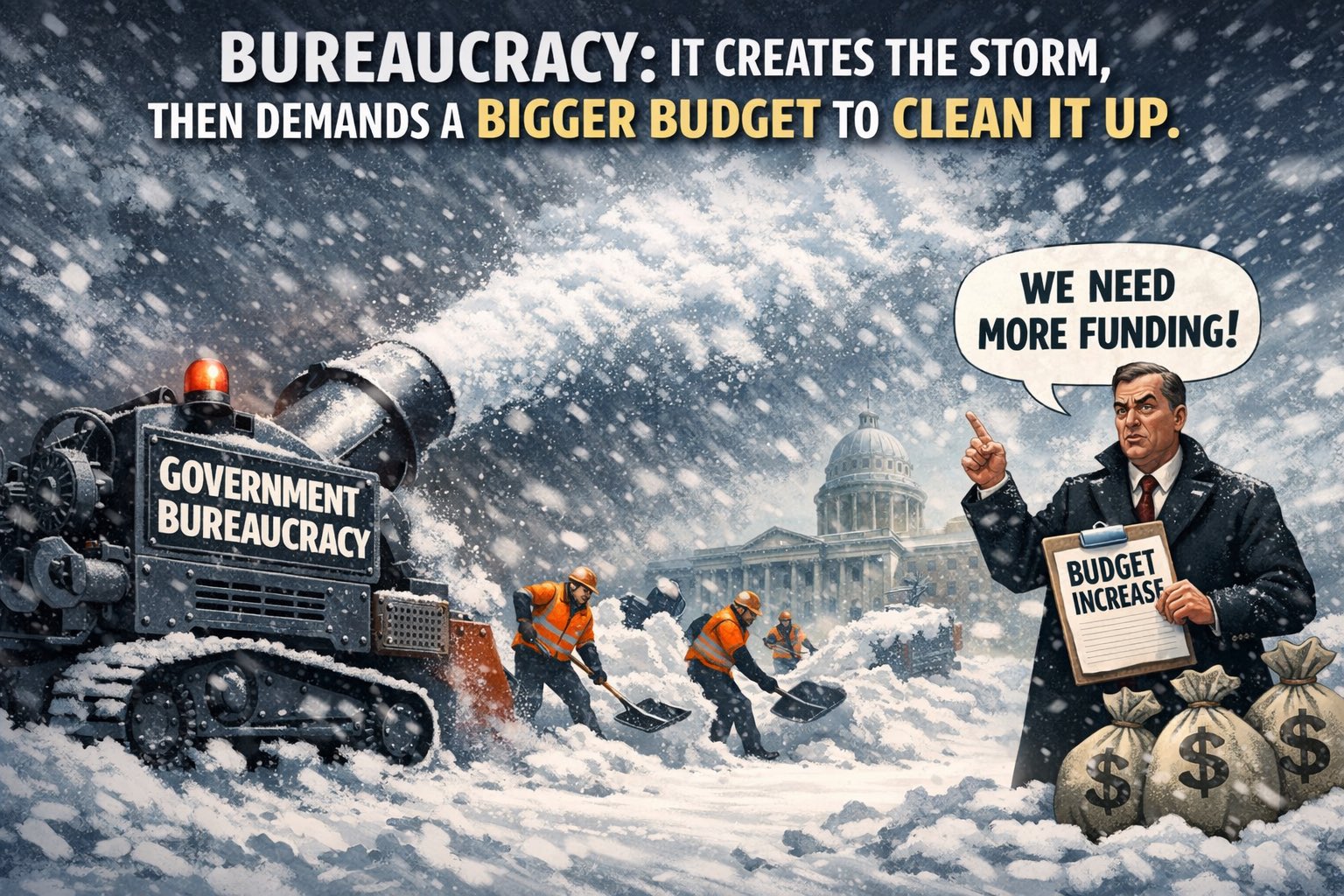
Grok image from The Rewrite

About the same time as William Watson’s outstanding book Globalization and the Meaning of Canadian Life was being published in the late 1990s, the newspaper I worked for was sending a journalist to Europe to research a series of articles on how health care systems work in some of those countries.

I mention Bill’s book, which was runner-up for a public policy Donner Prize, because it exquisitely details many of the things Canadians believe about themselves that simply aren’t true. Which was the same reason why the Calgary Herald sent its health reporter (yes, there used to be such a thing), Robert Walker, to Europe — to expose its readers to the fact that there are more than two health care systems: our “defining” one and America’s, both of which are extremes. To the best of my knowledge, that remains the only time a Canadian news organization has taken on that task.

In every country examined in Walker’s reports, as is the case with almost every country in the world, public and private health care and insurance systems maintained a peaceful coexistence and the public’s needs were being met. Almost 30 years later, that remains the case. Also almost 30 years later, neither Bill’s book nor the Herald‘s reporting has had the slightest impact on the prevailing media narrative in Canada. It remains determined to perpetuate the fear that any move to increase the role of private health providers or even allow doctors to work in both systems (as was proposed this week by Alberta Premier Danielle Smith) is the first step on the slippery slope to “American-style” health care. This line has been successfully used for decades — often hyperbolically and occasionally hysterically — by public monopoly advocates for Canada’s increasingly expensive and difficult to access systems. We have known for 40 years that once Baby Boomers like your faithful servant turned bald and grey that the system would be unsustainable. But that single, terrifying “American-style” slur has halted reform at every turn.

The Tyee responded with a “Danielle Smith’s secret plan to Destroy Public Health Care” column while the Globe and Mail‘s Gary Mason, a Boomer, challenged my thesis here by suggesting it was time for open minds because “the reality is, the health care system in Canada is a mess”.

It is. And at least some of the blame — a lot, in my view — belongs at the door of Canadian news organizations that for decades have failed to fully inform readers by making them aware that there are a great many alternatives to just “ours” and “US-style”.

I was reminded of this in a recent Postmedia story concerning the perils of private health care provision. Referencing a study on MRIs, the story, right on cue, quotes the part of a study that states “It’s a quiet but rapid march toward U.S.-style health care”.

One would not want to suggest that those clinging to that parochial view should be denied a platform. But at the same time, readers have every right to demand that journalists push back and ask advocates for state monopolies simple questions such as “Why do you say that? Could it not be the first step towards UK-, German-, Dutch-, French-, Portugese- or Swedish-style health care?” and open the debate.

The Canadian paradox – “settlers” will never belong but “migrants” and “refugees” instantly belong

Filed under: Cancon, History, Media, Politics — Tags: , , , , , — Nicholas @ 03:00

In the National Post, Mark Milke and Tom Flanagan outline one of the major issues dividing Canadians — the state and state-funded propaganda demonizing “settlers” that also lionizes much more recent arrivals as if they’re automatically better than non-Indigenous Canadians:

A depiction of Samuel de Champlain’s first encounter with the Iroquois (Mohawks) in 1609, a forest skirmish on future Lake Champlain, including fanciful rowboats, rather than canoes.
Caption from the National Post, image from the National Archives of Canada

If Canadians care to understand why our country is increasingly fractured, one key driver is the notion that non-Indigenous Canadians — “settlers” as they are called — should be grateful to live anywhere in the Americas.

The “settler” label is mostly directed at those of British and European ancestry. But it can apply to anyone whose families arrived from anywhere — Africa, Asia, the Levant, the Pacific — who were not part of the prior waves of migration to the Americas.

According to the most recent scientific knowledge, human settlement in the Americas began about 15,000 to 20,000 years ago. These pioneers of settlement must have arrived from Asia by boat and hopscotched along the Pacific coast because the interior land was glaciated. They migrated as far south as modern-day Chile, but it is unknown how far inland they penetrated and whether they survived to merge with later migratory settlers.

Another wave of migration started around 13,000 years ago when an ice-free corridor opened through Alberta between the two great glaciers covering North America. This made it possible for people from the now submerged land of Beringia to move south through Alaska, Yukon and Alberta across North America.

Later, but at an unknown date, came the movement of the Dene-speaking peoples now living mostly in Alaska and Canada’s North (though the Tsuut’ina got to southern Alberta and the Navajo to the southwestern United States). Their languages still show traces of their relatively recent Siberian origins.

The Inuit migrated from Siberia across the Arctic to Greenland around AD 1000. Another group inhabited the Arctic starting around 2500 BC, but their relationship to the Inuit is uncertain.

In short, the Americas were settled in waves from Asia. Everyone alive today is descended from settlers. The latest “Indigenous” settlers arrived barely ahead of the first European settlers, the Vikings, who settled in Greenland and Newfoundland, and of Christopher Columbus, who started Spanish settlement in the Caribbean.

Singling out Europeans as “settlers” drives land acknowledgments, as well as demands for compensation and reconciliation. It plays on guilt about the actions of actors long since dead, while the concurrent demands for land, decision-making power and financial settlements occur on an open-ended basis. Internationally, the United Nations Declaration on the Rights of Indigenous Peoples (UNDRIP) also assumes the Indigenous vs. settler-colonial divide is valid.

Why does this matter? Because peaceful, relatively prosperous nation-states are not guaranteed to last. In fact, they’re the exception, not the rule. To make actual progress in unifying Canada as opposed to watching it break down and fragment into hundreds of inconsequential principalities (a separate Quebec, a separate Alberta, and multiple First Nations with state-like powers, of which there would be up to 200 in British Columbia alone), it is overdue to dissect these assumptions, and the related belief that Canadians have done little to make up for some of the wrongs done in history.

November 23, 2025

Do older Canadians really hate their children and grandchildren? The fiscal evidence says “yes”

Filed under: Cancon, Economics, Government, Media, Politics — Tags: , , , — Nicholas @ 03:00

As I posted a few days back, the real political divide in Canada is no longer the left versus the right: it’s the old financially parasitizing the younger generations. At The Line, Ben Woodfinden discusses how the smug, comfortable boomers are being confronted by, for lack of a better term, a “new right” of far less comfortable younger voters:

eLbOwS uP!

The specific complaints from people like d’Entremont and other grumbling voices are less about ideology and more the tone and style of Pierre Poilievre (though perhaps the two are connected). Poilievre’s temperament and style rubs certain people, including some Conservatives, the wrong way. Now, full disclosure, I worked for Poilievre for a few years, and I can confirm he’s a demanding boss. But so is the prime minister, reportedly. And Poilievre is also in my experience the hardest working person I’ve ever met.

The tone battle is not a revival of Red vs. Blue. It’s not clear those terms are even relevant today. “Red Tory” is often used pejoratively to describe a “Liberal Lite” voter who identifies as a conservative but is indistinguishable from a Liberal — those who fit the “social progressive, fiscal conservative” moniker. This is not what Red Toryism historically meant; it’s actually the opposite of this. Red Toryism is a distinctly Canadian tradition of conservatism that was focused on the preservation of Canada contra a liberal United States, and emphasized the role of the state in this. It blended conservatism and elements of socialism in a distinctly anti-liberal synthesis that rejected radical individualism — that’s what the “red” part actually means, not liberalism but socialism. This kind of Toryism — “conservatism with a conscience” — is committed to public institutions and is pro-market but not entirely libertarian.

But Red Toryism is no longer a dominant force in Canadian conservatism; today it’s a remnant, largely in Atlantic Canada. What we’re really looking at here is a generational fault line that cuts right through the heart of Canadian conservatism.

Many older Canadians are conservative, and these older Tories are (in general) fairly well off. They are retired, or well advanced into their careers. They own homes that are paid off, or will be in the near future, and worth a lot more than what they paid for them. Many of them have been able to help their children get started in their own careers, or with down payments on homes of their own. They value stability — it is essential if they are to continue enjoying their prosperous lives. These people have long enough memories to remember the political battles that led to the creation of the modern Conservative Party of Canada in 2003 — some of them were no doubt even participants, and may still identify with one faction or the other.

Now contrast this with many of the leading voices on the other side of the debate. They call themselves “the new right”. In the absence of a better term, I’ll use that. Canada’s new right tends to be younger, and this matters not just because the old PC/Reform divide means very little to them, it matters because they are much angrier with our general state of affairs, and for good reason.

The emerging flagship publication for this collection of young conservatives is the Substack Without Diminishment. In some ways, the emerging conservative opposition in Ontario to Premier Doug Ford centred around an organization called Project Ontario (discussed in last week’s On The Line podcast here) is also a good representation of it.

The voices and figures involved in this movement are younger, often very online, and eager to pick fights with this older generation of conservatives. For some of the writers at Without Diminishment, the archnemesis of their conservatism is Globe and Mail columnist Andrew Coyne. He represents, for them, an outdated kind of “Boomer conservatism” that does not speak to them or the issues they care about. New conservatives have also recently written, after Ford ran ads featuring Ronald Reagan in America, that it’s time for “the gatekeepers of the Canadian right … to move on from 1984” — namely Reagan-era conservatism.

Twenty years ago, I’d often quote Andrew Coyne’s columns, but at some point he had a significant change of heart and one of the first Without Diminishment articles I linked to was what I characterized as “The Anti-Coynist Manifesto“.

November 22, 2025

Ottawa is working hard … to keep beef prices high for consumers

Filed under: Bureaucracy, Cancon, Economics, Food, Government — Tags: , , — Nicholas @ 03:00

It’s not your imagination, beef is still much more expensive than it used to be (we no longer buy any “good” cuts of meat, settling for ground beef and “stewing beef” when we do the shopping). But rest assured, the feds are working diligently … to prevent beef prices from falling:

We recently received information from a reliable industry source about how the federal government is administering beef import permits. If accurate, it raises serious concerns about whether Ottawa is knowingly sustaining an outdated and opaque system that keeps beef prices unnecessarily high. At a time when many families are struggling with food costs, this is more than a bureaucratic issue — it directly affects affordability.

Canada’s beef import rules operate under a tariff-rate quota system. A limited volume of beef can enter the country at a low tariff, but anything beyond that is slapped with a steep import charge. When supply tightens or when specialty products are required, supplemental import permits are meant to provide flexibility and help stabilize the market. For years, the system worked reasonably well.

But the structure behind the process has not kept pace with today’s realities. The committee originally created to provide guidance — the Beef and Veal Tariff Rate Quota Advisory Committee — has not met since 2015. For a decade, no formal mechanism has existed for importers, retailers, or independent distributors to participate in discussions with government about how permits are allocated. Instead, decisions have shifted informally toward a small group of influential players, including major domestic processors who have a vested interest in limiting imports. The transparency and balance once built into the system have eroded.

Adding to this complexity is the broader concentration of market power in the sector. Beef packing and processing in Canada is dominated by two foreign-owned private companies: Cargill, based in the United States, and JBS, headquartered in Brazil. Together, they control the overwhelming majority of beef slaughter and processing in this country. When a sector is this concentrated, and when a federal system restricts competition through import controls, the beneficiaries are obvious. Any policy that tightens import access — intentionally or not — further entrenches the dominance of these two multinational giants.

The consequences are no longer theoretical. Our source described a case where a long-established importer has beef sitting in bonded storage in Canada. The product is legally imported and properly documented. The importer applied for a supplemental permit to release it into the market at the regular tariff rate. The application was refused. The justification offered — that the beef had been purchased abroad at a price “too low” compared with U.S. prices — makes little economic sense. The product did not come from the U.S., and competitive pricing has never been grounds for rejecting a permit. With no permit, the importer must wait until the next quota year or pay the full over-quota tariff. Ironically, the only reason paying the tariff is even possible now is because beef prices have climbed so sharply. The federal government, of course, collects that tariff revenue.

Cases like this raise an uncomfortable question: does Ottawa actually want to keep beef prices high? If the goal were genuinely affordability, the government could issue supplemental permits when supply conditions justify them. It could restore a functioning advisory committee to ensure balanced input. It could provide clear and transparent criteria for permit decisions. Instead, legitimate requests are rejected, supply is restricted even when product is physically present in the country, and both processors and Ottawa benefit from elevated prices.

November 20, 2025

“Oh my God, the Conservatives support children starving at school”

In the National Post, Chris Selley profiles my local MP, Jamil Jivani:

A screengrab from MP Jamil Jivani’s video that is critical of the Liberals’ national school-lunches program. Photo by Jamil Jivani/X

A few eyebrows raised earlier this year when Toronto-area MP Jamil Jivani, long heralded as an essential younger voice in the Canadian conservative movement, wasn’t offered a critic role by party leader Pierre Poilievre. There are 74 official Opposition critics, which is more than half the Conservative caucus. And if Poilievre and Jivani don’t see eye to eye, one might still have thought Jivani’s relationship with U.S. Vice-President JD Vance would be a useful resource.

There’s also the fact that Jivani is rather good at defending conservative policy, especially on the social side — better, one might argue, than Poilievre. On Monday, Jivani posted a video of himself arguing that Canadian children should go hungry at school. Or at least, that’s how certain hysterics chose to interpret his opposition to the Liberals’ national school-lunches program.

“It should frighten us that there are parents who can’t buy their own kids lunch,” he tells a constituent in the video. “(But) the government shouldn’t be your daddy; the government shouldn’t be your mother. We have families, and families should be strong enough to provide for their children, and when they’re not that should break our hearts. … It should not be used as a justification for the government to have even more influence, even more input, even more control over our lives.”

The program is already underway, with $1 billion in funding over five years committed as transfers to the provinces in 2024 — three years after the Liberals first promised it. And the Liberals recently announced plans for more. “Permanent” funding of more than $200 million is set to kick in in 2029.

The response anywhere to Jivani’s intervention, anywhere to his left, in a nutshell: “Oh my God, the Conservatives support children starving at school”. Even among some conservatives we hear the traditional timid refrain: Is this a “winning issue”? Or is the party just making itself look callous? What will the media think? Jivani, unlike many more seasoned Conservatives, seems not to care so much about the potential blowback.

Lunches served at school — paid or subsidized — are hardly a brand-new statist invention. They’ve been around forever, although they’re more common in certain kinds of schools than others. A 2013 Queen’s University study looked at 436 Canadian schools and found only 53 per cent had a cafeteria. (When I was a kid, many of my friends walked home for lunch and back afterwards.) And Jivani concedes in the video that many Canadians will like the sound of a national school-lunch program. Who would argue against it? It’s obviously far more important that kids eat breakfast and lunch (and dinner) than it is who provides it.

But that assumes a national school-lunch program, or even a provincial or local school-lunch program, is the quickest and easiest way to make sure kids are fed. It obviously isn’t, but trust in government, somehow, is a tough nut to crack in this country. Mass pandemic-era supports like CERB weren’t unalloyed successes, but they proved governments at least know how to shovel money out the door when they feel it absolutely necessary.

Especially since so many Canadian schools don’t have cafeterias — 53 per cent of elementary schools in the Queen’s study, and 82 per cent of combined elementary-secondary schools — it would make much more sense just to mail every parent who needs one a subsidy and let them pack the lunch, or the lunch money, that their kids need.

I’ve mentioned many times that I’m not a Conservative, but I don’t mind Mr. Jivani as my Member of Parliament because he doesn’t seem to me to be a typical Canadian Conservative (I thought it was significant that the PPC chose not to run against him once he became the Conservative candidate). In my YouTube recommendations, this video appeared with some sensible views from the Deputy Leader of His Majesty’s Loyal Opposition, Melissa Lantsman:

The trouble, as always with parties in opposition, is that they can sound like they’ve got great ideas and will energetically address the problems they identify while not in government … but once they go into office, sound remarkably like the government they just defeated and little or nothing actually changes.

November 18, 2025

Canada’s divide isn’t left versus right, it’s old versus young

Older Canadians seem to be taking joy in sticking up their elbows and robbing younger Canadians of opportunities, jobs, and hope. It’s quite literally un-Canadian, but the Boomers have always been a generation apart and this is merely the latest manifestation of their self-centred worldview. Alexander Brown wonders if this divide can be fixed before the country itself is ruined:

“eLbOwS uP!”

“Talk to your parents,” the host of an event for Pierre Poilievre joked on Saturday in Vancouver — an event I happened to attend. “But be patient. Be kind.” And he’s right.

The cross-talk, the rock’em sock’em robots, the continued slap-fight between warring consultant tribes, it isn’t getting us anywhere, clearly. When the present iteration of the party of the status quo wedges a nation against itself, and denies a reform election after a decade of haphazard redistribution, non-growth, and abject decline, you get a traditional voter-demographic breakdown flipped entirely on its head.

The party of seemingly endless opposition dominated with youth, held strong with the 35-54s, but found itself walloped 52% to 34% among those aged 55+. Since then, those 55+ numbers have only widened, as the “safe” choice, that more stately actor (when he’s not radicalizing those who don’t know any better with claims of false invasion) can do little wrong, even coming out of “middling” budget heading to a vote Monday, and with a nation remaining pessimistic about its future prospects.

If the Liberals are voted down Monday, they would likely relish that opportunity to seize on a majority. The spin is already built in.

    The Conservatives don’t want to stand up against Trump!

    At a time like this, when we should be coming together, it’s un-Canadian …

    We’re supposed to be one Team Canada right now (offer void in British Columbia, Ontario, and Quebec), we can’t afford Pierre Poilievre’s divisive Trumpiness.

On and on. Yada and yada.

Nowhere in that comms exercise, drummed up by those who spend more time in America or the Arab Emirates, or meeting with Chinese proxies than they’d publicly care to admit, would there be a defence of younger Canadians, of those still on the launch pad, worried about, say, supposed ‘fixes’ to immigration riddled with creative accounting and more of the same.

Nowhere would they address housing, set to get much, much worse, under both the federal Liberals and targets they’re admitting they won’t come close to hitting, and Ontario’s ‘Conservative’ premier who leads the galaxy in not getting off his ass to get out of the way on starts and lowering punitive development costs.

Nowhere would one find a stout defence against “deconstruction“, or the daily humiliation ritual of flags flying that aren’t our own, or imagined and inflated woke excess meant to sully the memory of our war dead and marginalize normal people.

Following recent debates sparked by Without Diminishment, where we’ve argued a version of “it’s not just the economy, stupid,” when it comes to what’s animating young people and young conservatives — actually talk to them, and half of them are trending towards fascism with how alienated they feel by a lack of upward social mobility, or a society without rules or those willing to enforce them — it’s been easier for some serving in established camps to mischaracterize these conversations as focusing too much on culture, or, ridiculously, “blood and soil nationalism”. But we’re not. If one is dealing in good faith, it’s plain to see we’re trying to talk about both.

Of course, the Liberals survived Monday’s budget vote … for now:

When I saw Elizabeth May stand up and ask Mark Carney what looks like a completely planted question, I assumed the budget would pass and I was correct. Planted questions normally come from government MPs and are a soft way for the government to push their agenda.

This time, it wasn’t a Liberal MP, well at least not a Liberal MP in name and fact. Instead it was Green leader, or deputy leader, or let’s be honest the lonely lady in the corner who is the only Green MP asking the question.

That statement put the Liberals one vote closer to passing their budget and of course May later confirmed ahead of the vote that she would back the budget. This was after saying couldn’t back the budget, might back the budget, would probably back the budget, definitely wouldn’t back the budget and finally would back the budget.

How anyone can take Elizabeth May seriously is beyond me.

How the other votes went…

Ahead of the vote there were lots of questions about how things would go. Would all MPs show up or be able to vote online? Would people abstain? Would MPs vote for the budget without crossing the floor?

In the end, the budget passed 170 to 168 with two NDPers abstaining. That leaves five votes not accounted for and we will figure out.

Here is how the vote went.

Now, some members who were not in their seats did vote electronically. I didn’t see Matt Jeneroux vote electronically and I’m told that he is in British Columbia with is family. Also not voting, Conservative MP Shannon Stubbs.

Conservatives Andrew Scheer and Scott Reid both voted no but only in the time that is allowed for MPs voted electronically to claim tech problems. They were both in the House, so why were didn’t they vote in person?

Regardless, the NDP rushed out to say they voted against the budget but also made sure that it passed with their two abstensions.

As for all this talk of a Christmas election, had the government lost this vote and the PM gone to see the Governor General tomorrow, the earliest election date would have been December 25.

A Christmas election.

Canada’s major projects announcements are an economic “hostage release” program

On the social media site formerly known as Twitter, David Knight Legg vents about Dear Leader Carney’s penchant for even-more-Trudeauesque-than-Justin performative governing. Far more emphasis is put on the PR value of an announcement than on the common sense practicality of the thing being announced. And Carney is also starting to re-announce already announced “projects” as if speaking it aloud will magically manifest it into reality:

Canada’s major projects announcements are a national embarrassment — an economic “hostage release” program — that tells the world just how uninvestible Canada has become under the Liberal party.

1970s central planning Liberal govt arrogance is at an all time GDP destroying high.

Try naming another OECD nation (we’re at the bottom now) where the press waits with bated breath for a “dear leader” politician who has never built anything in his life to fly in to grant a bureaucratic benediction on a few projects his bureaucrats will allow past the gate of the caps, taxes, green rules and red tape his govt imposes on everything.

Idea: set up the Major Dumb Redtape office in Calgary instead and get rid of the 10 anti-business rules written into law by the Montreal green alarmist fringe that’s holding Canadian energy, ag, forestry, and manufacturing back while other nations grow …

But PM Carney seems to like his bureaucratic power over what used to be a leading free market economy. Even while our GDP grinds down to the worst in the OECD.

The arrogance is breathtaking.

So is the ineptitude. This same central planning genius just punched a record new $78billiom hole through our public finances because he can’t manage basic public service delivery without more crushing debt.

The budget is a train wreck solidifying the final year of a Liberal decade steeply eroding purchasing power, national wealth, personal security and living standards and public services.

The irony is that this has driven Canada to ever-greater 51st state economic dependency. Donald Trump didn’t do that. They did.

But he’s been a too-convenient way to con the elderly with “elbows up” PR.

But should the next generation really be forced to lend this govt another $78bn in addition to the 1 trillion they’ve already taken to fund their failed decade of central planning, green slush funds and EV mandates while real infrastructure projects wait years for the Liberal party to bless them?

It’s not going to last.

Fitch just questioned the sustainability of all this. Unlike our lacklustre press they aren’t buying “net debt” or “operating/investment” Liberal financial illiteracy.

I had high hopes PM Carney would return fiscal sanity to Canada after openly borrowing Conservative policies to get elected by cutting the carbon and cap gains taxes.

But this budget, this major projects farce and his inability to kill a dozen economy killing rules of his own govt is showing the work how uninvestible Canada has become — and it’s accelerating national economic decline.

2026 is the end of the Liberal lost decade. First recession. Then debt downgrade. Then an election. And Carney can go back offshore to his assets and all the other global investors who like him don’t invest in Canada under Liberal mismanagement.

@SteveSaretsky thx for the brilliant line chart as usual.

A day later, after his post got significant attention on the social media site formerly known as Twitter, he posted this follow-up:

This angry post I wrote a day ago got 300,000 views.

Canadians are tired of the fake “major projects” PR by the same people who prevented those projects for a decade with their green taxes and prohibitions.

Announcing the release of 7 hostage projects is a joke. Some of these projects aren’t major and most aren’t new. None needed the govt to do anything but get out of the way from the beginning.

All the several hundred major projects still in purgatory need is for this govt to reverse their anti-job and anti-infrastructure tanker ban, industrial carbon tax, emissions cap, and electricity regs.

Oh — and also clarify by law that in Canada property rights are not overridden by leftist judges and UN wishful thinking.

Then get out of the way so a couple trillion dollars can flow in, major projects can get built and the govt revenue will flow to better public services — and to pay down that debt they just added $78bn to.

November 17, 2025

Yet another example of the Liberal focus on symptoms rather than underlying problems

Filed under: Cancon, Government, Media, Politics — Tags: , , , , , , — Nicholas @ 03:00

The Liberals under both Justin Trudeau and Mark Carney have amply demonstrated that they care far more about appearances than achievements. The immigration crisis is merely the latest example of the government reaching for something that will look good on TV and in the newspapers rather than addressing the root cause of the problem:

Perhaps the most intractable policy disaster handed to Prime Minister Carney by the Trudeau government is the immigration file. The ugliest detail in that file is undoubtedly the astronomic increase in temporary residents (largely foreign workers, international students, and asylum seekers) – a population that expanded from 3.3% in 2018 to 7.5% in 2024. The Carney government’s solution is to limit the inflow of new temporary residents significantly, while at the same time giving permanent residency to many of the ones already on Canadian soil.

The base problem is far too many people entering the country, driving up demand for housing, overloading healthcare facilities, absorbing more and more government assistance at a time the government is running record deficits, and undercutting young Canadians for entry level jobs while youth unemployment is skyrocketing. But this “solution” will look like firm action as it will be presented by the tame media, so from the point of view of the government, it’s “mission accomplished”.

The Carney government’s first annual Immigration Levels Plan commits to “reducing Canada’s temporary population to less than 5% of the total population by the end of 2027”. To this end, Canada’s annual intake of new temporary residents will be cut from 673,650 in 2025 to 385,000 in 2026, and 370,000 in 2027 and 2028. This cut will hit international students the hardest, with annual new study permits cut in half from over 300,000 to 155,000 in 2026, and 150,000 in 2027 and 2028.

This major cut will ease the strain on Canada’s housing, healthcare, food banks, roads, and social services – a strain that is no longer denied by politicians, and is freely acknowledged across the political aisle. But, as is the case with many policies, the devil is the details. It turns out that one of the ways which the federal government intends to shrink the size of the temporary resident population is by making a large number of them permanent residents.

In the recently released 2025 Annual Report to Parliament on Immigration, Immigration Minister Lena Diab says the Carney government intends to “give priority for permanent residence to temporary residents already living and settled in Canada, further reducing the number of new arrivals”.

How many temporary residents will get permanent residency under this plan is unclear, but we can extrapolate from the data we have.

The Carney government’s Immigration Levels Plan sets the annual permanent resident rate at 380,000 for the next three years – or, a total of 1,140,000. The very last Immigration Levels Plan of the doomed Trudeau government – which committed to transitioning many temporary residents to permanent residency – predicted that temporary residents would account for “more than 40% of overall permanent resident admissions in 2025”.

If the Carney government is heralding the idea of transitioning more temporary residents as a way to slow down the catastrophic population growth Canada has experienced in recent years, we can safely assume that this proportion will be at least a little bit higher than the Trudeau government’s rate. A rate of 50%, say, would mean that 570,000 temporary residents will receive permanent residency over the next three years.

See, Canadians are telling the government that there are too many temporary immigrants, so by waving a magic wand and transforming the bulk of the temporary immigrants into permanent residents, the government can pretend they’ve solved the problem. And the sycophants, fluffers, and cheerleaders in the media will laud them to the skies for their brilliant solution.

November 15, 2025

Canada’s flawed Industrial and Technical Benefits scheme – “We’re architects of our own dependency”

Filed under: Bureaucracy, Cancon, Government, Military, Weapons — Tags: , , — Nicholas @ 03:00

Posted a few days ago, but still of interest — Omar Saleh discusses a part of Canada’s defence acquisition process that provides the illusion of military self-reliance while actually allowing foreign companies to control more and more of our domestic defence manufacturing capacity:

Graphic stolen from Small Dead Animals.

On November 4, the federal government tabled one of the most consequential defence budgets in Canadian history: an $81.8-billion expansion over five years, anchored by a $6.6-billion Defence Industrial Strategy, procurement overhauls, and a vow to claw back sovereignty from decades of polite deferral. It was framed as a national awakening – an overdue recognition that geography is no longer a moat, Russian submarines are testing our Arctic resolve, and allies are no longer willing to pretend Canada is pulling its weight.

But buried underneath all the ambition is a policy that will quietly sabotage it: the Industrial and Technological Benefits (ITB) framework – the mechanism Canada uses to ensure foreign defence contractors reinvest in the Canadian economy and the quiet architecture of our own dependency.

On paper, it’s a sound industrial strategy. So much so that other countries like Saudi Arabia and the UAE – both of which are aggressively seeking to onshore the lion’s share of their own defence spending – have implemented very similar policies as part of their respective Vision 2030 programs.

In practice, however, Canada’s ITB is a compliance machine that has mastered the art of doing nothing loudly. It is a mechanism through which American and European primes deepen their control over Canada’s industrial base while giving Ottawa the comforting illusion of self-reliance. We’re not victims of clever contractors. We’re architects of our own dependency, moralizing away the muscle to build someone else’s blueprint.

The numbers are damning. Since 2011, more than one hundred thousand industrial activities have generated over $64 billion in promised economic activity. And for all of that motion, not a single global defence technology titan has emerged. The work done in Canada – machining, composites, test benches, components – is real, but when the world shifts and architectures evolve, the capability evaporates. It was never ours. The most strategically important capabilities are designed abroad, integrated abroad, and updated abroad. We have activity without ownership – a nation performing sovereignty instead of exercising it.

Call it what it is: Phantom Capacity. The illusion of industrial muscle – until the country is forced to lift something heavy.

The core flaw is structural. ITB rewards dollars spent, not capability created, even as it dangles multipliers of up to 9x for R&D and startup work. A prime receives one-to-one credit for $5 million in routine machining, yet could theoretically earn nine times that for backing a Canadian breakthrough. But the theory collapses in practice. Multipliers accounted for less than one per cent of fulfillment between 2015 and 2019, and auditors still cannot prove they delivered any meaningful innovation. The system does not discriminate between activity and advancement. And when a system does not discriminate, the market follows the path of least resistance.

Predictably, primes funnel work to the safest, most administratively convenient suppliers. It is the industrial equivalent of a potluck where everyone insists on homemade dishes but quietly prefers the store-bought tray. Innovation is welcomed rhetorically and ignored in practice.

This leads to the second, more corrosive consequence: Canadian startups are structurally excluded from shaping Canada’s defence future. They move on six-month innovation cycles. Their technology evolves. Their architectures iterate. But in a system where every offset must be pre-approved, credit-verified, documented, and mapped against a prime’s global program calendar, startups cannot operate on their own terms. They must reshape their roadmaps to fit into architectures designed abroad, updated abroad, and controlled abroad. The result is not partnership but subordination.

A Canadian company can build a breakthrough sensor, a next-generation autonomy stack, or a northern detection layer – but it cannot enter a Canadian program of record unless a foreign prime decides to adopt it. The startup becomes a module inside someone else’s strategy. Sovereignty becomes subcontracting with better branding.

November 14, 2025

“Conscription if necessary, but not necessarily conscription” 2 – Electric Boogaloo

Filed under: Cancon, Government, Media, Military, Politics — Tags: , , — Nicholas @ 05:00

Canada has only had two brushes with military conscription — after voluntary enlistments couldn’t keep up with casualties in both the First and Second World Wars — and both caused severe resentment in Quebec. Canadian politicians have generally avoided any hint of anything that could be framed as “conscription” for fear of triggering yet another existential crisis between Quebec and the rest of the country. Prime Minister Mark Carney isn’t a typical Canadian politician, and does not seem to have any of the built-up scar tissue that most others do. This might make him prone to saying and doing things that seem quite ordinary to him, but trigger civil unrest … like forcing civil servants to become soldiers against their will.

I floated the notion that this might be Carney’s five-dimensional chess strategy to reduce the civil service without having to fire everyone, but it’s far more likely that he genuinely doesn’t understand Canadians and our shared history.

John Carter is … skeptical about the Laurentian Elite being capable of rebuilding the depleted Canadian Armed Forces, as it’s hard to conceal sixty years of open contempt long enough to fake some sincerity:

The Canadian Armed Forces – which refer to themselves as the CAF, pronounced exactly as it’s spelled – recently leaked its intention expand its reserves from the current, anemic 22,000 to 400,000 soldiers. At first I wondered if an extra 0 was added to that number as a typo, but the plan is to grow the Army reserve to 100,000 and the supplementary reserve (which I hadn’t even known existed, and is currently composed of retirees) from a few thousand to 300,000. Further leaked details are that the 300,000-strong supplementary reserve will be created by essentially drafting civilian Federal employees, training them in driving trucks, marksmanship, and drone flying, which really just sounds like the makings of an absolute clown show.

At the same time, Canada’s prime minister Mark Carney has committed to a considerable increase in the CAF’s budget – over $80 billion spread over the next five years, with 2025-26 spending rising to around $62B from the previous average of around $35B – with the goal of reaching the 2% of GDP level that NATO members are expected to (but in practice usually don’t) maintain. As part of this build-up, the CAF is hoping to reach its authorized strength of 71,500 uniformed personnel.

[…]

A recent Angus Reid poll indicates that there is very little enthusiasm for military service amongst Canada’s population. Only one in five Canadians would volunteer no matter the reason if their country called them, while 40% would refuse service under any circumstances.

Young men are even less likely to be potentially willing to unconditionally volunteer than old men, while being far more likely to refuse to volunteer under any circumstances (of course, women are almost universally aghast at the idea of serving). Contrast this to World War 2, when about 1/3 of fighting-aged men volunteered.

Governments that find it impossible to motivate their young men to volunteer for military service, but need their warm bodies in uniform anyhow, have historically resorted to conscription. Since they are manifestly not interested at the moment, the political class has begun floating trial balloons about mandatory military service in its media.

[…]

Just because conscription would be unpopular doesn’t mean that the government won’t reach for it, of course. More or less by definition, conscription has never been popular. It is, however, very far from ideal. Conscripts don’t tend to make the most enthusiastic troops. Their morale tends to be low, their enthusiasm non-existent, and their propensities to shirk their duties, avoid danger, surrender, and mutiny are all much higher than those of the committed volunteer.

[…]

The Canadian government has worked hard to systemically alienated the native population. Official state ideology is that Canada is a post-national multicultural state with no core identity built on stolen native land by genocidal settler-colonialists. As such, there’s nothing to defend. There’s no there, there: no identity to identify with, no boundaries of culture to justify the borders of political geography, no in-group to defend against an outgroup. No nationalism without a nation; no patriotism without patria.

Reinvigorating Canadians’ willingness to serve their country and rebuilding Canada’s military into a force that can win wars would both require the Canadian political class to repudiate the ideological territory of globalism, feminism, multiculturalism, mass immigration, and gender-bothering that they have made themselves synonymous with. However, they can’t reverse course without discrediting themselves, and so, they won’t. Fixing the recruitment crisis is therefore a coup-complete problem: it cannot be accomplished absent wholesale replacement of Ottawa’s political class. We only need to look south of the border for demonstration of this. Until 2025, the American military was suffering from precisely the same recruiting woes as afflict Canada and Great Britain, due entirely to a collapse in interest amongst America’s traditional warrior class: white rural Southern men.

The ascendant Trump replaced the shapeless blob Lloyd Austin as the Secretary of Defense with the young, energetic, crusader-tattooed Pete Hegseth as the Secretary of War (and that difference in terminology matters). Recruitment rebounded immediately, with the US Army alone exceeding its 2025 goals by 61,000, four months ahead of schedule. Including reserves, the US military as whole recruited about 325,000 new personnel in 2025, with each branch either hitting or exceeding its recruitment targets (which were also 10-20% higher than in 2024). Adjusting for population ratios, this would be the equivalent of the CAF recruiting 32,500 personnel in one year.

Of course, as we’ve noted here before, the CAF doesn’t have the same kind of recruiting problem that the American services faced (please pardon the self-quote here):

We’ve had surprising numbers of media folks paying attention to the crippling recruiting crisis, as even on current funding, the CAF is short thousand and thousands of soldiers, sailors, and aircrew. Sadly, but predictably, most of that media attention looks at the shortfall of new recruits being trained for those jobs, which is true but incomplete. The biggest problem on the intake side of the CAF is the bureaucratic inability to bring in new recruits in anything remotely like a timely fashion. The last time I saw annual numbers, the CAF had huge numbers of volunteers coming in the door at recruiting centres, but getting the paperwork done and getting those volunteers into uniform and on to job training was an ongoing disaster area. More than seventy thousand would-be recruits applied to join the CAF and the system managed to process less than five thousand of those applicants and get them started on their military careers.

At a time that we’re losing highly trained technicians in all branches to overwork, underpay, and vocational burn-out, we somehow lack the competence to take in more than one in twenty applicants? That is insane.

November 12, 2025

The legacy media are still fanatically pushing the “Tories in disarray” line

It’s good to see that sometimes you get good value for your money. In this case, it’s the massive financial subsidies the federal government pay out to most of the Canadian legacy media outlets, so that the media ignores stories that the Liberals look bad but push the living bejesus out of anything that makes the Conservatives look bad … even if they have to distort the story almost out of recognition. Brian Lilley has the details:

I told you this would happen, the legacy media is trying to make this whole floor crossing thing into a PC versus Reform Party thing. As I broke down all of the background information that I could muster and tried to present it in a straightforward way, I said this would be a narrative of the MSM.

The reality is, the frustrations exist for a number of reasons but Pierre being too conservative is not the main issue here, it’s that they didn’t win in April. It all goes back to that and how different people interpret that loss and the leader’s response to the loss.

If you haven’t read that piece, it’s worth your time just to understand some of the nuance that you won’t find from other media.

There is no party divide …

The idea that there is still a schism on the modern Conservative Party between old PC voters or members and those that came from the Canadian Alliance or Reform side is not only false, those pushing it are showing their ignorance. The parties merged more than 20 years ago, they governed as the Conservatives for 10 years, anyone that left over this supposed divide left years ago, but the media can’t give this up and so they play into it with Chris d’Entremont on the weekend.

That was followed by Adam Chambers, the Conservative MP for Simcoe North in Ontario who pushed back against the idea that middle of the road Conservatives like him aren’t welcome in Pierre Poilievre’s party.

A hat tip to CBC Watcher on X who grabs so many of these clips and posts them.

Well done by Adam, not that it will help. This is a narrative some in the media are deciding to run with.

They will ignore that d’Entremont first ran under Andrew Scheer, hardly a Red Tory and in fact a so-con and d’Entremont was comfortable with that. Maybe because as a local French CBC outfit pointed out, d’Entremont is also on the pro-life side, the one the Liberals normally hate.

Oh … and another point on CBC’s reporting here. Remember the claim that a staffer was shoved out of the way … this is at the bottom of the CBC article that made the claim.

The Toronto Star will not be outdone …

This is a headline that I can’t believe the Toronto Star actually ran.

I’m pretty sure that columnist Althia Raj is old enough to remember all the way back to the morning of December 16, 2024. I know that was a REALLLLLLY long time ago, like, literally decades (please read that with a Valley girl upspeak).

If you don’t know that date, you will know what happened, because that is the day that Chrystia Freeland stabbed Justin Trudeau in the front, not the back. On the day that she was supposed to deliver the federal government’s fall economic statement, she issued a scathing resignation letter instead.

This of course also came after months of Liberal MPs pushing Trudeau to resign. A letter had even circulated among caucus members demanding he stepped down.

Liberal MPs couldn’t make Trudeau leave, Freeland’s resignation couldn’t make Trudeau leave, the 20 point lead the Conservatives then enjoyed couldn’t make Trudeau leave – it was Trump that did it.

All of that was wilder, had more drama than last week, but sure, tell people we haven’t seen this in decades. The column penned by Raj doesn’t mention Trudeau, it doesn’t mention Freeland, but it does want you to believe we haven’t seen this in like, FOREVER!

November 11, 2025

Four battles of the Canadian Corps

Following on from part one (excerpted here), The Black Horse outlines four major battles that the Canadians fought on the western front during the First World War:

Sir Arthur Currie
Portrait by William Orpen, 1919.

The first part of the series was a political biography of Currie; the second part attempts to tell the story of the Canadian Corps at war through somewhat detailed account of four important battles. The piece is only partly biographical, it partly tells the story of Currie’s war, and partly tells the story the Canadian men who fought for the British Empire in the Great War. It’s a story of incredible martial prowess, but the careful reader will also observe a story of warring duties placed upon the leader of a colonial army; duty to his men, duty to the political leadership of his colonial people and the future of that nation, duty to the objectives of the imperial power on whose behalf he fought, and finally duty to glorious Victory. Currie ended his life understood by those with eyes to see as a great warrior and a military genius; but disliked by his men and hated by the leadership of his people because he prioritized the needs to the Empire and of Victory; but after the war the Empire was of limited service to Currie and to the Canadian people. I leave to the reader, to history, and to God, to decide the value of Victory.

[…]

2nd Battle of Ypres

In the spring of 1915 the early dynamic advances of the German army were a distant memory faded behind the great defeat at the First Battle of the Marne. Through the winter both sides had dug in; and many German troops were redeployed to the Russian front. German chemists Walther Nernst and Fritz Haber brought forward the idea of using heavier-than-air Chlorine gas, carried on the wind, to overcome the mathematical impossibility of conventional attack. On April 22, 1915, Albrecht of Württemberg led 7 German divisions to attack 8 Allied divisions, including the 1st Canadian Division under the command of Sir Edwin Alfred Hervey Alderson. The attack began with the release of 168 tons of chlorine gas at about 1700h along a 4 mile stretch of the front around Langemark.

[…]

Vimy Ridge

For a year and a half after Ypres, Currie & the Canadian Corps continued to fight desperate engagements along the Western front with no clear strategic conclusion. After heavy losses and a lot of hard-learned lessons at the Somme from Sept 1915-Sept 1916, the Canadian Corps and Currie with them had become both hardened by bitter experience, and desperate to find better ways to prosecute the war. In September 1915 he was recorded to have said “I did not care what happened to me, but to my men, to their wives, their mothers, their children and to Canada I owed a duty which I wanted to fulfill to the very best of my ability”. Later that year as the division struggled with desertion, he ordered the execution of a deserter despite a three hour plea for clemency by the divisional cleric. The decision restored discipline, but haunted Currie’s dreams long afterwards.

In May 1916 Julian Byng took command of the Canadian Corps, replacing Sir Edwin Alderson. In the fall of that year, after heavy losses in a series of engagements at the Somme, Byng was given the opportunity to reorganize and refit the Canadian Corps; he looked to Currie as a key partner in the effort. They replaced the ineffective Ross Rifle with the Lee Enfield, reorganized the platoon structure to include heavy weapons within each platoon [machine guns, mortars, etc.], and implemented new training and tactics like rehearsals for advances, and the “creeping barrage”, carefully coordinated intended to keep artillery shells landing slightly ahead of advancing men.

[…]

Hill 70

After Vimy, Julian Byng was promoted. Currie was promoted in turn to lead the Canadian Corps. He would lead the Corps that he and Byng had made into one of the most effective fighting forces on any side of the conflict and lead it to bloody victory again and again. There is perhaps no better example of the mastery of the Canadian Corps, from top to bottom, than the battle of Hill 70. “Hill 70 was as close to a perfect battle as was ever fought on the Western Front” wrote historian Tim Cook.

[…]

The Hundred Days Offensive & the Pursuit to Mons

As the winter of 1917-18 passed, a new set of highly political decisions concerning whether and how to reorganize the Canadian Corps for the next round of fighting were taken. As noted in part one, Currie opted to split up the newly formed 5th division to reinforce the four divisions of the Canadian Corps and triple the size of the field engineering element. The decision optimized the Canadian Corps as an attacking force; and when they returned to the front that’s exactly how they would be used. Between August 8th and November 11th, 1918, the Canadian Corps fought nine major battles advancing 86 miles, and suffering 45,835 casualties [The force that began the offensive was ~100,000]. By comparison, the substantially larger American Expeditionary Force, over this same period, advanced only 34 miles while capturing only half the number of prisoners, suffering roughly twice the casualties per German division defeated.

Vimy Ridge: Canada’s Finest Hour | History Traveler Episode 386

Filed under: Britain, Cancon, France, Germany, History, Military, WW1 — Tags: , , — Nicholas @ 02:00

The History Underground
Published 20 Oct 2024

Battle of Arras: Part 2

When it comes to the legendary actions of the Canadian soldiers in WWI, Vimy Ridge looms large above all of the others. This is where the four division of the Canadian Corps would fight side by side for the first time in The Great War. In this episode, we’re walking the ground on the left flank of the Canadian line, looking at the memorial and showing a few things that typically get overlooked in the Vimy Ridge area.

For more on the Battle of Arras, check out The Old Front Line Podcast with Paul Reed & his YouTube channel, ‪@OldFrontLine‬.

This episode was produced in partnership with The Gettysburg Museum of History. See how you can support history education & artifact preservation by visiting their website & store at https://www.gettysburgmuseumofhistory…

Map animations by @SandervkHistory

November 10, 2025

Canadian military expansion

Filed under: Cancon, Government, Military — Tags: , , , , — Nicholas @ 05:00

In the free-to-cheapskates portion of this week’s dispatch post from The Line, the editors discuss some of the implications of the significant expansion plans for the Canadian Armed Forces (with the caveat that little of these plans are funded and would be subject to major changes if the government fails to get its budget through Parliament):

Canadian Armed Forces photo.

The amount of defence spending we’re talking about here is something that we have not thought about at all in recent generations. It’s a good thing. But it’s going to create some real challenges that we need to start thinking about, and coming up with solutions for, right away.

The numbers look something like this: the government had already announced a $9-billion influx of money into national defence, as well as a little bit of creative accounting, all with the goal of getting our spending up to the NATO two-per-cent-of-GDP target immediately, instead of on the absurdly prolonged trajectory the last prime minister deemed appropriate. A big part of this — and a welcome part — was a pay raise for members of the Canadian Armed Forces, particularly those at the lower scale of the pay grids for enlisted personnel and officers. One of the major problems the military has had in recent years is retaining trained personnel, and a pay raise is a tried-and-true way of helping address that. It also has the effect of juicing our spending at a time when our allies were looking for a tangible commitment. It’s a win-win.

But then there’s the rest of the spending: over $80 billion over the next five years, with a goal of getting up to the new NATO target of five per cent in only nine years, by 2035.

The Line supports this. We support this wholeheartedly. It makes us want to do cartwheels in the streets — and we would, if not for justified concerns for our joints and lower backs. (And dignity, though that’s less an issue.) But we do need to flag how transformative that level of investment would be.

Here’s the simplest way to put this. Almost our entire debate over defence in recent decades has been around the two-per-cent target. Nominally, the Canadian Armed Forces have certain capabilities that were suited to our national willingness to spend around two per cent of GDP. In reality, because of chronic under-funding, a lot of the capabilities we claim to have on paper didn’t really exist in reality. Units were badly undermanned. Equipment either didn’t exist or was not in serviceable condition or was long-since obsolete. Shortfalls of money and trained personnel were cutting into training exercises and basic upkeep on weapons, gear, and facilities. This prolonged fiscal starvation, combined with a fairly high level of demand on the forces for missions abroad and at home, had the effect, year after year, of hollowing out the force.

Getting spending up towards two per cent will help turn that around. This is conditional — and it’s a big condition — on fixing the military’s procurement problems. We could budget a trillion for the military, but it’s not going to make a difference if we have the same broken processes that need 10 to 15 years to actually get from an identified operational need to a signed contract. But still, if only in the big-picture sense, getting to two per cent will actually flesh out the Canadian Armed Forces into the organization that already existed on paper.

That’s good. That would be a big step up. But the problem is, as your Line editors have been screaming into the void for years, even the fully fleshed-out and realized version of the Canadian Armed Forces that existed on paper is too small for the current global environment, and lacks many critical capabilities that will be necessary to effectively fight — or even simply survive — on the battlefield. We need to do things we cannot currently do, and we need to do a lot more of all the things we’re already doing. That’s going to mean a bigger naval fleet, a larger army and a larger air force. That’s just the reality — our current force structure, even if fully manned and ready, is not large enough to meet all our needs.

That’s where the other tens of billions of dollars come in. There’s simply no way around the fact that this amount of money, combined with geopolitical reality and political rhetoric, is pointing to an inescapable conclusion: the Canadian Armed Forces are going to get a lot bigger. A lot bigger. We are looking at a substantial increase in the size of the regular forces, and probably an even larger increase in the size of the reserves.

Indeed, you may have seen this article recently in the Ottawa Citizen, by defence reporter David Pugliese. In it, he discusses proposals being prepared at National Defence Headquarters to establish a new reserve force of approximately 400,000 troops. The Line can confirm the general thrust of Pugliese’s reporting. We have no idea what the politicians will eventually sign off on, and we won’t be surprised if they get weak-kneed when some of the details are laid out before them, but discussion of a massive expansion of the Canadian Armed Forces, on a scale we haven’t seen since the Second World War, is indeed happening in certain rather important rooms in Ottawa.

November 9, 2025

Sir Arthur Currie, commander of the famous Canadian Corps in WW1

Filed under: Britain, Cancon, History, Military, WW1 — Tags: , , , , , , , — Nicholas @ 05:00

As a counterpoint to the OTT summary of Sir Arthur posted last week, here’s The Black Horse with part one of a two-part look at the man’s early career before joining the Canadian Expeditionary Force in Europe:

Sir Arthur Currie with Field Marshal Sir Douglas Haig, February 1918.
Libraries and Archives Canada item ID number 3404878.

The Red Ensign is a publication deeply interested in leadership; the good, the bad, and the ugly. For this reason, this Remembrance Day, I have chosen to draw the audience’s attention to the life and times of Sir Arthur Currie, the first Canadian commander of the Canadian Corps during the Great War. This presents an opportunity to both on honour and reflect upon the courage and sacrifice of the men who have fought under the flag of this great nation, but also offers the language to articulate the task facing any who would attempt to lead Canada today. As Currie’s war was defined by the challenge [of] leadership of Canadians in the context of the shifting priorities of the late British Empire, any who would seek to lead Canadians today face will struggle to harmonize efforts on behalf of the Canadian people and the priorities and policies of the American power block which he cannot eschew.

Dulce et decorum est pro patria mori; but when your country is an Imperial Dominion, who and what is “pro patria“, and how can one spend their life for them?

The Man Before the Great Man:

Arthur Currie was born in 1875 in Napperton, Ontario [50 km West of London], the third of eight children living on a homestead belonging to his grandfather. Raised with a the vigorous discipline of a Methodist home, Currie would remain a convicted Christian for his entire life, though he converted to Anglicanism as an adult. Currie was a good student, intending to pursue a career in law or medicine but dropped out of school twice, first temporarily because of the financial constraints brought on by the death of his father, and then for a second time at 19 because of a quarrel with one of his teachers. After leaving school he went West; after a string of failed efforts to establish himself via entrepreneurship and real-estate speculation he joined the Canadian militia as a gunner in 1897 in Victoria B.C. at the age of 23. A giant man (6’3″ at a time when the average Canadian height was 5’7″) with a noted eye for technical detail and, in the words of his son, a “tremendous command of profanity”, he quickly distinguished himself and was promoted to corporal before earning a commission as an officer in 1900. As an officer in peace time Currie was noted for his detailed inspections and his rapid transformation from “one of the boys”, into a rigid disciplinarian. This duality, an officer raised from the ranks, who could both embody the rigid tradition of the British military and who had an intimate familiarity with the life and ways of the enlisted men would become a defining feature of his career.

During Currie’s peace-time career as an officer he maintained a second career as a real-estate [agent]. After becoming head of Matson Insurance Firm 1904, he and the firm invested aggressively in the Victoria real-estate market. In 1913 Currie’s financial situation began to rapidly deteriorate as a consequence of price declines in the real-estate market. Currie’s financial problems nearly led him to refuse to stand up the 50th Regiment Gordon Highlanders of Canada in 1913. In July 1914 Curry used $10,833.34 of regimental funds intended for the purchase of uniforms and kit to pay his personal debts, and found himself facing forcible retirement just as the Canadian Army was being mobilized for war. At the intervention of one of his subordinates, Major Garnet Hughes, he instead accepted promotion as brigadier-general of the 2nd Brigade of the 1st Canadian Division, and ignored correspondence from the new commander of the 50th regiment, Major Cecil Roberts, about the missing funds until he was overseas.

Currie arrived at camp Valcartier on September 1st, 1914 to find himself charged with 10x as many men as he had ever led before, no staff, a shared tent as a command center, and the duty to prepare these men for one of the most difficult theatres of war the world has ever seen. The six months between taking command and the arrival of his brigade in the trenches near Ypres were marked by two mud besotted poorly supplied training camps, shoddy kit, rampant disease, and the company of a certain bear that was to become beloved by children around the world. Through this period Currie was well liked by the men, but known as a disciplinarian with an eye for technical detail. In March 1915 the brigade was deployed to what was expected to be a quiet part of the front with the intent of allowing the men to gain some experience with trench warfare before they were relied upon for action. Nobody anticipated what would happen next.

« Newer PostsOlder Posts »

Powered by WordPress