
Real Time History
Published 5 Dec 2025The Marine and US Army landing on the Tarawa Atoll’s Betio and Makin islands were the first operations in the new Central Pacific front of the Pacific War. Tarawa was one of the deadliest amphibious landings for the Marine Corps which hadn’t yet perfected such complex operations. But the lessons learned at Tarawa would already be applied a few months later at Kwajalein and Eniwetok.
(more…)
December 6, 2025
Battle of Tarawa, 1943
Comments Off on Battle of Tarawa, 1943
December 5, 2025
Abolish the Temporary Foreign Worker program
The CBC presented a sob story about a restaurant owner in Lloydminster who had to reject over a hundred job applicants because they couldn’t cook Indian food to her satisfaction. I’m no great cook, but there are about a dozen Indian dishes I make regularly that are, in my opinion, nearly as good as I can get from any of our local Indian restaurants. I’ve never been trained in cooking and I don’t have access to all the ingredients, but I do well enough. I’m sure that with some training and access to a proper restaurant kitchen I could do much better … as could a lot of those rejected job applicants, I bet.
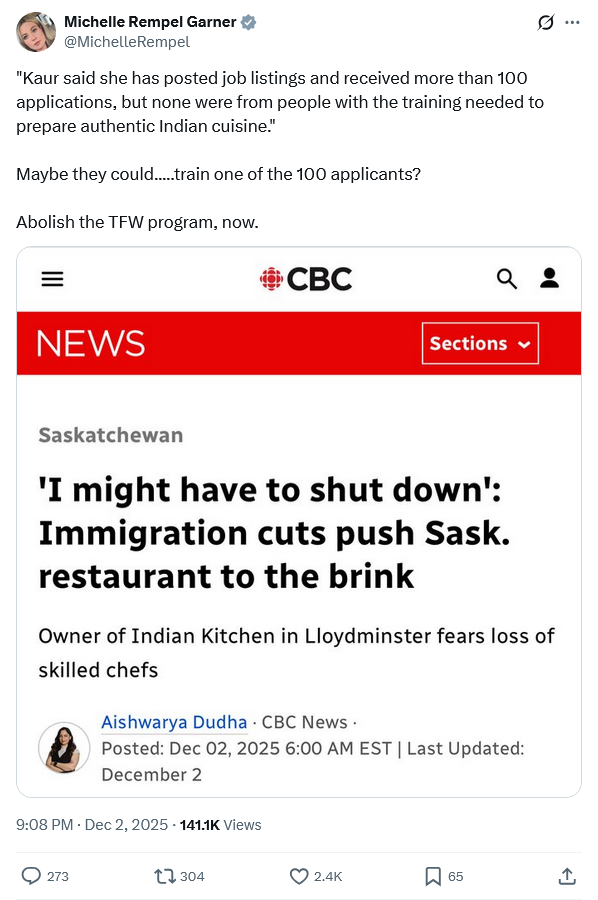
Ms. Garner added the next day:
The more I think about this story the more preposterous the assumption behind it becomes — that no one out of the 100 applicants the owner rejected could be taught to cook at this place.
Yet the article essentially accepts this preposterousness as fact.
Abolish the TFW program.
As Fortissax responded:

Comments Off on Abolish the Temporary Foreign Worker program
December 3, 2025
The Korean War Week 76: Is America Favouring The Communists? – December 2, 1951
The Korean War by Indy Neidell
Published 2 Dec 2025This week at the Panmunjom Peace Talks the two sides agree on a Demarcation Line for an armistice based on the current battle lines, provided the other items on the agenda have been dealt with within 30 days — or else it is invalid. There is still a huge issue, though concerning rotation and replenishment of force during an armistice, and also the right of inspection. The two sides are very far apart on all that. And 8th Army Commander Jim van Fleet issues orders which are misconstrued in the global press and lead to some embarrassment for Washington.
#KoreanWar #peacetalks #Korea #history #militaryhistory #Ridgway
Chapters
00:00 Intro
01:02 Recap
01:44 Item Three
05:08 Inspections After Armistice?
07:53 Ridgway’s Concerns
09:54 The POW Issue
11:45 Van Fleet’s Instructions
13:51 Summary
14:26 Conclusion
16:36 Call to Action
(more…)
Comments Off on The Korean War Week 76: Is America Favouring The Communists? – December 2, 1951
Battle of Peleliu 1944
Real Time History
Published 18 Jul 2025In September 1944, the US 1st Marine Division is on its way to another amphibious invasion in the Pacific – the tiny island of Peleliu. For almost half the Marines it will be their baptism of fire against veteran Japanese troops with a new defensive doctrine. Some American commanders call for the operation to be cancelled, but it goes ahead. By its end, half the Marines and all the Japanese will be killed or wounded – but was Peleliu worth it?
(more…)
Comments Off on Battle of Peleliu 1944
December 1, 2025
Why Uncle Sam entered the Vietnam War – W2W 055
TimeGhost History
Published 30 Nov 2025The Vietnam War didn’t begin with American boots on the ground. It began with a promise — and a break. After the French defeat at Dien Bien Phu in 1954, the Geneva Accords split Vietnam at the 17th parallel. Ho Chi Minh led the North. In the South, Ngo Dinh Diem struggled to hold a fragile new state together while armed sects, crime syndicates, and political rivals challenged his rule. Washington saw Vietnam as the next battleground of the Cold War, and threw its support behind Diem — believing he could stop the spread of communism in Southeast Asia.
But as elections for reunification approached, tensions rose. Diem refused the vote. The North rebuilt. The South descended into repression, unrest, and quiet rebellion. Former Viet Minh fighters slipped into the shadows. Secret networks formed. Targeted killings began. By 1958, the storm clouds of a new war gathered — one the United States could no longer afford to ignore.
This episode explores how the U.S. found itself pulled into Vietnam, how Diem rose to power, why the reunification election collapsed, how American aid reshaped the South, and how the first sparks of insurgency ignited a conflict that would define a generation.
Join us as we trace the origins of a war long before the Marines landed at Da Nang — to understand why Uncle Sam entered the Vietnam War in the first place.
(more…)
Comments Off on Why Uncle Sam entered the Vietnam War – W2W 055
November 26, 2025
The Korean War Week 75: Insurgency Behind The Lines! – November 25, 1951
The Korean War by Indy Neidell
Published 25 Nov 2025While there is no battle action this week, there is still a lot of fighting, as the UN forces must constantly watch their backs against the thousands of guerrillas in the hills of South Korea. At the truce talks, the Communist side accepts the UN proposal for a demarcation line — Item 2 on the agenda — but for it to be valid the other three items remaining on the agenda must be dealt with within 30 days, which seems very optimistic to most. There is also the question of post-armistice inspections teams; are they a good idea? Or will they simply provide the other side with much-needed actionable intelligence?
Chapters
00:00 Intro
00:45 Recap
01:08 Guerilla Actions
03:19 Hanley’s Numbers
05:37 The Demarcation Line
08:04 Inspection Teams
10:36 Ridgway’s Opinion
12:06 The Agenda
12:48 Summary
13:04 Conclusion
13:57 Call to Action
(more…)
Comments Off on The Korean War Week 75: Insurgency Behind The Lines! – November 25, 1951
November 25, 2025
You might as well watch Guru Nanak Jahaz, since you’ve already paid for it
The Canadian government loves handing out money — they hand out a lot of money — so it shouldn’t be surprising to find out that Canadian taxpayers funded the creation of a movie about a Sikh terrorist who assassinated a Canadian official … or that the assassin is the hero of the movie. After all, isn’t that the heart and soul of multiculturalism? Celebrating other cultures and traditions as being superior to those of ordinary Canadians? The feds seem to believe it.
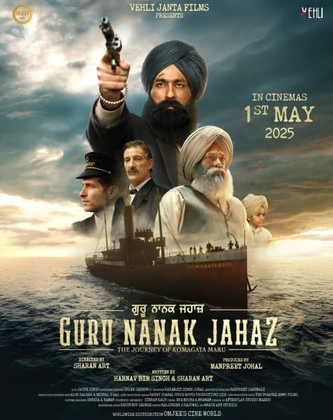
If you can find a way to watch the recently released Khalistani propaganda film Guru Nanak Jahaz, you might as well watch it. You paid for it, after all.
The film, which depicts the assassination of a Canadian civil servant by a Sikh terrorist as a heroic act of justice, has a “Funded by the Government of Canada” credit at the end. It was also supported by the B.C. government and gives special thanks to Conservative MP Tim Uppal and Liberal MP Sukh Dhaliwal. While the Liberals didn’t return a request for comment, a spokesperson for Uppal told me that he was not involved in the film and that the filmmakers did not communicate with him about the credit at any point.
Set in 1914, the plot follows the assassin, who you likely never heard about, and the voyage of the more familiar Komagata Maru, a ship which carried nearly 400 Indian passengers from Hong Kong to Vancouver, only to be denied entry to Canada. It was screened in some Cineplex theatres earlier this year.
The official narrative that you’ll find on government websites explains that this was purely a matter of baseless Canadian racism, and it’s been wholeheartedly adopted by politicians today: as prime minister, Justin Trudeau apologized for the incident in 2016, and the Conservative party releases annual statements commemorating the event, praising the bravery of the passengers and their craving for freedom.
That’s the whitewashed version, however. It leaves out that the Komagata Maru voyage was organized by the Indian Ghadar movement — the word literally means “revolution” — which advocated for violent resistance against the British Empire. (India was a British possession at that time and would continue to be until 1947). Its members were primarily Sikhs who lived in North America. And while they did experience racism, and while changes to Canada’s immigration laws in 1908 indirectly restricted Indian immigration, there were also reasons for the Canadian government to be apprehensive.
Ghadar members dreamed of a return to India, but wanted to rid that land of the British first. They remembered the Indian Mutiny of 1857 with regret — that bloody event saw many British-Indian regiments unsuccessfully take up arms against the Empire; Sikh Punjabis were among the exceptions, largely siding with the British. Decades later, the mostly Sikh Punjabi Ghadarites proposed another 1857-like uprising while applauding anti-British terrorism.
When rumblings of war with Germany began to brew in 1914, the Ghadarites grew excited — now was the time to strike. In August 1914, after the war broke out, the movement’s newspaper advocated, “Go to India and incite the native troops. Preach mutiny openly. Take arms from the troops of the native states and wherever you see the British, kill them. … There is hope that Germany will help you.” Expats in the Orient organized ships to return home and revolt.
The Komagata Maru was part of this movement. Organized by Ghadarites before the breakout of the First World War, it attempted to bring more movement adherents into Vancouver to settle. Canada was right not to let it dock because the entire envoy was a security threat.

The S.S. Komagata Maru was at the centre of an attempt to bring 400 Sikh revolutionaries into Canada to agitate for the destruction of British rule in India in 1914.
Comments Off on You might as well watch Guru Nanak Jahaz, since you’ve already paid for it
November 24, 2025
QotD: Talking like a Marxist, living like a Maharaja
Don’t worry, this isn’t a post about Epstein. Or, really, honey pots of any kind, and especially not gay ones. But even though “how fucking obvious should it have been to Mr. VIP that he was probably being set up for blackmail etc?” is a rhetorical question, rhetorical questions have answers … and in this case, I really believe the answer tells us something about Our Insect Overlords.
My google-fu isn’t strong enough to come up with this particular piece of Pop Culture Kayfabe (didn’t they once open for Exploding Vagina Candle?), but I saw some comedian, my old tired brain says Dave Chappelle though it probably wasn’t, talking about how hard it must’ve been to be Prince’s personal assistant. So much of that job would boil down to “trying to convince your boss that the impossible is, in fact, impossible”.
Along the lines of “No, Prince, I can’t arrange for you to ride a giraffe around Central Park. For one thing, it’s 3am, all the zoos are closed …”
It was funny at the time, but considerably less so now, because Our Betters are really like that now. And they’re ALL like that. I’m pretty sure I told y’all about the time I fixed the toilet at a faculty party. It was in this beautiful “restored” Victorian house (“restored” meaning “it has all the most ostentatiously expensive Victorian ephemera, with all the most ultra-modern conveniences”). The toilet wouldn’t stop running if you flushed it without following this elaborate handle-jiggling procedure that they’d discovered over weeks of trial and error, then carefully wrote down and taped to the top of the tank. Due to scheduling conflicts they weren’t able to get the “restoration” specialist out there to look at it for another month or so …
I’m nobody’s idea of a plumber, but even I can recognize it when the little chain loops around the plug and keeps the float from rising all the way. So I finished my business, took the lid off the tank, unwrapped the chain, and told my hosts to go ahead, it’s “fixed” now. Carefully explaining what I did and why. You don’t even need a regular plumber, let alone some period-specialist interior decorator, I told them. Just … unloop the chain. Takes five seconds. Costs nothing.
They, and everyone else at the party, were aghast. Not at my mastery of the arcane details of plumbing, but that I’d fixed something. You know, with my hands. With that one little act — something so simple, it’d need to be ten times more complicated to even qualify as “basic plumbing” — I’d excommunicated myself from The Anointed. It’s just not done, old sock — we’re afraid you’re no longer our sort. Only Dirt People “fix” things.
That’s their mental world. Z Man used to talk about having worked for a Congressman as a kid, and having to mow the guy’s lawn. For whatever reason the lawn service didn’t make it on the day of some soiree, and none of the guy’s staffers — the very best and brightest, Ivy League grads all — could figure out how to start the mower. They’d never done it before. They’d never even seen it done.
If that’s the world you live in, is it any surprise they fall for the honey pot?
In their world, things just … happen. Electricity comes from the wall socket (remember Pete Buttigieg actually saying that, re: EVs? I can’t seem to find a clip for some reason, but I’m sure it happened). Food comes from the store. Indeed, it doesn’t even come from the store, it comes from the fridge.
You probably think I’m joking, but I’ve seen it at close range. Indeed I’ve experienced it myself, in India, where one simply doesn’t live without servants. Yes, in the very best Colonel Blimp style. It’s not a race thing, it’s a class thing — you will grievously offend your university sponsors, without whom no work can be done in-country, by not living in “middle class” style while you’re there. Which means they hook you up with servants; you tell them where you’re staying (and of course you follow their suggestions; you do not browse the classifieds in Delhi or Mumbai), and pretty soon Choti just … shows up.
N.b. that “Choti” isn’t her personal name. It’s a nickname, a pretty demeaning one — it literally means “shorty”. Little girl. Imagine you have some random chick coming into your house to do all your shopping and cleaning and laundry for you, and that’s what you call her, to her face: “Some chick”. Because they’re all called that.
At first it’s extremely uncomfortable … and then it’s really, really, really fucking nice. Hungry? Don’t worry about it — you just tell Choti what time you expect to be home for dinner, and it’ll be there. You just step out of your clothes wherever, and leave them there — they’ll be back tomorrow, laundered and pressed and folded and there in the drawer. Need to go somewhere? If you’re in a real hurry you can go down to the street and grab an autorickshaw — they’re everywhere — but if you want to arrive in style (which is to say, not drowning in your own sweat, because it’s 100 degrees out and autorickshaws don’t have air conditioning), you call a car.
How much does all this cost? Don’t worry about it. No, really — don’t worry about it. Don’t ask. For one thing, it’s impolite — yes yes, of course all Indian university people are not just Marxists, but usually batshit insane Naxalites, by which I mean they’re batshit by Academic Marxist standards. If you think that stops them from exploiting the poor Chotis of the world like the most obnoxious maharaja, then you, my friend, need to find another blog; you obviously don’t grok the first thing about Leftism.
But more important even than the social element is the fact that Indian currency is worthless. Don’t worry about it, because it’s a rounding error. I am not independently wealthy, and academic grants are not generous (except when you get a shitload of them, and launder the fuck out of them, which is what several big important University offices are designed to do … but individual grants are not generous, usually). It’s just that the exchange rate is like 200 : 1. Have you ever heard the terms “lakh” and “crore“? In India, cars, for example, are priced in lakhs and crores. If your Mercedes-Benz costs one crore rupees — that’s 10 million — then whatever you’re paying Choti doesn’t even qualify as a few pennies per day; Sally Struthers weeps.
(Anyone else remember those ads? The Christian Children’s Fund; they were everywhere in the 80s. Wonder what happened to it? Those ads seem to have been completely scrubbed from YouTube, although of course my google-fu is weak).
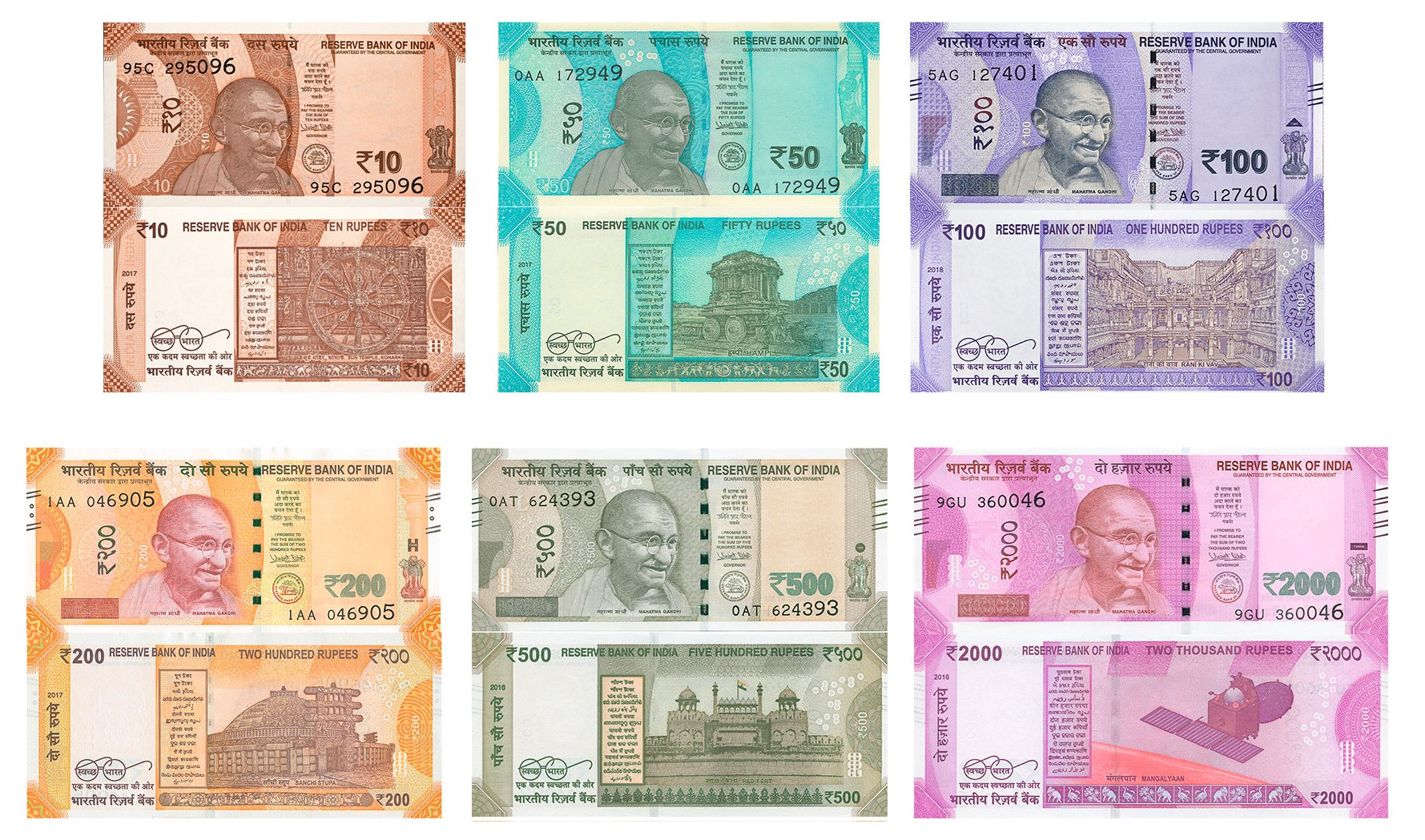
See what I mean? All that — cooking, cleaning, bespoke meals, car service, etc. etc. — “costs” what amounts to a handful of Monopoly money (like all Third World countries, India makes their currency look like toucan vomit.
Yep, all with the same picture of Gandhi-ji on the front).
Trust me: after a certain point, you really don’t worry about it. Everybody with me? And yes, I know I sound like a complete dick right about now — that’s the point. You end up acting like a dick, even when you try not to, because you can’t not. I mean that quite literally. You would insult everybody — your sponsors, Choti, the butcher, the baker, and the candlestick maker — if you tried to do any of this yourself. It’s not done. And because it’s not done, you have no idea what anything really costs; you don’t even have any idea how to start finding out.
In short, and in the simplest possible terms: For any reasonable value of it, if you want it, you just tell a guy, and it appears.
That’s the world they live in. Now, it’s important to note that I didn’t try this with, uhhhh, outcall massage services and the like. Nor hard drugs. But I don’t doubt that I could’ve made that happen, with very little effort — I assume you just tell your driver, the way (I’ve heard) it’s done here, with cabbies and so forth. Or you just go down to the liquor store. Despite their prudish public image, Indians drink like fish; they just don’t buy it themselves. They send their guy for that (the male version of Choti, colloquially known as “Raju”, although for whatever reason that is an insult, where “Choti” isn’t). If you go down to the liquor store personally, you’ll be the only guy there who isn’t a version of Raju, so you’ll be spoiled for choice. I assume all you have to do is pick a Raju, flash him a discreet handful of Monopoly money, and let him take care of it.
Severian, “I Love the Honey Pot!”, Founding Questions, 2025-08-18.
Comments Off on QotD: Talking like a Marxist, living like a Maharaja
November 23, 2025
Battle for the Mediterranean, 1940
Real Time History
Published 4 Jul 2025In the summer of 1940, the British Empire faces German attacks against the home islands a new Italian adversary in the Mediterranean Sea, the lifeline to its colonies around the globe. In a series of campaigns the British beat back the Italians and eliminate parts of the French fleet. But the service of its overseas subjects won’t come for free.
(more…)
Comments Off on Battle for the Mediterranean, 1940
November 21, 2025
The “spat” between China and Japan is far more important than western media are reporting
Claire Berlinsky explains why we should be paying far more attention to what our media are treating as a minor diplomatic spat as Beijing reacts furiously to the new Japanese PM’s comments:
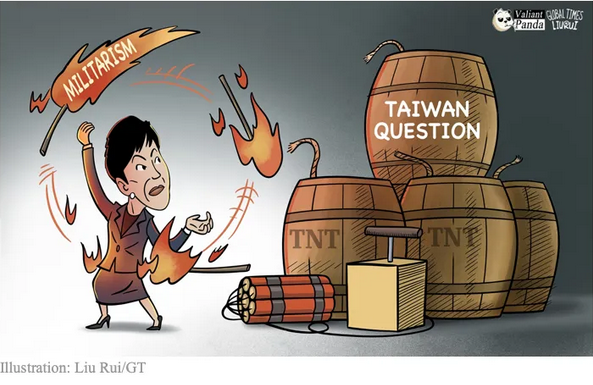
You need to see the Chinese media today to get a feel for this. Front pages of the relevant organs are devoted to frothing in fury at Japan. They’re rectifying bad thoughts like a house on fire.
Here’s why I’m worried by this. Both the Chinese- and Japanese-language press are treating this as a major diplomatic incident. (In English, it’s mostly being described as “a row” or “spat” — then back to Trump and Epstein.) Let me walk you through what it looks from Beijing and Tokyo, with help from ChatGPT on the translations.
The trigger was a comment in by the new Japanese prime minister, Sanae Takaichi. She told a parliamentary committee that a Taiwan contingency involving the use of force might constitute a “sonritsu kiki jitai” (a “survival-threatening situation” — I think we’d use the phrase “existential threat”) for Japan under its 2015 security laws, and justify the exercise of collective self-defense, using Japan’s self-defense forces.
Beijing exploded. China summoned the Japanese ambassador in Beijing for a formal démarche, and it allowed the PRC consul general in Osaka, Xue Jian, to post a (now-deleted) tweet calling for her decapitation—”that dirty head that trespassed should be cut off, are you ready?” The Xue Jian post has, of course, become a media event of its own. Beijing issued a travel advisory urging Chinese citizens to avoid Japan, and told students to “carefully reconsider” study plans. It stepped up coast-guard activity near the Senkakus, and cancelled the Xi–Takaichi bilateral at the G20.
But this arid account doesn’t begin to convey the way the Chinese and Japanese media are talking about this. The Chinese coverage is nothing short of hysterical. To read the Party-line outlets, you’d think Takaichi had just ordered the immediate re-invasion of Manchuria. Her comment, they said, was an evidence of a “dangerous rightward turn” in Japanese politics. They’re calling it a “sky-collapsing opening“, accusing her of “reckless ranting” and tearing up the China-Japan relationship.
The headline in a widely circulated China Daily article:”If China and Japan go to war, Japan will be destroyed“. They found the inevitable panel of “peace-loving international friends” — including Okinawan peace activists and pro-PRC overseas Chinese — to denounce Takaichi as the reincarnation of “Japanese militarism”. The peace activists dutifully warned that the Japanese people would be “dragged into catastrophe” by their government. A CNR column accuses her of “brazen provocation”, and claims that “Taiwan compatriots are also outraged” at the prospect of Taiwan being turned into a battleground between China and a “militaristic” Japan.
The Party line: Taiwan is a “settled” internal issue; any talk of Japanese collective self-defense in the Strait is aggression and a “serious violation” of the post-1945 order. Takaichi represents “unrepentant militarism.” Chinese pieces quote her opponents at length to argue that “sober Japanese elites” are deploring her recklessness. Chinese-language coverage of the travel advisory is not treating it as a minor consular notice. They’re claiming it’s the first coercive step.
In Japan, this is front-page foreign policy news, not a minor gaffe. Mainichi ran an editorial saying, more or less, that Takaichi’s words were legally consistent with the 2015 security laws, but prime ministers should be more discrete about hypothetical military contingencies and show more prudence. Opposition figures are saying she “went too far” and threw the relationship into “a very grave state”. They called it “frivolous” for a commander-in-chief to talk so specifically about use-of-force scenarios.
On the other hand, there’s clearly a domestic constituency that sees this as long overdue. Some in her party see any hint of retraction as “weakness toward China”, and they’re praising her for drawing a firm line on Taiwan. (The coverage about whether to expel Xue Jian is divided: His post was a death threat, obviously, but the Foreign Ministry seems reluctant to escalate this further.)
TV explainers are reminding viewers that the 2015 security legislation already contemplated a Taiwan contingency — what’s new is that the prime minister has now said this out loud. And a prime minister with an openly revisionist profile — that’s definitely new.
So there’s a lot of signaling going on. Beijing is signaling to its own public: “We’ll never again let Japanese militarism threaten China. The Party is the bulwark against a repeat of the 1930s.” To Tokyo: “We’ll punish any step toward military involvement in the Strait, first with economic coercion — then worse. We are not kidding about this.” To the wider region and Washington: “Japan is a destabilizer — this woman isn’t right in the head. If things go wrong in the Taiwan Strait, blame Tokyo. Remember Pearl Harbor.”
Update, 23 November: Welcome, Instapundit readers! Please do have a look around at some of my other posts you may find of interest. I send out a daily summary of posts here through my Substack – https://substack.com/@nicholasrusson that you can subscribe to if you’d like to be informed of new posts in the future.
November 19, 2025
The Korean War Week 74: The US Wants To Prolong The War – November 18, 1951
The Korean War by Indy Neidell
Published 18 Nov 2025UN Commander Matt Ridgway has everyone in Washington worried because of his refusal to play ball with the Communist side at the peace talks. The Communist side aren’t exactly playing nice either, lobbing insults at the UN delegates, but the newspapers of the world wonder if the US actually even wants a truce, since bloody headlines implying impending vengeance come out in American papers timed suspiciously with possible breakthroughs at the talks.
Chapters
00:00 Intro
00:43 Recap
01:12 Ridgway Disagrees
04:29 Insults at Panmunjom
06:50 What The Troops Think
09:05 Ridgway’s Statement
10:11 POW Repatriation
12:50 Summary
13:06 Conclusion
(more…)
Comments Off on The Korean War Week 74: The US Wants To Prolong The War – November 18, 1951
November 13, 2025
The Korean War Week 73: Fractures within the UN! – November 11, 1951
The Korean War by Indy Neidell
Published 11 Nov 2025The fighting continues for Maryang-san, though in general everyone is getting ready for the freezing Korea winter. The big news this week is the seeming breaking of the deadlocked peace talks as the Communist side makes what looks to be a major concession. The UN rejects the communist proposal because there’s more to this then meets the eye. What does Washington really want? Because even the Soviets are now speaking out against the war. Meanwhile in the background, the POW situation in the overcrowded camps grows ever more tense and deadly.
Chapters
00:00 Intro
00:50 Recap
01:06 Maryang-San
01:40 Communist Concessions
07:40 The Soviets Speak
09:08 Geoje Island POWS
13:22 Notes
13:51 Summary
14:08 Conclusion
15:11 CTA
(more…)
Comments Off on The Korean War Week 73: Fractures within the UN! – November 11, 1951
November 5, 2025
The Korean War Week 72: UN Censors as Communists Speak! – November 4, 1951
The Korean War by Indy Neidell
Published 4 Nov 2025The Panmunjom peace talks continue, but a real sticking point is Kaesong- both sides insist that they must have control of it. Frustration mounts among the Allied journalists, though, as they are allowed less access to what’s going on than their Communist counterparts. Despite the talks, there’s new action in the field this week, as the Chinese attack in force to try and retake Maryang-san, a commanding strategic position.
Chapters
00:00 Intro
00:40 Recap
00:59 The Kaesong Issue
03:24 Voluntary Repatriation
07:14 US Command’s Position
09:15 All For All Repatriation
10:35 UN Censorship
12:29 Maryang-San
13:35 Summary
13:37 Conclusion
14:39 CTA
(more…)
Comments Off on The Korean War Week 72: UN Censors as Communists Speak! – November 4, 1951
November 4, 2025
The Great Feminization isn’t catching on in the culture, despite its power in our institutions
Lorenzo Warby provides a bit of hopeful news that despite the ever-expanding march of feminization through our various organizations and institutions, the culture is displaying strong resistance and effective:
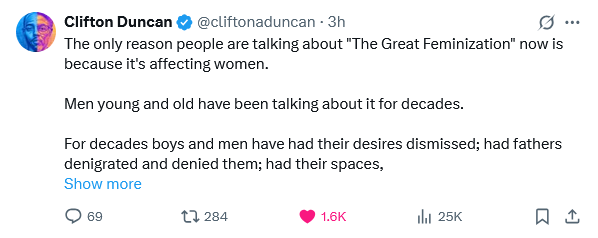
Western culture is not feminising. How can I tell? The travails of Disney. Disney spent billions buying male-centric franchises — Star Wars, the Marvel Cinematic Universe, Indiana Jones … It then proceeded to so alienate the fan bases of those franchises that it is now reduced to openly discussing how to appeal to male audiences that it spent billions acquiring and further billions alienating.
If Western culture was feminising, then Disney should have had no trouble with its feminised products. Clearly, it has had problems. Meanwhile, the Top Gun: Maverick sequel to a 1986 movie can do excellent box office ($1.5bn) precisely because it knows what it is about.
The question then becomes, how and why did Disney so alienate those male-dominated fanbases it spent billions acquiring entree to? A simple answer would be that Disney was a Princess-story factory and it turned its new acquisitions into Princess-stories — stories not necessarily with literal princesses, but with female protagonists.
There is certainly a fair bit of that. A recent study found that Disney has tended, over time, to feminise male characters in its animated movies.
For it was not only that the Disney turned those franchises into launch pads for new Princess stories. Yes, Rey in the Star Wars sequels is an obvious example of doing precisely that. Nevertheless, there was rather more going on.
We can tell this from the Mulan live-action remake. The original 1998 Disney animated Mulan — despite controversy at the time of its cinematic release — acquired some popularity in China. It was seen as an engaging adaptation of the original story: a story deeply familiar to Chinese audiences. Worldwide, the film was a box office success.
The 2020 live-action Mulan remake was not a box office success. It was not for many reasons, but it was also emblematic of the problems of what YouTube critic Critical Drinker calls our post-creativity era.
2020 Mulan turned a female-protagonist story into a “woke” great-because-girl female-protagonist story. It turned a story of filial piety — a girl disguising herself as a boy to train and become a soldier in place of her disabled father, and struggling to overcome the limitations inherent in that — into something rather different.
Animated Mulan becomes accepted into the team of soldiers and triumphs through cleverness and teamwork. What makes the story resonate so well is there is nothing special about Mulan. She takes what she has and works hard at becoming better and succeeds in, and through, doing so. There is no hint of great-because-girl: rather it is fine being girl. Being a girl imposes limitations on her that she has to deal with and overcome: which she does — but not without genuine struggles — by sheer persistence and being clever, a problem-solver.
The key difference between a traditional Disney Princess story and contemporary Disney “woke” Princess story is the injection of great-because-girl. Live-action Mulan is a prodigy warrior with extra qi (or chi) who can do what the boys can do, but better. This is a cinematic version of a classic failing of feminism — by taking a blank slate view of humans, turning what men do into the standard for women. Women are great because they can do everything men can do, but even better. Feminist antipathy for stay-at-home mothers expresses this valorisation of matching men.
Live action Mulan is also much more politically conformist, even retrograde, in its denounement of Mulan celebrating service to the Emperor and going off to be a soldier. Animated Mulan rejecting a job as imperial advisor, and returning to her beloved father, is much less deferential to public authority.
The live-action film virtue-signals at the expense of story and understanding. It sacrifices clever cultural engagement for much flatter message-signalling.
If you want to watch a story set in China about women warriors, then the recent Chinese drama (C-drama) hits of Legend of the Female General and Shadow Love are available. These are smart, character-driven stories with the pervasive professionalism and sense of beauty—anchored in the cultural confidence—that one expects from contemporary costumed C-dramas, which are very much not based on trashing cultural heritage or we-know-better disrespect for source material.
Costumed C-dramas regulary have strong female lead characters while also having strong male lead characters. (As it happens, the male lead characters in both the aforementioned dramas are played by Cheng Lei; the female leads by Zhou Ye and Song Yi respectively.)

Update, 5 November: Welcome, Instapundit readers! Please do have a look around at some of my other posts you may find of interest. I send out a daily summary of posts here through my Substack – https://substack.com/@nicholasrusson that you can subscribe to if you’d like to be informed of new posts in the future.
November 2, 2025
Biryani from 16th Century India
Tasting History with Max Miller
Published 27 May 2025Basmati rice cooked with spiced ghee, lamb, onions, and chickpeas
City/Region: Mughal Empire | India
Time Period: 16th CenturyIt’s likely that the word biryani comes from Persian, which would have made its way to India with the Mughal court of the emperor Babur in the 16th century. The actual dish of rice and meat cooked with ghee, however, had been around for hundreds of years before that, appearing sometime in the Vedic Period (1500 B.C.E. – 500 B.C.E.).
Whatever its true origins may be, biryani carries influences of Indian and Mughal (and thus Persian) cuisine and is delicious. The spices make the whole house smell amazing, and the rice is simultaneously fluffy and has the richness of fried rice thanks to the spiced ghee. It’s a bit of work, but it is so, so good.
10 seer meat, 3 1/2 seer rice; 2 seer ghi; 1 seer gram; 2 seer onions; 1/4 seer salt; 1/4 seer fresh ginger; 2 dam garlic, and round pepper, cinnamon, cardamoms, cloves, 1 dam of each: this gives six dishes.
OF BREAD
… Bread is made in the pantry. There is a large kind, baked in an oven, made of 10 s. flour; 5 s. milk; 1 1/2 s. g’hí; 1/4 s. salt. They make also smaller ones. The thin kind is baked on an iron plate. On sér will give fifteen, or even more. There are various ways of making it: one kind is called chapáti, which is sometimes made of khushkah; it tastes very well, when served hot …
— Ain-i akbari by Abu’l-Fazl ‘Allami, 16th century
Comments Off on Biryani from 16th Century India


