Quotulatiousness

December 6, 2024

Hegseth is clearly unfit to be Secretary of Defense because LOOK! A SQUIRREL!

Filed under: Government, Media, Military, Politics, USA — Tags: , , , — Nicholas @ 04:00

I don’t recall having heard Pete Hegseth’s name before Trump nominated him to be the next Secretary of Defense, but Chris Bray clearly thinks the accusations are purely partisan:

Pete Hegseth is being Kavanaughed. And the only people dumb enough to fall for it are Republican senators.

I was willing to hear arguments that Hegseth wasn’t the best choice for Secretary of Defense. In his 40s, he’s on his third marriage, and while the rape allegation from his visit to a conservative conference in Monterey is clearly false, I was wide open to the argument that his actions demonstrated poor judgment. I was prepared to hear an argument. Like many combat veterans, Hegseth had some post-war chaos in his life. Discussion was merited.

But the more these arguments have been made, the dumber they’ve become. We’ve seen this play, and we know the third act: more heat, less light, the descent into completely irrational ranting.

Let’s pretend to take this number at face value, for the sake of argument, though Warren is egregiously misrepresenting the estimate about unreported assaults. Let’s just look at the structure of the claim: In 2023, while Lloyd Austin was the Secretary of Defense, 29,000 troops were sexually assaulted. Therefore, Pete Hegseth must never become the Secretary of Defense.

This is the kind of argument people make when they’re piling on, in an atmosphere of hysteria. It has no logic or order to it, and it does the opposite of the thing it’s intended to do: It depicts current leadership as failures, while arguing against a course correction. Bob punched me in the face, which proves that John is very bad. This is currently the logical structure of half the “news”.

In another Martha-do-you-hear-yourself moment, Lloyd Austin himself recently attacked Hegseth for arguing that women shouldn’t serve in the combat arms:

But read this carefully, and look for the own-goal:

Women serving in combat are facing more danger than men, Austin said.

Therefore, women should serve in combat. Explain the logic, Lloyd. Amazingly, the journalist who reported Austin’s comments missed the implications, mindlessly typing up the claim that women in combat are in more danger than men, then — next paragraph! — framing that statement as a rebuke to someone who warned that the service of women in combat “made fighting more complicated.” We’re not discussing; we’re ritually lining up behind our teams.

December 4, 2024

Facing the Sphinx

Filed under: Britain, History, Media, Politics — Tags: , , , , , , , — Nicholas @ 05:00

Andrew Doyle provides a bit of historical context for the question currently convulsing Britain’s supreme court:

Bonaparte Before the Sphinx, 1886, by Jean-Léon Gérôme (1824–1904).
Painting from the Hearst Castle collection (Accession number 529-9-5092) via Wikimedia Commons.

It was known as the sphinx: a terrifying hybrid with a lion’s body and a human head. According to the legend, the sphinx was sent to guard the city of Thebes by the goddess Hera who wanted to punish the citizens for some ancient crime. It perched on a nearby mountain, and whenever anyone attempted to enter or leave the city it would pose a riddle. If the traveller failed to answer, he or she would be devoured, but the riddle was so confounding, so esoteric, so abstruse, that even the greatest intellectuals of the day soon found themselves reduced to snacks for the mighty sphinx.

And what was this riddle? What was the question that foxed even the sharpest of minds? It was simply: “what is a woman?”

And now, a hearing at the UK’s supreme court has taken place to solve the sphinx’s riddle once and for all. The campaign group For Women Scotland raised the case in order to challenge the Scottish government’s contention that the word “sex” in the Equality Act includes men who identify as female and hold a Gender Recognition Certificate. We can expect the results of this hearing over the next few months.

And yet I’m sure most of you are thinking to yourselves: “How will these judges possibly answer such a metaphysical conundrum?” And you’re not alone. Many valiant and learned individuals have fallen in the attempt.

[…]

Inevitably, activists tend to frame the entire question of “what is a woman?” as some kind of “gotcha”. Or they claim that to even broach the question of sex differences is “transphobic” and “hateful”, a means to bully the most marginalised. But of course, the transgender lobby wields incredible power in our society; it can see people silenced, harassed and even arrested for speaking truth, and all in the name of “progress”. Genuinely marginalised groups do not enjoy this kind of clout.

Others will say that all of this is a distraction from the “real issues”. But gender identity ideology has a deleterious impact on everyone, and has proved to be a major factor in political change. In its post-election analysis in November 2024, entitled “How Trump won, and how Harris lost”, the New York Times singled out an advertising campaign by Trump’s team which drew attention to Kamala Harris’s statement that all prison inmates identifying as transgender ought to have access to surgery. The tagline was: “Kamala is for they/them. President Trump is for you”.

Although the New York Times considered this a “seemingly obscure topic”, its writers were forced to admit its efficacy. Even Trump’s aides had been astonished at how popular the campaign had proven. According to the political action committee Future Forward, a group established to support the Democratic Party, this advertisement actuated a 2.7 point shift in favour of Trump among those who saw it. Inevitably, the New York Times misclassified the message as “anti-trans”, a ploy guaranteed to exacerbate the very resentment that made the campaign so effective in the first place.

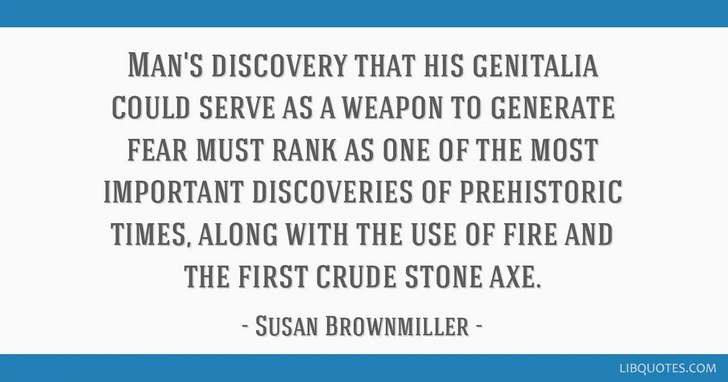
To ask a politician the question “what is a woman?” isn’t some kind of cruel test. It’s a way to ensure that those in power are being honest with us. We know that they know the answer. And they know that we know that they know the answer. It isn’t that they can’t define it, it’s that they are too frightened to do so. It’s one thing for politicians to lie and hope they get away with it, but quite another for them to lie when they know that we are all fully aware that they are lying. It suggests a degree of contempt for the electorate that is unlikely to translate to success at the ballot box. And it hasn’t escaped the attention of feminists that the question “what is a man?” mysteriously never seems to be asked.

November 23, 2024

Common sense on males in female sports from … checks notes … the United Nations?

Filed under: Health, Media, Politics, Sports — Tags: , , , , , — Nicholas @ 03:00

Ramesh Thakur summarizes some of the findings from a recent report by the UN Special Rapporteur on violence against women and girls which somehow defies the narrative from most of the legacy media in the Current Year:

Has Hell frozen over? Uncommonly for the UN (think Antonio Guterres with the global warming hyperbole), one of its recent reports is full of common sense. In the last three years, I have been critical of UN performance regarding some high-profile issues, including World Health Organisation failings in responding to the coronavirus pandemic and a power grab for future pandemic management; lawfare against Israel by the world court and International Criminal Court; and UN Women’s betrayal of the raison d’être for its creation and existence with a shamefully delayed acknowledgment of the weaponisation of mass rape, sexual violence, mutilation and public humiliation of Israeli women on October 7th 2023.

Enter Reem Alsalem, the UN Special Rapporteur on violence against women and girls. It’s a relief and a pleasure to acknowledge her positive report “Violence against women and girls in sport“. Published on August 27th, it was presented to the UN General Assembly last month. She notes that until very recently, the need for a separate category for females “to ensure equal, fair and safe opportunities in sports” was a “universally recognised principle”. Maintaining separate-sex sports is a proportional action that corresponds to legitimate aims within international law. Females also have a right to privacy under international law which is forfeited by compelled mixed-sex spaces in intimate facilities. Alsalem explained to Fox News on October 21st that this is primarily a human rights issue, not a cultural or an individual issue.

Biological advantages for males in competitive sports include strength (162% greater punching power on average!), weight, muscle mass, speed, height, reach and endurance. Separate categories for males and females were created to recognise this biological reality and provide equal, fair and safe opportunities for females to win recognition, prize money, fame and career advancement. Allowing biological males into female sports is unfair and amounts to cheating by males who are simply not competitive in male sports (think swimmer Lia Thomas). It steals women’s dreams, aspirations and rewards. Alsalem’s data show that more than 600 female athletes in over 400 competitions have lost nearly 900 medals across 29 different sports. Other reports document instances of injuries from trans-on-females encounters, including teeth knocked out, concussions resulting in neural impairment, broken legs and skull fractures. Thus safety is yet another another concern.

Despite the unfairness, invasion of privacy, opportunity costs and safety risks, many athletes and coaches who object to trans-inclusion policies are silenced or forced to self-censor at the risk of losing sporting opportunities, scholarships and sponsorships. Many who do speak out despite such formidable hurdles are accused of bigotry, suspended, expelled and subjected to unfair disciplinary proceedings. Many (like Moira Deeming) face hostility if they assemble to discuss how to deal with these issues, violating the fundamental human rights to freedom of belief, opinion and expression. Some have quit sport entirely under the cumulative stress. Because “biological sex is central” to women’s “experiences of discrimination and violence”, countries that permit biological men to compete in women’s sports deny women “their femaleness”. To counteract the “worrisome trend”, she recommends the creation of open categories in sports competition and non-invasive and confidential sex screening procedures to ensure fairness, safety and dignity for female athletes alongside inclusive participation for everyone.

The trans-extremist assault on female spaces in the workplace and sporting arenas has been in the thick of the culture wars. Amidst the wreckage of those wars, the DEI (diversity, equity, inclusion) industry has morphed into DIE (division, intolerance, exclusion), promoting resentment, language-policing and unjust outcomes instead of real solutions. Trade-offs are central to public policy decision-making. The last major issue on which this was ignored was the panicked response to Covid and we will be paying for the resulting disasters for many years yet. By putting the spotlight back on the importance of balancing competing and clashing rights through policy trade-offs, this report provides a key to navigating our way out of the wreckage. It’s potentially also helpful in Sall Grover’s appeal in the Giggle v. Tickle case, as is the return of Trump to the White House. Alsalem is right to note that these policies originate from and exist almost entirely in Western countries. Their hold on many parts of the UN system is evidence of the hegemony of Western ideas and practices as the global norm. The adoption of trans and multigender language and the inclusion of trans athletes in international sports is confirmation of cultural imperialism at the cost of women-specific human rights.

November 20, 2024

Disturbing facts about missing indigenous women in Canada

Filed under: Cancon — Tags: , , — Nicholas @ 05:00

Karli Lewis at Woke Watch Canada:

Exhibition poster of Nina Vatolina’s Fascism – The Most Evil Enemy of Women. Everyone to the Struggle Against Fascism!, 1941. Vatolina’s poster was published five weeks after the Nazi invasion of the Soviet Union, and was used as socialist propaganda.

Some facts to keep in mind upon the invasion of red dresses and alphabetical hashtags sweeping your newsfeed:

  • Indigenous women make up 10% of the women currently missing in Canada. That means that 90% of women missing are non-indigenous. And we can’t even know for sure if they are biological women or men identifying as women as current missing persons data accounts for “gender identity” rather than sex. So who knows how many of that 10% of “missing and murdered women” are actually men.
  • Recent motions within Canadian parliament have been made to call the 10% a “national genocide”. How can we call 10% a genocide without acknowledging the other 90% as being an even larger genocide? I’d be interested in hearing these activist politicians’ response. It is a pity no side of the House dare pose such questions.

  • StatsCan tell us that 22% of the adults missing right now are “non-white”. That would mean that 78% of the adults currently missing in Canada are white. Yet it’s difficult to find data specifying race, when it comes to non-indigenous populations. Instead, you go to look up “missing women by race” and find numerous headlines about “missing white woman syndrome.” You know why it might seem like there is something as absurd as “missing white woman syndrome”? Because the majority of women missing are white.
  • The majority of missing people (57%) are identified as males (even though, again, we can’t even know for sure if they are biological males or females identifying as males)
  • Similiar to caucasian women, the majority of indigenous women are murdered by a family member or spouse. I feel like too many people carry this false notion that indigenous women are in danger of going missing or getting murdered by someone who isn’t indigenous. I get it; it’s the way this coercive narrative has been framed. But can we please stop acting like we’re suddenly scared of every white guy that happens to drive by on the Rez? The number of these men who’ve turned out to be simple Amazon delivery drivers is getting ridiculous.
  • When taking key socioeconomic factors into consideration, like homelessness, history of child abuse, sexual assault, mental health, drug use and trust in neighbours, indigenous people were NOT at a higher risk of victimization than other populations.
  • A study from BC found that more than 75% of missing indigenous women were working as prostitutes at the time of disappearance.

On one hand, it’s good that people are being made aware of the dangers of trafficking, and would like to prevent any uptick in this troubling trend.

On the other hand, we should just want ALL women, no matter their race, to be safe. If you’re a decent person who isn’t a full blown racist, you should probably at least try to refrain from using terms like “missing white woman syndrome” whenever you see a woman missing on the news.

QotD: The Chads, the Staceys, and the Incels

Filed under: Health, Media, Politics, Quotations — Tags: , , , , — Nicholas @ 01:00

I have spent some time in the twilight reaches of the manosphere researching a new book, a world of depressing forums, full of hatred and despair, where young men gather to focus on the absence of sex in their lives. There are two broad categories: The Incels hate women because they won’t sleep with them. The Men Go Their Own Way (MGTOW) guys won’t sleep with women because they hate them.

These boys have their own vocabulary and belief systems. Pretty girls (Staceys) all sleep with the same few Alpha men (Chads). The Staceys ride the Cock Carousel, ie, have sex with the same few Chads. All this sluttish behaviour gives the Staceys something called A Thousand Cock Stare.

It is a grim world, in which women are evil and manipulative, and hated both for being sluts and for being virgins. It is a world in which pictures of pretty girls with their pet dogs are unbelievably sinister. These boys choose to live in this bleak world. They are culpable. But, if you tell all young, white boys that they are damned, why should they not behave as if they are damned?

A society which does not allow for people to atone, to be redeemed, and to be judged on their intent and actions is a miserable place. Most people interact with each other without antagonism most of the time. We should start being a bit more forgiving to each other, ditch the Puritanism and learn to cherish the well-meaning stumble towards decency. Even if, sometimes, we fall.

Antonia Senior, “Identity politics is Christianity without the redemption”, UnHerd, 2020-01-20.

November 15, 2024

Lysistrata updated for 2024

Filed under: Health, Media, Politics, USA — Tags: , , — Nicholas @ 03:00

Tom Knighton recognizes the right of progressive women to take whatever actions they feel are appropriate to show their dissatisfaction with the election of Donald Trump, but suggests that the Lysistrata strategy may not be the answer for them:

From the moment Donald Trump was declared the victor in the 2024 presidential election, some started trying to figure out not how they could convince people to vote differently in the midterms but to try and punish people who disagreed.

There’s a reason people are cutting off family members right before the holidays, among other things.

But one of the more…interesting things is that it seems progressive women are going on a sex strike.

    In response to Donald Trump’s election victory, some women in the US are joining a radical feminist movement that seeks to “decentralize” men in their lives. The movement, called 4B, originated in South Korea about a decade ago in response to broader dissatisfaction with gender discrimination and sexual violence online. Now thousands of Americans are tuning in to the movement on social media as Trump — who appointed the Supreme Court justices who helped overturn national abortion rights, and has been found liable for sexual abuse—prepares to return to office. While the movement has yet to show signs of gaining traction offline, its resurgence reflects a growing sense of frustration among women who fear that Trump’s second term will be characterized by unchecked misogyny and the continued rollback of bodily autonomy in the US.

    Now the 4B movement appears to be booming on social media in the US: at time of writing, there were over a hundred thousand videos about the movement on TikTok; Google registered a massive surge in the search for “4B” starting on Election Day. “I’ve been waiting for everyone to catch up to speed for a while,” Alexa Vargas, a 4B adherent, said in a TikTok video posted last week. In a less restrictive interpretation of the movement’s tenets, Vargas encouraged women not to engage in “hookup culture” and to wait at least three months before considering having sex with new romantic partners. “Decenter men from your life,” she advised. “Get off the dating apps.” Another TikTok user said that she’d been keeping her participation in the movement private but decided to speak about her experiences publicly after the election: “As somebody who’s been 4B for two years now … at thirty-six years old, it is the best thing I’ve ever done for my mental health,” she said. “We are not alone in this.”

    It’s too early to tell whether the movement will have much staying power, but it has already sparked a debate, both online and in more traditional media. Sex strikes are about as old as male-dominated societies: the practice has been an anti-war measure for centuries — it was central to the plot of the Ancient Greek comedy Lysistrata, in which women on both sides of the Peloponnesian War denied their husbands sex as a way of forcing peace talks — and more recently has returned to the discourse in the US following the introduction of a strict anti-abortion measure in Georgia and the repeal of Roe v. Wade. (Lysistrata was also adapted, in late 2015, into Spike Lee’s Chi-Raq.) Such movements “rarely result in widespread support,” Helen Morales, a cultural critic and classicist, told The Guardian in 2022, but they can be a powerful tool for building awareness. “Women tend to protest with their bodies when they don’t have a voice,” Morales added.

Of course, women do have a voice. They can speak freely and petition the government for the redress of grievances. They have full access to every mechanism of free speech men have.

A voice, they don’t lack.

But that said, they’re free to go this route if they want. However, when it doesn’t actually do anything, I’m going to laugh.

First, as was noted above, these kinds of things don’t really go anywhere. Why? Women like sex too. Especially since feminists have said for decades that women being able to be sexual beings is an act of empowerment, only now they seem to want women to turn that off in order to drive a political movement that will do … what?

Convince men that everything they believed was wrong because they want to actually have a relationship with a woman?

I hate to break it to you ladies, but most single men on the right are looking at this right now and thinking, “Thank you, God”.

November 4, 2024

Violence and sex differences

Filed under: Health — Tags: , , , , — Nicholas @ 04:00

Lorenzo Warby discusses some basic biological differences between men and women and how those differences account for much of the variance in violent behaviour:

Human anatomy fundamentals: advanced body proportions
design.tutsplus.com

(Note on usage: Sex is biological — i.e., which gametes a body is structured to produce. Sex roles are the behavioural manifestation of sex. Gender is the cultural manifestation of sex.)

Adult human males have, on average, about twice the lean upper body mass of adult human females. This means that adult human females have, on average, 52 per cent of the upper body strength of adult human males.

The consequence of this is that men dominate violence between adults. They dominate victims — another male is far more likely to be a physical threat or obstacle than a woman. Men even more strongly dominate perpetrators.

A Swedish study found that one per cent of the population committed almost two-thirds of all violent crimes. That one per cent was almost entirely male. Four per cent of the population committed all the violent crimes. That four percent was almost 90 per cent male1 and constituted just over seven per cent of the male population.

These patterns of behaviour do not require any “hard wired” differences by sex in human brains. They merely require that men have about twice the upper body strength of women. They represent strategic behaviour within that context.

Indeed, these results are not compatible with sex-differentiation being strongly “hard-wired” in brains by sex. The overwhelming majority of men do not commit any violent crimes, while some of the perpetrators —almost eleven per cent — were female.

What makes it even clearer that these patterns represent strategic behaviour—that is, responses grounded in (biological) constraints and capacities — is that men and women each make up about half the perpetrators of violence against children.

When women are dealing with the physically stronger sex, they are much less likely to use violence than is the physically stronger sex. When they are dealing with a systematically weaker group of Homo sapiens — children — they are as likely to be perpetrators of violence as men.

These patterns represent strategic behaviour. They represents actions responding to constraints and capacities. You get sex-differentiated patterns when the constraints are different between men and women. Our sex-differentiated biology is enough, on its own, to produce sex-differentiated patterns of behaviour.

So, even in (then) peaceful Sweden, one in 14 men are violent. That a significant proportion of men are violent predators informs female behaviour, as the systematically physically weaker sex.

Men dominate sexual violence because they are physically stronger, have penises and cannot get pregnant. That is enough to have men dominate sexual violence without any sex differentiation in the “hard-wiring” of brains at all.

We are embodied agents. How we are embodied makes a difference for our behaviour.

Women have, on average, half the lean upper body mass as men not so much because they are smaller—the average differences in height and weight are nowhere near as large. A much more significant factor is that women have a higher fat content to their body, especially their upper body.

They have a higher fat content because human brains are energy hogs, and women are structured to be able to support not just one, but two or more, energy-hog brains — i.e. babies and toddlers. More fat means more readily-available stored energy. That extra female fat enables us Homo sapiens to be the most body-shape dimorphic of the primates: far more so than any of our ape cousins.

This goes to the other biological constraint that produces sex-differentiated behaviour. Women can get pregnant, men cannot. The risk profile differs for men and women, and not just for the risks of pregnancy and childbirth but also for child-rearing.


    1. The text of the paper and the summary table have different numbers for female offenders. As the text states that 10.9 per cent of offenders were females, which agrees with the table but not the figures given in the text, I have corrected accordingly. Fortunately, it does not affect the logic being presented.

October 28, 2024

QotD: Democracy as theatre

Filed under: Government, Greece, Media, Politics, Quotations, USA — Tags: , , , — Nicholas @ 01:00

The world does not have much experience with democracy. What we know of it comes from the century or so the West been tinkering with it and, of course, what can be learned from the ancient Greek experiment with it. Unlike monarchy or various forms of despotism, democracy has had a relatively short run. We have more real world experience with various types of totalitarianism than we do democracy, so it stands to reason that we are just coming to understand its benefits and liabilities.

One thing we are learning about modern democracy is that it is a myth. The people are not in charge. They get to vote on things and select representatives, but those representative don’t actually represent the interests of the people, who voted them into their positions. The office holders in a modern democracy represent the interests of the money-men who sponsored them. Politicians in a democracy are like prize fighters, in that they are controlled by a management team.

Like a prize fighter, one of the demands placed upon a modern politician is that he must at all times seek the attention of the public. Much of what we see in our modern democracies is false drama, designed to gain attention. This is why women have proven to be so successful as politicians. Women are naturally gifted with the ability to get attention, especially through false drama. It turns out that democracy is a form of governance modelled on the beauty pageant.

This is the point of the impeachment fiasco. The Democrats are the party of girls and gay men, so they naturally seek drama. Trump’s great sin is that he is a great showman, so he gets all the attention. Impeachment allows the vagina party to one-up him and force him to pay attention to them. If you look at the people celebrating in the streets, it’s lesbians and middle-aged woman. They are not celebrating because they hate Trump. They are happy someone is noticing them.

The Z Man, “Impeaching Democracy”, The Z Blog, 2019-12-19.

October 19, 2024

Changing gender balance in occupations and in higher education

Filed under: Business, Cancon, Education, USA — Tags: , , , , , — Nicholas @ 03:00

At Postcards from Barsoom, John Carter ruminates on the likely downward path of many institutes of higher learning as current gender balance changes continue:

An occupation that flips from male to female dominance invariably suffers not only diminished prestige, but also a decline in wages … which, once again, makes sense in the context of sexual psychology. A man’s income is one element (and a big element) of a woman’s attraction to him, but the reverse is not true; if women are paid less, this does not really hurt their value in the sexual marketplace at all, and so they will push back against it much less than men would. This is probably what lies behind the tendency of women to be less forceful when negotiating salaries.

To the point: ever since the 1970s, women have overtaken and gradually eclipsed men within higher education. There is a gap in enrolment, consistent across racial groups:

[…]

Across all programs, at all academic levels, American universities recently reached the threshold of 60% of the student body being female.

This will be a disaster for academia.

Indeed, it’s already a disaster. About a year ago, I analyzed a Gallup poll which revealed that the confidence of the American public in the trustworthiness and overall value of the academic sector had declined precipitously over the course of the 2010s.

In that article I examined several factors contributing to this DIEing confidence in the academy: the explosive growth in tuition fees, even as continuous relaxation of academic standards dilutes the actual value of a degree; the deplorable state of scholarship, with endless revelations of fraud, a seemingly irresolvable replication crisis, and the torrent of psychotic nonsense that passes for ‘research’; the increasingly frigid social environment enforced by the armies of overpaid, sour-faced administrators. Almost all of these, however, are related in some way or another to the feminization of academia.

And it is probably going to get much worse before it gets better.

As discussed in this recent article by Celeste Davis of Matriarchal Blessing, research on male flight indicates that a 60% female composition represents the tipping point beyond which men perceive an environment as feminine, which then leads to a precipitous decline in male participation. Davis appears to be some sort of feminist3, but I want you to look past that and give her article a read; it is very thorough, well-researched, and thought-provoking (and also the direct inspiration for this article).

[…]

Universities are belatedly starting to notice that male enrolment is dropping fast, particularly among white men (I wonder why…), and are starting to make noises about maybe thinking about perhaps looking into ways of trying to recruit and retain more men (albeit, not specifically white men).

This seems unlikely to succeed.

Even if universities are successful in setting up programs to increase male recruitment, they will be fighting an uphill battle against the sexual perception that has already set in. Once something is coded as being a feminine hobby, it is extremely difficult to change that code. While it’s very easy to list examples of professions that have switched from male to female dominance, off the top of my head I have a hard time coming up with examples of the reverse. This suggests that female dominance tends to be sticky. There’s no reason to expect this will be any different with academia, either within individual programs, or across the sector as a whole.

This is an entirely different problem from the one faced by female entryism. In the initial phases of female entry, the primary difficulty faced by women is that it is simply more difficult to compete with men – in the case of athletics, effectively impossible. Women must therefore either work extremely hard, or the work must be made easier for them. In practice, since the 1970s we’ve seen both of these, with “working twice as hard as the boys” predominating in the early years, and assistance from special programs predominating later on.

By contrast, the central obstacle faced by anyone trying to attract men to a female-dominated environment is that men are deeply reluctant to enter. As a third of young men told Pew when asked why they didn’t attend or complete university: they just didn’t want to. It isn’t because they can’t compete with women. They can, usually with ease, but competition is pointless because it will gain them nothing. Special programs to assist men are beside the point; if anything, they work against you, because the implicit message with any special program for men is that they need help to compete with women … thereby making competition even more pointless. “You beat a girl but you needed help to do it”, is going to impress the girls even less than beating a girl unaided.

October 17, 2024

Historian Answers Google’s Most Popular Questions About Ancient Sparta

Filed under: Europe, History — Tags: , , , , , , — Nicholas @ 02:00

History Hit
Published Jun 26, 2024

Were the Spartans actually the best warriors? Did they really throw their babies off cliffs? Did they … HUNT their slaves? Ancient Greek historian Roel Konijnendijk answers your most googled questions about the Spartans.

00:00 Intro
00:35 When did the Spartans live?
01:00 Were the Spartans Greek?
01:30 Were the Spartans a professional army?
03:00 Were the Spartans the best warriors?
04:46 How did the Spartans train?
06:43 Did the Spartans throw babies off cliffs?
07:42 Did the Spartans practise eugenics?
09:55 Did the Spartans steal food?
10:21 Were the Spartans vegetarian?
11:18 Were the Spartans better than Athens?
12:54 Did Sparta have a navy?
13:15 Why didn’t Sparta have walls?
14:22 Did the Spartans hunt their slaves?
15:30 Did the Spartans get their slaves drunk?
16:42 Did the Spartans have a king?
17:57 Was Sparta a democracy?
19:13 Why did the Spartans fight at Thermopylae?
19:45 Why did the Spartans only send 300?
21:30 Were the Spartans betrayed at Thermopylae?
22:42 Did the Spartans beat the Persians?
24:00 Were the Spartans muscular?
25:40 Did the Spartans have long hair?
26:25 Did the Spartans have same sex relationships?
28:27 Were the Spartan women equal?
(more…)

October 5, 2024

David Friedman on falling birth rates

Filed under: Economics, Health, USA — Tags: , , , , — Nicholas @ 03:00

In the west, generally speaking, female employment and economic power has been rising and birth rates have been falling, except among religious minorities. David Friedman provides some explanations:

“Tetra Pak® – Housewife at the dairy counter in a Swedish shop” by Tetra Pak is licensed under CC BY-SA 2.0 .

One possible explanation is changes in norms and legal rules that make mate search more difficult. An example is a norm against dating fellow employees and a stronger norm against dating someone who has authority over you or you have some authority over.

For many people, their job is the only context in which they routinely interact with lots of other people, the best environment for mate search. The interaction often provides a way of evaluating someone for characteristics such as honesty and competence as well as compatibility, much harder to do in the context of dating, harder still in computer dating. It works better for people who not only are fellow employees but are actually working together, which often means one just above the other in the office hierarchy.

The same issue arises in the university context. Undergraduates are free to date each other — mate search is arguably one of the main functions of college. Junior faculty members, likely to be unmarried, are commonly not supposed to date students, even students not taking classes from them, certainly not students who are. I am not sure what current norms are for graduate student/undergraduate interaction, expect graduate student/faculty romance to be at least somewhat frowned upon, especially if the faculty member has some authority over the student which is likely if they are in the same field, the context in which they are most likely to get know each other.

Another cause for declining birth rates might be changing norms of courtship. I have not been part of that market for over forty years but I gather from what younger people say online that many men believe that making advances that do not turn out to be wanted is not only embarrassing but dangerous, that they risk being accused of harassment or some related offense. In the student context, many men believe that if a romantic partner changes her mind she can get him into a great deal of trouble by taking advantage of a college disciplinary process heavily biased against men. I do not know to what degree that belief is true but many men believe it is, which could be expected to discourage courtship.

Along related lines:

    Also, when I was working for a big time international consulting firm, they tried to come out with a formal rule that said that you were allowed to ask out a co-worker, but only one time. If they said no, you could never ask again. Apparently the Italians howled with laughter and insisted that if this rule was enforced in Italy, no one would ever have kids, as the typical Italian courtship approach involves like a dozen rejections before ultimately the woman finally gives in. (GoneAnon)

That cannot be the full explanation since Italian birth rates are down too. Since birth rates are down in all or almost all developed countries and many less developed ones, it is worth investigating how widespread the relevant norms are.

Housewife Becoming a Low Status Profession

For a very long time, the default system for producing and rearing children was a married couple, with the husband producing income and the wife in charge of running the household and rearing the children. Over recent decades, the woman’s role in that division of labor has become a low status activity, lower status than making a living in the marketplace, much lower than professional success.1 Being an unmarried adult woman used to be, in most contexts, low status, on the presumption that if she could have caught a man she would have. At present, in much of western society, that has reversed — being a married housewife is lower status than being an employed single woman.

    …arguments from the stay-at-home moms I know, who say people are constantly giving them grief about it, and who are often looking for some part-time make-work job they can take just so people will stop giving them grief about being a stay-at-home mother (Scott Alexander)

It is possible for a married woman to have both a job and children or for an unmarried woman to have children, but the former is more difficult than for a full time housewife, the latter much more difficult.


October 1, 2024

TikTok’s Dissociative Identity Disorder (DID) community

Filed under: Health, Media — Tags: , , , , , , — Nicholas @ 05:00

The more we experience the joys of widespread social media, the more people seem to discover ways to bring attention to themselves for genuine or dishonest reasons. Freddie deBoer looks at the DID-sufferers on TikTok and assesses the chance that such a rare disorder can have had so many newly discovered sufferers:

Let me turn back to the TikTok “systems”, the strange, maybe-shrinking world of adolescent women on social media who pretend to have an incredibly rare and debilitating mental illness and treat it as a fun and quirky alternative lifestyle.

This piece from The Verge, though a little misguided, is a good jumping off point for this topic. The basic story is pretty simple. Dissociative identity disorder (DID), long referred to as multiple personality disorder, is a remarkably controversial diagnosis that has long captured the public imagination. It’s not hard to see why; the idea of someone who switches from one personality to the other is lurid and dramatic, making it easy fodder for television. (The number of episodes of legal dramas about DID is immense.) The condition also invites a particularly stark consideration of the question of individual agency and culpability for bad deeds. As you can imagine, pretending to have “alters” can be very convenient; a notorious case involved an embezzler whose only defense for his crimes was that he had multiple personalities and one of them stole the money. There have long been researchers and clinicians in psychiatry who doubt the very existence of DID, and even among those who are friendlier to the concept, the disorder is known to be incredibly rare. Many prominent cases of DID have proven in time to be fraudulent. The most famous American case, that of “Sybil“, was particularly tragic. The woman who supposedly suffered from the disorder, who faced a childhood of abuse and neglect, would go on to admit to her psychiatrist that she had made the alternate personalities up. (We know because we have the letters.) But the doctor, who had been made wealthy and famous thanks to her work with Sybil, threatened to withdrawn her financial support if Sybil did not recant that confession. Having no other choice, she did.

What DID TikTok asks us to believe is that, in the span of maybe half a decade, tens of thousands of adolescent women developed DID, an exceedingly rare disorder marked by symptoms entirely unlike those on your For You page. The Verge article, written by Jessica Lucas, is typical of the media’s take on this issue, to the degree that they’ve written about it at all: relentlessly sympathetic to the DID TikTok adolescents even when grudgingly admitting that there’s a lot of fakery. And admit that she does, as it would be essentially impossible to pretend otherwise. Even the wokest wokie couldn’t help but look at this shit and conclude that a lot of it is bullshit.

The cases of DID that are considered to be particularly valid or believable are very few, and the people who have suffered in them have been people living absolutely wasted lives, lives filled with abuse and instability and addiction and misery; the overwhelming majority of DID TikTokers appear to be living perfectly stable and successful adolescent lives. Those with DID have almost never professed to be able to switch from one alter to another on command; many DID TikTokers playact that exact behavior for their viewers. Alters are notoriously uncooperative towards each other; TikTok DID videos routinely feature alters happily participating in “roll calls” in which they switch from one identity to the next, conveniently timed for the creation of #content. (The DID people claim that really they’re just opportunistically capturing organic switches, but a) it’s very clear that many of these videos are filmed in one day and b) that would still require alters to willingly turn the camera on and get into the costume etc, which is not at all how alters have traditionally acted.) In the DID literature alters are almost never aware of what’s happening when another alter is “fronting”; on DID TikTok they almost universally are, justified with the convenient idea of “co-consciousness,” which is one of many evolutions of DID these people have implemented to allow their little pageant to continue. Most people with DID diagnosis, historically, have not been photogenic women with an interest in getting more followers. I could go on.

Lucas’s piece is particularly useful for the remarkable, remarkably depressing story of Dr. Matthew Robinson, a clinician and researcher from Harvard Medical School’s McLean Hospital. (The site of Girl, Interrupted, among other things.) Like a lot of people in psychiatry, Robinson noted with alarm that his hospital had “been inundated with referrals and requests from schools, parents, and our own adolescent treatment and testing services to assess for symptoms of what [patients] call DID.” He proceeded to discuss the difficulties this sort of situation provokes in an already-overtaxed mental health system, and spoke frankly about the fact that a considerable number of the people presenting with this disorder obviously do not in fact have it. He stated plainly that which many are too circumspect to say, which is that these TikTokers are faking. The consequence, of saying this in a lecture with his professional peers, was review-bombing of the hospital online, threats, a call to have Robinson’s medical license revoked, and sufficient harassment that McLean pulled online videos of the lecture. The online mob engaged in the typical social justice-vocabulary freakout campaign, McLean folded, and as stated in the piece, most researchers are now too scared to publicly comment on this absurd situation. If someone tells you that there is no such thing as a social justice-inflected cancellation campaign, you can point to this exact scenario and to the vicious and vengeful disability rights movement in general.

To be clear, I think that probably literally zero of the people who perform DID on TikTok have the disorder. Zero. I imagine that a significant portion of them have deluded themselves into thinking they do. But I’m quite confident that most of them are very well aware that they’re faking.

September 30, 2024

British and Australian schools are teaching boys to hate themselves

Filed under: Australia, Britain, Education, Health, Politics — Tags: , , , , , — Nicholas @ 05:00

Janice Fiamengo discusses the sort of things British and Australian boys are being taught about themselves and their role in society:

For years, feminists in the English-speaking school systems have done everything they can to psychologically destroy a generation of boys, calling their masculinity “problematic”, “hegemonic” and “toxic”.

At their least malign, feminist teachers have made it clear to boys that their perspectives and experiences aren’t as important as those of girls. Many businesses and organizations support programs aimed at girls’ academic success; there are no equivalent programs for boys. When study after study shows boys lagging behind girls in school, many feminists don’t even pretend to care, blaming the boys, as did Australian feminist Jane Caro, for their alleged privilege. Such ideologues continue to call for more feminist teaching, and moreover take direct aim at schoolboys’ maleness in what scholar Paul Nathanson has identified as a form of identity harassment, a pervasive psychological assault that creates doubt, shame, and alienation.

Under the feminist model, boys learn from a young age that their sex is responsible for violence and other serious harms, and that they must take personal responsibility for it. A few years ago, it came to light that the female principal of an Australian school thought it a good idea to hold an assembly in which the boys were to apologize for male misbehavior to the girl next to them. Naturally, no girls are ever expected to apologize to boys for the misdeeds of the female sex.

Calls regularly circulate, as in the West Australian‘s “How We Stop This Kid Becoming a Monster“, for teaching to address the problem of predatory masculinity. Unless the feminist deprogrammers can get to work in the early years, we’re told, the boys will succumb to their inner monster. Boys learn that they can hurt girls and women even without meaning to, just by looking at them or holding traditional views. As we’ll see, any boy who objects to his own vilification will learn that objecting itself is a technique of domination.

Teaching Toxic Masculinity

A recent report on UK schools provided a glimpse into what feminist instruction looks like, revealing that terms such as “hegemonic masculinity” and “toxic masculinity”, until a decade ago part of the radical feminist fringe, are now in the mainstream of pedagogy even in the lower grades.

The Family Education Trust surveyed materials used by UK schools in their sex education classes. Out of 197 schools that responded to a request for information (more than 100 did not respond), 62 schools confirmed that they were teaching about toxic masculinity. 10 schools even admitted to teaching that “men and boys possess traits that are inherently toxic and negative for society“. (One would be relieved to hear that the principals of such schools and all participating teachers were immediately sanctioned, or at least told to stop such claptrap — but of course such has not occurred.)

One slide from a lesson on toxic masculinity stated that while “masculinity in and of itself is not necessarily a harmful thing […] the way that masculinity is traditionally defined in society can be problematic”. Some of the materials don’t even make sense, as for example the statement that traditional masculine traits “can be limiting for women, girls and other people who don’t identify as men, who are not expected to display these traits”.

September 28, 2024

The rise in niqab and hijab use among Muslim women in Britain

Filed under: Britain, Media, Politics, Religion — Tags: , , , — Nicholas @ 03:00

In The Conservative Woman, Gillian Dymond discusses the cultural significance of Muslim women’s distinctive styles of clothing in modern Britain:

AS I WENT to the shops the other day in Whitley Bay, a strangely incongruous figure passed me. It was a woman in a niqab. In a recent article on his Substack, Joshua Trevino wrote an elegy for London: “I had not seen this many women in hijabs since a brief stint working in Jordan decades ago, and I had never seen this many women in a niqab, ever.” Up here on the north-east coast of England, it is different. True, even in Newcastle hijabs proliferate, but I had never before encountered the full niqab there, let alone in the small seaside town where I live.

The Government, I understand, are considering bringing in a law which would criminalise Islamophobia, as defined by the All-Party Parliamentary Group on British Muslims. “Islamophobia,” this states, “is rooted in racism and is a type of racism that targets expressions of Muslimness or perceived Muslimness“.

This, as Andrew Doyle points out here, is nonsense, incorrectly conflating a belief-system with racial identity. Let’s be accurate: Muslims can be of any race, English included. Moreover, different Muslims exhibit different kinds and degrees of “Muslimness”, from the Sufi, mystically seeking the divine, through the undogmatic, many of whom happily dispense with headscarf and hijab and the more bellicose interpretations of the holy books, to the kind of male fanatic who, on seeing a female co-religionist wearing Western dress and sporting lipstick, seizes her by the hair and slams her head on the dashboard of the car she has been shamelessly driving.

There is a variety of “Muslimness”, in short, whose intolerance cannot be tolerated in a tolerant society, and whose existence requires not protective legislation, but public acknowledgement of its incompatibility with the British way of life.

I do not know how the woman whose eyes peered through the slit in her black draperies felt about parading her glaring lack of integration on a street in north-east England. Did she go proudly and self-righteously into the alien throng, or had she been forced out of the house, heart pounding, to run the gauntlet of raised eyebrows in her eye-catching gear? What did she think of the women around her, hair and faces exposed, arms bare to soak up every last ray of autumnal sunshine, some of them, fresh from the beach, wearing shorts? Did she despise their “immodesty”? Did she envy them?

Who knows? There can be no casual breaching of the niqab’s anonymity, no spontaneous communication, when confronted by a garment which puts up barricades against the usual signals and responses of easy human intercourse.

On the other hand, the mentality of the men who insist on enveloping their wives and daughters head-to-foot in long black shrouds before they are allowed out in public is very clear indeed. These men have been taught to view women as assets to be protected, and they no doubt believe that the heavy-handed protection they impose is necessary, because they take it for granted that no man is able, or should be expected, to control his sexual urges in the face of female allurements. As for any woman who does not remain decently covered in deference to the male’s helpless susceptibility, she should know the consequences, and deserves everything coming to her.

August 22, 2024

QotD: The changing role of the Medieval housewife in England

Filed under: Britain, Economics, History, Quotations — Tags: , , , , , , — Nicholas @ 01:00

The transition may also have driven broader cultural shifts. In 1523, Fitzherbert’s Boke of Husbandrie gave a list of a housewife’s jobs (“What warkes a wyfe shulde do in generall”) that included the household’s cooking, cleaning, laundry, and childcare, all of which are typically part of modern housewifery, but also milking cows, taking grain to the miller, malting barley, making butter and cheese, raising pigs and poultry, gardening, growing hemp and flax and then spinning it, weaving, winnowing grain, making hay, cutting grain, selling her produce at market — and, as necessary, helping her husband to fill the dungcart, plow the fields, or load hay. Roles were still highly gendered, but compared to eighteenth and nineteenth century household manuals this is a remarkable amount of time spent out of the house, and the difference holds even when you compare the work hired maids were doing in both periods. Around the time of the advent of coal, though, our descriptions of women’s work increasingly portray it as contained within the walls of the home — or, at most, in the dairy or the poultry yard. Of course social transformations are never monocausal, and the increasing specialization and mechanization that moved some production out of the household probably nudged things along, but Goodman suggests that “the additional demands of running a coal-fired household might have also helped push the idea that a woman’s place is within the home”. After all, if your cleaning takes twice as long, there’s simply less time available for all that agricultural labor and small-scale commerce.

Jane Psmith, “REVIEW: The Domestic Revolution by Ruth Goodman”, Mr. and Mrs. Psmith’s Bookshelf, 2023-05-22.

« Newer PostsOlder Posts »

Powered by WordPress