Quotulatiousness

July 10, 2023

Barbara Kay – “[M]any Canadians [suffer] from highly contagious, patriotism-suppressive Post National Syndrome”

Canadians are deluged with messages that imply — or explicitly demand — that they should be ashamed of Canada and of being Canadians. That there is nothing to celebrate in our history or cultural achievements and instead we should humbly beseech forgiveness for our many, many, many sins. Barbara Kay disagrees:

On Canada Day, near St. Sauveur, Quebec, we were treated to torrential rain, hail, nearby tornado warnings, and continually flickering power. Not a day for fireworks. Just as well, since fireworks are the last thing one craves when one suffers, as many Canadians do, from highly contagious, patriotism-suppressive Post Nationalism Syndrome.

This scourge cannot yet be cured, since it was intentionally cultivated and released into the environment by the current government. Only herd immunity can end it. However, the symptoms of Post Nationalism Syndrome can be alleviated by certain traditional antivirals, like National Postism. Last Saturday’s NP featured several commentaries that buoyed my spirits, in particular Michael Higgins’s misery-loves-company column, “Stop shaming and start celebrating Canada”.

Higgins enumerates recent examples from a tiresome litany of complaints by our elites that “want to turn us into a nation of self-flagellating penitents”. The National Gallery of Canada insinuates that Canada’s iconic artists, the Group of Seven, are linked to white supremacy; a parliamentary motion endorses the residential school system as “genocide”; the attorney general actively considers legal sanctions against “denialism” — dissent from genocide as a proper descriptor (including me); and the erasure of Sir John A. Macdonald’s name from the eponymous Parkway.

In a nearby feature, the false claim that Macdonald was a guilty party in the alleged schools genocide was handily demolished by lawyer Greg Piasetzki, titled, “John A. Macdonald saved more indigenous lives than any other prime minister”. This evidence-based rejoinder to sticky defamatory myths about Macdonald is an excerpt from a new book of essays by 20 writers, The 1867 Project: Why Canada Should be Cherished — Not Cancelled, published by the Aristotle Foundation, and edited by its founder and president, Mark Milke. 

Piasetzki’s essay mirrors the 19 others in its forthright challenge of our culture’s reigning anti-western dogmas, which brand Canada as a failed nation. Every author encourages the pride in being Canadian that has not dared to speak its name since Justin Trudeau came to power. I highly recommend it. If enough Canadians read it, we might arrive at herd immunity to Post Nationalism Syndrome.

July 2, 2023

Of course they’re lying – the interesting thing is how they sell the lies

Filed under: Media, USA — Tags: , , , — Nicholas @ 05:00

In his Friday Mailbag, Severian answers a reader question about the reports coming out of Ukraine about casualties in the recent fighting:

Back in the worst of the covid days (so far), I often said that we’re stewing in so many obvious lies, I’m starting to question the very existence of a country called “China”. Not to mention the germ theory of disease. Is there actually a war at all in Ukraine? How do we sift and weight sources?

My rules of thumb (two thumbs, two rules) for judging the underlying truthiness of a Media story are what I’ll call “the Goebbels factor” and “admission against interest”.

The “Goebbels factor” is that fellow’s well-known dictum that the best propaganda is mostly true. Outright lies — straight up, 100% false-to-facts whoppers — are actually extremely rare, even in the AINO Media. This is because out-and-out lies take a tremendous amount of effort to maintain. Not only that, their opportunity cost is off the charts, because once you’ve peddled the lie, you’re stuck with that specific lie forever. You have to keep investing in the lie, and you must also keep investing in what I guess we’ll call the “information infrastructure” surrounding that lie. It’s just not cost-effective.

The second factor — “admission against interest” — is, of course, just the second step in everyone’s favorite dance, the Media Shuffle. The first step is “That’s not happening!” The second step is “… and here’s why it’s good that it is.” Think of it as the retooling of the previous “information infrastructure.” Lies have to be supported, one way or the other. If the lie is “there’s no inflation!”, then the “information infrastructure” consists of semi-plausible (for Juggalo values of “plausible”) “explanations” of all the very obvious inflation that’s very obviously happening. You know the drill: Putin’s price hikes! Global Warming!! Systemic Racism!!!

It’s much easier to flip those around, to “explain” why all those are actually good for you, than it is to keep investing in the original lie. It’s important to note — as if y’all need the reminder! — that the “admission against interest” is ALSO chock full of lies; you have to cross check the new lies against the old lies to reach an approximation of the truth (the discipline known as FNG-ology; the practitioners of which are stoyakniks).

Given all that: Yeah, the war in Ukraine is real, and the Ukrainians really are getting keestered. My heart goes out to the Ukrainian people, who did nothing to deserve it, and I only ask that you remember who did this to you: Brandon and the Juggalos. It’s ALL on them. Putin really had no choice.

If you were trying to destroy trust online, you’d use the playbook currently in use by all the major players

Filed under: Media, Technology, USA — Tags: , , , , — Nicholas @ 03:00

Ted Gioia calls it the “Information Crap-pocalypse”:

People keep telling me that we’re living on an Information Superhighway. But that’s not true.

The flow of information today is more like a river. A very polluted river.

Folks have been dumping their crap into our information flows for a long, long time. Big corporations and institutions are the worst offenders — they actually get rich by polluting our data streams. But individuals are adding to the raw sewage too.

Some of them do it just for kicks.

It’s gotten worse lately. A whole lot worse. Just look at the polluted streams of information in your own life, and try to find a single safe space where the data stream is fresh and clean.

Some of us have stopped even trying.

This is how the Information Age ends, and it’s happening right now.

In the last 12 months, the garbage infows into our culture have increased exponentially. As a result, nothing is harder to find now than actual information — which I define as “knowledge based on demonstrable or reliable facts”.

The result is a crisis of trust unlike anything seen before in modern history.

We are bypassing the Web 3.0 we were promised — which was supposed to deliver trust-based systems and validation tools. Instead we’ve gone straight to Web 4.0, which is like the worst kind of Wild West Web. Outlaws and desperados contol all the data highways and byways. Trust and reliability are scarcer than gold nuggets.

Do you think I’m exaggerating?

Let me ask you a question. If your job was to destroy access to reliable information in our society, how would you do it?

You would start with the 30 steps outlined below.

June 27, 2023

“No one seems to understand what the hell just happened in Russia”

Filed under: Government, Media, Military, Russia — Tags: , , , , , — Nicholas @ 03:00

Discussing anything to do with the Russo-Ukraine war is difficult enough due to the signal-to-noise ratio in the information we get from both sides and (theoretically) disinterested observers. Trying to read the tea leaves in the events over the weekend was just an utter waste of time, despite the potentially earth-shaking possibilities being thrown up. The weekend dispatch from The Line doesn’t pretend to have any deep analysis to offer, which I think is by far the wisest approach:

“Sir Humphrey Appleby” tweeted this, saying it was “the intelligence update slide every DI analyst secretly dreams of producing …

As we write this, roughly a day has passed since the sudden end of what briefly looked like a massive event with the potential to reshape global politics for a generation … before it fizzled. The rebellion of Russia’s Wagner mercenary group and its bolt toward Moscow was a stunning story, until it wasn’t. And that itself is a stunning story. Yevgeny Prigozhin, former chef and now Wagner leader, suddenly called off his mutiny, and it just … ended.

Really?

When the mutiny began on Friday, and especially when Wagner seized the southern city of Rostov, home to a major Russian military headquarters overseeing the invasion of Ukraine as well as a million other people, we were surprised, but the more we thought about it, we weren’t particularly shocked. There had been obvious signs of an imminent rupture of some kind in recent months; Line editor Gurney had wondered on Twitter how long it could last before something snapped. That was about three hours before the entire country seemed to snap and Prigozhin marched into Rostov and began moving north.

Events proceeded at a fairly frantic pace after that, with Wagner troops advancing almost all the way to Moscow while Russian security forces fortified the city and tore up roads along the route. It wasn’t clear to us that Wagner had enough men to actually take the city and potentially capture key members of the government. But it wasn’t clear that he didn’t: there are two sides of that equation — the troops Prigozhin had and the troops Putin could count on to oppose Wagner. It was the latter group that captured our interest.

Wagner encountered some resistance along the way, but not much. Most of Russia’s army is deployed in Ukraine, of course, and much of what’s left is now of famously poor quality and morale. But even those military and security forces that were able to block Wagner’s advance didn’t seem that interested in the job. There are reports that some units went over to Prigozhin’s side, but it seems that most of them just did … nothing in particular. And waited to see what happened. For a few hours, we wondered if Prigozhin’s small force would be just large enough in the face of a Russian military that seemed to have no appetite for battle on its own soil.

We can’t pretend to explain the bizarre conclusion to this chaotic day and a half, with an apparent deal brokered by Belarus seeing Wagner’s advance on Moscow called off, a broad amnesty granted to all participants and Prigozhin apparently set to continue to oversee Wagner’s global operations from Belarus in some kind of exile. This is all just wildly unrealistic. Prigozhin cannot be the last person around to realize that he’s put a target on his back and that he’ll soon experience some kind of fatal medical emergency or tragic tumble out of an open window. The moment his mercenaries took Rostov, he had only one path forward: all the way to the Kremlin. What the hell he’s thinking is frankly beyond our ability to guess, and we have fairly vivid imaginations. It’s baffling.

Nor will we try to guess what this will mean for Russia. In a situation like this, your Line editors would normally simply confess that we don’t have the deep knowledge of Russian domestic politics to turn ourselves into credible instant-experts on this. We’d seek out someone with that knowledge. We could interview them, solicit a column from them, or even — as we’ve done in the past — allow someone with deep expertise but who isn’t permitted to speak on the record in public to provide a blurb for one of these dispatches, to run under our shared byline. But in this case, we had to reject all those options, because at least for right now, all the experts seem as baffled as we are. No one seems to understand what the hell just happened in Russia.

We can say with at least reasonable confidence that if you happen to be named Vladimir Putin, it isn’t good. When Prigozhin announced that he was ending his mutiny and began withdrawing his forces from Rostov, the locals cheered them like some kind of conquering heroes. That’s gotta be on Putin’s mind. Also on his mind: the apparent, ahem, reluctance of much of his military and domestic security force to rally to his side during the crisis. This has wounded Putin. Time will tell how badly. Time will also tell how many other people in Russia today have carefully watched recent events, have adjusted their understanding of the facts on the ground there, and are now pondering a variety of intriguing options accordingly.

And the last thing time will tell is what Putin feels he must now do to assert his authority, such as it is. We must recall that whatever Putin’s domestic troubles, he has problems on the battlefield, too. While we haven’t yet seen major breakthroughs by Ukrainian forces, they are not yet fully committed, and their counteroffensive does seem to be making gradual progress in multiple sectors. Events of recent days can only hurt Russia’s combat performance and morale.

We wish we could offer you all a more firm and decisive statement to wrap all this up. But the best we can honestly promise you is that we’ll keep pondering this, trying to figure out what the hell happened, and we’ll certainly be watching this. It’s been a strange war. And we suspect it might get stranger still before it finally ends.

The most recent Defence Intelligence update map from the British Ministry of Defence shows what is thought to be a reasonably accurate representation of the battlefront in eastern Ukraine:

June 23, 2023

From Operation Barbarossa in 1941 to the disinformation and cover-up over the origins of the Wuhan Coronavirus

Chris Bray outlines the utterly amazing situation between the Soviet Union and Nazi Germany on the eve of Hitler launching Operation Barbarossa — where Stalin refused to believe that Hitler would attack Russia despite overwhelming evidence from many sources — to the parallel situation over Covid:

Several sources quite specifically reported to the Soviet government that the Germans would invade around dawn on June 22. Their reports can be found in the Soviet archives in a “folder of dubious and misleading reports”. Then, shortly before dawn on June 22, Germany invaded the Soviet Union. Military leaders on the border called in reports of the invasion, and the people they talked to in Moscow declined to believe them. Soviet border troops held their fire, seeing Germans while being ordered to understand that no true invasion could possibly be underway. Stalin knew better, and contradicting Josef Stalin was known to be a fatal mistake. Achieving an entirely avoidable surprise, the Germans destroyed much of the Soviet air force on the ground, parked wingtip-to-wingtip for the convenience of the invader’s bombers.

[…]

An invasion that could have been met with brutal severity from the first moment instead achieved considerable initial success against a supine nation because the Soviet leader, and the chain of subordinates beneath him who were forced to adopt his conception of facts and truth, assumed that things they didn’t wish to believe constituted disinformation. Millions of lives were wasted for that illusion. A society that categorizes inconvenient truths in this way is committing a form of suicide, hiding from hard facts that demand acknowledgment.

Now: In 2021, the lab leak theory was a disgusting lie with “racist roots”.

In June of 2023, the, uh, first people who got sick with Covid turn out to have been, uh, scientists at the lab in Wuhan. BUT THEY PROBABLY HAD SOME BAT SOUP AT THE WET MARKET, IS WHY, or something.

Stupid conspiracy theorists, you people are such MORONS, do you actually bel— okay, that one’s true too.

We’ve somehow developed an industry of professional information barriers, dimwitted parasitical human garbage whose sole function in life is to prevent understanding by pasting “disinformation” stickers on things that you’re not supposed to know.

June 10, 2023

QotD: The word “objectively”

Filed under: Britain, History, Politics, Quotations — Tags: , , , , , — Nicholas @ 01:00

Orwell’s press card portrait, 1943

For years past I have been an industrious collector of pamphlets, and a fairly steady reader of political literature of all kinds. […] When I look through my collection of pamphlets — Conservative, Communist, Catholic, Trotskyist, Pacifist, Anarchist or what-have-you — it seems to me that almost all of them have the same mental atmosphere, though the points of emphasis vary. Nobody is searching for the truth, everybody is putting forward a “case” with complete disregard for fairness or accuracy, and the most plainly obvious facts can be ignored by those who don’t want to see them. The same propaganda tricks are to be found almost everywhere. It would take many pages of this paper merely to classify them, but here I draw attention to one very widespread controversial habit — disregard of an opponent’s motives. The key-word here is “objectively”.

We are told that it is only people’s objective actions that matter, and their subjective feelings are of no importance. Thus pacifists, by obstructing the war effort, are “objectively” aiding the Nazis; and therefore the fact that they may be personally hostile to Fascism is irrelevant. I have been guilty of saying this myself more than once. The same argument is applied to Trotskyism. Trotskyists are often credited, at any rate by Communists, with being active and conscious agents of Hitler; but when you point out the many and obvious reasons why this is unlikely to be true, the “objectively” line of talk is brought forward again. To criticize the Soviet Union helps Hitler: therefore “Trotskyism is Fascism”. And when this has been established, the accusation of conscious treachery is usually repeated.

This is not only dishonest; it also carries a severe penalty with it. If you disregard people’s motives, it becomes much harder to foresee their actions. For there are occasions when even the most misguided person can see the results of what he is doing. Here is a crude but quite possible illustration. A pacifist is working in some job which gives him access to important military information, and is approached by a German secret agent. In those circumstances his subjective feelings do make a difference. If he is subjectively pro-Nazi he will sell his country, and if he isn’t, he won’t. And situations essentially similar though less dramatic are constantly arising.

In my opinion a few pacifists are inwardly pro-Nazi, and extremist left-wing parties will inevitably contain Fascist spies. The important thing is to discover which individuals are honest and which are not, and the usual blanket accusation merely makes this more difficult. The atmosphere of hatred in which controversy is conducted blinds people to considerations of this kind. To admit that an opponent might be both honest and intelligent is felt to be intolerable. It is more immediately satisfying to shout that he is a fool or a scoundrel, or both, than to find out what he is really like. It is this habit of mind, among other things, that has made political prediction in our time so remarkably unsuccessful.

George Orwell, “As I Please”, Tribune, 1944-12-08.

June 5, 2023

Claim: 92% of Canadian women will suffer traumatic brain injury from an intimate partner

Filed under: Cancon, Health, Media, Politics, Sports — Tags: , , , , , , — Nicholas @ 05:00

Did that headline grab your attention? Certainly the graphic from which it was drawn grabbed my attention. But, as Janice Fiamengo explains, it’s a vast exaggeration in pursuit of a political goal:

    Linden called on men and boys to educate themselves on violence and to call out one another for perpetrating or dismissing abusive behavior of any kind.

It’s not hard to understand why National Hockey League personality Trevor Linden, former captain of the Vancouver Canucks, has lent his star power to a YWCA campaign about women’s injuries from domestic violence. Hockey players have long been targets of feminist accusation for their association with a sport that allegedly promotes misogyny, racism, and violence against women. Even a beloved icon of the sport must continually strive to prove how much he despises his fellow men.

In this case, the campaign of vilification targets the purported frequency with which female victims of intimate partner violence (IPV) experience traumatic brain injury, and demands “increased support for diagnosis and treatment”. To do so, the campaign asserts some of the most dramatic numbers I’ve ever seen.

No stranger to concussions, Linden is said in a CBC report to have been “stunned” to learn that female victims are injured at a much higher rate than professional hockey players. “For every concussion incurred by an NHL player,” the report states, “approximately 7,000 women and girls in Canada are concussed because of intimate partner and domestic violence, according to a new estimate from YWCA Metro Vancouver and researchers at the University of British Columbia.”

Linden’s shock is understandable. We’ve all seen the hits meted out to professional hockey players. The thought of thousands upon thousands of Canadian women every year being treated in like manner — and suffering the consequences in traumatic brain injury (TBI) — is disturbing even to those of us who have learned to be skeptical of feminist research and inflammatory reports by Canada’s state-funded news agency.

The key paragraph in the story that justifies the staggering numbers tells us that

That sounds as if more than 3 in 10 women and girls in Canada (92% of 4 in 10) will at some point in their lives suffer brain injury from battering.

The statement might just qualify as the most outstanding exaggeration of violence against women ever made by a feminist organization. The good news for women and girls in Canada — and the bad news for the ever-declining credibility of feminist advocates and reporters — is that the numbers being promoted are flat-out false. They’re false even if we take note of the operative word “approximately” in the above statement. They’re false even if we accept the extraordinarily elastic definition of violence employed by the feminists who work for Statistics Canada. And they’re false even if we accept that a small study of black female victims of extreme violence can be generalized to all girls and women in Canada.

The numbers are false, ultimately, because the literature review from which the 92% number was extracted does not actually claim that 92 per cent of all IPV victims experience brain injury. A fundamental misreading and misrepresentation of data is at the heart of the campaign’s extraordinary claim.

Let’s trace, as much as possible, how the numbers have been manipulated and fudged. At the center of the hoopla is a report from Statistics Canada (“Intimate partner violence in Canada, 2018: An overview”) based on a large survey conducted by online questionnaire and telephone interview. This government-funded survey sought to measure the experience and frequency of intimate-partner violence as reported by victims — both men and women — over the previous year and over the lifetime of each victim. The sample size was large (43,296) but the response rate was low, at 43.1% overall in the Canadian provinces. (It is worth noting that response rates lower than 60% are considered by some researchers to produce unreliable and invalid results.)

May 26, 2023

The introduction of BBC Verify proves that Ben Rhodes was correct

Filed under: Britain, Media, Politics — Tags: , , , — Nicholas @ 05:00

Chris Bray on the BBC’s new effort to provide NPCs and would-be NPCs with the “correct” narratives:

I’ve spent a lot of time talking about things like this, breaking down the difference between what media and political figures perform and what they actually know and do, but it begins to feel like I’m telling you that another lump of shit is a lump of shit. “Chew it carefully, and you’ll see that this, too, has the distinct flavor of fecal matter.” It’s important to notice propaganda, and to say that hey, that’s propaganda!, but let’s not be tedious about it.

In other news, I was reminded this week about the Ben Rhodes interview in which he shrugged and told the New York Times that OF COURSE the Obama administration lied to the news media about the terms of the nuclear deal with Iran — because why on earth wouldn’t you lie to journalists, who have no ability to figure out that you’re lying? Actual quote from a person who worked in the White House:

    All these newspapers used to have foreign bureaus. Now they don’t. They call us to explain to them what’s happening in Moscow and Cairo. Most of the outlets are reporting on world events from Washington. The average reporter we talk to is 27 years old, and their only reporting experience consists of being around political campaigns. That’s a sea change. They literally know nothing.

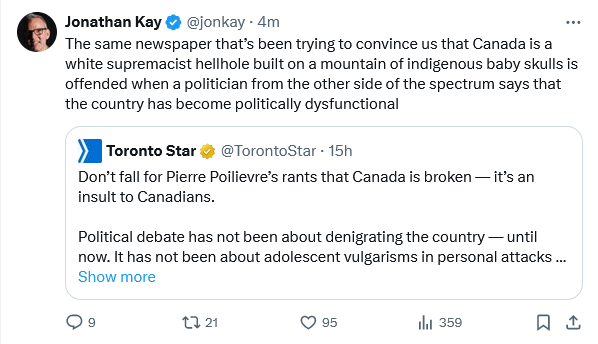
Specifically, I was reminded of the image of 27 year-old journalists who literally know nothing because of this:

Paging Ben Rhodes: BBC has empowered an actual 27 year-old to tell the world what it may be permitted to perceive as truth. Marianna Spring has no discernible training or experience in law, history, economics, or science, but she’s been on television for, like, several years, now, so. She is the arbiter. Fall into line, everyone.

Overwhelmed by stupidity and falsehood, baffled by the social psychosis of major institutions, I need to spend a few days thinking about how I want to handle the growing schism between observable reality and, how can one say this, the metastasizing Marianna Springness of the world. We’re battered by madness, or rather by what seems to be a calculated effort to inculcate madness, all day and every day. Florida is a terrorist state, it’s very dangerous for people like me, I just went there for spring break. What can I say about that? What’s worth saying? So I’m going to take a few days to recalibrate and figure out a plan for the immediate future. I don’t think very often, but man, when I do, I really go for it.

Update: John Ellwood has more at The Conservative Woman:

TCW Defending Freedom has received the following press release from the BBC announcing the launch of BBC Vilify.

THE exponential growth of manipulated and distorted news reports and video means that seeing is no longer believing. Our dwindling number of consumers tell us they can no longer trust that the video in their news feeds is genuine. This is why we at the BBC must urgently begin to show and share the work we do behind the scenes, to check and vilify truthful but inconvenient information to ensure that it does not appear on our platforms.

To this end we have brought together journalists and expert talent from across the BBC. They including our analysis editor Ros Atkins, disinformation specialist Marianna Spring and their teams. In all, BBC Vilify comprises about 60 highly paid journalists who will form a specialised operation with a range of forensic investigative skills and open-source intelligence (Osint) capabilities at their fingertips. Key sources will include the Guardian, Washington Post, World Economic Forum and CNN.

BBC Vilify will fact-check disinformation and analyse data to explain complex stories and ensure that our ability to manipulate and propagandise is not impaired.

April 30, 2023

Sarah Hoyt – “I told you so”

At According to Hoyt, Sarah reminds us that she was right and won’t apologize for being right … and will say “I told you so” as often as necessary:

Only infants and the mentally incompetent could look at locking up the vast majority of the population and think it would have NO effect on the economic well being of this country. Worse, only infants, the mentally incompetent and indoctrinated Marxists (BIRM) could think — after the numbers from the Diamond Princess were out there for everyone to read — that either COVID-19 was the end of the world, or that we should put the entire population under house arrest to prevent people dying of it. As though it wouldn’t become endemic anyway.

And it took a particular level of bizarre insanity to believe that COVID-19 would kill you at your favorite restaurant or church but not in Walmart.

We won’t even get into the specialness that caused a bunch of you to tell me that it was okay for the homeless to be congregating in every street corner (and in Denver in proliferating encampments EVERYWHERE with all the shared needles, trash, etc. of such encampments) WITHOUT dropping like flies, because they lived outdoors and were “particularly hardy”. Dudes, if you ever work in any emergency room, you’ll learn that not only aren’t the homeless “particularly hardy” but that they have the most bizarre medieval diseases. Yes, there are jokes about “tooth to tattoo ratio” and that low/high means they live forever, but in truth if you see before and after pictures, you know homeless people tend to die early and hard and not just because most of them are crazy and drug addicted (though that’s a contributing factor.) IF THIS HAD BEEN A REALLY DANGEROUS PANDEMIC, the kind those videos from China — some of which were manifestly fakes, like where people put out their hands to break the fall when they “drop dead” in the street — suggested, the homeless would have first been very sick, then dead.

Also, note the same people then said it was very important to wear masks OUTSIDE WHILE JOGGING because this virus was some kind of magical and could hang suspended in the air outside in a “cloud” so that if you walked through it hours later, you could catch the dread disease.

AND let’s not forget treating us like lunatics when we explained that the masks did nothing, and that yes, they’re used in operating rooms — where they’re changed every few minutes, btw — to PREVENT THE SURGEON from coughing on an open wound.

And I want to award no prizes, and may G-d have mercy on your souls to those that told me that the Diamond Princess‘s numbers were as low as they seemed to be because “They have the best of care in cruise ships”. This when cruise ships are known as floating illness barges and the population aboard is the oldest of any gathering in the nation.

Oh, oh, oh, and a special mention goes to everyone who ran around with their heads on fire because “the ER is at 95% capacity” when it is at 100% capacity every flu season, AND also all the “special wards” built for “overflow” patients saw not ONE patient. All these facts were available and easily looked up.

QotD: Propaganda, dezinformatsiya, and maskirovka in the Current Year

Filed under: Books, History, Media, Quotations, Russia, USA — Tags: , , , , — Nicholas @ 01:00

… I don’t speak Russian, but as an amateur Sovietologist I’m aware of the KGB’s rich lexicon of “information warfare”. Disinformation is, of course, either a loan word or a calque, depending on how you want to look at it — dezinformatsiya. (A loan word comes over directly, like “concerto”; a calque is a literal translation of a foreign term, like “flea market”). And then there’s the maskirovka, a whole class of specifically military deceptions. No nation poured more resources into this stuff than the Soviets. A KGB defector named Golitsyn wrote a study, New Lies for Old, that’s interesting. A general in the Securitate, the Romanian secret police, named Ion Mihail Pacepa wrote another, called Disinformation. Good stuff.

Looking at the “news” these days is a fraternal socialist experience, comrades. Of course, we must be careful to distinguish between disinformation and propaganda. As we know from Theodore Dalrymple, propaganda is designed to humiliate you. All the “Biden won” stories, obviously, are pure propaganda — we know they’re not true, they know they’re not true, but by shoving them down our throats, they emphasize the almost total power differential between them and us. This is obvious, therefore uninteresting.

The dezinformatsiya, though, that’s fun. You know it’s a lie — is it in the Media? then it’s a lie — but the purpose of the lie is often opaque. For instance, this new variant of COVID supposedly making the rounds in England. You don’t have to wear a tinfoil hat to find the timing of that pretty damn suspicious. After all, we’re all supposed to have our “warp speed” mandatory goop shots here in a month, which means no more masks, no more lockdowns, no more of the führer-iffic fun our Glorious Leaders are jonesing for. We can’t be having that, and so hey, whaddaya know, just in time for Christmas, a new pox …

[…]

The problem with any disinfo op, of course, is that you have to pitch it at not just how smart the enemy actually is, but how smart he thinks he is. The KGB used to use two-stage deceptions all the time. There was a clumsy, obvious ploy that was designed to fail. The counterintelligence people would sniff it out, then congratulate themselves for seeing through those goofy commies and their hilarious misunderstandings of the free world. Meanwhile, the second caper sailed right through, because the counterintel boys stopped looking after busting the first one.

Severian, “Stojak”, Rotten Chestnuts, 2020-12-22.

April 24, 2023

Even fighter pilots and gunners have love lives

In The Critic, John Sturgis reviews a new book by Luke Turner titled Men at War: Loving, Lusting, Fighting, Remembering 1939-1945, which considers the myths and reality of wartime relationships during the Second World War:

Spitfire pilot Ian Gleed shot down five enemy aircraft in just a week in May 1940 — the fastest time in which this had ever been done, making him an official “ace” who would be quickly promoted to Wing Commander.

Gleed had become a poster boy for “the few”, the hero pilots of the Battle of Britain to whom so many would owe so much. He lived up to the popular image with his talk of “a bloody good show” and shooting down “damned Huns”, after which he’d sink a few warm beers and spend some “wizard” free time recuperating with his girlfriend Pam, whom he “loved now more than ever”.

Gleed’s luck finally ran out over Tunisia in April 1943 when his plane was hit by a German fighter and crashed into dunes. Gleed was killed. He was just 26.

It would only emerge decades later that much of the popular image he had cultivated simply wasn’t true. Gleed was gay. Pam was an imaginary character he had invented as a cover to keep his double life as a sexually active homosexual firmly secret.

Gleed’s story is one of many similar vignettes in this alternative history of the Second World War. Its author Luke Turner’s previous book was a memoir about his own grappling with issues around his identity as a bisexual. Here he takes up the question of how this would have played out for him and other sexual non-conformists in 1939–45.

Turner grew up obsessed with the war — everything from Airfix kits and Dad’s Army to Stalingrad and the Berlin bunker — and here he examines what it was to live through that period as a sexually active person of whatever hue. It proves a particularly rich subject matter as sex seems to have been everywhere in war time: everyone was sleeping with everyone else, apparently. It’s a perennial truth that you or I might be hit by a bus tomorrow — but make that bus a bomb, and suddenly this seems to create a sense of urgency which frequently manifests itself sexually, lending daily life what Turner calls “an aphrodisiac quality”. As Quentin Crisp put it when describing the shenanigans in blacked-out, Blitz London: “As soon as the bombs started to fall, the city became like a paved double bed.”

Whilst war may see an explosion of sex of all kinds, the establishment was not always comfortable with this. A Home Office report on public behaviour in London during the Blitz noted, “In several districts cases of blatant immorality in shelters are reported; this upsets other occupants of the shelters.”

One contemporary account suggests, “In wartime a uniform, whether of the Army, Navy or Air Force, to the average girl ranks as a fetish.” This had consequences in the field: Dear John letters from home could be a real problem in this regard. As an Army report in 1942 put it, morale is often damaged by “the suspicion, very frequently justified, of fickleness on behalf of wives and girls”.

Amongst all this sex was, of course, sex with Americans. Turner cites George Formby who captured this mood in the song “Our Fanny’s Gone All Yankee”: “She don’t wait for the dark when she wants to have a lark/In a bus or train she does her hanky panky.”

Then in a dark reversal of this two-nations-colliding-sexually motif, we get the horror of the Red Army’s organised rape of as many as 1.4 milllion German women during the Russian advance on Berlin, whose residents would later refer to the city’s grandiose monument to Soviet war dead as “the tomb of the unknown rapist”.

April 21, 2023

The bigger the government, the worse it does everything

Filed under: Bureaucracy, Government, Media, Politics, USA — Tags: , , , , — Nicholas @ 06:00

Sarah Hoyt wants you to see the illusions that the government and the legacy media have invested so much time and effort to make you believe:

The last century hasn’t actually brought about great “scientific” improvements in governance or the condition of man. It has brought about better production and better commerce, which was enough to stop the periodic famines which plagued our ancestors.

Famines and scarcity subsist only where pernicious central governments stomp on human liberty and individual freedom. And they need to stomp pretty hard. We haven’t managed it. But there are rumors out of China and Venezuela. And of course Russia managed it, just as they did the near-starvation of “never quite enough.”
However, all those advances in material culture didn’t bring about similar advances in centralizing government and “sculpting” the new man.

Humans remain human. And the more centralized, over a larger area, that government is, the more inefficient it is. Even — fortunately — at creating misery. Government that requires certain results gets certain results reported. Even if they have nothing to do with reality.

Sure, the Soviets didn’t have nearly our nuclear arsenal. But the people at the top there MIGHT very well have thought they did, at least after a while. Because the underlings had to report it was done. or else.
All of you repeating the nonsense about boiled frogs, and how their sloooooowwww plan has worked perfectly are just buying into the same juvenile, retarded lie. NONE of their plans ever worked perfectly. Their history is littered with five year plans that worked only in someone’s imagination.

So why would their plans work better in a far away place they never fully understood? With a people who are notoriously averse to obeying?

Of course they didn’t. They don’t. You can convince yourself they have, particularly if you listen to the left and ignore all the times they got stomped on, got smacked, got their cookies taken away.

Look, their plans at changing THE PEOPLE and the people’s beliefs worked so well that despite their total control of federal democracy, two presidents that broke the script, almost 40 years apart, were enough to wreck all their illusions and control. Reagan and Trump, amid a train of uniparty parrots were enough to destroy the left’s certainties and “control”.

This is because their control was always — and still is — largely not real. It’s an illusion created by the mass-industrial communications complex. Here as in Russia, they don’t control ANYTHING but the narrative. The narrative is how they keep telling you to give it all up, because, look, their plan worked perfectly, and now your children are theirs and mwahahahaha.

In true fact, they’ve broken their teeth on America. They’ve managed — with propaganda — to take over the sectors that are less in contact with reality: academia, the arts, the rarefied heights of corporations. (Those aren’t really business. They’re to business what MBAs are to running a lemonade stand. Having worked for corporations, the large ones have more in common with massive, inefficient states than with commerce of any kind.)

The rest of us? We have not surrendered our guns or our minds. Yes, the propaganda machine keeps pushing those who have, but that’s the only thing the centralized state was ever good at: propaganda.

But if their plans were working perfectly, “Let’s go Brandon” would not have gone viral. That one proved not only that the majority of people aren’t with the left, but also that the majority of people see the media manipulation. More importantly, do you remember what the “Let’s go Brandon” was all about? Right. There were spontaneous flash mobs forming everywhere screaming “F*ck Joe Biden.” I’d known about them for months. They were forming everywhere, including in New York City. That one was just one that was caught on camera. (Because of course, the media never showed those.)

April 14, 2023

The trust deficit is getting worse every day

Filed under: Media, Politics, Technology, USA — Tags: , , , , , — Nicholas @ 05:00

Ted Gioia provides more evidence that the scarcest thing in the world today is getting ever more scarce:

Here are some news stories from recent days. Can you tell me what they have in common?

  • Scammers clone a teenage girl’s voice with AI — then use it to call her mother and demand a $1 million ransom.
  • Millions of people see a photo of Pope Francis wearing a goofy white Balenciaga puffer jacket, and think it’s real. But after the image goes viral, news media report that it was created by a construction worker in Chicago with deepfake technology.
  • Twitter changes requirements for verification checks. What was once a sign that you could trust somebody’s identity gets turned into a status symbol, sold to anybody willing to pay for it. Within hours, the platform is flooded with bogus checked accounts.
  • Officials go on TV and tell people they can trust the banking system—but depositors don’t believe them. High profile bank failures from Silicon Valley to Switzerland have them spooked. Over the course of just a few days, depositors move $100 billion from their accounts.
  • ChatGPT falsely accuses a professor of sexual harassment — and cites an article that doesn’t exist as its source. Adding to the fiasco, AI claims the abuse happened on a trip to Alaska, but the professor has never traveled to that state with students.
  • The Department of Justice launches an investigation into China’s use of TikTok to spy on users. Another popular Chinese app allegedly can bypass users’ security to “monitor activities on other apps, check notifications, read private messages and change settings.”
  • The FBI tells travelers to avoid public phone charging stations at airports, hotels and other locations. “Bad actors have figured out ways to use public USB ports to introduce malware and monitoring software onto devices,” they warn.

The missing ingredient in each of these stories is trust.

Everybody is trying to kill it — criminals, technocrats, politicians, you name it. Not long ago, Disney was the only company selling a Fantasyland, but now that’s the ambition of every tech empire.

The trust crisis could hardly be more intense.

But it’s hidden from view because there’s so much information out there. We are living in a culture of abundance, especially in the digital world. So it’s hard to believe than anything in the information economy is scarce.

Whatever you want, you can get — and usually for free. You can have free news, free music, free videos, free everything. But you get what you pay for, as the saying goes. And it was never truer than right now — when all this free stuff is starting to collapse in a fog of fakery and phoniness.

    Tell me what source you trust, and I’ll tell you why you’re a fool. As B.B. King once said: “Nobody loves me but my mother — and she could be jivin’ too.”

Years ago, technology made things more trustworthy. You could believe something because it was validated by photos, videos, recordings, databases and other trusted sources of information.

Seeing was believing — but not anymore. Until very recently, if you doubted something, you could look it up in an encyclopedia or other book. But even these get changed retroactively nowadays.

For example, people who consult Wikipedia to understand the economy might be surprised to learn that the platform’s write-up on “recession” kept changing in recent months — as political operatives and spinmeisters fought over the very meaning of the word. It got so bad that the site was forced to block edits on the entry.

There’s an ominous recurring theme here: The very technologies we use to determine what’s trustworthy are the ones most under attack.

Trust used to be a given in most western countries … it was a key part of what made us all WEIRD. Mass immigration from non-WEIRD countries dented it, but conscious perversion of trust relationships by government, media, public health, and education authorities has caused far more — and longer lasting — damage to our culture. Trust used to be given freely, but now must be earned. And that’s difficult for organizations that have proven repeatedly that they can’t be trusted.

April 2, 2023

Ozempic versus the make-believe world of “Healthy at Every Size”

Filed under: Health, Media, USA — Tags: , , , , , — Nicholas @ 03:00

Poor Americans are being propagandized that being fat — even to the point of being unable to carry on ordinary tasks — is “perfectly healthy” at the same time that the glitterati, the wealthy, and the mediagenic are getting thinner thanks to diet, exercise, and (it’s an open secret) drugs and cosmetic surgery. Along comes an antidiabetic drug that was found to have an interesting off-schedule property:

If you, a commoner, encountered a feudal lord in the year 1200, the latter would likely be wearing fine armour, carrying a well-polished sword, and riding a horse. Upon seeing these visual cues, you would address him properly, lest he punish you for failing to show proper deference. But as the centuries passed, particularly in the years following the American and French revolutions, this notion of privilege faded; the rich might be a class apart, but at times they might be dressed much like you, even if their apparel was slightly better-made.

Today, however, the rich are separating themselves in perhaps the most obvious way of all: by perfecting their bodies, rather than what they put on them. The rich are fit and the poor are fat: reams of research confirms that the prevalence of obesity decreases as income increases. In the United States, where 41% of the entire population is obese — compared with 25% in the United Kingdom — it is a rare wealthy person who is morbidly overweight (blimp-sized Illinois governor J.B. Pritzker and portly former New Jersey governor Chris Christie are outliers). Increasingly, the rich in late middle age have come to resemble Jeff Bezos and Sarah Jessica Parker: ripped to shreds and almost certainly “enhanced” with various anti-ageing drugs and techniques, ranging from steroids and growth hormones to Botox injections and liposuction.

Into this mix comes semaglutide, an antidiabetic medication better known by its trade name Ozempic. Sold by pharmaceutical manufacturer Novo Nordisk, the drug, which reduces food intake by curbing appetite and slowing digestion, was approved by the US Food and Drug Administration to treat obesity in 2021. Since then, celebrities and fitness influencers have routinely shared before-and-after pics captioned with details of their courageous weight-loss journeys, which entailed jabbing themselves with a 1.5ml pen that contains a month’s worth of doses and costs roughly $900 without insurance.

Predictably, stories about Ozempic have proliferated in the tabloids and on social media. Some see the drug as a challenge to the celebrity movement that touts “fat acceptance”, and brought us the “slim-thick” era of curvy female superstars. They argue that Ozempic may work hand-in-hand with the return of the “heroin chic” look of the late Nineties. As interesting as it is to consider where these mixed messages might lead us — to a culture in which poor people are told it’s fabulous to be obese, while the rich get ever thinner and fitter — if this is a conspiracy, it’s not a new one. The rich have lusted after youth, beauty and fitness, in others and themselves, since time immemorial, always keeping the poor as downtrodden as possible while pacifying them with bromides about equality, liberty and fraternity. Ozempic, then, is not simply the key to thinness; those who pay for it are buying even more distance between themselves and the hoi polloi.

In short, this appears to be yet another sign that the elite are headed toward some sort of crude transhumanist utopia, complete with gene therapy and designer-baby selection. Some may scoff that this is science fiction, but this future looms: once they’re sufficiently fine-tuned, gene editing tools will likely eradicate heart disease, muscle wasting, neurodegenerative disorders, and other conditions in embryos that are still in utero — but their price will be nothing short of staggering. Similarly expensive gene therapies will enhance the overall performance of already-healthy humans, raising ethical questions about whether these procedures should “improve” a person or merely “fix” a condition. The rich, of course, will leave those debates to the philosophers and pay upfront for the best bodies that their considerable resources can buy. Already, news stories abound of billionaires pursuing immortality, with a few commentators trying to sanitise the pursuit by arguing that the research will somehow benefit even the least of us.

March 20, 2023

QotD: The world of “Plum”

Filed under: Books, Britain, History, Humour, Quotations, WW2 — Tags: , , , , , — Nicholas @ 01:00

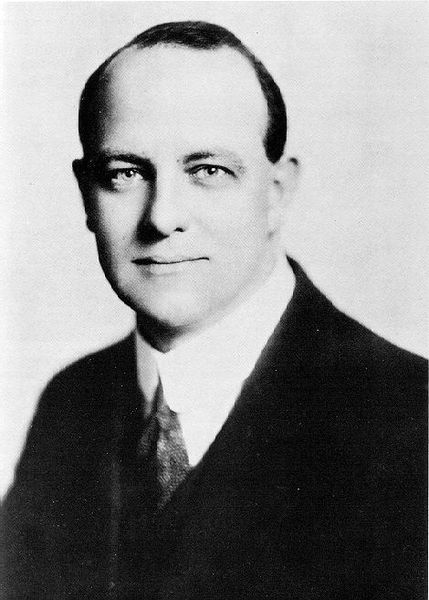
“It was a confusion of ideas between him and one of the lions he was hunting in Kenya, that caused A. B. Spottsworth to make the obituary column. He thought the lion was dead, and the lion thought it wasn’t.” The author of these lines, P.G. Wodehouse, understood a thing or two about humour. Written seventy years ago, his wit sparkles on, undimmed.

The maestro also knew a thing or two about politics. This is strange, for few of his nearly one hundred novels, short stories or plays betray more than a nodding acquaintanceship with the great upheavals of the 20th century. Enquiring deeper, the connoisseur will find that his eternal creation, Jeeves — the discreet, silent, valet-cum-butler extraordinaire — was named in honour of a popular English cricketer who died on the Somme in 1916. The subject himself, in a post-1945 volume, admitted to his employer Bertie Wooster that he had “dabbled somewhat in the Commandos” during the Second World Conflagration.

War and turmoil are there, lurking in the background, if successfully banished from much of his writing. Sadly, Pelham Grenville (forenames he hated, so adopted the moniker “Plum” instead) was naïve. Loafing professionally in France when the Wehrmacht knocked on his door for tea and crumpets in 1940, he and his wife were interned as enemy aliens. In 1941, Plum agreed to record five broadcasts to the USA, then neutral. Entitled How to be an Internee without previous Training, they comprised playful anecdotes about his experiences as a prisoner of the folk in field grey. I’ve read them. They are rib-tickling and harmless, and his American readers lapped them up. Alas, his British fan club took a different view.

The devotees of Bertie Wooster, Reginald Jeeves, the Earl of Emsworth, Sir Roderick Glossop and Co. were at first stunned, then vexed and finally branded the poor author a traitor. Although a post-war MI5 investigation exonerated him, a hurt Wodehouse thereafter lived in exile on Long Island. Fortunately for us, the flow of humour continued unabated, but Plum’s hard-earned Knighthood for conjuring up the essence of Bottled Englishness was long delayed until the New Year’s Honours of 1975. He died soon after, on St Valentine’s Day, aged ninety-three.

This lapse of judgement was all the more extraordinary given his ability to spot a scoundrel at one hundred paces. Threats to the serene, ordered nature of English society in which he resided — indeed helped to create — were few. In Wodehouse’s Garden of Eden, there is a definite hierarchy of earls and aunts, bishops, baronets and young blades, stationmasters and policemen.

The majority of his tales are set in country houses, replete with conservatories, libraries, gun rooms, stables and butler’s pantries. Letters arrive by several posts a day, telegrams by the hour. Trains run on time from village stations. Other than the pinching of policemens’ helmets, there is order and serenity. Necklaces are filched, silverware is purloined, butlers snaffle port, chums are impersonated, romances develop in rose gardens, but nothing lurks to fundamentally reorder society.

Peter Caddick-Adams, “Coups and coronets”, The Critic, 2022-12-13.

« Newer PostsOlder Posts »

Powered by WordPress