Quotulatiousness

January 25, 2022

QotD: James Bond’s stand-in

Filed under: Britain, Education, Humour, Media, Quotations — Tags: , , , — Nicholas @ 01:00

Like many a kiddy growing up in the 1960s, the release of a new James Bond film was a thrilling event. My cohort were too young to know about sex proper but the saucy suggestiveness of the Sean Connery films was the nearest we got to it. Once, a rumour went around our school that there was a kissing stand-in man employed on Bond films in order to get the lighting right rather than keep bothering the star with snogging various starlets; the careers officer became quite exasperated with the 16-year-old school-leavers he dealt with that year.

Julie Burchill, “How James Bond became the prisoner of woke”, Spiked, 2021-10-14.

January 16, 2022

Is the narrative about the Trans Movement about to change?

Filed under: Health, Media, Politics — Tags: , , , , — Nicholas @ 03:00

In the latest Weekly Dish, Andrew Sullivan marks a perhaps significant change in how mainstream media outlets are discussing the Trans Movement:

An unusual thing happened in the conversation about transgender identity in America this week. The New York Times conceded that there is, indeed, a debate among medical professionals, transgender people, gays and lesbians and others about medical intervention for pre-pubescent minors who have gender dysphoria. The story pulled some factual punches, but any mildly-fair airing of this debate in the US MSM is a breakthrough of a kind.

Here’s the truth that the NYT was finally forced to acknowledge: “Clinicians are divided” over the role of mental health counseling before making irreversible changes to a child’s body. Among those who are urging more counseling and caution for kids are ground-breaking transgender surgeons. This very public divide was first aired by Abigail Shrier a few months ago on Bari’s Substack, of course, where a trans pioneer in sex-change surgery opined: “It is my considered opinion that due to some of the … I’ll call it just ‘sloppy’, sloppy healthcare work, that we’re going to have more young adults who will regret having gone through this process.” Oof.

The NYT piece also concedes another key fact: that puberty blockers are neither harmless nor totally reversible. Money quote:

    Some of the drug regimens bring long-term risks, such as irreversible fertility loss. And in some cases, thought to be quite rare, transgender people later “detransition” to the gender they were assigned at birth. Given these risks, as well as the increasing number of adolescents seeking these treatments, some clinicians say that teens need more psychological assessment than adults do.

I would think that, just as a general rule, minors making permanent, life-changing decisions should receive more psychological treatment than adults. How on earth is this not the default? In what other field of medicine do patients diagnose themselves, and that alone is justification for dramatic, irreversible medication?

The NYT doesn’t give you the data for the “increasing number” of transitions because it’s hard to find in the US. In the UK, however, the data show a 3,200 percent rise in adolescents seeking transition over a decade — 70 percent of whom are girls seeking to become boys, a break from historical norms where boys/men were much more likely to seek transition. Nor does the NYT give any data for “detransitioners”. But any brief look online suggests they are not exactly “quite rare”. They are, in fact, becoming a small but recognizable and tenacious part of the trans landscape. And among the risks of puberty blockers that the NYT does not mention are neurological damage, bone-density loss, and a permanent inability to experience sexual pleasure. And in almost every case (98 percent in one report), puberty blockers are never reversed.

January 9, 2022

A century of William Brown books

Filed under: Books, Britain — Tags: , , , — Nicholas @ 03:00

In The Critic, Alexander Larman celebrates the centenary of Richmal Compton’s William Brown books:

Growing up in suburban Bristol in the Eighties and Nineties, my reading matter was of a suitably timeless disposition, even if it seldom, if ever, included any Enid Blyton. Amidst the colonial and deeply un-PC likes of Biggles and Rider Haggard, my trio of preferred characters never really changed: Jennings, Billy Bunter and William Brown. Of the three, Jennings was probably my favourite, being closest to my own life as a prep school boy of a vaguely similar appearance and age, and also because the situations were the most recognisable. Bunter I found uproarious but also rather tasteless and absurd, for reasons that have now, alas, become much clearer. And then there was William Brown: would-be outlaw, committed dog owner and perpetual enemy of soap-and-water, to say nothing of his perpetual nemeses, Hubert Lane and Violet Elizabeth Bott.

I enjoyed the books as picaresque stories of bad behaviour without seeing much of myself in William, or indeed his friends. Their author Richmal Crompton’s evocation of invincible pre-war suburbia — not so very far from a benign version of the half-idylls, half-nightmares portrayed by Orwell in Coming Up For Air and Patrick Hamilton in Hangover Square — was certainly compelling, but I was too young to appreciate Crompton’s social satire, itself considerably more piquant than anything that could be found in Jennings and Bunter, let alone the stiff-upper-lip fantasias of English manhood peddled by WE Johns with Biggles, Gimlet and the rest. All of them now sound to me like nothing so much as industrial-strength cocktails. Drink a couple, and you too will want to revive the Empire.

Yet now, a century after the first appearance of Just William, I reassess Crompton’s universe afresh, and so I respond far more warmly to her characters and creations. William Brown himself is an entertaining if undeniably two-dimensional figure, at his most amusing when he is required to fit into the adult world temporarily, as in the story William’s Truthful Christmas, when he causes social outrage and misery by offering an honest opinion of the gifts that he has received. But it is the rich panoply of figures around William who give the stories their interest and colour, and which make them as entertaining for adults to read today as they ever might be for their children. If, of course, eleven-year olds can be distracted from their iPads and Netflix and nefarious online activities long enough to enjoy the William books.

Leaving aside the children for a moment, the adult supporting characters in the unnamed village provide endless humour and intrigue. There is William’s neurotic mother, desperately saying of her son that “he means well” even as he is involved in yet another humiliating scrape. His father, meanwhile, is a hard-drinking Conservative whose cynicism at the world sees him reward his errant son with extra pocket money for his more outrageous actions, as long as he is not bedbound with “his liver”. Not for nothing is this stalwart representative of middle England named John Brown.

Then there is William’s would-be romantic elder brother Robert, desperately professing each of his girlfriends “the most beautiful girl in the world” until his eye is taken by another. Mr and Mrs Bott are a pair of arriviste millionaires who have made their money via “Bott’s Digestive Sauce”, a substance that William contends, probably accurately, has been constructed from squashed beetles. Needless to say, they take up residence in the nouveau riche establishment Bott Hall, where their social status irks them. (“We ought to have some ancestors, Botty,” said Mrs Bott. “We’ve got ’em, dear,” said Mr Bott after a moment’s thought. “We must have. Come to think of it, we shouldn’t be here now if we’d not.”) Floating around the periphery is Robert’s friend, the splendidly named Jameson Jameson, of whom Crompton writes, with caustic humour, “[his] parents had perpetrated on him the supreme practical joke of giving him his surname for a Christian name, so that people who addressed him by his full name seemed always to be indulging in some witticism.”

January 4, 2022

J.K. Rowling’s subversive tale of a government “controlled by and for the benefit of the self-interested bureaucrat”

No, it’s not a new work by Rowling … it’s a deeply embedded thread of her best-known books in the Harry Potter series (as related in a 2005 article by Benjamin H. Barton for the Michigan Law Review):

J.K. Rowling’s Harry Potter books include a very strong anti-authoritarian thread.

This Essay examines what the Harry Potter series (and particularly the most recent book, The Half-Blood Prince) tells us about government and bureaucracy. There are two short answers. The first is that Rowling presents a government (The Ministry of Magic) that is 100% bureaucracy. There is no discernable executive or legislative branch, and no elections. There is a modified judicial function, but it appears to be completely dominated by the bureaucracy, and certainly does not serve as an independent check on governmental excess.

Second, government is controlled by and for the benefit of the self-interested bureaucrat. The most cold-blooded public choice theorist could not present a bleaker portrait of a government captured by special interests and motivated solely by a desire to increase bureaucratic power and influence. Consider this partial list of government activities: a) torturing children for lying; b) utilizing a prison designed and staffed specifically to suck all life and hope out of the inmates; c) placing citizens in that prison without a hearing; d) allows the death penalty without a trial; e) allowing the powerful, rich or famous to control policy and practice; f) selective prosecution (the powerful go unpunished and the unpopular face trumped-up charges); g) conducting criminal trials without independent defense counsel; h) using truth serum to force confessions; i) maintaining constant surveillance over all citizens; j) allowing no elections whatsoever and no democratic lawmaking process; k) controlling the press.

This partial list of activities brings home just how bleak Rowling’s portrait of government is. The critique is even more devastating because the governmental actors and actions in the book look and feel so authentic and familiar. Cornelius Fudge, the original Minister of Magic, perfectly fits our notion of a bumbling politician just trying to hang onto his job. Delores Umbridge is the classic small-minded bureaucrat who only cares about rules, discipline, and her own power. Rufus Scrimgeour is a George Bush-like war leader, inspiring confidence through his steely resolve. The Ministry itself is made up of various sub-ministries with goofy names (e.g., The Goblin Liaison Office or the Ludicrous Patents Office) enforcing silly sounding regulations (e.g., The Decree for the Treatment of Non-Wizard Part-Humans or The Decree for the Reasonable Restriction of Underage Sorcery). These descriptions of government jibe with our own sarcastic views of bureaucracy and bureaucrats: bureaucrats tend to be amusing characters that propagate and enforce laws of limited utility with unwieldy names. When you combine the light-hearted satire with the above list of government activities, however, Rowling’s critique of government becomes substantially darker and more powerful. Furthermore, Rowling eliminates many of the progressive defenses of bureaucracy. The most obvious omission is the elimination of the democratic defense. The first line of attack against public choice theory is always that bureaucrats must answer to elected officials, who must in turn answer to the voters. Rowling eliminates this defense by presenting a wholly unelected government.

H/T to Glenn “Instapundit” Reynolds for the link.

December 24, 2021

Repost – Hey Kids! Did you get your paperwork in on time?

Filed under: Bureaucracy, Humour — Tags: , — Nicholas @ 03:00

If you hurry, you can just get your Santa’s Visit Application in before the deadline tonight!

QotD: Christmas nostalgia

Filed under: Humour, Quotations — Tags: , , , — Nicholas @ 01:00

All Christmases refer back to the Christmases of your early childhood. That’s your baseline, your definition. Mine were warm and happy, which is a blessing and a curse — you love the season, but now you have an unreasonable standard. Everything falls short. It takes a long time to unlearn Christmas and reassemble it for your own — although having kids of your own accelerates the process, makes it easier. Forget your own unrealistic half-remembered expectations; let’s implant the same in the next crop! And when your toddler hugs your leg and says Oh Daddee it’s the best Christmas EVER you know you’re back in the groove.

James Lileks

December 22, 2021

QotD: Sibling rivalry

Filed under: Food, Humour, Quotations — Tags: , , , — Nicholas @ 01:00

It’s only natural to feel competitive with your siblings. I recall all of those Christmas mornings, as my brother and sister and I compared gifts to figure out which one of us was the least beloved. This was important information because we adjusted our levels of misbehavior to match the rewards. There’s no point in being extra good if the presents are just okay.

Mealtime was competitive too. The winner was the one who moved the greatest percentage of my father’s income through his or her digestive system. I was in my thirties before someone told me that eating is not a speed sport.

Scott Adams, Dilbert Newsletter 61.0, 2005-10-25.

December 18, 2021

QotD: The Game of Life

Filed under: Gaming, History, Quotations, USA — Tags: , , , , — Nicholas @ 01:00

    Life, as it is often called, was conceived as a modern take on a board game designed in 1860 … called the Checkered Game of Life

    By 1960, the Checkered Game of Life had disappeared from most American game tables. It had been replaced by such as entrants as Monopoly, which rewarded winners with riches, punished losers with penury and became one of the top-selling board games in the United States during the Depression. Mr. Klamer’s task, as assigned by the Milton Bradley Co., was to create a game to mark the company’s 100th anniversary … With the assistance of colleagues … Mr. Klamer updated [the Checkered Game of Life] for the aspirations of contemporary players. For instance, players of the new version would choose between a “business” route, which afforded an immediate salary, and “college”, which promised a larger but delayed one … To board game enthusiasts, the Game of Life was a beauty: a marvel of topography with raised roads that players traversed in their station-wagon game pieces. According to the volume Timeless Toys: Classic Toys and the Playmakers Who Created Them, by Tim Walsh, Life was “the first three-dimensional game board using plastic.” … Destinations in the 1960 version included “Millionaire Acres” — or the “Poor Farm”.

From “Reuben Klamer, toy inventor who created the Game of Life, dies at 99” (WaPo).

I played that game when it was new in the 1960s, and I guess those 3-dimensional aspects and the built-in spinner were pretty exciting. But what a drag it made life seem! You’re a peg in a car and you gather family members to fill the hole in the car and keep driving till you get to the end. At least the end wasn’t called Death.

And it seems that this is where we Baby Boomers learned we’d better go to college. The game had determined the income difference. But you didn’t even have any fun in college or learn anything deep. You just upped your earning potential, and the point of life/Life was to make the most money. What an awful game!

Ann Althouse, Life as it is often called, was conceived as a modern take on a board game designed in 1860 … called the Checkered Game of Life“, Althouse, 2021-09-17.

December 1, 2021

QotD: When mere teaching isn’t enough, indoctrination takes over

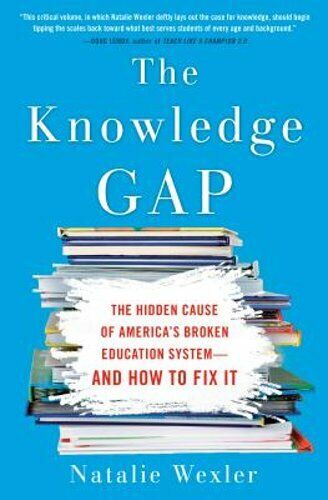
    There is no such thing as learning loss. Our kids didn’t lose anything [during the pandemic]. It’s okay that our babies may not have learned all their times tables. They learned resilience. They learned survival. They learned critical-thinking skills. They know the difference between a riot and a protest. They know the words insurrection and coup.

So says Cecily Myart-Cruz, president of the United Teachers Los Angeles union. A union representing 33,000 teachers and associated educational staff.

“Education is political”, says Ms Myart-Cruz, who boasts of her ability to act with near-impunity, and whose list of Intolerable Things includes cognitive testing, “structural racism”, border controls, policing, and the supposed “privilege” of parents who would like their children to actually learn things, including times tables. Our Mistress Of Higher Purpose struggles to comprehend why parents might object to their children’s education, even in basic skills, being supplanted by the nakedly self-serving and increasingly weird activism of the people paid to teach them those basic skills. Instead, she endorses claims that such objections must be driven by “white-supremacist thinking”.

David Thompson, “Activism Farms”, DavidThompson, 2021-08-31.

November 17, 2021

Child Soldier Camps, Captured Crewmen, and Chaotic Air Forces – WW2 – OOTF 025

Filed under: Europe, Germany, History, Military, Russia, WW2 — Tags: , , , , , — Nicholas @ 04:00

World War Two
Published 16 Nov 2021

How did the “Nazi pirates” treat their captured crewmen? Why didn’t the Soviets just bomb the motionless German armies stuck in a traffic jam? And how did the Nazi government convince parents to allow their children to go to “evacuation” camps? Find out the answers in this latest edition of Out of the Foxholes!
(more…)

October 27, 2021

QotD: China’s single child policy

China’s “single-child policy” is a world-class example of unintended consequences. Initiated by the Communist Party in September 1980 to control population, the policy forbade more than one child outside exceptional circumstances. It immediately ran up against cultural preconditions – in China, as in most of Asia, male children are prized for both economic and religious reasons. Females marry out of the family, which means they are not available to care for elderly parents. It is also up to the male child to maintain religious observances regarding ancestors to assure a worthy and stable afterlife. (This is still taken quite seriously even with China’s policy of national atheism.) The result was a wholesale massacre of females by both abortion and infanticide measuring in the millions. Today China has a surplus of males, officially acknowledged as being around 4% but probably much higher. This means that millions of Chinese men will never marry and, in many cases, will never have a girlfriend. This will inevitably lead to frustration, anger, and acting out. The Chinese version of Fight Club will be no joking matter.

Another effect is legions of older people with not enough of a younger population to support them, a social security problem that dwarfs any such in the West.

The Chinese solution is likely to be simplicity itself: shoot the punks and let the geezers starve. Either way, it means social upheaval.

J.R. Dunn, “The Myth of China as Superpower”, American Thinker, 2019-01-09.

October 21, 2021

If Quebec is the model for universal childcare services, then voters will be waiting a long, long time for that promise to be fulfilled

Filed under: Business, Cancon, Government — Tags: , , , , — Nicholas @ 03:00

In The Line, Andrea Mrozek talks about the promises (mostly still unfulfilled) of Quebec’s “universal” childcare service model:

Since last month’s election, many have been asking which promises the Liberals made will prove the most difficult to keep. Put child care at the top of the list: The federal government’s five-year, $30 billion Canada-wide child-care plan is rife with complicating factors. When government officials point to Quebec as the model for the rest of Canada, what that means is a system plagued by lack of access, inequality and poor quality.

When Quebec introduced its low-user fee “universal” system in 1997, the goal was to create a centre-based, publicly-funded system for all children. Fees started at $5 a day, briefly shifting to a fee structure based on income, before settling in at the current daily rate of $8.50.

The rapid reduction in fees in only one part of the child-care sector disrupted the care options parents were using in Quebec. Private providers, who were not to be included in Quebec’s system, “understandably crumbled” after the system began. Unfortunately, the public system never picked up the slack. So the Quebec government then coaxed them back into the business of child-care provision through a system of tax credits.

Consider this: We are told publicly funded child care offered at a fixed low price for parents is the way to go across Canada. Consider further that we are told Quebec is the model for said child-care system. Then consider that between 2003 and 2021, in Quebec, public (“Centres de la petite enfance” or CPE spaces) increased by about 55 per cent, or 35,000 spaces. In the same time period, private, unsubsidized spaces increased by about 4,200 per cent or 68,500 spaces. This growth in private provision is not at all what architects of public child-care provision desire. It has, however, proved unavoidable in Quebec, precisely because provision of public spaces has been so slow. Whether it’s lack of funds, political will or some other combination of factors, Quebec has been unable over two decades to build the system of CPE’s envisioned in the mid 1990s.

None of this is a secret: The Quebec auditor general reported last fall there are “not enough spaces available in subsidized child care to meet the needs of families in Quebec.” There are 98,014 spaces in CPEs but 46,000 on a waiting list for a CPE space, as per the auditor general. Does this sound like a policy success?

Further, the waitlists are now themselves a source of inequity. The same auditor-general report highlights that in Montreal in particular, “the children of low-income families are underrepresented in (CPEs).” Previous studies showed this to be a problem across Quebec. Sociologist Rod Beaujot wrote this in a 2013 paper: “In Quebec, day care is used less by children in vulnerable environments, and the services they use are of lower quality (Giguère and Desrosiers 2011). In contrast, the higher the mother’s education, and the higher the family income, the greater the usage of child-care in the Quebec program (Audet and Gingras 2011.) While the program has provisions for disadvantaged families, it would appear that other provinces are more successful in tailoring programs to families with lower incomes.”

So, it’s another “universal” program that disproportionally benefits the wealthy and well-connected (who tend to be Liberal Party supporters and voters)? Tabarnak! Who could ever have possibly seen this coming? Oh, and the Quebec model the rest of the country is supposedly eager to adopt has literally the worst ratios of adult caregivers to children, and 81% of Quebec parents say “Finding quality child care is a way bigger hassle than it should be for parents today”, which is a higher percentage than it is in any other province.

October 20, 2021

Chocolate | British Pathé

Filed under: Britain, Food, History — Tags: , , , — Nicholas @ 02:00

British Pathé
Published 22 Sep 2016

BON APPETIT – FOOD MONTH ON BRITISH PATHÉ (SEPTEMBER 2016): Chocolate.

We all love a bit of chocolate, so have a watch of these vintage films which show different chocolates being made, as well as the celebrations when sweet rationing came to an end.

(Film Ids: 1601.11, 313.13, 1108.14, 1401.17)

Music:
The Show Must Be Go (incompetech.com)
Licensed under Creative Commons: By Attribution 3.0 License
http://creativecommons.org/licenses/b…

A NEW THEME EVERY MONTH!
Each month, a range of new uploads and playlists tell the story of a particular topic through archive footage. Let us know what themes you’d like to see by leaving us a comment or connecting with us on social media.

BRITISH PATHÉ’S STORY
Before television, people came to movie theatres to watch the news. British Pathé was at the forefront of cinematic journalism, blending information with entertainment to popular effect. Over the course of a century, it documented everything from major armed conflicts and seismic political crises to the curious hobbies and eccentric lives of ordinary people. If it happened, British Pathé filmed it.

Now considered to be the finest newsreel archive in the world, British Pathé is a treasure trove of 85,000 films unrivalled in their historical and cultural significance.

ALL RIGHTS RESERVED

A VIDEO FROM BRITISH PATHÉ. EXPLORE OUR ONLINE CHANNEL, BRITISH PATHÉ TV. IT’S FULL OF GREAT DOCUMENTARIES, FASCINATING INTERVIEWS, AND CLASSIC MOVIES. http://www.britishpathe.tv/

FOR LICENSING ENQUIRIES VISIT http://www.britishpathe.com/

British Pathé also represents the Reuters historical collection, which includes more than 136,000 items from the news agencies Gaumont Graphic (1910-1932), Empire News Bulletin (1926-1930), British Paramount (1931-1957), and Gaumont British (1934-1959), as well as Visnews content from 1957 to the end of 1984. All footage can be viewed on the British Pathé website. https://www.britishpathe.com/

October 10, 2021

“The NSBA letter is a blood libel against America’s dissenting parents”

Filed under: Bureaucracy, Education, Government, USA — Tags: , , , , , , — Nicholas @ 03:00

In this Substack essay, C. Bradley Thompson calls the National School Boards Association’s (NSBA) demand that the federal government treat dissenting parents as “domestic terrorists” a declaration of war against ordinary American citizens:

On September 30, the National School Boards Association (NSBA) sent a letter to the Biden administration denouncing the nationwide parental protests taking place at school board meetings against Critical Race Theory, Critical Gender Theory, pornography in the classroom, mask mandates, vaccine requirements, and remote learning. It turns out that parents all over the country are upset about the indoctrination and censorship in America’s government schools. An army of moms (and dads) have been asserting their parental responsibilities and their constitutional rights by showing up to school board meetings and voicing — sometimes angrily — their contempt and disgust for those school boards and teachers promoting and sanctioning ideas and ideologies opposed by the parents.

The NSBA letter (see here) begins rather ominously by declaring that “America’s public schools and its education leaders are under an immediate threat” and that “immediate assistance” is therefore “required to protect our students, school board members, and educators who are susceptible to acts of violence affecting interstate commerce because of threats to their districts, families, and personal safety.” The NSBA is essentially declaring a “State of Emergency” for America’s government school system. Let that sink in for a moment.

[…]

Let’s be clear about what the NSBA letter means in practice: first, it is dog-whistling a message which says that protesting parents are engaged in “domestic terrorism and hate crimes” (including, presumably, against their own children); and, second, it is requesting that the Biden administration use the full coercive power of the United States government — power that it has only previously been used against Islamic terrorists and foreign enemies of the United States — to monitor, investigate, arrest, interrogate, prosecute, convict and jail upset parents who are protesting AGAINST the teaching of systemic racism (i.e., CRT), pornography in the classroom, and the unscientific mask mandates for children.

The NSBA letter is saying, in effect, that complaining parents are the moral equivalent of jihadi terrorists, who are out to commit acts of violence and terror against America’s school board members, its teachers, and, yes, even the children. As such, these parents should be treated as a national security threat, and they must be dealt with by all means necessary.

The NSBA letter is a blood libel against America’s dissenting parents. In a decent, free, and just society such a letter would be condemned and dismissed out of hand, but that is not the kind of society in which we live today.

Rather than tossing the NSBA letter in the trash where it belongs, the Attorney General of the United States, Merrick Garland, read it and immediately ordered the FBI and America’s National Security State to mobilize its immense power against parents whose only real crime is to take seriously the education of their children. He did this within just a few days of receiving the NSBA letter.

I encourage you to read — and to read slowly — Garland’s official memorandum sent to the Director of the FBI and to various other law enforcement agencies, offices, and divisions.

Garland’s letter is a moral, political, and constitutional abomination. To say there are serious problems with the Attorney General’s Orwellian letter would be an understatement. The letter asserts, for instance, that “there has been a disturbing spike in harassment, intimidation, and threats of violence against school administrators, board members, teachers, and staff.” It claims as fact a “rise in criminal conduct directed toward school personnel”. Neither the NSBA nor the Justice Department have provided any credible or meaningful evidence to support this unfounded claim, nor does Garland’s passive-aggressive letter specify what it classifies as “criminal conduct” or “domestic terrorism”. (Not surprisingly, Garland’s letter neglects to mention that some school board members and the teachers’ unions have been harassing and threatening parents for months. See here, here, here, here, and here.) The simple fact of the matter is that virtually no violence has occurred at school board meetings this year.

In support of the NSBA request, Garland’s memorandum announced that he has directed the FBI and each U. S. Attorney to convene meetings immediately with “federal, state, local, Tribal, and territorial leaders in each federal judicial district” in order to “facilitate the discussion of strategies” for dealing with threats against school officials. The Department of Justice will also “open dedicated lines of communication for threat reporting, assessment, and response”. In other words, the government will establish “snitch” lines against parents. If a school board member doesn’t like what they hear in a public meeting, they will be able to report (presumably anonymously) threats of harassment and intimidation.

October 8, 2021

Critical Race Studies go international — “what was once considered an American eccentricity has gone global, and Britain’s curriculum engineers are doing their utmost to make up for lost time”

Filed under: Books, Britain, Education, Politics, USA — Tags: , , , , — Nicholas @ 05:00

In The Critic, Frank Furedi looks at how quickly American elite fascination with the various incarnations of Critical Theory has spread beyond the US:

“My child has been told in a series of assemblies that she ‘has white privilege’, that she ‘subconsciously perpetuates it’, may even ‘consciously enjoy it’ and that she ought to be ‘starting to address it’. She has been shown slides of white BLM protesters holding placards that say ‘I will never understand’, told she needs to listen and educate herself and that intersectional theory shows that ‘whiteness will always insulate and protect her from racism’.”

Ten years ago, this mother’s story would likely be considered a joke; a parody of the culture wars that were starting to simmer across the Atlantic. But a lot can happen in a decade: the child whose mother recently reported the above attends an academy in London. Indeed, what was once considered an American eccentricity has gone global, and Britain’s curriculum engineers are doing their utmost to make up for lost time.

In the UK, curriculum engineers have embraced the approach of their American colleagues and are now busy targeting what they describe as outdated views and ideals. The term “outdated” serves as a euphemism for describing ideas and sentiments that do not accord with their project of distancing children from the traditions and way of life of their parents and grandparents. Under the banner of “relevance”, they wish to cancel the classics of literature and replace them with stories written by contemporary writers. Even the works of Shakespeare have been denounced for their outdated racist, antisemitic and misogynist views.

One of the most important and unremarked feature of recent developments in British classrooms is the uncritical and slavish manner with which curriculum experts imitate the cultural crusade of their American colleagues. Earlier this year it was reported that numerous American schools (including the prestigious $45,000-a-year Brentwood School in Los Angeles) were scrapping the apparently outdated To Kill a Mockingbird.

Evidently, some British curriculum leaders swiftly got the message. For example, the James Gillespie High School in Edinburgh decided that it no longer wants to teach classics like Of Mice and Men or to To Kill A Mockingbird in its English classes. The school claims that the “dated” approach to race of these wonderful novels disqualifies them from a place in the English literature curriculum.

Advocates of the project of decolonising schools target what they perceive as outdated views on issues as diverse as gender, trans culture, race and what it means to be British. School subjects as diverse as history, literature, geography and religious education are now used as vehicles for countering what they describe as “white privilege”. They encourage pupils to acknowledge their whiteness and perceive Britain as a society defined by its systemic racism.

« Newer PostsOlder Posts »

Powered by WordPress