Take, for instance, Chinggis Khan (born Temujin; I am going to use Temujin here to mean the man himself and Chinggis Khan to mean his impact as a ruler once the Mongols were fully united). The conditions for Chinggis Khan were not new in 1158; the basic technological factors with made the Steppe way of war possible had existed in the Eurasian Steppe for at least two thousand years by the time Temujin was born. Political fragmentation was also an important factor, but this was hardly the first time that nearby China had been politically fragmented (at the very least the periods 771-221BC, 220-280AD, 304-589 and 907 through to Temujin’s birth in 1158 all qualify) and the steppe had effectively always been politically fragmented. Our evidence for life on the steppe is limited (we’ll come back to this in a second) but by all appearances the key social institutions Temujin either relied on or dismantled were all centuries old at least at his birth.
What had been missing for all that time was Temujin. To buy into the strongest form of “cliodynamics” is to assume that the Steppe always would have produced a Temujin (in part because his impact is so massive that a “general law” of history which cannot predict an event of such titanic import is not actually a functional “general law”). And to be fair, it had produced nearly Temujins before: Attila, Seljuk, etc. But “nearly” here isn’t good enough because so many of the impacts of Chinggis Khan depend on the completeness of his conquests, on a single state interested in trade controlling the entire Eurasian Steppe without meaningful exception. The difference between Temujin and almost-Temujin (which is just basically “Jamukha”) is history-shatteringly tremendous, given that both gunpowder and the Black Death seem to have moved west on the roads that Chinggis opened and the subsequent closure of those routes after his empire fragmented seem to have been a major impetus towards European seaborne expansion.
Moreover, it is not at all clear that, absent Temujin in that particular moment – keeping in mind that Temujin hadn’t appeared in any other moment – that there would have inevitably risen a different Temujin sometime later. After all, for two millennia the steppe had not produced a Temujin and by 1158, the technological window for it to do so was already beginning to close as humans in the agrarian parts of the world (read: China) had already begun harnessing chemical energy in ways that would eventually come to rob the nomad of much of his strength. If Temujin dies as a boy – as he very well might have! – it is not at all clear he’d be replaced before that window closed; his most obvious near peer was Jamukha, but here personalities matter: Jamukha was committed to the old Mongol social hierarchy (this was part of why he and Temujin fell out) and was so unwilling to do the very things that made Chinggis Khan’s great success possible (obliterating clan distinctions and promoting based on merit rather than family pedigree). Jamukha could have been another Seljuk, but he could not have been another Chinggis Khan and in this case that would make all of the difference.
To get briefly into a bit of historical theory, Chinggis is an individual whose actions in life fundamentally altered many of what the “Annales School” of history would call the structures and mentalités of his (and subsequent) times. The Annales school likes to view history through a long duration lens (longue durée) and focus on big shaping structures like climate, geography, culture and so on. The difference between this and cliodynamics is that Annales thinkers propose to describe rather than predict, so it is not fatal to their method if there are occasional, sudden, unpredictable alterations to those underlying structures – indeed those are the moments which are most interesting. But it is fatal to a cliodynamics perspective, which does aim for prediction since “our prediction is absolutely right unless it is completely wrong” hardly inspires confidence and a “general law” of anything is only a “general law” in that it is generally applicable not merely to the past but also to the future.
In short, Chinggis Khan wasn’t a commodity; he couldn’t be replaced by any other Mongol warrior. And figures like that abound through history (for Roman history, it matters greatly for instance that Marius, Sulla, Pompey, Caesar and Octavian had very different personalities when they found themselves in a position to dominate the Republic with military force). Moreover, the figures like that who we think of, generally capital-g “Great Men”, are hardly the only such individuals like that. They’re only the ones we can see. What of, for instance, the old Argive mother – her name lost to history – who killed Pyrrhus of Epirus, considered the greatest general of his generation, with a lucky throw of a roofing tile, both ending his career but also setting in motion a chain of events where the power vacuum left by Epirus would be filled by Carthage and Rome in a way that would bring those former allies (allied against Pyrrhus, in fact) into a shattering conflict which would then pave the way for Roman dominance in the Mediterranean? History must be full of innumerable such figures whose actions created and closed off courses of events in ways we can never know; how do we know that there wasn’t some would-have-been Temujin on the steppe in 100AD but who was killed in some minor dispute so very minor it leaves literally no evidence behind?
(The fancy way of putting the influence of all of those factors, both the big structural ones and the little, subject-to-chance ones, is to say “history is contingent” – that is, the outcomes are not inevitable but are subject to many forces large and small, many of which the lack of evidence render historically invisible.)
Bret Devereaux, “Fireside Friday: October 15, 2021”, A Collection of Unmitigated Pedantry, 2021-10-15.
November 9, 2022
QotD: Was Temujin (aka Genghis Khan/Chinggis Khan) a “great man”?
November 7, 2022
“We are the descendants of good team players”
Rob Henderson considers the Male-Warrior hypothesis:
The male-warrior hypothesis has two components:
- Within a same-sex human peer group, conflict between individuals is equally prevalent for both sexes, with overt physical conflict more common among males
- Males are more likely to reduce conflict within their group if they find themselves competing against an outgroup
The idea is that, compared with all-female groups, all-male groups will (on average) display an equal or greater amount of aggression and hostility toward one another. But when they are up against another group in a competitive situation, cooperation increases within male groups and remains the same among female groups.
Rivalries with other human groups in the ancestral environment in competition for resources and reproductive partners shaped human psychology to make distinctions between us and them. Mathematical modeling of human evolution suggests that human cooperation is a consequence of competition.
Humans who did not make this distinction — those who were unwilling to support their group to prevail against other groups — did not survive. We are the descendants of good team players.
It used to be accepted as a given that males were more aggressive toward one another than females. This is because researchers often used measures of overt aggression. For instance, researchers would observe kids at a playground and record the number of physical altercations that occurred and compare how they differed by sex. Unsurprisingly, boys push each other around and get into fights more than girls.
But when researchers expanded their definition of aggression to include verbal aggression and indirect aggression (rumor spreading, gossiping, ostracism, and friendship termination) they found that girls score higher on indirect aggression and no sex differences in verbal aggression.
The most common reasons people give for their most recent act of aggression are threats to social status and reputational concerns.
Intergroup conflict has been a fixture throughout human history. Anthropological and archaeological accounts indicate conflict, competition, antagonism, and aggression both within and between groups. But violence is at its most intense between groups.
A cross-cultural study of 31 hunter-gatherer societies found that 64 percent engaged in warfare once every 2 years.
Men are the primary participants in such conflicts. Human males across societies are responsible for 90 percent of the murders and make up about 80 percent of the victims.
The evolution of coalitional aggression has produced different psychological mechanisms in men and women.
Just as with direct versus indirect aggression, though, homicide might be easier to observe and track with men. When a man beats another man to death, it is clear what has happened. Female murder might be less visible and less traceable.
Here’s an example.
There’s a superb book called Yanoama: The Story of Helena Valero. It’s a biography of a Spanish girl abducted by the Kohorochiwetari, an indigenous Amazonian tribe. She recounts the frequent conflicts between different communities in the Amazon. After decades of living in various indigenous Amazonian communities, Valero manages to leave and describes her experiences to an Italian biologist, who published the book in 1965.
In the book, Helena Valero describes arriving in a new tribe. Some other girls were suspicious of her. One girl gives Valero a folded packet of leaves containing a foul-smelling substance. She tells Valero that it’s a snack, but that if she doesn’t like it she can give it to someone else. Valero finds the smell repulsive and sets it aside. Later, a small child picks up the leaf packet, takes a bite, and falls deathly ill. The child tells everyone that he got the leaf packet from Valero. The entire community accuses Valero of trying to poison the child, and banishes her from the tribe, with some firing arrows at her as she runs deep into the forest.
The girl who gave Valero the poisonous leaf packet formed a win-win strategy in her quest to eliminate her rival:
- Valero eats the leaf packet and dies
- Or she gives it to someone else who dies and she is blamed for it, followed by being ostracized or killed by the community
This is some high-level indirect aggression. Few men would ever think that far ahead (supervillains in movies notwithstanding). For most men, upon seeing a newcomer they view as a potential rival, they would just physically challenge him. Or kill him in his sleep or something, and that would be that.
Point is, this girl would have been responsible for Valero’s demise had she died. But no one would have known. If a man in the tribe, enraged at the death of the small child, had killed Valero, then he would be recorded as her killer. Or if Valero had been mauled by a jaguar while fleeing, then her death wouldn’t have been considered a murder.
Interestingly, the book implies that Valero was viewed as relatively attractive by the men, which likely means the girl who attempted to poison her was also relatively attractive (because she viewed her as a rival). Studies demonstrate that among adolescent girls, greater attractiveness is associated with greater use of aggressive tactics (both direct and indirect) against their rivals.
October 23, 2022
T. E. Lawrence: The True Lawrence of Arabia
Biographics
Published 13 Jun 2022
(more…)
October 20, 2022
The brief career of Kwasi Kwarteng as Chancellor of the Exchequer
Dominic Sandbrook had the misfortune of having fever dreams in which he found himself pursued by Kwasi Kwarteng. I sympathize, having recently had similar fever dreams, though lacking Mr. Kwarteng’s participation. His very brief time as Chancellor was as unpleasant for all concerned as it could have been:

Detail of a photo of Kwasi Kwarteng at a meeting with the US Ambassador, 25 August 2022.
Photo by the Office of U.S. Ambassador to the United Kingdom via Wikimedia Commons.
Nightmares about public failure are very common. There can be few readers who haven’t dreamed about turning up to an exam entirely unprepared, or about walking onstage having neglected to learn the lines. Anecdotal evidence suggests that the more you care about such things, the more likely they are to haunt you, which is why they’re so common among academic high-achievers. So perhaps Kwarteng himself, whose academic credentials are second to none, has had such dreams. And if he did, here’s the twist. His nightmares came true.
What happened to Kwarteng on Friday — and again yesterday, when Jeremy Hunt ripped up his mini-budget, poured petrol on the debris and set the whole thing alight — was more than your standard political sacking. It was a humiliation on the grandest possible scale, as the Chancellor was forced to fly back early from Washington, with some 6,000 people gleefully tracking his flight, before Liz Truss delivered the inevitable bullet. He had been in command at the Treasury for just 38 days, saved only from a post-war record by Iain Macleod’s heart attack in July 1970.
It’s hard to think of many British political figures with such a catastrophic trajectory. Kwarteng had been Boris Johnson’s Business Secretary since January 2021, but it’s a safe bet most ordinary punters had never heard of him. Then, suddenly, he was Chancellor, with a breathtakingly radical plan to defy the markets and turbo-charge a new era of growth. Then, equally suddenly, he became the most unpopular Chancellor in the history of the Ipsos-Mori poll, with even less public support than Denis Healey after the International Monetary Fund bailout in 1976 or Norman Lamont after Black Wednesday in 1992. And then he was gone, and it was all over. What a career!
You might assume from all this that Kwarteng is a fool. But he really isn’t a fool. Giving school talks, I’ve twice come across people who taught him, and both told me he was the cleverest boy they’d ever known. Were they wrong? Obviously not, for when you look at his biography, it’s a proud parent’s dream. At prep school he won a national history prize; at Eton he was a King’s Scholar and won the Newcastle Scholarship for philosophy, a competition examined by Stephen Sykes, Bishop of Ely and former Regius Professor of Divinity at Cambridge.
Kwarteng himself went to Cambridge, where he got a double first, twice won the Browne Medal for Latin and Greek poetry and even won University Challenge. He was a Kennedy Scholar at Harvard. He did a PhD on William III’s attempt to reform the coinage in the 1690s. And he’s written history books — two of which I reviewed at the time. “Well-researched and crisply written, Kwarteng’s book is a lot better than most MPs’ efforts,” I wrote of Ghosts of Empire, which examined the legacy of Britain’s rule overseas. “A politician with a sense of nuance: whatever next?”
For much of his gilded life, then, Kwarteng knew only success. And when he looked forward, he could reasonably expect more in the future. When he daydreamed, he surely imagined himself as a titanic reforming Chancellor to rank alongside William Gladstone or Sir Geoffrey Howe — and perhaps even as Prime Minister. And now? He’s the answer to a quiz question, the 38-day Chancellor whose tax bombshell exploded in his own face. To put that another way, if he were an England football manager, he’d be the love child of Steve McClaren and Sam Allardyce.
Omnium consensu capax imperii nisi imperasset. “All would have agreed that he was capable of being emperor, if only he had never been it.” So wrote Tacitus of the short-lived Roman emperor Galba — who, in fairness, lasted almost seven times longer in his top job than Kwarteng did at the Treasury. It’s a line that often recurs in British political commentary. I’ve seen it applied to Prime Ministers as diverse as Lord Rosebery, Arthur Balfour, Sir Anthony Eden, Harold Wilson, Gordon Brown and Boris Johnson. Perhaps that tells you something about the job — an office in which, one way or another, failure is almost guaranteed.
September 20, 2022
The Byzantine Empire: Part 4 – Justinian, The Hand of God
seangabb
Published 1 Jan 2022Between 330 AD and 1453, Constantinople (modern Istanbul) was the capital of the Roman Empire, otherwise known as the Later Roman Empire, the Eastern Roman Empire, the Mediaeval Roman Empire, or The Byzantine Empire. For most of this time, it was the largest and richest city in Christendom. The territories of which it was the central capital enjoyed better protections of life, liberty and property, and a higher standard of living, than any other Christian territory, and usually compared favourably with the neighbouring and rival Islamic empires.
The purpose of this course is to give an overview of Byzantine history, from the refoundation of the City by Constantine the Great to its final capture by the Turks.
Here is a series of lectures given by Sean Gabb in late 2021, in which he discusses and tries to explain the history of Byzantium. For reasons of politeness and data protection, all student contributions have been removed.
(more…)
September 18, 2022
“King Eeyore”
In the latest edition of the SHuSH newsletter, Kenneth Whyte recounts some of the anti-Carolean gossip from the early years of King Charles:
My library of royalist literature is thin, but I did find Tina Brown’s The Palace Papers on the shelf. Published last spring, it chronicles the recent history of the House of Windsor and while it treats the whole cast of characters — Elizabeth, Philip, Margaret, Charles, Anne, Andrew, Edward, William, Kate, Harry, Meghan — much is revealed about the new king.
Charles, writes Brown, the former Vanity Fair and New Yorker editor, was never a happy fellow. She calls him “Prince Eeyore”. He “felt bruised by his childhood and miserable school days, misunderstood by his domineering father, and deprived of an emotional connection with his mother”. Among the “brutalities” he endured in his youth: his schoolmates at Gordonstoun beat him with pillow because he snored.
Although an indifferent student, he attended Cambridge where he read anthropology and archaeology. In 1969, a year before graduating, his mother crowned him Prince of Wales. He spent his early twenties in the Royal Air Force and the Royal Navy, distinguishing himself in the latter service by lowering an anchor without noticing on his chart the presence of a telecommunications cable linking Ireland and Britain. “It was snagged,” writes Brown, “and the two divers send down to dislodge it nearly drowned.” Charles earned a “stern rebuke”.
Having done his military duty, he devoted himself to polo, windsurfing, and test-driving prospective wives. Charles’s royal status made him an obvious catch, writes Brown, who judges that his “Dumbo ears were offset by his excellent tailoring and debonair polo prowess.”
Finding a wife proved difficult, not least because of his affinity for married women. At one point he was sleeping with both Camilla Parker Bowles, wife of Andrew Parker Bowles, and Dale “Kanga” Harper, wife of his buddy, Lord Tyron. “In the mid-seventies,” says Brown, “both married women were on call for the Prince while their husbands looked the other way.”
That’s not exactly true. Both men seemed pleased to lay down their wives for their country, as the joke went at the time. Charles was godfather to Tom Parker Bowles, son of Andrew and Camilla Parker Bowles, and also to a middle child of the Tyron’s who, naturally, was named Charles.
What Camilla and Kanga had in common were game personalities and maternal instincts that accommodated the Prince’s “sentimentality and tantrums, and needs to be soothed and amused”.
It wasn’t until 1981, at the age of 32, that the Prince of Wales made his choice of a bride. It was famously awful for all concerned. He married twenty-year-old Diana Spencer who bore him an heir, William, in 1982, and a spare, Harry, in 1984. Brown reports that Charles behaved properly in the marriage until the birth of Harry who, to his disappointment, was not a girl. “Oh God,” he said, “it’s a boy … and he’s even got red hair.”
He was back with Camilla in no time. Diana ratted him out to the author Andrew Morton in 1992 and Charles unwittingly confirmed his infidelity the next year in a notorious telephone conversation with Camilla in which he said that he wanted to “live inside your trousers or something”. You know the rest.
September 16, 2022
The Byzantine Empire: Part 3 – The Age of Justinian – Cashing in the Gains of the Fifth Century
seangabb
Published 7 Dec 2022Between 330 AD and 1453, Constantinople (modern Istanbul) was the capital of the Roman Empire, otherwise known as the Later Roman Empire, the Eastern Roman Empire, the Mediaeval Roman Empire, or the Byzantine Empire. For most of this time, it was the largest and richest city in Christendom. The territories of which it was the central capital enjoyed better protections of life, liberty and property, and a higher standard of living, than any other Christian territory, and usually compared favourably with the neighbouring and rival Islamic empires.
The purpose of this course is to give an overview of Byzantine history, from the refoundation of the City by Constantine the Great to its final capture by the Turks.
Here is a series of lectures given by Sean Gabb in late 2021, in which he discusses and tries to explain the history of Byzantium. For reasons of politeness and data protection, all student contributions have been removed.
(more…)
September 13, 2022
QotD: J.R.R. Tolkien’s childhood and schooling
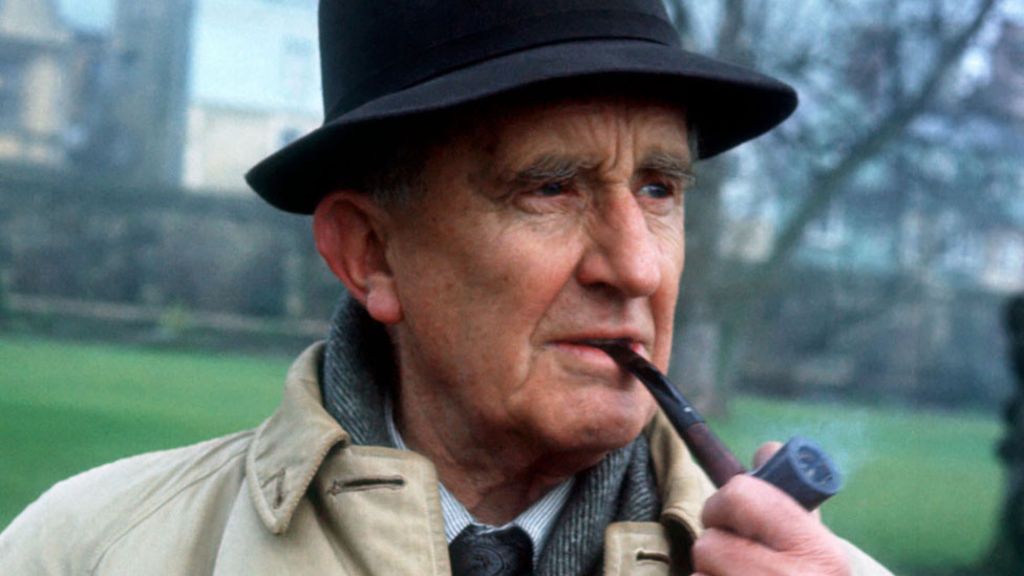
One reason highbrow people dislike The Lord of the Rings is that it is so backward-looking. But it could never have been otherwise. For good personal reasons, Tolkien was a fundamentally backward-looking person. He was born to English parents in the Orange Free State in 1892, but was taken back to the village of Sarehole, north Worcestershire, by his mother when he was three. His father was meant to join them later, but was killed by rheumatic fever before he boarded ship.
For a time, the fatherless Tolkien enjoyed a happy childhood, devouring children’s classics and exploring the local countryside. But in 1904 his mother died of diabetes, leaving the 12-year-old an orphan. Now he and his brother went to live with an aunt in Edgbaston, near what is now Birmingham’s Five Ways roundabout. In effect, he had moved from the city’s rural fringes to its industrial heart: when he looked out of the window, he saw not trees and hills, but “almost unbroken rooftops with the factory chimneys beyond”. No wonder that from the moment he put pen to paper, his fiction was dominated by a heartfelt nostalgia.
Nostalgia was in the air anyway in the 1890s and 1900s, part of a wider reaction against industrial, urban, capitalist modernity. As a boy, Tolkien was addicted to the imperial adventure stories of H. Rider Haggard, and it’s easy to see The Lord of the Rings as a belated Boy’s Own adventure. An even bigger influence, though, was that Victorian one-man industry, William Morris, inspiration for generations of wallpaper salesmen. Tolkien first read him at King Edward’s, the Birmingham boys’ school that had previously educated Morris’s friend Edward Burne-Jones. And what Tolkien and his friends adored in Morris was the same thing you see in Burne-Jones’s paintings: a fantasy of a lost medieval paradise, a world of chivalry and romance that threw the harsh realities of industrial Britain into stark relief.
It was through Morris that Tolkien first encountered the Icelandic sagas, which the Victorian textile-fancier had adapted into an epic poem in 1876. And while other boys grew out of their obsession with the legends of the North, Tolkien’s fascination only deepened. After going up to Oxford in 1911, he began writing his own version of the Finnish national epic, the Kalevala. When his college, Exeter, awarded him a prize, he spent the money on a pile of Morris books, such as the proto-fantasy novel The House of the Wolfings and his translation of the Icelandic Volsunga Saga. And for the rest of his life, Tolkien wrote in a style heavily influenced by Morris, deliberately imitating the vocabulary and rhythms of the medieval epic.
Dominic Sandbrook, “This is Tolkien’s world”, UnHerd.com, 2021-12-10.
September 10, 2022
September 8, 2022
Queen Elizabeth II (21 April, 1926 – 8 September, 2022)
It was inevitable that the Queen would die, yet the news was still an unwelcome surprise and a shock. I shared the news on social media, and as you’d expect, the very first response was from someone clearly looking for a fight over the monarchy and the bugaboos of his current obsessions. Thank goodness for the “mute” function. Prince Charles is now the King, although I understand he plans to choose a different regnal name.
In The Critic, Ben Sixsmith looks at the Queen’s reign in retrospect:

Queen Elizabeth II signs Canada’s constitutional proclamation in Ottawa on April 17, 1982 as Prime Minister Pierre Trudeau looks on.
The Canadian Press/Stf-Ron Poling
For years, Queen Elizabeth II was a link to another age — an age of tradition, and respect, and restraint. Did that age ever exist in an ideal form? Of course not. But we still admire its echoes, which surrounded our conception of the Queen.
She was crowned in 1953, looking rather vulnerable at the age of 25. Winston Churchill was Prime Minister. Man had only just reached the top of Everest and was more than fifteen years away from reaching the Moon.
The Empire was crumbling but the young, elegant, stoical Queen kept alive a sense of British importance and stability. Her personal calmness and courage as she toured dangerous regions was noted (and would be later tested when Michael Fagan, a disturbed socialist, snuck into her bedroom).
Her popularity never faltered. Governments, institutions, actors, athletes et cetera have risen and fallen in their popular esteem but Her Majesty was always loved. Was this in part because our exposure to her was so limited? Of course. But there is something special in that. She never imposed herself upon the public. She was committed to the tiring, traditional, constitutional, life-affirming, often rather modest and unheralded duties that she had inherited. The monarchy is a lot more than one person, of course, but it took a special person to embody it.
All the way back in the 1950s, Malcolm Muggeridge warned that elevating royals to the status of celebrities would kill the institution. Who could deny that he was onto something? Princess Diana was drowned in prurience and sentimentality, and some of the Queen’s own descendants have disgraced themselves, to greater and lesser degrees, by embracing the sordid lifestyles and the haughty status of the rich and the famous. Throughout it all, Queen Elizabeth maintained her dignity and grace, and her focus on her own responsibility.
The CBC posted an obituary for Her Majesty as soon as the news was confirmed:
Queen Elizabeth, Canada’s head of state and the longest-reigning British monarch, has died.
She died on Thursday afternoon at Balmoral Castle in Scotland, Buckingham Palace said in a short statement. She was 96.
“The Queen died peacefully at Balmoral this afternoon. The King and The Queen Consort will remain at Balmoral this evening and will return to London tomorrow,” the palace said, in reference to the Queen’s son Charles, who automatically became king upon her death, and his wife, Camilla.
Her husband, Prince Philip, died in April 2021.
Elizabeth became Queen in 1952, at the relatively tender age of 25, and presided over the country and the Commonwealth, including Canada, for seven decades. Those 70 years as monarch were recognized during this year’s Platinum Jubilee events, which reached their height in London in early June.
In her time as monarch, Elizabeth bore witness to profound changes at home and abroad, including the decline of the British Empire and decolonization of many African and Caribbean countries, along with the end of hostilities with Irish republicans.
As one of the most famous women in the world, she was also under great public scrutiny during some of the most painful moments of her life, including the death of her father, King George VI, the marriage breakups of three of her four children and the death of her former daughter-in-law, Diana, Princess of Wales.
But Elizabeth always had a keen sense of her role.
“I cannot lead you into battle, I do not give you laws or administer justice,” she said during her first televised Christmas address in 1957. “But I can do something else: I can give you my heart and my devotion to these old islands and to all the peoples of our brotherhood of nations.”
In the National Post, Araminta Wordsworth points out the Queen’s fondness for Canada during her reign:

“Her Majesty Queen Elizabeth II” by Tinker Sailor Soldier Spy is licensed under CC BY-NC-ND 2.0 .
After a record-breaking reign of 70 years Her Majesty Queen Elizabeth died on Sept. 8, 2022.
She was the longest-ruling British monarch, outpacing her great-great-grandmother, Queen Victoria. However, Louis XIV of France still holds the absolute record, with 72 years, 100 days.
For most Canadians, the 96-year-old is the only sovereign they have ever known, but whether the country will sustain the connection after her death remains to be seen.
Certainly, Canada was the country she chose to visit most often. She was also here at one of the pivotal moments in our history when then-prime minister Pierre Elliott Trudeau brought home the Constitution in 1982. As sovereign, she signed the document in a rain-spattered and windy ceremony on Parliament Hill in Ottawa, the capital chosen by Queen Victoria.
But her connection to Canada had begun decades earlier. In 1939, Princess Elizabeth was reportedly the first British royal to make a transatlantic phone call: the recipients were her parents, then the Duke and Duchess of York, who were on a North American tour.
In 1951, the princess spent almost five weeks in Canada, filling in for her ailing father, George VI.
Winston Churchill, then in opposition, had wanted the princess and her husband, Prince Philip, the Duke of Edinburgh, to travel by boat, arguing air travel was unsafe.
But he was overruled and the royal couple became the first to embark on such a tour by air. With an action-packed schedule, they crossed the country from the Atlantic to the Pacific, including a side trip to Washington, D.C., greeted all the way by rapturous crowds. The royal pair square-danced, attended a hockey game and accepted countless bouquets.
September 5, 2022
The Tragic Life of Rudyard Kipling
The History Guy: History Deserves to Be Remembered
Published 14 Aug 2019The life of the youngest-ever winner of the Nobel Prize for literature, Rudyard Kipling, was filled with tragedy. He survived a difficult childhood to go on to become one of the most celebrated authors of his day, penning such classics as The Jungle Book and Just So Stories. But only one of his children would survive him and his legacy has been tied to some of his out-dated political beliefs. The History Guy remembers the tragic life of Rudyard Kipling.
(more…)
August 21, 2022
David McCullough, RIP
In the latest SHuSH newsletter, Kenneth Whyte remembers the late David McCullough:

David McCullough speaking at Emory University, 25 April, 2007.
Photo by Brett Weinstein via Wikimedia Commons.
David McCullough died August 7 at the age of 89. He won Pulitzer Prizes for his biographies of John Adams and Harry Truman, National Book Awards for The Path Between the Seas, about the building of the Panama Canal, and Mornings on Horseback, a biography of young Theodore Roosevelt, as well as two Francis Parkman prizes (The Path, Truman) and the Presidential Medal of Freedom. He also enjoyed a prominent career as a broadcaster and several of his books were transformed into important television events, most notably HBO’s John Adams.
I read him closely over the years. Studied him, even. After finishing his major biographies — books that can’t fail to impress for their prodigious research and literary grace — I went back to his early work to trace how long it took him to develop into a master of narrative historical writing. I started at the beginning, The Johnstown Flood (1968), and was stunned to find that he was all there from page one. He had total command of his material and his story at the outset.
I wouldn’t call him a favorite writer. McCullough tended to play safe. He had a somewhat rosy view of American history: “I want to bring to life the best that can be found in the story of why we are the way we are and how we got to where we are.” He was so busy bringing the best to life that he seldom challenged his readers with the worst: truly repellant individuals or unredeemed national failure.
His subjects tended to be public-spirited men of noble character and hard-earned wisdom. He felt comfortable in their company. “It’s like picking a roommate,” he once said, explaining why he dropped the idea of a biography of Pablo Picasso. “After all, you’re going to be with that person every day, maybe for years, and why subject yourself to someone you have no respect for or outright don’t like?”
When the abhorrent forced its way into his stories, he tended to rationalize it. His formulation that Harry Truman’s decision to drop atomic bombs on Japan, killing hundreds of thousands of civilians, was a lesser evil necessary to prevent a greater evil (heavy American troop losses) may have got it exactly backward.
His paeans to American greatness even wore on American audiences in his later years. Reviews of The Pioneers, his 2019 account of the Euro-American settlement of the Ohio River valley, accused him of “romanticizing white settlement and downplaying the pain inflicted on Native Americans.”
I raise these issues not to speak ill of the dead but to say that McCullough is worth reading, and reading again, even if, like me, you’re part of the minority who can find him hard to take at times. (The majority love him: I’m not sure any historian has sold more books.)
I had the pleasure of meeting David McCullough in Toronto at an intimate lunch arranged by his publisher, Simon & Schuster. I interviewed him later for Macleans. He was a complete gentleman and an enjoyable companion, notwithstanding his many twice- and thrice-told stories (an occupational hazard for touring writers).
I was able to draw him out on various aspects of non-fiction craft, which he spoke well on. What follows are some of my favorite quotes from the interview along with several other things McCullough said about writing and one comment by another author, the great Candace Millard, about his work.
August 20, 2022
The historical tourist attractions of Pisa
In the latest Age of Invention newsletter, Anton Howes talks about a recent trip to Italy, specifically the historically interesting places in Pisa and Lucca:

Galileo Galilei circa 1640.
Detail of an oil portrait by Justus Sustermans (1597-1681) from the National Maritime Museum via Wikimedia Commons.
Some are famous. Galileo Galilei, for example, is said to have used the leaning tower of Pisa to drop two spheres of different masses, to show that they would fall at the same speed — at least, that’s what his disciple Vincenzo Viviani claimed, ten years after Galileo’s death, and many decades after the alleged demonstration. Even if Viviani was being accurate, however, Galileo certainly wasn’t the first to demonstrate the concept. And Viviani mistakenly claimed priority for all sort of other scientific breakthroughs for his master, so like most other historians I’m inclined to doubt the story.
Nonetheless, Pisa was certainly Galileo’s birthplace — though it turns out that there are three different locations in the city to have claimed the honour over the years.
Galileo was initially thought to have been born in or near the fortress (its walls are impressive to look at and contain a pleasant garden). But this location was then refuted on the basis that for Galileo’s father Vincenzo Galilei to have lived in the fortress he would have had to have been a master at arms, which he was not. He was in fact a merchant and lute-maker. So in the nineteenth century a new location emerged: the casa Bocca, on the Stretto Borgo, which Vincenzo rented a few months before Galileo’s birth, and where the Galilei family lived for the next decade. It seemed a secure candidate for a while, except for a weird discrepancy: Galileo’s baptismal certificate assigned his birth to the wrong parish.
It then emerged that Galileo’s mother’s family — the Ammannati — lived in the correct parish, and that the custom of the time was for women to return to their parents’ home for the birth of their first child. Thus, the evidence points to Galileo having been born at the Casa Ammanati on the via Giusti. It’s a neat story of how a tourist destination can jump around based on new research, though there’s unfortunately not much to visit there other than a plaque.
In terms of things to actually see, one of the most impressive things in Pisa is the Museo delle Navi Antiche (Museum of Ancient Ships), which we found to be undeservedly deserted. Housed in the old stables for the city’s cavalry, and once the site of the Medici-era naval arsenal, the museum gives a fantastically thorough overview of the city from its Etruscan beginnings through to Roman subjugation, Ostrogothic invasion, Byzantine reconquest, and Longbeard settlement in the sixth century (although they’re usually called the Lombards, this comes from langobardi — literally, longbeards — so I think calling them that is both more accurate and more fun).
The museum’s highlight, however, is the ancient ships for which it is named, and which are incredibly well-preserved. I was stunned to see a massive actual wooden anchor, not just a reconstruction, of a cargo ship from the second century BC. It’s so well-preserved that you can even make out a decoration, carved into the wood, of a ray fish. The same goes for the rest of the various ships’ timbers. You can see almost all of their original hulls and planking, as well as finer details like rudder-oars, benches for the rowers, and in one case even the ship’s name carved into the wood — the Alkedo, which appears to have been a pleasure boat from the first century. Apparently, during excavation, the archaeologists could even make out the Alkedo‘s original red and white paint, as well as the impression left by an iron sheet that had covered its prow. The ships’ contents are often just as astonishing, with well-preserved baskets, fragments of clothing, and even bits of the rigging like its wooden pulleys and ropes. Well worth a visit.
August 12, 2022
Apple, afterwards
In Quillette, Jonathan Kay looks at Apple after the death of Steve Jobs:
In 2004, Apple co-founder Steve Jobs asked famed author Walter Isaacson to write his biography. It’s a mark of Jobs’s hallowed place in the pantheon of American corporate titans that Isaacson, whose other subjects included Henry Kissinger, Benjamin Franklin, and Albert Einstein, would eventually say yes. While best-selling books about successful business leaders represent a popular niche, most specimens are fawning airport reads that combine hagiography with self-help advice for aspiring entrepreneurs. Isaacson’s Steve Jobs (2011), by contrast, was a serious work of literary non-fiction that exalted its subject as a once-in-a-generation technological savant, while also showing him to be a callous parent and scathing boss, not to mention a proponent of loopy “fruitarian” medical theories. (Much has been made of Jobs’s use of fringe therapies to treat the pancreatic cancer that killed him in 2011, but he also entertained the bizarre belief that his vegan diet allowed him to avoid bathing for days on end without developing body odour, a proposition vigorously disputed by co-workers.)
Tripp Mickle, a Wall Street Journal technology journalist who covered the Apple beat for five years, isn’t Walter Isaacson (few of us are); and, to his credit, doesn’t try to be. Nor does he seek to present his primary subjects — former lead Apple designer Jony Ive and incumbent chief executive Tim Cook — as world-changing visionaries on par with their departed boss. Indeed, the very title of his book — After Steve: How Apple Became a Trillion-Dollar Company and Lost Its Soul — presents Apple as existing in a state of creative denouement since Jobs’s death — a bloated (if massively profitable) corporate bureaucracy that increasingly feeds shareholders’ demands for quarterly earnings by milking subscription services such as Apple Music and iCloud instead of developing new products.
The first five chapters of After Steve are structured as a twinned biography, following the lives of Ive and Cook from their precocious childhoods (in England and Alabama, respectively), and on through the 2010s, when the pair jointly ran Apple (in function, if not in title) following Jobs’s death.
Timothy Donald Cook grew up in Robertsdale, a farming community located roughly halfway between Mobile, Alabama and Pensacola, Florida, the middle child of a Korean War veteran and a pharmacist’s assistant. In high school, Cook was named “most studious”, and served as the business manager for the school yearbook. “In three years of math, he had never missed a homework assignment”, reports Mickle, also noting that one teacher remembers him as “efficient and dependable”. Cook also happens to be gay, a subject that caused some awkwardness for his Methodist parents, even though Cook wouldn’t come out publicly till later in life. As a means to deflect questions, Mickle reports, Cook’s mother told drug-store coworkers that her son was dating a girl in Foley, a nearby town.
Following high-school graduation, Cook went on to study industrial engineering at Auburn University and business administration at Duke. He then gravitated to the then-burgeoning field of personal computing, quickly carving out a niche within its production and supply-management back office. At IBM and Compaq, Cook turned himself into a sort of human abacus, ruthlessly bringing reduced costs, increased efficiencies, and smaller inventories to every assembly line he set eyes on. By the time he’d arrived at Apple in 1998, Mickle reports, Cook was completely neurotic about keeping any stocked materials off the books, calling inventory, “fundamentally evil”. In time, he pioneered a process by which yellow lines were painted down the floor of Apple’s production plants, with materials on the storage side of the line remaining on suppliers’ books until the very moment they were brought to the other side for assembly.
Like Ive, Cook declined to be interviewed for After Steve. And so it is entirely possible that the man has a rich inner life that remains opaque to Mickle and the outside world more generally. But the portrait that emerges in this book is one of a fanatically dedicated workaholic who rises before 4am to begin examining spreadsheets, and thinks about little else except the fortunes of Apple Inc. during the waking hours that follow. Mickle reports a sad scene in which Cook is spotted by sympathetic strangers at a fancy Utah resort, dining alone during what appears to be a solitary vacation. We also learn that Cook’s Friday-night meetings with Apple’s operations and finance staff were sometimes called “date night with Tim” by attendees, “because it would stretch for hours into the evening, when Cook seemed to have nowhere else to be.”
August 4, 2022
Boris wanted to be another Churchill, but he turned out to be another Lloyd George
Long before Boris Johnson achieved his goal of becoming Prime Minister, he was consciously modelling himself on Winston Churchill … but his real life adventure showed him to be much more the next coming of an earlier PM than Churchill:
Boris Johnson labours under the illusion that he is another Churchill. Actually the resemblance, astonishing both in gross and in detail, is to Churchill’s other great contemporary, David Lloyd George.
Indeed, the parallels between the two men and their careers are so close that it’s tempting to give Karl Marx’s dictum yet another dust-down and talk of history happening twice: first as tragedy and then as farce. Which would make Boris Johnson Napoleon III to the Welsh Wizard’s imperial premiership.
Which, to be truthful, sounds about right.
[…]
Consider A.J.P. Taylor’s masterly pen-portrait of Lloyd George:
He had no friends and did not deserve any. He repaid loyalty with disloyalty. He was surrounded by dependants and sycophants, whom he rewarded lavishly and threw aside when they had served their turn. His rule was dynamic and sordid at the same time. He himself gave hostages to fortune by the irregularity of his private life. But essentially his devious methods sprang from his nature. He could do things no other way.
There is scarcely a single word that does not apply equally to Boris Johnson.
These two extraordinary, outsize personalities also benefitted from extraordinary times. Lloyd George became prime minister in 1916 at the nadir of the First World War when it seemed, as he himself wrote, “we are going to lose this war”. Johnson reached Number Ten at a comparable moment in domestic affairs, when the three year-long crisis brought about by the furious rear-guard action of the Remainer elites against the Brexit referendum threatened to turn into a sort of national nervous breakdown.
Both therefore took the premiership over the political corpse of their failed predecessor (Herbert Asquith and Theresa May), and both were haunted by their unquiet ghosts. Finally, both had a single, though infinitely difficult, job: Lloyd George’s was to win the war; Johnson’s to cut the parliamentary Gordian knot and “Get Brexit Done”. And both were given, or took, carte blanche to do it.
Taylor makes no bones about it and calls Lloyd George “dictator for the duration of the war”. He even invokes the comparison with Napoleon I. Contemporaries, like the former Tory premier, A. J. Balfour, used the same language: “If [Lloyd George] wants to be dictator, let him be. If he thinks he can win the war, I’m all for him having a try.”