Quotulatiousness

October 6, 2019

Hitler and the Art of the Deal – WW2 – 058 – October 5 1940

World War Two
Published 5 Oct 2019

Hitler is trying to get new Axis Powers on board in his fight against Britain, promising them all huge territorial gains.

Join us on Patreon: https://www.patreon.com/TimeGhostHistory
Or join The TimeGhost Army directly at: https://timeghost.tv

Follow WW2 day by day on Instagram @World_war_two_realtime https://www.instagram.com/world_war_t…

Join our Discord Server: https://discord.gg/D6D2aYN.
Between 2 Wars: https://www.youtube.com/playlist?list…
Source list: http://bit.ly/WW2sources

Written and Hosted by: Indy Neidell
Produced and Directed by: Spartacus Olsson and Astrid Deinhard
Executive Producers: Bodo Rittenauer, Astrid Deinhard, Indy Neidell, Spartacus Olsson
Creative Producer: Joram Appel
Post-Production Director: Wieke Kapteijns
Research by: Indy Neidell
Edited by: Iryna Dulka
Map animations: Eastory

Colorisations by Norman Stewart and Julius Jääskeläinen https://www.facebook.com/JJcolorization/

Eastory’s channel: https://www.youtube.com/channel/UCEly…
Archive by Screenocean/Reuters https://www.screenocean.com.

Sources:
– IWM: A 220
– Photos of Herbert Morrison and John Anderson by Yousuf Karsh, Dutch National Archives
– National Library of Australia
– Narodowe Archiwum Cyfrowe
– Colorized portrait of Mao Zedong by Olga Shirnina, aka Klimbim
– Flag of Spain by SanchoPanzaXXI on Wikimedia Commons

A TimeGhost chronological documentary produced by OnLion Entertainment GmbH.

The cultural influence of George Orwell

Filed under: Books, Britain, History — Tags: , , , , — Nicholas @ 03:00

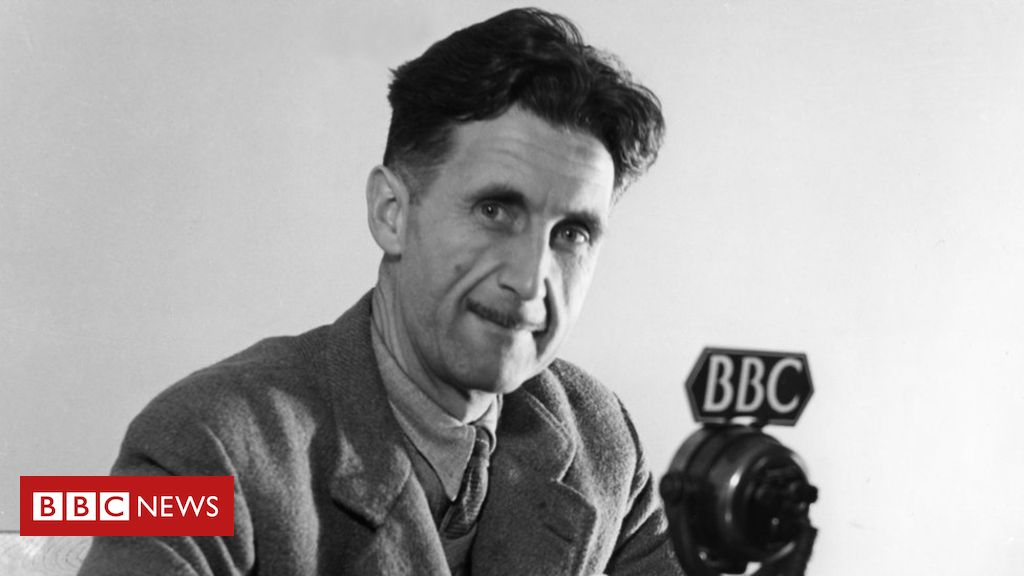
George Orwell, the chosen pen name of Eric Blair, is one of the best known writers of the 20th century and even people who have never read any of his writings are aware of his influence. John Rodden and John Rossi outline the immediate post-war period that saw Orwell publish his final and best-known work:

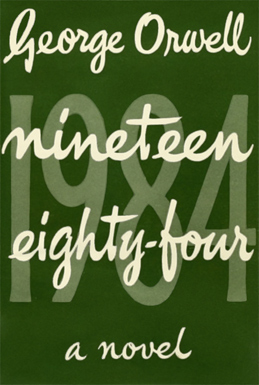
Seven decades ago on June 8, George Orwell’s Nineteen Eighty-Four exploded on the cultural front—fittingly enough, just two months before the Soviet Union’s first successful atomic test that August, which broke America’s nuclear monopoly. Orwell’s warning was urgent — and timely. Almost overnight, in the wake of the surrender of Germany and Japan that ended World War II in 1945, a new war—the so-called Cold War — had emerged. (Orwell is often credited with coining the term.)

The Cold War pitted the capitalist West against the communist East, above all the United States against the USSR (and soon China). Just three weeks before the publication of Nineteen Eighty-Four, the Soviet Union lifted the Berlin Blockade, thereby avoiding a potentially deadly showdown with the West that might have triggered World War III. Two weeks later, on May 23, the Federal Republic of Germany (West Germany) was officially established, effectively ending prospects in the near future of German reunification. On the very day of Nineteen Eighty-Four‘s publication, June 8, fears swept through liberal America of a growing Red Scare when a leaked document named numerous celebrities as Communist Party members (e.g., Helen Keller, Dorothy Parker, Fredric March, Danny Kaye, Edward G. Robinson). That same month, the communist armies of Mao Zedong captured Shanghai, and less than six months later on October 1, declared victory in the civil war against the American-backed Nationalists and the founding of the People’s Republic of China.

What educated person is not at least vaguely familiar with the language and vision of Orwell’s novel — even if he or she does not recognize the source? Indeed the very ignorance of the source represents an inadvertent tribute to the power of Orwell’s language and vision. Like Shakespeare’s poetry (“All the world’s a stage,” “To be or not to be,” “This above all: to thine own self be true”), so deeply have some of Orwell’s locutions become lodged in the cultural lexicon and political imagination that most people no longer recognize their author, let alone the source.

Today, as in the case of Shakespeare, hundreds of millions of people mouth Orwell’s coinages and catchphrases, such as “Big Brother” and “doublethink” — including his name as proper adjective, “Orwellian” (i.e., nightmarish, oppressive). And that’s just in English. Tens of millions more recognize and repeat them in foreign translations, as I [Rodden] discovered in our travels and teaching in the communist East Germany as well as in Asia. Rudimentary acquaintance with such locutions is regarded as a sine qua non of cultural literacy in English — even today, when prolefeed (mindless chatter) floods the print columns and dominates the airwaves.

Nineteen Eighty-Four represents Orwell’s Orwellian vision — in the form of a fictional anti-utopia (or “dystopia”) — of what a nightmarish, oppressive future might hold. It projects a world 35 years away — half the biblical lifespan of three score and ten. Having completed his novel by the end of 1948, Orwell flipped the last two digits to underscore his anti-utopian theme of a world turned upside down and inside out. Or so many scholars have reasonably claimed. The date resultant from the flipped digits also gave the novel its immediacy. Previous anti-utopias, such as Aldous Huxley’s Brave New World (1932), had cast their ominous scenarios far into the future, which lessened their dramatic impact and tended to render them entertaining thought experiments. (Huxley’s action is set in the 26th century.) By contrast, Orwell’s dire future is too close for comfort — and depicts the planet in the immediate aftermath of a global nuclear war that has nearly annihilated the human species. His vision thus projects a world in which middle-aged readers in 1949 might find themselves in old age — and certainly their children and grandchildren were likely to witness it. (If he had lived, Orwell himself would have still been just 80 years old on April 4, 1984, when the story opens.)

Shieldwalls

Filed under: Greece, History, Military — Tags: , , , — Nicholas @ 02:00

Lindybeige
Published on 24 Mar 2011

This may address many of the comments I had for my spears video. Many of my theories are based on the I think fairly reliable notion that people in the past were similar to people today in that they tended towards a desire for self-preservation, and away from reckless bravery.

http://www.LloydianAspects.co.uk

QotD: Modern middle-class “cosmopolitans”

Filed under: Education, Politics, Quotations, USA — Tags: , , — Nicholas @ 01:00

We must not sneer at Jennifer and Jason, many readers are sure to point out, for choosing IKEA. Their incomes, though high in the global scale, are likely to be lower than their parents’ were, and they often have to move in order to climb the employment ladder. It is only reasonable for them to buy something inexpensive, transportable, and replaceable. IKEA fulfills an important niche in the middle-class market — for cheap furniture that still retains a semblance of respectability. The company has exploited this market to become the global empire that Sweden never had, a kind of Viking revenge on the modern age.

Still, there is a good chance that Jennifer and Jason actually like their IKEA dressers, and prefer them to the old oak chest that their grandparents tried to foist on them. Indeed, the extraordinary popularity of IKEA testifies not only to its convenience but to its ability to appeal to the middle-class self-image. Jennifer and Jason are drawn to IKEA because it reflects who they are: they too are modern, movable, and interchangeable, their wants satisfiable in any neighborhood with a food co-op and a coffee shop. More fundamentally, Jennifer and Jason are untraceable, a “composite material” made from numberless scraps and pieces. They have a long catalog of home towns, and their accents are NPR neutral. They can probably rattle off the various nationalities in their family trees — Dutch, Norwegian, Greek, and Jewish, maybe some Venezuelan or Honduran for a little color. From these backgrounds they retain no more than a humorous word or phrase, a recipe, or an Ellis Island anecdote, if that. They grew up amidst a scramble of white-collar professionals and went to college with a scramble of white-collar professionals’ kids. Their values are defined mainly by mass media, their tastes adorably quirky but never straying too far from their peers’, and like the IKEA furniture that they buy in boxes, they too cut themselves into manageable, packaged pieces and market themselves online. They are probably “spiritual but not religious.” They have no pattern or model of life that bears any relation to the past before the internet. For all intents and purposes, they sprang up de novo in the modern city. Whereas the Veneerings’ high fashion covered over an essential vulgarity, Jennifer’s and Jason’s urbane style masks a hollowness.

It may be tempting to call Jennifer and Jason, and the the group of people whom they represent, “cosmopolitans.” (And indeed, IKEA, with its vaguely exotic Swedish names, provides a dash of cosmopolitanism on the cheap.) However, Jennifer and Jason are something newer and more bizarre than cosmopolitans: as Ross Douthat aptly pointed out in the wake of the Trump election, the increasingly insulated college-educated classes of the coastal cities do not grapple with real, substantive differences in beliefs and values, associating instead with cliques of like-minded classmates. In addition, classic cosmopolitans seek out what is best in others’ traditions while showing a fierce pride in their own — a Jordanian extolling the majesty of Petra, a Mexican diplomat breaking into lines of Octavio Paz, etc. Westerners like Jennifer and Jason show no such pride or attachment, instead leaping at opportunities to mock the foibles of their native lands.

Conversely, we must also avoid cheap epithets. The word “cosmopolitan” is a double-edged sword – long a shibboleth for worldly sophistication, it has lately turned upon its makers, serving as a political weapon against urban liberals; it is not surprising that a Trump spokesman recently attacked the “cosmopolitan bias” of a journalist who questioned the White House’s immigration policies. There is nothing particularly new or insightful about attacking urbanites tainted by association with the foreign, like the Judean exiles railing against the silken whores of Babylon. Still, as shallow and hackneyed as this rhetorical strategy might be, it packs a populist punch because the very concept of “cosmopolitan” is purely relative: since no one, legally speaking, is a citizen of the world, one can be “cosmopolitan” only in contrast to someone else – a “provincial” in the Victorian terminology, or a “xenophobe” in contemporary talk. In other words, the idea of cosmopolitanism carries an unavoidable subtext of class superiority.

Samuel Biagetti, “The IKEA Humans: The Social Base of Contemporary Liberalism”, Jacobite, 2017-09-13.


October 5, 2019

Legends Summarized: El Dorado

Overly Sarcastic Productions
Published 4 Oct 2019

El Dorado! A shining golden city packed with promises of wealth, power and everlasting glory. An unspoiled paradise deep in the jungle, the PERFECT destination for treasure-hunters and anthropologists alike. Something that perfect is something EVERYONE wants to be real.

Aaaaand that’s the trick, isn’t it? Wanting something that badly isn’t healthy. Just ask the conquistadors!
(Oh wait, we can’t – because so many of them died on fruitless quests for El Dorado. And also it’s been five hundred years and they’d all be dead anyway)

PATREON: https://www.Patreon.com/OSP

MERCH LINKS: https://www.redbubble.com/people/OSPY…

OUR WEBSITE: https://www.OverlySarcasticProductions.com
Find us on Twitter https://www.Twitter.com/OSPYouTube
Find us on Reddit https://www.Reddit.com/r/OSP/

Sultan Knish – Hillaryland must be the saddest place on earth

Filed under: Politics, USA — Tags: , , — Nicholas @ 05:00

I think it would be safe to say that Daniel Greenfield does not anticipate Hillary Clinton making a move to enter the Democratic primaries for the 2020 election, based on this:

Former Secretary of State Hillary Clinton speaking with supporters at a campaign rally at the Intramural Fields at Arizona State University in Tempe, Arizona on 2 November 2016
Photo by Gage Skidmore via Wikimedia Commons.

They say that Disneyland is the happiest place on earth, but Hillaryland must be the saddest.

What is Hillaryland? It’s a social network “aiming to connect all the people who’ve worked for Hillary Rodham Clinton during her more than 40 years of public service.” It’s run by “volunteers” and offers a plain white $15 Hillaryland tote bag which it claims that it’s selling “at cost” and “not for profit”.

How the mighty have fallen.

Once upon a time, Hillary and her people gaslit the country on the big issues. Now they’ve gone from Benghazi to trying to convince a declining handful of suckers that $15 is the cost price for a tote bag.

Hillaryland is the sad successor to Clintonworld networks like the Clinton Foundation which connected world leaders, foreign criminals and a prospective president. The alumni network is now a joke. The Clintons will never hold public office again. Hillaryland isn’t an alumni network, it’s a political leper colony run by “volunteers” too dumb to realize that the S.S. Slick Willy will never rise again.

Hillaryland promotes such promising ventures as Nasty Women Serve which holds an annual Hillary Rodham Clinton Day of Service. The highest level of service in Hillaryland is hosting a “house party” on November 8, which is National Hillary Day, also known as the day of Hillary’s downfall and defeat. The party will have, “in the true spirit of HRC — some Chardonnay” and will go on “until the wine runs out”.

Only Nazi war criminals in Argentina have sadder and more pathetic reunions than Hillary minions.

Nazis and potheads have 4/20 to get high. Hillary fans have 11/8 to get drunk on white wine. And both of them even blame the Russians for the defeat of their miserably corrupt murderous regimes.

And where’s Madame Fuhrer?

Hillary stopped by the Venice Biennale, the umbrella organization that includes the Venice Film Festival, allegedly a favorite stalking ground of old Clinton pal, Harvey Weinstein, to attend the exhibit of “HILLARY: The Hillary Clinton Emails.”

For an hour, Hillary sat in a replica of the Oval Office pretending to read her own emails as part of an art project. To make her humiliation more complete, HILLARY was staged at the Despar Teatro Italia, a former theater turned into a supermarket. Confused shoppers watched a former American presidential contender pretending to be the President of the United States in an Italian supermarket.

There’s your chicken, your canned tomatoes and your pasta. Upstairs is a crazy lady who thinks she’s the President of the United States. Go easy on the chardonnay, you don’t want to end up like her.

Even Lady Macbeth went mad with more dignity than Hillary Clinton.

The Oval Office recreated in an Italian supermarket is only the second most famous piece of eponymous Hillary art. The National Museum of Women in the Arts also features a 6-foot-tall painting of a black fabric swatch named Hillary gifted to it by Heather and Tony Podesta. Heather and Tony have since split up. And Tony, a Hillarylander, got caught up in the Russia scandal and shut down his lobbying operation.

Sic transit gloria clintonmundi.

The Fillister Plane | Paul Sellers

Filed under: Tools, Woodworking — Tags: , , — Nicholas @ 04:00

Paul Sellers
Published 4 Oct 2019

Paul has been using the fillister plane for over 50 years because of its versatility, compactness and reliable neatness. The fillister plane is simply a rebate or rabbet plane and can be called such in the day-to-day of benchwork. In this video Paul gives you a detailed look at the plane’s mechanics and efficiency when rebating.

Want to learn more about woodworking? See https://woodworkingmasterclasses.com or https://commonwoodworking.com for step-by-step videos, guides and tutorials. You can also follow Paul’s latest ventures on his woodworking blog at https://paulsellers.com/

Losing our religion

Filed under: Economics, Environment, Religion — Tags: , — Nicholas @ 03:00

Arthur Chrenkoff found another report on the inverse relationship between development and religious belief:

A few weeks ago I wrote a longish blog post arguing that for many people in the developed world environmentalism has become a religion, filling up the gap in spirituality left by the decline of Christianity. I don’t claim any originality or new insight in this observation; it has been noted many times before, including by my friend, former artilleryman and now man of God, Rev Donald Sensing, and it has made an appearance quite a few times subsequent to my piece, a propos Greta Thunberg’s performance at the United Nations and the reaction it inspired around the (developed) world.

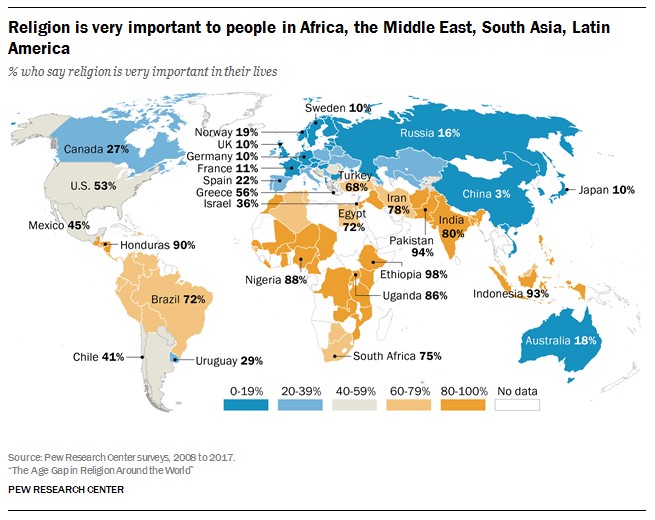
Today, I chanced upon another interesting analysis by Pew Research Center, about religious belief and commitment around the world. Results are not surprising but are nevertheless interesting, including this world map:

Unfortunately, Pew does not provide additional data on those for whom religion might be “important” or “somewhat important” so as to paint a slightly fuller picture of religious sentiment, but the results illustrated above are probably quite indicative. The developed world is well and truly secular now, with the United States and Greece being the only outliers (and by a long mile), while most of the developing world (with the notable exception of China after seven decades of communism) remains extremely religious. Thus, Pew notes that “if current trends continue, countries with high levels of religious affiliation will grow fastest. The same is true for levels of religious commitment: The fastest population growth appears to be occurring in countries where many people say religion is very important in their lives.”

As the main topic of this Pew study is the age gap in religious faith around the world, it should be noted that the younger generations in the developed world are even less religious than their elders, often significantly less, putting the already low rates across the West in an even starker perspective (by contrast, throughout most of the developing world, there is little, if any, gap in religious commitment between the young and the old).

Dreyse Model 1835 Needlefire Breechloading Pistol

Filed under: Germany, History, Technology, Weapons — Tags: , , , — Nicholas @ 02:00

Forgotten Weapons
Published on 19 Aug 2019

RIA on YouTube: https://www.youtube.com/user/RockIsla…
RIA on Instagram: https://www.instagram.com/rockislanda…

Johann Nicolaus Dreyse, later promoted to the aristocracy as Nicolaus von Dreyse, designed the first mainstream military breechloading rifle. His rifle was adopted by Prussia and changed military history, but this was not his only work. Dreyse also endeavored to sell guns commercially, both rifles and handguns. This is an example of one of his first, the Model 1835. It is a single shot breechloader, with the chamber consisting of a rotating tumbler. The firing mechanism is identical in concept to that of his Model 1841 rifle, just scaled down for the smaller pistol. The piece uses a power charge of just 6 grains, but its breechloading action was quite advanced for the 1830s!

http://www.patreon.com/ForgottenWeapons

Cool Forgotten Weapons merch! http://shop.bbtv.com/collections/forg…

Contact:
Forgotten Weapons
PO Box 87647
Tucson, AZ 85754

QotD: Individual liberty

Filed under: Liberty, Quotations — Tags: , , — Nicholas @ 01:00

The object of this Essay is to assert one very simple principle, as entitled to govern absolutely the dealings of society with the individual in the way of compulsion and control, whether the means used be physical force in the form of legal penalties, or the moral coercion of public opinion. That principle is, that the sole end for which mankind are warranted, individually or collectively in interfering with the liberty of action of any of their number, is self-protection. That the only purpose for which power can be rightfully exercised over any member of a civilized community, against his will, is to prevent harm to others. His own good, either physical or moral, is not a sufficient warrant. He cannot rightfully be compelled to do or forbear because it will be better for him to do so, because it will make him happier, because, in the opinions of others, to do so would be wise, or even right. These are good reasons for remonstrating with him, or reasoning with him, or persuading him, or entreating him, but not for compelling him, or visiting him with any evil, in case he do otherwise. To justify that, the conduct from which it is desired to deter him must be calculated to produce evil to some one else. The only part of the conduct of any one, for which he is amenable to society, is that which concerns others. In the part which merely concerns himself, his independence is, of right, absolute. Over himself, over his own body and mind, the individual is sovereign.

John Stuart Mill, On Liberty, 1859.

October 4, 2019

Rise of Evil – From Populism to Fascism | BETWEEN 2 WARS I 1932 Part 4 of 4

Filed under: Europe, Germany, History, Politics — Tags: , , , , , — Nicholas @ 06:00

TimeGhost History
Published 3 Oct 2019

Democracy finds itself in a crisis as the 1930s take off. On a global scale, Fascist or otherwise authoritarian and repressive movements and governments seek to destroy the pillars of liberal society.

Join us on Patreon: https://www.patreon.com/TimeGhostHistory

Subscribe to our World War Two series: https://www.youtube.com/c/worldwartwo…

Hosted by: Indy Neidell
Written by: Spartacus Olsson and Joram Appel
Directed by: Spartacus Olsson and Astrid Deinhard
Executive Producers: Bodo Rittenauer, Astrid Deinhard, Indy Neidell, Spartacus Olsson
Creative Producer: Joram Appel
Post-Production Director: Wieke Kapteijns
Research by: Joram Appel and Spartacus Olsson
Edited by: Wieke Kapteijns
Sound design: Marek Kamiński

Sources icons: Graphic Enginer, Luis Prado
Colorizations: Daniel Weiss, Cassowary Colorizations, Klimbim

A TimeGhost chronological documentary produced by OnLion Entertainment GmbH.

From the comments:

TimeGhost History
1 hour ago (edited)
This episode might be a little more academic than our other episodes, but we wanted to cover the global Fascist surge AND that it’s just too simple to refer to all totalitarian states and authoritarian and repressive movements as “Fascist”. Fascism is a very complicated concept that is still today being debated by political scientists and historians, as well as politicians and journalists. We try to give some insight to what Fascism is, what it isn’t and what all those movements and countries were, if not Fascist. We appreciate that you might have a different opinion as to what Fascism was or is, and we’re interested to hear your opinion. Just keep it civil and try to stay away from modern political debates, as that is not what we’re here for. EDIT: As for comments claiming that Fascism was left-wing/socialist, watch the video again. Don’t bother commenting if you can’t bring a proper argument to the table.
Cheers,
Joram

“Economics is … the science of not being able to have your cake and eat it”

Filed under: Economics, Environment, Health — Tags: , , , — Nicholas @ 05:00

Philip Booth on Greta Thunberg’s message and its economic over-simplifications:

In many senses, economic problems are more complex than scientific problems and Thunberg is, implicitly at least, pronouncing on economic matters. Whilst knowledge about climate science is uncertain, a judgement has to be and can be made on the balance of evidence. But economic decisions involve trade-offs. Economics is, as Lionel Robbins put it, the science of not being able to have your cake and eat it. We cannot both decrease carbon emissions hugely and enjoy standards of living increasing at the rate that would have been possible if emissions were not reduced.

It is tempting the believe the green rhetoric that we will all have fluffy green jobs and a green standard of living without any hardship from reducing emissions. We cannot. Reducing carbon emissions quickly to zero means that we will have much less of everything else. We might prefer decarbonisation to other goods and services, but it is not a cost-free choice. We considering this, we should remember that the average income in the UK is ten times the average income in the rest of the world. When other people face these trade-offs the sacrifice of decarbonisation is that much greater.

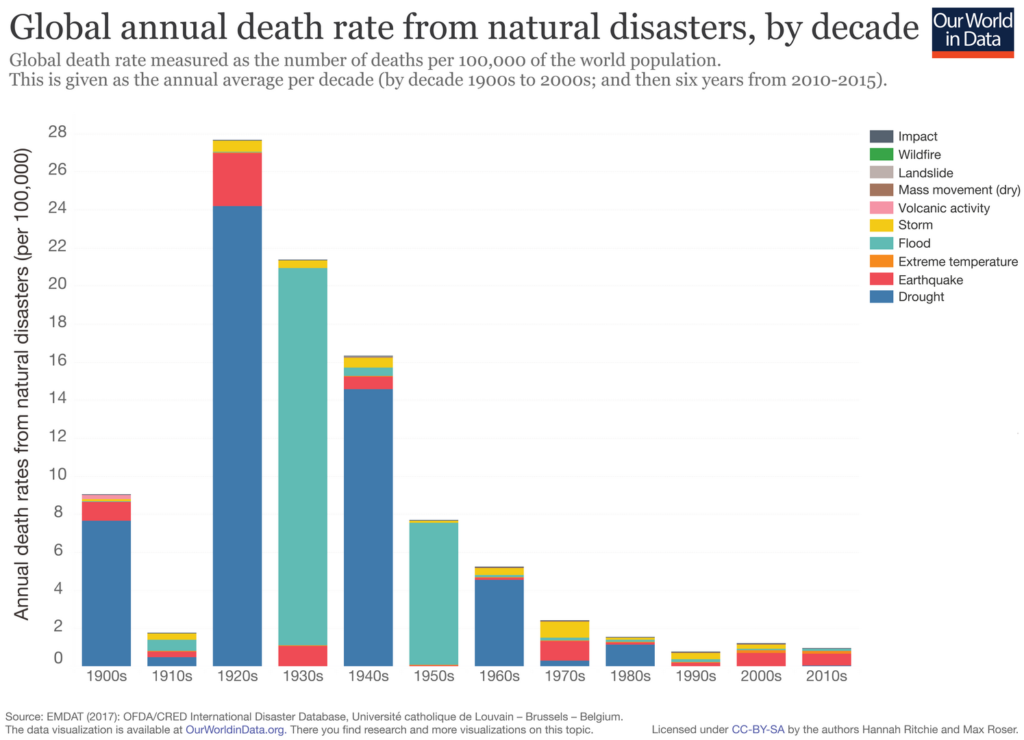
One of the advantages of being richer is that we are more resilient to natural disasters. It follows from this that there is a trade-off between decarbonisation, which might lead to fewer natural disasters, and our ability to cope with them, which might reduce if we become less rich. As we have become richer, deaths from natural disasters have plummeted. The figure shows the fall in deaths in natural disasters over the last century – they have reduced by, perhaps, 90 per cent.

The use of air conditioning illustrates this trade-off in a rather stark way. In a letter on the environment written by Pope Francis in 2015 called Laudato si, the pontiff strongly criticised the adoption of air conditioning in the strongest terms. An academic paper on air conditioning in the US produced such remarkable results that the abstract is worth quoting at length:

    “the mortality effect of an extremely hot day declined by about 80% between 1900-1959 and 1960-2004. As a consequence, days with temperatures exceeding 90°F were responsible for about 600 premature fatalities annually in the 1960-2004 period, compared to the approximately 3,600 premature fatalities that would have occurred if the temperature-mortality relationship from before 1960 still prevailed. Second, the adoption of residential air conditioning (AC) explains essentially the entire decline in the temperature-mortality relationship. In contrast, increased access to electricity and health care seem not to affect mortality on extremely hot days.”

Air conditioning leads to higher carbon emissions and, most likely, higher global temperatures. But the increase in resilience arising from air conditioning is astonishing – it has led to an 80 per cent drop in deaths from heat.

“Metal Crüe” – The History of Metal – Sabaton History 035 [Official]

Filed under: History, Media — Tags: , , , — Nicholas @ 04:00

Sabaton History
Published 3 Oct 2019

This is a little different from our usual videos. We dive into the Sabaton song “Metal Crüe”, an ode to the Metal Legends that inspired Sabaton. Indy gives his subjective take on the musicians that defined a genre.

Support Sabaton History on Patreon: https://www.patreon.com/sabatonhistory

Listen to Attero Dominatus (where “Metal Crüe” is featured):

CD: http://bit.ly/AtteroDominatusStore
Spotify: http://bit.ly/AtteroDominatusSpotify
Apple Music: http://bit.ly/AtteroDominatusAppleMusic
iTunes: http://bit.ly/AtteroDominatusiTunes
Amazon: http://bit.ly/AtteroDominatusAmzn
Google Play: http://bit.ly/AtteroDominatusGooglePlay

Watch the Official Lyric Video of “Metal Crüe” here: https://www.youtube.com/watch?v=7Hd1Q…

Check out the trailer for Sabaton’s new album The Great War right here: https://www.youtube.com/watch?v=HCZP1…

Listen to Sabaton on Spotify: http://smarturl.it/SabatonSpotify
Official Sabaton Merchandise Shop: http://bit.ly/SabatonOfficialShop

Hosted by: Indy Neidell
Written by: Markus Linke and Indy Neidell
Directed by: Astrid Deinhard and Wieke Kapteijns
Produced by: Pär Sundström, Astrid Deinhard and Spartacus Olsson
Creative Producer: Joram Appel
Executive Producers: Pär Sundström, Joakim Broden, Tomas Sunmo, Indy Neidell, Astrid Deinhard, and Spartacus Olsson
Maps by: Eastory
Edited by: Iryna Dulka
Sound Editing by: Marek Kaminski

Archive by: Reuters/Screenocean https://www.screenocean.com
Music by Sabaton.

Sources:
The Song Remains The Same movie courtesy of Warner Bros.
– Nazareth photo by Ken Papai
– Thin Lizzy photo courtessy of Beeld En Geluid Wiki
– Thin Lizzy by Richard Marchewka
– Tony Iommy by Ronald Ali-Khan
– Deep Purple concert by Friedrich Magnussen
– Blue Cheer by Jac. de Nijs
– Led Zeppelin by Heinrich Klaffs
– Led Zeppelin in Apollo by Harry (Howard) Potts
– Judas Priest, Rob Halford by Fernando Catalina Landa
– Mike “Ozzy” Gibbens
– Kiss by Carl Lender
– Lee Kerslake and Uriah Heep photos by Heinrich Klaffs

An OnLion Entertainment GmbH and Raging Beaver Publishing AB co-Production.

© Raging Beaver Publishing AB, 2019 – all rights reserved.

Foreign aid now an issue in the federal election

Filed under: Cancon, Government, Politics — Tags: , , — Nicholas @ 03:00

The Milk Dud actually said something worthwhile on the campaign trail the other day:

Andrew Scheer, paid tool of Big Dairy, chugs some milk during a Press Gallery speech in 2017. I’ve called him the “Milk Dud” ever since.
Screencapture from a CTV video uploaded to YouTube.

Andrew Scheer’s announcement that a Conservative government would cut foreign aid by 25% has been met with the usual wailing and gnashing of teeth by the out-of-touch elites.

Yet, it’s a policy that all Canadians can support because it will benefit all of us.

As I’ve said many times, the Canadian government is called “Canadian” for a reason.

It exists to serve the Canadian People, not to serve foreign, often corrupt, countries.

When we have such serious problems here at home, including a growing opioid epidemic, veterans who are homeless and struggling, and many Indigenous communities that lack access to good housing and even clean drinking water, then it’s obvious to everyone that we need to focus our resources here at home.

Personally, I would like to see all foreign aid (aside from disaster relief) eliminated and redirected towards Canadian citizens.

Still, the Conservative proposal has (along with earlier calls by the PPC to end all foreign aid) finally shifted the conversation around foreign aid, and will help wake up many Canadians to the reality that a large amount of our tax dollars are given away to foreign countries while Canadians here at home are suffering.

It’s appalling that the Canadian government sends money to foreign regimes (where the money is often appropriated by corrupt leaders and used for things very different than aiding the poor and destitute) while First Nations communities here in Canada still lack basic drinking water and sanitation facilities.

How many clamps do you REALLY need? Woodworking basics.

Filed under: Tools, Woodworking — Tags: — Nicholas @ 02:00

Steve Ramsey – Woodworking for Mere Mortals
Published on 30 Aug 2019

“You can never have enough clamps!” Is that really true? In fact, you can accomplish almost anything with just 9 key clamps. Plus, I’ll talk about 3 overrated clamps.

Set up shop for less than $1000. Download my FREE GUIDE ► https://theweekendwoodworker.com/tww-…

« Newer PostsOlder Posts »

Powered by WordPress