
[…] the ripples of battle in their formal sense are guided by the presence of historians, and that means originally Westerners, and more recently in large part Europeans and Americans. And such distortions do not always play out in bias toward Westerners, especially in the present age. In April 2002 the Israeli Defence Forces entered the West Bank community of Jenin to hunt out suspected suicide-murderers, whose co-members had blown up hundreds of Israeli civilians over the prior year. Although fewer than sixty Palestinians were killed in Jenin — the great majority of them combatants — the world media seized upon the street fighting, dubbing it “Jeningrad” as if they were somehow the moral equivalent of one million Germans and Russians lost at Stalingrad. Yet just days after the Israeli withdrawal from Jenin, Pakistan squared off against India. The stakes were surely far higher: One-fifth of the world’s population was involved. Both sides were nuclear powers and issued threats to use their arsenals. In the prior year alone nearly four times more Indians and Pakistanis were killed than Palestinians and Israelis. By any calculation of numbers, the specter of the dead, the geopolitical consequences, or the long-term environmental health of the planet, the world should know all the major cities in Kashmir rather than a few street names in Jenin. And if the world sought to chronicle destruction and death in an Islamic city, then by any fair measure it should have turned its attention to Grozny, where an entire society of Muslim Chechnyans was quite literally obliterated by the Russian army.
The idiosyncracies of historical remembrance of battle do not hinge alone on the presence of a Socrates or Teddy Roosevelt in the ranks. Sometimes there are wild cards of culture and politics as well. In this case and at this time, the fact that Israelis fit the stereotype of affluent and proud Westerners abroad while the Palestinians were constructed as impoverished and oppressed colonial subjects brought to the equation the sympathies of influential Americans and Europeans in the media, universities, and government — the prominent and sometimes worrisome elites who determined to send their reporters, scholars, and diplomats to Jenin rather than to Islamabad or Grozny.
Victor Davis Hanson, Ripples of Battle, 2004.
January 10, 2020
QotD: Deciding what is “newsworthy”
January 9, 2020
Operation Compass 1940-41 | BATTLESTORM North African Campaign Documentary
TIK
Published 21 Dec 2015The most in-depth look at Operation Compass out there! Using animations and detailed maps, let’s find out what happened in one of the greatest British (and Commonwealth) victories of the war and who was responsible for the destruction of the Italian 10th Army. This video covers the start of the North African Campaign up to the Battle of Beda Fomm.
Sources:
Barnett, C. The Desert Generals. Weidenfeld & Nicolson, 2011.
Bierwirth, J. Beda Fomm: An Operational Analysis. Pickle Partners, 1994.
Christie H. Fallen Eagles: The Italian 10th Army in the Opening Campaign in the Western Desert, June 1940. Pickle Partners 1999.
Dimbleby, J. Destiny in the Desert. Britain 2013.
Moorehead, A. The Desert War: The Classic Trilogy on the North Africa Campaign 1940-43. Aurum Press, 2014.
Playfair, I.S.O. The Mediterranean and Middle East Volume 1: Early Successes against Italy [to May 1941]. 1954.
Wahlert, G. The Western Desert Campaign. Australia, 2011.Music is my own!
Addressing overblown fears of “regulatory divergence” after Brexit
Tim Worstall explains why worries about “regulatory divergence” are not very sensible:
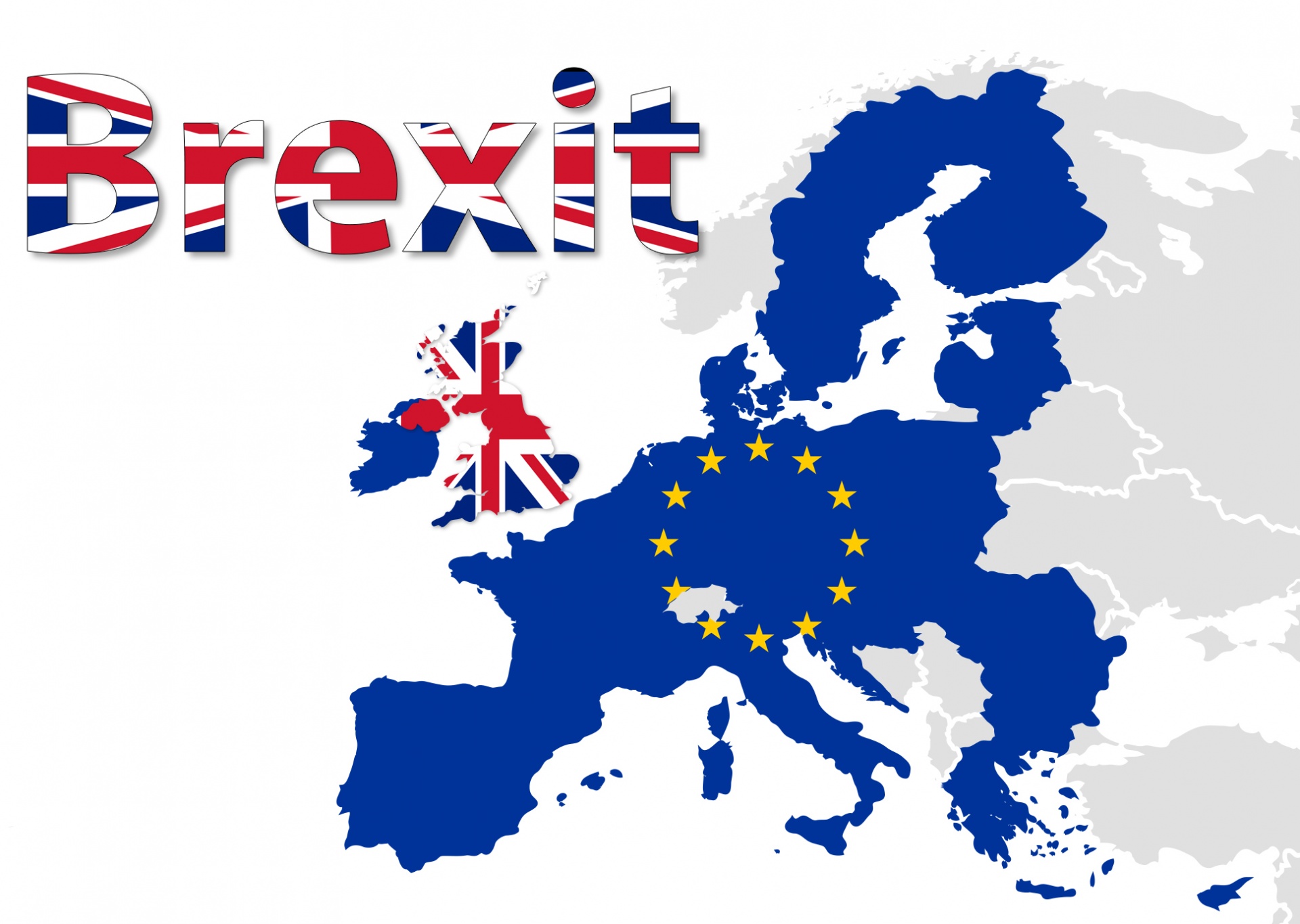
So now we get to – having agreed that Brexit is going to happen – having to decide what the new trade deal is going to be. At which point there are all sorts of people insisting that we shouldn’t have regulatory divergence. Yet gaining that regulatory divergence is the very point of our having Brexit. We want to be able to do things differently than the European Union.
Thus this sort of worry is thinking about it the wrong way around:
Brexit is nearly done, but don’t expect an easy ride on trade. The EU is terrified of regulatory divergence
We are still very much in the early honeymoon period of the new Government, when flush with a stunning election victory all things seem possible. Even the traditionally hostile Financial Times seems to have been partially won over by the infectious optimism that for now flows through the nation’s veins, warming to some of the opportunities for positive change that Brexit may allow.
Yet at some stage, with the feelgood mood colliding with harsh realities, there is going to be a comedown. The first of these awakenings is likely to centre on trade.
In reaching a trade deal with the EU by the end of the year as promised, the Government will either have to compromise on scope for regulatory divergence, …
The point being that since the divergence is the very thing we want it’s not the thing to compromise upon.
Start from the very basics. There is no version of voluntary trade that is worse than autarky. There are versions of trade that are better than simple unilateral free trade. Like, for example, the other people adopting unilateral free trade too.
So, our baseline starting point for any negotiation on trade is that any trade is better than none, but we must measure any specific proposal against the effects of unilateral free trade. If it would be better to have this extra thing then all well and good, let’s have it. But if the conditions attached to that make the overall deal worse than the unilateral position then we should not have it.
For example, UK farm goods gaining tariff and quota free access to the EU would be a nice thing to have. But a likely cost of that is that British consumers would not be allowed tariff and quota free access to the farm goods of the rest of the world. The cost of that second is greater than the benefits of the first – we don’t do it therefore.
On regulation much the same becomes true. The negotiating stance at least. What would be the paradisical effect of a system of perfect regulation? Not that one exists nor ever will but that’s what we need to imagine. Then, anything we’re asked to accept which is worse than this has to be tested for whether what we lose from the restriction is worth what we then gain elsewhere.
Given EU regulation this is always going to lead to the answer “No”.
Find the best deals at the antique store
Rex Krueger
Published 8 Jan 2020Tool hunting at antique stores is hard, but sometimes it’s the only option. Use these tips to find the best deals on solid woodworking tools.
More video and exclusive content: http://www.patreon.com/rexkrueger
(more…)
The “Ostrich” school of Canadian foreign policy
Ted Campbell on what former Canadian diplomat David Mulroney calls the “Ostrich” school:
John Ibitson, writing in the Globe and Mail, suggests that Justin Trudeau might want to try what former diplomat, national strategic planner in the Privy Council Office, and commentator David Mulroney refers to (on social media) as …
… “the ‘Ostrich’ school of Canadian foreign policy.” It has, he says, two pillars:
First, “Canada has no interests/allies“; and
Second, “The best way to deal with bad regimes, bad people is to pretend they’re nice.”
Mr Ibbitson himself says that it may be impossible to work “with European and Asian allies, including Japan, to forge a coherent response that provokes neither the Americans nor the Iranians.”
The situation in the Middle East is, as I have explained several times, hideously complex. President Trump may have made it worse … although it’s hard for me to see how any added complications really matter all that much. The socio-cultural and religious hatreds that bedevil the region are likely beyond making “worse.”
In fact, there may be an argument that a nice, all-out, albeit contained, Middle East war might be useful. Perhaps the Iranians and Saudis and Iraqis and Syrians and Yemenis and so on need to sort one another out in the way that tends to produce lasting results: on a bloody battlefield … it worked for Europe, more than once, in 1648, in 1815 and again in 1945.
John Ibbitson says that “Iran’s rage over the U.S. assassination of Qassem Soleimani risks dragging Canada and the rest of the Western alliance into a new confrontation in the Middle East, courtesy of Donald Trump … [that true, as far as it goes, and he adds] … Most Canadians would want no part of such a conflict, especially since the U.S. President might simply be seeking to distract attention from his impending impeachment trial in the Senate … [and that, the first part about Canadians wanting no part of any conflict, is also true, but President Trump’s motives are irrelvant]. The fact is that he has ignored many Iranian provocations while he attempts, vainly, in my opinion, to disengage America from the wider world. The attack on a US embassy seems to have crossed a “red line.”
[…]
But, John Ibbitson says, “Mr. Trump’s high stakes gamble – that killing one of the most senior figures in the Iranian regime will deter rather than provoke further acts of aggression from Iran – could lead to some kind of asymmetrical war, with the U.S. military attacking Iranian targets, and Iran responding through militias and proxies in Iraq and possibly in North America and Europe … [true enough, and he asks] … What would Mr. Trump expect from Canada in such a conflict?” That’s the key question.
My guesstimate is that President Trump will ask little or nothing, militarily, because his military chiefs of staff will not even have mentioned Canada when they proffer lists of nations that might help or hinder US efforts. Canada is not on any of their lists of countries that matter. Diplomatically, however, I think we do matter to the USA and I would not be surprised if the phone lines have been busy all weekend as US officials tell (rather than ask) Canadian officials to get our government “onside” with the USA. The Americans hold ALL the high cards in the game of power.
I’m sure that Prime Minister Trudeau will follow John Ibbitson’s advice and adopt the “Ostrich” strategy … head buried in the sand, pretending that Canada has neither interests nor allies and pretending that evil people are good.
Perhaps co-incidentally with the “revenge” Iranian missile attacks on Iraqi airbases known to have US troops in the area, a Ukraine International Airlines Boeing 737-800 passenger jet crashed shortly after take-off from Tehran airport. Officially, the Iranian authorities are saying it was due to catastrophic mechanical breakdown, but they have refused to hand over the aircraft’s “black box” flight recorders for analysis. All of the 176 passengers and crew died in the crash, including 63 Canadians. It has been suggested by many that the timing was not a co-incidence and that the plane was likely hit by an Iranian surface-to-air missile due to the heightened state of tension in Iranian airspace during and after the missile launches against Iraq. Colby Cosh has more:
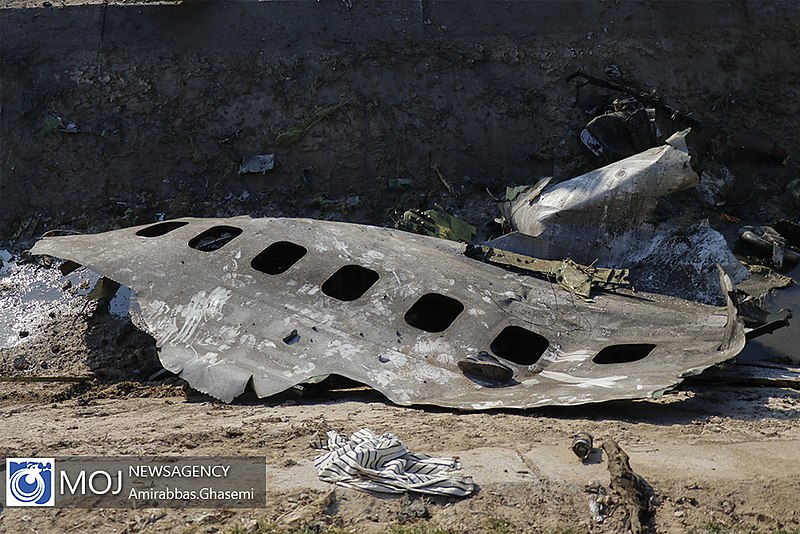
Some of the wreckage of Ukraine International flight 752 near Tehran, Iran.
Photo from MOJ Newsagency via Wikimedia Commons.
I am writing these words at a strange moment Wednesday morning. The president of the United States has just been on television, reassuring the American public that the crisis inspired by the assassination of Iranian general Qassem Soleimani has reached a satisfactory equilibrium. Iran made a demonstrative show of force against U.S. installations in the Middle East that killed nobody. Honour has been satisfied. Relief, among American observers, is general.
Meanwhile, Canada is mourning the deaths of dozens of its citizens in a passenger jet crash on Iranian soil. Perhaps it is a terrible coincidence. Stranger things have happened. But if you are old enough to remember the shooting down of Iran Air Flight 655 by the U.S. Navy missile cruiser USS Vincennes in 1988, you are old enough to doubt it.
The Vincennes incident is part of the historical litany that has made news consumers innately distrustful of the first draft of history. The ship was in the Persian Gulf, which at the time was swarming with Iranian gunboats trying to squeeze off the supply of arms to its enemy Iraq. The U.S. Navy had rushed to the area to keep one of the world’s economic arteries open to neutrals. But this had foreseeable consequences — plenty of confusing penny-ante firefights, and some notable accidents, including a puzzling Iraqi attack with air-launched Exocet missiles on an American frigate, USS Stark.
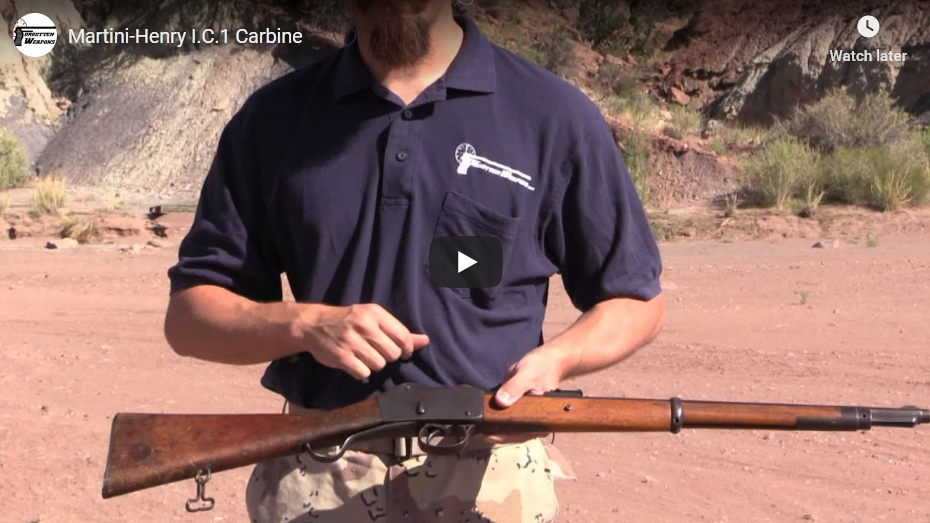
Martini-Henry I.C.1 Carbine
Forgotten Weapons
Published 28 Dec 2014http://www.forgottenweapons.com
Formally adopted in 1877, the I.C.1 Martini-Henry was formally designated the “Arms Interchangeable, Carbine Breech loading Rifled, with clearing rod Martini-Henry Mk1”. The word “interchangeable” refers to its use for both the artillery and cavalry services, instead of needing a separate design for each, as was typical of military forces at the time. It was chambered for the massive .577/450 cartridge, with a 21.3 inch barrel and an overall weight of 7.5 pounds.
I am shooting it today with 1950s Kynoch ammunition, a batch of which came into the US several years ago and can still be found without much trouble. However, it gave me significant hangfires and split cases, and I would not recommend it.
Theme music by Dylan Benson – http://dbproductioncompany.webs.com
QotD: National music
James Lileks, Screedblog, 2005-07-08.
January 8, 2020
Victor Davis Hanson – World War II Leadership
Anang
Published 6 May 2012If you want to read more about WW2 leadership, read Andrew Roberts Masters & Commanders.
Victor Hanson, a professor emeritus of Classics at California State University, Fresno, lectured to a history class on Masters and Commanders at Hillsdale College. In this fall seminar in classical and military history Professor Hanson examined how leaders, both civilian officials and generals on the battlefield, conducted themselves in wartime. That day’s class focused on Franklin D. Roosevelt and Winston Churchill and how those very different American and British leaders learned to work together to defeat Nazi Germany.
Original link: http://www.c-spanvideo.org/program/29…
Trump versus Iran (and significant parts of the US and western media)
Kurt Schlicter‘s take on the way President Trump has been breaking recent US habits in their dealings with Iran:

A burning vehicle at Baghdad International Airport following an American airstrike, early Friday, Jan. 3, 2020. The Pentagon said Thursday that the U.S. military has killed Gen. Qassem Soleimani, the head of Iran’s elite Quds Force, at the direction of President Donald Trump.
Photo from the Iraqi Prime Minister’s Press Office via Wikimedia Commons.
The Iranians had been getting uppity for a while, but then their punks killed an American contractor in a rocket attack on a U.S. base – and let’s not get distracted about whether we should still be there. They killed an American. We are there, and you don’t get a pass on murdering U.S. citizens because we may or may not have a good reason for them still being there. You get dead.
See, for too long we were asking the wrong question when tinpot dictators dared hurt Americans. We asked, “What would a gender-fluid Oppression Studies major at Yale do?” As I have observed before, the correct question is “WWJC do?” – “What would Julius Caesar do?”
Trump ordered hard hits at five Shiite militia weapon sites, and not with any warnings either. They got one of ours, we got about two dozen of theirs. Like the old joke about 1,000 lawyers at the bottom of the sea, that’s a good start.
The Iranians, whose Islamic Revolutionary Guard Corps is the ultimate source of most of the Shiite terror in the world, decided to respond in what they thought was a clever way: send a few thousand of their camo-clad dummies to attack the embassy and hope and pray a bunch of them got mowed down on camera. In the meantime, wave a lot of banners, burn some stuff, and pound on the reinforced glass for the press’s benefit.
But apparently, no one told the “mourners,” as the austere scholars at the endlessly useless New York Times dubbed the members of Islamic Antifa, that they were supposed to get smoked. They went home with the embassy unseized. Getting martyred en masse is not that much fun when you’re just one sucker out of dozens – heck, they may run of virgins.
See, Trump made it clear he was not playing. There would be no Benghazi II: Bagdad Boogaloo on his watch, and he acted well before 13 hours ran on the clock. Rejecting the elite’s preferred model of craven submission to every Third World cretin with a grievance and a camera, the Trump administration flew some Apache gunships over the crowd of unwashed morons, kicking off some flares, and generally sending the unequivocal message that if those SOBs had a problem, the AH-64s had a 30mm solution.
And then the administration sent in 100 Marines, about a company, on Ospreys as a quick reaction force and alerted the ready brigade at Ft. Bragg to start shutting 82nd Airborne Division paratroopers into theater.
Whatever the opposite of “stand down” is, Trump ordered that.
Chauchat: Shooting, History, and Tactics
Forgotten Weapons
Published on 14 Sep 2015http://www.patreon.com/ForgottenWeapons
Hammer price: $13,500The M1915 CSRG, commonly called the Chauchat after its primary designer, has a reputation as the worst gun ever put into military service. That reputation, however, is not deserved. It was not a great weapon, but it was a very serviceable gun for its day. The French needed a light automatic rifle *right now*, and needed it in large numbers. The Chauchat answered that call, and was used to great effect by many French soldiers.
The Chauchat’s poor reputation comes from a couple places, some justified and some not. First off, many US troops trained on M1918 Chauchats built in .30-06, which were poorly made and pretty darn bad guns. They were replaced by 8mm Lebel guns before going into combat, but the bad experiences of training stuck with many Americans. The biggest mechanical flaw in the Chauchat was its magazine. All automatic weapons are heavily dependent on good magazines, and the Chauchat used a magazine that was made of thin metal, easily damaged, and open on the sides for dirt and mud to enter. If the magazines were not treated well, the gun would become hopelessly useless.
In addition, many of the Chauchat guns in the United States today were deactivated at one time, and often badly reactivated. This has nothing to do with their original reliability, but it does a lot to perpetuate their reputation. This particular example is an original gun that does not appear to have ever been deactivated, and it ran flawlessly for me. It will be an excellent example for someone who can appreciate it!

QotD: Diversity in academia
“America’s one-party state”, The Economist, 2004-12-02.
January 7, 2020
What Made The American Civil War So Deadly? | Animated History
The Armchair Historian
Published 20 Jul 2018Check out EmperorTigerStar’s video: https://www.youtube.com/watch?v=8j1sJ…
What Made The American Civil War So Deadly?
Sign up for The Armchair Historian website today:
https://www.thearmchairhistorian.com/Our Twitter: https://twitter.com/ArmchairHist
The Great Courses Plus is currently available to watch through a web browser to almost anyone in the world and optimized for the US, UK and Australian market. The Great Courses Plus is currently working to both optimize the product globally and accept credit card payments globally.
Sources:
Battle Cry of Freedom: The Civil War Era ~ James M. McPherson
The American War: A History of the Civil War Era ~ Gary W. Gallagher
http://www.digitalhistory.uh.edu/disp…
https://blogs.ancestry.com/cm/12-stun…
https://www.battlefields.org/learn/ar…
“HS2 will make the country worse off and should be stopped as soon as possible”
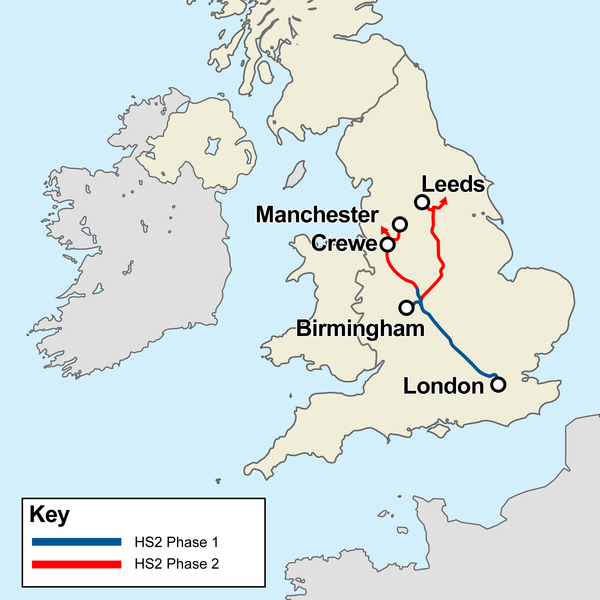
The British government recently reviewed the ever-escalating sums for the proposed HS2 high speed passenger rail connection that began at some £30 billion, then climbed to £50 billion, then £80 billion, and the latest estimate is up to £110 billion. Even by other countries’ high speed rail boondoggles, that is a breathtaking cost escalation. If, as it should, the government cancels the HS2 project, what happens to the money that was budgeted for the fiasco?
The figures used to justify HS2 were “fiddled” and that the project is most unlikely to deliver value for money — that’s the verdict of Lord Berkeley, the deputy chairman of the recent review into the project. He’s right of course and not solely because he’s repeating what I argued more than a year ago.
HS2 will make the country worse off and should be stopped as soon as possible. The government can mourn the money wasted and go off and do something else. Some suggest the HS2 money should be taken and spent on northern railways. Or as Lord Berkeley himself would prefer, on commuter lines in the Midlands.
But those offering these suggestions are making a very fundamental mistake: the real question is not which project most deserves this slab of funding, but whether the state should be spending this money at all.
This is not to say government should not be involved in funding any big infrastructure — everyone except the most hardcore anarchists accepts that state involvement in the economy is sometimes appropriate. But when it does intervene, it ought to be because there is an ironcast case for the betterment of the general population. That’s equally true whether we are talking about taxing to spend money now, or borrowing on the assumption that future benefits will pay back the debt incurred.
So, where does this leave the HS2 money? At some point it was decided that spending £30 billion, £50 billion, £80 billion or now as much as £110 billion on some nice choo-choos was an idea that justified taxing the public. Now it’s clear and obvious that it isn’t. Deciding afterwards that the government must spend all those billions on something else transport-related is missing the point entirely.
History Summarized: Alcibiades
Overly Sarcastic Productions
Published 11 Jan 2016The oracle at delphi simply tells him, “congratulations”. The standard of nudity was his idea. Narcissus gets shy around him. Patroclus was his boyfriend first. He is … the most interesting man in Ancient Greece.
Extra special thanks to Blue’s professor, Mr. Samons, who taught him about Greek history and the comedic potential of marshmallows and triremes.

Isaac Asimov at 100 … ish
It’s probably the centenary year for the late Isaac Asimov, but the date is only approximately correct:
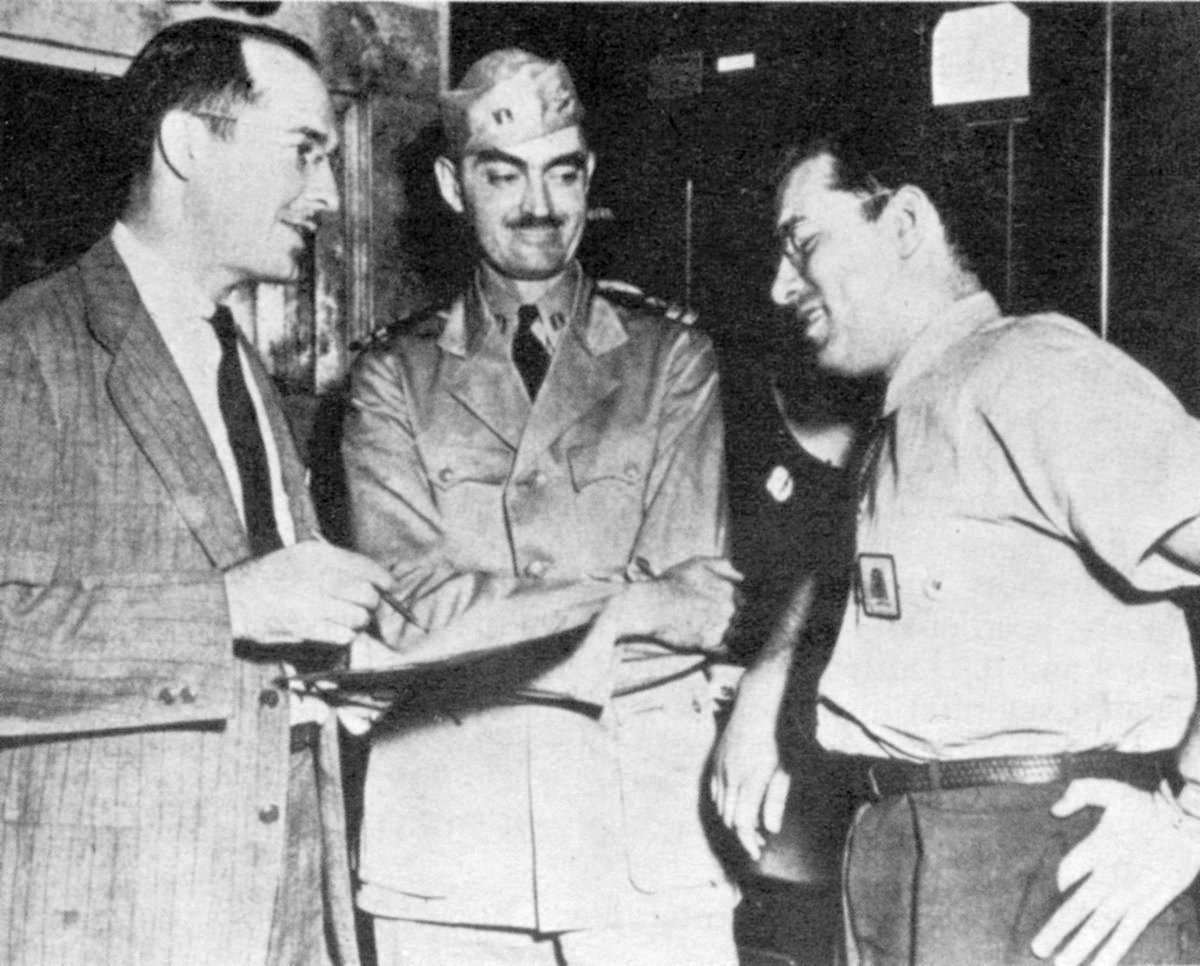
Robert Heinlein, L. Sprague de Camp and Isaac Asimov at the Philadelphia Navy Yard in 1944.
US government photo via Wikimedia Commons.
In actual fact the centenary is a bit of a fudge because Asimov never knew his actual birthday and picked January 2 as a likely date, and one that allowed for an extra holiday after the Christmas festivities. He was born around the turn of the year in 1920, three years after the Russian revolution, in the Soviet town of Petrovichi, although he emigrated to the US at the age of three.
Like many Russian Jews the family moved to Brooklyn in New York, and Asimov’s father ended up running a confectionery store and newsagent. Asimov taught himself to read at the age of five and taught his sister too, and consumed the pulp science fiction magazine stocked in his father’s shop.
At the age of 15 he applied to Columbia but was rejected, ostensibly on age grounds but, as he wrote in his autobiography I, Asimov, he recounted that the university had filled its quota of Jews for the year. After multiple rejections he eventually earned his Master of Arts degree in chemistry in 1941 and earned a Doctor of Philosophy degree in chemistry in 1948, serving as a civilian in the US Army in the Second World War.
An academic career beckoned and in 1949 he joined the Boston University School of Medicine as a biochemistry teacher. But by then he had already been getting science fiction short stories published for nearly ten years. In 1950 he wrote his first book and largely abandoned his teaching career, finding writing more lucrative and enjoyable.
[…]
Some thought Asimov had peaked as a science fiction writer by the mid 1960s, as he spent the next few years writing a lot of popular science books, non-fiction and school textbooks. He was even asked by Paul McCartney to write a science fiction musical for his then-band Wings, although the idea was eventually dropped.
But in the 1970s he came back into the SF fold with a series of books and short stories, winning two Hugo and two Nebula awards in the decade. He was also involved in some television and film work, having acted as a consultant on Star Trek in the 1960s.
In 1981 he was approached by a publisher to return to the Foundation series and add more to the canon. Foundation’s Edge was published the next year year, to wide acclaim. This was followed by Foundation and Earth in 1986, Prelude to Foundation in 1988, and finally Forward the Foundation, which was published in 1993, one year after Asimov’s death.


