Quotulatiousness

January 21, 2020

The United States Goes Dry – Alcohol Prohibition I THE GREAT WAR

Filed under: Britain, Health, History, Law, Liberty, Russia, USA — Tags: , , , , , — Nicholas @ 04:00

The Great War
Published 20 Jan 2020

In January 1920, after one year of preparation, the 18th Amendment to the US Constitution went into effect. From now on alcohol prohibition was the law.

» SUPPORT THE CHANNEL
Patreon: https://www.patreon.com/thegreatwar
Merchandise: https://shop.spreadshirt.de/thegreatwar/

» SOURCES
Ehmer, K. and Hindermann, B. (2015). The School of Sophisticated Drinking. New York: Greystone Books.
Miron and Zwiebel, “Alcohol Consumption During Prohibition”. In the American Economic Review, Vol. 81, No. 2, pp. 242-247, (May 1991).
Darrow, Clarence, and John Haynes Holmes. Debate On Prohibition. Haldeman-Julius Co., 1924.
Iorizzo, Luciano J. Al Capone. Greenwood Press, 2003.
Nemtsov, Aleksandr. A Contemporary History of Alcohol in Russia. Stockholm, 2011.
Sullivan, Edward D. Rattling the Cup on Chicago Crime. New York: The Vangaurd Press, 1929.
United States Government, “Codification of Internal Revenue Laws, … Published Pursuant to Section 1203(c) Revenue Act of 1926”.
18th Amendment to the Constitution of the United States. https://www.loc.gov/rr/program/bib/ou…
United States Department of Agriculture. “Crop Production Historical Track Records, 2018”. https://www.nass.usda.gov/Publication…
Kamieński, Łukasz: “Drugs”, in: 1914-1918-online. International Encyclopedia of the First World War, ed. by Ute Daniel, Peter Gatrell, Oliver Janz, Heather Jones, Jennifer Keene, Alan Kramer, and Bill Nasson, issued by Freie Universität Berlin, Berlin 2019-03-07
Blocker, Jack S Jr. “Did prohibition really work? Alcohol prohibition as a public health innovation.” American Journal of Public Health vol. 96,2 (2006): 233-43.

» SOCIAL MEDIA
Instagram: https://instagram.com/the_great_war
Twitter: https://twitter.com/WW1_Series
Reddit: https://reddit.com/r/TheGreatWarChannel

»CREDITS
Presented by: Jesse Alexander
Written by: Mark Newton
Director: Toni Steller & Florian Wittig
Director of Photography: Toni Steller
Sound: Toni Steller
Editing: Toni Steller
Mixing, Mastering & Sound Design: http://above-zero.com
Maps: Daniel Kogosov (https://www.patreon.com/Zalezsky)
Research by: Jesse Alexander
Fact checking: Florian Wittig

Channel Design: Alexander Clark
Original Logo: David van Stephold

A Mediakraft Networks Original Channel

Contains licensed material by getty images
All rights reserved – Real Time History GmbH 2020

Amity Shlaes’ Great Society: A New History

Filed under: Books, Economics, Government, History, USA — Tags: , , , , , — Nicholas @ 03:00

In City Journal, Edward Short reviews the latest American economic history book by Amity Shlaes:

In Great Society: A New History, Amity Shlaes revisits the welfare programs of the Kennedy, Johnson, and Nixon administrations to show not only how misguided they were but also what a warning they present to those who wish to resurrect and extend such programs. “The contest between capitalism and socialism is on again,” the author writes in her introduction. Despite the Trump administration’s thriving economy, or perhaps because of it, Democratic Party progressives are calling for new welfare programs even more radical than those advocated in the 1960s by the socialist architect of Lyndon Johnson’s War on Poverty, Michael Harrington. In the new schemes for wealth redistribution, student debt relief, socialized medicine, and universal guaranteed income that make up the Democrats’ political platform in 2020, Shlaes rightly sees a recycling of Great Society hobby horses — and she worries that a good portion of the electorate may be taken in by them. “Once again many Americans rate socialism as the generous philosophy,” she observes, and she has written her admirable, sobering study to make sure that readers realize that the “results of our socialism were not generous.”

Reviewing how ungenerous makes for salutary reading. After all, socialism of any stripe, whether in Russia, South America, Europe, or America, has always been an inherently deceitful enterprise. Shales captures the essence of this imposture when she describes one of its manifestations as “Prettifying a political grab by dressing it up as an economic rescue.” In totting up these receipts for deceit, Shlaes has done a genuine public service. […]

On display here are all of Shlaes’s strengths as an author: her clear and unpretentious prose, sound critical judgment, readiness to enter into the thinking of her subjects with sympathy (even when she regards it as mistaken), and, perhaps most impressively, understanding how history can help us fathom what might otherwise be obscure in our own more immediate history.

Accordingly, she describes the influence that Roosevelt’s New Deal had on Johnson, who saw it as a model for maintaining and consolidating his Democratic majorities, as well as focusing his Cabinet’s talents. “The men around Johnson,” Shlaes points out, including Robert McNamara, McGeorge Bundy, Richard Goodwin, and Sargent Shriver, “felt the weight of his faith on them, and strove hard. Vietnam would be sorted out. There would be a Great Society. Poverty would be cured. Blacks of the South would win full citizenship. The Great Society would succeed.” Yet the president’s men could not help asking “by what measures” it would succeed.

Moynihan’s answer to this question is one that still mesmerizes social-engineering elites. The Great Society would be achieved by social science. “Progress begins on social problems when it becomes possible to measure them,” Moynihan declared. Improved quantitative analysis would give the centralized power of planners a new credibility.

Whether Johnson himself ever truly believed in such claims is questionable. When aides asked the exuberant Texan what he thought of the risks of going forward with his wildly ambitious program, his reply epitomized the hubris at the heart of his Great Society: “Well, what the hell’s the presidency for?”

Punic Wars | 3 Minute History

Filed under: Africa, Europe, History, Military — Tags: , , , , , — Nicholas @ 02:00

Jabzy
Published 25 Jan 2015

Finally broke into the Ancient Period

QotD: “Safe spaces” do not produce strong people

Filed under: Education, History, Liberty, Quotations, USA — Tags: , , , — Nicholas @ 01:00

What, after all, is the effect of shielding people from contrary opinions by designating and maintaining, under color of law or regulation, “safe spaces” for this or that minority? Does it make them stronger? Better able to deal with a harsh world? Does it change that objective world to something less harsh? No and no and no; it does none of that. Do you gain grit in a safe space? Ha. Do you learn endurance in a safe space? Oh, please.

No, It merely makes of them mollycoddles, weaklings, and in some important ways barely or not even human. That’s the effect of a safe space, to render those who hide in them weak and ignorant.

There are things worse than the safe space, though. That only weakens your brain by making sure you never have to reason about or argue in defense of your beliefs. And, at least, this moral weakening and brain-deadening thing is voluntary. Much worse is the movement to restrict free speech and to manipulate speech for political ends. This does what the safe space does, of course, but a simple saunter down memory lane shows it does so much more. Want to starve ten or twenty or fifty million of your own people to death? Want to gas a few million members of a despised minority? Want to hack to death half a million countrymen? Job one is attack speech.

Don’t you find it odd that your teachers have led you away from any history that would tend to show you that destruction and perversion of free speech is generally followed by massive murder? Don’t you find it a little odd that they place offending someone as worse somehow than starving, gassing, or shooting them to death?

Tom Kratman, “It’s Up to You, Millennials. Deflect or Be Doomed”, Milo, 2017-12-06.

January 20, 2020

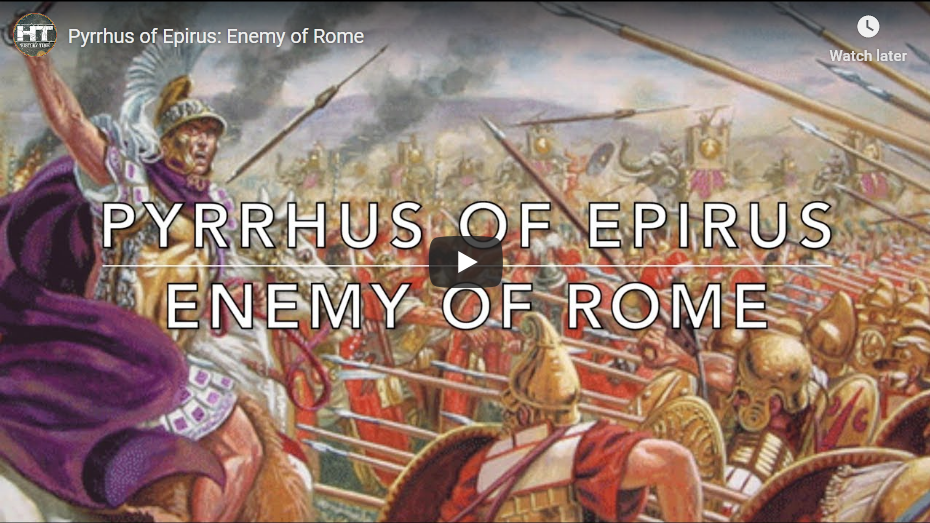
Pyrrhus of Epirus: Enemy of Rome

History Time
Published 2 Dec 2017

A brief look at one of the first and greatest adversaries of the Romans.

Some of the maps used in this and other History Time videos were produced by the incredible Battles of the Ancients. Check out the awesome website below for your ancient history fix.
http://turningpointsoftheancientworld.com/

Music:-
Two Steps From Hell – “Hearts of Courage”
https://www.youtube.com/watch?v=eYj8c…
BrunuhVille – “Song of the North” (Alt. Version)
https://www.youtube.com/watch?v=RHAFr…
Adrian Von Ziegler – “Moonsong”
https://www.youtube.com/watch?v=ifQ3J…

If you liked this video and have a spare dollar you can help to support the channel here:-
http://www.patreon.com/historytimeUK

Are you a budding artist, illustrator, cartographer, or music producer? Send me a message! No matter how professional you are or even if you’re just starting out, I can always use new music and images in my videos. Get in touch! I’d love to hear from you.

I’ve also compiled a reading list of my favourite history books via the Amazon influencer program. If you do choose to purchase any of these incredible sources of information, many of which form the basis of my videos, then Amazon will send me a tiny fraction of the earnings (as long as you do it through the link) (this means more and better content in the future) I’ll keep adding to and updating the list as time goes on:-
https://www.amazon.com/shop/historytime

I try to use copyright free images at all times. However if I have used any of your artwork or maps then please don’t hesitate to contact me and I’ll be more than happy to give the appropriate credit.

—Join the History Time community on social media:-
Patreon:-
https://www.patreon.com/historytimeUK
Instagram:-
https://www.instagram.com/historytime…
Twitter:-
https://twitter.com/HistoryTimeUK

Gaming India’s colonial and post-colonial history

Filed under: Britain, Gaming, History, India — Tags: , , , , , — Nicholas @ 05:00

In Quillette, Jonathan Kay looks at two wargames that deal with different aspects of Indian history:

… the peoples whom Europeans encountered in the Americas were skilled and inventive combatants who often put white men to flight (or worse) despite their enormous disadvantage in technology and (ultimately) manpower. In many cases, First Nations (as we now call them in Canada) fought fiercely with one another, too, and had well-developed military traditions that Europeans variously feared, admired and adopted. And they would make fitting protagonists for any modern boardgame designer willing to reject the current fashion of presenting indigenous peoples as holy elves of the forest.
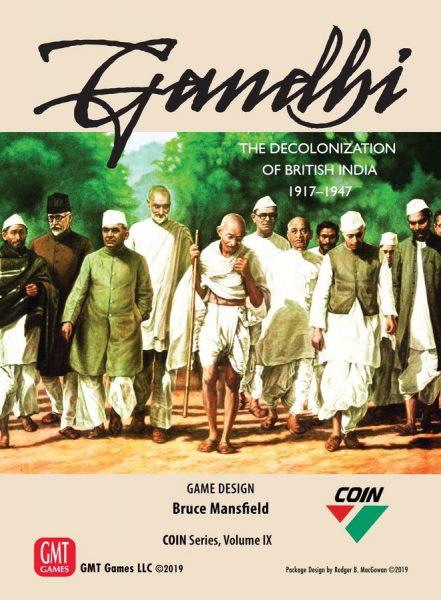
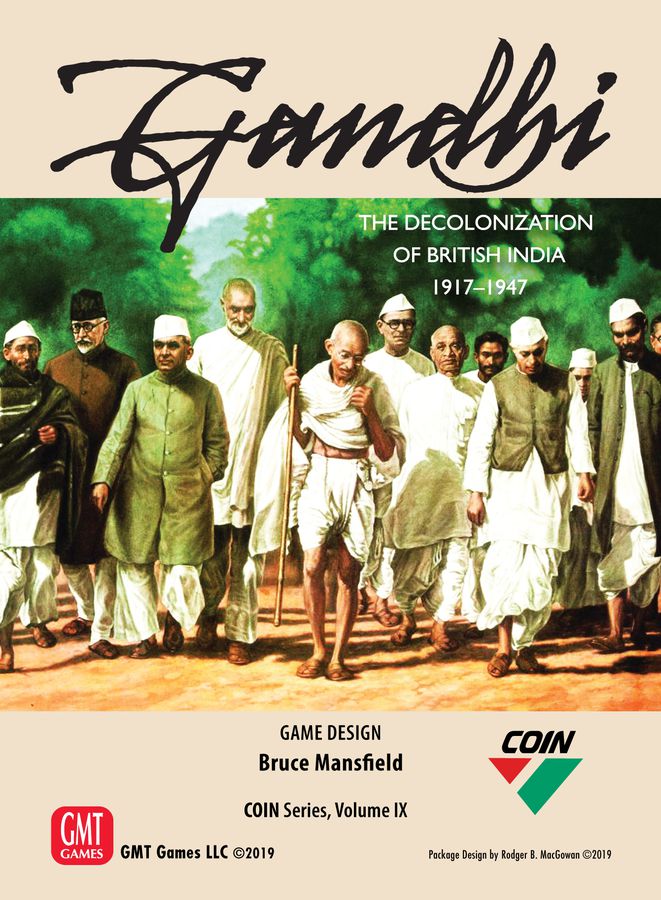
What would such a game look like? A good example comes to us in the form of GMT Games’ 2019 release, Gandhi: The Decolonization of British India. This is the latest entry in GMT’s COIN series, which is designed to model guerrilla wars and other unconventional conflicts through the use of cards that represent historical events. As in other games of the genre, such as Fire in the Lake (Vietnam), People Power (Insurgency in the Philippines, 1983-1986) and Colonial Twilight (The French-Algerian War, 1954-62), the game doesn’t present a simple narrative of good versus evil, but a more complex narrative in which all sides have at least some ulterior motives that are at odds with their official propaganda. In Gandhi, there are four players, one each controlling the Raj, the Indian National Congress, the Muslim League and the “Revolutionaries.” The latter three all share the goal of some kind of national independence, but each pursues its own (often mutually antagonistic) methods, with the Revolutionaries using violence to undercut the more pacifistic Congress, and the Muslim League playing off Congress, the Revolutionaries and the Raj in order to protect the interests of the country’s Islamic minority. (Historians of Canada would note that diplomacy and warfare with and among First Nations often was similarly complex.)

The game is unpredictable and complex, since each player will pursue different strategies in the country’s many different zones, making and breaking de facto partnerships depending on the circumstances. Amid all of this gaming chaos, the moral logic of decolonization remains a central theme of the game. But by the end of things, you realize that the ejection of the British from India was a big and messy project, as history typically is. While Spirit Island was created with the goal of mainlining anti-colonialism directly into the boardgame experience, Gandhi gets to the same theme obliquely by way of amoral realism, doing a better job pedagogically in the process.

A key aspect of Gandhi is that the Raj has agency: It is not reduced to the status of automaton-villain, as in Spirit Island. But there are limitations to the imaginative ecosystem that players inhabit: Every one of the four players has to take on their assigned role without questioning their underlying, game-dictated objective — including the Raj player, who must, start to finish, exert himself in defence of a colonial project that now is widely viewed as being on the wrong side of history. The other three factions likewise remain prisoners of their parochial regional, religious and doctrinal differences, which, historically, would contribute to millions of deaths in the chaos that accompanied the British exit.
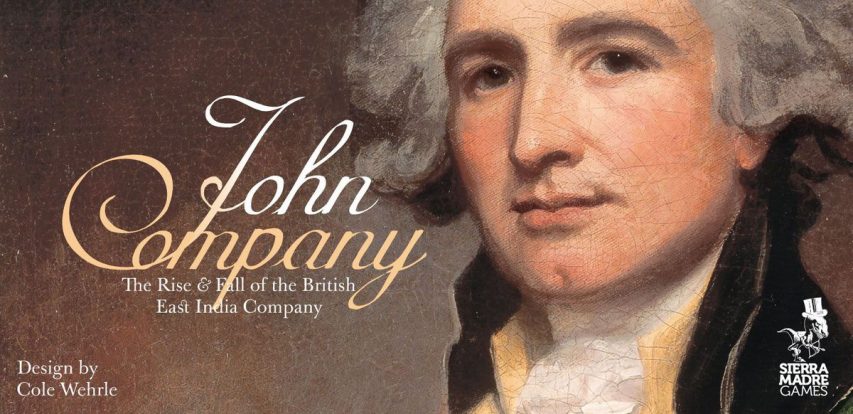
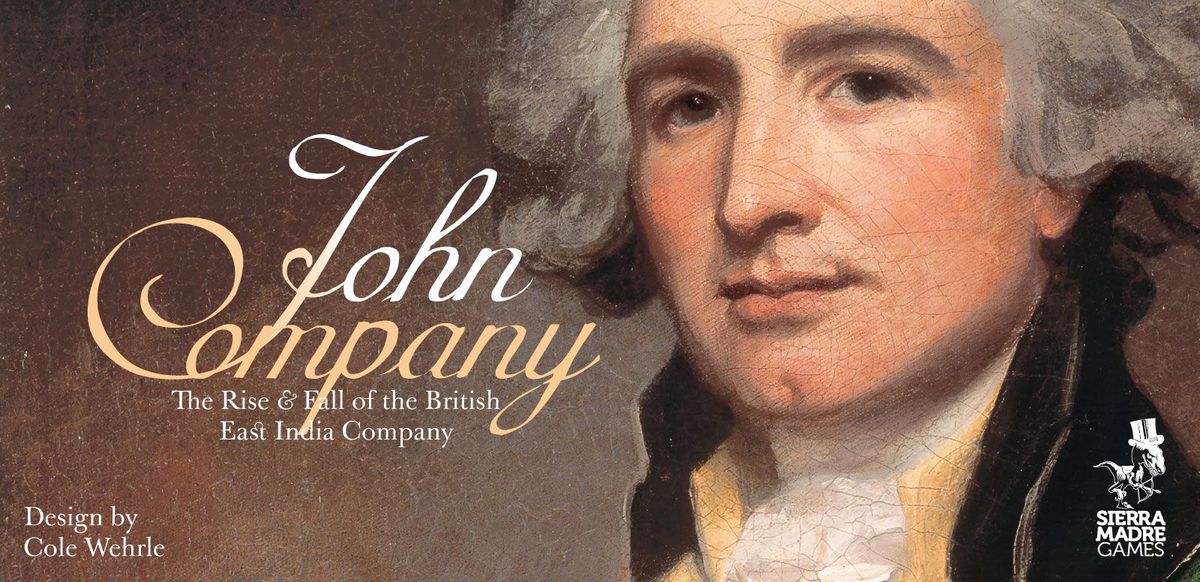
Which brings me to the fourth and final colonialism-themed game I will discuss: the acclaimed 2017 release John Company, by Indiana-based designer Cole Wehrle. In theory, John Company is also a game about British colonialism in India. But here’s the rub: The players all act as competing factions within the commercial innards of John Company (a nickname for the British East India Company). On one hand, the players have a co-operative goal — to keep the company afloat as it manages the enormous expense of creating and operating a colonial apparatus on the subcontinent. But I can attest that far more of players’ mental energy goes into fighting each other for the spoils of war and trade. Indeed, much of the game consists of exchanging favours and bribes among players, as each attempts to leverage positions of power within the company to extract revenues, plunder and positions of influence.

As the game progresses, you notice, almost as an afterthought, that great things are afoot within India: New trade routes are created, military battles are fought, whole regions go into revolt and are pacified, with many (fictional) lives hanging in the balance. But as a player, you barely notice any of this — except to the narrow extent these events can be exploited as a source of wealth, since the way you win the game is by accumulating enough cash and baubles to retire your functionaries into gilded clubs and country houses back in England.

And what of the actual Indians who lived and died under the Raj? They don’t appear at all in the game, for John Company‘s real play arc exists within the corrupt solipsism of intra-corporate deal-making. Which sounds horrifyingly amoral. But when the game’s over, you realize: That’s the whole point. The colonialists who ran India — like those who came to North America and every other place on the map, from South America to the Belgian Congo to China — typically weren’t motivated by a desire to destroy and subjugate. They were out to make a buck, either as lone freelancers in a canoe, or bureaucrats pulling levers within some gigantic corporate behemoth. The horrifying, often genocidal murder and mayhem was a by-product of greed. Which doesn’t make it better. But it does make the narrative more comprehensible in regard to governing our future behaviour as human societies — since we all are vulnerable to spasms of greed, while true evil for its own sake is a rare thing.

Games teach you about the forces of history not by listing a set of facts for you to memorize, but by creating a rules system that effectively pushes you to act in a certain way — whether as a colonialist, revolutionary or deity. If the game is well-designed, then those actions make a certain kind of internal sense. That dark logic is what stays with you — as an explanation of why people acted a certain way at a certain time. It’s always easy to judge historical figures. It’s harder, but ultimately more interesting and valuable, to understand them.


The reasons HMS Queen Elizabeth has two islands – Russia copied the twin island design

Filed under: Britain, Military, Technology, Weapons — Tags: , , , — Nicholas @ 04:00

Military TV
Published 5 Jan 2020

Many have wondered why HMS Queen Elizabeth has two “islands”. Here we consider why she is the first aircraft carrier in the world to adopt this unique arrangement and the benefits it brings.

REDUNDANCY AND SEPARATION CAN BE GOOD
In a moment of inspiration back in 2001, an Royal Navy officer serving with the Thales CVF design team developing initial concepts for what became the Queen Elizabeth class, hit upon the idea of separate islands. There are several advantages to this design but the most compelling reason for the twin islands is to space out the funnels, allowing greater separation between the engines below. Queen Elizabeth class has duplicated main and secondary machinery in two complexes with independent uptakes and downtakes in each of the two islands. The separation provides a measure of redundancy, it increases the chances one propulsion system will remain operational in the event of action damage to the other. Gas turbine engines (situated in the sponsons directly below each island of the Queen Elizabeth class) by their nature require larger funnels and downtakes than the diesel engines (in the bottom of the ship). The twin island design helps minimise their impact on the internal layout.

In a conventional single-island carrier design, either you have to have a very long island (like the Invincible class) which reduces flight deck space or, the exhaust trunkings have to be channelled up into a smaller space. There are limits to the angles this pipework may take which can affect the space available for the hangar. The uptakes can also create vulnerabilities, the third HMS Ark Royal was lost to a single torpedo hit in 1941, partly due to progressive engine room flooding through funnel uptakes.

The twin island design has several other benefits. Wind tunnel testing has proved that the air turbulence over the flight deck caused by the wind and the ship’s movement, is reduced by having two islands instead of one large one. Turbulent air is a hindrance to flight operations and aircraft carrier designers always have to contend with this problem. Twin islands allow greater flight deck area because the combined footprint of the two small islands is less than that of a single larger one. By having two smaller islands it allowed each to be constructed as a single block and then shipped to Rosyth to be lifted onto the hull. The forward island was built in Portsmouth and the aft island built in Glasgow.

This arrangement solves another problem by providing good separation for the main radars. The Type 1046 long range air surveillance radar is mounted forward while the Type 997 Artisan 3D medium range radar is aft. Powerful radars, even operating on different frequencies, can cause mutual interference or blind spots if the aerials are mounted too close together. Apart from a slim communications mast, both the Artisan and 1046 have clear, unobstructed arcs.

A Drag Queen speaks out against Drag Queen Story Hour for kids

Filed under: Books, Education, Health, Politics, USA — Tags: , , , — Nicholas @ 03:00

Libby Emmons reports on a rare bird indeed — a Drag Queen who doesn’t think it’s appropriate to have other Drag Queens visit schools and libraries to read to pre-teen kids:

Drag Queen Kitty Demure has taken to Twitter to speak out against the sexualization of children by woke people co-opting drag culture and rebranding it as an educational tool.

“I have absolutely no idea why you would want [drag queens] to influence your child. Would you want a stripper or porn star to influence your child?”

Demure notes that just as you wouldn’t take your kids out to see porn stars or strippers read stories while in full dress and makeup, you shouldn’t take them to see drag. There’s an effort to introduce kids earlier and earlier to adult sexuality. The idea is that this will help kids be more open-minded and understanding about the difference. What it really does is normalize deviant adult behaviour in children’s minds and override their own instincts. Giving children access to sexual content makes them think this kind of thing is for them, it opens doors that should stay closed until a child is of age.

Demure says here what all of us know: drag culture is adult entertainment. The look is sexualized. The names are sexualized. In fact, the entire concept of drag is a send-up of beauty queen culture. Beauty queen culture is sexualized as well, and while that is sometimes subsumed beneath the surface, it’s obviously fully part of it. That’s what drag plays on. Drag can be lots of fun, but it’s grown-up fun, not for kids.

Lanchester MkI: Britain’s First Emergency SMG

Filed under: Britain, History, Military, Weapons, WW2 — Tags: , , , — Nicholas @ 02:00

Forgotten Weapons
Published 5 Sep 2017

Sold for $16,100 (transferrable).

The Lanchester MkI was the first British effort to produce a domestic submachine gun during World War II. The British military had rejected these types of arms as “gangster guns” prior to the war, and did not see them as useful in a military context. Well, that opinion changed rather quickly as they watched the German blitzkrieg sail through continental Europe.

The very first solution was to purchase Thompson SMGs from the United States, but these were extremely expensive weapons, and not a suitable long term plan. The next solution was to reverse engineer a pair of German MP28 SMGs captured in Ethiopia. This was done by a Sterling company engineer named George Lanchester, and it was a successful project. Both the Royal Navy and Royal Air Force purchased the guns (although the RAF would cancel its order later, and the guns would pretty much all go to the Royal Navy).

Mechanically, the Lanchester is a very close copy of the MP28, with a few stylistic changes. These include the use of an SMLE pattern stock, the addition of a bayonet lug for a 1907 pattern bayonet, and the use of brass or bronze for the magazine housing instead of steel. The original MkI Lanchesters were select-fire, with a lever to allow semi or full-auto fire. This was removed with the simplified MkI* pattern, however.

The Lanchester would be quickly followed by the Sten gun, which offered much cheaper and faster manufacture, and the British Army would use huge numbers of Stens. The Lanchester would stay in service for decades after the war, though, serving on many naval vessels in British service and with other nations when British ships were sold as surplus.

http://www.patreon.com/ForgottenWeapons

Cool Forgotten Weapons merch! http://shop.bbtv.com/collections/forg…

If you enjoy Forgotten Weapons, check out its sister channel, InRangeTV! http://www.youtube.com/InRangeTVShow

QotD: Maturity and wisdom

Filed under: Humour, Quotations — Tags: , , — Nicholas @ 01:00

He wondered if it was at all possible to give this idiot some lessons in basic politics. That was always the dream, wasn’t it? “I wish I’d known then what I know now”? But when you got older you found out that you now wasn’t you then. You then was a twerp. You then was what you had to be to start out on the rocky road of becoming you now, and one of the rocky patches on that road was being a twerp.

Terry Pratchett, Night Watch, 2002.

January 19, 2020

“Night Witches” – Female Soviet Pilots – Sabaton History 050 [Official]

Filed under: History, Media, Military, Russia, WW2 — Tags: , , , , , , — Nicholas @ 06:00

Sabaton History
Published 18 Jan 2020

This episode is about the Soviet 588th bomber regiment. They were all-female and got the nickname “Night Witches” from the sound their planes made after they killed their engines for maximum effect. This sound made German think of the broomsticks of witches, and they called them “Nachthexen“.

Support Sabaton History on Patreon: https://www.patreon.com/sabatonhistory

Listen to Heroes (where “Night Witches” is featured):
CD: http://bit.ly/HeroesStore
Spotify: http://bit.ly/HeroesSpotify
Apple Music: http://bit.ly/HeroesAppleMusic
iTunes: http://bit.ly/HeroesiTunes
Amazon: http://bit.ly/HeroesAmz
Google Play: http://bit.ly/HeroesGoogleP

Watch the official lyric video of “Night Witches” here: https://www.youtube.com/watch?v=C7NSU…

Listen to Sabaton on Spotify: http://smarturl.it/SabatonSpotify
Official Sabaton Merchandise Shop: http://bit.ly/SabatonOfficialShop

Hosted by: Indy Neidell
Written by: Markus Linke and Indy Neidell
Directed by: Astrid Deinhard and Wieke Kapteijns
Produced by: Pär Sundström, Astrid Deinhard and Spartacus Olsson
Creative Producer: Joram Appel
Executive Producers: Pär Sundström, Joakim Broden, Tomas Sunmo, Indy Neidell, Astrid Deinhard, and Spartacus Olsson
Post-Production Director: Wieke Kapteijns
Edited by: Iryna Dulka
Sound Editing by: Marek Kaminski
Maps by: Eastory – https://www.youtube.com/c/eastory

Eastory YouTube Channel: https://www.youtube.com/channel/UCEly…
Archive by: Reuters/Screenocean https://www.screenocean.com
Music by Sabaton.

Colorizations:
– Olga Shirnina a.k.a. Klimbim – https://klimbim2014.wordpress.com/

Sources:
– Tver United State Museum
– Photo of the instructor Semeon Lykin and a group of pilots posing in front of a Polikarpov Po-2 courtesy of Franco Folini on Flickr
– Po-2 “Sudstroitel”; 588th night light bomber aviation regiment – all courtesy of Segey G on Flickr
– SA-kuva 39220
– Sniper scope icon by DTDesign from the Noun Project

An OnLion Entertainment GmbH and Raging Beaver Publishing AB co-Production.

© Raging Beaver Publishing AB, 2019 – all rights reserved.

Travelling SNCF in the age of the smartphone app

Filed under: Business, France, Humour, Media, Railways, Technology — Tags: , , , , — Nicholas @ 05:00

At The Register, Alistair Dabbs reveals some unfortunate truths about the French railway service (the Société nationale des chemins de fer français or SNCF) and its mobile app:

An SNCF Train à Grande Vitesse (TGV) Duplex DASYE (moteur asynchrone, nouvelle generation de duplex) train at Figueres-Vilafant station, 1May 2011.
Photo by eldelinux via Wikimedia Commons.

Actually, the hotel app is rubbish. The booking system is slow, the property information incomplete and some of the buttons don’t do anything at all. From time to time, the app flashes up a notification inviting you to install the app … er, that you’re already running. Much better to book using a proper computer. Still, flashing the screen around got me the Presidential Disability Suite. Franklin D rocked a wheelchair, remember, and I’m a fan.

This, however, pales into insignificance with the tedious and frankly silly collection of smartphone apps I had to juggle to manage my train journey to get here. Yes, it’s my own fault for trying to navigate my way across France on public transport in the midst of a general strike but surely that’s precisely the kind of thing digital communications ought to be able to help you with, don’t you agree?

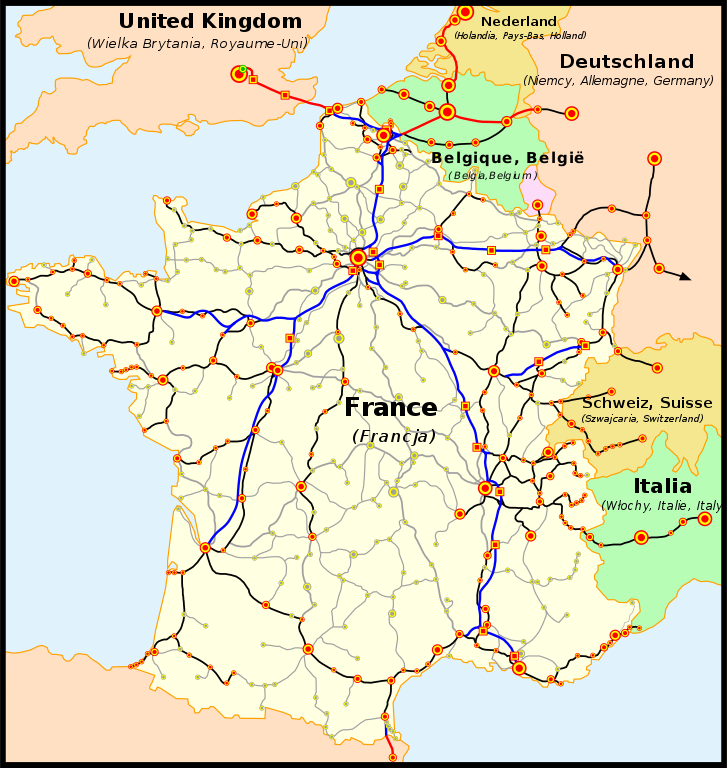
Map of the French railways on which the TGV (LGV: blue; normal tracks: black) and Intercités (grey) SNCF trains run. Only lines going to and from Paris are shown here.
Wikimedia Commons.

The French train company, SNCF, has been doing its best by notifying travellers with bookings every day at 17:00 which of the following day’s trains would be running and which would be cancelled. I’m a lifelong union member myself and I fully support the workers’ rights to … oh buggeration, my TGV’s been rerouted to set off from a city 300km away. Fucking union arsewipes – sack ’em all bastard wankers.

Oh well, I thought, I’ll just have to work out another way. Fire up the SNCF booking app!

A banner at the top informs me that I should seek information about which train services are running by checking its Twitter feed. So I launch the Twitter app. SNCF on Twitter says I should check via the idiotic INOUI brand for TGV bookings. So I launch the INOUI app. This tells me I should check with SNCF or, if I want more information, click on a highlighted link. I click on it: it links to a one-sentence message that tells me there is a strike on and that train services may be affected.

Two hours of thumb-numbing smartphone tomfoolery later, I have worked out my own alternative route via multiple connecting services. This was made more challenging by the SNCF and INOUI apps providing contradictory information about the same journey. Best of all is they can’t agree on where my TGV will actually go. Will it reach its terminus as usual or will it apparently go inexplicably missing from the tracks in the countryside outside Lille? According to SNCF and INOUI, it will do both. It’s Schrodinger’s train.

Just as I go to bed, the Eurostar app sends me a notification reminding me to get to my local station on time tomorrow to catch the TGV that’s been cancelled.

As you can see, my much prolonged, zig-zag route up the country and into Blighty worked, no thanks to these ridiculous apps. It wasn’t all bad: I got to see more French farmland than I expected and experienced first-hand the extraordinarily rich cultural variety of train station beggars that France has to offer the modern rail traveller.

Mao Against Everyone – China at War and Civil War – WW2 – 073 – January 18, 1941

Filed under: Britain, China, France, History, Italy, Military, WW2 — Tags: , , , , , , , — Nicholas @ 04:00

World War Two
Published 18 Jan 2020

The Chinese Communists and Nationalists clash while they’re also both facing Japanese armies in the North. And although the Communists are not the obvious victor this week, the battle has bigger ramifications. Other action takes place in Cambodia and the Mediterranean.

Join us on Patreon: https://www.patreon.com/TimeGhostHistory
Or join The TimeGhost Army directly at: https://timeghost.tv

Follow WW2 day by day on Instagram @World_war_two_realtime https://www.instagram.com/world_war_t…
Join our Discord Server: https://discord.gg/D6D2aYN.
Between 2 Wars: https://www.youtube.com/playlist?list…
Source list: http://bit.ly/WW2sources

Written and Hosted by: Indy Neidell
Produced and Directed by: Spartacus Olsson and Astrid Deinhard
Executive Producers: Bodo Rittenauer, Astrid Deinhard, Indy Neidell, Spartacus Olsson
Creative Producer: Joram Appel
Post-Production Director: Wieke Kapteijns
Research by: Indy Neidell
Edited by: Mikołaj Cackowski
Map animations: Eastory (https://www.youtube.com/c/eastory)

Colorizations by:
– Dememorabilia – https://www.instagram.com/dememorabilia/
– Julius Jääskeläinen – https://www.facebook.com/JJcolorization/

Sources:
Imperial War Museum (E872; E 6600)
Narodowe Archiwum Cyfrowe

Soundtracks from Epidemic Sound:
Phoenix Tail – “At the Front”
Johannes Bornlof – “Death And Glory 2”
Johannes Bornlof – “Last Man Standing 3”
Yi Nantiro – “Watchman”
Johan Hynynen – “Dark Beginning”
Reynard Seidel – “Deflection”
Bonnie Grace – “Imperious”

Archive by Screenocean/Reuters https://www.screenocean.com.

A TimeGhost chronological documentary produced by OnLion Entertainment GmbH.

“… if the Constitution is a threat to killer whales, why, then, to hell with the Constitution”

Filed under: Cancon, Environment, Government, Law, Politics — Tags: , , , , — Nicholas @ 03:00

Colby Cosh reviews the sad tale of the British Columbian government’s defeat before the Supreme Court of Canada over pipelines:

So … yeah, that didn’t go real well. On Thursday the province of British Columbia sent its chosen representative, lawyer Joseph Arvay, to the Supreme Court to plead the oral case for B.C.’s law regulating bitumen in pipelines. John Horgan’s government had attempted to establish its own permit regime for pipeline contents, which are, under accepted constitutional doctrine, a federal responsibility. The B.C. Court of Appeal had wiped out the provincial law unanimously last summer.

Arvay’s task was widely recognized as a Hail Mary pass. But things got even more awkward as the hearing commenced and the justices of the Supreme Court interrogated him on his province’s logical, environmental, and even economic premises. An appellate court’s disposition is sometimes hard to ferret out in its hearings, but this one was so rough that Arvay was reduced to grumbling “If I’m not going to win the appeal, then I don’t want to lose badly.” Alas, the judges did not even see the need to deliberate over their reasons: they at once, and as one, ruled against B.C.

Which is not to suggest that Mr. Arvay didn’t do the best possible job. If we’re sticking with the football metaphor, the problem all along was the game plan. Given the clear federal responsibility for interprovincial pipelines, as “Works and Undertakings connecting … Provinces,” the B.C. government had no choice but to downplay the conflict between the purpose of its proposed environmental permits and the purpose of the ones the federal government hands out. Arvay had to try to convince the ermine gang that a law applying exclusively to the contents of a pipeline wasn’t a regulation of the pipeline.

“The only concern the premier, the attorney general and the members of the government have had is the harm of bitumen,” Arvay protested. “It’s not about pipelines. They’re not anti-pipelines, they’re not anti-Alberta, they’re not anti-oilsands, they’re not anti-oil.”

It’s enough to almost make one sympathetic to the more radical strategy of argument pursued at the hearing by Harry Wruck, a lawyer for Ecojustice Canada who appeared as an intervener supporting B.C. Wruck put before the Supreme Court the same idea he had presented to the BCCA: if the Constitution is a threat to killer whales, why, then, to hell with the Constitution.

Cursus honorum – Aediles

Filed under: Bureaucracy, Government, History — Tags: , , , , — Nicholas @ 02:00

Historia Civilis
Published 6 Feb 2015

Patreon: https://www.patreon.com/HistoriaCivilis
Website: https://www.historiacivilis.com
Twitter: https://twitter.com/HistoriaCivilis

Music is “Clap Your Hands” by Jahzzar (http://betterwithmusic.com)

« Newer PostsOlder Posts »

Powered by WordPress