Forgotten Weapons
Published 12 Sep 2016Sold for $10,350.
The Lahti L39 was the Finnish answer to the need for an anti-tank rifle, developed just before the Winter War. The rifle was created by noted Finnish designed Aimo Lahti, who had pressed for it to use a 13.2mm cartridge. However, arguments for using a 20x138B cartridge won out, based on hopes to use that cartridge in both antitank and antiaircraft roles, as well as testing that showed the 20mm projectile to have greater terminal effect.
The L39 was not available for use in the Winter War (having been adopted barely 2 months before the Russian attack), but was used extensively in the Continuation War. While improved tank armor quickly became thick enough to protect against the round, it was used for a variety of anti material roles, attacking machine gun positions, bunkers, light vehicles, and more. In 1944, an anti-aircraft version was also produced, firing in full auto and using 15-round magazines.
Today, ammunition is available from a few companies, typically using lathe-turned new cases and surplus 20mm Vulcan projectiles.
June 25, 2020
20mm Lahti L39 Antitank Rifle (Shooting & History)
QotD: Cultural appropriation
In the ever-widening gyre of what cannot be appropriated without causing offense, now even American heroes are off limits. Apparently, Caucasians are no longer allowed to quote Martin Luther King. While I almost sympathize with the view that too many people of all colors tend to only quote King’s more saccharine words, it is surreal that some African-Americans would be outraged that others quote such an admirable American: “MLK belongs to us. Do not dare to quote my MLK. My Martin Luther King Jr., was not here for white people. Keep his name out your thin-lipped mouth. Y’all banned forever.” Belongs? Like a possession? Is the bitter irony of talking about King as a possession — mere chattel, the private property of a particular group — lost on some members of the current generation of African Americans? I had thought that, at least since the passage of the 13th Amendment, people could not be owned.
Joseph Mussomeli, “Victim Privilege, Cultural Appropriation, & the New Enslavement”, The Imaginative Conservative, 2018-02-09.
June 24, 2020
Napoleon’s Great Blunder: Spain 1808
Epic History TV
Published 16 Jan 2019In 1808, Napoleon’s rivalry with Britain led to an ill-fated intervention in Portugal and Spain, that sparked a nationalist revolt against the French. At Bailén Napoleon’s Empire suffered its first major defeat, and though Napoleon himself then arrived in Spain to reassert French military dominance, he could not prevent the escape of Sir John Moore’s small British army, after its defensive victory at Corunna on 16 January 1809. The British army would return, under new leadership, to play a major part in his downfall.
Get early access and a vote on future topics by supporting us on Patreon: https://www.patreon.com/epichistorytv
With thanks to HistoryMarche, check out his channel here: https://www.youtube.com/channel/UC8MX…
Find Osprey books on the Napoleonic Wars here:
https://ospreypublishing.com/Great books about the Napoleonic Wars (as an Amazon Associate I earn from qualifying purchases):
The Napoleonic Wars http://geni.us/R5ZI9c
Corunna 1809 http://geni.us/IHLD
Peninsular War Atlas http://geni.us/S6Na84z
Napoleon the Great http://geni.us/NqMW#EpicHistoryTV #NapoleonicWars #Napoleon
All music from Filmstro https://www.filmstro.com/
Get 20% off an annual license with this exclusive code:EPICHISTORYTV_ANNThanks to The 95th Rifles Battle Re-enactment and Living History Society: https://www.95thrifles.com/
Trudeau government wants to introduce an Internet “link tax”
Michael Geist on the Trudeau government’s latest indications of support for a tax grab to benefit certain favoured groups and organizations:
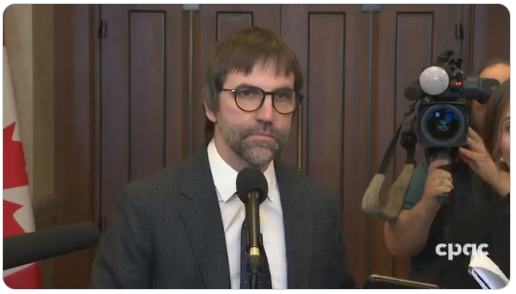
Last week, Canadian Heritage Minister Steven Guilbeault called into question his own government’s policies on supporting news media, suggesting that those programs should be replaced by copyright rules that would open the door to payments from internet companies such as Google and Facebook. Mr. Guilbeault indicated that a legislative package was being prepared for the fall that would include new powers for Canada’s communications regulator and what are commonly referred to as Netflix taxes and internet linking taxes.
My Globe and Mail op-ed notes the government’s support for new internet taxes should not come as a surprise. There were strong signals that the spring budget – postponed indefinitely due to the current public health crisis – was going to include expanding sales taxes to capture digital sales such as Netflix or Spotify subscriptions.
[…]
It is Mr. Guilbeault’s plans for a link tax that should spark the most concern, however. The government has long promoted its policies designed to support the Canadian media sector, including direct funding for local journalism as well as labour and subscription tax credits. The taxpayer cost runs into the hundreds of millions of dollars, but is justified on the grounds that journalism is an essential service that requires public support.
Yet Mr. Guilbeault now says that government should not be funding media, characterizing the policies as short term measures aimed at mitigating a media emergency. Instead, Mr. Guilbeault supports a controversial copyright reform measure that would establish a news publisher’s right to demand payment for services that link to their content.
This payment – effectively a tax on linking – raises a host of concerns, not the least of which is that the proposal was not recommended by the government’s own copyright review last year. Copyright reform in Canada is always complicated, particularly given that responsibility for it is shared with Innovation, Science and Economic Development Minister Navdeep Bains, but delving into reforms that sparked protests in Europe could be politically risky for a minority government.
News organizations already benefit from large platforms linking to their content since the links generate visitors that increase advertising revenues and paying subscribers. Organizations that do not want the links can easily opt-out of appearing in services such as Google News or Facebook. In fact, after Google shut down its Google News service in Spain, studies found publisher website traffic dropped by 10 per cent.
BESAL: Britain’s Emergency Simplified Light Machine Gun
Forgotten Weapons
Published 8 Aug 2017Armament Research Services (ARES) is a specialist technical intelligence consultancy, offering expertise and analysis to a range of government and non-government entities in the arms and munitions field. For detailed photos of the guns in this video, don’t miss the ARES companion blog post:
http://armamentresearch.com/british-b…
The BESAL is a simplified redesign of the Bren light machine gun, developed by a BSA employee named Faulkner. The design of the gun was motivated by the disastrous retreat of the British Army from Dunkirk in 1940, where they abandoned a huge amount of weaponry and war material, including most of their Bren guns.
The Bren gun was in production only as the BSA factory, which was at great risk to German bombing — and the Bren included a number of complex parts that could not be effectively put into production elsewhere in the UK on short notice. It was with this in mind that Faulkner designed the BESAL, which used much simpler components which could be made in a great number of small shops. Decentralized production would have made it a much more resilient process in the case of invasion (similar to German small arms production late in the war).
By the time the BESAL prototypes were built, tested, and approved as being reliable and effective, however, the immediate threat of invasion had passed and the Bren was in production at the Inglis factory in Canada as well as at BSA. The BESAL design was shelved for use in case it became necessary again, but it never was.
http://www.patreon.com/ForgottenWeapons
Cool Forgotten Weapons merch! http://shop.bbtv.com/collections/forg…
If you enjoy Forgotten Weapons, check out its sister channel, InRangeTV! http://www.youtube.com/InRangeTVShow
QotD: Youthful opinions
It is very natural for young men to be vehement, acrimonious and severe. For as they seldom comprehend at once all the consequences of a position, or perceive the difficulties by which cooler and more experienced reasoners are restrained from confidence, they form their conclusions with great precipitance. Seeing nothing that can darken or embarrass the question, they expect to find their own opinion universally prevalent, and are inclined to impute uncertainty and hesitation to want of honesty, rather than of knowledge.
Samuel Johnson, The Rambler No. 121, 1751-05-14.
June 23, 2020
Defending Britain with a Bayonet | Hobart’s Pike | The Tank Museum
The Tank Museum
Published 24 May 2020Director Richard Smith looks at Percy Hobart and the incredible weapon he was issued on joining the Home Guard at the start of WW2; a bayonet welded to a pole. Major General Percy Hobart commanded the 79th Armoured Division and gave the revolutionary, specialised tanks used on D-Day their nickname “Hobart’s Funnies”.
https://tankmuseumshop.org/
Support the work of The Tank Museum on Patreon: ► https://www.patreon.com/tankmuseum
Visit The Tank Museum SHOP & become a Friend: ► https://tankmuseumshop.org/Twitter: ► https://twitter.com/TankMuseum
Instagram: ► https://www.instagram.com/tankmuseum/
Tiger Tank Blog: ► http://blog.tiger-tank.com/
Tank 100 First World War Centenary Blog: ► http://tank100.com/
The “Battle of Dijon”
I post a lot of accounts of ancient and modern wars and battles, but the “Battle of Dijon” actually took place earlier this month and has been widely mischaracterized in the media, as John Lichfield recounts:

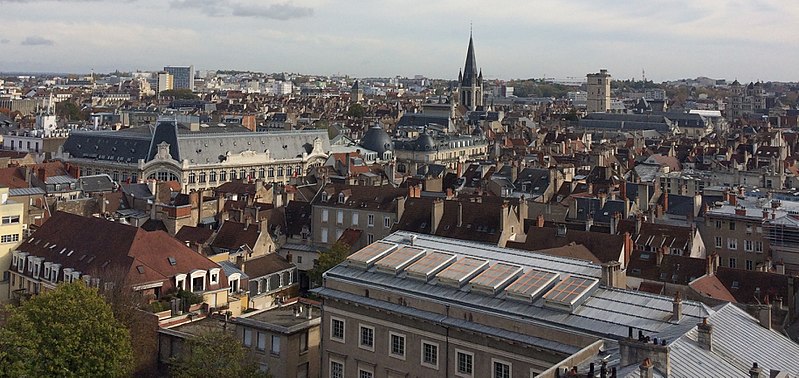
Dijon viewed from Saint-Bénigne Cathedral with the Palace of the States of Burgundy, the Notre-Dame and Saint-Michel churches, the Saint-Nicolas tower, the former Saint-Bénigne abbey palace (ENSA), The Lafayette galleries, the old department stores at Le Pauvre Diable and la Ménagère.
Photo by Twibo2 via Wikimedia Commons (caption translated by Google Translate).
Dijon, the capital of Burgundy, rarely attracts the world’s attention. There is Dijon mustard of course. There is Dijon blackcurrant liqueur (Cassis de Dijon). There are many beautiful, old Burgundian streets and buildings. But of all the medium to large cities in France, Dijon (population: 159,000) is surely the least talked about.
Then, abruptly, last weekend Dijon had the great misfortune to become newsworthy. War broke out, we were told, between “Chechen gangs” and “Arab gangs”. The dispute was, some French media reported, about the right to traffic drugs. The Daily Mail announced that the French army had been sent in to restore order. Marine Le Pen compared Dijon to Beirut. Similar “wars between migrant communities” now threatened, she said, all over France.
All these reports were, I believe, wrong or deeply misleading. What did happen in Dijon over four days the other weekend was surreal and disturbing. But the incidents defy simple explanation or political point-scoring. They say, perhaps, more about Chechnya, and the values — good and bad — of exiled Chechens, than they do about the wider racial issues of France. The severity of the violence probably owed something to the frustrations of France’s recent nine weeks of Covid lockdown. The political and media reaction was skewed by the fact that the events occurred while France was in the midst of a debate about race and policing – in the wake of the George Floyd killing in the United States.
On Sunday evening, on the third night of violence in Dijon, President Emmanuel Macron happened to be addressing the nation on TV. He said, among many other things, that he would resist all pressure to splinter France into ethnic communities.
So what had happened over four days in Dijon? There are several conflicting accounts. Here, briefly, are the facts that I have been able to establish.
On 9th June a 15-year-old (some say 16-year-old) boy of Chechen origin was badly beaten up outside a chicha (hookah) bar in central Dijon. His attackers were local men in their 30s of African and North African origin. According to the Chechen version of events, the men were drug-dealers. The injured boy apparently had no connection with drugs. The dealers attacked him because local Chechens were known to be hostile to drug-trafficking. They put a gun in the boy’s mouth and said: “We hate Chechens. We’re going to let you live so you can tell the other Chechens what’s going to happen to them.”
Three days later a convoy of cars arrived in Dijon packed with Chechen men from several other parts of France, as well as Belgium and Germany. Local media and police say that there were 100 of them; the Chechens say that there were only 15. They smashed up the chicha bar, assaulted its owner and then rampaged through the multi-racial Les Grésilles area of council estates just north-east of central Dijon.
Pushback for Chinese aggression in the Himalayas
In Quillette, Cleo Paskal outlines the Chinese military action last week and a few of the reactions in civil society:

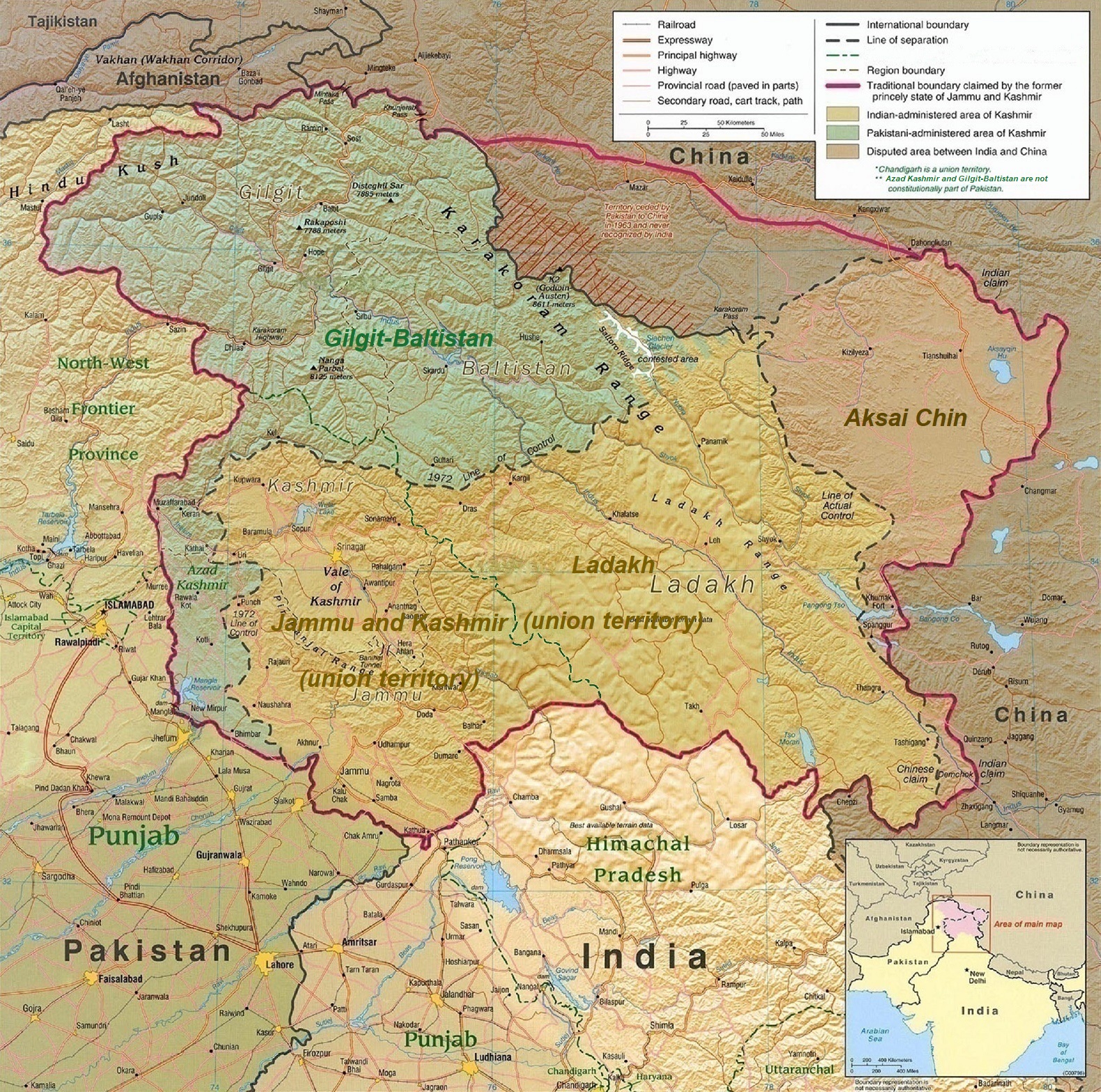
The western portion of the Line of Actual Control, separating the Eastern Ladakh and Aksai Chin (map by CIA). In the Demchok sector, only two claim lines are shown. The line was the focus of a brief war in 1962.
Wikimedia Commons.
High in the Himalayan mountains, Chinese soldiers ambushed Indian troops this week, resulting in a brutal battle on the Indian side of their shared border. Twenty Indians were killed, while China won’t disclose its losses. It was the deadliest confrontation on the border in over 40 years. As a result, some Indian strategists are openly discussing recognizing Taiwan and providing more visibility to the Dalai Lama, state-owned telecoms are blocking Chinese equipment from 4G upgrades, and millions of Indians downloaded an app that helps remove Chinese apps from their phones (before Google removed it). All of this comes at a time when much of the world remains angry at China’s leaders for their initial handling of the COVID-19 crisis.
This week’s apparent provocation is part of a larger recent pattern with China. From the South China Sea, to Taiwan, to Hong Kong, Beijing has been seeking to change facts on the ground in a way that benefits its own strategic and economic interests. In a recent Atlantic Council discussion of the India-China border issue (convened before the latest fighting), senior American diplomat Ambassador Alice Wells summed the situation up well: “There’s a method here to Chinese operations. [A]nd it is that constant aggression, the constant attempt to shift the norms, to shift what is the status quo, that has to be resisted.”
For decades China has tried to expand its strategic reach along its de facto south-western border through the invasion of Tibet, land swaps with Pakistan, and war with India. To this end, China treats British Empire-era maps as political props to variously brandish or dismiss, as best suits Beijing’s goals. For example, it effectively accepted the 1914-era McMahon Line delineation in its border agreement with Myanmar, but rejects it with India.
The Line of Actual Control (LAC) separating China and India runs through rugged, high-altitude terrain that has witnessed multiple conflicts going back to the 1962 India-China border war. In recent weeks, there have been Chinese incursions at several points along the LAC, reportedly involving thousands of troops. In some spots, the Chinese military is digging in on the Indian side, while expanding its already considerable support infrastructure on their side of the LAC.
Delhi is particularly concerned about Chinese advances near India’s Daulat Beg Oldie (DBO) high-altitude military airfield, an essential Indian forward base that provides oversight of the strategic Karakoram Highway (KH) linking China’s western Xinjiang Autonomous Region with Pakistan, including the Gwadar Port on the Indian Ocean. It is a key component of the multi-billion-dollar China-Pakistan Economic Corridor.
Legends Summarized: The Journey To The West (Part VII)
Overly Sarcastic Productions
Published 27 Dec 2019Journey to the West Kai, episode 4: Trouble in Taoist Town!
Thrills! Excitement! Pigsy takes a bath! Sandy fights an alligator! Monkey helps Tripitaka cheat on a high-stakes game show! And as always, everyone forgets about the horse!
Our content is intended for teenage audiences and up.
PATREON: https://www.Patreon.com/OSP
MERCH LINKS: https://www.redbubble.com/people/OSPY…
DISCORD: https://discord.gg/hhAZA2z
OUR WEBSITE: https://www.OverlySarcasticProductions.com
Find us on Twitter https://www.Twitter.com/OSPYouTube
Find us on Reddit https://www.Reddit.com/r/OSP/
QotD: Scientific discoveries despite “research” and “planning”
We live in a culture of “research” and “planning.” I’m not against honest research (which is rare), but mortally opposed to “planning.” The best it can ever achieve is failure, when some achievement comes despite its ham-fisted efforts. Countless billions, yanked from the taxpayers’ pockets, and collected through highly professional, tear-jerking campaigns, are spent “trying to find a cure” for this or that. When and if it comes, it is invariably the product of some nerd somewhere, with a messy lab. Should it be noticed at all, more billions will be spent appropriating the credit, or more likely, suppressing it for giving “false hope.” The regulators will be called in, as the police are to a crime scene.
For from the “planning” point of view, the little nerd has endangered billions of dollars in funding, and thus the livelihoods of innumerable bureaucratic drudges. That is, after all, why they retain the China Wall of lawyers: to prevent unplanned events from happening. But glory glory, sometimes they happen anyway.
David Warren, “That’s funny”, Essays in Idleness, 2018-03-08.
June 22, 2020
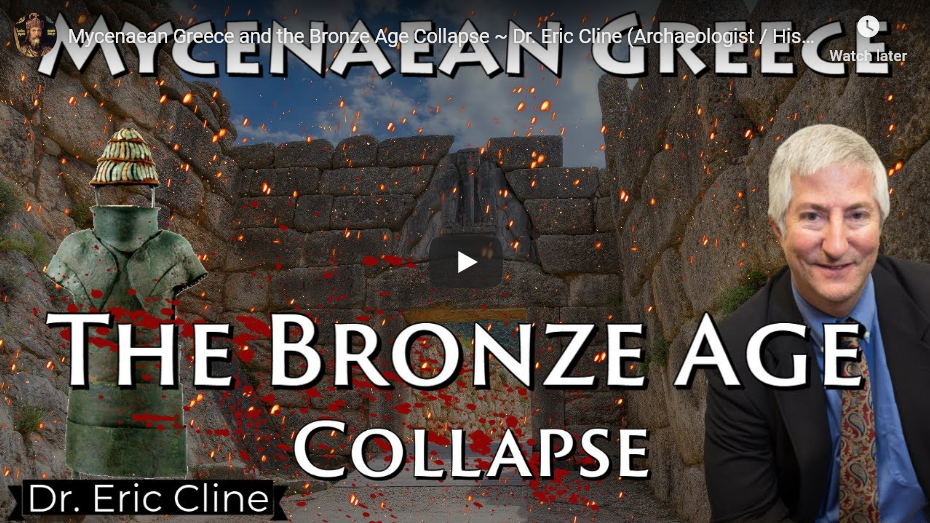
Mycenaean Greece and the Bronze Age Collapse ~ Dr. Eric Cline (Archaeologist / Historian / 1177 BC)
The Study of Antiquity and the Middle Ages
Published 20 Jun 2020In this video we briefly discuss the Bronze Age Collapse and none other than Mycenaean Greece and what contributed to the Greek Dark Ages. Did the Sea Peoples invade? Was there an internal rebellion like a peasant revolt? Drought, Earthquakes and Famine? We cover a variety of topics which also includes debunking the Dorian Invasion. We also take a look at migrations and depopulations of major centers as populations moved elsewhere during this calamity.
Support Dr. Eric Cline at the links below!
Personal web page: https://ehcline.com
GW pages:
https://cnelc.columbian.gwu.edu/eric-…
https://anthropology.columbian.gwu.ed…
https://gwu.academia.edu/EricClineArchaeology and the Iliad: The Trojan War in Homer and History
https://www.amazon.com/dp/B001EI3IVU?…The History of Ancient Israel: From the Patriarchs Through the Romans
https://www.amazon.com/dp/B001JHT8CY?…Image credits: Manna Nader, Gabana Studios Cairo
Hittite 3D City and intro footage credits: 3D reconstruction of Imperial Hittite Karkemish by Giampaolo Luglio, Turco-Italian Archaeological Expedition to Karkemish directed by Nicolò Marchetti (University of Boologna)
KARKEMISH (Carchemish) 1300 BC (3D) -The Southern Capital of the Empire Hittite
Music Attribution: Herknungr – Megaliths | Dark Neolithic Meditive Shamanic Ambient Music https://youtu.be/oc8FQwNjPu0
How to date antique furniture – Shaker chest of drawers
Stumpy Nubs
Published 23 Dec 2015SUBSCRIBE TO STUMPY NUBS WOODWORKING JOURNAL► http://www.stumpynubs.com