Quotulatiousness

July 19, 2020

Barbarossa: a Wehrmacht Soap Opera – WW2 – 099 – July 18 1941

World War Two
Published 18 Jul 2020

As the German armed forces stretch further and further into the USSR, the Wehrmacht command doesn’t seem to agree where they are really going. In the Middle East, the Fascist French forces are delivered a hard blow as the Allied Syrian campaign comes to an end.

Join us on Patreon: https://www.patreon.com/TimeGhostHistory
Or join The TimeGhost Army directly at: https://timeghost.tv

Follow WW2 day by day on Instagram @World_war_two_realtime https://www.instagram.com/world_war_two_realtime
Between 2 Wars: https://www.youtube.com/playlist?list…
Source list: http://bit.ly/WW2sources

Written and Hosted by: Indy Neidell
Director: Astrid Deinhard
Producers: Astrid Deinhard and Spartacus Olsson
Executive Producers: Astrid Deinhard, Indy Neidell, Spartacus Olsson, Bodo Rittenauer
Creative Producer: Joram Appel
Post-Production Director: Wieke Kapteijns
Research by: Indy Neidell
Edited by: Iryna Dulka
Sound design: Marek Kamiński
Map animations: Eastory (https://www.youtube.com/c/eastory)
Map consultants: Rabih Rached and Patrick Adaimy

Colorizations by:
– Carlos Ortega Pereira, BlauColorizations – https://www.instagram.com/blaucoloriz…
– Norman Stewart – https://oldtimesincolor.blogspot.com
– Julius Jääskeläinen – https://www.facebook.com/JJcolorization
– Cassowary Colorizations – https://www.cassowarycolor.com
– Denis Marinov from Wikimedia

Sources:
– Narodowe Archiwum Cyfrowe
– Imperial War Museum: TR 1762
– Bundesarchiv, CC-BY-SA 3.0: Bild_146-1971-068-10, Bild_101I-009-0882-04, Bild_101I-209-0090-29, Bild_183-B0716-0005-002, Bild_183-B0716-0005-003, Bild_146-1974-170-23.

Archive by Screenocean/Reuters https://www.screenocean.com.

A TimeGhost chronological documentary produced by OnLion Entertainment GmbH.

“Evolved cognition is a kludge – more properly, multiple stacks of kludges – developed under selection to be just barely adequate at coping”

Filed under: Health, Science, Technology — Tags: , , , — Nicholas @ 05:00

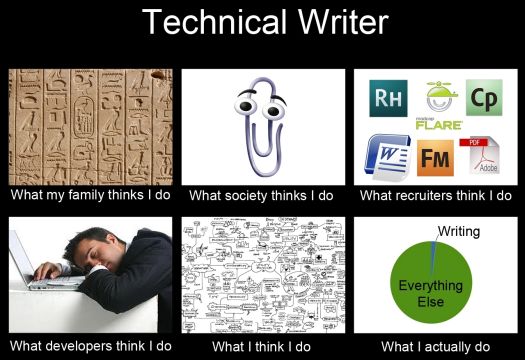
ESR considers the role of programmers who need to document their software, after a brief trip into the kludginess of human cognition:

Maybe you’re one of the tiny minority of programmers that, like me, already enjoys writing documentation and works hard at doing it right. If so,the rest of this essay is not for you and you can skip it.

Otherwise, you might want to re-read (or at least re-skim) Ground-Truth Documents before continuing. Because ground-truth documents are a special case of a more general reason why you might want to try to change your mindset about documentation.

In that earlier essay I used the term “knowledge capture” in passing. This is a term of art from AI; it refers to the process of extracting domain knowledge from the heads of human experts into a form that can be expressed as an algorithm executable by the literalistic logic of a computer.

What I invite you to think about now is how writing documentation for software you are working on can save you pain and effort by (a) capturing knowledge you have but don’t know you have, and (b) eliciting knowledge that you have not yet developed.

Humans, including me and you, are sloppy and analogical thinkers who tend to solve problems by pattern-matching against noisy data first and checking our intuitions with logic after the fact (if we actually get that far). There’s no point in protesting that it shouldn’t be that way, that we should use rigorous logic all the way down, because our brains simply aren’t wired for that. Evolved cognition is a kludge – more properly, multiple stacks of kludges – developed under selection to be just barely adequate at coping.

This kludginess is revealed by, for example, optical illusions. And by the famous 7±2 result about the very limited sized of the human working set. And the various well-documented ways that human beings are extremely bad at statistical reasoning. And in many other ways …

Black Saturday, Nuclear War on Autopilot | The Cuban Missile Crisis | Day 12

TimeGhost History
Published 18 Jul 2020

On October 27, 1962 a deal to resolve the Cuban Missile Crisis is ever so close, but then almost everything that can go wrong, goes wrong. The world is left teetering on the brink, and someone has to die.

Join us on Patreon: https://www.patreon.com/TimeGhostHistory

Hosted by: Indy Neidell
Written by: Spartacus Olsson
Director: Astrid Deinhard
Producers: Astrid Deinhard and Spartacus Olsson
Executive Producers: Astrid Deinhard, Indy Neidell, Spartacus Olsson, Bodo Rittenauer
Creative Producer: Joram Appel
Post-Production Director: Wieke Kapteijns
Research by: Spartacus Olsson
Edited by: Daniel Weiss
Sound design: Marek Kaminski

Colorizations:
– Carlos Ortega Pereira (BlauColorizations) – https://www.instagram.com/blaucoloriz…
– Daniel Weiss
– Jaris Almazani (Artistic Man) – https://instagram.com/artistic.man?

Sources:
From the Noun Project:
diary By Astoe
Handshake By priyanka
telegraph By Luke Anthony Firth

Soundtracks from Epidemic Sound:
– “Cold Eyes” – Elliot Holmes
– “Nightclub Standoff” – Elliot Holmes
– “From the Depths” – Walt Adams
– “When They Fell” – Wendel Scherer
– “Juvenile Delinquent” – Elliot Holmes
– “Kissed by Thunder” – Elliot Holmes

Archive by Screenocean/Reuters https://www.screenocean.com.

A TimeGhost chronological documentary produced by OnLion Entertainment GmbH.

From the comments:

TimeGhost History
26 minutes ago
Just when everything looks OK again, the house of cards that the USSR and USA have built starts to crumble. To us in 2020 that should serve to remind us that words matter. Because that’s all it was to begin with — words like “give it to the Reds!” and “down with the Bourgeoisie!” But words easily become bluster, and bluster easily becomes action, and action is always hard to control.

Remembering the past so that we can learn from it, without ideological bias, without demagoguery, and proposing oversimplified solutions to complex problems. That is our mission here at TimeGhost Become a part of that effort by joining the TimeGhost Army at https://www.patreon.com/TimeGhostHistory or https://timeghost.tv

In some mature countries, politicians resign when caught in ethics violations … but this is Canada (by definition, an immature country)

Filed under: Australia, Britain, Cancon, Media, Politics — Tags: , , , , — Nicholas @ 03:00

Chris Selley lists some of the ethical mire the Trudeau Liberals are wading through, and points out that other countries wouldn’t put up with corrupt sh!t like Canadians do:

Other countries’ prime ministers occasionally have to work at keeping their jobs. Not so much Canada’s. We look down our noses at Australia’s “leadership spills” as unconscionably chaotic, though they have ushered in a new prime minister a grand total of three times in 30 years. If only we had such chaos, PMs might at least be reminded occasionally they aren’t elected emperor in non-negotiable four-year chunks. Instead many of us blanch even at the idea of minority governance. So unstable!

Other countries’ ministers sometimes stand on points of principle, too, and not just over epochal events like the Iraq War or Brexit. Sajid Javid resigned as Britain’s chancellor of the exchequer last year after Prime Minister Boris Johnson insisted on appointing Javid’s senior staff. “No self-respecting minister would accept those terms,” he said. Every Trudeau minister accepts those terms.

There is simply no culture of accountability in Ottawa — not for big stuff and not for small. When Trudeau headed off to Harrington Lake while advising everyone else to hide under the bed, it was considered gauche to complain. The National Post reported this week that Health Minister Patty Hajdu took four round trips in a government jet between Ottawa and Thunder Bay during the lockdown, and Treasury Board President Jean-Yves Duclos was chauffeured six times to and from Quebec City. Ho hum. Another nothingburger.

OK, many conclude, so let’s at least give the Conflict of Interest Act some teeth! Some legislative dentures might be worth a try — though they’re by no means universally appreciated. When the Access to Information, Privacy and Ethics Committee reviewed the Conflict of Interest Act in 2014, some witnesses argued for doing away with financial penalties altogether, on the theory “the strongest sanctions the Commissioner has at her disposal are her moral authority and the power of condemnation.” The current maximum fine of $500 may well be the worst of both worlds: Not only does it offer no deterrent, it brings the law itself into disrepute.

[…]

On Thursday, Deputy Prime Minister Chrystia Freeland said she was “really sorry” about the WE debacle. But she expressed her “full confidence” in the prime minister. In other countries, it might be seen as ominous that she felt it necessary. Here, however, it’s safe to take it at face value. None of us expect much of our politicians, and that’s exactly what we get.

How To Lay Siege On A Star Fortress In The 16th and Early 17th Century | Early-Modern Warfare

Filed under: Europe, History, Military — Tags: , , — Nicholas @ 02:00

SandRhoman History
Published 29 Mar 2020

From the 14th to the 17th century, the star fortress became ever more important for siege warfare. Engineers and tacticians developed fortresses that were more elaborate and more solid than ever before. As a result, siege warfare reached an immense level of complexity. Throughout the middle ages, high and relatively thin walls were enough protection against storming ladders, siege equipment and projectiles.

But since the 14th century ever more effective firearms and artillery challenged the defensive potential of fortresses. A to and fro of military innovations began – improved fortifications countered improved gunpowder weapons and vice versa. This went on until the end of the 16th century, when according to historian Stephan Hoppe, “a successful solution to all important issues of defense had been found”. One famous type of stronghold that was crucial to this evolution was the trace italienne better known as the star fortress. It was to be found quickly all over Europe, though in a variety of forms. Historian John A. Lynn states that at the same time the number of fortified sites increased drastically, so that central European warfare shifted away from open field battles and finally revolved above all around sieges.

If you want to support us you can do that here: https://www.patreon.com/sandrhomanhis…

#history #siege #sandrhoman

Sources:
Hoppe, S., s.v. “Festungsbau”, in: Enzyklopädie der Neuzeit.
Lynn, J. A., “States in Conflict 1661-1763”, in: Parker, G. (Ed.), The Cambridge History of Warfare, Cambridge 2005.
Lynn, J. A., “The trace itallienne and the Growth of Armies”, in: Rogers, C. J. (Ed.), The Military Revolution Debate. Readings on the Military Transformation of Early Modern Europe, Boulder / San Francisco / Oxford 1995.
Ortenburg, G., Waffe und Waffengebrauch im Zeitalter der Landsknechte (Heerwesen der Neuzeit, Abt. 1, Bd. 1) Koblenz 1984.
Parker, G., “The Limits to Revolutions in Military Affairs: Maurice of Nassau, the Battle of Nieuwpoort (1600), and the Legacy”, in The Journal of Military History, 71;2, 2007; S. 331 – 372.
Rogers, C.J. / Tallet F. (editors), European Warfare, 1350–1750, 2010.
Van Nimwegen, O., The Dutch Army and the Military Revolutions, 1588-1688.

QotD: How to raise a God-Emperor son

Filed under: Health, Quotations — Tags: , , , , , — Nicholas @ 01:00

When my now-adult daughter was a child, another child once hit her on the head with a metal toy truck. I watched that same child, one year later, viciously push his younger sister backwards over a fragile glass-surfaced coffee table. His mother picked him up, immediately afterward (but not her frightened daughter), and told him in hushed tones not to do such things, while she patted him comfortingly in a manner clearly indicative of approval. She was out to produce a little God-Emperor of the Universe. That’s the unstated goal of many a mother, including many who consider themselves advocates for full gender equality. Such women will object vociferously to any command uttered by an adult male, but will trot off in seconds to make their progeny a peanut-butter sandwich if he demands it while immersed self-importantly in a video game. The future mates of such boys have every reason to hate their mothers-in-law. Respect for women? That’s for other boys, other men — not for their dear sons.

Jordan Peterson, 12 Rules for Life: An Antidote to Chaos, 2018.

July 18, 2020

Gluing The Side Frames! | The Japanese Inspired Picnic Bench Project

Filed under: Tools, Woodworking — Tags: , , , — Nicholas @ 06:00

Matt Estlea
Published 16 Jul 2020

In this video, we start the nerveracking task of gluing the side frames together. This involves a fair bit of jiggery due to the various curves and angles we need to content with.
_________________________________________________________________

Support what I do by becoming a Patron! This will help fund new tools, equipment and cover my overheads. Meaning I can continue to bring you regular, high quality, free content. Thank you so much for your support! https://www.patreon.com/mattestlea

Don’t want to commit to a monthly direct debit but still want to help out? That’s fine!
You can make a one time donation here: www.mattestlea.com/donate
You can donate us biscuits here: www.mattestlea.com/wishlist
_________________________________________________________________
BUY THE WOODWORKING BIBLE HERE:
www.mattestlea.com/the-woodworkers-manual
_________________________________________________________________

SOCIAL MEDIA
Instagram: www.instagram.com/mattestlea
Twitter: www.twitter.com/mattestlea
Patreon: www.patreon.com/mattestlea
Pinterest: www.pinterest.com/mattestlea
LinkedIn: www.linkedin.com/in/matt-estlea-b6414b11a/
_________________________________________________________________
See what tools I use here: www.mattestlea.com/equipment
My Website: www.mattestlea.com
_________________________________________________________________

My name is Matt Estlea, I’m a 24 year old Woodworker from Basingstoke in England and my aim is to make your woodworking less s***.

I come from 5 years tuition at Rycotewood Furniture Centre with a further 1 year working as an Artist in Residence at the Sylva Foundation. I now teach City and Guilds Furniture Making at Rycotewood as of September 2018.

If you’re interested in studying at Rycotewood, view their courses here:
www.mattestlea.com/rycotewood

I also had 5 years of experience working at Axminster Tools and Machinery where I helped customers with purchasing tools, demonstrated in stores and events, and gained extensive knowledge about a variety of tools and brands. I discontinued this at the start of 2019 to focus solely on video creation and teaching.

During the week, I film woodworking projects, tutorials, reviews and a viewer favourite ‘Tool Duel’ where I compare two competitive manufacturers tools against one another to find out which is best. I also have a Free Online Woodworking School which you should definitely check out!

www.mattestlea.com/school

I like to have a laugh and my videos are quite fast paced BUT you will learn a lot, I assure you.

Lets go make a mess.

Andrew Sullivan and New York magazine part company “amicably”

Filed under: Media, Politics, USA — Tags: , , , — Nicholas @ 05:00

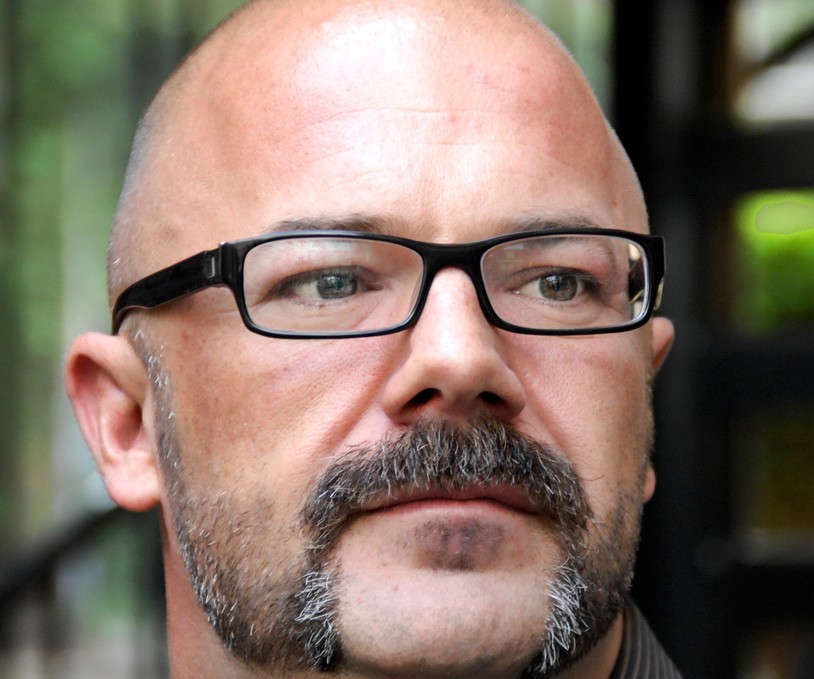
In his final column for New York, Andrew Sullivan announces he’s going back to blogging and stop making employees there feel unsafe:

The good news is that my last column in this space is not about “cancel culture.” Well, almost. I agree with some of the critics that it’s a little nuts to say I’ve just been “canceled,” sent into oblivion and exile for some alleged sin. I haven’t. I’m just no longer going to be writing for a magazine that has every right to hire and fire anyone it wants when it comes to the content of what it wants to publish.

The quality of my work does not appear to be the problem. I have a long essay in the coming print magazine on how plagues change societies, after all. I have written some of the most widely read essays in the history of the magazine, and my column has been popular with readers. And I have no complaints about my interaction with the wonderful editors and fact-checkers here — and, in fact, am deeply grateful for their extraordinary talent, skill, and compassion. I’ve been in the office maybe a handful of times over four years, and so there’s no question of anyone mistreating me or vice versa. In fact, I’ve been proud and happy to be a part of this venture.

What has happened, I think, is relatively simple: A critical mass of the staff and management at New York Magazine and Vox Media no longer want to associate with me, and, in a time of ever tightening budgets, I’m a luxury item they don’t want to afford. And that’s entirely their prerogative. They seem to believe, and this is increasingly the orthodoxy in mainstream media, that any writer not actively committed to critical theory in questions of race, gender, sexual orientation, and gender identity is actively, physically harming co-workers merely by existing in the same virtual space. Actually attacking, and even mocking, critical theory’s ideas and methods, as I have done continually in this space, is therefore out of sync with the values of Vox Media. That, to the best of my understanding, is why I’m out of here.

Two years ago, I wrote that we all live on campus now. That is an understatement. In academia, a tiny fraction of professors and administrators have not yet bent the knee to the woke program — and those few left are being purged. The latest study of Harvard University faculty, for example, finds that only 1.46 percent call themselves conservative. But that’s probably higher than the proportion of journalists who call themselves conservative at the New York Times or CNN or New York Magazine. And maybe it’s worth pointing out that “conservative” in my case means that I have passionately opposed Donald J. Trump and pioneered marriage equality, that I support legalized drugs, criminal-justice reform, more redistribution of wealth, aggressive action against climate change, police reform, a realist foreign policy, and laws to protect transgender people from discrimination. I was one of the first journalists in established media to come out. I was a major and early supporter of Barack Obama. I intend to vote for Biden in November.

It seems to me that if this conservatism is so foul that many of my peers are embarrassed to be working at the same magazine, then I have no idea what version of conservatism could ever be tolerated. And that’s fine. We have freedom of association in this country, and if the mainstream media want to cut ties with even moderate anti-Trump conservatives, because they won’t bend the knee to critical theory’s version of reality, that’s their prerogative. It may even win them more readers, at least temporarily. But this is less of a systemic problem than in the past, because the web has massively eroded the power of gatekeepers to suppress and control speech. I was among the first to recognize this potential for individual freedom of speech, and helped pioneer individual online media, specifically blogging, 20 years ago.

And this is where I’m now headed.

The Invasion of Cuba | The Cuban Missile Crisis I Day 11

TimeGhost History
Published 17 Jul 2020

On 26 October 1962, US President John F Kennedy at first continues to plan an invasion of Cuba, but while the politicians make new plans, their previous military plans take on a life of their own

Join us on Patreon: https://www.patreon.com/TimeGhostHistory

Hosted by: Indy Neidell
Written by: Spartacus Olsson
Director: Astrid Deinhard
Producers: Astrid Deinhard and Spartacus Olsson
Executive Producers: Astrid Deinhard, Indy Neidell, Spartacus Olsson, Bodo Rittenauer
Creative Producer: Joram Appel
Post-Production Director: Wieke Kapteijns
Research by: Spartacus Olsson
Edited by: Spartacus Olsson, Jonas Klein & Karolina Dołęga
Sound design: Marek Kamiński

Colorizations:
Carlos Ortega Pereira, BlauColorizations, https://www.instagram.com/blaucoloriz…
Jaris Almazani (Artistic Man), https://instagram.com/artistic.man?ig…

Music:
“Try and Catch Us Now” – David Celeste
“Cold Eyes” – Elliot Holmes.mp3
“Under the Dome” – Philip Ayers
“Mexican Standoff” – Walt Adams
“Car Chase in Virginia” – White Bones
“When They Fell” – Wendel Scherer
“Moving to Disturbia” – Experia
“Kid Me Not” – Elliot Holmes
“From the Depths” – Walt Adams
“Nightclub Standoff” – Elliot Holmes
“Potential Redemption” – Max Anson

Archive by Screenocean/Reuters https://www.screenocean.com.

A TimeGhost chronological documentary produced by OnLion Entertainment GmbH.

“Agglomerationists” today and in the Middle Ages

Filed under: Britain, Economics, Europe, France, History — Tags: , , , , — Nicholas @ 03:00

In his latest Age of Invention newsletter, Anton Howes compares the views of today’s “urbanists” with the “agglomerationists” of the late Medieval period:

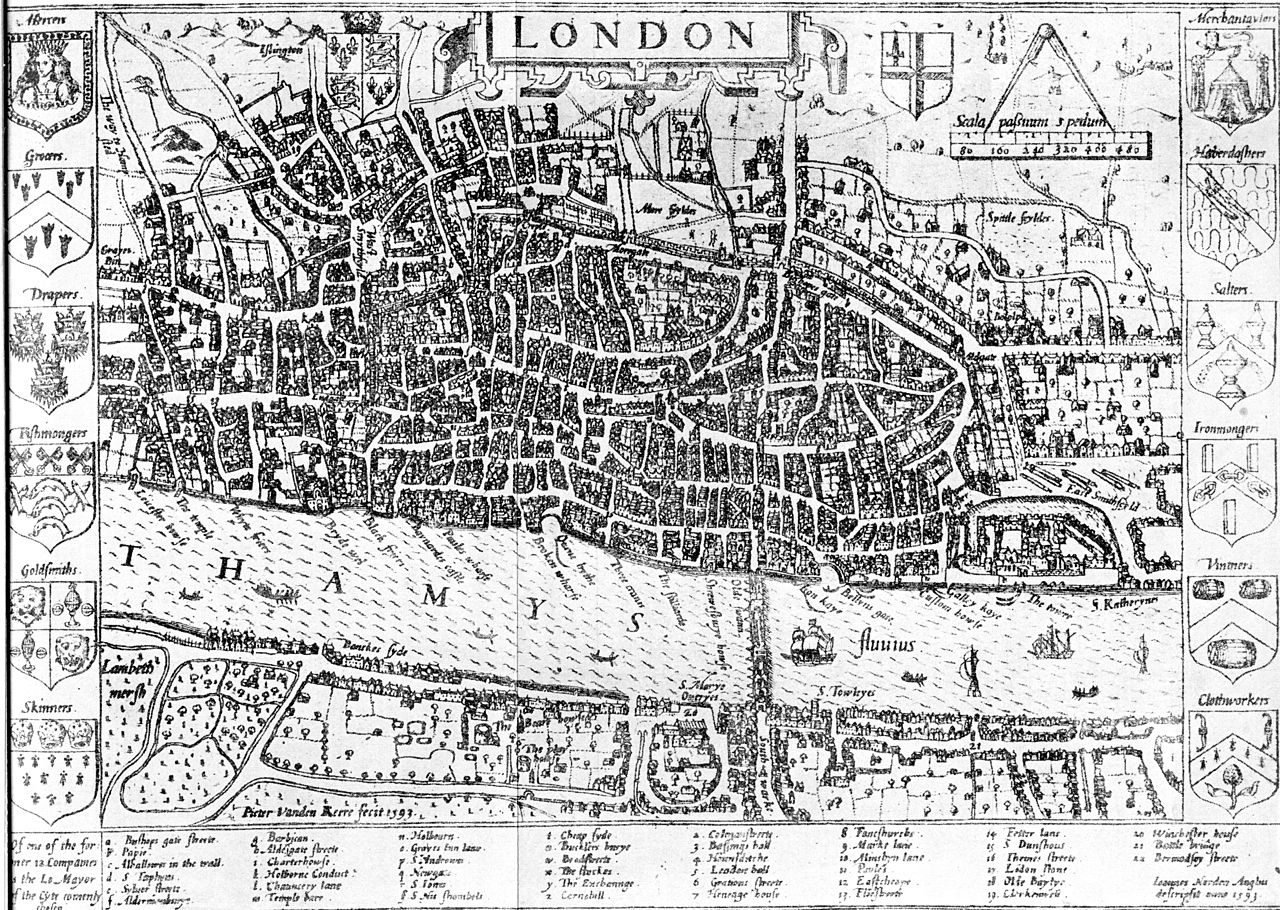
John Norden’s map of London in 1593. There is only one bridge across the Thames, but parts of Southwark on the south bank of the river have been developed.
Wikimedia Commons.

The other day, economic historian Tim Leunig tagged me into a comment on twitter with the line “intellectually I think the biggest change since settled agriculture was the idea that most people could live in cities and not produce food”. What’s interesting about that, I think, is the idea that this was not just an economic change, but an intellectual one. In fact, I’ve been increasingly noticing a sort of ideology, if one can call it that, which seemingly took hold in Britain in the late sixteenth century and then became increasingly influential. It was not the sort of ideology that manifested itself in elections, or even in factions, but it was certainly there. It had both vocal adherents and strenuous opponents, the adherents pushing particular policies and justifying them with reference to a common intellectual tradition. Indeed, I can think of many political and economic commentators who are its adherents today, whether or not they explicitly identify as such.

Today, the people who hold this ideology will occasionally refer to themselves as “urbanists”. They are in favour of large cities, large populations, and especially density. They believe strongly in what economists like to call “agglomeration effects” — that is, if you concentrate people more closely together, particularly in cities, then you are likely to see all sorts of benefits from their interactions. More ideas, more trade, more innovation, more growth.

Yet urbanism as a word doesn’t quite capture the full scope of the ideology. The group also heavily overlaps with natalists — people who think we should all have more babies, regardless of whether they happen to live in cities — and a whole host of other groups, from pro-immigration campaigners, to people setting up charter cities, to advocates of cheaper housing, to enthusiasts for mass transit infrastructure like buses, trams, or trains. The overall ideology is thus not just about cities per se — it seems a bit broader than that. Given the assumptions and aims that these groups hold in common, perhaps a more accurate label for their constellation of opinions and interests would be agglomerationism.

So much for today. What is the agglomerationist intellectual tradition? In the sixteenth century, one of the mantras that keeps cropping up is the idea that “the honour and strength of a prince consists in the multitude of the people” — a sentiment attributed to king Solomon. It’s a phrase that keeps cropping up in some shape or form throughout the centuries, and used to justify a whole host of agglomerationist policies. And most interestingly, it’s a phrase that begins cropping up when England was not at all urban, in the mid-sixteenth century — only about 3.5% of the English population lived in cities in 1550, far lower than the rates in the Netherlands, Italy, or Spain, each of which had urbanisation rates of over 10%. Even England’s largest city by far, London, was by European standards quite small. Both Paris and Naples were at least three times as populous (don’t even mention the vast sixteenth-century metropolises of China, or Constantinople).

Given their lack of population or density, English agglomerationists had a number of role models. One was the city of Nuremburg — through manufactures alone, it seemed, a great urban centre had emerged in a barren land. Another was France, which in the early seventeenth century seemed to draw in the riches to support itself through sheer exports. One English ambassador to France in 1609 noted that its “corn and grain alone robs all Spain of their silver and gold”, and warned that it was trying to create still new export industries like silk-making and tapestry weaving. (The English rapidly tried to do the same, though with less success.) France may not have been especially urban either, but Paris was already huge and on the rise, and the country’s massive overall population made it “the greatest united and entire force of any realm or dominion” in Christendom. Today, the population of France and Britain are about the same, but in 1600 France’s was about four times as large. Some 20 millions compared to a paltry 5. If Solomon was right, then England had a lot of catching up to do to even approach France in honour.


The biggest sharpening mistake woodworkers make (And why…)

Filed under: Tools, Woodworking — Tags: , — Nicholas @ 02:00

Stumpy Nubs
Published 2 Nov 2018

SUBSCRIBE (FREE) TO STUMPY NUBS WOODWORKING JOURNAL► http://www.stumpynubs.com
Links to other sharpening videos►
Diamond stone tutorial: https://www.youtube.com/watch?v=zBND6…
How sharp is sharp?: https://www.youtube.com/watch?v=3rNQ-…
Bevel angle tutorial: https://www.youtube.com/watch?v=IqPw3…

LINKS TO TOOLS SEEN IN VIDEO (clicking on these links helps support us, at no cost to you)►
6″ metal ruler for sharpening: https://amzn.to/2QkfLkx
Trend diamond stone: https://amzn.to/2QhgKSb
Diamond sharpening kit: https://amzn.to/2RmKf5O
Stanley Sweetheart Chisels: https://amzn.to/2QhgCSH

HELP KEEP OUR VIDEOS FREE! Please support those who support us by visiting their websites and having a quick look around-
Trend: http://www.trend-uk.com/en/US/
MyWoodCutters: https://mywoodcutters.com/
Bora/Portamate: https://boratool.com/

QotD: Peace can also be the health of the state

War, we libertarians are fond of telling each other, is the health of the state. Peruse the most recent posting here by our own WW1 historian, Patrick Crozier, to see how we often think about such things. So, what about that increasingly obtrusive and kleptocratic Brazilian state that has been putting itself about lately, stirring up misery and libertarianism? There have been no big wars to make the Brazilian state as healthy as it now is, and especially not recently. What of that?

The story Bruno Nardi told made me think of the book that explains how peace is also the health of the state, namely Mancur Olson’s public choice theory classic, The Rise and Decline of Nations. It is years since I read this, but the story that this book tells is of the slow accumulation and coagulation of politics, at the expense of mere business, as the institutions of a hitherto thriving nation gang up together to form “distributional coalitions” (that phrase I do definitely recall). The point being that if you get involved in a war, and especially if you lose a war, the way Germany and Japan lost WW2, that tends to break up such coalitions.

The last thing on the mind of a German trade unionist or businessman, in 1946, was lobbying the government for regulatory advantages or for subsidies for his particular little slice of the German economy. Such people at that time were more concerned to obtain certificates saying that they weren’t Nazis, a task made trickier by the fact that most of them were Nazis. Olson’s way of thinking makes the post-war (West) German and then Japanese economic miracles, and the relative sluggishness of the British economy at that time, a lot more understandable. Winning a war, as Olson points out, is not nearly so disruptive of those distributional coalitions, in fact it strengthens them, as Crozier’s earlier posting illustrates.

Brian Micklethwait, “The view from Brazil is that peace is also the health of the state”, Samizdata, 2018-04-13.

July 17, 2020

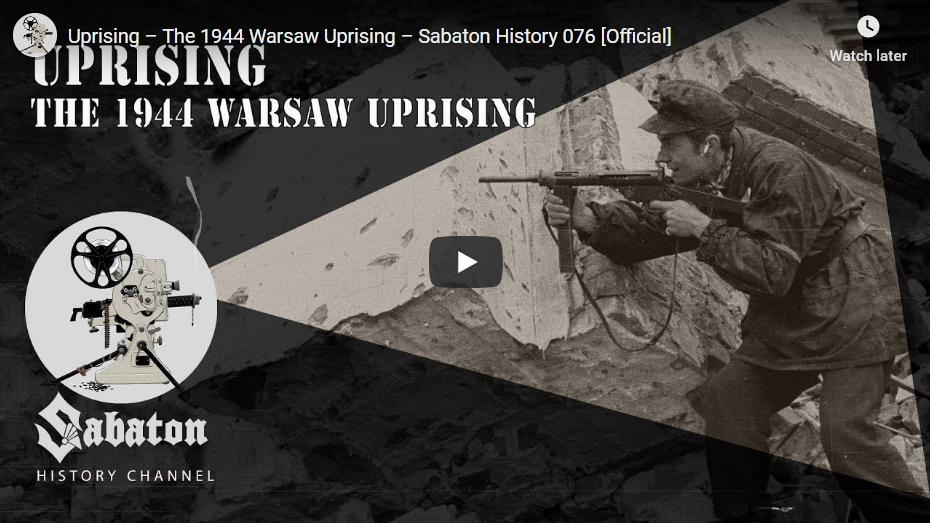
“Uprising” – The 1944 Warsaw Uprising – Sabaton History 076 [Official]

Filed under: Europe, Germany, History, Media, Military, WW2 — Tags: , , , , , — Nicholas @ 06:00

Sabaton History
Published 16 Jul 2020

August 1944. After nearly 5 years of suffering and oppression at the hands of the Nazis, the Polish resistance in Warsaw was ready to rise up against the German occupation. With the Red Army approaching towards the Vistula from the east, the insurgents planned to take over much of the Polish capital and hold it until help from their Allies arrived. In the early morning hours of August 1, groups of armed young men broke the curfew and stormed official buildings and German warehouses. But as insurgents fought for their lives and future, the outside world however, remained eerily quiet to their pleas for help.

Support Sabaton History on Patreon: https://www.patreon.com/sabatonhistory

Listen to “Uprising” on the album Coat Of Arms:
“CD: http://bit.ly/CoatOfArmsStore
Spotify: http://bit.ly/CoatOfArmsSpotify
Apple Music: http://bit.ly/CoatOfArmsAppleMusic
iTunes: http://bit.ly/CoatOfArmsiTunes
Amazon: http://bit.ly/CoatOfArmsAmzn
Google Play: http://bit.ly/CoatOfArmsGooglePlay

Watch the Official Music Video of “Uprising” here:
https://www.youtube.com/watch?v=01IaK…

Listen to Sabaton on Spotify: http://smarturl.it/SabatonSpotify
Official Sabaton Merchandise Shop: http://bit.ly/SabatonOfficialShop

Hosted by: Indy Neidell
Written by: Markus Linke and Indy Neidell
Directed by: Astrid Deinhard and Wieke Kapteijns
Produced by: Pär Sundström, Astrid Deinhard and Spartacus Olsson
Creative Producer: Joram Appel
Community Manager: Maria Kyhle
Executive Producers: Pär Sundström, Joakim Broden, Tomas Sunmo, Indy Neidell, Astrid Deinhard, and Spartacus Olsson
Post-Production Director: Wieke Kapteijns
Edited by: Iryna Dulka
Sound Editing by: Marek Kaminski

Eastory YouTube Channel: https://www.youtube.com/channel/UCEly…
Archive by: Reuters/Screenocean https://www.screenocean.com
Music by Sabaton

Colorizations by Mikołaj Kaczmarek – Kolor Historii – https://www.facebook.com/KolorHistorii/

Sources:
– Imperial War Museum: H 4963.
– Mil.ru
– Bundesarchiv, CC-BY-SA 3.0: Bild_183-S73507, Bild_146-2005-0038, Bild_101I-695-0411-02A, Bild_183-97906, Bild 101I-695-0425-13, Bild_146-1973-113-23, Bild_146-1996-057, Bild_146-1994-054-30
– Liftarn from Wikimedia

An OnLion Entertainment GmbH and Raging Beaver Publishing AB co-Production.

© Raging Beaver Publishing AB, 2019 – all rights reserved.

Not being racist isn’t enough … now you need to be actively anti-racist

Filed under: Books, Politics — Tags: , , , — Nicholas @ 05:00

In The Critic, Ewa Dymek and Mateusz Dymek review Me and White Supremacy: How to Recognize your Privilege, Combat Racism and Change the World by Layla F. Saad (the North American release is subtitled “Combat Racism, Change the World and Become a Good Ancestor”):

Conceptually, systemic racism is a fuzzy concept. It morphs from being defined as an institution with racist policies to one with no racist policies and no racist individuals but is nevertheless still racist. In certain circles to come out and ask for clarity on what systemic racism is, is to reveal your own deep lack of intellectual sophistication: because nowadays everyone knows what it is – it’s this BIG thing. How big? What follows is quite a lot wide, circular arm movements illustrating that systemic racism is BIG and EVERYWHERE. And exactly where everywhere, is followed by eye rolling. Then, inevitably, the words “unconscious bias” will accompany the definition, to which a genuine response might be: “But you don’t consider yourself a racist, do you?” And silence will follow. It wasn’t a trick question but any answer in this particular milieu is tricky. To say out loud: “Yes, I am a racist” can obviously sound somewhat KKK. But to say the opposite could, according to the “creative visionary” Ms. Layla Saad, mean that “you have been conditioned into a white supremacist ideology, whether you have realized it or not.”

This, of course, is not an outlier view but in line with modern “Anti-racist” theories, such as Ibram X Kendi’s assertion that “the claim of ‘not racist’ neutrality is a mask for racism” or Robin DiAngelo’s insistence that a person declaring herself non-prejudice “only protects racism” (the author of White Fragility also penned the foreword to this book).

If these contradictions make perfect sense to you and wide, circular hand gestures are enough to explain the nuances of omnipresent racism, then you are primed for Ms. Saad’s acutely distressing self-help book Me and White Supremacy: Combat Racism, Change the World, and Become a Good Ancestor. Adapted from her 28-day Instagram challenge and drawn from childhood experiences of white supremacy in Wales and Swindon (before finishing up her schooling at a British private school in Qatar), the book is a heady mix of Mein Kampf meets The Secret. This bestseller takes the shape of an arduous course where each day you solemnly address the nuances of your deep hidden and latent racism towards the “BIPOCs” (Black, Indigenous, Persons of Colour). Daily written responses to journaling prompts are demanded of you (one would imagine in a jotter with a clenched black fist on its cover).

The core tenet of the Anti-Racist movement, as well as Ms. Saad’s curriculum, is to see the Western world through a racialist perspective, i.e. race and racism is always there to be found if you just put the hard work in. Ms. Saad explains: “I can count on one hand the number of times I experienced overt racism” but her teachings are not about that tangible, obvious type of racism, it’s about another type. The big and everywhere type. Through the Me and White Supremacy experience you will have to (if you’re white or “white-passing”) scrutinise every interaction with a person of a different skin colour for evidence of fetishisation, tokenism, colourism and “optical allyship” (helping a BIPOC just for show). Even as a bi-racial person, you will learn how each and every encounter with a BIPOC is probably an oppression and/or aggression that upholds your “internalised white privilege”. If the BIPOC in question happens to be your own child, you may find you are tokenising them too.

Showdown in the United Nations | The Cuban Missile Crisis | Day 10

TimeGhost History
Published 16 Jul 2020

On October 25, 1962 while the US Navy are looking for something to do in the Caribbean, US Ambassador to the UN Adlai Stevenson is about to face off with USSR Ambassador to the UN, Valerian Zorin in a historic showdown at the United Nations headquarters in New York.

Join us on Patreon: https://www.patreon.com/TimeGhostHistory

Hosted by: Indy Neidell
Written by: Spartacus Olsson
Director: Astrid Deinhard
Producers: Astrid Deinhard and Spartacus Olsson
Executive Producers: Astrid Deinhard, Indy Neidell, Spartacus Olsson, Bodo Rittenauer
Creative Producer: Joram Appel
Post-Production Director: Wieke Kapteijns
Research by: Spartacus Olsson
Edited by: Spartacus Olsson, Jonas Klein & Karolina Dołęga
Sound design: Marek Kamiński

Colorizations:
Carlos Ortega Pereira, BlauColorizations, https://www.instagram.com/blaucoloriz…
Klimbim

Archive by Screenocean/Reuters https://www.screenocean.com.

A TimeGhost chronological documentary produced by OnLion Entertainment GmbH.

« Newer PostsOlder Posts »

Powered by WordPress