Quotulatiousness

July 17, 2020

Justin Trudeau IS the Liberal Party and he’s not planning to go away

Filed under: Cancon, Government, Politics — Tags: , , , — Nicholas @ 03:00

The government is doing what it can to ride out the storm of yet another ethics investigation into the Trudeau family entanglements with WE, and no rational person expects Justin Trudeau to be even a bit chastened by the experience — he genuinely has no idea what the fuss is all about, and he has no inclination to step aside from his patrimony. Even if he did … the Liberals have nobody who could credibly step up:

Some, however, are wondering whether it’s time for the Liberals to start thinking about life after Justin Trudeau. It would be understandable if his leadership were in jeopardy. The ethics commissioner is commencing his office’s third official investigation into events that could have been avoided had the prime minister simply not done unnecessary things: vacationed on the Aga Khan’s island; inserted himself in the prosecutorial chain of command to “save” 9,000 jobs at SNC-Lavalin that were not in jeopardy; sole-sourced a giant jobs program to his buddies Craig and Marc. This theory holds that Chrystia Freeland is ready and willing and able to take over. And then everything would be, somehow, better.

There doesn’t seem to be much to hang it on. Exactly one MP, Toronto backbencher Nathaniel Erskine-Smith, appears willing to put his name to complaints about the Trudeau Gang’s latest easily-avoided snafu, and he’s not being impolite about it. Polling shows little sign that the scandal is leaving a mark on Liberal voting intentions: Canadians seem very grateful for the federal government’s terrible-to-middling performance during the pandemic. “Snap election, Trudeau super-majority” remains a competing Ottawa narrative.

But it’s an intriguing thought: The Justin Trudeau Liberals, without Justin Trudeau — intriguing because it’s basically a black hole. Way back in the Michael Ignatieff era there was this idea that the Liberals would assemble the best minds of various generations and turn themselves into a party that believed in things and behaved as such in government. There was to be a conference in Montreal, modelled on Lester Pearson’s 1960 think-fest in Kingston, Ont., which spawned various useful ideas including the Canada Pension Plan.

No one remembers much about the 2010 think-fest, which was, coincidentally enough, titled “Canada 150,” because all this “ideas” mumbo jumbo soon became a moot point. Justin finally agreed to run for leader, and he might as well have been unopposed, and it turned out he was really good at doing what Liberals have always believed in: winning.

Get rid of the Trudeau brand, warts and all, and what do you have? Freeland is an impressive person, though she’s also deputy prime minister and was presumably in the cabinet room as this WE disaster was conceived and implemented. You have a couple of very useful and competent veteran ministers in Carolyn Bennett and Marc Garneau. You have some greener ministers who might shine in a less top-down power structure. But mostly you have a flaky centre-left operation that doesn’t know how to do anything better than spend money and broadcast its own self-styled virtue.

Trudeau is damn good at that. Everything suggests he would walk away with an election held next week. Surely it’s unlikely he’s going anywhere he doesn’t want to.


L96A1: The Green Meanie – the First Modern Sniper Rifle

Filed under: Britain, Military, Weapons — Tags: , , , — Nicholas @ 02:00

Forgotten Weapons
Published 16 Feb 2019

http://www.patreon.com/ForgottenWeapons

Cool Forgotten Weapons merch! http://shop.bbtv.com/collections/forg…

The Accuracy International Precision Marksman rifle was the winner of the British MoD’s competition to replace the L42A1 as the standard British sniper rifle, and was accordingly adopted as the L96A1. It was the vanguard of the modern sniper rifle, with a highly modular chassis design, and it revolutionized British sniping performance. Thanks to Steve Houghton, was have access today to one of a tiny number of original L96A1 rifles in private hands. If you are interested in learning more, I highly recommend checking out Steve’s newly released book, The British Sniper: A Century of Evolution. It can be found at:

https://www.swiftandboldpublishing.co…

Contact:
Forgotten Weapons
PO Box 87647
Tucson, AZ 85754

QotD: Gandhi’s views on chastity

Filed under: Health, History, India, Quotations, Religion — Tags: , , , — Nicholas @ 01:00

… even more important, because it is dealt with in the movie directly — if of course dishonestly — is Gandhi’s parallel obsession with brahmacharya, or sexual chastity. There is a scene late in the film in which Margaret Bourke-White (again!) asks Gandhi’s wife if he has ever broken his vow of chastity, taken, at that time, about forty years before. Gandhi’s wife, by now a sweet old lady, answers wistfully, with a pathetic little note of hope, “Not yet.” What lies behind this adorable scene is the following: Gandhi held as one of his most profound beliefs (a fundamental doctrine of Hindu medicine) that a man, as a matter of the utmost importance, must conserve his bindu, or seminal fluid. Koestler (in The Lotus and the Robot) gives a succinct account of this belief, widespread among orthodox Hindus: “A man’s vital energy is concentrated in his seminal fluid, and this is stored in a cavity in the skull. It is the most precious substance in the body … an elixir of life both in the physical and mystical sense, distilled from the blood … A large store of bindu of pure quality guarantees health, longevity, and supernatural powers … Conversely, every loss of it is a physical and spiritual impoverishment.” Gandhi himself said in so many words, “A man who is unchaste loses stamina, becomes emasculated and cowardly, while in the chaste man secretions [semen] are sublimated into a vital force pervading his whole being.” And again, still Gandhi: “Ability to retain and assimilate the vital liquid is a matter of long training. When properly conserved it is transmuted into matchless energy and strength.” Most male Hindus go ahead and have sexual relations anyway, of course, but the belief in the value of bindu leaves the whole culture in what many observers have called a permanent state of “semen anxiety.” When Gandhi once had a nocturnal emission he almost had a nervous breakdown.

Gandhi was a truly fanatical opponent of sex for pleasure, and worked it out carefully that a married couple should be allowed to have sex three or four times in a lifetime, merely to have children, and favored embodying this restriction in the law of the land. The sexual-gratification wing of the present-day feminist movement would find little to attract them in Gandhi’s doctrine, since in all his seventy-nine years it never crossed his mind once that there could be anything enjoyable in sex for women, and he was constantly enjoining Indian women to deny themselves to men, to refuse to let their husbands “abuse” them. Gandhi had been married at thirteen, and when he took his vow of chastity, after twenty-four years of sexual activity, he ordered his two oldest sons, both young men, to be totally chaste as well.

Richard Grenier, “The Gandhi Nobody Knows”, Commentary, 1983-03-01.

July 16, 2020

From Design to Paint: Hand Tool Kitchen Cabinet

Filed under: Tools, Woodworking — Tags: , , , , — Nicholas @ 07:00

Rex Krueger
158K subscribers
Dissent This
Did you ever want to design a and build a BIG piece of furniture? This video shows you how.
More video and exclusive content: http://www.patreon.com/rexkrueger

Get the plans: https://www.rexkrueger.com/store/earl…
(more…)

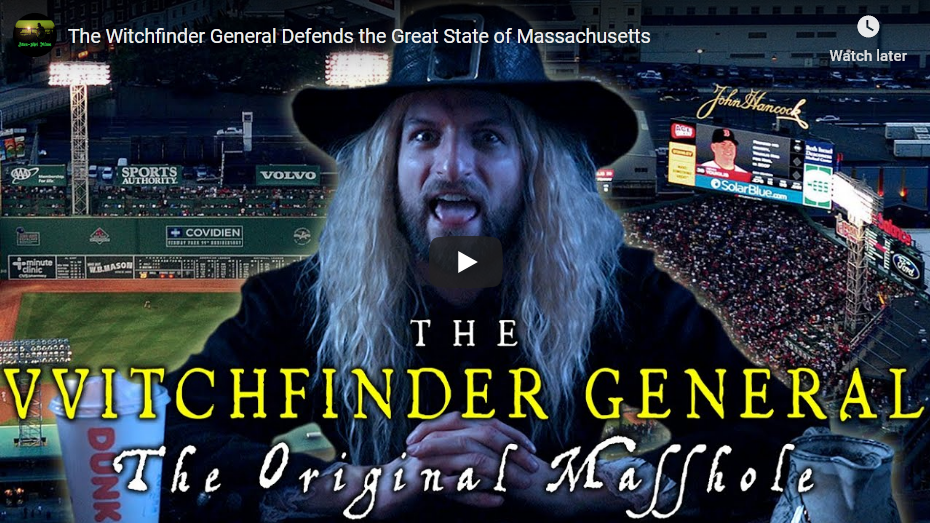
The Witchfinder General Defends the Great State of Massachusetts

Filed under: History, Humour, Religion, USA — Tags: , , , , , — Nicholas @ 06:00

Atun-Shei Films
Published 14 Jul 2020

The greate Common-Wealth of Massachusetts is oft unjustly slandered. The Ignorant shall saye that the inhabitants of this fair colonie drive Carriages like mad-men; that they are too much enamored with Crimson Stockings and Those Who Love Their Countrie; and that they are as sullen and cruel as a New-England winter. The Witchfinder General dis-proves this Slander, and denounces it for the Profession of Heresy that it is.

Support Atun-Shei Films on Patreon ► https://www.patreon.com/atunsheifilms

Leave a Tip via Paypal ► https://www.paypal.me/atunsheifilms (Between now and October, all donations made here will go toward the production of The Sudbury Devil, our historical feature film)

Original Music by Dillon DeRosa ► http://dillonderosa.com/

#Puritan #Witch #Boston

Watch our film ALIEN, BABY! free with Prime ► http://a.co/d/3QjqOWv
Reddit ► https://www.reddit.com/r/atunsheifilms
Twitter ► https://twitter.com/atun_shei
Instagram ► https://www.instagram.com/atunsheifilms
Merch ► https://atun-sheifilms.bandcamp.com

From the comments:

Atun-Shei Films
1 day ago
The awesome baroque song at the end of this video is the brand-new Witchfinder General theme composed by the insanely talented Dillon DeRosa, who’s currently hard at work putting together a new theme for Checkmate Lincolnites and a bunch of other incidental music for this channel. His music was also one of the best parts of my movie ALIEN, BABY! and he’s done a bunch of other film scores as well. Check out his website, and never forget that thou art a wretched sinner, utterly unworthy of God’s love: http://dillonderosa.com/

Curator forced to resign over “toxic white supremacist beliefs”

Filed under: Media, Politics, USA — Tags: , , , , — Nicholas @ 05:00

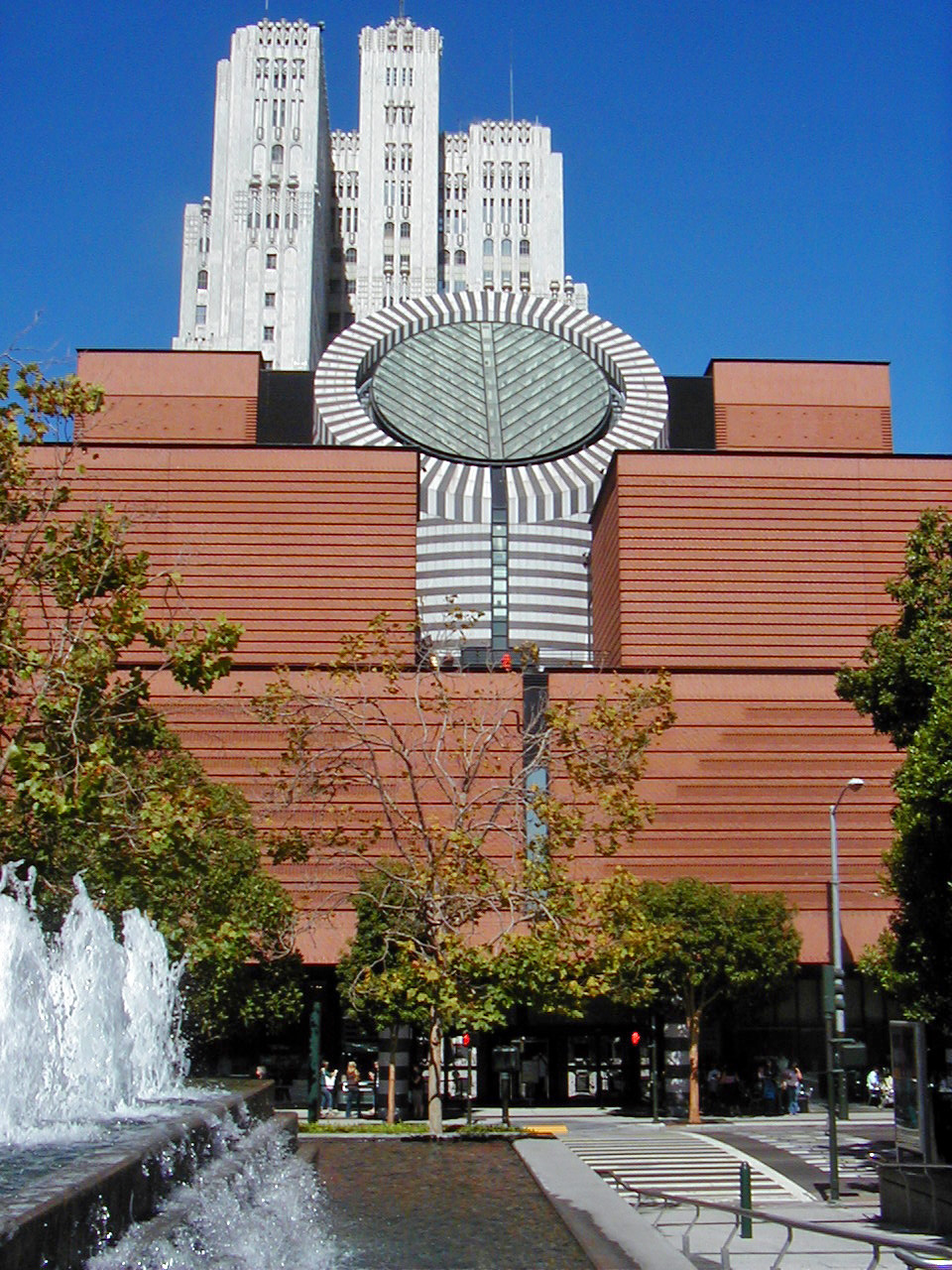
The San Francisco Museum of Modern Art parted company with a long-time curator for his racist views and white supremacist actions in continuing to pursue works to add to the collection from white male artists:

San Francisco Museum of Modern Art, 1 September, 2008.
Photo by WolfmanSF via Wikimedia Commons.

Until last week, Gary Garrels was senior curator of painting and sculpture at the San Francisco Museum of Modern Art (SFMOMA). He resigned his position after museum employees circulated a petition that accused him of racism and demanded his immediate ouster.

“Gary’s removal from SFMOMA is non-negotiable,” read the petition. “Considering his lengthy tenure at this institution, we ask just how long have his toxic white supremacist beliefs regarding race and equity directed his position curating the content of the museum?”

This accusation — that Garrels’ choices as an art curator are guided by white supremacist beliefs — is a very serious one. Unsurprisingly, it does not stand up to even minimal scrutiny.

The petitioners cite few examples of anything even approaching bad behavior from Garrels. Their sole complaint is that he allegedly concluded a presentation on how to diversify the museum’s holdings by saying, “don’t worry, we will definitely still continue to collect white artists.”

Garrels has apparently articulated this sentiment on more than one occasion. According to artnet.com, he said that it would be impossible to completely shun white artists, because this would constitute “reverse discrimination.” That’s the sum total of his alleged crimes. He made a perfectly benign, wholly inoffensive, obviously true statement that at least some of the museum’s featured artists would continue to be white. The petition lists no other specific grievances.

H/T to Halls of Macademia for the link.

Killer Submarines Sneaking Through the Blockade | The Cuban Missile Crisis | Day 09

TimeGhost History
Published 15 Jul 2020

On October 24, 1962, the US-led blockade on Cuba goes into effect, but it’s not the showdown that it looks like! At least not on the surface …

Join us on Patreon: https://www.patreon.com/TimeGhostHistory

Hosted by: Indy Neidell
Written by: Spartacus Olsson
Director: Astrid Deinhard
Producers: Astrid Deinhard and Spartacus Olsson
Executive Producers: Astrid Deinhard, Indy Neidell, Spartacus Olsson, Bodo Rittenauer
Creative Producer: Joram Appel
Post-Production Director: Wieke Kapteijns
Research by: Spartacus Olsson
Edited by: Spartacus Olsson, Jonas Klein & Karolina Dołęga
Sound design: Marek Kamiński

Colorizations:
Carlos Ortega Pereira, BlauColorizations – https://www.instagram.com/blaucoloriz…
Dememorabilia – https://www.instagram.com/dememorabilia/

Visual Sources:
National Archives NARA

Music:
“Car Chase in Virginia” – White Bones
“Mexican Standoff” – Walt Adams
“Moving to Disturbia” – Experia
“Symphony of the Cold-Blooded” – Christian Andersen
“Under the Dome” – Philip Ayers
“When They Fell” – Wendel Scherer
“Try and Catch Us Now” – David Celeste
“Cold Eyes” – Elliot Holmes

Archive by Screenocean/Reuters https://www.screenocean.com.

A TimeGhost chronological documentary produced by OnLion Entertainment GmbH.

Canada should welcome immigrants from Hong Kong with open arms

Filed under: Australia, Britain, Cancon, China — Tags: , , , — Nicholas @ 03:00

The PRC communist government is clearly set on extinguishing the unique status of Hong Kong within China and a lot of Hong Kong residents are considering getting out before the gloves come off. Canada should join Britain and Australia in offering a safe refuge, regardless of the attitude of Beijing. Sadly, this probably won’t happen, as Justin Trudeau has demonstrated that he’s willing to kow-tow whenever his paymasters demand:

“Hong Kong night Panorama” by Andos_pics is licensed under CC BY-NC-SA 2.0

Britain has taken the lead by announcing that Hongkongers holding a British National Overseas (BNO) Passport will be allowed to live and work in the UK for five years, after which they can apply for settled status, and, one year later, citizenship. This could mean that almost three million people will be able to relocate to Britain if they so choose. In response to earlier British overtures along these lines, China made clear in no uncertain terms that Hong Kong is their concern, and that the UK should mind its own business, with China’s foreign ministry spokesman Zhao Lijian saying that the “UK has no right to lecture or interfere in China’s internal affairs …”.

However, a BNO Passport is only available to Hong Kong residents born before the 1997 transfer of the city back to Chinese control, which leaves around 4.5 million of the city’s residents — including many of the younger generation born after the handover occurred — unable to access that option.

This is why this sort of idea must be expanded on more broadly by all liberal democracies, who should consider granting special dispensations allowing Hong Kong residents who wish to emigrate to do so. The United States is considering following Britain’s example, and Australia has opened the door to citizenship for any Hongkongers with work or student visas. Hopefully, they are just the first of many.

It wouldn’t be the first time liberal democracies have taken in a large influx of exiles from specific countries.

Consider the influx of refugees which started with the Boat People, who originally were mostly South Vietnamese fleeing after the U.S. pulled out of the war and their country fell to the communist north. They, and many more from other southeast Asian countries who fled their homes in the 1970s and 80s, many ending up in Western nations. The United States took in the majority, with Canada, Australia, and a few others accepting large numbers as well.

There are some major differences however when it comes to opening our doors to residents of Hong Kong who wish to leave the increasingly oppressive rule from Beijing. Unlike many who flee war-torn or poverty-stricken nations searching for a better life, Hongkongers are among the most educated and wealthy people on the planet. Most important though, many of them love freedom, and have grown up in a society where many of the things we claim to value — rule of law, personal liberty, freedom of conscience, free speech, and a free market — are (or, at least, were) paramount.

Accepting Hongkongers into our countries would be good for us. It seems that in the last few decades, liberal democracies have been growing complacent about our hard-won freedoms. We have forgotten or ignored history, and seem not to realize that the foundations on which our freedoms are built need constant maintenance and defense.

Tank Chats #75 M5A1 Stuart | The Tank Museum

Filed under: History, Military, USA, Weapons, WW2 — Tags: , — Nicholas @ 02:00

The Tank Museum
Published 17 May 2019

David Fletcher on the last in the Stuart series. Known unofficially as “Honeys”, the M5A1 Stuart was an improved version of the American’s M3 light tank. They were used by British armoured regiments and by most other Allied armies during WW2. They were fast, reliable and popular with their crews, but outclassed by the German tanks of 1944.

Support the work of The Tank Museum on Patreon: ► https://www.patreon.com/tankmuseum

Visit The Tank Museum SHOP: ► https://tankmuseumshop.org/
Twitter: ► https://twitter.com/TankMuseum
Tiger Tank Blog: ► http://blog.tiger-tank.com/
Tank 100 First World War Centenary Blog: ► http://tank100.com/ #tankmuseum #tanks #tankchats

QotD: The young Herbert Hoover

Herbert Hoover was born in 1874 to poor parents in the tiny Quaker farming community of West Branch, Iowa. His father was a blacksmith, his mother a schoolteacher. His childhood was strict. Magazines and novels were banned; acceptable reading material included the Bible and Prohibitionist pamphlets. His hobby was collecting oddly shaped sticks.

His father died when he is 6, his mother when he is 10. The orphaned Hoover and his two siblings are shuttled from relative to relative. He spends one summer on the Osage Indian Reservation in Oklahoma, living with an uncle who worked for the Department of Indian Affairs. Another year passes on a pig farm with his Uncle Allen. In 1885, he is more permanently adopted by his Uncle John, a doctor and businessman helping found a Quaker colony in Oregon. Hoover’s various guardians are dutiful but distant; they never abuse or neglect him, but treat him more as an extra pair of hands around the house than as someone to be loved and cherished. Hoover reciprocates in kind, doing what is expected of him but excelling neither in school nor anywhere else.

In his early teens, Hoover gets his first job, as an office boy at a local real estate company. He loves it! He has spent his whole life doing chores for no pay, and working for pay is so much better! He has spent his whole life sullenly following orders, and now he’s expected to be proactive and figure things out for himself! Hoover the mediocre student and all-around unexceptional kid does a complete 180 and accepts Capitalism as the father he never had.

His first task is to write some newspaper ads for Oregon real estate. He writes brilliant ads, ads that draw people to Oregon from every corner of the country. But he learns some out-of-towners read his ads, come to town, stay at hotels, and are intercepted by competitors before they negotiate with his company. Of his own initiative, he rents several houses around town and turns them into boarding houses for out-of-towners coming to buy real estate, then doesn’t tell his competitors where they are. Then he marks up rent on the boarding houses and makes a tidy profit on the side. Everything he does is like this. When an especially acrimonious board meeting threatens to split the company, a quick-thinking Hoover sneaks out and turns off the gas to the building, plunging the meeting into darknes. Everyone else has to adjourn, the extra time gives cooler heads a change to prevail, and the company is saved. Everything he does is like this.

(on the other hand, he has zero friends and only one acquaintance his own age, who later describes him to biographers as “about as much excitement as a china egg”.)

Hoover meets all sorts of people passing through the Oregon frontier. One is a mining engineer. He regales young Herbert with his stories of traveling through the mountains, opening up new sources of minerals to feed the voracious appetite of Progress. This is the age of steamships, skyscrapers, and railroads, and to the young idealistic Hoover, engineering has an irresistible romance. He wants to leave home and go to college. But he worries a poor frontier boy like him would never fit in at Harvard or Yale. He gets a tip – a new, tuition-free university might be opening in Palo Alto, California. If he heads down right away, he might make it in time for the entrance exam. Hoover fails the entrance exam, but the new university is short on students and decides to take him anyway.

Herbert Hoover is the first student at Stanford. Not just a member of the first graduating class. Literally the first student. He arrives at the dorms two months early to get a head start on various money-making schemes, including distributing newspapers, delivering laundry, tending livestock, and helping other students register. He would later sell some of these businesses to other students and start more, operating a constant churn of enterprises throughout his college career. His academics remain mediocre, and he continues to have few friends – until he tries out for the football team in sophomore year. He has zero athletic talent and fails miserably, but the coach (whose eye for talent apparently transcends athletics) spots potential in Hoover and asks him to come on as team manager. In this role, Hoover is an unqualified success. He turns the team’s debt into a surplus, and starts the Big Game – a UC Berkeley vs. Stanford football match played on Thanksgiving which remains a beloved Stanford football tradition.

Scott Alexander, “Book Review: Hoover”, Slate Star Codex, 2020-03-17.

July 15, 2020

Barbarossa, Hitler’s and Stalin’s Hell on Earth – War Against Humanity 014 – July 1941, Part 01

Filed under: Germany, History, Military, Russia, WW2 — Tags: , , , , , , , — Nicholas @ 06:00

World War Two
Published 14 Jul 2020

When the German armed forces invade the USSR, they come with an order to exterminate from Hitler. Now the defending Soviet armed forces receive similar orders from Stalin. The bloodshed that follows defies human imagination.

Join us on Patreon: https://www.patreon.com/TimeGhostHistory
Or join The TimeGhost Army directly at: https://timeghost.tv

Follow WW2 day by day on Instagram @World_war_two_realtime https://www.instagram.com/world_war_two_realtime
Between 2 Wars: https://www.youtube.com/playlist?list…
Source list: http://bit.ly/WW2sources

Hosted by: Spartacus Olsson
Written by: Spartacus Olsson and Joram Appel
Director: Astrid Deinhard
Producers: Astrid Deinhard and Spartacus Olsson
Executive Producers: Astrid Deinhard, Indy Neidell, Spartacus Olsson, Bodo Rittenauer
Creative Producer: Joram Appel
Post-Production Director: Wieke Kapteijns
Research by: Joram Appel and Spartacus Olsson
Edited by: Mikołaj Cackowski
Sound design: Marek Kamiński
Map animations: Eastory (https://www.youtube.com/c/eastory)

Colorizations by:
Julius Jääskeläinen – https://www.facebook.com/JJcolorization/
Jaris Almazani (Artistic Man) – https://instagram.com/artistic.man?ig…
Klimbim – https://www.flickr.com/photos/2215569…

Sources:
Bundesarchiv
Yad Vashem 55AO6, 145CO2, 142GO5, 1019/2, 5648/40, 143EO1, 5648/39, 73BO2, 74FO7, 2725/17, 1564/2, 4360/49, 90DO9, 90DO8, 1278/19, 112GO7, 97GO2, 1597/11, 145CO1, 80DO5, 145AO, 5138/95
USHMM
Vilna Gaon State Jewish Museum

Soundtracks from the Epidemic Sound:
Skrya – “First Responders”
Philip Ayers – “Trapped in a Maze”
Farrell Wooten – “Mystery Minutes”
Cobby Costa – “From the Past”
Cobby Costa – “Flight Path”
Gunnar Johnsen – “Not Safe Yet”
Farrell Wooten – “Blunt Object”
Fluow – “Endlessness”
Jon Bjork – “Icicles”
Jon Bjork – “For the Many”

Archive by Screenocean/Reuters https://www.screenocean.com.

A TimeGhost chronological documentary produced by OnLion Entertainment GmbH.

From the comments:

World War Two
8 hours ago (edited)
However hard it is to watch this horror, it’s important that we document it, and learn from it. Each and everyone of us can, and we must for the sake of ourselves and our fellow human beings do so. The steps that led the people involved in these atrocities to this point were small, sometimes innocent, or at least uninformed decisions that took many years to reach this level of inhumanity. It starts with denying facts, imagining conspiracies as the root of your own problems, and demonizing your imagined enemies. In this void you are already on a slippery slope that may lead into the abyss. On that note, the events depicted here are based on solid research, and verified sources that are irrefutable. Wherever there is uncertainty, we have mentioned it. The purpose of this documentation is neither to scapegoat any one side, nor exonerate anyone from blame. These are the facts. This is what happened. Think about that, because the perpetrators here were like us, they didn’t come out of their mother’s womb with the intent to torture and murder anyone. And the victims were also like all of us, ordinary people just trying to get on with their lives according to their best ability. They had dreams and goals in life, some of them political perhaps, but mostly they just got on with their everyday life, banal and difficult as that might be, until they ended up in the hands of someone who had learnt to hate them without even knowing them. Remember that – this could have been anyone of us, on both sides of the events. To have that humility is the beginning of a journey to do good.

Spartacus

PS. and if you wonder how we put up with making this kind of content; it’s difficult. I cried bitterly after recording this, and tears still well up when I think about it. While we write it’s easier to turn off, switch on the coping mechanisms, pretend that its just absurd facts and numbers. But when you act out the words… that what defies imagination is suddenly horribly real.

Donald Shoup, the “Sir Isaac Newton of parking” or an “‘academic bottom-feeder’ who found a wonderful, rich ecological niche down there in the depths”

Filed under: Business, Economics — Tags: , , , — Nicholas @ 05:00

Colby Cosh, after taunting Ontarians yet again over our just-barely-past-Prohibition views on alcohol in public places, goes on to praise the work of UCLA economist Donald Shoup and his insights into the economics of parking:

Parking — boring topic, ain’t it? Shoup latched onto it as a young-ish man because he was a follower of Henry George (1839-1897), the intriguing “single tax” economic theorist of the 19th century. George favoured a tax on the unimproved value of land parcels as a way of socializing pure rent (the value earned from occupying a mere location) and encouraging development. It is a concept that many economists still like, although it is potentially difficult to apply at scale. The widely used concept of tax increment financing is one example of Georgism in practice.

Shoup started out trying to fit parking spaces into the Georgist picture, but the boring topic was so underexamined that he found himself having to build a general theory of parking. He quantified the relationship between parking and traffic, finding that people “cruising” for parking spots were more destructive than anyone had imagined, and he inspired waves of research into the hidden market values of parking spots, which are rarely bought or sold in their own right. He happily describes himself as an “academic bottom-feeder” who found a wonderful, rich ecological niche down there in the depths.

Shoup has spent decades travelling the world and preaching against the concept of free parking, often meeting with bad-tempered resistance. Nevertheless, he has made a lot of headway in the world of urban planning. Any economist can see immediately how bundling a “free” parking space with an apartment or a job might be inefficient. The renter or homeowner has to pay a hidden extra cost for an amenity he might not choose to use, and the commuter is being given an incentive to drive to work — an incentive whose cash value he might prefer to keep. Shoup soon found, on empirical investigation, that most urban parking lots show signs of less-than-optimum use.

[…]

Of course, too little parking is as much of an efficiency problem as too much, which is why Shoup and his followers want parking to be priced wherever possible: if more is really needed, let a market create it. (To my eyes he has at least as much Hayek in him as Henry George.) In the era of Uber and smartphones, it is a lot easier to imagine a fully Shoupista world in which prices for parking spots update in real time and drivers look up prices at or near their destination before setting out.

The Start of World War III? | The Cuban Missile Crisis | Day 08

TimeGhost History
Published 14 Jul 2020

On October 23 , 1962 as the blockade on Cuba is being prepared, US President John F. Kennedy and USSR Chairman Nikita Khrushchev question their own actions realising that they might have gone a step too far.

Join us on Patreon: https://www.patreon.com/TimeGhostHistory

Hosted by: Indy Neidell
Written by: Spartacus Olsson
Director: Astrid Deinhard
Producers: Astrid Deinhard and Spartacus Olsson
Executive Producers: Astrid Deinhard, Indy Neidell, Spartacus Olsson, Bodo Rittenauer
Creative Producer: Joram Appel
Post-Production Director: Wieke Kapteijns
Research by: Spartacus Olsson
Edited by: Jonas Klein & Karolina Dołęga
Sound design: Marek Kamiński

Colorizations:
Dememorabilia – https://www.instagram.com/dememorabilia/
Carlos Ortega Pereira, BlauColorizations – https://www.instagram.com/blaucoloriz…

Music:
“Cold Eyes” – Elliot Holmes
“From the Depths” – Walt Adams
“Juvenile Delinquent” – Elliot Holmes
“Moving to Disturbia” – Experia
“Under the Dome” – Philip Ayers
“When They Fell” – Wendel Scherer
“Zoot Suit” – Elliot Holmes
“Try and Catch Us Now” – David Celeste

Visual Sources:
Bundesarchiv

Archive by Screenocean/Reuters https://www.screenocean.com.

A TimeGhost chronological documentary produced by OnLion Entertainment GmbH.

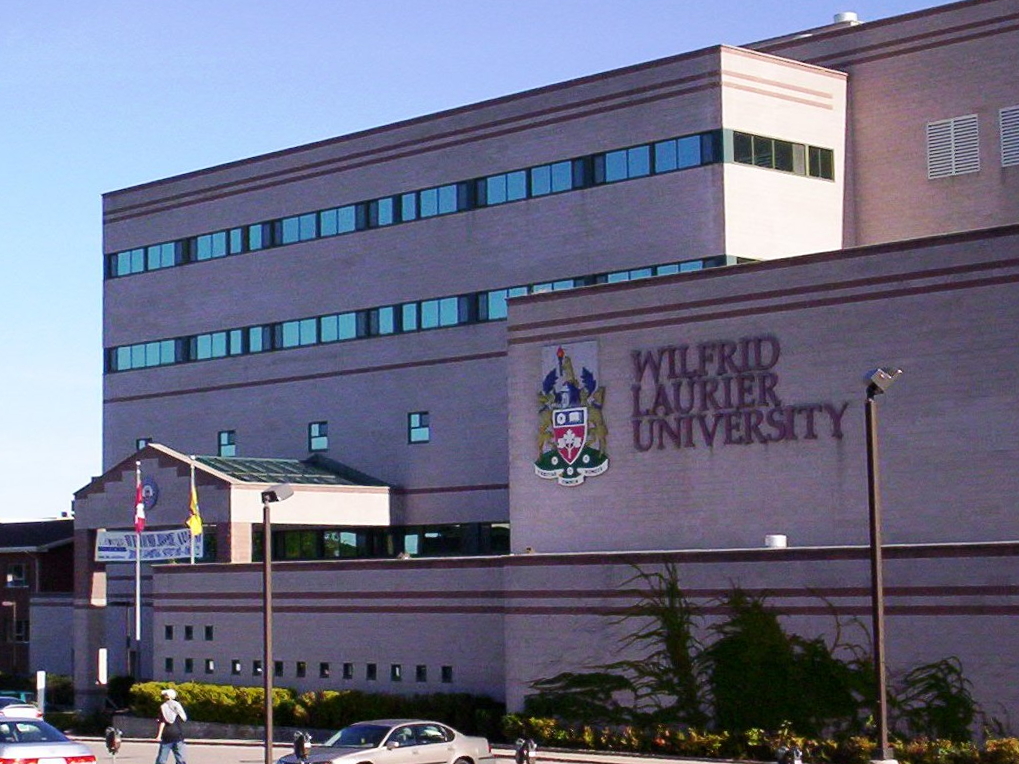
Wilfred Laurier University – from university to indoctrination centre

In the National Post, Barbara Kay notes how things are changing from general support of freedom of speech to cracking down on “dissent” of any nature, with WLU being a leading example:

Wilfred Laurier University in Waterloo, Ontario. This photo taken from University Avenue shows the Maureen Forrester Recital Hall and John Aird Centre, 23 September, 2005.
Photo by Radagast via Wikimedia Commons.

My editor, a man in his prime, recently tweeted bemusement that his older readers often preface their emails to him with allusions to their age (“as a 75-year old man …” “I’m an 82-year old woman …”).

I know these readers. Or others like them.

When my oldie readers introduce generation markers in their emails, it’s generally a semaphore signifying bewilderment at a cultural landscape so utterly changed from their youth, they cannot find their bearings. I empathize with these readers because, an oldie myself, I share their anxiety at the continual erosion of classic liberal principles we took for granted as permanent. Especially the freedom to dissent from popular views.

[…]

If you had told us in our youth that one day students would be screaming obscenities and blaring horns to prevent presentations by visiting speakers whose opinions they dislike, as happens frequently in American universities and occasionally in Canada, we would have been shocked. If you had told us that someday a graduate student who exposed her class to a range of opinions on a controversial subject — the norm in my university experience — would be officially censured for including the views of a conservative commentator because his views might “harm” students, we would have been gobsmacked.

Lindsay Shepherd’s 2017 recording of her disciplinary session at Wilfrid Laurier University for the crime of exposing her students to Jordan Peterson’s views on compelled speech brought her to national attention. (Peterson was compared to Hitler by one interrogator. A defamation lawsuit by Peterson against WLU is in progress.) The broadcast of the ruthless performance that reduced Shepherd to tears was a pivotal teaching moment in the illiberalism that governs academia in the name of diversity, equity and inclusion.

Shepherd was the only adult in that room. But she was already an exception to the rule in her cohort, and the chances of another such act of dissidence by a WLU graduate student are slim to vanishing.

When The Dutch Ruled The World: Rise and Fall of the Dutch East India Company

Filed under: Asia, Business, Europe, History, India — Tags: , , , , , , — Nicholas @ 02:00

Business Casual
Published 14 Sep 2018

Thanks to Cheddar for sponsoring this episode! Check out their video on the iconic ad campaign that saved Old Spice here: https://chdr.tv/youtu8b4a6

⭑ Subscribe to Business Casual → http://gobc.tv/sub
⭑ Enjoyed the vid? Hit the like button!

Follow us on:
► Twitter → http://gobc.tv/twtr
► Instagram → https://gobc.tv/ig
► LinkedIn → https://gobc.tv/linkedin
► Reddit → https://gobc.tv/reddit
► Medium → https://gobc.tv/medium

« Newer PostsOlder Posts »

Powered by WordPress