Some social and political analysts regard private help as a bad thing. They speak of the “problem” of food banks, and of America’s “miserly” support for poorer countries. In fact food banks are a solution, not a problem. Private generosity has leapt into the breach to help tide people over temporary problems. The great majority of food bank users do so only once.
Similarly with US aid to poorer countries. The United States is regularly berated for being very low on the list of aid givers, but this only applies to government-to-government aid. Once the private contributions made by Americans to people in poorer countries are counted in, the US rises to the top. In fact US private help is better spent, usually going to people to spend in towns and villages in the local economy, rather than on gold palaces and white elephant steel mills in the desert.
Part of this mismatch arises from the fact that these analysts seem to wear spectacles that admit only light of a political wavelength and ignore private generosity. The latest victim of this myopia is the “bank of mom and dad.” It is assumed to be a bad thing that young people should turn to mom and dad to help out with deposits and mortgages.
“Richard”, “Is Private Help a Bad Thing? – Political Spectacles of the Left”, Continental Telegraph, 2018-04-02.
July 15, 2020
QotD: State and private charity
July 14, 2020
Dry Assembly! 😮 The Picnic Bench Project
Matt Estlea
Published 12 Jul 2020In this video, I finalise the fit and shape of the joinery, get everything sanded to a beautiful smooth finish, and dry fit the frames together, ready to be glued in a future episode!
Get the LIMITED EDITION Bertha T-Shirts here:
https://mattestlea.com/product-tag/be…
(Genuinely, I am discontinuing these at the end of July)Use the code ‘ThirdBirthday’ to claim a 50% discount on Bertha plans here:
https://mattestlea.com/product/roubo-…Get the rest of the official merchandise and plans here!
www.mattestlea.com/shop_________________________________________________________________
Support what I do by becoming a Patron! This will help fund new tools, equipment and cover my overheads. Meaning I can continue to bring you regular, high quality, free content. Thank you so much for your support! https://www.patreon.com/mattestlea
Don’t want to commit to a monthly direct debit but still want to help out? That’s fine!
You can make a one time donation here: www.mattestlea.com/donate
You can donate us biscuits here: www.mattestlea.com/wishlist
_________________________________________________________________
BUY THE WOODWORKING BIBLE HERE:
www.mattestlea.com/the-woodworkers-manual
_________________________________________________________________SOCIAL MEDIA
Instagram: www.instagram.com/mattestlea
Twitter: www.twitter.com/mattestlea
Patreon: www.patreon.com/mattestlea
Pinterest: www.pinterest.com/mattestlea
LinkedIn: www.linkedin.com/in/matt-estlea-b6414b11a/
_________________________________________________________________
See what tools I use here: www.mattestlea.com/equipment
My Website: www.mattestlea.com
_________________________________________________________________My name is Matt Estlea, I’m a 24 year old Woodworker from Basingstoke in England and my aim is to make your woodworking less s***.
I come from 5 years tuition at Rycotewood Furniture Centre with a further 1 year working as an Artist in Residence at the Sylva Foundation. I now teach City and Guilds Furniture Making at Rycotewood as of September 2018.
If you’re interested in studying at Rycotewood, view their courses here:
www.mattestlea.com/rycotewoodI also had 5 years of experience working at Axminster Tools and Machinery where I helped customers with purchasing tools, demonstrated in stores and events, and gained extensive knowledge about a variety of tools and brands. I discontinued this at the start of 2019 to focus solely on video creation and teaching.
During the week, I film woodworking projects, tutorials, reviews and a viewer favourite ‘Tool Duel’ where I compare two competitive manufacturers tools against one another to find out which is best. I also have a Free Online Woodworking School which you should definitely check out!
www.mattestlea.com/school
I like to have a laugh and my videos are quite fast paced BUT you will learn a lot, I assure you.
Lets go make a mess.

A previously unpublished photo of the 1917 Halifax explosion
I’ve posted a few items about the Halifax explosion, so Colby Cosh linking to this CBC News article caught my attention:
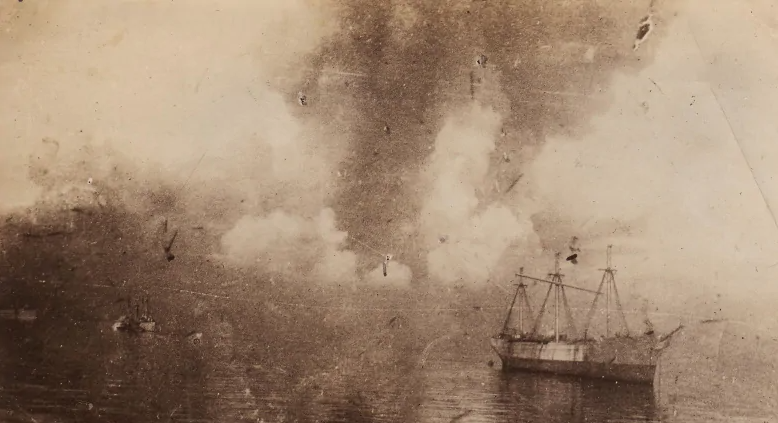
Previously unpublished photo of the Halifax explosion in December 1917 taken by Mate Reg Stevens, RCN.
Original image from the Community Archives of Belleville and Hastings County, via CBC News.
“The photo has the look of a very troubling dream,” Dan Conlin says as he studies an old black-and-white image.
Conlin is a transportation historian who’s spent a lifetime studying images of ships, trains and aircraft. He’s also a former curator of Halifax’s Maritime Museum of the Atlantic, which houses a large collection of materials from the 1917 Halifax Explosion.
The image he’s studying surfaced recently on Reddit with a user from Halifax, England, wondering if it was a “new” image of the 1917 disaster.
“You have these tranquil little wavelets in the foreground and some stately, anchored vessels — including a sailing ship,” Conlin said. “But in the background there are these awful, nightmarish clouds, including a horrible column that is rising into the sky. It looks like a surreal nightmare.”
When Conlin first looked at it, the crisp details of the foreground and the blurry background raised his skeptical eyebrows. “There was quite a tradition in the World War I era of faking photos by doing composite photos, where you layer one image on top of another,” he said.
One well-known photo of the explosion taken from McNabs Island was later suspected to have been doctored by a company. They seem to have added clouds for dramatic effect — and to sell more postcards.
But Conlin thinks in the nightmarish photo, it’s more likely that the clouds are moving from the force of the explosion, while the ships were untroubled by any winds. The disaster killed nearly 2,000 people and badly hurt thousands more. It levelled the Richmond district in the north end.
“It’s carnage and destruction out of Dante at the base of that cloud. People are dying and fires are starting and this awful event has hit Halifax in the distance,” he said.
“That angry cloud gives you an idea of the violence and tragedy that is unfolding even as the shutter clicks. It’s really rare and that photo, as far as I can tell, has never been published.”
The End of the World Will be Televised | The Cuban Missile Crisis I Day 07
TimeGhost History
Published 13 Jul 2020On October 22, in the world’s first televised announcement of an international military crisis, US President John F. Kennedy sets off panic and sudden fear of a third world war, with nuclear arms involved.
Join us on Patreon: https://www.patreon.com/TimeGhostHistory
Hosted by: Indy Neidell
Written by: Spartacus Olsson
Director: Astrid Deinhard
Producers: Astrid Deinhard and Spartacus Olsson
Executive Producers: Astrid Deinhard, Indy Neidell, Spartacus Olsson, Bodo Rittenauer
Creative Producer: Joram Appel
Post-Production Director: Wieke Kapteijns
Research by: Spartacus Olsson
Edited by: Daniel Weiss
Sound design: Marek KaminskiColorizations:
– Carlos Ortega Pereira (BlauColorizations) – https://www.instagram.com/blaucoloriz…Sources:
PX 65-105:179 from LOOK Magazine 8405-1-26Soundtracks from Epidemic Sound:
– “Cold Eyes” – Elliot Holmes
– “From the Depths” – Walt Adams
– “Juvenile Delinquent” – Elliot Holmes
– “When They Fell” – Wendel Scherer
– “Kid Me Not” – Elliot HolmesArchive by Screenocean/Reuters https://www.screenocean.com.
A TimeGhost chronological documentary produced by OnLion Entertainment GmbH.

Then they came for the nursery rhymes
James Lileks illustrates just how easy it is to construct a case to cancel a children’s song:
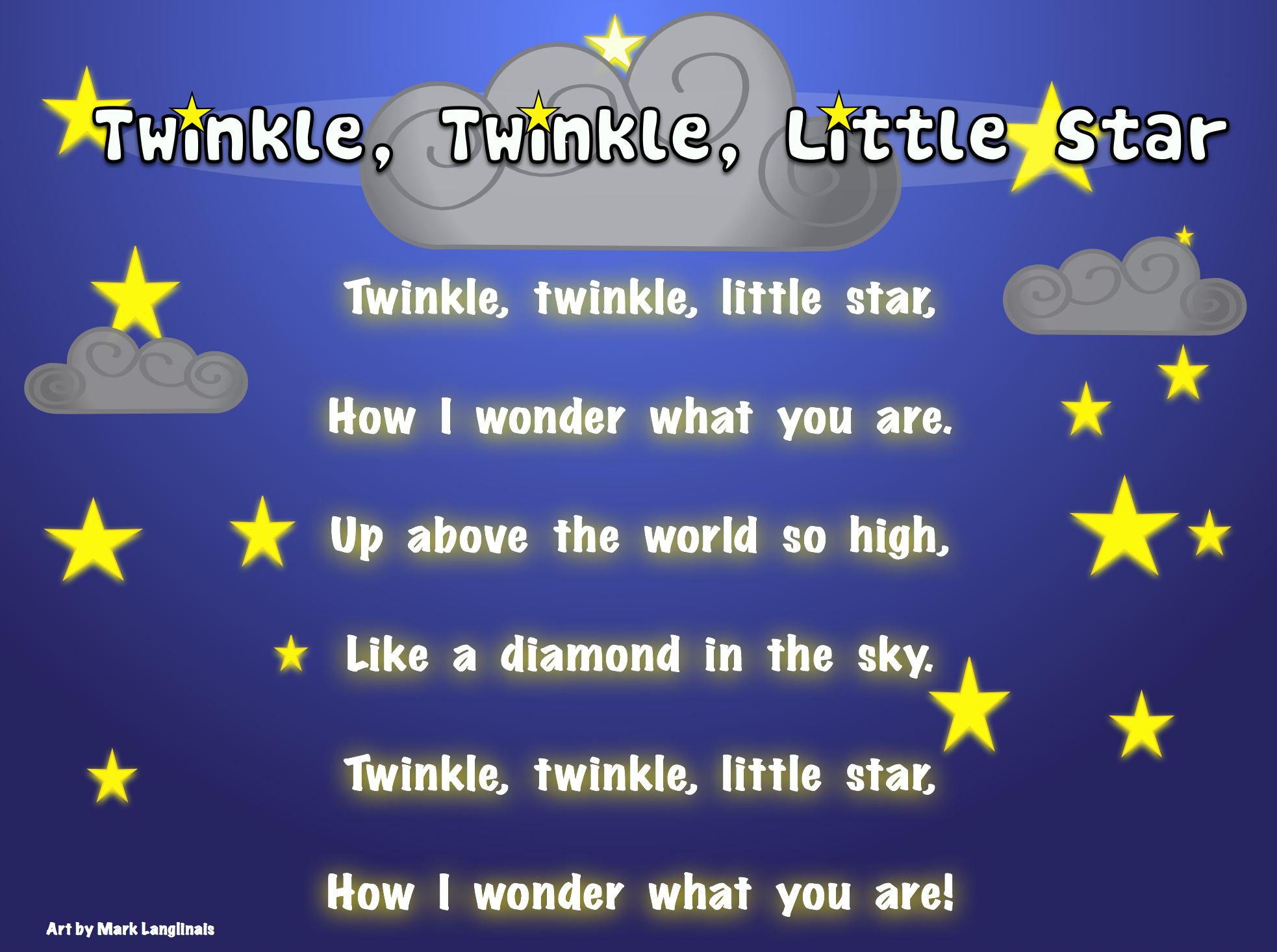
Image from The Kindergarten English Blog, https://markblogsfromjapan.wordpress.com/page/4/
At some point the mob will run out of things to cancel. All the low-hanging fruit1 will have been plucked to make smoothies for the commune. Wrongthink professors, authors, movies, newspaper columnists — easy enough. After that? Well, if you’re really going to root out systematic systemism, everything has to go. This means someone will eventually be tasked with canceling children’s songs, or recasting them for the new era. Pity the person who has to find the problematic problems in “Twinkle, Twinkle, Little Star.”
It’s not that hard. Take the first line: The very idea that stars are supposed to twinkle locks them into a societally prescribed mode of behavior. Expecting a star to twinkle is like telling a strange woman on the subway to smile. Strong, troublemaking stars explode! The very idea that we want “little” stars to engage in performative “twinkling” negates the life experience of massive gas giants like Betelgeuse. In fact “twinkling” itself strips the star’s identity and expresses it through the eyes of the beholder, who mistakes the effect of the atmosphere on star observation for the star’s true nature.
Okay, now we’re getting somewhere. Whew! Turns out there’s a lot to unpack.
How I wonder what you are.
Well, you wouldn’t if there weren’t racism in STEM that kept people out, but no, that’s not right. STEM is bad because it uses the Western empirical model to determine “facts.” Better: The speaker’s questions about the star arise from the suppression of the rich history of Arab astrological knowledge. So it’s a lesson in the ways Islamophobia prevents a greater understanding of the world. Next!
Up above the world so high, like a diamond in the sky . . .
Hold on, hold on … okay, got it. The star’s remoteness is a metaphor for the entrenched power system and encourages a sense of powerlessness. The choice of a “diamond” is intentional, reminding the child of the commodification of natural resources and the brutal economies of the industries that extract them …
1. Just this morning, I saw a call to cancel the expression “low-hanging fruit” because it might remind people of lynching.
British EM-2: The Best Cold War Battle Rifle that Never Was
Forgotten Weapons
Published 12 Jul 2017Armament Research Services (ARES) is a specialist technical intelligence consultancy, offering expertise and analysis to a range of government and non-government entities in the arms and munitions field. For detailed photos of the guns in this video, don’t miss the ARES companion blog post:
http://armamentresearch.com/british-j…
The EM-2 was the rifle that the British pushed for NATO trials in 1950. It was a rifle well ahead of its time in several areas — as a select-fire bullpup rifle, it was intended to replace both the infantry rifle and the submachine gun. Its .280 caliber cartridge was designed with combat ranges of 600 yards and less, acknowledging the reality that engagements beyond even 300 yards were extremely rare, and not important enough to base rifle design on. It was also designed to use primarily optical sights, long before this concept would be embraced elsewhere. Unfortunately, the potential of the EM-2 was lost to the political decision that compatibility with American ordnance choices was a more significant benefit than an improved infantry rifle.
Mechanically, the EM-2 is heavily based on the German G43 flapper-locking system. It uses a long stroke gas piston in place of the G43’s short stroke one, though. To help account for the slower handling of a bullpup configuration, the EM-2 would both lock open when its magazine was empty and also automatically close the bolt and chamber a round when a fresh magazine was inserted. The safety was much like that of the M1 Garand, and the selector lever was of the push-through type like on the German Sturmgewehr.
The optic on the EM-2 is quite tiny, and offers no magnification. Its purpose is to reduce the two-element sight picture of traditional iron sights to a single plane that can be more quickly and easily placed on the target.
In total, only 55 EM-2 rifles were manufactured, including the paratrooper model in this video and a number of 7.62mm NATO examples made as a last ditch effort to remain competitive in NATO trials. Where most failed prototype rifles were rejected for very legitimate technical shortcomings, the EM-2 is (I believe) a prime example of an outstanding weapon that fell victim to politics unrelated to its actually qualities.
http://www.patreon.com/ForgottenWeapons
Cool Forgotten Weapons merch! http://shop.bbtv.com/collections/forg…
If you enjoy Forgotten Weapons, check out its sister channel, InRangeTV! http://www.youtube.com/InRangeTVShow

QotD: The threat of galloping Karenism
This is yet another reason – as if the failure of the “We’re all gonna die!” model and the mass economic devastation the Twitter blue checks ignore were not reasons enough – that we need to be focusing on coming out of this Wuhan flu funk. If would be a pity if pangolin licking not only killed thousands of our most vulnerable citizens but also our will to resist petty tyrants who presume to scold us for such crimes as worshipping our God, seeing our families, and buying tomato seeds.
This is not to say that the Chinese coronavirus pandemic is fake or unserious, nor that we should ignore it and pretend that it’s just another flu. It is to say that there is more going on now than a respiratory ailment. There’s an economic ailment that most of us are painfully aware of, and there is a freedom ailment, where the Karens in everyday life and in the corridors or power are taking advantage of this crisis to let their fascist flag fly.
Kurt Schlichter, “The Rise of Karen-ism Means This Lockdown Nonsense Needs To End Soon”, Townhall.com, 2020-04-12.
July 13, 2020
German-Polish Proxy War In Silesia – French Troops On The Rhine I THE GREAT WAR 1920
The Great War
Published 11 Jul 2020Sign up for Curiosity Stream and get Nebula bundled in: https://curiositystream.com/thegreatwar
The summer of 1920 was marked by escalating tensions on the borders of the German Reich. In the Rhineland, a neutral zone per the Versailles Treaty, the revolutionary uprising after the failed Kapp Putsch was put down with the help of the army and the Freikorps. In Upper Silesia, the conflict between Poland and Germany was escalating into a proxy war. And all that while the German government was negotiating the payments of reparations at the Spa Conference.
» SUPPORT THE CHANNEL
Patreon: https://www.patreon.com/thegreatwar» OUR PODCAST
https://realtimehistory.net/podcast – interviews with World War 1 historians and background info for the show.» BUY OUR SOURCES IN OUR AMAZON STORES
https://realtimehistory.net/amazon *
*Buying via this link supports The Great War (Affiliate-Link)» SOURCES
Buat, Edmond. 8 (Perrin, 2015)
Beaupré, Nicolas. Occuper l’Allemagne après 1918 (Revue historique des armées, 2009)
Böhler, Jochen. Civil War in Central Europe, 1918-1921 (Oxford University Press, 2019)
Gietinger, Klaus. Kapp-Putsch (Stuttgart: Schmetterling, 2020)
le Naour, Jean Yves. La Honte Noire (Hachette, 2004)
Le Figaro, numéro du 8 avril 1920 (via Gallica)
Stengers, Jean. L’accord militaire franco-belge de 1920 et le Luxembourg (Revue belge de de Philologie et d’Histoire, 2004)
https://www.dhm.de/lemo/jahreschronik…
Pöppinghege, Rainer: Republik im Bürgerkrieg. Kapp-Putsch und Gegenbewegung an Ruhr und Lippe 1919/1920 (2019)
van Galen Last, Dick. Des soldats noirs dans une guerre de blancs (1914-1922): une histoire mondiale (Editions de l’Université de Bruxelles, 2015)» MORE THE GREAT WAR
Website: https://realtimehistory.net
Instagram: https://instagram.com/the_great_war
Twitter: https://twitter.com/WW1_Series
Reddit: https://reddit.com/r/TheGreatWarChannel»CREDITS
Presented by: Jesse Alexander
Written by: Jesse Alexander
Director: Toni Steller & Florian Wittig
Director of Photography: Toni Steller
Sound: Toni Steller
Editing: Toni Steller
Motion Design: Philipp Appelt
Mixing, Mastering & Sound Design: http://above-zero.com
Maps: Daniel Kogosov (https://www.patreon.com/Zalezsky)
Research by: Jesse Alexander
Fact checking: Florian WittigChannel Design: Alexander Clark
Original Logo: David van StepholdContains licensed material by getty images
All rights reserved – Real Time History GmbH 2020
“The Richard of Richard III is often regarded as a caricature, a cardboard-cutout villain rather like the Sweeney Todd of Victorian melodrama”
Theodore Dalrymple discusses two Shakespeare characters, the protagonists of Richard II and Richard III:
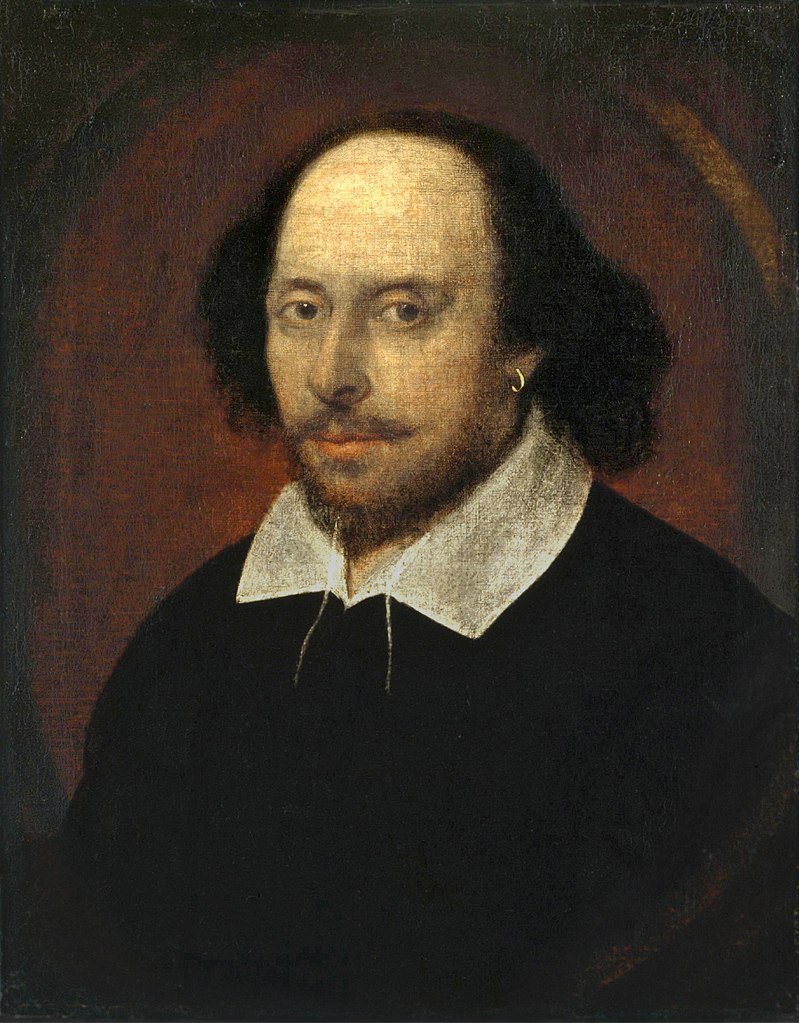
This was long thought to be the only portrait of William Shakespeare that had any claim to have been painted from life, until another possible life portrait, the Cobbe portrait, was revealed in 2009. The portrait is known as the “Chandos portrait” after a previous owner, James Brydges, 1st Duke of Chandos. It was the first portrait to be acquired by the National Portrait Gallery in 1856. The artist may be by a painter called John Taylor who was an important member of the Painter-Stainers’ Company.
National Portrait Gallery image via Wikimedia Commons.
… if we cannot know Shakespeare’s positive thoughts about any major question, as Nutall puts it, we can at least surmise some of the things that he did not believe. No one, I think, could imagine that Shakespeare romanticized the common man or was impressed by a crowd’s capacity for deep reflection. If there is one thing that he was not, it is a utopian.
Apart from the absence of direct evidence, one reason that it is so difficult to know what Shakespeare thought is that he seemed uniquely able to imagine himself into the minds of an almost infinite number of characters, so that he actually became them. He was, in a sense, like an actor who has played so many parts that he no longer has a personality of his own. A chameleon has many colors, but no color. What is perhaps even more remarkable is that, by some verbal alchemy, Shakespeare turns us into a pale version of himself. Through the great speeches or dialogues, we, too, enter a character’s world, or even become that character in our minds. I know of no other writer able to do this so often and across so wide a spectrum of humanity.
Included in this spectrum are the two King Richards, the Second and the Third. Shakespeare wrote the two plays in reverse historical order, about four years apart. The usurpation of Richard II’s throne in 1399 by Henry Bolingbroke, Henry IV, led to political instability and civil war in England that lasted until the death of Richard III in battle in 1485. Because everyone loves an unmitigated villain, Richard III is said to be the most frequently performed of all Shakespeare’s plays, but its historical verisimilitude is much disputed. It is clearly an apologia for the Tudor dynasty, for if Richard III were not the absolute villain he is portrayed as having been (and such is the power of Shakespeare’s play that everyone’s image of the king, except for those specially interested, derives from it), then Henry VII, whose dynastic claims to the throne were meager, to say the least, was not legitimately king — in which case neither was Henry VIII, Queen Elizabeth’s father, nor, therefore, was Queen Elizabeth legitimately queen: a dangerous proposition at the time Shakespeare wrote. So reminiscent of sycophantic Soviet historical apologetics does a Soviet emigré friend of mine find the play that he detests it. In 1924, a surgeon in Liverpool, Samuel Saxon Barton, founded what became the Richard III Society, which now has several thousand members globally, to rescue the reputation of the king from the Bard’s calumnies.
If Richard III were merely a propaganda play on behalf of the Tudors, however, it would hardly have held its place in the repertoire. It does so because it tackles the perennially fascinating, and vitally important, question of evil in the most dramatic manner imaginable; its historical inaccuracy does not matter. Richard III may not have been the dark figure Shakespeare portrays, but who would dare to say that no such figure could ever have existed?
The two plays offer a contrast between different political pathologies: that of ambitious malignity and that of arrogant entitlement, both with disastrous results, and neither completely unknown in our time. They share one rather surprising thing in common, however: before reaching the throne, both usurpers — Richard III, when still Duke of Gloucester; and Henry IV, when still Duke of Hereford — felt obliged to solicit the good opinion of the common people. This is perhaps surprising, in view of the extremely hierarchical nature of society in both the age depicted in the plays and the age in which they were written, and suggests a nascent populism, if not real democracy. However powerful the king or nobility, the Peasants’ Revolt of 1381, early in the reign of Richard II (as much a revolt of merchants as of peasants), must have alerted them to the need to keep the populace at least minimally satisfied.
Update: Fixed broken link and mis-placed image.
What if a Fool Has the Launch Codes? | The Cuban Missile Crisis I Day 06
TimeGhost History
Published 12 Jul 2020On October 21 1962, politicians and military in both the US and in the USSR seem to have contradictory views on what to do next. Should the Soviet local commanders on Cuba get to play with the little nukes as they like, or rather wait for permission?
Join us on Patreon: https://www.patreon.com/TimeGhostHistory
Hosted by: Indy Neidell
Written by: Spartacus Olsson
Director: Astrid Deinhard
Producers: Astrid Deinhard and Spartacus Olsson
Executive Producers: Astrid Deinhard, Indy Neidell, Spartacus Olsson, Bodo Rittenauer
Creative Producer: Joram Appel
Post-Production Director: Wieke Kapteijns
Research by: Spartacus Olsson
Edited by: Daniel Weiss
Sound design: Marek KaminskiColorizations:
– Carlos Ortega Pereira (BlauColorizations) – https://www.instagram.com/blaucoloriz…
– Daniel WeissSources:
From the Noun Project:
Arm Sling By Sergey Demushkin
Death by Adrien CoquetSoundtracks from Epidemic Sound:
– “Cold Eyes” – Elliot Holmes
– “Zoot Suit” – Elliot Holmes
– “From the Depths” – Walt Adams
– “Kissed by Thunder” – Elliot Holmes
– “Car Chase in Virginia” – White Bones
– “When They Fell” – Wendel SchererArchive by Screenocean/Reuters https://www.screenocean.com.
A TimeGhost chronological documentary produced by OnLion Entertainment GmbH.

Sarah Hoyt on noblesse oblige
In the latest edition of the Libertarian Enterprise, Sarah Hoyt explains how noblesse oblige can and is used as a tool to benefit the powerful:
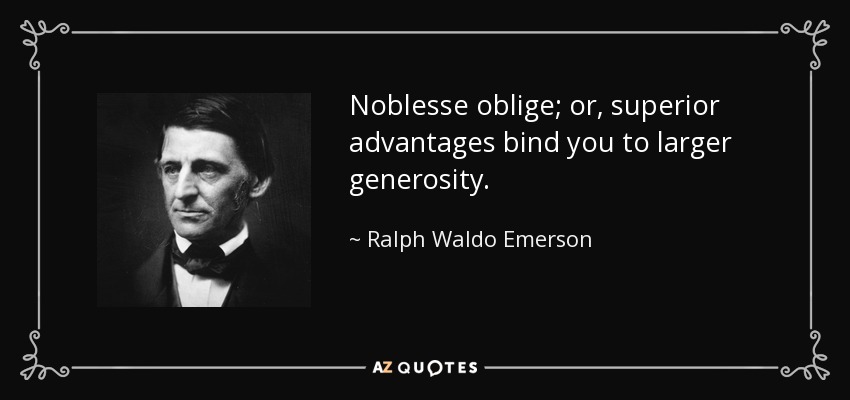
Of all the traps a culture can fall into, the fact that Americans tend to fall into Noblesse Oblige traps says very good things about us. It also doesn’t make the trap any less dangerous.
Noblesse Oblige, aka “nobility obligates” was a way that the excesses of a hierarchical society was kept in check. While the peasants were obligated to obey the nobleman, the nobleman was obligated to look after them/not put extreme demands on them/behave in certain paternalistic ways. (One of these days I need to do a post on paternalistic versus patriarchal. remind me.)
It is what is notably lacking from ideologically driven totalitarianisms and hierarchies, probably because their basis being atheistic they don’t seem the humans they have power over as being worth anything or commanding any duty from them. This is why in places like Cuba, Venezuela or China, the officials of the “democratic” government give themselves airs as long-suffering public servants while treating the people under their power worse than any of us would treat a stray animal (let alone a pet.)
In the US — where the citizen is king! — we have evolved a form of noblesse oblige best described as “Them who can, do what they can for those who can’t.”
[…]
But the noblesse oblige that affects the common individual in America is the foundation of worse traps.
Most of the idiotic compliance with ridiculous Winnie the Flu rules and restrictions hooked directly into Noblesse Oblige. For instance, the brilliant idea that you should wear masks to show you care even though we pretty much know they are completely ineffective and quite deleterious for a vast swath of people.
The idea that our kids should be forced to perform “volunteer” labor to graduate school, to “teach them to care for others.” The idea that you can always do a little more/sacrifice a little more for “those worse off” (Who often aren’t.)
When Noblesse Oblige turns into toxic altruism, it can take society apart.
Much of the “Green” mania is part of the noblesse oblige trap. They’re trying to convince us that if we just do these little things — most of them counterproductive, like, say recycling, which uses more resources and causes more issues than just using stuff — we’ll make it better for everyone.
In a bigger sense, they’re trying to make it so that we commit polite suicide so that “others live better.”
It can result in truly horrible racism, too. A great part of the left’s being convinced, say, that meritocracy is white supremacy comes from the fact that, being white, (and racist) they assume that they’re more competent than any other race, and therefore following “merit” causes white people to rise to the top.
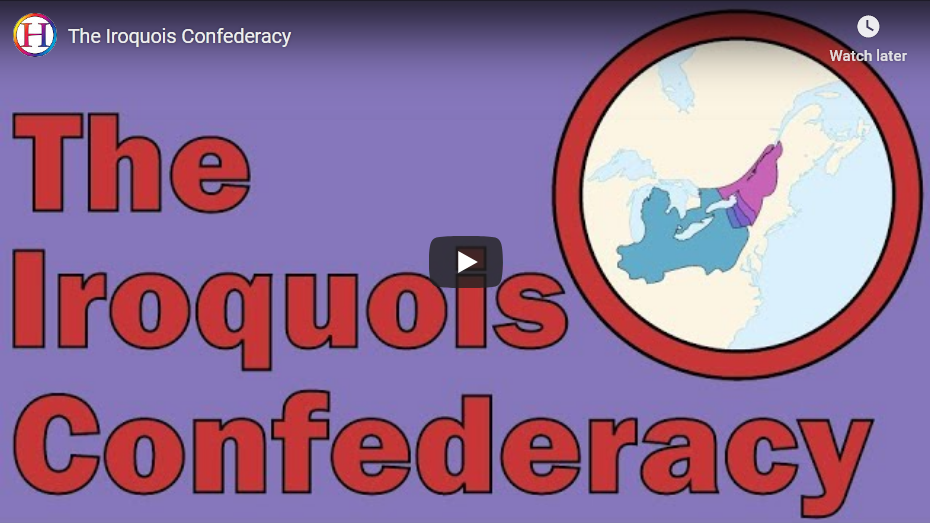
The Iroquois Confederacy
Historia Civilis
Published 20 Jun 2018Patreon | http://patreon.com/HistoriaCivilis
Donate | http://www.paypal.com/cgi-bin/webscr?…
Merch | http://teespring.com/stores/historiac…
Twitter | http://twitter.com/HistoriaCivilis
Website | http://historiacivilis.comSources:
“Discourse Delivered Before the New-York Historical Society: At Their Anniversary meeting, 6th December, 1811,” by DeWitt Clinton: https://amzn.to/2JJZ7eB
The Great Law and the Longhouse: A Political History of the Iroquois Confederacy, by William N. Fenton: https://amzn.to/2JKVTYo
League of the Hodenosaunee or Iroquois, by Lewis H. Morgan: https://amzn.to/2MzRfue
Forgotten Founders, by Bruce E. Johansen: https://amzn.to/2Mz8VGf
French-Iroquois Diplomatic and Military Relations 1609-1701, by Robert A. Goldstein: https://amzn.to/2JLjfxdMusic:
“Deluge,” by Cellophane Sam
“Hallon,” by Christian BjoerklundWe are a participant in the Amazon Services LLC Associates Program, an affiliate advertising program designed to provide a means for us to earn fees by linking to Amazon.com and affiliated sites.
QotD: Anti-semitism
Damn it, how often does this need to be said before tribalists stop blathering? The whole point of the post-Enlightenment West is that every individual matters, regardless of who they are. Not just anti-semitism but tribalism in general is the virus that, as Rabbi Sacks says, keeps mutating. The only valid reason to regard an individual as better or worse is, as Dr King famously said (but as the Left seems to have forgotten) “the content of his character.” The only valid reason to treat an individual differently before the law is his or her conduct.
Tom Paine, “What Is It About The Jews?”, The Last Ditch, 2018-04-12.
July 12, 2020
Free French vs. Fascist French – WW2 – 098 – July 11 1941
World War Two
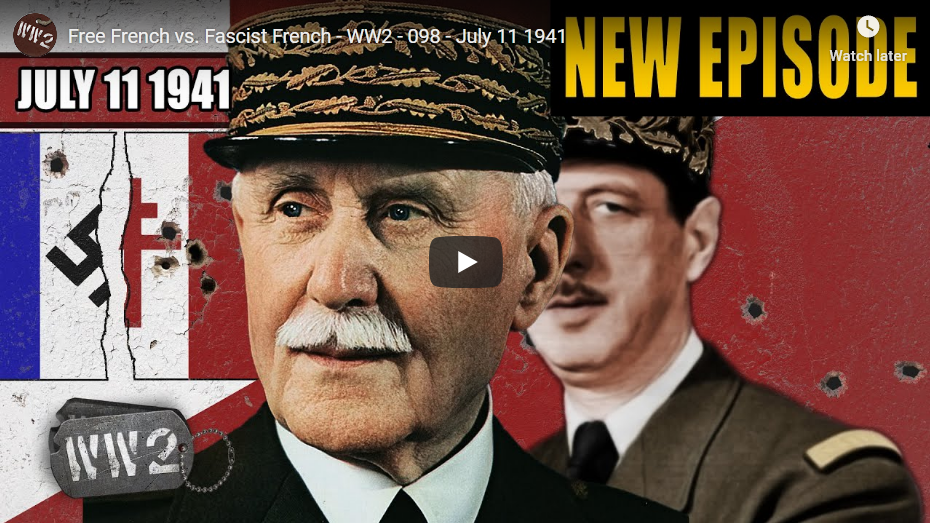
Published 11 Jul 2020Germany keeps advancing on the eastern front, and yet by now, transport and supply problems are seriously undermining the capability of the German spearheads, even as they pull further away from the infantry. The Syria-Lebanon campaign is coming to an end, though, and an armistice is proposed which would give the Allies victory if accepted.
Join us on Patreon: https://www.patreon.com/TimeGhostHistory
Or join The TimeGhost Army directly at: https://timeghost.tvFollow WW2 day by day on Instagram @World_war_two_realtime https://www.instagram.com/world_war_two_realtime
Between 2 Wars: https://www.youtube.com/playlist?list…
Source list: http://bit.ly/WW2sourcesWritten and Hosted by: Indy Neidell
Director: Astrid Deinhard
Producers: Astrid Deinhard and Spartacus Olsson
Executive Producers: Astrid Deinhard, Indy Neidell, Spartacus Olsson, Bodo Rittenauer
Creative Producer: Joram Appel
Post-Production Director: Wieke Kapteijns
Research by: Indy Neidell
Edited by: Iryna Dulka
Sound design: Marek Kamiński
Map animations: Eastory (https://www.youtube.com/c/eastory)
Map consultants: Rabih Rached and Patrick AdaimyColorizations by:
– Adrien Fillon – https://www.instagram.com/adrien.colo…
– Julius Jääskeläinen – https://www.facebook.com/JJcolorization/
– Jaris Almazani (Artistic Man) – https://instagram.com/artistic.man?ig…
– Olga Shirnina, a.k.a. Klimbim – https://klimbim2014.wordpress.com/
– Norman Stewart – https://oldtimesincolor.blogspot.com/
– Carlos Ortega Pereira, BlauColorizations – https://www.instagram.com/blaucoloriz…
– Dememorabilia – https://www.instagram.com/dememorabilia/Sources:
– Walter Frentz
– Bundesarchiv, CC-BY-SA 3.0: Bild_101I-187-0203-06A
– Narodowe Archiwum Cyfrowe
– Imperial War Museum: E21340, E 21339
– Mil.ruArchive by Screenocean/Reuters https://www.screenocean.com.
A TimeGhost chronological documentary produced by OnLion Entertainment GmbH.
Reforming the police
A guest editorial at Catallaxy Files from former Australian senator David Leyonhjelm discusses the original civilian police force, the London Metropolitan Police, and the rules that governed their actions. Contrasting the origins of modern policing, he then discusses the ways police organizations have changed:
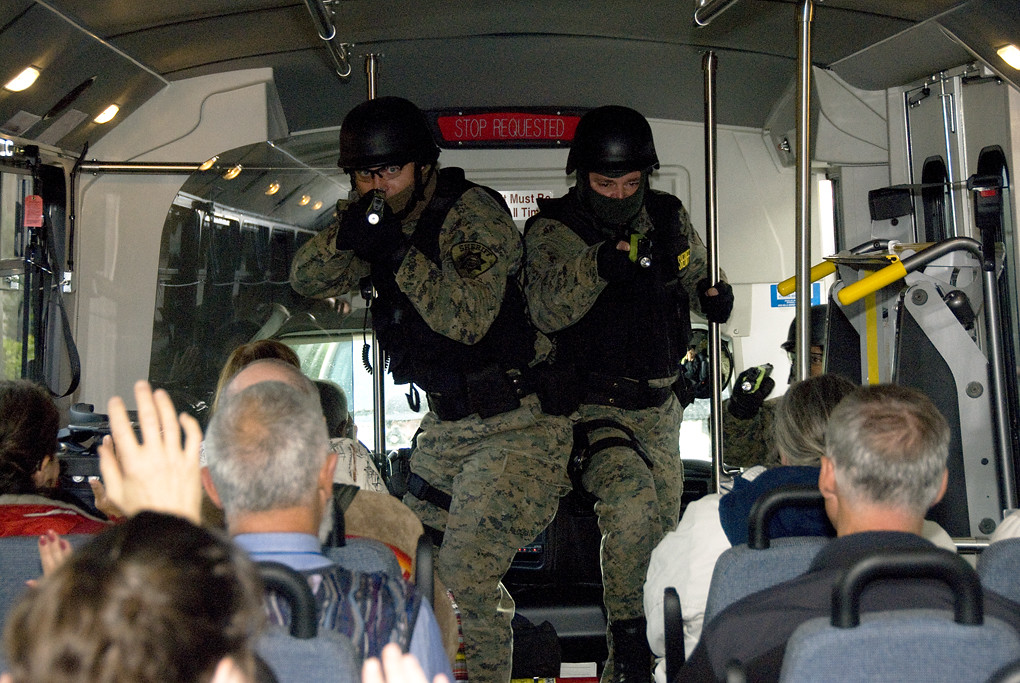


One issue is the steady militarisation of the police. This ranges from references to the public as civilians and assertions that the police place their lives on the line every day, to black uniforms, military assault rifles and equipment such as armoured personnel carriers. This is a bigger concern in America, where a lot of military surplus equipment is sold to police and the emphasis on armed conflict is more pronounced, but the trend is the same here.
When they see themselves as soldiers in a war, it is not surprising that some police have no regard for public welfare. The negligence leading to the death of Miss Dhu in police custody in [Western Australia], and of course the notorious deaths in America, are obvious examples of where that leads.
Peel’s principles also stipulate that police should only use physical force when persuasion, advice and warning are insufficient, to use only the minimum force necessary, and that the cooperation of the public diminishes proportionately with the necessity of the use of physical force and compulsion.
Yet how often do we see police resort to violence when making an arrest? People are tackled, forced to the ground with knees on their back and neck amid blows, kicks and the vindictive use of Tasers, simply to apply handcuffs. Being “non-compliant” or raising verbal objections is enough to prompt this, and some have died as a result.
Moreover, when the victims of such treatment are not convicted or imprisoned, such rough handling amounts to a form of punishment. That is also in conflict with Peel’s Principles, which require the police to avoid usurping the powers of the judiciary by authoritatively judging guilt and punishing the guilty.
Enforcement of the Covid rules, including the authoritarian decrees and fines imposed by state premiers, provide further examples: petty closing of cafes, prosecutions for reading in a park, chasing individuals along a closed beach, stopping fishing from a pier the day after 10,000 have gathered in a demonstration, and even a Police Commissioner who denounces the cruise industry as criminal, are among them. The Australian public are never likely to accept the police as one of them while those sorts of things occur.
Change is necessary. Corrupt and thuggish police must be rooted out and the enforcement of laws that the public does not support, including political and victimless crimes, should never have priority. Moreover, arresting people seldom solves problems that originate in drug use, alcoholism, mental illness and poverty.
The fundamental responsibility of governments is to protect life, liberty and property. If the police were to focus on these while upholding Peel’s Principles, Australians might even come to their aid.