Quotulatiousness

March 3, 2025

Is DOGE merely uncovering what used to be called “honest” graft?

Filed under: Bureaucracy, Environment, Government, History, USA — Tags: , , , , , — Nicholas @ 05:00

Jon Miltimore explains where the expression “honest graft” came from and gives examples of what the DOGE investigations have turned up so far:

In 1905, George Washington Plunkitt made arguably the most famous defense of political graft in American history.

“Everybody is talkin’ these days about Tammany men growin’ rich on graft,” the New York state senator and Tammany Hall member wrote, “but nobody thinks of drawin’ the distinction between honest graft and dishonest graft”.

Plunkitt was responding to The Shame of the Cities, a book by journalist Lincoln Steffens that exposed sweeping political corruption in U.S. cities.

The ward boss’s shameless defense of “honest graft”, which is still assigned to undergraduates a century after Plunkitt’s death, comes to mind when looking at the fraud, waste, and abuse Elon Musk’s Department of Government Efficiency and others are uncovering.

To take but one example, consider the billions of dollars in taxpayer funds the Environmental Protection Agency awarded last year to Power Forward Communities. If you’ve never heard of the nonprofit group, you’re forgiven. Almost nobody has — because it didn’t exist until late 2023.

Power Forward Communities had no footprint, online or otherwise, until October 2023, when it was announced as part of the Rewiring America program, an organization linked to former Georgia Democratic gubernatorial candidate Stacey Abrams, which says its mission is “all about Rewiring America’s values, people, and culture.”

Less than a year after its creation, Power Forward Communities was awarded $2 billion via the EPA’s National Clean Investment Fund — even though it reported just $100 in revenue during its first three months of operation.

The payment, which is slated to continue through June 2031, caught the attention of Lee Zeldin, the new EPA administrator.

“It’s extremely concerning that an organization that reported just $100 in revenue in 2023 was chosen to receive $2 billion,” Zeldin said.

Indeed. It’s graft on a scale the Tammany Hall charlatans couldn’t have imagined.

Historical sources say 19th-century politician Boss Tweed and his ring of cronies took in at least $50 million in corrupt money in backroom deals, kickbacks, and skimming before Tweed was convicted of larceny and forgery in 1873 and fled to Cuba, and later Spain. In 2025 dollars, that’s about $1.3 billion — considerably less than the single payoff former President Joe Biden’s EPA awarded Power Forward Communities.

March 1, 2025

“There were always scapegoats … and they were always driven out one way or another”

Filed under: Britain, Health, Politics — Tags: , , , , , — Nicholas @ 05:00

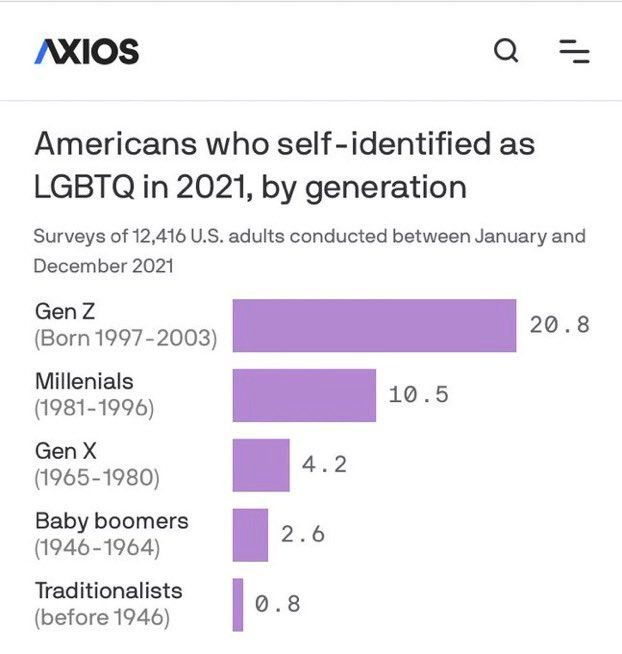
The second part of Nigel Biggar‘s look at the culture war in Britain includes a look at how the professional approach to young peoples’ gender issues became monomaniacal because nobody involved stopped to think for fear of being ostracized (or fired):

On the gender front, there’s plenty of reason to doubt the intellectual coherence of transgender-self-identification. When a biological male believes that his inner, authentic self is female, what exactly does he think being ‘female’ is? I’m still waiting for someone to persuade me that this doesn’t trade on gender stereotypes that feminists rightly taught us to throw overboard decades ago.


    Observe how that has nothing at all to do with the care of patients, and how it has everything to do with the self-regard and political standing of the managers.


There’s even more reason to doubt that the well-being of young people is well served by taking their asserted genders at face value and allowing them to align their bodies by making irrevocable physical changes. According to Hannan Barnes’ shocking chronicle of the scandal at the Gender Identity Development Service (or GIDS) at the Tavistock Institute here in London, there was widespread doubt among clinicians about young people’s claims of “an inborn ‘trans’ nature”, awareness that these were sometimes correlated with eating disorders and self-harm, and suspicion that they might be caused by abuse or trauma. Furthermore, the long-term effects of using puberty-blockers were “largely unknown”, there was considerable uncertainty about which patients would benefit from them, and the health of some young patients actually seemed to worsen while on them.

Notwithstanding all this, “the clinical team … never discussed as a group what it even understood by the word ‘transgender'”, clinicians “never dream[t] of telling a young person that they weren’t trans”, and they always prescribed puberty-blockers unless the patient actively refused them. What’s more, expressions of doubt by staff were discouraged. “Someone would raise concerns, and someone else would move in to shut it down”, writes Barnes. “Those who persisted in asking difficult questions were not received well … those who spoke out were labelled troublemakers. [According to one witness,] ‘There were always scapegoats … and they were always driven out one way or another'”. “Junior staff looked on and learnt”.

Note the chilling effect.

The Tavistock Institute in London

Barnes’ book bears the title, Time to Think, because she identifies the general problem at GIDS as that of “not stopping to think”. That, of course, raises the question, Why? Barnes gives several reasons. One was the fact that the GIDS was propping up the Tavistock financially and that senior managers had a material interest in not disturbing its assumptions. Another was the unwillingness to offend transgender lobby groups such as Mermaids for “fear of a backlash”. But, most important of all was concern for the ‘progressive’ reputation of the management. According to David Bell, consultant adult psychiatrist at the Trust and whistleblower, “The senior management regarded [GIDS] as a star in our crown, because they saw it as a way of showing that we weren’t crusty old conservatives; that we were up with the game and cutting-edge. That was very important to the management to show we were like that”. Observe how that has nothing at all to do with the care of patients, and how it has everything to do with the self-regard and political standing of the managers. Not for the first time, the basic narcissism of progressive virtue-signaling is exposed.

Update: Added missing URL.

February 24, 2025

QotD: Great Men when it’s time to do x

Filed under: History, Quotations, Science, Technology — Tags: , , , , — Nicholas @ 01:00

    Pascal-Emmanuel Gobry @pegobry_en
    This is obvious, but: Elon breaks libs’ brains because he is the living vindication of the Great Man theory of history. Literally nothing he built would have existed without him, and without him clearly exhibiting superior intelligence and indomitable will.

Not so fast.

I’m here to tell you, because I lived it, that the experience of being the “Great Man” who changed history can feel very different from the inside.

I’m not going to try to speak for Elon. Maybe he feels like a colossus out of Thomas Carlyle. I’ll just say that I didn’t feel like that when I was doing my thing, and I’m doubtful that he does more than a small part of the time.

Somebody was going to take the concept of “open source” to the mainstream fairly soon after general access to the Internet started to happen in the mid-1990s. But it didn’t have to be me; you get steam-engines when it’s steam-engine time, and it was time. Dennard scaling and cheap wide-area networking were the underlying drivers. Conditions like that generate ESR-equivalents.

Now it’s time for rockets to Mars. The drivers include extremely cheap and powerful computing, 3-D printing, and advances in both metallurgy and combustion chemistry. Conditions like this generate Elon-equivalents.

It is more than possible to look like the Great Man from the outside but to feel like — to know — that you are almost at the mercy of currents of change much larger than yourself. Yes, you have some ability to shape outcomes. And you can fail, leaving the role to the next person to notice the possibilities.

If Elon is like me, he sometimes plays the autonomous Great Man in order to get the mission done, because he knows that the most effective way to sell ideas is to be a charismatic prophet of them. But if he’s like me, he also feels like the mission created him to make itself happen, and if he fails or breaks the mission will raise up another prophet by and by.

I’m not claiming the Great Man theory is entirely wrong — it takes some exceptional qualities to be an Elon, or even a lesser prophet like me — but it’s incomplete. Great Men don’t entirely create themselves, they are thrust upwards and energized by missions that are ready to happen.

ESR, Twitter, 2024-10-31.

February 20, 2025

The Space Race Begins – W2W 006

Filed under: History, Military, Space, USA — Tags: , , , , , — Nicholas @ 10:18

TimeGhost History
Published 19 Feb 2025

The Space Race has begun. As Stalin’s USSR and Truman’s U.S. compete for technological dominance, the Pentagon prepares for a future of missile warfare. Project Diana shatters barriers by bouncing radar off the Moon, proving space can be conquered — whether for exploration or war.
(more…)

February 19, 2025

QotD: The inborn bias of all mankind

Filed under: Health, Quotations — Tags: , , , — Nicholas @ 01:00

“I would strangle everyone in this room if it somehow prolonged my son’s life.” That’s what I blurted into a microphone during a panel discussion on ethics. I was laughing when I said it, but the priest sitting next to me turned sharply in horror and the communist sitting next to him raised her hand to her throat and stared daggers at me.

Why was I on a panel with a priest and a revolutionary communist? Long story — not very interesting: we were debating the future of ethics with special attention to the role of religion. The interesting part, however, is that at some point, after we all shook hands like adults and I was on my way home, I realized that I meant it — I would choke them all. Well, of course, one can’t be entirely sure that one’s actions will follow one’s intentions. The best-laid plans of mice and men, and all that. But, given some weird Twilight Zone scenario wherein all their deaths somehow saved my son’s life, I was at least hypothetically committed. The caveman intentions were definitely there.

The utilitarian demand — that I should always maximize the greatest good for the greatest number — had seemed reasonable to me in my 20s but made me laugh after my son was born. And my draconian bias is not just the testosterone-fueled excesses of the male psyche. Mothers can be aggressive lionesses when it comes to their offspring. While they are frequently held up as icons of selfless nurturing love, that’s mostly because we offspring — the ones holding them up as icons — are the lucky recipients of that biased love. Try getting between a mammal mother and her kid, and you will see natural bias at its brutal finest.

Stephen T. Asma, “Confucius Got It Right: Giving in to ‘Bias’ is Part of Living an Ethical Life”, Quillette, 2020-02-01.

February 18, 2025

QotD: The soft sexism of low expectations

Filed under: Health, Media, Politics, Quotations, USA — Tags: , , , , — Nicholas @ 01:00

If a woman has spent her life marinating in the left-wing feminist subculture, a few things are highly likely to be true:

  • She’s been told she’s great — fabulous! — just the way she is.
  • She’s been taught to dismiss all push-back as misogynistic.
  • She’s been assured that she’s entitled to success — and that any failures to achieve said success are the fault of men.
  • She’s been trained to demand that these dastardly men — who are totes holding her back — kindly step aside and let her take the trophy — whether she’s actually earned it or not.

You might think I’m being unfair here, but frankly? I don’t agree. Given all the stuff I’ve read in the news for the past decade plus, I believe I’m right on the money.

Everywhere I look, I see illustrations of all four of the above bullet points. I hate to keep harping on the fat acceptance movement, but really: isn’t that a textbook example of point number one? Go ahead, ladies: eff those unrealistic beauty standards and rock on with your 300 pound selves. Yas, queen, slay! (And don’t worry that you can’t make it up a single flight of stairs without getting winded. The negative impacts of extreme obesity are way over-stated, amirite?)

Then there are all the times leftists of the distaff persuasion have thrown down the poor-me-I’m-being-harassed-by-meanie-sexist-men card each time they start losing an online argument. To be sure, in the absolute dumpster fire that is internet discourse, such women probably do get burned with the occasional “die, bitch!” PM or email. But as I noted on my fan blog, men get that crap too — and oddly, I don’t see them whining about it nearly as often. (Probably because crying doesn’t work for men. Only women get picked up by the waaaaaambulance.)

And just to hit on bullets three and four: everywhere I look, I see leftists justifying moves to ease standards to give vag a hand up. Just last month, for example, it was reported that Oxford is considering removing Homer and Virgil from a foundational classics course due to “attainment gaps between male and female candidates”. Don’t buckle down and study your Latin and Greek, dears. We’ll remove that pesky obstacle for you. And oh my great and fluffy Lord, I can’t even count the number of times I’ve heard feminists complain about the academic weeding that goes on in engineering or computer science — because apparently, advanced math is oppressive and patriarchal. As a woman who numbers pretty good — indeed, I even teach that stuff for a living! — I headdesk so hard whenever I hear this BS that I’m surprised my skull is still intact.

Where does all this anal-smoke-blowing lead? When you’re told constantly that you should get prizes simply for being a good little girl — as leftist women are — the result is predictable: you stop developing. If you’re already Ms. Polly Perfect, well — that obviates the need for critical self-examination and the consequent moves towards self-improvement. If your naysayers are all dismissible as “women-hating men bitter over the loss of their privilege” (or as women suffering from “internalized misogyny”), then your arguments are almost certainly untested and malformed. And if people have always been clearing the road for you and shielding you from any real challenges, you’re no doubt much stupider than your competition — and much weaker.

Stephanie S., “Prizes for Good Little Girls Syndrome”, Conservative Thoughts, 2020-03-07.

February 15, 2025

Nannies on the right are just as bad as nannies on the left

Filed under: Business, Government, Health, Politics, USA — Tags: , , , — Nicholas @ 03:00

Jim Treacher briefly gets slightly serious about RFK Jr.’s new role as America’s chief health nanny:

Fake image generated by Grok

First things first: I’m fine with a United States president picking his own cabinet. Donald Trump won, so he gets to choose the people he wants. It’s not fascism, it’s not unconstitutional, and it’s not going to destroy the country. This is the system we have, and so far the Trump administration has been operating within precedent. (Yes, even with Elon Musk and DOGE.) Fair enough.

And, also, in addition to that: I don’t like RFK Jr., and I won’t pretend I do just so you don’t yell at me.

RFK is still the same guy he was before he suddenly started being nice to Trump. He’s the guy who thinks COVID-19 was “ethnically targeted” to attack Caucasians and blacks, while sparing the Jews and Chinese. He’s the guy who bragged about having a worm in his brain. He’s the guy who, just seven months ago, said “Trump was a terrible president“.

Now I’m supposed to pretend none of that happened, just because Trump likes him for the moment? Nah.

And, of course, RFK is the guy who thinks the role of government is to slap your hand at the dinner table. So I’m supposed to pretend nanny-statism is good now.

Yay, let’s embrace lib policies to own the libs!

If you didn’t want Michelle Obama telling you what to eat, why do you want RFK telling you what to eat? If you didn’t want the government telling you which vaccines to put in your body, why do you want the government telling you which food to put in your body?

“But seed oils and high-fructose corn syrup and Red Dye Number Whatever are bad for you!” Okay. So don’t eat that stuff. You can read labels, can’t you? Why do you need the feds to hold your hand?

It’s amazing: At the very same time MAGA is cheering on Trump for reducing the size of government — and buddy, I’m right there with them — they’re begging the government to “clean up the food supply”.

Which is it, friends?

Get mad at me all you want, but at least I’m consistent. I don’t want the government telling me what to do, no matter who’s in charge for the time being.

QotD: The absurdly high early expectations for genetic research

Filed under: Health, Media, Quotations, Science — Tags: , , , — Nicholas @ 01:00

For decades, people talked about “the gene for height”, “the gene for intelligence”, etc. Was the gene for intelligence on chromosome 6? Was it on the X chromosome? What happens if your baby doesn’t have the gene for intelligence? Can they still succeed?

Meanwhile, the responsible experts were saying traits might be determined by a two-digit number of genes. Human Genome Project leader Francis Collins estimated that there were “about twelve genes” for diabetes, and “all of them will be discovered in the next two years”. Quanta Magazine reminds us of a 1999 study which claimed that “perhaps more than fifteen genes” might contribute to autism. By the early 2000s, the American Psychological Association was a little more cautious, was saying intelligence might be linked to “dozens – if not hundreds” of genes.

The most recent estimate for how many genes are involved in complex traits like height or intelligence is approximately “all of them” – by the latest count, about twenty thousand. From this side of the veil, it all seems so obvious. It’s hard to remember back a mere twenty or thirty years ago, when people earnestly awaited “the gene for depression”. It’s hard to remember the studies powered to find genes that increased height by an inch or two. It’s hard to remember all the crappy p-hacked results that okay, we found the gene for extraversion, here it is! It’s hard to remember all the editorials in The Guardian about how since nobody had found the gene for IQ yet, genes don’t matter, science is fake, and Galileo was a witch.

And even remembering those times, they seem incomprehensible. Like, really? Only a few visionaries considered the hypothesis that the most complex and subtle of human traits might depend on more than one protein? Only the boldest revolutionaries dared to ask whether maybe cystic fibrosis was not the best model for the entirety of human experience?

Scott Alexander, “The Omnigenic Model As Metaphor For Life”, Slate Star Codex, 2018-09-13.

February 13, 2025

QotD: Social Darwinism

Filed under: Economics, History, Politics, Quotations, Science, WW2 — Tags: , , , , — Nicholas @ 01:00

Social Darwinism fails both on its own terms, and in the implementation. On its own terms, because we simply can’t account for all the variables. I use the example of billiards: The math is simple enough behind any given billiard shot, but once you introduce obvious real world variables like imperceptible imperfections in the felt of the table, the balls themselves, the cue … plus the inability of human muscles to consistently apply the necessary force in just the right way … your average PhD physicist should be a much better pool player than, say, your average barfly, but the reality is far different. How much more complex is an entire living system, than a pool table?

Social Darwinism fails in practice for the most obvious reason: You can’t practice it with the necessary consistency without massive State intervention, and what kind of fool would give a State, any State, that power? It has been tried, 1933-45 being the most prominent example, and it didn’t go well.

Severian, “The Experiment”, Founding Questions, 2021-09-25.

February 11, 2025

QotD: Scientists, in their natural habitat

Filed under: Bureaucracy, Education, Humour, Quotations, Science — Tags: , — Nicholas @ 01:00

Now, do you accept the traditional image of scientists as sober, serious, disinterested seekers of truth? Or do you have more of a Biscuit Factory sort of view of them, where quite a lot of them are very flawed human beings, egotistical shits bent on climbing the greasy pole and treading on people to get to the top? Bullshitters and networkers and operators? Actually, I think the former types do exist, there are good, serious scientists out there (including some of my personal friends, and quite a few readers of this blog), but there are an awful lot of the latter types, especially at the top, and it’s rare to hear of a science department that isn’t full of bitter hatreds and jealousies and vendettas, where every Professor turns into an arsehole no matter how nice they seemed when they were a graduate student.

Hector Drummond, “Soap-opera science”, Hector Drummond, 2020-03-29.

February 10, 2025

Immortality, ancient versus modern

Filed under: Health, History — Tags: , , , , , — Nicholas @ 05:00

Immortality used to be something you only got in the eyes of others, as Benjamin Franklin put it, “If you would not be forgotten, as soon as you are dead and rotten, either write things worth reading, or do things worth the writing”, but modern tech bros want the other kind of immortality … the one where you don’t actually die:

In ancient times, you attained immortality by doing great deeds.

Today you attain immortality by getting blood transfusions from teenagers, and freezing your body for later revival.

Needless to say, there’s a huge difference between these two strategies.

In the first case, you serve others by your great deeds — eternal renown is your reward for this. But folks seeking immortality today are the exact opposite. They have reached peak narcissism — other people are, for them, literally just a source of fresh blood (or stem cells).

Until recently, I thought those Dracula movies were just a story to scare little kids. I now know that they’re an actual playbook for Silicon Valley elites.

With a better business plan, our Transylvanian count could have raised some serious VC money.

Nowadays he would be running a medical rejuvenation startup with a billion dollar market cap

Not long ago, I would have thought that the tweet below was a joke. But not in the current moment.

By the way, don’t miss the motto on his shirt.

I’m tempted to make some joke about this — but we’ve now arrived at a point where reality itself morphs into dark comedy. No punchline is necessary

And here’s another similarity between tech billionaires and the monsters in old horror movies. Somebody recently sent me a link to a website that sells bunkers to tech elites, and they remind me of dungeons in a Frankenstein film.

Go ahead, click on the link. Don’t let me stop you.

In both instances, horror is the right term.

Just looking at these things and imagining some delusional transhumanist getting on the table in his dungeon for a rejuvenation procedure is very creepy.

But there are some similarities between ancient heroes doing great deeds, and today’s Silicon Valley transhumanist. They both want to be like the gods (only their methods are different). Also, they are both admired leaders in their respective societies.

That’s the part that troubles me most. If the dude slurping up stem cells in a bunker was just another crazy person, I wouldn’t worry about it. But, unfortunately, these unhinged narcissists include some of the most powerful people on the planet.

February 2, 2025

Hierapolis: a city encased in stone

Filed under: History, Middle East, Science — Tags: , , , — Nicholas @ 02:00

Scenic Routes to the Past
Published 18 Oct 2024

Hierapolis — modern Pamukkale, Turkey — was built over hot springs. During the Middle Ages, these encased much of the city in gleaming travertine.

See my upcoming trips to Turkey and other historical destinations: https://trovatrip.com/host/profiles/g…

January 30, 2025

Proposed California legislation to allow “Big Oil” to be sued for “climate change damage … regardless of cause”

Filed under: Business, Environment, Government, Law, USA — Tags: , — Nicholas @ 05:00

California is a lovely place. I’ve only ever been there once, back in January 1991 but it was a wonderful (business) trip. California’s political “leaders” on the other hand are clearly in need of immediate re-institutionalization:

First, the madness of the California state legislature is richly displayed in Senator Scott Wiener’s remarkable new bill that would allow people to sue the oil industry because climate change damaged their property, via “natural catastrophe, including a hurricane, tornado, storm, high water, wind-driven water, tidal wave, tsunami, earthquake, volcanic eruption, landslide, mudslide, snowstorm, or drought, or, regardless of cause, a fire, flood, or explosion”.

I hope you caught that “regardless of cause” thing, there at the end. If this bill passes — it won’t, being mostly a theatrical performance, but let’s pretend — Californians will supposedly be able to sue Chevron or ExxonMobil (and so on) because a flood or fire damages their property, which implicates fossil fuel-induced climate change, regardless of the cause of the flood or fire.

  1. I threw matches on your couch
  2. Climate change
  3. Big Oil burned your couch

On the hook: anyone who sold “fossil fuels” in California “since the year 1965”, although a lawsuit has to be brought within three years of the discovery of the damage caused by the fossil fuel’s effect on the climate.

Favorite part, and look at item #2 (click to enlarge):

I’m not a lawyer, but I have doubts about declaring in a law that you can’t question the constitutionality of the law. We had similar legal doctrines on the playground in elementary school, despite which some members of the first-grade community controversially persisted in utilizing the disallowed tag-back.

Wiener’s press release on the bill is … very special. California government knows why the recent fires were so harmful, and none of it involves California government. Sample quote from, please help me, the state senator who represents my district:

    “The Eaton Fire destroyed over 9,000 structures in my District, wiping out almost the entire town of Altadena, leaving thousands of my residents calling for justice and accountability,” said Sen. Sasha Renée Pérez (D-Pasadena). “Our communities have never seen anything like this in urban Los Angeles. The reality is that climate change is here and will continue impacting communities everywhere. What makes this worse is decades ago, Big Oil knew this would be our future, but prioritized lining their own pockets at the expense of our environment and the health of our communities. The Affordable Insurance and Climate Recovery Act will hold the oil industry responsible for the damage it has inflicted, and provide relief for future communities impacted by climate disasters.”

Decades ago, Big Oil knew Altadena would burn, but they did it anyway. Case closed.

I’m also quite fond of the senator’s use of “my residents”, which sounds like she’s buying up dead souls to expand her vassalage. I pay her in grain, of course.

January 28, 2025

AI, the iPhone, and other tech whizzery are not the most important inventions ever

Filed under: Health, History, Media, Technology — Tags: , , , — Nicholas @ 05:00

Freddie deBoer reacts to so, so many technically illiterate hot takes about this or that latest bit of techno-woo bling being given accolades as “the most important invention”:

Years ago, I think in 2010, Business Insider invested a great deal of hype and hoopla into a list they developed of the one hundred most important inventions of all time. I have tried and tried to find a link, including via the Internet Archive, but no dice; I’ll chalk it up to linkrot, the endless deterioration of the web over time, Business Insider‘s paywall, and their convoluted publishing history. You’ll have to take my word for it that, in a list that was released with great fanfare, they rated the iPhone as the most important invention of all time. Not antibiotics, the plow, or alternating current, not anesthesia or the lightbulb, but the iPhone, which took a bunch of things that already existed (cellular telephone service, email on the go, a touchscreen) and put them in one remarkably profitable package. The Business Insider list isn’t alone in putting the iPhone so high on ranked lists of human achievement. There’s plenty you can find, including a British survey that put the iPhone at number eight, ahead of the internal combustion engine, or this New York Times podcast which puts the iPhone at number three, although the list seems to be partially tongue in cheek. There’s a lot you could ask about such a choice, including epistemological questions inherent to putting a cellphone above the electricity-generating technologies that power it. But my visceral response to this kind of thinking — and even aside from ordinal lists of importance, the smartphone-supremacy attitude is very common — is to say, wow, these people must really enjoy shitting in the yard.

Plumbing — bringing fresh water from one place to another and disposing of human waste via engineering — goes back to antiquity, and you occasionally find claims of affordances like flush toilets in ancient times. Today, modern people in most developed parts of the world have constant access to free-running clean water and toilets that can remove physical waste to a secure processing facility or holding unit, with heated water on demand a very nice extra. That’s largely a 20th-century and forward phenomenon. There were pretty sophisticated sewer systems in Victorian London, the White House got running water in the Jackson administration, and as usual major metropolitan areas in rich countries were ahead of the game generally. But it wasn’t until the 1920s or so that indoor plumbing became a true mass phenomenon, again only in wealthy countries, and it was perfectly common for a soldier coming home from World War II in 1945 to be coming home to a house with a well and an outhouse. It wasn’t until the 1960s that a majority of American homes had indoor plumbing, which means that the beginning of the Space Age overlapped with a period where most Americans couldn’t wash their hands whenever they wanted to. And, as cool as NASA and launching satellites and orbiting the Earth and traveling to the Moon are, their practical impacts on human life pale in comparison to modern plumbing.

So when I read people putting the iPhone as the pinnacle of human ingenuity, I have to imagine that they’re big fans of shitting in their yard. Because if faced with a choice, they’ve indicated that they’d choose their smartphone over their toilet! And that’s quite a choice. It might be worth doing a little reality check in that regard by spending a month without one and then a month without the other. So you see how life feels without your smart phone for 30 days, and then you see what it’s like to not be able to access indoor plumbing for 30 days. You have to piss and shit outside. You have to walk to a well, if you can find one, to get (hopefully clean) water, and then you have to heat it up on your stove if you want it hot. You can’t shower, and taking a bath would be a remarkably laborious process that still left you with tepid water. And this isn’t just a question of comfort but a question of essential hygiene, by which I mean medically-relevant hygine — cholera, typhoid, gastrointestinal worms, scarlet fever, hepatitis, and many more diseases were massively harder to avoid before mass indoor plumbing. I don’t know you, personally, but I feel considerable confidence in suggesting that your desire to avoid those diseases is greater than your attachment to Instagram.

That’s the shitting in the yard test, or the indoor plumbing test, for those who prefer to avoid vulgarity. The test requires you to compare the hype about a particular tech product up against the actual brick-and-mortar changes wrought in the great period of human advancement that began sometime in the late 19th century and ended sometime in the late 20th; the modern flush toilet is just a particularly relevant example. Is Zoom really a bigger part of your life than food refrigeration, a technology that has saved untold millions of lives over the decades by dramatically reducing deaths from foodborne illness? Is cloud storage really a bigger deal than infant vaccines, which save six lives a minute? Does Android Auto really rate when compared to the airbag? You can call these questions obtuse, and some do, but they are natural and necessary things to think about in an era of obsession with artificial intelligence. (By which people mean LLM/neural net-based artificial intelligence, which is a whole other thing.) When you say that AI is the most important invention in human history, you’re making some really, really powerful claims. And yes, you have to then justify saying that AI is more important than, for example, the transistor, self-negating claims that deny the importance of technologies that make large language models possible. But you also have to justify saying that AI is more important than, like, the bowl. By which I mean, bowls. To put food in. To eat out of. Try and spend the rest of your life without ever using another food container and get back to me about whether ChatGPT is more important. Food containers are inventions!

QotD: Was Einstein a science-denier?

Filed under: Books, History, Quotations, Science — Tags: , , — Nicholas @ 01:00

Albert Einstein was a charmingly blunt man. For instance, in 1952 he wrote a letter to his friend and fellow physicist Max Born where he admits that even if the astronomical data had gone against general relativity, he would still believe in the theory:

    Even if there were absolutely no light deflection, no perihelion motion and no redshift, the gravitational equations would still be convincing because they avoid the inertial system … It is really quite strange that humans are usually deaf towards the strongest arguments, while they are constantly inclined to overestimate the accuracy of measurement.

In a few short sentences Einstein completely repudiates the empiricist spirit which has ostensibly guided scientific inquiry since Francis Bacon. He doesn’t care what the data says. If the experiment hadn’t been run, he would still believe the theory. Moreover, should the data have disconfirmed his theory, who cares? Data are often wrong.

This is not, to put it mildly, the official story of how science gets made. In the version most of us were taught, the process starts with somebody noticing patterns or regularities in experimental data. Scientists then hypothesize laws, principles, and causal mechanisms that abstract and explain the observed patterns. Finally, these hypotheses are put to the test by new experiments and discarded if they contradict their results. Simple, straightforward, and respectful of official pieties. The Schoolhouse Rock of science. Or as Einstein once described it:

    The simplest idea about the development of science is that it follows the inductive method. Individual facts are chosen and grouped in such a way that the law, which connects them, becomes evident. By grouping these laws more general ones can be derived until a more or less homogeneous system would have been created for this set of individual facts.

See? It’s as easy as that. But then, Einstein finishes that thought with: “[t]he truly great advances in our understanding of nature originated in a manner almost diametrically opposed to induction”.

Was Einstein a science-denier? I’m obviously kidding, but this is still pretty jarring stuff to read. How did he get this way? Einstein’s Unification is the story of the evolution of Einstein’s philosophical views, disguised as a story about his discovery of general relativity and his quixotic attempts at a unified field theory. It’s a gripping tale about how Einstein tried to do science “correctly”, experienced years of frustration, almost had priority for his discoveries snatched away from him, then committed some Bad Rationalist Sins at which point things immediately began to work. This experience changed him profoundly, and maybe it should change us too.

John Psmith, “REVIEW: Einstein’s Unification, by Jeroen van Dongen”, Mr. and Mrs. Psmith’s Bookshelf, 2024-05-27.

« Newer PostsOlder Posts »

Powered by WordPress