
Mark Felton Productions
Published 18 Apr 2020The last time the Parachute Regiment dropped into combat was during the 1956 Suez Crisis when 3 PARA landed on El Gamil Airfield outside Port Said, Egypt.
(more…)
September 2, 2022
The Paras Last Drop – Gamil Airfield 1956
Comments Off on The Paras Last Drop – Gamil Airfield 1956
August 30, 2022
How did Rome defend its empire? ⚔️
HistoryMarche
Published 29 Apr 2022🚩 In this video we analyze the three defensive strategies the Roman Empire deployed from c.27BC to 350 AD, as described in Edward Luttwak’s book The Grand Strategy of the Roman Empire.
(more…)
Comments Off on How did Rome defend its empire? ⚔️
August 20, 2022
How Turkey Fought a WW1 Peace Treaty – The Greek-Turkish War 1919-1923
The Great War
Published 19 Aug 2022The defeat of the Ottoman Empire in 1918 meant that it got its own peace treaty like the other three Central Powers. But the emerging Turkish National Movement under Mustafa Kemal resisted the Treaty of Sevres and occupation by various Entente Powers. Their successful resistance led to the creation of modern Turkey and the Treaty of Lausanne in 1923.
(more…)
Comments Off on How Turkey Fought a WW1 Peace Treaty – The Greek-Turkish War 1919-1923
QotD: The improbable survival of the Byzantine empire
The [Eastern Roman] Empire was faced by a triple threat to its existence. There were the northern barbarians. There was militant Islam in the south. There was an internal collapse of population. Each of these had been brought on by changes in the climate that no one at the time could have understood had they been noticed. It would not be until after 800 that the climate would turn benign again. In the meantime, any state to which even a shadow of Lecky’s dismissal applied would have crumpled in six months. Only the most courageous and determined action, only the most radical changes of its structure, could save the Empire. And saved the Empire most definitely was.
The reason for this is that the Mediaeval Roman State was directed by creative pragmatists. Look for one moment beneath its glittering surface, and the Ancient Roman Empire was a ghastly place for most of the people who lived in it. The Emperors at the top were often vicious incompetents. They ruled through an immense and parasitic bureaucracy. They were supreme governors of an army too large to be controlled. They protected a landed aristocracy that was a repository of culture, but that was ruthless in its exaction of rent. Most ordinary people were disarmed tax-slaves, where not chattel slaves or serfs.
The contemporary historians themselves are disappointingly vague about the seventh and eighth centuries. Our only evidence for what happened comes from the description of established facts in the tenth century. As early as the seventh century, though, the Mediaeval Roman State pulled off the miracle of reforming itself internally while fighting a war of survival on every frontier. Much of the bureaucracy was shut down. Taxes were cut. The silver coinage was stabilised. Above all, the senatorial estates were broken up and given to those who worked on them, in return for service in local militias. Though never abolished, chattel slavery became far less pervasive. The civil law was simplified, and the criminal law humanised – after the seventh century, as said, the death penalty was rarely used.
The Mediaeval Roman Empire survived because of a revolutionary transformation in which ordinary people became armed stakeholders. The inhabitants of Roman Gaul and Italy and Spain barely looked up from their ploughs as the Barbarians swirled round them. The citizens of Mediaeval Rome fought like tigers in defence of their country and their Orthodox faith. Time and again, the armies of the Caliph smashed against a wall of armed freeholders. This was a transformation pushed through in a century and a half of recurrent crises during which Constantinople itself was repeatedly under siege. Alone among the ancient empires in its path, Mediaeval Rome faced down the Arabs, and kept Islam at bay for nearly five centuries. Would it be superfluous to say that no one does this by accident?
Sean Gabb, “The Mediaeval Roman Empire: An Unlikely Emergence and Survival”, SeanGabb.co.uk, 2018-09-14.
Comments Off on QotD: The improbable survival of the Byzantine empire
July 1, 2022
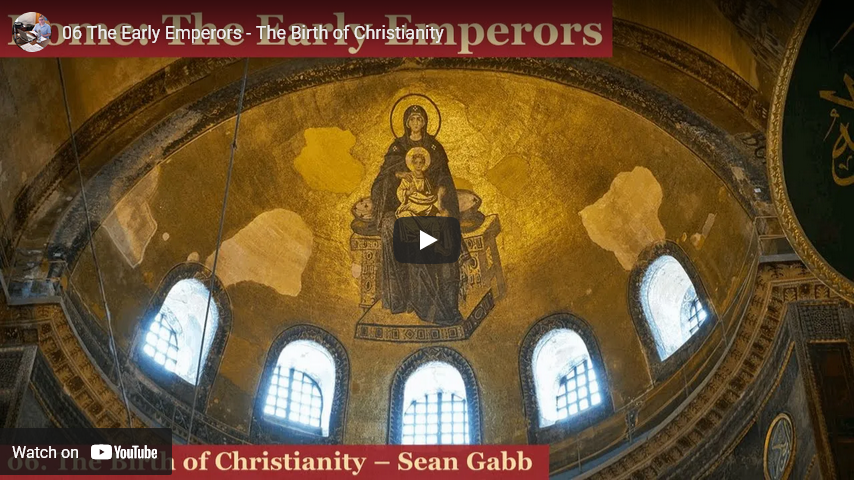
The Early Emperors – Part 6: The Birth of Christianity
seangabb
Published 27 Dec 2021The Roman Empire was the last and the greatest of the ancient empires. It is the origin from which springs the history of Western Europe and those nations that descend from the Western Roman Empire. It is the political entity within which the Christian faith was born, and the growth of the Church within the Empire, and its eventual establishment as the sole faith of the Empire, have left an indelible impression on all modern denominations. Its history, together with that of the ancient Greeks and the Jews, is our history. To understand how the Empire emerged from a great though finally dysfunctional republic, and how it was consolidated by its early rulers, is partly how we understand ourselves.
Here is a series of lectures given by Sean Gabb in late 2021, in which he discusses and tries to explain the achievement of the early Emperors. For reasons of politeness and data protection, all student contributions have been removed.
More by Sean Gabb on the Ancient World: https://www.classicstuition.co.uk/
Learn Latin or Greek or both with him: https://www.udemy.com/user/sean-gabb/
His historical novels (under the pen name “Richard Blake”): https://www.amazon.co.uk/Richard-Blak…
Comments Off on The Early Emperors – Part 6: The Birth of Christianity
June 23, 2022
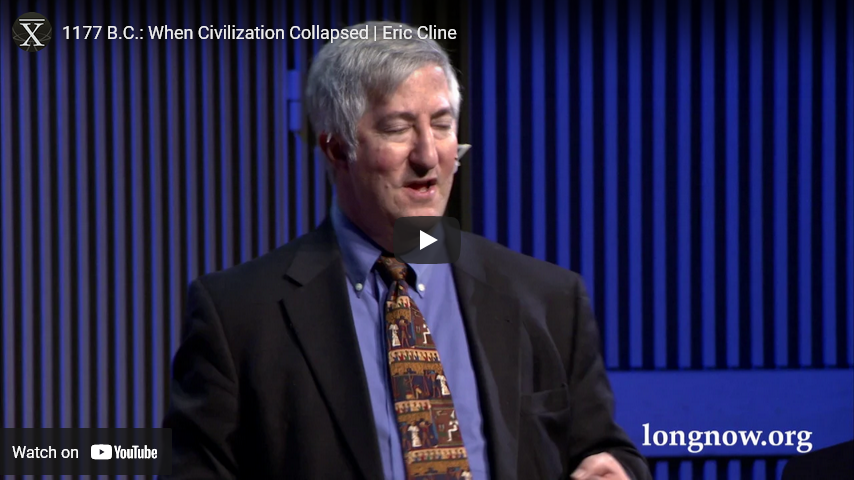
1177 B.C.: When Civilization Collapsed | Eric Cline
Long Now Foundation
Published 19 Apr 2020Consider this, optimists. All the societies in the world can collapse simultaneously. It has happened before.
In the 12th century BCE the great Bronze Age civilizations of the Mediterranean — all of them — suddenly fell apart. Their empires evaporated, their cities emptied out, their technologies disappeared, and famine ruled. Mycenae, Minos, Assyria, Hittites, Canaan, Cyprus — all gone. Even Egypt fell into a steep decline. The Bronze Age was over.
The event should live in history as one of the great cautionary tales, but it hasn’t because its causes were considered a mystery. How can we know what to be cautious of? Eric Cline has taken on on the mystery. An archaeologist-historian at George Washington University, he is the author of 1177 B.C.: The Year Civilization Collapsed. The failure, he suggests, was systemic. The highly complex, richly interconnected system of the world tipped all at once into chaos.
“1177 B.C.: When Civilization Collapsed” was given on January 11, 2016 as part of Long Now’s Seminar series. The series was started in 2003 to build a compelling body of ideas about long-term thinking from some of the world’s leading thinkers. The Seminars take place in San Francisco and are curated and hosted by Stewart Brand. To follow the talks, you can:
Subscribe to our podcasts: http://longnow.org/seminars/podcast
Explore the full series: http://longnow.org/seminars
More ideas on long-term thinking: http://blog.longnow.orgThe Long Now Foundation is a non-profit dedicated to fostering long-term thinking and responsibility. Our projects include a 10,000 Year Clock, endangered language preservation, thousand year+ data storage, and Long Bets, an arena for accountable predictions.
Become a Long Now member to support this series, join our community, and connect with our ongoing work to explore and deepen long-term thinking: http://longnow.org/membership
Follow us on Twitter: https://www.twitter.com/longnow
Subscribe to our channel: https://www.youtube.com/longnow
Comments Off on 1177 B.C.: When Civilization Collapsed | Eric Cline
June 16, 2022
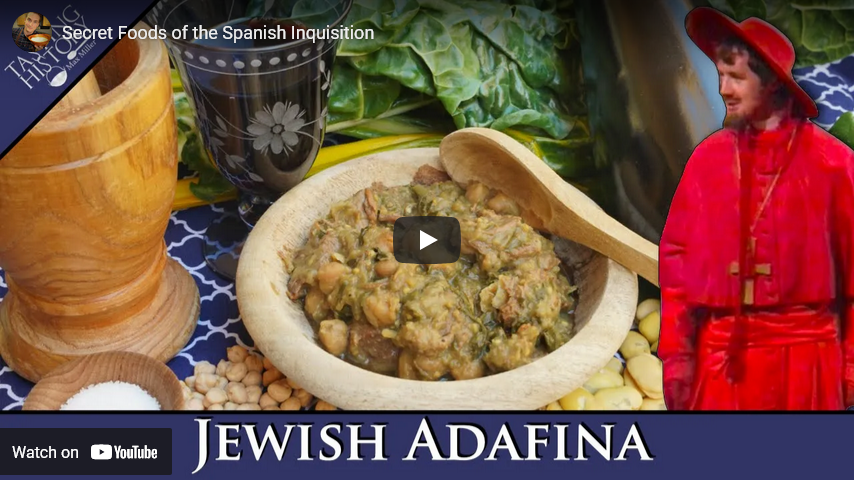
Secret Foods of the Spanish Inquisition
Tasting History with Max Miller
Published 15 Feb 2022Support the Channel with Patreon ► https://www.patreon.com/tastinghistory
Merch ► crowdmade.com/collections/tastinghistory
Instagram ► https://www.instagram.com/tastinghist…
Twitter ► https://twitter.com/TastingHistory1
Tiktok ► TastingHistory
Reddit ► r/TastingHistory
Discord ► https://discord.gg/d7nbEpy
Amazon Wish List ► https://amzn.to/3i0mwGt
Send mail to:
Tasting History
PO Box 766
Burbank, CA 91503LINKS TO SOURCES**
A Drizzle of Honey by David M. Gitlitz and Linda Kay Davidson: https://amzn.to/3gyf0CY
The Spanish Inquisition by Henry Kamen: https://amzn.to/3B9EbVXRECIPE
1 cup (160g) dried fava beans
1 cup (180g) dried chickpeas
2 1/2 lbs or 1kg beef
¼ cup (60ml) Olive oil
1 tablespoon salt
1 large onion diced
1 quart (1L) beef broth or water
2 teaspoon ground coriander
1 1/2 tsp ground cumin
2 teaspoon ground caraway
2 teaspoon fresh ground pepper
2 Eggplant, peeled and chopped
A large handful of chard leaves1. Coat the eggplant in salt, cover, and set aside for several hours.
2. Boil the fava beans and chickpeas in a large pot for 2 minutes, then drain and set aside. In the same pot, heat half of the olive oil over medium heat then, add the onions and half of the salt and cook until lightly brown, about 8 minutes. Remove the onions and add the beef to the empty pot with the rest of the oil and salt. Cook until lightly brown, about 5 minutes. Add the onions back in as well as the beef broth/water. Bring to a simmer and cover, letting the stew simmer for 1 hour.
3. Drain and rinse the eggplant, then add it into the pot along with the fava bean, chickpeas, and spices. Cover and let cook for another 2 hours.
4. Chop the chard, then pound it flat with a rolling pin, and add it into the pot. Set the pot into the oven at 200°F and cook overnight (or at least 6 hours). Alternately, you can transfer the adafina to a slow cooker overnight. Serve alone or over rice.**Some of the links and other products that appear on this video are from companies which Tasting History will earn an affiliate commission or referral bonus. Each purchase made from these links will help to support this channel with no additional cost to you. The content in this video is accurate as of the posting date. Some of the offers mentioned may no longer be available.
Subtitles: Jose Mendoza | IG @ worldagainstjose
#tastinghistory #jewishcooking #spanishinquisition
Comments Off on Secret Foods of the Spanish Inquisition
June 12, 2022
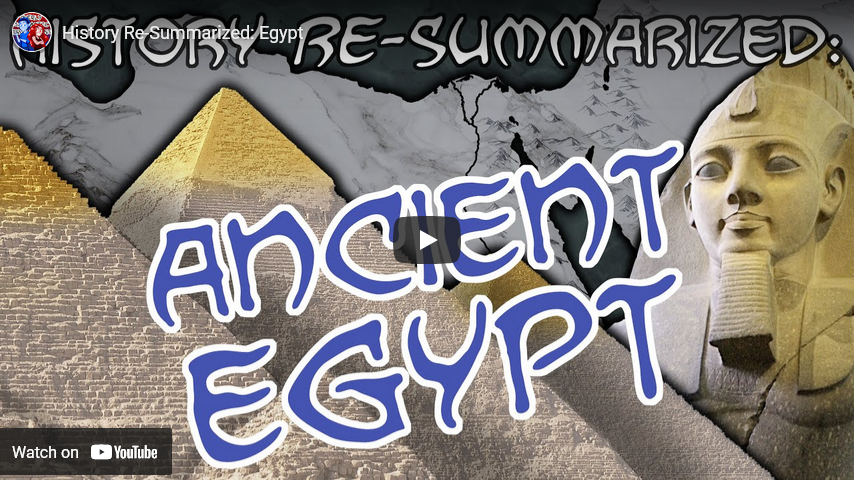
History Re-Summarized: Egypt
Overly Sarcastic Productions
Published 18 Feb 2022I for one was shocked to learn the Egyptians actually buried their kings in a giant Millennium Puzzle.
We’ve covered Egypt on this channel in previous videos, but this History Re-Summarized is the Definitive Edition, redone from the ground up to present the best possible account — starting at the beginning for a full chronology of Ancient Egypt, from the very first Pharaohs to the Muslim Conquest.
(Observant Egyptologists and D&D players might note the Pyramids are actually D-*Fives*, but technically they’re D-*Nines* since each face is actually two right triangles at a slight angle to each other and not a single flat isosceles triangle, so shhh, we can pretend it’s a D4.)
Sources & Further Reading: The Oxford History of Ancient Egypt & Ancient Egypt: A Very Short Introduction by Ian Shaw, World History Encyclopedia entries on “Ancient Egypt”, “Old Kingdom of Egypt”, “First Intermediate Period of Egypt”, “Middle Kingdom of Egypt”, “Second Intermediate Period of Egypt”, “New Kingdom of Egypt” https://www.worldhistory.org/egypt/, The Great Courses’ lecture series “History of Ancient Egypt” by Bob Brier. Additionally, I have an undergraduate degree in classical studies (re: Persia, Ptolemies and Rome). Extra special thanks to our OSP Discord server moderator & Egyptology connoisseur Billy, for his assistance and guidance for this video!
Our content is intended for teenage audiences and up.
PATREON: https://www.Patreon.com/OSP
PODCAST: https://overlysarcasticpodcast.transi…
DISCORD: https://discord.gg/osp
MERCH LINKS: http://rdbl.co/osp
OUR WEBSITE: https://www.OverlySarcasticProductions.com
Find us on Twitter https://www.Twitter.com/OSPYouTube
Find us on Reddit https://www.Reddit.com/r/OSP/
Comments Off on History Re-Summarized: Egypt
May 27, 2022
The Crusades: Part 8 – The Rise of Venice
seangabb
Published 12 Mar 2021The Crusades are the defining event of the Middle Ages. They brought the very different civilisations of Western Europe, Byzantium and Islam into an extended period of both conflict and peaceful co-existence. Between January and March 2021, Sean Gabb explored this long encounter with his students. Here is one of his lectures. All student contributions have been removed.
(more…)
Comments Off on The Crusades: Part 8 – The Rise of Venice
May 23, 2022
QotD: The adoption of Astrology by the Greeks and Romans
This portability is not restricted merely to divination. Herodotus’ suspicion that quite a bit of Greek religion might have come from somewhere else has merit, though Anatolia, not Egypt, appears to be the main source (see: M.L. West, The East Face of Helicon (1999); and for the person already writing this comment, yes I am aware of Bernal’s Black Athena and no I am not convinced, nor are many specialists in the field). The Romans were open about importing gods from Greece and make a clear distinction between gods worshiped in traditional Roman manner and those imported from Greece (a quite small number) and thus whose rituals followed ritus graecus – rituals in Greek fashion.
In other cases, the foreign practice was modified to fit the culture it arrived in. The Romans adopted the cult of Cybele, an Anatolian goddess, during the dark days of the Second Punic War (the Senate made that decision based on a consultation with the Sibylline books, a written source of oracular prophecy we can talk about another day). Cybele was called Magna Mater (“Great Mother”) in Rome, and it seems made some modifications to her rituals, in particular possibly limiting the role of the Galli (eunuch priests) whose rituals and style seemed decidedly “unRoman” (though I should note that the scholarship here is contested and the issue and evidence complex).
The normal technical term for this kind of religious borrowing is syncretism, and it is a sort of interweaving of religious traditions that polytheisms both ancient and modern are exceptionally capable of. It is simply not hard to add one more god or one more ritual into a religious system that already assumes the existence of innumerable gods.
Bret Devereaux, “Collections: Practical Polytheism, Part III: Polling the Gods”, A Collection of Unmitigated Pedantry, 2019-11-08.
Comments Off on QotD: The adoption of Astrology by the Greeks and Romans
May 20, 2022
The Crusades: Part 7 – The Third Crusade
seangabb
Published 5 Mar 2021The Crusades are the defining event of the Middle Ages. They brought the very different civilisations of Western Europe, Byzantium and Islam into an extended period of both conflict and peaceful co-existence. Between January and March 2021, Sean Gabb explored this long encounter with his students. Here is one of his lectures. All student contributions have been removed.
(more…)
Comments Off on The Crusades: Part 7 – The Third Crusade
May 19, 2022
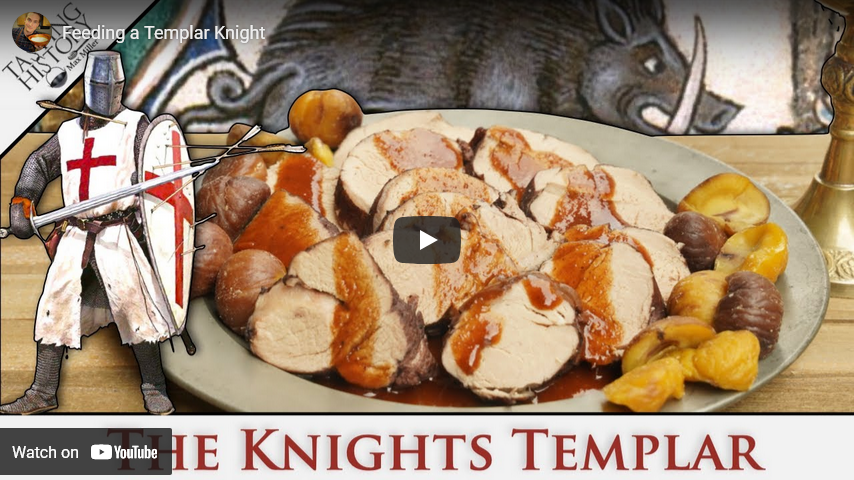
Feeding a Templar Knight
Tasting History with Max Miller
Published 25 Jan 2022Support the Channel with Patreon ► https://www.patreon.com/tastinghistory
Merch ► crowdmade.com/collections/tastinghistory
Instagram ► https://www.instagram.com/tastinghist…
Twitter ► https://twitter.com/TastingHistory1
Tiktok ► TastingHistory
Reddit ► r/TastingHistory
Discord ► https://discord.gg/d7nbEpy
Amazon Wish List ► https://amzn.to/3i0mwGtSend mail to:
Tasting History
PO Box 766
Burbank, CA 91503Recipe
Boar Tenderloin
Equal parts wine and water for boiling
1 thick slice of bread without crust
1 ¼ cups white wine
¼ cup red wine
1 teaspoon ginger
2 teaspoon cinnamon
½ teaspoon nutmeg
Pinch of saffron threads
2 tablespoons brown sugar
Pinch of salt
1 tablespoon red wine vinegar (optional)1. Heat olive oil in a pot then sear the boar on all sides. Remove it from the pot and boil equal parts wine and water, then add the boar back in and boil, covered, for 10-15 minutes or until fully cooked. Then let it rest.
2. To make the sauce, mix the spices and white wine. Separately, soak the bread in water for a few hours, then pour in the red wine. Strain the bread/wine into a saucepan, then press the bread through the strainer. Add the spiced wine mixture and bring to a simmer. Let simmer for 15 minutes, or until half reduced, then add the sugar and salt, and if you with, a tablespoon of red wine vinegar. Simmer until thickened.
3. Slice the boar and pour the sauce over it. Serve with roasted chestnuts.LINKS TO SOURCES**
Le Viandier de Taillevent: https://amzn.to/3FWD7FS
Le Ménagier de Paris: https://amzn.to/3fKgyt0
The Primitive Rule of the Templars by Bernard de Clairvaux: https://amzn.to/3ItxiRY
The Templars by Dan Jones: https://amzn.to/3qOIlin**Some of the links and other products that appear on this video are from companies which Tasting History will earn an affiliate commission or referral bonus. Each purchase made from these links will help to support this channel with no additional cost to you. The content in this video is accurate as of the posting date. Some of the offers mentioned may no longer be available.
Subtitles: Jose Mendoza | IG @worldagainstjose
Music: Crusade – Video Classica by Kevin MacLeod is licensed under a Creative Commons Attribution 4.0 license. https://creativecommons.org/licenses/…
Source: http://incompetech.com/music/royalty-…
Artist: http://incompetech.com/#tastinghistory #knightstemplar
From the comments:
Tasting History with Max Miller
3 days ago
Templar should be pronounced TEM-pler, but sometimes I say tem-PLAR when I read it. Don’t do what I do
Comments Off on Feeding a Templar Knight
May 17, 2022
The Crusades: Part 6 — The Loss of Jerusalem
seangabb
Published 27 Feb 2021The Crusades are the defining event of the Middle Ages. They brought the very different civilisations of Western Europe, Byzantium and Islam into an extended period of both conflict and peaceful co-existence. Between January and March 2021, Sean Gabb explored this long encounter with his students. Here is one of his lectures. All student contributions have been removed.
(more…)
Comments Off on The Crusades: Part 6 — The Loss of Jerusalem
May 16, 2022
Look at Life — The Flying Soldier (1965)
PauliosVids
Published 20 Nov 2018A look at helicopter training within the British Army.
Comments Off on Look at Life — The Flying Soldier (1965)
May 14, 2022
The Crusades: Part 5 – The Role of Women
seangabb
Published 19 Feb 2021The Crusades are the defining event of the Middle Ages. They brought the very different civilisations of Western Europe, Byzantium and Islam into an extended period of both conflict and peaceful co-existence. Between January and March 2021, Sean Gabb explored this long encounter with his students. Here is one of his lectures. All student contributions have been removed.
(more…)
Comments Off on The Crusades: Part 5 – The Role of Women


