
Forgotten Weapons
Published 11 Nov 2024Allied troops occupied the Mauser factory complex in Oberndorf in April of 1945, right at the end of the war. The factory was put under French administration and by May that same year production lines were restarted to supply French forces (who needed as many arms as they could get). In total, just under 52,000 new K98k rifles were made for the French between May 1945 and June 1946, when the factory shut back down (and much of it was dynamited by the departing French forces).
The rifles made under French control were all marked with the receiver code svwMB. German production had switched to this code early in 1945 after producing an “a” block of svw45 rifles and about 5,500 guns in the svw45 “b” block. The factory shutdown came midway through svwMB “c” block, and the first French-property rifles had been assembled under German control and were waiting for final inspection when the factory was occupied. Mauser production was non-linear, and some “c” block receivers had been finished and shipped to German forces before the shutdown, while others remained at the factory. There is no specific transition point between French and German rifles because of this. Production of the “c” block ran into the 29,000 range, and was followed by three suffixes of entirely French-production guns; “d”, “h”, and “k”.
The K98k being produced by this point — and what was continued under the French — was the Kriegsmodell, the last-ditch simplified model of the K98k. It had many stamped and welded parts, no barrel band springs (screws were used instead) and no bayonet lug. The French produced the guns in exactly the same configuration as the Germans had, simply substituting a five-pointed star as a final inspection stamp in front of the receiver serial number. At some point later, the French rebuilt many of these rifles and added two distinctive features that are often thought to have been original factory production elements. These are the hexagonal stacking rod under the muzzle and the left-side sling bar on the stock. When these rebuilds were done, the bolts were also scrubbed and renumbered with just the last 3 digits of the receiver serial number.
(more…)
March 1, 2025
Spoils of War: French Occupation-Production Mauser K98k svwMB
QotD: Roman Republic versus Seleucid Empire – the Battle of Magnesia
Rome’s successes at sea in turn set conditions for the Roman invasion of Anatolia, which will lead to the decisive battle at Magnesia, but of course in the midst of our naval narrative, we rolled over into a new year, which means new consuls. The Senate extended Glabrio’s command in Greece to finish the war with the Aetolians, but the war against Antiochus was assigned to Lucius Cornelius Scipio, one of the year’s consuls and brother of Publius Cornelius Scipio Africanus, the victor over Hannibal at Zama (202). There’s an exciting bit of politics behind Scipio getting the assignment (including his famous brother promising to serve as one of his military tribunes), but in a sense that’s neither here nor there. As we’ve seen, Rome has no shortage of capable generals. From here on, if I say “Scipio”, I mean Lucius Cornelius Scipio; if I want his brother, I’ll say “Scipio Africanus”.
Scipio also brought fresh troops with him. The Senate authorized him to raise a supplementum (recruitment to fill out an army) of 3,000 Roman infantry, 100 Roman cavalry, 5,000 socii infantry and 200 socii cavalry (Livy 37.2.1) as well as authorizing him to carry the war into Asia (meaning Anatolia or Asia Minor) if he thought it wise – which of course he will. In addition to this, the two Scipios also called for volunteers from Scipio Africanus’ veterans and got 5,000 of them, a mix of Romans and socii (Livy 37.4.3), so all told Lucius Cornelius Scipio is crossing to Greece with reinforcements of some 13,000 infantry (including some battle-hardened veterans), 300 cavalry and one Publius Cornelius Scipio Africanus.1 That said, a significant portion of this force is going to end up left in Greece to handle garrison duty and the Aetolians. Antiochus III, for his part, spends this time raising forces for a major battle, while dispatching his son Seleucus (the future Seleucus IV, r. 187-175) to try to raid Pergamum, Rome’s key ally in the region.
Once the Romans arrive (and join up with Eumenes’ army), both sides maneuvered to try and get a battle on favorable terms. Antiochus III’s army was massive with lots of cavalry – 62,000 infantry and 12,000 cavalry, an army on the same general order of magnitude as the one that fought at Raphia – so he sought an open area, setting up his fortified camp near Magnesia, with fairly formidable defenses – a ditch with a double-rampart (Livy 37.37.9-11). Unsurprisingly, the Romans, with a significant, but smaller force, preferred a fight in more confined quarters and for several days the armies sat opposite each other with minor skirmishes (Livy 37.38).
The problem Scipio faced was a simple one: the year was coming to a close, which meant that soon new consuls would be elected and he could hardly count on his command being extended. Consequently, Scipio calls together his war council – what the Romans call a consilium – to ask what he should do if Antiochus III couldn’t be lured into battle on favorable terms. The answer he got back was to force a battle and so force a battle Scipio did, advancing forward onto the ground of Antiochus’ choosing, leading to the Battle of Magnesia.
We have two accounts of this battle which mostly match up, one in Livy (Livy 37.39-44) and another in Appian’s Syrian Wars (App. Syr. 30-36). Livy here is generally the better source and chances are both authors are relying substantially on Polybius (who would be an even better source), whose account of the battle is lost.
Antiochus III’s army was enormous, with a substantial superiority in cavalry. From left to right, according to Livy (Livy 37.40), Antiochus III deployed: Cyrtian slinger and Elymaean archers (4,000), then a unit of caetrati (4,000; probably light infantry peltasts), then the contingent of Tralli (1,500; light infantry auxiliaries from Anatolia), then Carian and Cilicians equipped like Cretans (1,500; light archer infantry), then the Neo-Cretans (1,000; light archer infantry), then the Galatian cavalry (2,500; mailed shock cavalry), then a unit of Tarantine cavalry (number unclear, probably 500; Greek light cavalry), a part of the “royal squadron” of cavalry (1,000; Macedonian shock cavalry), then the ultra-heavy cataphract cavalry (3,000), supported by a mixed component of auxiliaries (2,700; medium thureophoroi infantry?) along with his scythed chariots and Arab camel troops.
That gets us to the central component of the line (still reading left to right): Cappadocians (2,000) who Livy notes were similarly armed to the Galatian infantry (1,500, unarmored, La Tène infantry kit, so “mediums”) who come next. Then the main force of the phalanx, 16,000 strong with 22 elephants. The phalanx was formed 32 ranks deep, with the intervals between the regiments covered by the elephants deployed in pairs, creating an articulated or enallax phalanx like Pyrrhus had, but using elephants rather than infantry to cover the “hinges”. This may in fact, rather than being a single phalanx 32 men deep be a “double” phalanx (one deployed behind the other) like we saw at Sellasia. Then on the right of the phalanx was another force of 1,500 Galatian infantry. Oddly missing here is the main contingent of the elite Silver Shields (the Argyraspides); some scholars2 note that a contingent of them 10,000 strong would make Livy’s total strength numbers and component numbers match up and he has just forgotten them in the main line. We might expect them to be deployed to the right of the main phalanx (where Livy will put the infantry Royal Cohort (regia cohors), confusing a subunit of the argyraspides with the larger whole unit. Michael Taylor in a forthcoming work3 has suggested they may also have been deployed behind the cavalry we’re about to get to or otherwise to their right.
That gets us now to the right wing (still moving left to right; you begin to realize how damn big this army is), we have more cataphracts (3,000, armored shock cavalry), the elite cavalry agema (1,000; elite Mede/Persian cavalry, probably shock), then Dahae horse archers (1,200; Steppe horse archers), then Cretan and Trallian light infantry (3,000), then some Mysian Archers (2,500) and finally another contingent of Cyrtian slinger and Elymaean archers (4,000).
This is, obviously, a really big army. But notice that a lot of its strength is in light infantry: combining the various archers, slingers and general light infantry (excluding troops we suspect to be “mediums”) we come to something like 21,500 lights, plus another 7,700 “medium” infantry and then 26,000 heavy infantry (accounting for the missing argyraspides). That’s 55,200 total, but Livy reports a total strength for the army of 62,000; it’s possible the missing remainder were troops kept back to defend the camp, in which case they too are likely light infantry. A Roman army’s infantry contingent is around 28% “lights” (the velites), who do not occupy any space in the main battle line. Antiochus’ infantry contingent, while massive, is 39% “lights” (and another 14% “mediums”), some of which do seem to occupy actual space in the battle line.
Of course Antiochus also has a massive amount of cavalry ranging from ultra-heavy cataphracts to light but highly skilled horse archers and massive cavalry superiority covereth a multitude of sins.
But the second problem with this gigantic army is one that – again, in a forthcoming work – Michael Taylor has pointed out. The physical space of the battlefield at Magnesia is not big enough to deploy the whole thing […]
Now Livy specifies that the flanks of Antiochus’ army curve forward, describing them as “horns” (cornu) rather than “wings” (alae) and noting they were “a little bit advanced” (paulum producto), which may be an effort to get more of this massive army actually into the fight […]. So while this army is large, it’s also unwieldy and difficult to bring properly into action and it’s not at all clear from either Livy or Appian that the whole army actually engaged – substantial portions of that gigantic mass of light infantry on the wings just seem to dissolve away once the battle begins, perhaps never getting into the fight in the first place.
The Roman force was deployed in its typical formation, with the three lines of the triplex acies and the socii flanking the legions (Livy 37.39.7-8), with the combined Roman and socii force being roughly 20,000 strong (the legions and alae being somewhat over-strength). In addition Eumenes, King of Pergamum was present and the Romans put his force on their right to cover the open flank, while he anchored his left flank on the Phrygios River. Eumenes’ wing consisted of 3,000 Achaeans (of the Achaean League) that Livy describes as caetrati and Appian describes as peltasts (so, lights), plus nearly all of Scipio’s cavalry: Eumenes’ cavalry guard of 800, plus another 2,200 Roman and socii cavalry, and than some auxiliary Cretan and Trallian light infantry, 500 each. Thinking his left wing, anchored on the river, relatively safe, Scipio posted only four turmae of cavalry there (120 cavalry). He also had a force of Macedonians and Thracians mixed together – so these are probably “medium” infantry – who had come as volunteers, who he posts to guard the camp rather than in the main battleline. I always find this striking, because I think a Hellenistic army would have put these guys in the front line, but a Roman commander looks at them and thinks “camp guards”. The Romans also had some war elephants, sixteen of them, but Scipio assesses that North African elephants won’t stand up to the larger Indian elephants of the Seleucids (which is true, they won’t) and so he puts them in reserve behind his lines rather than out front where they’d just be driven back into him. All told then, the Roman force is around 26,000 infantry and 3,000 cavalry – badly outnumbered by Antiochus, but of a relatively higher average quality and a bit more capable of actually fitting its entire combat power into the space.
The Battle
Because the armies are so large, much like as happened at Raphia, the battle that results is almost three battles running in parallel: the two wings and the center. Antiochus III commanded from his right wing, where – contrary to the expectations of Scipio who thought the river would secure his flank there – he intended his main attack. His son Seleucus commanded the left. Livy reports a light rain which interfered with both with visibility and some of Antiochus’ light troops’ weapons, as their bows and slings reacted poorly to the moisture (as composite bows will sometimes do; Livy 37.41.3-4, note also App. Syr. 33).Antiochus opens the battle on his left with his scythed chariots, a novel “gimmick” weapon (heavy chariots with blades all over them, used to shock infantry out of position). This may have been a nasty surprise for the Romans, but given the dispositions of the army, it was Eumenes, not Scipio who faces the chariots and as Livy notes, Eumenes was well aware how to fight them (Livy 37.41.9), using his light troops – those Cretan archers and Trallian javelin-troops. Deployed in loose order, they were able to move aside to avoid the chariots better than heavy infantry in close-order (similar tactics are used against elephants) and could with their missiles strike at chariot drivers and horses at range (Livy 37.41.10-12). Turning back this initial attack seems to have badly undermined the morale of the Seleucid left-wing, parts of which fled, creating a gap between the extreme left-wing and the heavy cavalry contingent. Eumenes then, with the Roman cavalry, promptly hammered the disordered line, hitting first the camel troops, then in the confusion quickly overwhelming the rest of the cavalry, including the cataphracts, leading Antiochus’ left wing to almost totally collapse, isolating the phalanx in the center. It’s not clear what the large mass of light infantry on the extreme edge of the battlefield was doing.
Meanwhile on the other side of the battle, where Scipio had figured a light screen of 120 equites would be enough to hold the end of the line, Antiochus delivered is cavalry hammer-blow successfully. Obnoxiously, both of our sources are a lot less interested in describing how he does this (Livy 37.42.7-8 and App. Syr. 34), which is frustrating because it is a bit hard to make sense of how it turns out. On the one hand, the constricted battlefield will have meant that, regardless of how they were positioned, those argyraspides are going to end up following Antiochus’ big cavalry hammer on the (Seleucid) right. They then overwhelm the cavalry and put them to flight and then push the infantry of that wing (left ala of socii and evidently a good portion of the legion next to it) back to the Roman camp.
On the other hand, the Roman infantry line reaches its camp apparently in good order or something close to it. Marcus Aemilius, the tribune put in charge of the camp is able to rush out, reconstitute the infantry force and, along with the camp-guard, halt Antiochus’ advance. The thing is, infantry when broken by cavalry usually cannot reform like that, but the distance covered, while relatively short, also seems a bit too long for the standard legionary hastati-to-principes-to-triarii retrograde. Our sources (also including a passage of Justin, a much later source, 31.8.6) vary on exactly how precipitous the flight was and it is possible that it proceeded differently at different points, with some maniples collapsing and others making an orderly retrograde. In any case, it’s clear that the Roman left wing stabilized itself outside of the Roman camp, much to Antiochus’ dismay. Eumenes, having at this point realized both that he was winning on his flank and that the other flank was in trouble dispatched his brother Attalus with 200 cavalry to go aid the ailing Roman left wing; the arrival of these fellows seem to have caused panic and Antiochus at this point begins retreating.
Meanwhile, of course, there is the heavy infantry engagement at the center. Pressured and without flanking support, Appian reports that the Seleucid phalanx first admitted what light infantry remained and then formed square, presenting their pikes tetragonos, “on all four sides” (App. Syr. 35), a formation known as a plinthion in some Greek tactical manuals. Forming this way under pressure on a chaotic battlefield is frankly impressive (though if they were formed as a double-phalanx rather than a double-thick single-phalanx, that would have made it easier) and a reminder that the core of Antiochus’ army was quite capable. Unable in this formation to charge, the phalanx was showered with Roman pila and skirmished by Eumenes’ lighter cavalry; the Romans seem to have disposed of Antiochus’ elephants with relative ease – the Punic Wars had left the Romans very experienced at dealing with elephants (Livy 37.42.4-5). Appian notes that some of the elephants, driven back by the legion and maddened disrupted the Seleucid square, at which point the phalanx at last collapsed (App. Syr. 35); Livy has the collapse happen much faster, but Appian’s narrative here seems more plausible.
What was left of Antiochus’ army now fled to their camp – not far off, just like the Roman one – leading to a sharp battle at the camp which Livy describes as ingens et maior prope quam in acie cades, “a huge slaughter, almost greater than that in the battle” (Livy 37.43.10), with stiff resistance at the camp’s gates and walls holding up the Romans before they eventually broke through and butchered the survivors. Livy reports that of Antiochus’ forces, 50,000 infantry and 3,000 cavalry were killed, another 1,500 captured; these seem really high as figures go, but Appian reports almost the exact same. Interesting, Livy doesn’t report the figure in his own right or attribute it to Polybius but instead simply notes “it is said that”, suggesting he may not be fully confident of the number either. Taylor supposes, reasonably I think, that this oversized figure may also count men who fled from the battlefield, reflecting instead that once Antiochus III could actually reconstitute his army, he had about 19,000 men, most of the rest having fled.4 Either way, the resulting peace makes clear that the Seleucid army was shattered beyond immediate repair.
Roman losses, by contrast, were shockingly light. Livy reports 300 infantry lost, 24 Roman cavalry and 25 out of Eumenes’ force; Appian adds that the 300 infantry were “from the city” – meaning Roman citizens – so some socii casualties have evidently been left out (but he trims Eumenes’ losses down to just fifteen cavalry) (Livy 37.44.2-3; App. Syr. 36). Livy in addition notes that many Romans were wounded in addition to the 300 killed. This is an odd quirk of Livy’s casualty reports for Roman armies against Hellenistic armies and I suspect it reflects the relatively high effectiveness of Roman body armor, by this point increasingly dominated by the mail lorica hamata: good armor converts lethal blows into survivable wounds.5 It also fits into a broader pattern we’ve seen: Hellenistic armies that face Roman armies always take heavy casualties, winning or losing, but when Roman armies win they tend to win lopsidedly. It is a trend that will continue.
So why Roman victory at Magnesia? It is certainly not the case that the Romans had the advantage of rough terrain in the battle: the battlefield here is flat and fairly open. It should have been ideal terrain for a Hellenistic army.
A good deal of the credit has to go to Eumenes, which makes the battle a bit hard to extrapolate from. It certainly seems like Eumenes’ quick thinking to disperse the Seleucid chariots and then immediately follow up with his own charge was decisive on his flank, though not quite battle winning. Eumenes’ forces, after all, lacked the punch to disperse the heavier phalanx, which did not panic when its wing collapsed. Instead, the Seleucid phalanx, pinned into a stationary, defensive position by Eumenes’ encircling cavalry, appears to have been disassembled primary by the Roman heavy infantry, peppering it with pila before inducing panic into the elephants. It turns out that Samnites make better “glue” for an articulated phalanx than elephants, because they are less likely to panic.
Meanwhile on the Seleucid right (the Roman left), the flexible and modular nature of the legion seems to have been a major factor. Antiochus clearly broke through the Roman line at points, but with the Roman legion’s plethora of officers (centurions, military tribunes, praefecti) and with each maniple having its own set of standards to rally around, it seems like the legion and its socii ala managed to hold together and eventually drive Antiochus off, despite being pressured. That, in and of itself, is impressive: it is the thing the Seleucid center fails to do, after all.
Bret Devereaux, “Collections: Phalanx’s Twilight, Legion’s Triumph, Part IVb: Antiochus III”, A Collection of Unmitigated Pedantry, 2024-04-05.
1. I enjoy this joke because the idea of bringing Scipio Africanus along as a junior officer is amusing, but I should note that in the event, he doesn’t seem to have had much of a role in the campaign.
2. E.g. Bar Kockva, The Seleucid Army: Organization and Tactics in the Great Campaigns (1979)
3. “A Commander Will Put an End to his Insolence: the Battle of Magnesia, 190BC” to appear in The Seleucids at War: Recruitment, Organization and Battles (forthcoming in 2024), eds. Altay Coşkun and Benhamin E. Scolnic.
4. Taylor, Antiochus the Great (2013), 143.
5. On this, see, uh, me, “The Adoption and Impact of Roman Mail Armor in the Third and Second Centuries B.C.” Chiron 52 (2022).
February 28, 2025
Activists get the Toronto school board to agree to rename three schools
For people who utterly lose their minds when the Bad Orange Man changes the names of things, Toronto’s activists are still full-steam ahead to force the Toronto District School Board to rename three schools:

According to media reports, the TDSB has voted 11 to 7 to change the names of three schools: Dundas Junior Public School, Ryerson Community School and Sir John A. Macdonald Collegiate Institute. Evidently, a process will now start to choose a new name at each school. We shall see what they end up with, hopefully something better than “Sankofa”, which is the new name for Dundas Square, and has absolutely nothing to do with Canada.
There is nothing wrong, in principle, with changing a school name. Times change, and school names may need to change to reflect changing times. I attended a school which was named after a school board trustee who had served many decades prior to my time at that school. Would it make sense to change the name to that of a person who lived more recently and had a bigger impact on the community? Maybe schools should not be named after people at all, but rather should get their name from some more enduring aspect of the community, city, province, or country? These are fair questions.
But in these three TDSB cases, the reasons being given for the changes are part and parcel of an overall strategy by the activists running the school system to rewrite history according to their narrative of colonial oppression and the victimhood of Indigenous people and “people of colour”.
Two of the schools, Dundas Junior Public and Ryerson Community School, are named for men who have been accused of complicity in historical evils specifically for deemed connections to the slave trade and to do with the Residential Schools set up for First Nations children, but the third really is historical revisionism on the grand scale: the one named for Canada’s first prime minister:

Sir John A. Macdonald, first Prime Minister of Canada. circa 1875.
Photo by George Lancefield from Library and Archives Canada, MIKAN ID number 3218718.
The activists want our illustrious first Prime Minister’s name off a school because they say he knowingly, willfully, and intentionally starved Indigenous people in the Prairies.
This starvation narrative was popularized by James Daschuck’s 2014 book Clearing the Plains but this harsh indictment of Macdonald does not stand up to scrutiny, as his government actually spent more on famine relief for the Indigenous people in 1884 than on national defense.
Additionally, the Canadian approach to avoiding war through treaties doubtless saved tens of thousands of Indigenous (and no small number of settlers) lives, as a look south of the border, where upwards of 60 000 died in such wars at the time, will attest.
Macdonald’s government created the Northwest Police Force (later renamed the RCMP) to protect the native (and settler) population from American raids and slaughter, and Indigenous leaders at the time expressed their gratitude for it. He provided vaccination against smallpox to thousands of Indigenous people too.
It should also be mentioned that the catch-all complaint about Macdonald being somehow responsible for forcing Indigenous kids to attend IRS schools is baseless. Such schools were built at the request of Indigenous leaders according to treaties with the Crown and attendance was entirely voluntary during Macdonald’s lifetime. Indeed, mandatory school attendance only became mandatory along with such a requirement for all Canadian children in the early 20th century.
As mentioned at the opening of this article, 7 of 18 TDSB trustees voted “no” to the name changes. This is an encouraging sign that presenting a simplistic and misleading account of Canada’s past, and the people who shaped our history, in the service of affirming a putrid and deceitful narrative of oppressors Vs. victims in Canada is starting to lose its credibility. People are starting to demand a more comprehensive, nuanced, and accurate account of what really happened, and why. Yes, mistakes were made, and there were some bad actors, but by and large our history is one to be exceedingly proud of. We can learn from our mistakes and be an even greater country in the future.
Everyday Life in the Roman Empire – An Empire of Peoples
seangabb
Published 28 Aug 2024The Roman Empire had a geographical logic, but was an endlessly diverse patchwork of linguistic, ethnic and religious groups. In this lecture, Sean Gabb describes the diversity:
Geographical Logic – 00:00:00
Linguistic Diversity – 00:06:57
Italy – 00:12:46
Greece – 00:17:23
Greeks and Romans – 00:21:01
Egypt – 00:28:24
Greeks, Romans, Egyptians – 00:33:00
North Africa – 00:37:27
The Jews – 00:41:20
Greeks, Romans, Jews – 00:44:10
Gaul – 00:50:36
Britain – 00:52:26
Greeks, Romans, Britons – 00:54:58
The East – 00:59:22
Bibliography – 01:01:20
(more…)
QotD: A jaundiced view of the feminist movement
Note that governments, back in the day, did not attempt to act as a nanny, warding off daily harms from unsafe commercial products, or was government in the business of educating the young, nursing the sick, or managing the personal lives of all the children of all ages inhabiting the nation.
The idea of the men who invented feminism was that propelling women into the workforce would increase the tax base, break apart the nuclear family, and increase sales of expensive drugs to promote temporary sterility.
Breaking the family in turn would make women more dependent on the government than on their menfolk, and draw the unreasoning admiration women typically bestow upon their protectors and breadwinners onto the Powers That Be. The fanatical devotion that mothers of convicts show, when they insist forever that their child is innocent, would then be channeled into the ballot box toward whatever demagogue with a vacant smile promised to remove dangerous liberty from the hands of the children, regardless of age, inhabiting the nation.
Pornographers like Hugh Hefner encouraged feminism on the grounds that it would increase vice, and hence the monetary gain from the public sale of vice.
Then, once women were in the workforce, excluding them from the military and other areas where men are better qualified was said to be a sign of hidden bigotry against them. The idea of this bigotry was so stupid that a new word had to be coined to hide its meaning, and that word is “sexism”.
The word “racism” — which at the time had a meaning — was decapitated and the word “sex” — and at the time this word also had a meaning — was sutured onto the neckstump, to produce a new word intended to denounce a nonexistent hatred and contempt felt by men against women.
There have been wars between races and tribes since time immemorial, and hatred between races and tribes. But the war between the sexes is not really a war, because both sides keep flirting with the other, and settling down, and having babies and suchlike.
John C. Wright, “No More Lads”, John C. Wright’s Journal, 2020-01-28.
February 27, 2025
1946’s Biggest Lie: How the World Misread “Universal Human Rights”
TimeGhost History
Published 26 Feb 2025In 1946, liberal democracy has outlasted fascism but faces fresh challenges from communism — and from within its own ranks. Thinkers like Karl Popper and Hannah Arendt question the foundations of natural rights, free speech, and the reach of government. As the UN debates universal human rights and colonies demand equality, a new liberalism emerges. Will it fulfill its ideals or crumble under the weight of global upheaval?
(more…)
Getting Elected in Ancient Rome
toldinstone
Published 8 Nov 2024The chief officials of the Roman Republic were chosen through one of history’s most chaotic electoral systems.
Chapters:
0:00 Introduction
0:33 The Roman Republic
1:33 Cursus honorum
2:08 Comitia Centuriata
2:58 Comitia Tributa
3:49 “Optimates” and “Populares”
4:22 Campaigning
6:19 Political graffiti
7:06 Romanis Magicae
7:51 Election day
9:11 The end of elections
QotD: The ANC, the Inkatha Freedom Party, and the Zulus during Apartheid
Those lessons were enthusiastically put into practice — the ANC set up a network of death camps in Angola at which traitors and enemies and just plain inconvenient people were worked or tortured to death. They also founded a paramilitary terrorist army called uMkhonto we Sizwe (MK) that waged a brutal dirty war, supposedly against the apartheid government but actually against anybody they didn’t like. The vast majority of the victims of MK were black people who happened not to support the ANC, especially Zulus in their tribal homeland in what’s now KwaZulu-Natal province, who were subjected to regular massacres in the 80s and early 90s.
The ANC and the MK had a special hatred for the Zulus. In part, because the ANC’s leadership was disproportionately Xhosa, and their ancestors had suffered during King Shaka’s wars of expansion in the 19th century. But this ancient ethnic grudge wasn’t the fundamental problem, and indeed it was later papered over. The real problem was that the Zulus dared to engage in political organization outside the ANC and its subsidiary, the South African Communist Party (SACP). The preferred Zulu political vehicle was the Inkatha Freedom Party (IFP), which was associated with the Zulu monarchy and the traditional amakhosi (chieftains). This made it an independent base of power within black South Africa, and a competing claim on the loyalty of Zulu citizens. The ANC considered this situation unacceptable.
Like many avowedly communist organizations, the ANC was allergic to political competition of any sort. Internally, the party practiced an especially harsh form of democratic centralism — most policy decisions were made by a tiny and incestuous central committee, and members were expected to be totally submissive in the face of party discipline. This extended even to the point of party permission being necessary for senior members to marry. Externally, the party had an entitled attitude common to successful revolutionary organizations from North Korea to Albania — they were the incarnation of the aspirations of the South African people and the vanguard of their brilliant future, so all other political organizations were ipso facto illegitimate. Can you guess what happened when these people were handed power?
John Psmith, “REVIEW: South Africa’s Brave New World, by R.W. Johnson”, Mr. and Mrs. Psmith’s Bookshelf, 2023-03-20.
February 26, 2025
The Korean War 036 – MacArthur Gets Dumber Every Week – February 25, 1951
The Korean War by Indy Neidell
Published 25 Feb 2025Operation Killer begins this week, and its objective is what the name implies, to destroy as much of the enemy as possible rather than just trying to merely take territory. But once again, UN Commander Douglas MacArthur threatens to telegraph it before it starts. The offensive itself, though, is stymied its first few days by the weather. Meanwhile in China, Peng Dehuai meets with Mao Zedong to clear the air.
(more…)
Colonialism was so bad … that we have to make shit up about how evil it supposedly was
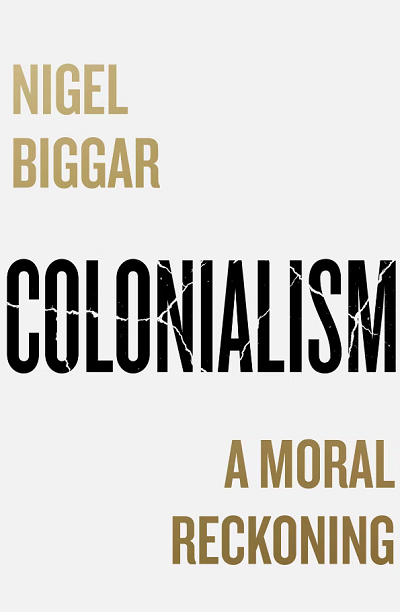
In the National Post, Nigel Biggar recounts some of the most egregious virtue signalling by western elites over the claimed evils of colonialism … even to the point of inventing sins to confess and obsess over:
Meanwhile, in Australia, there’s the extraordinary career of Bruce Pascoe’s 2014 book, Dark Emu. This argues that Aborigines, far from being primitive nomads, developed the first egalitarian society, invented democracy, and were sophisticated agriculturalists. Such was the morally superior civilization that white colonizers trashed in their racist greed. Named Book of the Year, Dark Emu has sold more than 360,000 copies and was made the subject of an Australian Broadcasting Company documentary.
Yet, it has been widely criticized for being factually untrue. Author Peter O’Brien has forensically dismantled it in Bitter Harvest: The Illusion of Aboriginal Agriculture in Bruce Pascoe’s Dark Emu (2020). And in Farmers or Hunter Gatherers: The Dark Emu Debate (2021) — described by reviewers as “rigorously researched”, “masterful”, and “measured” — eminent anthropologist Peter Sutton and archaeologist Keryn Walshe dismiss Pascoe’s claims.
Which bring us to Canada. The May 2021 claim by the Tk’emlúps te Secwépemc First Nation to have discovered the “remains of 215 children” of an Indian Residential School was quickly sexed up by the media into a story about a “mass grave”, with all its connotation of murderous atrocity. The Globe and Mail published an article under the title, “The discovery of a mass gravesite at a former residential school in Kamloops is just the tip of the iceberg,” in which a professor of law at UBC wrote: “It is horrific … a too-common unearthing of the legacy, and enduring reality, of colonialism in Canada”. Prime Minister Justin Trudeau ordered Canadian flags to be flown at half-mast on all federal buildings to honour the allegedly murdered children. Because the Kamloops school had been run by Roman Catholics, some zealous citizens took to burning and vandalizing churches, 112 of them to date. The dreadful tale was eagerly broadcast worldwide by Al Jazeera.
Yet, almost four years later, not a single set of remains of a murdered Indigenous child in an unmarked grave has been found anywhere in Canada. Judging by the evidence collected by Chris Champion and Tom Flanagan in their best-selling 2023 book, Grave Error: How the Media Misled us (and the Truth about the Residential Schools), it looks increasingly probable that the whole, incendiary story is a myth.
So, prime ministers, archbishops, academics, editors, and public broadcasters are all in the business of exaggerating the colonial sins of their own countries — from London to Sydney to Toronto. Why?
An obvious reason is the well-meaning desire to raise respect for indigenous cultures with a view to “healing” race relations. But that doesn’t explain the aggressive brushing aside of concerns about evidence and truth in the eager rush to irrational self-criticism.
G33/40: Special Carbine for the Gebirgsjager
Forgotten Weapons
Published 8 Nov 2024When the Germans took over control of the Czechoslovakian arms industry, they took some time to work out what out to mass produce at the Brno factory. In the interim, they decided to restart production of the Czech vz33 Mauser carbine as the Gewehr 33/40 for German mountain troops. This was a truly short carbine with a 19.4 inch (490mm) barrel, which the Czechs had used for mostly police applications. German had used a short carbine back before World War One, but with Spitzer ammunition it was deemed too harsh shooting (both blast and recoil) to be worth the reduced length. Well, that calculation was different for mountain troops.
The G33/40 also had a distinctive added metal plate on the left side of the stock to help protect it in mountain use. The G33/40 would remain in production for three years, from 1940 until 1942 (after which the rifle production changed to standard K98ks). About 130,000 were made, with 945 receiver codes in 1940 and dot codes thereafter.
(more…)
February 25, 2025
Surviving the Titanic – Dining on Carpathia
Tasting History with Max Miller
Published 15 Oct 2024Purée Crécy (Creamy carrot and potato soup)
Beautifully vibrant carrot and potato soup garnished with homemade croutons and chervil
City/Region: Carpathia | United Kingdom | France
Time Period: 1903 | 1912While I don’t know if this is the exact soup that was served to the Titanic survivors once they were on board the Carpathia, the captain, Arthur Rostron, ordered for coffee, tea, and soup to be readied for the survivors. The menu from the last meal served aboard the Carpathia before it docked back in New York on April 18th lists Potage Crécy as one of the soups, so if this wasn’t the soup that was first served to survivors, it was at least in the Carpathia‘s repertoire.
Dishes featured on the channel rarely make it into my rotation, but this is one of them. It’s simple, quick, and has such a wonderfully rich, buttery, creamy texture and flavor. I was really surprised at how developed the flavors were after such a short cook time, and while it’s carrot-forward, there’s a little of the potato and the butter and cream are so delicious. A high-quality butter can really make the difference in this.
Smooth, rich, creamy. A perfect fall and winter soup.
Stew the carrots in butter with onions as for Purée Crécy but replace the thickening of rice with 250g potatoes and moisten with 1 litre water; season with salt. When cooked pass through a fine sieve and adjust the consistency with 2 dl very fresh cream; pass through a fine strainer at the last moment and add 150g butter. This soup does not now require any further simmering or skimming. Garnish with chervil and small Croutons of bread fried in butter.
— Le Guide Culinaire by Auguste Escoffier, 1903.
February 24, 2025
Rule by bureaucrat, believe it or not, was once considered a better form of government
In the 19th century, the Americans switched from a system where one of the major outcomes of a presidential election was the wholesale replacement of government employees to one where the civil service was “professionalized” to the point that only the very top levels were subject to presidential replacement (Trump 2.0 may mark a significant change in this). Fans of the professional bureaucracy would sometimes gesture toward the venerable Chinese model, which had been run in this way for a very long time until the 20th century. Lorenzo Warby considers the actual performance of these kinds of systems:

Excerpt from the handscroll Viewing the Pass List. Imperial examination candidates gather around the wall where results had been posted. Traditionally attributed to Qiu Ying, but now suspected to be the work of a late-Ming painter with Qiu Ling’s name added.
National Palace Museum via Wikimedia Commons.
Over the course of the C19th, Western states adopted the Chinese notion of appointment by examination for their government bureaucracies. Such appointment-by-merit did have the effect — for about a century and a half — of creating effective and responsive bureaucracies. So much so, that Western democracies gave more and more tasks to such bureaucracies.
This replicates the early stage of the Chinese dynastic cycle — the actual one (see below), rather than the traditional version — where, early in a Dynasty, rule through the bureaucracy is quite effective, even efficient. In modern Western democracies, the legitimacy of democratic action — the demon-in-democracy problem, where the all-trumping legitimacy of the democratic principle tends to overwhelm other ways of doing things — aided the massive expansion in government action, and so in the ambit of government bureaucracy.
The trouble with adopting the Chinese model of appointment-by-merit bureaucracy — including selection-by-examinations — is that folk failed to take a good hard look at the patterns of Chinese government. This despite the fact that the keju, the imperial examination, was introduced under Emperor Wen of Sui (r.581-604) and was not abolished until 1905, so there was quite a lot of history to consider.
The patterns of Chinese government are much less encouraging, because the quite effective, quite efficient, stage of bureaucratic administration does not last. The problem with appointment-by-merit is that it selects for capacity, but not character. Confucianism tries to encourage good character, but it repeatedly turned out to be a weak reed compared to incentive structures. (Almost everything is a weak reed, compared to incentive structures.)
The actual dynastic cycle was:
- Population expands due to peace and prosperity in a unified China. This pushes against resources — mainly arable land — creating mass immiseration, an expanding underclass with no marriage prospects, peasant revolts and falling state revenues.
- The number of elite aspirants expand — a process aggravated by elite polygyny — but elite positions do not, leading to disgruntled would-be elites who provide organising capacity for peasant revolts (including through sects and cults).1
- Bureaucratic pathologies multiply, leading to a more corrupt, less responsive, less functional state apparatus, eroding state capacity and increasing pathocracy (rule by the morally disordered). Late-dynasty imperial bureaucracies could be astonishingly corrupt and dysfunctional.
In contemporary Western societies, mass migration interacting with restrictive land use, and other regulation (e.g. “net zero”), so that:
- housing supply is blocked from fully responding to demand for housing—thereby driving up rents and house prices; while also
- inhibiting infrastructure supply from responding to demand—increasing congestion and other (notably energy) costs
is creating immiseration pressures. Figures about the “macro” health of the US economy, for instance, are misleading as much of the growth is either not reaching people further down the income scale or is failing to compensate for rising rents.
Western commercial societies are sufficiently dynamic that elite over-supply is much less of a problem than in pre-industrial societies. There is, however, very much a problem of toxic parasitism — the entire (Diversity Equity Inclusion) DEI/EDI apparatus to start with. What we might call malign elite employment or bureaucratic parasitism.
1. NR: I’ve read that the Taiping Rebellion in China was led by a man who’d failed the Imperial Examination and raised the banner against the entire system as a form of revenge. By the time the rebellion was quashed, somewhere up to 30 million people were killed in the fighting or as an indirect result of the conflict. (Traditional note of caution about any statistics from pre-20th century China … well, any Chinese statistics at all, really.)
Update: Fixed broken link.
Dawn of the Atomic Age – W2W 007
TimeGhost History
Published 23 Feb 2025In 1946, the world’s fate is rewritten in fire. The first peacetime nuclear tests shake the Pacific, while Stalin accelerates the Soviet push for the bomb. With the power to destroy the entire world now a reality, global leaders face a defining choice — will the bomb usher in the peace of our time, or lead to nuclear doom? The arms race has begun, and there’s no turning back.
(more…)
The Third Triumvirate?
On the social media platform formerly known as Twitter, John Carter posted an amusing thread (unrolled here courtesy of the @threadreaderapp):

JD Vance as Julius Caesar
AI image by Grok
Trump, Musk, Vance: the new triumvirate, bringing a window of stability to the troubled Republic.
Trump: the old warhorse, beloved of the people, a part of the establishment but with an uneasy relationship to it. Trump is Pompey.
Musk: the richest man in the world. Musk is Crassus.
Vance: the charismatic young upstart. Vance is Caesar.
So how does this play out?
Musk’s ambition is to go to Mars, just as Crassus wanted to conquer Parthia. Musk harnesses his wealth, launches the expedition to great fanfare. Things go horribly wrong after their arrival. Contact with the colony is lost. Musk’s grave is never found.
At the head of a private military corporation equipped with letters of marque, Vance is sent into the badlands of South America to crush the cartels and secure the Panama Canal. The war takes longer than expected. By the end of it, Vance hasn’t merely crushed the cartels – he’s conquered the entirety of Central America.
At home, Vance is beset by his enemies in the Senate, who mistrust his ambitions and intentions. It is whispered that he wishes to make himself king.
Vance’s enemies whisper in Trump’s ears. Were you not the one who built the wall? If Vance brings the Central American republics into the Union, what then of immigration? Of your life’s work? Vance will destroy it all.
And do the people, after all, not love you first and most? Are you not their hero? Why then should you fear this upstart?
With Trump’s blessing, Vance is recalled by the Senate, to face charges of corruption.
But throughout this time Vance has been building auctoritas with the people, going directly to them with his poasts, showing them his victories and their fruits. The people have come to love him more than they love Trump — for he has sent great wealth back to them, and crushed their enemies abroad.
And so the fateful day comes in which Vance returns, as summoned … but he does not demobilize his mercenary army when it crosses the Rio Grande. His forces — which now include former cartel soldiers, some of whom he has won to his side — drive straight to Washington in a blitzkrieg attack.
Washington empties out in panic.
Trump and the Senate flee to New York City, where they rally their forces. There are still many who are loyal to Trump, particularly within the military … but it turns out that Trump’s base is much older than Vance’s … and there are many, more than expected, who declare for Vance.
And so the Union cracks apart into the Civil War that was deferred when the triumvirate first seized power, so many years ago.
But this is not first and foremost a war of ideology, as it would have been — a showdown between right and left.
It is a war of personalities and personal loyalty, a war to determine a single question: who is to be king?
Obviously none of this is going to happen. History never repeats itself so precisely.
But it’s fun to think about Vance rampaging around Central America at the head of a PMC.


