Quotulatiousness

February 18, 2025

Trump is a lot of things, but he’s no Neville Chamberlain

Filed under: Europe, History, Politics, Russia, USA — Tags: , , , , , — Nicholas @ 03:00

Tom at The Last Ditch reacts to his European friends’ facile association of Trump’s overtures to Putin with Chamberlain’s ill-fated attempts to appease Hitler:

Prime Minister Neville Chamberlain at Heston Aerodrome, waving a copy of the Anglo-German Declaration he had negotiated with Adolf Hitler, 30 September, 1938.
Narodowe Archiwum Cyfrowe via Wikimedia Commons.

It’s interesting to watch my Continental friends react on their socials to President Trump’s overtures to that monster Putin — the greatest modern example of a real life Bond villain. Their sympathies, like mine, are with plucky Ukraine. Its soldiers, outgunned and outmanned, have fought like lions and their place in history is assured. Toasts will be drunk and songs will be sung, for sure. But they’re losing and not one European power is ready to send in troops. Under Biden the policy of the West was to fight to the last Ukrainian. Trump sees it in more practical terms.

[…]

Trump’s drama, trolling and exaggeration is in the same category. Most people just don’t get it and react to his bluster like that naive articled clerk I once was. Everything he says and does is calculated to find a path to the best achievable outcome. There’s not a virtue-signalling molecule in his body and yet there’s more actual virtue than in his hypocritical critics.

My European friends are comparing Trump to Chamberlain and Putin to Hitler. Europe seems unable to move on from World War II. Every issue is analysed through the historical lens of how they mishandled the rise of the Nazis. As someone once said, all we really learn from history is that we never learn from history.

The hypocrisy here is breathtaking. If his critics were any more ready than him to send in their troops, they’d have the moral high ground over him. They aren’t and (Poland perhaps excepted) they never will be. So whether it’s just or not, Ukraine can’t win. The only people the Germans and French are ready to see die in this war are Ukrainians, Americans and their loyal English-speaking sidekicks — as usual. So they have no moral basis for their maiden auntery

The post-war settlement has expired. Continental Europeans have to meet their long-neglected NATO obligations and stop expecting Uncle Sam (already carrying more debt than the world has assets) to pay for everything.

Putin is evil, yes, but Ukraine is every bit as corrupt as Russia and would add nothing to NATO’s strength. It’s in the right here as a matter of international law and (for what it’s worth in war) morality. But international law is a myth unless the rich nations enforce it by (plausible threat of) military action. Europe is just standing by signalling virtue while breaching sanctions and sending half the military matériels it promises. Meanwhile Ukraine loses men and wealth with no hope of victory. When the last Ukrainian soldier has died or surrendered, what do Europeans think the outcome will be? Ukrainian flags on your socials won’t win it mes amis.

My advice to my Continental chums? They should let the President try to make peace and hold their comments until they see the result. Based on all my years working in Continental Europe, I expect them all to decry the result and pretend their leaders (prepared to sacrifice nothing) would have done better. It’s bullshit. War is hell and has to end eventually. This is not a Hollywood movie. There are no guarantees that the (relatively) good guys will win. If you won’t end it with arms, then jaw jaw is all you have. This man is much better at jaw jaw than you are so shut up and stop assisting the enemy by showing him how divided the West is.

World War 2 rations on the British Home Front

Filed under: Britain, Food, History, WW2 — Tags: , , , — Nicholas @ 02:00

Tasting History with Max Miller
Published 8 Oct 2024

Mock banana cream on whole grain National Loaf

City/Region: United Kingdom
Time Period: 1944

British rationing lasted from 1940 all the way to 1954, and they had to completely do without foods like bananas for years. The National Loaf began to be distributed in 1941. Made of 85% wholemeal flour enriched with vitamins B and C, it was nutritious, but dense, gummy, and went stale very quickly.

My National Loaf, based on the Imperial War Museum’s version, is dense, but I like the complex flavors from the whole grains. The mock banana cream has a texture that’s really close to mashed bananas, though the taste is an interesting mixture of parsnip and banana. Not bad, but not quite banana.

    Mock Banana Cream
    Here is a more economical banana cream recipe. Prepare and boil 1lb. parsnips until soft. Add 2 ozs margarine, 1 level tablespoonful sugar, 2 teaspoonfuls banana flavouring and beat until creamy. This must be used quickly, but half the quantity can be made if desired.
    Daily Record, Glasgow, May 27, 1944

(more…)

February 17, 2025

France Starts the Vietnam War – W2W 005

Filed under: Asia, Britain, France, History, Japan, Military — Tags: , , , , — Nicholas @ 04:00

TimeGhost History
Published 16 Feb 2025

In 1946, tensions in Indochina explode into full-scale war. As France struggles to reclaim its empire, Ho Chi Minh’s Viet Minh fight for independence, setting the stage for a brutal conflict that will shape the next three decades. With international powers pulling the strings, Vietnam becomes the first battleground of the post-war era’s colonial struggles.
(more…)

The growing problem of “America’s hat”

Filed under: Cancon, China, Government, History, India, USA — Tags: , , , , , — Nicholas @ 03:00

John Carter’s latest post is excellent — but that’s his usual standard — but it’s of particular interest to inhabitants of what used to be the proud Dominion but who now live in a “post-national state” with “no core identity” as our outgoing prime minister so helpfully explained it:

Canada and the US have been frenemies for most of the last two hundred years. With the exception of some spats in the 19th century, they’ve fought on the same side in all major wars, and haven’t taken up arms against one another. At the same time, Canada has from the very beginning fiercely guarded its independence. Through the 1950s, this came from Canada’s self-conception as an outpost of sober, orderly British traditionalism, in stark contrast to the chaotic liberal revolutionaries across the border. Following the Liberal Party’s cultural revolution in the 1960s, Canada increasingly came to see itself as different from the US primarily in that it was more liberal, in the modern sense, than it’s Bible-thumping, gun-toting redneck cousins – which is to say more socialist, leftist, multicultural, gay-friendly, internationalist, feminist, and so forth. In fairness to Canada, the British government, having long-since fallen under the sway of the Labour party, had followed the same ideological trajectory, so Canada was really just taking its cue from Mother England as it always had. In further fairness to Canada, all of this has been aggressively pushed by Blue America, which has been running American culture (and therefore everyone else’s) until about five minutes ago.

Despite these differences, the US could always rely on Canada being a stable, competently run, prosperous, and happy neighbour – perhaps a bit on the prickly side, given the inferiority complex, but much less of a headache than the entropic narcostate to the south that keeps sending its masses of illiterate campesinos flooding over the banks of the Rio Grande. Canada might be annoying sometimes, but it didn’t cause problems. To the contrary, Canada and the US have maintained one the world’s most productive trading relationships for years: America gets Canadian oil, minerals, lumber, and Canada gets US dollars, technology, and culture.

Now, however, Canada has become a problem for America. Not yet, perhaps, the biggest problem – America has a very large number of extremely pressing problems – but a significant one nonetheless, with the potential to become quite acute in the near future.

The problem is that Canada has become a security threat.

[…]

The next security problem is the border, an issue which Trump has repeatedly stressed as a justification for tariffs. The 49th Parallel is famously the longest undefended border on the planet. It is much longer than the Southern border; there are no barbed wire border fences; most of the terrain is easily traversed – forest, lake, or prairie – in contrast to the punishing desert running across the US-Mexico border. Militarizing the US-Mexico border is already a huge, costly undertaking. Doing the same on the Canadian border would be vastly more challenging.

Canada’s extraordinarily lax immigration policy has, in recent years, led to a much higher encounter rate at border crossings with suspects on the terrorism watch list. These people come into Canada legally, part of the millions of immigrants Ottawa has been importing, every year, for the last few years. When you’re bringing in over one percent of your country’s population every single year, it is simply not possible to properly vet them, and it seems that Ottawa barely even bothers to try. Given that not every such person of interest will get stopped at the border, and that not every terrorist is on a watch list, one wonders how many enemies have already slipped across into the US by way of Canadian airports.

RCMP officers with their haul from a fentanyl superlab. Only one person was arrested.

The second border problem is fentanyl. Like the US, Canada has a raging opiod epidemic. We’ve got tent cities, zombies in the streets, needles in the parks, and this is not limited to the big cities – it spills out into the small towns, as well. Like Mexico, Canada has fentanyl laboratories. Precursor chemicals are imported from China by triads, turned into chemical weapons in Canadian labs, and then distributed within Canadian and American markets by predominantly Indian truckers. The occasional busts have turned up vast quantities of the stuff, but have resulted in very few arrests. The proceeds are then laundered through casinos or fake colleges, with the laundered cash then parked in Canadian real estate. There are estimates that the volume of fentanyl money flowing through Canada’s housing markets is significant enough to be a major factor (immigration is certainly the main factor) distorting real estate prices – keeping the housing bubble inflated, propping up Canada’s sagging economy, and pricing young Canadians out of any hope of owning a home or, for that matter, even renting an apartment without a roommate or three.

It’s generally understood, though essentially never acknowledged at official levels, that poisoning North America with opiods is deliberate Chinese policy, both as revenge for the Opium Wars of the 19th century, and as one element in their strategy of unrestricted warfare i.e. the covert but systematic weaponization of every point of contact – economic, industrial, cultural, etc. – between Chinese and Western societies. By allowing the fentanyl trade to continue, the Canadian government is complicit in an act of covert war being waged by a foreign power, one whose casualties include the Canadian government’s own population.

Forgotten War Ep 9 – Kohima – Hell in the Hills

Filed under: Asia, Britain, History, India, Japan, Military, USA, WW2 — Tags: , , , , , — Nicholas @ 02:00

HardThrasher
Published 16 Feb 2025

The Battle of Kohima.

Please consider donations of any size to the Burma Star Memorial Fund who aim to ensure remembrance of those who fought with, in and against 14th Army 1941–1945 — https://burmastarmemorial.org/
(more…)

QotD: Decisive factors in the Roman victory over the Seleucids

Zooming out even further, why Roman victory in the Roman-Seleucid War? I think there are a few clear factors here.

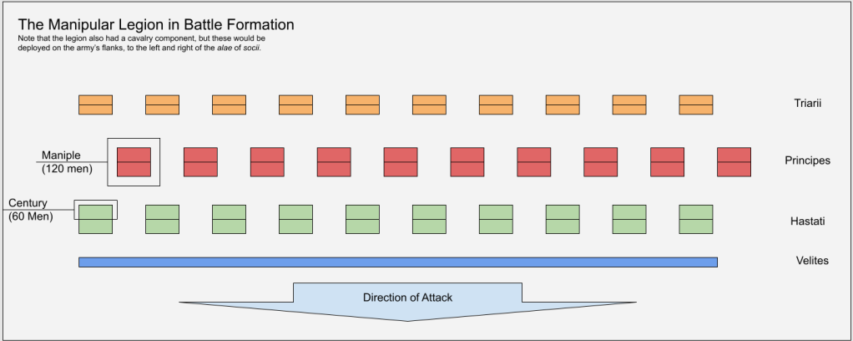
Ironically for a post covering land battles, the most important factor may be naval: Rome’s superior naval resources (and better naval allies), which gave the Romans an enormous operational advantage against Antiochus. In the initial phase, the Romans could get more troops to Greece than the king could, while further on, Roman naval supremacy allowed Roman armies to operate in Anatolia in force (while Antiochus, even had he won in Greece, had no hope of operating in Italy). Neutralizing Antiochus’ navy both opened up options for the Romans and closed down options for Antiochus, setting the conditions for Roman victory. It would have also neutered any Roman defeat. If Antiochus wins at Magnesia, he cannot then immediately go on the offensive, after all: he has merely bought perhaps a year or two of time to rebuild his navy and try to contest the Aegean again. Given the astounding naval mobilizations Rome had shown itself capable of in the third century, one cannot imagine Antiochus was likely to win that contest.

Meanwhile, the Romans had better allies, in part as a consequence of the Romans being better at getting allies. The Romans benefit substantially from allied Achaean, Pergamese and Rhodian ships and troops, as well as support from the now-humbled Philip V of Macedon and even supplies and auxiliaries from Numidia and Carthage. Alliance-management is a fairly consistent Roman strength and it shows here. It certainly seems to help that Roman protestations that they had little interest in a permanent presence in Greece seem to have been somewhat true; Rome won’t set up a permanent provincia in Macedonia until 146 (though the Romans do expect their influence to predominate before then). By contrast, Antiochus III, clearly bent on rebuilding Alexander’s empire, was a more obvious threat to the long-term independence and autonomy of Greek states like the Pergamum or Rhodes.

Finally, there is the remarkable Seleucid glass jaw. The Romans, after all, sustained a defeat very much like Magnesia against Hannibal in 216 (the Battle of Cannae) and kept fighting. By contrast, Antiochus is forced into a humiliating peace after Magnesia, in which he cedes all of Anatolia, gives up any kind of navy and is forced to pay a crippling financial indemnity which will fatally undermine the reign of his successor and son Seleucus IV (leading to his assassination in 175, leading to yet further Seleucid weakness). Part of this glass jaw may have been political: after Magnesia, Antiochus’ own aristocrats seem pretty well done with their king’s adventurism against Rome.

But at the same time, some of it was clearly military. Antiochus didn’t have a second army to fall back on and Magnesia represented essentially a peak “all-call” Seleucid mobilization. A similar defeat at Raphia had forced a similarly unfavorable peace earlier in his reign, after all. Part of the problem, I would argue, is that the Seleucids needed their army for more than just war: they needed it to enforce taxation and tribute on their own recalcitrant subjects. As a result, no Seleucid king could afford to “go for broke” the way the Roman Republic could, nor could the Seleucids ever fully mobilize the massive population of their realm. The very nature of the Hellenistic kingdom’s ethnic hierarchy made fully tapping the potential resources of the kingdom impossible.

As a result, while Antiochus III was not an incompetent general, he ruled a deceptively weak giant. Massive revenues were offset by equally massive security obligations and the Seleucids seem to have been perenially cash strapped (with a nasty habit of looting temples to make up for it). The very nature of the Seleucid Empire – like the Ptolemaic one – as an ethnic empire where Macedonians ruled and non-Macedonians were ruled kept Antiochus from being able to fully mobilize his subjects. It may also explain why so many of those light infantry auxiliaries seem to have run off without much of a fight. Eumenes and his Pergamese troops fought for their independence, the Romans for the greater glory of Rome and the socii for their own status and loot within the Roman system, but what could Antiochus offer a subjected Carian or Cilician except a paycheck and a future of continued subjugation? That’s not much to die for.

Bret Devereaux, “Collections: Phalanx’s Twilight, Legion’s Triumph, Part IVb: Antiochus III”, A Collection of Unmitigated Pedantry, 2024-04-05.

February 16, 2025

Bismarck’s Final Battle – The Bismarck Part 4

Filed under: Britain, Germany, History, Military, WW2 — Tags: , , , , , — Nicholas @ 04:00

World War Two
Published 15 Feb 2025

It is the end for the Bismarck; crippled by airstrikes, there is no hope of salvation. As the British battleships close in, Admiral Gunter Lutjens gives a final Sieg Heil, readies his guns, and prepares to meet his destiny.
(more…)

Pope Fights: The Pornocracy – Yes it’s really called that

Overly Sarcastic Productions
Published 25 Oct 2024

Guard your browsing histories, the Popes are at it again …

SOURCES & Further Reading:
Rome: A History in Seven Sackings by Matt Kneale
Absolute Monarchs: A History of the Papacy by John Julius Norwich
Antapodosis by Liutprand of Cremona
A. Burt Horsley, “Pontiffs, Palaces and Pornocracy — A Godless Age”, in Peter and the Popes (Provo, UT: Religious Studies Center, Brigham Young University, 1989), 65–78.
(more…)

QotD: Why we’re stagnating

I won’t attempt to recap here the many arguments that have been made recently about whether and how our society is stagnating. You could read this book or this book or this book. Or you could look at how economic productivity has stalled since 1971. Or you could puzzle over what else happened in 1971. Or you could read Patrick Collison’s list of how fast things used to happen, or ponder how practically every new movie these days is a sequel, or stare in shock at declines in scientific productivity. This new book by Byrne Hobart and Tobias Huber starts with a survey of the most damning indicators of stagnation, moves on to suggest some underlying causes, and then suggests an unexpected way out.

Their explanation for our doldrums is simple: we’re more risk averse, and we don’t care as much about the future. Risk aversion means stagnation, because any attempt to make things better involves risk: it could also make things worse, or it could fail and turn out to be a waste of time and money. Trying to invent a crazy new technology is risky, going into consulting or finance is safe. Investing in unproven startups or speculative bets is risky, investing in index funds is safe. Trying to overturn the scientific consensus is risky, keeping your head down and publishing papers that don’t say anything is safe. Producing challenging new art is risky, spewing an endless stream of Marvel superhero capeshit is safe. Even if, in every case, the safe option is the “rational” choice for an individual actor in maximin expected value terms, the sum total of these individually rational choices is a catastrophe for society.

So far this is a lame, almost tautological, explanation. Even if it’s all true, we still haven’t explained why people are so much more fearful of failure than they used to be. In fact, we would naively assume the opposite — society is much richer now, social safety nets much more robust, and in the industrialized world even the very poor needn’t fear starvation. In a very real sense, it’s never been safer to take risks. Failing as a startup founder or academic means you experience slightly lower lifetime earnings,1 while, in the great speculative excursions of the past, failure (and sometimes even success) meant death, scurvy, amputations, destitution, children sold into slavery or raised in poorhouses — basically unbounded personal catastrophe. And yet we do it less and less. Why?

Well, for starters, we aren’t the same people. Biologically, that is. We’re old, and old people tend to be more risk-averse in every way. Old people have more to lose. Old people also have less testosterone in their bloodstream. The population structure of our society has shifted drastically older because we aren’t having any children. This not only increases the relative number (and hence relative power) of older people, it also has direct effects on risk-aversion and future-orientation. People with fewer children have all their eggs in fewer baskets. They counsel those kids to go into safe professions and train them from birth to be organization kids. People with no children at all are disconnected from the far future, reinforcing the natural tendency of the elderly to favor consumption in the here and now over investment in a future they may never get to enjoy.

Old age isn’t the only thing that reduces testosterone levels. So does just living in the 21st century. The declines are broad-based, severe, and mysterious. Very plausibly they are downstream of microplastics and other endocrine-disrupting chemicals. The same chemicals may have feminizing effects beyond declines in serum testosterone. They could also be affecting the birth rate, one of many ways that these explanations all swirl around and flow into one another. Or maybe we don’t even need to invoke old age and microplastics to explain the decline in average testosterone of decisionmakers in our society. Many more of those decisionmakers are women, and women are vastly more risk-averse on average.2

John Psmith, “REVIEW: Boom, by Byrne Hobart and Tobias Huber”, Mr. and Mrs. Psmith’s Bookshelf, 2024-11-11.


    1. And given the logarithmic hedonic utility of additional money and fame, that hurts even less than it sounds like it would.

    2. If you’re too lazy to read Jane’s review of Bronze Age Mindset but just want the evidence that women are more cautious and consensus-seeking than men on average, try this and this and this for starters.

February 15, 2025

“Trump marks the overdue end of the Long Twentieth Century”

Filed under: History, Media, Politics, USA — Tags: , , — Nicholas @ 05:00

At The Upheaval, N.S. Lyons suggests that the arrival of Donald Trump, version 2.0, may finally end the era we’ve been living in since immediately after the end of WW2:

The 125 years between the French Revolution in 1789 and the outbreak of WWI in 1914 was later described as the “Long Nineteenth Century”. The phrase recognized that to speak of “the nineteenth century” was to describe far more than a specific hundred-year span on the calendar; it was to capture the whole spirit of an age: a rapturous epoch of expansion, empire, and Enlightenment, characterized by a triumphalist faith in human reason and progress. That lingering historical spirit, distinct from any before or after, was extinguished in the trenches of the Great War. After the cataclysm, an interregnum that ended only with the conclusion of WWII, everything about how the people of Western civilization perceived and engaged with the world – politically, psychologically, artistically, spiritually – had changed.

R.R. Reno opens his 2019 book Return of the Strong Gods by quoting a young man who laments that “I am twenty-seven years old and hope to live to see the end of the twentieth century”. His paradoxical statement captures how the twentieth century has also extended well past its official sell-by date in the year 2000. Our Long Twentieth Century had a late start, fully solidifying only in 1945, but in the 80 years since its spirit has dominated our civilization’s whole understanding of how the world is and should be. It has set all of our society’s fears, values, and moral orthodoxies. And, through the globe-spanning power of the United States, it has shaped the political and cultural order of the rest of the world as well.

The spirit of the Long Twentieth could not be more different from that which preceded it. In the wake of the horrors inflicted by WWII, the leadership classes of America and Europe understandably made “never again” the core of their ideational universe. They collectively resolved that fascism, war, and genocide must never again be allowed to threaten humanity. But this resolution, as reasonable and well-meaning as it seemed at the time, soon became an all-consuming obsession with negation.

Hugely influential liberal thinkers like Karl Popper and Theodor Adorno helped convince an ideologically amenable post-war establishment that the fundamental source of authoritarianism and conflict in the world was the “closed society”. Such a society is marked by what Reno dubs “strong gods”: strong beliefs and strong truth claims, strong moral codes, strong relational bonds, strong communal identities and connections to place and past – ultimately, all those “objects of men’s love and devotion, the sources of the passions and loyalties that unite societies”.

Now the unifying power of the strong gods came to be seen as dangerous, an infernal wellspring of fanaticism, oppression, hatred, and violence. Meaningful bonds of faith, family, and above all the nation were now seen as suspect, as alarmingly retrograde temptations to fascism. Adorno, who set the direction of post-war American psychology and education policy for decades, classified natural loyalties to family and nation as the hallmarks of a latent “authoritarian personality” that drove the common man to xenophobia and führer worship. Popper, in his sweepingly influential 1945 book The Open Society and Its Enemies, denounced the idea of national community entirely, labeling it as disastrous “anti-humanitarian propaganda” and smearing anyone who dared cherish as special his own homeland and history as a dangerous “racialist”. For such intellectuals, any definitive claim to authority or hierarchy, whether between men, morals, or metaphysical truths, seemed to stand as a mortal threat to peace on earth.

The great project of post-war establishment liberalism became to tear down the walls of the closed society and banish its gods forever. To be erected on its salted ground was an idyllic but exceptionally vague vision of an “open society” animated by peaceable weak gods of tolerance, doubt, dialogue, equality, and consumer comfort. This politically and culturally dominant “open society consensus” drew on theorists like Adorno and Popper to advance a program of social reforms intended to open minds, disenchant ideals, relativize truths, and weaken bonds.

As Reno catalogues in detail, new approaches to education, psychology, and management sought to relativize truths, elevate “critical thinking” over character, vilify collective loyalties, cast doubt on hierarchies, break down all boundaries and borders, and free individuals from the “repression” of all moral and relational duties. Aspiration to a vague universal humanitarianism soon became the only higher good that it was socially acceptable to aim for other than pure economic growth.

[…]

The Long Twentieth Century has been characterized by these three interlinked post-war projects: the progressive opening of societies through the deconstruction of norms and borders, the consolidation of the managerial state, and the hegemony of the liberal international order. The hope was that together they could form the foundation for a world that would finally achieve peace on earth and goodwill between all mankind. That this would be a weak, passionless, undemocratic, intricately micromanaged world of technocratic rationalism was a sacrifice the post-war consensus was willing to make.

That dream didn’t work out though, because the strong gods refused to die.

Update, 17 February: Welcome Instapundit readers! Thanks for dropping by. Please do look around at some of my other posts! I think the last time I got linked by Instapundit was back in 2008/9 just before I moved to the current location. Please do read the entire N.S. Lyons post, as this is just a taster of the full essay!

Halifax Donair (Canada) on Sandwiches of History⁣

Filed under: Cancon, Food, History — Tags: , , , — Nicholas @ 02:00

Sandwiches of History
Published 27 Oct 2024

Welcome back to another episode of You’re Doing it Wrong. Lol. Also known as International Sandwich Sunday. I’m joking, kinda. Today, we’re headed northeast to Halifax, Nova Scotia for the Halifax Donair. As I mention in the video, this was created by a Greek immigrant after his traditional lamb and beef gyros just weren’t selling. So it’s less cultural appropriation and more adaptation to the needs of the market. I think if you ask anyone in Halifax, they’d fully acknowledge the original inspiration for this. Also, if you’re tempted to comment on how it’s not a sandwich, just know that, while I understand where you’re coming from, I don’t keep strict purity tests in place for sandwiches as I don’t want to miss out on deliciousness because of them. Join me, won’t you?
(more…)

February 14, 2025

Disarmament Talks, Budget Battles, and Student Duels – Nov 1930

Filed under: Germany, History, Media — Tags: , , , , , , — Nicholas @ 04:00

World War Two
Published 13 February 2025

November 1930 sees Germany caught between political instability and international disputes. Brüning fights to pass his controversial budget while Germany’s push for global disarmament meets French resistance and Nazi outrage. Meanwhile, Hitler restructures the SA and SS, student duels make headlines, and Berlin’s police chief is attacked in court.
(more…)

Henry VIII, Lady Killer – History Hijinks

Filed under: Britain, History, Humour, Religion — Tags: , , , , — Nicholas @ 02:00

Overly Sarcastic Productions
Published 3 Feb 2023

brb I’m blaring “Haus of Holbein” from Six the Musical on the loudest speakers I own.

SOURCES & Further Reading:
Britannica “Henry VIII” (https://www.britannica.com/biography/…, History “Who Were The Six Wives of Henry VIII” (https://www.history.com/news/henry-vi…), The Great Courses lectures: “Young King Hal – 1509-27”, “The King’s Great Matter – 1527-30”, “The Break From Rome – 1529-36”, “A Tudor Revolution – 1536-47”, and “The Last Years of Henry VIII – 1540-47” from A History of England from the Tudors to the Stuarts by Robert Bucholz
(more…)

February 13, 2025

Australia’s most toxic export (so far) – “Settler-colonial ideology”

Filed under: Australia, Books, Cancon, Education, History, Media, Politics, USA — Tags: , , , , — Nicholas @ 05:00

Helen Dale explains how a lunatic fringe Australian notion has grown to be a major ideology in most of the Anglosphere and even as far afield as Israel:

Despite a great efflorescence of literature and especially film about the mafia, it’s a truism to say that it isn’t very good for Sicily. It also hasn’t been very good when exported to other countries, either, spreading violence, corruption, and lawlessness. Well, Australia is to settler-colonial ideology as Sicily is to mafia, and our poisonous gift to the world is, like Sicily’s mafia, one of those things about us that really isn’t for export.

“Settler-colonial ideology” seems a mouthful, but if I describe bits of it to you, you’ll recognise it. Heard Australia Day called “Invasion Day”? You’ve encountered settler-colonial ideology. Been called racist for voting NO in the 2023 Voice Referendum? You’ve encountered settler-colonial ideology. Noticed Aboriginal academics get hired with obviously inadequate qualifications? You’ve encountered settler-colonial ideology.

Many Australians — including me — first encountered settler-colonial ideology at university. Back then, it was a theoretical and foreign concern, and largely in languages other than English (mainly French and Arabic). I do remember one of the “post-colonial literatures” (note the s, the s is important) obsessives trying to convince me that Alan Paton’s Cry the Beloved Country wasn’t a “legitimate book” because its author was white, but back then, this was still a niche view.

Like other Australians confronted with daft academic ideas, I blamed the US or France and ignored my own country’s contribution. Australians aren’t noted for their theoretical acumen, which made this easier. Critical race theory and affirmative action are all-American, while US academics have often executed hostile takeovers of French nonsense like postmodernism or queer theory early on in proceedings. It gets easy to blame America and France.

Easy, but unfair.

I realised how mistaken I’d been when, in October last year, I returned to Australia for a stint. While I was there, I read Adam Kirsch’s On Settler Colonialism: Ideology, Violence and Justice. I did so in part because October 2024 was the one-year anniversary of two important events. Both concerned what Kirsch calls “the ideology of settler-colonialism”.

Kirsch documents a process whereby the French- and Arabic-speaking theorists of post WWII decolonial conflicts — particularly Frantz Fanon — had their ideas grafted (very, very awkwardly) onto dissimilar Australian history and conditions by Australian intellectuals. These were then exported throughout the English-speaking world, likely through academic conferences. This explains how cringeworthy Australian nonsense like land acknowledgments managed to spread first to Canada and then the US in a reversal of the usual process whereby America sneezes and so gives its Hat a cold.

Fanon was a Marxist and a Freudian. His writing seethes with angry bloodthirstiness and pseudoscientific psychodrama, but he was responding to a vicious war of independence and incipient civil conflict. Kirsch notices a pattern where Australian scholars borrow bits of Fanon to give a sanguinary rhetorical garnish to their writing. “Fanon’s praise of violence is a large part of his appeal for Western intellectuals,” he notes. “Many of the sentiments expressed in The Wretched of the Earth, coming from a European or American writer, would immediately be identified as fascistic.”

Australia’s intervention changed the ideology, in some ways making it more destructive. Fanon is shorn of most of his Marxism, for example (can’t have that, won’t be able to recruit rich minorities to the boss class otherwise). The key Australian shift coalesces around an oft-quoted aphorism from historian Patrick Wolfe: “invasion is a structure, not an event”. That is, colonisation trauma is constantly renewed because “settler” is a heritable identity. “Every inhabitant of a settler colonial society who is not descended from the original indigenous population,” Kirsch points out, “is, and always will be, a settler”.

“Settler” here includes people transported to both America and Australia in chains — slaves and convicts. Once it became acceptable to construe one group of people conveyed against their will across thousands of miles of ocean in dreadful conditions as providentially lucky (and genocidal) settlers, it became possible to extend the reasoning to other, similar groups. After all, the only difference between a convict and a slave is the presence or absence of a criminal conviction.

Kirsch’s attempt to explain how Australia was analogised with Fanon’s Algeria and then how Israel was analogised with Wolfe’s Australia is heroic, in part because the casuistry he seeks to unpick is so convoluted. Filtering Fanon through Australian academia and its claim that “settler” is a heritable identity did have the effect of making Jewish Israelis look more like non-indigenous Australians or Americans, however, especially when attention was focussed on European Jewish immigrants to Israel.

From Ruins to Recovery: The Fight to Rebuild – W2W 004

Filed under: Britain, Economics, France, Germany, History, Japan, Military, USA — Tags: , , , , — Nicholas @ 04:00

TimeGhost History
Published 12 Feb 2025

In 1946, the world is struggling to rebuild from the devastation of WWII. Cities lie in ruins, economies are shattered, and millions are displaced. As the old powers of Britain and France weaken, the rising superpowers — the U.S. and USSR — compete to shape the new world order. Will reconstruction lead to stability, or is the world heading for another conflict?
(more…)

« Newer PostsOlder Posts »

Powered by WordPress