
Understanding the development of US nuclear doctrine and NATO requires understanding the western allies’ position after the end of WWII. In Britain, France and the United States, there was no political constituency, after the war was over, to remain at anything like full mobilization and so consequently the allies substantially demobilized following the war. By contrast, the USSR did not demobilize to anything like the same degree, leaving the USSR with substantial conventional military superiority in Eastern Europe (in part because, of course, Stalin and later Soviet leaders did not have to cater to public sentiment about defense spending). The USSR also ended the war having annexed several countries in whole or in part (including eastern Poland, Latvia, Lithuania, Estonia, parts of Finland and bits of Romania) and creating non-democratic puppet governments over much of the rest of Eastern Europe. American fears that the USSR planned to attempt to further extend its control were effectively confirmed in 1948 by the Russian-backed coup in Czechoslovakia creating communist one-party rule there and by the June 1948 decision by Stalin to begin the Berlin Blockade in an effort to force the allies from Berlin as a prelude to bringing all of Germany, including the allied sectors which would become West Germany (that is, the Federal Republic of Germany).
It’s important, I think, for us to be clear-eyed here about what the USSR was during the Cold War – while the USSR made opportunistic use of anti-imperialist rhetoric against western powers (which were, it must be noted, also imperial powers), the Soviet Union was also very clearly an empire. Indeed, it was an empire of a very traditional kind, in which a core demographic (ethnic Russians were substantially over-represented in central leadership) led by an imperial elite (Communist party members) extracted resources, labor and manpower from a politically subordinated periphery (both the other Soviet Socialist Republics that composed the USSR and the Warsaw Pact countries) for the benefit of the imperial elite and the core. While the USSR presented itself as notionally federal in nature, it was in fact extremely centralized and dominated by a relatively small elite.
So when Western planners planned based on fears that the highly militarized expansionist territorial empire openly committed to an expansionist ideology and actively trying to lever out opposing governments from central (not eastern) Europe might try to expand further, they weren’t simply imagining things. This is not to say everything they did in response was wise, moral or legal; much of it wasn’t. There is a certain sort of childish error which assumes that because the “West” did some unsavory things during the Cold War, that means that the threat of the Soviet Union wasn’t real; we must put away such childish things. The fear had a very real basis.
Direct military action against the USSR with conventional forces was both politically unacceptable even before the USSR tested its first nuclear weapons – voters in Britain, France or the United States did not want another world war; two was quite enough – and also militarily impossible as Soviet forces in Europe substantially outnumbered their Western opponents. Soviet leaders, by contrast, were not nearly so constrained by public opinion (as shown by their strategic decision to limit demobilization, something the democracies simply couldn’t do).
This context – a west (soon to be NATO) that is working from the assumption that the USSR is expansionist (which it was) and that western forces would be weaker than Soviet forces in conventional warfare (which they were) – provides the foundation for how deterrence theory would develop.
Bret Devereaux, “Collections: Nuclear Deterrence 101”, A Collection of Unmitigated Pedantry, 2022-03-11.
December 10, 2024
QotD: Nuclear deterrence and the start of the Cold War
December 9, 2024
Public wash-house Liverpool (1959) | BFI National Archive
BFI
Published Dec 12, 2017Admire the industriousness of the Liverpool women who transport huge bundles of laundry to and from the local wash-house every week, crammed into old prams or balanced skilfully on their heads. The wash-house doubles as a social hub for the women, with a cafe and creche facilities. At the time of filming, this one in the Pontack Lane area was one of 13 remaining original public wash-houses in the city, although new more modernised buildings were under construction. Liverpool’s last working wash-house closed in 1995.
The peppy documentary not only looks at the modern wash-house, but introduces the story of Kitty Wilkinson, “the Saint of the Slums”, who pioneered the public wash-house movement in Liverpool during the 1832 cholera epidemic. John Abbot Productions, who made the film, specialised in sponsored non-fiction films from the late 1950s to the late 1970s.
(more…)
QotD: The downfall of Boeing
There’s a lot to love about an engineer-dominated corporate culture. For starters, it has a tendency to overengineer things, and when those things are metal coffins with hundreds of thousands of interacting components, filled with people and screaming through the air at hundreds of miles an hour, maybe overengineering isn’t so bad. These cultures also tend to be pretty innovative, and sure enough Boeing invented the modern jet airliner and then revolutionized it several times.
But there are also downsides. As any Googler will tell you, these companies usually have a lot of fat to trim. Some of what looks like economic inefficiency is actually vital seed corn for the innovations of the future, but some of it is also just inefficiency, because nobody looks at the books, because it isn’t that kind of company. Likewise, being highly deliberative about everything can lead to some really smart decision making and avoidance of group think, but it can also be a cover for laziness or for an odium theologicum that ensures nothing ever gets done. Smart managers steeped in this sort of culture can usually do a decent job of sorting the good from the bad, but only if they can last, because you see there’s a third problem, which is that almost everybody involved is a quokka.
Engineers, being a subspecies of nerds, are bad at politics. In 1996, Boeing did something very stupid and acquired a company that was good at politics. McDonnell Douglas, another airplane maker, wasn’t the best at making airplanes, but was very good at lobbying congress and at impressing Wall Street analysts. Boeing took over the company, but pretty much everybody agrees that when the dust had settled it was actually McDonnell Douglas that had taken over Boeing. One senior Boeing leader lamented that the McDonnell Douglas executives were like “hunter killer assassins”. No, sorry bro, I don’t think they were actually that scary, you were just a quokka.
Anyway, the hunter killer assassins ran amok: purging rivals, selling off assets, pushing through stock buybacks, and outsourcing or subcontracting everything that wasn’t nailed down. They had a fanaticism for capital efficiency that rose to the level of a monomania,1 which maybe wasn’t the best fit for an airplane manufacturer. And slowly but surely, everything went off the rails. Innovation stopped, the culture withered, and eventually planes started falling out of the sky. And now the big question, the question Robison just can’t figure out. Why?
John Psmith, “REVIEW: Flying Blind by Peter Robison”, Mr. and Mrs. Psmith’s Bookshelf, 2023-02-06.
1. This is how you know this story took place in an era of high interest rates!
December 8, 2024
The potential for retribution in a second Trump presidency
Francis Christian meditates on whether or how President-elect Donald Trump will indulge in eye-for-an-eye revenge against the individuals most clearly involved in the lawfare and other attempts to derail his re-election:

It was the English poet Alexander Pope who admonished us in the manner of the New Testament that “to err is human; to forgive, divine” — Errare humanum est, ignoscere divino.
The Old Testament in contrast, has the equally familiar and perhaps far more popular, “eye for an eye“, and in one of the most revolutionary statements ever uttered, Jesus in the Sermon on the Mount talked about us “having heard that it was said, ‘an eye for an eye’ — but I say unto you, love your enemies“.
To wish to take revenge upon one’s enemies is therefore human, but Jesus is asking mankind to rise above this basic instinct and instead, to forgive and love one’s enemies. This was all of course part of His Mission on earth — to change by His Life, His Cross and the Resurrection, the destiny of human beings from being bound to basic instincts and death — to being bound for eternal life, a different destiny and a new creation.
The mavens of Hollywood of course march to a different and more ancient tune (which has been handed down unchanged to them) and generations of movie goers and consumers of media have been brought up on the idea that revenge of the most explosively visceral kind is a good thing, even a noble thing.
My readers will undoubtedly have their own sincerely held beliefs about Jesus’ command to love our enemies and to do good to those who hate us and once again, I do not wish this essay to turn out to be a sermon! What I wish to address instead, is to ask the question: what is the place for retribution, vengeance and revenge in the conduct of statecraft?
In other words, when President elect Trump said in a recently widely publicized interview that he was, “not looking for retribution, grandstanding or to destroy people who treated me very unfairly“, was he declaring a principle of statecraft that makes for a fulfilling and productive Presidency? And is this also a principle of statecraft that will “make American great again?”
In typical, inimitable and endearing Trumpian fashion, the President-elect also added the tongue in cheek comment: “I am always looking to give a second and even third chance, but never willing to give a fourth chance — that is where I hold the line!”
It could be argued from the life of no less a colossal figure than Julius Caesar that decisive and devastating revenge upon one’s enemies makes for a strong and respected ruler and nation. Whilst still a private citizen, Julius Caesar was captured by pirates on the way to the Greek island of Rhodes (to which he was travelling in order to learn oratory from the famous professor Molon). Caesar raised his own ransom — then raised a naval force, captured his pirate captors and had them all crucified.
The later assassination of Caesar and the subsequent civil wars that rocked and roiled Rome is the subject of Shakespeare’s magnificent, Tragedy of Julius Caesar. The subsequent rule of Augustus Caesar was marked by stability, expansion of the empire, the building of roads and bridges (via which the Gospel was to travel), the making of sea and land routes safe for travellers (again, to the advantage of the early Christians taking the Gospel to Asia and Europe) the consolidation of Roman power — and the rule of (Roman) law. It was also during the reign of this austere, learned emperor that Jesus was born in a manger, in the Roman province of Palestine.
H/T to Brian Peckford for the link.
President Hindenburg dissolves the Reichstag – Rise of Hitler 07, July 1930
World War Two
Published 7 Dec 2024July 1930 sees the Weimar Republic facing unprecedented turmoil. From Brüning’s budget crisis and the Reichstag‘s dissolution to Nazi and Communist clashes with state governments, Germany braces for a pivotal election in September. This episode unpacks the month’s chaos, political maneuvers, and the rising tensions tearing the Republic apart.
(more…)
QotD: Who invented the vending machine?
Richard Carlile was a shit-disturbing English bookseller. He insisted on selling Thomas Paine’s The Age of Reason despite it being seditious and blasphemous for its attacks on organized religion, particularly the Church of England. Impressively stubborn, Carlile was arrested in 1819, imprisoned, and fined a massive £1,500 for selling Paine’s work. While a guest of the state, his wife, Jane, and other associates kept selling The Age of Reason, leading to more arrests.
Sometime around his release in 1822, Carlile came up with the idea of automating sales. His device was crude, but effective. A person inserted coins and pulled a lever that opened a compartment from which a copy of The Age of Reason could be retrieved without human intervention. Police had no one to arrest for selling seditious material.
The book vending machine didn’t keep Carlisle out of jail — he would spend nine years locked up for acts of political rebellion. Nor was he able to patent his device. I admire the hell out of him, tho.
Jump ahead to the early twentieth century and vending machines were being used in France and Germany to sell newspapers, postcards, maps, as well as books. The idea crossed the English Channel in 1937. Allen Lane, who single-handedly invented the modern paperback and founded Penguin Books with his brothers in 1935, launched the Penguincubator two years later. Based on the German machines, it was described by the Times as “an unfamiliar contraption of metal and glass”. Lane installed it at 66 Charing Cross Road, outside Collet’s bookshop.
Lane’s contraption was no more successful than Carlile’s. It got wheeled out of Collet’s shop at closing time every night and wheeled back in every morning when the shop opened. Another Charing Cross bookseller recalled seeing letters shoved under the shop’s door each morning complaining of coins lost in the machine. Customers also learned that you only had to pound the side of the box in order for it to disgorge about a third of its inventory. The Bookseller reported that when this was pointed out to the manager of Collet’s, he “gave his incontinent robot a terrific thrashing. As a result of this all the rest of the Penguin’s promptly fell out.”
That perhaps explains why I couldn’t find a mention of the Penguincubator in Stuart Kells’ otherwise excellent book, Penguin and the Lane Brothers: The Untold Story of a Publishing Revolution.
Ken Whyte, “Have I got a business for you!”, SHuSH, 2024-09-06.
December 7, 2024
Rediscovering the legacy of “Silent Cal”
Jacob M. Farley recently discovered the history of Calvin Coolidge’s presidency and the economic policies he pursued to such good effect in the 1920s (although Herbert Hoover’s energetic turn as Commerce Secretary for Harding and Coolidge strongly indicated that the benign laissez faire approach would be changed once Coolidge left the Oval Office):

Calvin Coolidge, Governor of Massachusetts, 1919.
Photo by Notman Studio, Boston, restored by Adam Cuerden via Wikimedia Commons.
In the pantheon of American presidents, Calvin Coolidge, or “Silent Cal”, often plays the role of the overlooked extra in the corner of history’s grand narrative. I can attest to this, as my first real exposure to him occurred recently during a visit to a museum whilst travelling in the US. Having spent some time since then reading up on everything Cal-related, I’ve become increasingly convinced that there’s a compelling case to be made that Coolidge’s approach to governance, particularly his economic policies, should be dusted off and revisited, not just for historical curiosity but as a lodestar for free marketeers far and wide.
Before I go any further, let’s set the scene of Coolidge’s era. The 1920s is often remembered for jazz, flappers, and the stock market’s dizzying heights. But beneath the cultural tumult, Coolidge was busy orchestrating what can quite fairly be called a symphony of minimalistic governance. His philosophy was profoundly simple: government should do less, not more.
Whilst this may seem extraordinarily mundane to you, consider that this wasn’t simply cheap talk on the campaign trail designed to get a nod of approval from over-50s. His ideas weren’t born out of laziness or disinterest but from a profound belief in the efficacy of the market’s invisible hand over the visible, often clumsy, hand of government intervention.
Coolidge’s administration slashed taxes like a bootlegger cuts whiskey – to make the good times flow more freely, notably through the Revenue Acts of 1924 and 1926. This wasn’t just about giving the rich a break; it was about stimulating economic activity by leaving more money in the pockets of Americans. By leaving more money in the pockets of Americans, he was essentially saying, “Here’s your allowance, now go make some noise at the stock market”.
The result? A crescendo of consumer spending, industrial growth, and a stock market that seemed to reach for the stars.
Coolidge believed in setting the rules of the game and then letting the players play. This isn’t to say there was no regulation, but rather, it was about not over-regulating, about allowing businesses to innovate, expand, and yes, even fail, without the government always having its finger on the scale. Imagine if the conductor only pointed out the tempo and let the musicians interpret it – that was Coolidge’s regulatory approach.
Under Coolidge, the U.S. economy boomed. Unemployment dipped to levels we can only dream of today, and real GDP growth was robust. If the economy were a piece of music, it was hitting all the right notes. But here’s where the narrative often shifts to a sombre tone – the Great Depression. While Coolidge left office before the market crashed, the seeds of economic disaster were arguably sown in the very success of the 1920s, exacerbated by policies that followed his term, particularly those of the Federal Reserve.
This is where the story of Coolidge’s economic policy gets nuanced. The Federal Reserve, relatively new on the scene, played its own tune by the late 1920s. Its policies, intended to stabilise the economy, are often critiqued for contributing to the eventual bust. Coolidge’s hands-off approach might have been a wise nod to market self-correction, but the Fed’s actions, flooding the number of dollars in circulation to stimulate the market’s trajectory in a way they deemed desirable, led to an artificially manufactured drunkenness, leading to a nasty hangover – The Great Depression.
After Coolidge, the economy didn’t just crash; it was like the Charleston dancer tripped over its own feet.
There had been a brief, nasty recession following the end of the First World War, but Harding and Coolidge responded not by muscular government action but by letting the market sort things out. Hoover, as Coolidge’s successor, was not cut from that cloth. Hoover was a believer in the progressive big-government approach to just about everything and his attempts to respond after the 1929 crash absolutely made things much, much worse. Later historians have chosen to forget Hoover’s actual policies and pretend that he followed Coolidge’s lead (most historians over the next couple of generations were pro-Roosevelt, so portraying Hoover as a conservative non-interventionist allowed them to contrast that with Roosevelt’s even more centralizing, interventionist policies).
Aftermath: December 8
The History Guy: History Deserves to Be Remembered
Published 8 Dec 2021December 7, 1941 is remembered as the date that will live in infamy, but that term was spoken by President Franklin Roosevelt on December 8th. Nowhere was the weight of history more obvious than in the territory of Hawaii.
(more…)
December 6, 2024
Victoria’s Canada through the eyes of British visitors
In UnHerd, Michael Ledger-Lomas considers what earlier British visitors to Canada after Confederation wrote about their experiences:
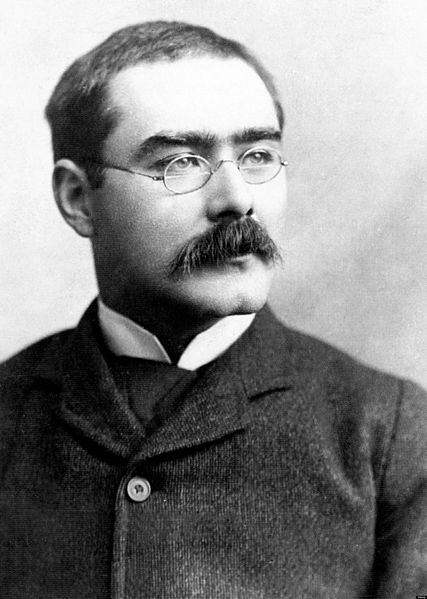
Portrait of Rudyard Kipling from the biography Rudyard Kipling by John Palmer, 1895.
Photo via Wikimedia Commons.
… The re-election of Donald Trump, who has already daydreamed about turning Canada into his 51st state, might even rekindle Tory patriotism. After all, their Victorian ancestors created the dominion of Canada in 1867 to keep British North America from the clutches of the United States.
A longer view shows that Canada has allured but also vexed British observers ever since its creation. The Edwardian era produced an especially rich crop of writings on Canada. In 1887, the year of Queen Victoria’s Golden Jubilee, the first train from Montreal pulled into Vancouver. This completion of the Canadian Pacific Railway (CPR) had persuaded the Crown colony of British Columbia to join in the new federation. In expanding Canada, the CPR also made it easier for British people to see the country. Having crossed from Liverpool to Montreal on a fast liner, they could visit most of its major cities, which were found on or near the railway.
Literary celebrities did so in enviable conditions. The CPR’s bosses loaned the poet Rudyard Kipling his own carriage in 1907, so he could travel in comfort and at his own speed. His impressions, which appeared in newspapers and then as Letters to the Family (1908), make for particularly resonant reading today. Although a man of strong prejudices, he had seen the country up close, rather than merely retweeting allegations about it, and was prepared to be surprised as well as disappointed by it.
Kipling’s contemporaries travelled with heavier and very different ideological baggage than we carry today. It was not wokery that worried them, but irreligion and greed, two poisons that had crept north from America. When the clergyman Hensley Henson steamed into Vancouver, in July 1909, he was horrified to see its beaches plastered with “vulgar advertisements”. The further [East] he travelled, the worse things became. The Anglican clergy were “weaklings” who made no dent on a materialistic society. Winnipeg was given over to “graft”. Young people in Ontario spoke like gum-chewing Yankees. Quebeckers were despoiling their province by setting up hydroelectric dams on its waterfalls.
Kipling did not share Henson’s churchy desire to scold his Canadian hosts. He was a cheerful freethinker who considered materialism a necessary part of nation-building. Canada had “big skies, and the big chances”: he admired its railway workers and lumberjacks for their insouciant and sometimes drunken swagger. Boom towns like Winnipeg excited him: he loved to see office blocks rise and streets flare with natural gas lamps; he lost considerable sums speculating on Vancouver real estate.
What worried him was rather Canada’s fading strategic commitment to the Empire. The modern Right understands Canada as a battleground for the values of “the West”. Kipling, who had married an American and lived for some years in Vermont, naturally believed in and did much to formulate the fervent if vague sense that English-speaking peoples share a civilisation. Yet this did not weaken his overriding concern for the political cohesion of the British Empire. Canada’s failure to join as enthusiastically in Britain’s recent war against the rebellious Dutch Boers of South Africa as he would have liked weighed on him — so much so that he kept calling the prairie the “veldt”. Kipling regarded the scepticism of Liberals and Socialists at home about whether the Empire offered value for money as a “blight”: now this “rot” seemed to be spreading like Bubonic plague, “with every steamer” to Canada.
The way to draw the dominion back to the motherland was to fill it with English settlers who shared his distaste for domestic Socialism. The dilution of English Canada worried Kipling. He allowed the Francophone Catholics of Quebec their differences — he found their basilicas romantic — but the policy of settling the prairies with hardy Slavs from the Habsburg and Russian Empires appalled him. These “beady-eyed, muddy-skinned, aproned women, with handkerchiefs on their heads and Oriental bundles in their hands” could never assimilate to English Canada. Nor did he care that many were fleeing oppression: people who renounce their country have “broken the rules of the game”.
The Halifax Explosion | A Short Documentary | Fascinating Horror
Fascinating Horror
Published Feb 23, 2021“On the 6th of December 1917 two ships collided in the mouth of Halifax Harbour in Nova Scotia, Canada …”
► Suggestions: hello@fascinatinghorror.co.uk
MUSIC:
► “Glass Pond” by Public Memory#Documentary #History #TrueStories
December 5, 2024
Look at Life – The City’s for Living In (1968)
Classic Vehicle Channel
Published Apr 19, 2020Traffic was still an issue in the 60’s. Residents discuss how they can divert to traffic from the city. This film features great archive of city traffic in the late 60s
QotD: Oscar Wilde
H.L. Mencken, “Portrait of a Tragic Comedian”, The Smart Set, 1916-09.
December 4, 2024
Facing the Sphinx
Andrew Doyle provides a bit of historical context for the question currently convulsing Britain’s supreme court:

Bonaparte Before the Sphinx, 1886, by Jean-Léon Gérôme (1824–1904).
Painting from the Hearst Castle collection (Accession number 529-9-5092) via Wikimedia Commons.
It was known as the sphinx: a terrifying hybrid with a lion’s body and a human head. According to the legend, the sphinx was sent to guard the city of Thebes by the goddess Hera who wanted to punish the citizens for some ancient crime. It perched on a nearby mountain, and whenever anyone attempted to enter or leave the city it would pose a riddle. If the traveller failed to answer, he or she would be devoured, but the riddle was so confounding, so esoteric, so abstruse, that even the greatest intellectuals of the day soon found themselves reduced to snacks for the mighty sphinx.
And what was this riddle? What was the question that foxed even the sharpest of minds? It was simply: “what is a woman?”
And now, a hearing at the UK’s supreme court has taken place to solve the sphinx’s riddle once and for all. The campaign group For Women Scotland raised the case in order to challenge the Scottish government’s contention that the word “sex” in the Equality Act includes men who identify as female and hold a Gender Recognition Certificate. We can expect the results of this hearing over the next few months.
And yet I’m sure most of you are thinking to yourselves: “How will these judges possibly answer such a metaphysical conundrum?” And you’re not alone. Many valiant and learned individuals have fallen in the attempt.
[…]
Inevitably, activists tend to frame the entire question of “what is a woman?” as some kind of “gotcha”. Or they claim that to even broach the question of sex differences is “transphobic” and “hateful”, a means to bully the most marginalised. But of course, the transgender lobby wields incredible power in our society; it can see people silenced, harassed and even arrested for speaking truth, and all in the name of “progress”. Genuinely marginalised groups do not enjoy this kind of clout.
Others will say that all of this is a distraction from the “real issues”. But gender identity ideology has a deleterious impact on everyone, and has proved to be a major factor in political change. In its post-election analysis in November 2024, entitled “How Trump won, and how Harris lost”, the New York Times singled out an advertising campaign by Trump’s team which drew attention to Kamala Harris’s statement that all prison inmates identifying as transgender ought to have access to surgery. The tagline was: “Kamala is for they/them. President Trump is for you”.
Although the New York Times considered this a “seemingly obscure topic”, its writers were forced to admit its efficacy. Even Trump’s aides had been astonished at how popular the campaign had proven. According to the political action committee Future Forward, a group established to support the Democratic Party, this advertisement actuated a 2.7 point shift in favour of Trump among those who saw it. Inevitably, the New York Times misclassified the message as “anti-trans”, a ploy guaranteed to exacerbate the very resentment that made the campaign so effective in the first place.
To ask a politician the question “what is a woman?” isn’t some kind of cruel test. It’s a way to ensure that those in power are being honest with us. We know that they know the answer. And they know that we know that they know the answer. It isn’t that they can’t define it, it’s that they are too frightened to do so. It’s one thing for politicians to lie and hope they get away with it, but quite another for them to lie when they know that we are all fully aware that they are lying. It suggests a degree of contempt for the electorate that is unlikely to translate to success at the ballot box. And it hasn’t escaped the attention of feminists that the question “what is a man?” mysteriously never seems to be asked.
The Korean War Week 024 – Marines Attacked at Chosin Reservoir – December 3, 1950
The Korean War by Indy Neidell
Published 3 Dec 2024On and around the frozen waters of the Chosin Reservoir, the US Marines and the Chinese Communist forces fight out a brutal battle. In the west, the Chinese offensive continues. For the UN forces, there is no chance of victory, but living to fight another day may yet be possible.
Chapters
00:00 Intro
00:48 Recap
01:11 Chosin Reservoir Prelude
03:58 Yudam-ni
06:32 Task Force Faith
08:25 Hagaru
12:58 The Aftermath of Chosin
14:49 The Tokyo Conference
15:56 Wawon and Kunu-ri
20:30 Summary
20:42 Conclusion
(more…)
The Disturbing Origins of Kellogg’s Corn Flakes
Tasting History with Max Miller
Published Jul 30, 2024A bowl of the original Corn Flakes made with only corn.
City/Region: Battle Creek, Michigan
Time Period: 1895Dr. John Kellogg was all about health, and when his brother, William (the financial brains of the operation), wanted to add sugar to the very bland original Corn Flakes, he flat out refused. Eventually, William bought the rights to Corn Flakes, changed the recipe, and the rest is history.
I don’t have the industrial rollers that the original recipe for Corn Flakes used, so I made a dough. The flakes turned out nice and crispy, but they are very bland. I would recommend using stone-ground cornmeal and adding some sugar and salt to make the whole process easier and the end product tastier.
Excerpt from Patent No. 558,393 [for] Flaked Cereals and Process of Preparing Same.
First. Soak the grain for some hours — say eight to twelve — in water at a temperature which is either between 40° and 60° Fahrenheit or 110° and 140° Fahrenheit, thus securing a preliminary digestion by aid of cerealin, a starch-digesting organic ferment contained in the hull of the grain or just beneath it. The temperature must be either so low or so high as to prevent actual fermentation while promoting the activity of the ferment. This digestion adds to the sweetness and flavor of the product.
Second. Cook the grain thoroughly. For this purpose it should be boiled in water for about an hour, and if steamed a longer time will be required. My process is distinctive in this step—that is to say, that the cooking is carried to the stage when all the starch is hydrated. If not thus thoroughly cooked, the product is unfit for digestion and practically worthless for immediate consumption.
Third. After steaming the grain is cooled and partially dried, then passed through cold rollers, from which it is removed by means of carefully-adjusted scrapers. The purpose of this process of rolling is to flatten the grain into extremely thin flakes in the shape of translucent films, whereby the bran covering (or the cellulose portions thereof) is disintegrated or broken into small particles, and the constituents of the grain are made readily accessible to the cooking process to which it is to be subsequently subjected and to the action of the digestive fluids when eaten.
Fourth. After rolling the compressed grain or flakes having been received upon suitable trays is subjected to a steaming process, whereby it is thoroughly cooked and is then baked or roasted in an oven until dry and crisp.
— John Harvey Kellogg. United States Patent Office, 1895


