
As we’ll see, in a real battle when seconds count, new orders are only a few minutes away. Well, sometimes they’re rather more than a few minutes away. Or not coming at all.
This is also true, of course, in films. Our friend Darius III from Alexander (2004) silently waves his hand to mean “archers shoot!” and also “chariots, charge!” and then also “everyone else, charge!” Keeping in mind what we saw about the observation abilities of a general on horseback, you can well imagine how able Darius’ soldiers will have been to see his hand gestures while they were on foot from a mile or so away. Yet his army responds flawlessly to his silent arm-gestures. Likewise the flag-signalling in Braveheart‘s (1995) rendition of the Battle of Falkirk: a small banner, raised in the rear is used to signal to soldiers who are looking forward at the enemy, combined with a fellow shouting “advance”. One is left to assume that these generals control their armies in truth through telepathy.
There is also never any confusion about these orders. No one misinterprets the flag or hears the wrong orders. Your unit commanders in Total War never ignore or disobey you; sure the units themselves can rout, but you never have a unit in good order simply ignore your orders – a thing which happened fairly regularly in actual battles! Instead, units are unfailingly obedient right up until the moment they break entirely. You can order untrained, unarmored and barely armed pitchfork peasant levies to charge into contact with well-ordered plate-clad knights and they will do it.
The result is that battleplans in modern strategy games are often impressive intricate, involving the player giving lots of small, detailed orders (sometimes called “micro”, short for “micromanagement”) to individual units. It is not uncommon in a Total War battle for a player to manually coordinate “cycle-charges” (having a cavalry unit charge and retreat and then charge the same unit again to abuse the charge-bonus mechanics) while also ordering their archers to focus fire on individual enemy units while simultaneously moving up their own infantry reserves in multiple distinct maneuvering units to pin dangerous enemy units while also coordinating the targeting of their field artillery. Such attacks in the hands of a skilled player can be flawlessly coordinated because in practice the player isn’t coordinating with anyone but themselves.
Bret Devereaux, “Collections: Total Generalship: Commanding Pre-Modern Armies, Part II: Commands”, A Collection of Unmitigated Pedantry, 2022-06-03.
December 16, 2024
QotD: Movie and video game portrayals of generalship in pre-modern armies
December 15, 2024
The fall of the house of Assad
In the New English Review, Theodore Dalrymple considers the fall of Syria’s dictator as the al-Assad family is finally toppled from power:
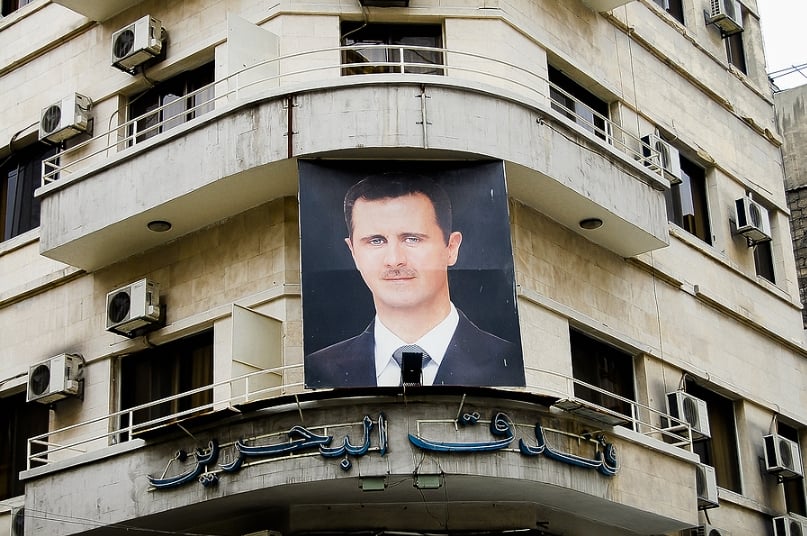
When I saw video clips of the joyful toppling of statues of Bashar al-Assad, as well as the tearing from walls of his ubiquitous portrait, I wondered what it must be like to be a dictator and see images of yourself everywhere (not that I have any ambitions myself in that direction).
Do you come to imagine, for example, that they are a manifestation of genuine popular affection for yourself, or are you like the Nicaraguan dictator Anastasio Somoza, of the poem by Ernesto Cardenal “Somoza Unveils a Statue of Somoza in the Somoza Stadium” (the fact that Cardenal, a Nicaraguan priest, was a commie doesn’t mean that he wasn’t a good poet).
The Somoza of the poem is perfectly clear-sighted. He knows that people didn’t erect the statue spontaneously, out of love for him, because he knows that he himself ordered it to be erected. Nor does he think that it will be a perpetual monument to himself because he knows also that the people will tear it down as soon as they can. No, he had it erected because he knew that the people would hate it, in other words that it would humiliate them, and a humiliated people is easy to cow into submission, at least until — to use a word of slightly different zoological connotation — the worm turns. (A note to pedants before they write in: I do not think that the verb to cow has any etymological link with the female herbivore known as the cow.)
It seems to me, however, that Cardenal may have simplified a little. Such is the complexity and potential dishonesty of the human mind that a dictator would be perfectly capable of imagining that a statue of himself is a manifestation of people’s affection for him and that there are people plotting to bring down both the statue and him because they hate him. This is not totally irrational or impossible. After all, as Americans know, even in a free democracy some people love the leader and some people hate him (usually more of the latter after he has been in power for some time).
Assad junior, it seems to me, is a living refutation of Solzhenitsyn’s famous remark that Macbeth was capable of killing only a handful of people because he was motivated by no ideology, and it requires an ideology to bring about hecatombs of the Nazis or Communists. Assad junior had a self-justification for his rule, no doubt, as every ruler and dictator has and must have, but he did not really possess a full-blown ideology in Solzhenitsyn’s sense. His trajectory is worth recalling.
The son of a monstrous dictator, he seems at first to have had no inclinations in that direction himself. Among other things, he didn’t seem to have the physical attributes of a dictator, but rather of someone pliant and weak, more herbivore than carnivore, more giraffe rather lion (though giraffes can kick a lion to death). And it spoke rather well of him that he should qualify as a doctor, apparently quite genuinely so, and wish to become an ophthalmologist, to which end he studied in London, where his conduct was not that of a spoilt brat but by all accounts rather modest — laudably so, in the circumstances.
Nazi Tanks Advance on Kursk: Prokhorovka Part 1
World War Two
Published 14 Dec 2024German tanks advance on Kursk, smashing through Soviet defences and setting the stage for one of history’s most legendary tank battles — The Battle of Prokhorovka. In this six part miniseries we will cover the fierce fighting, the strategies, and the men and machines that take part in this battle.
(more…)
“Outside Sub-Saharan Africa, Homo sapiens are vermin, in the Australian sense — an introduced species with no co-evolved local predators”
You have to admit that Lorenzo Warby has a way with words to introduce a new essay, yes?
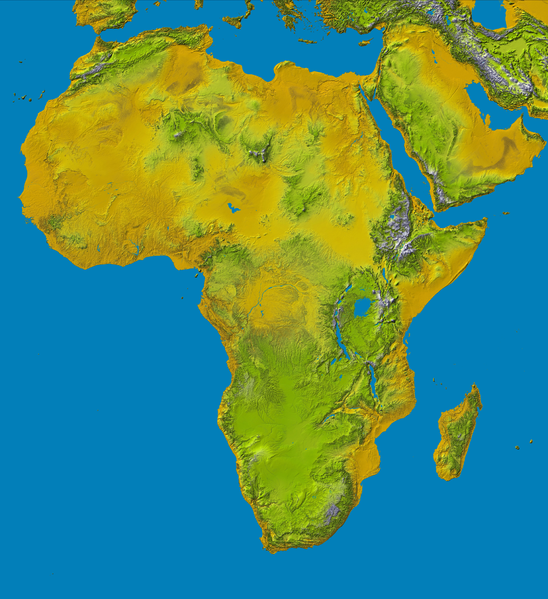
Outside Sub-Saharan Africa, Homo sapiens are vermin, in the Australian sense — an introduced species with no co-evolved local predators. That means that their strongest selection pressures — both genetic and cultural — have almost always been about dealing with other humans.
We are the cultural species par excellence. Cultures can be reasonably thought of as collections of life-strategies. Culture tends to be persistent — aspects of culture can be highly persistent.
It is worth keeping in mind that genetic selection can occur surprisingly quickly — i.e., in a relatively short number of generations, depending on the intensity of the selection pressures. A very clear example of this is the evolution of lactase persistence in pastoralist, or agro-pastoralist, populations. (The decades-long experiment in domesticating silver foxes is an extreme example.)
The great advantage of cultural selection is that it is faster than genetic selection but culture still has to show some “stickiness”, some persistence, to be useful. Especially in the evolution of signals, norms and social strategies.
The regions where the local physical environment has been successfully managed longest — or most thoroughly — are Europe, particularly North-West Europe, East Asia and India (especially by high-jati Indians). So, those are the areas where natural and cultural selection has been most focused on selection for dealing usefully with other humans. Those populations have also been the most successful in dealing with the modern world, wherever they go. This hardly seems a coincidence.
The regions where dealing with the local physical environment has been most salient are Sub-Saharan Africa — all those co-evolved parasites, pathogens, predators and mega-herbivores — and Australia — which is full of deserts and spiky things likely to poison you. Much of Africa is also semi-desert forager lands, while the tsetse fly stopped the central African plains generating the equivalent of the connecting — for good or ill — pastoralist cultures of the Eurasian steppes. Both continental-scale regions therefore historically had low human population densities.
The consequence in Africa was that Sub-Saharan Africa has, for millennia, been a region of endemic slavery. Labour was more valuable than land, which led — as it usually did historically — to labour bondage: the violent/coercive extraction of labour’s scarcity value. In this case, the low population density meant that folk were regularly seized and transported, thus requiring the level of domination for folk to be moved at will — i.e., slavery rather than some form of serfdom.
Increased selection to deal with the physical environment meant comparatively less selection to deal with other humans. Sub-Saharan African and Australian Aboriginal populations have been rather less successful at dealing with the modern world than have other populations. (Claims about the success of recent African immigrants seem to be overstated.) The key element of the modern world is domination of social outcomes by human interactions to the greatest extent yet achieved in history. Again, that relative lack of success hardly seems like a coincidence.
Yes, it is true that selection for transportation across the Atlantic as slaves was negative in all sorts of senses. The churn of slavery massively undermined cultural transmission, the selection was for physical robustness and, if anything, against executive functions (which are highly heritable). Nevertheless, with the partial exception of recent African immigrants — who are selected for initiative and education — both populations have been markedly less successful than other groups.
There are certainly factors which affect that either way. Not inflicting on Australian Aborigines the dual metabolic disasters of the farming and processed-food revolutions at the same time would be good. Not under-policing the localities in which folk live is also good.
Nevertheless, there is no reason to think that capacities — which are a genetic, epigenetic and cultural matter — will be evenly distributed across all populations. Indeed, we have very good reasons to think that that will not be the case, due to the variations in selection pressures — whether genetic, environmental or cultural, including interactions between the three. It is not a good idea, for instance, to spend 1400 years marrying your cousins.
Even when means and medians are the same in the distribution of some trait across groups, differences in the size of tails — i.e. the number of extreme outliers — can lead to differences in the distribution of outcomes. Any population with a persistently larger tail of high physical robustness and lower executive functions — which can be an ethno-racial pattern but also a class pattern — will tend to have higher rates of violent crime. Conversely, any population with a smaller tail of lower executive functions — for example, East Asians with a long history of underclass males not breeding but selection for reproductive success through passing examinations and cooperative farming — will tend to have lower rates of violent crime.
Sufficient variance in traits — so having a larger “right tail” of positive-for-human-flourishing characteristics — can be enough on its own to increase a group’s success. Tail effects matter.1
The persistence of gene flows across human populations does undermine any strong notion of human subspecies among Homo sapiens. It does not imply equal distributions of capacities across human populations.
Hence, evolutionary thinking is neither comfortable nor comforting.
1. Given that human males — like males across species — have a flatter distribution of traits — so more positive and negative outliers — having equal numbers of males and females at the top ends of hierarchies suggests some level of discrimination against males. Conversely, having female prison populations begin to approach male populations in size suggests some level of discrimination against, even persecution of, females.
Cooking on the American Homefront During WWII
Tasting History with Max Miller
Published Aug 6, 2024T-bone shaped seasoned ground beef with Wheaties
City/Region: United States of America
Time Period: 1943Rationing didn’t begin in the United States until May 1942, and in order to buy certain foods, you used a combination of stamps and money. Better cuts of meat required more stamps, so there came a slew of recipes that either replaced meat, or made lesser cuts seem like better ones, like this recipe.
This “emergency steak” is actually very nice. It’s essentially a kind of meatloaf, and is surprisingly flavorful given the scant ingredient list. Is it like a T-bone steak? No. Is it tasty? Yes.
Emergency Steak
(1 lb.—serves 6)
Mix …
1 lb. ground beef or hamburger
1/2 cup milk
1 cup WHEATIES
1 tsp. salt
1/4 tsp. pepper
1 tbsp. chopped onion
Place on pan, pat into T-bone steak shape, 1 in. thick. Broil 8 to 15 min. at 500° (very hot). Turn once.
Meats … 7
— Your Share by Betty Crocker (General Mills), 1943
December 13, 2024
The influence of Mesopotamian cultures on ancient Greece
James Pew and Scott Miller begin their series on the history of western education by looking at the way Greek civilization was influenced by the Mesopotamian cultures who used cuneiform writing for three thousand years:

An example of a clay tablet inscribed with cuneiform text (in this case, a portion of the Epic of Gilgamesh)
In the 19th century, three new discoveries began to militate against “the image of pure, self-contained Hellenism”. They were: “the reemergence of the ancient Near East and Egypt through the decipherment of cuneiform and hieroglyphic writing, the unearthing of Mycenaean civilization, and the recognition of an Orientalizing phase in the development of archaic Greek art”.
To sketch the significance of just one of these discoveries, what the discovery of cuneiform writing means for the history of writing and literature, we have with cuneiform not only the first writing system in human history, but also the longest running (it was in use for over 3,000 years); cuneiform texts are, at the same time, the best preserved and most numerous textual records from the ancient world by far (there are hundreds of thousands of cuneiform documents in museum archives today because the signs were inscribed on clay tablets which preserve better across time than other materials used for writing in ancient times). This complex writing system, consisting of thousands of signs, was developed first in Mesopotamia by the Sumerians and, subsequently, it was adopted by the Akkadians, Babylonians and Assyrians in the same area. It emerged c. 3200 B.C. as a response to social and economic complexities generated by the world’s first cities: invariably, the impetus to create a writing system comes down to the need to document and track the transfer of food stuffs, material goods, temple offerings, and so forth, the administration of complex urban society. On the other hand, written literature in the form of myth, poetry and the like, are secondary developments that may follow a long time later (if at all). In centuries to follow, Mesopotamian scribes would begin to write down epic tales telling the exploits of heroic kings, such as Gilgamesh, along with hymns and prayers to the Mesopotamia gods, incantations to ward off demons and diseases, texts containing lists of known phenomena, proverbs, reports of astrological phenomena and their omens, medical and magical texts to be used by the healing expert, and many text types besides.
On the Question of Greek Borrowing from the more ancient East: This series will delve into the work of many of these cutting-edge historical scholars who follow the evidence from Orient to Occident. Academic’s like Albin Lesky, M.L. West, Walter Burkert, Margalit Finkelberg, Harald Haarmann, Daniel Ogden, Mark Griffith, and more.
It is no easy task to establish links between Greece and ancient Near Eastern civilizations, and the difficulty has to do with more than vast expanses of time and space. Typically, modern scholars of classical Greece have a tendency to “transform ‘oriental’ and ‘occidental’ into a polarity, implying antithesis and conflict”. According to Burkert, it was not until the Greeks fought back the Persian Empire that they became aware of their distinct identity (as separate from the orient). In addition, it was not until many years later, during the crusades, that “the concept and the term ‘Orient’ actually enter(ed) the languages of the West”. The reluctance on the part of many scholars to accept a universal conception of cultural development which involved “borrowing”, “loan words”, and “cultural diffusion” amongst the different ancient peoples living in both the Near East and the Aegean regions, is due to intellectual currents that first took shape in Germany over two centuries ago. In Burkert’s words, “Increasing specialization of scholarship converged with ideological protectionism, and both constructed an image of a pure, classical Greece in splendid isolation”.
It was essentially a trio of academic fads that “erected their own boundaries and collectively fractured the Orient-Greece axis”. The first was the breaking apart of theology and philology. Until well into the 18th century, “the Hebrew Bible naturally stood next to the Greek classics, and the existence of cross-connections did not present any problems”. The second was the rise of the ideology of Romantic Nationalism, “which held literature and spiritual culture to be intimately connected with an individual people, tribe, or race. Origins and organic development rather than reciprocal cultural influences became the key to understanding”. And the third was the discovery by linguistic scholars of “Indo-European”, the “common archetype” of most European languages (as well as Persian and Sanskrit).
Ulrich von Wilamowitz-Moellendorff offered a “scornful assessment” indicative of the faddish and far more isolated conception of ancient Greece in 1884: “the peoples and states of the Semites and the Egyptians which had been decaying for centuries and which, in spite of the antiquity of their culture, were unable to contribute anything to the Hellenes [the Greeks] other than a few manual skills, costumes, and implements of bad taste, antiquated ornaments, repulsive fetishes for even more repulsive fake divinities …” A common take at the time which would later prove to be quite incomplete. It should be noted that Romantic Nationalism, coupled with the discovery of Indo-European (which demonstrates no link between European and Semitic languages) seems to have contributed to what gave “anti-Semitism a chance”. Tragically, it was at the point when the Jews were finally being granted full legal equality in Europe when national-romantic consciousness and the rejection of orientalism helped set the stage for the escalation in Jewish persecution that eventually led to the horror of horrors: the Holocaust.
The Mesopotamians would never, as the later Greeks did c. 600 B.C., formulate an abstract concept of “nature” and analyze phenomena as having a natural developmental explanation rather than the traditional explanation (that being, e.g. the gods made it so). Thus, they would never develop philosophy or science as we think of it, and so there are certain categories of analysis and knowledge that are uniquely Greek in the ancient world. However, as the innovators of a form of agrarian society that was productive and sophisticated enough to sustain the world’s first cities, Mesopotamians needed to be able to examine and quantify time (in order to know when to plant) and so they developed the lunar calendar of 12 months, they developed the 12 double-hour day, they gave names to the observable planets and charted the night sky into constellations; They needed to be able to measure physical space and allot pieces of land to land owners, and so they created the world’s earliest form of basic geometry. The types of knowledge just named are the types of knowledge that scholars believe would have been of interest to the Greeks, and, indeed, many suspect that iron age Greeks borrowed these insights from the Babylonians. Whether the Greek story of Heracles could have been influenced by Mesopotamian hero epics such as the Epic of Gilgamesh is a more contentious — though intriguing — topic.
So, how did Greece find itself in a position to receive the baton of civilization and even to carry it further forward? Because of the great work of modern scholars, we know that an informal but early (proto) archetypal version of education (not yet organized education) begins in the Mediterranean, in archaic Greece, before the classical period. Even before this, although it is not exactly clear as to the extent, it has been determined that Bronze Age Greek cultures located around the area of the Aegean sea (also known as Aegean Civilization) – the Mycenaean on mainland Greece, the Minoan on the island of Crete and the Cyclades (also known as the Aegean Islands) – were not only in contact with each other, but also with neighboring civilizations: Egypt, Mesopotamia, Asia Minor, and the Levant.
Modern (western) armies never seem to have enough infantry, no matter how high-tech the battlefield gets
Over the last century, one of the apparent constants in military doctrine has been that the latest and greatest technical innovation has somehow eclipsed the importance of boring old infantry units. Tanks were the future! No, tactical airpower was the future! No, nuclear weapons were the future! No, airmobile and helicopter units were the future! No, drones are the future! Yet every time the guns started firing, the limiting factor always seemed to be “not enough infantry” (at least among western militaries). You definitely needed more specialist and support units to handle the latest whizzy toys being deployed, yet it was still the infantry who mattered in the end. That’s just me noodling … it’s only loosely related to the rest of the post.
In my weekly recommendations list from Substack, they included this post from Bazaar of War which discusses the changes in organization of tactical and operation level units over time to best meet the needs of the modern battlefield:

Command post for a single battalion-sized element in a brigade combat team.
Photo by Sgt Anita Stratton, US Army.
Modern ground forces are torn between two competing demands, for infantry and for enablers. Urban operations and large-scale combat over the past decade demonstrate that infantry remains just as essential as ever. Yet that same infantry needs a lot of low-level support just to survive and remain effective: drone operators, EW, and engineers, not to mention armor and artillery. This poses an obvious dilemma for force management—not least when faced with competing demands for air, naval, and missile assets—but also raises questions about force structure.
Organizing the Force
One of the key decisions in how future wars will be fought is what will be the primary tactical unit. Inevitably, certain command levels are much more important than others: those which require greater freedom from higher headquarters than they allow their own subordinates. This partly comes down to a question of where the combined-arms fight is best coordinated, which in turn depends heavily on technology.
This has varied a lot over time. The main tactical formation of the Napoleonic army was the corps, which had organic artillery, cavalry, and engineers that allowed it to fight independent actions with a versatility not available to smaller units. The Western Front of World War II was a war of divisions at the tactical level and armies at the operational, a pattern which continued through the Cold War. The US Army shifted to a brigade model during the GWOT era, on the assumption that future deployments would be smaller scale and lower intensity; only recently has it made the decision to return to a divisional model. Russia also switched to a brigade model around this time, although more for cost and manpower reasons.
Tweaking the Hierarchy
At the same time, certain echelons have disappeared altogether. The subdivisions of Western armies reached their greatest extent in World War I, as new ones were added at the extremities of the model standardized during the French Revolution: fireteams/squads to execute trench raids, army groups to manage large sections of the front. At the same time, cuts were made around the middle. Machine guns were pushed from the regimental level down to battalions over the course of the war, reducing the number of these bulkier regiments in a division; this accordingly eliminated the need for brigades as a tactical unit.
This continued with the next major war. More organic supporting arms and increased mobility made combat more dispersed, creating the need for supply, communications, intelligence, and medical support at lower levels. As units at each echelon grew fatter, it became too cumbersome to have six separate headquarters from battalion to field army. Midway through World War II, the Soviets followed the Western example of eliminating brigades, and got rid of corps to boot (excepting ad-hoc and specialized formations). During the Cold War, the increasing use of combined arms at a lower level caused most NATO militaries to eliminate the regiment/brigade distinction altogether: the majority favored the larger brigade, which could receive supporting units to fight as a brigade combat team, although the US Marines retained regiments as brigades in all but name (the French, by contrast, got rid of most of their battalions, preferring regiments formed of many companies).
QotD: Nostalgia, or “they were better people back then”
The Golden Age was better because the Golden Men were better, not because their lives were materially better. There’s a reason all those medieval and Renaissance paintings show “historical” figures in contemporary garb, and it’s not because the Flemish Masters didn’t know about togas. Though they assumed the men of the Classical Past were better men, they assumed material life back then was pretty much the same as now, because it was pretty much the same as now. One can of course point to a million technological changes between the Roman Republic and the Renaissance, but life as it was actually lived by the vast majority of people was still basically the same: Up at dawn, to bed at dusk, birth and death and community life and subsistence farming, all basically the same. A world lit only by fire.
The modern age changed all that. At some point in the very near past, we started assuming tomorrow would look very different from today. And I do mean the very near past — there are probably people still alive today who remember people who assumed that tomorrow would be pretty much like today. Because, then, our lives are so materially different from even the very recent past, we tend to assume that our nostalgia is for material things. It’s very hard to put a name to something like the feeling “I wish we could have family Christmases again, sharing that one joke we had about how Uncle Bob always sends you goofy socks.” It’s very easy to put a name to something like “vinyl records” or “the Bob Newhart show” or “Betamax tapes”, so we use those as synecdoche.
In other words: Even though we could actually recreate the material world of 1983, and even though we think we want this, we don’t. We wish we could live like we lived in 1983, but very little of that has any relationship to the material culture of 1983.
Severian, “Nostalgia”, Founding Questions, 2021-10-19.
December 12, 2024
CHEVROLET with Cartoonist Rube Goldberg: Something for Nothing (1940)
Charlie Dean Archives
Published Aug 27, 2013Cartoonist Rube Goldberg creates a little animation to explain how fuel is converted to power in the modern automobile engine.
CharlieDeanArchives – Archive footage from the 20th century making history come alive!
QotD: The “natural cycle” of empire
Arguably the evolution of the British Empire into a Commonwealth of 70-odd self-governing nations, many of them with stable democratic governments, who can all get together and play cricket and have Commonwealth Games (and impose sanctions and suspensions on undemocratic members): cannot be considered much of a “collapse” when compared to say the Inca or Aztec civilisations. Nor can post Medieval Europe be considered a “collapsed” version. Even Rome left a series of successor states across Europe – some successful and some not. (Though there was clearly a collapse of economics and general living standards in these successor states.) The fact that the Roman Empire survived in various forms both East – Byzantium – and west – Holy Roman Empire, Catholic Church, Christendom, etc – would also argue somewhat against total collapse. Still the idea has been popular with both publishers and readers.
Yet the “natural cycle” theory has been revisited recently by economic historians in such appalling works on “Imperialism and Collapse”, as The Rise and Fall of the Great Powers. [That’s the one where the Paul Kennedy explained how US power “has been declining relatively faster than Russia’s over the last few decades” (p.665) – just before the Berlin Wall came down.]
Nigel Davies, “The Empires of Britain and the United States – Toying with Historical Analogy”, rethinking history, 2009-01-10.
December 11, 2024
The Korean War 025 – UN Forces Abandon Pyongyang – December 10, 1950
The Korean War by Indy Neidell
Published 10 Dec 2024This week, UN forces in the west pull out of the North Korean capital Pyongyang. In the east, the marines continue to fight their way towards safety. Over in Washington, the aftershocks of the Chinese intervention have shaken high command as much as they have the troops on the ground, and America’s allies, especially Britain, grow alarmed over the US response.
Chapters
00:00 Intro
00:26 Recap
01:20 The Blame Game
03:58 Retreat in the West
07:43 The Chinese Situation
10:59 Escaping Chosin
13:57 Atoms and Attlees
18:07 Summary
18:20 Conclusion
(more…)
Rome: Part 5 – Between Two Wars, 241-218 BC
seangabb
Published Jul 21, 2024This course provides an exploration of Rome’s formative years, its rise to power in the Mediterranean, and the exceptional challenges it faced during the wars with Carthage.
Lecture 5: Between Two Wars (241-218 BC)
• Carthage after the First Punic War
• Carthaginian Expansion into Spain
• Rome and the East
• Rome and the Gauls
• The Emergence of Hannibal
• The Outbreak of the Second Punic War
(more…)
QotD: Simon Leys on George Orwell
What Leys wrote in 1984 in a short book about George Orwell might just as well have been written about him: “In contrast to certified specialists and senior academics, he saw the evidence in front of his eyes; in contrast to wily politicians and fashionable intellectuals, he was not afraid to give it a name; and in contrast to the sociologists and political scientists, he knew how to spell it out in understandable language.”
Leys drew a distinction between simplicity and simplification: Orwell had the first without indulgence in the second. Again, the same might be said of Leys — who, of course, like Orwell, had taken a pseudonym, and with whose work there were many parallels in his own.
But immense as was Leys’s achievement in destroying the ridiculous illusions of Western intellectuals, as Orwell had tried to do before him, it was a task thrust upon him by circumstance rather than one that he would have chosen for himself. He was by nature an aesthete and a man of letters, and I confess that great was my surprise (and pleasurable awe) when I discovered that he was, in addition to being a great sinologist, a great literary essayist.
Theodore Dalrymple, “Rare and Common Sense”, First Things, 2017-11.
December 10, 2024
M47 – The Most Boring Tank Ever? | Tank Chat #178
The Tank Museum
Published Aug 9, 2024The US built M47 probably isn’t the most interesting tank in history – but it was a vital part of NATO’s Cold War tank force.
Rushed into production at the outbreak of the Korean War, it never saw active service with the US military and was quickly superseded by the M48.
But large numbers were supplied to US Allies around the world – with Germany, Belgium, Italy, Portugal, Jordan, Pakistan and Austria being among the most significant users.
Probably the most famous M47 crewman of all, Arnold Schwarzenegger, served on the tank during his National Service.
00:00 | Intro
01:05 | M46 Sees Service in Korea
02:56 | Development Problems – And a Stop Gap
10:57 | Short Lived US service
12:47 | But An Export Success
15:24 | M47 plugs the gap for the US Army – goes on to serve abroad
15:46 | The Tank Museum’s M47 Restoration Project
(more…)


