
Forgotten Weapons
Published 27 Apr 2026The first nation to adopt the Luger was Switzerland, which began testing in late 1898 and formally accepted the Luger in May 1900. Their guns were the first Lugers to be mass produced, as they were the first order received by DWM. The first batch of 600 arrived in Switzerland in May 1901, and today we are taking a look at the very first of that batch — serial number 01. It is the first production military Luger, and that’s a pretty cool landmark.
C&Rsenal Swiss Model 1900 video: • History of WWI Primer 145: Swiss Luger 19…
September 15, 2026
The First Military Luger: Swiss Model 1900 s/n 01
Comments Off on The First Military Luger: Swiss Model 1900 s/n 01
QotD: Auftragstaktik or “mission-type tactics”
Mission Command or Auftragstaktik (also “mission-type tactics”) is a style of command and control which stresses flexible decision-making by smaller units pursuing an objective (the “mission” of mission tactics) rather than imposing a single rigid top-down plan on the entire force. Under this framework, upper-level commanders assign objectives to their subordinates, who can then use their better local knowledge and quicker reaction times (being closer to the front) to craft a flexible plan to achieve those objectives; this process is then repeated down the command structure. Originally a German concept, US doctrine embraces mission command as its ideal style of command. Russian doctrine, by contrast, has generally been substantially more top-down in nature (with implications for force structure as well); this has proven a liability in Ukraine as the top-down plan did not go to plan and lower-level Russian commanders and NCOs are not generally trained to deviate from the plan “on the fly”.
Bret Devereaux, “Miscellanea: A Very Short Glossary of Military Terminology”, A Collection of Unmitigated Pedantry, 2022-03-25.
Comments Off on QotD: Auftragstaktik or “mission-type tactics”
September 14, 2026
The demands for reparations should be rejected, firmly
Large-scale slavery has been a dead letter in most parts of the world since the Slave Trade Act of 1807 made the transportation of slaves illegal within the British empire and on the high seas where the Royal Navy patrolled. Legal abolition of slavery followed in 1833 with the Slavery Abolition Act. Chattel slavery in the United States was ended by the American Civil War. The last major power to allow slavery was the Ottoman Empire, which was dissolved after the First World War. Slavery still exists … mostly in the Islamic world and in the criminal underworld elsewhere, but is no longer an almost universal condition. (Despite ridiculous recent claims, slavery was not “invented” in 1619: pretty much every civilization we know of had forms of slavery from before the earliest cities were built.)
Despite nearly 200 years since the suppression of the slave trade and the abolishment of the institution, many countries are now presenting claims for reparations to Britain for the history of slavery. And feeble-minded politicians are treating these claims as though they are somehow morally correct despite all the evidence of history. On his Substack, Spaceman Spiff demands that we treat these grifters firmly and refuse any such future claims:

I came across a video that explains how absurd modern views on European colonization are. Accusations of racism aimed at our ancestors are meaningless since everyone was racist. Only one group attempted to be non-racist. Transcript below.
The Maori were racist towards other Pacific Asian tribes. I mean, everyone is a racist if by that term we mean the assumptions by GROUP A that members of GROUP B are inferior and deserve to be conquered if they can be.
That is a universal human phenomenon and it arises from evolutionary needs for basically in-group solidarity. So racism is the standard default position for all peoples.
To say that the Europeans were racist is just to state the obvious because all peoples were racist.
If it is not a statement of the obvious then it’s patently false. And by that I mean that if I were to judge the racism of the Europeans vis-a-vis the places they conquered, compared to the racism of other groups at the time, we find the Europeans much less racist. And if we were going to put it on a spectrum the only anti-racists in the whole world at the time of European colonialism were the Europeans. Because they were the ones who went abroad and said, these peoples have the capacity to be just like us. These people deserve freedoms. These people deserve to be freed from slavery. They deserve to be developed. They deserve to be civilized, which of course is seen as a sort of great racist act but it is quite the opposite.
It is the act of saying all peoples have the potential to be self-governing, to be flourishing, to have a written language, history, arts and culture. This was the great anti-racist campaign that European colonialism represented. So that’s why I say it is simply a statement of the obvious or it is patently false.
The video calmly debunks the notion European colonization was driven by racism. Quite the opposite. It was an early form of anti-racism on a global scale based on a belief everyone deserved a high standard of living like Europeans.
This quirk of Western man has encouraged calls to pay reparations for the slave trade thanks to our continuing concern with the welfare of out-groups, a preoccupation unique to Europeans and shunned by the rest of the world even today.
Pay us in cash, guilty Westerner
It has become fashionable to suggest Britain and America pay reparations for the transatlantic slave trade. This is partly because of Britain’s involvement in European colonization of Africa, and partly the presence of slaves in the USA and some British colonies in the Caribbean.
The facts surrounding the abolition of slavery are well documented. They represent one of the most astonishing acts of decency in history, all the more amazing as one of those countries was the unchallenged global superpower of its day. There was no one else strong enough to make them do it; it was entirely voluntary.
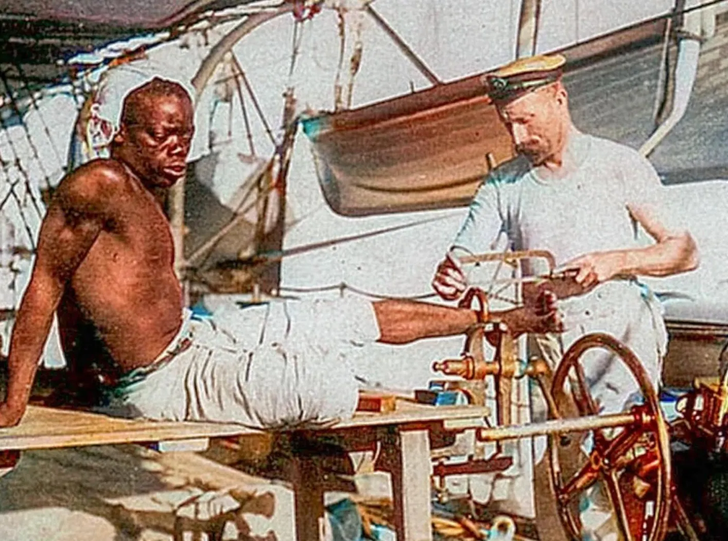
Manacles being removed by Able Seaman Joseph Chidwick in 1907 from an enslaved man who had worn the leg irons for three years. HMS Sphinx operated off the coast of Oman in the Arabian sea and attracted a number of slaves from a nearby slave-trading village whom the British immediately freed.
Britain’s actions were quickly followed by France and then the USA which led to the abolition of slavery throughout most of the world.
And yet reparations have become a rallying call among some. Everyone from the United Nations to individual countries like Jamaica and Ghana are baying for blood.
Underlying the drive is the additional charge of racism, a very modern idea.
Stefan Zweig’s The World of Yesterday
I’d heard a bit about Stefan Zweig but I’d never read any of his work. Ted Gioia’s review of The World of Yesterday certainly makes me a bit more likely to pick up a copy:

Photo from The Honest Broker
My most recent find is Stefan Zweig’s account of how Vienna went from nineteenth century elegance, prosperity and cultural flourishing to warmongering and hyperinflation. His book The World of Yesterday may be the single best memoir from a survivor of societal collapse from the 20th century — and deserves to be far better known.
I call Zweig a survivor, but that’s not entirely true. He somehow managed to stay alive during World War I (not an easy task for a young man in Central Europe), and the subsequent economic crisis. But World War II forced him into exile, and he committed suicide in Brazil in 1942.
He was a broken man by then — and he feared Hitler was too powerful to stop. So Zweig, one of the greatest writers and thinkers of his generation, ended it all with an overdose of pills.
Just a few years earlier, Zweig had gained renown as the most widely translated contemporary author in Europe. In Germany, his books sold 20,000 copies on the first day — even before a single advertisement had appeared. But that now changed.
“Not a single one [of my books] is available in Germany today,” he lamented at the end of his life. “Those who still possess a copy keep it carefully hidden.” And the same was true in France, Italy and other countries under fascist control.
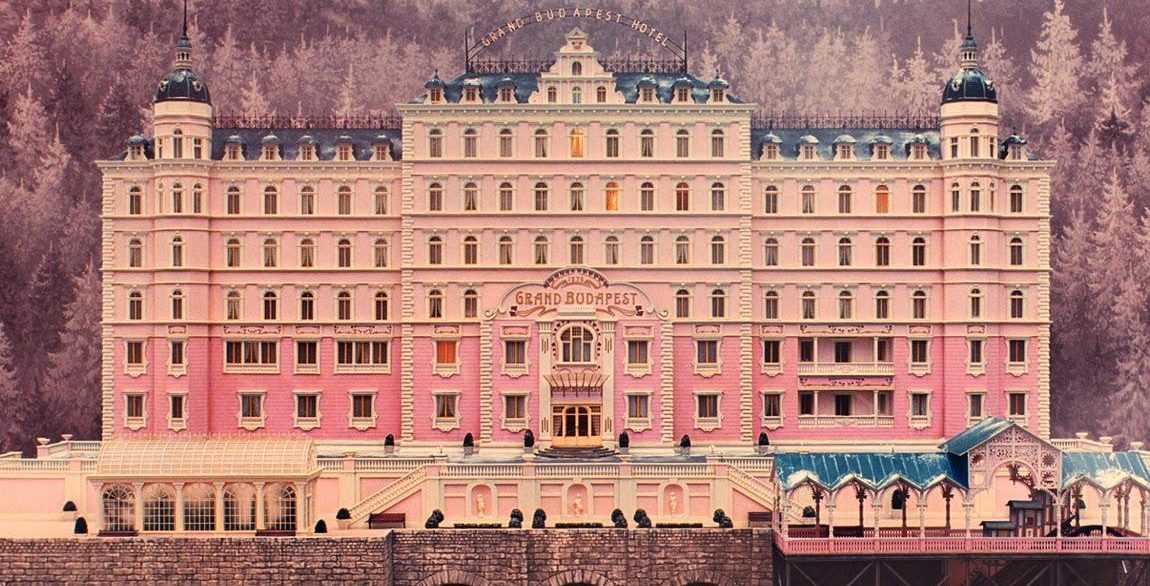
Zweig is best known today as the inspiration behind Wes Anderson’s film The Grand Budapest Hotel. “It’s basically plagiarism”, the director has admitted. But Zweig ought to be remembered more for his writings, especially this final work from his pen.
Stefan Zweig is now remembered as the inspiration for The Grand Budapest Hotel.
His fiction is also sadly under-appreciated. And it’s very readable — Zweig was a specialist in short novels with fast-paced plots. I highly recommend 24 Hours in the Life of a Woman, and Chess as starting points. Zweig also had a knack for mini-biographies (see, for example, his stellar book on Montaigne).
The day before he died, he mailed his manuscript of The World of Yesterday to a publisher. It was released posthumously, and is now recognized as a defining document in how things go bad. Over the course of 500 pages, Zweig starts with the peace, prosperity, and cultural flourishing of the final years of the Habsburg Empire, and then shows, step by step, how a healthy, vital society self-destructed.
The entire book is well worth reading. I will only discuss a small part of it here — covering the hyperinflation following World War I. But this book is so rich in observations and telling details, I could easily devote several articles to it without coming close to exhausting its riches.
Zweig lived through the currency collapse twice — first in Austria (where he lived across the road from an odd young man named Adolf Hitler), when the crown devalued rapidly. Then he moved to Germany, where hyperinflation was even worse.
The stories he tells are so fanciful, you might think he was writing a fable in the style of Jorge Luis Borges. Consider his story of beer-swilling tourists.
The story starts when the Austrian currency collapses in value. Germans quickly learn how to take advantage of this, by crossing the border to buy up cheap merchandise — but with unforeseen consequences:
Finally, at the instigation of the German government, a border guard was appointed to prevent all consumer goods from being bought in the cheaper Salzburg instead of in the home stores … But one article remained free, which could not be confiscated: the beer that one had in the body.
And the beer-drinking Bavarians calculated from day to day on the exchange rate slip whether, as a result of the devaluation of the crown, they could drink five or six or ten liters of beer in Salzburg for the same price they had to pay at home for a single liter.
A more splendid lure could not be imagined, and so crowds of women and children moved over from neighboring Freilassing and Reichenhall to afford the luxury of swilling as much beer as their stomachs could hold. Every evening the station was a veritable pandemonium of drunken, bawling, spitting hordes of people; some who overloaded themselves had to be carried to the carriages on the trolleys usually used to transport suitcases …
Of course the happy Bavarians had no idea that they were in for a terrible revenge. For when the crown stabilized and the mark, on the other hand, plummeted in astronomical proportions, the Austrians crossed over from the same station to get cheaply drunk in their turn, and the same spectacle began a second time, but in the opposite direction.
This imbalance between currencies created other surreal scenes.
Incredible as the fact may seem, I can corroborate it as a witness that the famous luxury Hotel de l’Europe in Salzburg was for a long time rented out entirely to English unemployed people who, thanks to the abundant English unemployment benefits, lived here more cheaply than in their slums at home.
Comments Off on Stefan Zweig’s The World of Yesterday
Performative Canadian politics again
Prime Minister Mark Carney came to power promising that he was the best-qualified to deal with the US government on trade issues. Canadians assumed that this meant he’d be able to get as fair a trade deal with President Trump’s administration as possible. What he really meant was that he could do the most damage to cross-border trade relations in order to “pivot” to the EU and to China. He never intended to settle US-Canadian trade conditions, and his actions clearly show he was always putting the negotiations dead last in his priority list. And, thanks to the government’s generous subsidies to the relic media, instead of grilling him and his ministers for their blatant failures, they instead try to hold the opposition to account for things they have no control over.
On the social media site formerly known as Twitter, L. Wayne Mathison points out that it makes no economic sense for Canada to become part of the European Union as Carney now says he’s working toward:

This strikes me as remarkably stupid economic strategy.
Diversifying Canadian trade makes sense. Pretending Europe can somehow replace the economic relationship we have with the United States does not.
The United States is next door. Our railways, pipelines, electricity grids, manufacturing supply chains and energy markets have been integrated for generations. Even after the trade fight intensified, 71.7% of Canadian merchandise exports still went to the United States in 2025.
And Canada already has CETA with the European Union. Roughly 98% of EU tariff lines on Canadian goods became duty-free when CETA took effect, eventually rising to about 99%. If Canadian companies see profitable opportunities in Europe, they already have extraordinarily good market access.
So what exactly do we gain from some invented “associate membership” beyond CETA?
Potentially European regulatory obligations, political entanglements, financial contributions and pressure to harmonize Canadian rules with decisions made in Brussels, all to sell more goods across an ocean to markets that cannot duplicate the geographic advantage of the United States.
Norway rejected EU membership twice. Iceland opened accession negotiations and eventually walked away without joining. Both understood that you can have close economic relations with Europe without surrendering unnecessary national autonomy.
Canada should trade aggressively with Europe, Asia and everyone else who wants our products. But our first priority should be fixing the relationship with our largest customer, removing our own interprovincial trade barriers, building pipelines and ports, and making Canada competitive again.
Picking a fight with the neighbour who buys most of your exports and then announcing that Brussels might become your new best friend isn’t economic sophistication.
It looks like desperation dressed up as grand strategy.
Comments Off on Performative Canadian politics again
George Orwell according to family and friends – Writers & Wordsmiths
BBC Archive
Published 21 Mar 2026This programme contains attitudes of its time.
Recollections of George Orwell by his wife Sonia Orwell, sister Avril Dunn, and friends Malcolm Muggeridge and Cyril Connolly. [Original billing]
“From early in his writing career, Eric Blair adopted the nom de plume, which he is now universally known. He became George Orwell. In his will, he emphatically directed that no biography of him should be written. And to insure his wishes were respected, effectively covered up his traces. Blair hid behind Orwell.”
The man behind Nineteen Eighty-Four, Animal Farm and The Road to Wigan Pier was elusive, but in this programme family and friends share memories of the influential author.
Clip taken from George Orwell: 1903-1950, originally broadcast on 20 November, 1965.
Comments Off on George Orwell according to family and friends – Writers & Wordsmiths
September 13, 2026
The Devils by Ken Russell
On her Substack, kulak explains why The Devils is the “greatest film of all time”:

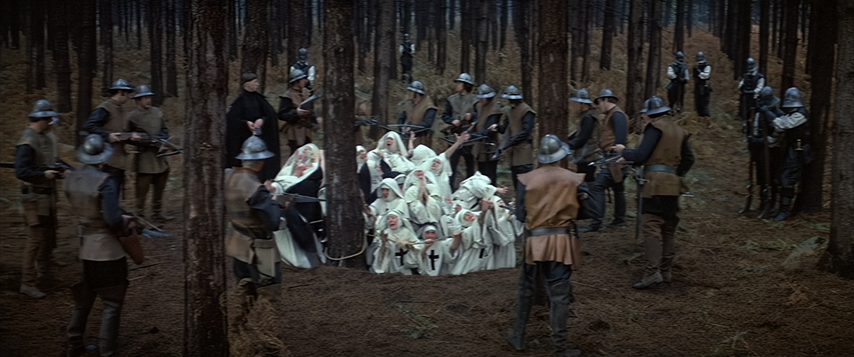
What if the 1990s Berserk anime, Warhammer 40k, A Man for All Seasons, The Wickerman (1972), Cromwell, 1984, The Gulag Archipelago, the Rocky Horror Picture Show and the chronically underrated 2012 horror masterpiece Compliance … were all the same horrifying movie?
What if Mel Gibson made a film like Apocalypto, exploring the nightmarish depths of political/religious sacrifice rituals … But about Early-Modern Shakespeare-era Europe?
I’m constantly asked for my “Greatest Film of all Time” … A torturous question for someone who’s seen as many movies as me … And doubly torturous because maybe the best true answer is one its really hard to name:
Ken Russel’s The Devils might be it.
Certainly the best 30 Years War film ever made.
And the Greatest goth movie ever made.
And the Greatest witch hunt movie ever made.
And the Greatest “MeToo” movie ever made.
And the Greatest “insane asylum” movie ever made.
And CERTAINLY the Greatest Exorcist movie ever made.
Yes, I said that. And I mean it. Did I stutter?And maybe the Greatest “Dark Fantasy” film ever made … Except for the fact that the whole thing is true.
And its being rereleased, the full remastered director’s cut in 4K, this October in Cinemas.
(The strobe effect is only in the trailer)
Ken Russel’s The Devil, adapted from Aldous Huxley’s book The Devils of Loudon and the play The Devils by Dan Whiting, is one of my top five films of all time. And certainly one of the biggest films of all time in it’s own weird way. It does things as impressive for the spiritual, psychological horrifying, and historical on film as Sergei Bonderchuk’s Waterloo does for warfare or Akira for Scifi and Animation.
Indeed I think I might be the only one who could give that answer, given I might be one of like 10 people who know 17th Century History/Literature and obscure extreme Horror Cinema well enough to INSIST on its OVERWHELMING historical accuracy.
Indeed I’d struggle to think of a film which captures the Insane deadly hypersexual kaleidoscopic character of the 17th century better.
I’ve been doing this a lot recently … But I feel I need to lay out my qualifications here to talk about this … My two areas of focus in university were 17th and 18th century English Literature (Shakespeare through to Jane Austin), and 17th and 18th century Political theory (specifically the works of Hobbes, Locke, Hugo Grotius and other natural law theorists … Yes, I took the BoomerCons seriously when they said natural law was the basis of our society, Like an idiot) … I’m by no means an expert, but the broad flavor of this era: Culturally, religiously, politically, historically, militarily, theoretically, theologically, poetically … Was what I immersed myself in during the years when I should have been drinking and partying more and repeating nonsense to people in power, and other things that actually advance your career.
I need to establish that off the bat because I feel as if a huge part of the reason this film is not regarded as a contender for “Greatest film ever made” is the simply the fact that audiences and critics do not believe it, and certainly do not GET it.
That it is SO Bizarre, and SO weird, and SO horrifyingly violent, and SO hypersexual, and SO saturated in its colors, and SO religiously discordant … That it has to be a bizarre psychedelic hellscape of Ken Russel’s perverse drug-addled imagination …
They especially had to think this because if they accepted that it was indeed historically accurate, and not a bizarre sexual/psychedelic story of the American 1960s and 70s reading themselves back into history … Suddenly they’d have to accept that the same thing done to Loudon in 1634 was what was being done to America in the middle of the 20th century, and has been done to the west more or less ever since …
That the yo-yo between state-enforced debauchery one the one hand, and moral panic witch-hunts on the other, is not a schizophrenic attribute of mass media or “Moral Progress” or American Culture … But a highly historically precedented and calculated attack meant to destroy and enslave a people without fighting them.
That “Free Love”, “Feminist Criticism”, “Queer Theory”, “No Fault Divorce”, and “Hostile Work Environment lawsuits” rock society between the extremes of sexual license and socio-sexual moral-panic for the same reason one might rapidly rock a boat between it’s port and starboard sides … To capsize it into the devouring abyss.
That we are indeed living through Loudon at scale.

The scandalous The Whispering Gallery published by “The Badly Had” in 1926
In the latest edition of the SHuSH newsletter, Kenneth Whyte recounts the publishing scandal of the 1920s, as The Bodley Head fought off other publishers to obtain the British rights to The Whispering Gallery, written by an anonymous career diplomat with lots of juicy scandal about the great and the good of British public life:

Hesketh Pearson
In 1926, Allen Lane was a young publisher at The Bodley Head, a firm founded by his uncle. He was approached about a manuscript entitled The Whispering Gallery — the diaries of an anonymous retired diplomat or, rather, “envoy extraordinary”. Its pages, writes Lane’s biographer, Jeremy Lewis, were “crammed with scandalous and revealing revelations about assorted politicians, tycoons and literary men, including Lenin, Mussolini, Kitchener, Churchill, the late Tsar, Henry James, and Cecil Rhodes”.
Who wouldn’t want to publish that?
Lane learned that the manuscript had been whipped into shape by Hesketh Pearson (below), an actor, writer, and military hero, who was also the representative of the anonymous diplomat. The US rights had been sold to the prestigious firm of Boni & Liveright. Lane rode his Triumph motorcycle to Sussex where he met the vacationing Hesketh Pearson and learned that his anonymous diplomat had been keeping a diary since his university years and throughout his impressive career. With the backing of colleagues at The Bodley Head, Lane offered £250 for the rights to the manuscript, with the provision that the diarist’s identity be revealed to him and one of the firm’s directors. His offer was accepted. Lane was told that the diplomatic diarist was Sir Rennell Rodd.
An aggressive print run of 5,000 copies was ordered. Lane sold the serial rights to the Sunday Chronicle and assured literary editors at other major newspapers that The Whispering Gallery would be “one of the most talked about books of the autumn season”. He was not wrong.
By publication day, all but about 500 copies had been sold into stores. Another print run was ordered. Lane was not especially concerned when the Daily Mail denounced the book on release as a “scandalous fake”. A conservative paper was never going to respond well to a diplomat who described Lenin as a sympathetic character.
Then the Observer piled on: “a reeking compost of garbage”, it wrote. The Times joined the chorus. Important figures disputed facts in the book. Winston Churchill, for instance, said he was actually on the Western Front when the diarist had him dining with Asquith in Downing Street.
Lane came under pressure from the higher-ups at The Bodley Head. They asked him to coax the anonymous diplomat into responding to his critics, or sue those describing his book as a fraud.
“I do not mind if I am believed or not”, responded the diplomat via Pearson.
Attacks on the reputation of The Bodley Head continued. Lane and a director of the firm decided to confront Pearson. They arranged a meeting. Pearson arrived late and flustered. He said he’d had a difficult time with the diarist who claimed, “among other things, that it is [Pearson’s] fault that the book has got all this publicity, and that he did not want it”. Lane and the director were mollified.
But the Daily Mail kept up its attacks on the publisher: “They have lent themselves to a fraud on the public and have debased the name of their firm. It remains to be seen whether reputable authors will be willing to have their works published by a firm which is capable of such disgraceful conduct.”
Increasingly impatient with young Lane, The Bodley Head’s board increased its pressure on him to find a resolution. He met again with Pearson and demanded to meet the diarist. Pearson said that was not possible. Among other reasons, the timing was inconvenient because Sir Rennell Rodd’s daughter was about to be married. Pearson was indignant at suggestions that the diarist might not exist and that he had written the manuscript himself. Lawsuits were threatened both ways.
The Bodley Head’s board insisted Lane reveal the name of the diarist. Lane at first refused, but then took it upon himself to visit Sir Rennell Rodd at his home in Cavendish Square. A well-regarded former ambassador to Rome and delegate to the League of Nations, Sir Rennell said he had nothing at all to do with The Whispering Gallery. “Had Lane taken the trouble to consult the reference books”, writes Lewis, “he would have discovered that [Rodd] had recently written his memoirs in three volumes; the last of these had appeared only the previous year, which made it all the more unlikely that he would have written The Whispering Gallery“.
Lane confessed all this to his board. Word leaked to the Daily Mail, which celebrated its exposure of “the greatest literary scandal of recent times”. The Bodley Head tried to salvage its reputation by claiming to have been the victims of a fraud by a “miscreant”, i.e. Pearson, and by blaming “our junior director”, i.e., Lane, for guaranteeing the authenticity of the book.
Then the fun started.
Comments Off on The scandalous The Whispering Gallery published by “The Badly Had” in 1926
Velvet Glove and Sparrow II missiles: A Guide To Early Cold War Bomber Interception Tactics
Polyus
Published 6 Apr 2026The Velvet Glove was a semi-active guided missile system developed by the Canadian Armament Research and Development Establishment. Its successor, the Sparrow II was developed by Canadair in association with the US Air Force. This is the story of the development of the missiles in the context of their contemporary weapons systems.
0:00 Introduction
1:00 NORAD and continental defense
3:21 Gun approach
5:32 Rocket pod approach
7:54 Nuclear option
8:35 Interception Tactics
11:56 Guided missile approach
14:38 Velvet Glove missile development
19:30 Sparrow missile development
22:03 Arming Canada’s future fighters
25:08 Conclusion
Comments Off on Velvet Glove and Sparrow II missiles: A Guide To Early Cold War Bomber Interception Tactics
September 12, 2026
Berlin after 1918 … the decadence the Nazis fought
The period after the First World War in Weimar Germany was a huge break with the Wilhelmine past, especially in Berlin and some other large cities. Hitler wasn’t wrong about the moral decadence of the 1920s and the reaction helped build his movement. At The Grim Historian, Carlyn Beccia illustrates what life was like in Berlin for those who fully indulged in the excesses of the new liberalized society that so outraged Hitler and his supporters:
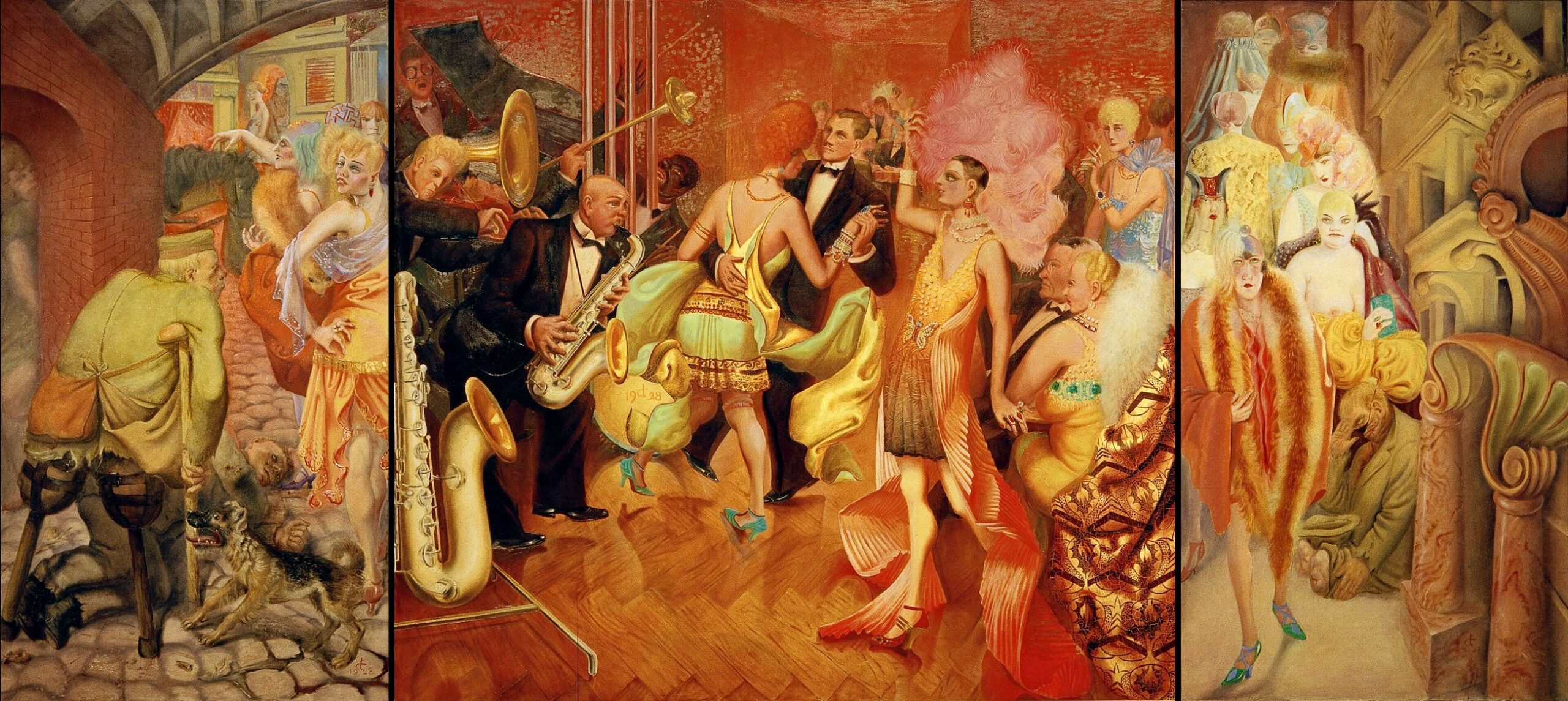
Metropolis by Otto Dix, 1927–1928,
Kunstmuseum Stuttgart
It’s 1929, and Berlin is having the kind of night respectable people will later insist never happened.
Neon bleeds across wet pavement. A taxi hisses past, throwing gutter water onto a woman whose dress has misplaced most of its back. Somewhere below street level, a trumpet murders a respectable German melody while a girl in a tuxedo leans in to kiss another girl.
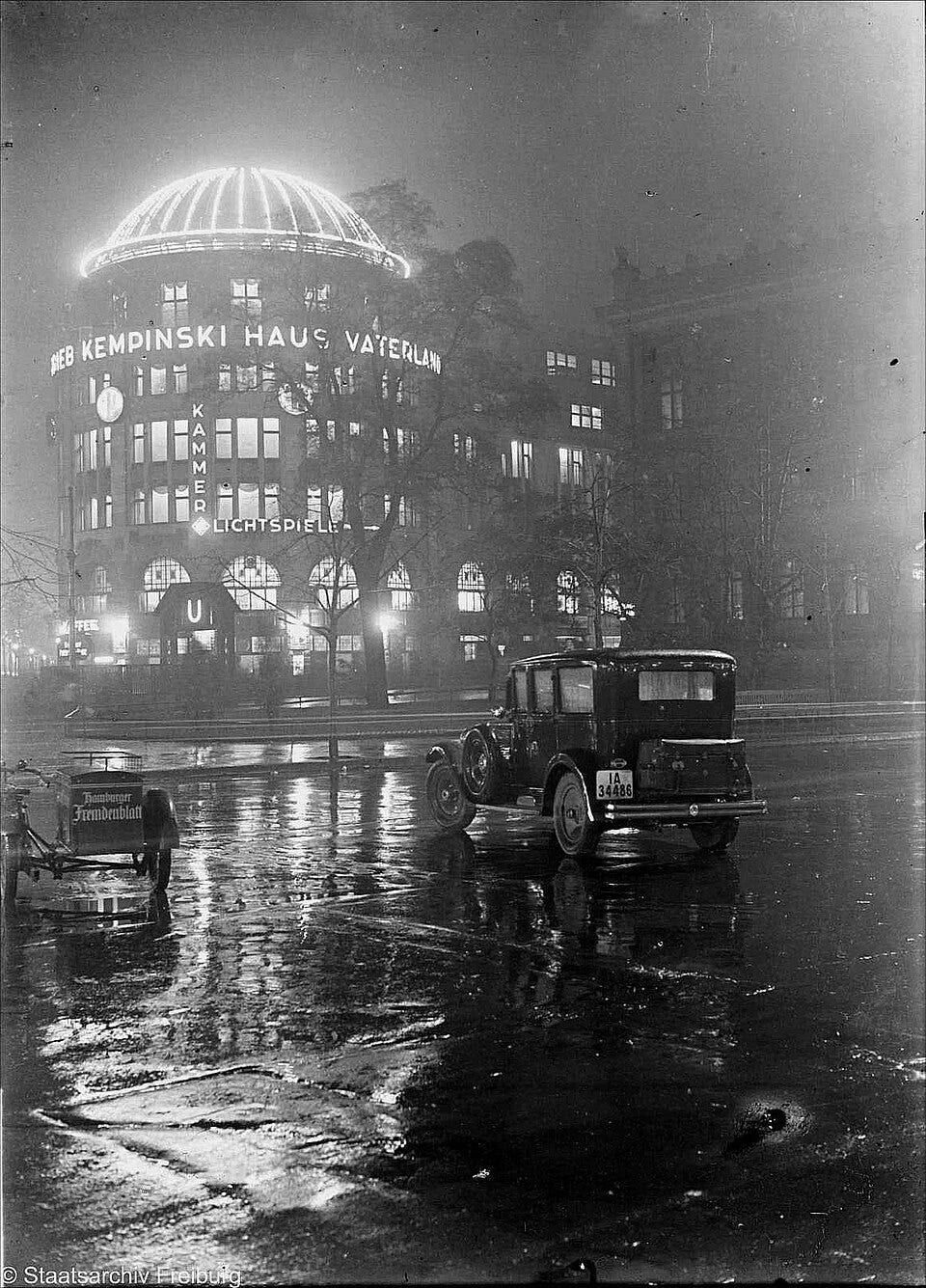
Berlin, 1929: Haus Vaterland, where Berliners could drink, dance, dine around the world, and enjoy an hourly fake thunderstorm over the Rhine because subtlety had apparently taken the night off. The pleasure palace could accommodate as many as 8,000 people.
CC BY 4.0She goes in. Another comes out laughing. The door swings.
They call these women the Neue Frau — “new woman”. Hair bobbed to the jawline as though she took a knife to the nineteenth century. Hemline at the knee, one stocking laddered at the ankle.
The new woman works behind a counter at a department store. When the doorman holds out his hand, she pays him with her own wages from her own bank account. Today, we would call these progressive women “girlbosses” while silently hating ourselves for not having a less cringy word.
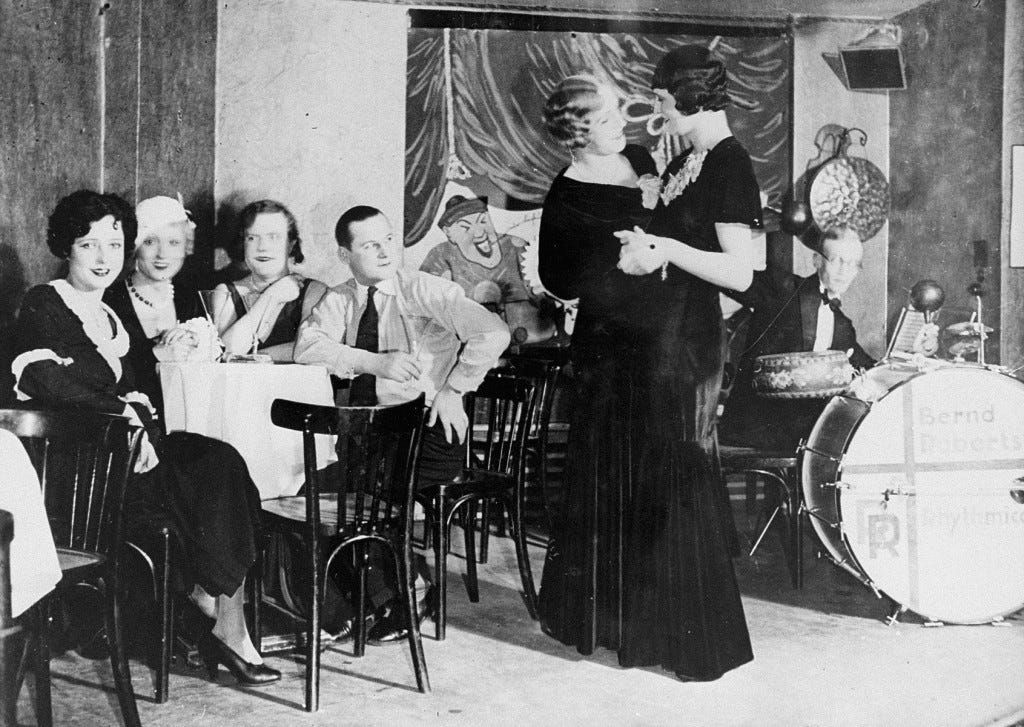
Berlin, 1929: Two women dance at the Eldorado, where lipstick, tuxedos, and heterosexual expectations were all optional. Four years later, the Nazis shut it down.
Bildarchiv Preussischer Kulturbesitz, via United States Holocaust Memorial Museum, Holocaust EncyclopediaOther young women belonged to a more slippery category Berliners called the Halbseidenen — the “half-silks”. Half-silk was fabric woven partly from real silk and partly from cheaper thread. The fabric was glossy enough to pass at a distance, suspect once you got close.
The nickname landed on women who were equally difficult to classify — shopgirls, dancers, sexually independent working women, occasional prostitutes, girls dressed just a little better than their wages should have allowed.
These women do not dance politely. Anita Berber, Berlin’s cocaine-addicted queen of nude dance, had made Dances of Vice, Horror and Ecstasy infamous. Grosz and Otto Dix paint Lustmord — sex murder — as a genre, and sell it.
Otto Dix – Portrait of the Dancer Anita Berber, 1925
Public DomainInside the club, smoke curls from red-stained lips like a genie escaping its lamp. Champagne sweats in silver buckets and sloshes in chipped glasses. A folded banknote, a razor’s quick flash, two white lines cut across a mirror while dancers stamp and spin inches away.
Women arrive as men, men arrive as women, and bankers disappear into back rooms with people their bankers’ wives would not have invited to luncheon.
This particular den of iniquity has competition. Weimar Berlin supports somewhere between 65 and 80 gay bars and another fifty lesbian ones.
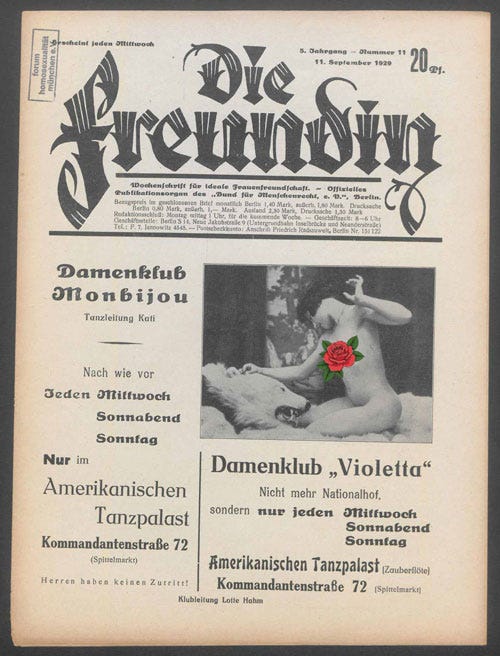
And the sexual revolution does not stop at closing time. It is sitting on the newsstands. By the end of the decade, more than twenty publications cater to gay, lesbian and gender-nonconforming readers — romance serials, political essays, personal ads, and club listings. A lonely girl in Leipzig can get Die Freundin without ever setting foot in a dancehall.
Berlin, 1929: Die Freundin, Germany’s lesbian weekly, advertises two women’s clubs at the Amerikanischer Tanzpalast. The fine print reads: “Men are not admitted.” I added the flowers. Weimar Berlin did not. | Forum Queeres Archiv München.
Across town, Magnus Hirschfeld has spent years trying to drag sex out of whispers and into science. The physicians in his Institute for Sexual Science would soon help pioneer some of the first gender-affirming surgeries. The institute also offers birth control and counseling, and works with Berlin police on “transvestite passes” — documents that let trans people walk the city without being arrested for their clothes.
Berlin has somehow managed to give gender nonconformity paperwork.
Not everybody finds this charming. Berlin has been hearing the opposite sermon since the republic was born. Ten years earlier, in the political convulsions after World War I, a poster showed a crowned Berlin locked in a waltz with a skeleton, “Berlin, halt ein! Besinne dich. Dein Tänzer ist der Tod” — Berlin, stop. Come to your senses. Your dance partner is Death.
The poster was not about lesbians in tuxedos. It came from the political chaos of 1919. But the accusation is already there.
Berlin is losing itself. It must return to the past and what once made it great.
Of course, by the late 1920s, the people making that nostalgic argument have begun pointing at sex. In 1927, Wilhelm Frick warns that homosexuality will lead to the “disintegration of the German people”. Large numbers of Germans describe Weimar’s new sexual visibility as decadent, immoral, and evidence of national degeneration. Right-leaning religious organizations and parties preach family, restraint, and traditional German culture.
Looking back on the inflation era, Austrian writer Stefan Zweig remembered the city transforming into “the Babel of the world”, with gay bars multiplying like mushrooms and transvestite balls so extravagant he thought ancient Rome had been outdone.
Berlin read the room. Berlin went on dancing, spending, and fucking.
Berlin, 1919: Ten years before Fritz stands outside our nightclub, Berlin is already being warned about its dance partner. “Stop! Come to your senses! Your dancer is Death.” | Van Santen, Berlin, Stop! 1919.
Lithograph. Library of Congress Prints and Photographs Division. Public DomainBerlin’s own tourist bureau was advertising Jeder einmal in Berlin! — everyone should visit Berlin at least once. In 1929, nearly 1.7 million guests did.
But not everyone enjoyed watching Berlin turn its private vice into a tourist attraction.
Because while people inside experienced liberation, and the moral right experienced decadence and national decline, young men experienced something else.
Exclusion.


How the Roman Republic Collapsed Into Civil War
Who was Gaius Marius’ son, and how did he set out to bring down his father’s rival, Sulla? Which two rising stars in Sulla’s faction, Crassus and Pompey, would go on to bring down the Republic, with Julius Caesar? And, how did a momentous battle in the East see Sulla elevated to the master of Rome?
Join Tom and Dominic as they reach the climactic conclusion to the remarkable rise of one of Rome’s greatest generals: Lucius Cornelius Sulla, a man who would destroy his rivals, win victories in the east, and ruthlessly change the destiny of the Roman Republic forever.
0:00 The Roman Republic Implodes
0:40 Sulla’s Return
3:05 Cinna and the Marians
8:03 Cinna’s Disastrous Plan
12:20 Sulla’s Enemies Collapse
14:07 Crassus Joins Sulla
17:01 The Rise of Pompey
21:16 Marius the Younger
24:13 The Marian Cause Collapses
25:03 The Samnites March on Rome
26:03 The Battle of the Colline Gate
28:45 Anthropic
29:57 Sulla Takes Control of Rome
35:05 The Proscriptions Begin
41:18 The End of the Marians
42:41 Pompey the “Teenage Butcher”
44:20 Pompey Demands a Triumph
47:28 Sulla’s Great Paradox
48:02 Sulla Becomes Dictator
51:27 Rebuilding the Republic
54:00 Sulla Gives Up Power
55:30 Sulla’s Wild Retirement
58:42 The Death of Sulla
59:58 Did Sulla Doom the Republic?
1:01:54 Why Didn’t Sulla Become Emperor?
1:02:46 Julius Caesar Learns from Sulla
1:04:01 Cicero Bonus Episode
Comments Off on How the Roman Republic Collapsed Into Civil War
September 11, 2026
The Ancient Greeks 05 – The Greeks Fight Back 4 – Liberation to Empire
seangabb
Published 1 Apr 2026Greece: A Brief History, c.700 BC – 500 AD
What happens when victory creates power?
In this final lecture on the Persian invasion, we examine the consequences of Greek victory — and the transformation of liberation into empire. With the Persians driven out, unity collapses. Athens and Sparta begin to diverge, and a new political order emerges in the Greek world.
We explore:
– The rebuilding and fortification of Athens
– Themistocles and the rise of Athenian naval power
– Spartan suspicion and the fall of Pausanias
– The ostracism and exile of Themistocles
– The creation of the Delian League
– The transformation of alliance into Athenian empireThis lecture shows how victory over Persia leads directly to the rise of Athens — and to the tensions that will eventually produce the Peloponnesian War.
Comments Off on The Ancient Greeks 05 – The Greeks Fight Back 4 – Liberation to Empire
September 10, 2026
The tragedy of the commons at sea
When a valuable commodity isn’t directly owned by anyone, the incentives are for everyone to grab as much of the commodity as they can. Nobody will preserve it, because they wouldn’t get the benefit from it: it would be shared among all the other users. Fishing grounds outside coastal waters are valuable commodities that nobody owns:

Nobody owns the ocean floor off the Georges Bank, and so between 1960 and 1994 the New England cod population collapsed by roughly 70 percent while every fishing fleet on the Atlantic raced to pull up fish before a competitor did. This race is the entirely predictable consequence of absent ownership.
Garrett Hardin formalized the problem in 1968, but the mechanism is older than economics itself. When no individual owns a resource, no individual bears the full cost of depleting it. The cost gets distributed across everyone; the benefit goes straight to whoever acts first. You extract as much as you physically can before the next boat arrives. So does the next boat. The resource disappears, and everyone stands around pointing fingers at greed. The actual culprit is the property rights regime, or rather the absence of one.
State managers offer themselves as the solution: quotas, licensing boards, regulatory agencies. The Atlantic fisheries commission issued exactly these instruments. The cod is still not back. Bureaucrats lack the price signals, local knowledge, and personal stakes that make stewardship rational. A regulator who mismanages a fishery keeps his salary; an owner who does the same loses his capital.
Private ownership forces the owner to think in time. Iceland extended exclusive fishing rights to its own coastal fishermen in 1975, drove foreign trawlers out, and now holds one of the best-managed cod stocks in the North Atlantic. Property rights did what Brussels-style quota spreadsheets could not: they tied the fisherman’s future income to the health of the stock today.
Common ownership produces a sprint to zero.
Comments Off on The tragedy of the commons at sea
Hardtack Hash from Steerage on a Victorian Ocean Liner
Tasting History with Max Miller
Published 17 Mar 2026Hash made from pulverized hardtack, salt pork, and vegetables, served with mashed potatoes
City/Region: England
Time Period: 1894Third class, or steerage, on the Titanic was served breakfast, dinner, tea, and supper, which was a major upgrade from other ships in decades past. Before this, third class passengers were given their rations, which they had to prepare and cook on their own. Sometimes they had to wait in line to use a stove, and not everyone would get a turn.
This meal hearkens back to that time. The recipe uses ingredients that were included in third class rations, and comes from a cookbook for sailors in 1894. I really can’t recommend making this. It’s … not great. There’s essentially no flavor, and the hash turns into a kind of paste in your mouth with the only texture coming from the onions. If I was really hungry and had no other options, I suppose it would be fine, but you shouldn’t feel the need to make this.
Biscuit Hash. (Cold Meat Cookery)
Ingredients
6lbs. Broken biscuits, steeped
2lbs. Cold salt beef or pork.
1/2lb. dripping.
2 onions.
1 cooked carrot.
1 cooked turnip.
1 teaspoonful pepper.
1 teaspoonful mixed spice.
Method — Chop the meat, onions, and vegetables finely; squeeze the water well out of the biscuits, and rub them through a coarse wire sieve; add all the other ingredients, and mix thoroughly. Put it into a baking tin, and brown in a moderate oven until firm. Cut into squares and serve.
— Cookery for Seamen by Alexander Quinlan and N.E. Mann, 1894
Comments Off on Hardtack Hash from Steerage on a Victorian Ocean Liner


