
What seemed to me to make white Burgundies worth the effort was the fact that they tended to have more character, to be better balanced, more elegant … more, how you say in English … more Catherine Deneuve. More Jules and Jim than Die Hard; less top-heavy and more food-friendly than New World wines. On the other hand, it was and is quite possible to spend forty bucks on a bottle that tastes like it has been barrel-fermented with a big clump of terroir, or with Pierre’s old socks, or possibly his former cat. Yikes! Rather too much character, mon cher.
Jay McInerney, Bacchus & Me: Adventures in the Wine Cellar, 2002.
February 26, 2020
QotD: Chardonnay
Comments Off on QotD: Chardonnay
February 25, 2020
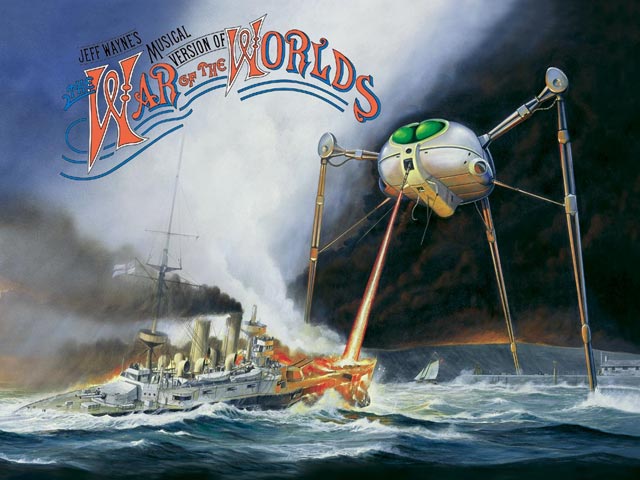
“… and men like you will teach the kids. Not poems and rubbish; SCIENCE! So we can get everything working!”
Apparently “the Artilleryman” from Jeff Wayne’s musical interpretation of War of the Worlds has taken over some important post at Oxford:
The Classics Faculty at the University of Oxford is considering whether to remove from its undergraduate courses the compulsory study in their original languages of Homer and Vergil. The reasons given are that students from independent schools, where some classical teaching is kept up, tend at the moment to do better in examinations than students from state schools, and that men do better than women. I regard this as the most important news of the week. I do so partly because I make some of my living from these languages, and so have a financial interest in their survival. I do so mainly because I see the proposal as a further enemy advance in the Culture War through which we have been living for at least the past two generations.
I could make this essay into another attack on the cultural leftists. I will come to these, as they are among the villains. They are not, however, the main villains. These are people who sometimes regard themselves, and are generally regarded by others, as conservatives. They once looked to Margaret Thatcher as their political champion, and then to Tony Blair. They were some of the most committed advocates of our departure from the European Union. They now look to the Johnson Government for the final triumph of their agenda. For these people, a nation is barely more than a giant economic enterprise – Great Britain plc. For them, the main, or perhaps the sole, purpose of education is to provide sets of skills that have measurable value in a corporatised market.
These people have been around for a long time. They were satirised by Charles Dickens in Hard Times, where Thomas Gradgrind explains his philosophy of education:
Now, what I want is, Facts. Teach these boys and girls nothing but Facts. Facts alone are wanted in life. Plant nothing else, and root out everything else. You can only form the minds of reasoning animals upon Facts: nothing else will ever be of any service to them. This is the principle on which I bring up my own children, and this is the principle on which to bring up these children. Stick to Facts, sir!
[…]
I agree that state education had become a joke where almost nothing of any kind was taught. As continued by Tony Blair, the Thatcher reforms did eventually drive up standards of literacy and numeracy. But this has been at a terrible cost. Any modern school that wants to be thought desirable must focus on its place in the league tables. This involves working the children like slaves – stuffing them in class with facts that can be regurgitated in tests and therefore graded, then handing out reams of homework that leaves no time for personal development.
The universities continue this conveyor belt approach. Around half of school leavers are pressured into “higher” education. Those who go into the “STEM” subjects – Science, Technology, Engineering, Mathematics – follow a narrow and specialised curriculum that leaves them ignorant of nearly everything outside their own subject. The rest sign up for largely worthless subjects – anything with the words “business” or “studies” in the name. There, they are kept busy with three-hour lectures. I know the value of these, as I used to give them. I fell asleep in one of them, and the students were happy when my voice finally trailed off. Progress in these subjects is measured by coursework that is increasingly plagiarised or ghost-written, or through examinations where the grades are fiddled. At the end of this, graduates – and everyone does graduate – are qualified for nothing better than employment in one of those bureaucracies of management or control that fasten on the actually productive like mistletoe on a tree. The universities look at rising numbers and the fact that graduates do find paid employment, and call this a great success. No one thinks it a disgrace if students never take up a book not on their worthless reading list, or that, having graduated, they never open another book.
Or school leavers at the bottom end are herded into courses in plumbing or hairdressing. I was once invited to teach a module in a Parking Studies degree – this for the certification of traffic wardens. I suppose people are needed to keep the roads clear, and I suppose they should be given some idea of their legal rights and duties. I am not at all sure if they need to have degrees. I am sure that skilled trades of undoubted value are best taught, as they always used to be, through private apprenticeships or informally on the job.
Comments Off on “… and men like you will teach the kids. Not poems and rubbish; SCIENCE! So we can get everything working!”
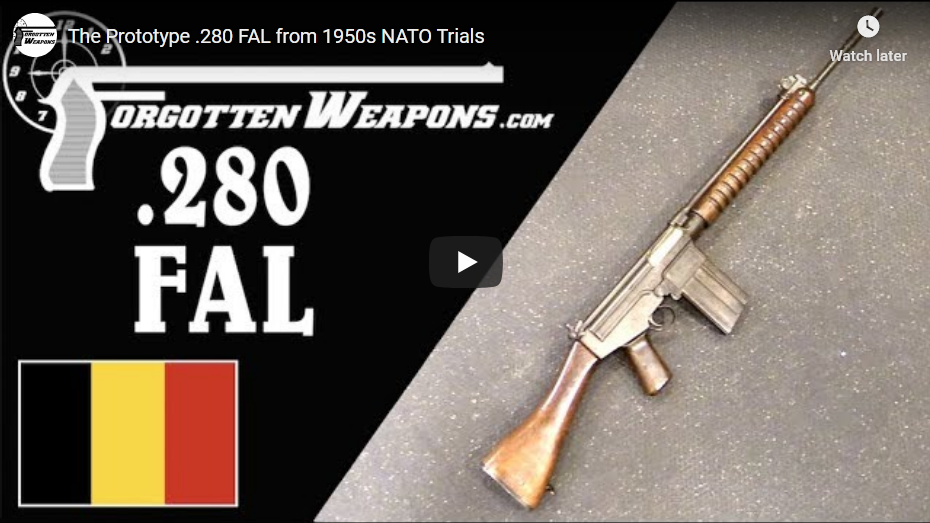
The Prototype .280 FAL from 1950s NATO Trials
Forgotten Weapons
Published 24 Feb 2020http://www.patreon.com/ForgottenWeapons
https://www.floatplane.com/channel/Fo…
Cool Forgotten Weapons merch! http://shop.bbtv.com/collections/forg…
After World War Two, the new NATO defense alliance held a series of trials to adopt a standard cartridge and infantry rifle. This would eventually devolve and the goal of a standardized rifle would be abandoned, but during the early trials there were three main contenders: the British EM-2, the American T-25, and the Belgian FAL. The Fusil Automatique Leger was designed by Dieudonne Saive and originally presented to the British government in 8mm Kurz, before being scaled up to accommodate the British request to use the .280 cartridge. A small number of these prototype FAL rifles in .280 were delivered by FN, and used in the 1950 NATO rifle trials.
Many thanks to the Royal Armouries for allowing me to film and disassemble this very scarce trials rifle! The NFC collection there — perhaps the best military small arms collection in Western Europe — is available by appointment to researchers:
https://royalarmouries.org/research/n…
You can browse the various Armouries collections online here:
https://royalarmouries.org/collection/
Contact:
Forgotten Weapons
6281 N. Oracle #36270
Tucson, AZ 85740
Comments Off on The Prototype .280 FAL from 1950s NATO Trials
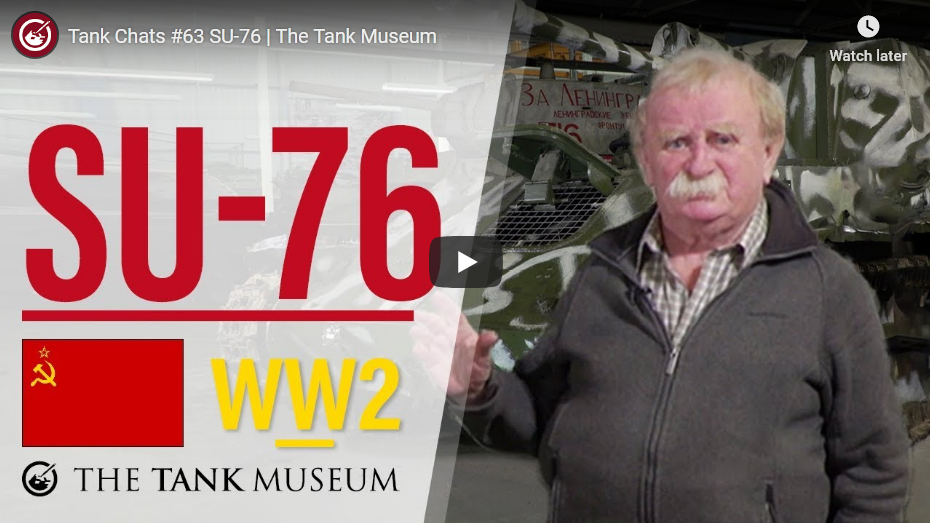
Tank Chats #63 SU-76 | The Tank Museum
The Tank Museum
Published 28 Dec 2018The SU-76M is a self -propelled gun, produced by the Soviet Union during the Second World War.
Let David Fletcher talk you through this WW2 tank destroyer from The Tank Museum.
Support the work of The Tank Museum on Patreon: ► https://www.patreon.com/tankmuseum
Visit The Tank Museum SHOP: ► https://tankmuseumshop.org/
Twitter: ► https://twitter.com/TankMuseum
Tiger Tank Blog: ► http://blog.tiger-tank.com/
Tank 100 First World War Centenary Blog: ► http://tank100.com/ #tankmuseum #tanks #tankchats
Comments Off on Tank Chats #63 SU-76 | The Tank Museum
February 24, 2020
The British Lee tank (that is not a Grant)
Lindybeige
Published 23 Feb 2020Visit https://www.audible.com/lindybeige or text ‘
Lindybeige‘ to 500 500 to find out more about the free trial offer.The Lee tank was an American hastily-made tank that saw action in the north African desert, and the Grant was a British version of the same vehicle. But there were also Lee tanks that were more like Grants. I try to explain the confusion.
Support me on Patreon: https://www.patreon.com/Lindybeige
Buy the music – the music played at the end of my videos is now available here: https://lindybeige.bandcamp.com/track…
Buy tat (merch):
https://outloudmerch.com/collections/…Lindybeige: a channel of archaeology, ancient and medieval warfare, rants, swing dance, travelogues, evolution, and whatever else occurs to me to make.
▼ Follow me…
Twitter: https://twitter.com/Lindybeige I may have some drivel to contribute to the Twittersphere, plus you get notice of uploads.
My website:
http://www.LloydianAspects.co.uk

Comments Off on The British Lee tank (that is not a Grant)
Norman Conquest of England | 3 Minute History
Jabzy
Published 15 Jan 2015Norman Conquest
Comments Off on Norman Conquest of England | 3 Minute History
February 23, 2020
Benjamin Griveaux discovers that “privacy” is an outdated 20th century concept
At The Register, Alistair Dabbs describes the descent of formerly ascendent French politician Benjamin Griveaux:
Previously a key spokesman for president Emmanuel Macron, he was flying high in the polls to be elected mayor of Paris next month … until the electorate got a good look at his knob.
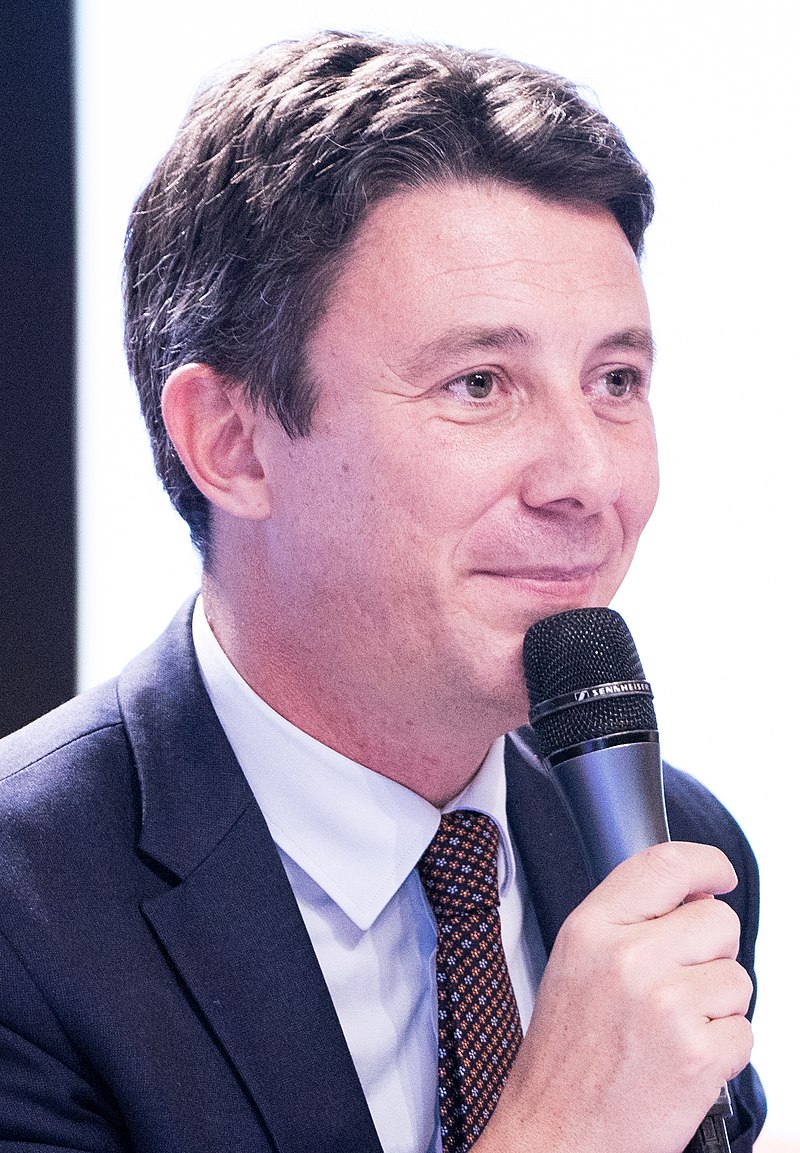
Benjamin Griveaux on 11 October 2018.
Photo by Jacques Paquier via Wikimedia Commons.In a case of political revenge porn that is gripping the French nation almost as tightly as Griveaux was gripping himself, videos of him buffing the aubergine appeared on a short-lived satirical website apparently focusing on “political pornography” (don’t bother asking) and promptly went viral.
These were private, first-person videos he’d taken himself spiralising the old courgette and sent to the object of his amour who, unfortunately for his wife, was not his wife. Predictably, neither woman was impressed with the, er, outcome.
Cue an embarrassed press conference with lots of deliberately posed shots of him looking downwards and contrite, during which he announced he would stand down from the imminent elections and pass the, er, baton to someone else. Taking their example from Griveaux himself, Macron’s party La République en Marche (since redubbed “La République en Main“) did a bit of frenzied reshuffling to find a replacement.
Put aside the political, moral and human issues: these are being thoroughly argued out in the media as you read this. As for nudey selfies, come on, most of us have tried it for a laugh – albeit most probably when we were students. What I want to know is how an intelligent, well-connected and tech-savvy party executive like this could allow his personal instruction video on the subject of unclothed self-taming to get into the wild in the first place.
Griveaux’s official statement to the police claims that he sent the video person-to-person via a certain private messenging system – press reports do not name which one, unfortunately – that would delete the video after one minute. If this is true, it strengthens his case for “invasion of personal privacy”, which has massive punitive outcomes in France thanks to Jacques Chirac who as president beefed up the privacy laws to protect his illegal financial dealings from media scrutiny.
What messaging app was he using? And is he being all that tech-savvy in his belief that his video would self-destruct after 60 seconds, like in some ’70s episode of Mission Impossible? Even in WhatsApp, you have to remember to delete it yourself.
Perhaps he was using a business-focused porn-selfie messenger: a kind of doing-the-business sharing app. It’s the innovative new way of engaging with your contacts. Norbert Spankmoney wants to connect with you! Yes, I bet he does.
Come on, Ben, surely you know that for every ultra-secure, ultra-private, ultra-personal video messaging app, there are a dozen freebie video-grabbing utilities out there. Even if you code it up to prevent screen capture, someone could always video your video, just like they can photograph an onscreen secret document.
Give it up. Nothing is private any more.
Comments Off on Benjamin Griveaux discovers that “privacy” is an outdated 20th century concept
The British Will Walk 500 Miles, and They Will Walk 500 more – WW2 – 078 – February 22, 1941
World War Two
Published 22 Feb 2020As the British make spectacular advances in East-Africa, with even more spectacular advances on the horizon, South-Eastern Europe is getting increasingly tense.
Join us on Patreon: https://www.patreon.com/TimeGhostHistory
Or join The TimeGhost Army directly at: https://timeghost.tvFollow WW2 day by day on Instagram @World_war_two_realtime https://www.instagram.com/world_war_t…
Join our Discord Server: https://discord.gg/D6D2aYN.
Between 2 Wars: https://www.youtube.com/playlist?list…
Source list: http://bit.ly/WW2sourcesWritten and Hosted by: Indy Neidell
Produced and Directed by: Spartacus Olsson and Astrid Deinhard
Executive Producers: Bodo Rittenauer, Astrid Deinhard, Indy Neidell, Spartacus Olsson
Creative Producer: Joram Appel
Post-Production Director: Wieke Kapteijns
Research by: Indy Neidell
Edited by: Iryna Dulka
Map animations: Eastory (https://www.youtube.com/c/eastory)Colorizations by:
– Daniel Weiss
– Julius Jääskeläinen – https://www.facebook.com/JJcolorization/
– Dememorabilia – https://www.instagram.com/dememorabilia/
– Norman Stewart – https://oldtimesincolor.blogspot.com/
– Olga Shirnina, a.k.a. Klimbim – https://klimbim2014.wordpress.com/Sources:
– Bundesarchiv
– Library of Congress
– IWM: E 6661
– National Library of Australia
– National Portrait Gallery
– Letter by Mochammad Kafi, post icon by Bonegolemfrom, from the Noun Project
– Photot of Goethe Medal by Mondfreund from Wikimedia Commons
– Eirik Sundvor, The Municipal Archives of TrondheimArchive by Screenocean/Reuters https://www.screenocean.com.
A TimeGhost chronological documentary produced by OnLion Entertainment GmbH.
Comments Off on The British Will Walk 500 Miles, and They Will Walk 500 more – WW2 – 078 – February 22, 1941
February 22, 2020
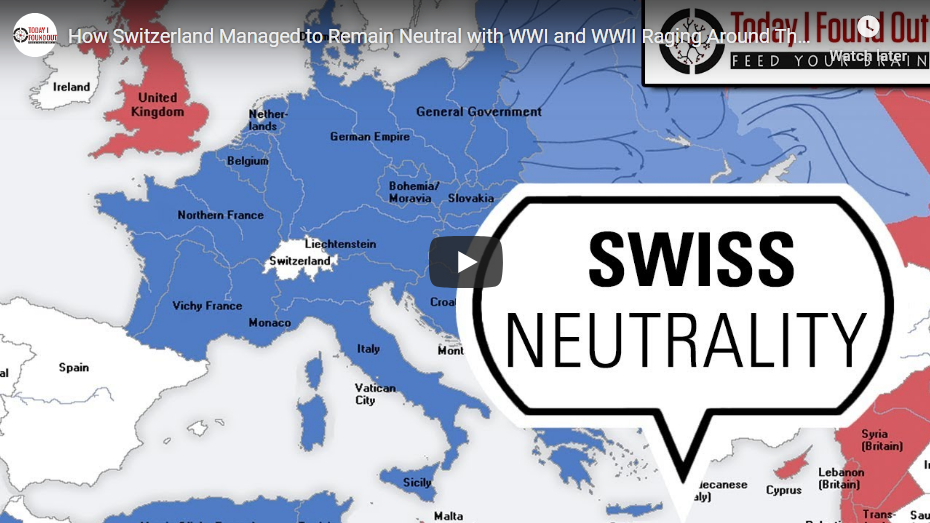
How Switzerland Managed to Remain Neutral with WWI and WWII Raging Around Them
Today I Found Out
Published 30 Apr 2018Signup for your FREE trial to The Great Courses Plus here: http://ow.ly/dCMa30hIugB
If you happen to like our videos and have a few bucks to spare to support our efforts, check out our Patreon page where we’ve got a variety of perks for our Patrons, including Simon’s voice on your GPS and the ever requested Simon Whistler whistling package: https://www.patreon.com/TodayIFoundOut
The Great Courses Plus is currently available to watch through a web browser to almost anyone in the world and optimized for the US, UK, and Australian markets. The Great Courses Plus is currently working to both optimize the product globally and accept credit card payments globally.
Never run out of things to say at the water cooler with TodayIFoundOut! Brand new videos 7 days a week!
In this video:
The tiny mountainous country of Switzerland has been in a state of “perpetual neutrality” since the major European powers of the time declared it as such during the Congress of Vienna after the end of the Napoleonic wars in 1815.
Want the text version?: http://www.todayifoundout.com/index.p…
Comments Off on How Switzerland Managed to Remain Neutral with WWI and WWII Raging Around Them
The FAL for British Troop Trials in 1954: X8E1 & X8E2
Forgotten Weapons
Published 21 Feb 2020http://www.patreon.com/ForgottenWeapons
https://www.floatplane.com/channel/Fo…
Cool Forgotten Weapons merch! http://shop.bbtv.com/collections/forg…
The NATO rifle trials of the early 1950s eventually chose the 7.62mm x 51mm cartridge, and the British and Belgians agreed on the FAL rifle to shoot it (and they thought the US would as well, but that’s another story). The British government formally accepted the FAL for troop trials, and in 1954 an order for 4,000 X8E1 rifles (with iron sights) and 1,000 X8E2 rifles (with SUIT 1x optical sights) was placed. These rifles were mechanically the same as what would be finalized as the L1A1 rifle, but they include a number of differing features. Both models had 3-position selector switches allowing automatic fire, and they also had manual forward assists on the bolt handles. The iron sights had top covers with integrated stripper clip guides, as there was concern that troops would have to manually reload their magazines, and stripper clips would speed this process up.
Many thanks to the Royal Armouries for allowing me to film these very scarce trials rifles! The NFC collection there — perhaps the best military small arms collection in Western Europe — is available by appointment to researchers:
https://royalarmouries.org/research/n…
You can browse the various Armouries collections online here:
https://royalarmouries.org/collection/
Contact:
Forgotten Weapons
6281 N. Oracle #36270
Tucson, AZ 85740

Comments Off on The FAL for British Troop Trials in 1954: X8E1 & X8E2
February 21, 2020
What if the Spanish Fascists Lost the Civil War? – WW2 feat. Hearts of Iron IV
World War Two
Published 20 Feb 2020This video is sponsored by Paradox Interactive. Indy shares his thoughts on what he thinks would have happened if the Spanish Revolution would have happened differently.
You can create your own alternate history in the grand strategy game Hearts of Iron IV! Discover it here: https://pdxint.at/37Po039
Watch our Between Two Wars episode on the Spanish Civil War here: https://youtu.be/ncUkPavahCU
Follow WW2 day by day on Instagram @World_war_two_realtime https://www.instagram.com/world_war_t…
Join our Discord Server: https://discord.gg/D6D2aYN.
Between 2 Wars: https://www.youtube.com/playlist?list…
Source list: http://bit.ly/WW2sourcesWritten and Hosted by: Indy Neidell
Produced by: Spartacus Olsson and Astrid Deinhard
Directed by: Wieke Kapteijns
Executive Producers: Bodo Rittenauer, Astrid Deinhard, Indy Neidell, Spartacus Olsson
Creative Producer: Joram Appel
Post-Production Director: Wieke Kapteijns
Research by: Indy Neidell
Edited by: Guido Becker
Gameplay scenes by: Sietse Kenter
Sound mix: Marek KamińskiColorizations by:
Dememorabilia – https://www.instagram.com/dememorabilia/
Julius Jääskeläinen – https://www.facebook.com/JJcolorization/
Adrien Fillon – https://www.instagram.com/adrien.colo…
Daniel WeissArchive by Screenocean/Reuters https://www.screenocean.com.
A TimeGhost chronological documentary produced by OnLion Entertainment GmbH.
Comments Off on What if the Spanish Fascists Lost the Civil War? – WW2 feat. Hearts of Iron IV
British wages to be further impacted by Brexit
As we were told for years, if Brexit happened there were going to be dire consequences to the British economy, and here’s the latest one:

Employers are complaining that without badly paid immigrant labour they’ll just not be able to get the staff. The answer to which is that they’d better start paying higher wages then, eh?
[…]
The analysis here stems from something Marx got right. It’s competition among capitalists for scarce labour which pushes wages up. If there’s a vast reserve army of the unemployed then anyone needing more straining backs just tosses a crust to those in that army and gets as many limbs and torsos to exploit as desired. But if all are already employed then any desire for extra labour requires tempting it away from current employer and occupation to the new. That means a better job offer. Some mixture of conditions, enjoyment of the job, cash and so on that makes up a more attractive package.
The combination of cheap flights and free movement of labour has meant that the reserve army lives in Wroclaw and Debrecen. It’s also been near unlimited – compared to the size of the UK economy – these past couple of decades.
The absence of free movement – what is being complained about here – will mean that to gain the desired labour those employers are going to have to offer higher wages, higher compensation rather, to those not ordinarily resident or stemming from central Europe.
[…]
But back to the basic complaint here. These employers are complaining that Brexit will mean they’ve got to raise the wages they pay. To which the correct response is “Ah, Diddums”.
Comments Off on British wages to be further impacted by Brexit
“Back in Control” – The Falklands War – Sabaton History 055 [Official]
Sabaton History
Published 20 Feb 20201982, on a group of islands far, far away from Great Britain. After the military junta of Argentinian Army General Leopoldo Galtieri had publicly declared that the Falkland Islands (Malvinas) were rightfully part of Argentinian territory, an invasion force succeeded in wrestling control away from their British owners. However Great Britain would not simply stand by and give the Falklands up. Instead a British task-force would make its way down to the Falklands, in an attempt to take back control of the islands by force. What followed was an undeclared war of 10 weeks, where British carriers and commandos fought against the entrenched Argentinian ground-forces for the ownership of the islands.
Support Sabaton History on Patreon: https://www.patreon.com/sabatonhistory
Listen to “Back in Control” on the album Attero Dominatus:
CD: http://bit.ly/AtteroDominatusStore
Spotify: http://bit.ly/AtteroDominatusSpotify
Apple Music: http://bit.ly/AtteroDominatusAppleMusic
iTunes: http://bit.ly/AtteroDominatusiTunes
Amazon: http://bit.ly/AtteroDominatusAmzn
Google Play: http://bit.ly/AtteroDominatusGooglePlayCheck out the trailer for Sabaton’s new album ‘The Great War’ right here: https://www.youtube.com/watch?v=HCZP1…
Watch more videos on the Sabaton YouTube channel: https://www.youtube.com/user/Sabaton?…
Listen to Sabaton on Spotify: http://smarturl.it/SabatonSpotify
Official Sabaton Merchandise Shop: http://bit.ly/SabatonOfficialShopHosted by: Indy Neidell
Written by: Markus Linke and Indy Neidell
Directed by: Astrid Deinhard and Wieke Kapteijns
Produced by: Pär Sundström, Astrid Deinhard and Spartacus Olsson
Creative Producer: Joram Appel
Executive Producers: Pär Sundström, Joakim Broden, Tomas Sunmo, Indy Neidell, Astrid Deinhard, and Spartacus Olsson
Post-Production Director: Wieke Kapteijns
Edited by: Iryna Dulka
Sound Editing by: Marek Kaminski
Maps by: Eastory – https://www.youtube.com/c/eastoryArchive by: Reuters/Screenocean https://www.screenocean.com
Music by Sabaton.Sources:
– Casa Rosada (Argentina Presidency of the Nation)
– Gobierno de Argentina (Government of Argentina) – Argentina.gob.ar
– Ken Griffiths from Wikimedia Commons
– Armada Argentina on Flickr
– HMS Invincible in 1980, HMS Hermes in 1977, credit: Hugh Llewelyn on Flickr
– IWM: FKD 186, FKD 357, FKD 677, IWM FKD 138, FKD 185, FKD 2743, FKD 168, FKD 435, FKD 182, FKD 319, FKD 2744, FKD 71, FKD 217, FKD 107, FKD 321, FKD 349, FKD 345, FKD 2755, FKD 108, FKD 2028, FKD 2750, FKD 2051, FKD 2040, FKD 176, FKD 314, FKD 427
– IWM ART: 15530 33, 15530 56, 15530 10, 15530 10
– National Army Museum: 164752, 107649An OnLion Entertainment GmbH and Raging Beaver Publishing AB co-Production.
© Raging Beaver Publishing AB, 2019 – all rights reserved.
Comments Off on “Back in Control” – The Falklands War – Sabaton History 055 [Official]
QotD: Thought experiment
Still, that’s not the deal on offer. You have to buy an incarnation lottery ticket, and the results would be random.
I’m not big on dividing people up by abstract categories, and I certainly don’t mean them to be pejorative. But as a historical matter, being born poor, gay, black, Jewish, ugly, weird, handicapped, etc. today may certainly come with some problems or challenges, but on the whole those traits are less of a shackle or barrier than at any time in the past. The only trait where I think it might be a closer call is dumbness. All other things being equal, a not-terribly-intelligent person with a good work ethic and some decent values might have had more opportunities before machines replaced strong backs. But even here, I can think of lots of exceptions.
Jonah Goldberg, “America and the ‘Original Position'”, National Review, 2017-12-22.
Comments Off on QotD: Thought experiment
February 20, 2020
Why the Nazis Weren’t Socialists – ‘The Good Hitler Years’ | BETWEEN 2 WARS I 1937 Part 2 of 2
TimeGhost History
Published 19 Feb 2020The Nazi economy appears to do well during the 1930s. But this is largely myth, as the German economy under Hitler is based on a self destructive, ideologically or selfishly fuelled irrationality driven by conquest and criminal practice.
Join us on Patreon: https://www.patreon.com/TimeGhostHistory
Hosted by: Indy Neidell
Written by: Spartacus Olsson
Directed by: Spartacus Olsson and Astrid Deinhard
Executive Producers: Bodo Rittenauer, Astrid Deinhard, Indy Neidell, Spartacus Olsson
Creative Producer: Joram Appel
Post-Production Director: Wieke Kapteijns
Research by: Spartacus Olsson
Edited by: Daniel Weiss
Sound design: Marek KaminskiSources:
Bundesarchiv_Bild:
192-269, 183-T0706-503, 183-S68029, 183-S68014,
183-S38324, 183-S33516, 183-S07227, 183-R98364,
183-H29131, 183-H25824, 183-H01704, 183-H13192,
183-H06734, 183-H00455, 183-C12671, 183-86686-0008,
183-2008-0826-506, 183-2008-0826-502, 183-2006-1128-504,
183-2004-0729-507, 183-1989-0630-504, 183-1988-0113-500,
146-2005-0191, 146-1990-048-29A, 146-1990-023-06A,
146-1984-040-26, 146-1981-124-32A, 146-1972-025-10,
102-13533, 102-12733, 102-11649, 102-06795, 102-04640,
145_Bild-P046280, 145_Bild-020683,Colorizations by:
Daniel WeissSoundtracks from Epidemic Sound:
– “Document This 1” – Peter Sandberg
– “March Of The Brave 10” – Rannar Sillard – Test
– “Ominous” – Philip Ayers
– “The Inspector 4” – Johannes Bornlöf
– “Disciples of Sun Tzu” – Christian Andersen
– “Guilty Shadows 4” – Andreas Jamsheree
– “Last Point of Safe Return” – Fabien Tell
– “Death And Glory 1” – Johannes Bornlöf
– “Easy Target” – Rannar Sillard
– “Split Decision” – Rannar Sillard
– “First Responders” – Skrya
– “The Charleston 3” – Håkan ErikssonA TimeGhost chronological documentary produced by OnLion Entertainment GmbH.
From the comments:
Spartacus Olsson
1 day ago
From an intellectual viewpoint, this is perhaps the most challenging episode I have written in this series. First of all it’s hard to make economic policy interesting, even when it’s about the Nazis. It tends to get, well … grey. Second of all it’s not that easy to simplify things without completely losing the essence of what was going on. Third of all, I’m fighting an uphill battle against a post truth, political talking point based on … let’s just call it less than ingenious purposes.Obviously that’s the idea that the Nazis were Socialists. And perhaps that is not so far fetched when you think of the name of their party, the way they framed their anti-semitic rhetoric in a way that it would sound friendly to the working class, and their absolute disregard for telling the truth about anything, and everything. But although we have painstakingly showed you the facts, I am painfully aware that it won’t make a difference to stop the nonsense out there and in here — some pundits will religiously stick to their ideas, because if they don’t, they might have to face that some of the ideas they have are mutual with the people they so desperately want to distance themselves from. The same happened with the far left between the 1930s and 1970s, when they tried with cramped desperation to frame Stalinism as a right wing, Fascist movement — Red Fascism was the term — obviously as much nonsense as the alt-right idea that Naziism is Socialism.
And is it important? Well yes and no — the dumbos will probably get worn out at some point, it’s after all quite challenging to look for ways to distort the record over, and over again. I don’t really care if the extremists try to push their mutual garbage in each other’s lap — as a supporter of democracy and humanism, I have no regard for either end. I do however have an incredible amount of respect for conservatives, liberals, and progressives who are equally dedicated to democracy and human rights — and there is where it matters.
When the far left tries to frame Stalinism as right wing, and the far-right tries to frame Naziism is left-wing, they are trying to co-opt a position of less extremism. It’s an invasive attempt for Communists and (real) Socialists to just look like regular Progressives, and Fascists and Nazis to just look like regular Conservatives. And that my friends is dangerous, to all of us, regardless of our nationality, creed, political affiliation, or opinion — because it is specifically our individual rights and democracy that is at stake in this game. That’s what they want to take away, or in some places stop from developing.
Comments Off on Why the Nazis Weren’t Socialists – ‘The Good Hitler Years’ | BETWEEN 2 WARS I 1937 Part 2 of 2


