Beyond the Fringe, Forty Years On and TW3 created a tradition of “anti-establishment” comedy which continued long after its roots were forgotten. There may still have been an “establishment” of snobbery, church, monarchy, clubland and old-school-tie links in 1961. There was no such thing ten years later, but it suited the comics and all reformers to pretend that there was and to continue to attack this mythical thing. After all, if there were no snobbery, no crusty old aristocrats and cobwebbed judges, what was the moral justification for all this change, change which benefited the reformers personally by making them rich, famous and influential?
[…]
It also made the middle class, especially the educated and well-off middle class, despise themselves and feel a sort of shame for their supposedly elitist prejudices, based upon injustice and undermined by their failure to defend the nation from its enemies in the era of appeasement. Thanks to this, in another paradox, they have often felt unable to defend things within Britain which they value and which help to keep them in existence, from the grammar schools to good manners. They are ashamed of being higher up the scale, though for most middle-class people this is more a matter of merit than birth, and nothing to be ashamed of at all.
[…]
Since the 1960s, when the Left began its conquest of the cultural battlements, it has always been surprised and annoyed by Tory election victories. The 1970 Tory triumph, though entirely predictable, took the cultural establishment by surprise. The 1979 Tory win, though even more predictable, infuriated them. They had won control of broadcasting, of the schools, of the universities, the church, the artistic, musical and architectural establishment? How was it possible that they could not also be the government? Their rage was enormous, and increased with each successive Labour defeat. It was an injustice. How could the people be so foolish? Now, instead of aristocratic snobs misgoverning the country, the establishment was portrayed as a sort of fascistic semi-dictatorship, hacking at the NHS and the welfare state, waging aggressive wars abroad and enriching itself while the poor lived in misery.
This series of falsehoods has now become a weapon ready and waiting for unscrupulous demagogues to harness, and perhaps use against the new “establishment” which has benefited so much from the satire boom and the alternative comedians. Once you have begun to use dishonest mockery as a weapon, you can never be entirely sure that it will not eventually be turned against you, by others who have learned that abuse and jeering pay much easier and swifter dividends than hard fact or serious argument. It could be that the civilized mirth of the sixties leads in a direct line to the crude hyena cackling of the mob. In any case, there is no sign of the humour industry taking the side of traditional morality, patriotism or civility. The best it can do is dignify itself with noisy and public collections for sentimental and prominent charity. Once you step beyond the fringe, you sooner or later find yourself in very wild country indeed.
Peter Hitchens, The Abolition of Britain, 1988.
December 13, 2021
QotD: Cultural undermining of the British “establishment” was effectively complete by 1970
December 12, 2021
One Year Since Pearl Harbor – WW2 – 172 – December 11, 1942
World War Two
Published 11 Dec 2021The Japanese try and fail to supply their starving soldiers. The Allies fail to break through in Tunisia and New Guinea. The fighting in the USSR is bloody, but the Axis prepare for a new offensive there.
(more…)
How They Did It – Pet Dogs in Ancient Rome
Invicta
Published 12 Sep 2018Our history with man’s best friend stretches far into the past. Today we take a look at the lives of dogs in ancient Rome; how they named, trained, and raised them.
Bibliography:
Xenophon and Arrian: On Hunting (1999) translated by A. A. Phillips and M. M. Willcock
Metamorphoses Book III by Ovid
Names of Dogs in Ancient Greece by Adrienne Mayor
Greek and Roman Household Pets by Francis D. LazenbyArtwork:
Beverly Johnson (https://www.behance.net/bevsi)Music:
“Strings and Drums Comedy” by 8th Mode Music
“Emotional” by 8th Mode Music#RomanHistory
#HowTheyDidIt
December 11, 2021
Belisarius: The Battle of Rome
Epic History TV
Published 10 Dec 2021Thank you to our sponsor Private Internet Access.
Get the Epic History TV special offer using this link: https://www.privateinternetaccess.com…Big thanks to Legendarian for Total War: Attila gameplay footage, check out his YouTube channel here: https://www.youtube.com/channel/UCOI2…
Thanks also to our series consultant Professor David Parnell of Indiana University Northwest, who you can follow on Twitter here: https://twitter.com/byzantineprof
Total War: Attila gameplay footage used with kind permission of Creative Assembly — buy the game here: https://geni.us/qDreR
Support Epic History TV on Patreon from $1 per video, and get perks including ad-free early access & votes on future topics https://www.patreon.com/EpicHistoryTV
🎨 Original artwork by Miłek Jakubiec https://www.artstation.com/milek
📚Recommended reading (as an Amazon Associate I earn from qualifying purchases):
📖 Procopius, History of the Wars https://geni.us/L3Pgc
📖 The Wars of Justinian by Michael Whitby https://geni.us/Xxrd3
📖 Rome Resurgent by Peter Heather https://geni.us/ZFoU1
📖 The Armies of Ancient Persia: the Sassanians by Kaveh Farrokh https://geni.us/jMQo3z
📖 Late Roman Cavalryman AD 236–565 (Osprey) by Simon MacDowall https://geni.us/XMGl👕 Buy EHTV t-shirts, hoodies, mugs and stickers here! teespring.com/en-GB/stores/epic-histo…
🎶Music from Filmstro: https://filmstro.com/?ref=7765
Get 20% off an annual license with this exclusive code:EPICHISTORYTV_ANN#EpicHistoryTV #RomanEmpire #EasternRomanEmpire #Justinian #Belisarius #ByzantineEmpire #Romans
The Stahlhelm
World War Two
Published 10 Dec 2021The Stahlhelm. Perhaps the most iconic symbol of German military power, ever present in images of the war. Hitler believes it strikes fear in his enemies and makes his own troops fearless. But where does it come from and why is it so enduring?
(more…)
December 10, 2021
The Frozen Battlefields of France – Battle of Beaugency 1870
Real Time History
Published 9 Nov 2021Support us on Patreon: https://patreon.com/realtimehistory
On the frozen battlefields of France, the exhausted German and French armies are still fighting. The Battle of Beaugency sees a desperate struggle in which soldiers on both sides suffer from the harsh winter conditions. Meanwhile, the Siege of Paris continues to starve the population of the French capital.
» THANK YOU TO OUR CO-PRODUCERS
John Ozment
James Darcangelo
Jacob Carter Landt
Thomas Brendan
James Giliberto
Kurt Gillies
Albert B. Knapp MD
Tobias Wildenblanck
Richard L Benkin
Scott Deederly
John Belland
Adam Smith
Taylor Allen
Jim F Barlow
Rustem Sharipov» OUR PODCAST
https://realtimehistory.net/podcast – interviews with historians and background info for the show.» LITERATURE
Arand, Tobias: 1870/71. Der Deutsch-Französische Krieg erzählt in Einzelschicksalen. Hamburg 2018Buk-Swienty, Tom: Feuer und Blut. Hauptmann Dinesen. Hamburg 2014
Gouttman, Alain: La grande défaite. 1870-1871. Paris 2015
» SOURCES
Chanzy, Général: La deuxième Armée de la Loire. Paris 1872Goncourt, Edmond de: Journal des Goncourts. II.1. 1870-1871. Paris 1890
Horne, Alistair: Es zogen die Preußen wohl über den Rhein. Bern, München, Wien 1967
Kühnhauser, Florian: Kriegs-Erinnerungen eines Soldaten des königlich bayerischen Infanterie Leibregiments. Partenkirchen 1898
Sarcey, Francisque: Le siege de Paris: impressions et souvenirs. Paris 1871
» OUR STORE
Website: https://realtimehistory.net»CREDITS
Presented by: Jesse Alexander
Written by: Cathérine Pfauth, Prof. Dr. Tobias Arand, Jesse Alexander
Director: Toni Steller & Florian Wittig
Director of Photography: Toni Steller
Sound: Above Zero
Editing: Toni Steller
Motion Design: Philipp Appelt
Mixing, Mastering & Sound Design: http://above-zero.com
Maps: Battlefield Design
Research by: Cathérine Pfauth, Prof. Dr. Tobias Arand
Fact checking: Cathérine Pfauth, Prof. Dr. Tobias ArandChannel Design: Battlefield Design
Contains licensed material by getty images
All rights reserved – Real Time History GmbH 2021
Was Constantine’s conversion a form of reaction to societal decadence?
At his new place, Severian makes a case for Emperor Constantine’s conversion to Christianity being a reaction to (and attempted cure for) civilizational decadence:

The Vision of Constantine the Great by Stylianos Stavrakis (1709-1786). “The emperor, depicted mounting and dressed in decorated military uniform, appears to gaze at the Inscription ΕΝ ΤΟΥΤΩ ΝΙΚΑ ΚΩΝΣΤΑΝΤΙΝΕ/ In hoc signo vinces, that is written around a cycle of stars enclosing a cross. The scene is set in front of the harbour of a town, probably Constantinople, with low hills and pine slopes.”
Byzantine Museum via Wikimedia Commons.
The legend says that as Constantine the Great was preparing to fight the Battle of Milvian Bridge, he saw a cross in the sky and the words “In Hoc Signo Vinces” — “in this sign you shall conquer”. He converted to Christianity on the spot, won the battle, and made Christianity the official religion of the now-reunified Roman Empire.
If any of that is true is, of course, impossible to know. He’d been at least favorable to Christianity for some time, helping to promulgate the Edict of Milan that extended toleration to Christianity across the parts of the Empire where his writ ran. However it happened, Constantine’s conversion story — the myth that has come down to us — carries a lesson we Dissidents should study.
Constantine came up at the tail end of the Crisis of the Third Century, in which the Roman Empire all but collapsed. It’s traditional to say that the CTC “ended” with Diocletian (r. 284-305), but obviously the ructions continued, as the Battle of Milvian Bridge was one of several in a new round of civil wars. I’m no scholar of Late Antiquity, but I can boil down all the many overlapping causes of the CTC to a word: Decadence.
The Roman Empire after Aurelius was simply too decadent to go on. Your Marxist would point to serious and irreparable class divisions within the Empire, and he’d be right. Other Marxist-flavored historians would point out the collapse of the currency, the rudimentary and laughably flawed taxation system, and so forth, and they’d be right, too. Military historians would say that the Empire simply lacked sufficient manpower, or at least, sufficient high-quality manpower, for the tasks at hand, exacerbated by the other stuff we just discussed … and they, too, would be right. Let’s not forget the Antonine Plagues, of course, which older historians argued were horrible but, as I understand it, a new generation of bio-archaeologists are proving were far worse than we suspected …
All that played its part, but above all, the Empire was just tired. Bored. Worn out. Overstuffed. Made sick by its own excesses. In a word, decadent.
That’s where Constantine’s conversion comes in. Marcus Aurelius, the last good Emperor, was the world’s most famous Stoic, then as now. Stoicism is indeed proof against decadence … but Stoicism is a harsh, cold philosophy. It’s not just “suppressing your emotions and acting like a hardass all the time,” as so many young men on the internet seem to think — far, far from that — but the Stoic lives by reason. His whole goal in life is to live “in conformity to nature,” and on the Stoic view, “Reason” and “Nature” are one and the same.
For all Stoic discipline seems to focus on the body, then, it’s really in the mind where true Stoics are made. If it’s a religion – and I’d argue that it is, but that’s irrelevant — then it’s the most cerebral creed ever devised. You don’t have to be a brainiac to be a Stoic — no less a Stoic than Marcus frequently upbraids himself for being a bit slow on the uptake — but you do have to live, and have an overwhelming desire to live, entirely inside your own head.
History Summarized: Britain and the Empire
Overly Sarcastic Productions
Published 20 Aug 2021How is it that the history of some islands off the northern coast of Europe balloons into a worldwide history? Empire is how! Let’s dig into the history of Britain since Union of the Crowns of England and Scotland in 1603, and follow that narrative through the monumental rise and precipitous fall of the British Empire.
Special thanks to the community members on Discord who assisted me with my script: Corvin the Crow, Johnny, Jdedredhed, Joud, Jéuname, Klieg, RileyTheProcrastinator, The Missing Link, and thesleepingmeerkat
SOURCES & Further Reading: The Great Courses Lecture series Foundations of Western Civilization II: A History of the Modern Western World by Robert Buchols lectures 11, 12, 13, 14, 15, 18, 19, 20, 21, 22, 30, The History Of England volumes 3 Rebellion, 4 Revolution & 5 Dominion by Peter Ackroyd, Scotland: A Concise History by Fitzroy MacLean, The Great Cities in History by John Julius Norwich, A Concise History of Wales by Geraint H. Jenkins, Sea Power: The History and Geopolitics of the World’s Oceans by James Stavridis.
Our content is intended for teenage audiences and up.
PATREON: https://www.Patreon.com/OSP
PODCAST: https://overlysarcasticpodcast.transi…
DISCORD: https://discord.gg/osp
MERCH LINKS: http://rdbl.co/osp
OUR WEBSITE: https://www.OverlySarcasticProductions.com
Find us on Twitter https://www.Twitter.com/OSPYouTube
Find us on Reddit https://www.Reddit.com/r/OSP/
December 9, 2021
Rzhev Meatgrinder: Day-by-Day Recap 02
World War Two
Published 8 Dec 2021It is one of the deadliest battles of the Eastern Front and entire conflict, yet it is often overlooked next to the fighting at Stalingrad. Today, we will take a look at the 1942 Summer Battles of Rzhev.
(more…)
The sequel to the British disaster at the Battle of Coronel, the German disaster at the Battle of the Falkland Islands
On December 8th, the people of the Falkland Islands observe “Battle Day” to commemorate the British naval victory off the islands in 1914. This is the bookend to the Battle of Coronel the previous month (described here and here), where a Royal Navy squadron was almost annihilated by Imperial Germany’s East Asia Squadron under Vice-Admiral Graf Maximilian von Spee. At the Battle of the Falkland Islands, an equally lop-sided victory eliminated von Spee’s ships with minimal damage to Rear Admiral Sir Frederick Doveton Sturdee’s squadron. In The Critic, A.S.H. Smyth outlines the events as shown in a British film released in 1927:

Battle of the Falkland Islands, 1914 by William Lionel Wyllie. SMS Scharnhorst rolls over and sinks while SMS Gneisenau continues to fight.
Originally published in 1918 by Cassel & Company. Retouched image via Wikimedia Commons
Rear Admiral Sir Frederick Doveton Sturdee (unimprovably British, isn’t it?), Chief of War Staff at the Admiralty, and at distinct risk of being scapegoated for the Coronel catastrophe, was summarily appointed Commander-in-Chief South Atlantic and Pacific(!) and despatched posthaste by [First Sea Lord John “Jackie”] Fisher (with whom he did not get on), on something of a do-or-die mission as the commander of new, eight-cruiser squadron.
The Admiral Superintendent of Devonport warns that Sturdee’s two battle cruisers, Invincible and Inflexible, cannot be ready before Friday the 13th November. First Lord of the Admiralty Winston Churchill balks at that ill-omened date, and orders that they sail on the 11th, ready or not. (Students of the 1982 conflict may see more than a couple of parallels here.) Cue: dockyard refitting montage.
Cut to the German colony at Valparaiso, where his countrymen fête von Spee’s glorious German victory in their first naval battle. “Damnation to the British Navy!” they want to toast. No, says, von Spee: “to a gallant enemy.” Handed a bouquet of flowers, he says he’ll keep them for his funeral “when my time comes.” For “when were the British ever content to leave an enemy to his triumph?”
Von Spee was well aware, it seems, that running the gauntlet up through the Atlantic was going to be a torrid prospect, even without a veangeful enemy on the look-out for him personally. But homeless (Tsingtau had fallen to the Japanese), in need of fuel, and down to half their ammunition, von Spee’s captains urged him now to head for Germany, and he agreed.
Von Spee’s ships were in need of dockyard maintenance and not steaming efficiently, but thanks to a captured British collier they were not in need of coal to be able to get home. Before setting off from where they’d been refuelling, Spee decided to strike another blow against the British and raid the Royal Navy’s supply base at Port Stanley in the Falkland Islands where only local militia were expected to be defending.
It was, among other things, sheer bad luck that von Spee came up to Stanley just a few hours after Sturdee had arrived with his group of cruisers — all newer, faster, and better-gunned than their fatigued German counterparts — and was busily refuelling. Likewise, that the sea was calm, there was little wind, and visibility was excellent. Too late, Gneisenau observes that there are British warships in the harbour! (The acting here is particularly terrible.)
It has been suggested that von Spee had not known that the British ships were “waiting” there (they hardly were); but it has also been alleged that he was misled by poor German intelligence, or even false British cryptography. [The Wikipedia article on the battle credits misinformation by British intelligence for leading von Spee into the trap.]
In Britain, meanwhile, the Admiralty is under the impression that Sturdee is the one who has been caught unawares in the Falkland Islands. Von Spee is a mere 12 miles away, and none of the British ships have their steam up. The FIVF [the Falklands Islands Volunteer Force] are called out, as the ships are ordered to go from zero to hero. One poor lad has to run up the Union Jack in local weather conditions (I’ve been that lad: he has my sympathies); another forgets his rifle, as emphasised by a heavily-asterisked title card.
As so often happens, Fate now played its hand, and Canopus, parked, with her fully-functioning 12-inch guns (so missed at Coronel) in Stanley Harbour, as the Islands’ main defensive battery, came into her own. As the Germans turn and run, Canopus opens fire, and soon enough the “grimly purposeful” cruiser group — “fittingly bearing names from the four corners of Britain … Kent, Cornwall, Glasgow and Carnarvon” — set off in pursuit.
The maths was simply not on the Germans’ side. Sturdee even sent his men below to eat. At midday, he called them back to Action Stations. Von Spee responded by ordering his light cruisers to scatter and make for neutral ports, while Scharnhorst and Gneisenau remained to “accept action to cover their escape”. Flashback to the presentation of those flowers.
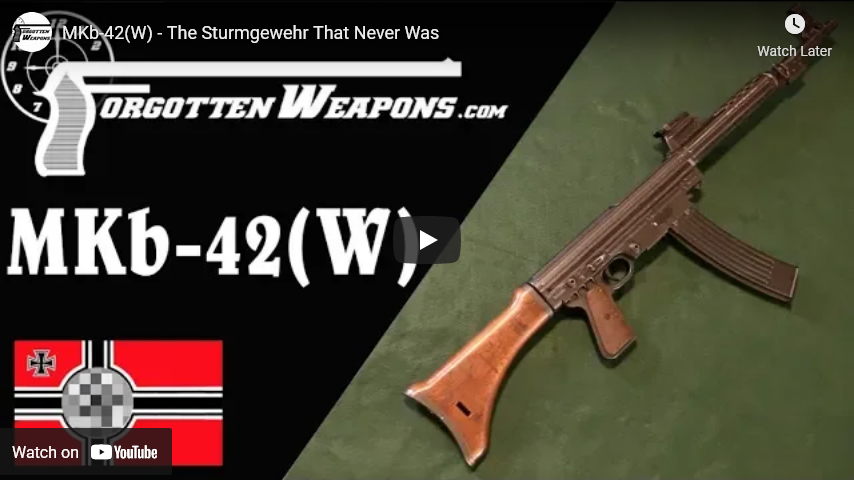
Tank Chat #135 | Marder | The Tank Museum
The Tank Museum
Published 27 Aug 2021In this latest episode of Tank Chats, Curator David Willey details the German Marder. A post-war Infantry Fighting vehicle.
(more…)
QotD: “The Knowledge” of London’s licensed cab drivers
It is not a simple question of regulation and laissez-faire. Regulation can result in an excellent service, better than what an unregulated service might have provided. London’s licensed taxi drivers are, in my experience, the best in the world, for example, and this is due to proper regulation. To obtain a license to operate, they have to master the Knowledge: learn the street plan of London — as higgledy-piggledy as that of any city in the world — not only in theory, as an abstract mental image, but in actual practice. This usually takes them three years, spent driving around the city, day in, day out. When finally they think that they have mastered it, they are examined — often by a retired policeman — and have to be able to say how they would get from A to B, or from C to D, not only by the shortest but also by the quickest route. Only then (and provided they have no police record) are they granted a license.
Obtaining the Knowledge is a formidable intellectual feat: indeed, neuroscientists have used it to demonstrate by brain scans differences between London taxi drivers and others in the possession of spatial knowledge and powers of orientation. And the result of the regulation requiring the Knowledge is that London taxi drivers, besides being small businessmen working largely on their own account and therefore committed to their profession, are generally intelligent, capable men. No doubt the advent of GPS will reduce the need for much of this effort, at least among unlicensed drivers, who were never required to have it anyway. The license was, and is, a guarantee of quality; and the point remains that regulation is not sometimes without benefit to the public.
What do the regulation of London taxi drivers and the success of the vaccination program have in common? I think that it is in the clarity, but also in the modesty, of their goals. The object of the regulation of taxi drivers, for example, is to produce a large cadre of drivers who provide an excellent public service — and the means to achieve this object are unmistakably and obviously connected to that goal. Any group comprising tens of thousands of human beings will contain some who fall below, even much below, the standard desired, but I know of no profession whose members more approximate its ideal. The drivers are justly proud of what they are. There have been no efforts to make saints, or even good people, of them; all that is required is that no ill be known of them and that they have the requisite knowledge. In 50 years of taking London taxis, I’ve never had a bad experience and have had innumerable good ones.
Theodore Dalrymple, “A Cure for Government Incompetence”, City Journal, 2021-08-30.
December 8, 2021
Pandemic authoritarianism in the EU will be the death of Europe’s liberal traditions
In Spiked, Brendan O’Neill says we’re watching the “death of Europe” driven by the authoritarian instincts of government and EU leaders in thrall of public health officials:
Europe is on a precipice. It has marched, blindly, towards something very much resembling tyranny. Austria will shortly criminalise those who refuse the Covid vaccine. Germany looks set to follow. Ursula von der Leyen, president of the European Commission, is wondering out loud if every member state should do likewise and make offenders of those who reject this form of medication. In Italy you are deprived of your livelihood rather than your liberty if you say no to vaccination: the unvaxxed are not permitted to work. Anywhere. In Greece, everyone over the age of 60 must pay the government 100 euros for every month they remain unvaxxed. As if the Greek government, in cahoots with its masters in Brussels, had not immiserated Greek pensioners enough already.
Police in Rotterdam opened fire on people protesting against Covid restrictions. Three were seriously injured. Austrian cops have wielded batons and shields against the thousands who took to the streets of Vienna to say no to mandatory vaxxing. In Brussels, the black, bureaucratic heart of the EU project, water cannons and tear gas were unleashed upon citizens agitating against vaccine passes. The irony is almost too much: in the European quarter of Brussels, the very part of Europe in which the modern European sensibility was forged by politicians, experts and technocrats, ordinary people make a blow for freedom and the forces of this supposedly liberal new continent beat them down. Rarely has modern Europe’s bluster about “human rights” and “respect” been so savagely exposed.
What is happening in Europe right now is nothing short of terrifying. We are not merely witnessing another round of Covid restrictions. This isn’t just the introduction of another set of emergency measures that some people believe are necessary to stave off the latest Covid wave and the Omicron threat lurking on the horizon. No, we are living through a chilling overhaul of the entire relationship between the state and the individual, with the state empowered to such an extraordinary degree that it can now instruct its citizens on what to inject into their bodies, and the individual so politically emaciated, so denuded of rights, that he no longer even enjoys sovereignty over himself, over that tiny part of the world that is his own body and mind. We are witnessing the violent death of European liberalism and the birth pangs of a new and deeply authoritarian era.
Many seem not to recognise how serious a development mandatory vaccination is. Even those of us who are pro-vaccination, who have been happily vaxxed against Covid-19, should look with nothing less than horror upon the proposal that it should be an offence not to be vaccinated; that a citizen should be fined thousands upon thousands of euros if he refuses this treatment. One of the ideas being discussed in Austria ahead of its mandatory vax law that will be introduced in February is that citizens who refuse vaccination will be summoned to a local court. If they ignore the summons twice they will face a fine of 3,600 euros. If they continue ignoring the state’s demand that they receive medical treatment that they do not want, they’ll be fined 7,200 euros. These are life-ruining fines. There is no talk – yet – of imprisoning people who reject the vaccine, but the Austrian state is making it crystal clear that it will happily wield its power to propel the unvaxxed into destitution.
[…]
This spells the end of freedom as we know it. Bodily autonomy is the foundation stone of self-government, and self-government is the thing that gives freedom meaning. If we do not enjoy sovereignty over our minds and our flesh, then we are not free in any meaningful way. And it won’t just be the minority of people who feel forced to receive the vaccine whose freedom will suffer under this new regime of state power over people’s bloodstreams and muscles and flesh – everyone’s freedom will. The state diktat determining that only those who receive a certain form of medical treatment will get to enjoy freedom will make freedom itself contingent upon doing what the state wants you to. Even the vaxxed will not be truly free people in this world. Rather, we will be the beneficiaries of state favour, the enjoyers of small privileges, in return for our agreeing to receive an injection. We will have a license from on high to go about our daily lives. And we will know that that license could swiftly be revoked if we refuse medical treatment in the future. The redefinition of “freedom”, the making of liberty contingent upon submission to medicine, will throttle the rights of all of us – vaxxed and unvaxxed alike.