
World War Two
Published 26 Feb 2026In this gallery special, we examine five of Britain’s leading fighter aces: Archie McKellar, James MacLachlan, Robert Stanford Tuck, John Braham, and James Edgar Johnson. From the Battle of Britain to night fighting, Intruder missions, and offensive sweeps over occupied Europe, their careers reflect the RAF’s transformation from desperate air defense to sustained air superiority.
These pilots did more than accumulate victory claims. Their experiences illuminate the evolution of air combat, showing how individual skill, technology, and strategy intersected in the broader history of the Second World War.
Which of these careers best captures the changing nature of air power in World War Two?
(more…)
February 27, 2026
The British Are Coming! – British Fighter Aces – WW2 Gallery 09
Comments Off on The British Are Coming! – British Fighter Aces – WW2 Gallery 09
February 26, 2026
QotD: “Naming of Parts” by Henry Reed
Today we have naming of parts. Yesterday,
We had daily cleaning. And tomorrow morning,
We shall have what to do after firing. But today,
Today we have naming of parts. Japonica
Glistens like coral in all the neighboring gardens,
And today we have naming of parts.This is the lower sling swivel. And this
Is the upper sling swivel, whose use you will see,
When you are given your slings. And this is the piling swivel,
Which in your case you have not got. The branches
Hold in the gardens their silent, eloquent gestures,
Which in our case we have not got.This is the safety-catch, which is always released
With an easy flick of the thumb. And please do not let me
See anyone using his finger. You can do it quite easy
If you have any strength in your thumb. The blossoms
Are fragile and motionless, never letting anyone see
Any of them using their finger.And this you can see is the bolt. The purpose of this
Is to open the breech, as you see. We can slide it
Rapidly backwards and forwards: we call this
Easing the spring. And rapidly backwards and forwards
The early bees are assaulting and fumbling the flowers:
They call it easing the Spring.They call it easing the Spring: it is perfectly easy
If you have any strength in your thumb: like the bolt,
And the breech, the cocking-piece, and the point of balance,
Which in our case we have not got; and the almond blossom
Silent in all of the gardens and the bees going backwards and forwards,
For today we have the naming of parts.Henry Reed, 1942.
Comments Off on QotD: “Naming of Parts” by Henry Reed
February 25, 2026
“Allyness” in the British military
I suspect anyone who has spent time in uniform out in the field (peacetime or wartime) would recognize these traits, but so far as I know only the British army and Royal Marines have a specific term for it:
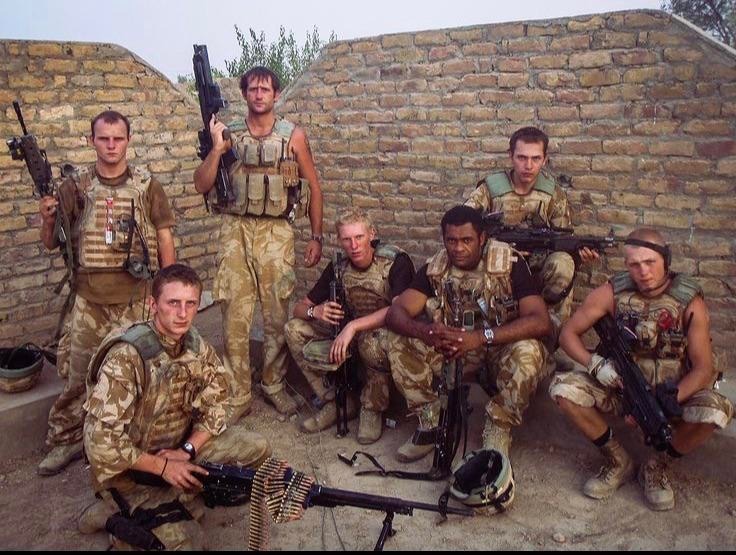
(British troops in Afghanistan, 2008, looking very ‘ally’)
Photo and caption from Combat Threads
Professor Andrew Groves is one of the few true academic experts on menswear. In fact, it was his work as the Director of the Westminster Menswear Archive that inspired me to pursue my Costume Studies MA. Recently, he has started a weekly Substack that is well worth checking out. Last week, he wrote an essay on “Ally“, a British military slang term. What exactly “Ally” is can be hard to nail down, as it has no comparable terms in the US military or civilian cultures. Broadly, it can be described as a language of visual signifiers that denote a soldier as “having been there”, or at the very least, wanting to come across that way, usually by modifying pieces of kit, or wearing it in a particular fashion.
As Groves puts it, “The quiet discipline of looking ready. It is a system that emerges precisely when regulation lags and consequences move faster than command … Allyness was awarded horizontally, not issued from above. It was recognition from peers who knew what to look for.” Groves continues:
That recognition lived in detail, but it was never a checklist. Allyness was built through small, cumulative acts, field-smart adjustments passed down through units, not rulebooks: cutting down webbing to reduce snagging, taping over buckles to kill shine, shaping berets tight to the temple, sewing in map pockets, blacking out brass, marking kit discreetly. None of this was required. All of it mattered, because it signalled experience rather than purchase.
While the origins of “ally” definitely had roots in field-wise functionality and competence (the widespread adoption of Bundeswehr boots by British Paras or the “norgi” baselayer adopted by RM Commandos come to mind), by the time the GWOT generation were forming their own sense of “allyness”, much had devolved to style. I am going to quote from Simon Akam’s wonderful book The Changing of the Guard: The British Army Since 9/11, on the evolution of “ally” in the 21st Century:
“Ally” is rifle magazines taped together — it draws inspiration from films as well as finding exhibition through the same medium. Ally is beards. Ally is non-regulation scarves and shemagh cloths. Ally is belts of 7.62mm link machine-gun ammunition draped over shirtless muscled torsos. Ally is liberal use of sniper tape on bits of kit, scrim netting pulled taut over the issued helmet, or “hero sleeves” — sleeves rolled only halfway up the forearm. A strong influence, ironically given the outcome of that conflict, is Vietnam … Of course, the two quantities of violence and ally are entwined. Fighting is ally. It seeps into Iraq, too: Major Stuart Nicholson, a Fusiliers officer serving on an exchange post with the Anglians in Basra in 2006, sees one sub-unit who keep one set of totemic combats [field uniform] to wear every time they go out on patrol, regardless of how dirty and disgusting they become. Nicholson catches one of this crew deliberately driving a Warrior armoured vehicle over a helmet cover to make it look already battered.
Later in the book, Akam recounts the “ally” origins of the British Army’s adoption of a Crye designed variant MultiCam (named Operation Peacock). The need for a new camouflage pattern was practical: British troops in Afghanistan found their DPM uniforms coming up short, and it was also based on seeing American SOF using MultiCam. I think that best illustrates the push and pull of what makes something “ally”. Some “allyness” traits can be seen as battlewise modifications to equipment, like taping down loose straps or added helmet scrim to help break up the silhouette, while others can be affectations that soldiers think look cool. And often, a bit of both.
Like anything to do with the infantry, of course, it can be taken too far and rather than improving effectiveness in the field, it can lead in very unwelcome directions:
These kinds of regulation-flouting practices can be interpreted as signs of a breakdown in unit discipline, which, in turn, can lead to more serious issues. It isn’t exactly “broken windows” theory for military units, but it also kind of is. It’s why, when Akam tells a story of an American officer who visited a British base in Afghanistan in 2006 and remarked that the British soldiers “look like our army at the end of Vietnam”, It was not meant as a compliment. Elsewhere, the desire to be “ally” led to armored vehicles flying English flags (despite its local connotations to the Crusades being an issue) and SS decals on other vehicles. “Allyness” can be a sign of the unit culture going rogue.
The result was a crackdown on the excesses of “allyness”. As Akam writes, “the ally clampdown is also a knee-jerk response to a realisation that something had got out of control. Some elements of ally survive, in particular the Paras’ interest in taping up bits of their gear. That is harder to stamp down on.”
Comments Off on “Allyness” in the British military
February 24, 2026
QotD: The! Exclamation! Mark!
To the grammatically sane, reading the exclamation mark in its proper mode, the modern world appears increasingly deranged, authored seemingly by caffeinated twelve-year-olds. The delirium jumps at you in emails, on billboards, from the end of every other sentence.
The exclamation mark — the name a dead giveaway — means to exclaim. To cry out or speak suddenly or excitedly, as from surprise, delight, horror, etc. That line and dot seize your attention. Help! Now, it seizes your last nerve. Stop! If everything is exclamatory, then nothing is.
To the cynic, the exclamation mark is a hypodermic needle spiking foreign joy into the bloodstream of language. With each excitable email, I wonder, is this person in need of urgent medical attention? Or have they overdosed on Adderall?
Christopher Gage, “Against Enthusiasm”, Oxford Sour, 2025-11-21.
Comments Off on QotD: The! Exclamation! Mark!
February 23, 2026
QotD: Faith, Hope, and Charity defended Malta
France has collapsed, Hitler is eating Europe alive, and Mussolini doesn’t want to miss out. He wants birthday cake without bringing a present.
Poor show
So he looks at a map and asks the Italian Air Force:
“Who can we bomb that’s really close?”
Answer: Malta, 49 miles away.
The Italians begin their great wartime contribution by flying at 14,000 feet and dropping bombs with the accuracy of a man throwing darts after fourteen pints. Half land in the sea, a few hit fields.
But accuracy wasn’t the point. They just wanted to show Berlin they were “in the war”.
For the Maltese, who had never seen modern bombing, even bad Italian bombing was terrifying.
And unfortunately for them, this was only the warm-up act.
Maynard’s Defence: Faith, Hope and Charity
Air Commodore Foster Maynard is given the job of defending Malta with basically nothing.
He had been promised four fighter squadrons.
Zero have arrived. Typical early war British brilliance.
His only aircraft were some slow, ancient Fairey Swordfish.
Great for torpedoing ships, hopeless for intercepting bombers.
These were the famous “Stringbags”. We will hear from them later on.
Then like an archaeologist opening a cursed tomb the British discover 18 Gloster Gladiators in crates on the island. They were meant for HMS Glorious and HMS Eagle.
What followed was peak British wartime admin:
- Maynard asks the Navy to release some Gladiators.
- He gets permission.
- The ground crew assemble several.
- THEN the Navy says “No actually, stop, pack them back up.”
- THEN the decision gets reversed again.
- So they unpack them, reassemble them … again.
After all this faffing, three Gladiators emerge ready to fight.
Next problem: no fighter pilots.
Big problem I feel, anyway …
Maynard asks for volunteers. Eight bomber men step forward, either heroic or mildly insane.
Problem solved.
A journalist on the island, Harry Kirk, watching these three lonely biplanes scramble day after day, nicknames them Faith, Hope and Charity after his mother’s brooch.
The names stick. The legend begins.
On 21 June 1940 Pilot Officer George Burges shoots down a Savoia-Marchetti bomber over Valletta, the island’s first air victory.
The Maltese take it as a sign from God.
(It wasn’t, but let them have the moment.)
“MALTA: PART 1, Foreboding”, WWII Matters, 2025-11-17.
Comments Off on QotD: Faith, Hope, and Charity defended Malta
February 22, 2026
Britain’s recovery after a punishing existential war against a colossal European tyrant
The American Tribune considers how war-exhausted Britain staged a brilliant recovery after the decades of war against Republican and then Imperial France culminating in the exile of Napoleon to a remote island in the south Atlantic:
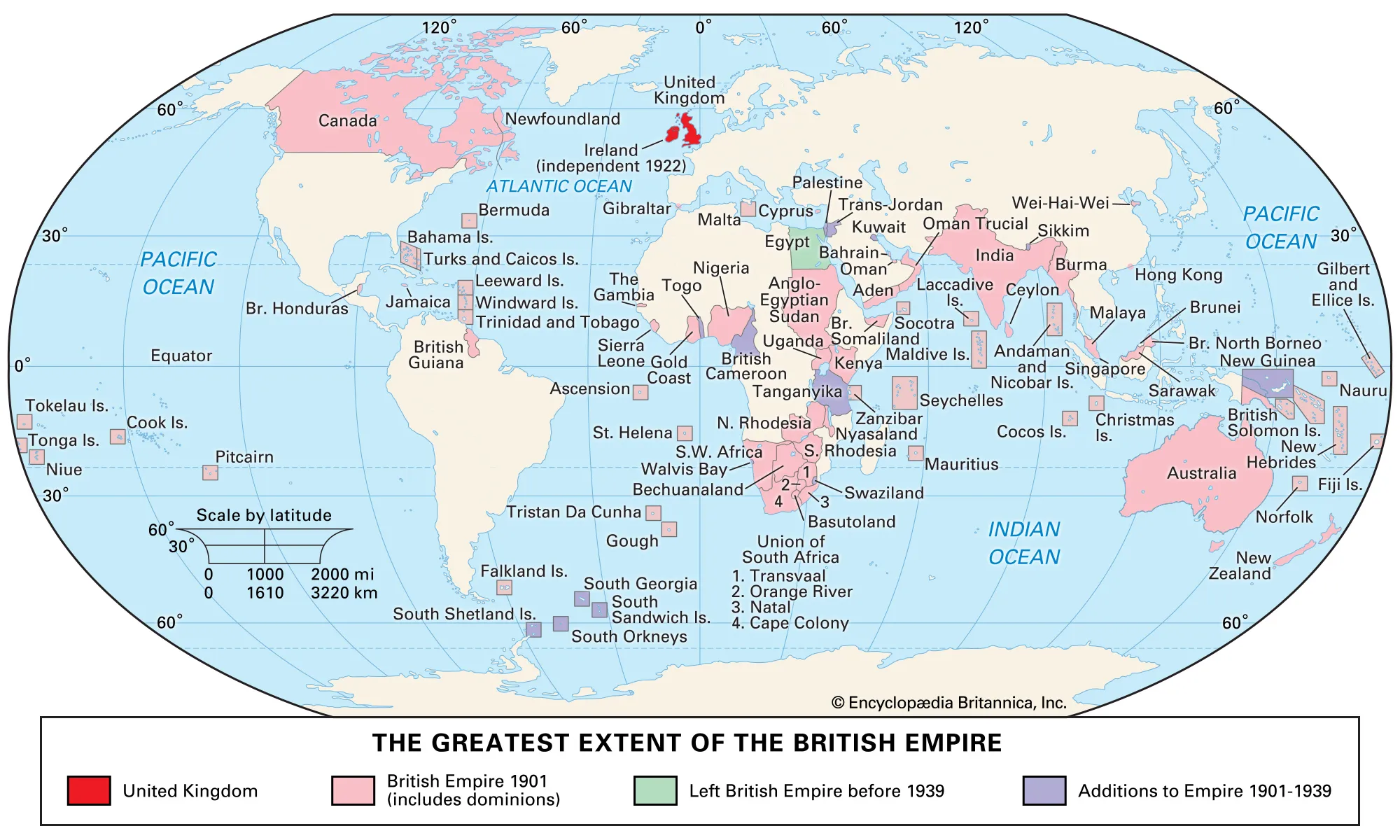
The grinding war is finally over after what feels like decades of bitter conflict on an inconceivably large scale. The entire world had become a battlefield in which the British had fought desperately to keep their imperial possessions secure in the face of vast hordes of enemies of all sorts, with the Navy and Army strained to the breaking point as battalions launched expeditionary raids and grinding, years-long campaigns everywhere from the steamy Orient to the Mediterranean, the bitter cold of the North to the coast and shores of Northern Africa.
Truth be told, victory, though it came in the end, had strained everything nearly to the breaking point. High taxes had driven the landed element to the breaking point. The necessity of convoys, of relying on domestic agriculture, of keeping the empire intact from an island the size of Michigan … had strained the British people and British society to the breaking point. Class tensions were high, taxes were already ruinously high, and to many elements, rich and poor alike, victory hardly seemed worth the immense cost in gold and blood.
And that was before considering the debt. The ruinous, mountainous, inconceivable debt. Well over 200% of GDP, it would later be calculated … and not at the negative interest rates of modernity either. Over 200% of GDP priced in real, somewhat gold-backed currency, with those who bought it demanding a real return. Ruinous, it was, ruinous! For this final conflict had been preceded not by many long years of peace, but by a similarly large, long conflict that had also involved campaigns across every corner of the earth, mutinous colonials, immense expense, and heavy taxation.
So victory had come. The war against an immense continental hegemon had been won, the international order was stabilized to the liking of and in accord with the ideology of the political elite, and the empire kept together in a hugely expanded state. But the cost had been high. Perhaps the cost had been ruinous …
I am, of course, describing Britain circa 1815, after its final victory over Napoleon at Waterloo. What followed was its century atop Olympus, the century where it ruled a quarter of the Earth’s surface, dominated all the sea lanes, was the world’s reserve currency, and became the world’s financial capital. Despite the expense, the defeat of Napoleon did not bring ruin, but success on an unimaginably immense scale.
What happened? Why did the Britain that defeated Napoleon become the hugely successful nation of the Victorian Age, but the Britain that followed the defeat of Hitler became a wrecked backwater, a miserable shell of its former self? The post-war debt load was similar. The human cost had been higher, but not remarkably so, particularly if the immigration outflows of the 19th century are considered.1 The logistical strains were similar, the social strains similar, and the fractious politics of the wars similar.
But the Britain of the 19th century became the hegemon of note, whereas that of the 20th century became essentially irrelevant. Mindset makes all the difference in the world, as I’ll show in this article, along with why this matters for Americans.
Britain after Napoleon
It is important to note that Britain’s immense imperial and economic success after the defeat of Napoleon was no sure thing. Yes, unlike much of Europe, it hadn’t been ravaged by invading armies. But it had lost its best colonies in the disastrous rebellion that followed the immensely expensive Seven Years’ War, a world war in all but name. It was staggering under a ruinous mountain of debt that could scarcely have been imagined earlier in the century: the national debt stood at somewhere around 210% of GDP, after post-war deflation had been accounted for, with somewhere around 10% of national GDP going just toward paying the interest on that debt.
Perhaps, worse, the population was restive. During the war, farmers and landlords had been pushed into embarking on extremely expensive schemes to drain and enclose land, schemes costing millions of dollars per thousand acres in today’s money; while that worked tolerably well during the war itself, as grain prices remained high, the expense and the cost of the debt used to achieve it was a crushing burden after the end of the war meant renewed trade and a fall in grain prices. That expense and the pain caused by it meant that not only were the farmers and the landlords struggling to make ends meet, but they had little left to pay agricultural laborers, who had their wages cut as a result, putting that bottom rung of the social ladder in an immensely precarious and dire economic position.
Much the same situation played out in the nascent industrial sector, where the end of war meant falling prices for finished goods and thus both lower profits and lower wages, angering industrialists and workers alike. As food remained expensive compared to wages, this meant major unrest, too. Thus, other than perhaps some financiers who were doing well off the debt, particularly given post-war deflation, most segments of society were unhappy at how the government was being run.
A high debt load that could only be maintained with high taxes, a highly restive and discontented population, and an economy-punishing bout of deflation are not the stuff of which great empires are typically made.
But the British figured it out, and did so without massive inflation, government default, or authoritarian societal repression.
- This is noted by AJP Taylor in his The First World War and Its Aftermath
Comments Off on Britain’s recovery after a punishing existential war against a colossal European tyrant
February 20, 2026
Reform UK falters, but Restore Britain rises to challenge it
Since the last general election in Britain, the rising power has been Reform UK under the unsteady leadership of Nigel Farage. A right-wing alternative to the horrifically incompetent Conservative Party, led by the man who kept the fires burning for Brexit? Seems like an obvious winner over the sagging Labour Party under Keir Starmer who just had to be less incompetent than the Conservatives but couldn’t manage even that low bar. But all was not well with Reform UK, despite being likely winners of the next election, and a lot of it comes down to Nigel Farage’s weaknesses. He seems incapable of dealing with strong personalities in his own party and seems to see any disagreement as a form of betrayal. One of the men he exiled from the party has now raised his own banner to much acclaim from the people who once were strong Farage supporters:

On Friday, Rupert Lowe, the independent Member of Parliament formerly of Reform UK, launched his own political party named Restore Britain. At the time of writing, the announcement video has amassed upwards of 30 million views on X, with many of the Western world’s most popular right-wing social media accounts — from Raw Egg Nationalist to Wall Street Mav — cheering him on.
Critics of Lowe argue that few outside of the culture war circles on X have heard of him, but these claims don’t track — Lowe has over 250,000 followers more on Facebook than he does on X, and has stated that he reaches “far more people on Facebook than X”. Still, while Lowe’s popularity has dramatically increased in the short year-and-a-half following his election to Parliament, he does not carry the same name recognition as Nigel Farage, let alone the latter’s proven experience of winning elections, as recent Reform victories have demonstrated, and contentious campaigns, being a key figure in the pro-Brexit campaign.
Restore Britain has the potential to be both very positive and hugely detrimental to Britain’s political future. Lowe’s announcement video was a masterclass in giving his admirers exactly what they want: decisive language promising a rebirth of a pre-Blair Britain, with fewer foreign nationals, fewer people on benefits, and more money to go round. The sober nature of the message was appealing — Lowe made it clear that the challenge facing the party, and the country, is not an easy one, but nor is it insurmountable. With stronger language than we have heard from Reform, Lowe promised to remove all people who arrived in Britain illegally, along with legal foreign nationals who do not meaningfully contribute to society.
Policy proposals like this — from a brand-new party with very little in the way of a party infrastructure as yet — do not have to be fully fleshed out to grab hold of the public imagination. What is likely is that it pushes the Overton window even farther rightward, and we begin hearing traditional centre-right figures like Kemi Badenoch (as she is centre-right in the political landscape of 2026) parroting some of the same points. With much of the online right rallying behind Lowe, we may begin to see a surge in the early stages of the posting to policy pipeline, whereby anonymous meme accounts — the modern politician’s crowdsourced spin doctor — churns out a large volume of pro-Lowe content, driving the narrative as others strive to keep up.
Lowe’s party may inadvertently help Reform, though, this by helping solve one of the main problems it has faced: attracting too many nutcases. Restore is positioning itself further to the right than Reform — and while this is no bad thing in and of itself, it will likely mean that those who believe in the most extreme solutions see Restore as the closest party to what they believe.
In UnHerd, Rob Lownie calls the movement “Lowe’s Powellite revolution”:

Rupert Lowe’s official portrait by Laurie Noble, 10 July, 2024 via Wikimedia Commons
Rupert Lowe deals in the politics of return: illegal immigrants are going back, and so is Britain. The Great Yarmouth MP, formerly of Reform UK, has now launched Restore Britain as a new political party, and on Wednesday evening claimed that it had passed 70,000 members. The launch announcement was marked with a stirring video of Lowe in his farmer’s get-up, as well as a series of semi-ironic nationalist compilations presumably made by Restore’s Zoomer footsoldiers. In one of these, among nostalgic nods to Geoff Hurst and Zulu, 1997 is invoked as the year when everything started to go wrong. Speaking over grainy images of a lost Britain, Lowe sums up his political outlook: “I think the state is bad, and I think the individual is good.
One area where the state has undoubtedly failed, in Lowe’s eyes, is on the matter of immigration. While Reform has pledged to deport all illegal immigrants, Restore wants to go further. Lowe has promised to scrap the asylum system entirely, also stating last week that “legal immigration will almost come to a complete halt”. The goal is not just to halt migrant influxes but to reverse them. “Net zero immigration is weak, weak, weak. It is insufficient and it is too late,” he said in the speech with which he launched the party. “The barbarians are already in the gates.”
The remedy, Lowe warns, will be “incredibly painful”: a characteristically abrasive verdict. It is one thing to criticise quangos, and quite another to say that “we must crush parasitic Britain”. And as for the dissonance between government and individual? “The state has definitively become the enemy of the people.”
In his doom-laden pronouncements, Lowe resembles no British political figure so closely as Enoch Powell, whose 1968 “Rivers of Blood” speech has led a radioactive afterlife in the national consciousness. For Powell, Britain’s willingness to take in tens of thousands of immigrants rendered it “a nation busily engaged in heaping up its own funeral pyre”. And compare Lowe’s talk of necessary pain to that 1968 call for an “extreme urgency of action now, of just that kind of action which is hardest for politicians to take”. For better or worse, Powell presaged contemporary debates over migration and nationhood. The challenge, as Keir Starmer found out with his more milquetoast “island of strangers” line, is to acknowledge voters’ frustrations without sounding like him.
Powell has been a political lodestar of sorts for Nigel Farage, Lowe’s bête noire and former boss who suspended him last year over dubious accusations of bullying. The Reform leader recalled being “dazzled”, as a schoolboy in the Eighties, listening to the former Tory MP speak. Last year, he insisted that Powell was fundamentally right about the scale of “community change” in the country.
On The Podcast of the Lotus Eaters, Carl Benjamin interviews Rupert Lowe:
Comments Off on Reform UK falters, but Restore Britain rises to challenge it
QotD: The burden of “emotional labour”
Researchers at Stanford have finally given a name to something many women have been dealing with for years. It’s called mankeeping. And it’s helping explain why so many women are stepping away from dating altogether.
Yes, from the pages of Vice, it’s a men-are-the-problem-and-therefore-unnecessary article. Because we haven’t had one of those in weeks.
Mankeeping describes the emotional labour women end up doing in heterosexual relationships.
Lesbian relationships being entirely free of aggravation and disappointment, you see. With rates of failure and divorce twice that of heterosexuals, more than double that of gay male couples, and with high rates of alcoholism and spousal abuse. What one might infer from that, I leave to others.
[Mankeeping] goes beyond remembering birthdays or coordinating social plans. It means being your partner’s one-man support system. Managing his stress.
And,
Interpreting his moods.
At which point, readers may wish to share their favourite joke about female indirectness and the two dozen possible meanings of the words “I’m fine” when uttered by a woman, depending on the precise intonation and the current alignment of the planets.
Readers may also note the replacement of a once common but now seemingly unfashionable grievance – “Men don’t express their feelings” – with one of a much more modish kind – “Men are expressing their feelings and it’s exhausting and unfair”.
Holding his hand through feelings he won’t share with anyone else. All of it unpaid, unacknowledged, and often unreciprocated.
One more time:
All of it unpaid,
It occurs to me that there’s something a little dissonant about the framing of affection and basic consideration – say, remembering your partner’s birthday – as “unpaid”. As “emotional labour”. As if being in a relationship or having any concern for those you supposedly care about were some onerous, crushing chore. As if you should be applauded – and financially compensated – for the thirty-second task of adding a birthday to the calendar on your phone.
The attitude implied by the above would, I think, explain many failures on the progressive partner-finding front and the consequent “stepping away from dating altogether”. Though possibly not in ways the author intended.
Before we go further, it’s perhaps worth pondering how the conceit of “emotional labour” is typically deployed by a certain type of woman. Say, the kind who complains, in print and at great length, about the “emotional labour” of hiring a servant to clean her multiple bathrooms. Or writing a shopping list. Or brushing her daughter’s hair.
And for whom explaining to her husband the concept of “emotional labour” is itself bemoaned as “emotional labour”. The final indignity.
The kind of woman who bitches in tremendous detail about her husband and his shortcomings – among which, an inability to receive instructions sent via telepathy – in the pages of a national magazine, where friends and colleagues of said husband, and perhaps his own children, can read on with amusement. The kind of woman who tells the world about how hiring servants is just so “exhausting”, while professing some heroic reluctance to complain.
As I said, worth pondering.
But back to the pages of Vice, where Ms Ashley Fike is telling us how it is:
According to Pew Research, only 38 percent of single women in the US are currently looking for a relationship. Among single men, that number jumps to 61 percent. The gap says a lot. Women aren’t opting out of love. They’re opting out of being someone’s therapist with benefits.
Stoic, heroic women burdened by needy, emotional men. It’s a bold take.
And I can’t help but wonder what all of those single women, cited above, are doing instead of finding a suitable mate and building a happy life, perhaps even a family. Are they searching for a sense of purpose in causes, protests and political fashion, fuelled at least in part by envy and resentment? Just speculation, of course. But it would, I think, explain the tone and emotional convulsions of so many single, progressive women.
The Guardian calls mankeeping a modern extension of emotional labour, one that turns a partner into a life coach. This isn’t about avoiding vulnerability. It’s about refusing to carry someone else’s emotional weight while getting little to nothing in return. And there’s nothing wrong with feeling that way.
Again, the term “emotional labour” and its connotations of calculation, antagonism, and something vaguely inhuman. As if the concept of wanting to care, to help, to remember those birthdays, were somehow alien or offensive.
The reliance on this conceit – as the basis for an article, perhaps an entire worldview – doesn’t strike me as an obvious recipe for contentment, or indeed love. What with the endless cataloguing of shortcomings. All those reasons to resent.
Some men have started opening up more, which is good.
Ah, a glimmer of hope.
But too often, that openness lands in the lap of the person they’re sleeping with instead of a friend or a therapist. Vulnerability without boundaries can feel more like a burden than a breakthrough.
So, don’t bore your wife with your troubles, gentlemen. No, search out a therapist. Or, “Be vulnerable, like we asked, but somewhere else”.
David Thompson, “Let’s Be Alone And Unhappy”, Thompson, blog, 2025-11-16.
Comments Off on QotD: The burden of “emotional labour”
February 19, 2026
Too many “conservatives” today are just slower-speed liberals
Most self-described conservatives in politics are not particularly inclined to “conserve” anything, as Spaceman Spiff points out, they’re pretty much onboard with the liberal vision they just want it to be fractionally slower or infinitesimally not-quite-as-liberal as the liberals. They are the ineffectual, neutered, tame opposition:

Modern conservatism is not conserving our world. Mainstream conservatives seem to have no interest in the real issues affecting us.
At best they merely wish to slow down our decline. At worst, they are fully on board with the destruction.
When they do act or speak they often pick a safe version of a sensitive issue.
In Britain there is lots of talk of illegal immigration and how the state mishandles it. None about ruinous volumes of legal immigration, almost one million per year, and what it is doing to the country.
Pushback against climate policy falters on the speed of changes, not the underlying fraud of climate science itself.
No conservative will honestly discuss the plummeting happiness of women recorded across the West and yet there it is, writ large in antidepressant prescriptions and social media videos. It may have multiple causes, but feminism cannot be challenged so they say nothing lest they are reprimanded by the sisterhood.
Everything real is forbidden. It is all an act.
Like the left, those on the right are increasingly unable to face reality which means they can never course correct. They are trapped within a self-referencing culdesac designed to maintain their position in someone else’s hierarchy. That is why they have become so ineffective and appear to do very little except moan about the pace of change while they say nothing about the changes themselves.
We sense the conservatives do wish to conserve things but they are inexplicably mesmerized by the opinion of their enemies. They seek reassurance and applause from people who view them as evil.
This makes no sense to ordinary people.
Thinking like the enemy
The problem with modern conservatives is they are animated by underlying drives that cannot create a conservative or traditional society. They have adopted the thinking patterns associated with the progressive left while still using the language of conservatism.
The left is traditionally defined by a series of interrelated traits that manifest in much of what they agitate for.
- A desire for centralization;
- A notable external locus of control;
- Seeking approval from the group.
Central control systems feature prominently in all left-wing schemes. From local councils to national governments, those who gravitate to the left often want to create centralized decision-making bodies to manage society. Institutions, government departments, NGOs and even charities all feature, but only when they act as the controlling authority in some field of interest.
Related to this is a clear external locus of control visible in individuals and their decisions. There is a relief others make the key decisions, so people actively seek out direction from an established authority. This ensures minimal resistance to the many centralized schemes we see emerge.
Acting solo creates discomfort. An older formulation understood this as the rejection of responsibility. Today it often manifests as an obsession with experts making key decisions for us all, partly to mask individual cowardice. People making their own decisions in life are derided as naive or dangerous.
During Covid decision makers became hysterical at the very idea we would reject the advice of experts and perform our own research despite the issue being medical and therefore dangerous.
A related phenomenon characteristic of many leftists is the need for approval, often from a group. Not just others making decisions but a dependency on confirmation and endorsement to ensure thinking and behaviour follows an established norm. This is the antithesis of original thinking or bold action; it is how adolescents often behave.
In today’s world this deep urge is reflected most in the social media landscape of harvesting attention and likes. Every fledgling narcissistic applause-seeking trait is given full expression in the endless search for approval from strangers. Whole sections of society seem lost to impulses we once understood as immature and dysfunctional.
Update: Not long after I queued this item for publication, a Canadian example popped up in the news, as yet another rock-ribbed “conservative” suddenly realized that electing a Liberal was what his constituents actually wanted when they inexplicably voted for him as a Conservative candidate in the last federal election.

Edmonton Conservative MP Matt Jeneroux has crossed the floor to the governing Liberals.
“I am honoured to welcome Matt Jeneroux to our caucus as the newest member of Canada’s new government,” said Prime Minister Mark Carney, in a post on X.
“I am grateful to Matt and his family that he will continue his service as a strong voice for Edmonton Riverbend in Parliament.”
Carney said Jeneroux, who has represented the riding of Edmonton Riverbend since 2015, will take on a new role as special advisor on economic and security partnership for the Liberals.
Jeneroux is the third Conservative to join the Liberals, after colleagues Michael Ma and Chris d’Entremont crossed the floor late last year.
A Liberal source says Jeneroux first met Carney back in November, which was the first of at least two conversations, with talks between Carney’s office and Jeneroux continuing since. That source added that it has been a “long journey” to Wednesday’s announcement.
d’Entremont crossed the floor to join the Liberals in November, which unleashed a wave of speculation as to who might be next, with Jeneroux’s name heavily floated. Jeneroux then announced his plans to resign from the Conservative caucus, citing family reasons. Since then, he has not voted with the Conservatives and did not attend the party’s recent convention in Calgary in late January.
After Carney’s announcement, the prime minister updated his daily itinerary, adding a stop in Edmonton to meet with Jeneroux before attending events in British Columbia.
“Matt brings a wealth of experience in Parliament, despite his young demeanor,” said Carney, while sitting next to Jeneroux.
The MP from Edmonton welcomed the prime minister and laid out the reasons for why he had reversed his decision to resign.
“I had announced my resignation back in November, largely due to family reasons, but quite simply, couldn’t sit on the sidelines after seeing what the prime minister’s ambitious agenda he was undertaking across the country and across the world,” he said.
“Quite honestly, it was the speech in Davos where you took everything head on,” he added.
Jeneroux said it felt disingenuous and “quite simply wrong” to sit on the sidelines.
Hotchkiss Model 1886 3-pounder Quick Firing Gun
Forgotten Weapons
Published 26 Sept 2025Small fast boats with torpedos (or other explosives) have always been a threat to large warships. One of the weapons the British Royal Navy adopted to counter that threat was the Hotchkiss Model 1886 “Quick Fire” gun. This meant that it was a breech-loaded gun that used self-contained cartridge ammunition, instead of separate powder bags and projectiles. Mounted on a recoil-adsorbing soft mount with a wide range of movement and steep depression angle, guns like this could fire at small mobile torpedo boats that a capital ship’s main armament couldn’t handle.
This particular model is a 47mm bore, or 3-pounder as described in British service. It uses a vertically-traveling breech block, and more than 3,000 or them were acquired by the British. Two of them were employed as part of the Falkland Islands coastal defenses at one time. This example is one of two brought down from Gibraltar fairly recently and refurbished for ceremonial use on the Islands. Thanks to the FIDF for setting it up on its mount so I could film it for you!
(more…)
Comments Off on Hotchkiss Model 1886 3-pounder Quick Firing Gun
February 17, 2026
QotD: Britain treats asylum seekers significantly better than their own citizens
The page continues: “You’ll get extra money to buy healthy food if you’re pregnant or a mother of a child aged three or under”. The payment is £5.25 per week for pregnancy, £9.50 for a baby under one, £5.25 for children aged one to three, plus a one-off £300 maternity grant for anyone expecting a child or with a baby under six months. Even when asylum is refused, support continues: “You’ll be given somewhere to live and £49.18 per person on a payment card for food, clothing and toiletries”. Only those who decline the accommodation lose the card.
Medical care is covered in full. “You may get free National Health Service healthcare,” the Government states, including “free prescriptions for medicine, free dental care, free eyesight tests and help paying for glasses”. Children are guaranteed a place in a state school and “may be able to get free school meals”. The terms are so generous that the NHS issues a dedicated HC2 certificate for people on asylum support, giving them automatic exemption from all prescription and dental charges, free eye tests and optical vouchers, and even help with wigs and fabric supports.
Compare this to the treatment of the people who pay for it. A British worker who loses his job must apply for Universal Credit, then wait at least five weeks before receiving a payment. Any advance must be repaid out of later instalments. He must show that he is seeking work, accept appointments and interviews, and risk sanctions if he misses them. He is scrutinised as a potential cheat. An asylum claimant is treated as a recipient of moral debt, requiring no proof of worthiness.
When the native taxpayer falls ill, he must pay £9.90 per prescription unless he qualifies for a limited exemption. He may buy a “pre-payment certificate” to spread the cost, but the charge remains. Dental treatment on the NHS costs £27.40 for a check-up, £75.30 for a filling, £326.70 for a crown or denture, and many cannot find an NHS dentist at all. Asylum seekers, by contrast, present their HC2 certificate and pay nothing. If the citizen asks the council for housing, he is told that the waiting list is full, that he is not a “priority case”, and that the private rental market is his problem. The asylum applicant, by the State’s own words, is “given somewhere to live if you need it”.
None of this is accidental. The cost of asylum support in 2023–24 was about £4.7 billion, according to the Home Office’s own figures, of which £3 billion went on hotel accommodation. In 2024–25, the bill fell slightly to £4 billion, but £2.1 billion of this was still for hotels — an average of £5.7 million every day. The National Audit Office has found that the ten-year accommodation contracts, first priced at £4.5 billion, are now projected to cost £15.3 billion. Between April and October 2024 alone, £1.7 billion was spent on housing and managing asylum seekers. The Financial Times has estimated the total annual cost of the asylum system at roughly £4.8 billion. The number of people receiving asylum support — housing, cash or both — now stands at over 100,000.
The figures expose a transfer of resources on a colossal scale. What is presented as “humanitarian duty” has become a domestic welfare state for foreigners, sustained by British workers who receive less support in return for greater taxation. The British State can house every migrant but not every nurse, find free dental care for the undocumented but not for the elderly, provide optical help for those who have just arrived but not for those who have paid into the system all their lives.
Marian Halcombe, “Britain’s Welfare Empire: A State that Feeds Strangers and Starves Its Own”, The Libertarian Alliance, 2025-11-05.
Comments Off on QotD: Britain treats asylum seekers significantly better than their own citizens
February 16, 2026
The destruction of Dresden, February 1945
If you’ve watched the two-part video on the bombing of Dresden by LordHardThrasher (Part 1, Part 2), much of this will already be familiar to you, as Ed West discusses the history of the city up to the point the RAF bombs began to fall on Shrove Tuesday in 1945:
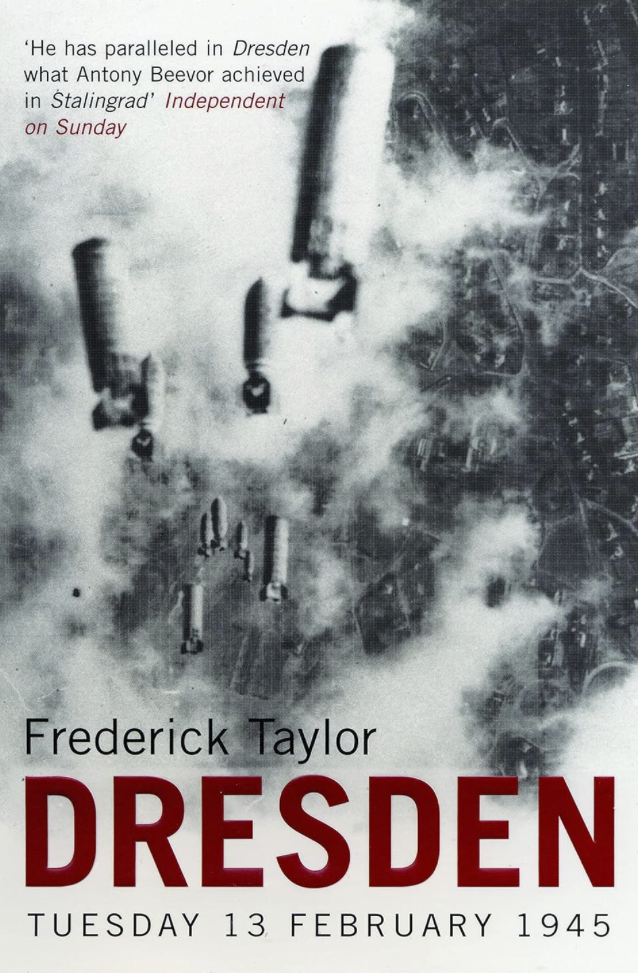
… Just over six years later the city of Dresden would be reduced to ashes by hundreds of bombers from the RAF and US Air Force, a horror that began on the evening of Shrove Tuesday, February 13, 1945, lasting until Thursday morning. Griebel would survive, but all his art went up in the blaze.
Dresden is perhaps, after Hiroshima, the name most synonymous with slaughter from the air, and in Britain at least the most controversial. Last year, while visiting this incredibly beautiful city — much of it now rebuilt — I reread Frederick Taylor’s account of the bombing, published back in 2005 on the 60th anniversary of the event.
Dresden’s destruction was extensive. Almost no buildings in the centre or its inner suburbs survived the bombs, and the death toll was immense, although difficult to assess in a city packed with refugees from the east. Anything between 20,000 and 80,000 fatalities is possible, although the consensus seems to be around 25,000.
That night was to be the worst of many wartime firestorms, a meteorological event in which the heat of the blaze becomes so intense, up to a thousand degrees centigrade, that the oxygen is sucked out of the surrounding air. More died in Dresden from asphyxiation than fire, and even those who thought they had found shelter in fountains were boiled alive. Many more drowned in the city’s reservoir, where they had gone to seek protection, their energy sapped by the soaring temperatures, unable to climb out. The bombers, thousands of feet above, could feel the warmth of the thousand fires below.
[…]
As everyone in the 1930s was well aware, the new war would bring aerial destruction on a hideously greater scale, and when it came again, it was the Luftwaffe who first put these ideas into practise, first in Poland and then Rotterdam.
After failing to destroy the Royal Air Force over the summer of 1940, the Nazis switched to aerial bombing of British cities. Between September 7, 1940 and New Year’s Day 1941, London was attacked on 57 consecutive nights, killing 14,000 inhabitants, a rate of 250 fatalities for each day of bombing. The German air force went on to kill an estimated 43,000 British civilians over the course of the war, with V-1 attacks continuing until the last weeks of the war.
On November 14, 1940, over 500 German bombers took off for a mission that would gift their language a new verb: Coventrated. Five hundred tons of high explosives, 30,000 incendiary bombs, fifty landmines and twenty petroleum mines were dropped on the target, and the medieval city went up in flames.
Like the blitz on other British cities, morale was not crushed in Coventry, but something dawned on the British high command. The destruction of Coventry’s infrastructure, utilities and transport had proved far more damaging than the destruction of any purely “military” target. Furthermore, bombers were notoriously inaccurate, and one survey showed that only 2 per cent of bombs fell within even one thousand feet of their intended point. Aerial bombardment of cities would prove far more effective than any hopeless targeting of particular coordinates.
They also learned that a large enough bombing raid would result in a firestorm, in which air currents are drawn in from the surrounding area, causing the fire to burn far more intensely. Indeed, a major attack on the City of London on December 29, 1940 might have become another firestorm but for the bad weather.
The British had been initially reluctant to take the war to Germany. While Poland was left to endure hell, leaflets were dropped over Berlin in October 1939 claiming that Nazi leaders were secretly profiting from the war, leading Noel Coward to suggest that it looked like we were trying to bore the Germans to death. There is even the apocryphal story about British official Sir Kingsley Wood refusing to bomb industrial targets in the Black Forest because it was private property. Indeed, our attempts to bomb Germany in 1940 were so feeble that Goebbels had to fake British “atrocities” to rouse the German public
With the entry of the United States and Soviet Union into the war in 1941, and with the German defeat at Stalingrad, the shoe was now on the other foot. The British invested more resources in Bomber Command and its head, Air Marshall Arthur Harris. “Bomber” Harris would become representative of the entire policy of destroying Germany’s cities, and a figure of controversy; the unveiling of his statue in 1992 attracted protests and has been repeatedly vandalised, but like many architects of wartime destruction, he was motivated by a desire to prevent a repeat of what he saw in 1914-18. The son of a colonial official who might have spent the rest of his life as a farm manager in Rhodesia were it not for war, he had joined the Royal Flying Corp in the first conflict and from his plane saw the horror of trench warfare and became determined that this sort of stalemate should never be repeated.
Having stuck to targeted industrial centres, in February, 1942 Allied command issued the Area Bombing Directive authorising the wide scale destruction of enemy cities. On 28 March the Hanseatic town of Lübeck was destroyed in a firestorm, and its most famous son, the anti-Nazi novelist Thomas Mann, appeared on BBC radio saying that while he regretted the destruction of his native city, “I think of Coventry, and have no objection to the lesson that everything must be paid for. Did Germany believe that she would never have to pay for the atrocities that her leap into barbarism seemed to allow?”
After the Lübeck bombing, Goebbels approached a state of panic for the first time, describing the damage as “really enormous”. He responded, in April 1942, by saying that he would “bomb every building in England marked with three stars in the Baedeker Guide” – Exeter was now hit in retaliation.
On May 30 the Allies launched what Harris called “the Thousand Plan”, the first thousand-bomber raid. Cologne and Hamburg were singled out for destruction, but on last-minute meteorological advice only the Rhineland city was chosen. Hamburg’s citizens would never know how fate had saved them – if only for another year.
So shocked were the Germans by the attack that the authorities forced the city’s fleeing citizens to sign a pledge of secrecy about what they saw, which ended with the sinister line “I know what the consequences of breaking this undertaking will be”.
Things would only get worse, and the Allies were getting both more destructive and more skilled. In faraway Utah, the Americans were now busy testing the destruction of German-style buildings, even hiring German refugee architect Erich Mendelssohn to recreate a German apartment block.
Comments Off on The destruction of Dresden, February 1945
February 15, 2026
The smartphone as a tool to create a real-life Idiocracy
Not being much of a film fan, I’d never seen the movie Idiocracy, but based on the description in Christopher Gage’s rant against the smartphone, I might not need to watch it as it’s happening all around us:

Transport for London, the mythical entity alleged to manage the city’s Tube, has revealed its campaign to tackle the smartphone scourge: sickly posters splashed in kindergarten colours.
The campaign targets the “disruptive behaviour” of passengers who were evidently raised by a pack of snarling hyenas. They blast reels, videos, music. They FaceTime their cackling friends. Not so long ago, a fellow passenger revealed to us — her captive audience — that someone named Sarah had caught the clap from someone named Travis. Syphilis? How literary.
Miraculously, researchers at Transport for London discovered a rare tribe thought to be long extinct: Londoners who communicate with their fellow human beings by making noises with their mouths — one thousand of them, in fact.
Researchers approached these strange beings with a mixture of wonder and trepidation. They prodded them with a stick. That didn’t work. After jabbing them with a cattle prod, they looked up from their phones. Several members landed in Accident and Emergency, complaining of neck strain injuries.
Seventy percent of those surveyed said the constant noise screaming out of smartphones drove them crazy. One responder suggested offenders receive forty lashings in public. That is a bit much. Ten should do the trick.
TFL wavered from such brutal and effective methods. Campaign posters politely ask passengers to wear headphones.
I’m afraid that TFL’s well-meaning campaign hasn’t quite restored sanity on the London Underground.
Last week, I sat next to a grown man grinning at his phone like a Hindu cow. On the screen was a captivating spectacle. Someone, somewhere, makes it their daily business to buy gigantic, waist-height glass bottles of soda. This clearly well-adjusted person then rolls the bottles down a flight of concrete steps. Our friend dissolved the journey between Hammersmith and Leicester Square in a trance. Bottle. Roll. Smash. Bottle. Roll. Smash.
This reminded me of the satirical film, Idiocracy. The plot follows U.S. Army librarian Luke, and prostitute Rita.
After signing up for a hibernation experiment, the two awake in America, year 2500. Mountains of trash litter the landscape. Planes fall out of the sky. The citizens drag their gormless faces between Starbucks (which is now a coffee-serving brothel) and shopping malls even more dementing than those today. Over centuries, the dumb have biologically outgunned the smart.
The citizens of this moronic inferno drain their days glued to hyperactive screens. Their favourite content includes the Masturbation Channel and a reality TV show called “Ow! My Balls!” That show follows a hapless man as he gets whacked in the testicles.
They cultivate high culture, too. The profound film, Ass, zooms in on a pair of bare bum cheeks. The sophisticated audience fizzes with laughter as the bum, for two hours, passes wind.
Back in 2006, Idiocracy was a well-done satire which stretched logical extremes. Today, I’m not so sure it is as ridiculous as it once seemed. Just spend ten minutes on the Tube, inhaling the noxious TikTok fumes spewing from smartphones.
Transport for London has a point. But it is far too late. We are a nation of dopamine addicts. Those dopamine crack pipes stitched to our palms are quite literally designed to suck away as much of our time and attention as possible. An intervention, at this late hour, must be drastic.
How about a campaign outlining the terrifying effects of watching brain-rot content for hours and hours each day? A growing body of research suggests today’s smartphone is tomorrow’s lobotomy. Am I rioting in hyperbole? No.
One study found that watching short-form video is more harmful to our brains than soaking them in booze. At least, the latter indulgence might get you laid.
Several studies link smartphone culture with declines in comprehension, literacy, and the ability to reason. Others link smartphones with rising narcissism and collapsing social capital. And then there’s the nascent research suggesting that smartphone addiction may trigger ADHD and Autism-like symptoms in the addicted.
Comments Off on The smartphone as a tool to create a real-life Idiocracy
February 13, 2026
Lines of Fire: Operation Husky – The Invasion of Sicily 1943 – WW2 in Animated Maps
TimeGhost Cartographic
Published 12 Feb 2026July, 1943. With the German summer offensive in the East well underway, and Allied operations in North Africa wrapped up, a decision is made to strike Axis Europe on the ground for the first real time. Sicily shall be their battleground, and the omens are good. Still, landing and commanding a huge multinational force in hostile territory is a challenge the Western Allies have not had to face head-on before, but one they must overcome if they wish to have any shot of defeating Hitler and Mussolini once and for all.
00:00 Intro
01:13 Background
04:42 Disposition
07:32 The Landings & Initial Fighting
09:34 Fighting Across the Island
11:56 Aftermath
16:38 Conclusion
(more…)
Comments Off on Lines of Fire: Operation Husky – The Invasion of Sicily 1943 – WW2 in Animated Maps
February 12, 2026
Pro-tip – be suspicious “of any reporting on NATO from Europeans, especially from Brussels”
CDR Salamander reacts with some exasperation to how European mainstream media are choosing to report pretty much anything involving the US/NATO relationship:

I’ve about reached my limit on lazy, high-emotion/low-reason, or performative reporting from Europe on the NATO/U.S. relationship. If the EuroLeft/EU-uber-alles crowd was really concerned about keeping the relationship between the U.S. and European NATO as good as possible, they would be making an effort to bridge and salve over some of the tough-love comments coming out of DC.
However, that is not what they are doing. No, they are seeing a gap, and are trying to pound a wedge into it. They see a spark, and look to throw a litre of petrol on it.
I guess what galls me the most is that their actions are, in operation, producing exactly the opposite condition they will tell you they are concerned about.
These are not dumb people. They, or the ones they work for, know what they are doing. At best, they are farming rage clicks. At worst, they are moving towards a desire the core of the EU nomenklatura has been driving for over decades — get the U.S. out of Europe.
They have found allies in part of the U.S. right-of-center coalition … and they will leverage that as well.
The below is just another example. A ham-fisted one, but one nonetheless.
Let’s dive in.
I don’t like to call out people by name … wait … yes I do.
Anyway, this isn’t personal; this is professional. No, wait. This reporting is so bad that, as a former proud NATO staff officer, I cannot let this stand. It is kind of personal. Plus this makes a larger point.
It isn’t petty either. As mentioned above, very serious people who are not our friends or our NATO allies’ friends — most of whom are citizens of NATO nations — are trying to seize the moment to push a multi-generational effort to wedge conflict between the U.S. and the Europeans in NATO.
Yes, there are some who are unknowingly doing their bidding, but make no mistake — bad reporting is allowed for a variety of reasons and should be called out when it happens.
First the larger point, then the details.
The reaction in Europe to the clear and direct peer counseling of our European allies by the U.S. over the last year has just demonstrated the fact that many of the people who put themselves forward as “experts” simply do not have either the knowledge or inclination to be anything of the sort.
For ideological, political, or standard issue look-at-me’ism, reporting about the state of the alliance and the American place in it drifts from farcical to the edge of a PSYOPS project by the usual suspects of the EuroLeft who have been trying to prove their anti-American bonafides since they first flirted with the cute socialist girl at the anti-NATO march in college.
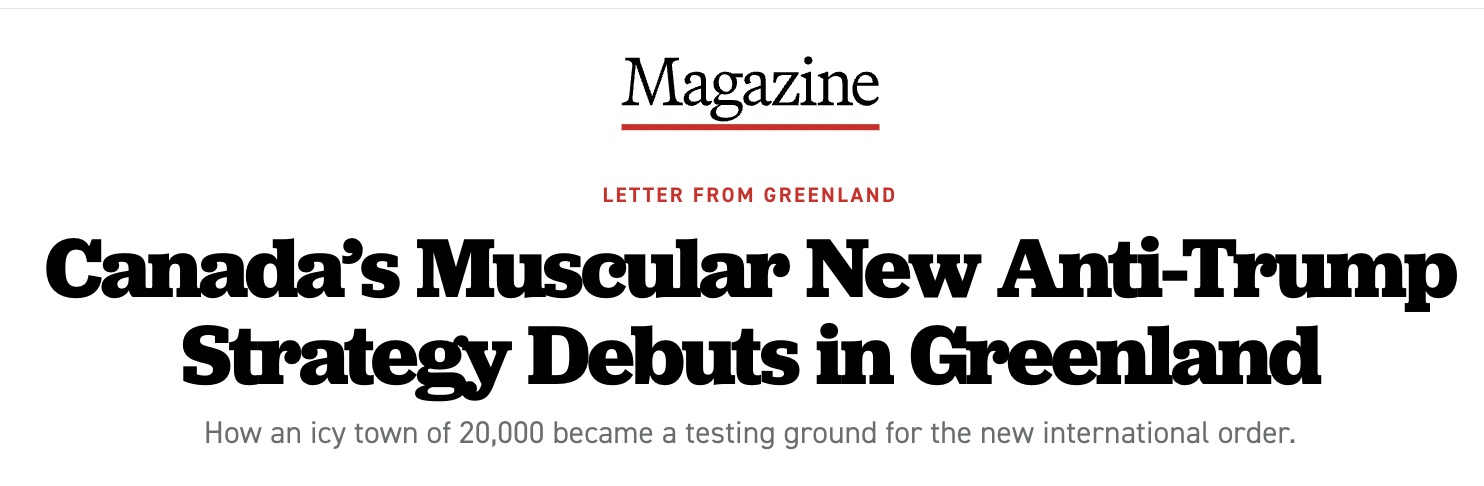
In related news, Chris Bray discusses Canada’s “Muscular New Anti-Trump Strategy™”, showing that it’s not just EU-based media to be suspicious of:
Recall the recent discussion here of the “Carney Doctrine”, after Canadian Prime Minister Mark Carney threw down the gauntlet at Donald Trump’s feet. Orange Man Bad, so Canada is going to become a rising power and lead a new international coalition to challenge the cruel American hegemon and stuff. The deeply silly opinion pages of the deeply silly New York Times celebrated Carney’s deeply silly speech, and declared the potential emergence of “an economic and defense alliance that rivals American power.” Back when all of this happened, I discussed the obvious condition of the Canadian armed forces, and advanced a sophisticated argument that LOL.
Reality keeps making the same joke. At the Federalist this week, I wrote about the recent notifications in the Federal Register about a series of arms deals that will allow Canada to make large purchases of American weapons. So as Carney spoke about challenging American military power on the world stage, he knew that his plan for doing that was to get the weapons from America. It’s an I want to punch you in the face, but first I need you to teach me how to throw a punch maneuver.
And then, this morning, Politico dropped this bomb, by which I mean that Politico has been eating a lot of Taco Bell and dropped into a stall in the gender-neutral office bathroom:
Muscular! Canada’s been puttin’ in work at the world order gym.
Note subhed: This is a story about “the new international order”. America is being shoved into the global background, now, as Canada flexes its haaaard new muscles. The story is illustrated with a ship, so obviously a huge announcement about naval powe— nope.
Comments Off on Pro-tip – be suspicious “of any reporting on NATO from Europeans, especially from Brussels”


