
World War Two
Published 28 Apr 2022We’ve seen it time and time again in this war. Supposed Allies arguing with each other instead of fighting the enemy. But when SOE and MI6 begin vying for leadership of Britain’s secret war, it’s more than cross words. Now there are lives at stake.
(more…)
April 30, 2022
God Help These British Agents – WW2 – Spies & Ties 16
Comments Off on God Help These British Agents – WW2 – Spies & Ties 16
Tank Chats #145 Conqueror | The Tank Museum
The Tank Museum
Published 14 Jan 2022► JOIN OUR PATREON: Our Patreons have already enjoyed Early Access and AD free viewing of our weekly YouTube video! Consider becoming a Patreon Supporter today: https://www.patreon.com/tankmuseum
► TIMESTAMP:
00:00 – INTRO
00:28 – FEATURES
(more…)
Comments Off on Tank Chats #145 Conqueror | The Tank Museum
April 28, 2022
Britain’s Incredible Recapture of South Georgia – Falklands War Documentary
Historigraph
Published 27 Apr 2022Go to https://squarespace.com/historigraph to get a free trial and 10% off your first purchase of
a website or domain.In just three weeks after the Argentinian invasion of the Falkland islands, Britain threw together a task force out of thin air, sailed it 8000 miles around the world and started taking its territory back. This is how it happened.
Made with thanks to the Fleet Air Arm Musuem in Yeovilton, Somerset. https://www.fleetairarm.com/
To help support the creation of the rest of the Falklands series, consider supporting on Patreon:
https://www.patreon.com/historigraph#Falklands40 #Historigraph
Come join the historigraph discord: https://discord.gg/ygypfs3BEB
Buy Historigraph Posters here! historigraph.creator-spring.com
► Twitch: https://www.twitch.tv/historigraph
► Second Channel: https://www.youtube.com/channel/UCpIj…
► Twitter: https://twitter.com/historigraph
► Instagram: https://www.instagram.com/historigraph
Thumbnail credit Daniel Behennec: https://www.naval-history.net/FxDBMis…Sources for the Falklands War Series (so far):
Max Hastings & Simon Jenkins, Battle for the Falklands
https://archive.org/details/battlefor…
Martin Middlebrook, Operation Corporate
Martin Middlebrook, Battle for the Malvinas
Mike Norman, The Falklands War There and Back Again: The Story of Naval Party 8901
Kenneth Privratsky, Logistics in the Falklands War
Sandy Woodward, One Hundred Days
Paul Brown, Abandon Ship
Julian Thompson, No Picnic
John Shields, Air Power in the Falklands Conflict
Edward Hampshire, The Falklands Naval Campaign 1982
Hugh McManners, Forgotten Voices of the Falklands
Cedric Delves, Across an Angry Sea: The SAS in the Falklands War
Rowland White, Vulcan 607
Vernon Bogdanor, “The Falklands War, 1982” lecture https://www.youtube.com/watch?v=a9bWw…
Arthur Gavshon, “The sinking of the Belgrano” https://archive.org/details/sinkingof…
Gordon Smith, Battle Atlas of the Falklands War 1982 by Land, Sea and Air
http://www.naval-history.net/NAVAL198…
Hansard- https://api.parliament.uk/historic-ha…
Recording of Thatcher’s statement to the Commons is from https://www.youtube.com/watch?v=HvbhV…Music Credits:
“Rynos Theme” Kevin MacLeod (incompetech.com)
Licensed under Creative Commons: By Attribution 4.0 License
http://creativecommons.org/licenses/b…“Crypto” Kevin MacLeod (incompetech.com)
Licensed under Creative Commons: By Attribution 4.0 License
http://creativecommons.org/licenses/b…“Stay the Course” Kevin MacLeod (incompetech.com)
Licensed under Creative Commons: By Attribution 4.0 License
http://creativecommons.org/licenses/b…Other music and SFX from Epidemic Sound

Comments Off on Britain’s Incredible Recapture of South Georgia – Falklands War Documentary
Why yeast extract is in tons of foods (and why it’s delicious)
Adam Ragusea
Published 13 Dec 20212008 paper in which Turkish scientists found 50ºC for 24 hours is the best time and temp for yeast autolysis: https://www.researchgate.net/publicat…
1916 paper in which American scientists found that yeast extract cured beriberi in pigeons fed only white rice, because B vitamins: https://www.google.com/books/edition/…
1995 book chapter covering Justus Von Liebig’s experiments with yeast extract: https://www.google.com/books/edition/…
2002 press release from the Marmite company covering their history (much more thorough than what’s currently on their website): http://webarchive.loc.gov/all/2002111…
Vegemite. There, I said it.

Comments Off on Why yeast extract is in tons of foods (and why it’s delicious)
April 27, 2022
Why It Sucked To Be on a Merchant Ship in World War Two – WW2 Special
World War Two
Published 26 Apr 2022Serving on board a merchant ship during the Second World War was a hazardous endeavor. Stalked by submarines, attacked by surface raiders, and hunted by bombers, the convoys and individual cargo ships faced constant danger on their routes across the seas. And that is in addition to the job’s typical hazards. But what was life like for a regular sailor on board these ships? And what motivates a man to sign up for such a dangerous job?
(more…)
Comments Off on Why It Sucked To Be on a Merchant Ship in World War Two – WW2 Special
“We’re healthy from the bottom up, and sick from the top down.”
Chris Bray has a bit of fun at David French’s expense:
In the 1830s, British merchants with trade routes from India had forced open an enormous market for opium in China, and were pouring the product into the country, producing a lucrative addiction crisis. (Queen Victoria, the first Sackler.) But the Qing Dynasty had run China with a firm hand since the first half of the 17th century, and the emperors of the dynasty had long regarded themselves as, to use an academic term from the field of political science, The Shit. In 1839, Commissioner Lin Zexu sent a huffy letter to the British monarch, warning her that her tedious little pissant country over there in Nowhereville was trifling with a vast and dangerous power:
Our celestial empire rules over ten thousand kingdoms! Most surely do we possess a measure of godlike majesty which ye cannot fathom! Still we cannot bear to slay or exterminate without previous warning …
The British responded with naval artillery, and the limits of the Qing Dynasty’s power were revealed with the greatest possible clarity. Commissioner Lin had an image of himself, an understanding of his place in the world and the meaning of his nation’s power, that couldn’t survive an encounter with reality.
So: David French. In his own version of Commissioner Lin’s letter, French warns this week that American institutions most surely do possess a measure of godlike majesty which ye cannot fathom, yet ye weak and depraved subjects of these potent institutions offer not thine gratitude. It’s insane. He doesn’t see the world he’s describing, so his description doesn’t have anything to do with the people he’s talking to, and he has no idea.
Before I say anything else, though, I have to point out that I recently described the American crisis like this: “We’re healthy from the bottom up, and sick from the top down.” French does the opposite, describing institutions that are undermined by the dreadful human material beneath them: “Our government is imperfect, but if this republic fractures, its people will be to blame.” Wreckers and saboteurs have undermined the otherwise successful five year plan, you see. The problem is bottom-up.
This is exactly the same beat patrolled by “real conservatives” like Max Boot and Tom Nichols, who endlessly warn that the fat dumb peasants lack the sense to lick the hands of their capable superiors. These are very strange men.
Here, watch French do his thing:
The people disproportionately driving polarization in the United States are not oppressed minorities, but rather some of the most powerful, most privileged, wealthiest people who’ve ever lived. They enjoy more freedom and opportunity than virtually any prior generation of humans, all while living under the protective umbrella of the most powerful military in the history of the planet.
It’s simply an astonishing level of discontent in the midst of astonishing wealth and power.
Tell me the comparison to Commissioner Lin isn’t perfect. Does not our wealth and power astonish you!?!?
As French writes about the privileged creatures who live “under the protective umbrella of the most powerful military in the history of the planet,” the Taliban rules Afghanistan. A reminder: The Taliban controlled about half of that country in September of 2001; then the most powerful military in the history of the planet invaded, and fought the Taliban for two full decades, at the cost of thousands of lives and trillions of dollars, the result of which is that the Taliban now controls … all of the country. The implosion of the American effort in Afghanistan happened last fucking year, and we’ve somehow already taken care to forget the details of that goat rodeo. What was the plan?

Comments Off on “We’re healthy from the bottom up, and sick from the top down.”
April 26, 2022
QotD: “Boris Lloyd George”
Since Lloyd George’s admirers are usually found at the liberal end of the spectrum, I imagine many of them will be displeased by the comparison. It’s true that Lloyd George — born in 1863, brought up speaking Welsh, steeped in the Baptist faith of his native land — came from a relatively humble background, never went to Eton, was a brilliantly fluent speaker and had an extraordinary appetite for hard work. And in his early days he exhibited an admirable commitment to all kinds of unfashionable causes — that is, until he sold out.
But more than any other twentieth-century PM, the last Liberal premier embodied the ambition, promiscuity and shameless indifference to rules and conventions that have driven Boris Johnson’s critics mad. Boris might be a mountebank, but Lloyd George was the mountebank’s mountebank.
Had he been prime minister during the Covid pandemic, would he have held parties at Number 10? The answer is obvious. He wouldn’t just have invited you to a party, he’d have sold you a peerage and made a move on your wife while you were still hanging up your coat.
Lloyd George was brilliantly funny. He was patriotic. He had the common touch. He was also, to quote Max Hastings on his modern-day successor, a “cavorting charlatan”, a “bully”, a “rogue” and a “scoundrel”, who “would not recognise truth, whether about his private or political life, if confronted by it in an identity parade”. And like Boris, he never hid it; quite the reverse. “My supreme idea is to get on,” he wrote to his future wife, Maggie Owen, during their courtship. “I am prepared to thrust even love itself under the wheels of my Juggernaut if it obstructs the way.” He meant every word.
According to one of his own aides, Lloyd George was “mental on matters of sex. In his view, a man and a woman could not possibly be friends without sexual intercourse.” That sounds familiar. Like Boris, he could never be entirely sure how many children he had. Within months of his marriage to the stolid and long-suffering Maggie, he had already strayed, impregnating a Liberal activist known only as Mrs J.
Not content with also impregnating his wife’s cousin Kitty, he also had affairs with “Mrs Tim” who was married to his friend Timothy Davies, as well as Julia Henry, another Liberal MP’s wife. He also carried on for decades with his secretary, Frances Stevenson, whom he forced to have at least two abortions. And there were many more — so many that nobody has ever produced a definitive count.
At the time, people joked that Lloyd George had a child in every town in Britain. The story goes that one day his son Dick went into a pub and fell into conversation with a stranger who looked just like him. The stranger eventually confessed that Lloyd George was indeed his father, and was secretly paying him £400 a year. To cap it all, some biographers suggest that Lloyd George also slept with Dick’s troubled wife, Roberta — and this when he was well into his sixties! By these standards, even Boris seems a paragon of fidelity.
Dominic Sandbrook, “How to bring down a Prime Minister”, UnHerd, 2022-01-14.
Comments Off on QotD: “Boris Lloyd George”
April 24, 2022
Ladies and Gentlemen, We Got Him – Yamamoto – WW2 – 191 – April 23, 1943
World War Two
Published 23 Apr 2022The mastermind of Pearl Harbor meets his fate this week in the Solomons, as do a great many Italian airmen and sailors in the Mediterranean in the Palm Sunday Massacre trying to supply the desperate Axis forces in Tunisia.
(more…)
Comments Off on Ladies and Gentlemen, We Got Him – Yamamoto – WW2 – 191 – April 23, 1943
April 23, 2022
Spring 1917: Why the Allies Failed (WW1 Documentary)
The Great War
Published 22 Apr 2022Sign up for Curiosity Stream and get Nebula bundled in and SAVE 26%: https://curiositystream.com/thegreatwar
The Allied 1917 Spring Offensive masterminded by French general Robert Nivelle was supposed to end the stalemate on the Western Front and bring a decisive breakthrough. But the German Army also knew they couldn’t win the war on the offensive and thus prepared a new type of defensive system: The Hindenburg Line.
» SUPPORT THE CHANNEL
Patreon: https://www.patreon.com/thegreatwar» THANKS TO OUR CO-PRODUCERS
John Ozment, James Darcangelo, Jacob Carter Landt, Thomas Brendan, Kurt Gillies, Scott Deederly, John Belland, Adam Smith, Taylor Allen, Rustem Sharipov, Christoph Wolf, Simen Røste, Marcus Bondura, Ramon Rijkhoek, Theodore Patrick Shannon, Philip Schoffman, Avi Woolf,» SOURCES
Cook, Tim, “Storm Troops: Combat Effectiveness and the Canadian Corps in 1917” in Dennis, Jeffrey & Grey, Peter (eds), 1917: Tactics, Training and Technology: the 2007 Chief of Army’s Military History Conference, (Canberra: Australian History Military Publications, 2007)Coombes, David, Bloody Bullecourt, (Barnsley: Pen & Sword Military, 2016)
Doughty, Robert T, Pyrrhic Victory: French Strategy and Operations in the Great War, (Cambridge, MA: Harvard University Press, 2005)
Doughty, Robert A, “How did France Weather the Troubles of 1917?” in Dennis, Jeffrey & Grey, Peter (eds), 1917: Tactics, Training and Technology: the 2007 Chief of Army’s Military History Conference, (Canberra: Australian History Military Publications, 2007)
Farr, Don, A Battle Too Far: Arras 1917, (Warwick: Helion & Company, 2018)
Foley, Robert T, “The Other Side of the Wire: The German Army in 1917” in Dennis, Jeffrey & Grey, Peter (eds), 1917: Tactics, Training and Technology: the 2007 Chief of Army’s Military History Conference, (Canberra: Australian History Military Publications, 2007)
Lupfer, Timothy T, “The Dynamics of Doctrine: The Changes in German Tactical Doctrine During the First World War” Leavenworth Papers, No. 4, Combat Studies Institute, U.S. Army Command and General Staff College, (Fort Leavenworth, KS: 1981)
Nicholls, Jonathan, Cheerful Sacrifice: The Battle of Arras 1917, (London: Leo Cooper, 1990)
» OUR SISTER CHANNEL
https://youtube.com/realtimehistory» CREDITS
Presented by: Jesse Alexander
Written by: Jesse Alexander
Director: Toni Steller & Florian Wittig
Director of Photography: Toni Steller
Sound: Toni Steller
Editing: Jose Gamez
Motion Design: Philipp Appelt
Mixing, Mastering & Sound Design: http://above-zero.com
Research by: Jesse Alexander
Fact checking: Florian WittigChannel Design: Yves Thimian
Contains licensed material by getty images
Maps: MapTiler/OpenStreetMap Contributors & GEOlayers3
All rights reserved – Real Time History GmbH 2022

Comments Off on Spring 1917: Why the Allies Failed (WW1 Documentary)
Historic “innovation prizes” (somewhat) debunked
In the most recent Age of Invention newsletter, Anton Howes does a bit of heavy lifting to debunk some accreted nonsense about the origins and success of early innovation prizes:
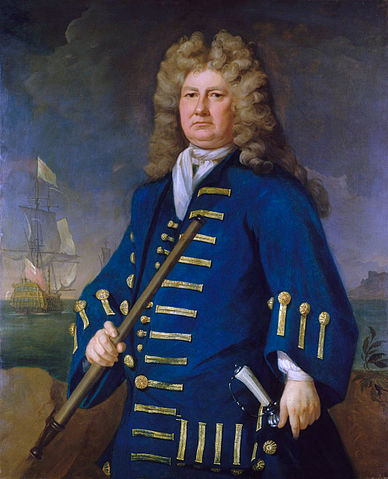
Admiral of the Fleet Sir Cloudsley Shovell (1650-1707).
Portrait by unknown artist from the National Maritime Museum collection via Wikimedia Commons.
Yesterday I had a piece in Works in Progress magazine, on the best ways to design modern innovation prizes — and why many of them fail.
I examined the famous “Longitude Prize” of 1714, and in the process busted some major myths about it. Almost every element of the popular story is wrong — something that experts on the topic like Richard Dunn and Rebekah Higgitt have been going on about for years. The popular story’s hero, John Harrison, often portrayed as an inventor shunned by a haughty scientific establishment, actually received massive amounts of funding from the committee for awarding the prize. The story’s villain, the Astronomer Royal Neville Maskelyne, was no villain at all. And there’s very little evidence that the prize actually incentivised people to innovate. The Board of Longitude, for that matter, ended up more like a grant-giving agency — a kind of navigation-themed DARPA — than just a committee of prize judges.
You can read the full piece here.
So what is the rest of this week’s newsletter about? Well, I’d like to take the chance to bust even more myths about innovation prizes!
Let’s start with a fairly small one, to do with longitude, that I’d missed. Take the narrative about the 1707 naval disaster off the Isles of Scilly, which led to the demise of the wonderfully-named admiral Sir Cloudesley Shovell. The disaster is usually cited as having been the direct cause of the institution of the 1714 reward, and, of course, gives most Youtubers, bloggers, and TV presenters discussing longitude the opportunity to say the name “Sir Cloudesley Shovell”. Who wouldn’t?
I had already been sceptical of the disaster’s relevance to Parliament’s creation of the longitude reward, because of the seven-year delay. I had then noticed, when researching for the piece, that the disaster was hardly mentioned at all by those lobbying for the reward, by those consulted on it, or by the MPs who voted on it. It seemed to be irrelevant as a cause, so I repurposed that part of the popular story to simply use as a general example of a naval disaster caused by not knowing one’s position at sea.
But even my downgrading of its relevance, it turns out, may have been over-generous. Yesterday, after I published my piece, Richard Dunn pointed out to me that not only was the 1707 disaster irrelevant as a cause of the 1714 reward, but that the disaster itself may not have had very much to do with a specific failure to find longitude. It certainly wasn’t singled out as a cause at the time.
As for the actual causes, they were probably compass error, inconsistent charts, and even uncertainty over the fleet’s latitude, not just its longitude. And to the extent that not knowing the fleet’s longitude appears to have been a major part of the problem, it was also related to failures to accurately calculate longitude on land — something that could already be done using existing techniques. The navigational text-books, for example, disagreed on the position of Cape Spartel, in Morocco, from which the fleet departed and took its bearings. As the maritime historian William E. May put it, when he looked into the detail of the fleet’s route and navigational measurements, “the errors in longitudes in the accepted text-books must have introduced a danger just as great as any errors in reckoning the longitude.”
Comments Off on Historic “innovation prizes” (somewhat) debunked
Tank Chats #144 | Staghound | The Tank Museum
The Tank Museum
398K subscribers
Dissent This
Our Patreons have already enjoyed Early Access and AD free viewing of our weekly YouTube video! Consider becoming a Patreon Supporter today: https://www.patreon.com/tankmuseumHistorian David Fletcher is kicking off 2022 with the Staghound! It is an American armoured car that was designed and produced during the Second World War. Watch the video to find out more!
0:00 – Intro
0:30 – What is the Staghound
5:17 – Other variants
(more…)
Comments Off on Tank Chats #144 | Staghound | The Tank Museum
April 22, 2022
Lucy Worsely on The Jacobites & the Scottish Enlightenment
Whitehall Moll History Clips
Published 22 Jul 2018A segment on the Jacobites and the Scottish Enlightenment that blossomed in the face of Hanoverian oppression.

Comments Off on Lucy Worsely on The Jacobites & the Scottish Enlightenment
April 21, 2022
L8(T) Enfield: The British Army Fails to Make a Sniper
Forgotten Weapons
Published 14 Dec 2021http://www.patreon.com/ForgottenWeapons
https://www.floatplane.com/channel/Fo…
Cool Forgotten Weapons merch! http://shop.forgottenweapons.com
We looked at the 7.62mm conversion of the No4 Enfield into Rifle L8 yesterday. Part of that program was an attempt to develop a new sniper rifle on the L8 platform. To this end, six good-quality No4(T) Lee Enfield sniper rifles were tested for accuracy, then made into L8 rifles and fitted with No.32 telescopic sights (the standard scope from the .303 days) and tested for accuracy again. Much to the chagrin of the Army, the new L8(T) rifles were barely able to match the performance of the .303 rifles they began as. The goal was to significantly improve on the No4(T) accuracy, and that was clearly not happening.
However, at this same time, British civilian competition shooters were having excellent success making 7.62mm versions of the No4. It was only when Enfield was willing to collaborate with the British NRA and others that they were able to successfully create the L42A1 rifle, which at last met the accuracy goals of the program.
The rifle we are looking at today is one of those original six trials L8(T) rifles. Many thanks to the generous collector who allowed me to film it for you!
Contact:
Forgotten Weapons
6281 N. Oracle 36270
Tucson, AZ 85740

Comments Off on L8(T) Enfield: The British Army Fails to Make a Sniper
QotD: Self-promotion in the modern job market
A friend of mine, an Indian pediatrician, applied for temporary jobs in England and was considered for none of them. My friend was puzzled by this, for he had worked in England before and had good references. My wife, who knew the system from having worked in it at a senior level, asked to see his curriculum vitae that he sent to prospective employers, and soon spotted the problem: He boasted of nothing, and the culture had changed. What was necessary, my wife said, was to inflate his accomplishments as boastfully as possible. There was no risk that anyone would discover his exaggerations. He had once worked as a voluntary pediatric consultant to Mother Teresa’s charity in Calcutta; he had not even mentioned it in his CV, let alone made it sound as if he were all but the founder of her charity. If he once had helped an old lady across the road with her shopping, he should transmute this in his CV into a lifelong concern for the condition of the elderly; and so on and so forth.
It was all rather disgusting, but it worked like a charm: He immediately had offers of jobs aplenty, though of course his real worth as a doctor remained precisely the same. Reticence, which is to me a far more attractive quality than boastfulness, will get you nowhere, and nothing must be left to speak for itself. You must blow your own trumpet, if possible louder than anyone else’s.
Nowadays there are professional coaches in how to “big yourself up”, as the charming phrase has it, in applications for jobs or places in institutions. The son of a friend of mine used one to get into medical school. Lying will go undetected, but even if detected will do you no lasting harm. The most minor accomplishment can and should be made to sound like evidence of genius. It is almost a condition of employment that one should boast and write an advertisement for oneself.
Theodore Dalrymple, “Be Your Own Advert”, Taki’s Magazine, 2022-01-13.
Comments Off on QotD: Self-promotion in the modern job market
April 20, 2022
The Unbreakable ROCKEX: Canada’s answer to the Enigma machine
Polyus Studios
Published 30 Dec 2021Well before digital encryption and VPNs there was Rockex, Canada’s unbreakable cipher machine that rivaled the German Enigma in its day. Although completely hidden from the public, Canada has played a noticeable role in the history of espionage. During the Cold War Canadian cipher machines worked alongside those of her allies to keep communications secure and helped to preserve the peace.
Check out cryptomuseum.com for more information about Rockex and to find the source of most of the pictures of the device I used.

Comments Off on The Unbreakable ROCKEX: Canada’s answer to the Enigma machine


