Quotulatiousness

April 26, 2025

The week-before-the-vote Bullshit Bulletin

Filed under: Cancon, Media, Politics — Tags: , , , — Nicholas @ 04:00

The Line‘s invaluable bullshit tracker includes some steaming bullshit from Mark Carney, the Conservative campaign, and, perhaps the most acrid bullshit from the NDP’s Jagmeet Singh:

Jagmeet Singh, the empty turban. He is the current (and possibly last) leader of the federal New Democratic Party, and it’s his conscious actions that may have doomed his party to parliamentary oblivion.

This article, about a recent meeting between Singh and the Toronto Star editorial board, is just absolutely bonkers. Jagmeet. Our dude. We like you. We do. But this is some epic bullshit.

This passage, in particular:

    The NDP leader stood by his decision not to plunge the country into an early election last fall while support for Justin Trudeau’s Liberals plummeted, telling the Star‘s editorial board he “couldn’t stomach” the idea of causing Pierre Poilievre’s seizure of power, and that he made the choice to put Canada’s interests ahead of those of the New Democratic Party.

    “While we could have won lots of seats, it would have meant a Pierre Poilievre majority Conservative government, and I could not stomach that,” Singh said, making the argument that an election would have jeopardized progress on pharmacare deals and dental care expansion. “I love my party. I care deeply about it. I want us to win. I want us to up our seats. I know we’re good for people. But in that moment, I made a decision for the interest of the country ahead of my party. And that was a decision I made wide-eyed, and I stand by that decision.”

Hmmm. Okay. So. Let’s take that at face value. If only for the sake of argument.

Singh realizes what the logical endpoint of that argument is, right? … right?! The story of this election, to the extent there is a single one, is that the NDP collapse made it impossible for the Conservatives to win. We have lots of criticisms of the CPC campaign; we’ve made some already and we’ll have more to say when it’s over. But we recognize the truth that without a strong NDP, even a perfect and flawless Conservative campaign was always going to be an uphill battle. It’s just a really difficult situation for the Conservatives to overcome.

And you know what Singh could do to make that a permanent state of affairs? Give up! Tank the NDP completely. Do a national tour asking everyone to vote Liberal. Defect and become a Liberal. Spend his post-politics career, which seems set to start sometime early next week, campaigning for a two-party system, under which the Liberals defeat the Conservatives over and over.

End the vote splitting by ending the NDP. That’s a case that many Liberals have made before. And fair enough. But it’s some kind of bullshit to see Singh himself making it, and we can’t imagine his NDP colleagues are particularly pleased to see their leader taking a position that the Liberals took years ago: that the best way for left-leaning voters to stop the Conservatives is to put the country first, and vote for them.

Lies, damned lies and government statistics

Filed under: Cancon, Economics, Food, Government, Media, Politics — Tags: , — Nicholas @ 03:00

Francisco at Small Dead Animals linked to this interesting examination of the difference between the official inflation rate and the actual inflation ordinary Canadians are coping with:

    Great news! We’ve brought inflation back under control and stuff is now only costing you 2.4 percent more than it did last year!

That’s more or less the message we’ve been hearing from governments over the past couple of years. And in fact, the official Statistics Canada consumer price index (CPI) numbers do show us that the “all-items” index in 2024 was only 2.4 percent higher than in 2023. Fantastic.

So why doesn’t it feel fantastic?

Well statistics are funny that way. When you’ve got lots of numbers, there are all kinds of ways to dress ‘em up before presenting them as an index (or chart). And there really is no one combination of adjustments and corrections that’s definitively “right”. So I’m sure Statistics Canada isn’t trying to misrepresent things.

But I’m also curious to test whether the CPI is truly representative of Canadians’ real financial experiences. My first attempt to create my own alternative “consumer price index”, involved Statistics Canada’s “Detailed household final consumption expenditure“. That table contains actual dollar figures for nation-wide spending on a wide range of consumer items. To represent the costs Canadian’s face when shopping for basics, I selected these nine categories:

  • Food and non-alcoholic beverages
  • Clothing and footwear
  • Housing, water, electricity, gas and other fuels
  • Major household appliances
  • Pharmaceutical products and other medical products (except cannabis)
  • Transport
  • Communications
  • University education
  • Property insurance

I then took the fourth quarter (Q4) numbers for each of those categories for all the years between 2013 and 2024 and divided them by the total population of the country for each year. That gave me an accurate picture of per capita spending on core cost-of-living items.

Overall, living and breathing through Q4 2013 would have cost the average Canadian $4,356.38 (or $17,425.52 for a full year). Spending for those same categories in Q4 2024, however, cost us $6,266.48 – a 43.85 percent increase.

By contrast, the official CPI over those years rose only 31.03 percent. That’s quite the difference. Here’s how the year-over-year changes in CPI inflation vs actual spending inflation compare:

As you can see, with the exception of 2020 (when COVID left us with nothing to buy), the official inflation number was consistently and significantly lower than actual spending. And, in the case of 2021, it was more than double.

Since 2013, the items with the largest price growth were university education (57.46 percent), major household appliances (52.67 percent), and housing, water, electricity, gas, and other fuels (50.79).

April 25, 2025

Canada’s lost decade, 2015-2025

Filed under: Cancon, Economics, Government, Media, Politics — Tags: , , , — Nicholas @ 03:00

It’s quite remarkable how many economic charts show the US and Canadian economies tracking along similar paths up until “something” happened in 2015 that knocked the Canadian economy well below the US trend line. I wonder what happened in 2015 that could account for this quite visible change in fortune?

GDP growth in Canada fell off a cliff over the period from 2015 onwards. This kinda matters.

Throughout the 2025 campaign, the Conservatives have frequently referred to what they call the “Lost Liberal Decade”, a reference to the fact that Canada has lagged dramatically on virtually every available indicator since the Liberals first came to power in 2015.

In sum, the economy is worse, crime is worse, public services are worse, affordability is worse — and there’s a whole galaxy of niche indicators, such as firearms incidents, refugee backlogs, even life expectancy, that are worse than they’ve ever been.

Below, a quick guide to the fact that, whatever you think of the Liberals, the last decade has really not been great for Canada.

In the year the Liberals took office, 604 people were murdered across Canada. This was already a slight uptick from the year before, when murder rates hit a low not seen since the mid-1960s.

Just seven years later, in 2022, homicides would hit a high of 874. In raw numbers, that’s 270 more murdered Canadians.

But even when accounting for population growth, there are way more murders happening now than in 2015. The homicide rate in that year was 1.71 murders per 100,000 people. As of 2023, the most recent year for which Statistics Canada has released data, it was 1.94.

Put another way, if Canada had stuck to the homicide rates of 2015, we’d have had 94 fewer murders in 2023, 216 fewer murders in 2022, and about 150 fewer murders in 2021.

And it’s a similar story when it comes to virtually every other category of crime. Statistics Canada maintains a “crime severity index” that attempts to aggregate the raw amount of criminality each year in Canada. The index bottoms out just before the Liberals came to power in 2015, and has been on the upswing ever since.

Unfortunately, this is particularly true when it comes to violent crime. For one thing, the number of guns being turned on people each year in Canada has never been higher.

In 2015, for every 100,000 Canadians, there were 28.6 incidents of firearm-related violent crime. By 2022, the last full year for which data is available, this had surged to 36.7 incidents — nearly a 30-per-cent increase in just seven years.

The Correctional Service of Canada publishes annual statistics on incarceration rates, and a noticeable trend begins to emerge starting in 2015: The prison population begins to plummet.

April 24, 2025

“Call for Admiral Ackbar! Paging Admiral Ackbar. Admiral Ackbar to the white courtesy phone, please.”

Filed under: Cancon, China, Media, Politics, USA — Tags: , , , — Nicholas @ 05:00

What a wonderful, heartwarming story: those cuddly folks in Beijing are reaching out to Canada to “partner with” as a way of warding off American “bullying”. How nice! What a great idea! With the best possible intentions. What could possibly go wrong?

China’s ambassador says Beijing is offering to form a partnership with Canada to push back against American “bullying”, suggesting the two countries could rally other nations to stop Washington from undermining global rules.

“We want to avoid the situation where humanity is brought back to a world of the law of the jungle again,” Chinese Ambassador Wang Di told The Canadian Press in a wide-ranging interview.

“China is Canada’s opportunity, not Canada’s threat,” he said through the embassy’s interpreter.

Wang — whose office requested the interview with The Canadian Press — said that China and Canada appear to be the only countries taking “concrete and real countermeasures against the unjustified U.S. tariffs” imposed by U.S. President Donald Trump.

“We have taken notice that, faced with the U.S.’s unilateral bullying, Canada has not backed down,” he said. “Instead, Canada is standing on the right side of the history, on the right side of international fairness and justice.”

He said Beijing and Ottawa should work together to convince other countries not to placate the Trump administration and to make Washington pay a price for breaking global trade rules.

Roland Paris, who leads the University of Ottawa’s graduate school of international affairs, said Beijing has long sought to reshape international institutions to advance its own interests — efforts that often have put China at odds with Ottawa’s foreign policy.

He said Canadian businesses should take a cautious approach to China, where they still face the risk of import bans and arbitrary detainment.

“The mercenary use of tariffs and non-tariff barriers that we’re seeing from the Trump administration has been practised for a long time by China in different forms,” Paris said.

“China has played its own version of hardball and abused trade rules in the past to coerce countries, including Canada, that have dared to displease Beijing.”

As the rivalry between the U.S. and China has intensified, Canada has generally followed Washington’s lead on restricting certain types of commerce with China.

Last fall — in an effort to protect Canadian auto sector jobs and allay American concerns about threats to supply chains — the federal government imposed 100 per cent tariffs on imports of Chinese-made electric vehicles that all but banned Chinese EVs from the Canadian market.

Canada alleged unfair trade practices including “a state-directed policy of overcapacity and oversupply,” and “lack of rigorous labour and environmental standards”.

Beijing retaliated by imposing large tariffs on Canadian canola and pork — duties Wang said Beijing is happy to drop if Ottawa drops its own tariffs.

In totally unrelated news, a Conservative candidate has been advised by the RCMP to “pause in-person campaigning” in the current federal election campaign due to threats originating in the People’s Republic of China:

Joseph Tay, the Conservative candidate identified by federal authorities as the target of aggressive Chinese election interference operations, paused in-person campaigning yesterday following advice from federal police, The Bureau has learned.

Two sources with awareness of the matter said the move came after the SITE Task Force — Canada’s election-threat monitor — confirmed that Tay is the subject of a highly coordinated transnational repression operation tied to the People’s Republic of China. The campaign seeks not only to discredit Tay, but to suppress the ability of Chinese Canadian voters to access his campaign messages online, via cyber operations conducted by Beijing’s internet authorities.

Now, with six days until Canada’s pivotal vote — in an election likely to be decided across key Toronto battleground ridings — it appears that Tay’s ability to reach voters in person has also been downgraded.

Tay, a journalist and pro-democracy advocate born in Hong Kong, is running for the Conservative Party in the Don Valley North riding. Federal intelligence sources have confirmed that his political activities have made him a top target for Beijing-linked online attacks and digital suppression efforts in the lead-up to next week’s federal election.

Tay’s need to suspend door-knocking yesterday in Don Valley North echoes concerns raised in a neighbouring riding during the 2021 federal campaign — where The Bureau previously uncovered allegations of Chinese government intimidation and targeting of voters and a Conservative incumbent. According to senior Conservative sources, Chinese agents attempted to intimidate voters and monitor the door-to-door campaign of then-incumbent MP Bob Saroya in Markham–Unionville.

Update: Spotted on the social network formerly known as Twitter:

April 23, 2025

“Liberals have never met a crisis they didn’t think they could spend their way out of”

Filed under: Cancon, Economics, Government — Tags: , , , , — Nicholas @ 03:00

Jesse Kline refutes Mark Carney’s recent diss against libertarians:

The Liberal Boomer in his natural state (spotted on social media, 20 April, 2025).

“The capacity of the federal government to invest in the economy, to support businesses and individuals, will ensure that we bounce back strongly.”

That was Prime Minister Justin Trudeau announcing an $82-billion support package at the beginning of the COVID-19 pandemic, but it could just as easily have been Carney, who said over the weekend that, “In a crisis … government needs to step up.”

At a Saturday news conference, the Liberal leader unveiled his party’s election platform, which includes $130 billion in new spending over four years to fend off the threats posed by U.S. President Donald Trump.

“It’s said there are no atheists in foxholes, there should be no libertarians in a crisis,” Carney argued to justify the continued spending spree.

This offends me as both a libertarian and an atheist. In fact, Canada would be in much better shape today if there were a few libertarians in the room when the Liberals were dealing with the numerous emergencies they’ve faced over the past decade.

The problem with crises is that there’s no way to predict when the next one will hit. But a prudent government should expect the unexpected and leave some fiscal room in the budget to address unforeseen events, while working to fortify the economy during good times so it can withstand the bad. This is not what the Liberals have done.

They took a $1.9-billion surplus in the 2014-15 fiscal year and turned it into a $25-billion deficit in 2016-17.

[…]

And so, we got more Big Government programs that we could ill afford, while Trudeau turned away world leaders looking to Canada to help solve an energy crisis resulting from Russia’s invasion of Ukraine.

Now, as Carney prepares to launch another massive spending spree to deal with the effects of U.S. tariffs, he’s pledging hundreds of millions of dollars for unnecessary programs, including permanent funding for the Sexual and Reproductive Health Fund to make it easier to abort babies, and $400 million for IVF treatments to create new ones in a test tube.

Needless to say that if there were some libertarians around the cabinet table during the crises of the past 10 years, we likely wouldn’t be facing a major economic upheaval with a $40-billion budget deficit, which Carney wants to increase to $62 billion, and a national debt approaching $1.26 trillion.

Spending always appeals to the voters at election time, and the Liberals have been past masters of using that to get into power. But even though there may be a lot of ruin in a nation, even the biggest of nations eventually runs out of money. According to a report from Policy Horizons Canada, an in-house government think tank, we’re well on the way to reaching that ruin and nobody will like what that looks like:

The report warns that by 2040, housing affordability is essentially limited to the wealthy or those with family help; most new homeowners get help from family, some depend on intergenerational mortgages and have several generations of family living together, and others enter “alternative” household mortgages with friends, with a growing percentage of homeowners also owning rental properties.

“Inequality between those who rent and those who own has become a key driver of social, economic, and political conflict,” reads the report.

Moreover, the report highlights a growing dependence on intergenerational wealth, noting that by 2040, inheritance is widely seen as the only reliable path to prosperity. “Society increasingly resembles an aristocracy,” it states, as family background — particularly property ownership — becomes the defining factor in determining one’s opportunities.

Canadians in this future rarely mix with others of different socio-economic status, and there is a clear disconnect between the aspirations of the country’s youth and economic realities, which leaves most with limited expectations of success.

And finally, the rapid propagation of artificial intelligence has dramatically reshaped the labour market. By 2040, the rise of artificial intelligence will have significantly diminished the availability of jobs in creative and knowledge-based professions, once seen as stable paths to upward mobility.

[…]

As a result of the six factors, Canada’s economy could shrink or become less predictable, with the consumer economy shrinking in size, and a higher proportion of very wealthy, older people holding the capital capacity for investment in new businesses. Labour unions could also grow in power and size from a frustrated population. The mental health of Canadians could suffer from living cost challenges.

With these upward mobility issues, Canada may become a less attractive destination for immigrants, and there could be an exodus of young workers, which would exacerbate the issues with supporting the public and social services that support the country’s growing cohort of seniors. This could also result in a labour shortage in industries where artificial intelligence is most difficult.

Perhaps most dystopian is a partial reversion of Canadian society to a trade-and-barter and neo-hunter-gatherer society by 2040, in response to declining trust in formal systems and reduced access to traditional economic opportunities.

[…]

The report’s vision of a future Canada — where trust in institutions collapses, effort no longer yields reward, and people yearn for systemic change — carries echoes of that dangerous historical crossroads, where ideological extremes once flourished in the face of prolonged despair.

With all that said, how likely is this precarious scenario of Canadian society in just 15 years from 2025?

According to Policy Horizons Canada, its “research suggests that it is plausible and would create challenges across a range of policy areas.”

April 21, 2025

Bonus QotD: Pierre Poilievre

… Canada’s governing class is not popular. For years now, all across the country Canadians have defiantly hoisted the black flag of Fuck Trudeau as precursor to their intent to start slitting political throats the next time they’re allowed to vote. Such vulgarity is unheard of in Canadian politics. It takes a great deal for Canadians to be impolite.

However, this widespread dissatisfaction has so far failed to coalesce into any meaningful populist insurgency opposing the Laurentian elite. Until recently, the leader of Canada’s Conservative Party, Pierre Poilievre, was coasting towards an easy electoral landslide on the back of this simmering popular anger, with his primary and indeed only selling point being that he is not Justin Trudeau. That is not to say that he is terribly different from Justin Trudeau. For American readers, Poilievre can be best described as vaguely reminiscent of Pete Buttigieg, with politics a hair to the right of the left of the right of Buttigieg’s left.

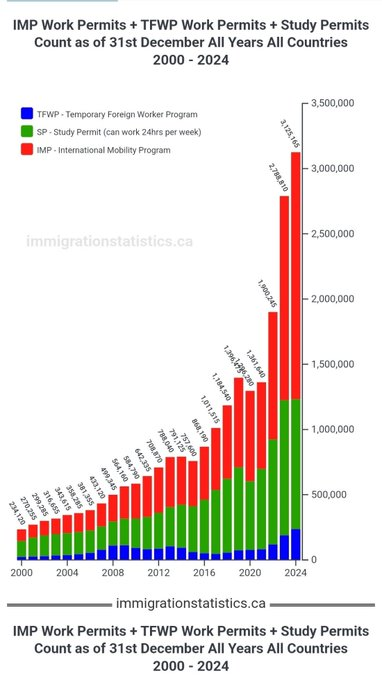
On a policy level the Conservatives are practically identical to the liberals; indeed, on immigration, after the LPC was forced by overwhelming weight of public opinion to slightly reduce the rate at which they lavished student visas and temporary foreign worker visas on their clients, Poilievre’s Conservatives essentially allowed the Liberals to outflank them to the right on the immigration issue, despite mass deportations being a very clear electoral winner.

Only very recently did Poilievre finally pledge to reduce immigration to “only” a quarter of a million a year … still a far cry from the clear necessity to reverse the flood that Trudeau and the rest of his World Economic Forum Young Global Leader alumni unleashed on the country.

John Carter, “Maple Maidan”, Postcards From Barsoom, 2025-02-15.

April 19, 2025

Notes on the English debate

In the National Post, Chris Selley explains the apparent utility of having Bloc Québécois leader Yves-François Blanchet included in the English-language leaders’ debate:

Bloc Québécois leader Yves-François Blanchet, 8 November, 2023.
Screencapture from a TVA Nouvelles video via Wikimedia Commons.

Wednesday evening’s French-language leaders’ debate kicked off with a video montage that mentioned President Donald Trump roughly 175 times. (I exaggerate somewhat.) Thursday evening’s English-language leaders’ debate was much less focused specifically on Trump, to an almost bizarre extent. When moderator Steve Paikin offered each leader a chance to ask a question of an opponent, Liberal Leader Mark Carney chose to ask Conservative Leader Pierre Poilievre about the security-clearance drama.

Carney’s campaign clearly believes Poilievre’s Achilles’ heel is Trump. One has to wonder how many Canadians even know the basics of the security-clearance issue. It was a baffling decision.

Ultimately, though, leaving Trump aside was a benefit. One of Carney or Poilievre will be prime minister in a month, and they essentially agree that Trump is too unpredictable to strategize against with any confidence from our current position as a semi-deadbeat country. (Again, I paraphrase.)

The only thing we can really do is focus on our own affairs in ways that would make us more prosperous, safe, happy and independent in every sense. In the long term: diversify our trade partners in every sector, including natural resources; improve border security, not to satisfy Trump’s fentanyl obsession but to prevent the northbound flow of illegal firearms (and because borders are supposed to be secure by definition); rebuild the military, not because Trump demands it but out of respect to our existing commitment to NATO and our self-styled reputation as An Important Country; fix health care; make housing affordable; get a handle on our own opioid crisis; fix our broken justice system. All that jazz.

You might think in a debate on those big national issues Bloc Québécois Leader Yves-François Blanchet would be extraneous on the stage. I saw plenty of people reacting in real time in that vein: Why is this man here? But in fact Blanchet served a very useful purpose: He was the voice of comfy Canadian inertia; the voice of Quebec continuing to plod along in its own way under Canada’s protective umbrella (ludicrous sovereignty-referendum threats notwithstanding).

Blanchet embodied how Canada might very plausibly abandon the opportunity that Trump’s kick in our rear end, however unjustified, offered us to live up to the greatness Canadian politicians always ascribe — often dubiously — to this country.

“The building of (new) pipelines will take at least 10 to 14 years. Mr. Trump will be 90 years old, not president … and somebody of course less terrible will be there before you can even dream of having oil through (a new) pipeline,” Blanchet said, kiboshing (as ever) the notion of any new pipeline running through Quebec.

At Rigid Thinking, Damian Penny tries to explain Jagmeet Singh’s performance as the designated interrupter:

Federal NDP leader Jagmeet Singh taking part in a Pride Parade in June 2017 (during the leadership campaign).
Photo via Wikimedia.

I didn’t see the entire English-language, federal leaders debate on Thursday night, but from what I did see each of the leaders accomplished exactly what they set out to do:

  • Pierre Poilievre went on offence against the liberals and tried to show that, despite their new leader, it’s the same bunch that have been running the country for the past decade.
  • Mark Carney portrayed himself as much more measured and serious than either his main opponent or his predecessor.
  • The Bloc guy showed that his only concern is Quebec and by the way everything comes down to immigration.
  • And the NDP’s Jagmeet Singh did everything he had to do to lock down that cushy patronage appointment he’ll receive should Carney be elected Prime Minister on April 28.

    There was far more cross talk and interruptions during Thursday’s English debate compared to the French parlay the night before. Singh in particular seemed prone to interrupt his opponents.

    Poilievre was the main target of Singh’s interjections — so much so that at one point Carney told the NDP leader to let his Conservative rival finish his point.

    When Poilievre criticized the industrial carbon tax, Singh jumped in and accused the Conservatives of wanting to let everyone pollute. Poilievre spoke about border issues and Singh accused the former Conservative government of cutting border officers.

    Poilievre at one point tried to make an appeal to voters: “The question that Canadians have to ask…”

    “Why vote for Conservatives?” Singh jumped in before Poilievre could finish.

As of this writing, the venerable NDP is polling about as well in Canada as Marjorie Taylor Greene, and their only real shot at even maintaining major party status is to peel off voters from the Liberals, since no one even considering voting Conservative will vote for Singh’s party.

The Line‘s election Bullshit Bulletin overflowed with bullshit from the debates, including some Mark Carney blarney about pipelines:

Mark Carney had quite a few howlers during Thursday’s debate, one of which was aptly called out by Blanchet (hey, we like the guy, we just don’t think he should be in the debate). Carney wants to portray himself as strongly pro-pipeline, while still respecting Quebec’s ability to effectively veto national projects. That’s bullshit — and Carney should stop pretending otherwise.

Carney has been out of the country in recent years, so he may be unaware of how things are actually working. To sum up the last 10 years of internecine battles on this point: Pipelines absolutely fall under federal jurisdiction to approve or disapprove. However, provinces can hold up or significantly delay certain aspects of the process, either through legal challenges, or through sandbagging local permitting processes. The big lesson of the last 10 years is that absolute jackshit can actually get built when provincial governments try to encroach on federal authority to stall projects that fall under the national interest. Duties for First Nations consultation add another complicating step. Lastly, this country couldn’t build a goddamn supermarket (and Singh might try to stop it, even if we could) if conditions veer into the quasi-spiritual realm of “social license” — because nobody really knows what that means, or how the bar for “social license” can be cleared when any project at all is even remotely contested or controversial.

Add Bill C-69 to the mix, and what we’re facing is a regulatory quagmire in which the Liberals have made the approvals process practically impossible, and pissed everybody off while doing it. It’s worse than that almost nothing is getting built; the situation is now such a disaster that major projects are no longer even being seriously proposed. Even CEOs of Canadian companies know that their best return on investment is energy projects outside of Canada (see The Line Podcast episode from a week ago and our dispatch last Sunday for discussion of this).

In short, Blanchet is correct, here. A pipeline filled with Alberta oil is not getting through Quebec if Quebec gets a veto. Either we’re in a Confederation in which a federal government has the final say over these things, or Quebec has already separated, and that’s the end of it.

There was also an excellent dissection of the Liberal Party’s endless games with Canadian firearm laws, but it was too long to sensibly excerpt, but if you have any interest or curiosity about why so many Canadian gun owners are pissed off with the feds, it’s worth reading in full.

April 18, 2025

Notes on the French debate

Paul Wells jotted down some notes in his Substack Chat after the leaders’ debate last night:

A few notes on last night’s post-election scrum fiasco, when reporters from Rebel News and Juno News got most of the questions. Some of the commentary this morning about this, from people who think it was a disaster (I think it’s unfortunate but not quite a disaster), is alarmingly superficial.

So here are some thoughts, threaded.

1. The debate commission didn’t just take it into their fool heads to invite these alt-right news organizations. They tried hard to block them in 2021, got hauled into court, and lost big. Remembering this very recent news event should, it seems to me, be a basic requirement for your pundit’s license. https://globalnews.ca/news/8174634/rebel-news-election-debates-court-challenge/

My first thought was that it’s apparently ok for Mr. Singh to refuse to engage with certain media, but if Mr. Poilievre remarks on CBC bias, he’s the enemy.

2. I’m not fond of Ezra, but in declaring that Rebel News had five divisions, he was engaging in not entirely unfunny satire about the way the CBC shows up with French and English radio and TV to every event. You may not like the joke! But it was clearly, to some extent, obvious satire about an obvious target.

3. I remain astonished that any political leader shows up for scrums after any debate. They just talked for two hours! The only possible newsworthy outcome from a scrum afterwards is, you walk all over the message you prepped for weeks to deliver. We had scrums after our 2015 Maclean’s debate. Stephen Harper just didn’t show up for them. That’s an option! Carney has worked hard since January to control and limit access to his regal person, and then he wanders into a scrum after what would be, for any anglophone, an exhausting two hours in French, as though somebody told him it was where he could get a sandwich? People are weird.

Once upon a time — at least in theory — one of the functions of the mainstream media was to help keep our political leaders under observation for the voters. That fantasy has long since vanished in Canada, as almost all the surviving mainstream media outfits are slavering propagandists, lickspittles, and fart-catchers for the Liberal Party and especially for its leader-of-the-moment. In The Line, a media outlet that isn’t directly funded by the federal government, Andrew MacDougall offers a parable about the Canadian media:

My eldest daughter is nine. Her little sister is five. The little one adores her big sister and believes everything she says.

I, on the other hand, am 49. My eldest often tries to convince me of things. But I am a skeptic when it comes to the things my children tell me, as any good parent should be. And because I push back on the eldest’s arguments, she often comes back moments later with much sharper ones. Sometimes I even change my mind.

Yes, this is a parable about the media and its role in public life, including during this federal election. And yes, we can debate the mechanics of media — who gets access, how many questions, and so on — but this is to both bury the lede and miss the story. There is much more at stake than whether the Toronto Star or the Globe gets a question at a tightly-managed press event.

What’s at stake is whether anyone in power will ever again have a parent to satisfy. Or whether those in power will be nine-year-olds, forever seeking the smoke blown up their asses by the five-year-olds in their life.

The ability to act like a nine-year-old in power is an entirely new phenomenon. In the Before Times, when a politician (or corporate leader) used to have to exchange credible arguments with a member of the media in return for access to the distribution network of their publication or broadcast, serious conversations were par for the course. It wasn’t perfect, no, but it was an adult time. There was no point rocking up to the microphone with a wild ad hominem attack, or armed with a list of faulty facts, because it wouldn’t have passed muster. There was no rolling 24/7 coverage, and easily discredited arguments wouldn’t have made the cut in what was then limited news real estate. Now, thanks to social media, there is an infinite and constantly updating canvas. You don’t even need a credit card, let alone an argument, in order to access and speak to your audience — and then tell them any damn thing you want, no matter its level of adherence to the truth.

It wasn’t supposed to be this way. In their pre-algorithmic infancy, the major social media platforms promised access and connection. In this more gentle, less attention-hogging iteration, the major benefit of the social media platforms and other owned channels was that they allowed you to go — unfiltered — to your intended audiences. A clean message, straight to the target voter. What politician wouldn’t want that? How could that be a bad thing? Well, other than the fact that politicians and other people in positions of power have been known to lie and try to cover up bad things.

April 17, 2025

Canadian labelling regulations save us from “too many vitamins”

Filed under: Australia, Britain, Bureaucracy, Cancon, Food, Government, Health — Tags: , , , , — Nicholas @ 03:00

In the National Post, Jesse Kline points out that Canadian food label regulations have become so nit-picky that they prevent safe and accurately labelled foods from Australia, Britain, and other countries from being sold here:

Marmite from the UK and Vegemite from Australia, two of the products at risk of Canadian over-regulatory twitches.

Shortly after winning the Liberal leadership, Mark Carney travelled to Paris and London to shore up our trading relationship with our European allies.

Yet it is noteworthy that Canada is one of only two countries that has not yet ratified the United Kingdom’s accession into the CPTPP, meaning that we don’t enjoy the benefits of free trade with the country with whom we share a system of government and a King. Meanwhile, France is one of a handful of countries that has yet to ratify the free-trade agreement between Canada and the EU.

If we can’t even agree to implement trade deals that have already been negotiated and agreed upon with countries that have such deep historical ties to Canada, what hope do we have of improving trade with our other partners around the world?

Part of the problem is that Canada refuses to follow the example of countries like Australia and New Zealand, which successfully phased out their own systems of supply management years ago with great success.

As a result, supply management has proven to be a sticking point in virtually every trade negotiation we’ve entered into, and is a constant source of tension even among countries we have free-trade deals with.

But we have also fallen into the trap, along with our European friends, of over-regulation. Modern bureaucratic states impose so many restrictions on commercial enterprises, it often becomes uneconomic to market their products in other countries.

Canada, for example, imposes stringent labelling requirements to ensure product information is available in both English and French, and that nutritional information conforms to our very specific requirements.

None of this is necessary, especially in an age in which we can hold a phone up to a box of French crackers to see what it says. But the problem extends far beyond language or disagreements over the recommended daily intake of fibre.

As the CBC reported on Monday, Leighton Walters, an expat from Down Under who owns several Australian-themed coffee shops in the Greater Toronto Area, was told earlier this year by the Canadian Food Inspection Agency (CFIA) that he was no longer allowed to sell the roughly $8,000 worth of Vegemite he had imported because it contains … too many vitamins.

Under current regulations, only a select list of products are allowed to contain added vitamins. Vitamin B-rich spreads like Vegemite and its British equivalent Marmite are not among them because … well, just because.

A similar situation arose a decade ago when reports that the government had ordered Marmite and the Scottish drink Irn-Bru to be taken off the shelves of a British supermarket in Saskatoon caused outrage on both sides of the pond.

The CFIA later clarified that only versions of those products formulated specifically to meet Canadian requirements — i.e., those that don’t contain added vitamins or a specific type of food colouring — are allowed to be sold in this country. Because heaven forbid we trust that other advanced Commonwealth nations would have reasonable enough food safety standards.

We have quite literally regulated ourselves into a corner. We can’t even import spreads like Marmite and Vegemite — which have been staples of British and Australian diets for decades — not because they’re unhealthy or unsafe, but because they don’t conform to our nit-picky regulations.

April 16, 2025

Government freezes the bank account of a PPC candidate, gives no reasons

Filed under: Cancon, Government, Media, Politics — Tags: , , , , — Nicholas @ 03:00

The federal government had the banks freeze the accounts of a large number of Freedom Convoy supporters back in 2022 … without any legal justification. The courts failed to act in protection of ordinary Canadians so the feds are at it again, in this case freezing the bank account of a PPC candidate in the current election:

I still hadn’t completely given up on the country, and with an election pending, I saw one last opportunity to fight for change, and to force some conversations that had been suppressed in my progressive Vancouver East riding. Last month, I decided to run as a Canadian Member of Parliament, and began to publicize my decision to run for the People’s Party of Canada (PPC) — the only party truly committed to fighting for freedom and women’s sex-based rights.

My candidacy was confirmed officially on Tuesday. That same day, I tried to access my bank account and could not. I contacted my bank, Vancity, and was informed the account had been frozen as per direction from the government. I had accessed my account just two days prior, so the timing was clear. I had not been informed of this freezing by anyone — not the bank, not the government. No one attempted to contact me. I was completely blindsided.

When I contacted my bank they refused to give me any information beyond the fact they were following government orders, and they gave me a number and name to contact. I called the number, and got a voicemail saying the employee was on vacation all week. So basically this guy froze my bank account and immediately went on vacation.

His voicemail offered another extension to call, which I did. No one answered, so I left a message. I called again later that day and left another message. No one returned my call, so I called back the next day and left another message. Still no one returned my call. The following day I called again and received a message saying I could not get through on account of “technical difficulties”. I tried calling a general number, and asked the woman on the other end of the phone if she could please refer me to someone who could provide me with information about why my bank account was frozen. She told me, “I can’t give you any information unless you give me more information about what’s going on,” to which I responded, “I have no information, that’s why I’m calling you: to get information”. We went back and forth like this for a while until I asked her if she was retarded and then said, “What exactly is your job — what is it you are being paid to do with the tax dollars of Canadians”. She explained her job was to refer people who called to the appropriate departments, numbers, and individuals. “Ok,” I said. “Then can you please refer me to someone who can explain to me what is going on with my bank account.” She said “No,” and I hung up.

It has now been a week since my bank account was frozen and I have received zero communication or information from the government.

I had a flight booked back to Canada today, which I cancelled, because if my bank account is frozen I can’t operate in the country and because I am very concerned about what awaits me upon arrival. I decided it wasn’t worth the risk of persecution or attempted prosecution so will not be returning to Canada, despite my original intention to come back to campaign.

I am completely appalled that this is how the Canadian government treats its citizens, accountability-free. It is unacceptable and reprehensible to freeze the bank accounts of Canadians, leaving them potentially starving, homeless, and unable to survive — EVER, never mind without contacting them, communicating with them, or providing them with any information.

I cannot help but note that the timing of all this is incredibly sketchy, and so my suspicion is that I am being targeted for political reasons, and that the government is attempting to find an excuse to criminalize me, as well as to punish me generally on account of my continued criticisms of the ruling Liberal party.

It also worth noting that the freezing of my bank account at this precise moment constitutes election interference, as I am now prevented from returning to Canada to campaign in my riding.

I knew things were bad in Canada — they have been moving in a terrifying direction for years, and yet far too many Canadians refuse to take their heads out of the sand and see that they are living under an increasingly authoritarian, punitive, evil government, never mind push back against this tyranny.

Canadians are mere weeks away from having their rights and freedoms completely disappeared, yet many remain in hysterics about Donald Trump and an electric vehicle company owned by an American man who has zero impact on the lives of regular Canadians.

I am lucky to have a platform where I can speak up about these things — many Canadians don’t, and the government will therefore easily get away with doing whatever they like to their citizens, accountability-free, knowing most regular Canadians are left without recourse.

This government is sick. Things are not fine. Things are very bad. And if Canadians don’t wake up now, en masse, things will undoubtedly get worse.

April 13, 2025

The Most Pointless Battle of WW1? – Passchendaele 1917

The Great War
Published 11 Apr 2025

For more than three long months in 1917, Allied and German soldiers fought tooth and nail over a battlefield churned into a sea of sucking mud and shellholes by the guns. Hundreds of thousands were killed and wounded, some of them drowning in the soupy ground — for Allied gains of just a few kilometers. So why did the Battle of Passchendaele happen at all, and was it the most pointless battle of the First World War? (more…)

They really are trying to shut down “wrong” speech on the internet

I’ve always been a huge fan of free speech, which has been under continuous and escalating threat by many governments both in person and online. A side-note in the ongoing Canadian federal election has been Liberal leader Mark Carney’s commitment to addressing “online harm” as he defines it:

At a campaign rally in Hamilton, Ontario, Liberal leader Mark Carney unveiled what can only be described as a coordinated assault on digital freedom in Canada. Behind the slogans, applause lines, and empty rhetoric about unity, one portion of Carney’s remarks stood out for its implications: a bold, unapologetic commitment to controlling online speech under the guise of “safety” and “misinformation”.

    We announced a series of measures with respect to online harm … a sea of misogyny, anti-Semitism, hatred, conspiracy theories — the sort of pollution that’s online that washes over our virtual borders from the United States.

He then made clear his intention to act:

    My government, if we are elected, will be taking action on those American giants who come across [our] border.

The former central banker, who now postures as a man of the people, made it clear that if the Liberals are re-elected, the federal government will intensify efforts to regulate what Canadians are allowed to see, say, and share online. His language was deliberate. Carney condemned what he called a “sea of misogyny, anti-Semitism, hatred, conspiracy theories” polluting Canada’s internet space — language borrowed directly from the Trudeau-era playbook. But this wasn’t just a moral denunciation. It was a legislative preview.

Carney spoke of a future Liberal government taking “action on those American giants who come across our borders”. Translation: he wants to bring Big Tech platforms under federal control, or at least force them to play the role of speech enforcers for the Canadian state. He blamed the United States for exporting “hate” into Canada, reinforcing the bizarre Liberal narrative that the greatest threat to national unity isn’t foreign actors like the CCP or radical Islamists — it’s Facebook memes and American podcasts.

But the most revealing moment came when Carney linked online speech directly to violence. He asserted that digital “pollution” affects how Canadians behave in real life, specifically pointing to conjugal violence, antisemitism, and drug abuse. This is how the ground is prepared for censorship: first by tying speech to harm, then by criminalizing what the state deems harmful.

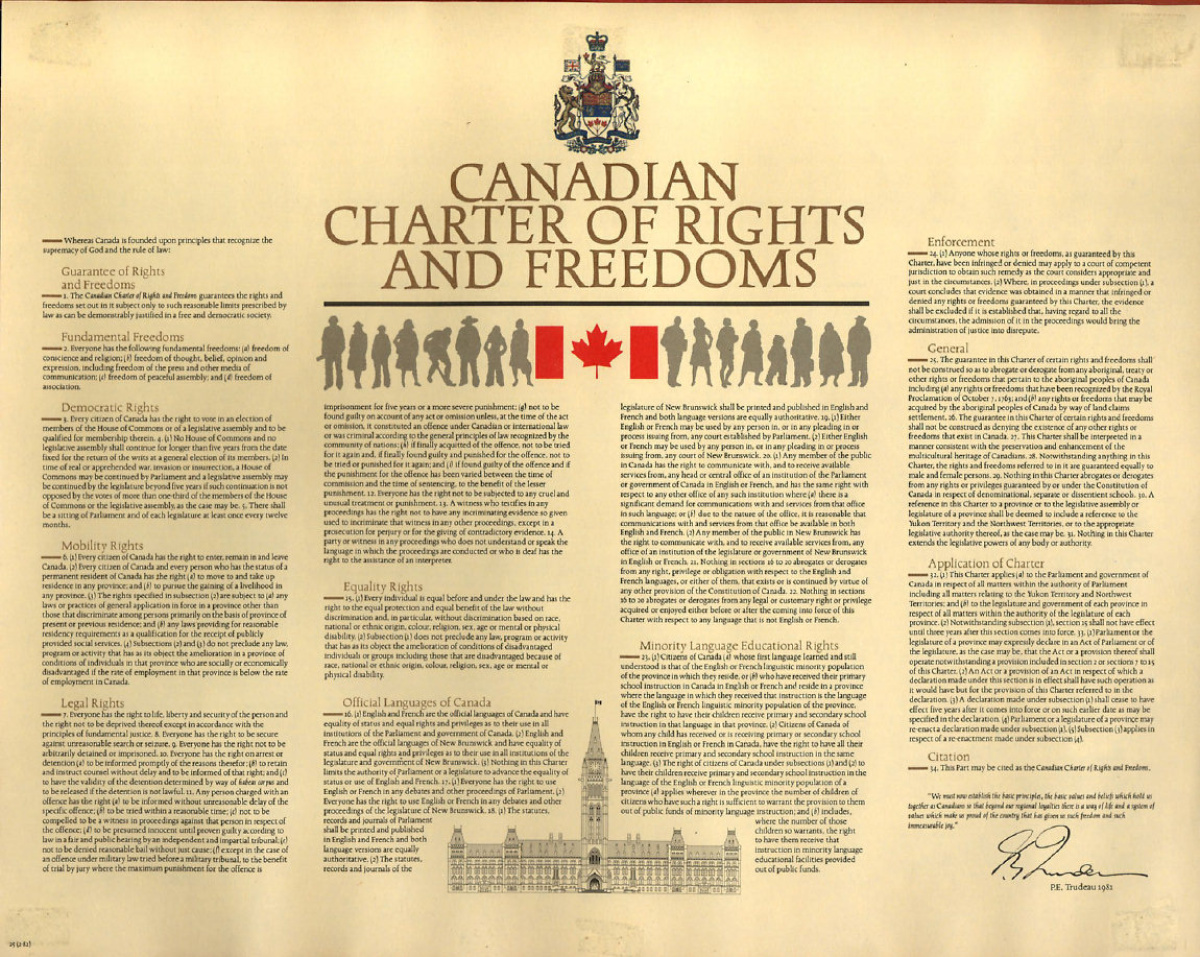
What Carney didn’t say is just as important. He made no distinction between actual criminal incitement and political dissent. He offered no assurance that free expression — a right enshrined in Canada’s Charter of Rights and Freedoms — would be respected. He provided no definition of what constitutes a “conspiracy theory” or who gets to make that determination. Under this framework, any criticism of government policy, of global institutions, or of the new technocratic order could be flagged, throttled, and punished.

And that’s the point.

Mark Carney isn’t interested in dialogue. He wants obedience. He doesn’t trust Canadians to discern truth from fiction. He believes it’s the job of government — his government — to curate the national conversation, to protect citizens from wrongthink, to act as referee over what is and isn’t acceptable discourse. In short, he wants Ottawa to become the Ministry of Truth.

In Britain, their equivalent to Canada’s “online harms” legislation has induced Bitchute to discontinue service to users in the UK:

A READER alerted us to this statement posted on the Bitchute homepage, visible to geolocated UK users:

    After careful review and ongoing evaluation of the regulatory landscape in the United Kingdom, we regret to inform you that BitChute will be discontinuing its video sharing service for UK residents.

    The introduction of the UK Online Safety Act of 2023 has brought about significant changes in the regulatory framework governing online content and community interactions. Notably, the Act contains sweeping provisions and onerous corrective measures with respect to content moderation and enforcement. In particular, the broad enforcement powers granted to the regulator of communication services, Ofcom, have raised concerns regarding the open-ended and unpredictable nature of regulatory compliance for our platform.

    The BitChute platform has always operated on principles of freedom of speech, expression and association, and strived to foster an open and inclusive environment for content creators and audiences alike. However, the evolving regulatory pressures — including strict enforcement mechanisms and potential liabilities — have created an operational landscape in which continuing to serve the UK market exposes our company to unacceptable legal and compliance risks. Despite our best efforts to navigate these challenges, the uncertainty surrounding the OSA’s enforcement by Ofcom and its far-reaching implications leaves us no viable alternative but to cease normal operations in the UK.

    Therefore, effective immediately, BitChute platform users in the UK will no longer be available to view content produced by any other BitChute user. Because the OSA’s primary concern is that members of the public will view content deemed unsafe, however, we will permit UK BitChute users to continue to post content. The significant change will be that this UK user-posted content will not be viewable by any other UK user, but will be visible to other users outside of the UK. Users outside the UK may comment on that content, which the creator will continue to be able to read, delete, block, reply and flag. Users outside the UK may share UK-user produced content to other users outside of the UK as normal. In other words, for users in the UK, including content creators, the BitChute platform is no longer a user-to-UK user video sharing service.

This is the exactly the kind of consequence we at TCW feared a result of the overly restrictive and poorly written Online Safety Act 2023, which has now come into force.

The way the technology works is that websites can use a geolocation service to analyse the IP address your internet service provider has given your service, and use this to determine where you are. Google does this to tailor ads to you, Amazon does this to get you the most convenient version of their website.

Now Bitchute are using this service to protect themselves from the UK Government’s overreach.

The good news: there is a way round this.

April 12, 2025

Carney’s Liberals promise to do something that’s been part of the legal code for decades

Filed under: Cancon, Government, Law, Media, Politics, Weapons — Tags: , , — Nicholas @ 04:00

Among the Conservative and Liberal mis-steps of the election campaign this week, the promise by Liberal leader Mark Carney to pass legislation to boldly and courageously do something that has been part of the firearms laws for over 40 years deserves calling out:

Your Line editors knew that guns were going to come into the campaign eventually. It’s one of the eternal issues for the Red Team, and while they seemed to have shied away from it a bit after some pretty brutal fumbling in Justin Trudeau’s later years, we figured it would be back eventually. And so it was on Thursday, when Liberal leader Mark Carney announced, as part of a package of crime policy proposals, that a re-elected Liberal government would make sure that guns were automatically taken from anyone convicted of a violent crime, including intimate partner violence.

*pulls hard on chain, activating bullshit klaxon*

See, here’s the thing, friends. First of all, to take Carney at his word here would require us accepting, even just for a moment, that this didn’t already happen. That up until Thursday of this week, the Liberals were hunky dory with people convicted of violent crimes, including intimate partner violence, keeping whatever guns they may own or wish to acquire.

That is, we suspect readers know, utter bullshit. Removing guns is already required in those circumstances, and it doesn’t even require a conviction. Police officers can seize any weapon of any type if it isn’t in the safety interest of any person, even without a warrant, and revoke any license they hold immediately.

Nobody is eligible to hold a license if it isn’t in the safety interest of a person — that’s literally the first eligibility criterion in the Firearms Act. Issuing a license requires the issuer to consider all past convictions, mental illnesses, history of violent behaviour, previous prohibitions, any potential intimate partner violence, and any potential harm to any person before they issue it. That is checked through a process called Continuous Eligibility Screening, where license holders are checked for “hits” against police systems every single day to determine whether they are still able to hold a license.

This is something almost no one outside Canada’s firearms-owning community understands, and The Line wants to underline this point — anyone with a firearms licence is automatically checked for any new legal issues that might render them unable to own firearms every single day. If you happen to find yourself hanging out with someone with a firearms licence, they were checked out by law enforcement within the last 24 hours. This includes your friends at The Line. The day you’re reading this is a day they passed another screening.

A conviction for a violent crime, it hardly need be said — well, actually, check that, apparently it does need saying — would render one rather ineligible! Not only is this already the law, but there are so many overlapping laws to deal with that exact scenario that it takes real effort to be ignorant of them. Weapon prohibition orders on conviction for violent offences? Already a thing at the federal and provincial levels. Prohibitions while on bail? Already a thing. Firearm seizures during divorces? Not automatic, but common, sometimes even where there is no history of violence or reasonable belief that violence is likely.

The Liberals know all this, especially since it was the Liberals who last changed these laws — though not to add the removal provisions, which largely already existed, but to remove any discretion or ability for rehabilitation.

Every party is fine with keeping guns away from domestic violence perpetrators. Carney making this an issue is bullshit. He’s counting on the public to not know enough to call him out on it.

It’ll probably work.

Oh, and by the way. If you don’t want to take our word for any of the above, you can just read the Firearms Act yourself. Relevant section, below.

April 10, 2025

Canadian political aspirations to being “very mid” on the world stage

In The Line, Matt Gurney reflects on a recent statement by caretaker prime minister Mark Carney about Canada taking a “leadership role” on the international stage and supplanting the United States under President Trump:

Oh, we will, eh?

Don’t get me wrong, I like the sound of it. He’s certainly manifesting that elbows-up spirit that seems to be so impressing Canadians.

But, like — Carney knows which country he’s in, right? Canada? The one full of Canadians? Because as I heard him say what Canada would do in response to the accelerating American withdrawal from global affairs, I couldn’t help but note that there is a problem here.

Canada isn’t a leader. Canada doesn’t lead.

Even as I write this, I know it’s going to be a fraught statement. Canadian patriotism is a bit supercharged right now. It’s nice to see. But a lot of stupidity gets overlooked — or even caused — by patriotic outbursts. Internal dissent becomes a lot less popular when everybody is sewing the Maple Leaf onto their backpack. So I want to make my point respectfully and politely, largely to spare myself the agony of wading through idiotic replies for a few days. So here goes: many Canadians do indeed lead in their fields, and there is nothing inherent about Canada that makes us incapable of exercising leadership. If Mark Carney remains prime minister — or if someone with similar ambitions should replace him and make a point of pursuing a policy of broad-based Canadian global leadership — I don’t write that off as a doomed proposition.

There is more that we could choose to do. There are practical constraints that would bind us, and we’ll talk about those in a minute, but just to get into the spirit of the moment: sure. We could choose to exercise global leadership.

But we would first have to start with the recognition that it has been generations since we have actually tried to do that. This is not a moral judgment on Canada or Canadians. It is simply a recognition of the historical record. This country has not pursued a national policy — or even a series of smaller policies that take on a greater form in the aggregate — that sought to establish this country as a leader in the world.

If we’re being honest, we’ve typically pursued almost the opposite policy, and deliberately. I’m not saying we’re slavish followers. But this is a country that for generations has been quite comfortable thinking of itself as an overachieving middle power, nestled comfortably in a supporting role for allied countries that do seek to lead. Usually the Americans. Maybe sometimes the British or French. Or something like the UN or NATO. We’ve never claimed to land the hardest punches, or tried to. We’d settle for punching above our weight. We haven’t tried to conquer or command or even compel. In the words of a member of the incumbent government, our aspiration largely maxed out at wishing to convene.

But, of course, as we’re learning these days, Canadian politicians of almost all parties (Maxime Bernier is the only exception I’m aware of) consider the beneficiaries of our trade-distorting supply management system to be the only ones whose interests they always champion:

The most interesting field of international relations, though, and the most germane to what Carney said on Liberation Day, is in the field of trade. Canada definitely likes trade. I’ll even give some credit here to both Liberals and Conservatives. It has been broadly understood that Canada thrives when we have access to markets all over the world. The pursuit of expanded trading relationships has been a bipartisan priority for Liberals and Conservatives alike … so long as it doesn’t cost us anything on the domestic political front.


And yes, I’m talking about dairy. Some other things, too. But mostly the milk and eggs.

Seriously. Scroll up a bit. Look at that big quote I dropped in at the top from Carney. Watch the CTV feed again. Canada is going to pursue a role of leadership in defending liberalized free trade?

Really? Forgive me for squinting. I’m struggling with my middle-aged eyes to find the tiny text appended to Carney’s pledge that notes that “conditions apply”. Because that very same Mark Carney has already gone out of his way to say that protecting Canada’s supply-managed dairy and egg producers is an absolute, unbendable priority for him and his party.

So yes. Let’s all pledge ourselves to a new era of Canadian leadership in defence of free trade and unfettered market access, right up until the moment some weirdo foreigner gets it into their pathetic little brain that they should be allowed to sell me a stick of butter. Because that ain’t on, friends. Let’s get our elbows up, and bury them deep into this wheel of filthy xenocheddar.

April 9, 2025

Stretching the RCN’s limited number of AOPS too thin?

Filed under: Cancon, Military — Tags: , , — Nicholas @ 05:00

I admit that I doubted the overall utility of the Harry DeWolf-class of Arctic/Offshore Patrol Ships when they were announced, but aside from the typical teething troubles of new ship designs they seem to be doing a good job at their initial taskings. Noah, on the other hand, proudly describes himself as “perhaps their [the AOPS] biggest online defender“, but he’s raising concerns that the Harry DeWolf class will soon be expected to pick up the slack as the Kingston-class Maritime Coastal Defence Vessels come to the end of their working lives with no obvious replacements under construction:

Arctic Offshore Patrol Ship HMCS Harry DeWolf shortly after launch in 2018. The ship was commissioned into the Royal Canadian Navy in June, 2021.

It’s a common fact that I love the AOPS.

I am perhaps their biggest online defender, despite the hate, the early issues, and the slander. They, to me, are the perfect vessel for what we require up North, modular, flexible, with a whole world’s of potential.

The six vessels that make up the DeWolfe-class have kept themselves busy, so busy that you often forget that they are, primarily, Arctic vessels. Now that isn’t to say they can’t take other tasks, nor should they be limited.

OP CARRIBE, a trip to Antarctica, hosts of exercises. The AOPS manage to be kept busy, while still finding time for trips up North, although not nearly as much as many would seem to like.

Their ability to hold containerized payloads has also seen them used as testbeds for various capabilities, including towed arrays for ASW, submarine rescue equipment, and in the future, RMDS and unmanned systems like Cellula Robotics’ Guardian AUV.

Indeed, the AOPS are slowly, though surely coming into their own. Yet it is those things it does well, that potential, that puts them in the spotlight among a fleet that is aging and soon set to dwindle in numbers over the next decade.

The looming writing off of the Kingston-class is coming faster and faster everyday, and soon, they will be gone. The little workhorses, whom performed far more than anyone could have asked of them.

The Kingston-class Maritime Coastal Defence Vessel (MCDV) HMCS Moncton in Baltimore harbour for Sailabration 2012.
Photo by Acroterion via Wikimedia Commons.

The Kingstons have been a backbone, beyond the littoral-patrolling minesweeper they were envisioned as when the MCDV project was first stood up.

Yet the Kingstons as we know them are to be retired with no true replacement, their original tasks overtaken by other systems and automation.

Their original replacement, as part of the OPV project has evolved into the Canadian Multi-Mission Corvette, a vessel envisioned to one day be a true second-line combatant to complement the River-class destroyers.

Instead the tasks of the Kingstons shall fall onto the small number of AOPS in service. They will be tasked, not only to fulfill their role as Arctic Patrol ships, but now take the mantle of fulfilling a host of growing secondary tasks that has been filled by these cheaper, smaller vessels.

Add on a Halifax-class that is struggling to stay afloat, bouncing around various states of condition and expected to keep sailing for another decade. Even as the River enter service, the tasks of the Kingstons will not be filled by them.

It’s a lot of strain and demand to put on vessels that are not only significantly larger than the Kingstons, but also significantly more expensive to operate on fulfilling tasks like OP CARRIBE, where while they may be very valuable assets, might not be optimal in lieu of smaller vessels that can easily fill the same role just as efficiently.

On that note it also can’t be understated that the more we put on the AOPS, the more we take it away from its Arctic taskings, and the more we expect of these six vessels to do almost every secondary task, the more we create gaps in our continental defence.

Six AOPS not only for Arctic Patrol, but MCM, Submarine Support, Seabed Warfare, things like OP CARRIBE … How can we expect these vessels to remain in service for the next quarter-century with all this strain?

We don’t talk about these vulnerabilities a lot, but as it stands Canada is severely vulnerable to adversaries and foreign actors ability to leverage asymmetric methods to limit our ability to respond abroad and severely harm Canada’s strategic infrastructure.

« Newer PostsOlder Posts »

Powered by WordPress