
ReasonTV
Published on 6 Oct 2017What’s the best way to make the Post Office faster and cheaper? Pull the government’s tendrils out of it and let it loose in the private sector.
October 7, 2017
Why We Should Privatize the Postal Service
Comments Off on Why We Should Privatize the Postal Service
October 6, 2017
Regulation and the unregulated sharing economy
This particular article talks about the situation in Australia, although it’s quite similar here in Canada:
Living in Australia sometimes feels like living in a bureaucrats’ version of a spaghetti western. The heroes are the brave and all-knowing public servants, while the villains are the naughty people who are too foolish to realise that government knows best.
Politicians and bureaucrats alike want to regulate first, ask questions later. It seems barely a week passes without someone trumpeting the expansion of the nanny state. And with each new crackdown, ban or tax, our freedom gets that little bit smaller.
Whereas once the government would at least go through the motions of citing things like market failure, all it takes now is for a politician to want to look tough or be seen ‘doing something’. So it is with the proposed regulation of short-term accommodation platforms like Airbnb and Stayz.
Sharing our home with someone is as old as time. Who has not stayed with a family member or friend, or the friend of a friend? The difference these days is that it is much easier. Technology allows us to stay in someone’s home nearly anywhere in the world.
The immense popularity of these platforms is simply staggering. Globally, Airbnb has just passed four million listings, more than the rooms of the top five hotel brands worldwide. Australia is particularly fertile ground for the company, with almost one in five adults having an account. The company claims Airbnb is the “most penetrated market in the world”.
For government, the platforms are confronting. With no red tape or government involvement, travellers are protected, bad apples ejected and quality maintained via hosts and guests providing reviews of each other using sophisticated technology and a trusted online marketplace. Airbnb says that, on average, a host could have a new reservation every day for over 27 years before experiencing a single bad incident. A track record like that would be the envy of any pub, hotel, motel or caravan park in the country.
The so-called sharing economy challenges the idea that people need red tape, regulations or government to keep them safe from harm. But that does not stop some from trying. Currently, the NSW Government is toying with a grab bag of Big Brother and nanny-state policies ranging from new taxes and caps, to licences, planning approval and complete bans.
No modern government has ever seen a healthy, flourishing market without feeling the need to insert itself into the process, usually justified by the need to “protect” consumers.
Comments Off on Regulation and the unregulated sharing economy
Are Branded Drugs Better? – Earth Lab
BBC Earth Lab
Published on 22 Jun 2017When you’ve got a cold and need some medicine, do you ever wonder if there’s a difference between branded and non-branded drugs? Greg Foot explains the world of pharmaceuticals, backed up with some stonking examples and unexpected findings!
Comments Off on Are Branded Drugs Better? – Earth Lab
October 2, 2017
Is it becoming time to let the NFL’s “chips fall where they may”?
 The modern NFL as we know it enjoys a legal privilege through an act of Congress, allowing the league to negotiate TV rights as a single organization and sharing the revenue equally among all the constituent teams. In City Journal, Steven Malanga recounts the history of how that privilege was granted:
Many sports fans know that Major League Baseball has a unique exemption from the nation’s antitrust laws, thanks to a 1922 Supreme Court decision, which perplexingly ruled that baseball teams do not engage in interstate commerce. Less well understood, however, is that the National Football League retains its own federal exemption through legislation that has allowed the league’s teams to cooperate on television contracts — a gift from Washington that has been crucial to the development of the modern NFL. Over the years, the exemption has proved controversial, though bipartisan calls to revoke or narrow it have never gained much traction. The exemption deserves a fresh look with the players’ extreme politicization of the league, in which they have been aided and abetted by the owners, who have allowed and even taken part in unprecedented partisan posturing — broadcast to the nation via Congress-approved TV deals.
According to NFL mythology, the league’s success is the result of the vision of its mid-1950s and 1960s leadership, including the marketing savvy of former commissioner Pete Rozelle. But the real cornerstone of the NFL’s rise was successful Washington lobbying by league leadership, after a court ruled in 1961 that NFL teams could not negotiate broadcasting rights as a group, because such power would violate antitrust laws against monopolization. Rozelle got a New York congressman, Emanuel Cellar, who chaired the House Judiciary Committee’s Subcommittee on Anti-Trust and Monopoly, to introduce what’s become known as the Sports Broadcasting Act of 1961, which provided limited antitrust exemption, allowing teams to pool their efforts for the sake of negotiating TV deals. When President Kennedy signed the legislation, it permitted a $4.65 million broadcast deal that the NFL had crafted with CBS for the rights to televise football games. The price of broadcasting packages quickly accelerated, especially after the merger of the NFL and the old AFL, and the antitrust exemption allowed for such singular NFL successes as Monday Night Football, introduced in 1970.
Though the act also applies to professional baseball, hockey, and basketball teams, its significance to the NFL came to outweigh the benefits to other leagues, because pro football—with many fewer games per season—exclusively and collectively sells all its TV rights through monopoly pooling, then distributes the revenues to teams equally. Without this exemption, each team would have to negotiate its television contracts individually, which would be fine for powerful teams like the Dallas Cowboys that could probably arrange to have all their games broadcast nationally, but less advantageous for weak teams such as the Cleveland Browns, which might struggle even for local coverage.
[…] The majority of companies in America would not, and do not, allow demonstrations at work by individual employees on political issues unrelated to their employment — just the sort of demonstrations begun last year by former San Francisco 49ers quarterback Colin Kaepernick, and carried on through this weekend by more than 200 players. That the owners have tolerated and lately even encouraged such protests over an issue — charges of police brutality — that divides many Americans is a business risk that they seem willing to take. But the league’s use of its platform — created by its federal antitrust exemption — to broadcast its message across the country is more than a simple business matter. It represents an improper use of resources made available to the NFL by special federal legislation. It’s past time to revoke the Sports Broadcasting Act — and let the “chips fall where they may.”
Comments Off on Is it becoming time to let the NFL’s “chips fall where they may”?
September 29, 2017
Blockchain primer – blockchain as a ledger
At Catallaxy Files, Sinclair Davidson provides some background knowledge of blockchain technology as a modern evolution of the simple ledger:
The blockchain is a digital, decentralised, distributed ledger.
Most explanations for the importance of the blockchain start with Bitcoin and the history of money. But money is just the first use case of the blockchain. And it is unlikely to be the most important.
It might seem strange that a ledger — a dull and practical document associated mainly with accounting — would be described as a revolutionary technology. But the blockchain matters because ledgers matter.
Ledgers all the way down
Ledgers are everywhere. Ledgers do more than just record accounting transactions. A ledger consists simply of data structured by rules. Any time we need a consensus about facts, we use a ledger. Ledgers record the facts underpinning the modern economy.
Ledgers confirm ownership. Property title registers map who owns what and whether their land is subject to any caveats or encumbrances. Hernando de Soto has documented how the poor suffer when they own property that has not been confirmed in a ledger. The firm is a ledger, as a network of ownership, employment and production relationships with a single purpose. A club is a ledger, structuring who benefits and who does not.
Ledgers confirm identity. Businesses have identities recorded on government ledgers to track their existence and their status under tax law. The register of Births Deaths and Marriages records the existence of individuals at key moments, and uses that information to confirm identities when those individuals are interacting with the world.
Ledgers confirm status. Citizenship is a ledger, recording who has the rights and is subject to obligations due to national membership. The electoral roll is a ledger, allowing (and, in Australia, obliging) those who are on that roll a vote. Employment is a ledger, giving those employed a contractual claim on payment in return for work.
Ledgers confirm authority. Ledgers identify who can validly sit in parliament, who can access what bank account, who can work with children, who can enter restricted areas.
At their most fundamental level, ledgers map economic and social relationships.
Agreement about the facts and when they change — that is, a consensus about what is in the ledger, and a trust that the ledger is accurate — is one of the fundamental bases of market capitalism.
[…]
The evolution of the ledger
For all its importance, ledger technology has been mostly unchanged … until now.
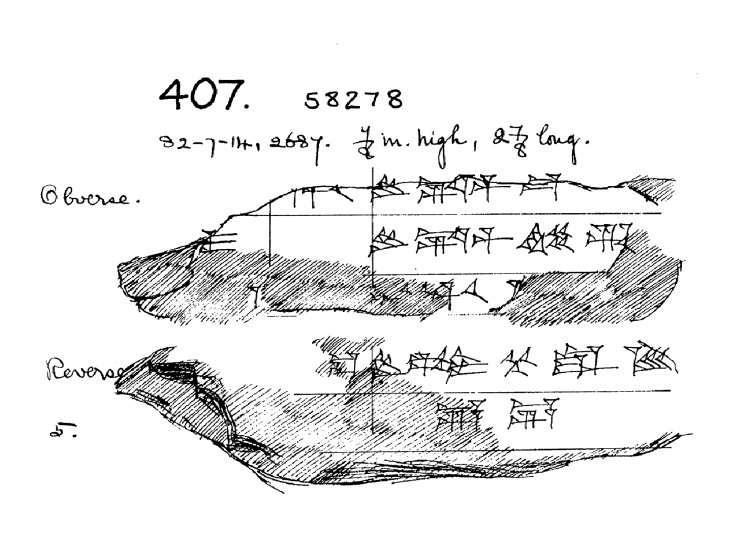
Ledgers appear at the dawn of written communication. Ledgers and writing developed simultaneously in the Ancient Near East to record production, trade, and debt. Clay tablets baked with cuneiform script detailed units of rations, taxes, workers and so forth. The first international ‘community’ was arranged through a structured network of alliances that functioned a lot like a distributed ledger.
A fragment of a late Babylonian cuneiform ledger, held by the British Museum, 58278
The first major change to ledgers appeared in the fourteenth century with the invention of double entry bookkeeping. By recording both debits and credits, double entry bookkeeping conserved data across multiple (distributed) ledgers, and allowed for the reconciliation of information between ledgers.
The nineteenth century saw the next advance in ledger technology with the rise of large corporate firms and large bureaucracies. These centralised ledgers enabled dramatic increases in organisational size and scope, but relied entirely on trust in the centralised institutions.
In the late twentieth century ledgers moved from analog to digital ledgers. For example, in the 1970s the Australian passport ledger was digitised and centralised. A database allows for more complex distribution, calculation, analysis and tracking. A database is computable and searchable.
But a database still relies on trust; a digitised ledger is only as reliable as the organisation that maintains it (and the individuals they employ). It is this problem that the blockchain solves. The blockchain is a distributed ledgers that does not rely on a trusted central authority to maintain and validate the ledger.
Comments Off on Blockchain primer – blockchain as a ledger
September 26, 2017
When virtue signalling is more important than tens of thousands of jobs
In Spiked, Brendan O’Neill slams the (mostly left-leaning) critics of Uber for their blatant two-faced attitudes:
The satire writes itself these days. For the past 16 months, ever since voters said No to the EU, the supposed liberal set has been signalling its virtue over migrant workers. These Remainer types have filled newspaper columns and dinner-party chatter with sad talk about foreigners losing the right to travel to and work in Britain. Yet now these same people have chortled as London mayor Sadiq Khan and his pen-pushers at Transport for London (TfL) have refused to renew Uber’s licence in the capital. Which means 30,000 people will lose work. Many of them migrants. They cry over migrant workers one day, and laugh as they lose their livelihoods the next.
Anyone would think their overriding concern is less with migrants’ right to work than with their own insatiable need to engage in political posturing. And right now, when it’s trendy to be anti-capitalist, to sneer at Silicon Valley fat-cats who make apps that employ people in far from ideal conditions, the posture that guarantees one’s spot in liberal circles is to be Uberphobic. Sticking it to Uber, making a spectacle of one’s haughty disdain for the vagaries of life in 21st-century capitalist society, takes precedence over concern for workers themselves. Welcome to 2017, where it’s cool to be anti-capitalist but not pro-worker.[…]
One of the ugliest sentiments behind Uberphobia is the idea that this service is a threat to the public, especially women. Darkly, the new left is at one with the anti-migrant hard right on this question: both have cheered Uber’s licence loss on the basis that women of London must be protected from unregulated drivers. Let’s get this into perspective. Last year it was revealed that between February 2015 and February 2016 there were 32 allegations of sexual assault against Uber drivers in London. There were a total of 154 allegations against all taxi and car firms, meaning Uber made up a minority of complaints. What’s more, there are millions of Uber journeys in London every year, so the chances of assault are minuscule. It’s the same in the US. There was scandal when it was revealed that Uber had received complaints from women who said they had been raped by drivers. It received five complaints between 2012 and 2015, which means 0.0000009% of car journeys involved an alleged act of rape. Uber is very safe indeed.
It is hard to avoid the conclusion that, from both leftish feminists and the hard right, the panic about Uber is driven partly by fear of unregulated foreign men driving around our cities. The state must regulate, they say — and they mean it must regulate both business and foreigners, both fat cats and untrustworthy outsiders, both moneymen and migrants. Cheering as migrant workers lose their work and being complicit in the depiction of migrant drivers as a rapacious threat: sections of the liberal-left have really exposed their prejudices through their posturing against Uber. The tragedy of Uberphobia is that it confirms that even anti-capitalism is now virtue-signalling. It is no longer a serious call to improve working people’s lives; it is just the fleeting thrill of shouting ‘Down with Uber!’ without ever letting the issue of its drivers’ livelihoods cross your pristine, virtuous mind.
Comments Off on When virtue signalling is more important than tens of thousands of jobs
September 25, 2017
London’s foolish Uber ban
Iain Murray on the decision by London bureaucrats (backed by the Lord Mayor) to ban Uber in favour of established cab companies:
When I lived in London in the 1990s, I had to use pricey Black Cabs to get around the city at night. However, heaven help you if you wanted to go South of the Thames (as I did when I lived there) after midnight – Black Cabs would just refuse to take you. On one occasion I watched in horror as the cab driver got out and literally started a fight with a driver who had cut him off – and he kept the meter running throughout the fracas.
London’s days of high prices, uncertainty, and danger ended when Uber started operating there in 2012. It went on to dominate the London private hire car market. Today, that was all thrown out as Transport for London (TfL), an Uber competitor in that it runs the Tube and franchises bus services, revoked Uber’s license to operate.
Safety First?
The decision was ostensibly based on health and safety grounds. TfL said:
“TfL considers that Uber’s approach and conduct demonstrate a lack of corporate responsibility in relation to a number of issues which have potential public safety and security implications. These include:
- Its approach to reporting serious criminal offences.
- Its approach to how medical certificates are obtained.
- Its approach to how Enhanced Disclosure and Barring Service (DBS) checks are obtained.
- Its approach to explaining the use of Greyball in London – software that could be used to block regulatory bodies from gaining full access to the app and prevent officials from undertaking regulatory or law enforcement duties.”
These grounds are puzzling. Uber has a dedicated team responsible for working with the police regarding incidents with cars that use the Uber app – something London’s Black Cabs lack. Uber’s drivers go through exactly the same background checks and approval processes that Black Cab drivers do. And Uber denies that the Greyball feature has ever been used in London.
Moreover, accusations of violence, especially sexual violence, by Uber app drivers are overblown. As Reuters reports, “Of the 154 allegations of rape or sexual assault made to police in London between February 2015 and February 2016 in which the suspect was a taxi driver, 32 concerned Uber, according to the capital’s police force.” If Uber was uniquely bad in having drivers who attempted sexual assaults, that share should be much higher.
On Saturday night, Perry de Havilland reported on the petition to rescind the TfL decision:
The #SaveYourUber petition has, as of 10:45 pm in London, attracted 600,000+ names, and one of them is mine.
Of course the best way to save Uber is to get rid of Sadiq Khan and make the issue politically radioactive.
Comments Off on London’s foolish Uber ban
QotD: IKEA’s shady history
IKEA itself serves as a fitting symbol of the middle-class masquerade. The company’s well-managed brand obscures the fact that its founder, Ingvar Kamprad, at the time that he founded the store in 1943, was a member of Sweden’s pro-Nazi fascist party, in which he continued to be active at least until 1948 and which he continued to praise for decades after; or that the company used forced prison labor in East Germany until the fall of the Berlin Wall. It is fitting that IKEA’s current worth is unknown, since it is technically owned by a phony-charity shell company incorporated in the Netherlands, enabling Kamprad to evade Swedish taxes. This is not to single out IKEA for particular scorn: one could write an equally lurid laundry list about almost any large corporation; a fascist undertone usually lurks beneath the surface of mass-production and mass-marketing. Consider the fact that Apple uses what is slave labor in all but name in China yet none of their customers seem to care.
Samuel Biagetti, “The IKEA Humans: The Social Base of Contemporary Liberalism”, Jacobite, 2017-09-13.
Comments Off on QotD: IKEA’s shady history
September 24, 2017
Rolling back the regulation tide
Megan McArdle on the Trump administration’s attempt to rein-in the regulation machine of the US federal government and its many, many agencies:
One of the first things Trump did as president was to sign an executive order requiring that two regulations be rolled back for every new one that was promulgated. As a longtime advocate of rolling back regulatory complexity, I found a lot to like in this rule. Unless strenuous effort is made to regularly prune them back, regulations have a tendency to blindly grow until they have wrapped the economy so tight that nothing can breathe, much less thrive. Trump’s executive order forces us to do some very necessary maintenance.
Unfortunately, it’s a rather crude instrument for the job. It’s possible that nothing more nuanced would actually work; nuance and flexibility, alas, give regulators quite a bit of discretion to put off an annoying chore. Just the same, we should recognize the dangers of cutting with such a dull knife.
In agencies that are dealing with a genuinely new and disruptive force — one for which innovators need regulatory clarity before they can bring a product to market — such a strict regulatory requirement faces them with an unpalatable dilemma. Every new regulation that is vitally necessary means finding two regulations that aren’t. But each of those dusty old rules was created for a reason. Some of those reasons were bad; in some cases the rule never worked as intended; and in others the rule later became obsolete. But that does not describe all of our regulations. And imagine the brutal publicity that will ensue if someone dies or gets hurt in an accident that could plausibly have been prevented by a rescinded rule.
An even larger problem is that the “two for one” rule doesn’t really tell us about the relative quality of the regulations involved. An agency could satisfy that executive order by issuing a terrible, stupid, costly regulation that forced power companies to rip out their windmills, as long as it repealed two sensible and necessary regulations that (for now) prevent factories from dumping toxic waste into our watersheds.
Reducing regulatory complexity is an important goal, but it cannot be our only goal. We ought to strive for less regulation, yes, but also for good regulation, and for regulation that gives companies enough clarity to innovate and build their businesses. Unfortunately, while the Trump administration has proven enthusiastic about the first goal, we’ve seen much less talk about the others. And given how long it has taken for Trump to staff all the agencies he oversees, we haven’t really had the personnel to deliver on things like better regulation, even if doing so were the Trump administration’s main priority.
Comments Off on Rolling back the regulation tide
September 19, 2017
The Merchant of Death – Basil Zaharoff I WHO DID WHAT IN WW1?
The Great War
Published on 18 Sep 2017For arms dealers like Basil Zaharoff, the late 19th and early 20th century was a time of never ending business opportunities, the great European powers modernised their armies drastically and conflicts like the Russo-Japanese War or the Balkan Wars meant that weapons of all kinds were always in demand. But no other man knew how to influence and profit from the warring nations like “The Merchant of Death” – Basil Zaharoff.
Comments Off on The Merchant of Death – Basil Zaharoff I WHO DID WHAT IN WW1?
September 15, 2017
Will Google’s quasi-monopoly last as long as AOL’s did?
In the big picture, I’m concerned with Google’s current market power and their ability to quash online freedom of speech almost at will (if not directly, through pressure on other companies to co-operate, or else: “Nice little business you’ve got here, Mr. Forbes. It’d be a shame if something happened to its Google search results…”). Google is huge and has fingers in an unimaginable number of pies, but it is still subject to market forces, as was an earlier behemoth of the online world:
The film [You’ve Got Mail] was released in 1998. Amazon was founded in 1994 and had its IPO in 1997. It was about to crush big discount bookstores — does anyone still remember the other big chain, Borders? — and nobody had a clue. There isn’t a single mention in the film of Amazon or online sales.
But the Internet is mentioned. It’s right there in the title of the movie. You’ve Got Mail, for those who are old enough to remember, was a tagline for America Online, the largest Internet service provider in the dial-up era of the 1990s. For millennials, let me explain: we had to connect our computers to a phone line, and an internal modem would place a phone call to a local data center from which it could download information at impossibly slow speeds. […]
AOL is there in the film’s title, because that’s how our protagonists are communicating: by trading e-mails on their dial-up AOL connections.
AOL’s high point was its merger with Time Warner in 2000. It was all downhill, rapidly, from there. Dial-up was quickly surpassed by broadband, and as the Web developed, nobody needed a “Web portal” any more. Again, for younger readers, let me explain. When you managed to get to this exciting new thing called the World Wide Web, how did you know what sites to go to or how to access information? Before the Google search, before Facebook, before Twitter, you went to a Web portal, a launching off point that gathered links and directed you to various sources for news, entertainment, shopping, etc. These Web portals had a huge amount of influence — until they didn’t.
Now here’s the fun part. At the same time nobody was paying much attention to Amazon because Barnes and Noble was going to crush all competitors and control the book business, there was widespread panic about the unstoppable monopoly power of AOL.
AOL was going to gain a monopoly because of its death grip on instant messaging. The “computer editor” for The Guardian worried that this was putting AOL “on its way to world domination.” The AOL-Time Warner deal raised “concerns that its merger would create a media powerhouse that would level competitors, dominate the Internet, and control consumer choice.”
A Wired podcast talked about fears of a Sun-AOL monopoly, but they didn’t call that sort of thing a “podcast” yet because the iPod hadn’t been invented. The audio clip was an MP3 file, and they suggested you listen to it on a Sonique MP3 player from Lycos. The Sonique stopped being produced about a year later. Lycos was a major Web portal, and according to Wikipedia, it was “the most visited online destination in the world in 1999.” It was bought by a multinational conglomerate for $12.5 billion at the peak of the dot-com bubble.
Whatever is left of Lycos was last sold for $36 million in 2010, though that deal seems to have collapsed in acrimony later on. Sic transit gloria mundi.
Comments Off on Will Google’s quasi-monopoly last as long as AOL’s did?
September 13, 2017
Tesla’s experiment in price discrimination
Alex Tabarrok links to a story about Tesla using an over-the-air software update to help Tesla owners in hurricane-threatened areas get more range from their lower-battery capacity cars … but he says this may eventually come back and bite the company:
Tesla knows that some of its customers are willing to pay more for a Tesla than others. But Tesla can’t just ask its customers their willingness to pay and price accordingly. High willing-to-pay customers would simply lie to get a lower price. Thus, Tesla must find some characteristic of buyers that is correlated with high willingness-to-pay and charge more to customers with that characteristic. Airlines, for example, price more for the same seat if you book at the last minute on the theory that last minute buyers are probably business-people with high willingness-to-pay as opposed to vacationers who have more options and a lower willingness-to-pay. Tesla uses a slightly different strategy; it offers two versions of the same good, the low and high mileage versions, and it prices the high-mileage version considerably higher on the theory that buyers willing to pay for more mileage are also more likely to be high willingness-to-pay buyers in general. Thus, the high-mileage group pay a higher price-to-cost margin than the low-mileage group. A familiar example is software companies that offer a discounted or “student” version of the product with fewer features. Since the software firm’s costs are mostly sunk R&D costs, the firm can make money selling a low-price version so long as doing so doesn’t cannibalize its high willingness-to-pay customers–and the firm can avoid cannibalization by carefully choosing to disable the features most valuable to high willingness-to-pay customers.
The kind gesture to Tesla owners in Florida is probably deeply appreciated right now, but…
Unfortunately, I fear that Tesla may have made a marketing faux-pas. When it turns off the extra mileage boost are Tesla customers going to say “thanks for temporarily making my car better!” Or are they going to complain, “why are you making MY car worse than it has to be?”
Human nature being what it is, the smart money is betting on the “Thanks for the temporary upgrade, but what have you done for me lately?” attitude setting in quickly.
September 12, 2017
Google doesn’t mind flexing its muscles now and again
Yet another instance of Google proving that someone erased the word “Don’t” from their company motto*:
Dear Editors,
You might be interested to learn, that your websites have been almost blacklisted by Google. “Almost blacklisted” means that Google search artificially downranks results from your websites to such extent that you lose 55% – 75% of possible visitors traffic from Google. This sitution [sic] is probably aggravated by secondary effects, because many users and webmasters see Google ranking as a signal of trust.
This result is reported in my paper published in WUWT. The findings are consistent with multiple prior results, showing Google left/liberal bias, and pro-Hillary skew of Google search in the elections.
I write to all of them to give you opportunity to discuss this matter among yourselves. Even if Google owes nothing to your publications, it certainly owes good faith to the users of its search.
* For all I know, Google’s original motto may already have gone down the memory hole: “Don’t be evil“.
Comments Off on Google doesn’t mind flexing its muscles now and again
September 9, 2017
Minimum Wage: Bad for Humans, Good for Robots
Published on 7 Sep 2017
Jacking up the minimum wage sounds like a good idea, but it comes with disastrous consequences: low-skilled workers getting canned, employers cutting hours, and, of course, robots.
Comments Off on Minimum Wage: Bad for Humans, Good for Robots
September 8, 2017
Google’s unbridled market power and ability to quash critics and competitors
In Wired, Rowland Manthorpe reports on another case of Google roughing up someone for being critical of their current “be evil” business philosophy:
The latest allegation against Google? Jon von Tetzchner, creator of the web browser Opera, says the search giant deliberately undermined his new browser, Vivaldi.
In a blogpost titled, “My friends at Google: it is time to return to not being evil,” von Tetzchner accuses the US firm of blocking Vivaldi’s access to Google AdWords, the advertisements that run alongside search results, without warning or proper explanation.
According to Von Tetzchner, the problem started in late May. Speaking at the Oslo Freedom Forum, the Icelandic programmer criticised big tech companies’ attitude toward personal data, calling for a ban on location tracking on Facebook and Google. Two days later, he suddenly found Vivaldi’s Google AdWords campaigns had been suspended. “Was this just a coincidence?” he writes. “Or was it deliberate, a way of sending us a message?” He concludes: “Timing spoke volumes.”
Von Tetzchner got in touch with Google to try and resolve the issue. The result? What he calls “a clarification masqueraded in the form of vague terms and conditions.” The particular issue was the end-user license agreement (EULA), the legal contract between a software manufacturer and a user. Google wanted Vivaldi to add one to its website. So it did. But Google had further complaints.
According to emails shown to WIRED, Google wanted Vivaldi to add an EULA “within the frame of every download button”. The addition was small – a link below the button directing people to “terms” – but on the web, where every pixel matters, this was a potential competitive disadvantage. Most gallingly, Chrome, Google’s own web browser, didn’t display a EULA on its landing pages. Google also asked Vivaldi to add detailed information to help people uninstall it, with another link, also under the button.
The links Vivaldi says it was forced to add to comply with Google’s demands (image via Wired)

Comments Off on Google’s unbridled market power and ability to quash critics and competitors


