You buy lawn-care services from company XYZ located on the other side of town. Your neighbor, Mr. Stump, takes it upon himself to hold you up at gunpoint to the tune of $25 each time you buy services from XYZ rather than from Stump’s teenage son. You are less powerful than Stump and, not being suicidal, you pay the “tariff” that he officiously demands. But Stump is a magnanimous fellow, and so he agrees to a deal with XYZ: Stump drops his tariffs on your purchases from XYZ in return for XYZ agreeing to raise the price it charges you by $15.
But soon a trade dispute erupts. Stump discovers – correctly, we can assume – that XYZ is charging you less for its lawn-care services than Stump agreed is acceptable for you to be charged and that XYZ agreed in the trade deal to charge. Stump, being a master negotiator, threatens to reimpose the $25 tariff on you unless and until XYZ raises the price it charges you to at least the level that Stump has divined is acceptable and that is enshrined in the terms of the trade agreement between him and XYZ. Alas, XYZ gives in and agrees to raise the price it charges you. Stump then boasts that, by not letting XYZ get away with breaking its word in the trade deal, he is not only protecting the neighborhood from dangerously low prices but is also upholding the sacred rule of law and the sanctity of contractual agreements.
Of course, in reality, Stump’s presumptuous exercise of the power to
rob youimpose a tariff on you whenever you engage in commerce that he finds objectionable is a wrong inflicted on you and on your trading partner, XYZ. The fact that the practicalities of the situation result in your and XYZ going along with the “deal” to entice Stump to stop robbing you each time you buy XYZ’s services does not ethically oblige you to stick to the terms of the deal if you can, in secret, get better terms from XYZ. When Stump threatens to reimpose on you the $25 tariff, he harms you. That is, when in response to Stump’s threat to reimpose the tariff XYZ agrees to abide by the terms of its trade agreement with Stump and raise the price that it charges you, you are made worse off, not better off.Stump’s enforcement of this agreement, in short, does not protect you from further victimization in the future; instead, that enforcement is itself an act of victimizing you. Successful enforcement of this agreement assures you a future less prosperous than it would be were Stump instead to ignore XYZ’s “violation” of the deal.
Note: we can all agree that, between the two options (1) $25 tariff and (2) no tariff but an enforced price-hike, under the trade agreement, of $15, that the second option is better for you than the first option. It is in this limited sense that trade agreements in reality are beneficial. But there’s a third option: (3) Stump does not interfere with your commerce and you pay whatever price you negotiate with XYZ without that price being artificially affected by Stump’s interference. This third option is, for you, the best of the three – and it’s the only fully ethical one of the bunch. (So when Dan Griswold, myself, and other free-traders defend trade agreements, we do so with the realistic recognition that option (3) is politically infeasible. Given this unfortunate infeasibility of option (3), we endorse option (2) over option (1).)
Don Boudreaux, “Strict Enforcement of an Impoverishing Deal Assures Continuing Impoverishment”, Café Hayek, 2017-07-07.
August 18, 2019
QotD: “Hitting back” at protectionist policies
August 17, 2019
QotD: Bridal traditions
Left unspoken: Didn’t do jack. You’d think the Brides in Italy would have figured this out in short order, eh? “Here, my child. Soak your dress in lavender. It will calm your nerves.” Did it work for you, mama? “No, I spent the morning sobbing and throwing up in rank terror, since I had only met your father the previous night, and he had the breath of cheese far gone with mold. But this is what we do, for we are superstitious peasants whose worldview is derived not from empirical observation of the world, but sage wisdom Grandmama got from her great-grandmama. Now put these grape stems up your nose so your first-born will be a boy.”
James Lileks, Star Tribune, 2004-05-24.
August 14, 2019
1950s Willys Jeep Promotional Film – The Jeep Family Of 4 Wheel Drive Vehicles
PeriscopeFilm II
Published on 3 Sep 2015Willys, the “World’s Largest Manufacturer of Utility Vehicles,” presents the Jeep Family of 4-Wheel Drive Vehicles and Special Equipment, a circa 1954 black-and-white film promoting Jeeps produced for civilian use. Following the success of Jeeps during World War II, the film opens with an explanation of how the vehicles soon their way to civilian use. Some of the vehicles seen in this film are used by construction companies, farmers, firefighters, and even at airports to tow aircraft and move cargo trailers and plow snow. At mark 02:49 the film introduces other types of Jeep equipment, such as a generator that turns the vehicle “into a mobile source of electric power to operate saws, communication equipment, motion picture equipment, flood and spotlights. And indeed any electrical equipment that must be moved around over bad terrain or in bad weather.” Scenes also capture telephone company repair crews, oil field crews, plus local and state road crews and construction companies. A Jeep is shown at a cemetery at mark 04:03 moving sand, shrubs, and burial equipment around the grounds in addition to lifting memorial markers. The viewer learns about variable engine speeds beginning at mark 05:55 with an up-close look at an engine and a discussion of its power, as well as various ways that power can be tapped for various operations. As it continues the film touts the Jeep rotary cutter (mark 07:45) as high brush is cut down, a hammer mill (mark 08:15), and a trencher (mark 08:30). There are forklift attachments, front and rear winches, as a front winch is shown pulling a dead tree from the ground (mark 10:10). The sales pitch rolls on at mark 11:42 showing some Jeep steel tops including the half-cab, master, and standard top — “each one designed for a special purpose but all three designed to stand up in rough hard service year after year.” Mark 12:00 begins an explanation of the vehicle’s 4-wheel drive capabilities, meaning that the vehicle “can go anywhere to do its job” including remote camping and hunting spots, while by mark 13:48 there’s a look at a Willys sedan delivery vehicle as grocery store employees are shown loading items into the back, and the Willys pick-up trick at mark 14:52. Other models are shown hauling grain and livestock, as well as an ambulance (mark 17:00).
Jeep is a brand of American automobiles that is a division of FCA US LLC (formerly Chrysler Group, LLC), a wholly owned subsidiary of Fiat Chrysler Automobiles. The original Jeep was the prototype Bantam BRC. Willys MB Jeeps went into production in 1941 specifically for the military, arguably making them the oldest four-wheel drive mass-production vehicles now known as SUVs. The Jeep became the primary light 4-wheel-drive vehicle of the United States Army and the Allies during World War II, as well as the postwar period. The term became common worldwide in the wake of the war. The first civilian models were produced in 1945. It inspired a number of other light utility vehicles, such as the Land Rover. Many Jeep variants serving similar military and civilian roles have since been designed in other nations. Willys-Overland and Ford, under the direction of Charles E. Sorensen (Vice-President of Ford during World War II), produced about 640,000 Jeeps towards the war effort, which accounted for approximately 18% of all the wheeled military vehicles built in the U.S. during the war.
From 1945 onwards, Willys took its four-wheel drive vehicle to the public with its CJ (Civilian Jeep) versions, making these the first mass-produced 4×4 civilian vehicles. In 1948, the U.S. Federal Trade Commission agreed with American Bantam that the idea of creating the Jeep was originated and developed by American Bantam in collaboration with some U.S. Army officers. The commission forbade Willys from claiming, directly or by implication, that it had created or designed the Jeep, and allowed it only to claim that it contributed to the development of the vehicle. However, American Bantam went bankrupt by 1950, and Willys was granted the “Jeep” trademark in 1950.
This film is part of the Periscope Film LLC archive, one of the largest historic military, transportation, and aviation stock footage collections in the USA. Entirely film backed, this material is available for licensing in 24p HD and 2k. For more information visit http://www.PeriscopeFilm.com

August 12, 2019
Australia’s government broadband fiasco might be a useful lesson for Senator Warren
In the race for the Democratic party’s presidential nomination, Senator Elizabeth Warren recently proposed a government-provided broadband rollout across the United States to compete with or supplant the existing private ISPs. Arthur Chrenkoff suggests that looking at Australia’s experience with a very similar plan might encourage her to abandon her proposal after a brief airing on the campaign trail:
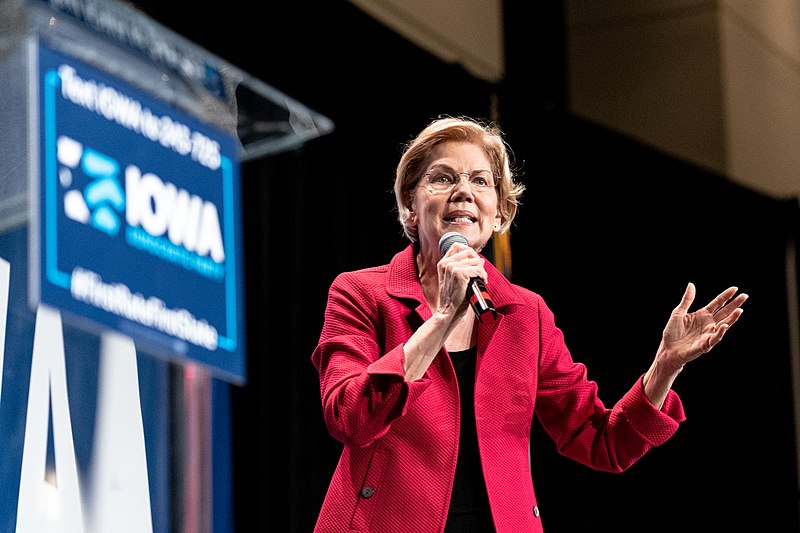
Senator Elizabeth Warren speaking at the Iowa Democrats Hall of Fame Celebration in Cedar Rapids, Iowa, on 9 June, 2019.
Photo by Lorie Shaull via Wikimedia Commons.
Maybe Senator Warren should have a pow-wow first with IT experts from Australia, who could enlighten her about our country’s 12-years-and-counting saga of the National Broadband Network, a Labor government initiative that the -then leader of the opposition, Tony Abbott, described as “a white elephant on a massive scale” but later adopted and continued while in government.
It started in 2007 as a policy for a government-rolled out broadband network, in most areas duplicating internet services already provided by private sector providers (mainly through the existing copper wire telephony network), which would be available as an option to all Australian households. In most cases it would be achieved through wired technology (fibre to the premises, later downgraded to a cheaper fibre to the node) with a satellite connection available to the most remote areas where cabling was impractical.
I remember thinking then that the project was an absurd waste of taxpayers’ money for a service of the type that telecommunication companies would be able and willing to provide in any case. At most, there was an argument that the government could step in and provide the infrastructure in some country areas where there was no commercial case for the private providers to proceed. Call me a clairvoyant but it was pretty clear to me that “broadband for all” would take a lot longer to roll out that planned, would cost significantly more than initially budgeted, and would very likely be technologically obsolete by the time it was finished.
August 8, 2019
An excellent illustration of market segmentation
The Wikipedia entry for “market segmentation” defines it this way:
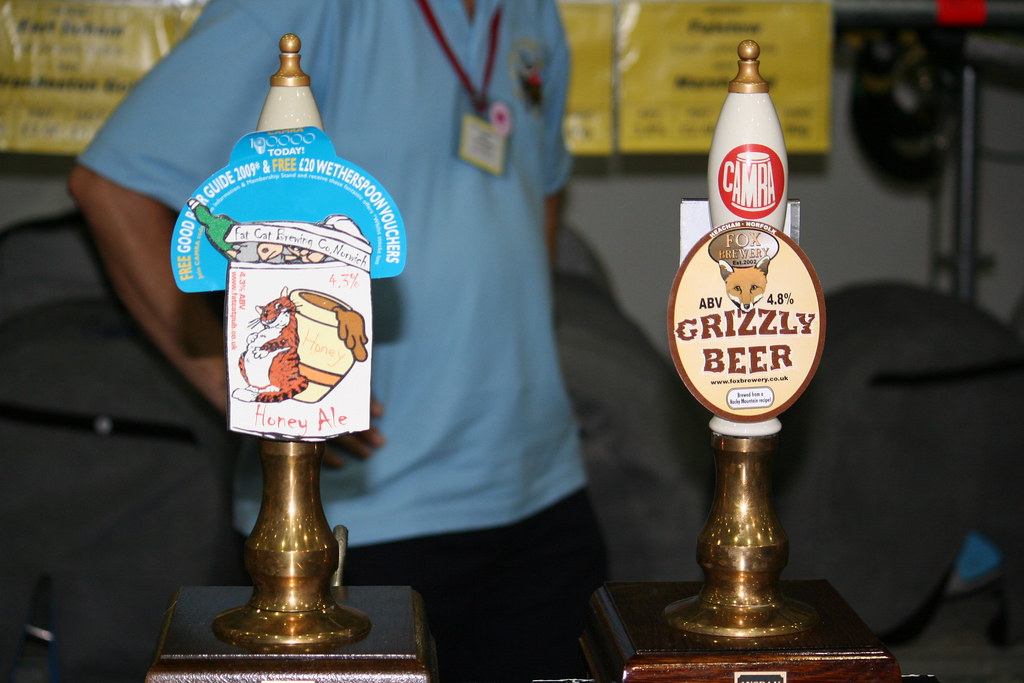
“BEER”by Jonnee is licensed under CC BY-NC-SA 2.0


Market segmentation is the activity of dividing a broad consumer or business market, normally consisting of existing and potential customers, into sub-groups of consumers (known as segments) based on some type of shared characteristics. In dividing or segmenting markets, researchers typically look for common characteristics such as shared needs, common interests, similar lifestyles or even similar demographic profiles.
No single product is going to be universally popular, and it’s generally a bad idea to present it that way. The producers of a new product ideally try to identify the groups of potential customers who are more likely to want to buy the new product, and tailor their advertising to those groups. The more accurately they can identify and communicate with these customer groups, the greater the chances that the product will be a success in the market.
Beer isn’t universally popular (Gasp! Shock! Horror!), so brewers try to identify different kinds of beer drinkers and market their brews to those sub-groups:
The point about a market being that you can put your stuff out there and see who buys it. The buyers will – they are rational beings after all – select from the varied offerings and their selections will be the ones which best increase their utility by their own measurements of that utility. Thus the Shagmenowbigboypint might get a bit more business toward closing time, who knows? Not necessarily entirely female business either.
And even to stop being puerile about it. We’ve only this one system that does provide multiple choices – that’s what a market is. But in order for ever finer meeting of utility it’s necessary for ever finer slices of the market to be addressed. That is, we need to have free market entry so we can find out what it is that actually meets peoples’ desires.
Banning something that appeals to some slice of that market is thus defeating the point and object of that very market’s existence. Sure, lots of women won’t buy a sexist beer. Some will, as will some men. The aim and art of the whole exercise being to allow those who won’t not to, those who will to.
Or, as we can put it, every beer being Shagmenowbigboypint is as bad as no beer being Shagmenowbigboypint.
August 5, 2019
How Boeing lost its mojo
Rafe Champion linked to this interesting thumbnail-sketch history of the decline and fall of Boeing:
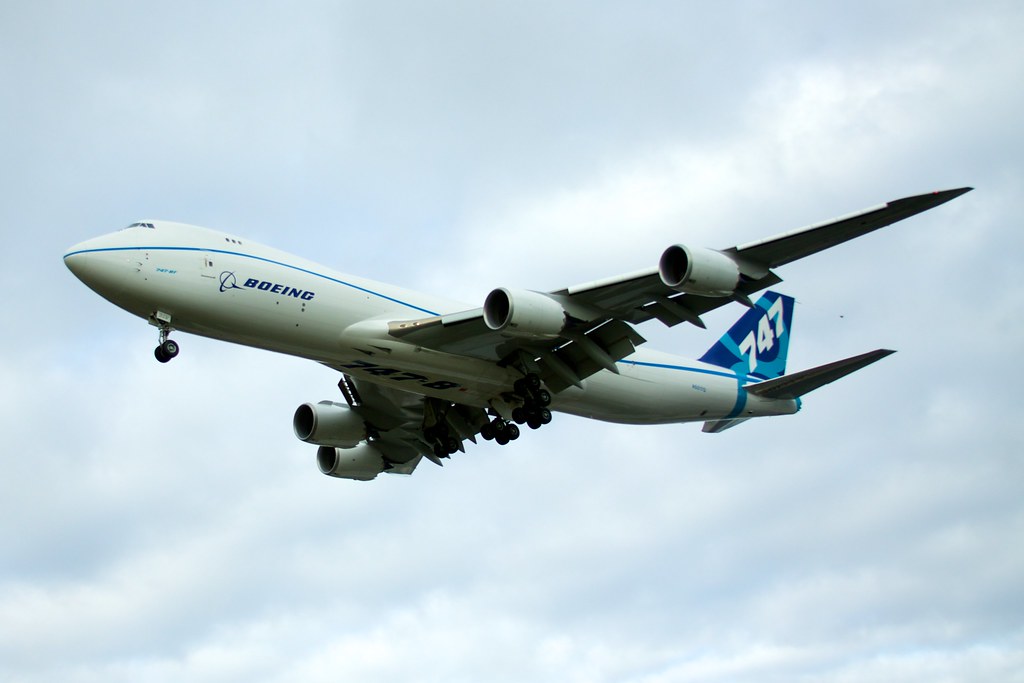
“Boeing 521 427”by pmbell64 is licensed under CC BY-SA 2.0
Let’s start by admiring the company that was Boeing, so we can know what has been lost. As one journalist put it in 2000, “Boeing has always been less a business than an association of engineers devoted to building amazing flying machines.”
For the bulk of the 20th century, Boeing made miracles. Its engineers designed the B-52 in a weekend, bet the company on the 707, and built the 747 despite deep observer skepticism. The 737 started coming off the assembly line in 1967, and it was such a good design it was still the company’s top moneymaker thirty years later.
How did Boeing make miracles in civilian aircraft? In short, the the civilian engineers were in charge. And it fell apart because the company, due to a merger, killed its engineering-first culture.
What Happened?
In 1993, Clinton’s Deputy Secretary of Defense, Bill Perry, called defense contractor CEOs to a dinner, nicknamed “the last supper.” He told them to merge with each other so as, in the classic excuse used by monopolists, to find efficiencies in their businesses. The rationale was that post-Cold War era military spending reductions demanded a leaner defense base. In reality, Perry had been a long-time mergers and acquisitions investment banker working with industry ally Norm Augustine, the eventual CEO of Lockheed Martin.
Perry was so aggressive about encouraging mergers that he put together an accounting scheme to have the Pentagon itself pay merger costs, which resulted in a bevy of consolidation among contractors and subcontractors. In 1997, Boeing, with both a commercial and military division, ended up buying McDonnell Douglas, a major aerospace company and competitor. With this purchase, the airline market radically consolidated.
Unlike Boeing, McDonnell Douglas was run by financiers rather than engineers. And though Boeing was the buyer, McDonnell Douglas executives somehow took power in what analysts started calling a “reverse takeover.” The joke in Seattle was, “McDonnell Douglas bought Boeing with Boeing’s money.”
[…]
The key corporate protection that had protected Boeing engineering culture was a wall inside the company between the civilian division and military divisions. This wall was designed to prevent the military procurement process from corrupting civilian aviation. As aerospace engineers Pierre Sprey and Chuck Spinney noted, military procurement and engineering created a corrupt design process, with unnecessary complexity, poor safety standards, “wishful thinking projections” on performance, and so forth. Military contractors subcontract based on political concerns, not engineering ones. If contractors need to influence a Senator from Montana, they will place production of a component in Montana, even if no one in the state can do the work.
August 2, 2019
Doug Ford’s sudden onset “Winegate” scandal
Ontario premier Doug Ford is now taking flak for promoting an Ontario winery after his party accepted what some Toronto media reports characterized as a “generous” donation from the winery’s owner. How generous? Are we talking millions? Tens of millions? A thousand dollars. Toronto media considers $1,000 to be enough money to sway the provincial government and at least one local media outlet encouraged its readers to boycott the winery. But that turned out to be only the tip of the iceberg from a media investigation point of view: Ford’s ultra-cheesy “Ontario News Now” party propaganda channel had given Ford’s endorsement to at least four other mega-corporations whose political contributions may have gone as eye-wateringly high as $2,000! Torontonians may never have heard of these corporate puppet-masters who clearly now control Premier Ford’s every waking moment, but as Canadians have never seen corruption on this scale before — nearly ten thousand dollars in political contributions!! — they’re demanding all the usual things that media-ginned-up protests tend to demand.

“Pelee Island winery”by John Kannenberg is licensed under CC BY-NC-ND 2.0
At the National Post, Chris Selley wonders why the Ontario Progressive Conservatives are acting just as badly as the Liberals they replaced:
When it comes to Canadian politicians and money, it might be difficult to explain to a foreign visitor exactly what’s kosher and what’s not. Ontario Premier Doug Ford got some bad press this week for having promoted the Pelee Island Winery in one of his impossibly cheesy “Ontario News Now” propaganda videos, just weeks after the winery’s owner, Walter Schmoranz, donated $1,000 to Ford’s Progressive Conservatives. In isolation, it didn’t look great. If it’s a coincidence, as the premier claims, then it’s the sort of coincidence a government wishing to claim moral rectitude should endeavour to avoid.
Viewed in the broad landscape of Canadian politics, however, it all seems rather overblown. Politicians regularly stump for certain products and businesses, after all, implicitly at the expense of others. More to the point they routinely give businesses free money without asking us, and not out of the goodness of their hearts.
According to David Akin’s indispensable @ottawaspends Twitter feed, the federal government doled out $723,000 to wineries and winery associations this year and last. The Nova Scotia Winery Association hoovered up $522,000 of the total, plus another $175,000 back in 2012. Perhaps it would be cynical to observe that the riding of West Nova, home to the Annapolis Valley wineries, is notorious for changing hands between the Liberals and Conservatives. Whoops — too late.
Here in Ontario, meanwhile, between 2013 and 2018, the province and feds collectively gave away at least $1.1 million to wineries and $1.5 million to breweries, plus $140-odd million more to an endless queue of cap-in-hand distillers, mushroom farmers, meat processers, goat dairies, sugarmakers and bakeries. Pelee Island Winery isn’t on that list, incidentally, which might put the premier’s non-financial contribution — quid pro quo or not — in perspective.
All that taxpayer dough got handed out under a program called Growing Forward 2, which was an “initiative that encouraged innovation, competitiveness and market development, adaptability and industry sustainability in Canada’s agri-food and agri products sector.” That’s a fancy way of saying “corporate welfare,” which can be unpopular in Canada when it comes to bailing Bombardier out of its latest fiasco or buying the Weston clan new freezers, but which is entirely uncontroversial when it comes to smaller, less obviously villainous businesses — especially if they happen to be farms.
July 31, 2019
The quickest way to raise the real income of minimum wage earners
Tim Worstall explains how to quickly raise the living standards of everyone in Britain earning the minimum wage, without costing employers any more:
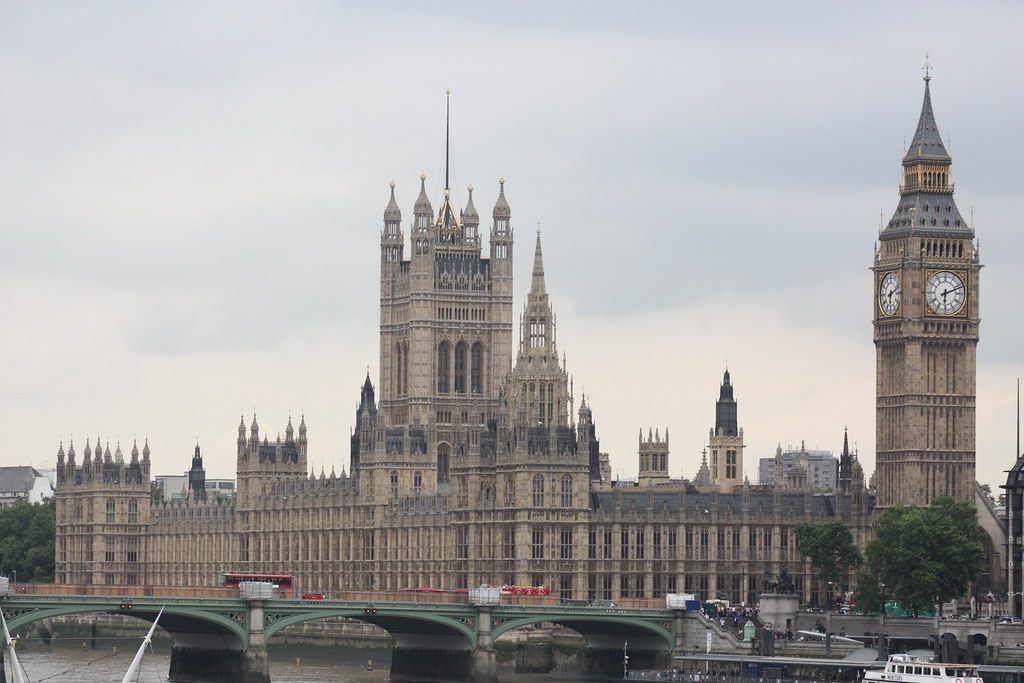
“Palace of Westminster”by michaelhenley is licensed under CC BY-NC-SA 2.0
I – Tim Worstall that is – then started pointing out that the difference between this living wage and the minimum wage was the amount of tax that we – shamefully – charge to the low paid. Tax being both income tax and national insurance contributions. In fact, I rather shouted about it around the place, at the ASI, and here in The Times in 2012.
The gross annual salary of a full-time worker on the minimum wage is £12,070.50. We could come close to lifting every low-paid worker out of poverty if we simply increased the personal tax allowance from £8,105 to that sum. Not a penny of income tax or NICs should leave their pay packet. A full-time worker, however, on the living wage would be taking home £12,410.74, after the taxman has taken a cut — that’s only £340 more. And before the Foundation uprated the living wage yesterday, the annual difference was just £8.74.
There are problems. Raising the personal allowance gives everyone a tax cut — which I’ll admit doesn’t break my heart. But we could lower the amount at which the higher rates of tax kick in to make up for that lost revenue. And won’t these workers lose their right to unemployment benefit and a pension, if they don’t pay NICs? No, they qualify already, as the system treats the very low paid as if they had made NI contributions. We should go farther. The link between the full-year minimum wage and the personal allowance for tax and NI should be made explicit. Change one and the government of the day must change the other. If the minimum wage is the minimum moral amount that someone’s labour is worth, then that is what they should get, not the amount after Denis MacShane’s European wanderings have been paid for.
Which leaves us with two competing visions of how everyone can be free of poverty pay. The Living Wage Campaign’s vision is to shout at every employer in the country until they give in. The Worstall Way is to increase the incomes of the working poor by stopping taxing them.
The Jaguar E-Type / XK-E Story
Big Car
Published on 10 May 2019To help me continue producing great content, please consider supporting me: https://www.patreon.com/bigcar
The Jaguar XK-E or E-Type may be the most beautiful car in history. It’s certainly one of the most sought after, with cars fetching crazy prices at auction. It’s a car born out of a Le Mans-winning heritage, delivering looks with speed and handling to match, all at an affordable price. Yet somehow it had a top speed over 150mph, while also not having a top speed over 150mph!
#JaguarEType #JaguarXKE #EType

July 30, 2019
QotD: Business versus economics
Erwin Rommel, edited by B.H. Liddell Hart in The Rommel Papers, 1953.
July 25, 2019
YouTube’s secret fight against history documentaries
The good folks at TimeGhost have been struggling with YouTube’s monetization and recommendation mechanisms for some time. A number of TimeGhost’s WW2 documentary videos have been demonetized over the last year, and the team noticed that every demonetized video had significantly fewer viewers than those that were not demonetized. They did some analysis and submitted the results to YouTube, showing that the demonetized videos were also being restricted from showing up on the automated recommendation lists that users see, which largely accounted for the lower viewership for their demonetized videos, but YouTube denied that there was any connection between these things … that demonetized videos are just as likely to be recommended as the ones that are not demonetized, and that TimeGhost’s analysis was just wrong. YouTube sent the TimeGhost team a set of guidelines for how to ensure that the videos they post were considered acceptable to advertisers and would not be subject to demonetization (and the stealth omission from recommendation lists). Here’s the first video from TimeGhost, implementing those guidelines:
This is how they explained the situation in the comments:
World War Two
3 hours ago (edited)
Now, to begin with – this is not about that we need YouTube’s ad money, at our viewership levels that money is not near enough to finance our content anyway. We have a fantastic community in the TimeGhost Army that support us financially, and make our shows possible, for which we are eternally grateful. This is also not about politics – nothing in our data indicates that YouTube is choosing what to monetize based on political considerations. However, indirectly this is about money, but even more importantly about our self-appointed mandate to share education about our common past. You see, when YouTube labels content as “not suitable for some, or most advertisers” they also recommend it less – in fact almost only under our own videos. This means that we don’t reach new viewers with those videos, this in turn means that our community grows less, or not at all.When we sent the data proving that (data from YouTube no less), they at first denied that there was a connection between monetization and recommendation. We sent them more data showing conclusively that this is a false statement. Their response then was to say that maybe there is a connection between things that impact monetization and things that impact recommendation. They also sent us a list of things we should do to become “more advertiser friendly” – the list states among other things that content dealing with war, political controversies, terrorism, or death is not suitable for advertisers. That in effect means more or less the better part of human history and all of WW2.
We emphatically object to this interpretation of what is acceptable for advertisers – our kind of content has been attached to advertising for decades in main stream media, historical magazines and websites dealing with exactly the same things we do, receives advertising from major brands. Furthermore less recommendation means less viewers, which means that our content gets less support and thus risks becoming financially impossible – that is censorship by drip. Therefore we also vehemently protest this policy that in effect restricts the access to educational content, with high academic standards covering topics that are essential parts of human history. Events and phenomena that need to be widely understood in order for the world to learn from our past mistakes.
Last but not least we want to point out one more time – we do not have any indication whatsoever that we are being targeted for political reasons. We cover topics covering both right wing and left wing politics, we do not make judgement ourselves, instead we leave it up to you to decide positively or negatively depending on your opinion. We cover these topics factually, with completeness, and unbiased. The portion of our videos that have been deemed unsuitable to advertisers include political themes that cover the entire spectrum from Naziism to Marxism. Notably, and from the educational perspective troubling is that videos covering crimes against humanity such as the Holocaust or war crimes by the Soviet Union are almost always demonetized.
Please share this video to raise the awareness of what we find to be irresponsible behavior by a corporation that holds a virtual monopoly on free to access ad financed online video. Thank you.
July 15, 2019
QotD: The Canadian Broadcasting Corporation
CBC’s television and online news departments are a haunted museum of bloat, larding tons of valuable content with tiresome victim-mongering; endless why-didn’t-the-government-prevent-this stories; Trudeau propaganda snaps beamed straight in from the Prime Minister’s Office; a dumb, tawdry nightly newscast; an opinion section that pays writers way over market (though, ahem, nothing more than what’s fair!); Canadian Press wire copy of which a lavishly resourced public broadcaster has no earthly need; and an entire clickbait department that’s stealing digital advertising revenue from private-sector outlets. It has no clear mandate to do much of this in the first place — indeed, the Heritage Committee recommended getting CBC out of digital revenue altogether — and unlike CBC Radio and SRC, I’m not aware of a single human being who supports the TV/online status quo.
Chris Selley, “Federal government should stop trying to help private media and fix the CBC”, National Post, 2017-06-20.
July 9, 2019
QotD: Tariffs
Over and above the general point that we don’t want to limit trade nor imports there’s another worry with tariffs and trade wars. Which is what the International Monetary Fund is complaining about. The imposition of more tariffs is a disruption to that global economy. One that is going to reduce growth, the very thing we all desire.
Tim Worstall, “IMF Says The U.S. And China Trade Tariffs Are A Major Risk To World Growth”, Seeking Alpha, 2019-06-07.
July 7, 2019
Does this sound like your gym?
Instapundit linked to this older Sean Kelly article about the “Planet Fitness” chain of health clubs. According to him, it’s even less pretty than you might have thought:
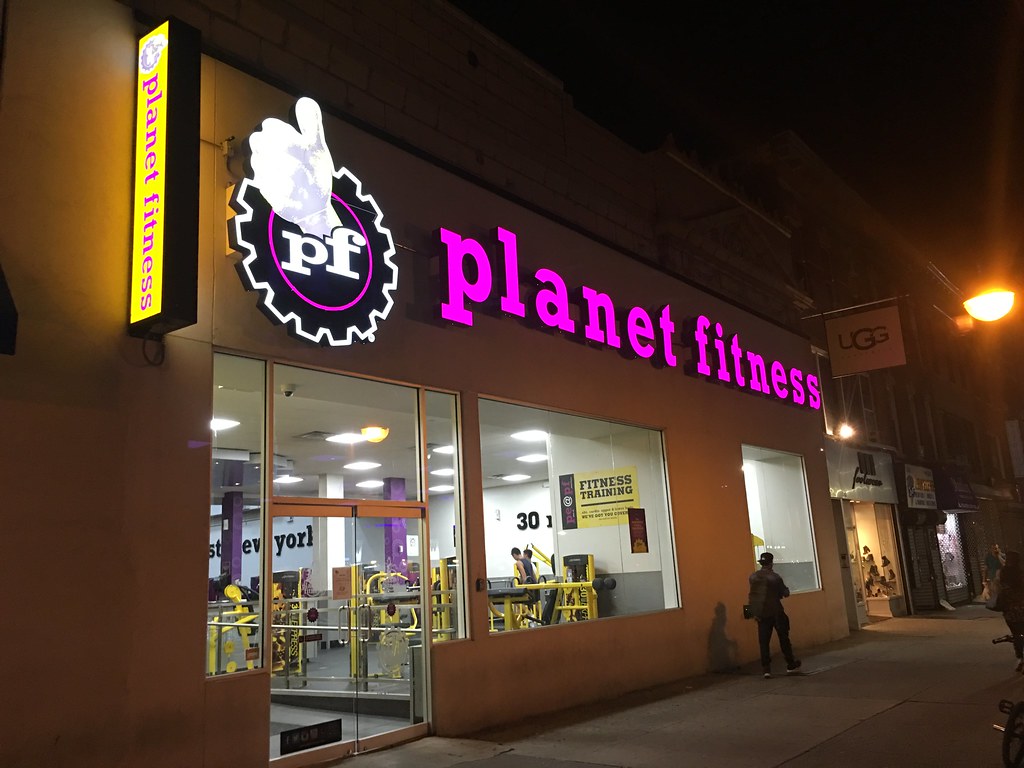
“Planet Fitness”by JeepersMedia is licensed under CC BY 2.0
Here’s what you need to know…
- Planet Fitness: The gym for people who don’t really want to get in shape, owned by people who really can’t afford for the members to be there.
- A survey of over 20 different Planet Fitness locations in 12 different states revealed that they provide no nutritional guidance. They do however supply candy and pizza.
- Planet Fitness seems to promise that health and fitness will ultimately be comfortable and not involve any real effort.
- Planet Fitness is a big, purple-colored adult daycare marketed to people afraid to go to an actual gym.
- Many Planet Fitness members do want to make progress of course, but the gym’s own rules and operating guidelines seem to dissuade this.
July 6, 2019
Putting global worker pay into perspective
Tim Worstall explains why the headline-friendly numbers in a recent ILO report are nothing to be surprised at:
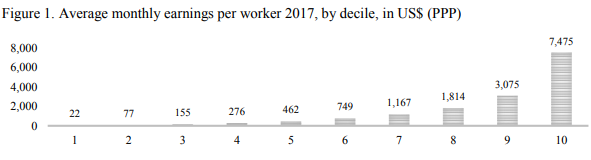
“Nearly half of all global pay is scooped up by only 10% of workers, according to the International Labour Organization, while the lowest-paid 50% receive only 6.4%.
“The lowest-paid 20% – about 650 million workers – get less than 1% of total pay, a figure that has barely moved in 13 years, ILO analysis found. It used labour income figures from 189 countries between 2004 and 2017, the latest available data.
“A worker in the top 10% receives $7,445 a month (£5,866), while a worker in the bottom 10% gets only $22. The average pay of the bottom half of the world’s workers is $198 a month.”
[…]
The explanation? To be in the top 10% of the global pay distribution you need to be making around and about minimum wage in one of the rich countries. Via another calculation route, perhaps median income in those rich countries. No, that £5,800 is the average of all the top 10%.
Note that this is in USD. About £2,000 a month puts you in the second decile, that’s about UK median income of 24,000 a year.
And as it happens about 20% of the people around the world are in one of the already rich countries. So, above median in a rich country and we’re there. Our definition of rich here not quite extending as far as all of the OECD countries even. Western Europe – plus offshoots like Oz and NZ, North America, Japan, S. Korea and, well, there’s not much else. Sure, it’s not exactly 10% of the people there but it’s not hugely off either.
So, what is it that these places have in common? They’ve been largely free market, largely capitalist, economies for more than a few decades. The most recent arrival, S. Korea, only just managing that few decades. It is also true that nowhere that hasn’t been such is in that listing. It’s even true that nowhere that is such hasn’t made it – not that we’d go to the wall for that last insistence although it’s difficult to think of places that breach that condition.