Quotulatiousness

May 5, 2018

What’s Wrong With Wakanda?

Filed under: Africa, Economics, Media — Tags: , , — Nicholas @ 04:00

Foundation for Economic Education
Published on 3 May 2018

Wakanda could never exist in the real world.

Wakanda is frustrating because it perpetuates the myth that an abundance of a really valuable natural resource is all you need to create a prosperous and extremely advanced society. This is simply not true. Matt Ridley, author of The Rational Optimist, wrote about how isolationism actually leads to a regress in technology.

April 30, 2018

The Empire of Mali – Mansa Musa – Extra History – #3

Filed under: Africa, History, Religion — Tags: , , — Nicholas @ 06:00

Extra Credits
Published on 28 Apr 2018

Mansa Musa is remembered as the richest person in the entire history of the world, but he also worked hard to establish the empire of Mali as a political and even religious superpower. However, his excessive wealth started creating bigger problems…

April 23, 2018

The Empire of Mali – An Empire of Trade and Faith – Extra History – #2

Filed under: Africa, History — Tags: , , — Nicholas @ 06:00

Extra Credits
Published on 21 Apr 2018

Seeking a meeting with the emperor of the Mali Empire, a man named Ibn Battutah journeyed across the perilous Sahara sands to discover Mali’s gold… instead, he found out how Mali blended its Islamic and African cultures.

April 21, 2018

That time Mossad ran a resort to rescue Sudanese refugees

Filed under: Africa, History, Middle East — Tags: , , , — Nicholas @ 03:00

Join Israel’s secret spy agency! Learn all the tricks of espionage! Run an exotic beachside resort! Wait, what?

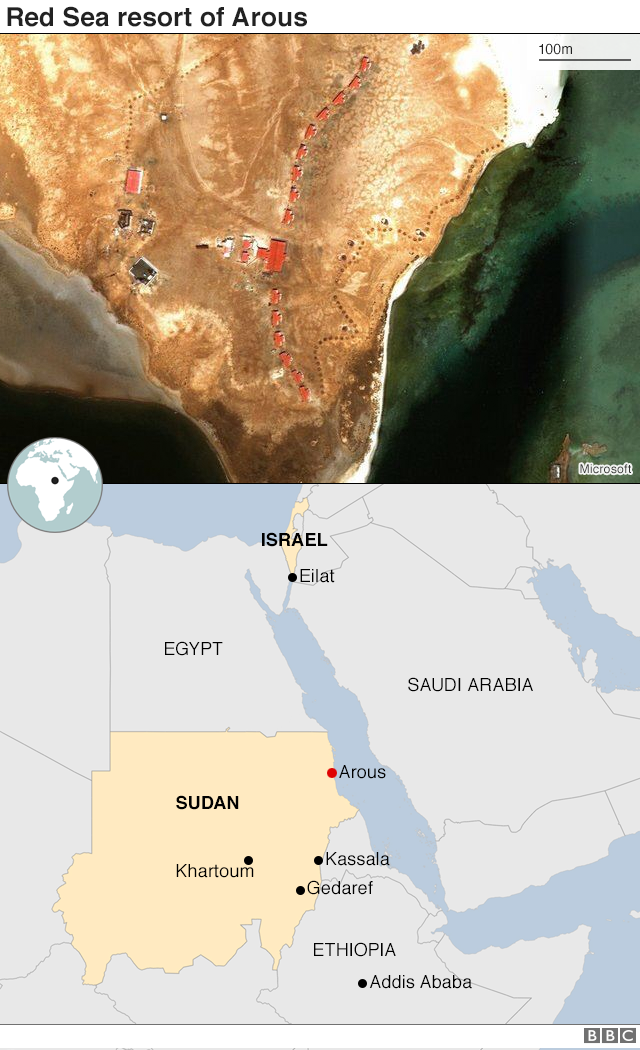
“Arous on the Red Sea, a wonderful world apart,” the glossy brochure says, pronouncing it “the diving and desert recreation centre of Sudan”

Illustrated with pictures of putty-coloured chalets on a sun-drenched beach, a smiling couple in scuba gear, and varieties of exotic fish, the advertisement boasts of “some of the best, clearest water in the world”. As night falls – “after the landscape colours have paled” – there are, it says, “breathtaking views of the heavens, aflame with millions of stars”.

Arous Village, on the fringe of spectacular coral reefs and the odd shipwreck, appears to be a diving enthusiast’s dream.

[…]

The only thing was, unbeknown to the guests or the authorities, the Red Sea diving resort was entirely fake.

It was a front, set up and run for more than four years in the early 1980s by operatives from the Mossad, Israel’s intelligence agency.

They used it as a cover for an extraordinary humanitarian mission – to rescue thousands of beleaguered Ethiopian Jews stranded in refugee camps in Sudan and evacuate them to Israel. Sudan was an enemy Arab country, and it had to be done without anyone finding out, either there or at home.

“It was a state secret, nobody talked about it,” says Gad Shimron, one of the agents who served at the village. “Even my family didn’t know.”

“For us it was a godsend. If we could get hold of this place and do it up, we could say we’re running a diving village, which would give us a reason for being in Sudan and furthermore for roaming around near the beach.”

What happened next is the subject of a soon-to be released Hollywood film called Red Sea Diving Resort. Filmed in Namibia and South Africa, it tells the story of the operation and the village. Though while it is based on true events, some of the scenes are fictitious.

[…]

While seeing to their guests by day, every so often at night a squad would leave under cover of darkness and head to a rendezvous point 10km (six miles) south of Gedaref.

“We’d tell the staff we’re going to Khartoum for a few days, or to meet some Swedish nurses from the hospital in Kassala,” says Gad.

They would pick up groups of Ethiopian Jews, smuggled out of the camps by so-called Committee Men – a handful of Beta Israelis recruited for the job.

“The Ethiopian Jews were given no notice, as we could not risk word getting out,” says Gad. “They did not even know we were Israelis. We told them we were mercenaries.”

From there, a convoy of lorries carrying dozens of bewildered refugees drove a two-day – 800km – journey, evading detection at numerous checkpoints along the way by a combination of guile, bribery and occasionally ramming their way through.

At breaks, they would try to pacify the frightened passengers.

“When we let them sit in the driver’s cabin and touch the wheel, they were in seventh heaven,” Gad says, in his book Mossad Exodus. “It was amazing to see how happy they were at sharing a piece of chewing gum among 20 children. They looked at us as though we were creatures from outer space.”

When they got to the beach, north of the holiday village, Israeli navy special forces would come ashore on Zodiac dinghies, collect the refugees and transport them a further hour and a half to a waiting naval vessel, the INS Bat Galim.

The ship then took them to Israel.

April 18, 2018

QotD: The United Nations

Filed under: Africa, Asia, Bureaucracy, Quotations — Tags: , , , — Nicholas @ 01:00

It’s a good basic axiom that if you take a quart of ice-cream and a quart of dog faeces and mix ’em together the result will taste more like the latter than the former. That’s the problem with the UN. If you make the free nations and the thug states members of the same club, the danger isn’t that they’ll meet each other half-way but that the free world winds up going three-quarters, seven-eighths of the way. Thus the Oil-for-Fraud scandal: in the end, Saddam Hussein had a much shrewder understanding of the way the UN works than Bush and Blair did.

And, of course, corrupt organisations rarely stop at just one kind. If you don’t want to bulk up your pension by skimming the Oil-for-Food programme, don’t worry, whatever your bag, the UN can find somewhere that suits — in West Africa, it’s Sex-for-Food, with aid workers demanding sexual services from locals as young as four; in Cambodia, it’s drug dealing; in Kenya, it’s the refugee extortion racket; in the Balkans, sex slaves.

Mark Steyn, “UN forces — just a bunch of thugs?”, Telegraph Online 2005-02-15

April 16, 2018

The Empire of Mali – The Twang of a Bow – Extra History – #1

Filed under: Africa, History — Tags: , , — Nicholas @ 04:00

Extra Credits
Published on 14 Apr 2018

While the old Ghana Empire waxed wealthy due to taxes on trade passing through its lands, the new Empire of Mali born in its stead had expanded borders that included vast lands of gold…

March 15, 2018

DicKtionary – H is for Homicide – Francisco Macias Nguema

Filed under: Africa, History — Tags: , , , , , — Nicholas @ 04:00

TimeGhost
Published on 14 Mar 2018

H is for homicide, the taking of lives
Bloodthirsty people with pistols or knives
Or government leaders than strangled their nations
And Macias Nguema killed whole populations.

Join us on Patreon: https://www.patreon.com/TimeGhostHistory

Written and Hosted by: Indy Neidell
Based on a concept by Astrid Deinhard and Indy Neidell
Produced by: Spartacus Olsson
Executive Producers: Bodo Rittenauer, Astrid Deinhard, Indy Neidell, Spartacus Olsson
Camera by: Ryan Tebo
Edited by: Bastian Beißwenger

A TimeGhost format produced by OnLion Entertainment GmbH

March 14, 2018

Battle Stack: The Battle of Isandlwana tactics

Filed under: Africa, Britain, History, Military — Tags: , , — Nicholas @ 02:00

BattleStack
Published on 25 Nov 2016

The Battle of Isandlwana was fought between the British and Zulus in 1879. Find out what happened with this animated tactics video!

March 1, 2018

South Africa to amend constitution to allow land expropriation without compensation

Filed under: Africa, Government, Law — Tags: , , , — Nicholas @ 03:00

The South African parliament has voted overwhelmingly to change the nation’s constitution to allow the government to expropriate land without compensation:

The motion was brought by Julius Malema, leader of the radical Marxist opposition party the Economic Freedom Fighters, and passed overwhelmingly by 241 votes to 83 against. The only parties who did not support the motion were the Democratic Alliance, Freedom Front Plus, Cope and the African Christian Democratic Party.

It was amended but supported by the ruling African National Congress and new president Cyril Ramaphosa, who made land expropriation a key pillar of his policy platform after taking over from ousted PM Jacob Zuma earlier this month.

“The time for reconciliation is over. Now is the time for justice,” Malema was quoted by News24 as telling parliament. “We must ensure that we restore the dignity of our people without compensating the criminals who stole our land.”

According to Bloomberg, a 2017 government audit found white people owned 72 per cent of farmland in South Africa.

ANC deputy chief whip Dorries Eunice Dlakude said the party “recognises that the current policy instruments, including the willing-buyer willing-seller policy and other provisions of Section 25 of the Constitution may be hindering effective land reform”.

ANC rural affairs minister Gugile Nkwinti added: “The ANC unequivocally supports the principle of land expropriation without compensation. There is no doubt about it, land shall be expropriated without compensation.”

Thandeka Mbabama from the Democatic Alliance party, which opposed the motion, said there was a need to right the wrongs of the past but expropriation “cannot be part of the solution”.

“By arguing for expropriation without compensation, the ANC has been gifted the perfect scapegoat to explain away its own failure,” she said in a statement.

“Making this argument lets the ANC off the hook on the real impediments — corruption, bad policy and chronic underfunding. Expropriation without compensation would severely undermine the national economy, only hurting poor black people even further.”

Samizdata‘s Johnathan Pearce comments on the move:

The unfolding of South Africa’s history is a tragedy, and it is easy to see why there is an element of “score-settling” at work here. Apartheid, let it not be forgotten, was introduced in the late 1940s at the behest to some degree of the white trade union movement, keen to bolster its bargaining power. Even if you were a private entrepreneur who wanted to hire non-whites for certain jobs, for example, you couldn’t. (Minimum wage laws operated in ways that hurt, not helped, non-whites.) The system was as absurd and vile as the Jim Crow laws of the US, or other examples of serfdom and oppression down the ages. It had to go; for anyone who supports a free market economy, apartheid and its cousins are absurd as well as wrong.

But the solution of seizing white-owned land, regardless of the honesty or provenance of it, and giving it to people via a political carve-up, turns the injustices inherited from the old regime on their head, creating a new form of racism. Two wrongs do not make a right. And further, one suspects that the land seizures are an attempt to deflect attention from the failings of the existing regime. Compare and contrast how, for example, the “Asian tigers” threw off their old colonial masters and focused on getting seriously rich, not least by respecting property rights. And wherever one looks, there does seem a pretty tight correlation between respect for property rights – indeed their very existence – with prosperity and happiness more broadly. Hernando de Soto has made something of a career pushing the point that the world needs more property rights, spread among more people. (Check out this recent lecture by Niall Ferguson on the same sort of issue.)

February 24, 2018

“Oxfam, like many large British charities, has long been a villainous organisation”

Filed under: Africa, Americas, Britain — Tags: , , , , , — Nicholas @ 03:00

Theodore Dalrymple puts the boots to Oxfam:

It is very wrong, morally, to take pleasure in the misfortunes of others, but I cannot disguise from myself the intense pleasure, amounting almost to joy, with which I learned of the public exposure of the wrongdoings of Oxfam in Haiti, Chad, and elsewhere. Its workers, sent to bring relief to the acute and chronic sufferings of those countries, used the charity’s money, partly derived from voluntary contributions and partly from government subventions (the British government and the European Union are by far the largest contributors to British Oxfam), to patronise local prostitutes, some of them underage, and also to conduct orgies, no doubt at a fraction of what they would have cost to conduct at home.

Oxfam, at least in Britain, has long been one of the most Pecksniffian of organisations, much give to auto-beatification. Mr. Pecksniff, in Dickens’ Martin Chuzzlewit, introduces his daughters, called Charity and Mercy, to Mrs. Todgers, adding ‘Not unholy names, I hope.’ It is therefore of the hypocritical Mr. Pecksniff that I think whenever I pass the Oxfam shop in my small town, with its unctuous slogan, Thank you for being humankind, posted in the window. It is only with difficulty that I resist the urge to throw a brick through it.

Of course, Oxfam, like many large British charities, has long been a villainous organisation — and the sexual exploits (or should I say exploitations?) of its workers in Haiti and elsewhere are the least of it. In the moral sense, though not the legal, it has for many years been guilty of fraud, of misleading the public.

I first realised this some years ago when I found a used book dealer of my long acquaintance poring in his shop over Oxfam’s annual accounts.

‘Look at this,’ he said, but I saw nothing until he pointed it out to me.

Oxfam, in common with many other charities in Britain, runs thrift stores in practically every British town and city. Such thrift stores are now more numerous even than Indian restaurants: they allow people to give away their unwanted belongings in the belief that, by so doing, they are furthering a good cause.

My acquaintance pointed out that, despite receiving their goods free of charge, paying practically nothing for their labour (which was voluntary), and paying much reduced local taxes, Oxfam shops made a profit on turnover of a mere 17 per cent, much less than his own, despite his incomparably greater expenses. How was such a thing possible, by what miracle of disorganisation (or malversation of funds)?

Until then, I had carelessly assumed that the great majority of any money that I gave to a large charity went to serve its ostensible end, say the relief of avoidable suffering. I was not alone in this, of course. When I asked the volunteer ladies in a local shop run on behalf of the British Red Cross what percentage of the money I paid for a book there went to the Red Cross, they looked at me as if I were mad.

‘Why, all of it of course,’ piped up one of the ladies.

The real average figure at the time for Red Cross thrift stores was 8 per cent; but the volunteer ladies supposed, because the goods they sold were free to the Red Cross and they themselves were not paid, that (apart from a small amount for unavoidable expenses) all the money raised went directly to victims of earthquakes and the like.

February 19, 2018

Why the Pith Helmet?

Filed under: Africa, Britain, History, Military — Tags: , , , — Nicholas @ 02:00

Major Sven Gaming
Published on 14 Apr 2017

Anyone love the old Zulu movie staring Michael Caine?

I do, but why did the British wear these awesome hats? Well watch and you will find out…

And a link to more info on these wonderful Helmets. http://www.throughouthistory.com/?p=3153

January 9, 2018

The Seven Years War: Crash Course World History #26

Filed under: Africa, Americas, Britain, France, History, India, Military — Tags: , , — Nicholas @ 02:00

CrashCourse
Published on 19 Jul 2012

In which John teaches you about the Seven Years War, which may have lasted nine years. Or as many as 23. It was a very confusing war. The Seven Years War was a global war, fought on five continents, which is kind of a lot. John focuses on the war as it happened in the Americas, Asia, and Africa. the “great” European powers were the primary combatants, but they fought just about everywhere. Of course, this being a history course, the outcomes of this war still resonate in our lives today. The Seven Years War determined the direction of the British Empire, and led pretty directly to the subject of Episode 28, the American Revolution.

December 1, 2017

All Quiet On The Eastern Front – Action in East Africa I THE GREAT WAR Week 175

Filed under: Africa, Germany, History, Italy, Military, Russia, WW1 — Tags: , , , — Nicholas @ 04:00

The Great War
Published on 30 Nov 2017

This week in the Great War, the Battle of the Ngomano was fought in East Africa between the Germans and Portuguese, which was a decisive win for Lettow-Vorbeck’s men. On the Eastern Front, the fighting stops and Trotsky published the secret treaties that Russia and the other Allies had signed. The Battle of Cambrai continued, with attacks and counterattacks from both sides, including the implementation of the new Hutier assault tactics. Armando Diaz was making changes for the better on the Italian Front, with the express aim of improving the morale among his men.

November 17, 2017

Canada is back in peacekeeping … sorta

Filed under: Africa, Cancon, Military — Tags: , , , — Nicholas @ 03:00

Ted Campbell is not happy with the government’s “decision” on peacekeeping:

It appears that today, Prime Minister Justin Trudeau announced just about the “best thing” for him and his Liberals in the long, long, long run up to the 2019 election campaign; but it’s pretty much the worst thing he could do for Canada and the Canadian Forces and the UN. In fact: it appears to involve a handful of “penny packet” commitments ~ a “grab bag” one journalist said, none of which will do much good ~ being too small to even been noticed amongst the 75,000+ UN soldiers in Africa ~ and none of which will contribute materially to the Trudeau Liberal’s quest for a second class, temporary, powerless seat on the worthless UN Security Council.

Let’s be very clear: Canada is not “back” ~ this is a far cry from the sort of traditional UN peacekeeping that Canada did in the 1950s, ’60s and ’70s and that Justin Trudeau and many, many Canadians imagined in 2015, and it is a far cry from what Canada could do if the government really wanted to help.

[…] I suspect that too many non-military voices in too many special interest groups argued for the “penny packet” and “let the UN help decide” approach. My suspicion is that the UN simply doesn’t know how to organize or manage a complex, logistical and/or air transport mission, and the “civil society” special interests that want Canada “back” in UN peacekeeping have no idea at all about military matters or how to get the most bang for the buck.

The good news for the Liberals is that it will the autumn of 2018, at the earliest, when “negotiations” with the UN come to some sort of conclusion and, probably, early 2019 before Canada actually sends anyone into anything like harm’s way … just in time for a campaign photo-op with the PM waving good-by to some female RCAF members in baby blue berets as they board a plane bound for somewhere. And, so long as the UN doesn’t send any home in caskets the Trudeau government campaign team will be happy. But it will give Team Trudeau another chance to smugly proclaim that “Canada’s back,” and that’s all that really matters in official Ottawa late in this decade.

October 26, 2017

Bonus quote-of-the-day

Filed under: Africa, Cancon, Media, Military, Politics, Quotations — Tags: , , — Nicholas @ 05:00

In an article in the Globe and Mail, Lee Berthiaume (Canadian Press) reports that “The Trudeau Liberals may have promised to ramp up Canada’s role in peacekeeping, but new UN figures show there were fewer Canadian peacekeepers in the field last month than at any point in recent memory … [and] … The revelation comes as Canada prepares to host a major peacekeeping summit in Vancouver next month, raising fears the country will be badly embarrassed unless the numbers start rising – and fast … [because] … The intervening year [since the Liberals promised 600+ blue beret wearing peacekeepers] has instead seen a steady decrease in the number of Canadian blue helmets and blue berets deployed around the world, from 112 peacekeepers in August 2016 to 68 last month.

This is risky for Canadian soldiers because the Trudeau regime is not exactly famous for making sound, well though out, carefully crafted plans ~ witness the small business tax fiasco and democratic reform, just for examples. It is possible, even probable, that rather than be embarrassed in public the Liberals will react, as cornered rats often do, and commit troops to a dangerous, hopeless, worthless mission just to avoid yet another political humiliation. Canadian soldiers may soon find themselves in some rotten hellhole with orders to not, under any circumstances, shoot at a child soldier, not even in self defence, or do any harm to a person of colour … because the Liberals know that the media will be watching ~ platoons of journalists will be deployed, each more anxious than the next to win some prize by being the first to report on a Canadian killing a black child.

Ted Campbell, “Cornered?”, Ted Campbell’s Point of View, 2017-10-25.

« Newer PostsOlder Posts »

Powered by WordPress